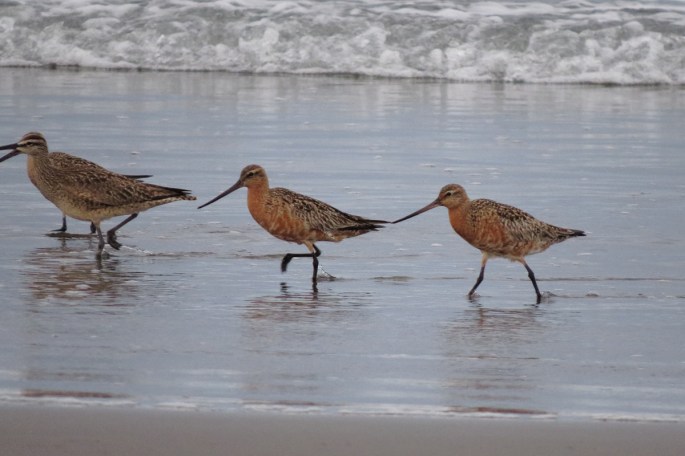
 This spring has brought an unprecedented number of Bar-tailed Godwits to the Oregon coast. This species spends the winter in New Zealand, then flies to China and the Korean Peninsula to fatten up for a month before flying to northern Alaska and northern Eurasia to nest. This year, a weather event apparently blew some birds off-course to the east. Four birds appeared near Newport in April. Another 16 were found near Sunset Beach north of Gearhart in late May and into June.
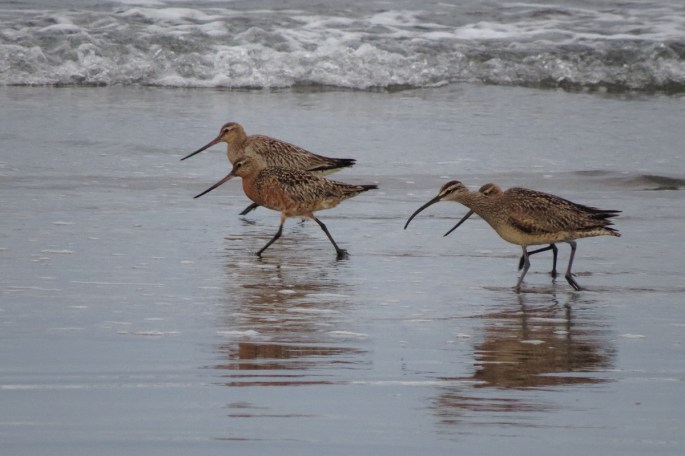 The Bar-tailed Godwits are associating with flocks of Whimbrels.
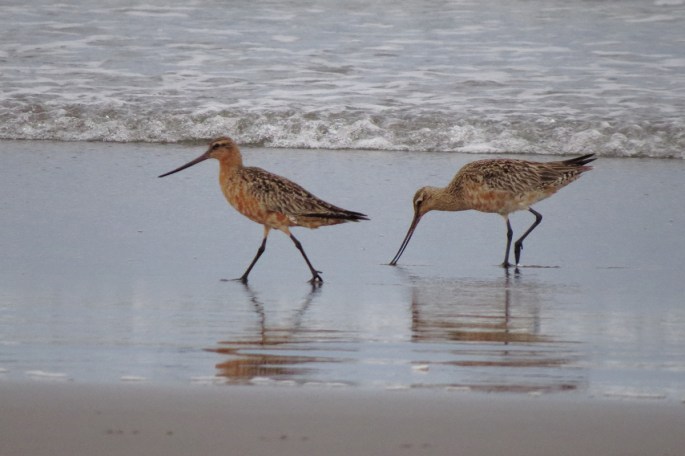 Here is a comparison of a male (l) and a female (r). The female is noticeably larger and paler.

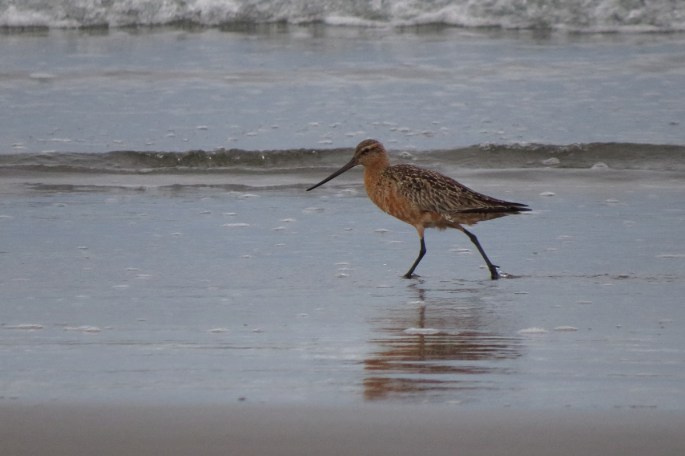 It would be interesting to know where these birds will end up this summer. It seems late in the season to make it all the way to the arctic to nest at this point. If they don’t make it all the way north, what will their southbound route be? Normally, Bar-tailed Godwits that nest in Alaska fly from the west coast of Alaska directly to New Zealand. A few juveniles get lost and work their way down the west coast. Will these adults stay in North America as they head south, or will they find their way to the south Pacific? It will definitely be worthwhile to scrutinize flocks of Marbled Godwits this summer and fall for adult Bar-taileds.













 This American Crow was finding either food or water in the top of the stop sign post on Mt. Tabor.
 Black-headed Grosbeaks returned to the Portland area in large numbers last week. This damp individual was singing in low brush on Mt. Tabor.
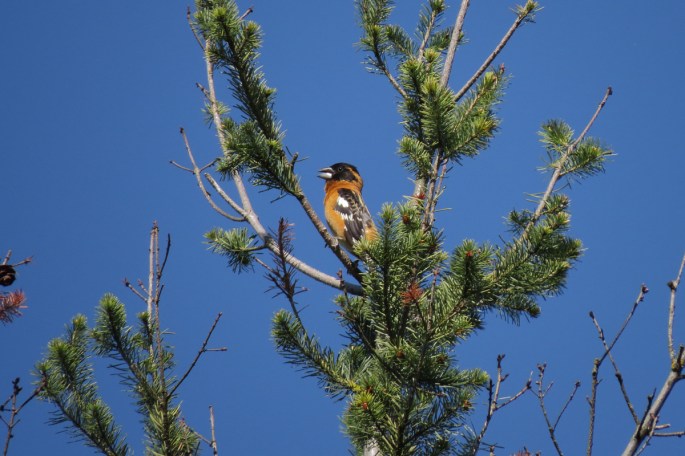 Another Black-headed Grosbeak singing in the sun at Cooper Mountain, but from the top of a tall tree
 An Olive-sided Flycatcher, singing in the rain. This species often hangs out at tree-top level, but this guy came down for some nice eye-level viewing.
 House Finches were munching on dandelions on Mt. Tabor.
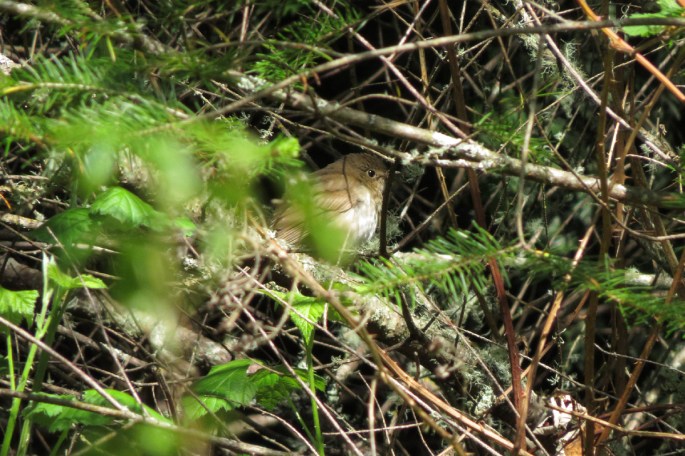 Here is a typical view of a Swainson’s Thrush, seen on Cooper Mountain during our Warbler and Flycatcher Class. This bird did not vocalize and stayed partially hidden in the brush the whole time, but we decided on the ID based on her warm buffy color, lack of dark spots on the breast, and lack of tail dipping behavior. Darker breast spotting and tail dipping would suggest Hermit Thrush.