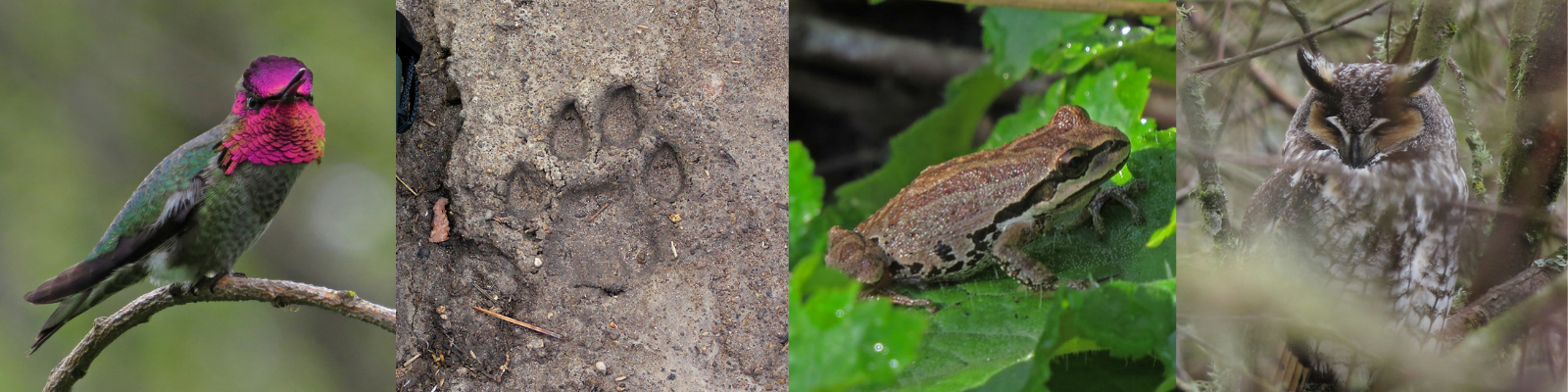
New Books

I recently added two new books to my library.
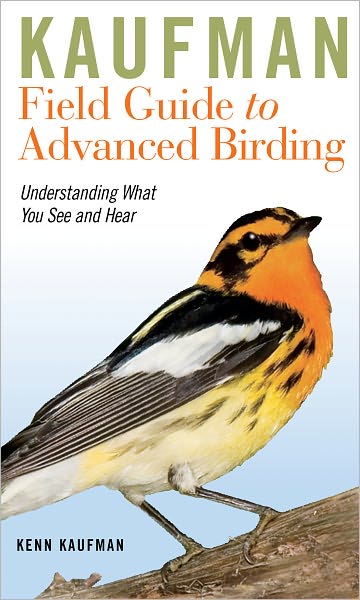
Kenn Kaufman’s updated version of his classic Advanced Birding belongs on every birder’s bookshelf. Along with detailed descriptions of some of the species groups that provide the biggest challenges, Kaufman takes a step back and discusses the broader aspects of bird identification. While fine details can be important, many birders don’t realize how useful habitat, behavior, and general impression of size and shape are in identifying birds, especially at a distance. So while it is really useful to have a reference that compares the call notes of all the Empidonax flycatchers, it is also useful to have several chapters on “how to bird,” something that will benefit birders of every level.
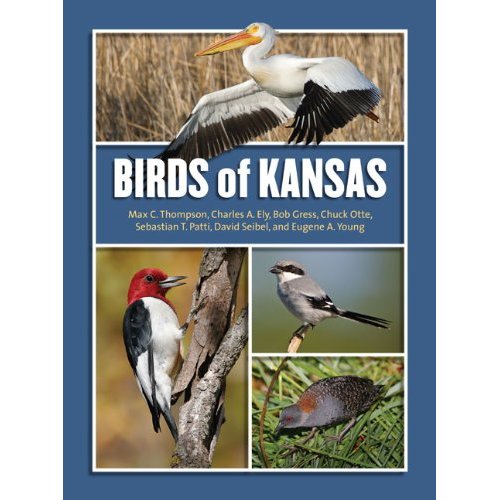
While there is a lot to dislike about Kansas (extensive industrial agriculture, doctors being assassinated, creationism in the schools), the Sunflower State hosts a great variety of bird life. I learned to bird in Kansas, and while I have been away for many years, I still consider it one of the best areas in the country for birding.

The new Birds of Kansas is an annotated checklist of that state’s avifauna. Each species has its own page, with a color photo, map of the state showing where the bird has been documented, and information about status, habitat, migration, and breeding.

What makes this book enjoyable to flip through, aside from the easy-to-read layout, are the color photos from noted photographer Bob Gress and 26 other photographers. I was thrilled that my photo of a Great Black-backed Gull was chosen for that species account. This book is a great combination of birding reference and coffee table book. It may not contain as much detail as the voluminous Birds of Oregon, A General Reference, but it is much more interesting to peruse.
hummingbird tongue fungal infection

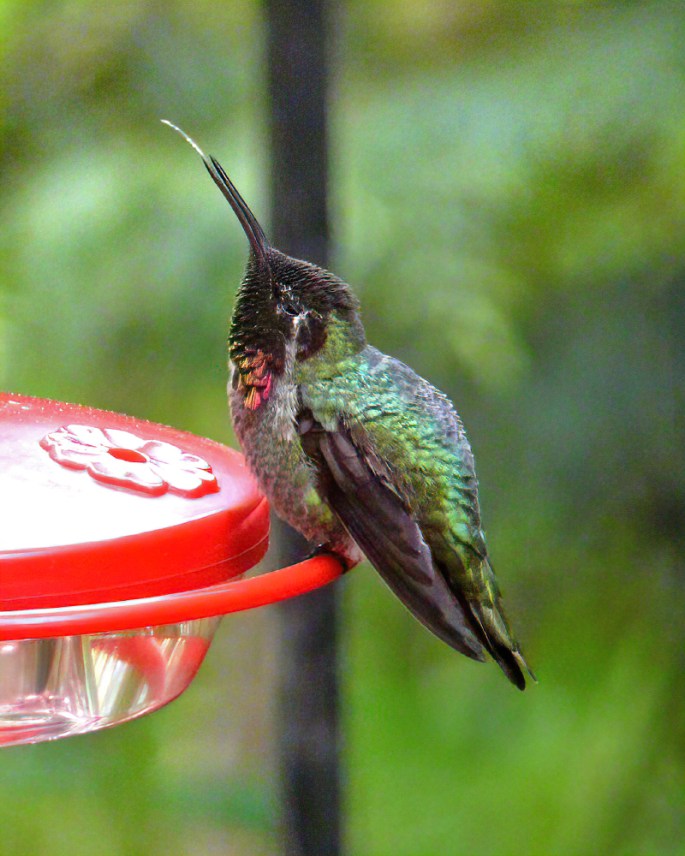
In case you need further motivation to keep your hummingbird feeders clean, here is a photo of a male Anna’s Hummingbird with a swollen tongue. The condition is caused by a fungal infection, usually acquired at hummingbird feeders. The condition is often, if not always, fatal.

sick hummer
If you feed hummingbirds, please use a mixture of one part WHITE sugar to four parts water, and clean the feeder at least once a week in cool weather, more often when temperatures are warmer. Using any other ingredients, or allowing the nectar to spoil, can be deadly.

This post has received a lot of comments over the years, mostly questions about veterinary care of individual birds and other topics that I am not qualified to answer. If you are a veterinarian or wildlife rehabber, and have insight or advice regarding this condition, please leave a comment. If you are seeking advice about this condition, please contact a vet or a wildlife rehabilitation center.

Tualatin River NWR

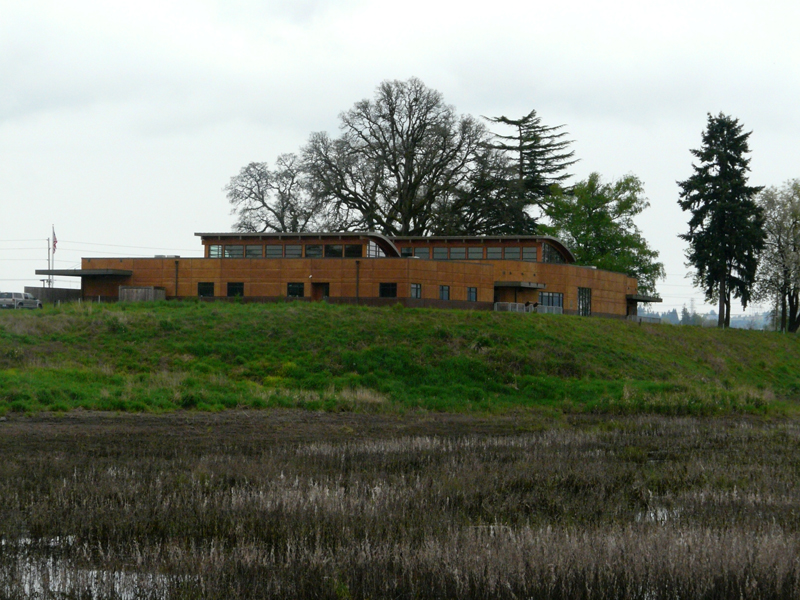
Having just opened to the public within the past few years, Tualatin River National Wildlife Refuge is a great birding spot just a few miles west of Portland on Hwy 99W. Habitats include marshes, riparian forest, and a small patch of upland forest. Like other Willamette Valley refuges, much of the area is closed to public access from October through April to provide refuge for waterfowl.


The visitor’s center has nice displays and a store selling books and art.


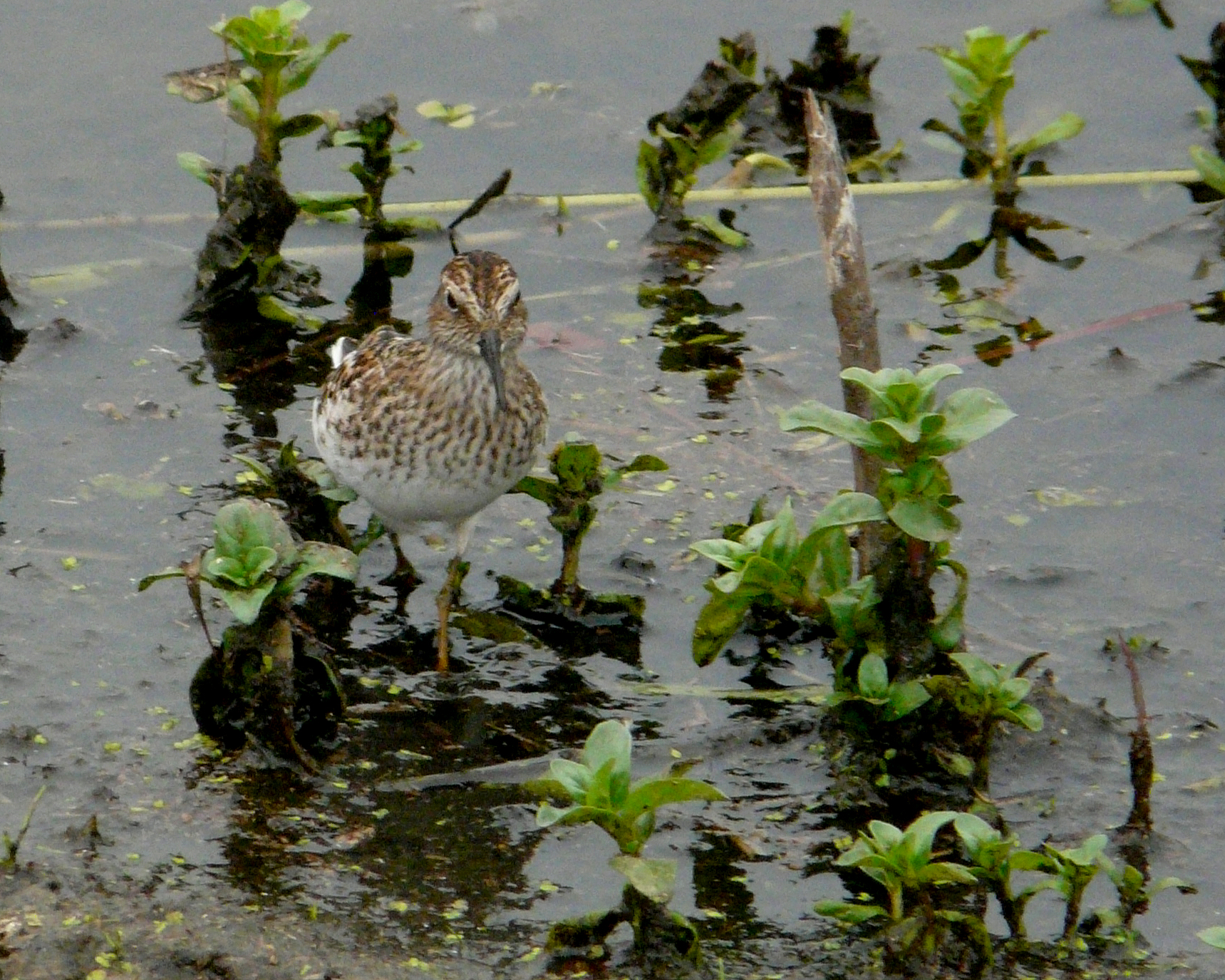
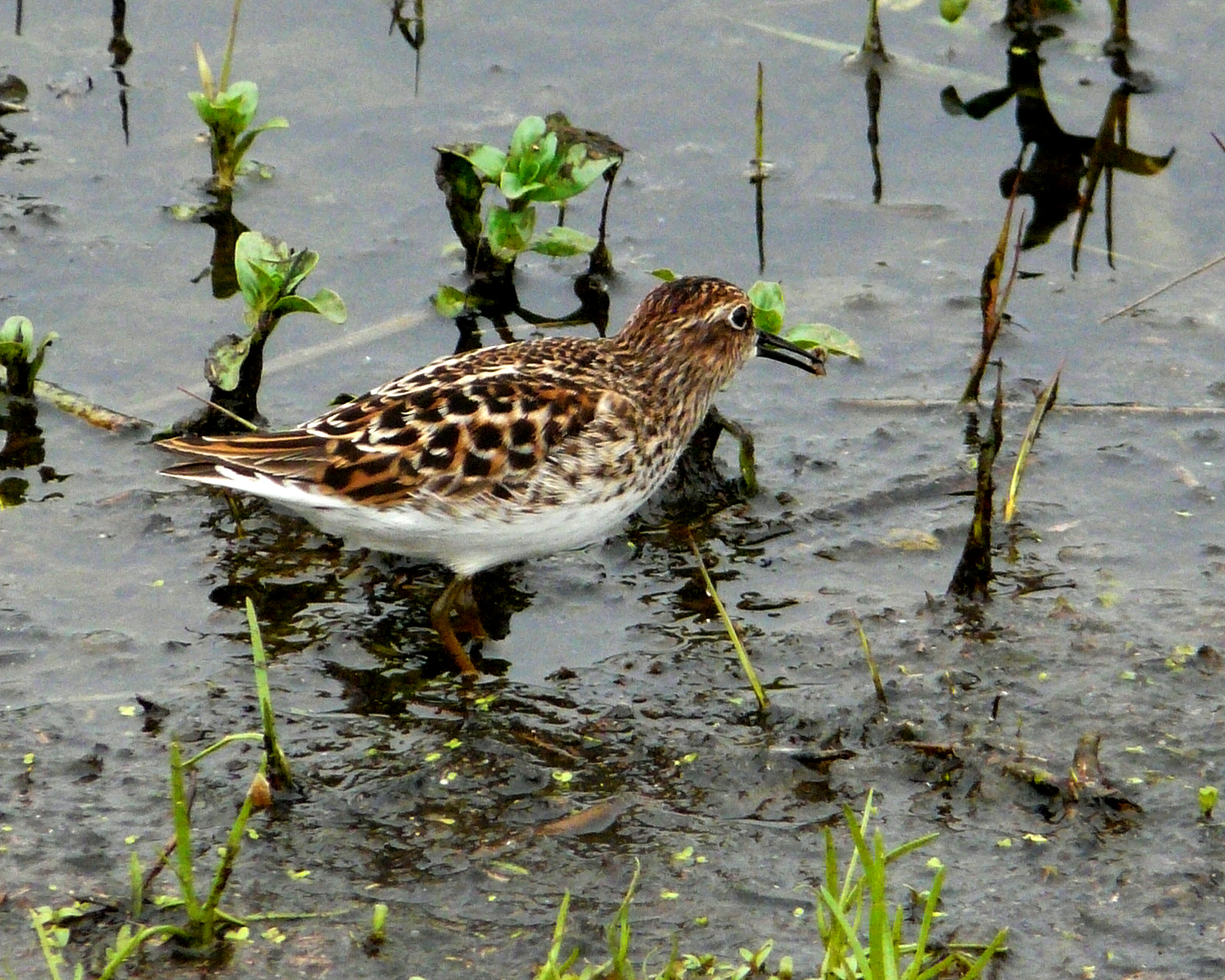
The refuge can attract nice numbers of shorebirds, especially in late summer when water levels are low. Several Least Sandpipers allowed close study on a recent visit.


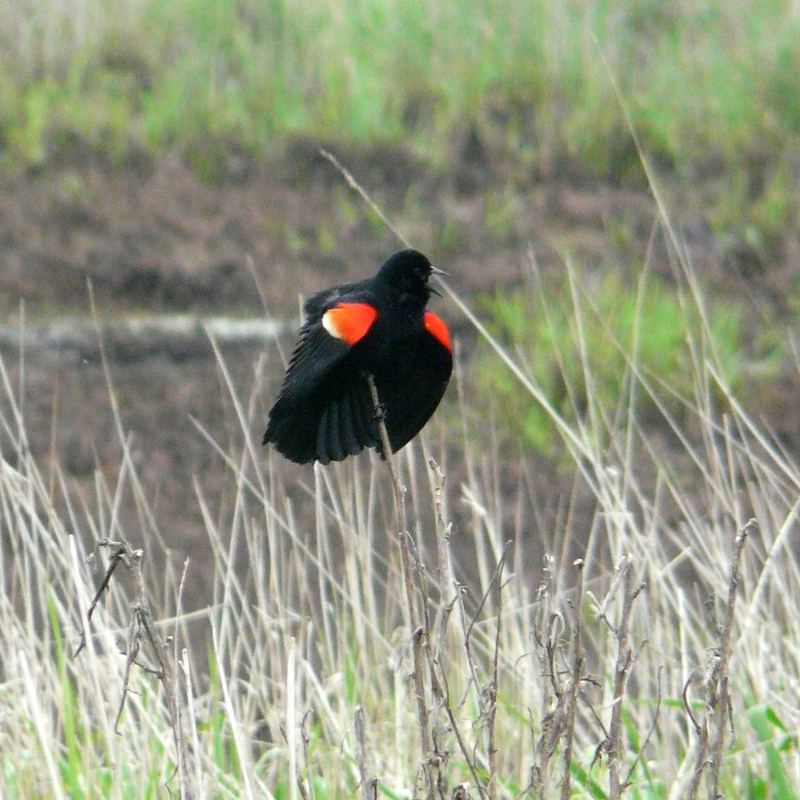
Red-winged Blackbirds are common in the marshes.


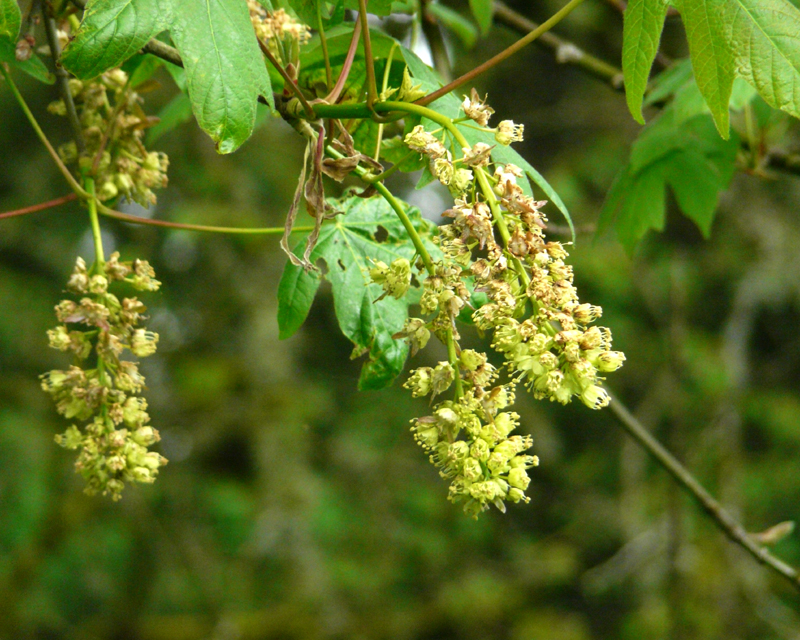
During spring migration, many migrant warblers and vireos are found feeding in Big-Leaf Maples. The flowers attract insects, which in turn attract the birds.

To learn more about Tualatin River National Wildlife Refuge, visit their web site.

North Coast

I made two trips to the coast for my shorebird class last week. Migration is picking up, and the sun is actually making  occasional appearances.


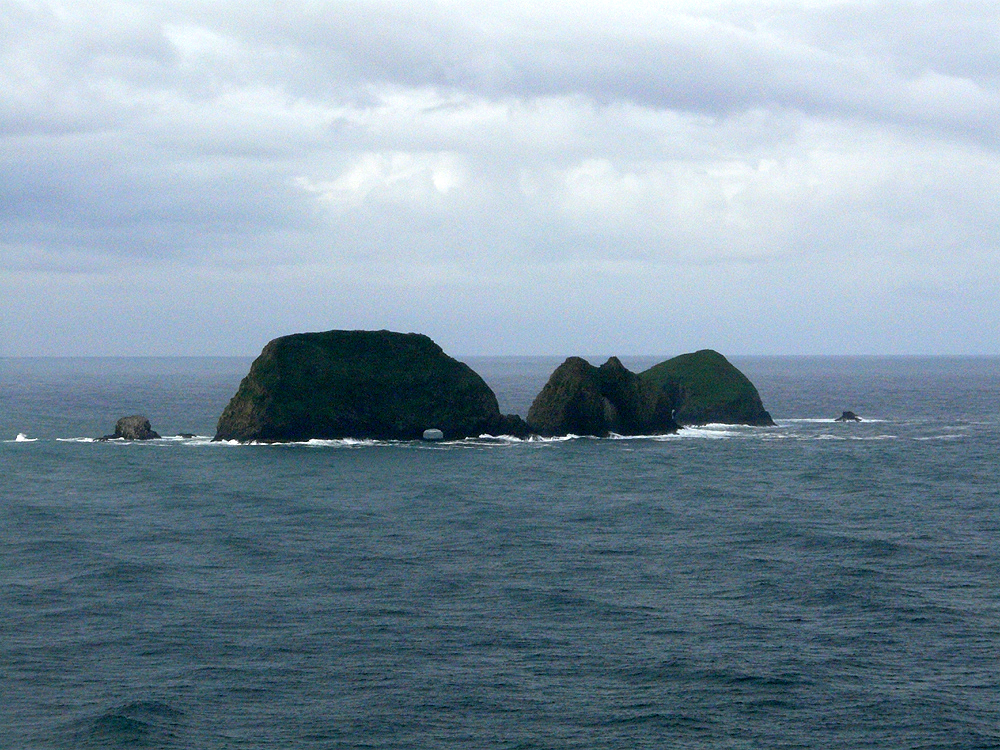
Three Arch Rocks, viewed from Cape Meares (Birding Oregon p. 129) This is the site of large seabird nesting colonies, but the rocks are too far out to see much. The small rock on the far left is a favorite haul out site for Steller’s Sea Lions, which you can see with a decent scope.


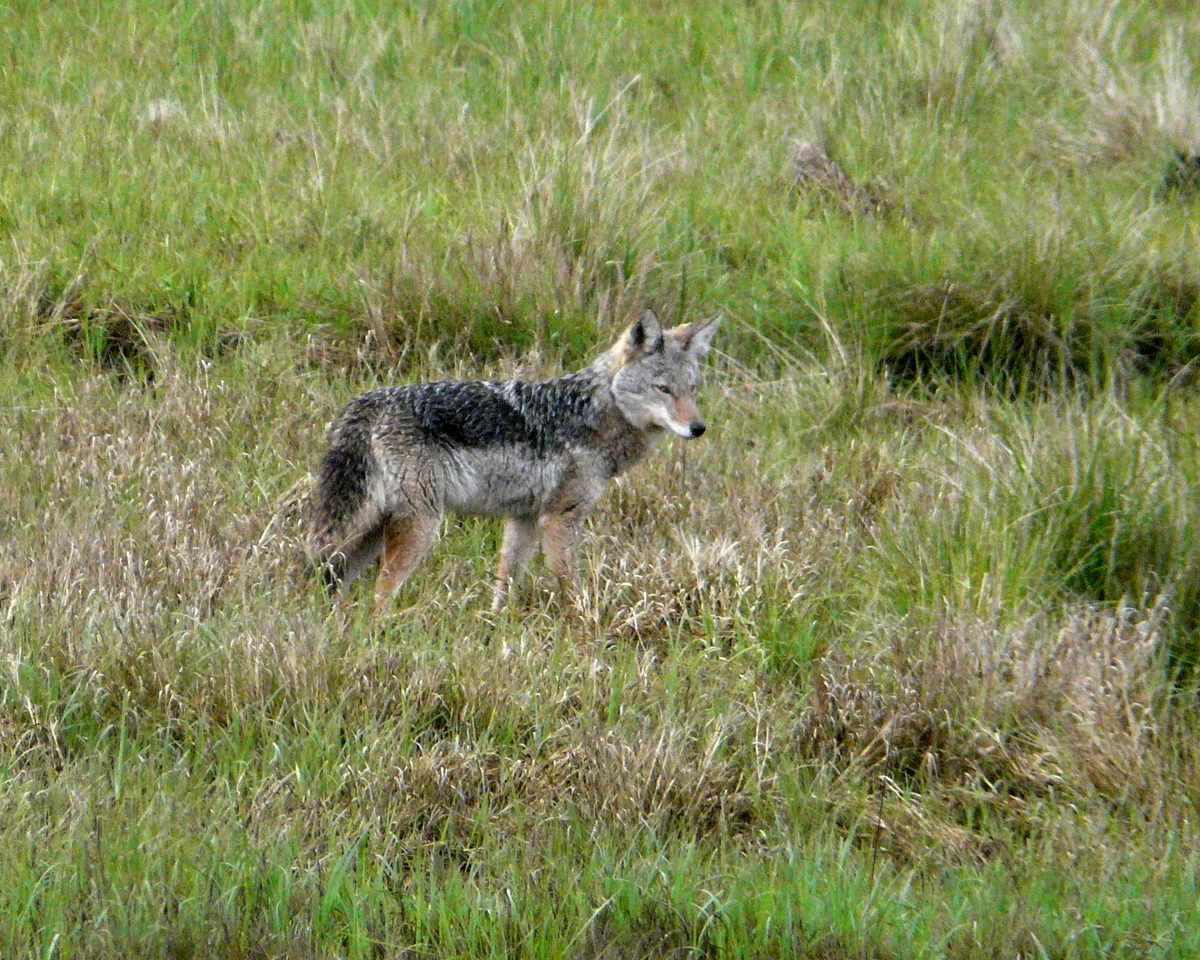
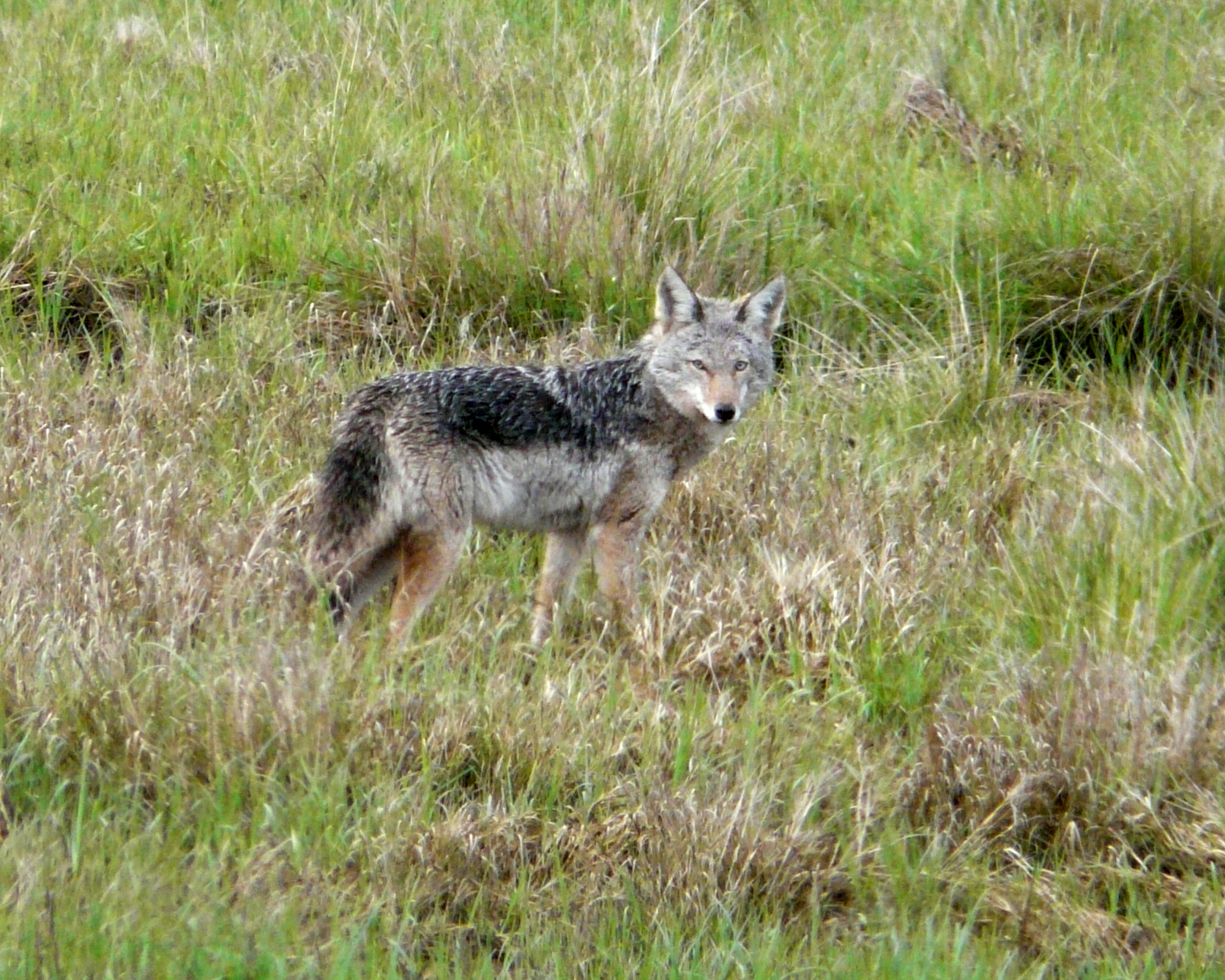
Two Coyotes were hunting in a meadow along Tillamook Bay. There is no shoulder along much of Bayocean Road, so I had to make a brief stop in the middle of the road to snap a couple of photos. I was struck by how dark these animals were, compared to Coyotes I see inland.


Keeping an eye on me. Coyotes are right to be nervous whenever a vehicle slows down nearby. Luckily, this human was only pointing a camera.


Black Oystercatcher on Barview Jetty (Birding Oregon p. 125) This jetty was recently rebuilt. As a result, the surface is smooth and easy to walk on, allowing you to go out much farther than before. But please don’t get the impression that it is EVER safe to walk out on a jetty. Even though you don’t have to hop from rock to rock, sneaker waves can still knock you onto the rocks or into the ocean. The jetty might have to age a bit before it attracts as many birds as before, since newer rocks don’t have as much sea life encrusted onto them.


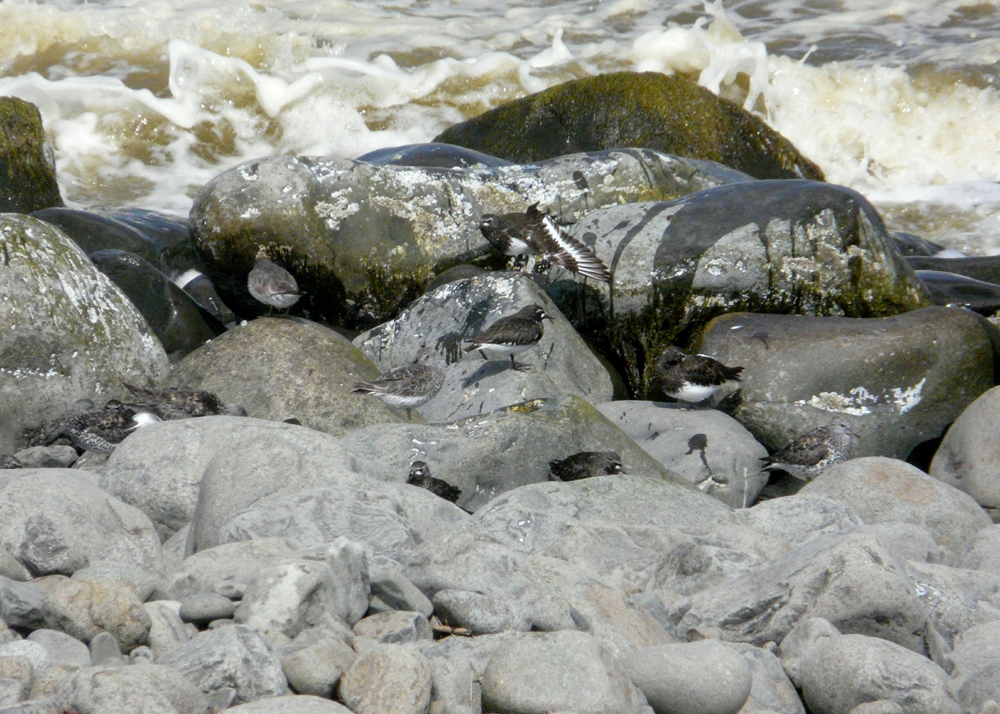
Black Turnstones and Surfbirds at The Cove in Seaside (Birding Oregon p. 121) These birds put on a great show for my shorebird class.

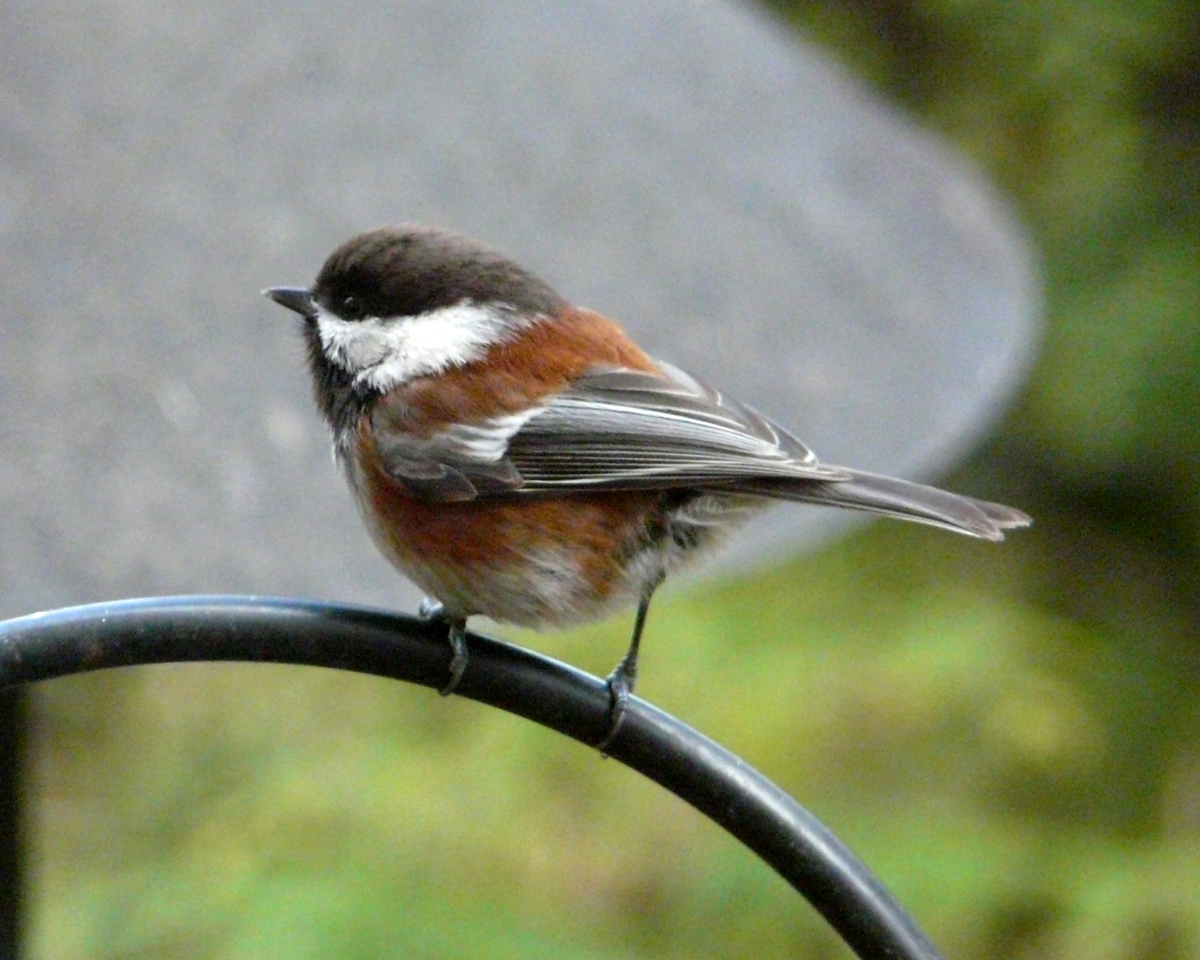
Chestnut-backed Chickadee


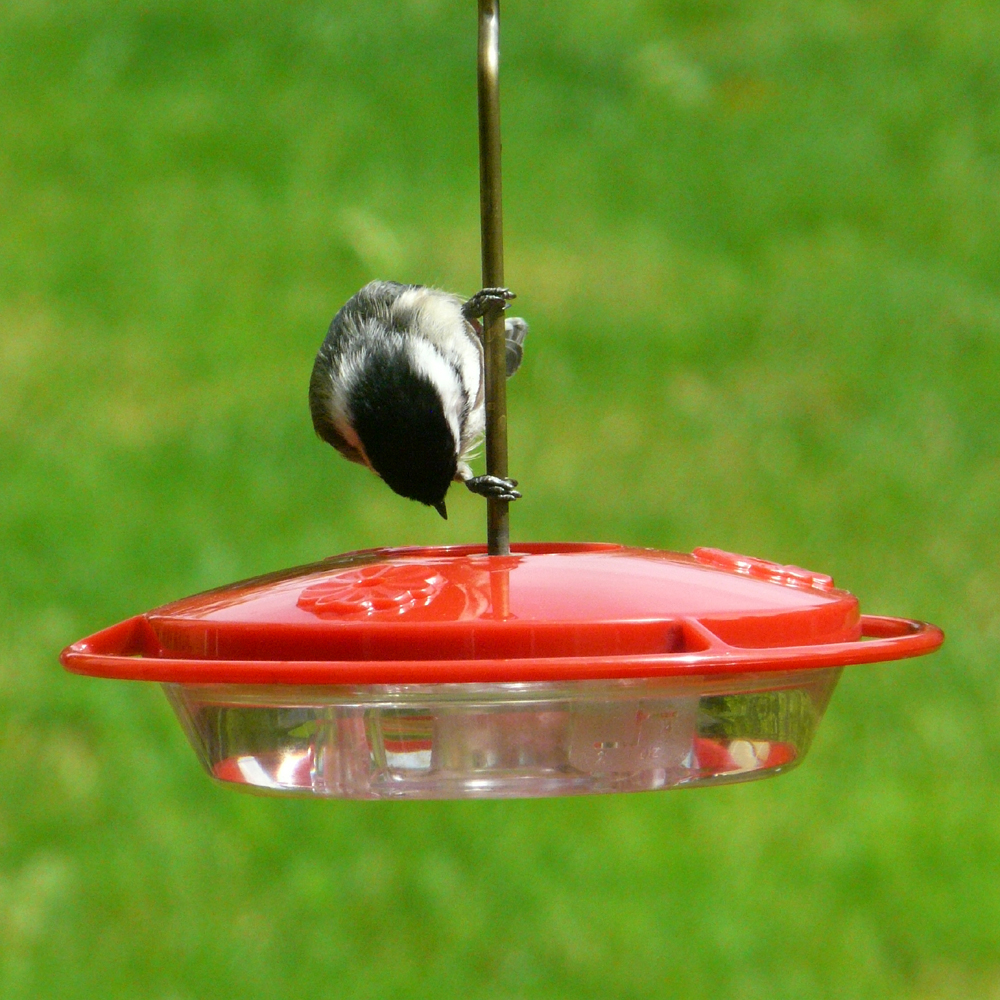
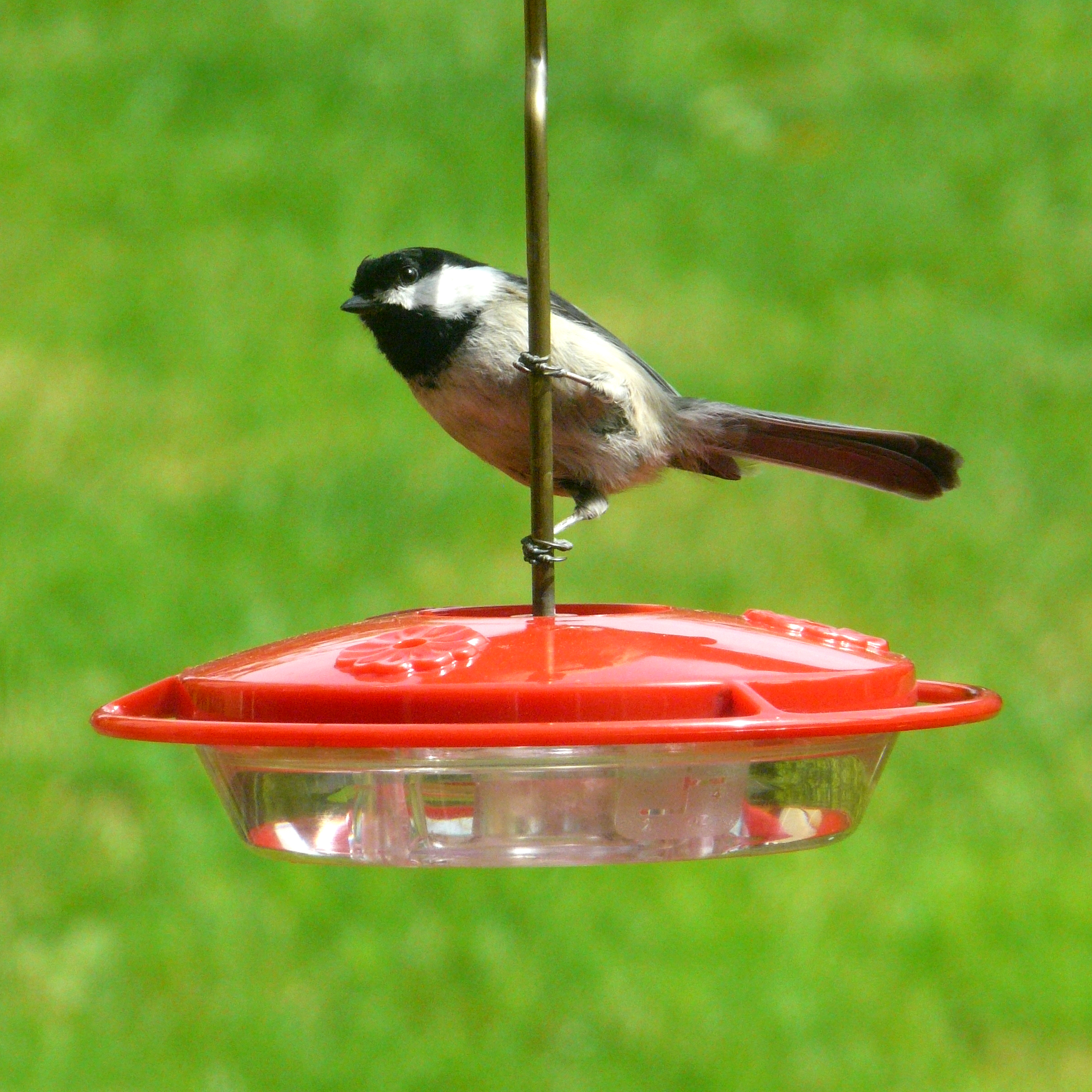
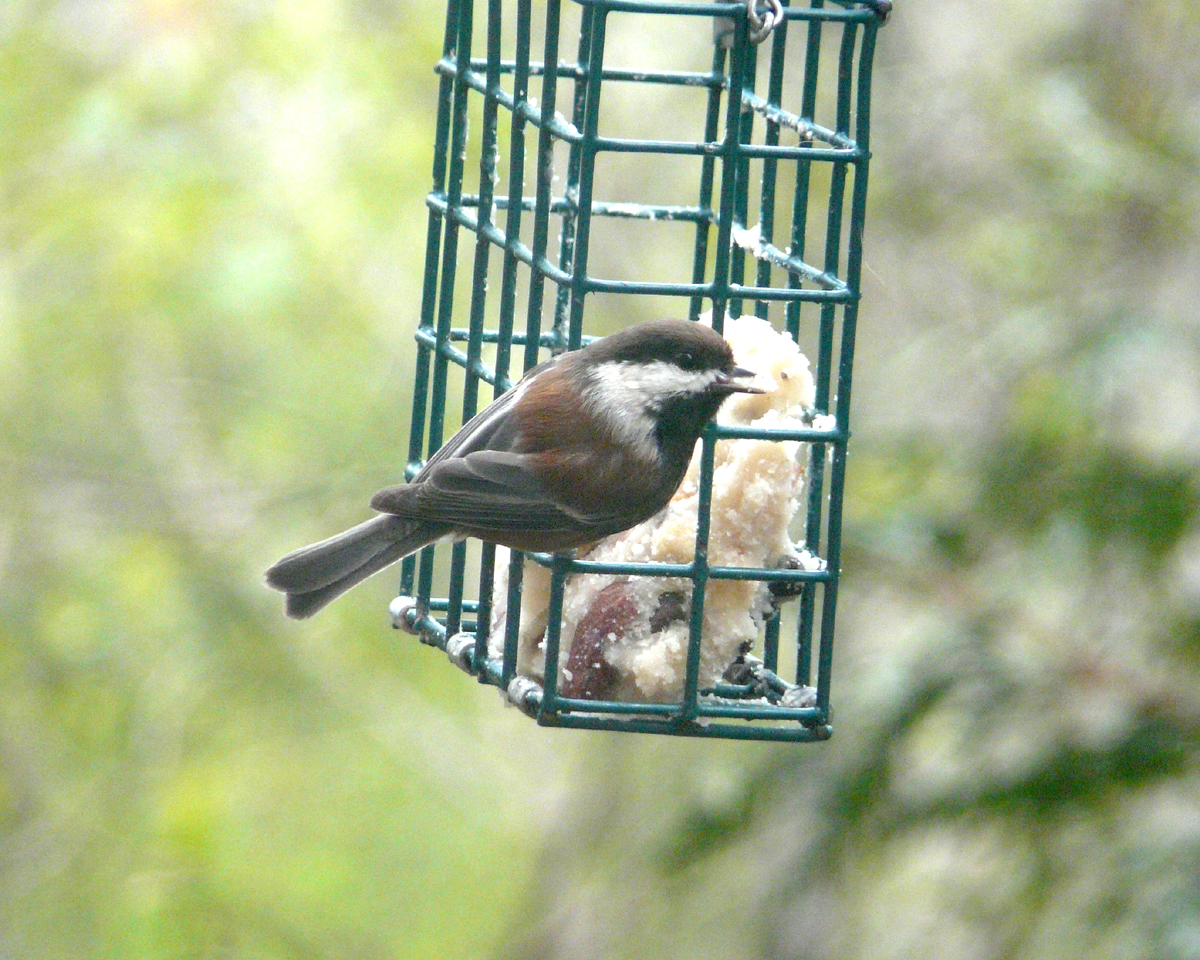
A pair of Chestnut-backed Chickadees has been lingering in the yard this week.  They will soon leave for the summer, as this species prefers large conifers and higher elevation, unlike the more suburban Black-capped Chickadees.


While the Chestnut-backs readily take sunflower seeds from the feeder, these birds were especially fond of a vegan suet block, currently in development by Nepo Suet Company . It is made from coconut oil. While not available yet, it promises to be a great alternative for those of us who don’t buy animal products.

Pittock Mansion 4-21-11


The grounds around Pittock Mansion in northwest Portland are a favorite spot for spring migrants. Most people visit this park to tour the ostentatious limestone house, but birders prefer the brushy hillsides and the woods around the parking lot.

Since we are still locked into a cold, damp weather pattern, most of the spring migrants have not yet arrived, but good numbers of winter residents were flocking and ready to move out.


Fox Sparrow


Pine Siskin


Several species of thrush were common today. Here is a blurry Hermit Thrush.


an equally blurry male Varied Thrush


female Varied Thrush


American Robin


Varied Thrush and American Robin feeding together


Chestnut-backed Chickadee

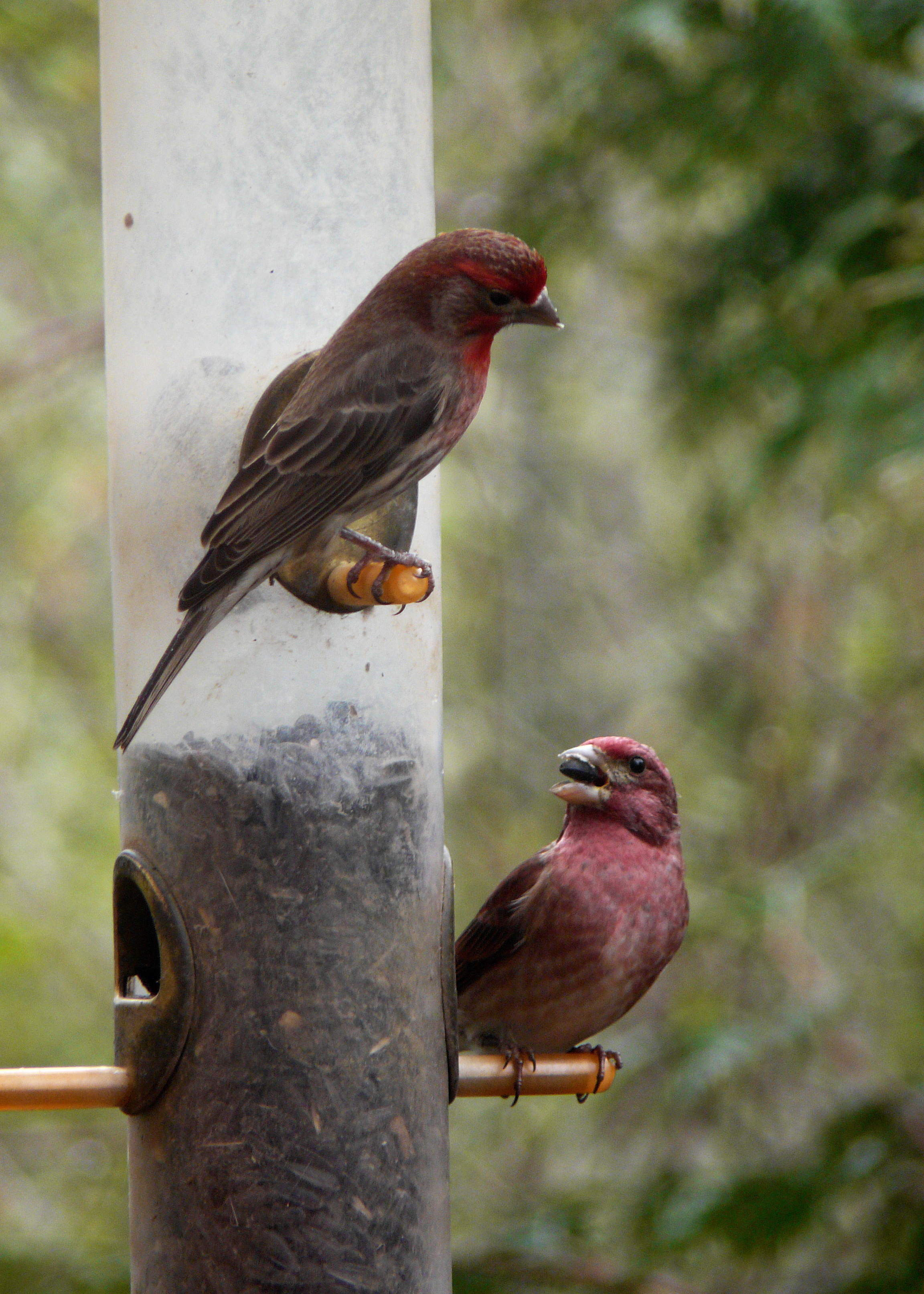
Purple Finch


This La Nina weather pattern shows no sign of abating, making outings miserably wet and not so productive, so I was delighted to see a Purple Finch in the yard this week. About once a year I see a Purple Finch at my feeder. They breed in mixed woodlands in the Portland area, but not in my neighborhood.


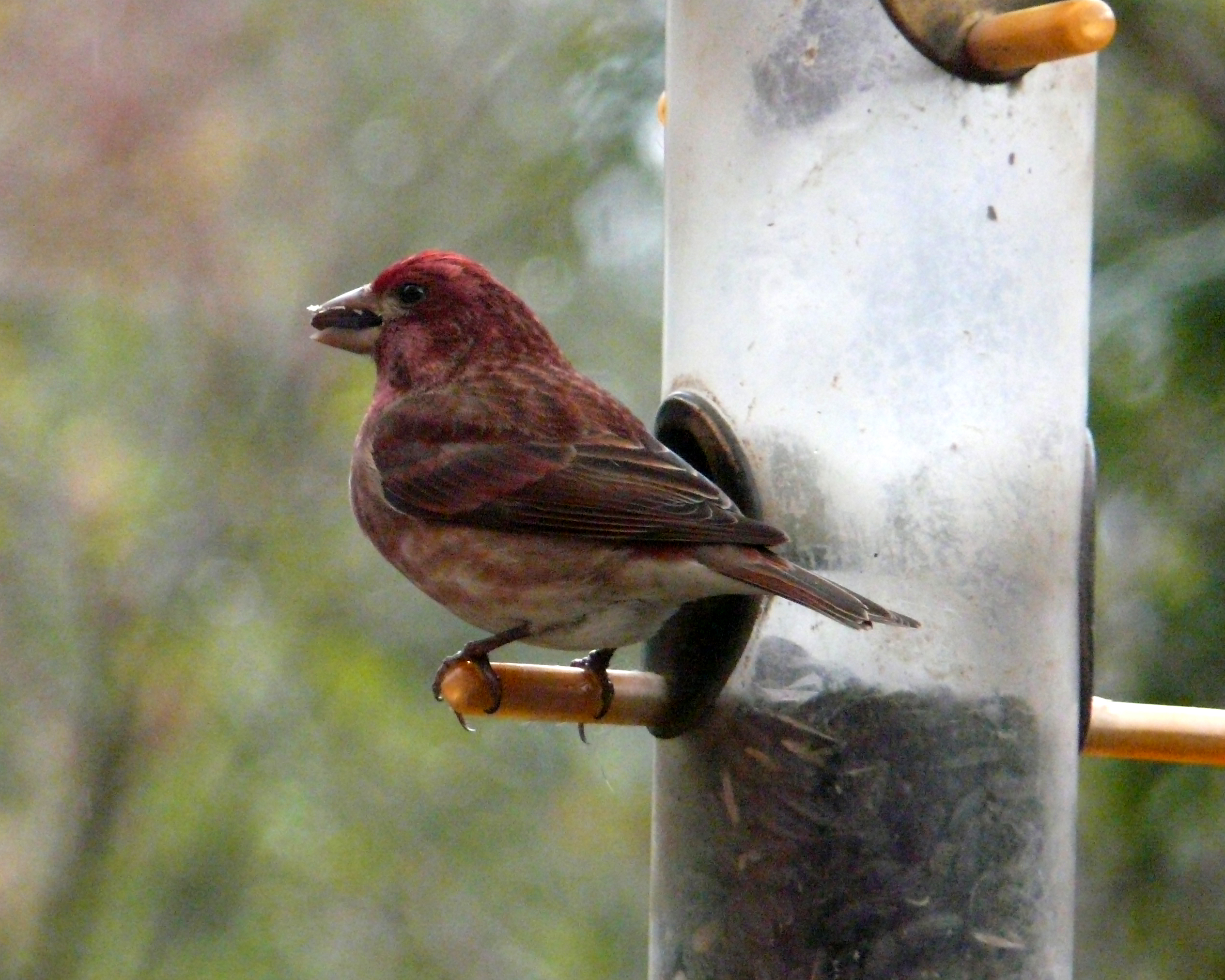
Many years ago, before House Finches had spread across the entire continent, separating House and Purple Finches was considered quite a challenge. But here, with the benefit of a few decades experience, they don’t look all that similar. There are clear differences in color, and the Purple Finch shows quite a bit more heft than the more slender House Finch. While the House Finch has patches of red, the Purple Finch is pinkish-purple all over.


Those dorsal view of the Purple Finch shows the pinkish color washed over the upperparts, including the wings.


Like all finches, they have no trouble popping open sunflower seeds.

Sauvie Island 4/9/11

Scouting for and leading two field trips for my Little Brown Birds class gave me opportunity to bird Rentenaar Road on Sauvie Island (Birding Oregon p. 57) three mornings in a row. It was interesting to see how the species list varied each day. It served as a reminder that every birding trip, no matter how often you cover the same spot, has the potential for something new.


The Ospreys that nest on this platform have returned within the past week. This was the only species that seemed willing to pose for the camera.

This location is one of the best in the Portland area to study sparrows this time of year. Between the two field trips, my class saw ten species; Golden-crowned, White-crowned, White-throated, Harris’s, Song, Fox, Lincoln’s, Savannah, Dark-eyed Junco, and Spotted Towhee. Many of these birds will have moved on in the next few weeks.