Sandy River Delta 7/20/12

While late July is normally pretty slow birding in the Willamette Valley, the Sandy River Delta continues to be active. The regular nesting species that are local specialties at this site (Yellow-breasted Chat, Lazuli Bunting, Willow Flycatcher, Eastern Kingbird, etc.) are still easy to find. A very vocal Indigo Bunting has been a rare treat the past week or so, and an even rarer Yellow-billed Cuckoo has been reported. On my recent visit, I enjoyed brief views of the bunting, but the cuckoo has not been relocated.
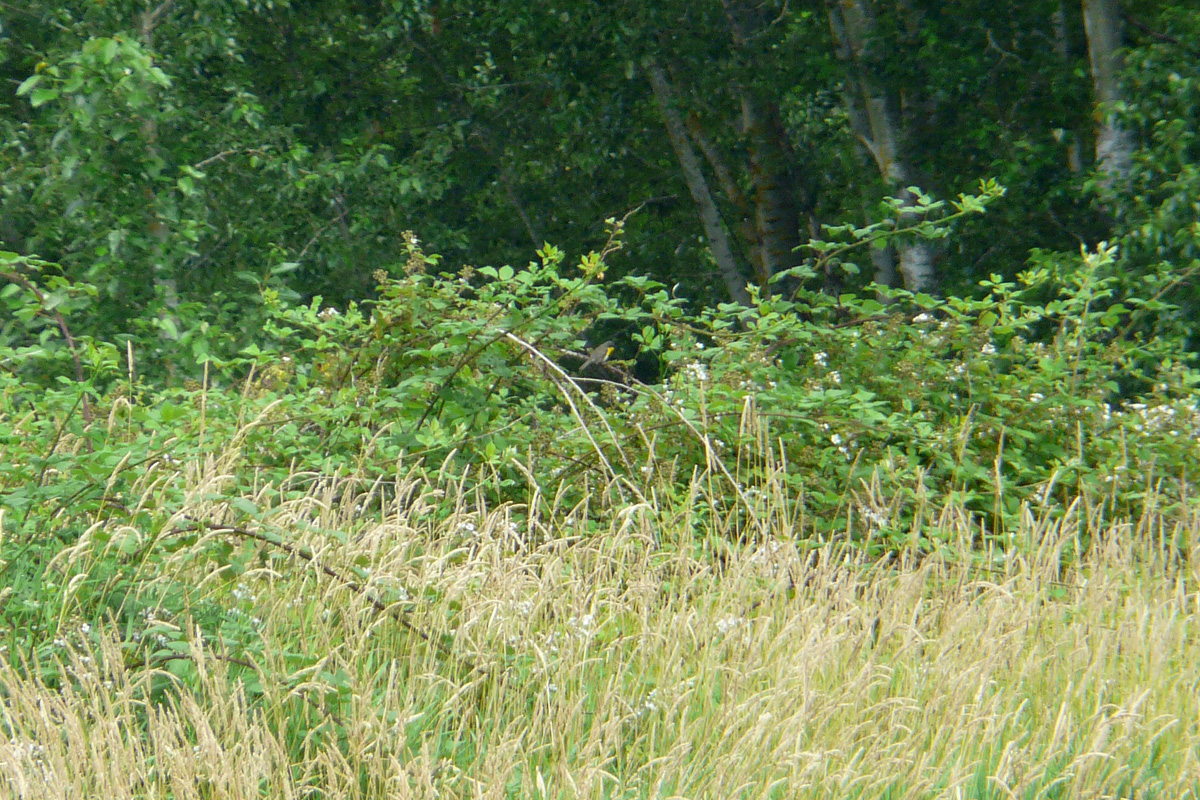
This Yellow-breasted Chat was singing away in the blackberry thickets. He stayed out of sight most of the time, but popped up briefly for a distant photo.

American Goldfinches were common in both the grassy and brushy habitats.

An Eastern Kingbird was using this pipeline marker as a hunting perch in the middle of a large grassy area.
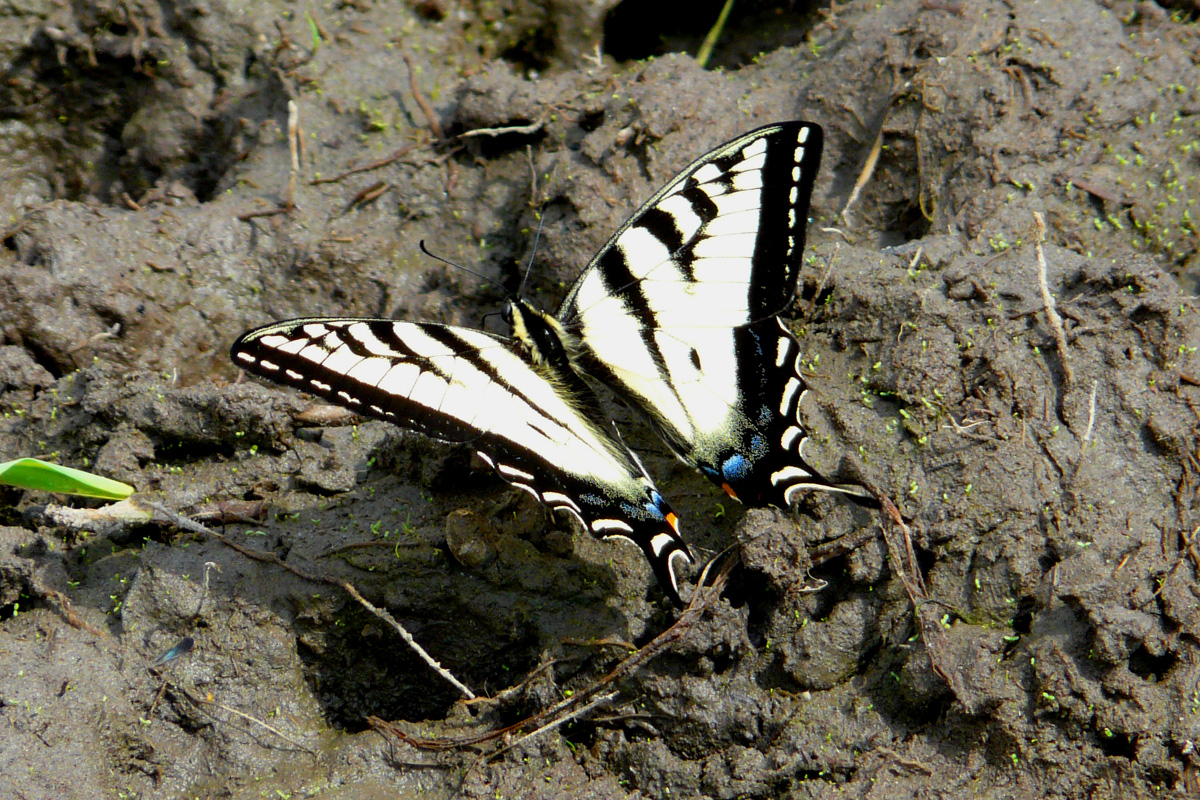
Western Tiger Swallowtail at the mud near the edge of Nala’s favorite swimming pond

Water levels are dropping, so Nala’s pond will soon be too shallow for swimming. But the the Sandy River has dropped enough to be accessible now, and the water in the river is a lot cleaner than the brown pond water.

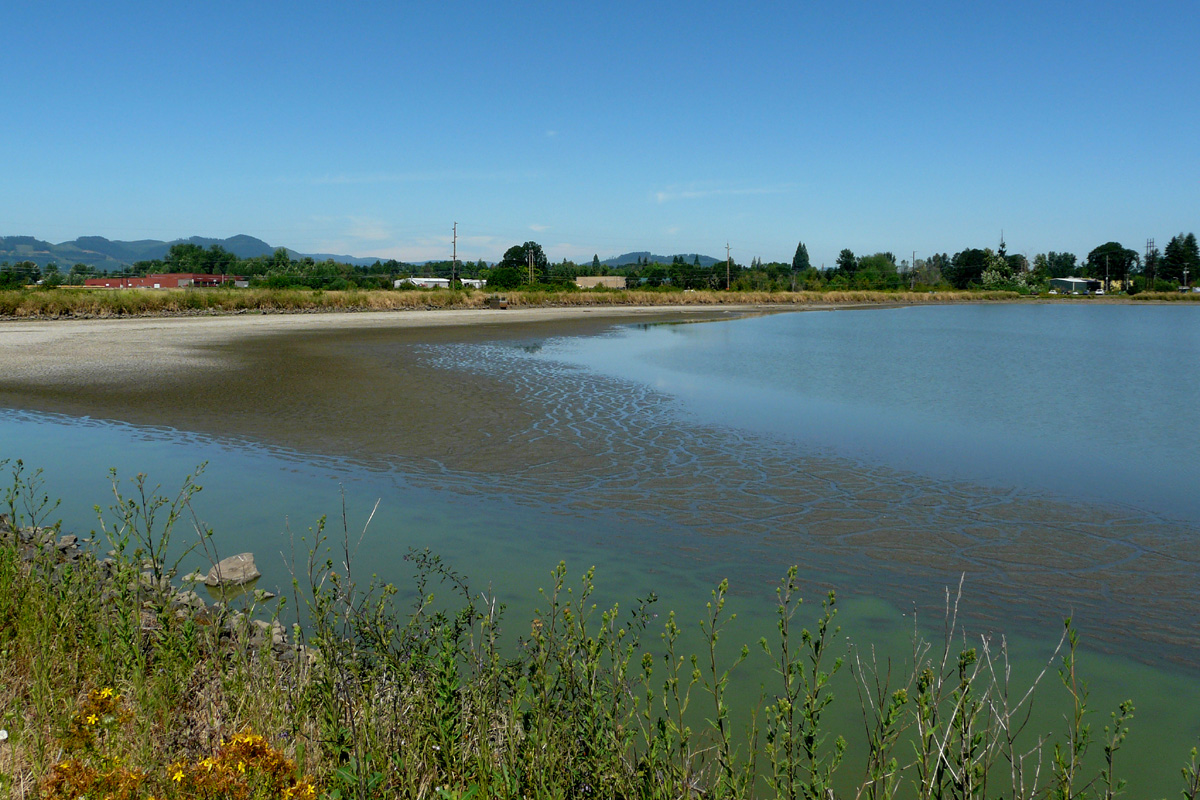
Washington County Wetlands

I visited several sites in Washington County to check for migrant shorebirds, inspired by the recent appearance of a Spotted Redshank at Fern Ridge Reservoir (Birding Oregon p 89) . I didn’t find anything so rare, but a few birds are moving through and there is promising mudflat habitat available.

A lot of work is being done at Fernhill Wetlands (Birding Oregon p. 61), resulting in the closure of a small section of the trail around Fernhill Lake.

The big news at Fernhill is the low water level of Fernhill Lake, creating mudflats along the shore for the first time in many years. Several species of shorebirds were feeding there today.

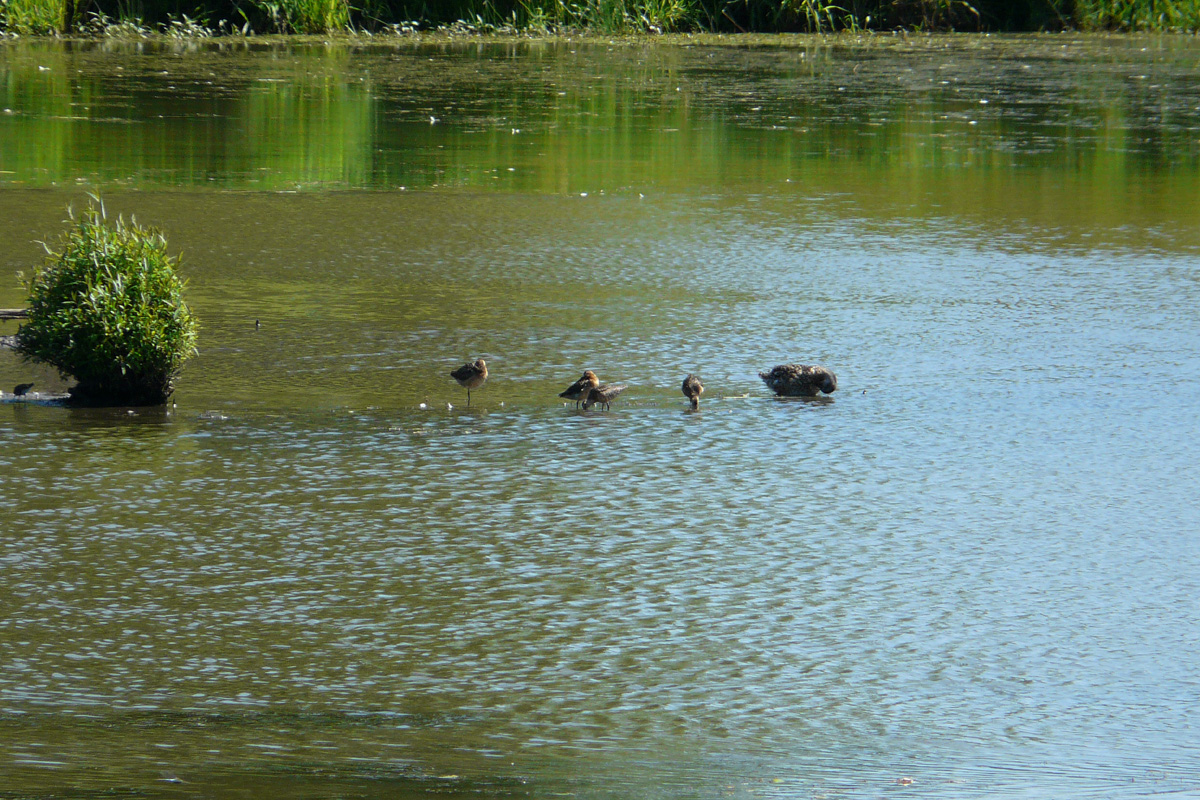
Water levels in Mitigation Marsh are quite high, so there wasn’t much mud. These Long-billed Dowitchers were hanging out with a Mallard.

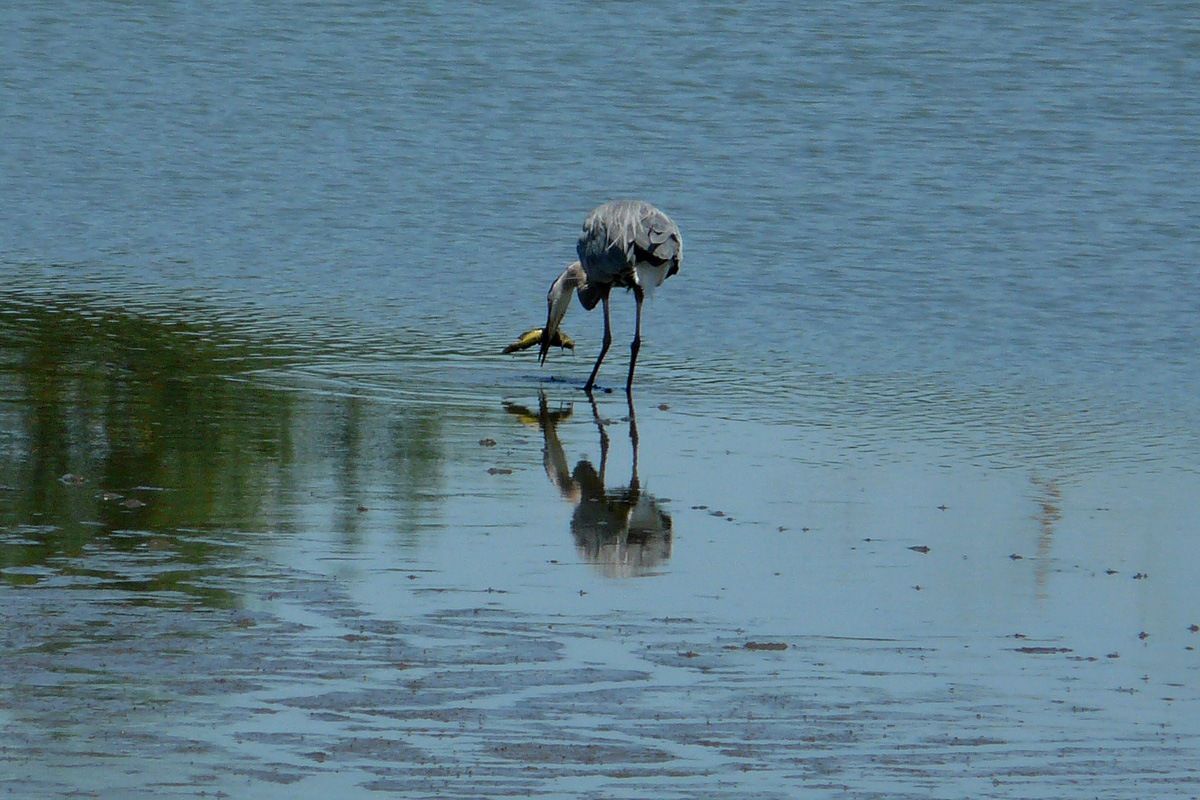
This Great Blue Heron caught a Bullhead (I can’t tell if it is a Yellow or Black Bullhead). He caught the fish near the middle of the lake, then flew to the shore to eat it.

There was some mudflat habitat at Jackson Bottom Wetland (Birding Oregon p. 60), but not a lot of shorebirds yet. The Hardhack is in bloom, adding a splash of color to the marsh.

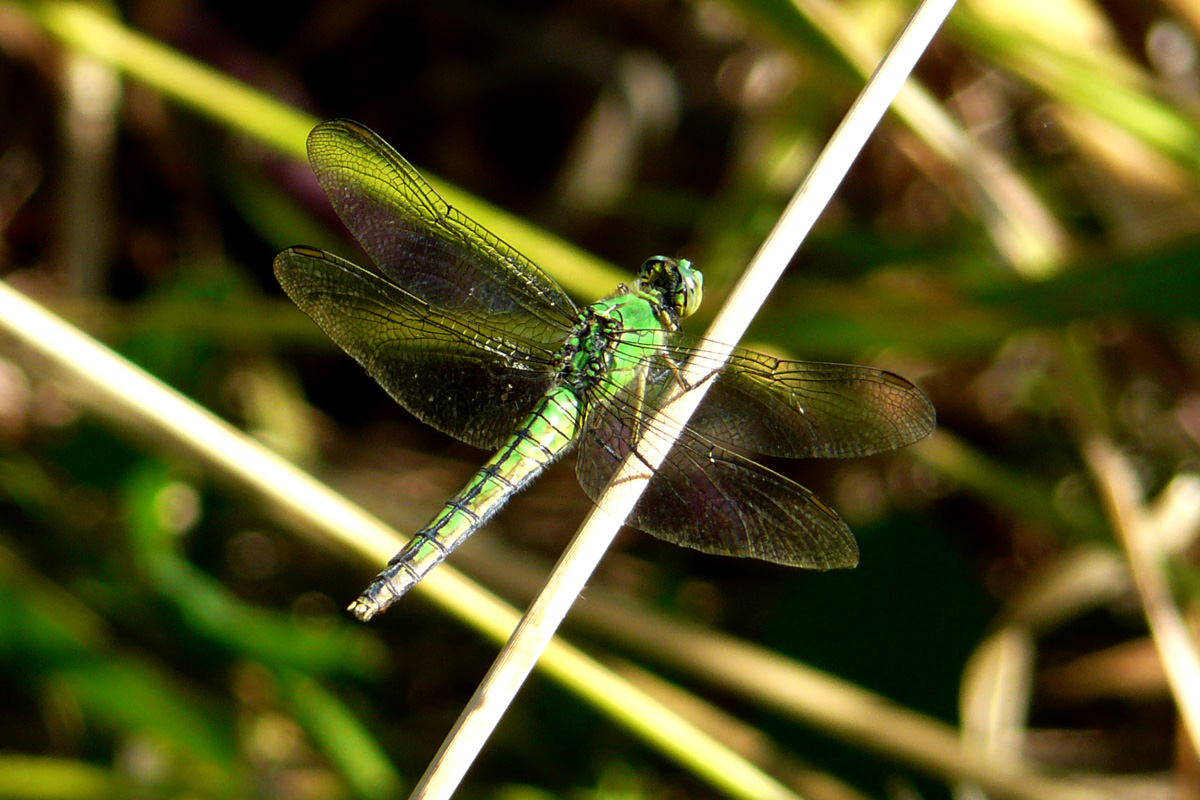
One of these days I may have to break down and buy a field guide to dragonflies. Or maybe I will just learn to appreciate beautiful creatures without putting a name to them.

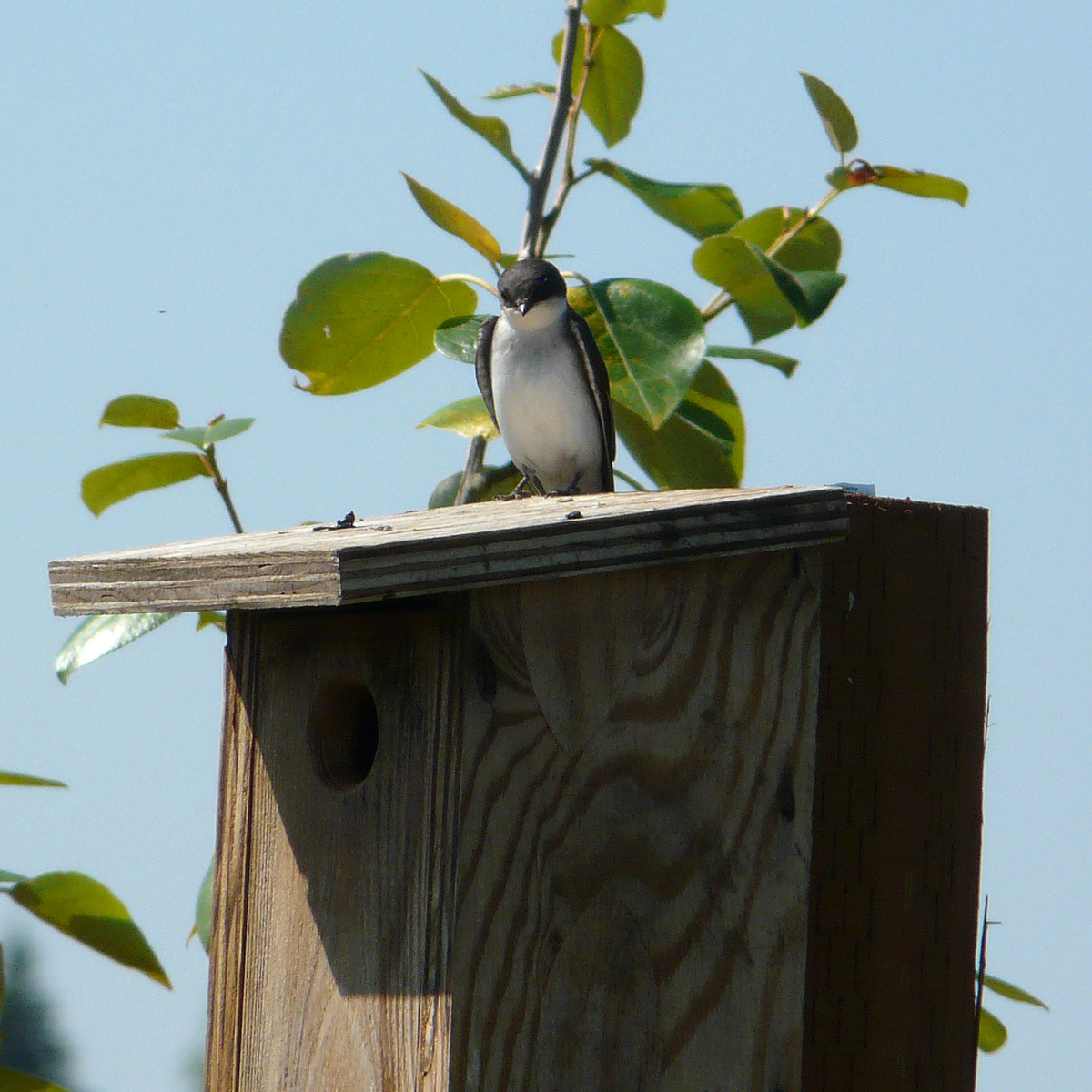
Tree Swallows are thick at Jackson Bottom. Notice the dusky wash across the upper breast. Young Tree Swallows can show extensive dark coloring here, leading some birders to confuse them with Bank Swallows.


Great Wass Island, Maine

The Nature Conservancy has a preserve on Great Wass Island, just south of Jonesport on the Maine coast. The property has a nice variety of habitats, including spruce forest, cedar bog, and rocky coast.

Wild Blueberries grow in the open areas at the top of the hills.

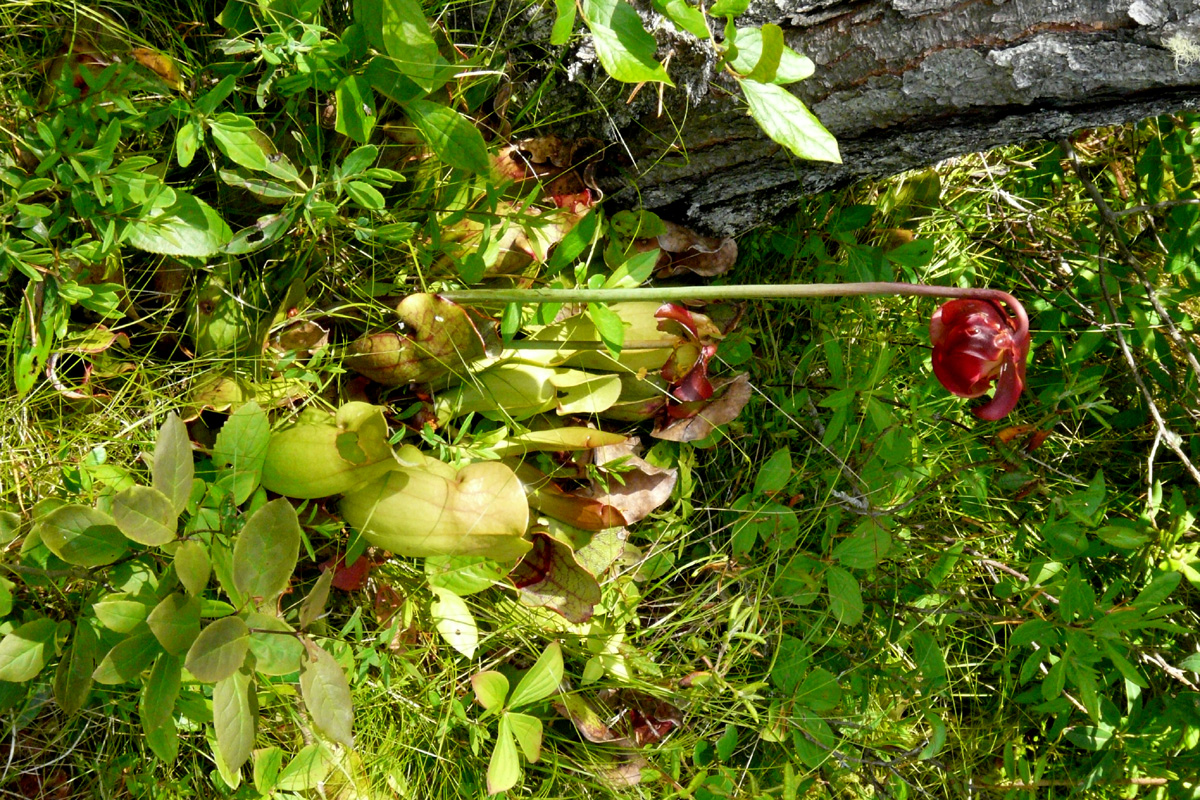
The cedar bogs are home to carnivorous plants, like this pitcher plant.

Runoff from the bogs is the color of tea.

The shore offers some good tidepooling at low tide.

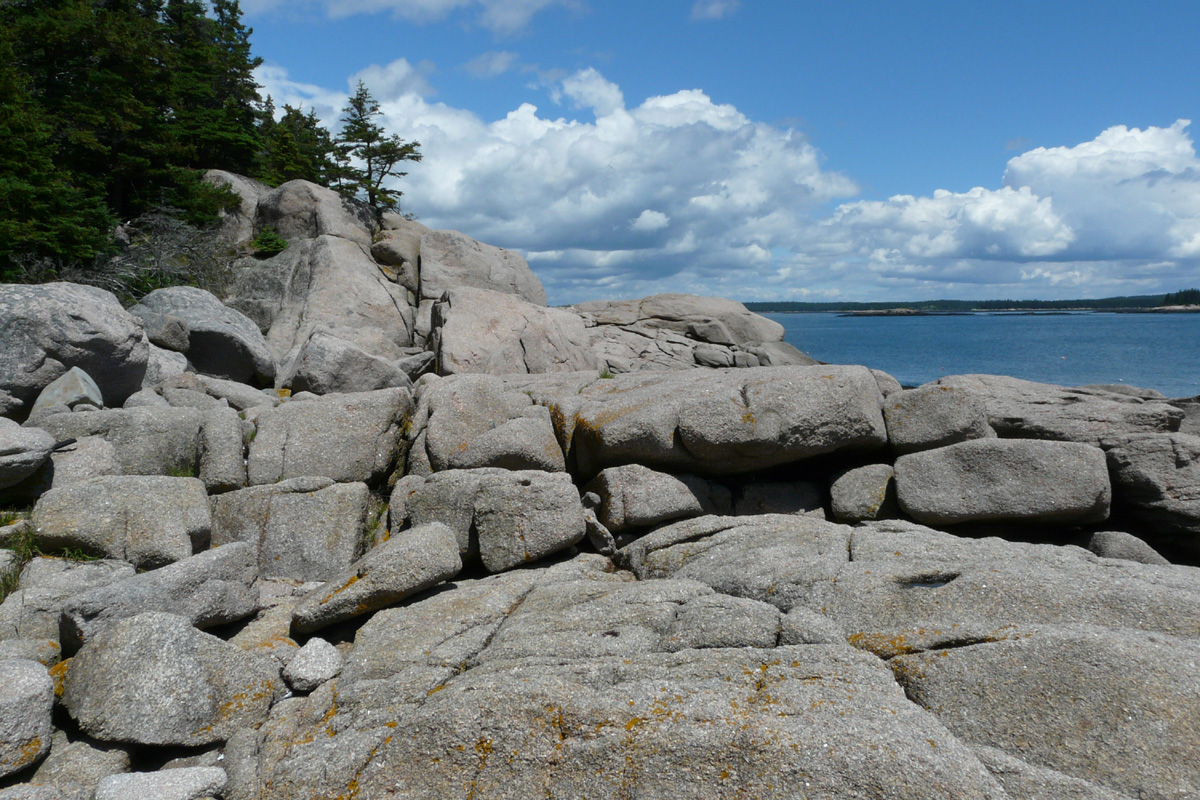
This is the “trail” along the shoreline. The occasional dab of blue paint lets you know you are not completely lost.

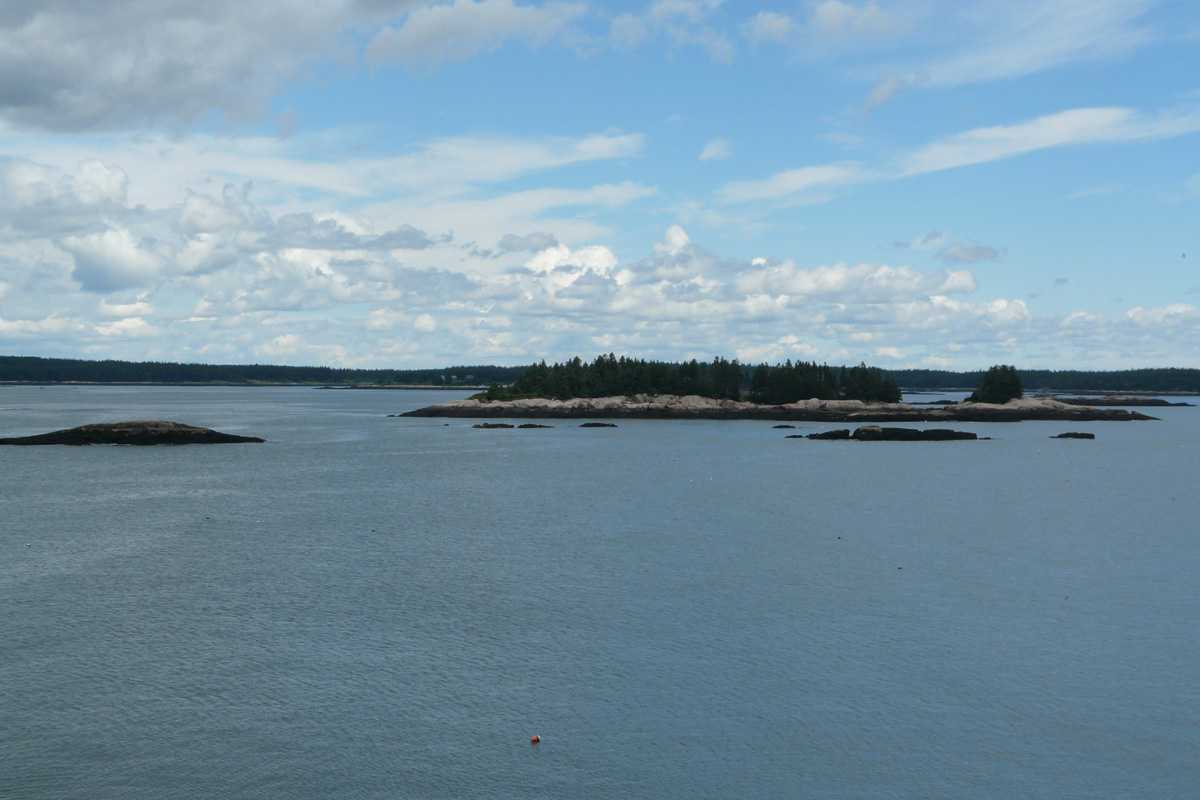
Lots of little islands lie just offshore.

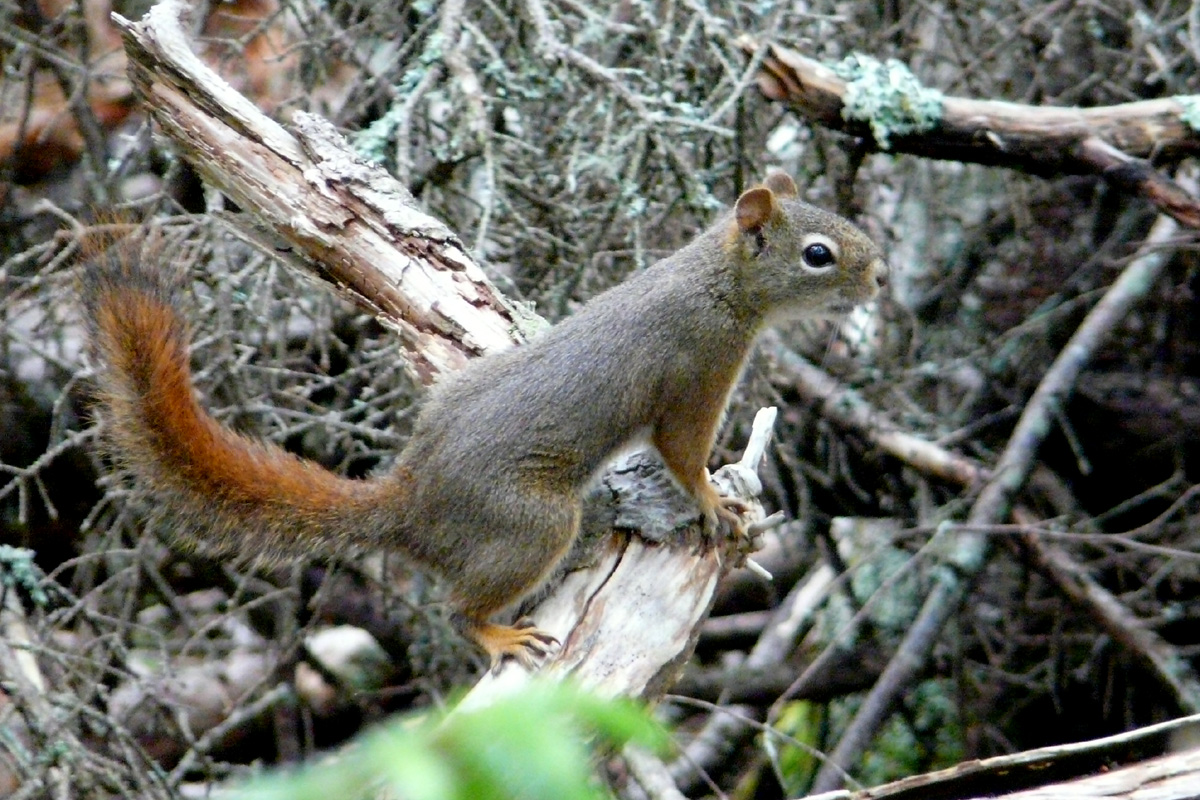
Red Squirrels are common in the woods.

And that is the last of the photos from my Maine trip. Now back to Oregon.

Sunkhaze Meadow NWR, Maine

Sunkhaze Meadow NWR lies just northeast of Bangor, Maine. It is a huge open wetland surrounded by woods. During my recent trip to Maine, most of the sites I visited were along the coast. Sunkhaze is inland, so the birds were a little different, and the mosquitoes were much more abundant.

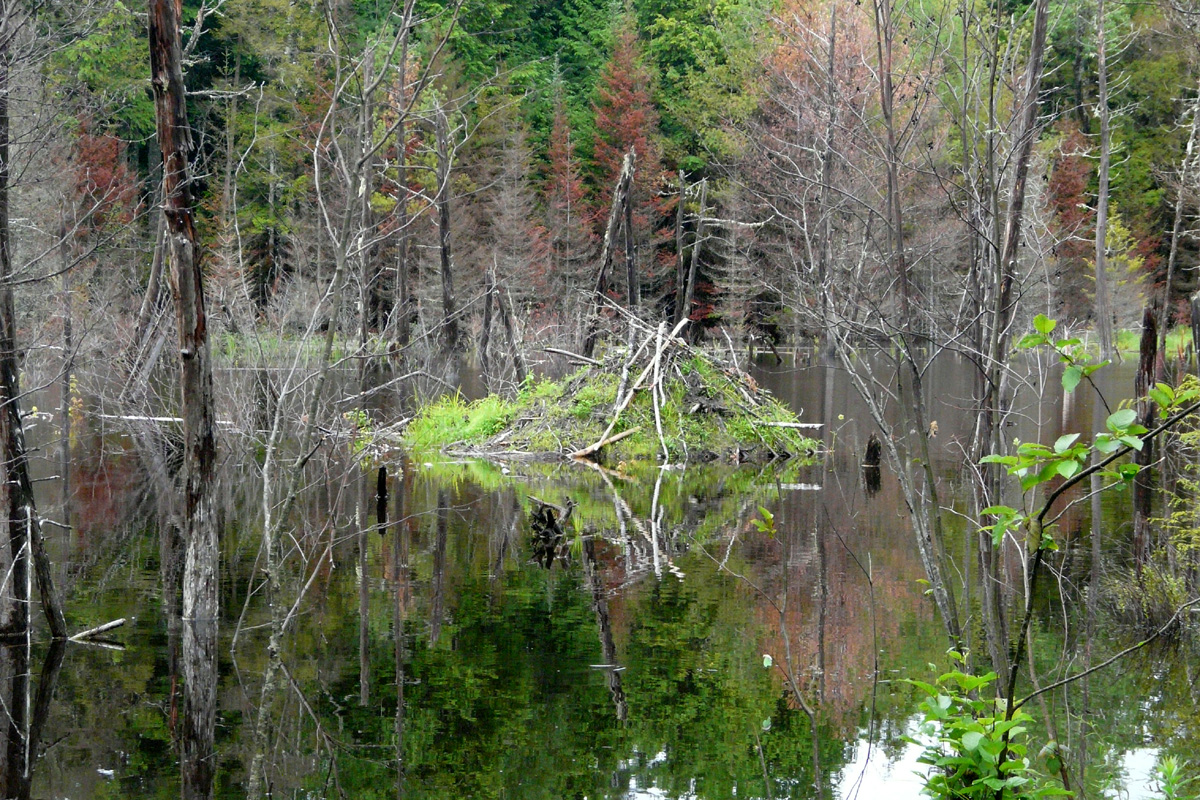
Beaver pond. The area had received a lot of rain recently, so the pond was very full.

Here’s a closer look at the Beaver lodge. The Beavers were out of sight, as expected during the day. A Star-nosed Mole was a nice find here, although he moved too fast for a photo.

Eastern Phoebe carrying food for her young.

Slugs were feeding on this colorful fungus.

Northern Leopard Frog

Red-eyed Vireo

Baby Turkeys! (Turklets? Turkitos?) I saw two females, each with a brood of about a dozen young. These were photographed through the windshield.

This is a neat site. Had the bugs not been so bad, I would have liked to have explored it more thoroughly.

The Ball Park, Gulf of Maine

The Ball Park is an area off the coast of Bar Harbor, Maine where cold-water upwellings bring nutrients close to the surface. This cold food-rich environment attracts whales and other marine mammals, which in turn attract lots of tourists on whale watching trips. But this is also one of the best spots along the east coast for pelagic birding. Pelagic trips off the coast of Oregon have spoiled me a little, as the numbers and diversity of birds are so much greater than in the east, but it was still nice to see a few species that I don’t get to see in the west.

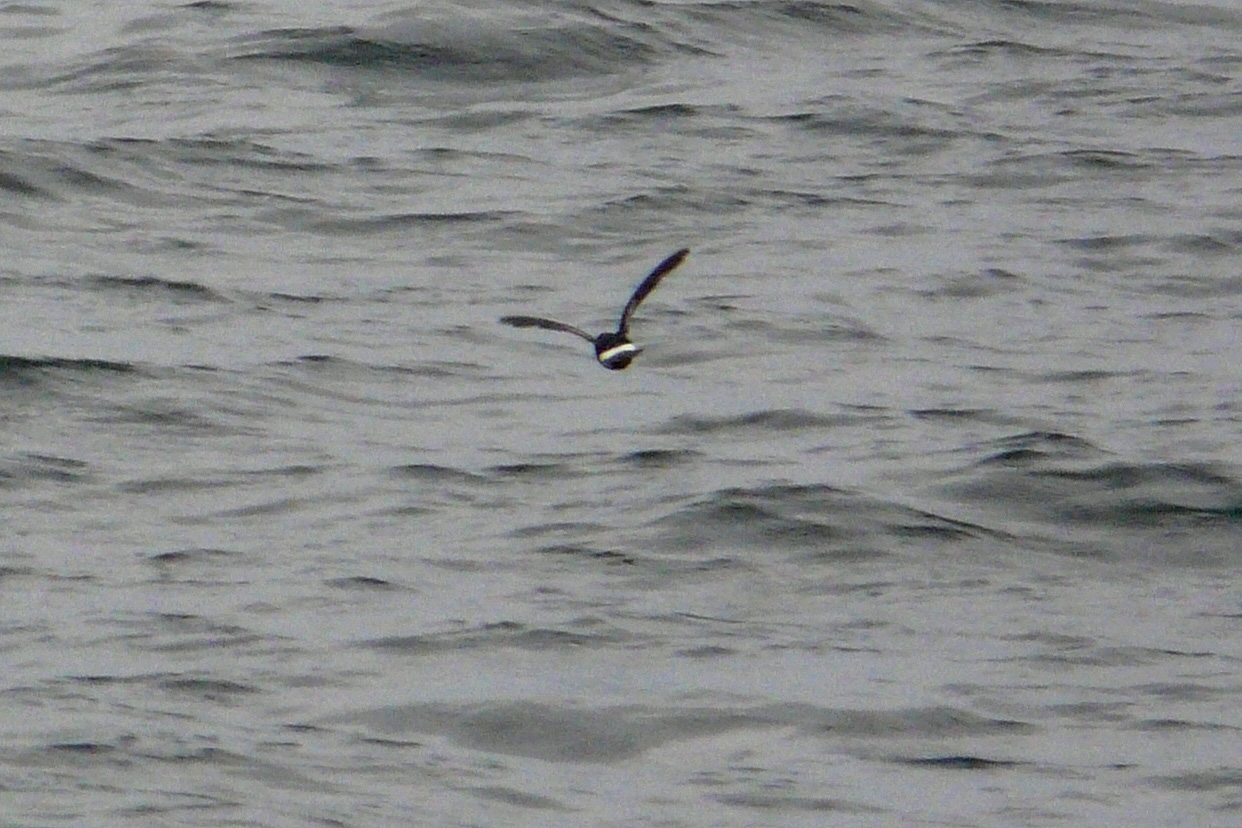
Wilson’s Storm-Petrels are the most common seabirds on these trips.

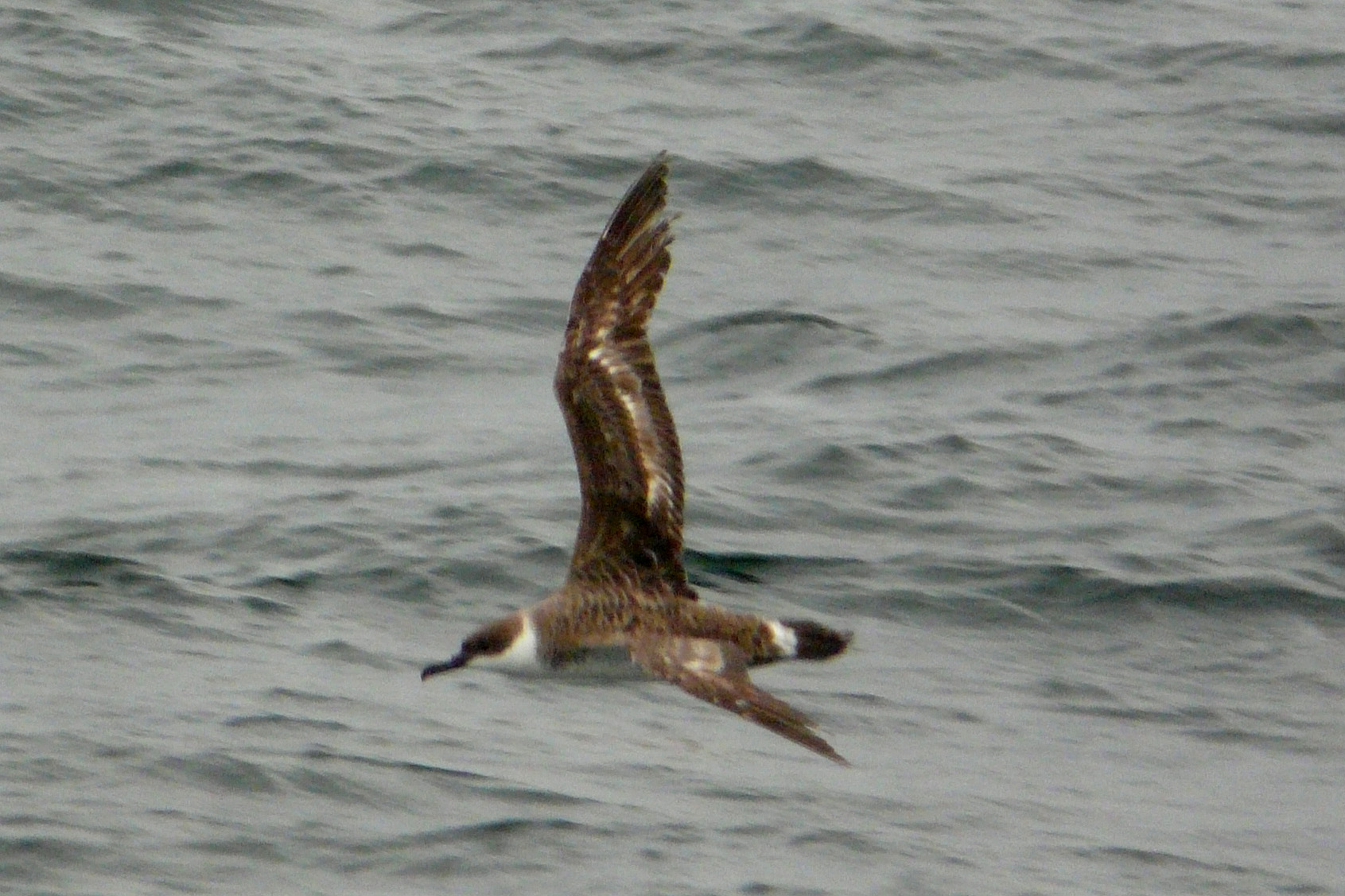
Great Shearwaters often fly along the boat, or rest on the water is large groups.

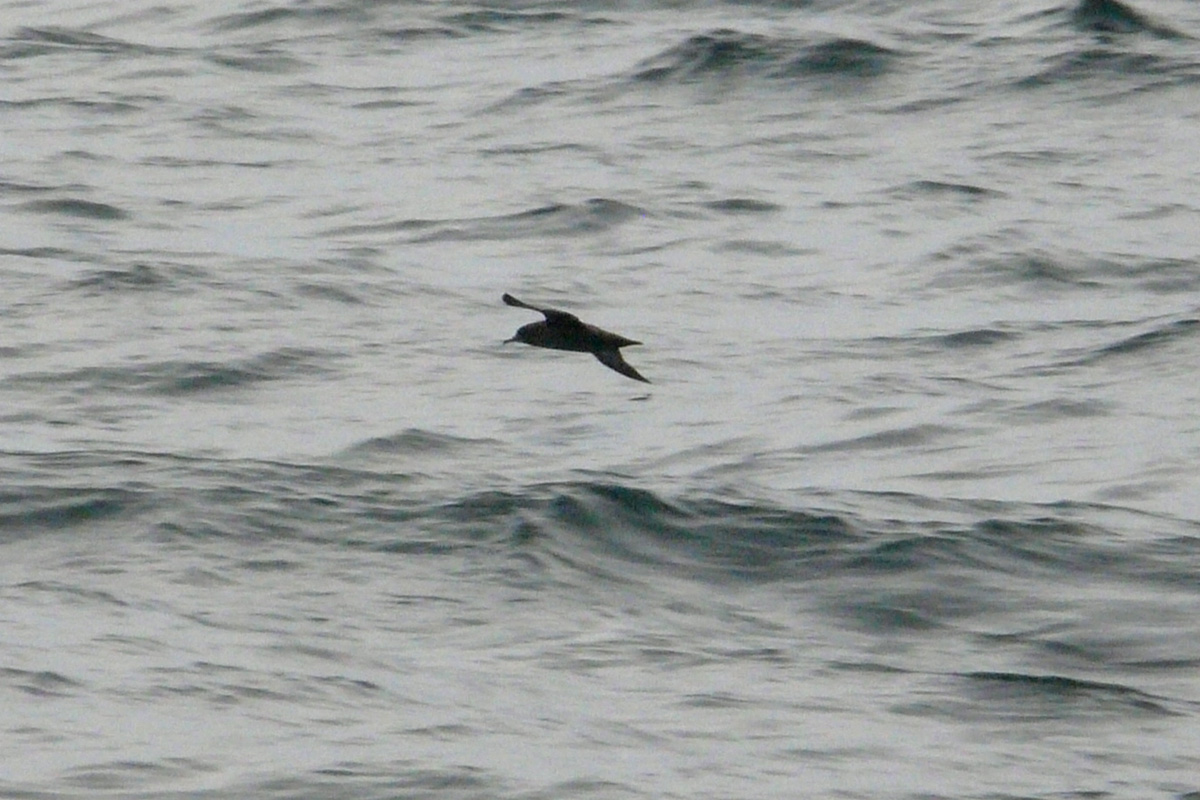
A few Sooty Shearwaters flew by.

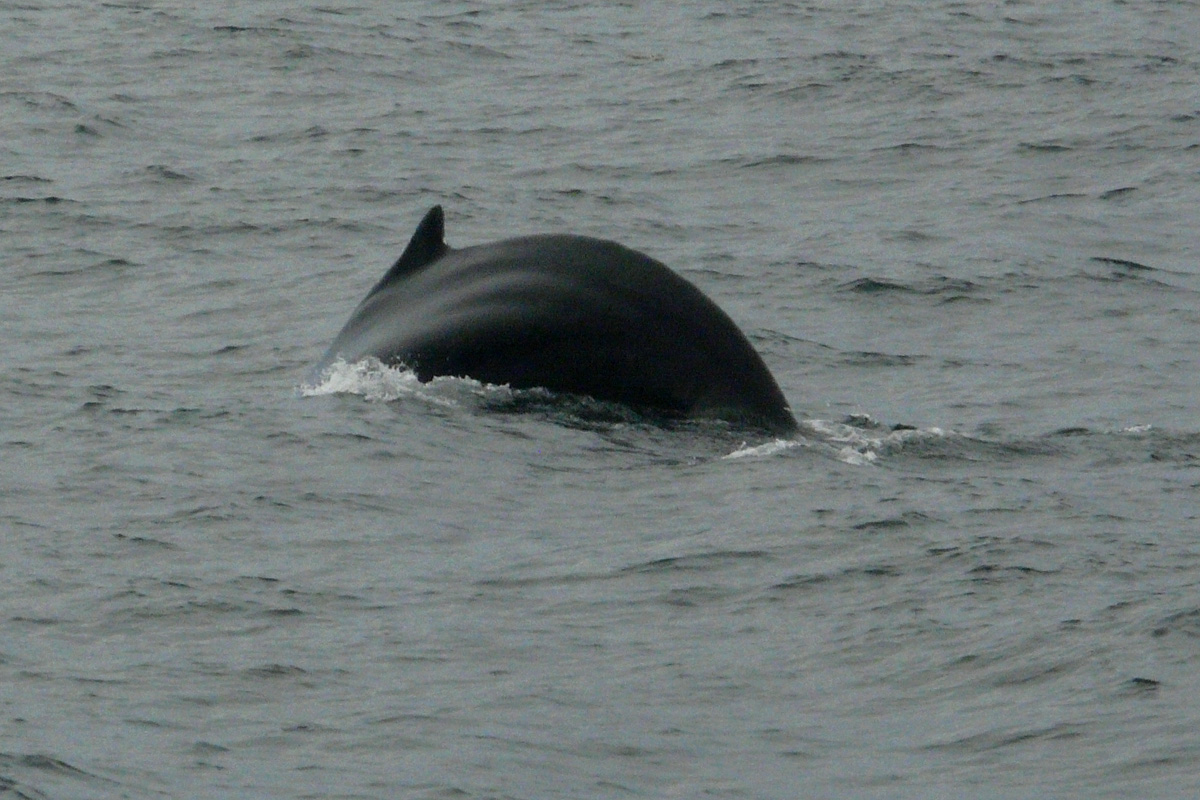
Of course, most people on the boat were looking for whales. A Minke Whale made a brief appearance to give me a life mammal, but this Humpback was much more cooperative. Researchers identify individual Humpbacks by the markings on their flukes. This is Gavel, who was first recorded in 2006.

We got to smell Gavel’s breath at one point, an awesome, if rather gross, experience.

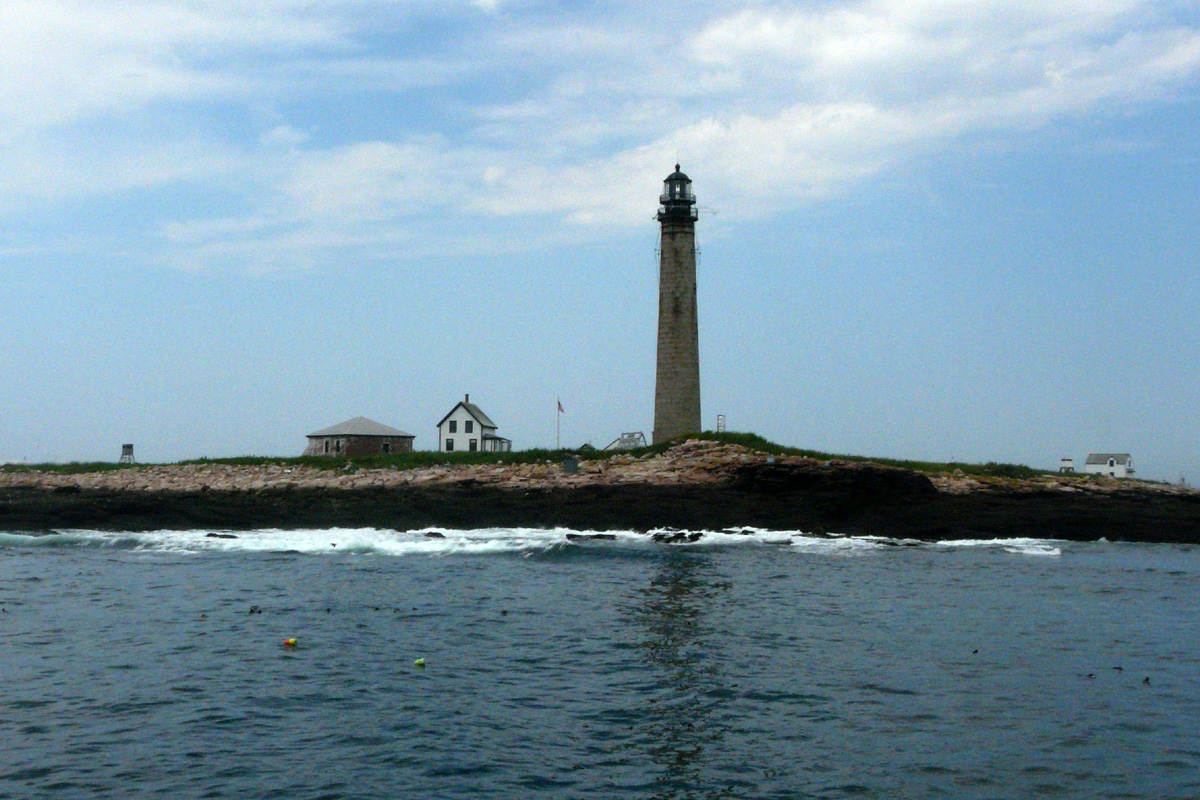
After chasing Gavel around for a while, the boat headed for Petit Manan Lighthouse, part of Petit Manan NWR. This island serves as a nesting colony for gulls, terns, and alcids. Only researchers are allowed on the island, and the boat does not get close enough to see the nesting areas, but the waters surrounding the island held a lot of birds.

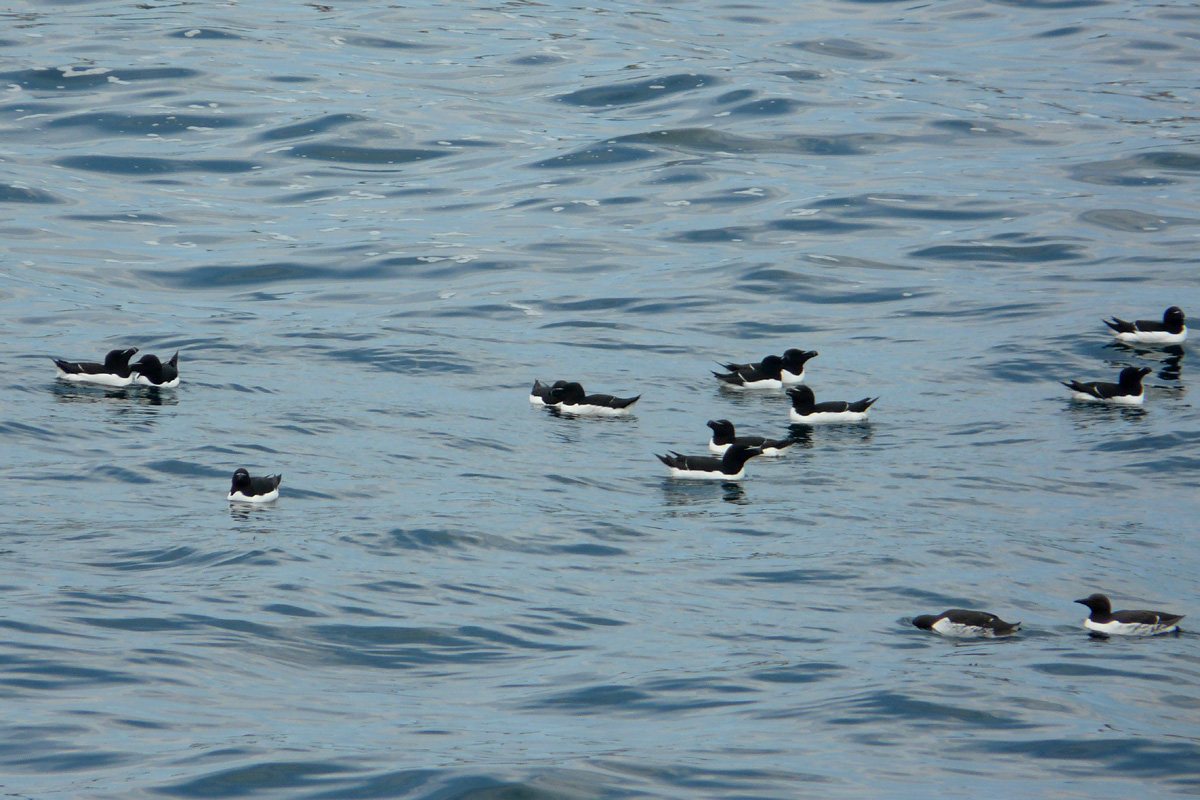
Here is a flock of Razorbills, with two Common Murres on the lower right.

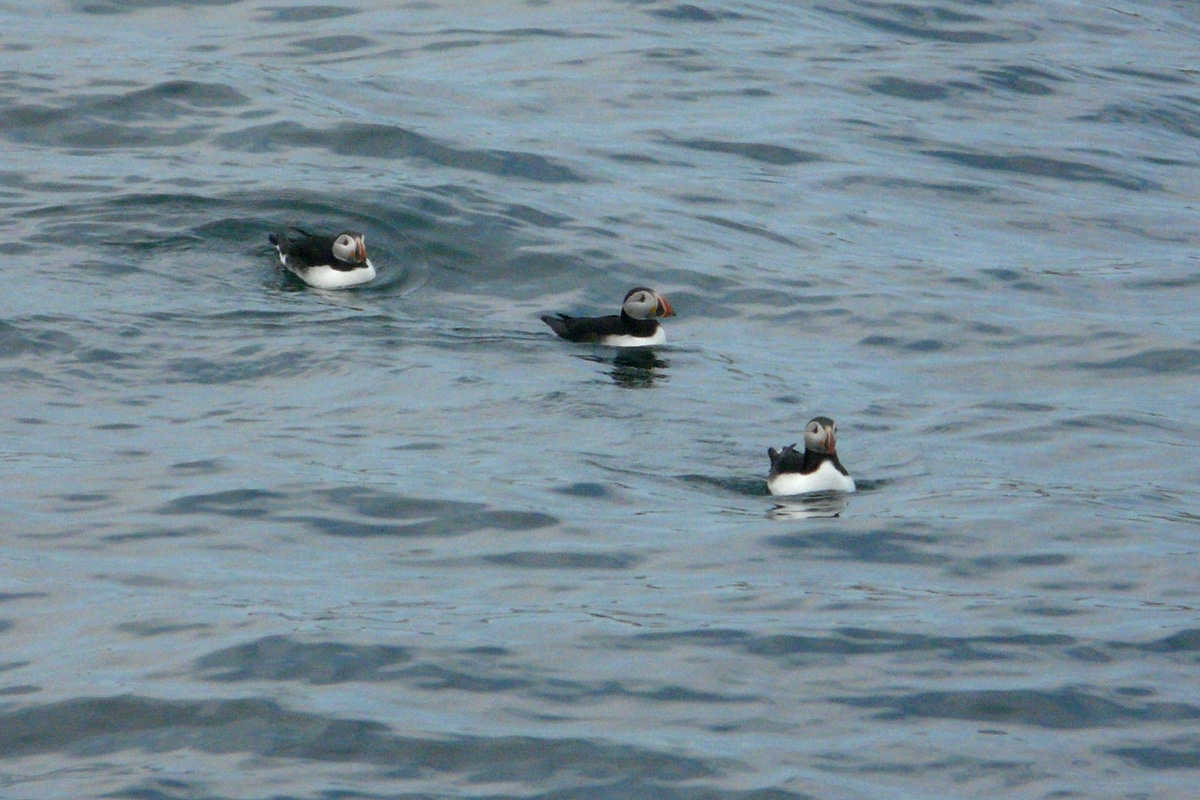
Atlantic Puffins win the prize for cutest seabird on the trip.

Schoodic Point, Maine

Schoodic Point is the mainland section of Acadia National Park. It is not as well known as the main portions of the park on Mt. Desert Island, but the Schoodic section is free to get into and less crowded. The wooded section offers great hiking, and the point itself is a good place to seawatch.

This Snowshoe Hare was eating a mushroom. Love those big feet!

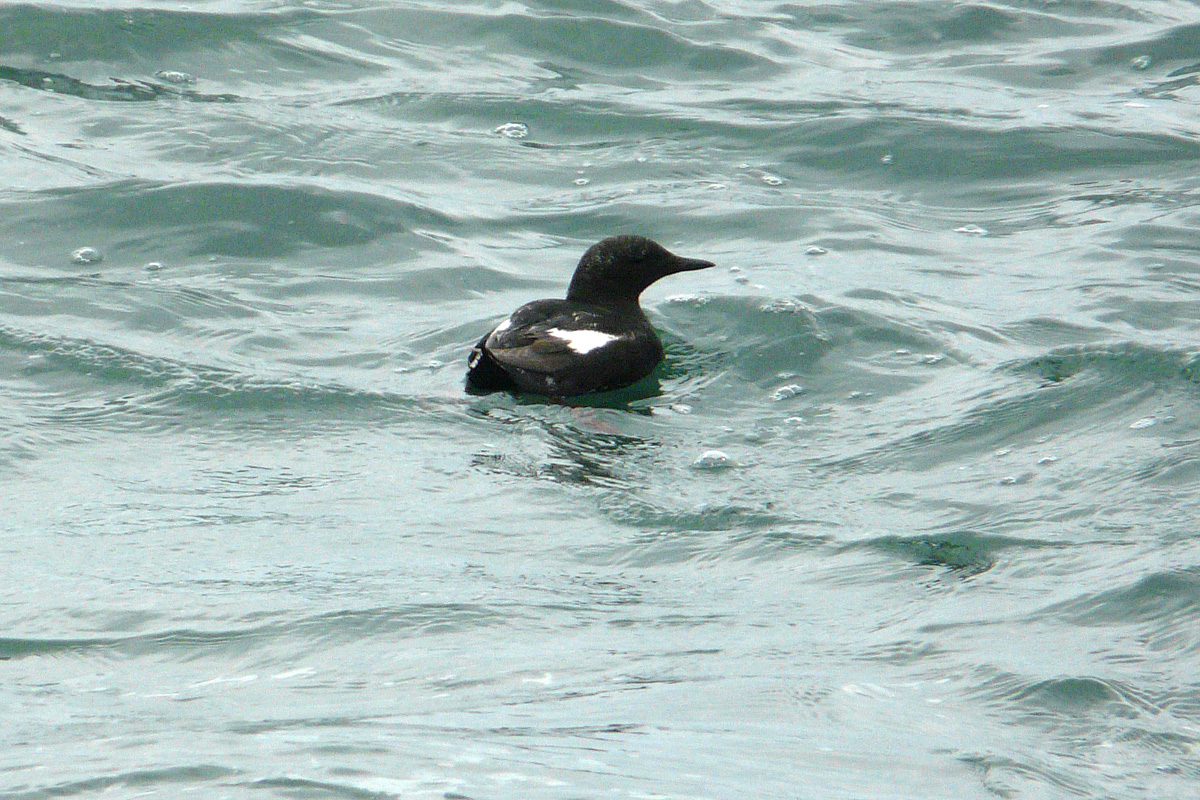
Black Guillemots are common in the waters off the point.

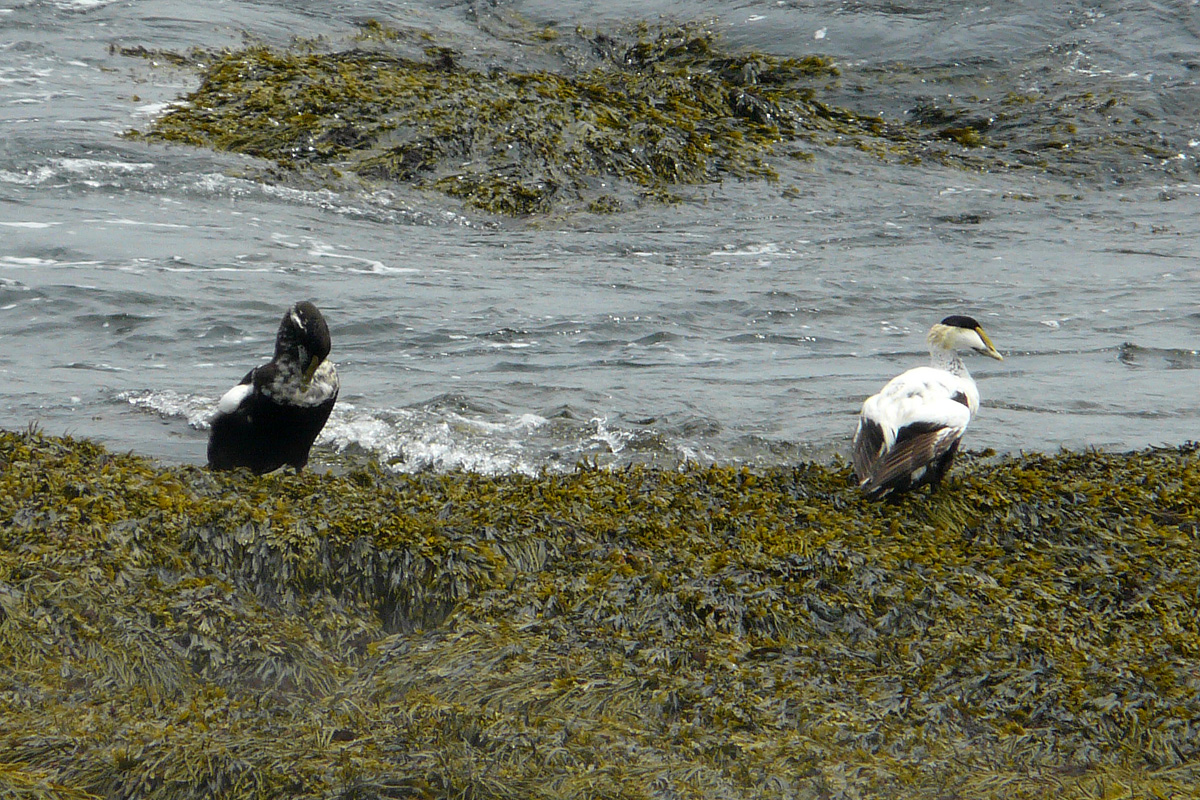
Common Eiders

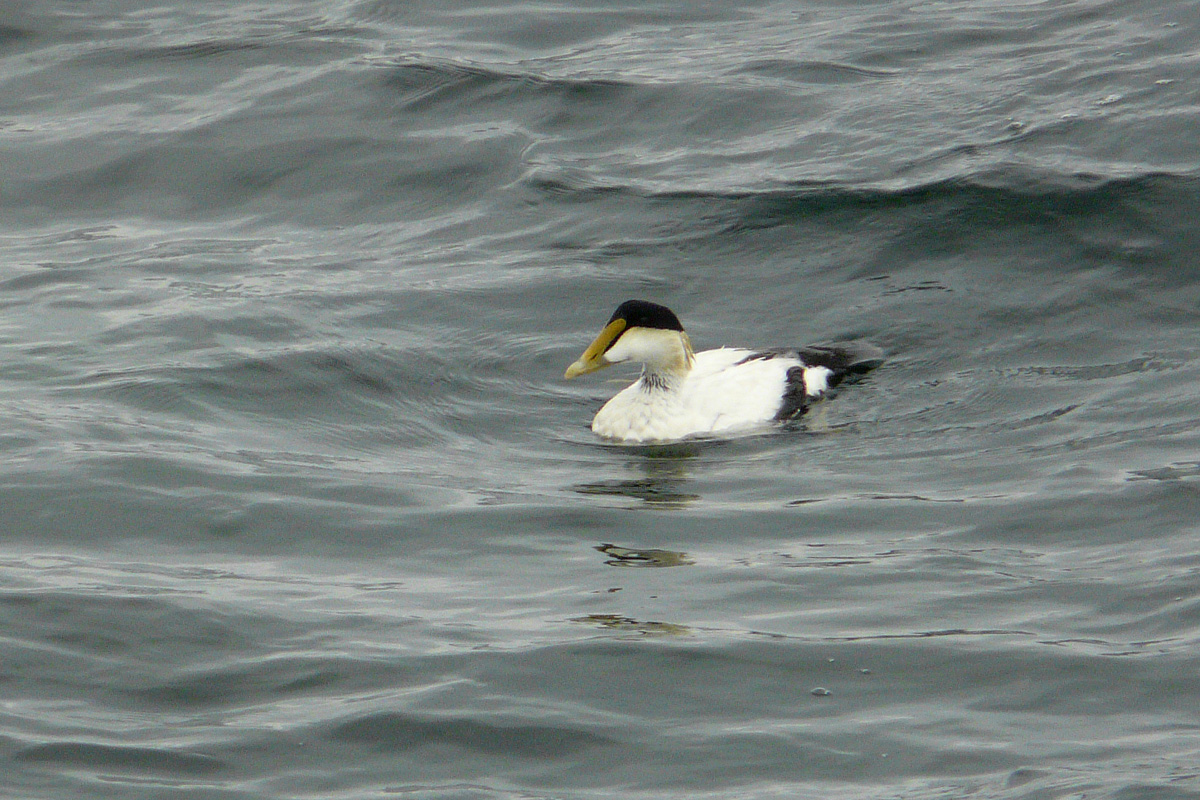
A Common Eider drake showing the strange bill structure.

Common Eider hens

Two Great Black-backed Gulls hanging out with Herring Gulls. Laughing Gulls are present in small numbers, too, but they tend to keep farther away from the mainland.

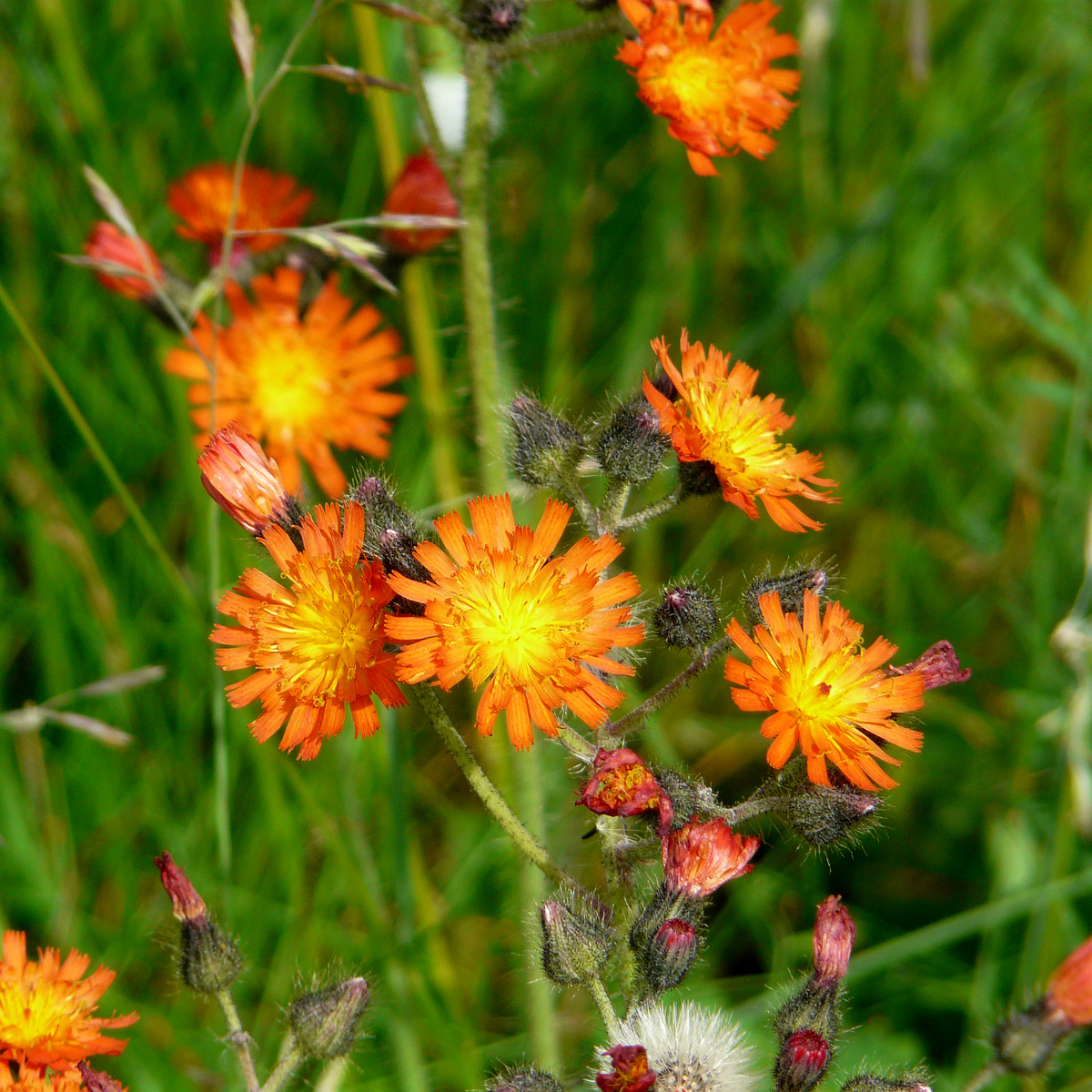
These irises were blooming in many areas along the rocky shore. Anyone know the species?

Petit Manan NWR, Maine

One of my favorite spots on the central Maine coast is Petit Manan National Wildlife Refuge. Two trails lead you through meadows, spruce forest, a cedar bog, and rocky coast.

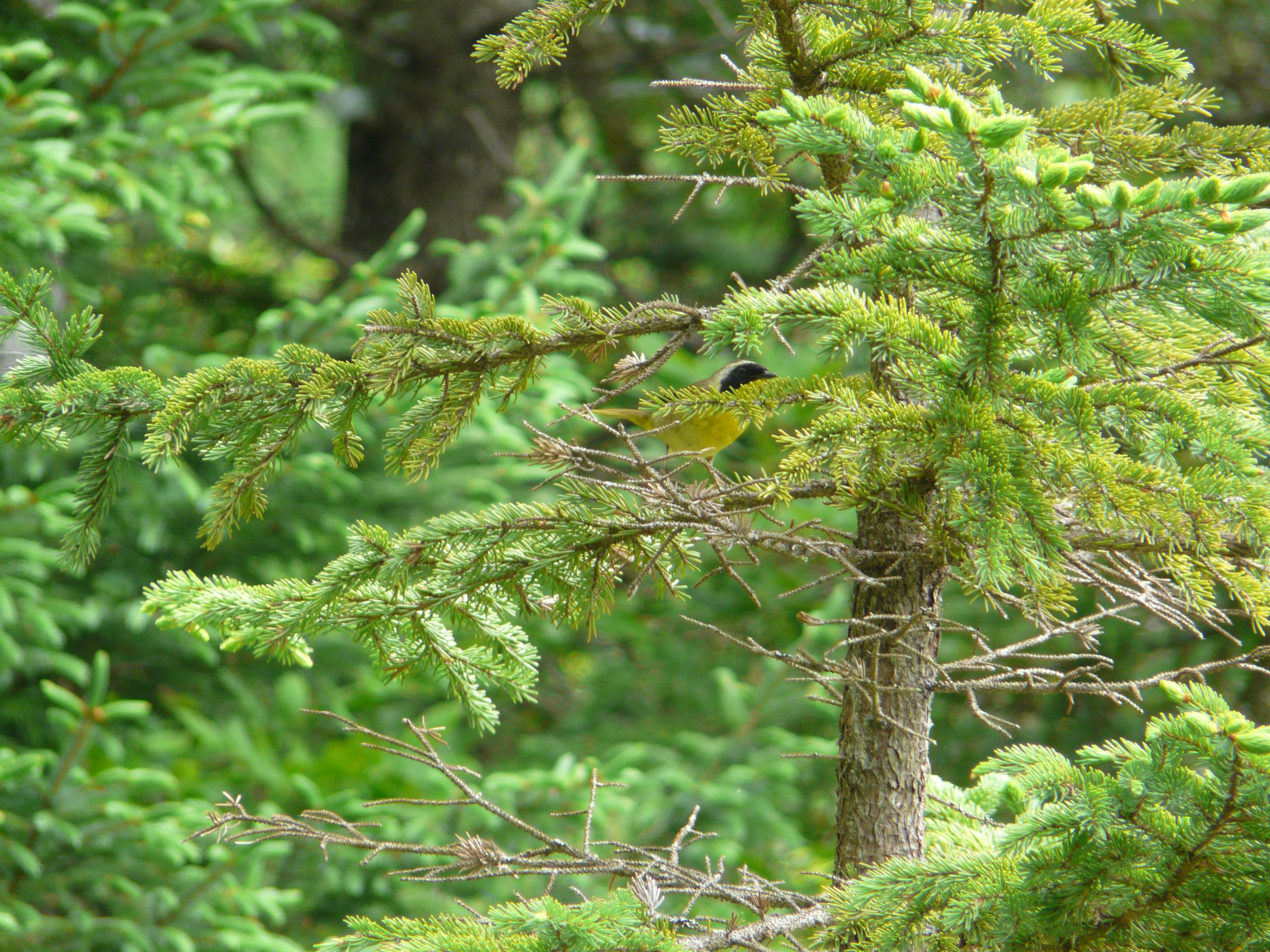
This Common Yellowthroat was playing hide-and-seek. In Oregon, I typically find this species in wetland habitats, but in Maine they are common in groves of small spruce.

The tide was out during my visit, so I did a little tidepooling. The crab was less than two inches wide. He was feeding on some sort of aquatic worm.

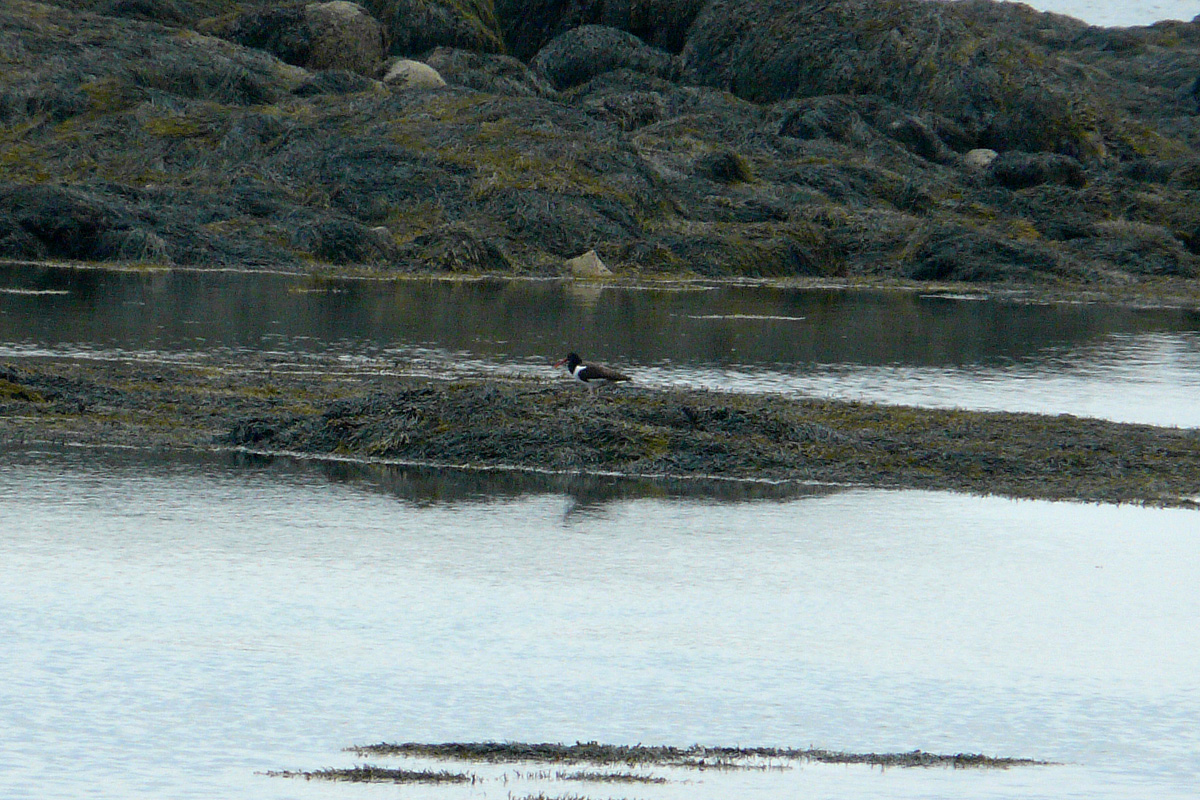
The best birds of the trip were two American Oystercatchers. This species is quite rare this far north.
Despite the distance, this bird’s bold pattern makes for an easy ID.

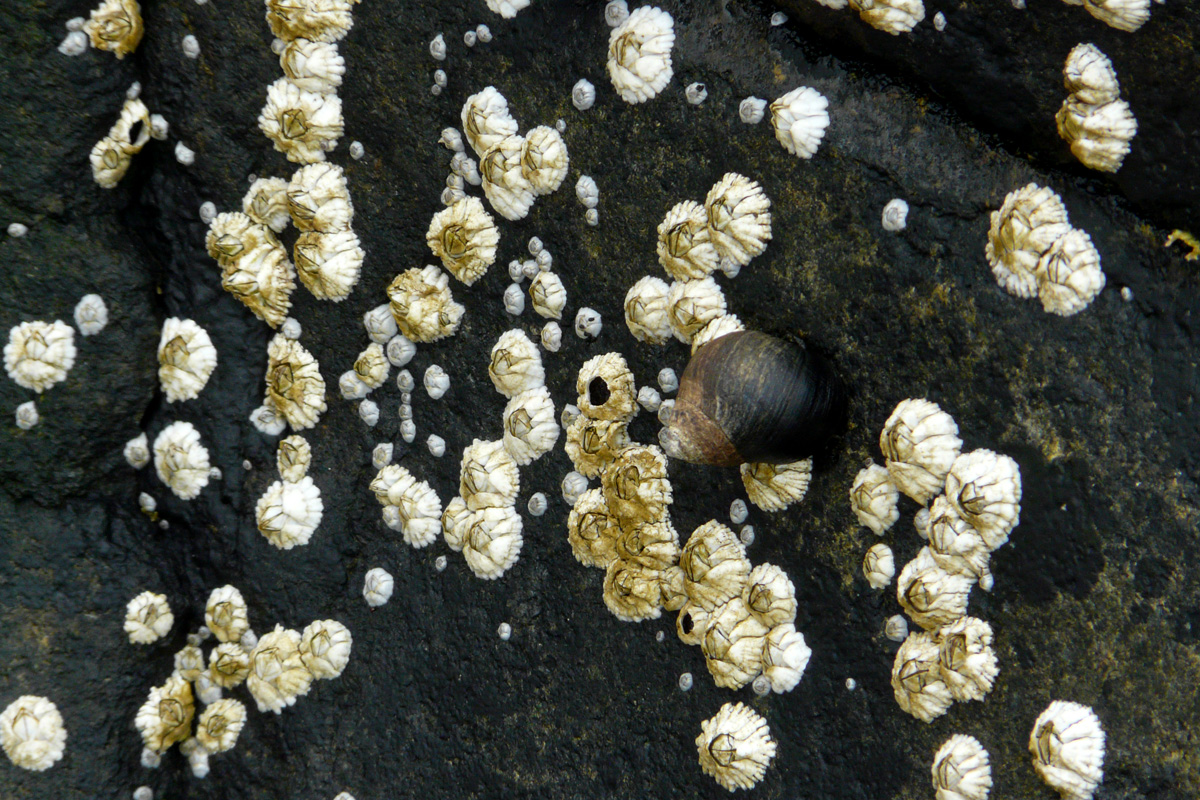
The exposed rocks were covered with barnacles and snails.

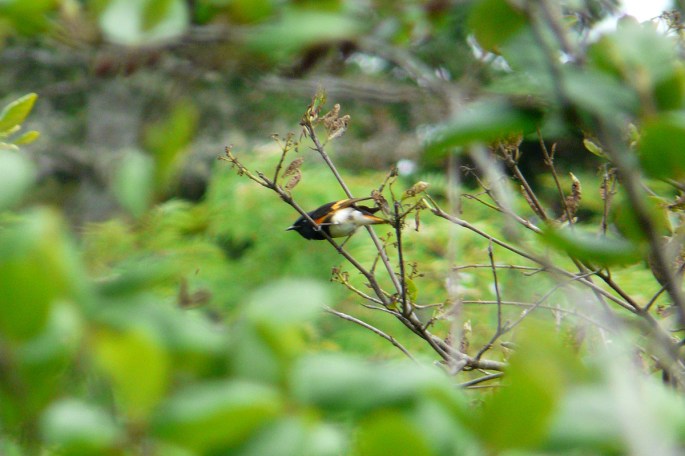
An American Redstart about to take off. This species does not like to sit still for me.

Of course, if there are lots of leaves between us, he will sit perfectly still. Jerk.

Fort Rock State Park

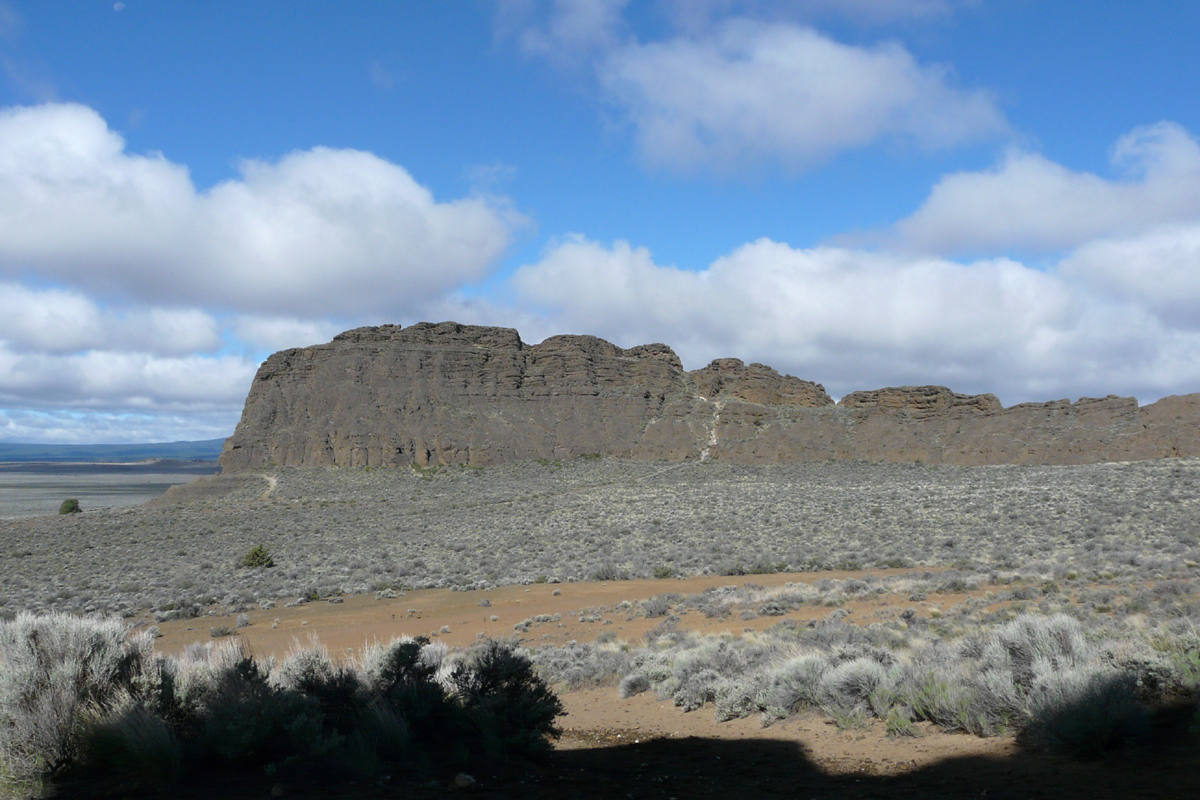
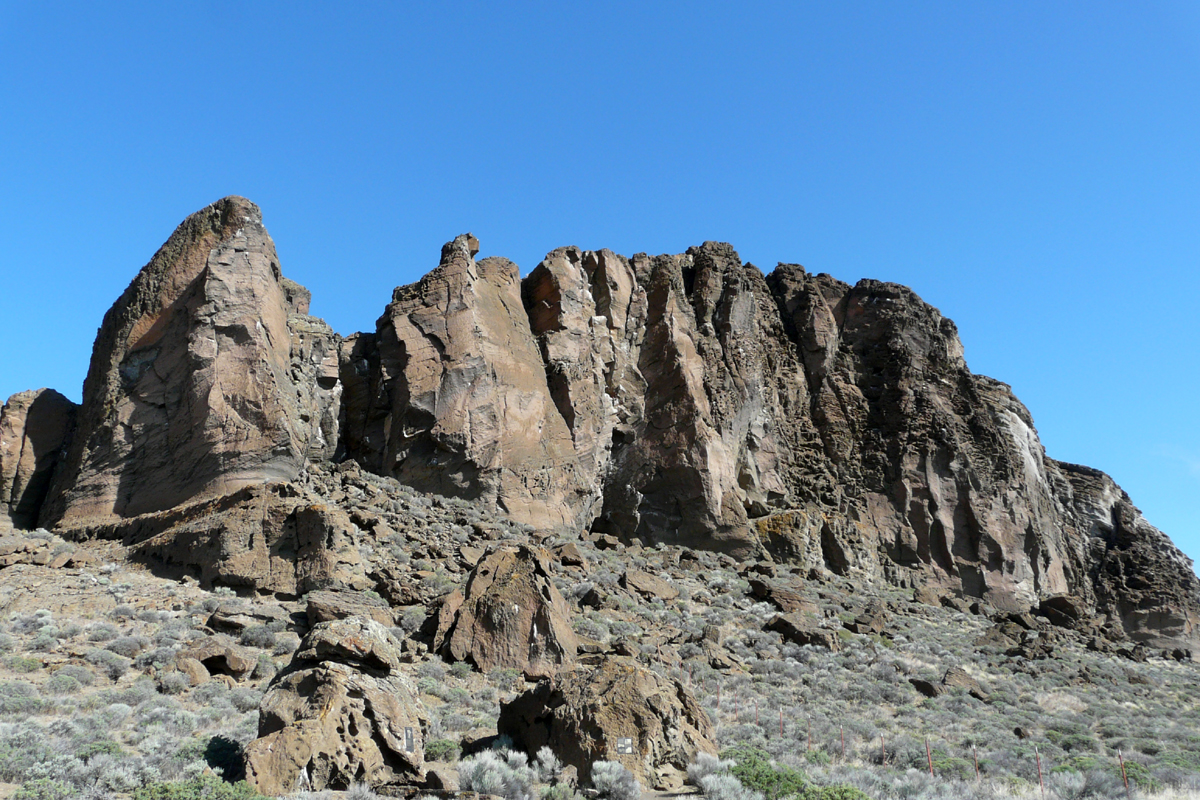
Fort Rock (Birding Oregon p. 27) is a wonderful open ring of rock rising out of the flat sage steppe of Lake County. The remnant of a lava eruption, worn down by the waves of an immense lake, the high rock walls are home to White-throated Swifts, Rock and Canyon Wrens, and various raptors. The sage flats inside and surrounding the structure attract Sage Sparrows and Green-tailed Towhees.

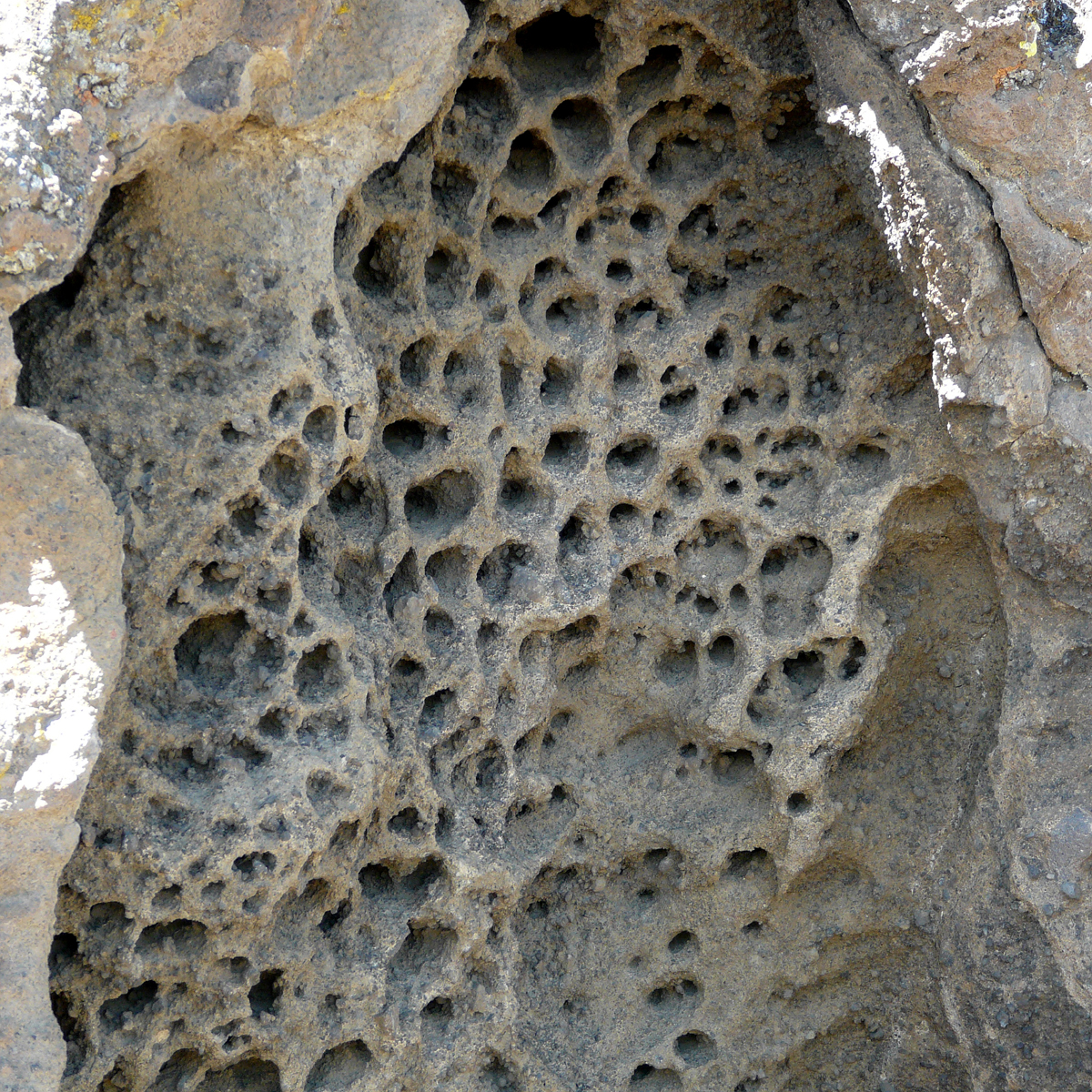
The rock is filled with bubbles, the result of lava erupting into a lake.

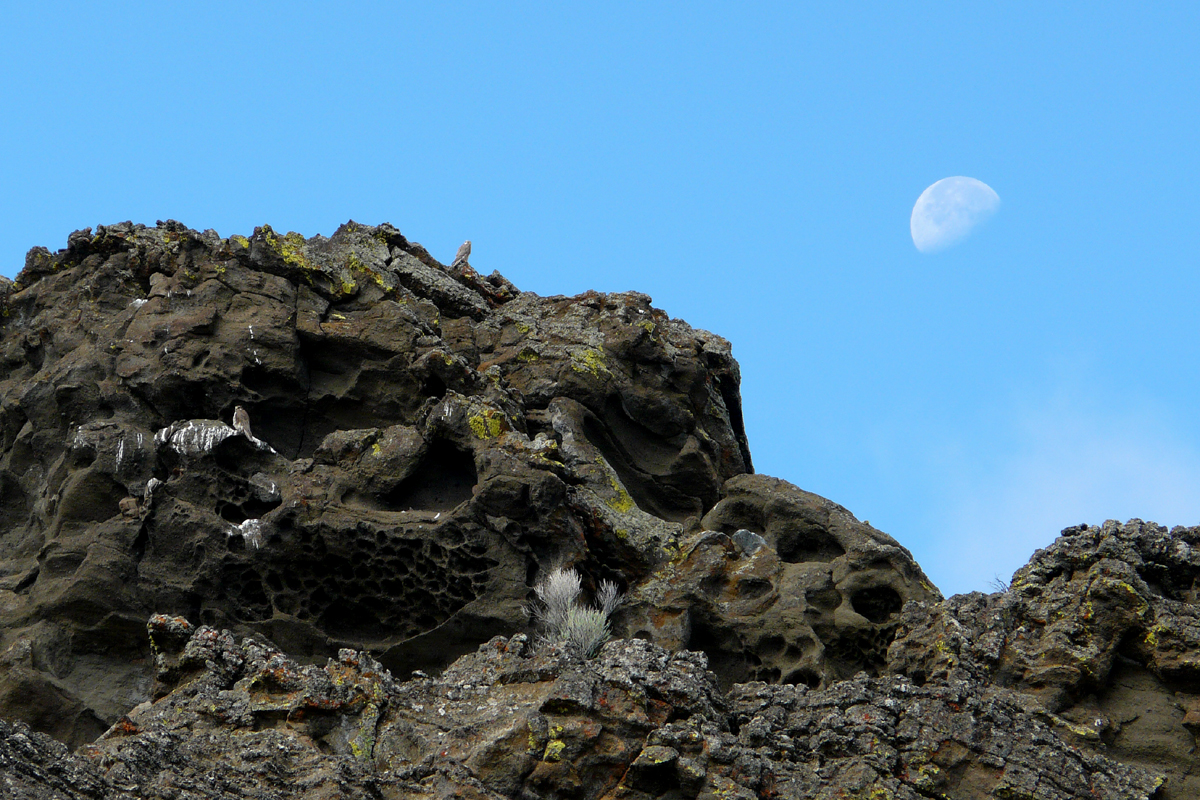
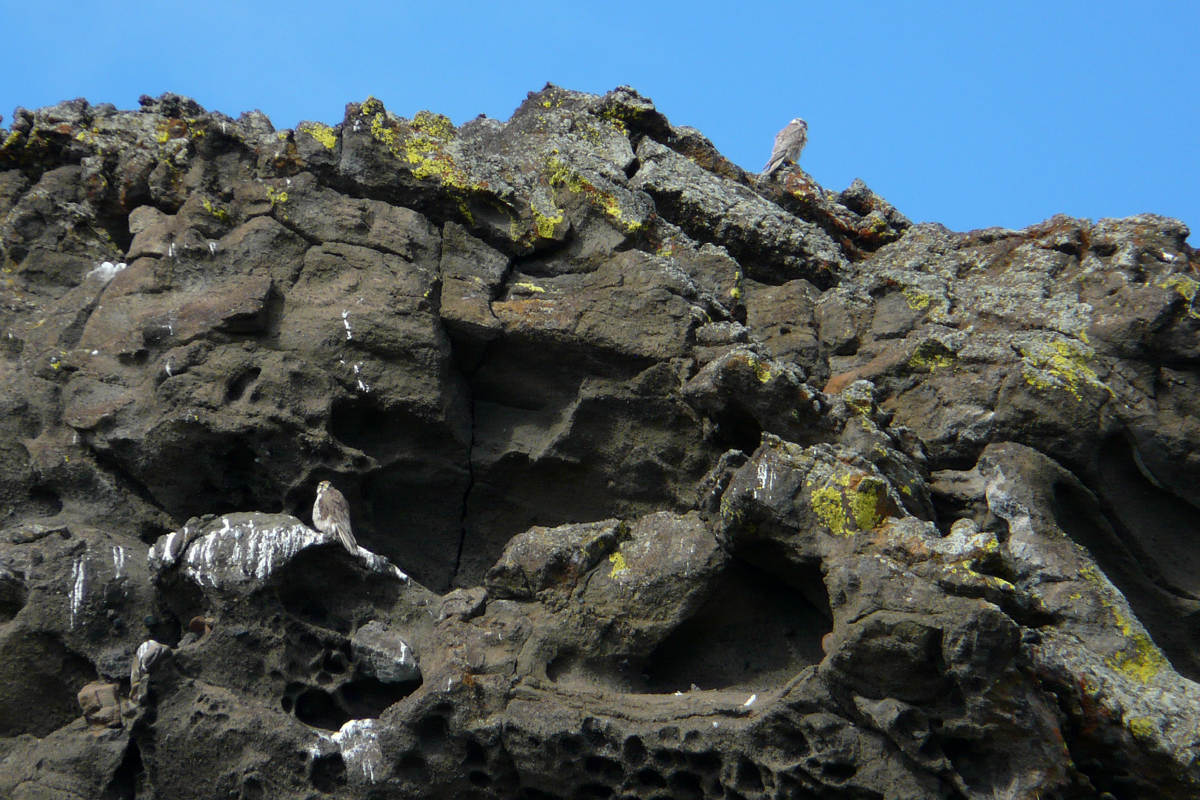
The moon over the western wall. There is a pair of Prairie Falcons in this photo, the male is on top of the ridge and the female is down and to the left near the whitewash.

Here’s a closer look at the Prairie Falcons.

A view of the west wall from inside the crater.
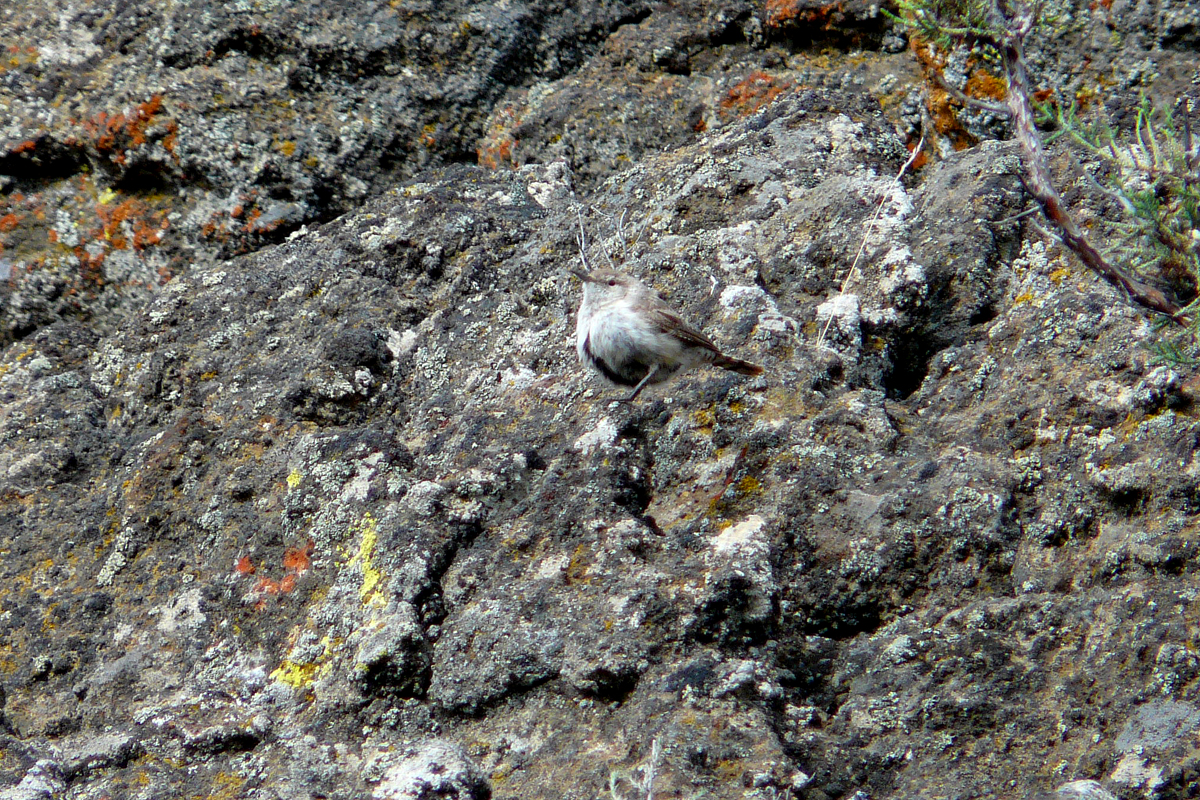
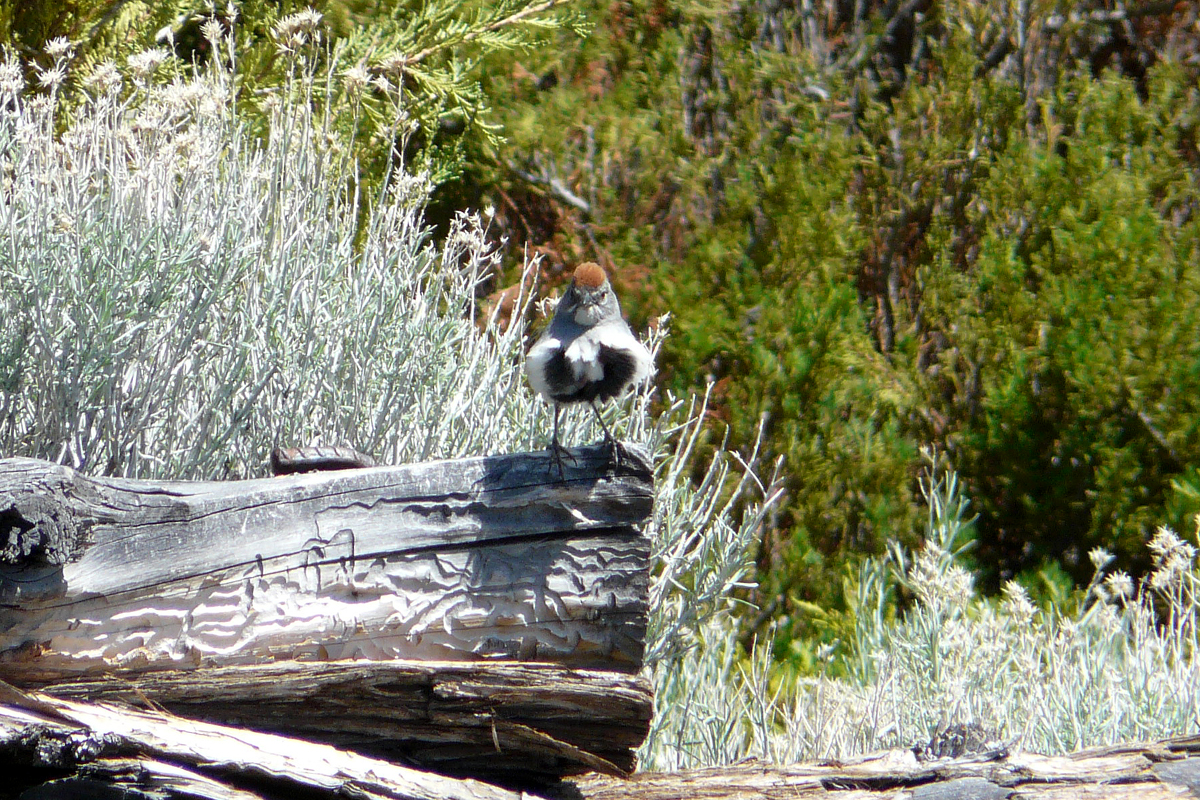
Rock Wren, blending in well with his surroundings

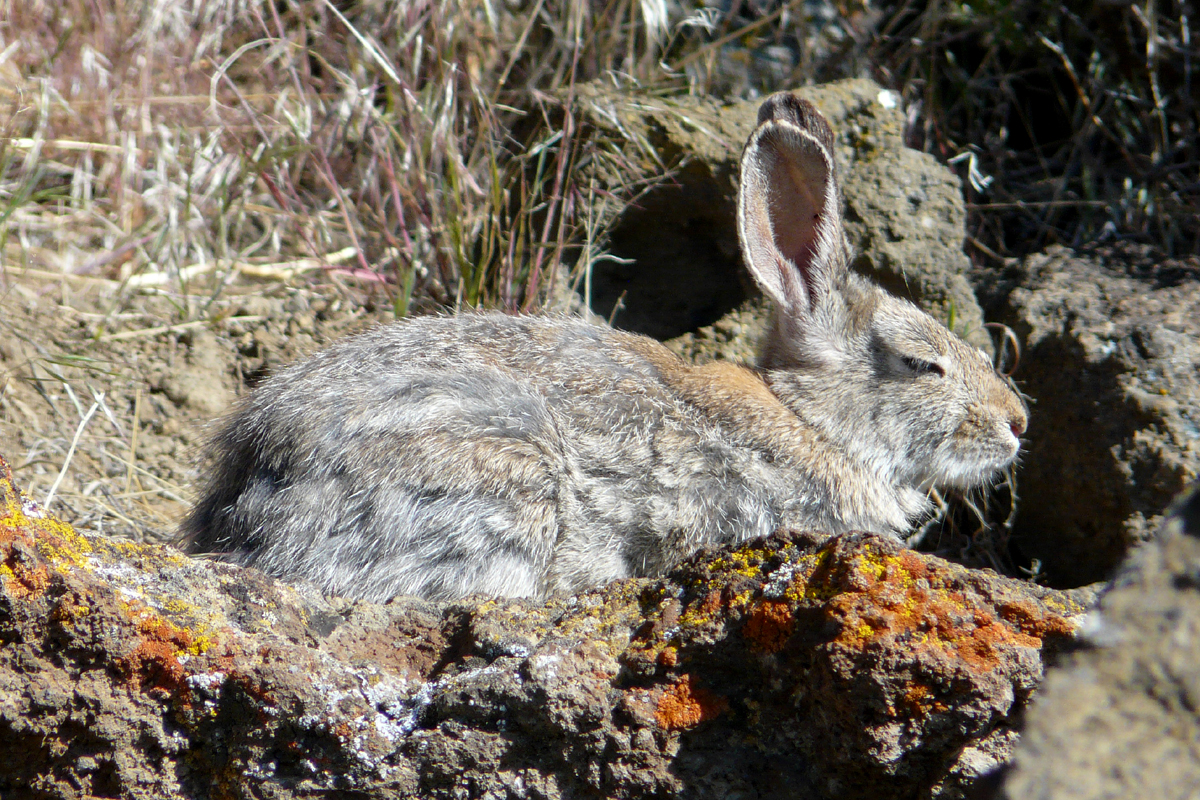
This Mountain Cottontail was soaking up a little sun on this cold windy morning.
The outside of the eastern wall near the parking area. This area seems to be best for White-throated Swifts and Canyon Wrens.

The vegetation near the parking lot attracts both migrant and resident birds. Brewer’s Blackbirds are common here.

Green-tailed Towhee being buffeted by the wind

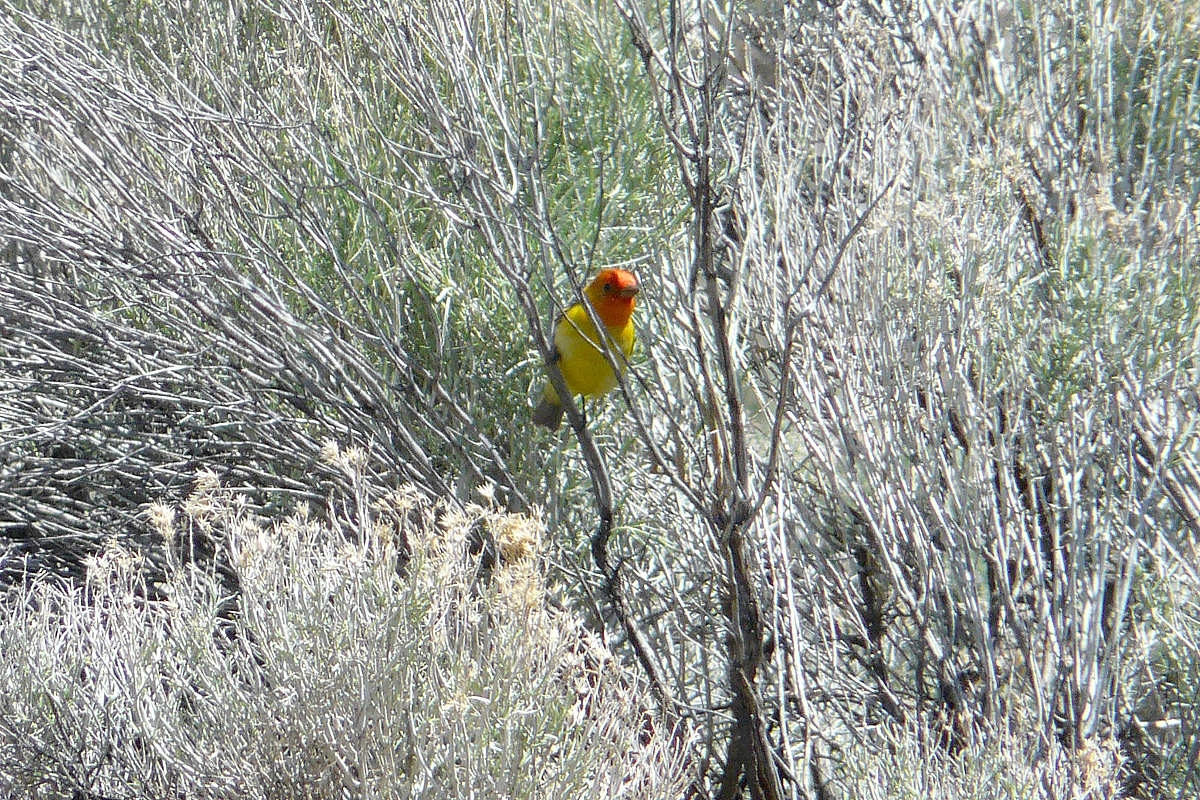
Western Tanager

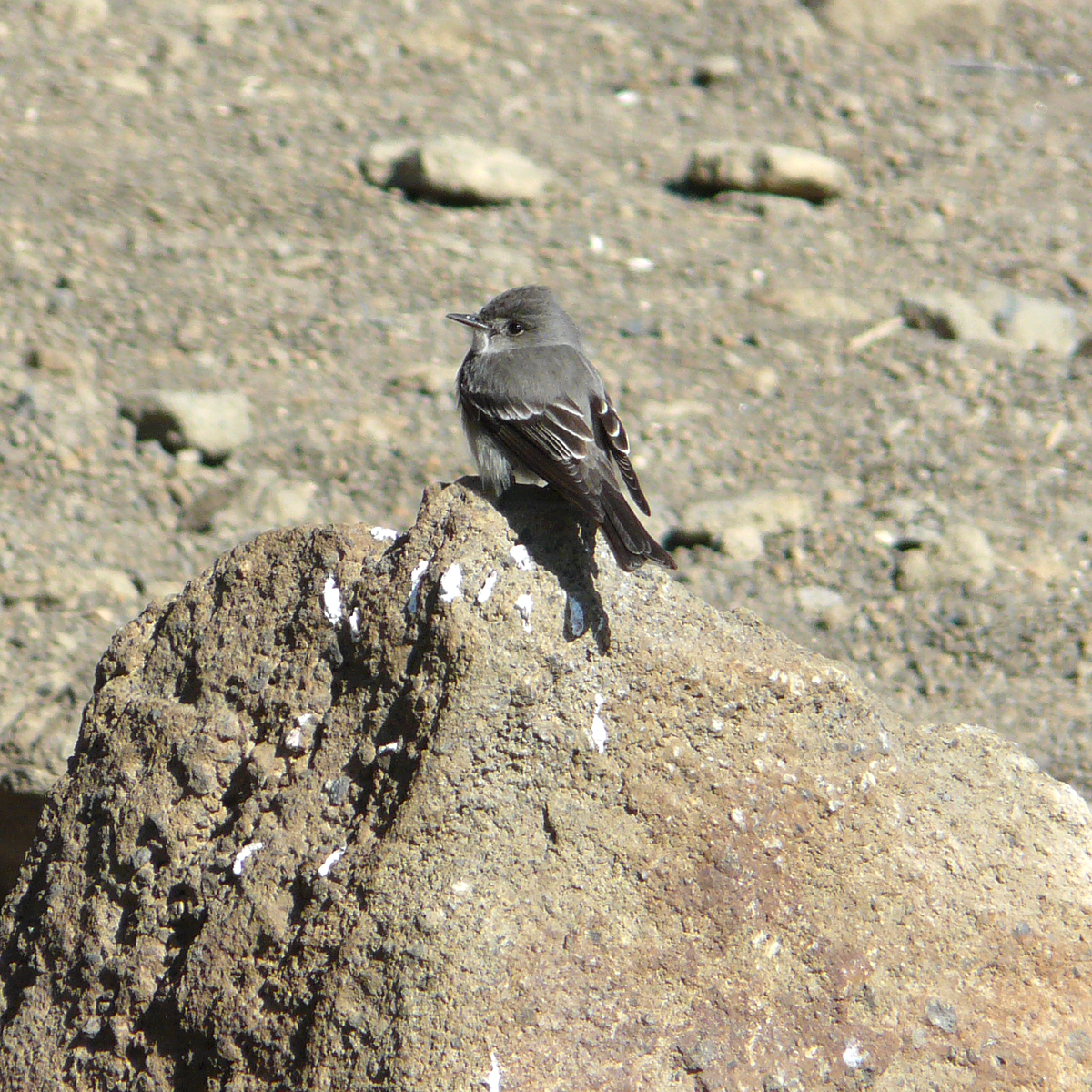
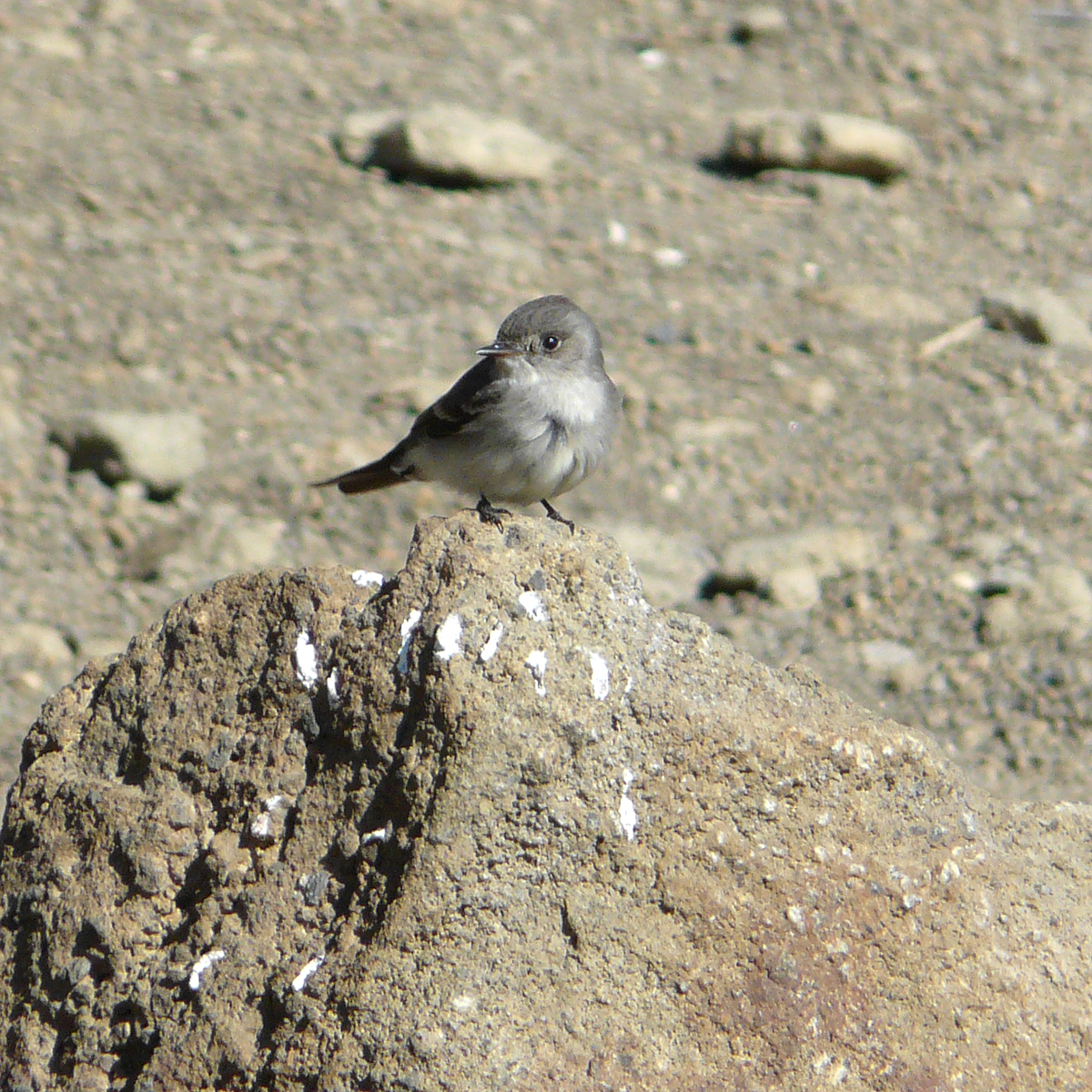
Cold temperature and high winds forced this Western Wood-Pewee to hunt from  the ground.

Goose Lake State Park

About 14 miles south of Lakeview, Goose Lake State Park is always worth a quick stop for riparian birds and waterfowl. Goose Lake is large (8 miles wide, 20 miles long) and shallow (average 4 ft.), making it ideal for Western and Clark’s Grebes, dabbling ducks such as Gadwalls and Cinnamon Teal, and marsh species along the shores. Most of the lake lies in California, but a few miles of it extend into Oregon. During migration, large numbers of migrant waterfowl can be seen here, although I think it would be more pleasant to avoid waterfowl hunting season.

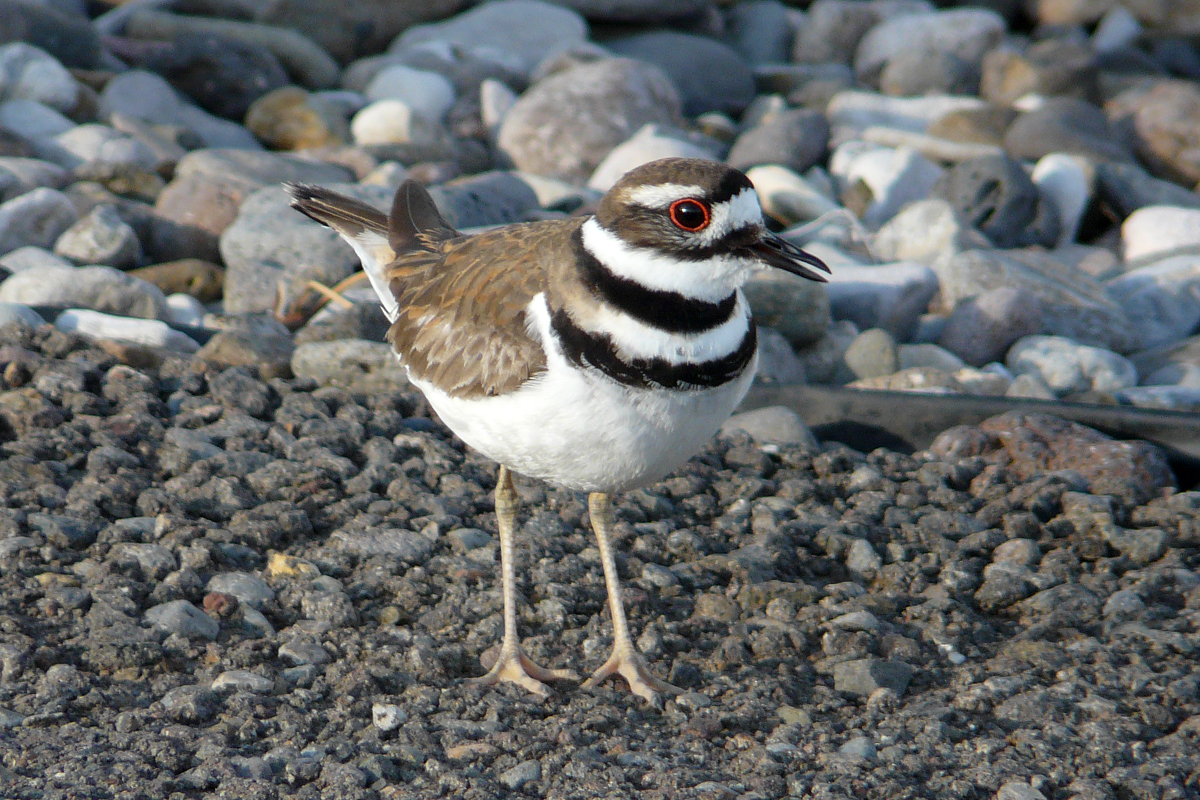
I think this Killdeer must have had a nest in this patch of gravel, because she stood her ground as I walked by. While their abundance, along with their persistently loud obnoxious calling, makes it easy to not appreciate Killdeer, they really are stunning shorebirds.

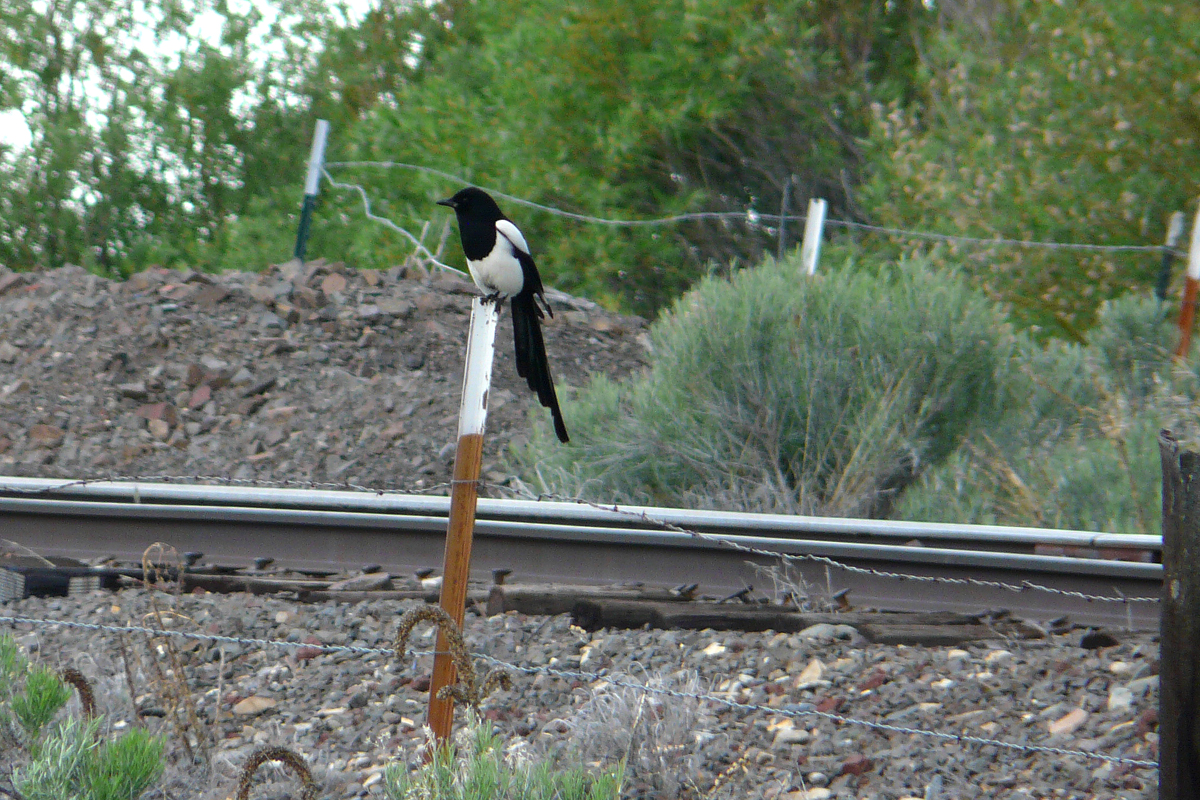
The brushy riparian habitat in the state park attracts a nice variety of birds. The site gained notoriety a few years ago when it hosted a White-eyed Vireo. I didn’t find any great rarities during my recent visit, but I always enjoy seeing Black-billed Magpies.

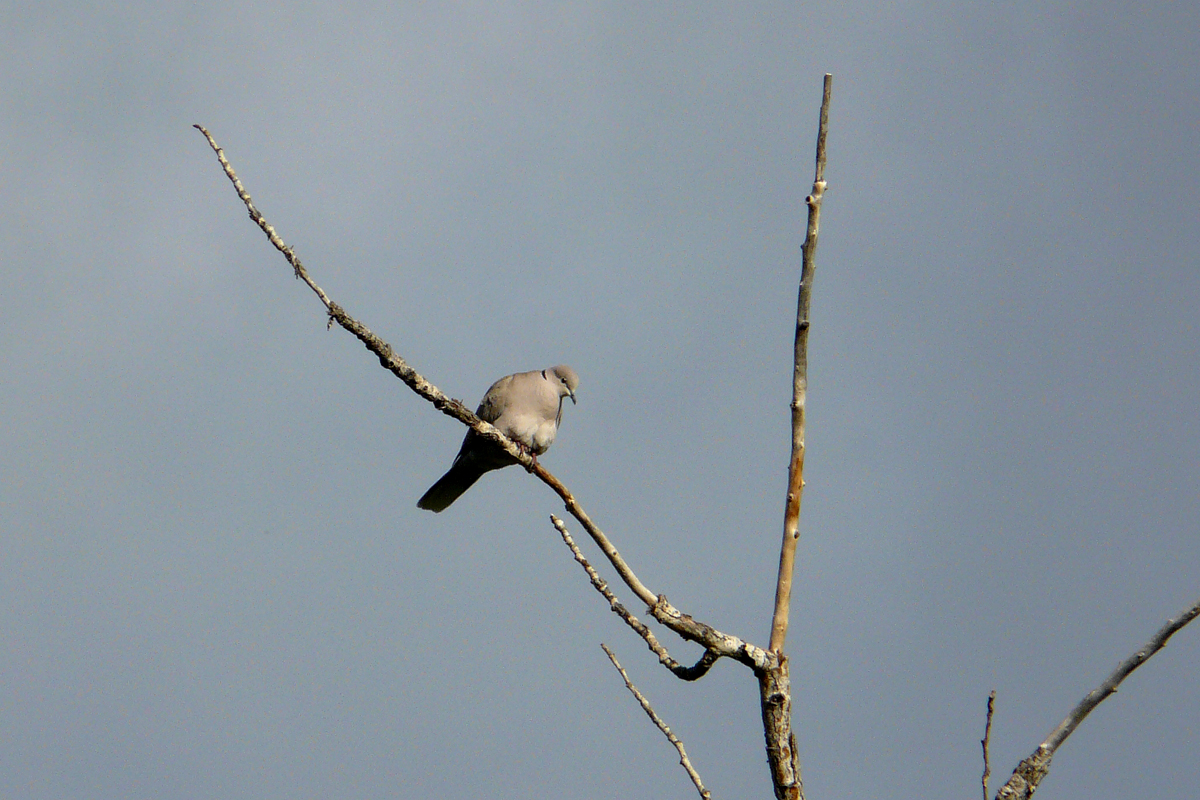
It is hard to believe that ten years ago, Eurasian Collared Doves were very rare in Oregon. They are now well established throughout much of the state.

In the large lawn near the picnic area, the resident ground squirrels have created a web of rodent runways through the grass.

BLM Wilderness Study Area, Adel

Near the town of Adel, the BLM Wilderness Study Area is probably the best place in Oregon to find a Juniper Titmouse. While this species was the main goal of my hike in this area, there were many other species to enjoy, along with the great views. To reach this site, park in the wide pullout off the westbound lane of Hwy 140 near milepost 25. Just a few yards west of the pullout, a dirt road leads up the hill toward the top of Fish Creek Rim. Walk up this road to its terminus at the communication towers at the top of the rim. (Because of these towers, you actually have good cell phone reception throughout the hike, an unusual occurrence in this part of Oregon.)

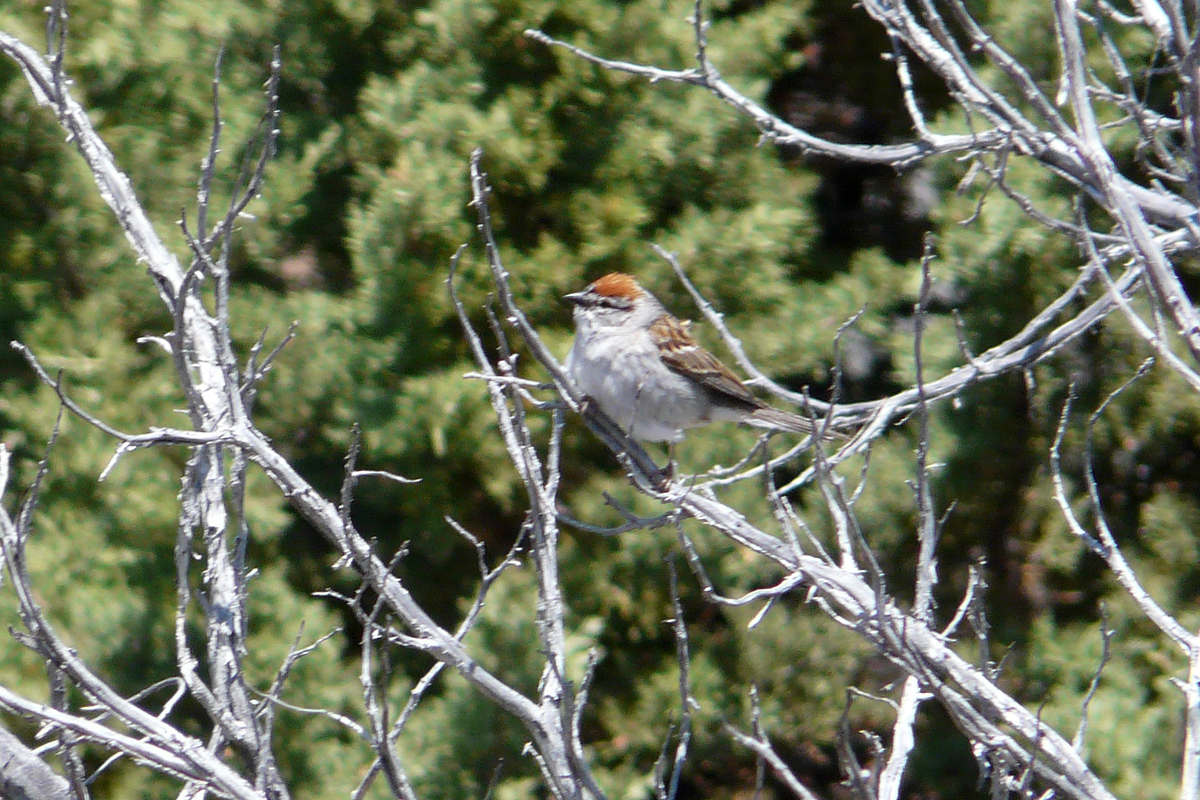
This blurry Chipping Sparrow was part of a small flock of sparrows near the start of the hike. A Black-throated Sparrow was a nice surprise.

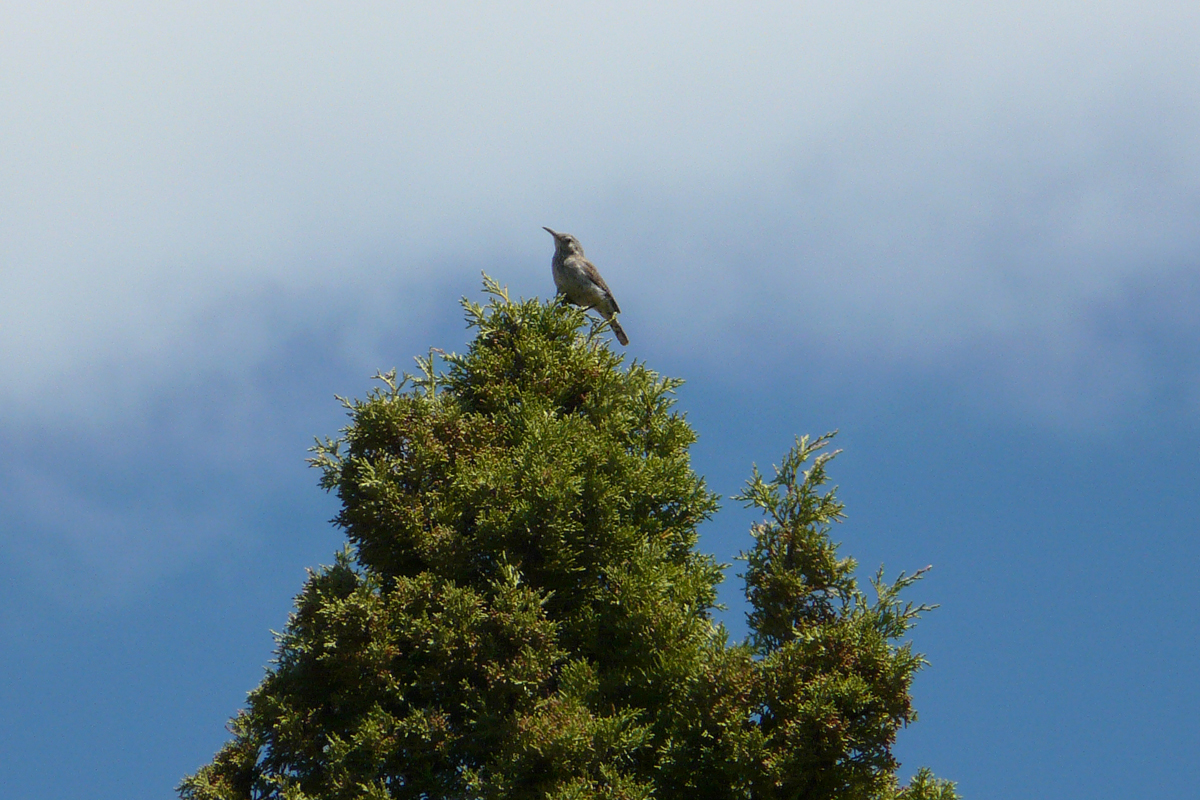
Rock Wrens were common on the way up the hill, perching in junipers, sage, and occasionally on rocks.

The view from about half-way up the hill, looking down toward the highway and Deep Creek

Farther up the hill

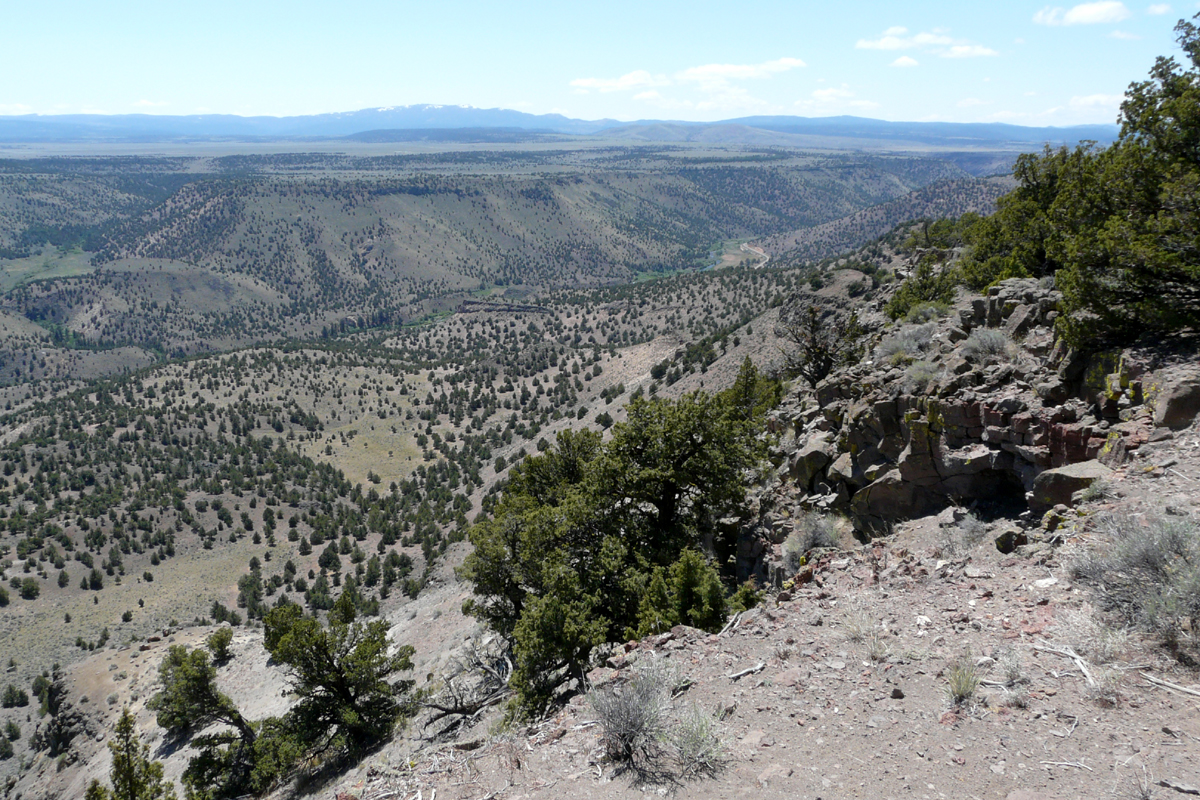
The view from the top, looking down on the Warner Valley. The wetlands in the valley are the source of the Ring-billed Gulls and American White Pelicans which can be seen soaring over the juniper woodlands.

The top of the rim is more tundra-like, with a few trees and short grasses. Mountain Bluebirds and Western Meadowlarks are common in this area.

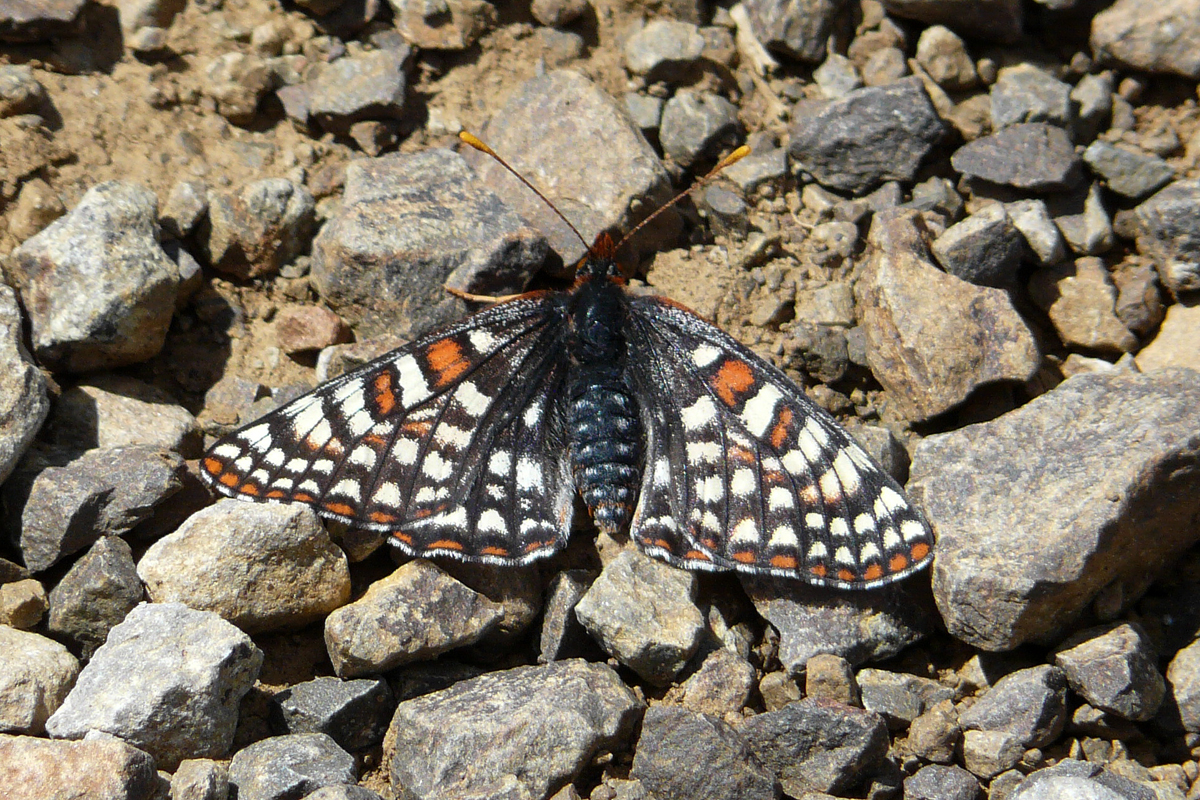
Variable Checkerspots were clinging to the road to avoid the strong winds.

Mountain Lion tracks

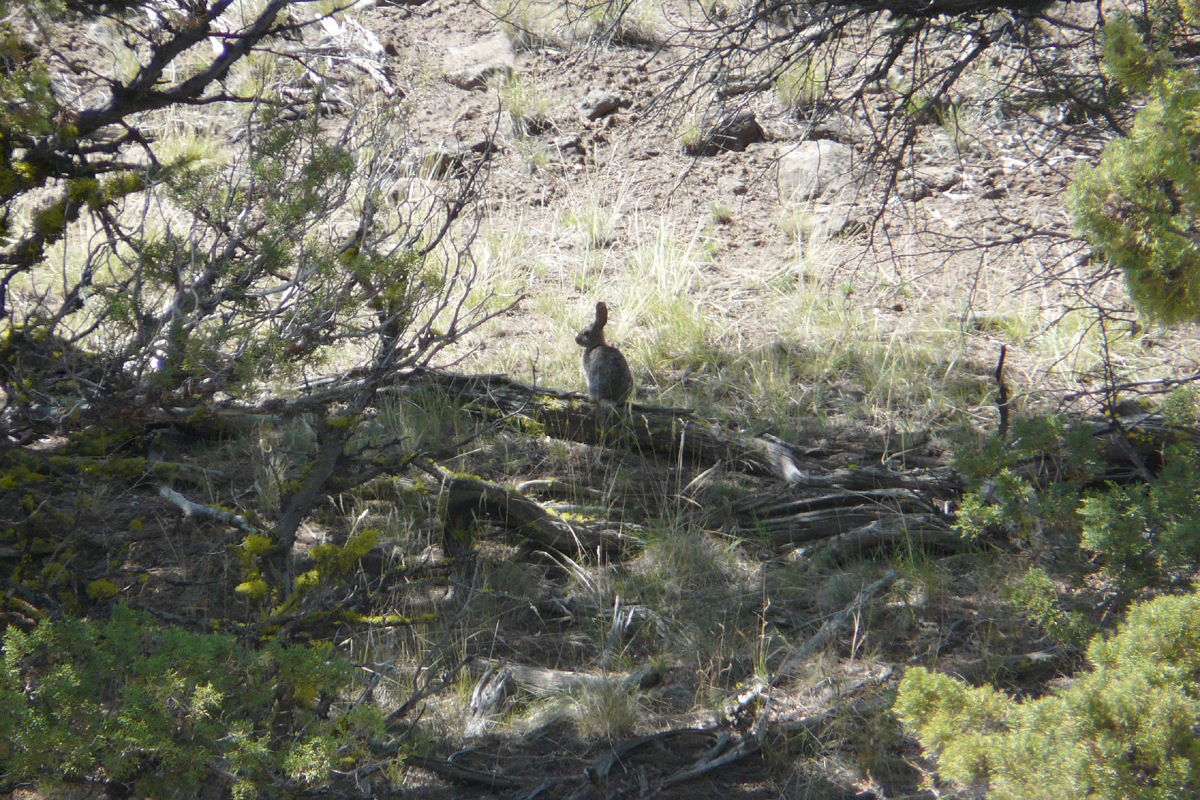
Mountain Cottontail

On the way back down the hill, three and a half hours into the four-hour hike, I did find a Juniper Titmouse. I try not to put too much emphasis on “target birds,” but it is nice when you actually find them.