Northern Flickers

northern flicker male front
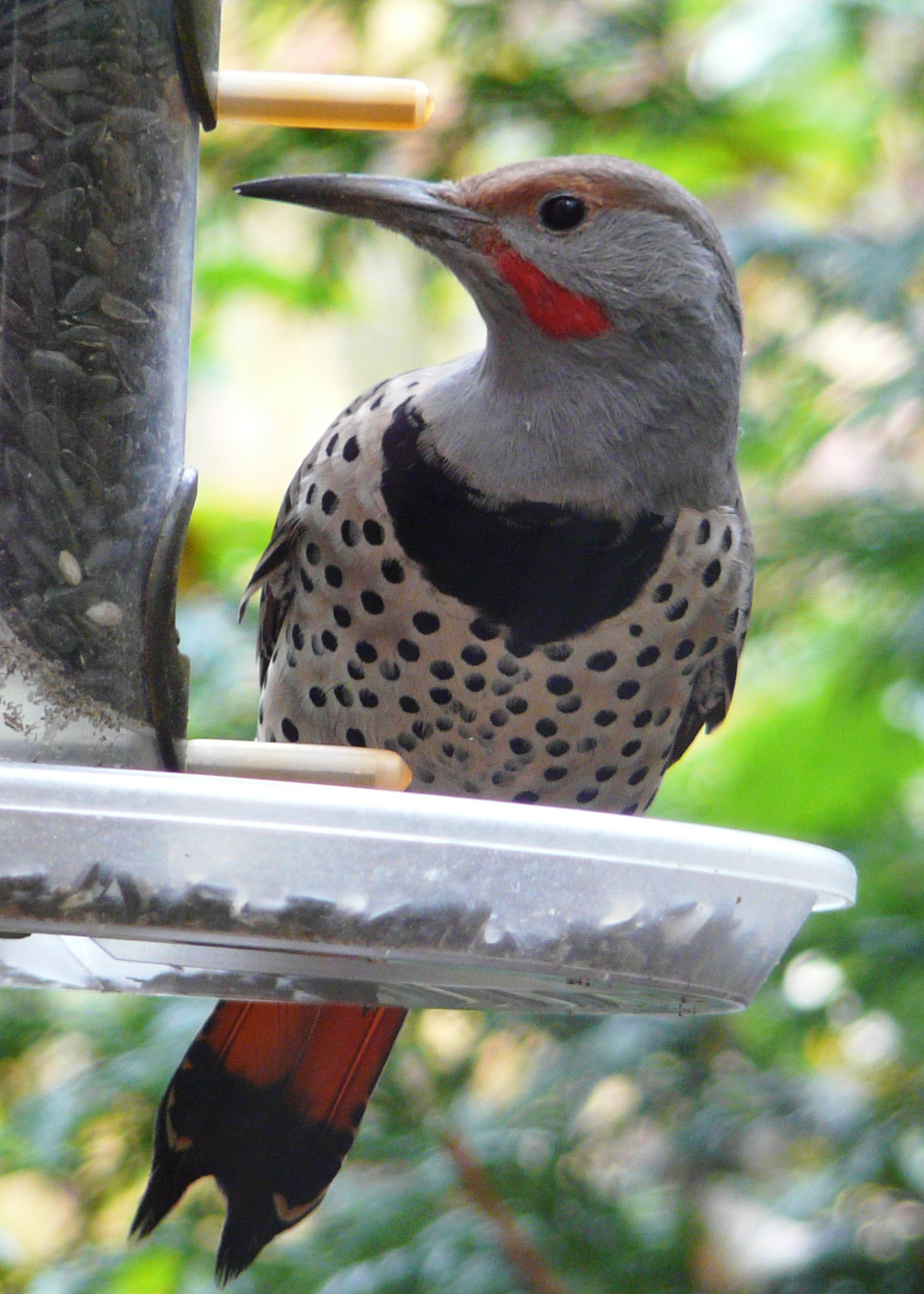
Northern Flickers have been visiting the bird feeder lately. Their bills are not designed to crack open seeds, so they just pull all the seeds out of the feeder until they find one that is already open.

northern flicker female
Females lack the red mustaches found on the males.

northern flicker male
Since they are a common backyard species, we tend to take Northern Flickers for granted, or focus on their destructive habit of drilling into house siding. But on close inspection, we see that these are truly stunning birds.
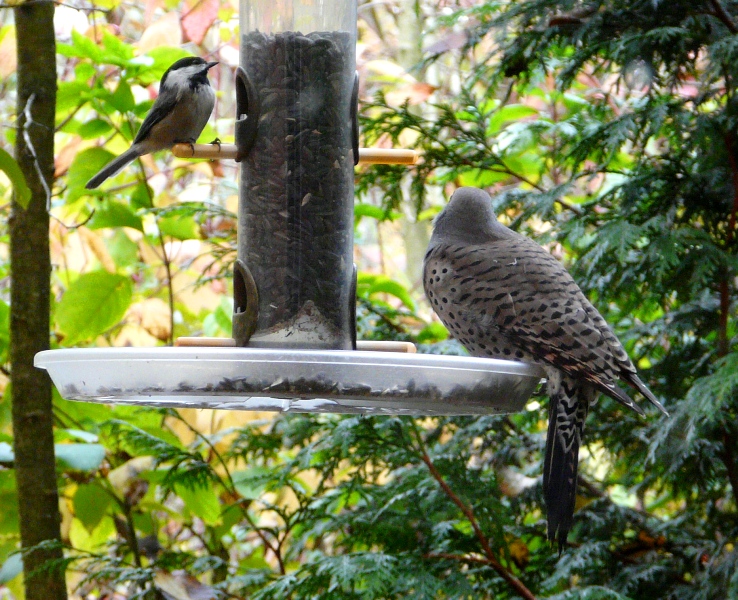
P1070674
This Black-capped Chickadee, a more common species at bird feeders, is dwarfed by the monstrous flicker. Northern Flickers normally eat ants and other insects, but will come to feeders offering suet or sunflower seeds.

Rockpipers

Two of the more common rock-loving shorebirds along the coast are Black Oystercatcher and Black Turnstone. Both species hang out on rocky shorelines in the intertidal zone, probing the wave-splashed rocks for mollusks.

black oystercatcher
Black Oystercatchers would be very hard to see against the dark rocks if it weren’t for their bright red bills.

black oystercatchers

black turnstones
Black Turnstones nest in Alaska, but spend the winter along the west coast from Canada to Baja California. Their backs blend in with the rocks, but their underparts are bright white.

black turnstone

limpets
Limpets are among these birds’ prey species.  The shorebirds use their stout bills to pry the animals off the rocks to reveal the soft underparts.

Turkey Vultures

Today is International Vulture Awareness Day. Many species of vulture throughout the world are gravely imperiled. We are blessed in this country with healthy populations of both Turkey and Black Vultures.

turkey vulure roost
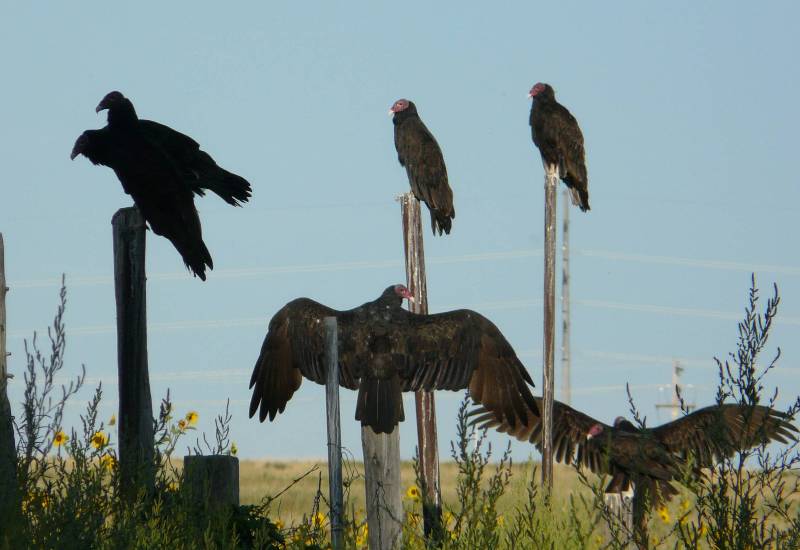
Birders should really appreciate Turkey Vultures, as they are so accommodating.  They roost in plain sight.

turkey vulture posts
They take their time getting up in the morning, so there is no need for us to get up at the crack of dawn to see them. These birds are catching a few rays while they wait for the sun to warm things up and provide updrafts to keep the birds aloft.

turkey vulture line-up
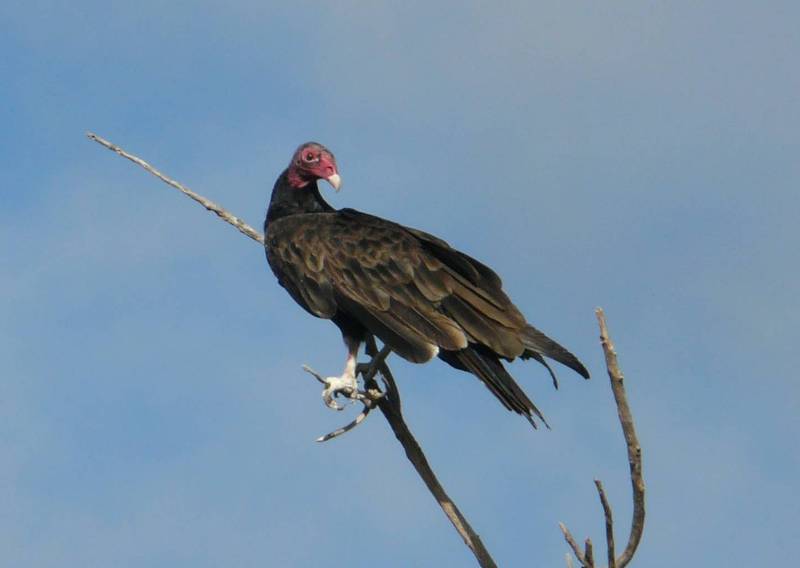
When they aren’t airborne, they perch out in the open for all to see. Those pesky warblers are seldom so generous.

turkey vulture turned
Birding has enough challenges. Don’t neglect to appreciate the easy birds, and the important roles they play.

Mississippi Kite

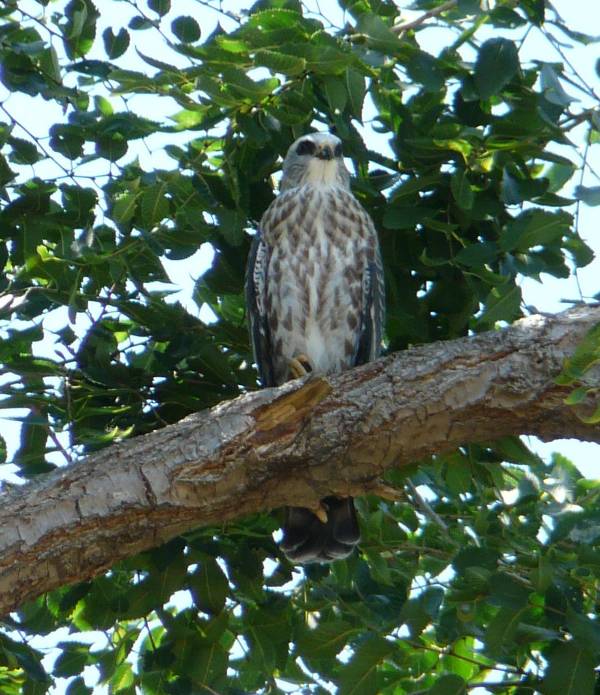
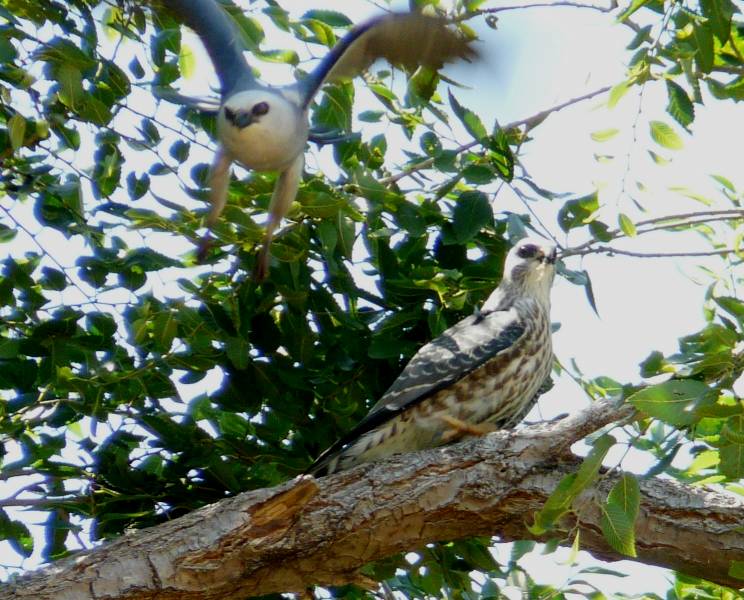
One of the highlights of my recent visit to Kansas was the opportunity to see Mississippi Kites. This raptor is common in towns, primarily because that’s where all the trees are. They feed on large insects, such as cicadas and dragonflies, and spend much of their time in the air, making them nearly impossible to photograph with a point-and-shoot camera.

ms kite
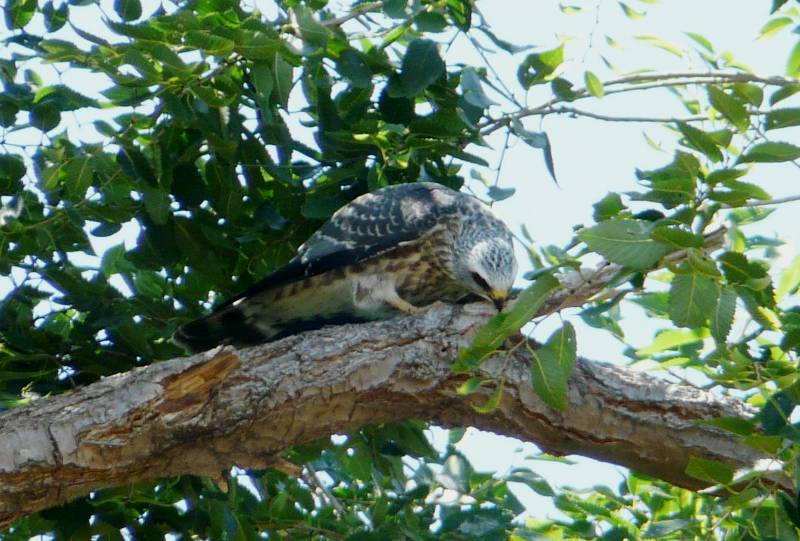
This juvenile spent much of the day in a tree by the house where I was staying. Young kites have an attractive pattern, with streaked breast, scaly upperparts, and banded tail, but the adults are a stunning pearly gray. You’ll just have to trust me on that.

ms kite calling
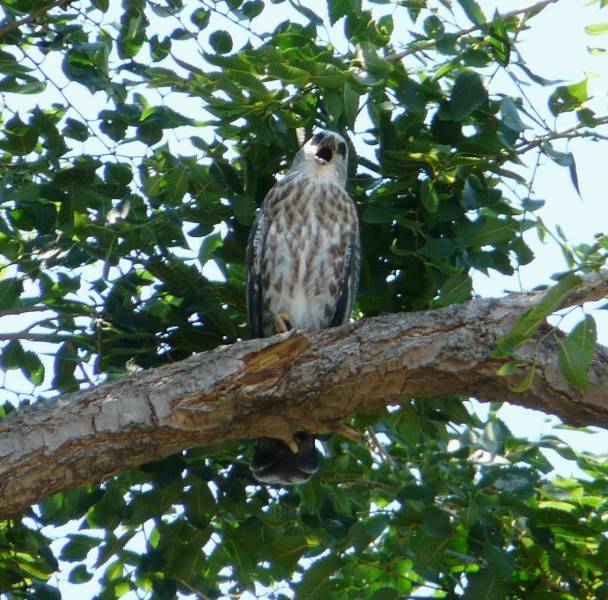
When hungry (all the time), the young kites make their long piercing PEE-PEEeeeeeee calls.

ms kite juv and adult
Eventually, a parent comes by to drop off a large insect and then quickly takes off again to continue hunting.

ms kite cleaning bill
After downing the insect, the young kite wipes her bill on the limb and waits for her next mouthful to be delivered.

Brown-headed Cowbird

bh cowbird 2

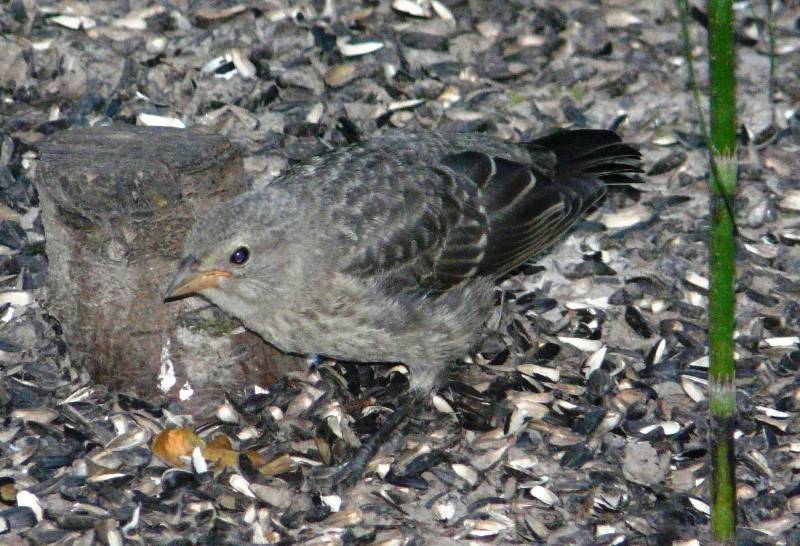
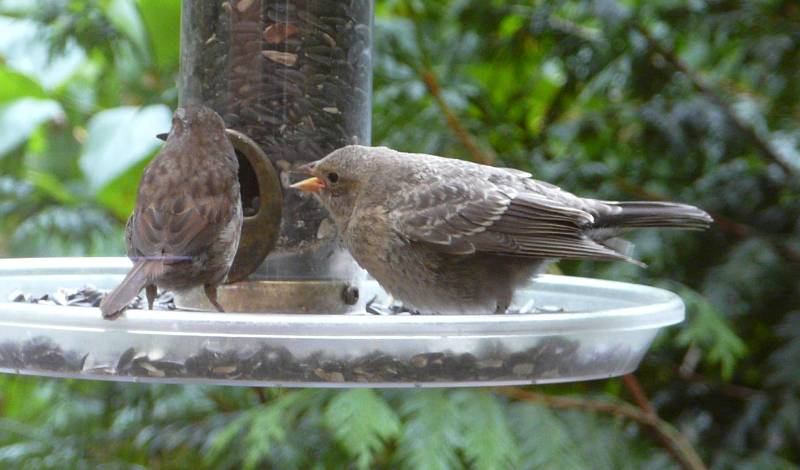
Two Brown-headed Cowbird fledglings have been hanging out at the feeder lately. This species is a parasitic nester, laying eggs in the nests of other species. Historically, Brown-headed Cowbirds were common in the Great Plains, where flocks would follow wandering herds of American Bison. Since the bison herds didn’t stay in one place long enough for cowbirds to nest, it makes sense that these birds would “adopt” their offspring out to other birds. As forests in the east and west were cleared, creating edge habitat, Brown-headed Cowbirds greatly expanded their range, which now covers most of North America. This has led to the decline of many eastern songbirds, as young cowbirds displace the young of the host species.

song sparrow - bh cowbird
The two birds coming to my feeder were being fed by a Song Sparrow, one of the more common hosts of Brown-headed Cowbirds. Cowbirds have been known to lay eggs in the nests of over 200 different species, including Blue-winged Teal, Ferruginous Hawk, and Ruby-throated Hummingbird. These species do not successfully raise young cowbirds, but enough eggs end up with compatible hosts to create a strong cowbird population. (Female Brown-headed Cowbirds can lay up to 40 eggs in a year.)

bh cowbird on feeder
This youngster is feeding himself. After leaving their host families, young cowbirds find others of their kind and form flocks.

Western Sandpipers

I took a client to Cannon Beach this week to see the Tufted Puffins nesting on Haystack Rock (Birding Oregon p. 124). While he was photographing his lifer Heerman’s Gull, I had a chance to study a small flock of Western Sandpipers. Cannon Beach is a very popular tourist town, so the crowded beach usually holds very few shorebirds. But this flock had found a particularly slimy patch of rocks that was effectively repelling the tourists, so I was able to watch the birds feeding undisturbed.

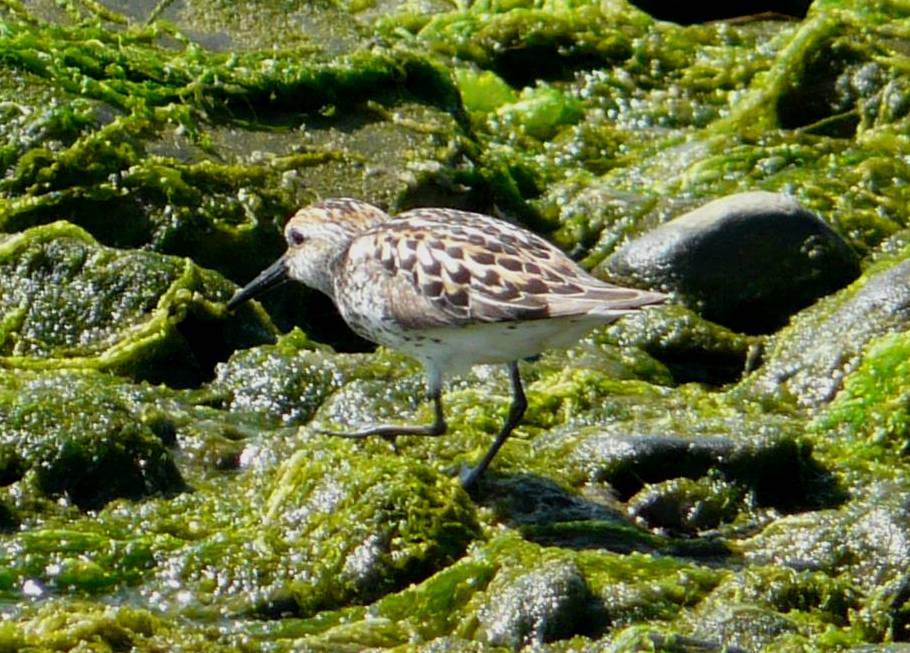
western sandpiper
This individual, probably a female, given the long bill, was still in full breeding plumage. Note the rufous, black, and white upperparts and the streaks and chevrons extending along the sides.

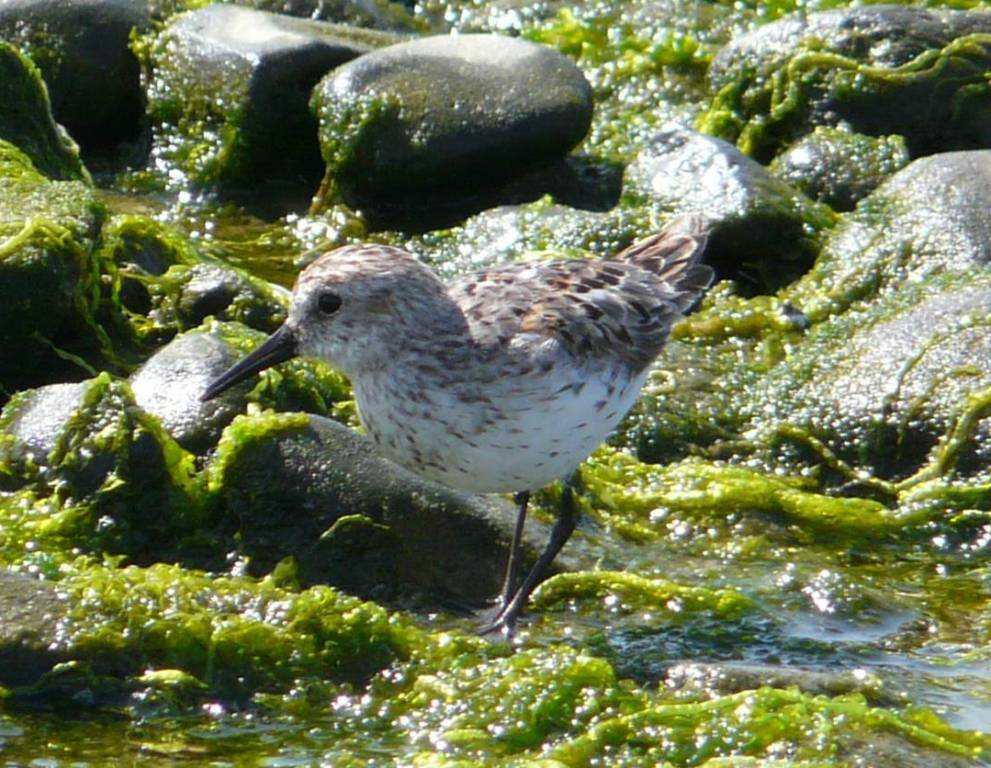
western sandpiper profile
This bird is probably a male. The bill is short and straight, but still tapers to the tip. He is already starting to molt into his gray winter (basic) plumage, although he still retains a few colorful scapulars.

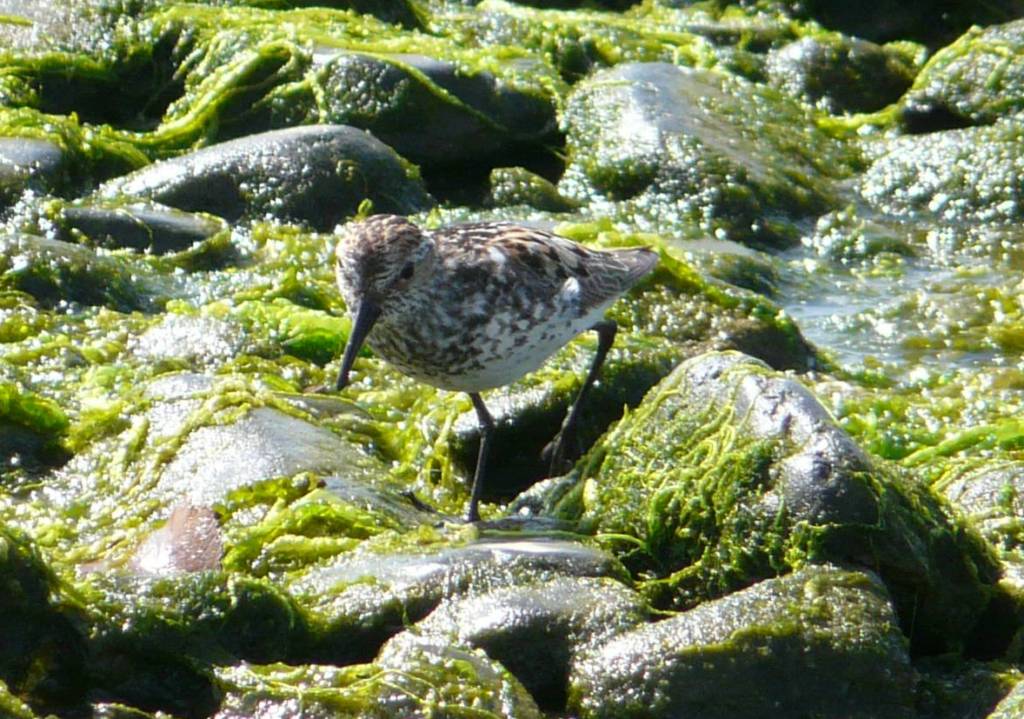
western sandpiper front
This probable female shows bold streaks and chevrons on the breast and sides.

western sandpiper palmation
Here we see the partial webbing between the outer toes. Western Sandpiper and Semipalmated Sandpiper are the only two species of stints (or “peeps”) that show this trait.

I will be teaching a class on autumn shorebirds at Portland Audubon on September 16. For more information, click here.

Pinyon Jay

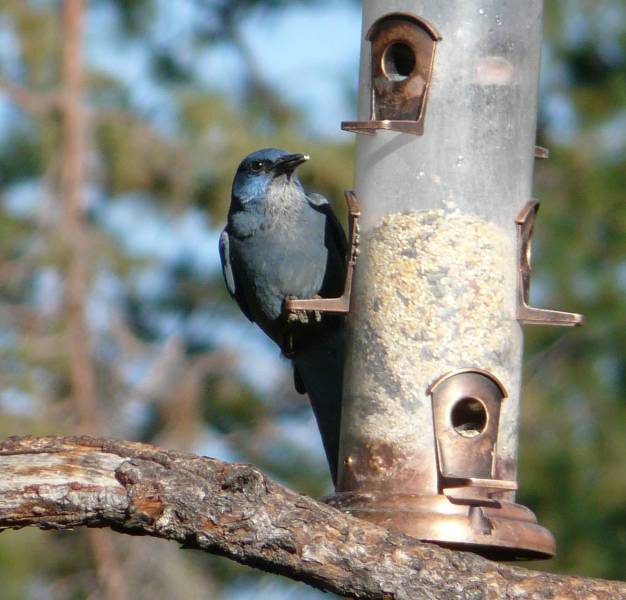
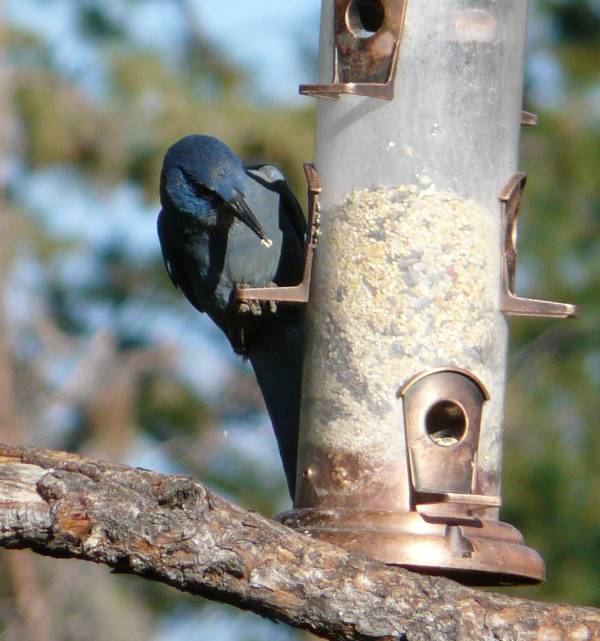
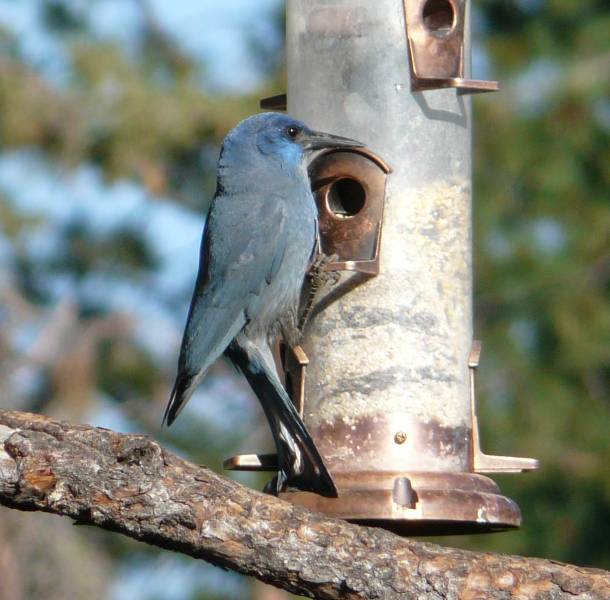
On a recent trip to Sisters, OR, I enjoyed watching Pinyon Jays come to the bird feeders at our hotel. These are fun birds, always in a group and always calling.

pinyon crown
This bird shows off his lovely cerulean blue crown.

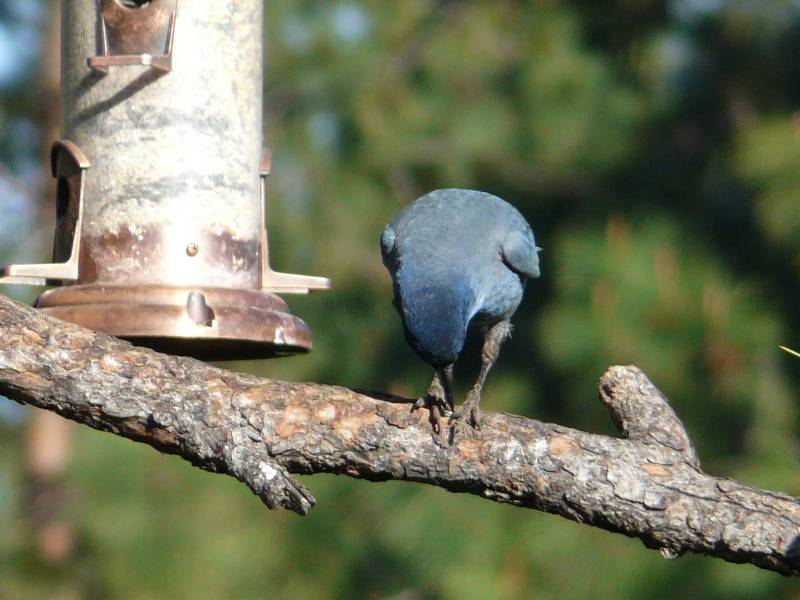
pinyon front
The throat is the only part of this species that isn’t blue.

pinyon with food

pinyon profile
This profile shows off the bird’s long bill, handy for harvesting pine nuts when the bird isn’t slumming it at the feeder.

Duckzilla

Domestication is a strange thing. It enhances certain traits while diminishing others, usually not for the better. A classic example is the Muscovy Duck. In its wild form, this large duck is black with green iridescence and white wing panels. It nests and roosts in trees along tropical rivers, reaching the U.S. only along the Rio Grande River in Texas. The domesticated form is found in parks and farms throughout the country, and bears little similarity to its wild ancestors.

duckzilla

This photo shows two domestic Muscovy Ducks, a female on the left and a gargantuan male on the right. For a size comparison, note the Wood Duck in the background. The male weighs close to 20 pounds, larger than most Wild Turkeys I have seen. This is not a bird that will be flying to a tree cavity any time soon. While some might admire this bird for his formidable size and brightly colored facial skin, I think domestication has robbed him of his true nature and, if I may be anthropomorphic (and I may because this is my blog), his dignity. If ducks dream, I hope this bird envisions himself sleek and black, flying along a tropical river and roosting in a hollow tree.

American Coot

american-coot

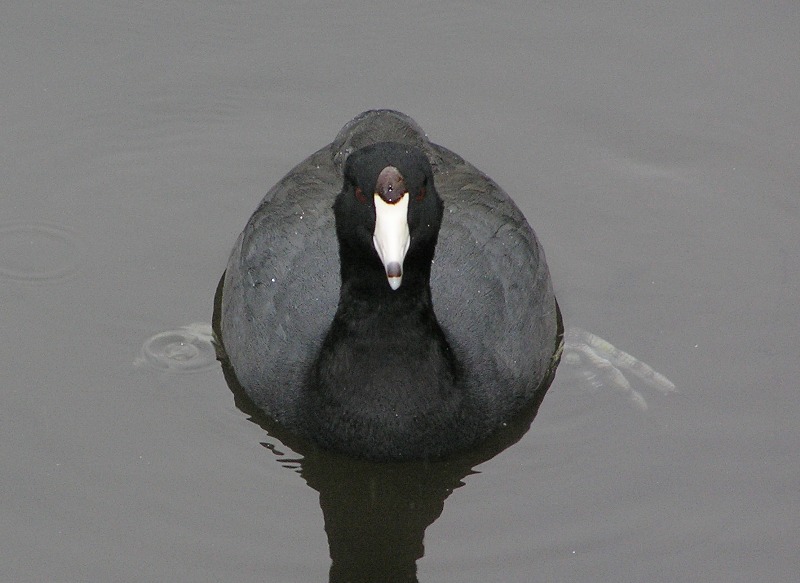
American Coots are quite common throughout much of the country, so we tend to overlook them. But they are strange little beasts, and worthy of study. They spend much of their time on the water, feeding on aquatic plants, propelling themselves with their lobed toes. Despite the fact that at least some populations undertake long migrations, you almost never see these birds in the air. When alarmed they often run along surface  of the water, flapping their wings, but they seldom actually become airborn. One observation from 1931 described a large flock of coots migrating on foot.

These birds do fly, after a long running start, but migration apparently occurs at night in small groups. I think I will make it a goal to actually notice a coot in flight. Despite the many thousands of these birds I have seen over the years, I have no recollection of a flying coot. As I rapidly approach the status of “old coot” myself, I think this is a worthy goal.

coot

Glaucous Gull

glaucous-gull
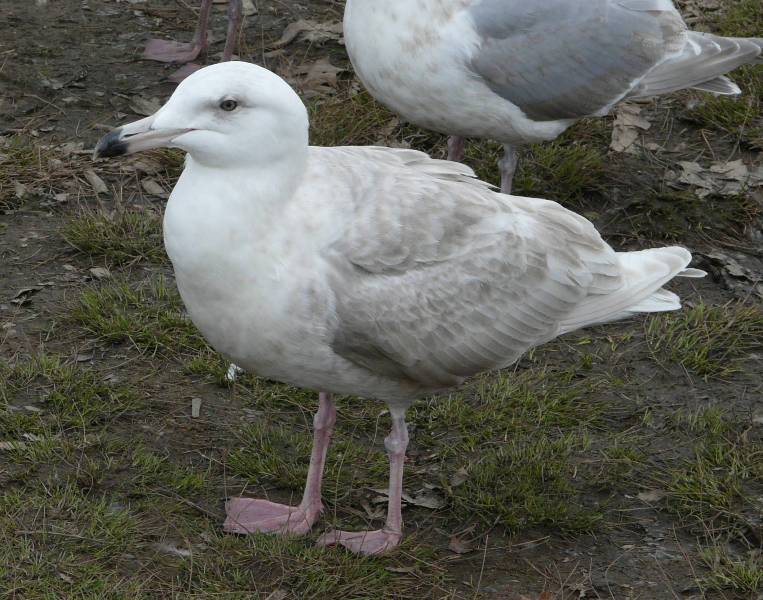
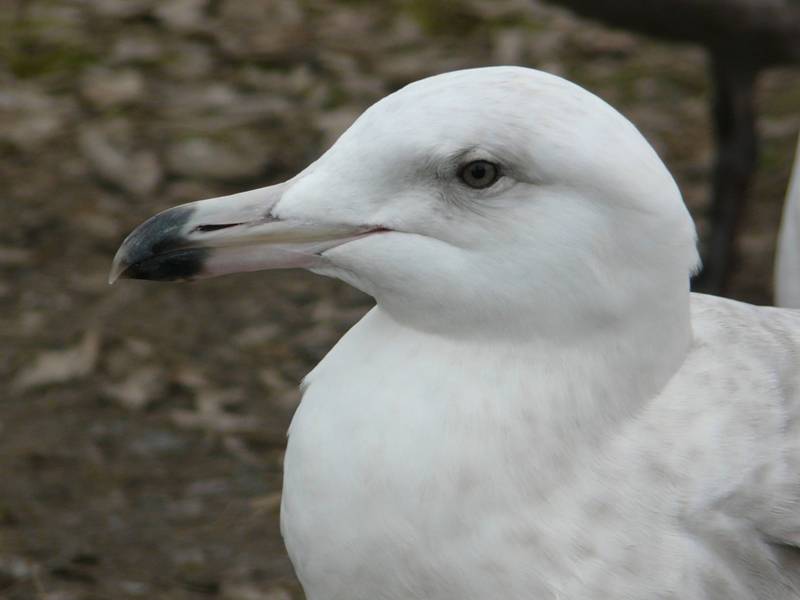
A first-cycle Glaucous Gull was among the large gull flock begging for bread at Portland’s Westmorland Park this afternoon. The large size, pale color overall, very pale wing tips,  and light pink bill with the neat black tip are all good field marks for this species at this age.

glaucous-gull-head
Here’s a closer view of the bill.  Glaucous Gulls are never common in Oregon, but several have been reported in the Portland area this winter.