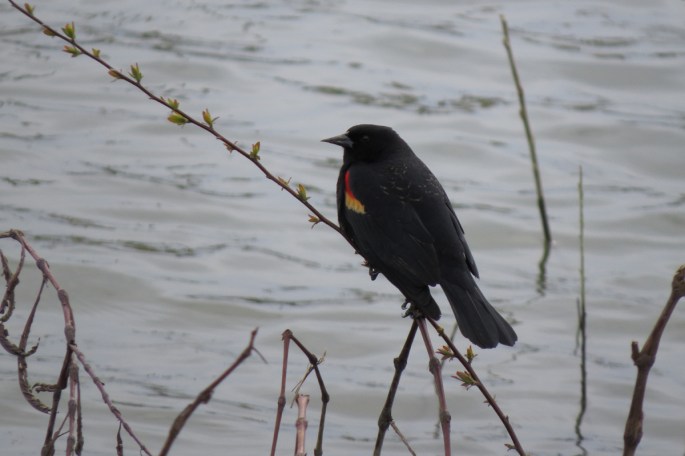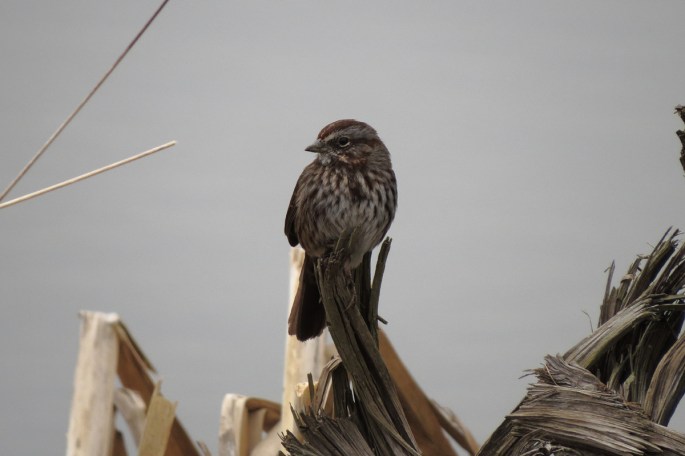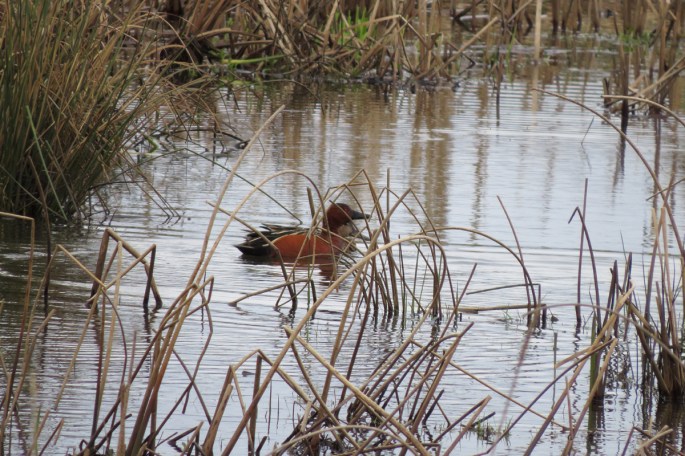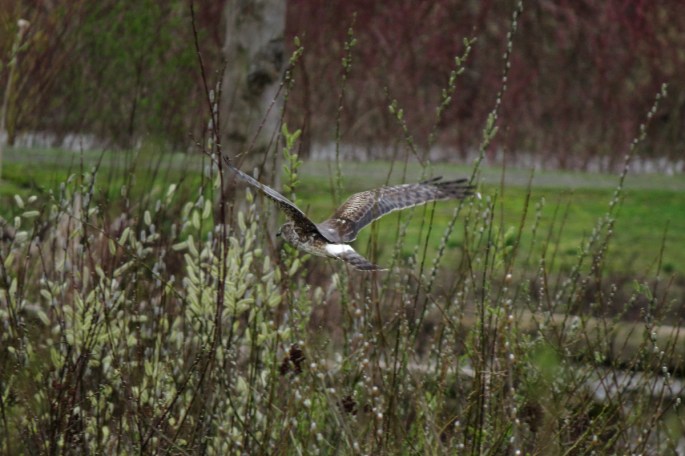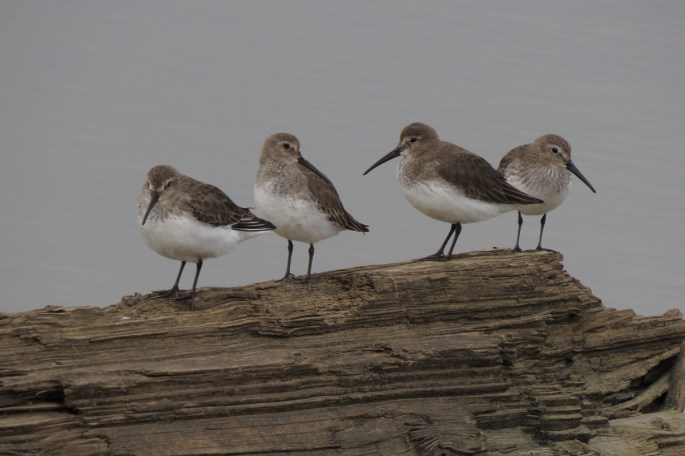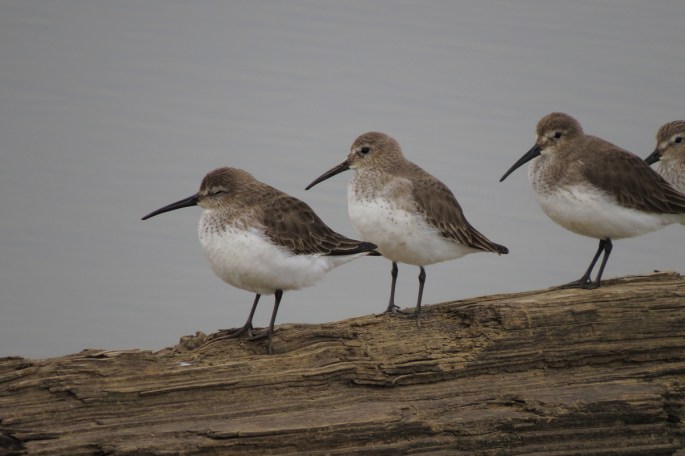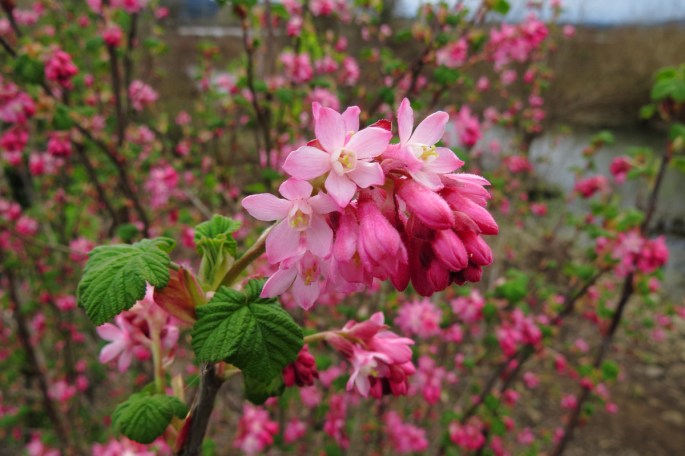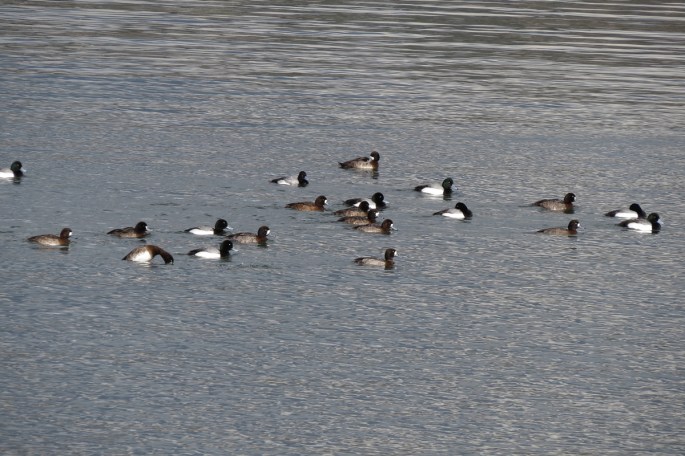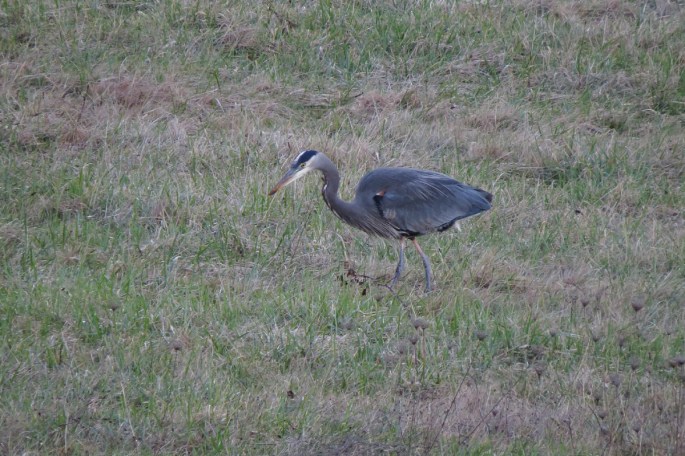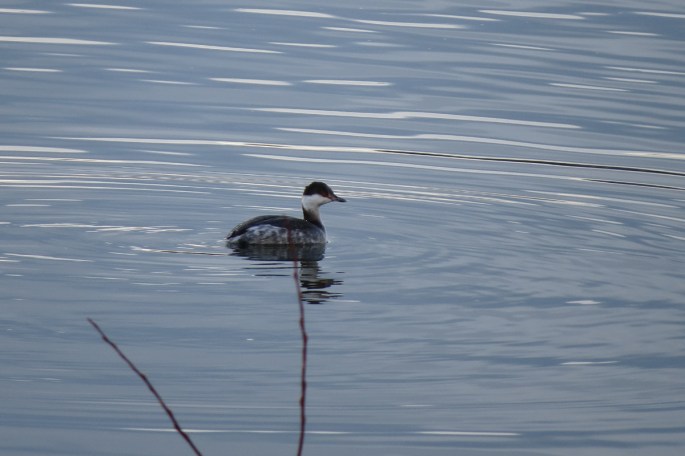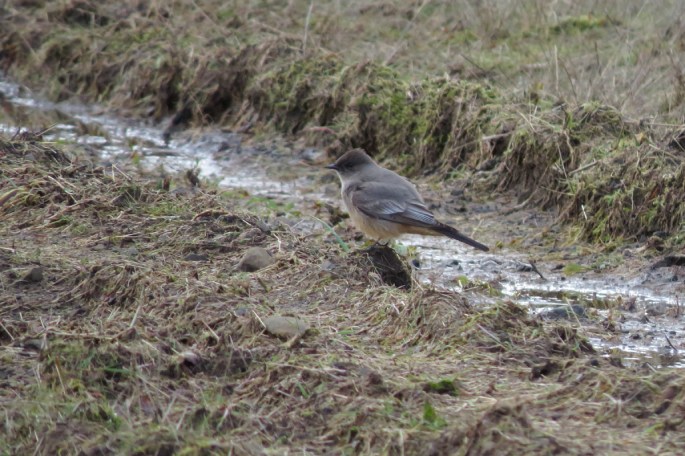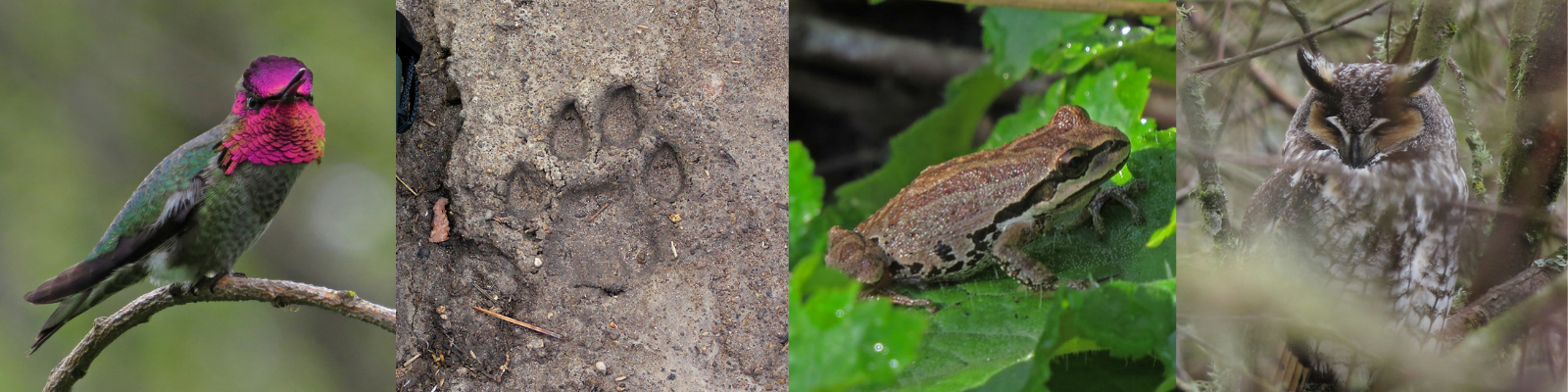
Spring is coming on strong, despite the cold latter half of March. The season is most obvious in the open habitats around wetlands. Local nesters are starting to pair up and collect nesting material.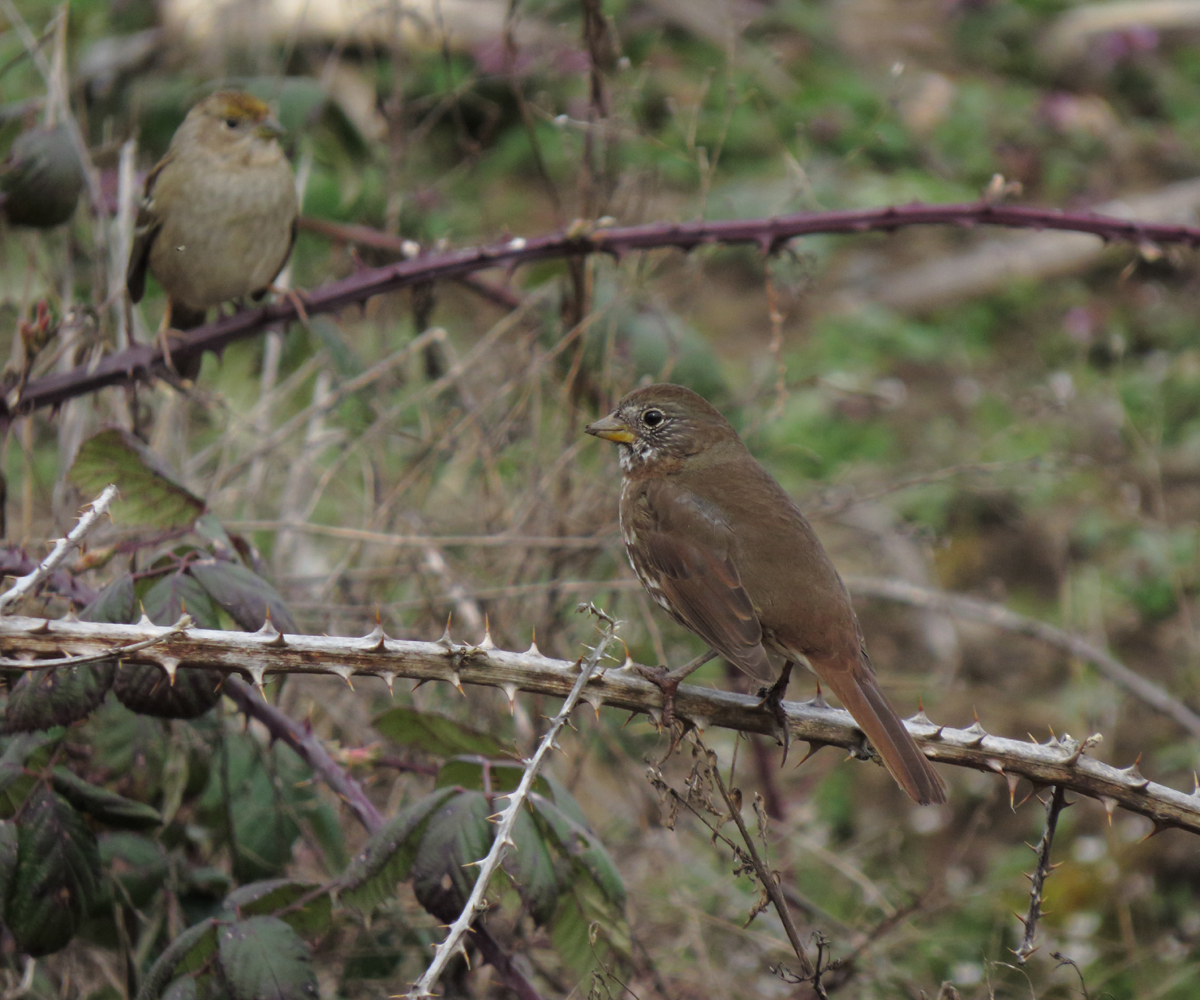 The winter sparrow flocks are starting to thin out, but the birds that remain are active and vocal. This Fox Sparrow (with a Golden-crowned Sparrow in the background) was at Fernhill Wetlands.
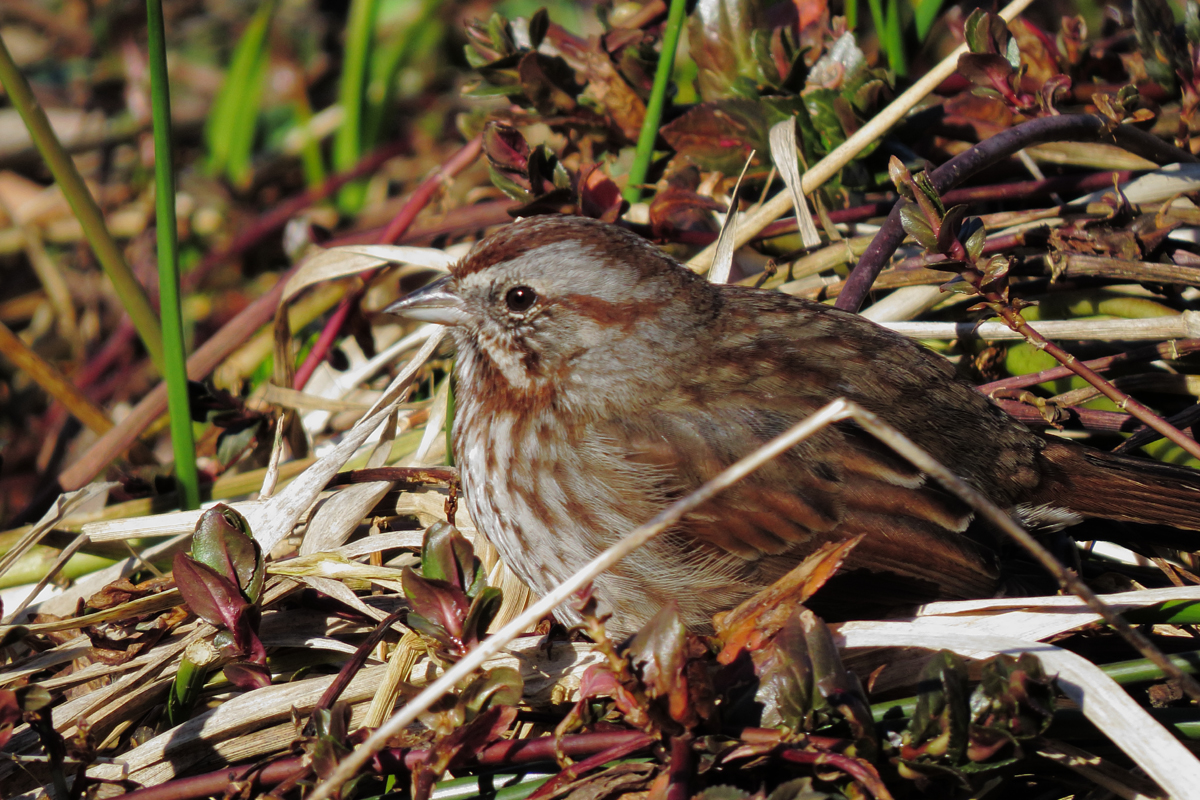 The local Song Sparrows are paired up and are defending territories.
 Bushtits are still in their winter flocks, but should be pairing off soon.
 This male Hooded Merganser caught a large crayfish at Westmoreland Park, but did not share it with the female that was nearby.
 Anna’s Hummingbird, feeding on currant
 This is one of five subadult Bald Eagles that flew over Westmoreland Park in a tight group. I don’t recall seeing a flock of Bald Eagles moving together like that before.
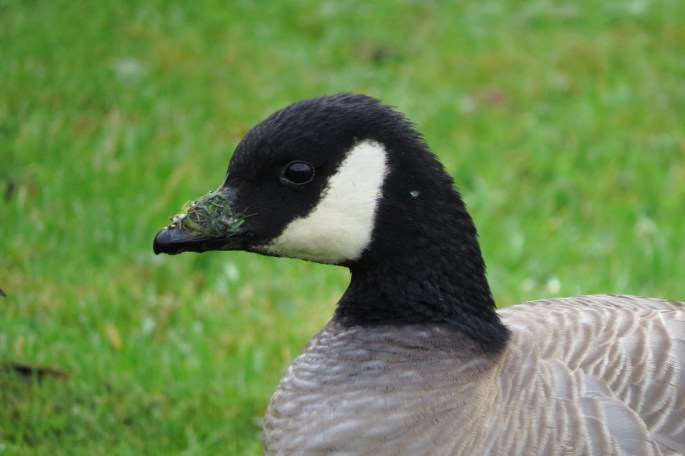
 Western Canada Goose, the locally nesting subspecies. I am trying to collect portraits of the various Canada and Cackling Goose subspecies for side-by-side comparison.
 These Red-eared Sliders were basking at Commonwealth Lake. There are only two native species of freshwater turtle in Oregon, and this is not one of them. This species is often released from the pet trade.
In the next few weeks, warblers and flycatchers should start arriving in good numbers, then the rush of spring shorebird migration.
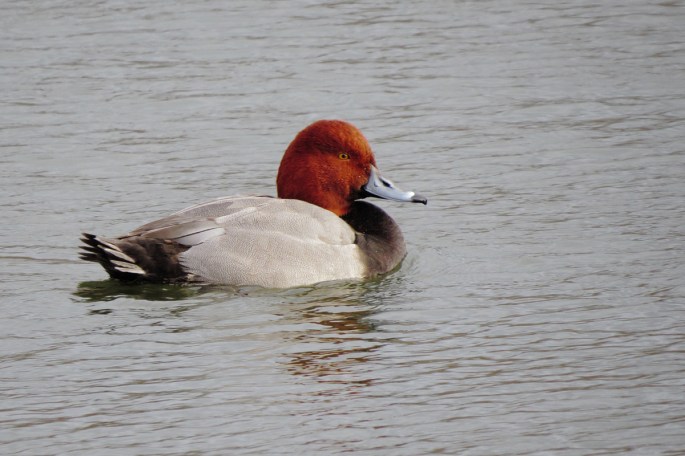






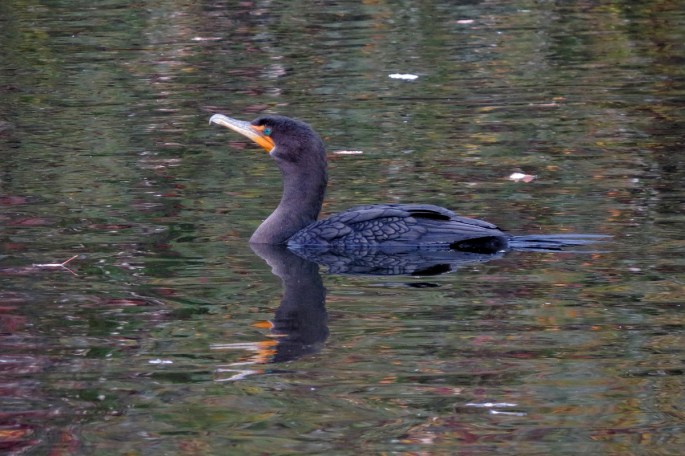


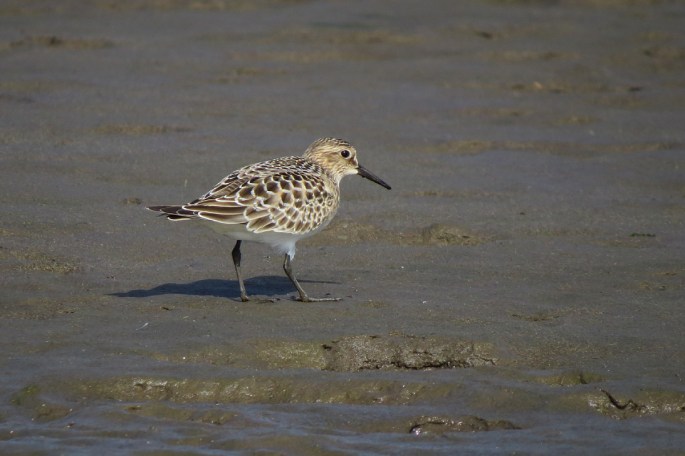

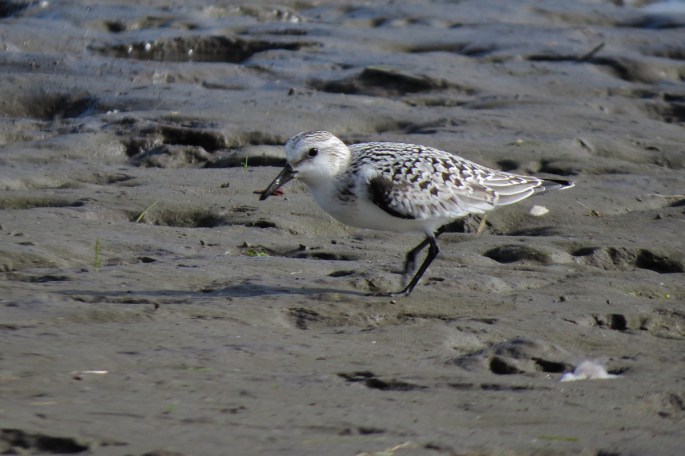

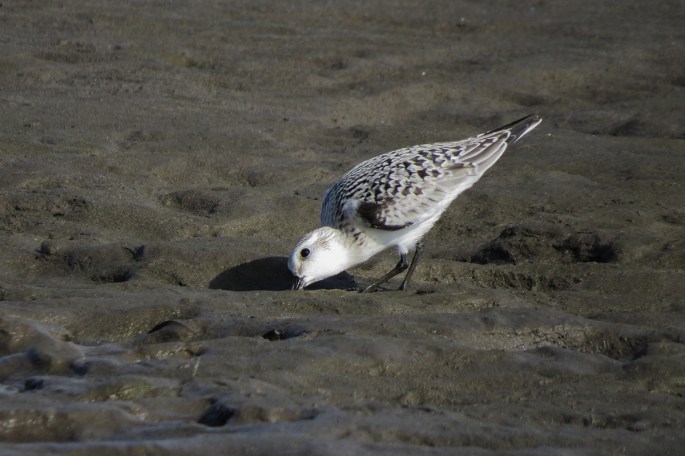
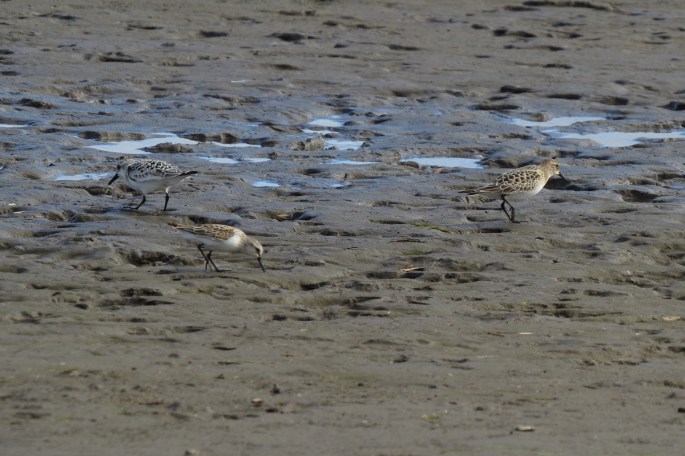
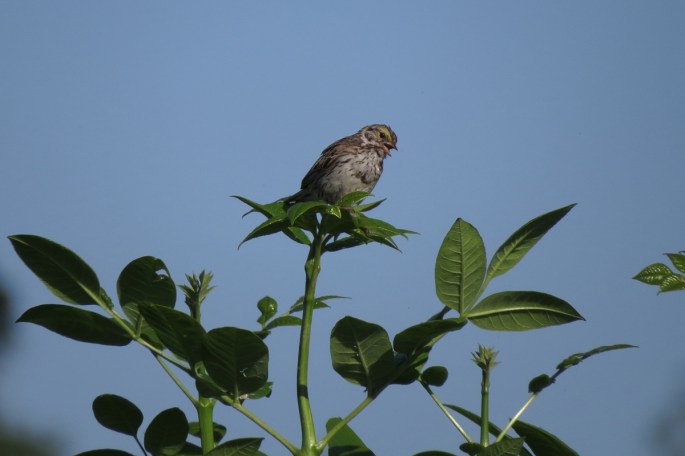 I made a quick visit to Jackson Bottom in Hillsboro. This is a very busy spot in the summer. The Savannah Sparrows are still in full song.
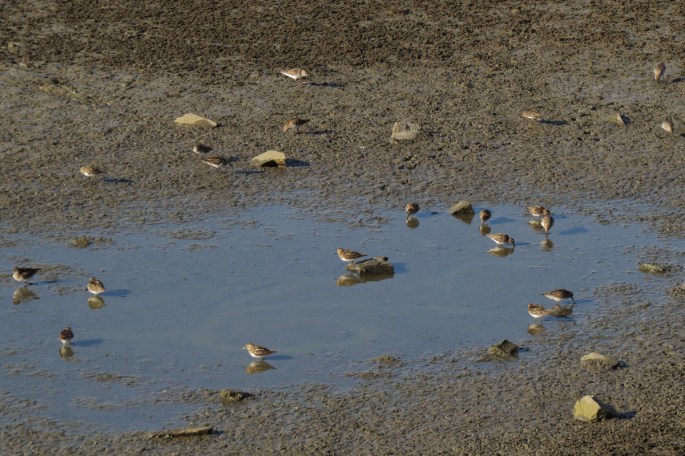 Pintail Pond has been drained to accommodate some restoration work on the site, so it has dried out about two months earlier than normal. This is normally one of the better shorebird sites in the Portland area during the summer, so we will have to find other spot this year. There is only about three weeks between the end of northbound shorebird migration and the beginning of southbound migration. Western and Least Sandpipers have arrived in good numbers, and were feeding in the little puddle that remains of Pintail Pond.


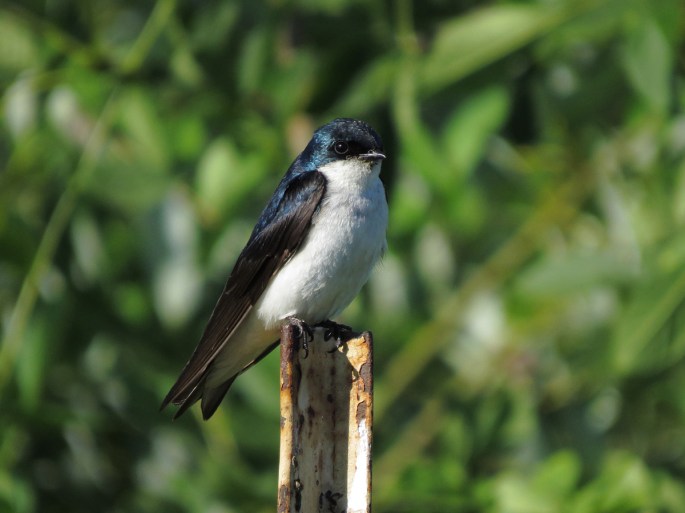






 This American Crow was finding either food or water in the top of the stop sign post on Mt. Tabor.
 Black-headed Grosbeaks returned to the Portland area in large numbers last week. This damp individual was singing in low brush on Mt. Tabor.
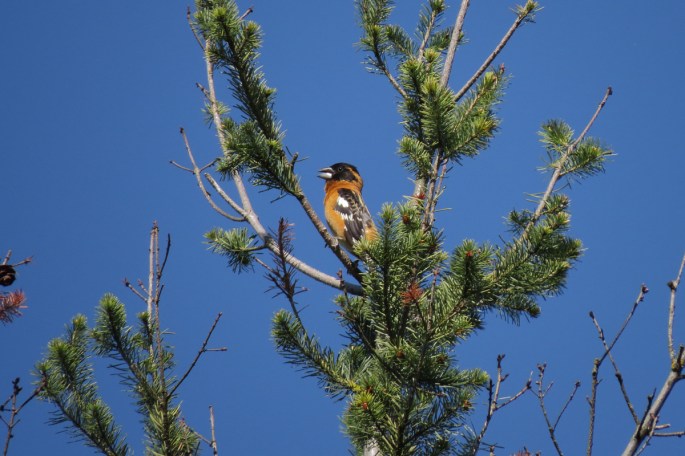 Another Black-headed Grosbeak singing in the sun at Cooper Mountain, but from the top of a tall tree
 An Olive-sided Flycatcher, singing in the rain. This species often hangs out at tree-top level, but this guy came down for some nice eye-level viewing.
 House Finches were munching on dandelions on Mt. Tabor.
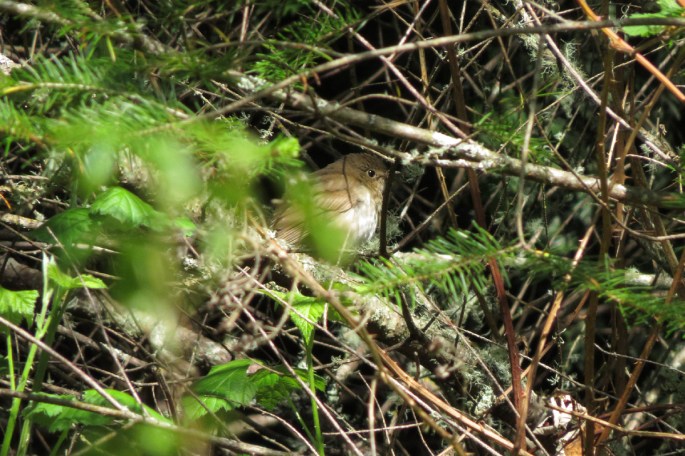 Here is a typical view of a Swainson’s Thrush, seen on Cooper Mountain during our Warbler and Flycatcher Class. This bird did not vocalize and stayed partially hidden in the brush the whole time, but we decided on the ID based on her warm buffy color, lack of dark spots on the breast, and lack of tail dipping behavior. Darker breast spotting and tail dipping would suggest Hermit Thrush.