Random Images

February birding is famously slow around much of Oregon, but, as I like to remind myself, there is always something to see.
redhead
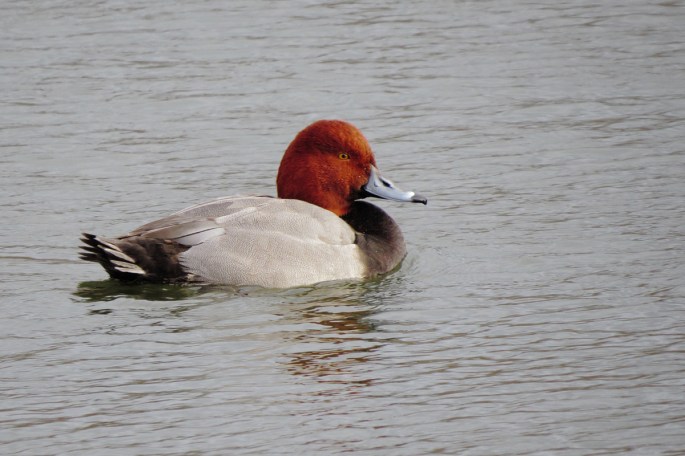
This male Redhead has been spending the winter at Commonwealth Lake Park in Beaverton. It is not often that I get a really close view of these lovely ducks.
turnstone preening
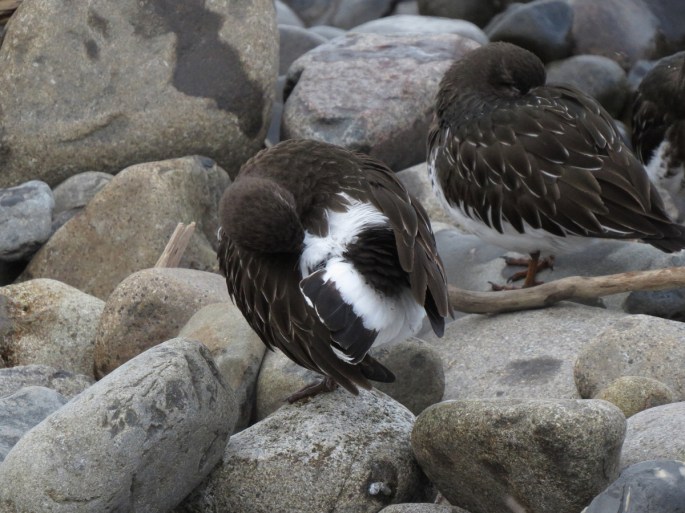
This preening Black Turnstone showed off his flashy backside at the Seaside Cove.

elk
I have made four trips to Fort Stevens State Park since early December to try to see some of the many White-winged Crossbills that have been spending the winter there. They have eluded me every time. I think I have seen more Elk than I have birds at Fort Stevens this winter.
IMG_0346
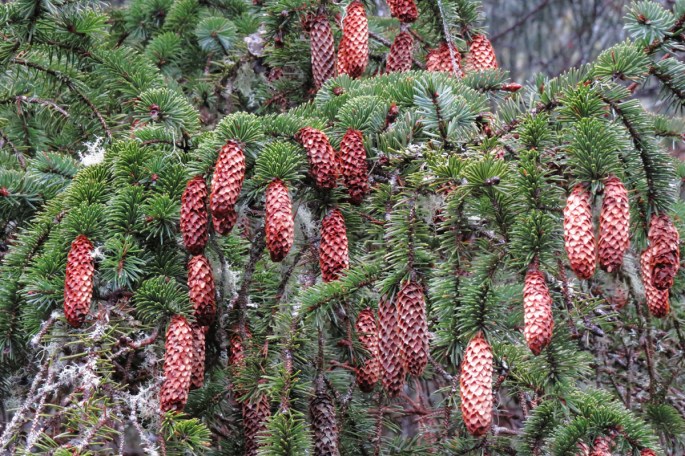
The bumper crop of cones on the Sitka Spruces is what has attracted the crossbills. There is a lot of food available and the finches keep moving all the time, so our paths have not crossed. It is kind of like pelagic birding. You are moving around the open ocean in a little boat, looking for birds that are also moving.

white-crowned brush
I went out to Rentenaar Road on Sauvie Island to chum for sparrows. Conditions were dark and damp, but the head of this White-crowned Sparrow shone from the depths of the brush.

redwinged
The Red-winged Blackbirds are getting fired up for spring. This guy was flashing his epaulets but still showed some rusty pattern on his back from his youth.

IMG_0097
preening Green-winged Teal, Westmoreland Park
IMG_0149
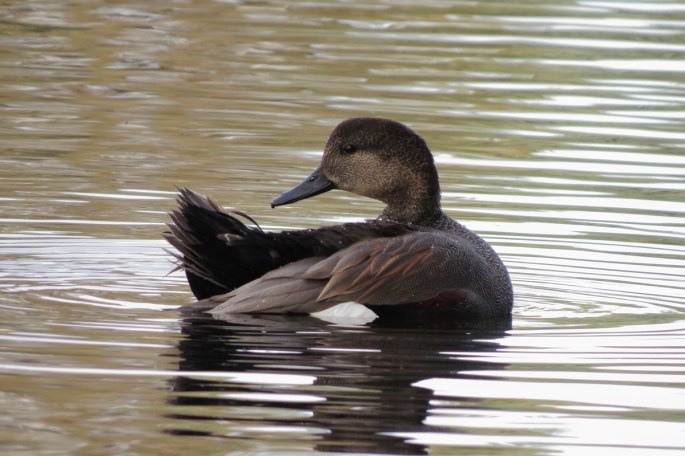
preening Gadwall, Crystal Springs

IMG_0142
male Wood Duck, Crystal Springs

IMG_0305
The lighting was not great, but it was nice to see this Lincoln’s Sparrow just sitting out in the open for so long. This is a species that I often see, but am seldom able to show to others because the birds tend to hide in thick cover most of the time. I have two Little Brown Birds classes in March. I hope I can find such a cooperative individual on those days.

Taverner’s Cackling Goose vs. Ridgeway’s Cackling Goose

IMG_0085
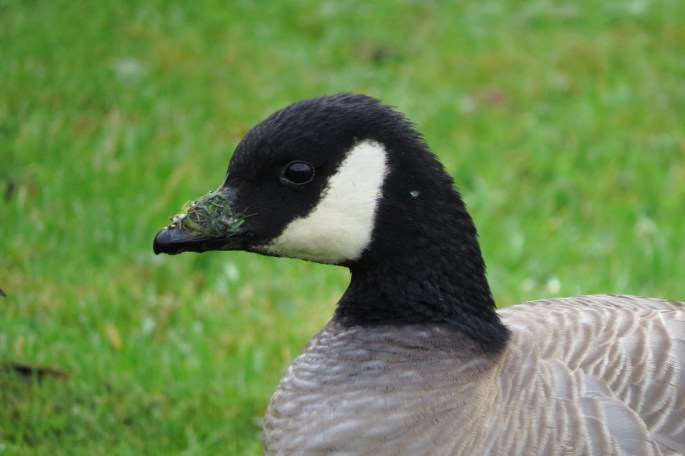
On a recent trip to Commonwealth Lake Park in Beaverton, I had the opportunity to observe Taverner’s and Ridgeway’s Cackling Geese side-by-side. Taverner’s are larger, with pale breasts and slightly longer bills. Ridgeway’s have dark, iridescent breasts (on adults) and stubby little bills.

taverner
Here is a close look at a Taverner’s Cackling Goose, the subspecies most likely to be confused with Lesser Canada Goose. Lesser Canada Geese have thinner necks and slightly longer bills.

ridgeway's
The bill on a Ridgeway’s Cackling Goose is thick and stubby, and the neck often appears very short and thick. This subspecies is generally regarded as the most adorable.

IMG_0084
Another fun goose at Commonwealth that day was this Greater White-fronted Goose. A few of these have been hanging out at Commonwealth the past few winters.

cormorant
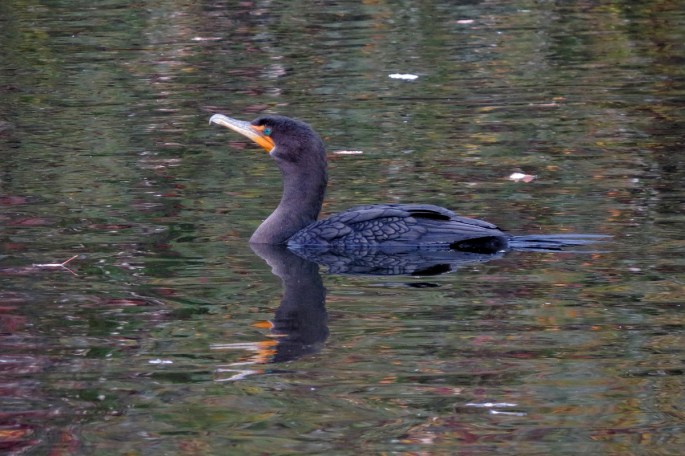
Not a goose, but a gorgeous bird when you get a close enough view, is this Double-crested Cormorant. You can expect to see a few of these whenever you visit this site.

The American Wigeon flock was pretty small this day, but I expect the wintering birds to increase in the coming weeks.

Random Images

Once again, here are a few photos from the past few weeks’ ramblings.

While one can admire the adorableness of this Black-capped Chickadee, the real bird of interest is his drinking buddy in the background, a Pine Siskin. Siskins were pretty much non-existent last year as their population took a big downturn (as it does every few years). This fall has brought good numbers of Pine Siskins to the Willamette Valley already, so it looks to be a good year for them.

This Short-eared Owl flushed from Broughton Beach and flew out over the Columbia River before heading downstream. Short-eareds winter at this site with some regularity. I felt bad about flushing the bird. If she had just sat still, I probably would have walked right by and not seen her. I would think that birds who roost in such a high-traffic area would learn to adjust to passers-by.

My gull class went to the coast last weekend. We found nine species of gull, one less than last year but still great diversity. One of the first was this first cycle Ring-billed Gull.

Bonaparte’s Gulls get the award for cutest gull on the Oregon coast.
Even though they lose their black hoods in winter, you can still see the white eye crescents when they turn just so.

The Seaside Cove hosted several Surfbirds along with a flock of Black Turnstones. Both of these species are reliable at this site in fall and winter, but it still feels like a treat to find them every time I’m there.

The forecast for the next week calls for cool and rainy weather, so we shall see what changes that brings to the birding.

Summer shorebirds

Mid to late summer is the prime time to watch shorebirds in western Oregon, partly because it is the peak of southbound shorebird migration, and partly because the locally nesting songbirds have stopped singing and are very hard to see. Shorebirding in the Portland area has been a little more challenging this summer with major construction projects occurring at Fernhill Wetlands, Smith and Bybee Wetlands, and Jackson Bottom.

Broughton Beach, near the airport, has not hosted large numbers of birds this year, but has attracted some good species.

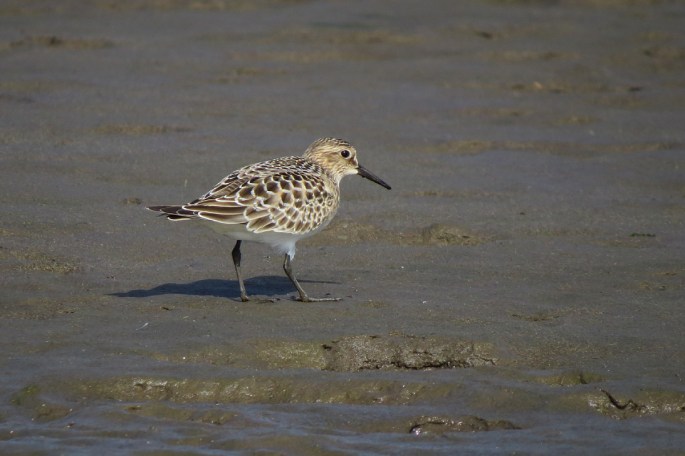
Baird’s Sandpipers come through Oregon every year, but never in huge numbers, so finding one is always a treat. They stand out with their buffy coloring and long wings.
Almost all of the Baird’s that pass through in summer are juveniles, so they show a strong scaly pattern.

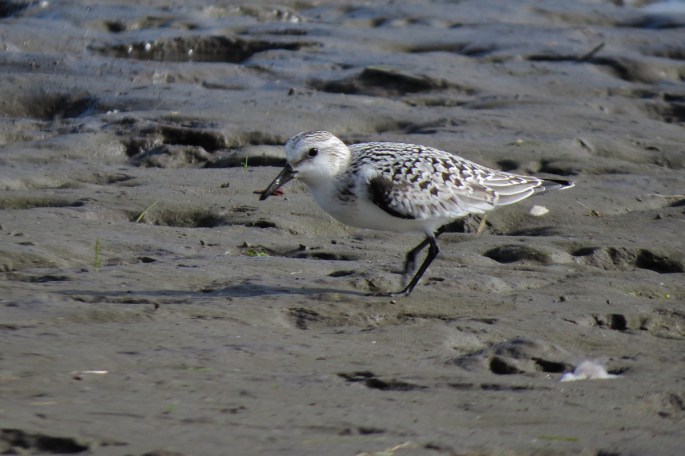
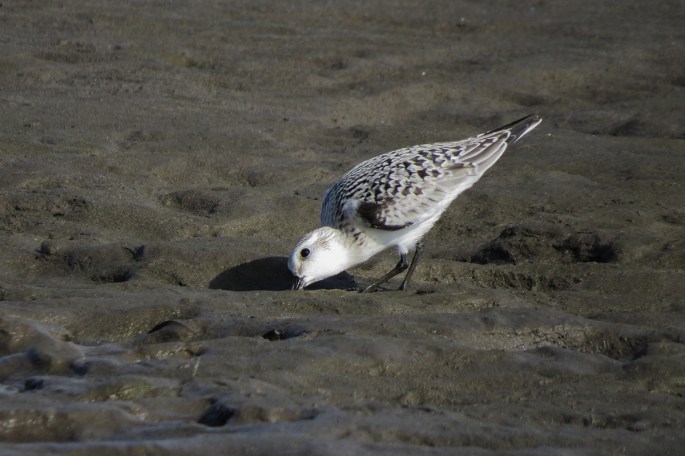
While Sanderlings are quite common along the coast, it is rare to find them inland. Broughton seems to be a good spot to find them in Portland.
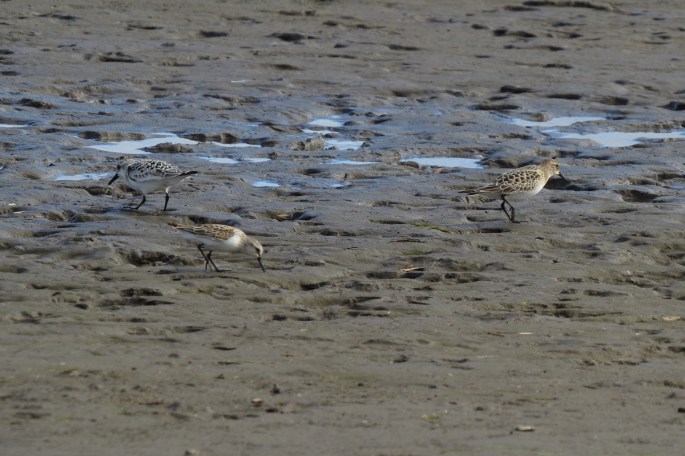
Here is a group shot of (L to R) a Sanderling, a Western Sandpiper, and a Baird’s Sandpiper, all juveniles. While it is fun to sort through thousands of shorebirds when the birding fates align, when birding is slow it does us good to take advantage of small numbers and really study the few birds at hand. Shorebird migration runs for another month, so I am hoping to have many more encounters before the rains return and the shorebirds depart.

Jackson Bottom

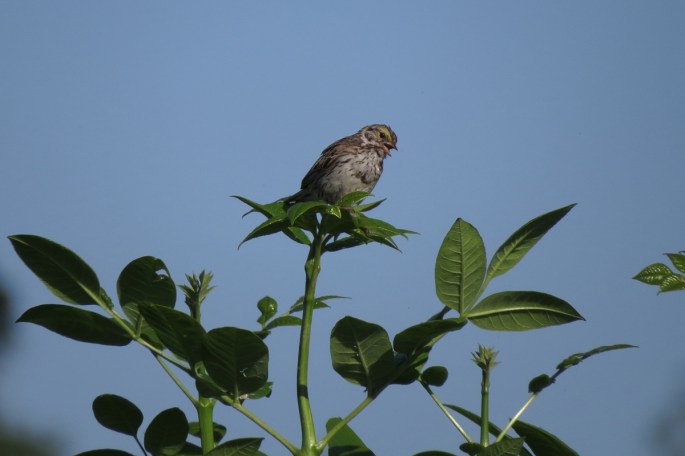
savannahI made a quick visit to Jackson Bottom in Hillsboro. This is a very busy spot in the summer. The Savannah Sparrows are still in full song.
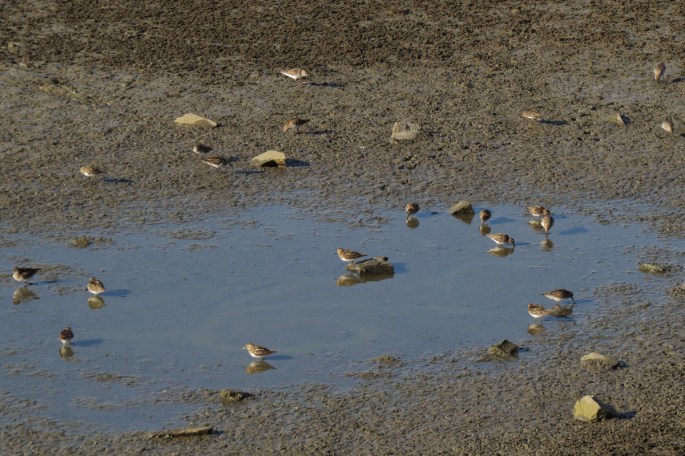
puddlePintail Pond has been drained to accommodate some restoration work on the site, so it has dried out about two months earlier than normal. This is normally one of the better shorebird sites in the Portland area during the summer, so we will have to find other spot this year.  There is only about three weeks between the end of northbound shorebird migration and the beginning of southbound migration. Western and Least Sandpipers have arrived in good numbers, and were feeding in the little puddle that remains of Pintail Pond.

western least
Western (l) and Least (r) Sandpipers

spotted adult
Spotted Sandpipers are common nesters in the area.

spotted chick
Spotted Sandpiper chick

greater yellowlegs
Four Greater Yellowlegs made a brief appearance.

swallow box
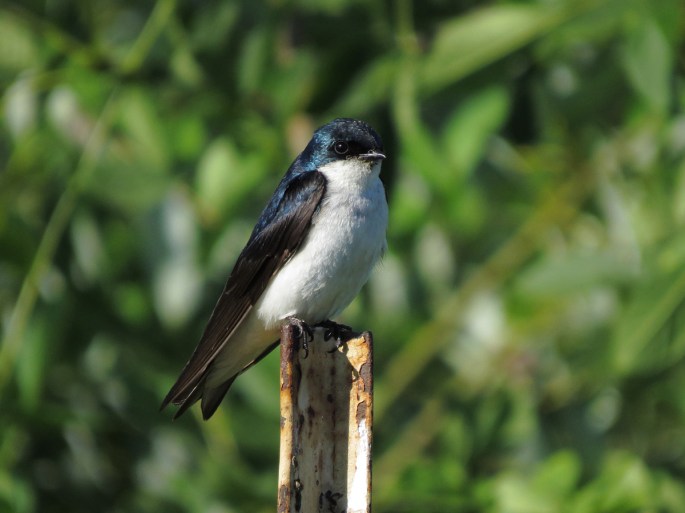
Tree Swallows are everywhere at Jackson Bottom, thanks in part to the many nesting boxes that have been installed here.

swallows 3
The first broods are grown up now, and it looks like second broods will be arriving shortly.

swallow 2
pretty boy

Spring on the Coast

I have made four trips to the Oregon Coast in as many weeks this spring. For three of the four, I was leading groups. That, combined with rainy weather, limited my photo opportunities, but here are a few shots. The big news on the coast this spring was a Laughing Gull and at least four Bar-tailed Godwits. I missed these birds, but as I like to tell myself, there is always something to see.

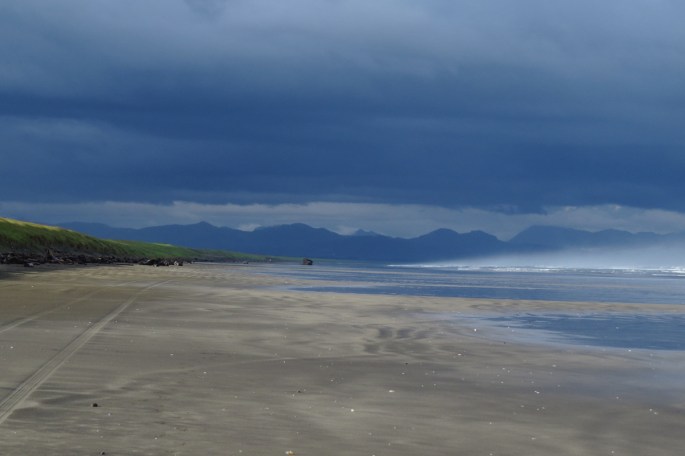
Rainy skies at Ft. Stevens. The wreck of the Peter Iredale is visible in the center of the photo.

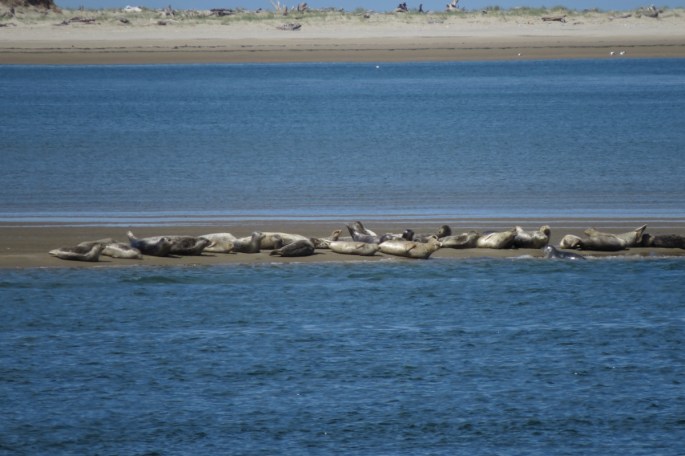
Harbor Seals enjoying the sunshine in Netarts Bay.

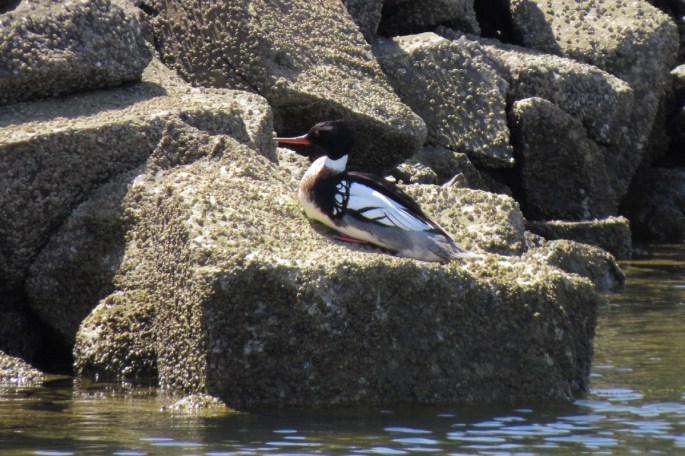
It was fun to see this Red-breasted Merganser hauled out on a rock at the Netarts boat launch. I don’t see them out of the water very often.

Belted Kingfisher, Netarts boat launch

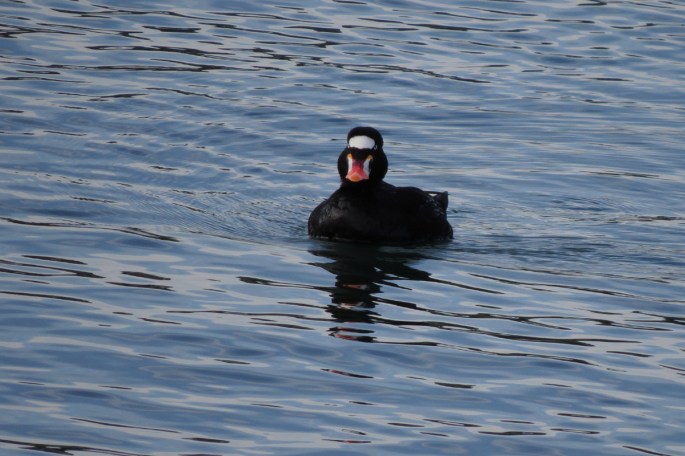
Surf Scoter, Yaquina Bay

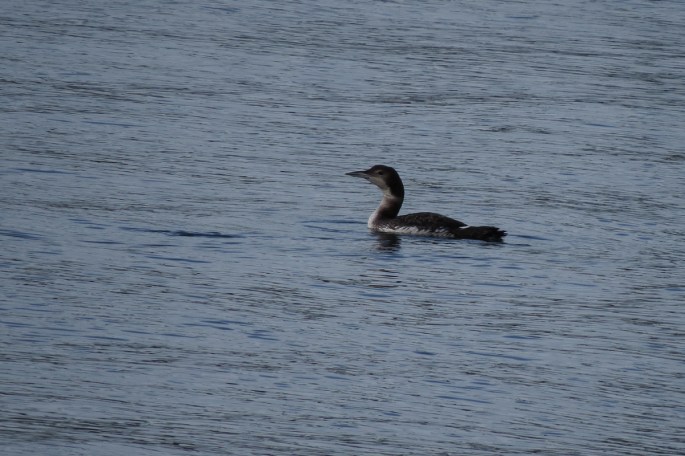
Common Loon, still in winter plumage, Yaquina Bay

Harlequin Ducks on Haystack Rock, Cannon Beach

former whale, Ft. Stevens

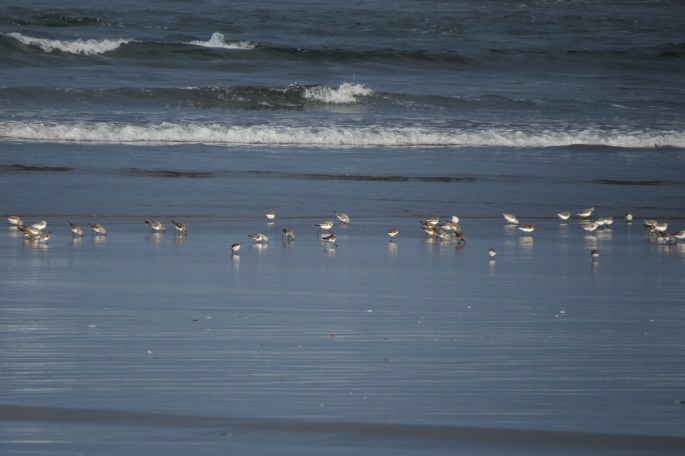
Sanderling have been one of the more common migrants along the coast this spring.
Sanderling, Ft. Stevens

Whimbrel with a Mole Crab, Ft. Stevens

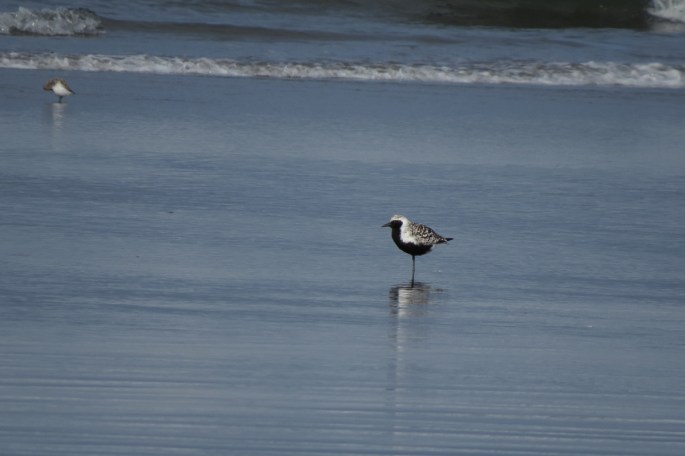
Black-bellied Plover, with a Sanderling in the background

Black-bellied Plover, still in mostly non-breeding plumage. Such faded birds often show some brown coloring, which fosters ideas of Pacific Golden-Plover. But eventually the birds raise their wings to reveal black axillaries (wing pits), and confirm the Black-bellied ID.


Soggy Songbirds

This has been the longest February ever. I know the calendar indicates that it is actually late May, and we have had several lovely dry days, but the cold wet weather continues to dominate. Despite the nasty conditions, spring migration has progressed nicely. Here are a couple of shots from Cooper Mountain Nature Park (sunny day) and Mount Tabor (dreary rainy day).

IMG_9494This American Crow was finding either food or water in the top of the stop sign post on Mt. Tabor.

IMG_9500Black-headed Grosbeaks returned to the Portland area in large numbers last week. This damp individual was singing in low brush on Mt. Tabor.
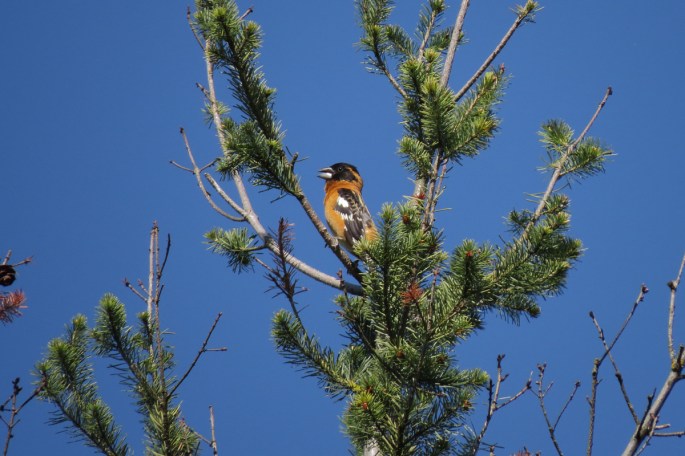
IMG_9487Another Black-headed Grosbeak singing in the sun at Cooper Mountain, but from the top of a tall tree

IMG_9513An Olive-sided Flycatcher, singing in the rain. This species often hangs out at tree-top level, but this guy came down for some nice eye-level viewing.

IMG_9504House Finches were munching on dandelions on Mt. Tabor.
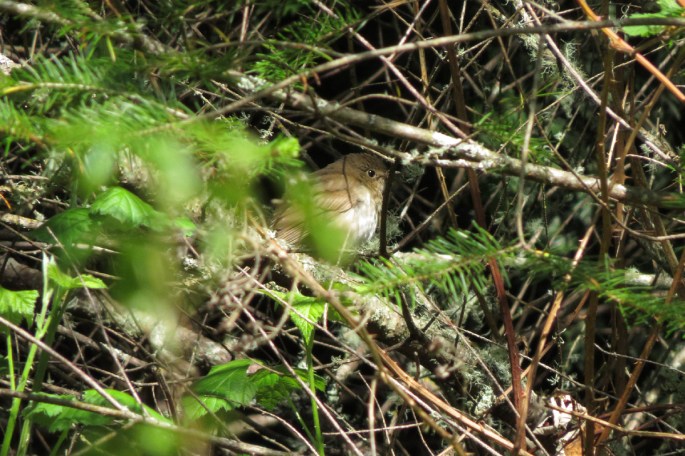
swainson'sHere is a typical view of a Swainson’s Thrush, seen on Cooper Mountain during our Warbler and Flycatcher Class. This bird did not vocalize and stayed partially hidden in the brush the whole time, but we decided on the ID based on her warm buffy color, lack of dark spots on the breast, and lack of tail dipping behavior. Darker breast spotting and tail dipping would suggest Hermit Thrush.
The weather forecast calls for warm sunny weather for the next week. We will see how accurate the forecast is, and how long it takes me to complain about how hot and sunny it is.

Spring at Fernhill

While we continue to get above-average rainfall in the Portland area, there have been a few dry days of late, so I ran out for a quick tour of Fernhill Wetlands. Most of the wintering geese are gone, and there are signs that spring is slowly making progress.

Yellow-rumped Warblers, both Audubon’s and Myrtle (shown) races, are coming through in large numbers.

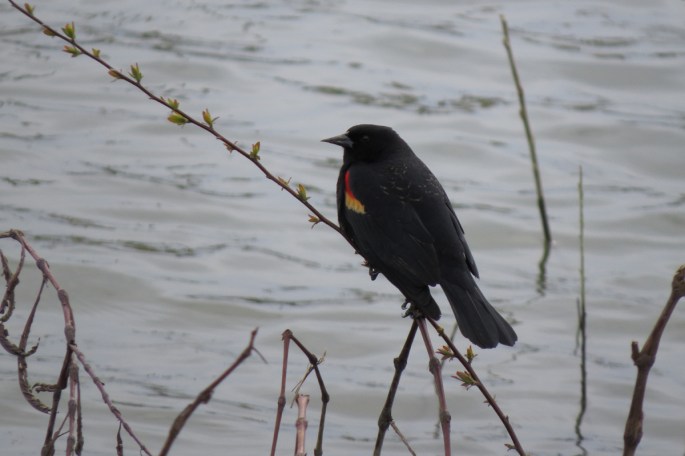
Red-winged Blackbirds are in full song and are staking out territories.

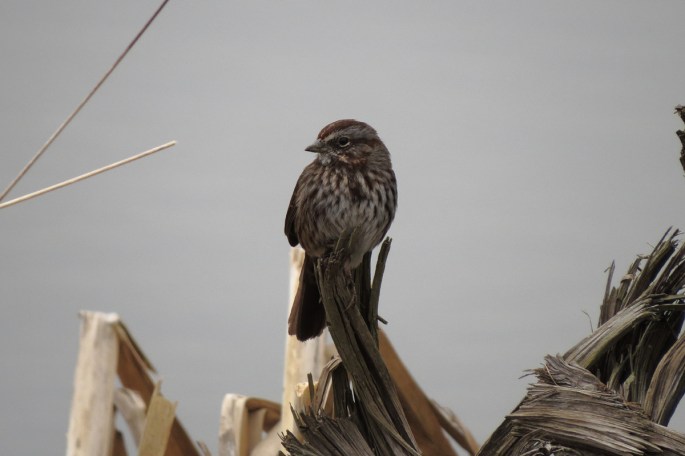
Song Sparrows start singing in January, but are increasingly vocal now.

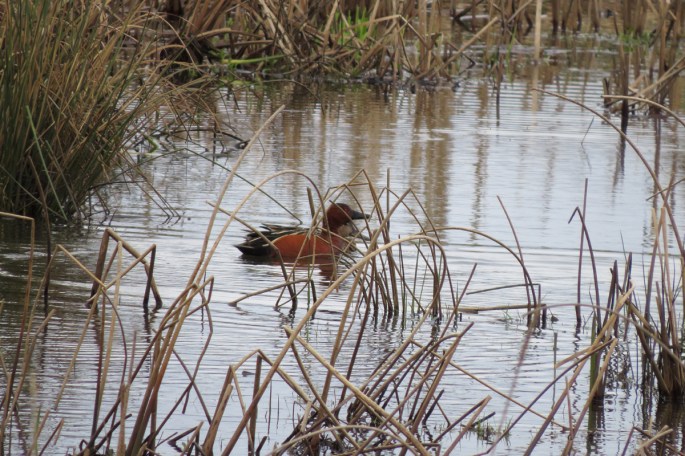
Several pairs of Cinnamon Teal were courting.

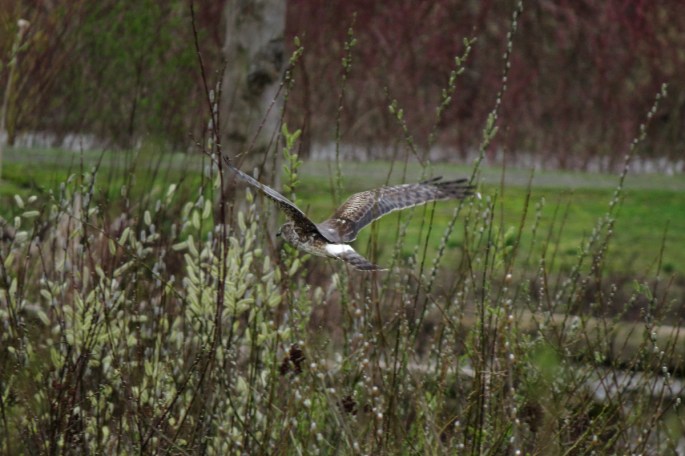
Northern Harrier

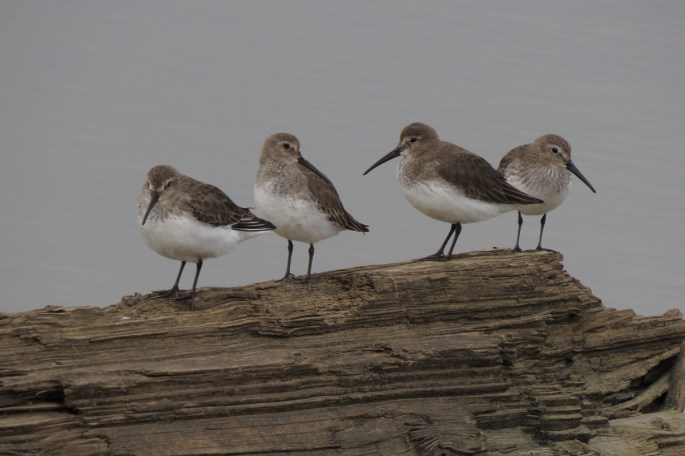
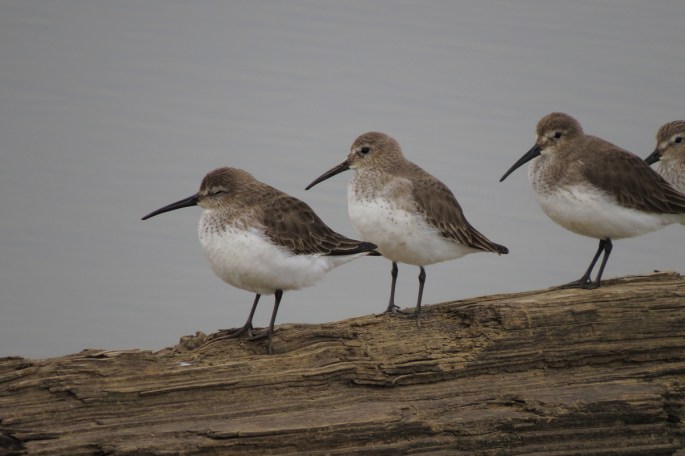
A flock of Dunlins was using this log to get out of the mud for a while. They were all still in winter plumage. Dunlins are one of the first species to arrive in spring.
Spring shorebird migration peaks in late April/early May. There is still room in my shorebird class with Portland Audubon April 27/29.

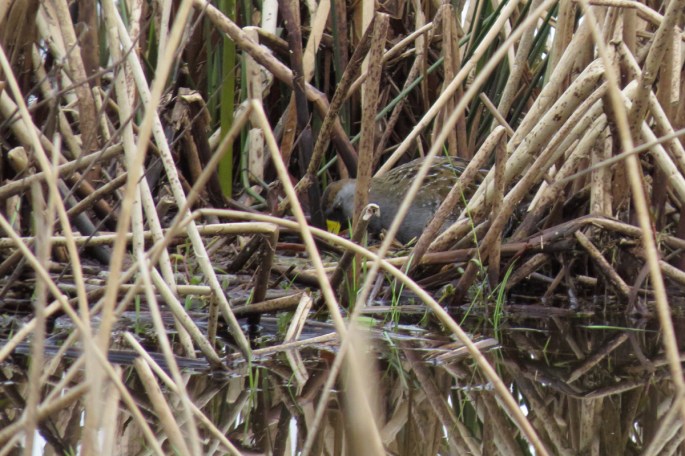
This Sora was being typically elusive.

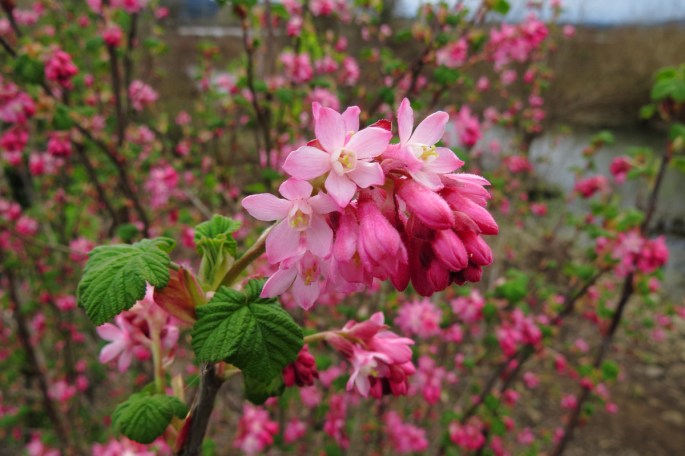
The red currants were is full bloom, attracting both Anna’s and Rufous Hummingbirds.

February Doldrums

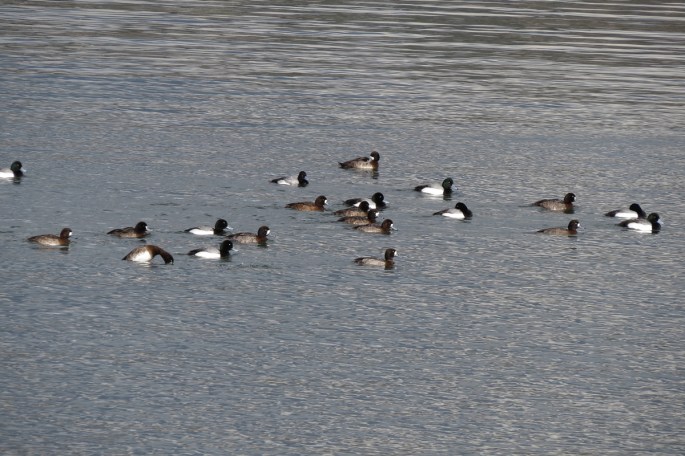
img_9341I think February is the most challenging month to live in the Portland area, as it is typically wet and dreary. This past month had three times the normal rainfall, so the brief sun breaks were especially appreciated. A quick trip to Broughton Beach provided looks at a large flotilla of Great Scaup (with some Lessers mixed in).

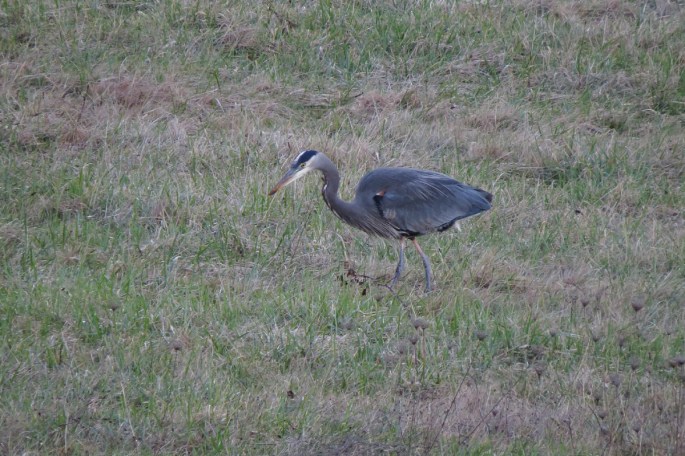
img_9336This Great Blue Heron was staring at the ground at the airport, waiting for a vole or some other rodent to appear. The dark mud at the end of his bill suggest previous attempts at napping some land-based prey.

img_9326American Crow, calling from the top of the dike

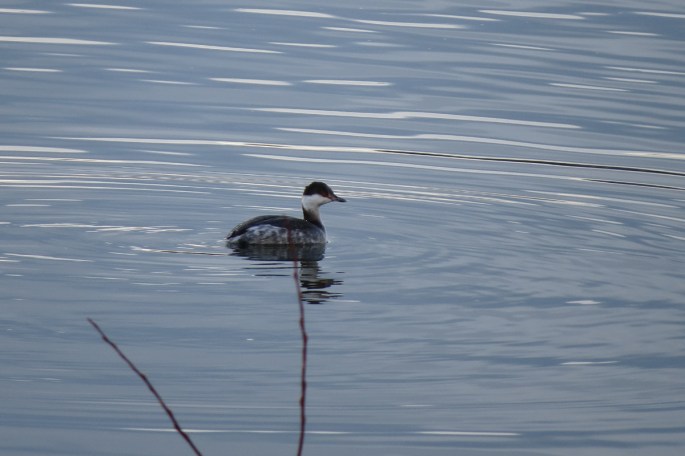
img_9337A few Horned Grebes were on the Columbia River. They are just starting to show some color on their necks.

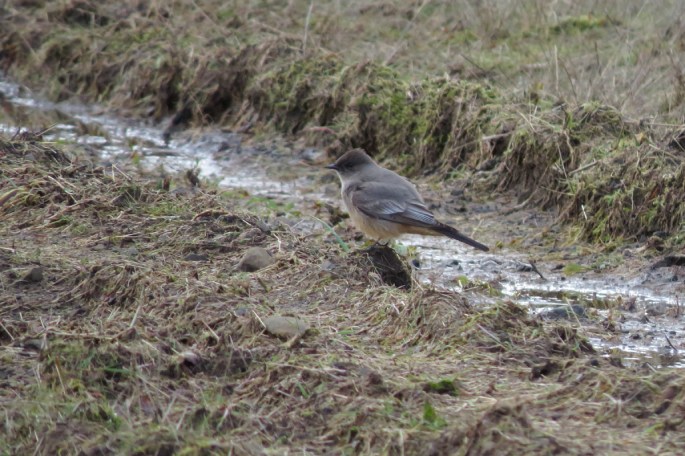
img_9319The first real harbinger of spring was this Say’s Phoebe. Several of these birds have been reported in the Portland area in recent weeks. It has been too cold for many insects to be out, so I imagine it has been tough for these flycatchers to find enough to eat. Hopefully March will be a little more pleasant for all of us.

Gull big day

ring-billed and mewMy recent gull class field trip found ten species of gulls (Western, Glaucous-winged, Glaucous, Herring, Thayer’s, California, Ring-billed, Mew, Bonaparte’s, and Heermann’s). This was a new record for the class, and it got me wondering. How many species of gulls could one conceivably find in one day in Oregon?

The best time for such a quest would be early November. By then, the wintering species would be here, and there are usually a few lingering Heermann’s Gulls that haven’t gone south yet. Bonaparte’s Gulls are migrating south at this time, as well. If you waited until December, the migrants would have already moved on. By late January, many of the wintering birds have already left.

The best location for a gull quest would be the coast. Eight species regularly occur in the Willamette Valley as well, (Western (rare), Glaucous-winged, Herring, Thayer’s, California, Ring-billed, Mew, and Bonaparte’s), but anything else would be extremely rare. Ring-billed can be challenging to find on the coast, but you can usually find one among the Mew Gulls in the estuaries. So with some searching, you could count on these eight species, plus Heermann’s makes nine.

If your quest occurred the day after an autumn storm, you would have a chance at two pelagic species, Black-legged Kittiwake and Sabine’s Gull. That would bring your total to eleven.

To exceed eleven species, you would need to find a rarity. Glaucous Gull is probably the most likely. Other less likely candidates include Lesser Black-backed, Slaty-backed, or a wayward Franklin’s.

So if you could find a rarity (or go see a previously reported bird) and timed your quest to coincide with some west winds, you could conceivably see twelve gull species in a day. Has anyone done this? This sounds like a noble quest to me.