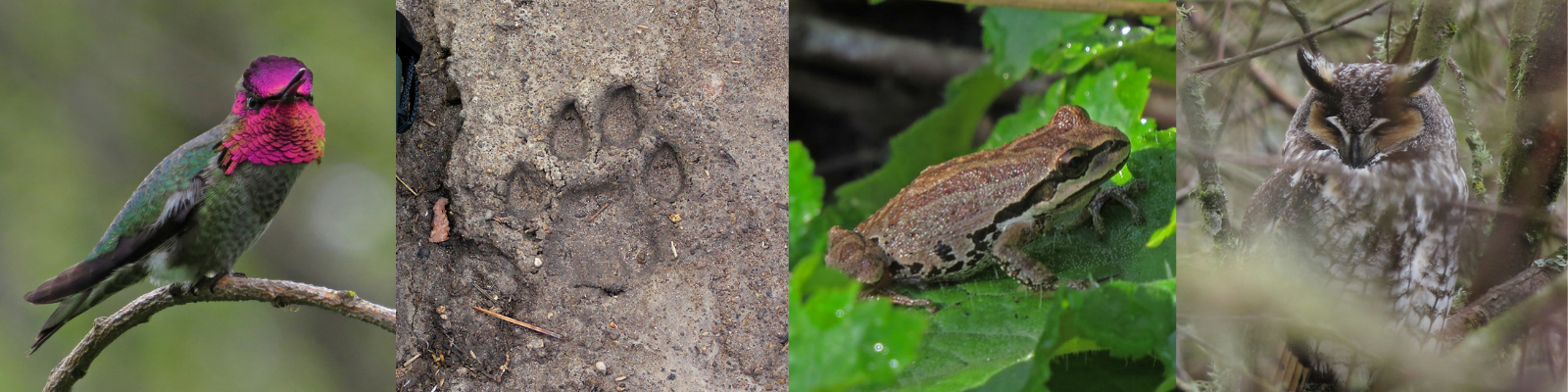
I have made four trips to the Oregon Coast in as many weeks this spring. For three of the four, I was leading groups. That, combined with rainy weather, limited my photo opportunities, but here are a few shots. The big news on the coast this spring was a Laughing Gull and at least four Bar-tailed Godwits. I missed these birds, but as I like to tell myself, there is always something to see.
 Rainy skies at Ft. Stevens. The wreck of the Peter Iredale is visible in the center of the photo.
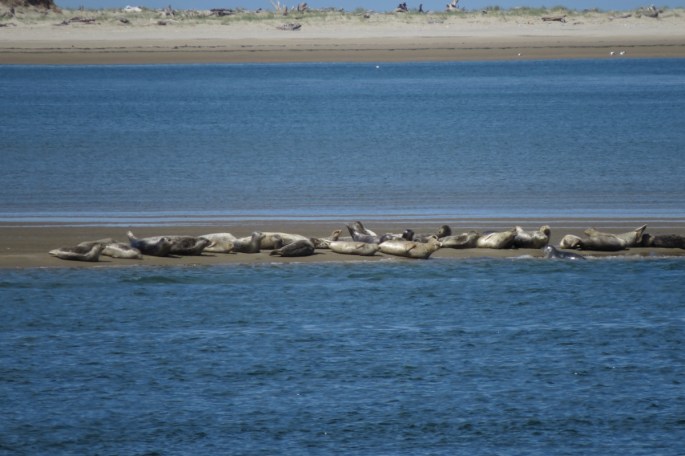 Harbor Seals enjoying the sunshine in Netarts Bay.
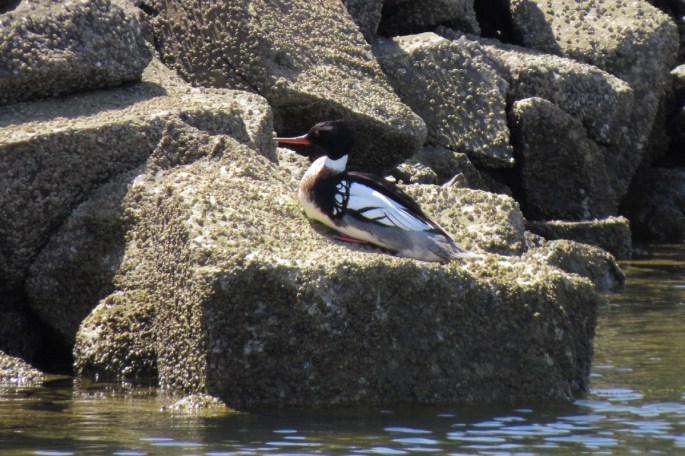 It was fun to see this Red-breasted Merganser hauled out on a rock at the Netarts boat launch. I don’t see them out of the water very often.
 Belted Kingfisher, Netarts boat launch
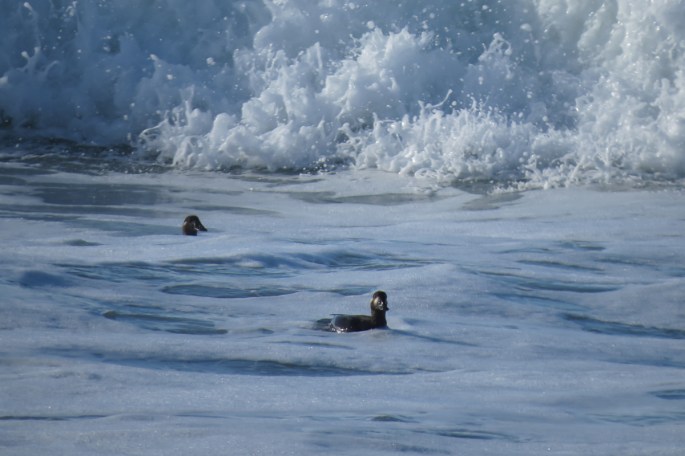
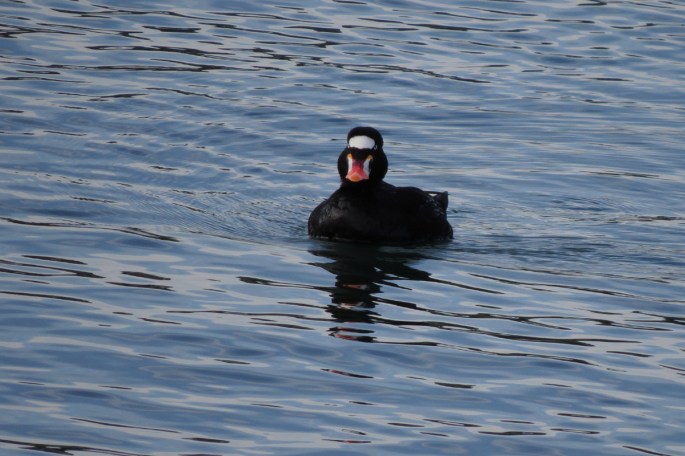 Surf Scoter, Yaquina Bay
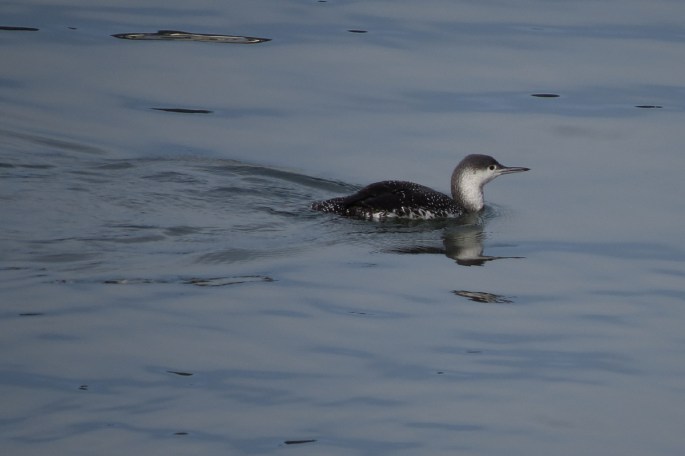
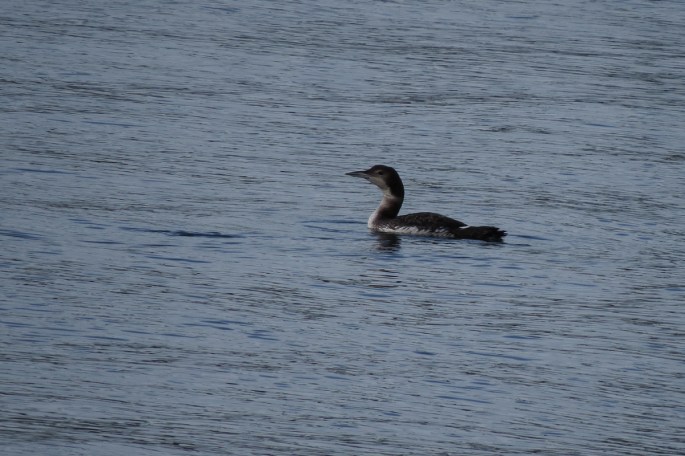 Common Loon, still in winter plumage, Yaquina Bay
 Harlequin Ducks on Haystack Rock, Cannon Beach
 former whale, Ft. Stevens
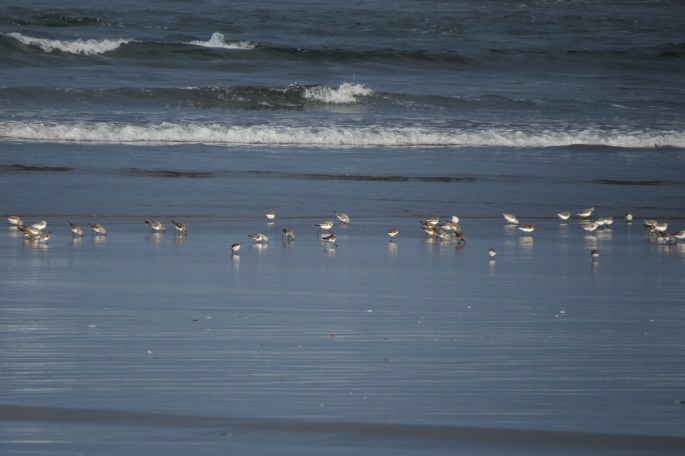 Sanderling have been one of the more common migrants along the coast this spring.
 Sanderling, Ft. Stevens
 Whimbrel with a Mole Crab, Ft. Stevens
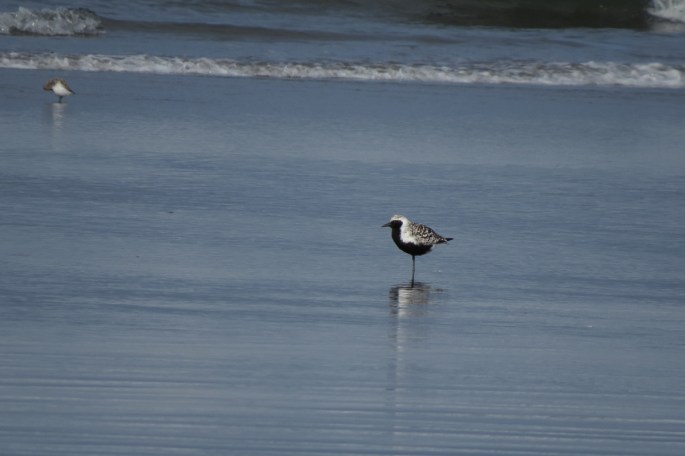 Black-bellied Plover, with a Sanderling in the background
 Black-bellied Plover, still in mostly non-breeding plumage. Such faded birds often show some brown coloring, which fosters ideas of Pacific Golden-Plover. But eventually the birds raise their wings to reveal black axillaries (wing pits), and confirm the Black-bellied ID.
 This American Crow was finding either food or water in the top of the stop sign post on Mt. Tabor.
 Black-headed Grosbeaks returned to the Portland area in large numbers last week. This damp individual was singing in low brush on Mt. Tabor.
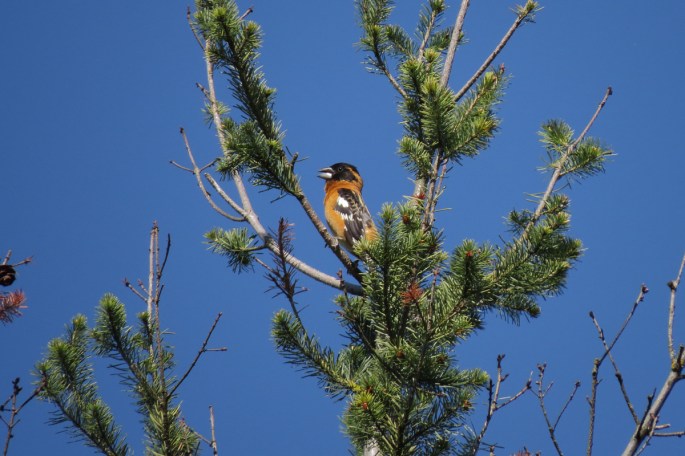 Another Black-headed Grosbeak singing in the sun at Cooper Mountain, but from the top of a tall tree
 An Olive-sided Flycatcher, singing in the rain. This species often hangs out at tree-top level, but this guy came down for some nice eye-level viewing.
 House Finches were munching on dandelions on Mt. Tabor.
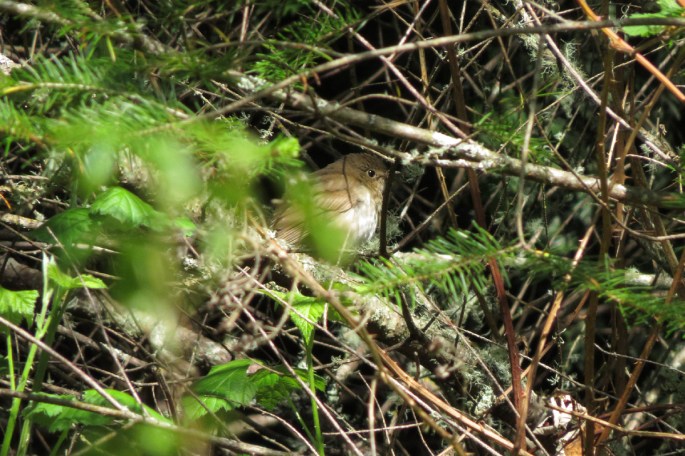 Here is a typical view of a Swainson’s Thrush, seen on Cooper Mountain during our Warbler and Flycatcher Class. This bird did not vocalize and stayed partially hidden in the brush the whole time, but we decided on the ID based on her warm buffy color, lack of dark spots on the breast, and lack of tail dipping behavior. Darker breast spotting and tail dipping would suggest Hermit Thrush.
















 Ethical Birder