Tillamook Bay, 9/24/11


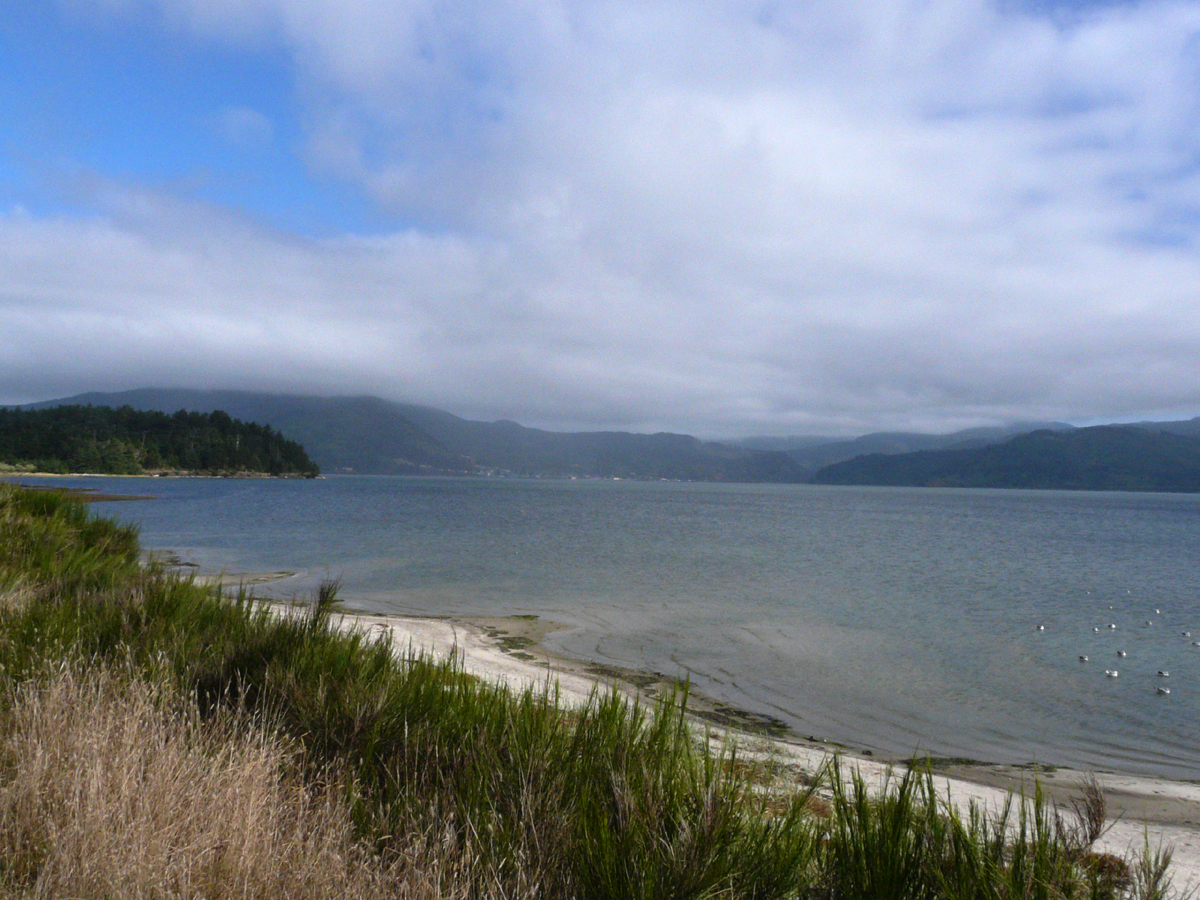
I took my Portland Audubon class to Tillamook Bay (Birding Oregon p. 125). We found strong winds, high tides, and rough seas, but the weather was warm and mostly sunny. This photo was taken on the bayside of Bayocean Spit. The water was high enough to cover the mudflats, so we didn’t find any shorebirds, but we did find good numbers of gulls loafing in the shallow water.
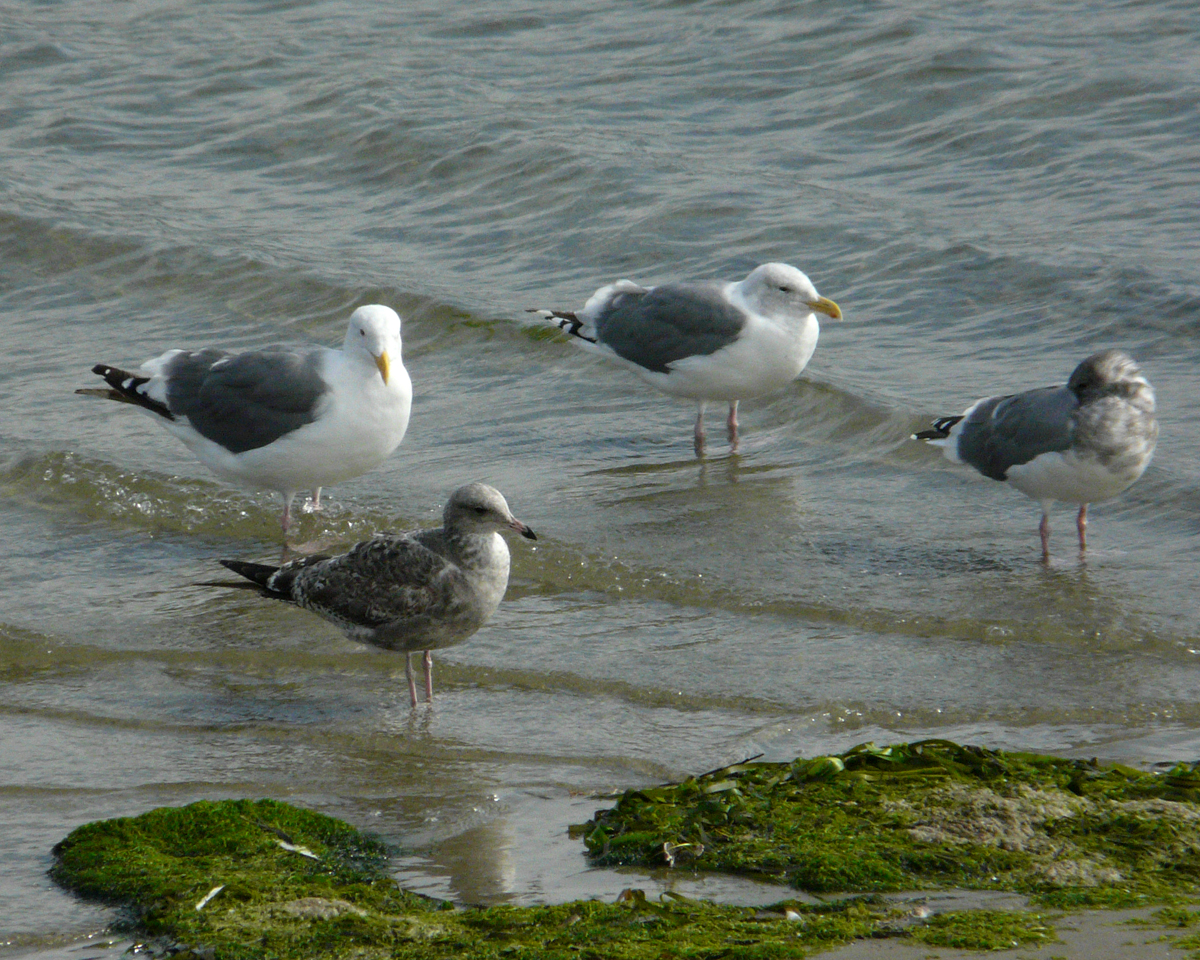

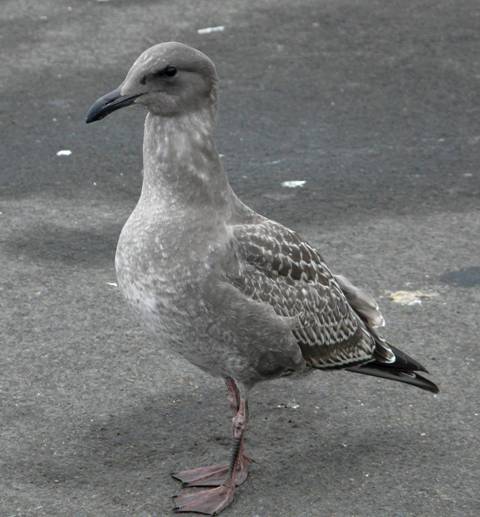
Here is a first-cycle California Gull with two adult Western Gulls and a probable third-cycle Western Gull.


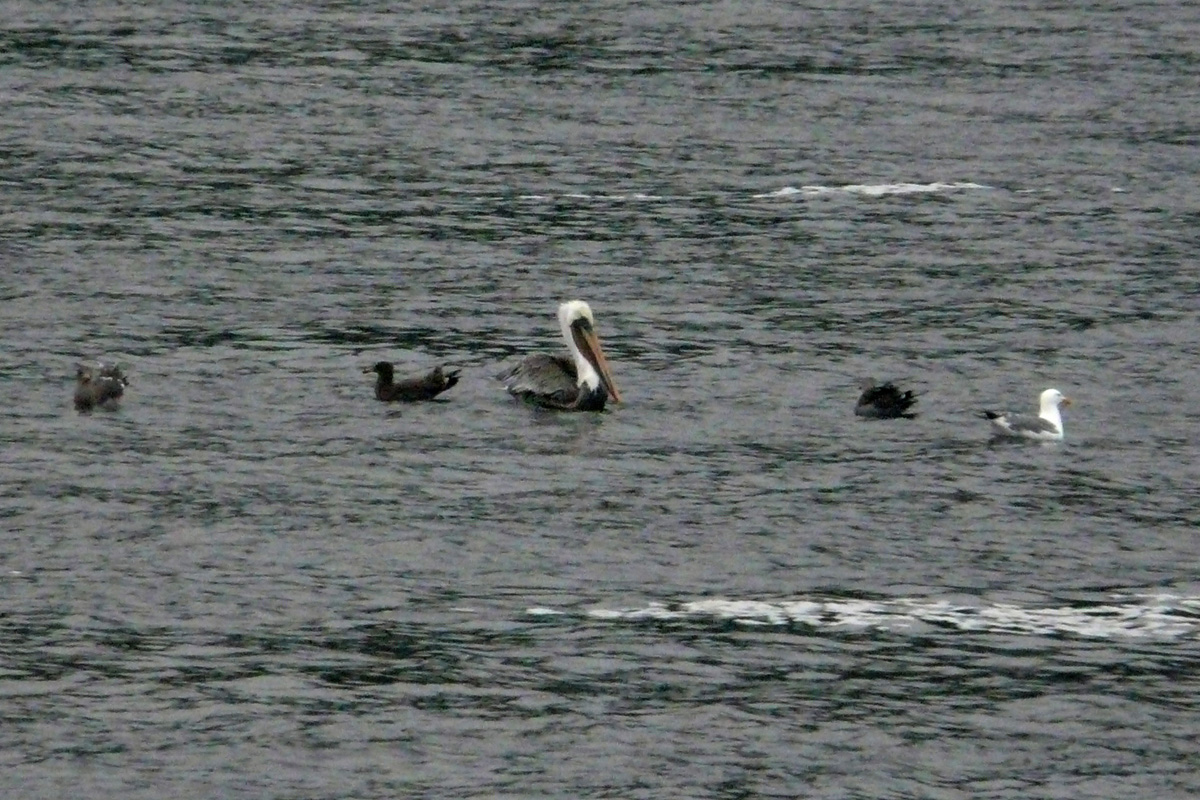
The largest concentration of birds was at the Bay City Oyster Plant. This little jetty was covered with gulls, Brown Pelicans, and Black Turnstones.
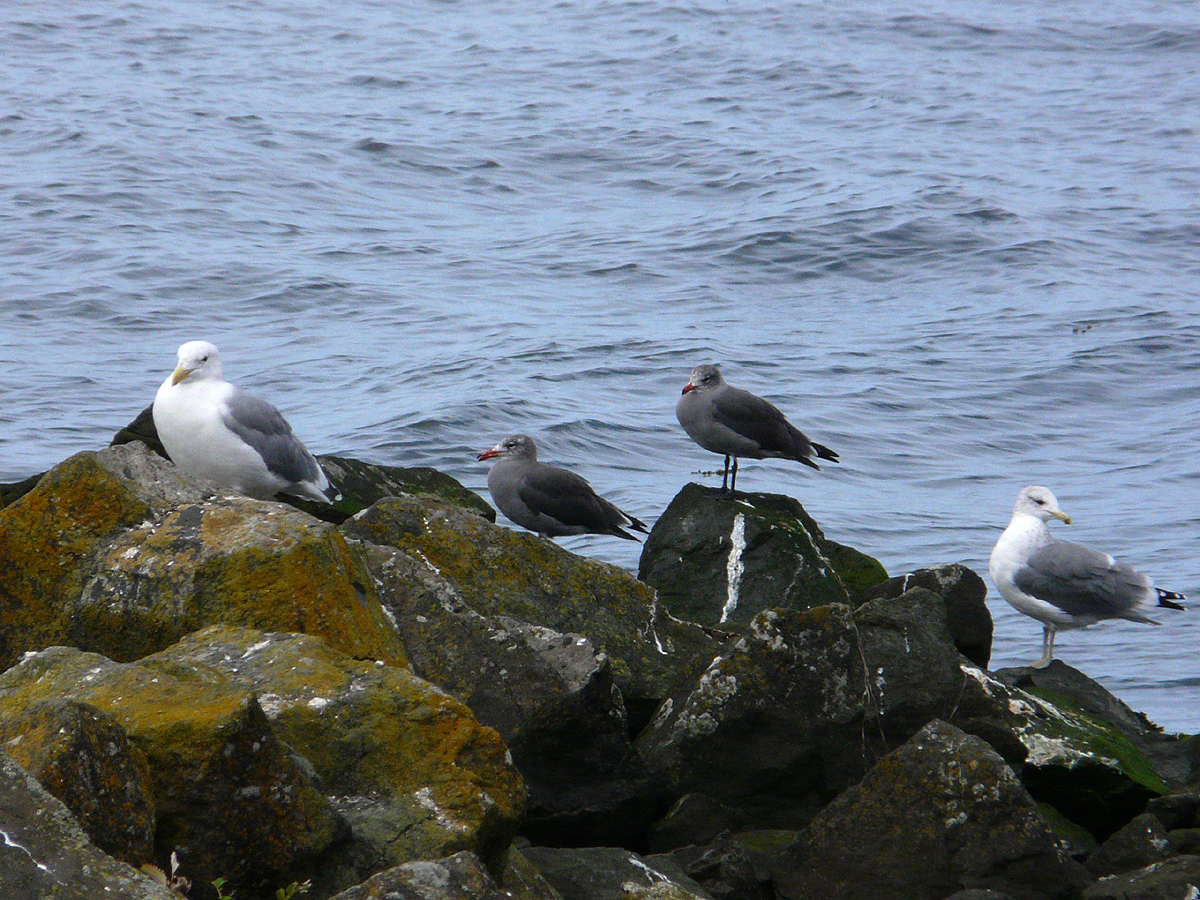

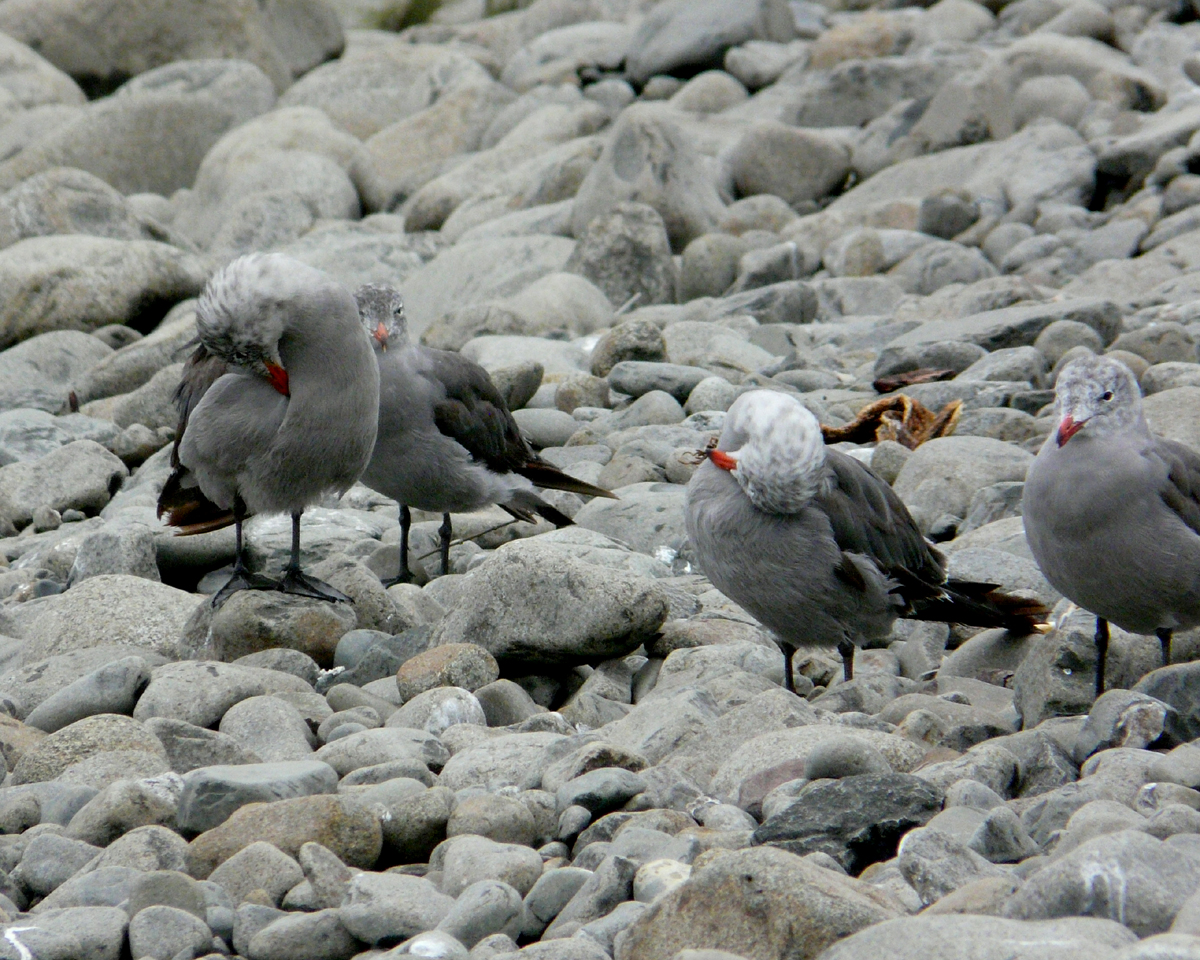
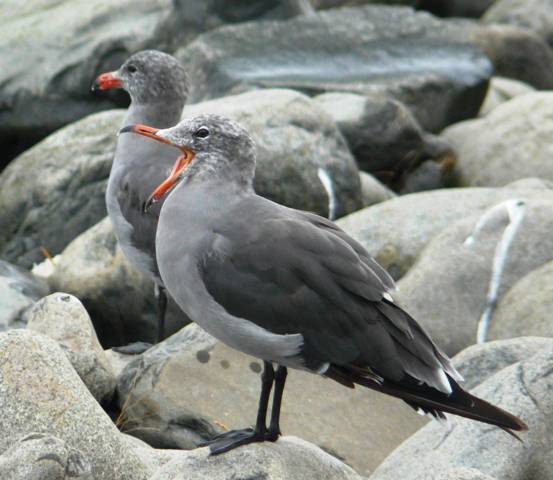
Western Gull, two Heerman’s Gulls, and a California Gull
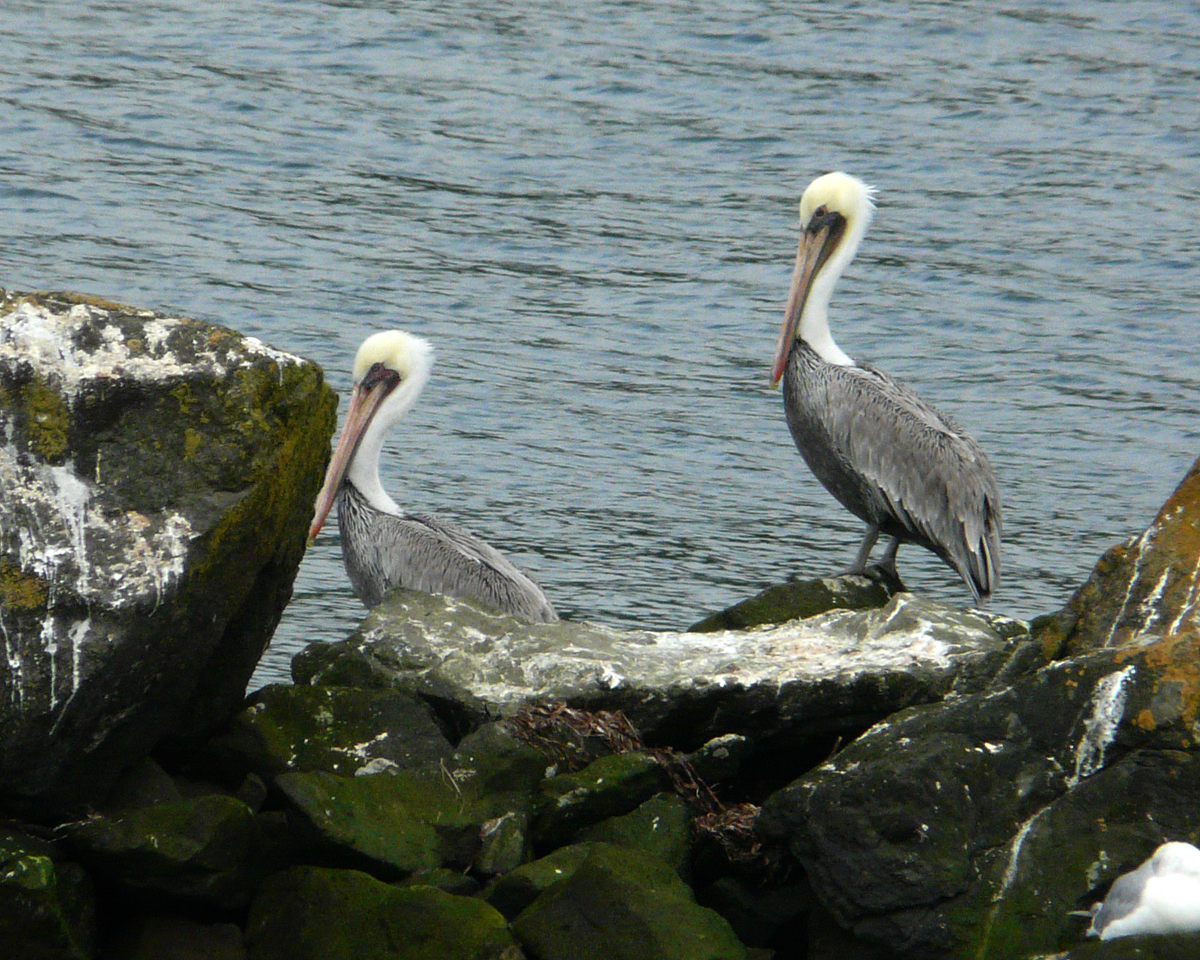

Brown Pelicans


juvenile Brown Pelican and Heerman’s Gull


We found at least four Black Oystercatchers at the Three Graces Tidal Area.


At Barview Jetty, the rough seas and howling winds kept the expected seabirds out of the channel. But the big waves did reveal lots of Ochre Sea Stars.


This lone Black Turnstone was the only shorebird we found braving the rough conditions.
Seaside, OR 8-4-11

I spent the day birding sites around Seaside, OR (Birding Oregon p. 121).


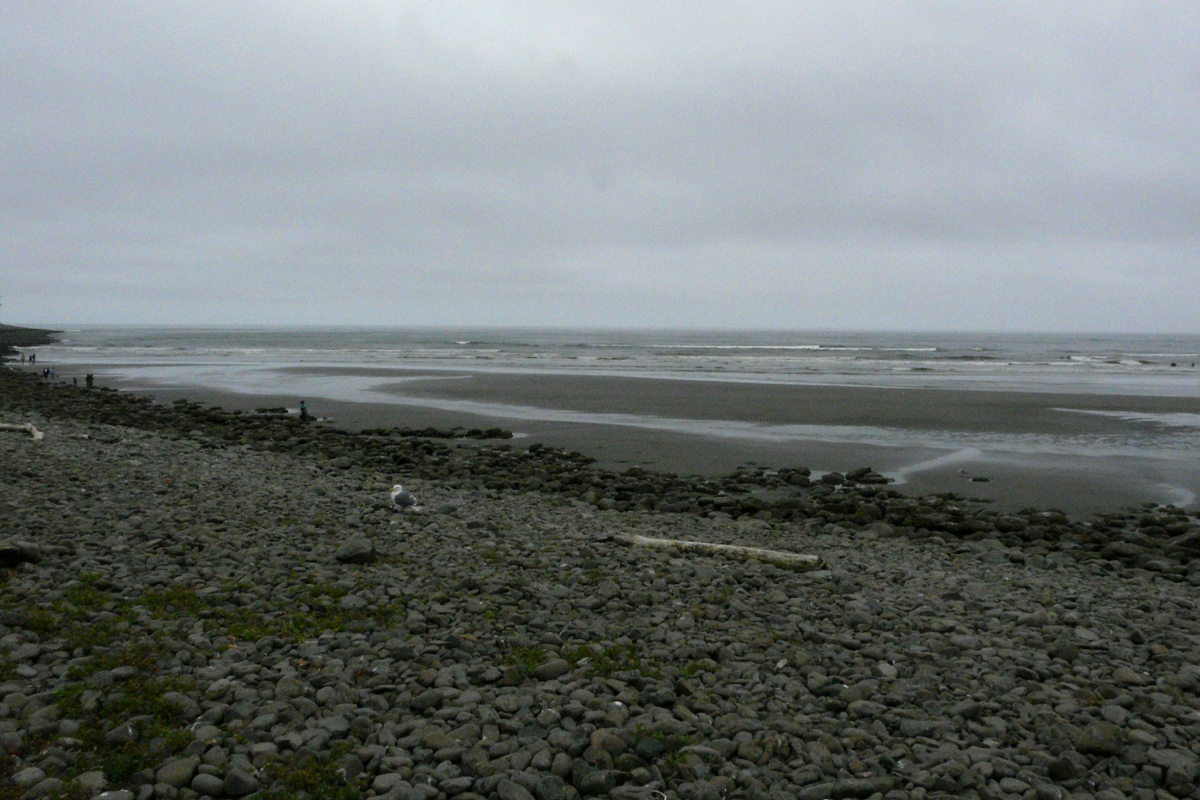
The tide was the lowest I have seen at The Cove, revealing its sandy bottom.


The low tide allowed lots of beach-combers to wander along the rocky edges, so the only shorebirds present was a small flock of Black Turnstones.


This is a Western Gull in very worn plumage. Note the black-tipped primary just starting to grow in. The lumpy neck on this bird was caused by the large sea star he had just swallowed.


Heerman’s Gulls are normally one of the most beautiful gull species, but this individual was also extremely worn.


These birds were in better shape.


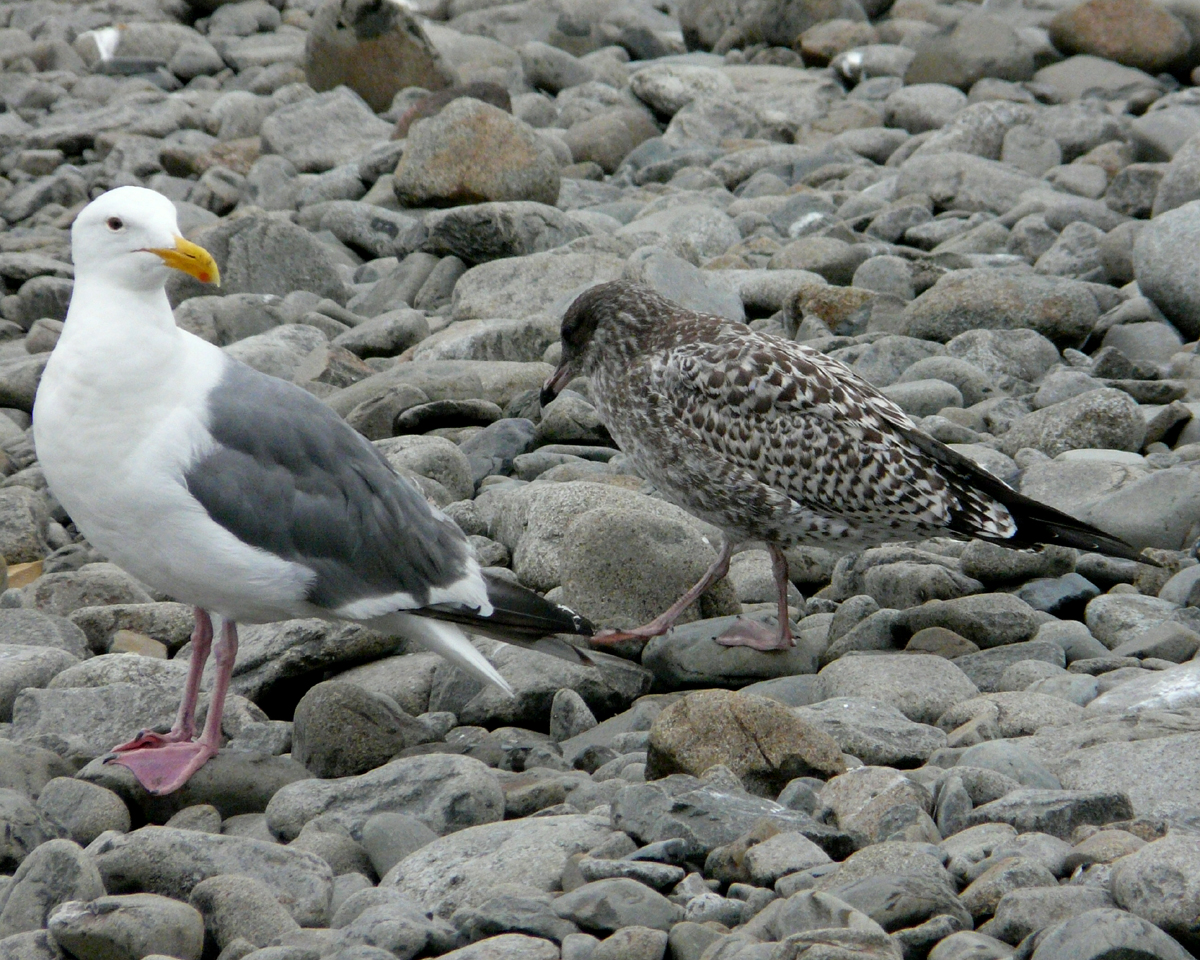
California Gulls are starting to gather along the Oregon coast. This juvenile was keeping company with an adult Western Gull.


At the north end of town is the Necanicum Estuary, also at very low tide. The exposed mud and aquatic vegetation attracted nice numbers of shorebirds.


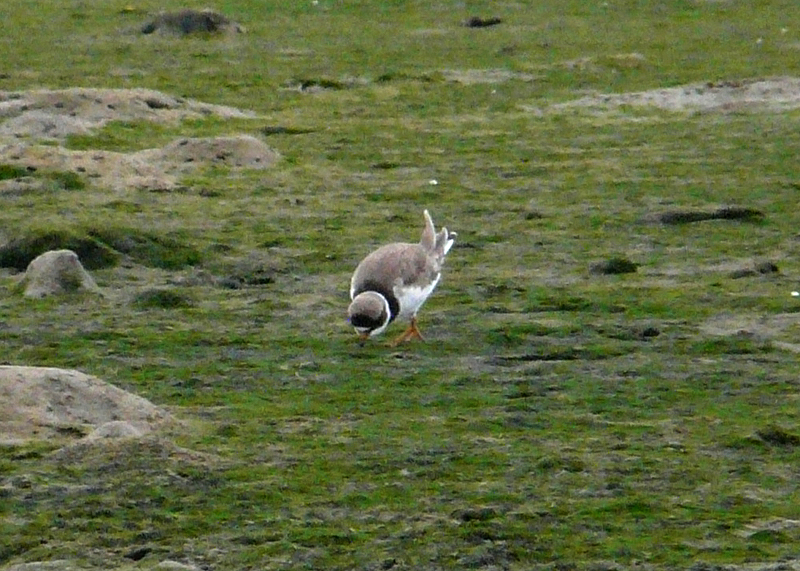
Semipalmated Plover


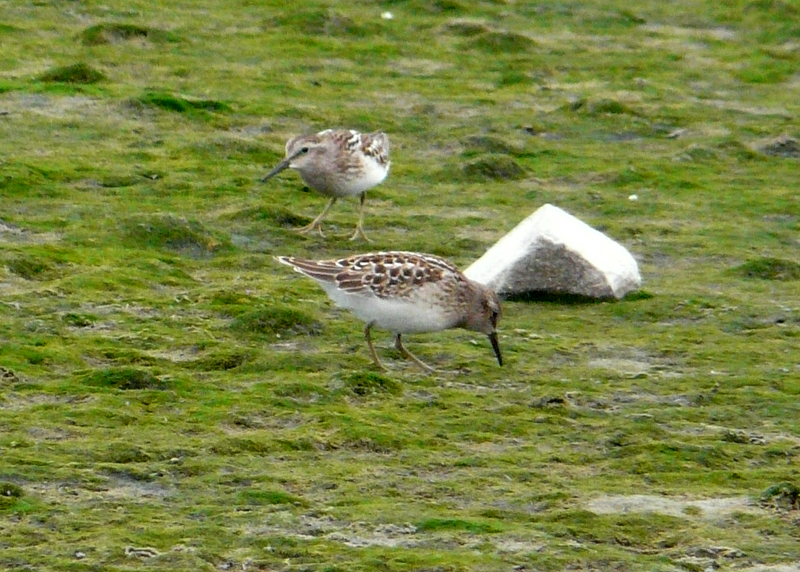
Least Sandpipers


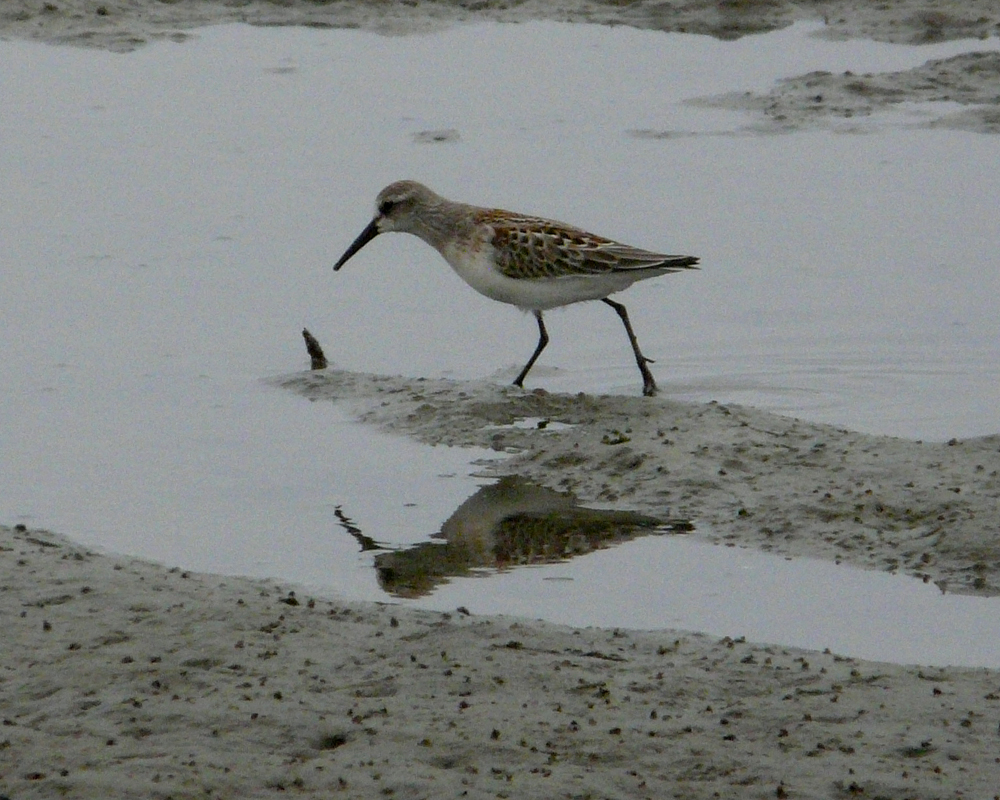
Western Sandpiper


The rarest bird of the day was this Semipalmated Sandpiper.


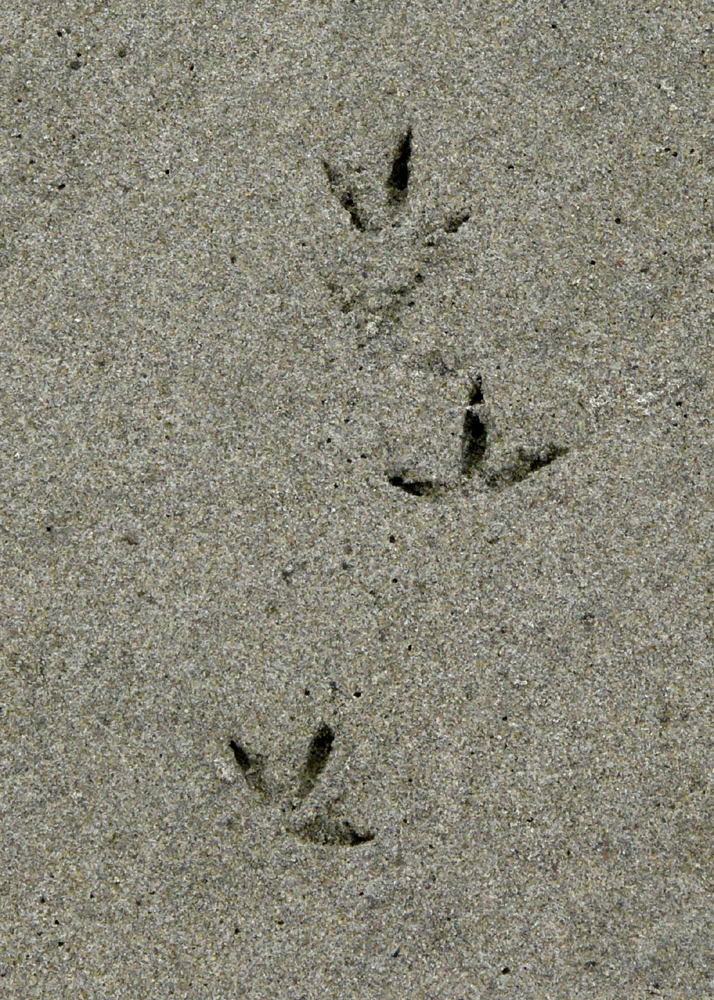
Notice on these shorebird tracks that the toes are partially webbed, or semipalmated. So these tracks were made by either a Western Sandpiper, Semipalmated Plover, or Semipalmated Sandpiper.


These tracks don’t show any sign of webbing, so they were probably made by a Least Sandpiper.


The estuary is a favorite hang-out for Caspian Terns, here joined by California Gulls.


Second cycle gulls

Here are a few gulls in their second plumage cycle (often referred to as their second year, but that is not always the case). The first two birds are four-cycle gulls. On a four-cycle gull, the second cycle looks much like the first, but the mantle feathers are coming in gray.


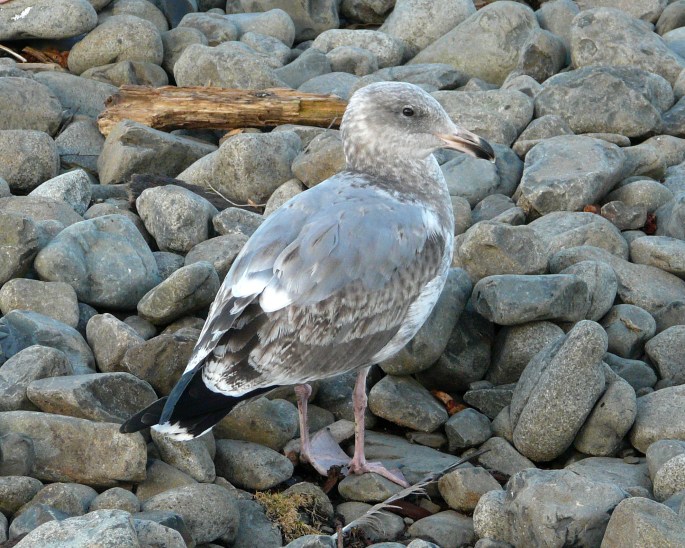
Western Gull, second cycle.  Note the blackish primaries and tail, the dark gray mantle, the heavy bill, and the fairly extensive mottling on the underparts.


Herring Gull, second cycle.  Note the pale iris and the slender pinkish bill with the black tip.

Three-cycle gulls skip the all-brown phase seen on young four-cycle gulls. (So a first cycle Ring-billed Gull has a gray mantle like a second cycle Herring Gull.) The second cycle on a three-cycle gull shows a gray mantle and wing coverts, but the primaries lack the white tips and mirrors seen on an adult.


Ring-billed Gull, second cycle.   Note the sloping forehead, pale eye, yellow bill with dark near the tip, fine streaking on face, and crisp scaly pattern on breast and sides.


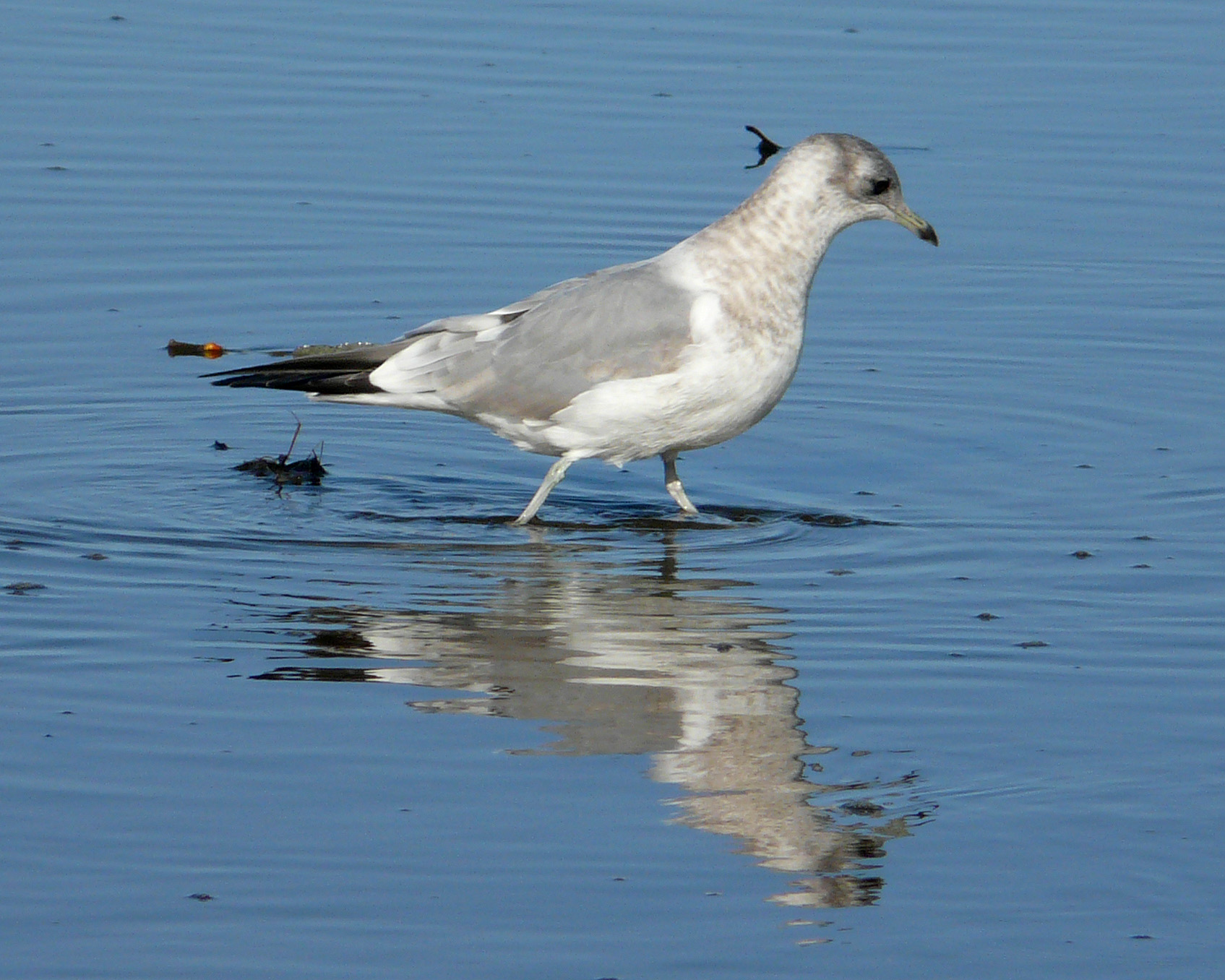
Mew gull, second cycle.  Note round head and very thin bill.


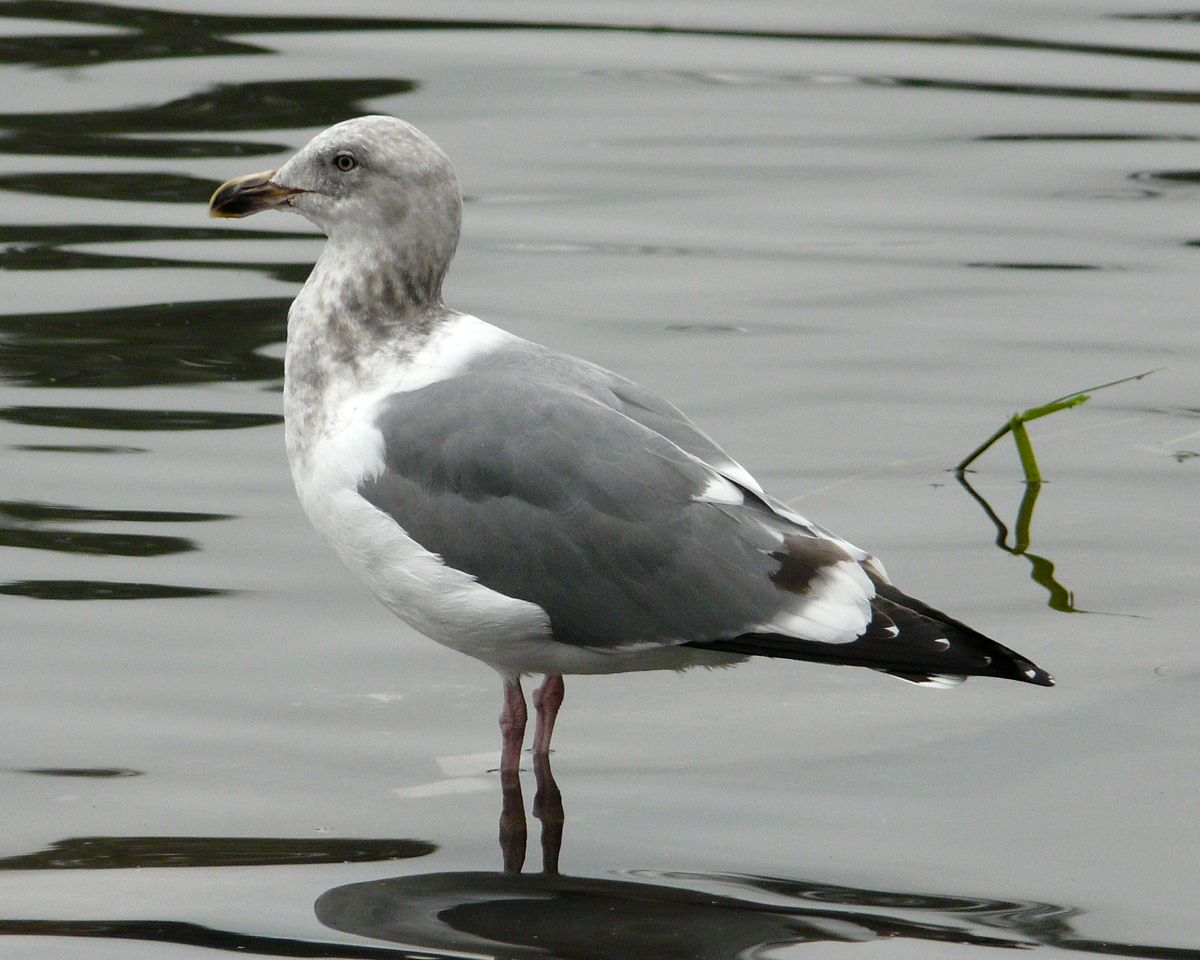
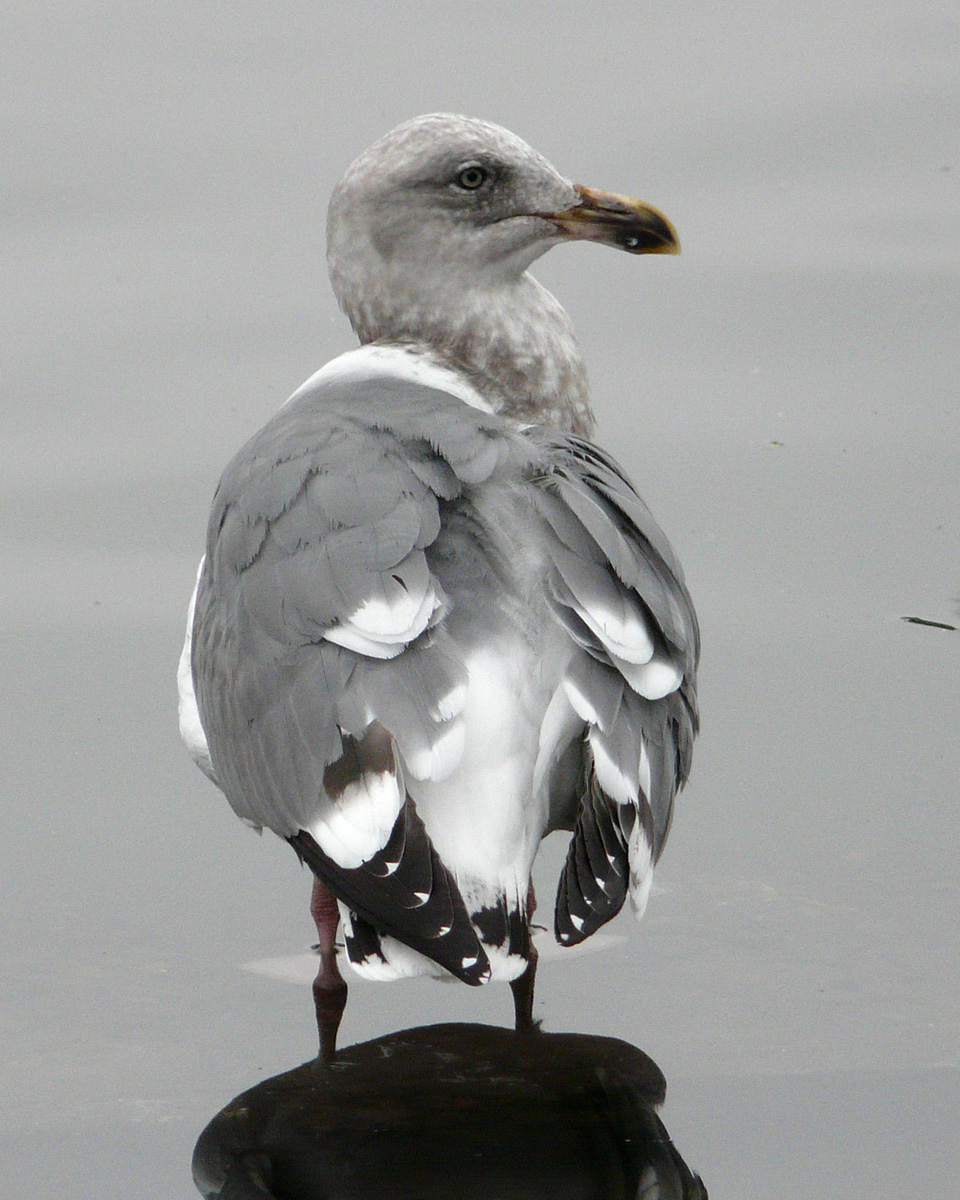
Third Cycle Western Gull

On a recent sweep through Portland’s Westmoreland Park, this gull immediately stood out from the flock. When you see a large gull that just doesn’t fit, chances are good that it is in its third plumage cycle. Large gulls (Western, Glaucous-winged, Thayer’s, Herring, to name a few) go through four plumages to reach their adult look. These species are often referred to as “four-year” gulls, but that term is not always correct. Some individuals go through all four plumages in less than four years, while others may take longer. It is more accurate to refer to these birds as four-cycle gulls.

The third cycle can be confusing for two reasons. Birds in their third cycle are the least common, as many individuals from their hatch year have not survived to make it to their third plumage cycle, so you don’t see that many third cycle birds. Secondly, third cycle birds look very similar to an adult, but with a lot of little oddities that can throw you off.

The bird from Westmoreland has a dark gray mantle, pink legs, and a ridiculously thick paddle-shaped bill. This all points to Western Gull. Some marks that keep this from being an adult Western include:

  • Extensive mottling on the head, neck, and upper breast. Adults never show this. (It could also indicate cross-breeding with Glaucous-Winged Gull, a common occurrence in Oregon.)
  • Black primaries with tiny white tips. An adult’s outer primaries have large white spots (mirrors).
  • Big black blotches on the tertials
  • A ragged black band on the tail. An adult’s tail is pure white.
  • Instead of the bill being school-bus-yellow with a red spot on the lower mandible, this billed is marbled.

So when you find a gull that looks mostly like an adult, but has a little black on the tail, primaries darker than normal, and an oddly colored bill, chances are good that you have a third cycle bird.

Bayocean Spit

It had been a while since I had walked all the way around Bayocean Spit (Birding Oregon p. 128). This is a great walk which takes about four hours, assuming you stop and look at birds along the way.

This morning was one of those misty gray days when the sky blends into the ocean. The fog and drizzle make photography rather difficult, giving everything a blurry grainy look. The dark line on the horizon is the south jetty. The crane in the distance is working on the end of the north jetty.

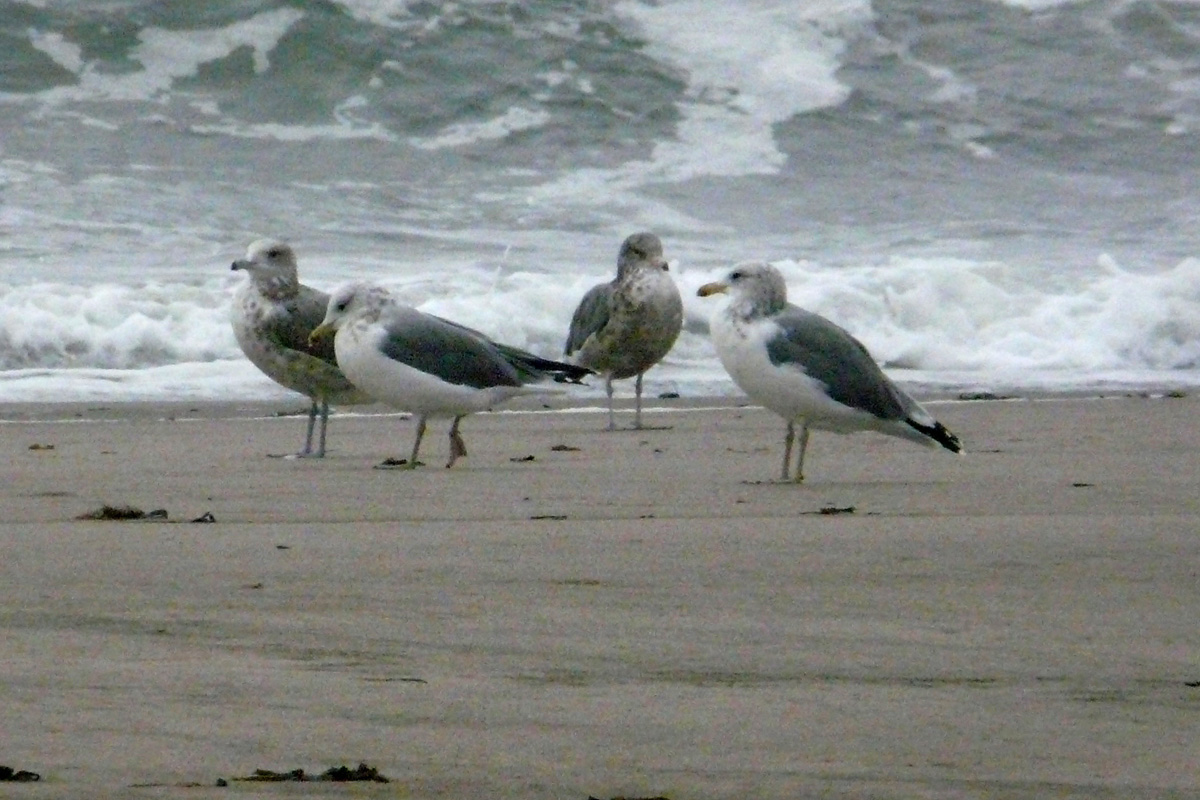
Shorebirds were few and far between this day. This is an adult Black-bellied Plover.


Western Gulls


California Gulls


The rocks of the jetty are home to many Ochre Sea Stars.


Brown Pelicans are constantly being harassed by other birds, especially Heerman’s Gulls, which make their living stealing fish from the pelicans. In this photo we see a young Western Gull, three Heerman’s Gulls, a Glaucous-winged Gull, and a Pelagic Cormorant, all hoping the Brown Pelican drops his fish. Notice the Heerman’s Gull hanging on to the pelican’s feet.


Brown Pelican with his posse.


The woods and brushy areas on Bayocean Spit are home to Wrentits. These birds tend to remain hidden in heavy cover, but their loud and unique vocalizations are heard throughout the year. This bird sat still just long enough for my point-and-shoot camera to get off one shot at 1/13th of a second.

Gull Glamour Shots

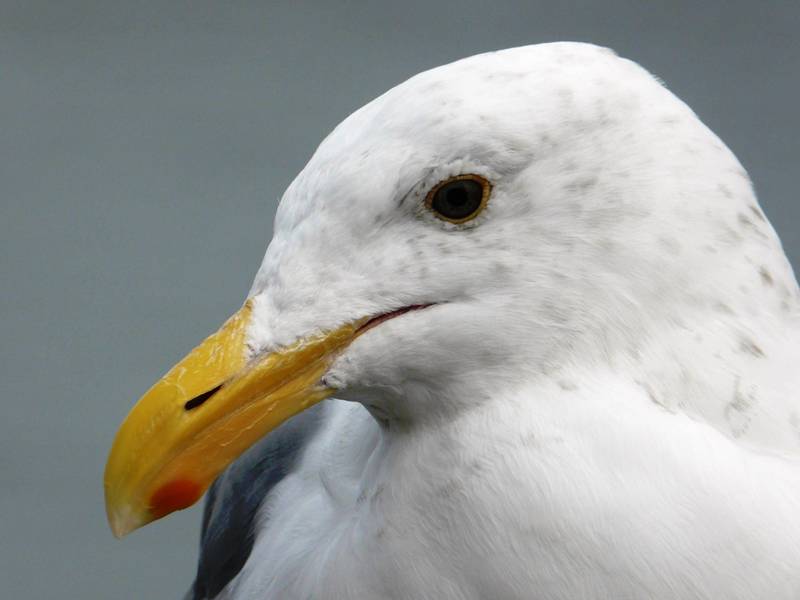
The gulls along the Willamette River in downtown Portland are quite used to people, and, in fact, seek them out in hopes of a handout. (A similar behavior is exhibited by some people along the river in downtown Portland.) This gives you an excellent opportunity to look at these birds up close and personal. Who says gulls aren’t sexy?

slaty-backed-gull1
This is the third-cycle Slaty-backed Gull that has been hanging out in Portland. Part of the appeal of this bird, of course, is the novelty associated with this exotic visitor from Siberia.

thayers-gull
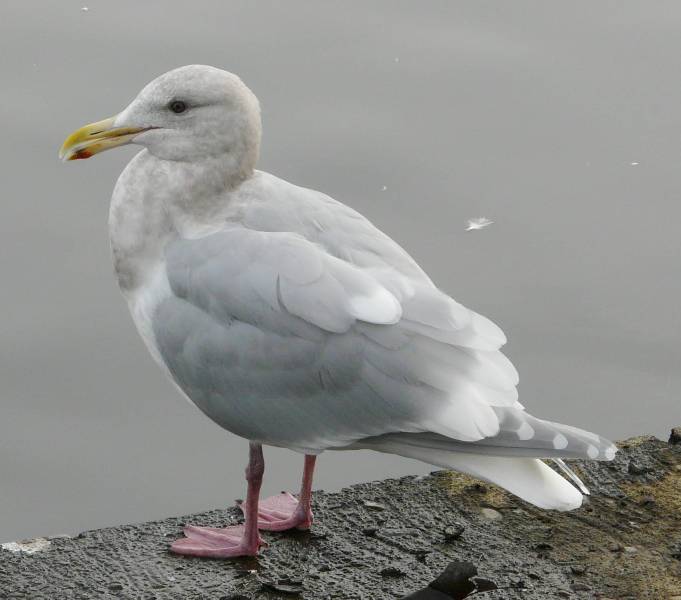
Thayer’s Gulls always seem to have this demure air about them. Is it their gentle features and brooding dark eyes? Or are they contemplating whether they are, in fact, a separate species or just the western subspecies of Iceland Gull?

western-gull
This bird shows off the massive school-bus-yellow bill and yellow orbital ring of a Western Gull. The bit of streaking on the head and neck reveals that a Glaucous-winged Gull perches somewhere in this bird’s family tree.

Gull Gallery

Portland’s Westmoreland Park is a great place to find a variety of gull species during winter. Seven species and one hybrid are regular, and there is always the possibility of something more unusual showing up.

california
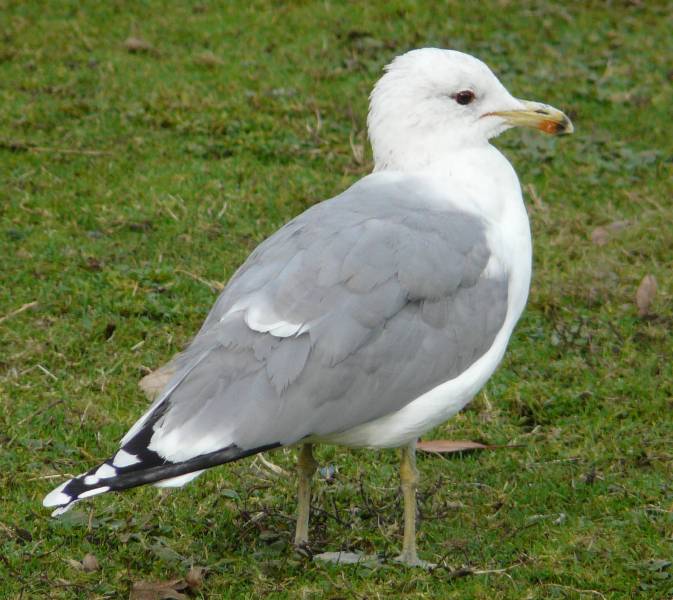
California Gull:  medium-gray mantle, long dark wingtips that extend well beyond the tail, long straight bill with both red and black gonydeal spots, yellowish legs and feet with blue-gray cast.

ring-billed
Ring-billed Gull:  smaller size, neat black ring around bill, long dark wingtips, yellow legs and feet.
ring-billed-tucked
Here’s the Ring-billed Gull at rest. Note the fine streaking on the head and the red orbital ring.

mew-gull
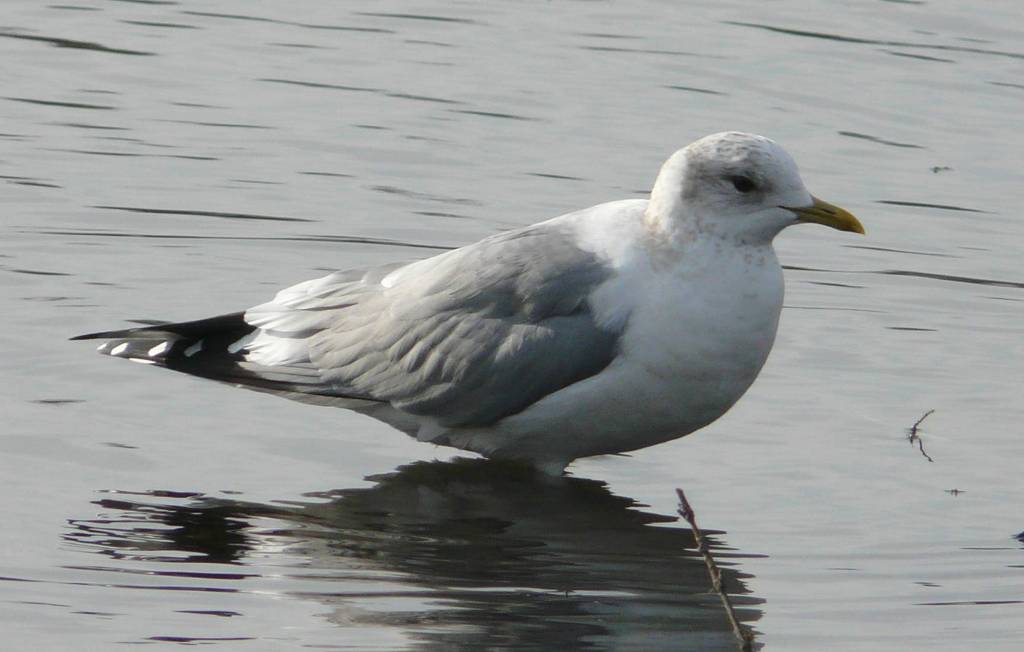
Mew Gull: petite yellow bill, round head, long wing extension. These small gulls will mix with the Ring-billed flock, but generally don’t mix with the larger gulls.

glaucous-winged
Glaucous-winged Gull:  Note the lack of contrast on this bird. The short wingtips are the same color as the mantle. The head and upper breast are covered with an even blurry mottling. The only parts that don’t blend in are the pink legs and feet.

western
Western Gull:  large size, dark gray mantle, short black wingtips, never any marks on the head – even in winter. This species is much more common on the coast, but a few make it in to the Willamette Valley in winter.

olympic-gull
Western Gull X Glaucous-winged Gull hybrid (Olympic Gull):  an even blending of characteristics of both parent species. The mantle is darker than a pure GW, but Westerns never show this much mottling on the head and neck.  The wingtips are dark, but not actually black. You can tell this is a third cycle individual by the tiny bit of black on the tail and by the odd pattern on the bill. These hybrids show a great deal of variation, and are often the most numerous gulls in the area.

herring
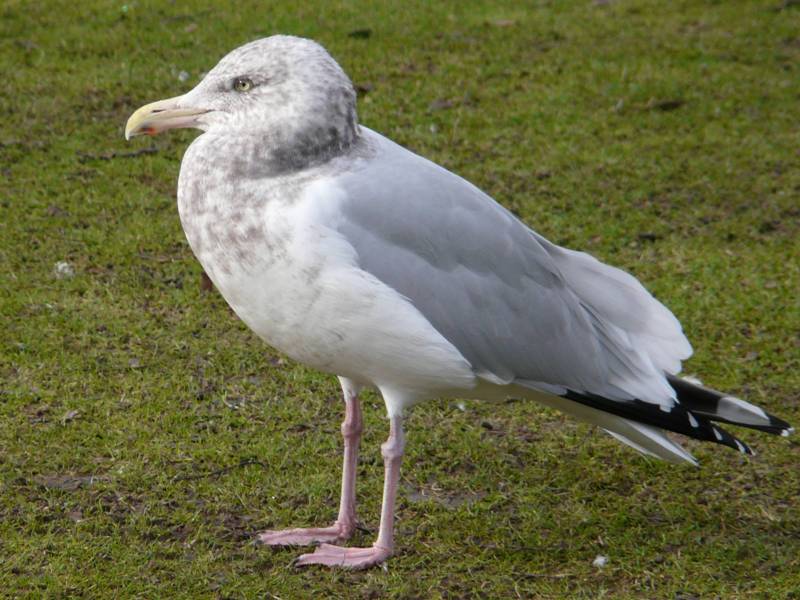
Herring Gull:  sloping forehead, pale eye, bill not too thick, black wingtips that extend beyond the tail.

thayers
Thayer’s Gull:  rounded forehead, thin bill, dark eye (usually, not always),  long black wingtips with much more white on the underside.

Seaside Gulls

The town of Seaside (Birding Oregon p. 121) is an interesting sandwich, great birding spots on the edges and touristy stuff in the middle. On the south side of town is The Cove, a pebble beached cove teaming with gulls, seabirds, rock-loving shorebirds, and marine mammals. To the north is the Necanicum River Esturary, a feeding and resting area for gulls, terns, and sand and mud-loving shorebirds. The Seaside area is a great spot to study gulls, with a diversity of species and age groups.


In mid to late summer, large numbers of Heeman’s Gulls hang out at The Cove. These birds are stunning, even in their winter plumage. Even the most devout Laridaephobe must appreciate these gray velvet beauties with the crimson bills.


“It’s exhausting being this beautiful!”


This gull is also primarily gray, but doesn’t quite have the rich color saturation of a Heerman’s. This is a first cycle Western Gull.


Here is a distant shot of an adult Western Gull tackling a very large crab. The gull is either very ambitious or very hungry.

Answers to 2nd cycle gull quiz

california2.jpg California Gull
The first impression you get of this bird is its long lean look. The bill is long and thin, with a distinct dark band near the tip. The body is fairly slender and the dark wings appear very long. Despite the strong light in this photo, you can still make out the bluish gray color on the joints of the yellowish legs.

western2.jpg Western Gull
Two words: Bulky and Dark. The bill is very thick. Although shades of gray are very hard to judge in photos, the mantle color of this bird seems pretty dark. The tertials are blackish. The primaries and tail are black. This much contrast on a large pink-footed gull points toward Western.

glaucouswinged2.jpg Glaucous-winged Gull
Like the other age classes of Glaucous -winged Gull, this bird shows a general lack of contrast. The mantle is a little gray, the primaries are a little brown, but everything on this bird blends together really well. A Glaucous Gull would show lighter primaries, while a Western hybrid would show much darker.