Cimarron National Grassland, Kansas

In the very southwest corner of Kansas lies the Cimarron National Grassland. This area, along with the nearby town of Elkhart,  is a favorite birding destination for Kansas birders. Several western species reach the eastern edge of their ranges here, and lost eastern migrants are attracted to the patches of trees in a sea of sand-sage prairie and cropland.

cimmaron river
Cottonwoods along the usually dry Cimarron River provide a wooded migration corridor from eastern Colorado through southwestern Kansas.

clay-colored sparrow
Middle Springs is one of several oases on the grassland that provide trees and water to migrants like this Clay-colored Sparrow.
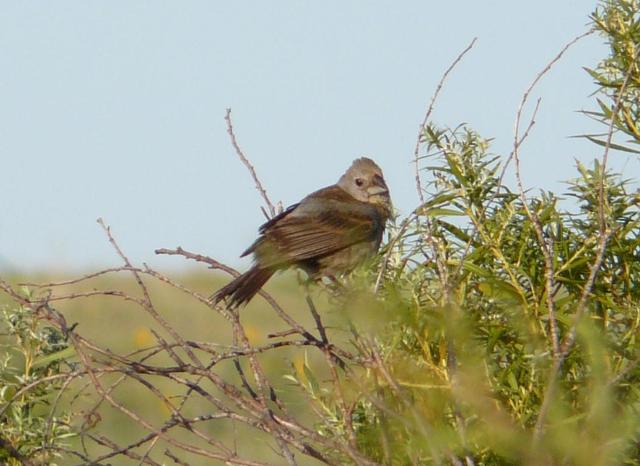
blue grosbeak female
female Blue Grosbeak

blue grosbeak male
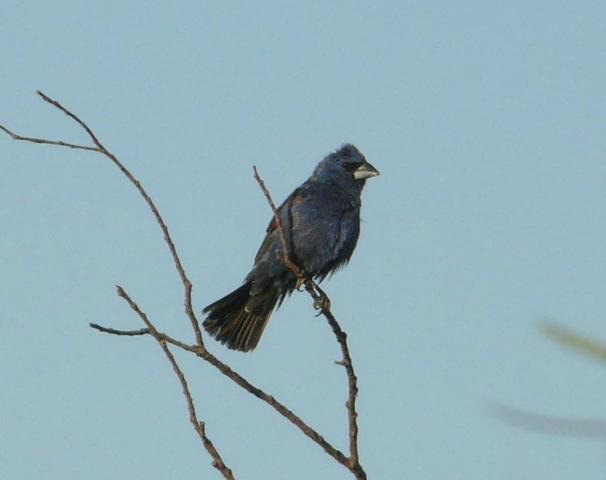
male Blue Grosbeak

pronghorn
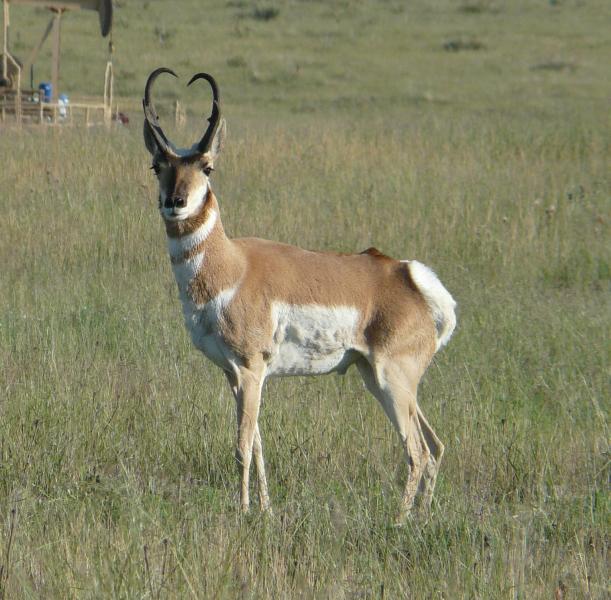
The fastest land animal in North America, Pronghorn evolved to outrun American Cheetahs, which became extinct somewhere between 10,000 and 20,000 years ago.

pronghorn back
The white backsides of Pronghorn are visible from great distances.
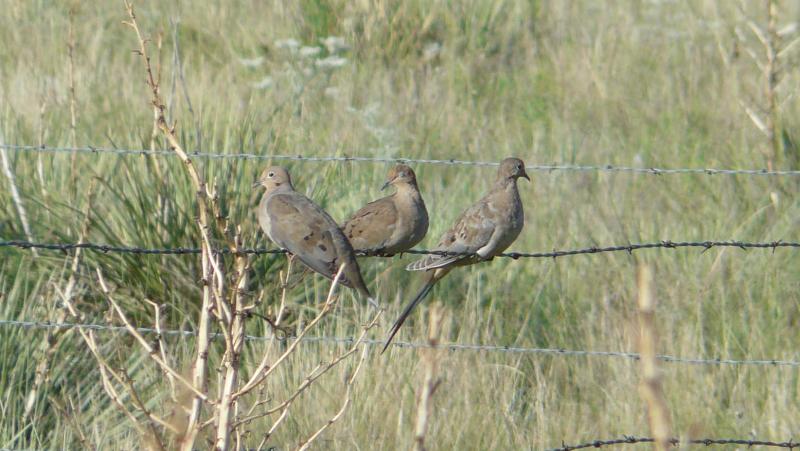
mourning doves
Mourning Doves were by far the most common species seen on this day, with Eurasian Collared-Doves coming in a close second.
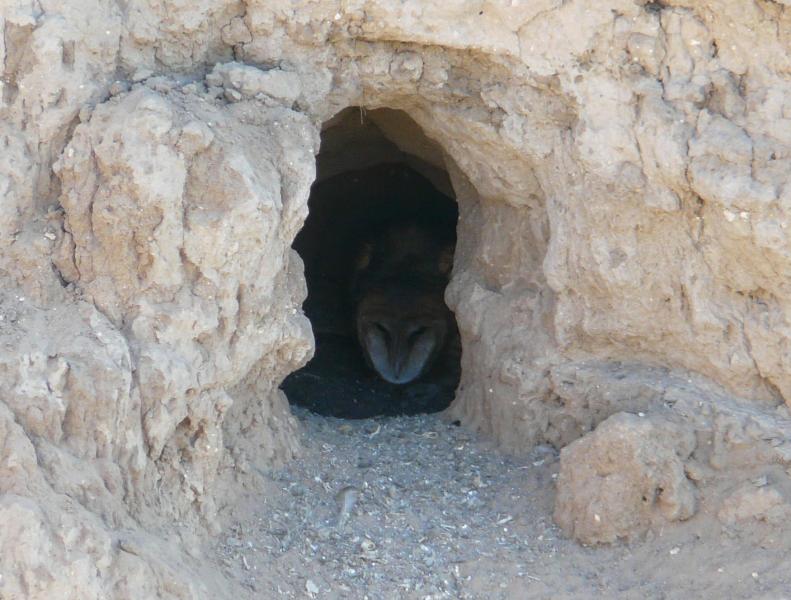
barn owl
This Barn Owl was in a little cavern in a bluff overlooking the Cimarron River corridor. Note the little bones and other debris in front of the entrance.
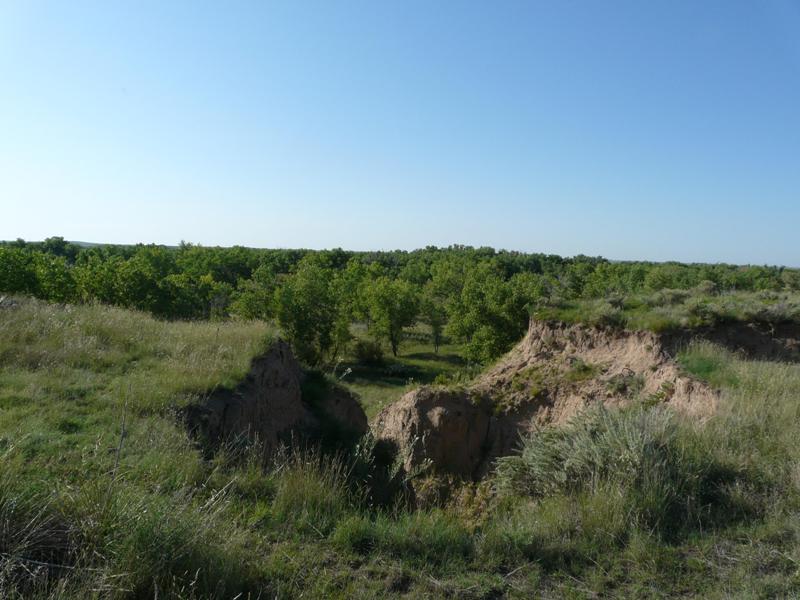
bluff
This is the bluff where the Barn Owl had her cavity.

curve-billed thrasher
Curve-billed Thrasher

northern mockingbird
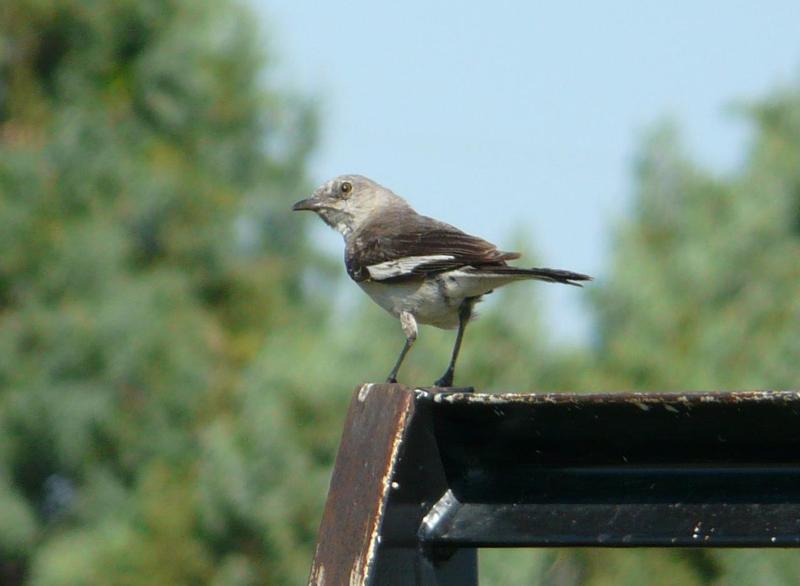
Northern Mockingbird

indian blanket
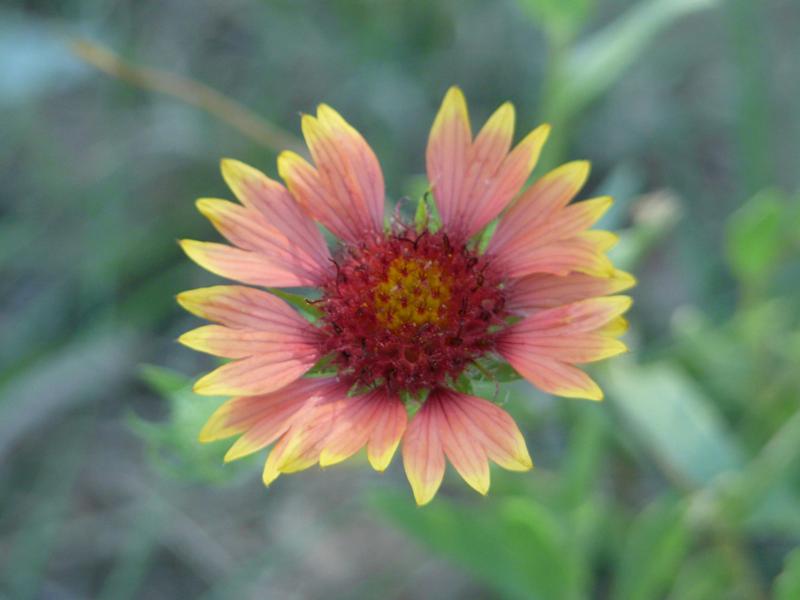
Gaillardia pulchella

sunflower
As one would expect in the Sunflower State, these were everywhere.
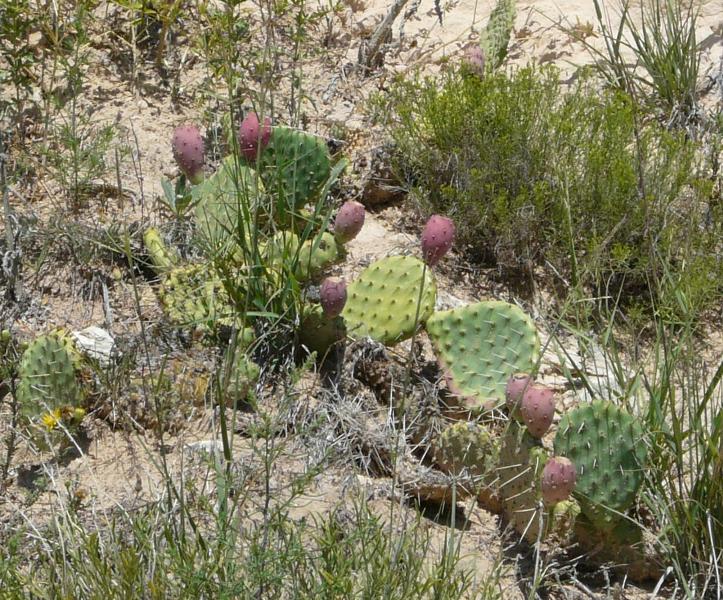
prickly pear
The abundant Prickly Pear cactus makes walking a challenge in many areas.
american avocet
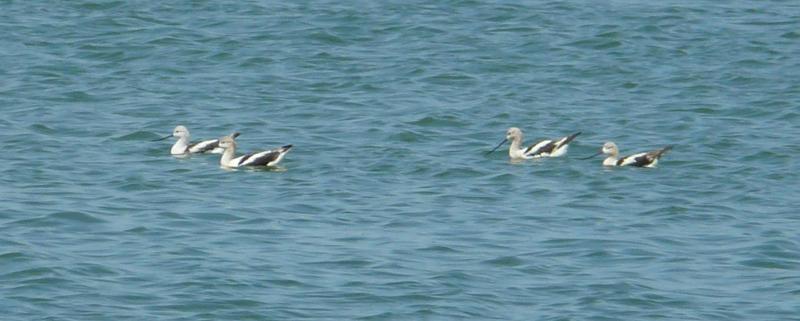
The Elkhart sewage ponds are the only permanent bodies of water for many miles around, so they attract good numbers of migrant shorebirds and waterfowl. These American Avocets were swimming in the middle of one of the pools.
spotted sandpiper
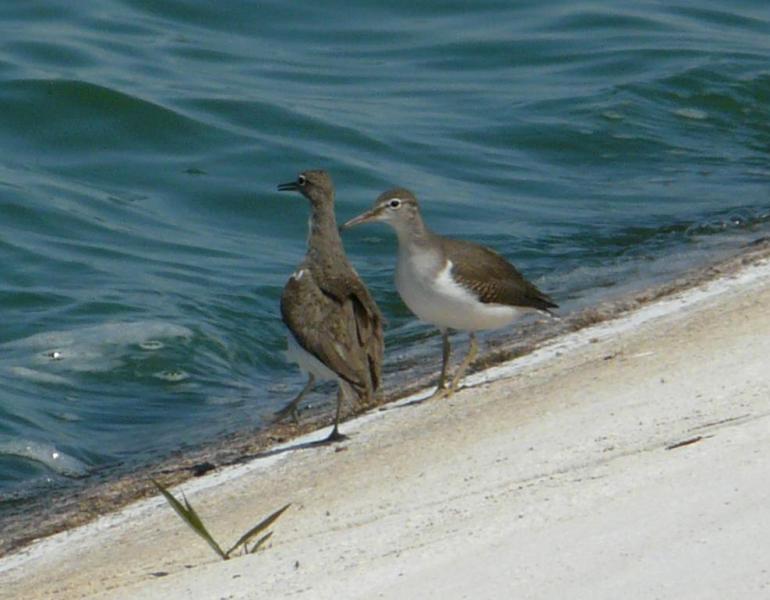
Spotted Sandpipers

semipalmated sandpiper
Semipalmated Sandpiper

burrowing owl
Burrowing Owls are one of many species that rely on prairie dog towns for shelter or food. I found several Black-tailed Prairie Dog towns on this day, each containing an owl or two, but the dogs kept out of camera range.
Bad Bird Photo ID Quiz

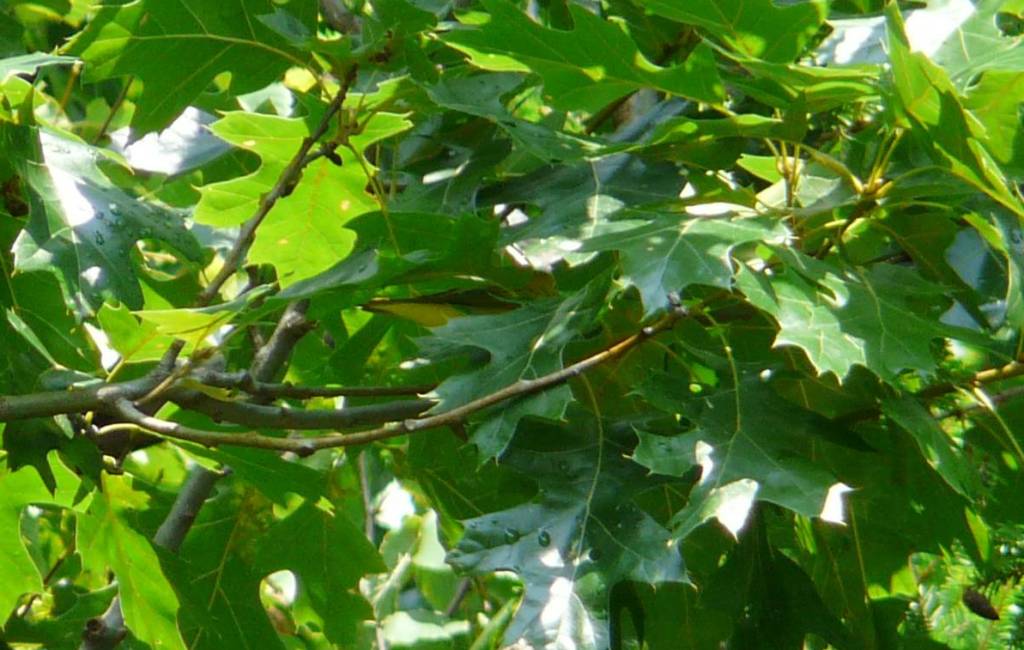
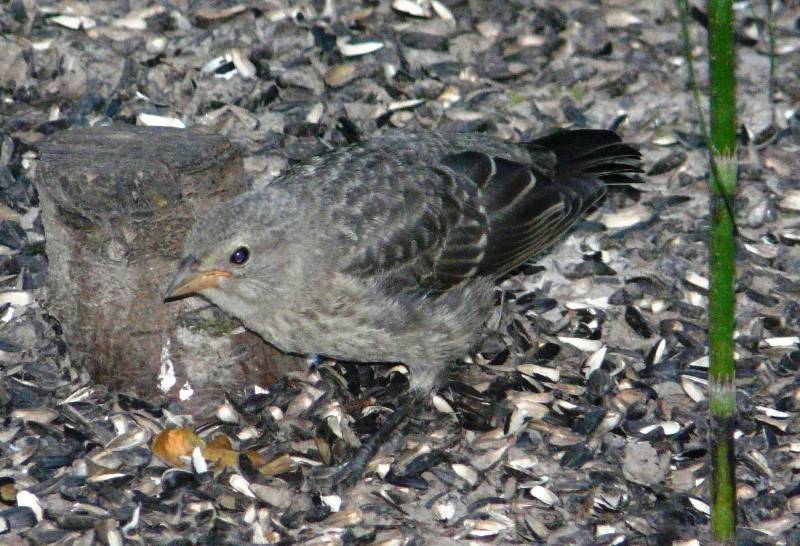
Here is another terrible bird photo that provides practice for our ID skills. We tend to get spoiled by the wonderful full-frame shots in birding magazines that show every detail. Birds don’t often look that good in the field. Remember, sometimes the best field mark is the lack of field marks. This photo was taken in Brattleboro, VT, but the species occurs throughout most of North America. Leave a comment with your ideas, and how you reached that conclusion.

quiz bird

Brown-headed Cowbird

bh cowbird 2

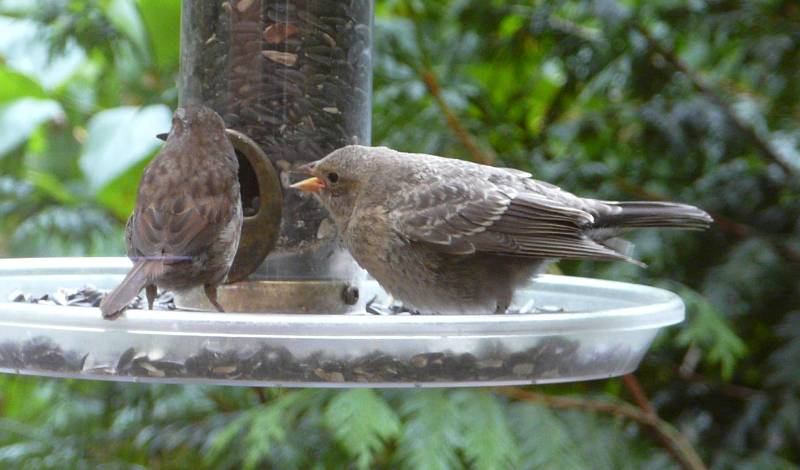
Two Brown-headed Cowbird fledglings have been hanging out at the feeder lately. This species is a parasitic nester, laying eggs in the nests of other species. Historically, Brown-headed Cowbirds were common in the Great Plains, where flocks would follow wandering herds of American Bison. Since the bison herds didn’t stay in one place long enough for cowbirds to nest, it makes sense that these birds would “adopt” their offspring out to other birds. As forests in the east and west were cleared, creating edge habitat, Brown-headed Cowbirds greatly expanded their range, which now covers most of North America. This has led to the decline of many eastern songbirds, as young cowbirds displace the young of the host species.

song sparrow - bh cowbird
The two birds coming to my feeder were being fed by a Song Sparrow, one of the more common hosts of Brown-headed Cowbirds. Cowbirds have been known to lay eggs in the nests of over 200 different species, including Blue-winged Teal, Ferruginous Hawk, and Ruby-throated Hummingbird. These species do not successfully raise young cowbirds, but enough eggs end up with compatible hosts to create a strong cowbird population. (Female Brown-headed Cowbirds can lay up to 40 eggs in a year.)

bh cowbird on feeder
This youngster is feeding himself. After leaving their host families, young cowbirds find others of their kind and form flocks.

Sapsucker Woods

cornell sign
I recently had the opportunity to visit Sapsucker Woods, the headquarters of the Cornell Lab of Ornithology near Ithaca, NY. They have a great visitors’ center with various displays, artwork, a store, and windows overlooking multiple bird feeders and a large pond.

american goldfinch
The feeders attract a nice variety of birds, including this American Goldfinch. The large windows are covered with netting to prevent window strikes. That is great for the birds, but not so great for auto-focus cameras, which can’t ignore the netting in front of the intended target.

northern cardinal
Northern Cardinal

sapsucker wells
The sanctuary takes its name from the Yellow-bellied Sapsucker, a common resident here. Many of the trees bear rows of small holes drilled by these woodpeckers.

green frog
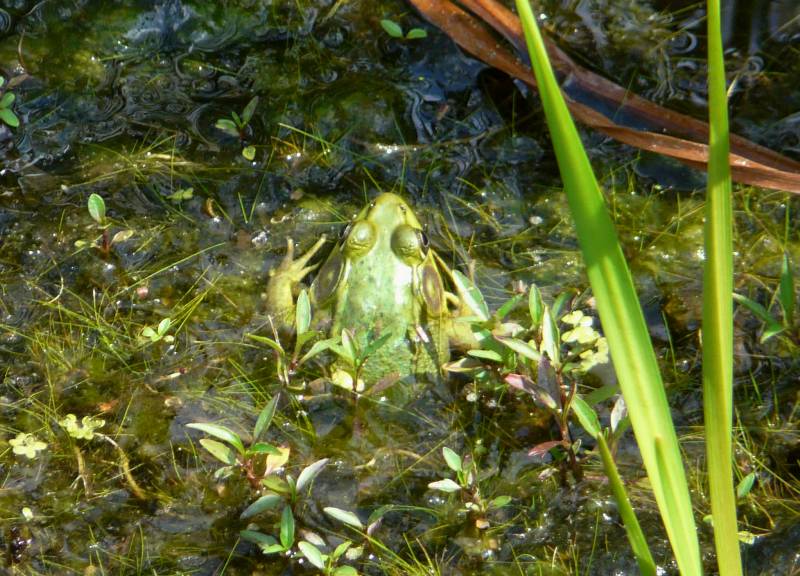
The marshy area near the building’s entrance attracted its share of wildlife, including this Green Frog (Rana clamitans)

eastern painted turtle
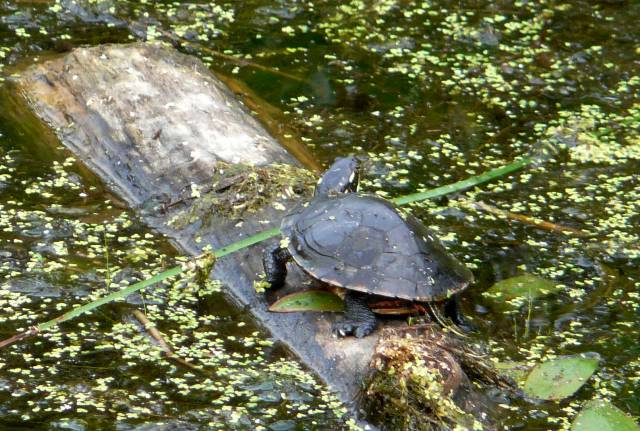
and this Eastern Painted Turtle.

eastern cottontail
This Eastern Cottontail was enjoying a snack on the lawn.

eastern chipmunk
Eastern Chipmunks are common under the bird feeders.

gb heron nest
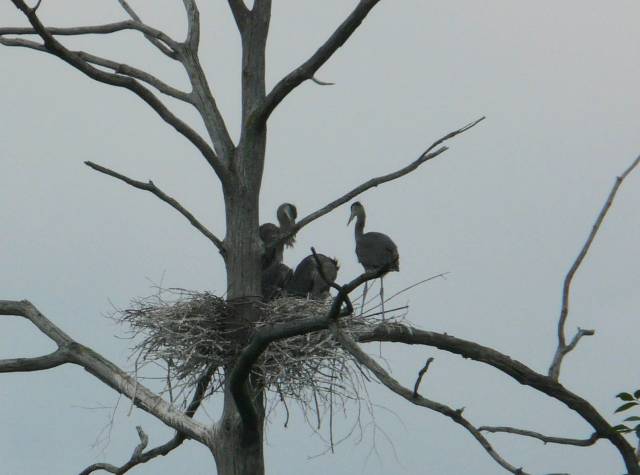
The large pond behind the building attracts waterfowl and waders, including these Great Blue Herons nesting in a dead tree.

canada goose
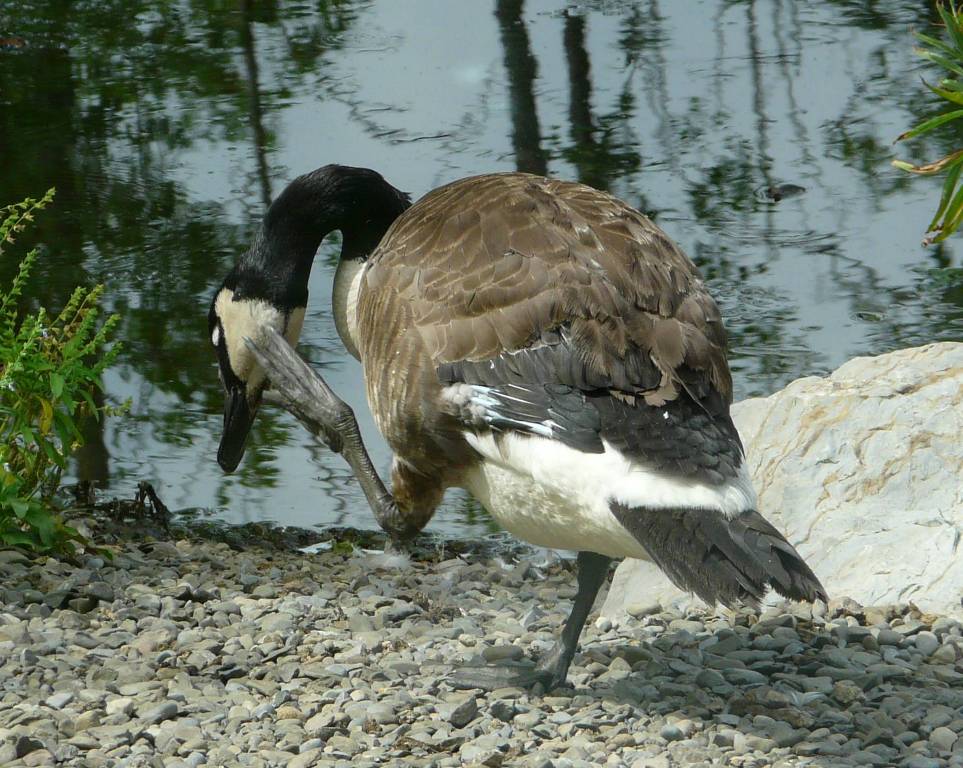
The only waterfowl around the pond on this July day were Mallards and Canada Geese. Like other species of waterfowl, this Canada Goose molts all his flight feathers at once during the summer. This makes it impossible for the bird to fly, but it does give us a chance to see the birds blackish rump and the white band across the uppertail coverts.

Sauvie Island in Summer

Sauvie Island (Birding Oregon p.55) is best known for wintering waterfowl and raptors. While the summer birding seems quiet compared to the multiple thousands of geese and Sandhill Cranes seen on winter visits,  there is always something to see.

osprey nest
Ospreys nest on platforms provided for them, as well as on utility poles and dead trees.

ca quail
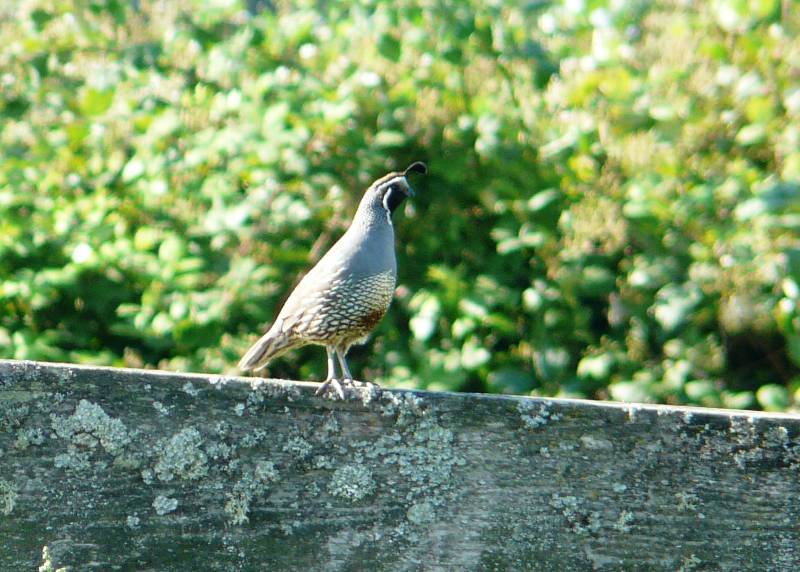
This California Quail was surveying his domain from a fence.

bh grosbeak 3
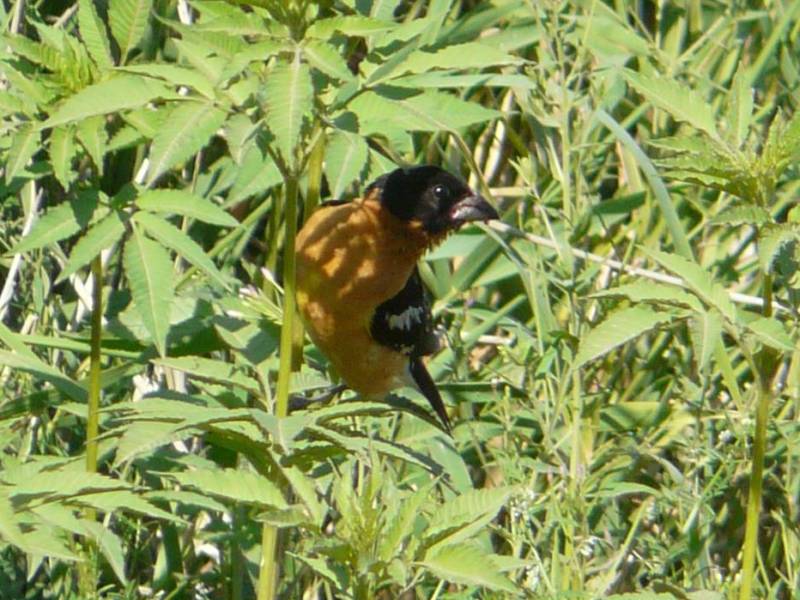
It seemed odd to see this Black-headed Grosbeak feeding in weeds along the roadside, a considerable distance from the nearest tree.

Swallow Nests

barn swallow back
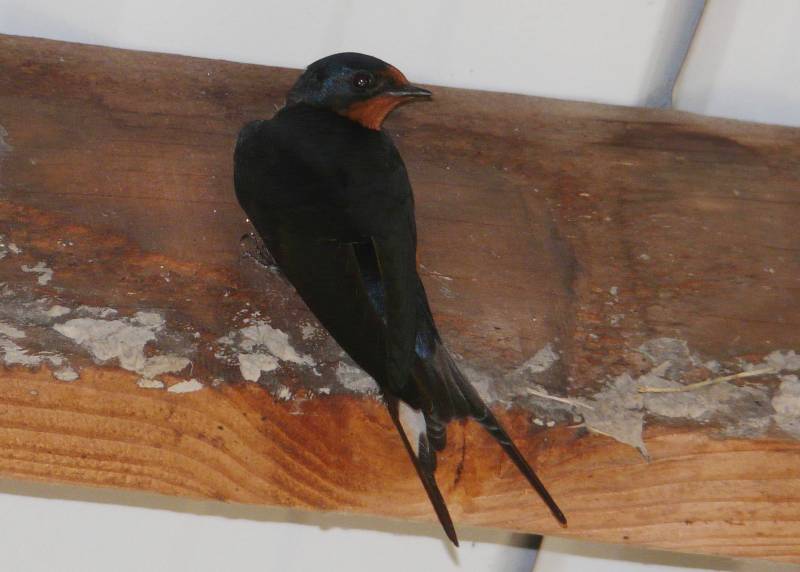
Barn Swallows (pictured here) and Cliff Swallows build nests almost entirely out of mud. Historically, these structures were built on cliffs or near the mouth of caves, but are now most often found on man-made structures.

barn swallow front
The disadvantage of building nests in buildings is that sometimes the mud does not stick well to the smooth wood. Sometimes people remove the nests in an attempt to prevent a build-up of droppings. At this location, someone decided to give the birds a hand.

barn swallow berry box
A cardboard berry carton was tied to a rafter, and the Barn Swallow has used it as a foundation for her nest. You can see the mud, plant fibers, and feathers sticking out over the top of the carton. Notice how the rafter is nearly covered with mud from previous nests or nesting attempts.

cliff swallow nest
Here is a beautifully formed Cliff Swallow nest. The overhanging metal serves as the top of the structure, reducing the amount of mud needed. Notice how the mud at the bottom of the nest is a different color and includes plant fibers, suggesting that this nest was built on the foundation of an old Barn Swallow nest.

Columbia River Gorge

The Columbia River Gorge is not a terribly birdy place. You can hear some of the common species, and see a bird or two on any given hike, but there are better places to see the birds of the western Cascades.  Occasionally, however, I remind myself that there is more to life than birds. Recently I left my binocular at home and took a couple of hikes in the gorge. Here are some highlights, minus the shortness of breath and sore calves.

angel's rest
This is a view from the rocky outcrop known as Angel’s Rest. From here you can see the Columbia River, forests in various stages of regrowth, and rimrock.

ocean spray
A view of the river with blooming Ocean Spray.

columbine
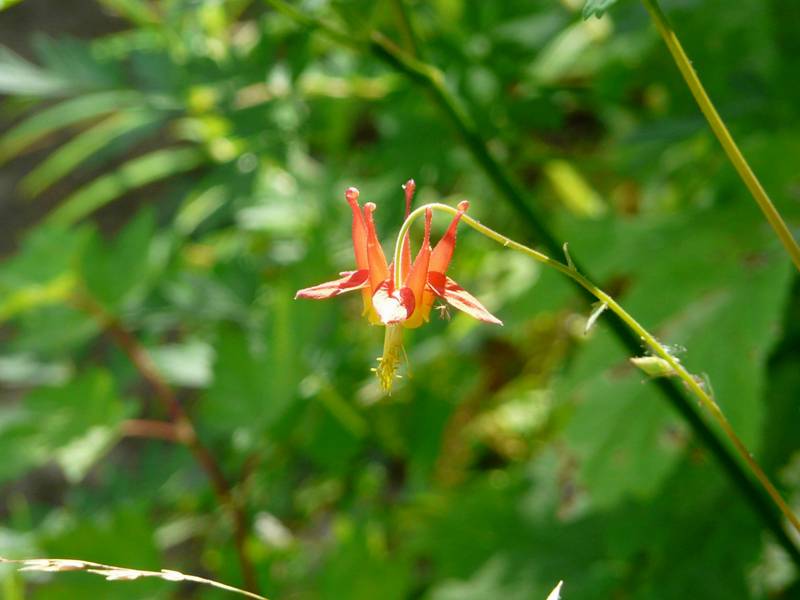
Red Columbine

tiger lily
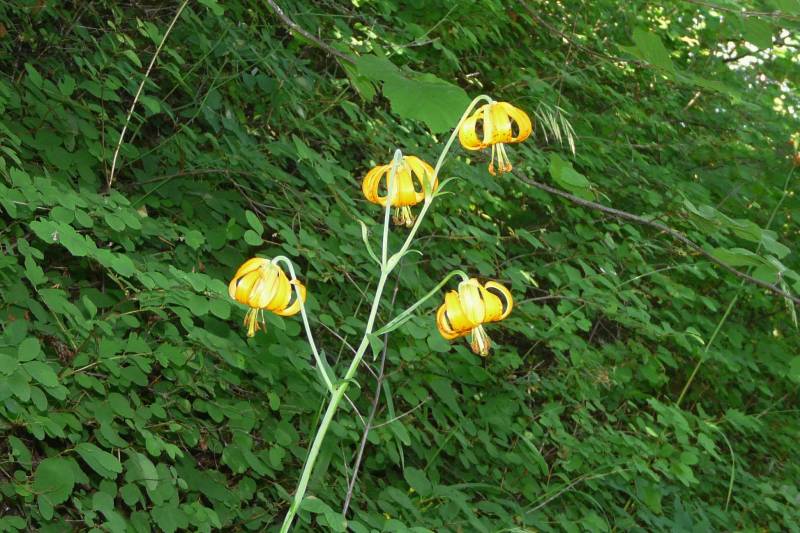
Tiger Lily

brush rabbit
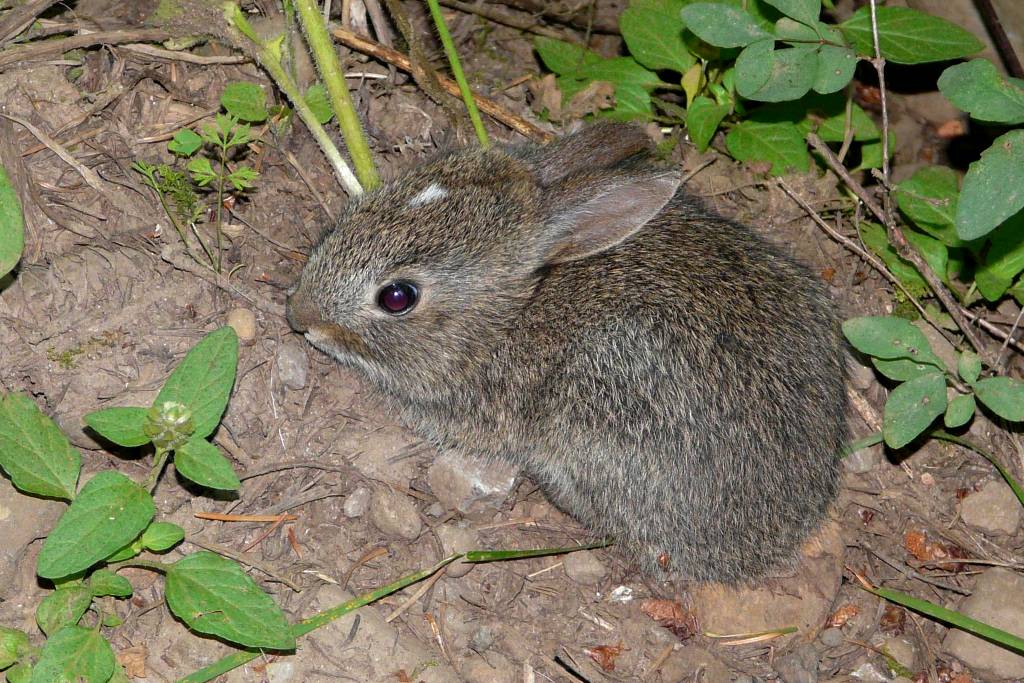
This young Brush Rabbit was sitting right by the trail. So cute.

thimbleberries
Thimbleberry

admiral
Lorquin’s Admiral drinking near a stream

steam
We passed this stream in the Wahkeena Falls area.

western tanager
Western Tanager. I have to include at least one bird per post.

Western Sandpipers

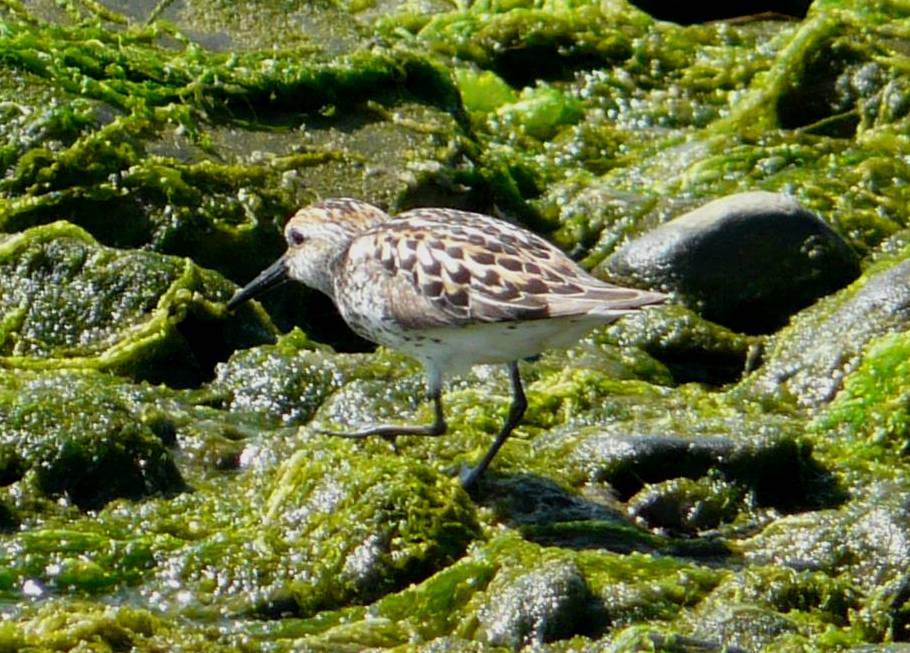
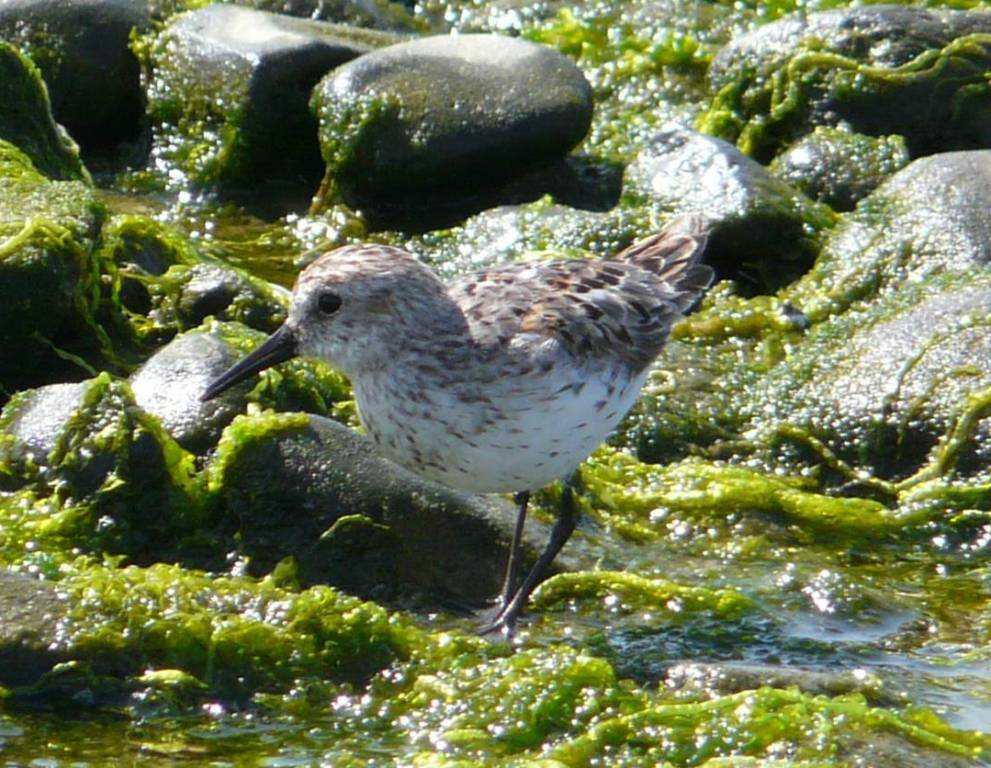
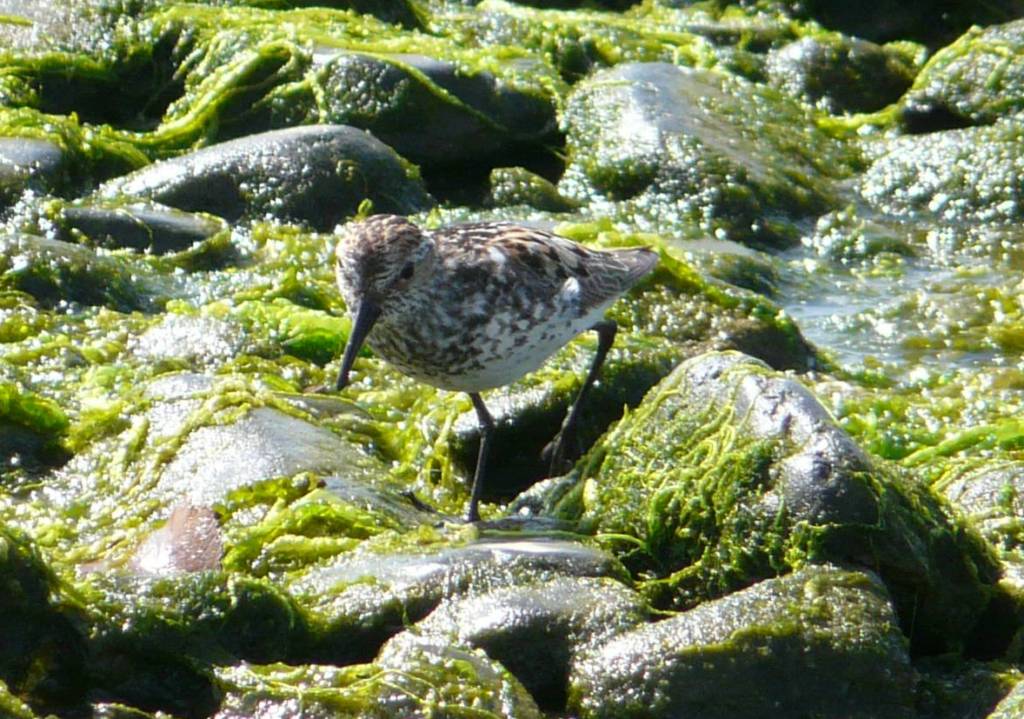
I took a client to Cannon Beach this week to see the Tufted Puffins nesting on Haystack Rock (Birding Oregon p. 124). While he was photographing his lifer Heerman’s Gull, I had a chance to study a small flock of Western Sandpipers. Cannon Beach is a very popular tourist town, so the crowded beach usually holds very few shorebirds. But this flock had found a particularly slimy patch of rocks that was effectively repelling the tourists, so I was able to watch the birds feeding undisturbed.

western sandpiper
This individual, probably a female, given the long bill, was still in full breeding plumage. Note the rufous, black, and white upperparts and the streaks and chevrons extending along the sides.

western sandpiper profile
This bird is probably a male. The bill is short and straight, but still tapers to the tip. He is already starting to molt into his gray winter (basic) plumage, although he still retains a few colorful scapulars.

western sandpiper front
This probable female shows bold streaks and chevrons on the breast and sides.

western sandpiper palmation
Here we see the partial webbing between the outer toes. Western Sandpiper and Semipalmated Sandpiper are the only two species of stints (or “peeps”) that show this trait.

I will be teaching a class on autumn shorebirds at Portland Audubon on September 16. For more information, click here.

Royal Ave/Fern Ridge Reservoir

Fern Ridge Reservoir is a large impoundment just west of Eugene, OR. Much of the property on the eastern and southern sides of the lake is included in the Fern Ridge Wildlife Area (Birding Oregon, p.89), and some of the best birding is found at the west end of Royal Avenue.

am goldfinch savannah2

The area just north of the parking lot is grassland, bordered on the east by oak savannah. Here an American Goldfinch and a Savannah Sparrow share a moment on the fence.

grasshopper sp2

A target species of many birders at this site is Grasshopper Sparrow. This species is quite rare in western Oregon, and the field north of the Royal Avenue parking lot is one of their few reliable nesting sites. This individual repeatedly returned to this perch to sing. I believe the nest was nearby so I didn’t get too close.

black tern1

Walking west from the parking lot takes you to the marshes at the eastern edge of the reservoir. Nesting species include waterfowl, herons, rails, and this Black Tern. As the summer progresses, water levels drop to create muddy habitat for migrant shorebirds. This is where Oregon’s first Wood Sandpiper appeared last year.

fish2

These little fish were common in a shallow puddle near a culvert. I think they are some species of topminnow, but I didn’t take any out of the puddle to look at their fin configuration. If you recognize these, please leave a comment.

sign

This is a sad reality at some good birding sites. Several people have had the catalytic converters removed from their vehicles. Others have had break-ins. On the day I was here, the Corps of Engineers had sent a couple to serve as “Park Hosts.” They remained in the parking lot, with their cute little dog, and had educational materials available for visitors. I think I have an advantage in areas like this by driving an old car, which may be less attactive to evildoers.