Summer shorebirds

Mid to late summer is the prime time to watch shorebirds in western Oregon, partly because it is the peak of southbound shorebird migration, and partly because the locally nesting songbirds have stopped singing and are very hard to see. Shorebirding in the Portland area has been a little more challenging this summer with major construction projects occurring at Fernhill Wetlands, Smith and Bybee Wetlands, and Jackson Bottom.

Broughton Beach, near the airport, has not hosted large numbers of birds this year, but has attracted some good species.
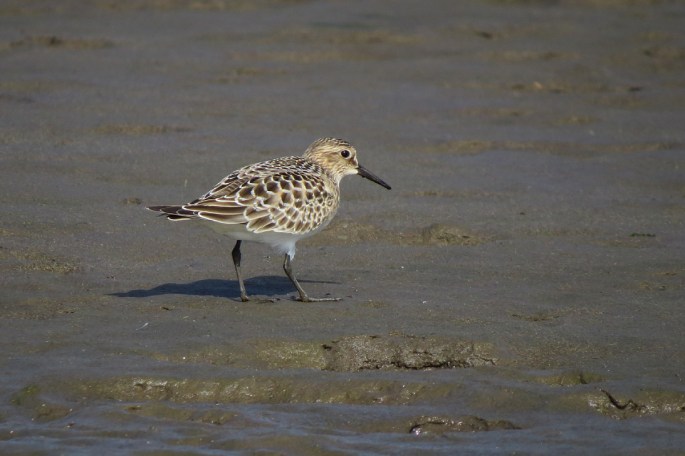
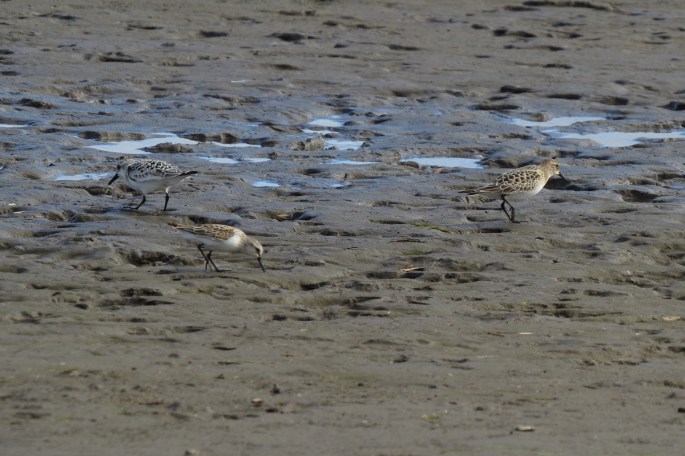
Baird’s Sandpipers come through Oregon every year, but never in huge numbers, so finding one is always a treat. They stand out with their buffy coloring and long wings.
Almost all of the Baird’s that pass through in summer are juveniles, so they show a strong scaly pattern.
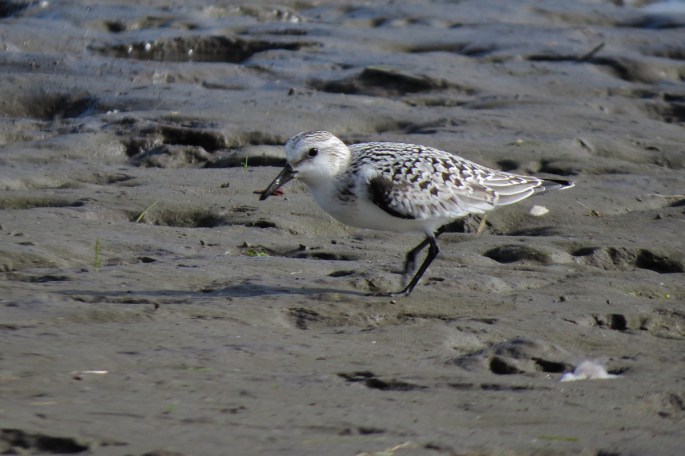
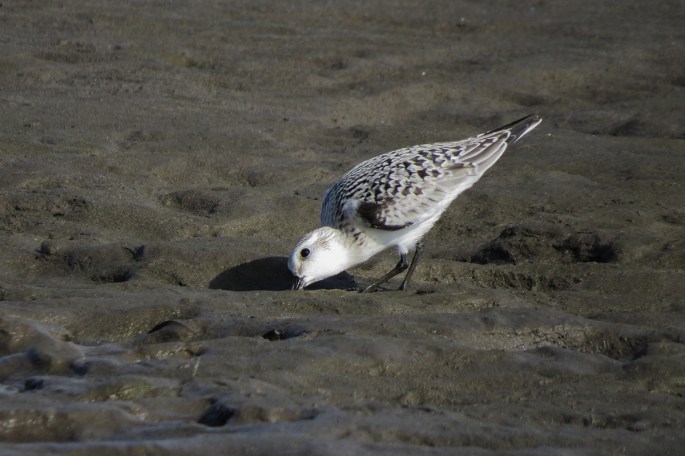
While Sanderlings are quite common along the coast, it is rare to find them inland. Broughton seems to be a good spot to find them in Portland.
Here is a group shot of (L to R) a Sanderling, a Western Sandpiper, and a Baird’s Sandpiper, all juveniles. While it is fun to sort through thousands of shorebirds when the birding fates align, when birding is slow it does us good to take advantage of small numbers and really study the few birds at hand. Shorebird migration runs for another month, so I am hoping to have many more encounters before the rains return and the shorebirds depart.

Fernhill Wetlands

With the ongoing renovations taking place at Fernhill Wetlands, each visit throughout the year is a new experience. Most of the breeding species have done their thing, and the resident waterfowl have molted into ugly duck season. Water levels are still a little too high to provide shorebird habitat, but that should change soon enough.

brush rabbit
Afternoon temperatures have been getting quite warm, so the brush rabbits come out early in the morning to enjoy the cool. The backlighting on this guy highlights the blood vessels in his ears.

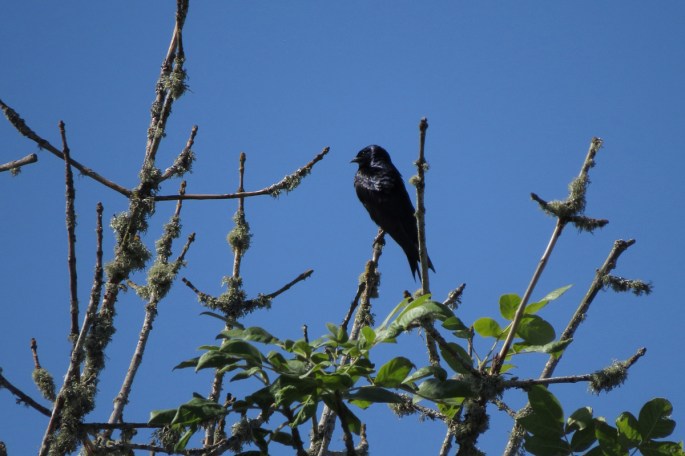
purple martin
Purple Martins are a new addition to Fernhill this year. A new nesting box installed beside the main lake has attracted at least one pair. If you build it, they will come.

cinnamon teal
These Cinnamon Teal were plowing through a thick mat of algae. Note the very large bills on these ducks, which help identify them in their summer plumage.

merg
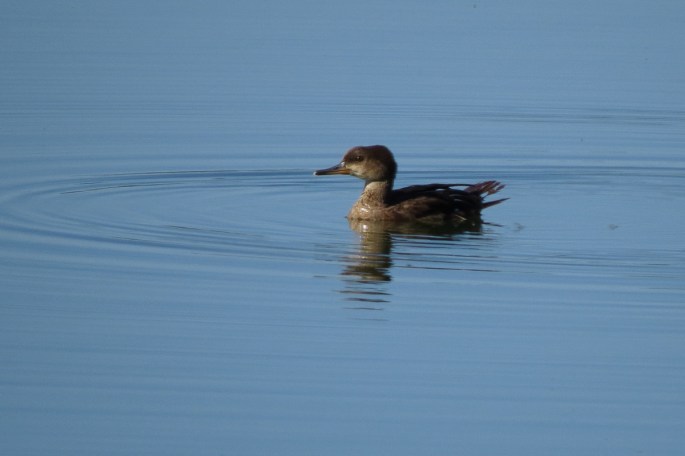
This hatch-year Hooded Merganser was hanging out in the middle of the lake. The unusual habitat choice and the unfamiliar juvenile plumage caused many birders, myself included, to initially call this a bird a Red-breasted Merganser. While a Red-breasted had been documented at this site in May, closer inspection of this bird reveals the solid head shape and the slightly smaller bill of a Hooded. Another reminder to actually look at every bird and don’t rely on others to identify them for you. 

turkey vulture
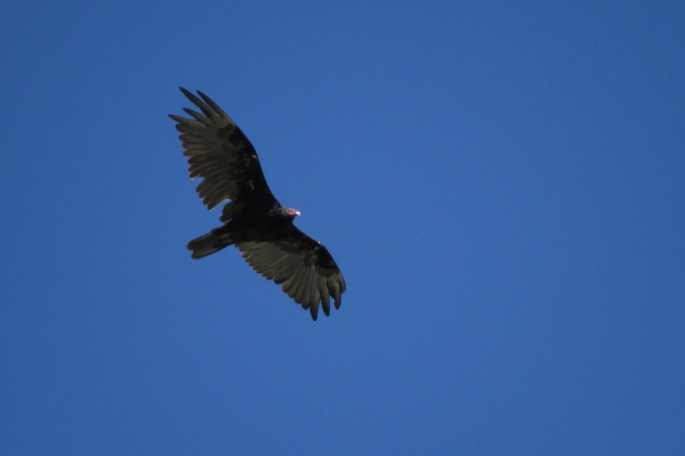
Turkey Vulture, experiencing some wing molt

red-winged
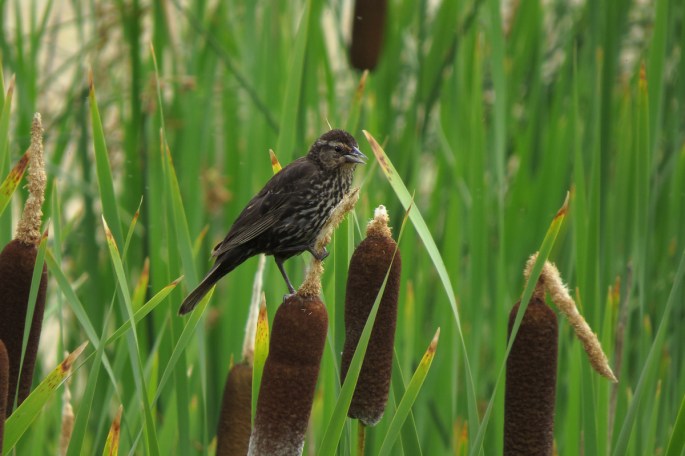
This Red-winged Blackbird was one of a large flock feeding in the cattails.

barn swallow chicks
Some of the local breeders are working on a second clutch. These young Barn Swallows are waiting for someone to come feed them. Soon the power lines will be crowded with young swallows preparing for their first migration. 

Jackson Bottom

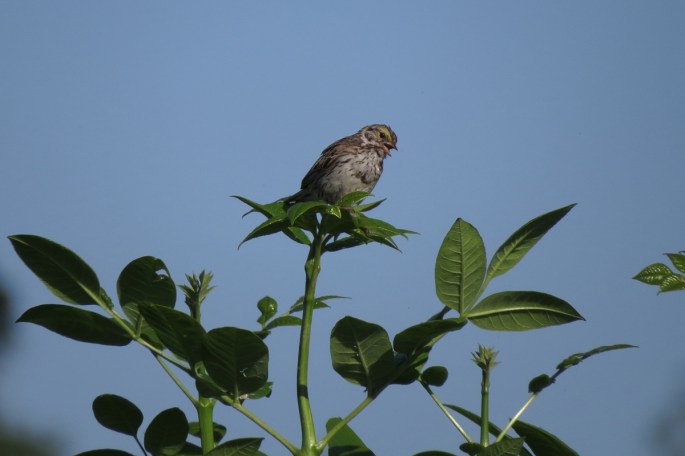
savannahI made a quick visit to Jackson Bottom in Hillsboro. This is a very busy spot in the summer. The Savannah Sparrows are still in full song.
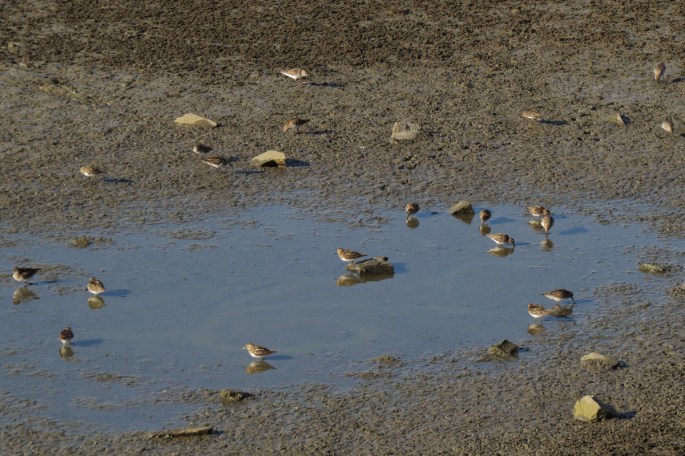
puddlePintail Pond has been drained to accommodate some restoration work on the site, so it has dried out about two months earlier than normal. This is normally one of the better shorebird sites in the Portland area during the summer, so we will have to find other spot this year.  There is only about three weeks between the end of northbound shorebird migration and the beginning of southbound migration. Western and Least Sandpipers have arrived in good numbers, and were feeding in the little puddle that remains of Pintail Pond.

western least
Western (l) and Least (r) Sandpipers

spotted adult
Spotted Sandpipers are common nesters in the area.

spotted chick
Spotted Sandpiper chick

greater yellowlegs
Four Greater Yellowlegs made a brief appearance.

swallow box
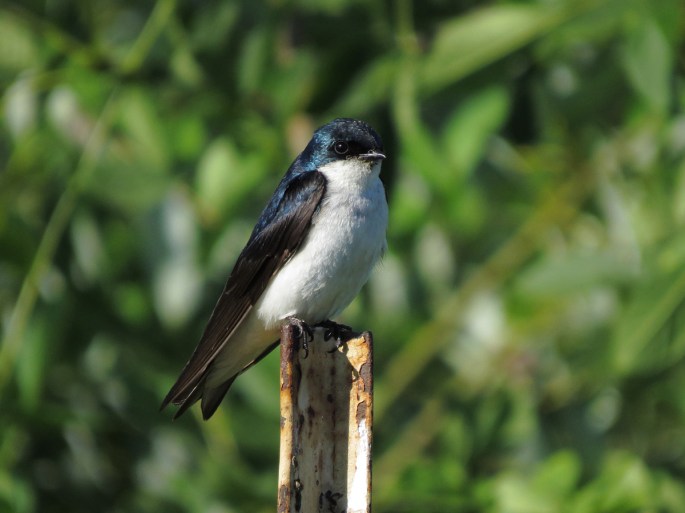
Tree Swallows are everywhere at Jackson Bottom, thanks in part to the many nesting boxes that have been installed here.

swallows 3
The first broods are grown up now, and it looks like second broods will be arriving shortly.

swallow 2
pretty boy

Smith Rock State Park

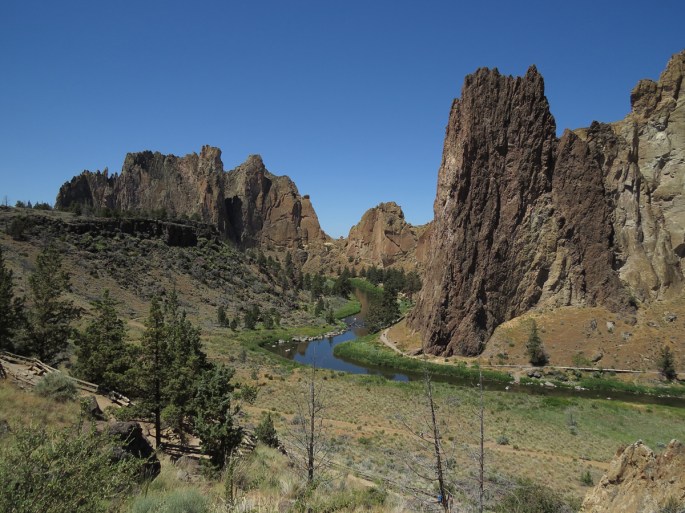
I hadn’t been to the dry side of Oregon for far too long, so I took a trip to Smith Rock State Park. The avian stars of this site are the White-throated Swifts that nest here. They did not disappoint, but those little winged rockets are far too fast for my photographic abilities.

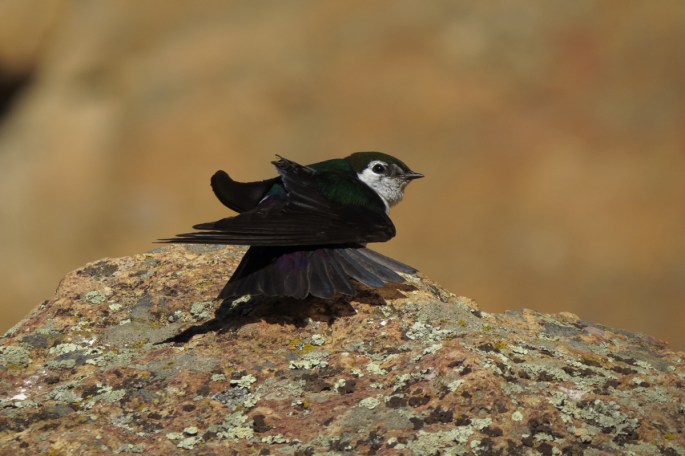
Unlike the swifts, the abundant Violet-green Swallows will occasionally pose for a photo.

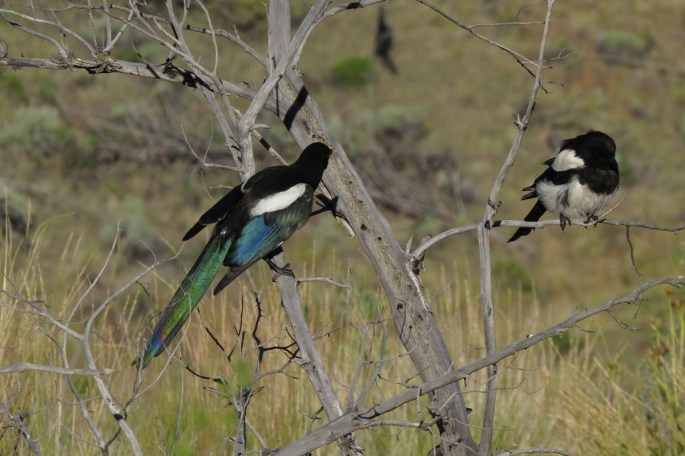
There was apparently a good crop of Black-billed Magpies this year, so lots of youngsters were hopping around near the parking lot.

Direct sunlight and iridescence make for a lovely flash of color on these black birds.

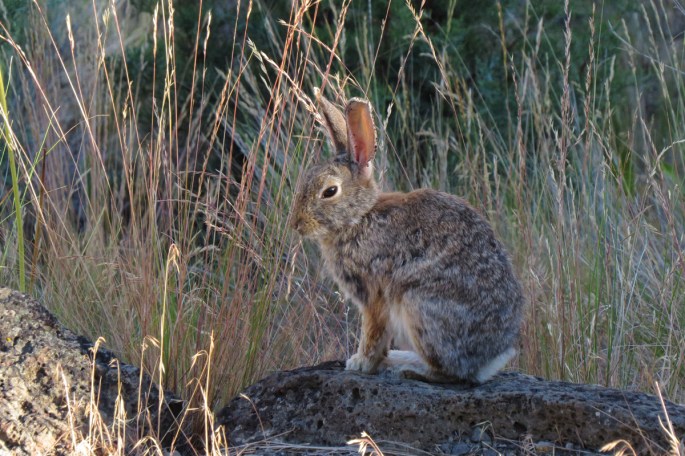
Desert Cottontail. Note all the ticks on the edge of his ear.

itchy rabbit

I hiked over the rock formation on the aptly named Misery Ridge Trail, then back along the Crooked River. Rock Wrens were plentiful, but whenever I try to photograph that species I end up with crystal clear images of rocks with blurry birds on them.

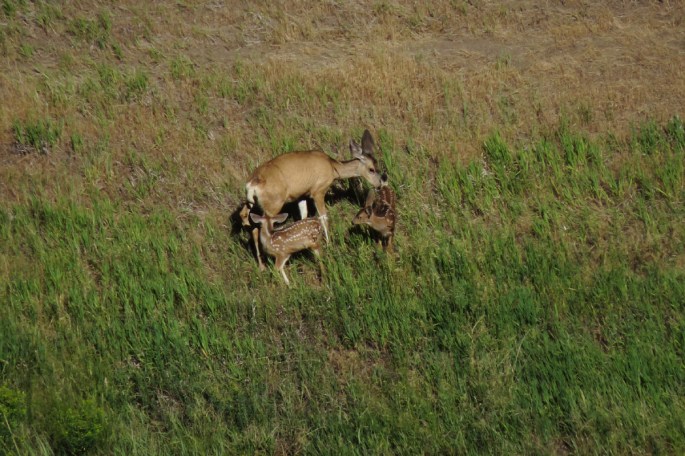
Mule Deer were common in the grassy areas along the river.

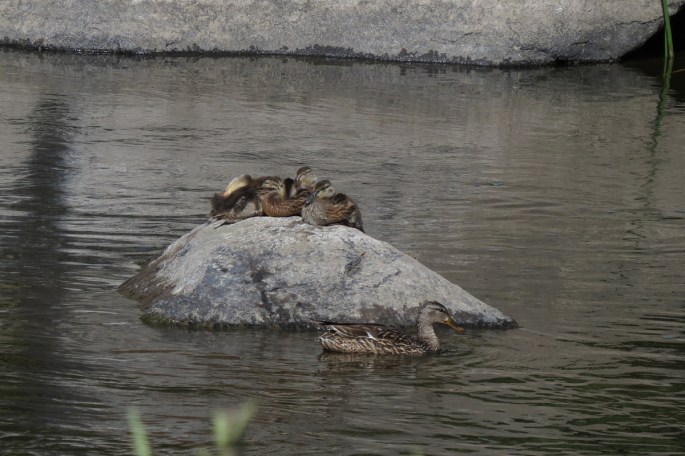
The river held lots of Mallards, like the family pictured here, and Canada Geese.

Looking up at the cliff face from the river

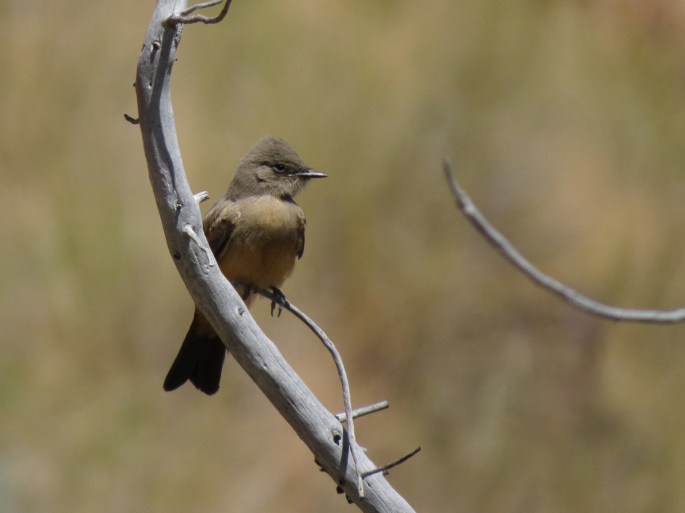
Say’s Phoebe, looking regal

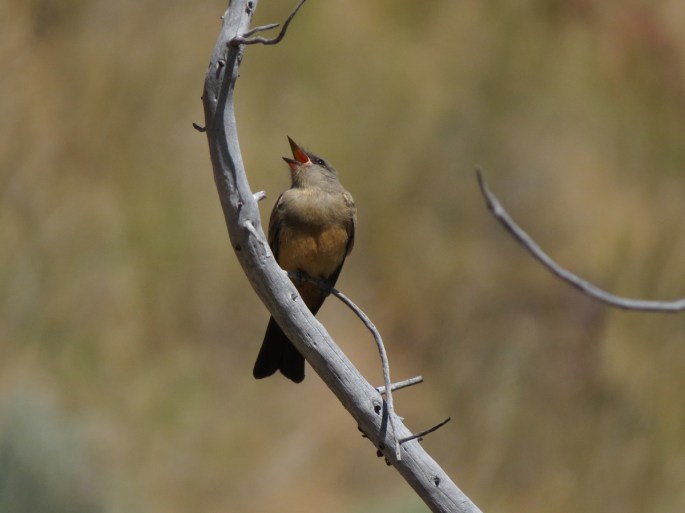
The same Say’s Phoebe, about to hork up something

By noon, the park was getting pretty crowded and the heat was intense so I headed for home. Birding was quite good despite the heat and the lateness of the season. I think a trip here in early June would be even more productive.

Northwest Portland Wetlands

I went out to Smith and Bybee Wetlands and Vanport Wetlands to check for migrants. The Smith and Bybee area was pretty slow. Water levels were high so some of the trails were inaccessible. Vanport had some really interesting birds, including several Redheads and Yellow-headed Blackbirds, both hard to find in the Portland area.

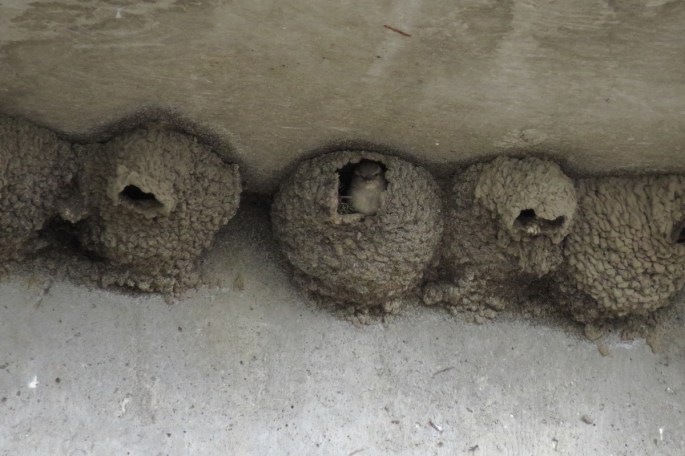
The small colony of Cliff Swallows at Smith and Bybee was active with nest building.

This House Sparrow had moved into an old Cliff Swallow nest.

American Bullfrogs were enjoying the spring weather.

Brush Rabbit scratching an itch

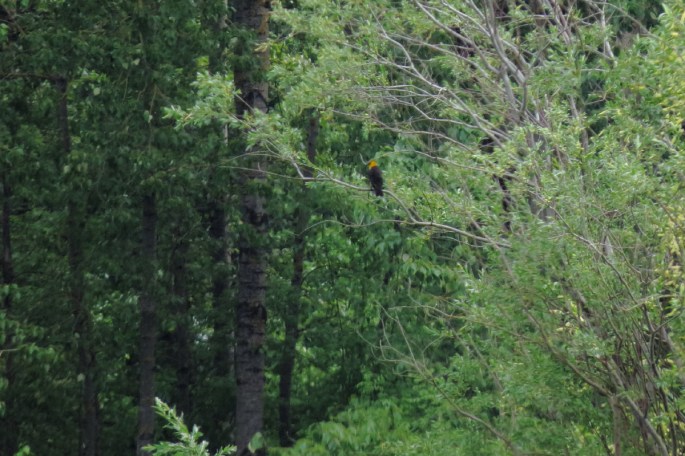
At Vanport, most birds were pretty far away, like this Yellow-headed Blackbird. His song was easily heard, even from across the lake.

This Ruddy Duck was doing his motorboat impression to impress the ladies.

This Cooper’s Hawk was atop a tall tree overlooking the racetrack. The loud engines did not seem to bother him. I can’t say the same for me.

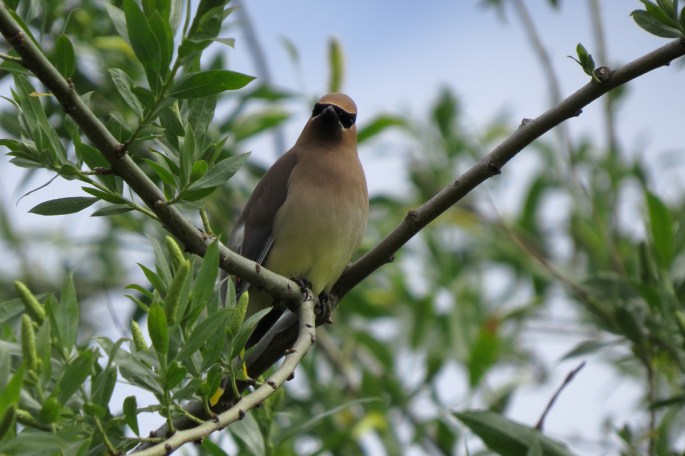
A few birds, like this Cedar Waxwing, were down in the small trees along the near shore of the lake.

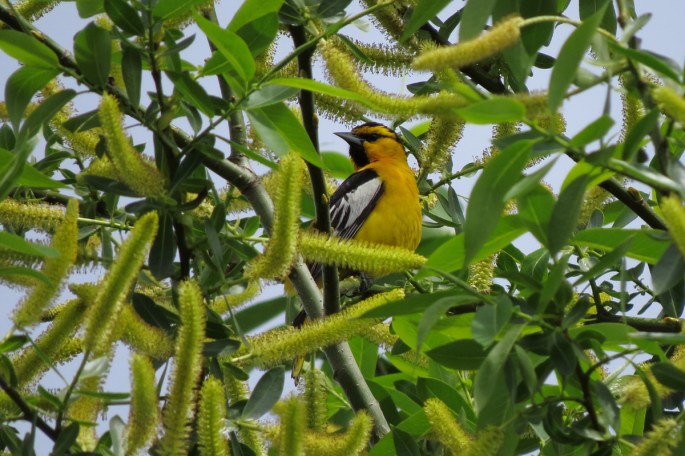
Bullock’s Orioles are often obscured by foliage in the treetops. This individual was low enough for a brief glimpse among the blossoms.

Spring at Fernhill

While we continue to get above-average rainfall in the Portland area, there have been a few dry days of late, so I ran out for a quick tour of Fernhill Wetlands. Most of the wintering geese are gone, and there are signs that spring is slowly making progress.

Yellow-rumped Warblers, both Audubon’s and Myrtle (shown) races, are coming through in large numbers.

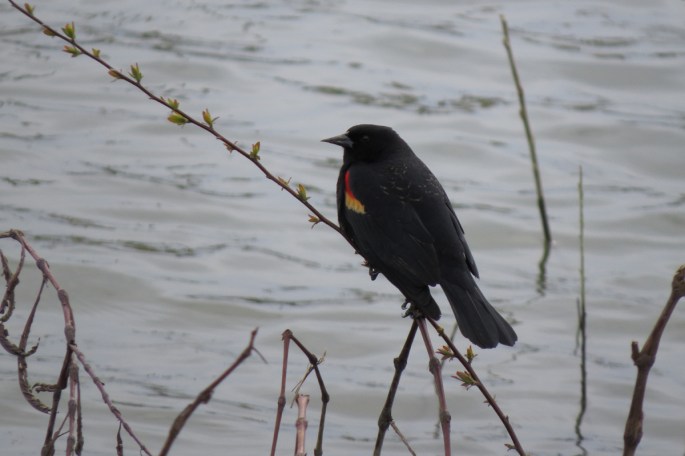
Red-winged Blackbirds are in full song and are staking out territories.

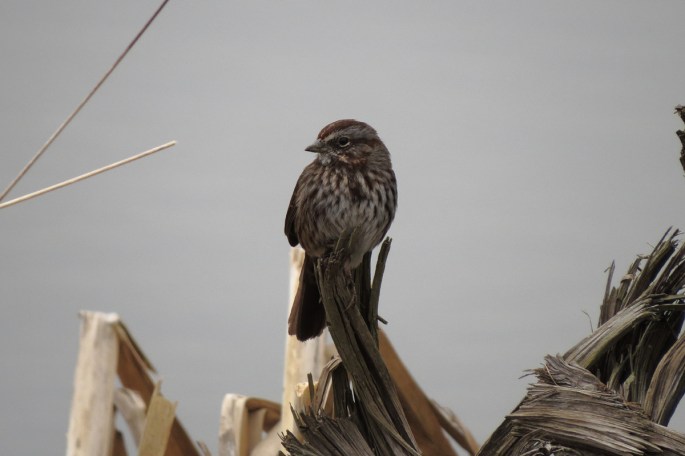
Song Sparrows start singing in January, but are increasingly vocal now.

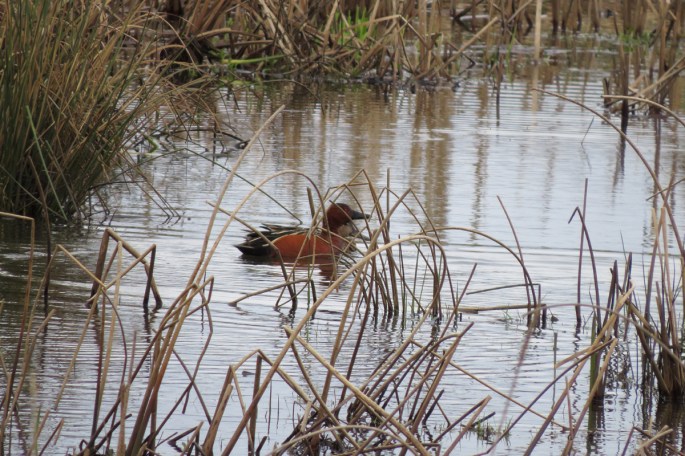
Several pairs of Cinnamon Teal were courting.

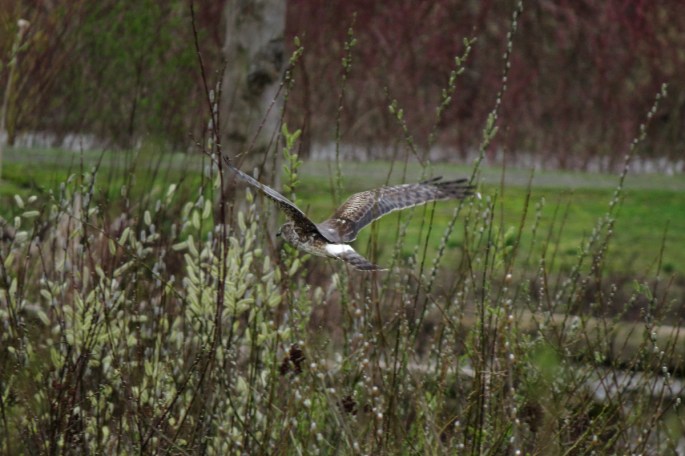
Northern Harrier

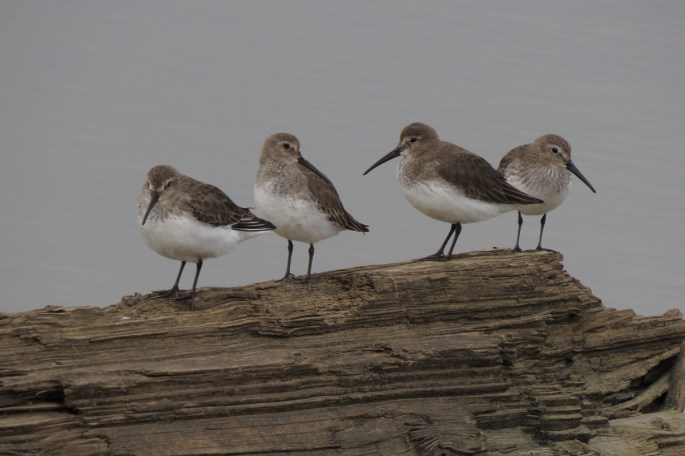
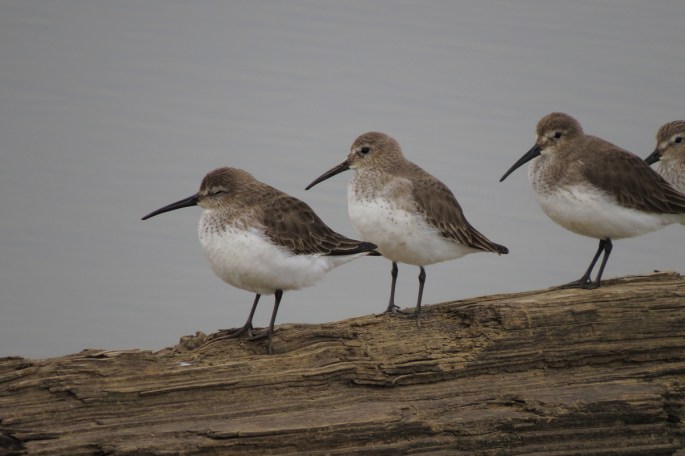
A flock of Dunlins was using this log to get out of the mud for a while. They were all still in winter plumage. Dunlins are one of the first species to arrive in spring.
Spring shorebird migration peaks in late April/early May. There is still room in my shorebird class with Portland Audubon April 27/29.

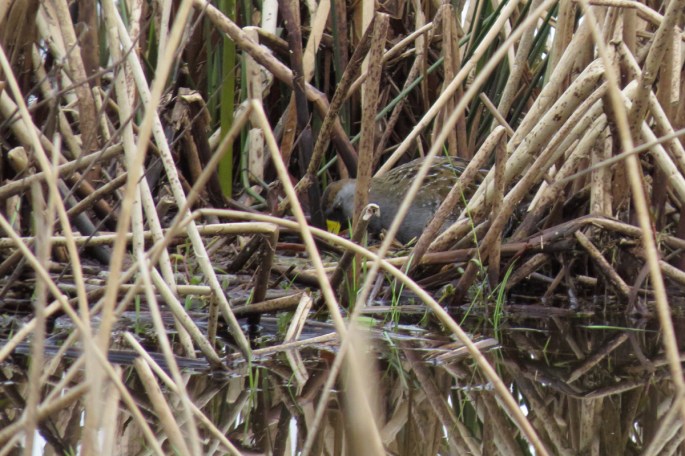
This Sora was being typically elusive.

The red currants were is full bloom, attracting both Anna’s and Rufous Hummingbirds.

Commonwealth Lake

Now that the snow has melted, the weather has turned to freezing temps and a howling east wind. Bleah. Despite the lousy conditions, I bundled up and took a walk around Commonwealth Lake. The park was hosting a large flock of Cackling Geese and a similar sized flock of American Wigeon. Other species were present in much smaller numbers.
img_9283This Great Egret was getting a lot of attention from the dog walkers and joggers in the park, with people stopping to take cell phone photos. I try not to be a birding snob, realizing that the big flashy species are what get people’s attention. Great Egrets are gorgeous birds, and always worth a look. But most of these folks were oblivious to the smaller creatures flitting around this bird’s feet…

greenlike this guy. This Green Heron was fluffed up against the cold and was staying in the thick brush along the water’s edge.

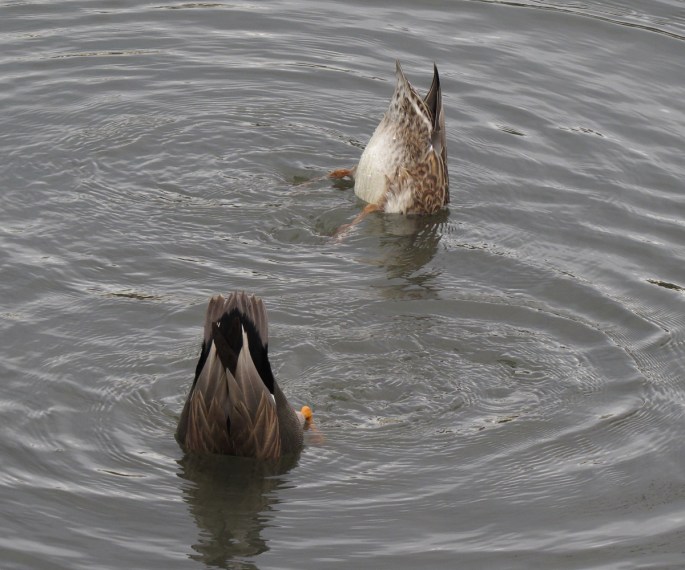
img_9288Duck Butts! A pair of Gadwall were doing the dabbling thing.

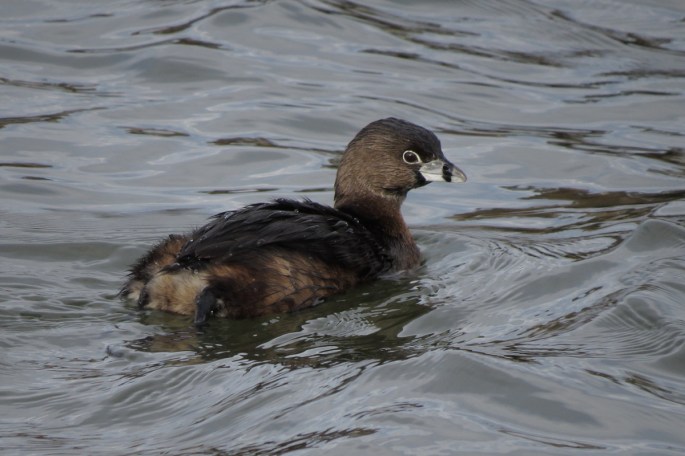
pied-billedAfter a successful nesting season at this site, Pied-billed Grebes are still present in good numbers.

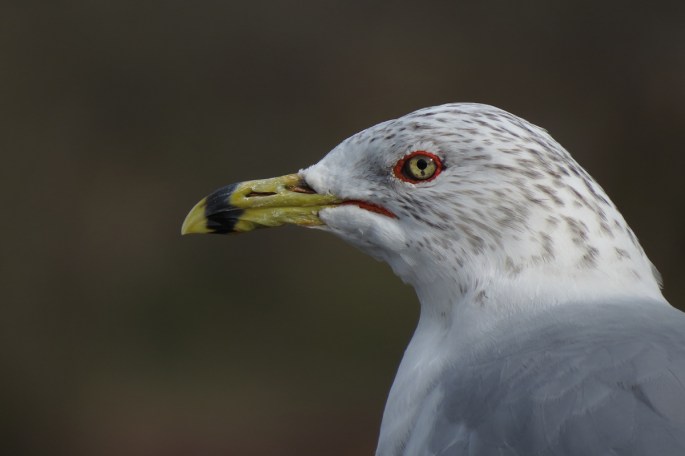
ring-billedThis Ring-billed Gull was struggling to remain perched on a post in the high winds. Note the red orbital ring and gape, suggesting that breeding season may not be all that far off. If we can just get through February…

Post-Snowpocalypse Ramblings

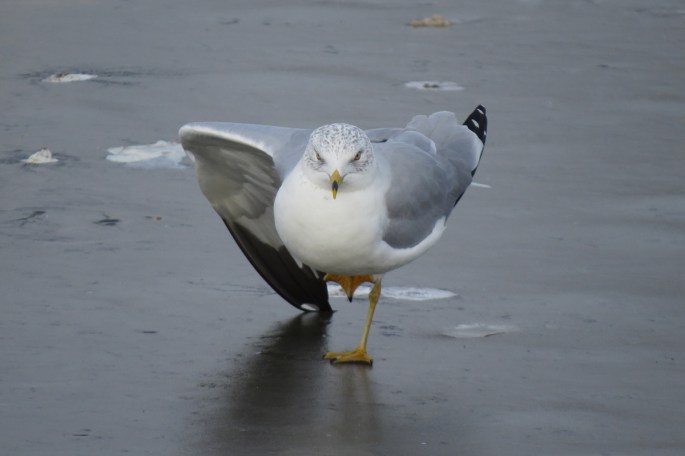
small-ring-billedThe Portland area got a dump of about 10″ of snow recently. It was lovely on the first day, but for the next week it was a pain, with roads being impassable from the ice and snow. When I was finally able to get out, I went to Amberglen office park in Hillsboro to scout for my Hillsboro Parks and Rec gull class. This Ring-billed Gull was posing on the ice.

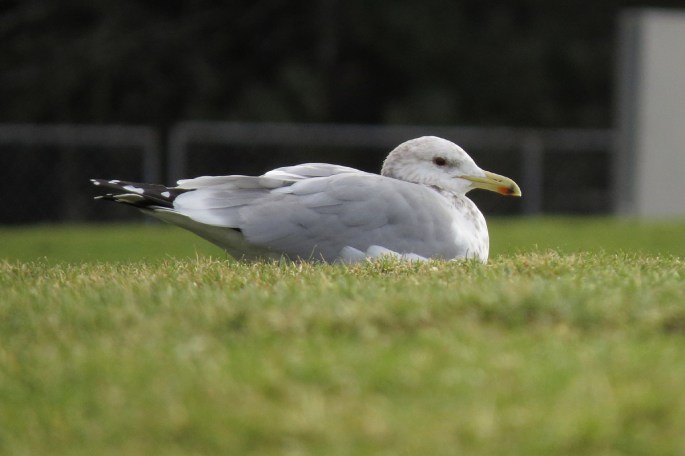
california-gullI found a few California Gulls on my scouting trip, but they were a no-show on class day.

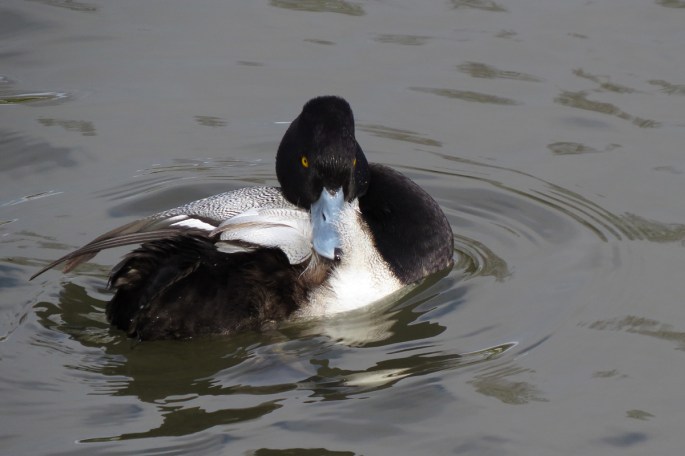
lesser-scaupThis Lesser Scaup was bathing at Dawson Creek. The bill color on these birds is striking.

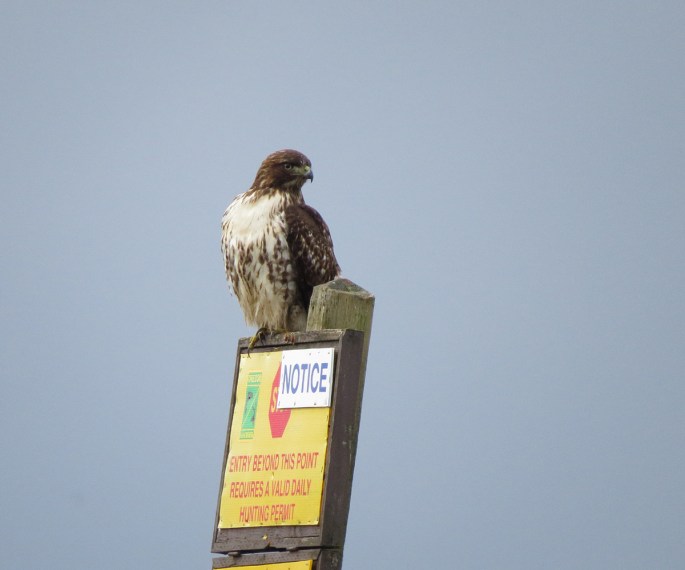
red-tailedOn Thursday I went to Sauvie Island, partly just to go birding and partly to scout for my upcoming waterfowl class. There was so much water from the melting snow that the ducks were scattered everywhere. Raptors put on a good show. Here is a young Red-tailed Hawk.

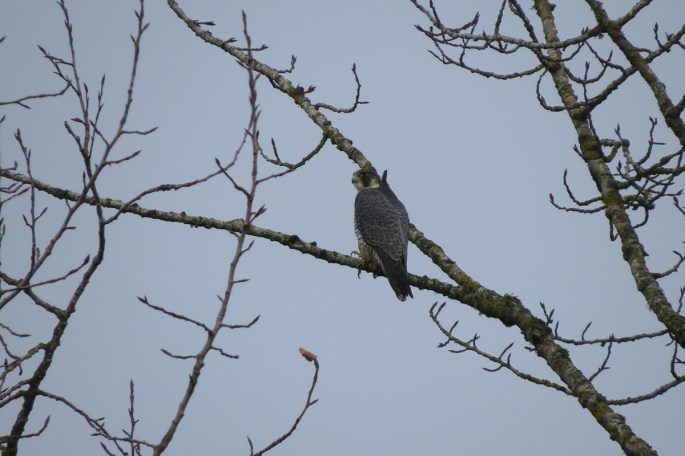
peregrineThis Peregrine Falcon was keeping an eye on the ducks.

harrierNorthern Harrier

I laid down some millet in various spots to chum for sparrows (class in March, hint, hint).

golden-crownedGolden-crowned Sparrow, one of the more common winter residents.

white-throatedWhite-throated Sparrows were a big deal when I first moved to Oregon, but they are now considered rare but regular in the winter.

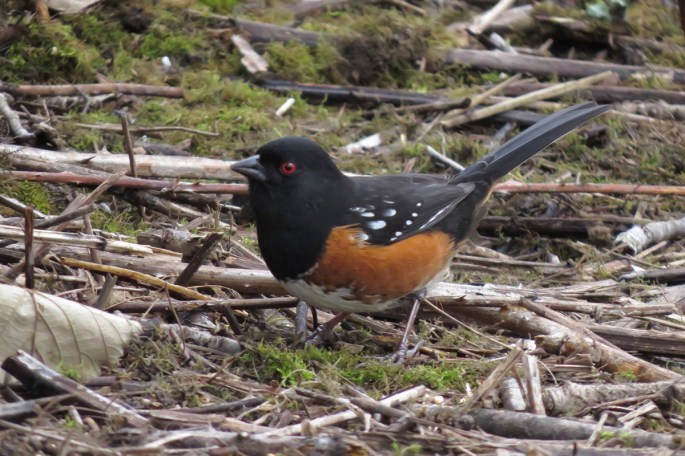
towheeSpotted Towhees are so common they tend to be overlooked. But it is nice to stop and appreciate just how gaudy and beautiful they are.

Lots to see in the Portland area this time of year. Cheers.


Siletz Bay

common-scoter-1This Common Scoter was recently found in Siletz Bay, just south of Lincoln City. This is only the second record of this species in North America, so he was definitely worth chasing.

common-scoter-2The Common Scoter seems pretty comfortable in Siletz Bay, feeding and resting near the pull-out just south of the Schooner Creek bridge, so he was an easy tick. I just showed up and there he was. It can seem a little anticlimactic when a staked-out bird is too easy to find. But the advantage of such a situation is that you have the time to explore the surrounding area. On this day I birded from the D River in Lincoln City to Boiler Bay. This whole area is covered on pages 155 – 157 of Birding Oregon. There are a lot of birds packed into just over two pages. Or perhaps my writing is just very concise.

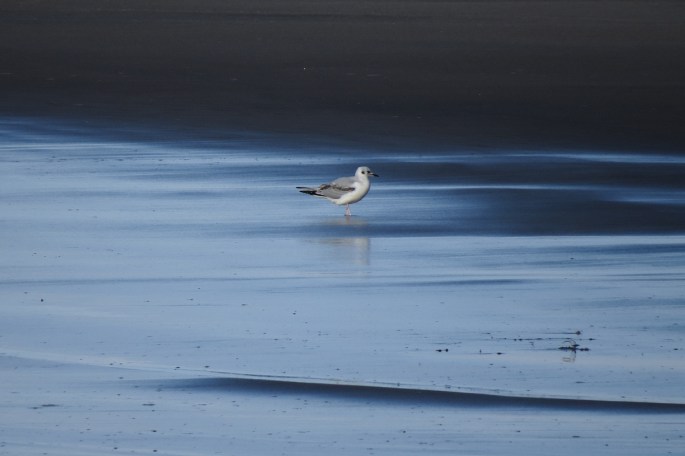
bonapartesThis Bonaparte’s Gull was hanging out at the D River.

brewers-1male Brewer’s Blackbird, D River

brewers-2female Brewer’s Blackbird, D River. I find female Brewer’s to be much more photogenic than males. Perhaps my camera just doesn’t do well with extreme blacks and whites.

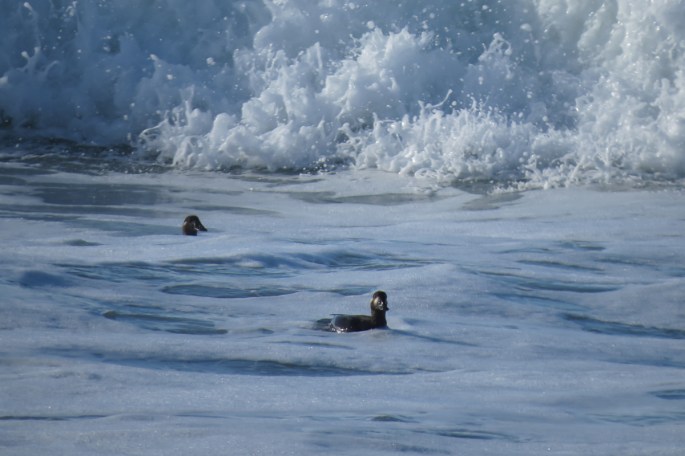
surf-scotersSurf Scoters in the surf

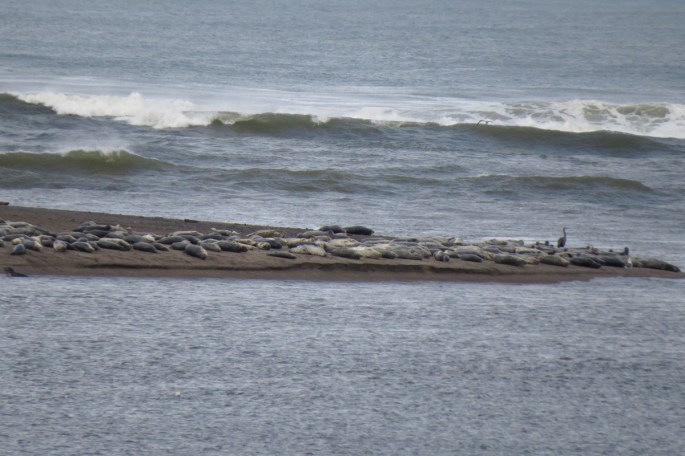
harbor-sealsThe sand spit at the mouth of Siletz Bay is a favorite haul out spot for Harbor Seals.

harbor-sealhappy Harbor Seal

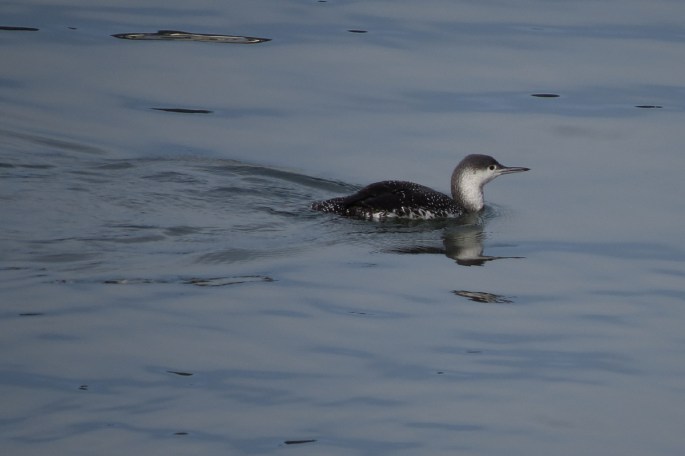
red-throated-loonRed-throated Loon

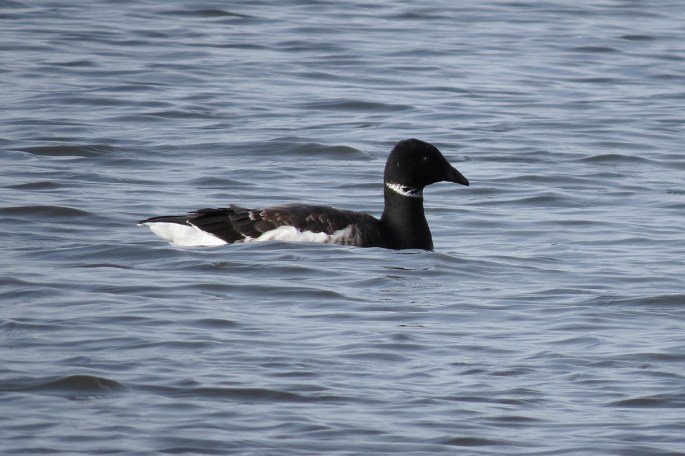
brantA little farther up the bay, I found two Brant. I don’t get to see then often enough.

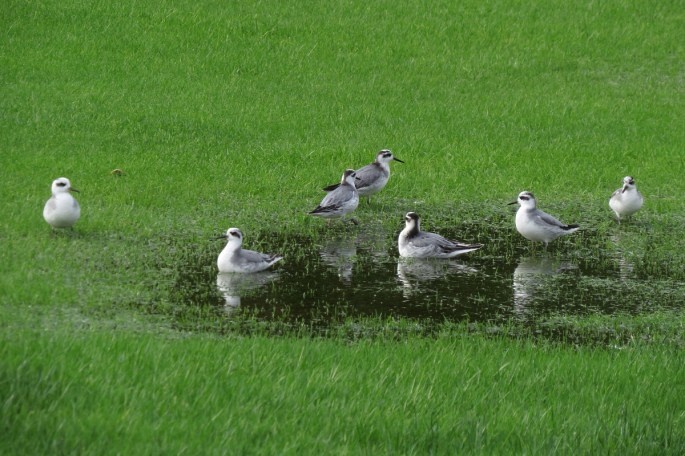
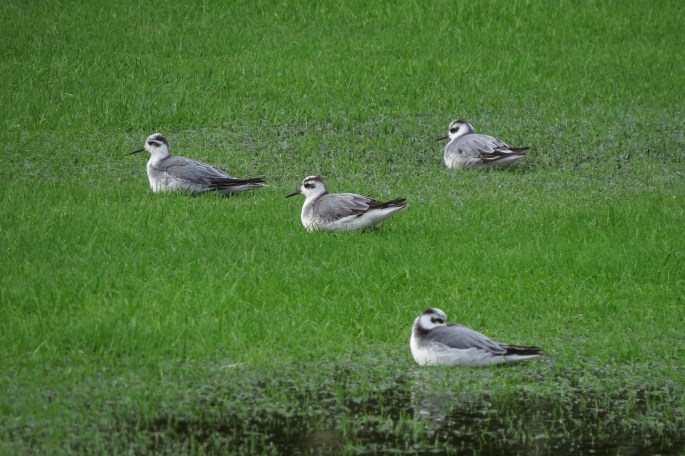
red-phalarope-1Recent storms have brought a lot of Red Phalaropes to the coast and points inland. These birds were hanging out at the Salishan golf course.
red-phalarope-2It’s nice that a golf course is actually being good for something.

thayers-1I saw some nice birds at Boiler Bay, but most were too far out for photos. This Thayer’s Gull was perched on this little knob of rock for several hours.

black-oystercatcher-3One can often get close looks at Black Oystercatchers at Boiler Bay. This bird was particularly vocal.
black-oystercatcher-2Black Oystercatcher, sleeping with one eye open

The Siletz Bay area is typically not a big birding destination, with the exception of Boiler Bay. But this stretch of the coast can be very birdy, so it was nice that the Common Scoter has inspired so many birders to explore the area. Cheers.

Autumn at Fernhill

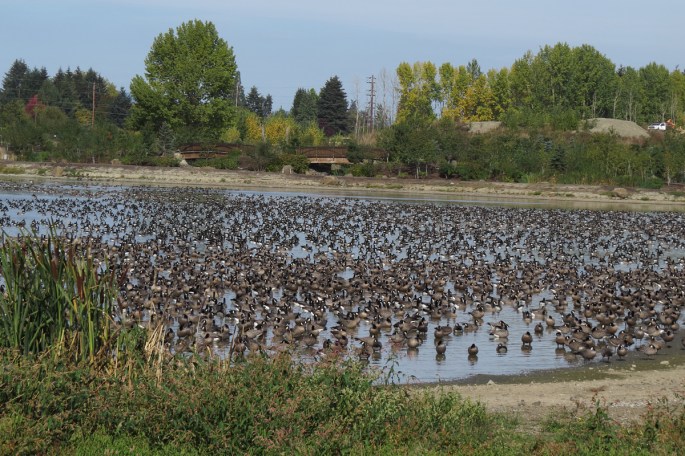
cackling-geeseFernhill Wetlands is the place to be in autumn. Even after the extensive wetland renovations that have taken place, resulting in less open water, the Cackling Geese still congregate here by the thousands.

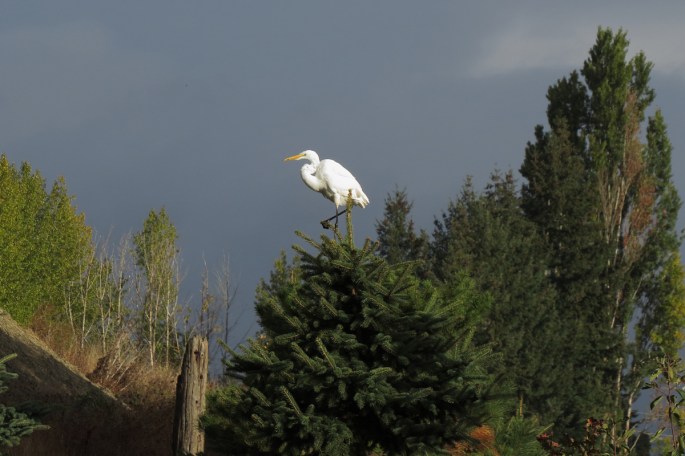
great-egretThis Great Egret was catching the sunshine on the top of a tree.

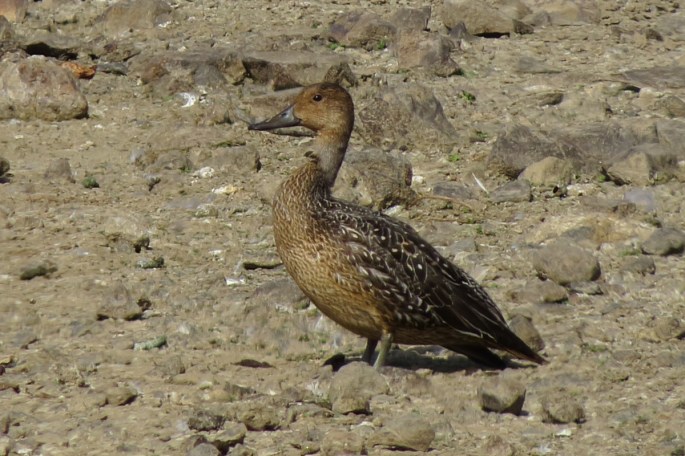
pintailNorthern Pintail. I don’t often see them hanging out on dry ground.

killdeer-green-wingedKilldeer and Green-winged Teal

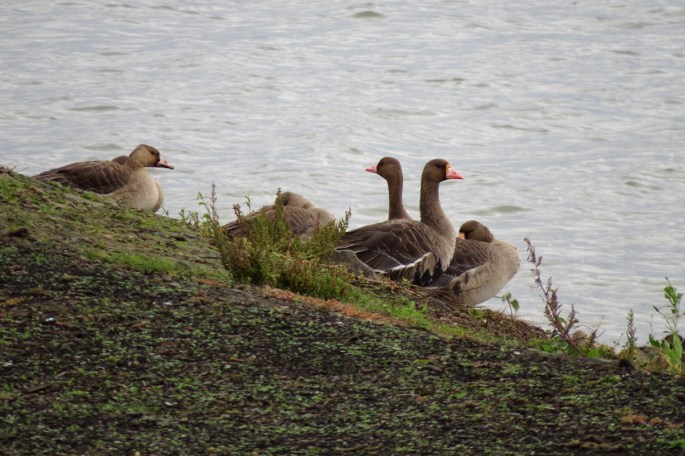
greater-white-frontsGreater White-fronted Geese migrate over the Willamette Valley in large numbers, but not many touch down, so it is always nice to see some on the ground.

horned-grebeFernhill Lake is about half of its original size, but it is still big enough to attract divers, like this Horned Grebe.

western-grebeWestern Grebe

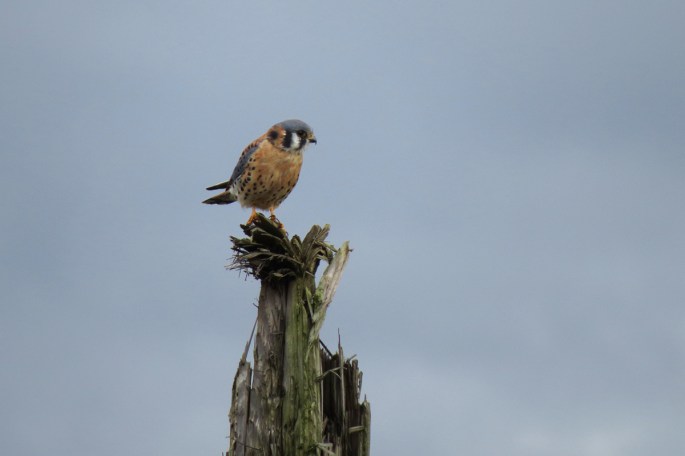
kestrel-5male American Kestrel

Waterfowl diversity continues to increase, and winter sparrow flocks should pick us soon. I’m looking forward to watching the show, assuming the Bundys don’t move in.