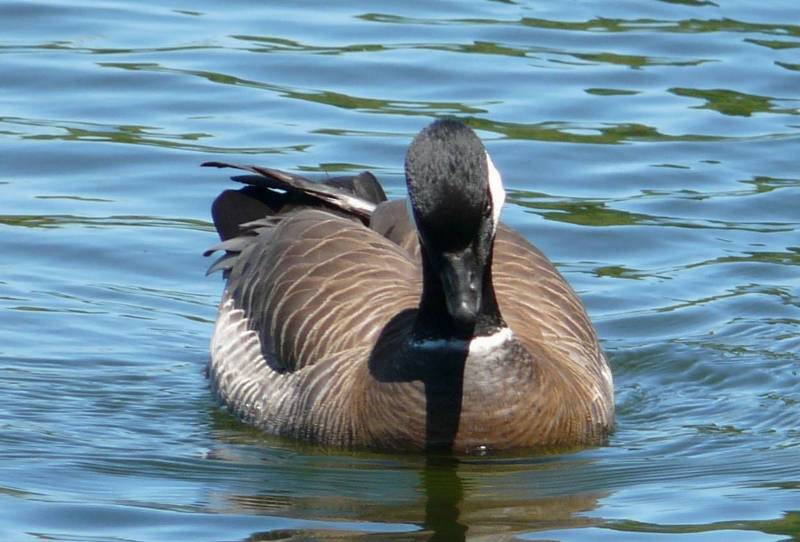
Fernhill Wetlands 1/28/10

I enjoyed a quiet walk around the main lake at Fernhill Wetlands (Birding Oregon p. 61). By mid-morning, most of the geese that roost at this site are off feeding elsewhere.


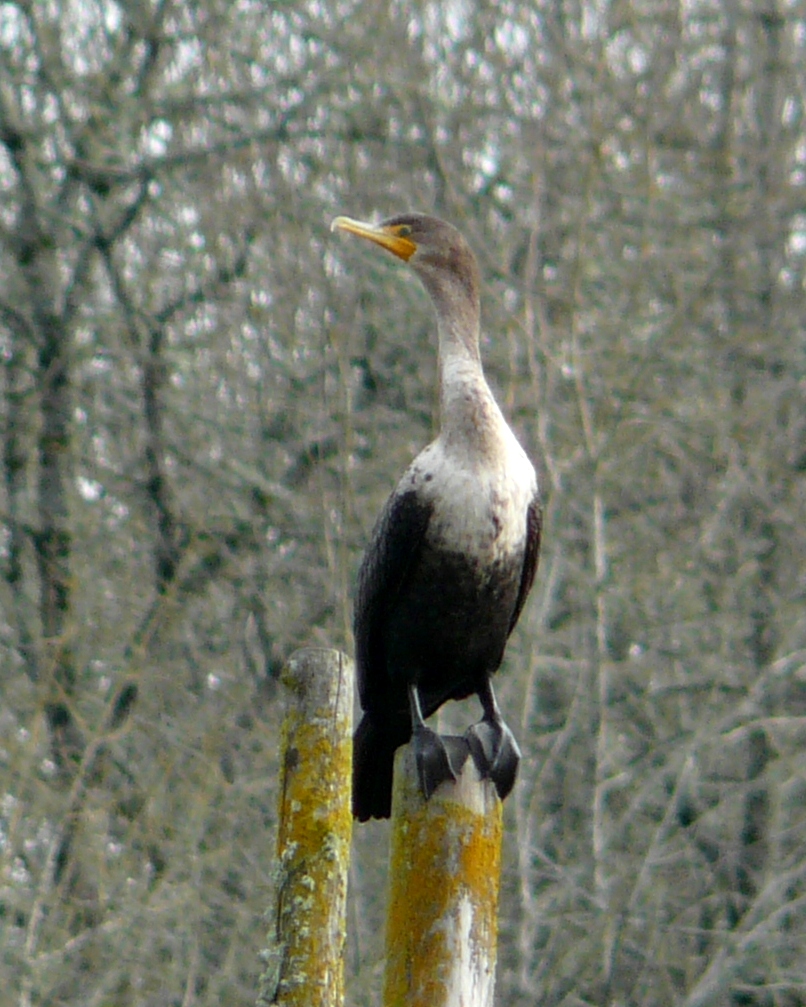
Double-crested Cormorants are commonly seen perched on dead trees and utility poles when they are not fishing. The light breast, neck, and head identify this individual as a young bird. The orange gular pouch is diagnostic in differentiating this species from the other two cormorants found along the Oregon coast.


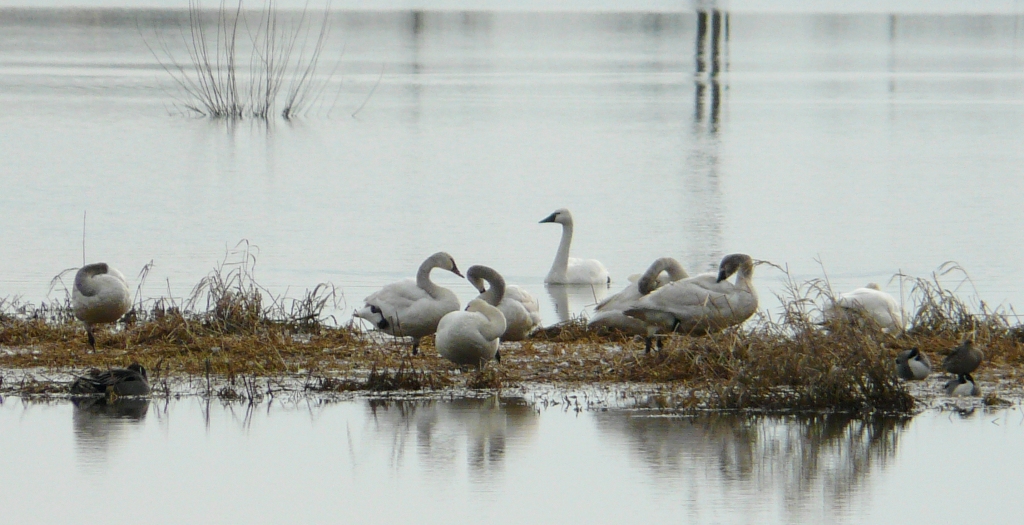
Several Tundra Swans were lounging in the marsh, always a delight to see. To get an idea of the size of these birds, compare the Cackling Geese and Mallard at the far right of the photo.


Golden-crowned Sparrows are common in the brushy areas. I was pleased that Nala, the Birding Dog, sat still long enough for me to capture this image.

Fernhill Wetlands 11/11/09

I took a brief walk around Fernhill Wetlands (Birding Oregon p. 61) while meeting with a reporter today. The weather was rather dreary, but, as always, there were some birds around.

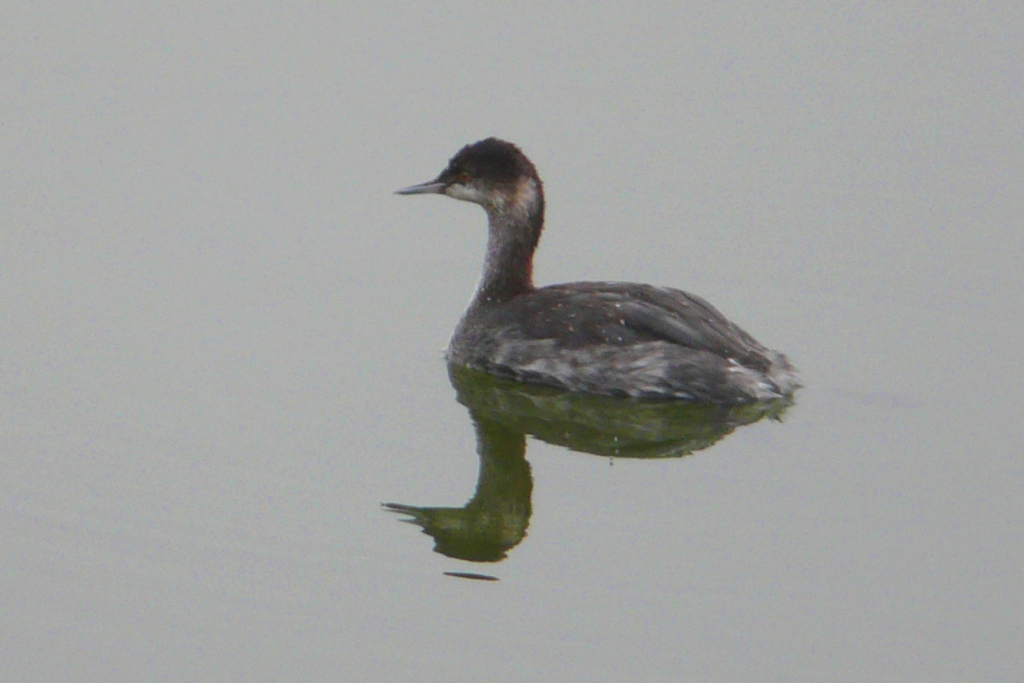
eared grebe
Eared Grebe is an unusual visitor to the main lake. Note the thin bill and dusky cheeks. The more common Horned Grebe has a thicker bill, white cheeks, and a neat black cap.
eared grebe 2
Another view of the Eared Grebe. The back end of this species tends to float fairly high in the water.

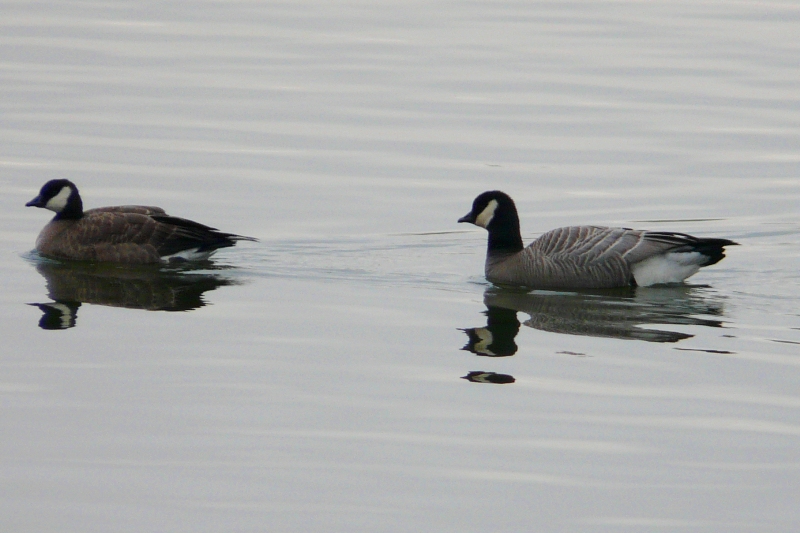
cackling geese
Most of the wintering Cackling Geese were off grazing somewhere, but these two were hanging out on the lake. The bird on the right has pale feather edges, indicating a young bird.

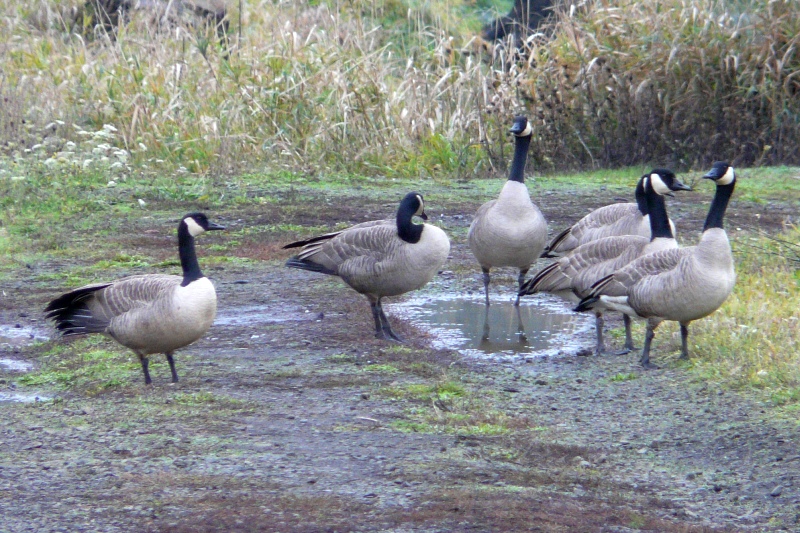
canada geese
In contrast to the Cackling Geese, these resident Canada Geese are much larger with long snakey necks.

common mergansers
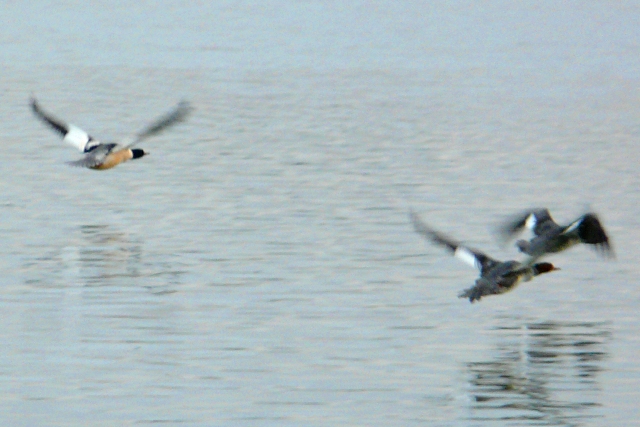
Common Mergansers were indeed common on the main lake this morning, but did not allow a close approach.

great egret
Great Egrets stand out on a dreary gray day.

Fernhill Wetlands

While certainly not one of the more scenic sites in Oregon, Fernhill Wetlands (Birding Oregon p. 61) always attracts some noteworthy birds.

least and western sandpipers
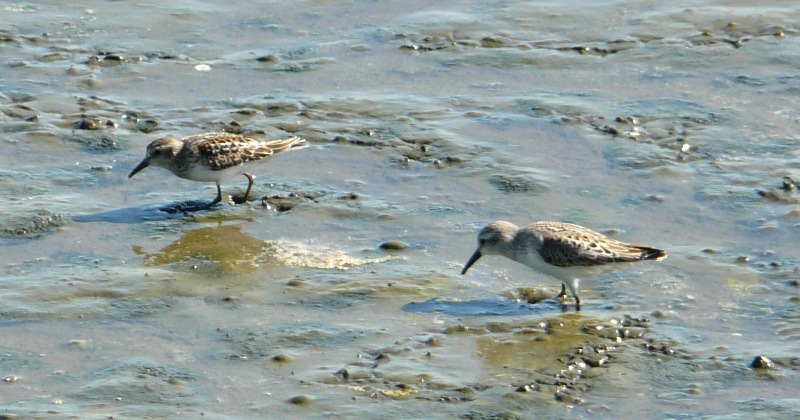
Least Sandpiper (left) and Western Sandpiper (right) are two of the more common shorebirds that use the mudflats at Fernhill. Both birds are juveniles (brightly colored fresh plumage, scapulars are small and rounded). The Least has a small, finely-pointed bill, yellowish legs, breast streaks, and feeds while squatting low to the mud. The Western has a longer drooping bill, dark legs (hidden in the mud),  is grayer overall, and looks “front heavy,” like he might tip forward.

pelican swimming
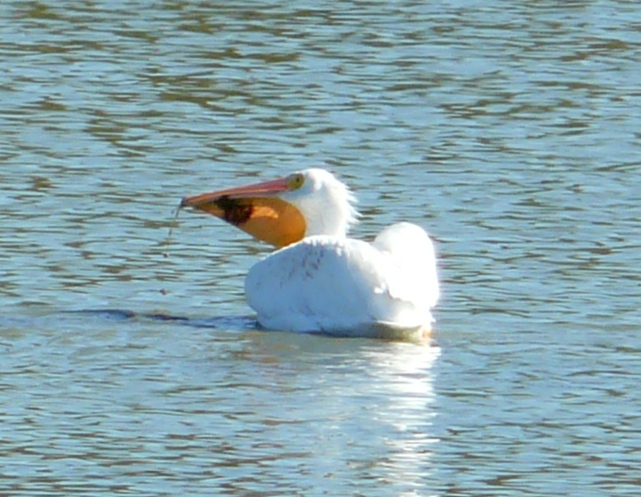
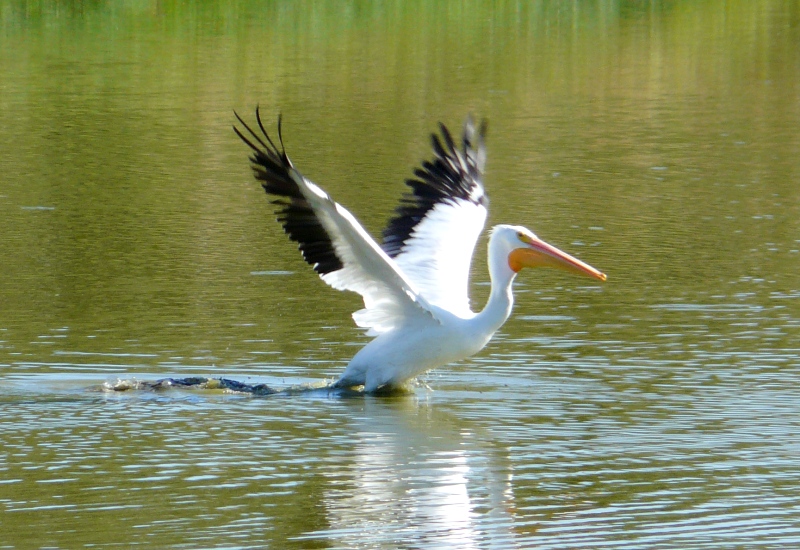
Two American White Pelicans have been at Fernhill lately. This species doesn’t nest in the Willamette Valley, but small flocks are often present in late summer/early autumn.
american white pelican

gb heron with catfish
A Great Blue Heron with a species of bullhead. Catfish have sharp spines on their dorsal and pectoral fins, so the heron has to position the fish carefully before swallowing.

Winchuck River Mouth

winchuck river
Less than a mile from the California border, the Winchuck River empties into the Pacific Ocean. Along with a lovely beach area, the site has a nice visitor center (bathroom!) with information about the surrounding National Forest.

brown pelicans
Brown Pelicans were feeding just offshore.

long-billed curlew
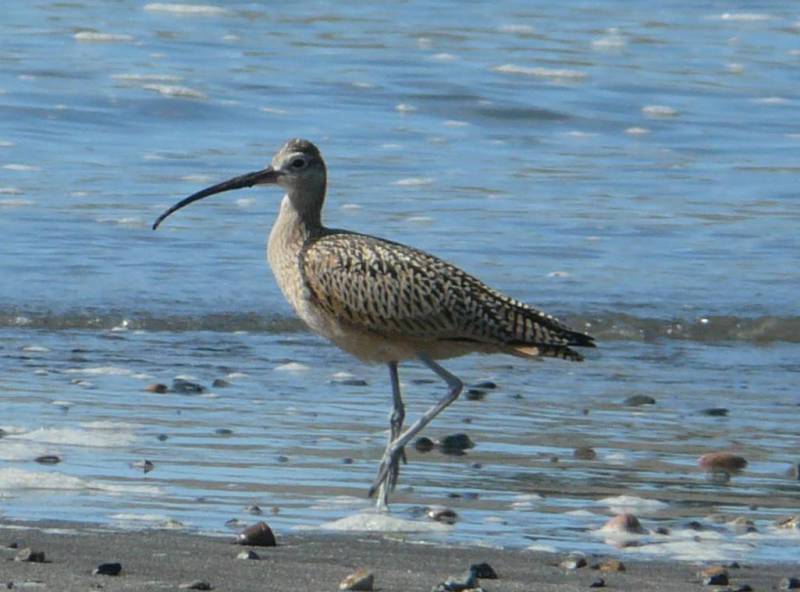
Two Long-billed Curlews were feeding near the river mouth, probing their long bills into the sand. The crisp pattern on the wing coverts (dark stripes with no cross bars) identifies this individual as a juvenile.

double-crested cormorant
This Double-crested Cormorant  fished  in the river while other fished offshore.

eurasian collared dove
Eurasian Collared-Doves can be expected just about anywhere in Oregon after a massive range expansion over the past few years.

western fence lizard 1
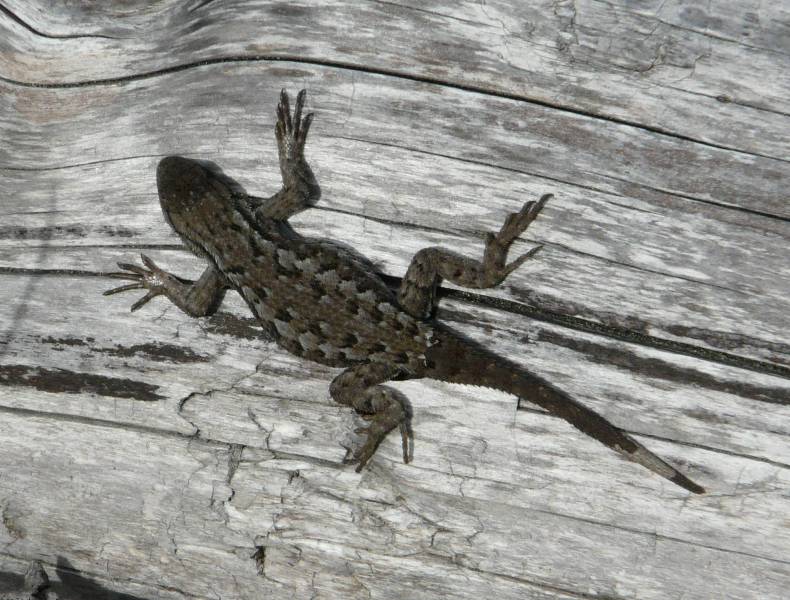
Western Fence Lizards were basking on the abundant driftwood. This one has recently shed, evidenced by the little patch of dead skin left on the tail. The one below has a less dramatic pattern, but with little blue flecks.

western fence lizard 2

Oregon Redwoods

The range of Coast Redwood (Sequoia sempervirens) extends into the extreme southwest corner of Oregon. While the groves found in Oregon are not as impressive as those in the state parks in northern California, it is still worth a visit to see these massive trees.

redwood
This is one of the trees along the Oregon Redwood Trail. From Brookings, drive south along Hwy 101 to Winchuck River Road. Turn east for two miles, then cross the river on Forest Service Road 1101. Follow this narrow gravel road for four miles to the trailhead. A more easily accessible grove is found at the Redwood Nature Trail, located on North Bank Chetco River Road about eight miles east of Brookings, but this grove has been closed to public access in an effort to reduce the spread of Sudden Oak Death.  The Redwood Nature Trail is scheduled to reopen in the summer of 2010.

steller's jay
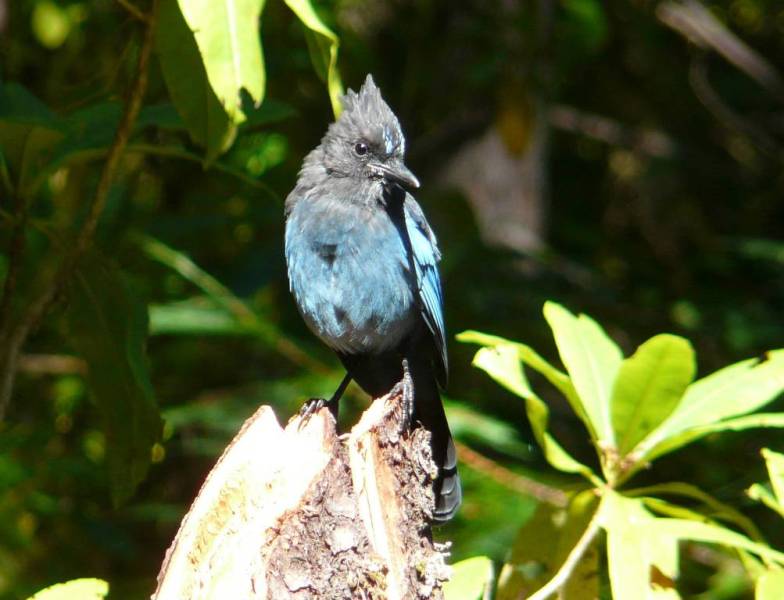
It is often the case that the most scenic areas are not necessarily the birdiest. Birds seen in the redwoods are often limited to Steller’s Jays, Chestnut-backed Chickadees, and Winter Wrens. With a little luck, you can find Varied Thrush, Hermit Warbler, and Pileated Woodpecker. Vaux’s Swifts fly above the forest. At dawn during the nesting season, listen for the harsh call of Marbled Murrelets as they leave their nests in the forest to forage on the ocean.

banana slugs
Banana Slugs are among the more easily approached species of wildlife in the forest. I’m not sure what these two were doing on the wall of the restroom at the trailhead. I’m guessing we are witnessing either  mating behavior or an act of canibalism.

Sauvie Island in Summer

Sauvie Island (Birding Oregon p.55) is best known for wintering waterfowl and raptors. While the summer birding seems quiet compared to the multiple thousands of geese and Sandhill Cranes seen on winter visits,  there is always something to see.

osprey nest
Ospreys nest on platforms provided for them, as well as on utility poles and dead trees.

ca quail
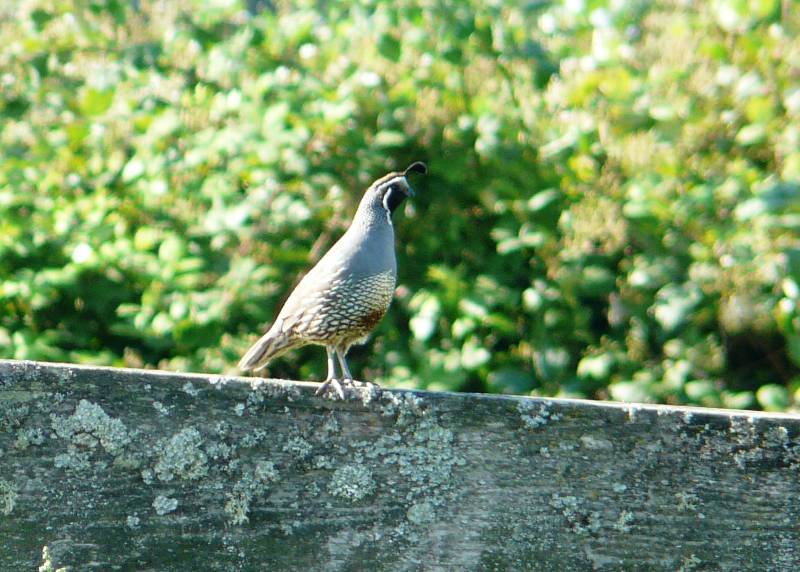
This California Quail was surveying his domain from a fence.

bh grosbeak 3
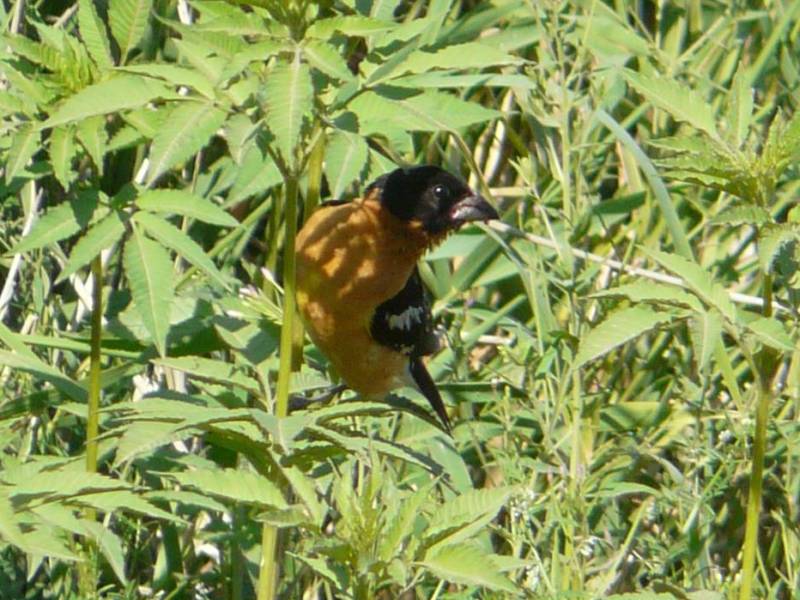
It seemed odd to see this Black-headed Grosbeak feeding in weeds along the roadside, a considerable distance from the nearest tree.

Western Sandpipers

I took a client to Cannon Beach this week to see the Tufted Puffins nesting on Haystack Rock (Birding Oregon p. 124). While he was photographing his lifer Heerman’s Gull, I had a chance to study a small flock of Western Sandpipers. Cannon Beach is a very popular tourist town, so the crowded beach usually holds very few shorebirds. But this flock had found a particularly slimy patch of rocks that was effectively repelling the tourists, so I was able to watch the birds feeding undisturbed.

western sandpiper
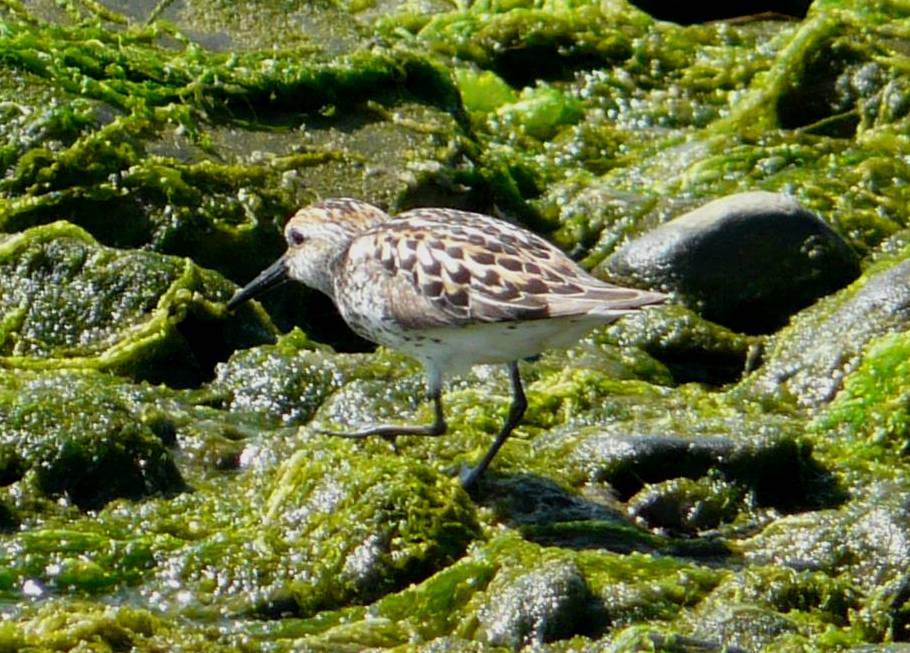
This individual, probably a female, given the long bill, was still in full breeding plumage. Note the rufous, black, and white upperparts and the streaks and chevrons extending along the sides.

western sandpiper profile
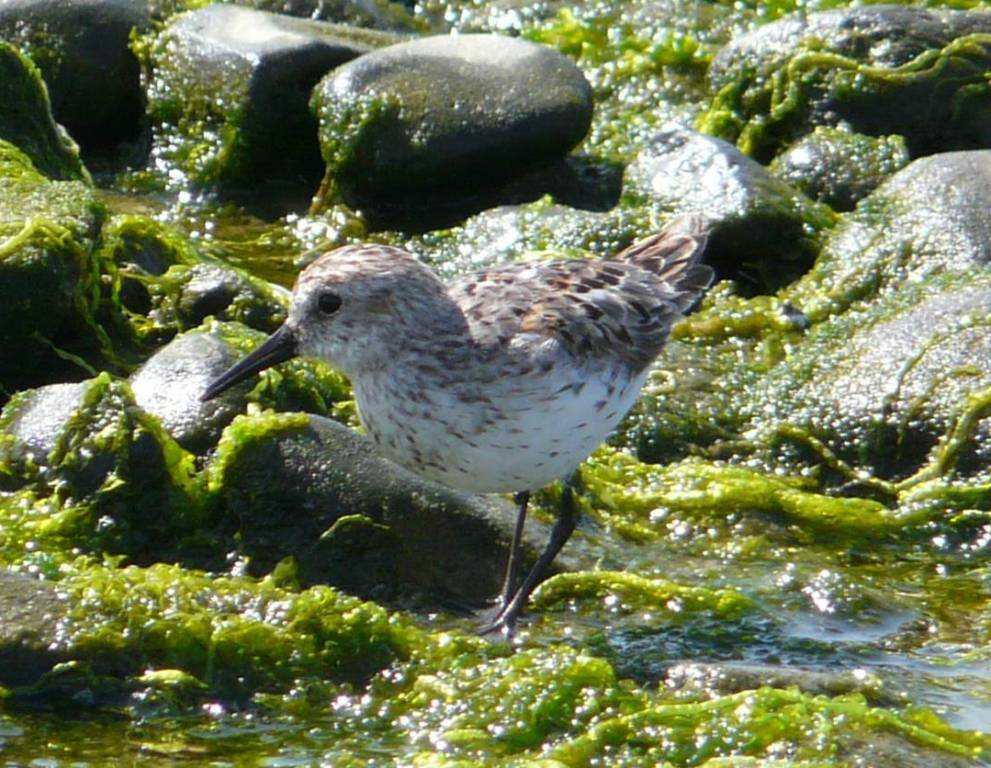
This bird is probably a male. The bill is short and straight, but still tapers to the tip. He is already starting to molt into his gray winter (basic) plumage, although he still retains a few colorful scapulars.

western sandpiper front
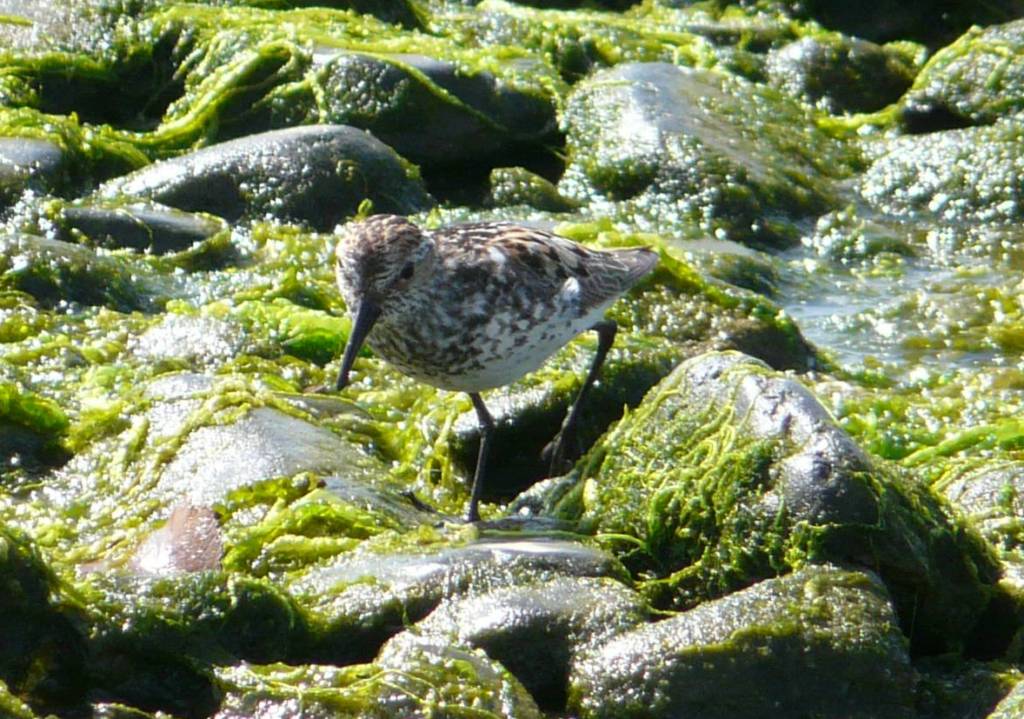
This probable female shows bold streaks and chevrons on the breast and sides.

western sandpiper palmation
Here we see the partial webbing between the outer toes. Western Sandpiper and Semipalmated Sandpiper are the only two species of stints (or “peeps”) that show this trait.

I will be teaching a class on autumn shorebirds at Portland Audubon on September 16. For more information, click here.

Royal Ave/Fern Ridge Reservoir

Fern Ridge Reservoir is a large impoundment just west of Eugene, OR. Much of the property on the eastern and southern sides of the lake is included in the Fern Ridge Wildlife Area (Birding Oregon, p.89), and some of the best birding is found at the west end of Royal Avenue.

am goldfinch savannah2

The area just north of the parking lot is grassland, bordered on the east by oak savannah. Here an American Goldfinch and a Savannah Sparrow share a moment on the fence.
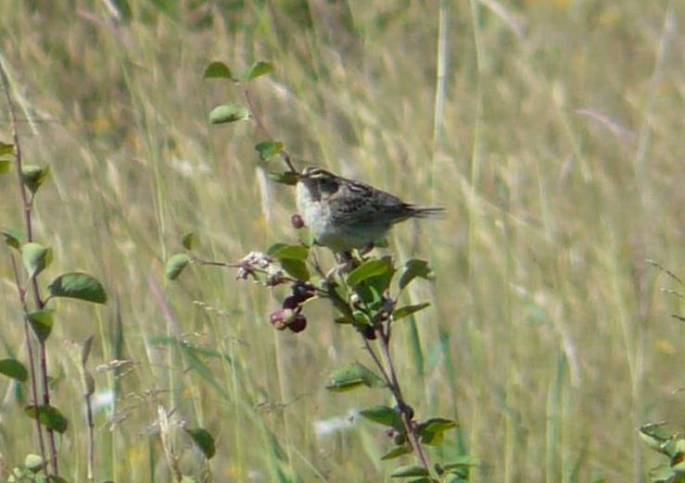
grasshopper sp2

A target species of many birders at this site is Grasshopper Sparrow. This species is quite rare in western Oregon, and the field north of the Royal Avenue parking lot is one of their few reliable nesting sites. This individual repeatedly returned to this perch to sing. I believe the nest was nearby so I didn’t get too close.
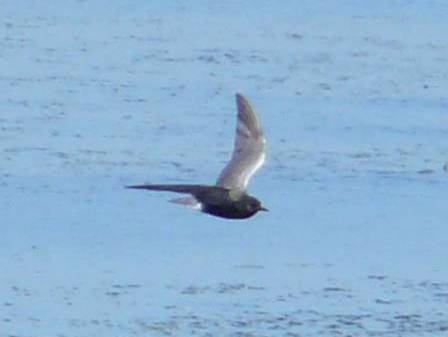
black tern1

Walking west from the parking lot takes you to the marshes at the eastern edge of the reservoir. Nesting species include waterfowl, herons, rails, and this Black Tern. As the summer progresses, water levels drop to create muddy habitat for migrant shorebirds. This is where Oregon’s first Wood Sandpiper appeared last year.

fish2

These little fish were common in a shallow puddle near a culvert. I think they are some species of topminnow, but I didn’t take any out of the puddle to look at their fin configuration. If you recognize these, please leave a comment.

sign

This is a sad reality at some good birding sites. Several people have had the catalytic converters removed from their vehicles. Others have had break-ins. On the day I was here, the Corps of Engineers had sent a couple to serve as “Park Hosts.” They remained in the parking lot, with their cute little dog, and had educational materials available for visitors. I think I have an advantage in areas like this by driving an old car, which may be less attactive to evildoers.
William L. Finley NWR

prairie

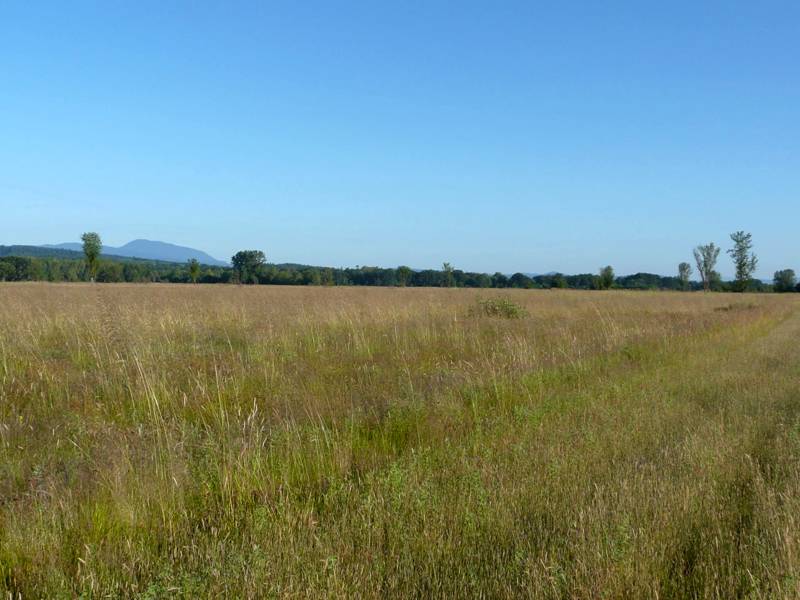
This is the prairie at the northeast corner of Finley National Wildlife Refuge (Birding Oregon p. 84).  The bird diversity in prairies is often pretty low, and you get rather damp walking through shoulder-high grass on a dewy morning, but I always enjoy exploring grassland habitats.

savannah at finley
Savannah Sparrow was the most numerous species by far. This distant grainy photo is typical of my efforts to capture this species. They either flush right at your feet, or perch on an exposed twig so they can see you coming a mile away. Western Meadowlarks and Western Kingbirds were also present, but equally un-photogenic.

harrier3
This male Northern Harrier hovered over me for a while. I was apparently too close to his nest. I kept moving.

bull elk
This bull Roosevelt Elk was completely hidden by the grass until he stood up. It seems odd to me that this large beast, who could trample me into the prairie sod without so much as breaking a sweat, would be intimidated by this little vegan biped. But I guess some of the bipeds this guy encounters are packing rifles or bows, so it is probably a good thing to be wary.

elk herd 2
Here are a few more of the herd. See the two babies? The female in the middle has her tongue out, but I don’t think that was directed toward me.

Crystal Springs in the Spring

I visited Crystal Springs Rhododendron Garden (Birding Oregon p. 69) on May 28. This site is best known as a good spot for wintering waterfowl. This late in the spring, most of the ducks and geese have moved on, leaving just a few resident species. But even with the lower diversity, it is still nice to be able to get such close looks at birds that are normally much more “wild” in other locations.

wood duck female
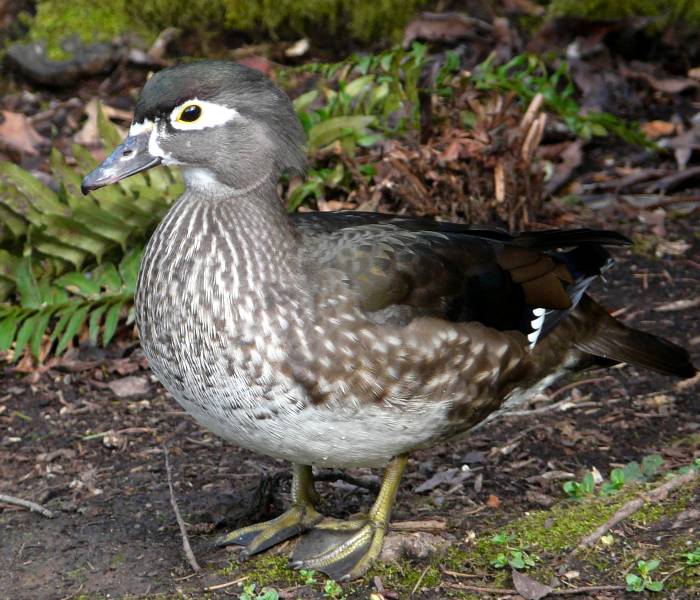
Wood Ducks are always a treat.

wood duck male
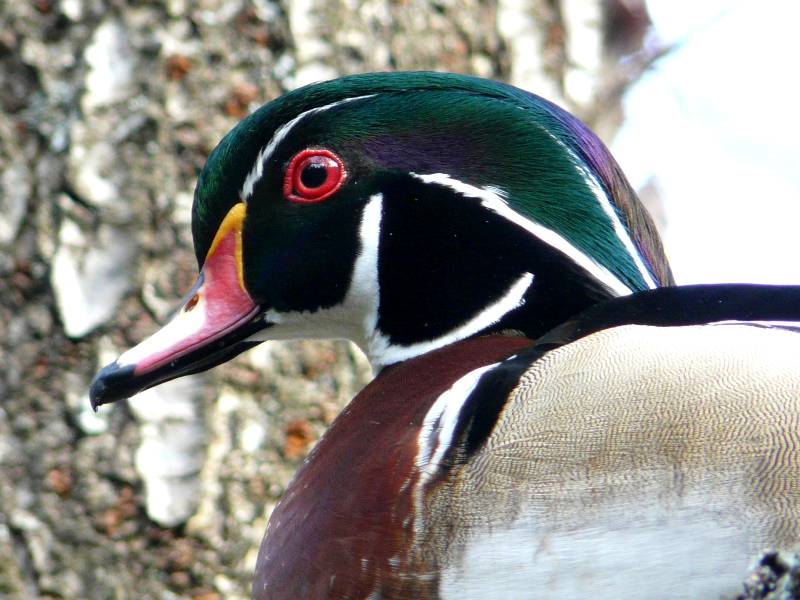
This male Wood Duck was in a tree, providing a view of the white throat.

crow
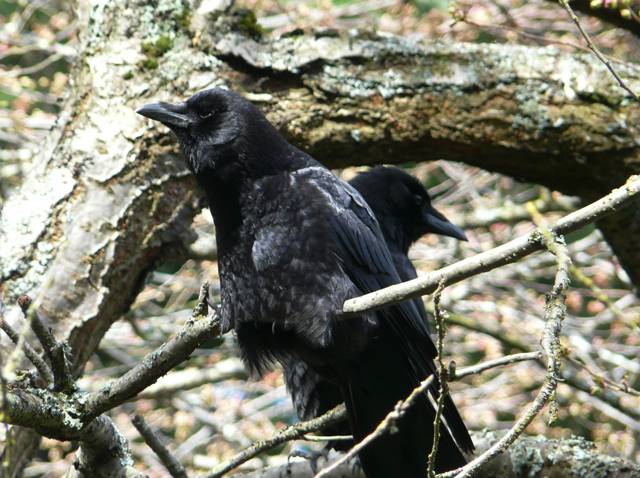
American Crows in the bright sun showed some interesting feather patterns.

cackling2
Two Cackling Geese (Branta hutchinsii minima) were still present. This is a very late date for this species to still be in Portland. This species nests on the Arctic tundra, so most have left by mid-April. Perhaps these two thought that a summer on the duck pond would be nicer than flying all that way.

cackling 1
Here is another view of the Cackling Goose. Notice how far the wing tips extend beyond the tail. Long wings are typical for species that migrate long distances.