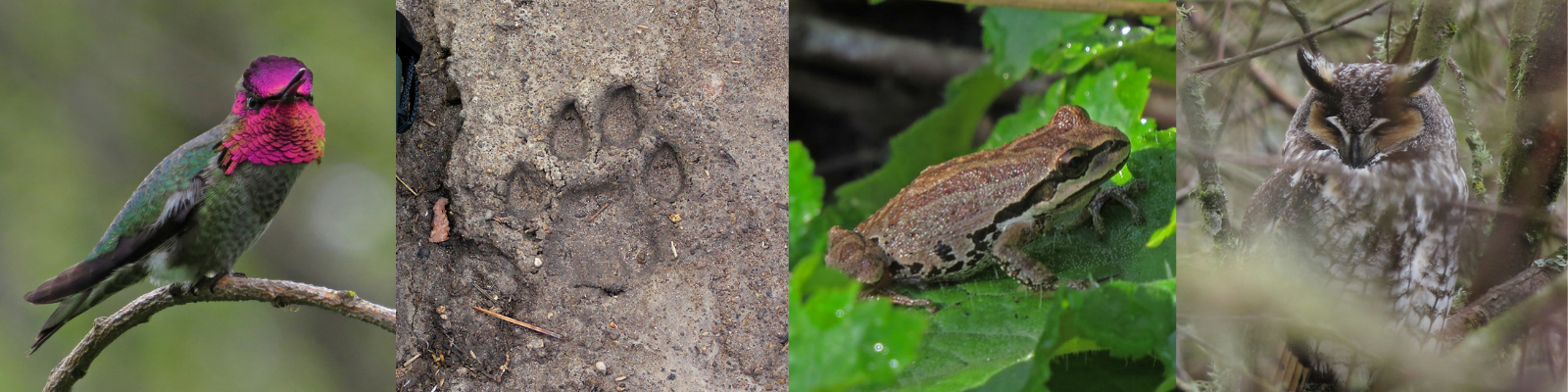

Our team for the Portland Audubon Birdathon visited several sites in the Columbia Basin. It is always a treat to visit the eastern half of Oregon. This Bullock’s Oriole was at Cottonwood Canyon State Park.

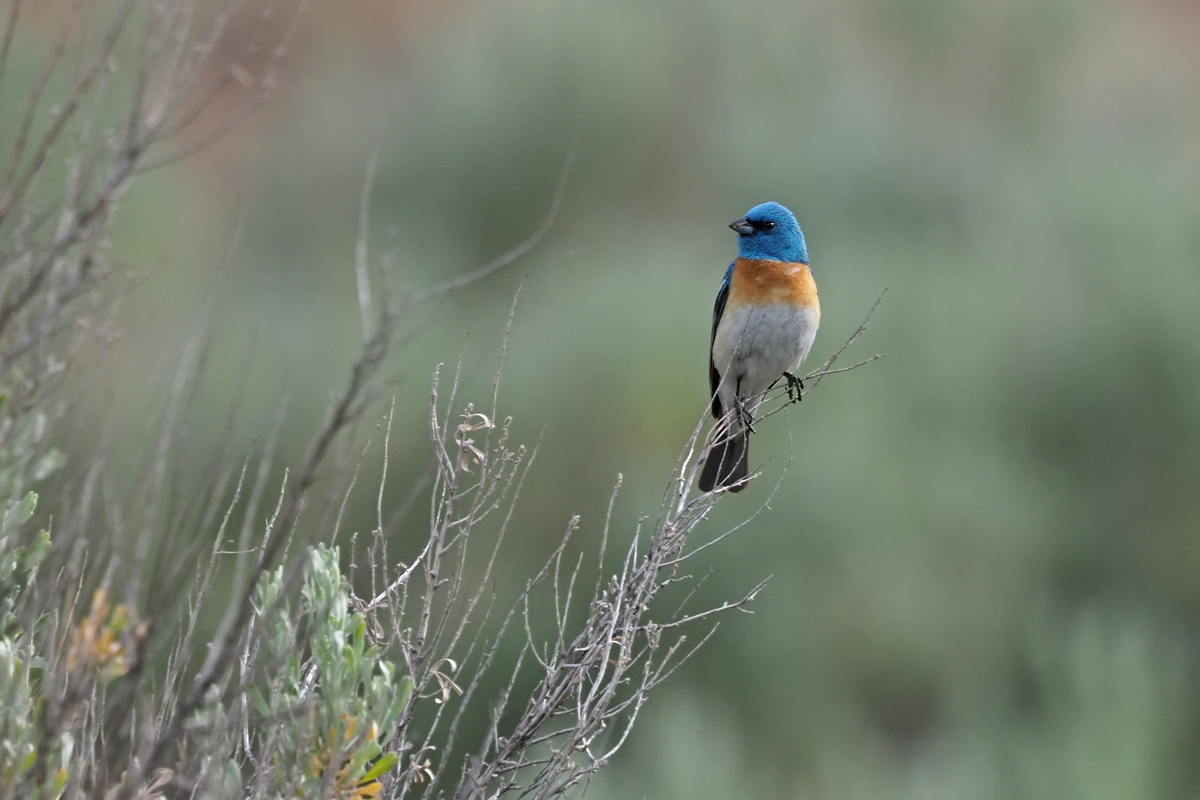
Lazuli Buntings were common at Cottonwood Canyon. Males were conspicuous, but the females kept in the deeper cover.

Cliff Swallow nest on the cliff along the Deschutes River in Cottonwood Canyon

Fledgling Canyon Wren
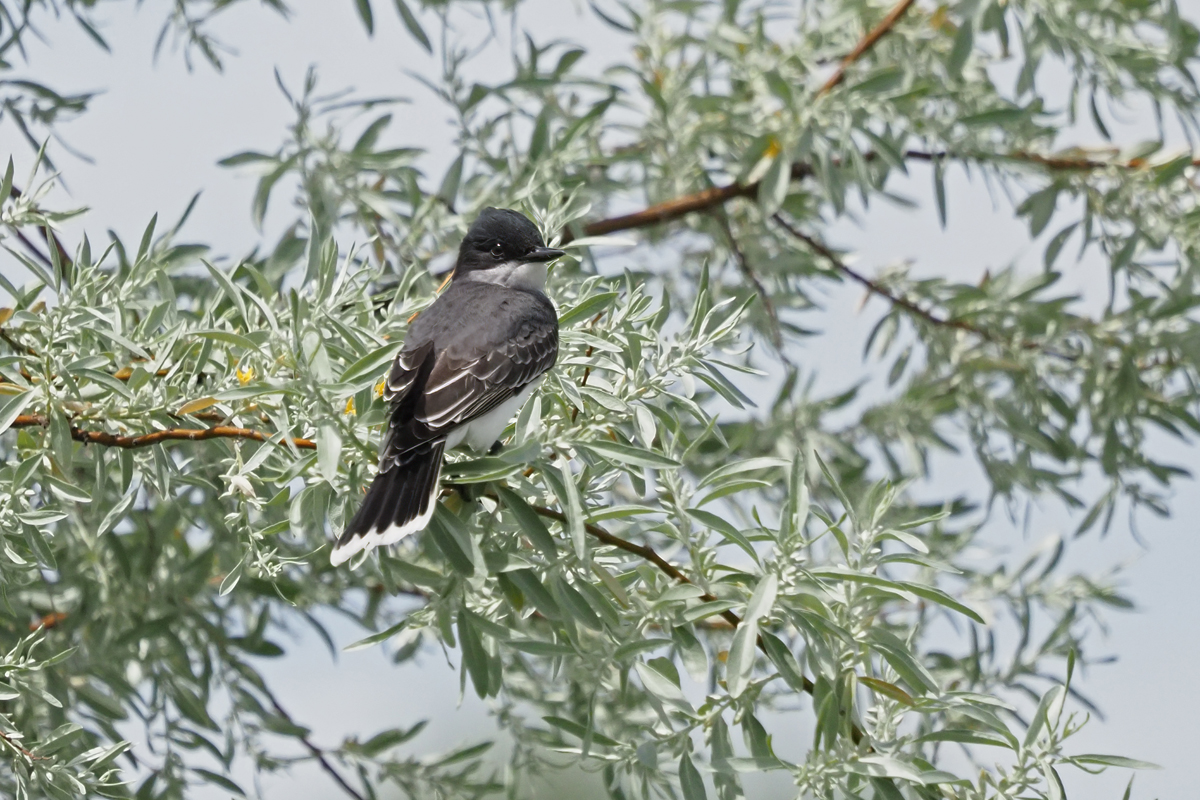
Eastern Kingbird at Umatilla National Wildlife Refuge

Umatilla NWR has a lot of agricultural fields. This one was hosting about a dozen Long-billed Curlews.
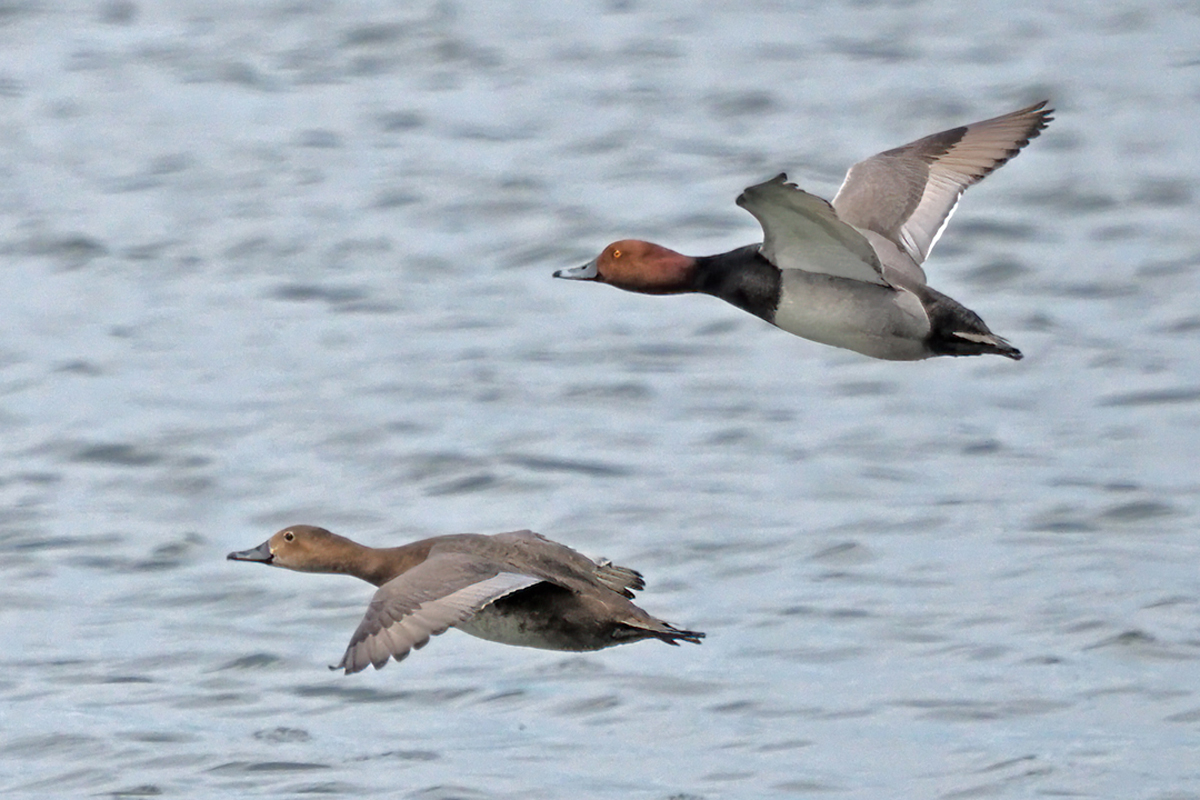
The spot with the greatest diversity was the wastewater plant at Boardman. Redheads, hard to find on the west side, were common there.

Black-necked Stilt
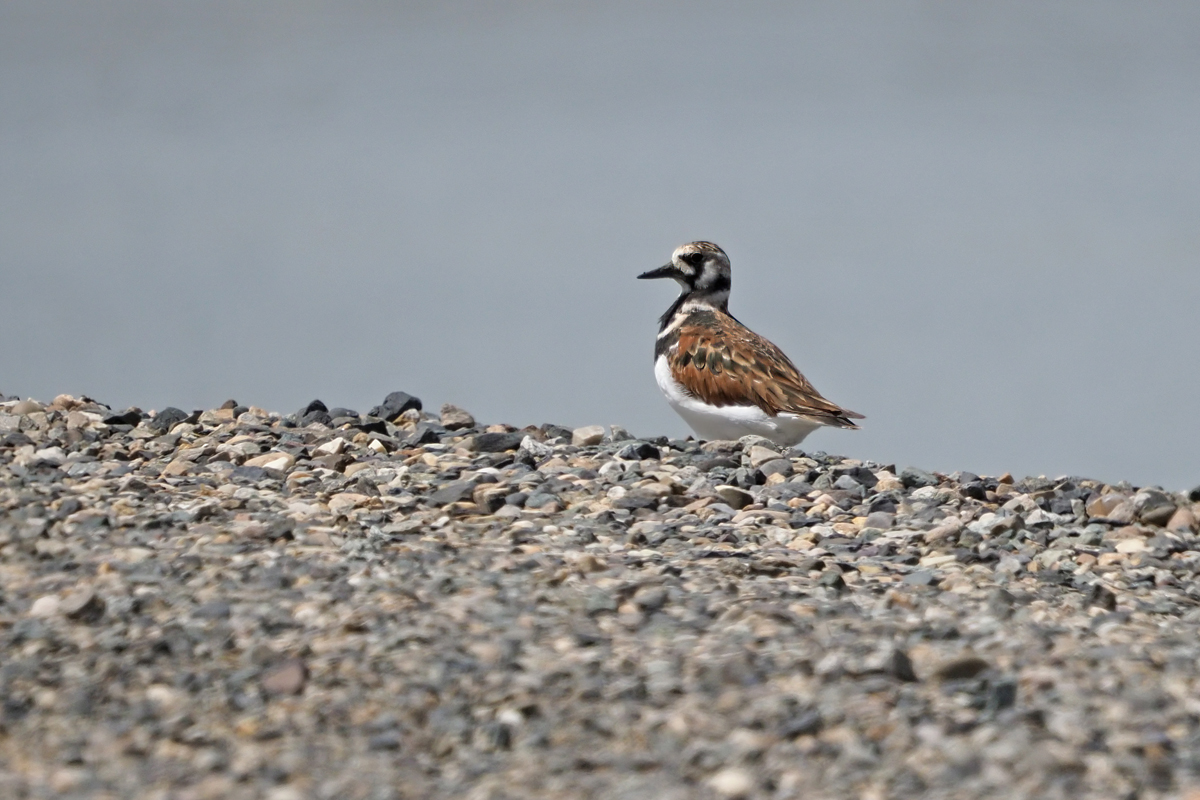
The most unexpected bird of the day was this Ruddy Turnstone at the Boardman wastewater ponds. Ruddy Turnstones are uncommon migrants along the coast, but much less likely this far inland.
It was a long day, but full of great birds and great company, and we raised money for a wonderful organization.
Happy Spring



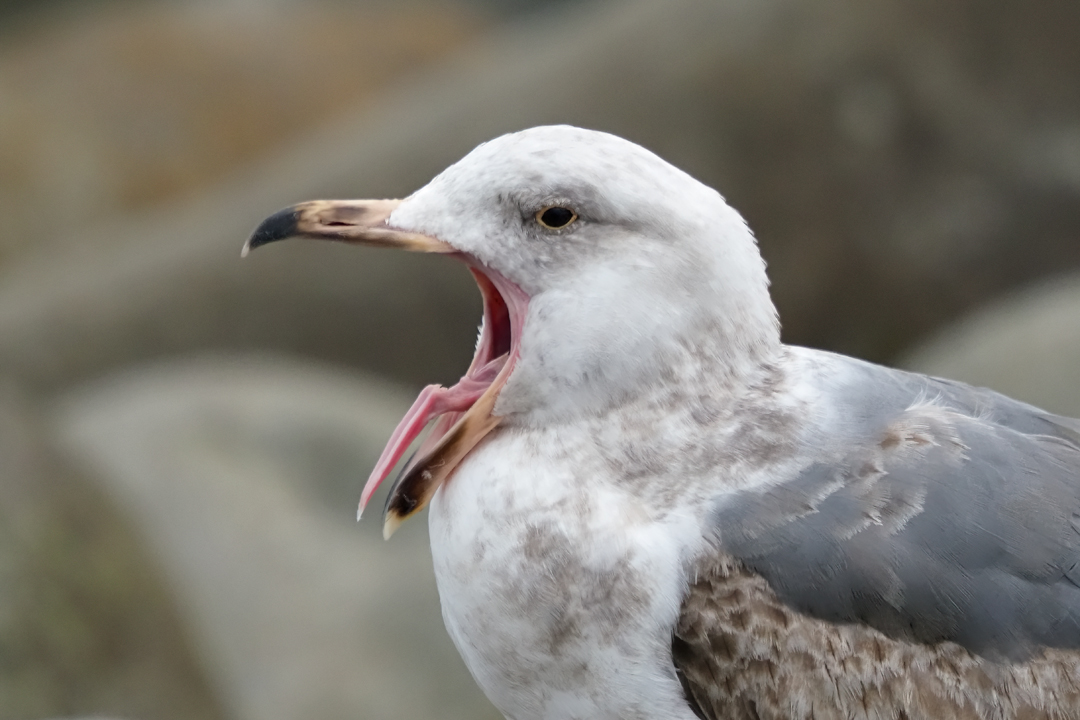




 Tree Swallows are usually the first swallow species to arrive in spring. When the weather is still cold, they hunt for insects close to the water’s surface.
 Some Tree Swallows were already laying claim to the many nest boxes at this site.
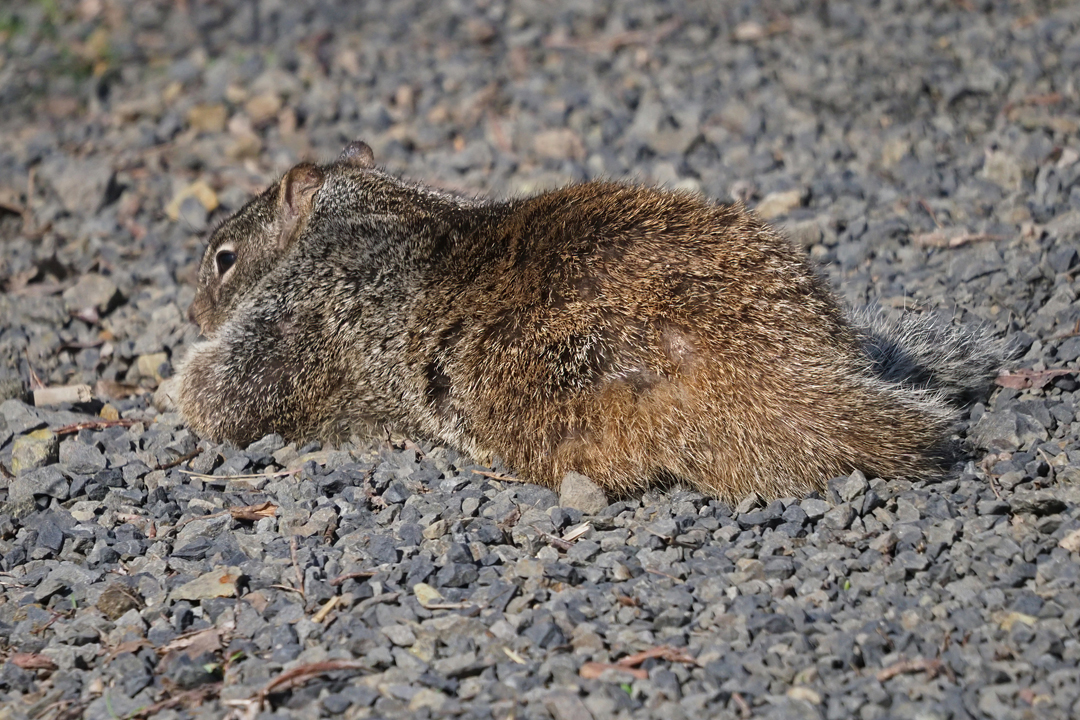
 This California Ground Squirrel was singing (screaming) from a log perch.
 The sunshine brought out a good number of snakes, despite the cold temperature. These are Northwestern Garters.
 This is a typical Common (Red-spotted) Garter.
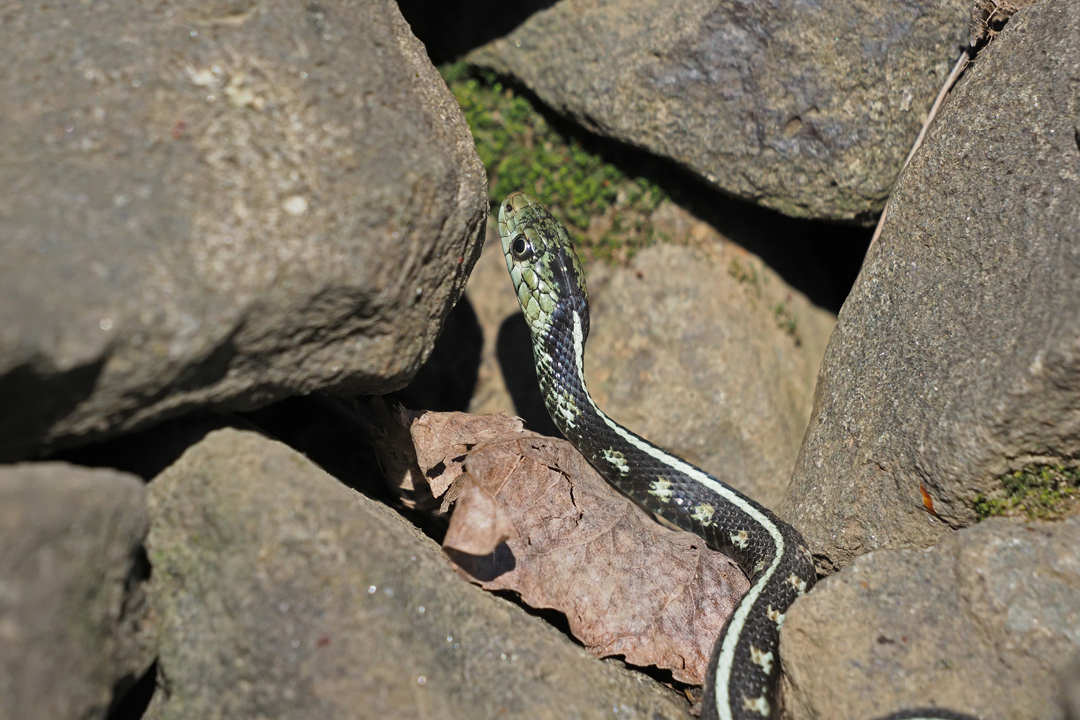 This Common Garter is lacking the red pigment shown by most members of this subspecies.
 This Long-toed Salamander was hanging out under a big piece of bark.
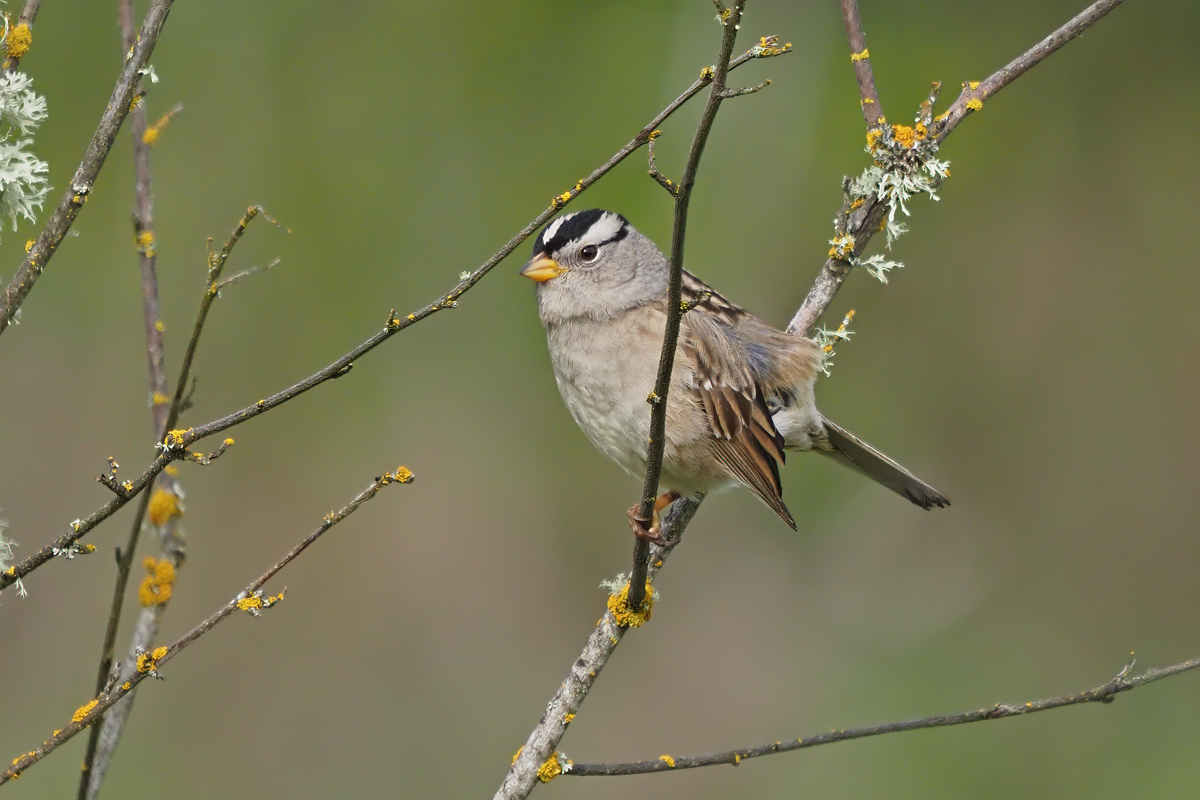
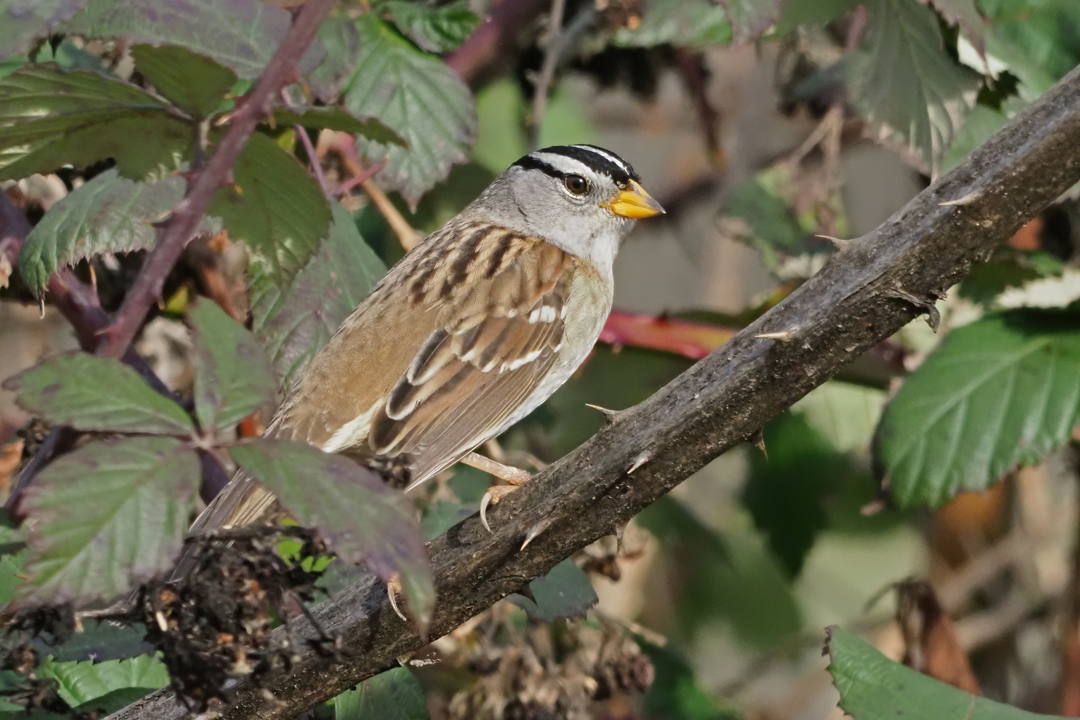 Rentenaar Road on Sauvie Island remains one of the better sites in the Portland area to find a nice diversity of winter sparrows, along with other songbirds and waterfowl. While this trip did not produce any rarities, there were plenty of birds and sunshine to make the trip worthwhile. White-crowned Sparrows, pictured above, are among the more common species.
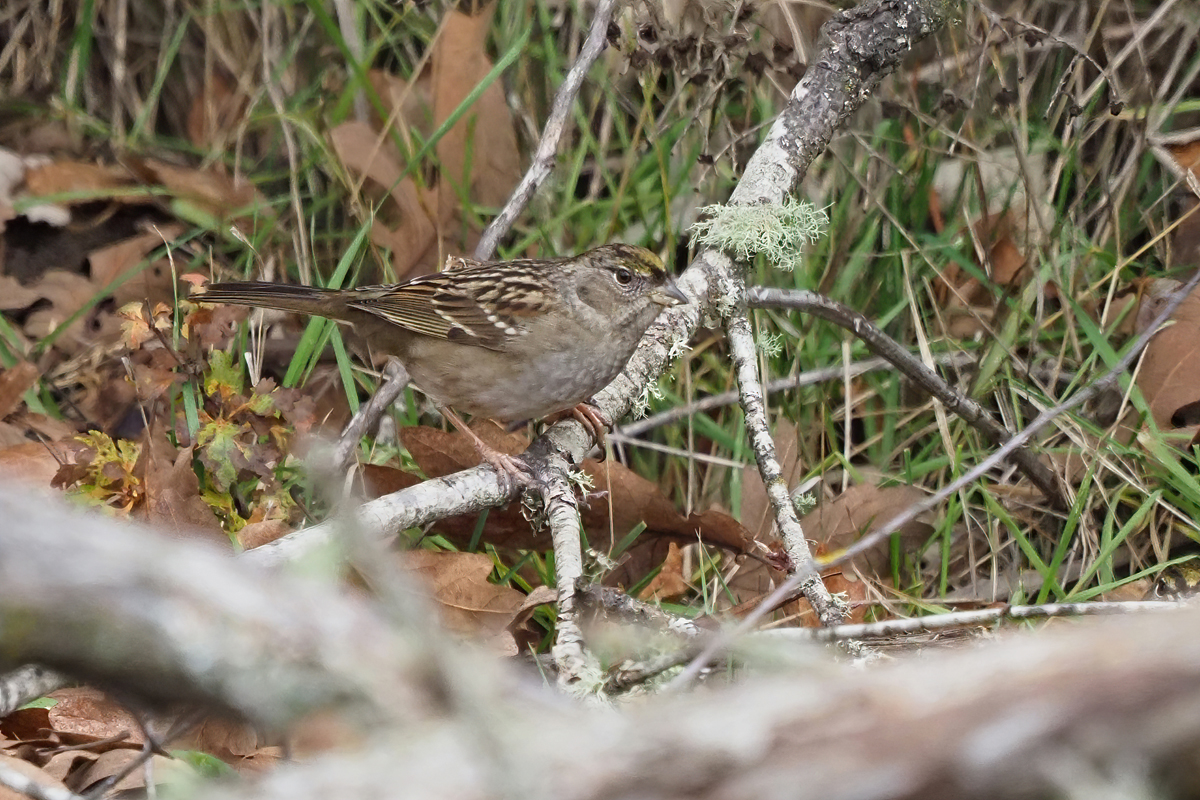
 Golden-crowned Sparrows are usually the most common sparrow in the winter flocks.
 This Fox Sparrow kept close to the heavy cover.
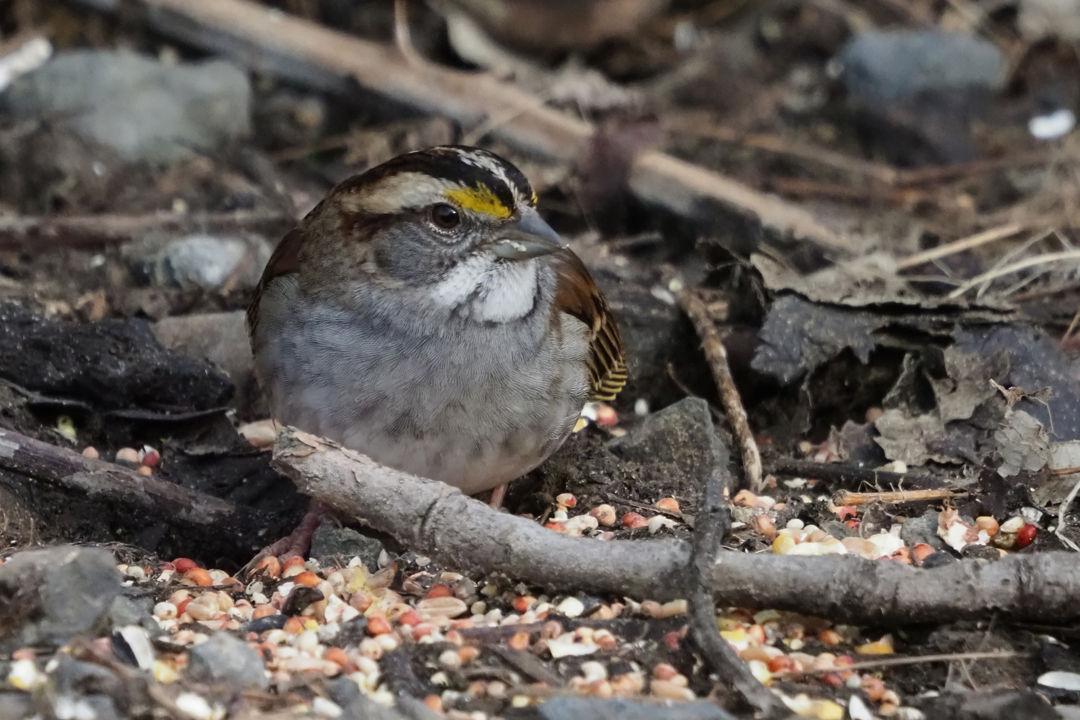 Once considered a rarity in this area, White-throated Sparrows are now reliable winter residents.
 Red-winged Blackbirds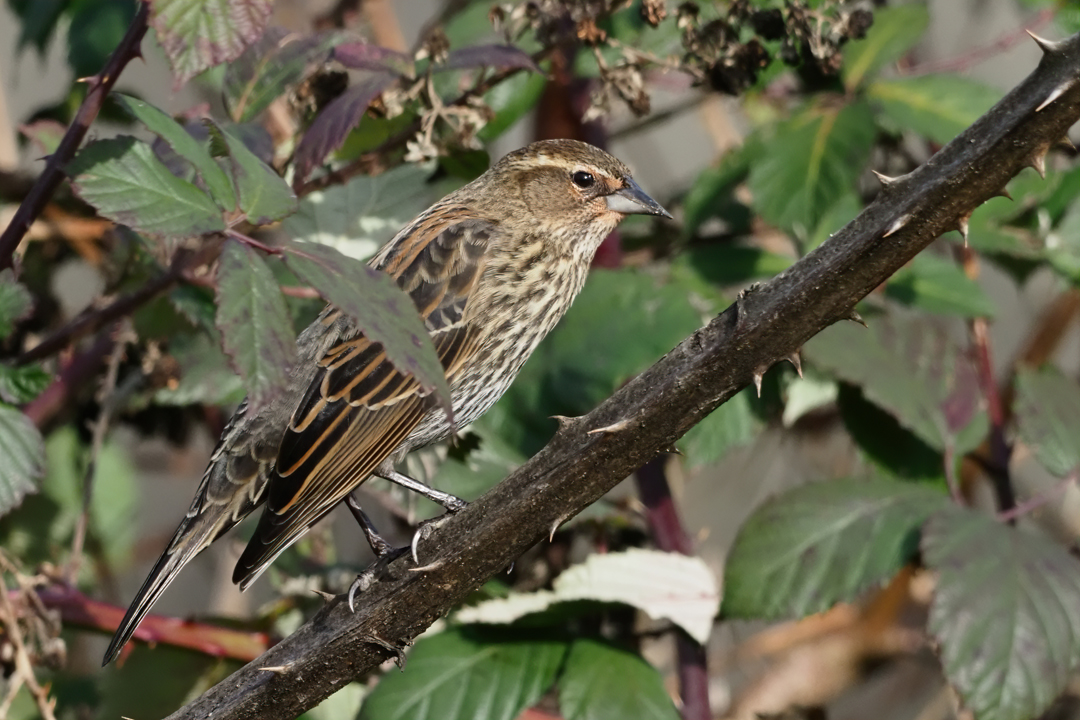
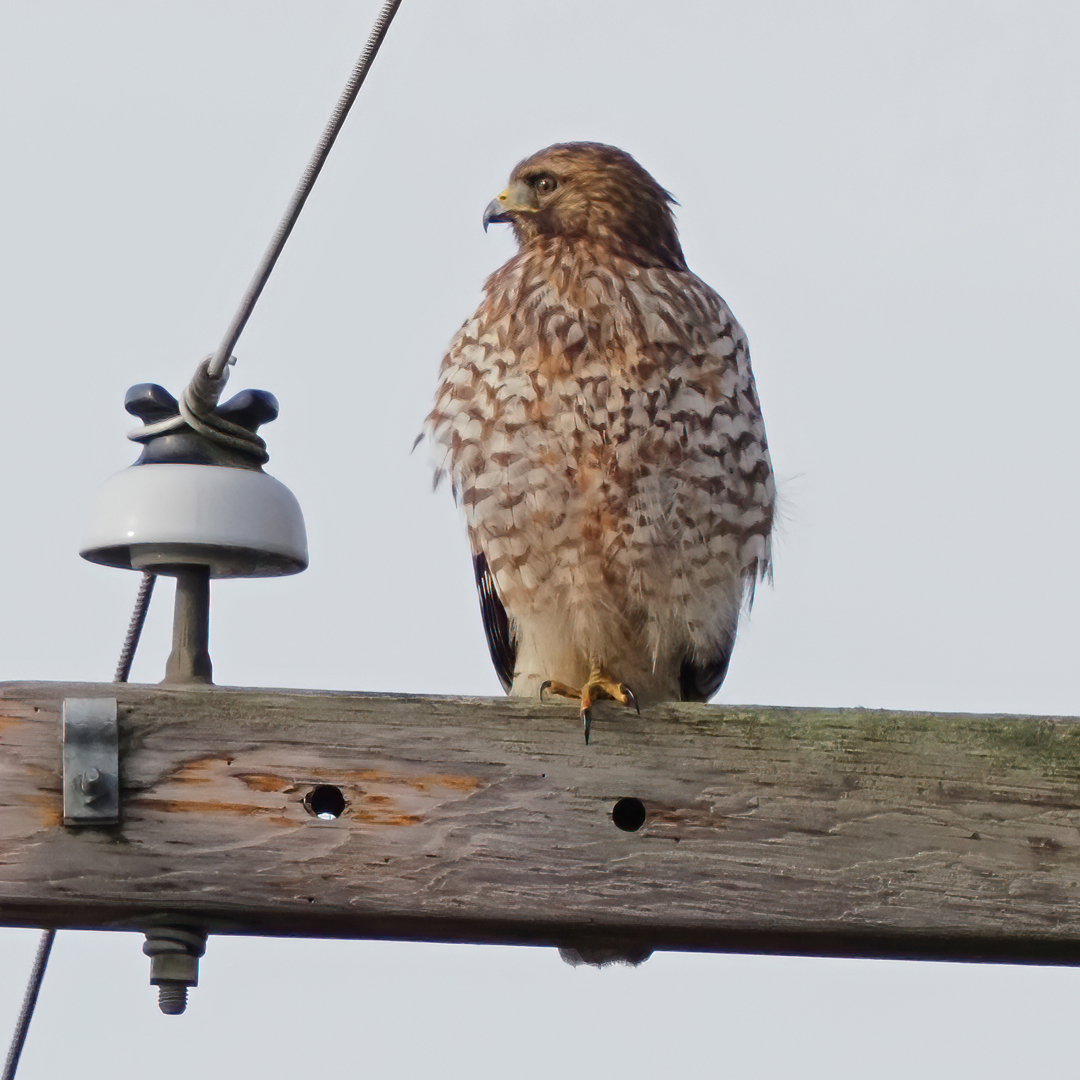 This Red-shouldered Hawk was the most unusual find of the day.
 Several birds were bathing in puddles in the road. Here a male Purple Finch cavorts with a female House Finch.
 Waterfowl numbers were a little low on this trip. Ducks and geese face pretty heavy hunting pressure on Sauvie Island. Numbers should increase in the next month as hunting seasons expire and some birds start moving north. This flock of Tundra Swans kept their distance from the road.
 As the weather was clear on this day, there were nice views of Mount St. Helens, here with a lenticular cloud.
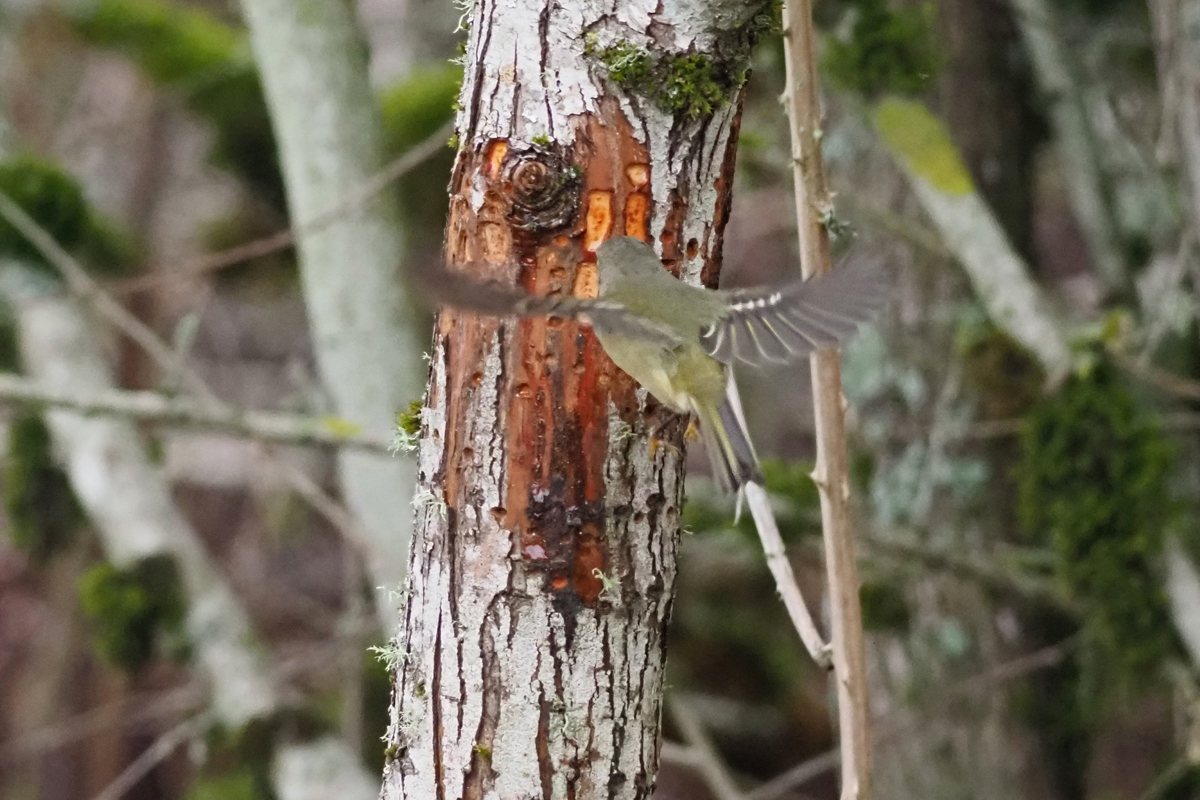


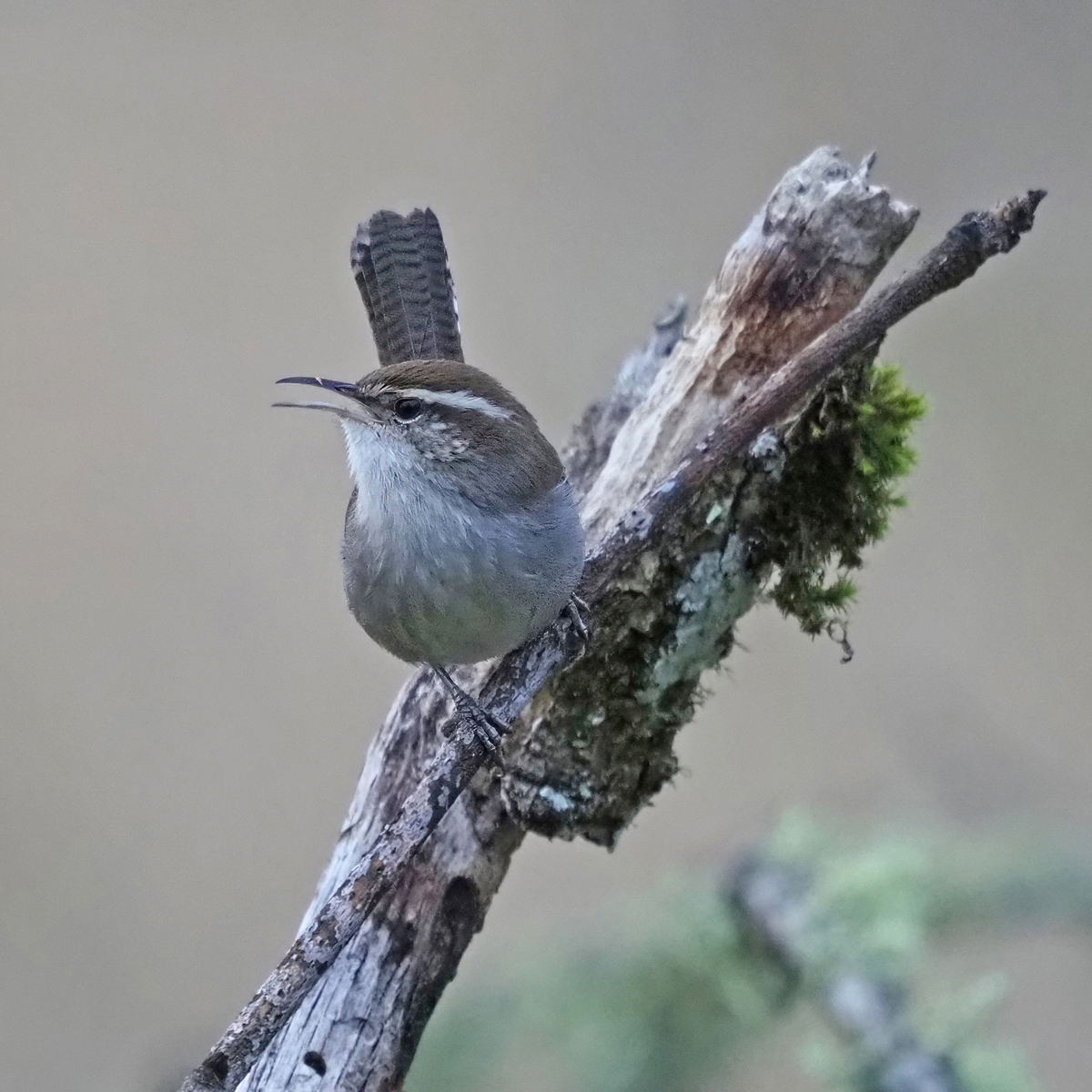


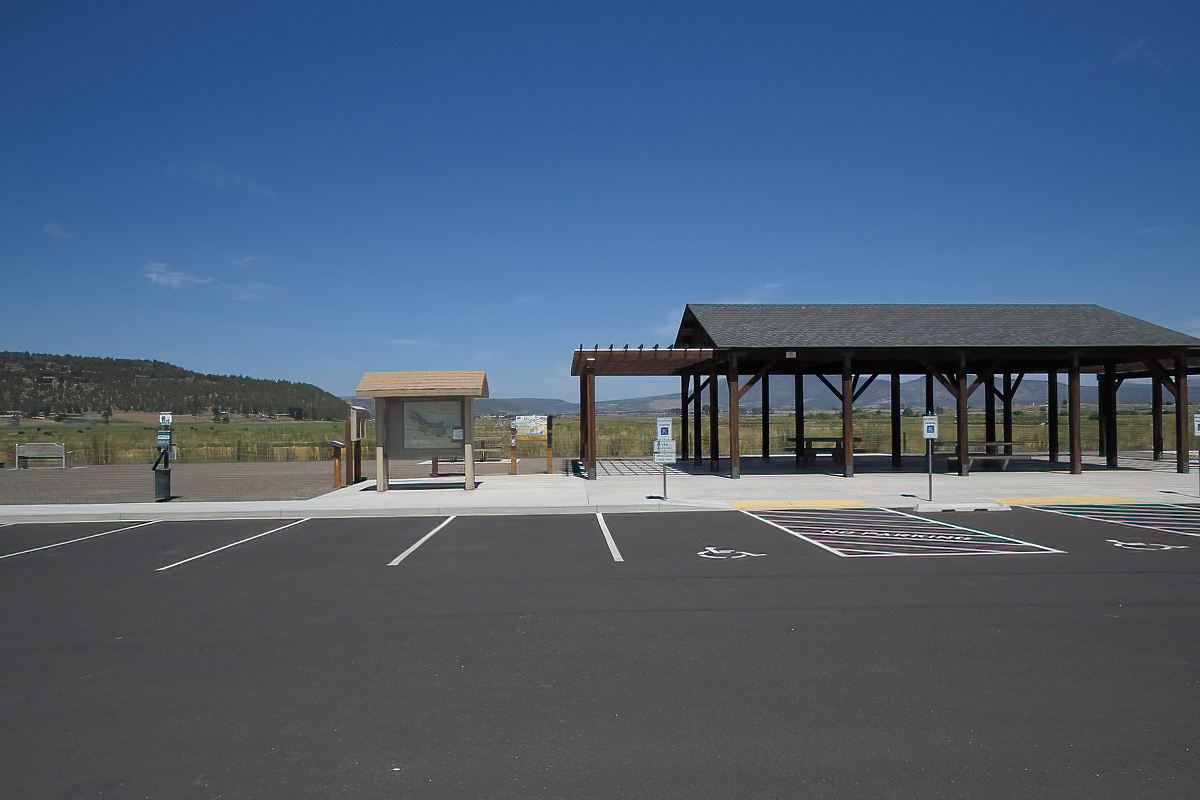 I had a chance to visit Crooked River Wetlands near Prineville. Like Fernhill Wetlands, this site was constructed as part of a wastewater treatment system. But Crooked River Wetlands was designed from the beginning to accommodate both birds and birders. The parking lot has a covered picnic area (the only shade on the property) and a restroom. Paved and gravel paths provide easy viewing of the wetlands.
 There are 15 bodies of water in the complex, which is right next to the Crooked River. Water levels vary with the seasons, so there is a variety of water depths which attract different species.
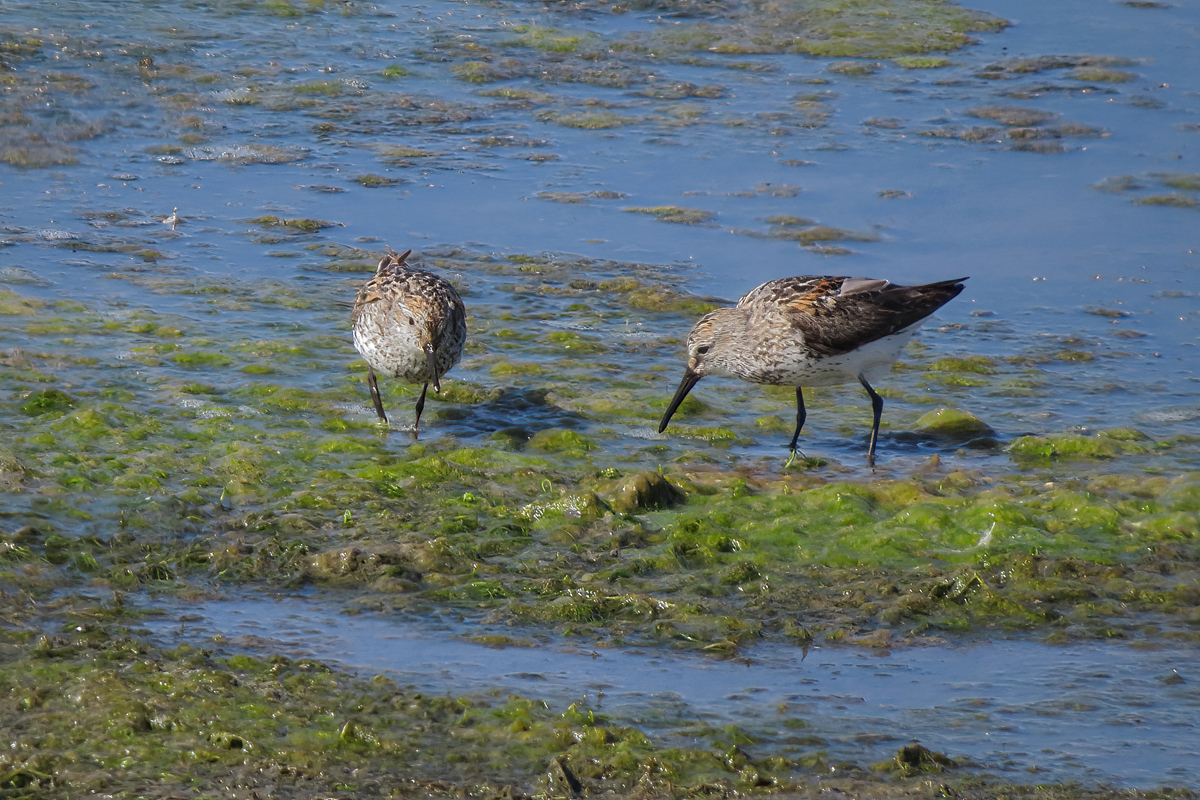 Shorebird migration is getting underway. Here are some Western Sandpipers.
 Spotted Sandpiper
 One of the deeper ponds held this pair of Ruddy Ducks.
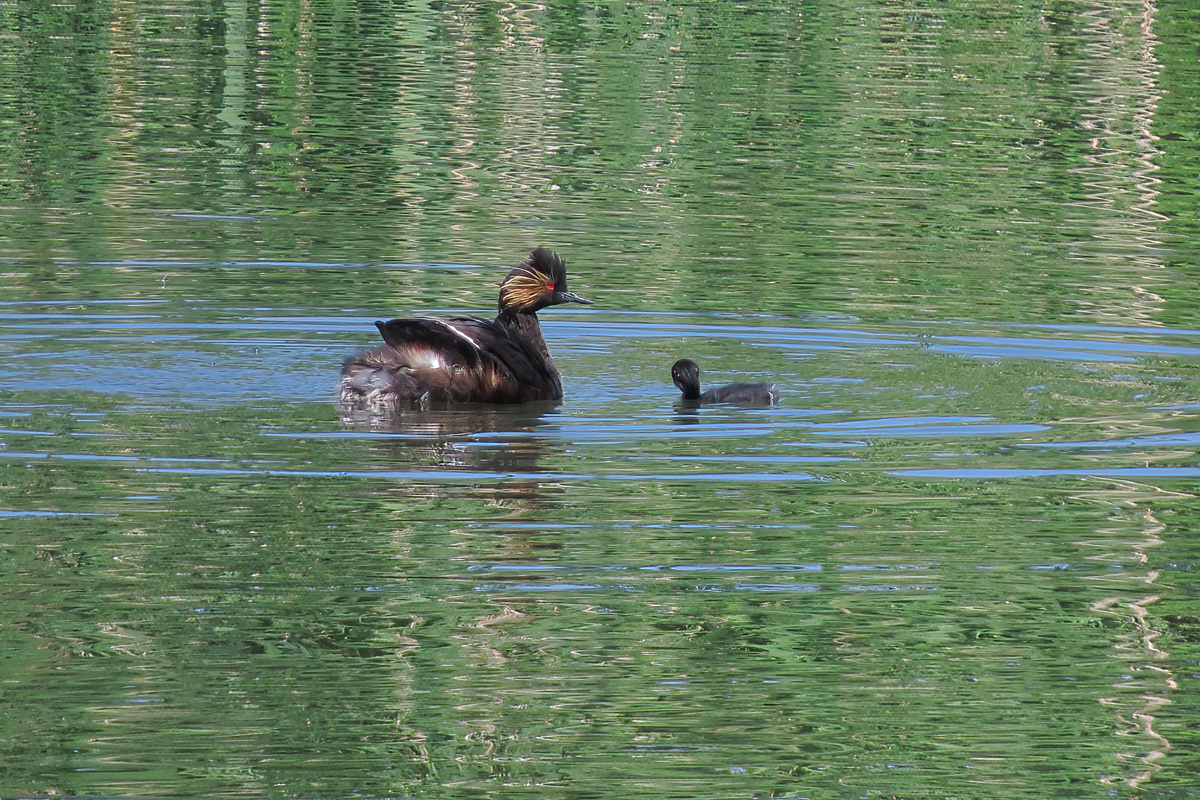 Eared Grebe with baby
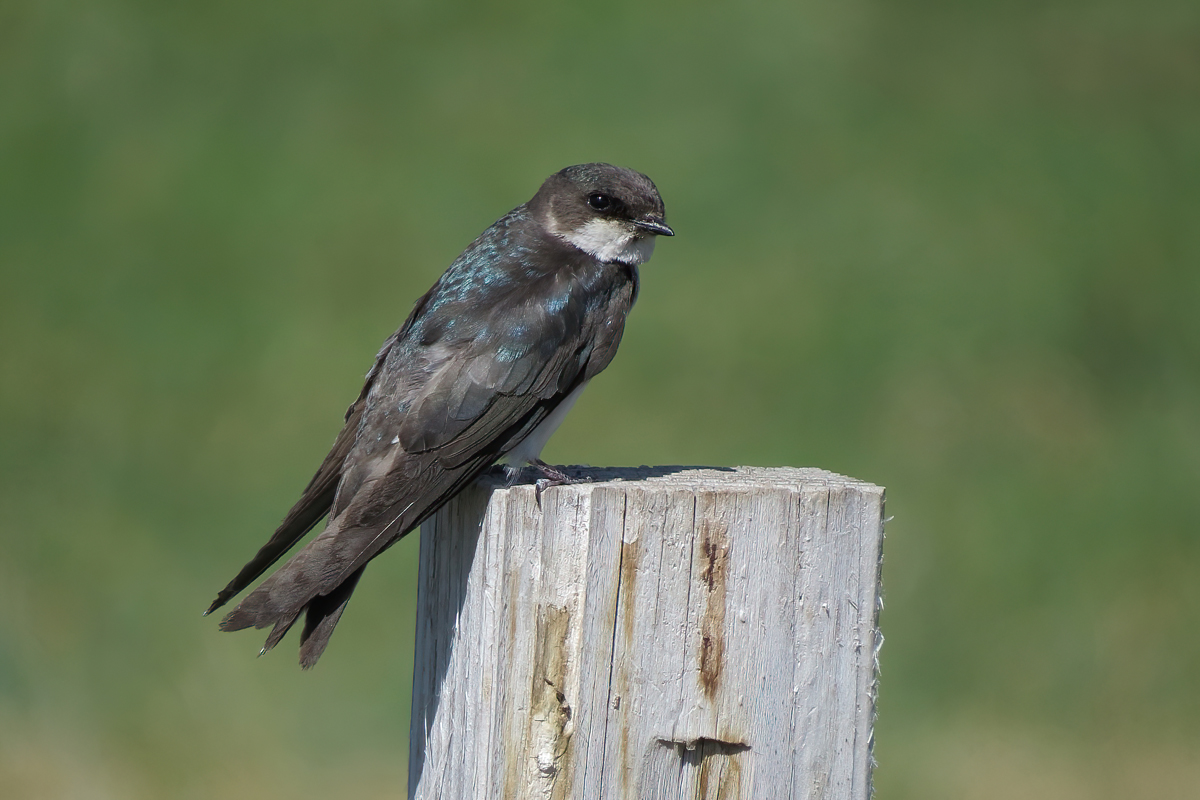 Between the river, the ponds, and the adjacent wastewater plant, this site attracts swarms of swallows. Tree Swallows use the many nest boxes.
 This is one of the easiest places I know to see Bank Swallows.
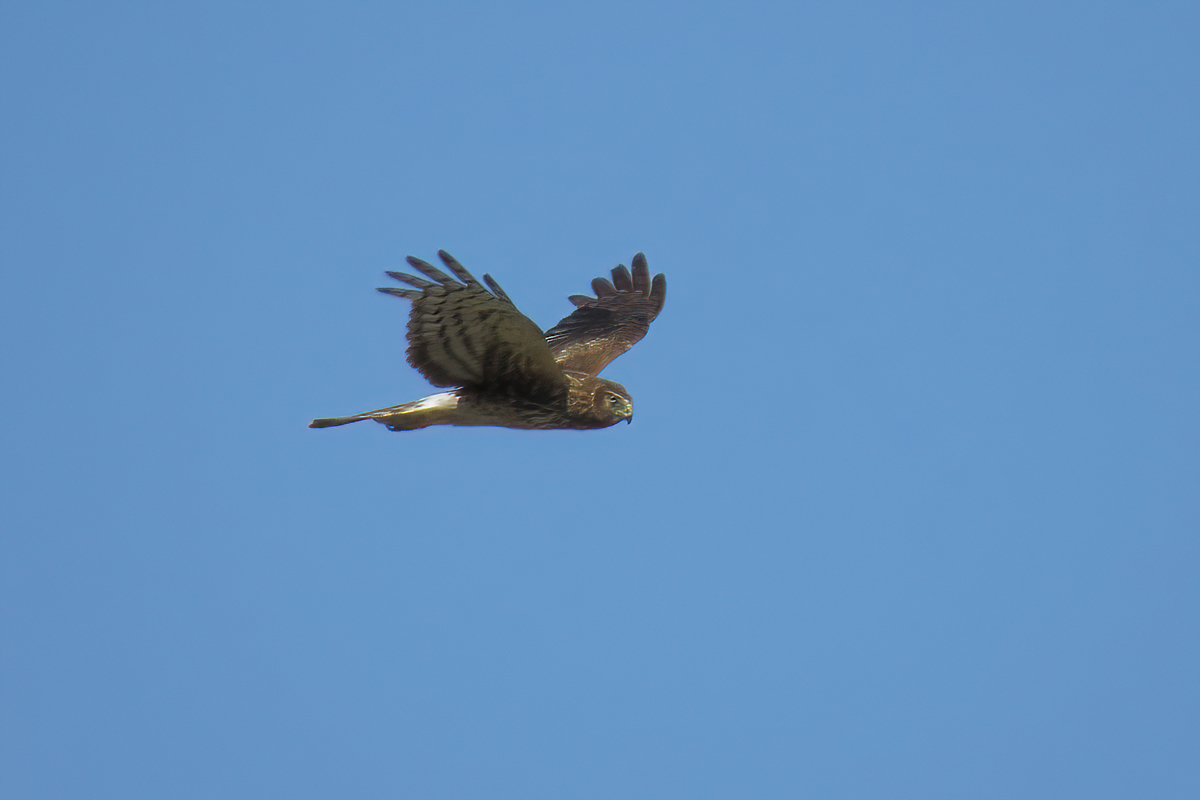 Northern Harrier
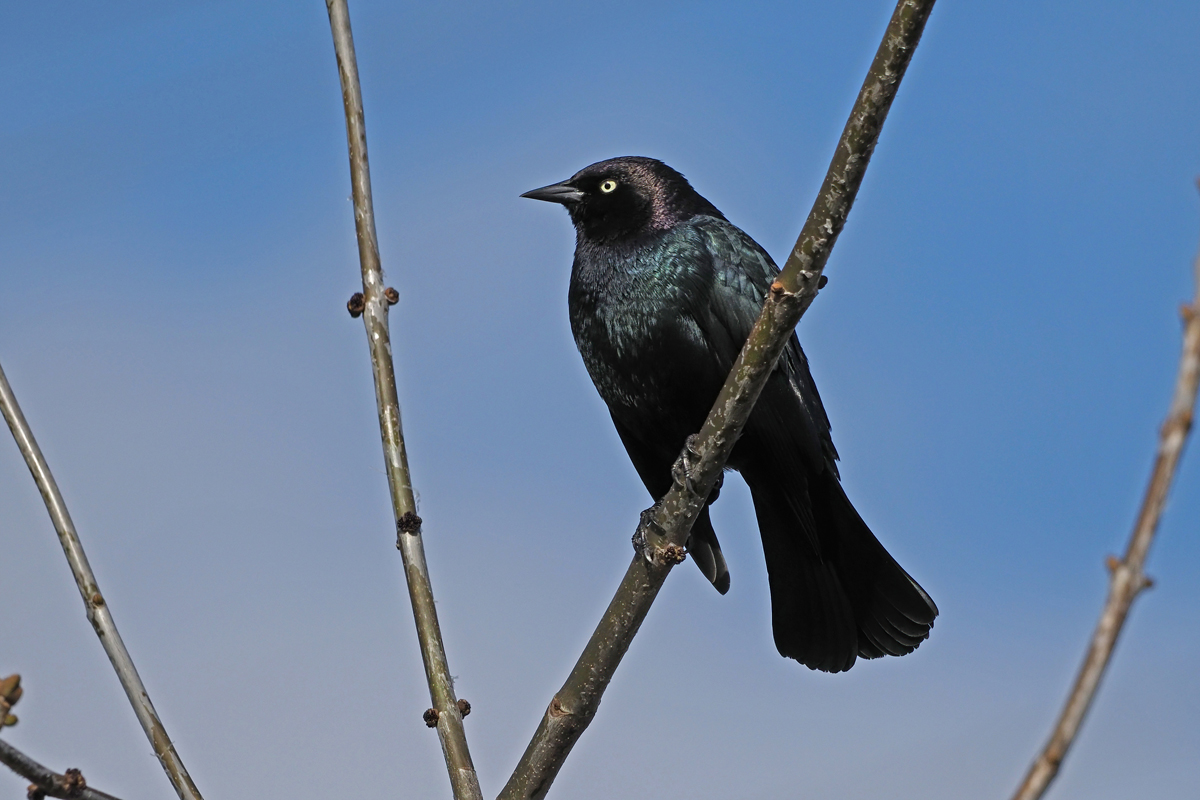
 Brewer’s Blackbird was one of five blackbird species I saw on this visit.
 Tricolored Blackbirds can be hard to find in Oregon, but this site is pretty reliable.
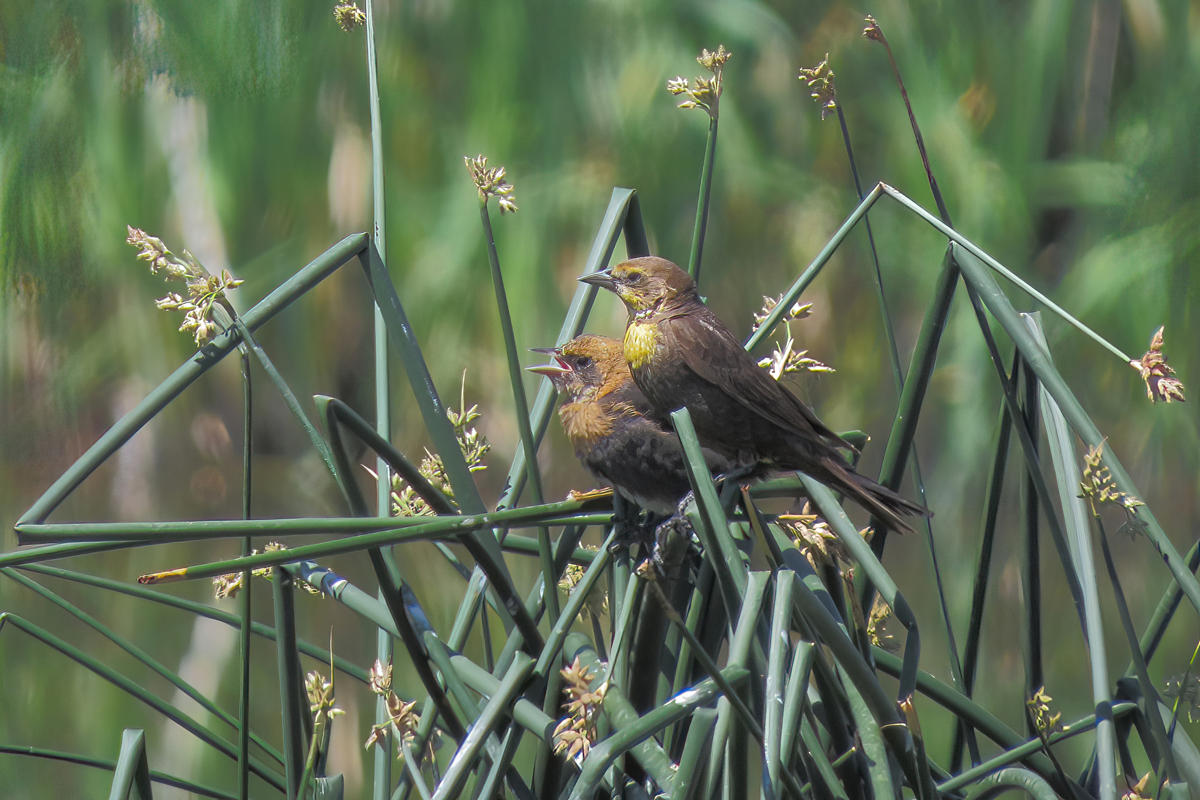 Yellow-headed Blackbirds are common here. The males tended to hide in the reeds, but this female and youngster posed nicely.
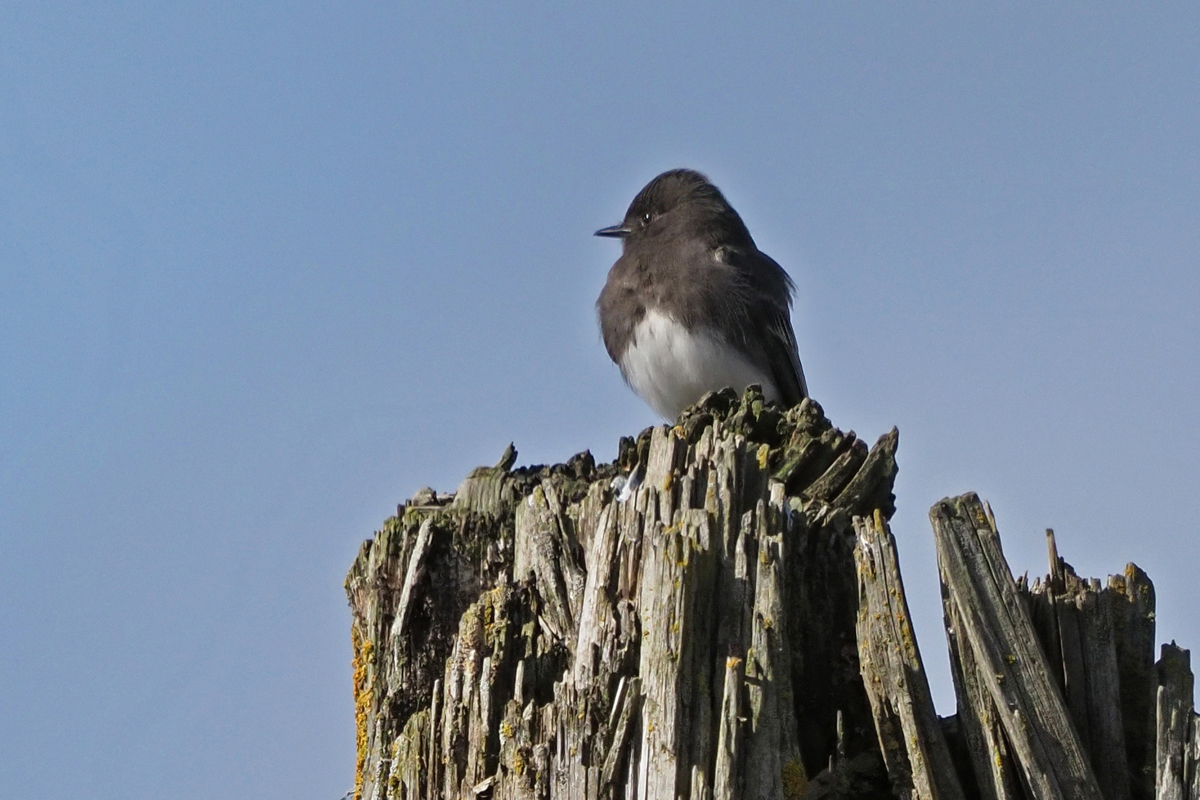
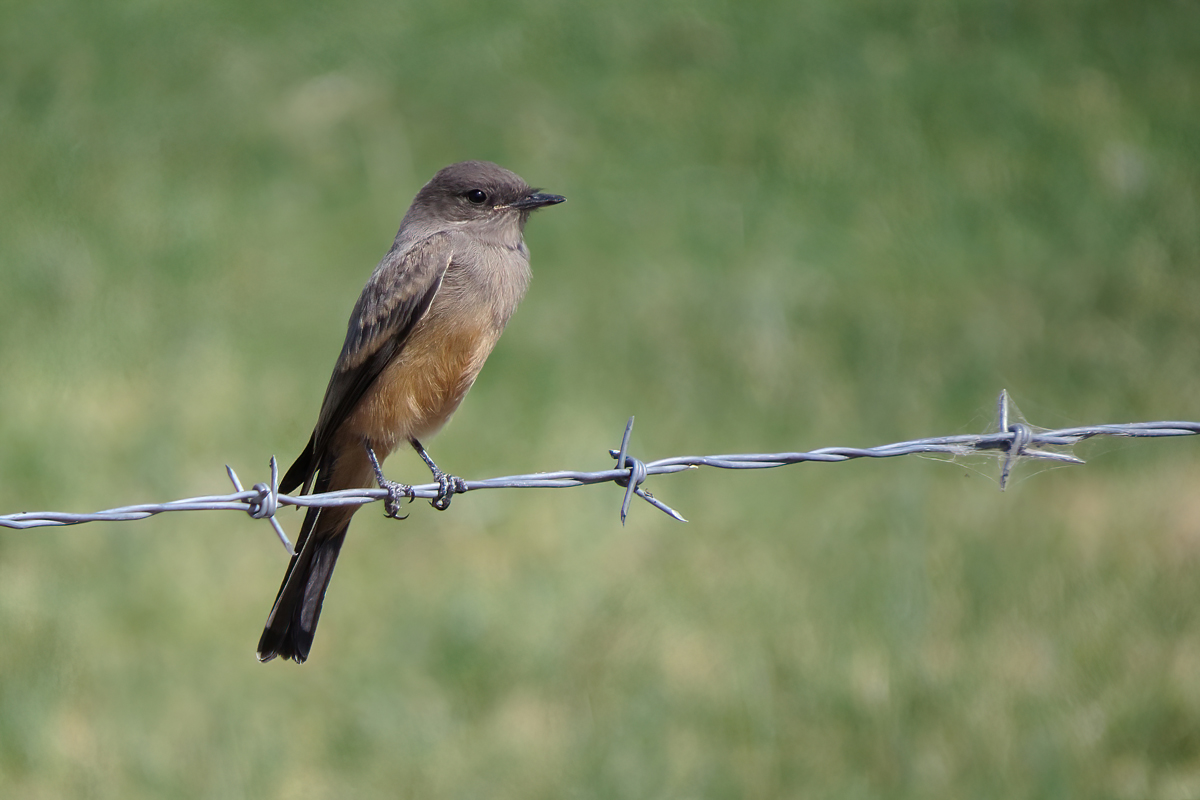 This is one of two Say’s Phoebes that were working the fence line at the edge of the property.
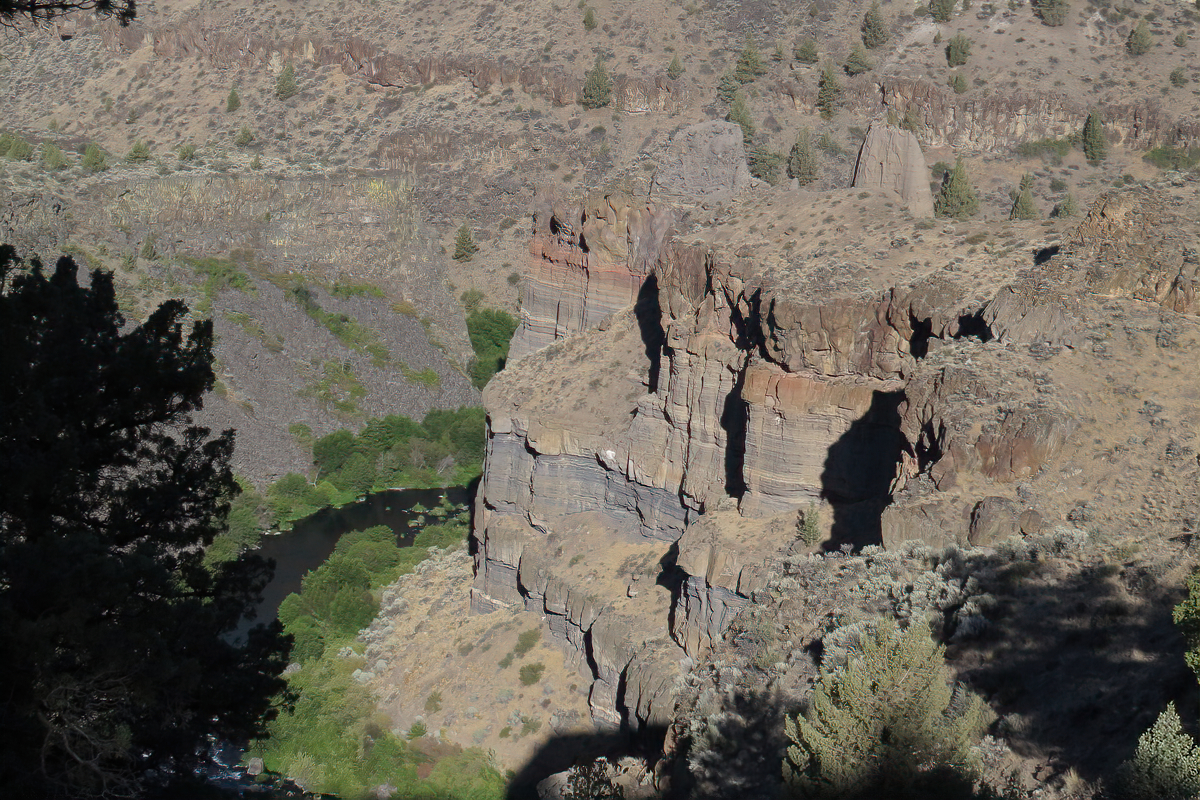 The Scout Camp Loop Trail is a lovely 2.2 mile hike northwest of Terrebonne. It is not particularly birdy. I logged 11 species on my trip, and the top eBird list for this site is only 17. (eBird calls this site Scott Camp Loop Trail, a typo that I hope will be corrected soon.) Despite the low diversity, it was well worth it to spend a few hours along this stretch of the Deschutes River.
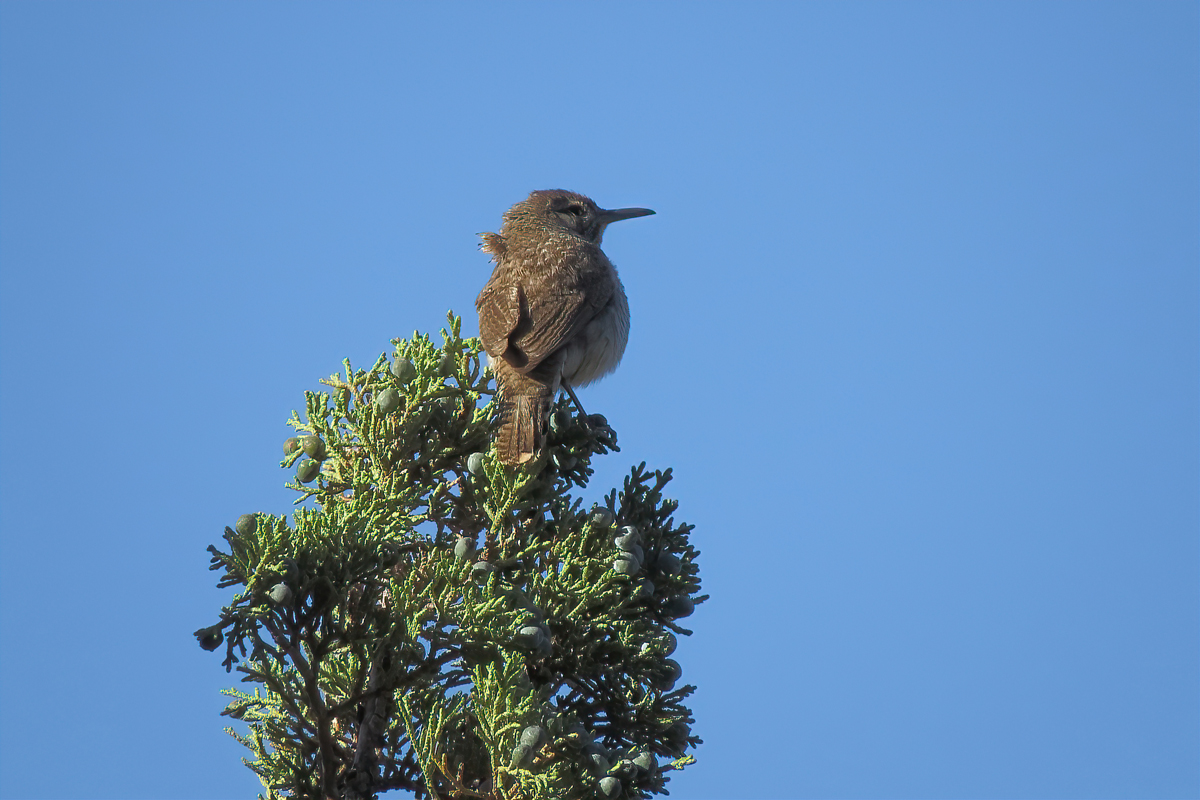 This Rock Wren was singing up a storm, but insisted on doing so from a high backlit perch.
  With the recent high temperatures and lack of rain, most of the vegetation on the slopes was dried to a crisp. But the Blazing Stars were in full bloom, in defiance of the harsh conditions.
  Down at the river’s edge was a lush ribbon of greenery.
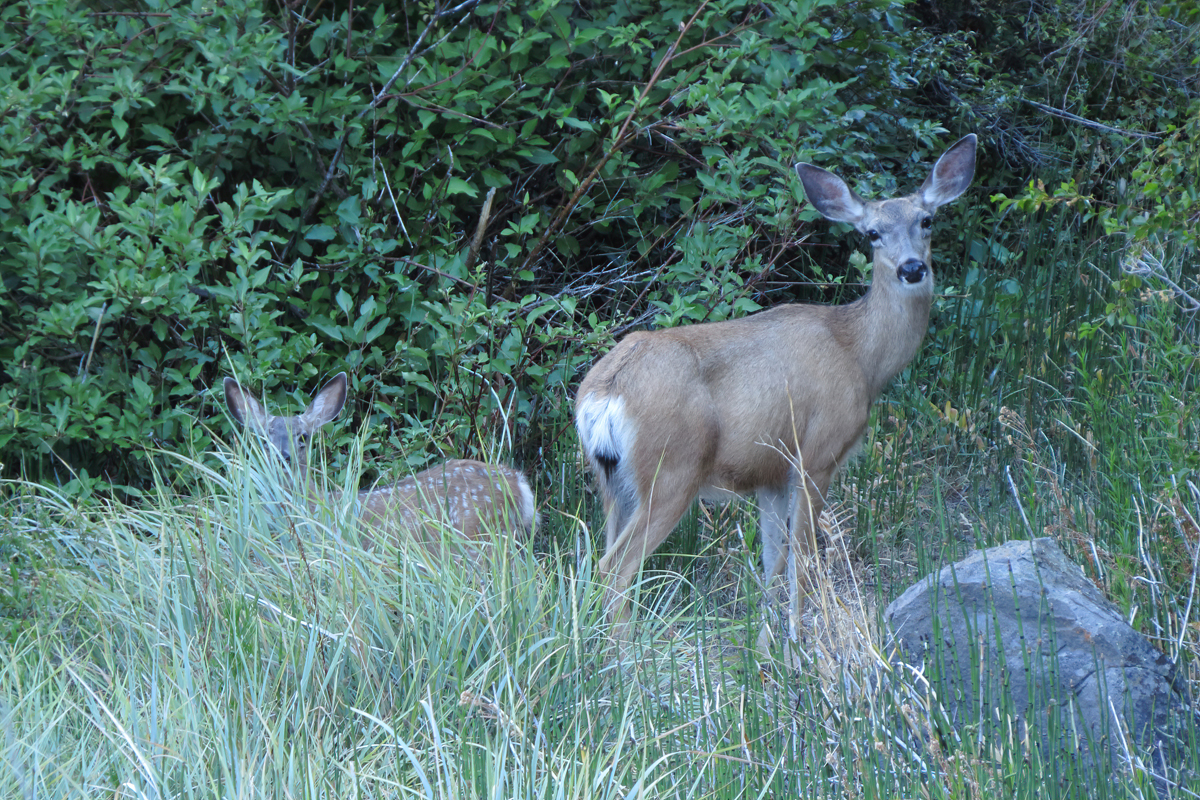 Several Mule Deer were taking advantage of the lush growth.
 Aside from the Violet-green Swallows flying over the water, the most common bird along the river was Yellow-breasted Chat. There were at least six individuals working the riparian corridor.
 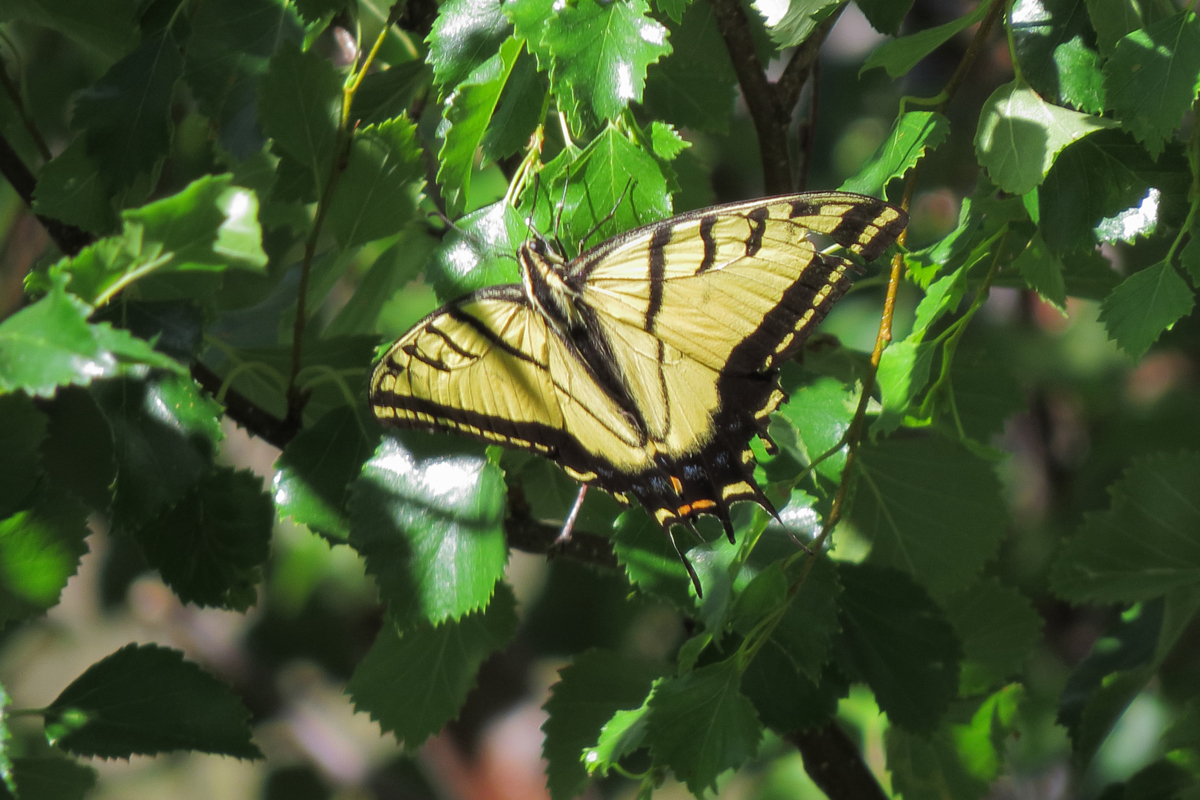 I don’t study butterflies much, but this Two-tailed Swallowtail was a new one for me.
 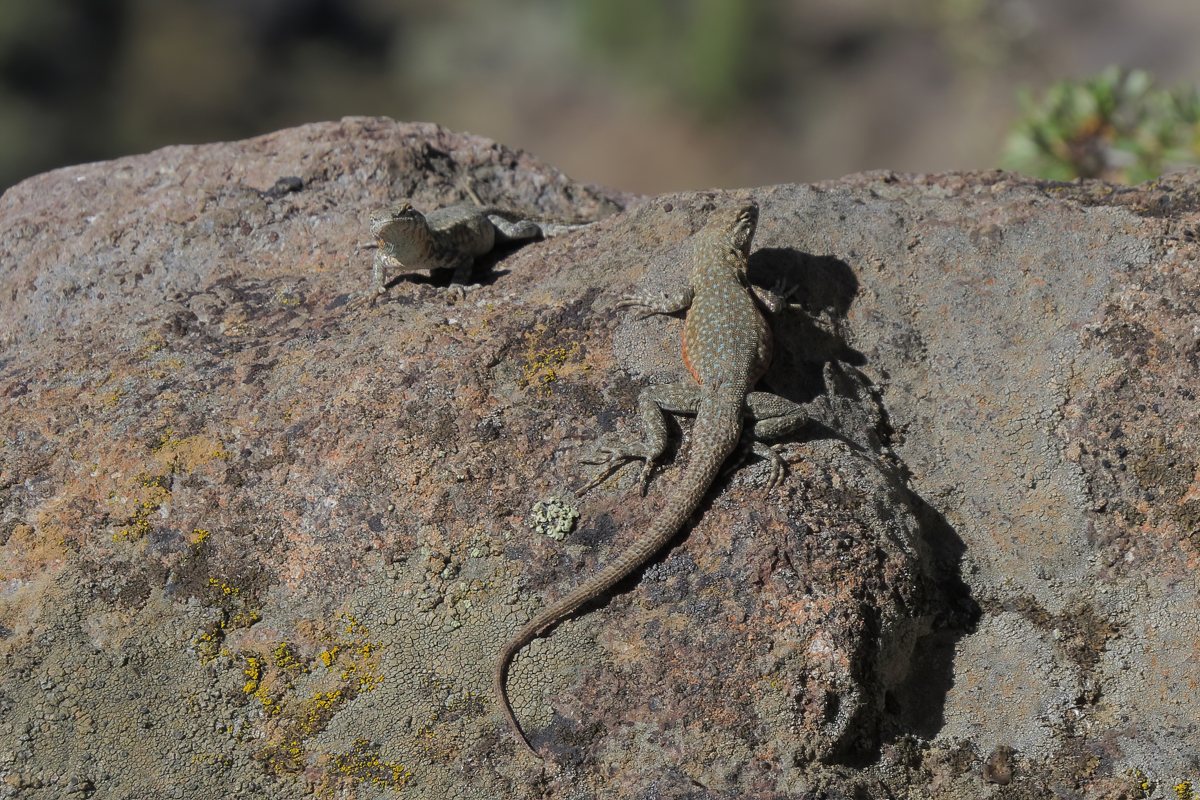 Whenever I visit eastern Oregon I am especially on the lookout for herps. This pair of Common Side-blotched Lizards was the only herp sighting of this hike, but the species was new to me.
 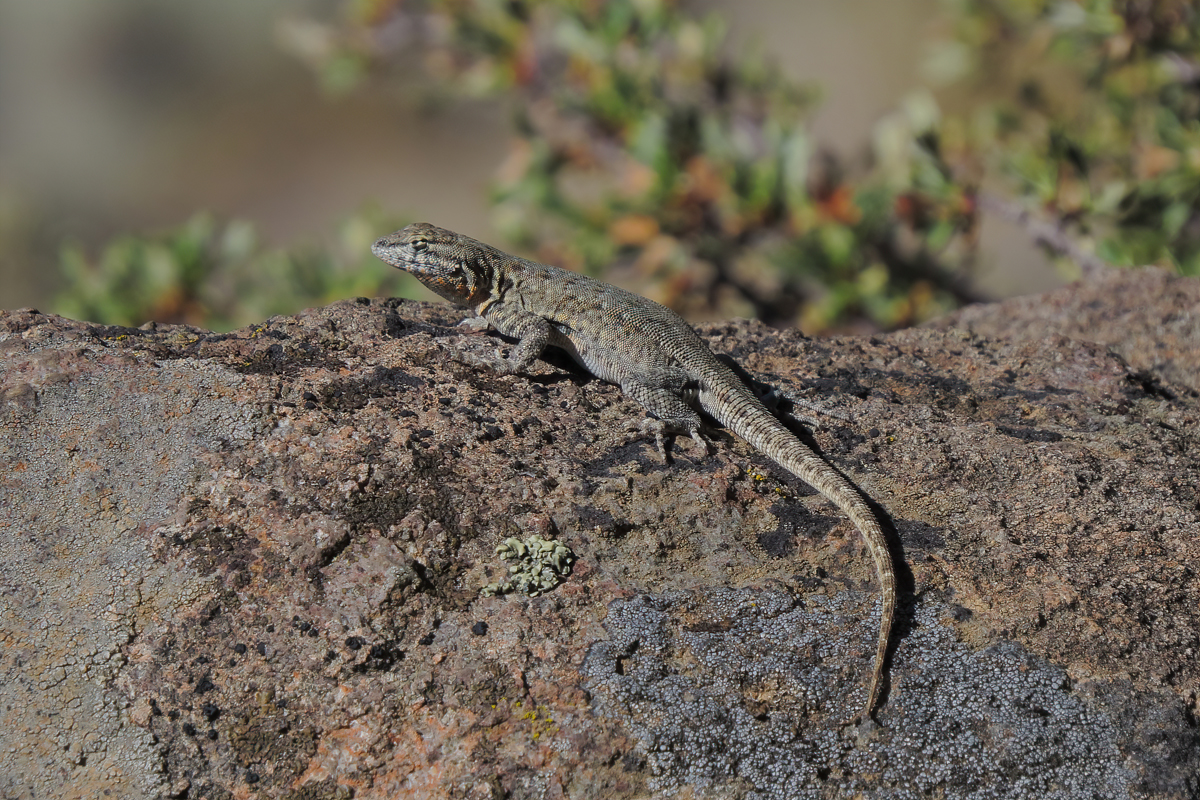 Here is the female, whose colors are more muted.
 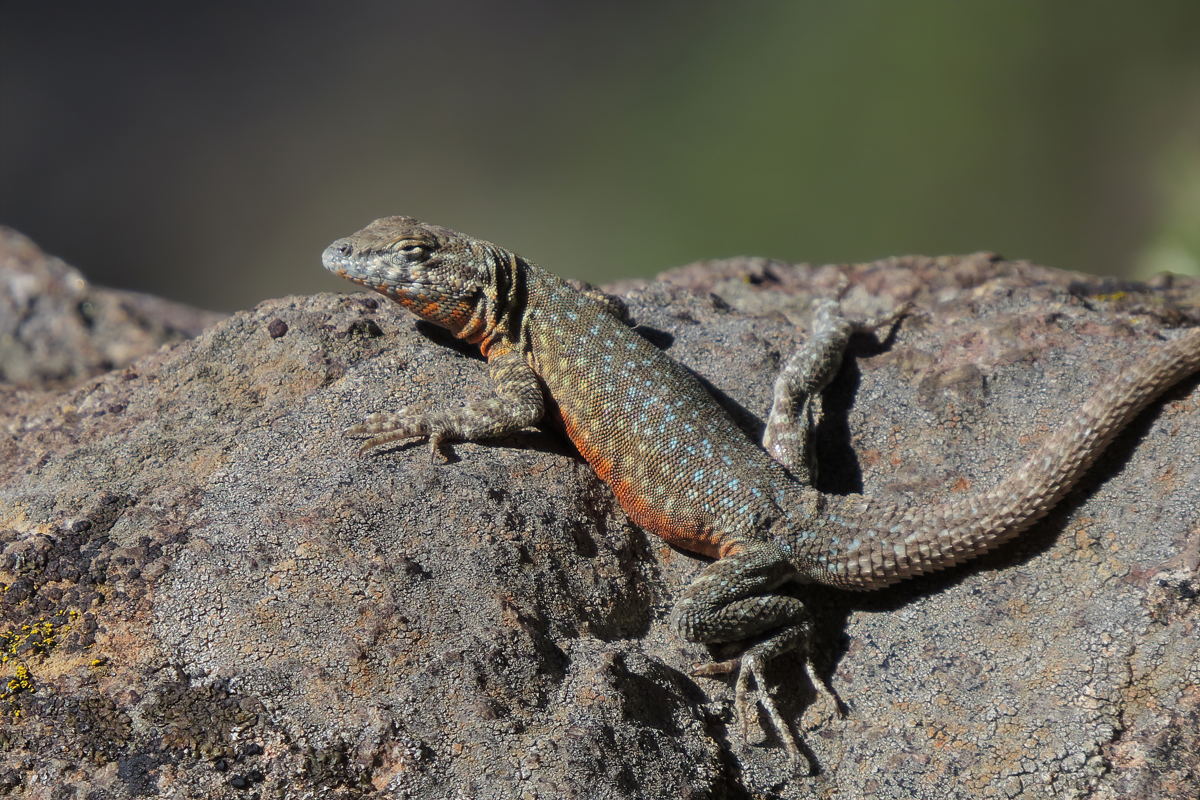 The male was really colorful, with blue spots on the back and orange underneath.
  Another look at the male. The two didn’t seem to mind my presence. I think they were more interested in each other.
 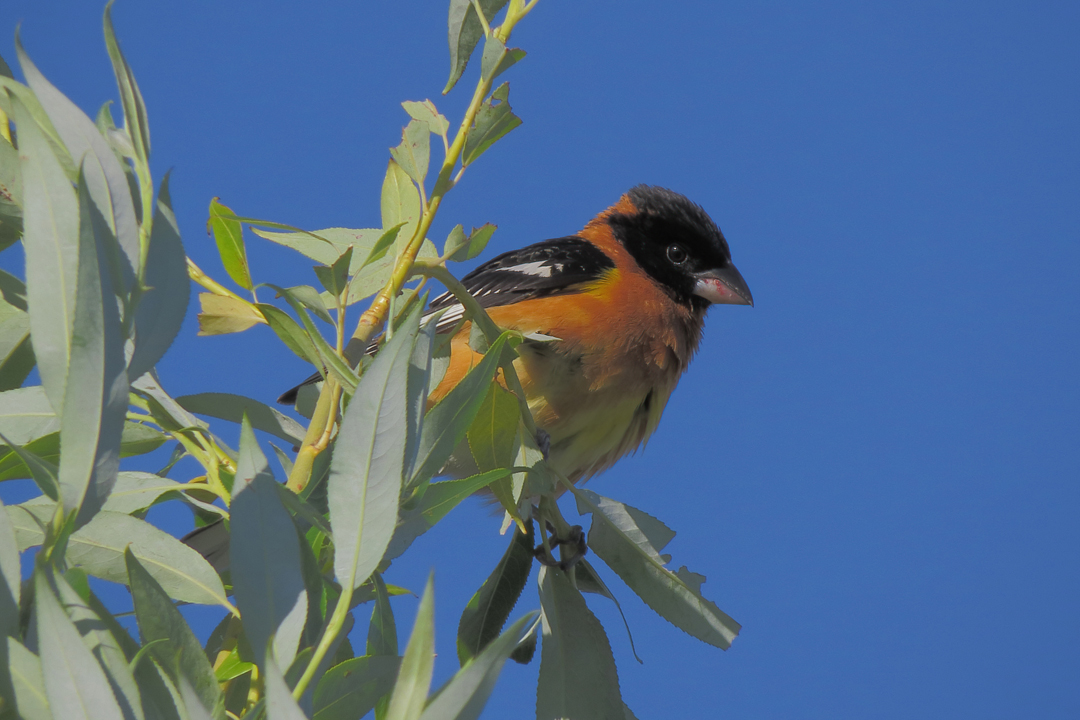 Black-headed Grosbeaks are one of our more attractive summer residents.
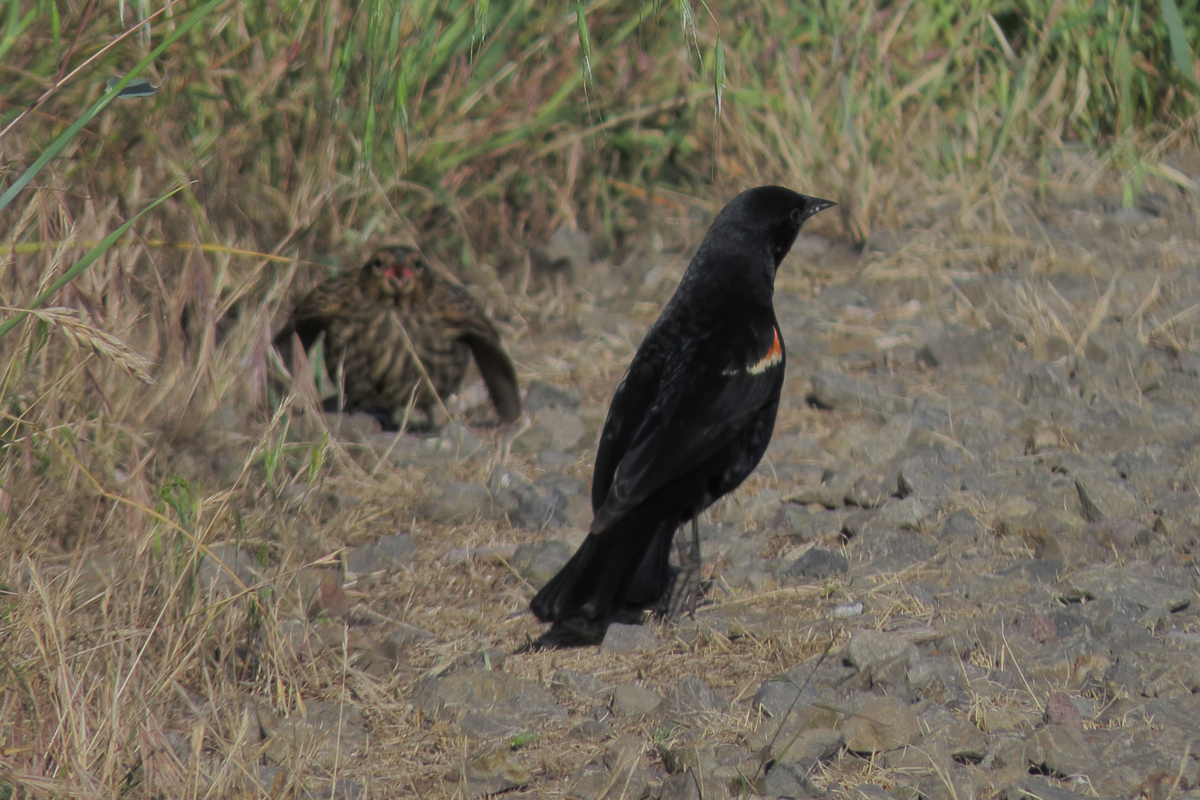 Lots of babies have already fledged. Here a Red-winged Blackbird is being harassed by a hungry youngster.
 It has been such a delight to have an active Purple Martin colony at Fernhill the past few years.
 Purple Martin on an unclouded day
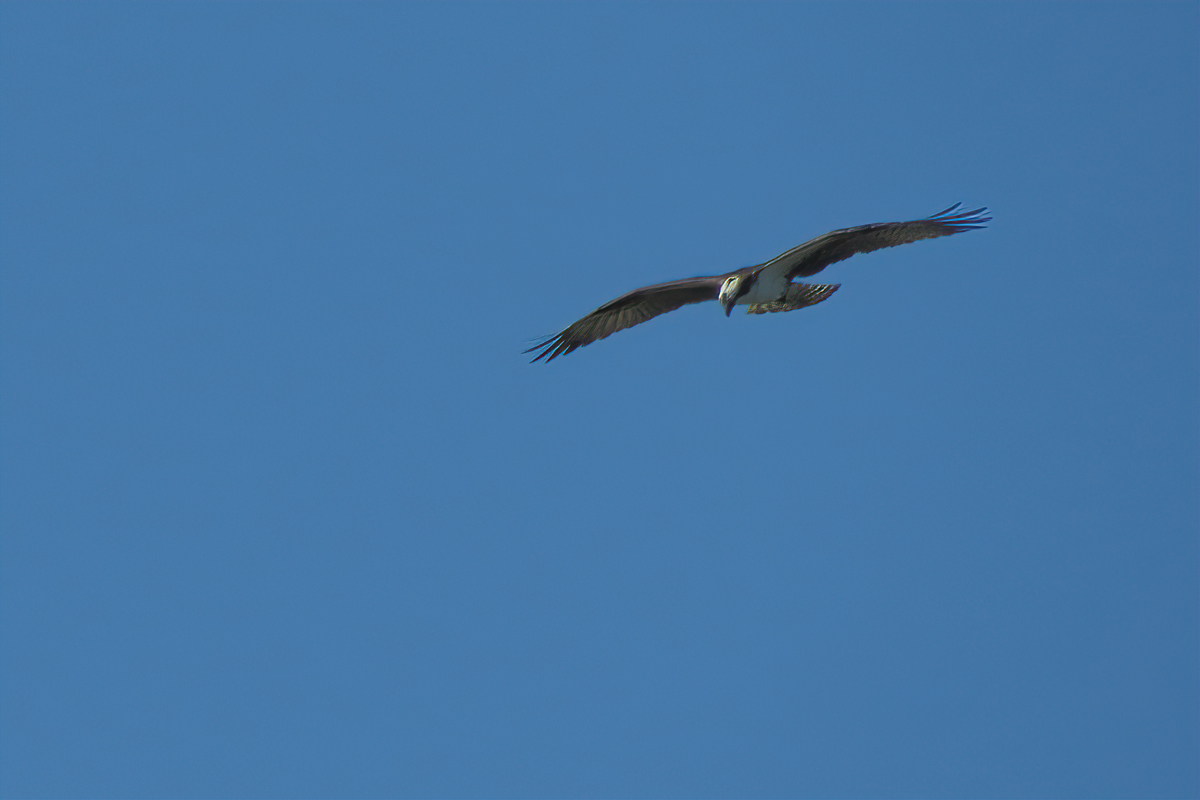 Ospreys were soaring high over Fernhill Lake. I didn’t see any dive for fish while I was there.
 The ducks have started their summer molt, but the Pied-billed Grebes are still looking dapper.
 A lovely Mourning Dove on an ugly fence
 The most unusual bird of the day was this Western Grebe. They are frequent winter visitors here, but they do not nest anywhere nearby.
 The long hiking trail at Tualatin River NWR is open, and this refuge always offers some good birding in the spring and early summer. A pair of Blue-winged Teal was in the southwest pond.
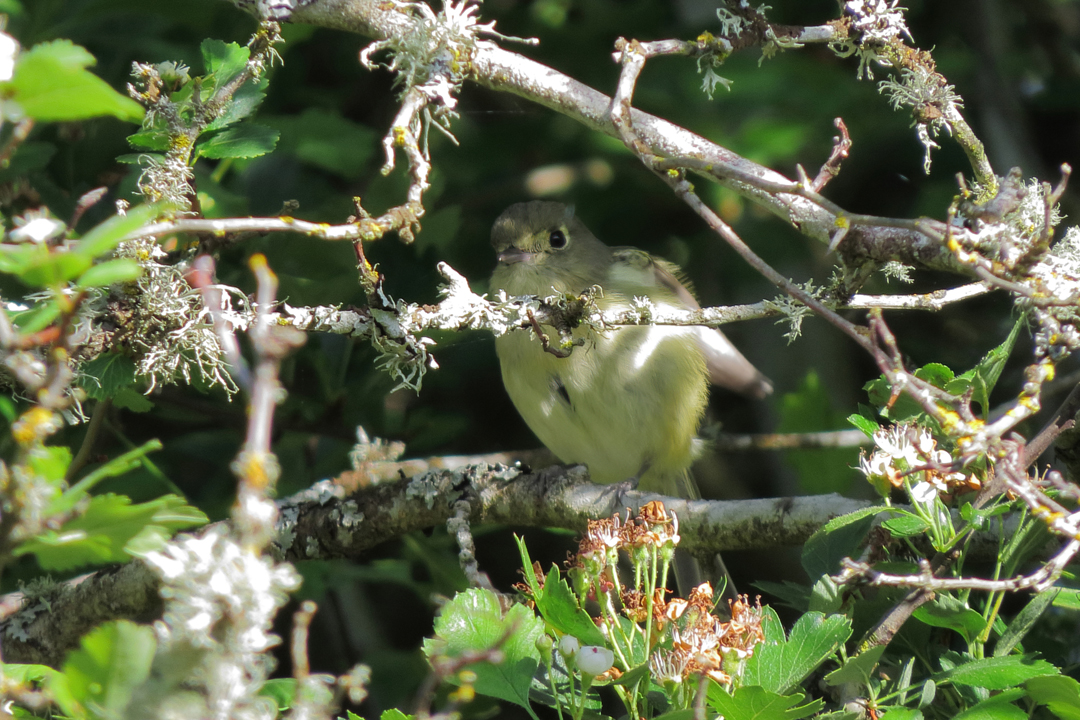 As is typical for this species, this Hutton’s Vireo stayed back in heavy cover.
 It is really hard to shoot a Brewer’s Blackbird against the sky without ending up with just a silhouette, but I keep trying.
 Long-billed Dowitcher was the most common shorebird on this visit. It is nice to see them in full breeding plumage.
 The best bird of the trip was this Pectoral Sandpiper. Pectorals are regular autumn migrants in this area, but are very rare in spring.
 Ethical Birder