BLM Wilderness Study Area, Adel

Near the town of Adel, the BLM Wilderness Study Area is probably the best place in Oregon to find a Juniper Titmouse. While this species was the main goal of my hike in this area, there were many other species to enjoy, along with the great views. To reach this site, park in the wide pullout off the westbound lane of Hwy 140 near milepost 25. Just a few yards west of the pullout, a dirt road leads up the hill toward the top of Fish Creek Rim. Walk up this road to its terminus at the communication towers at the top of the rim. (Because of these towers, you actually have good cell phone reception throughout the hike, an unusual occurrence in this part of Oregon.)
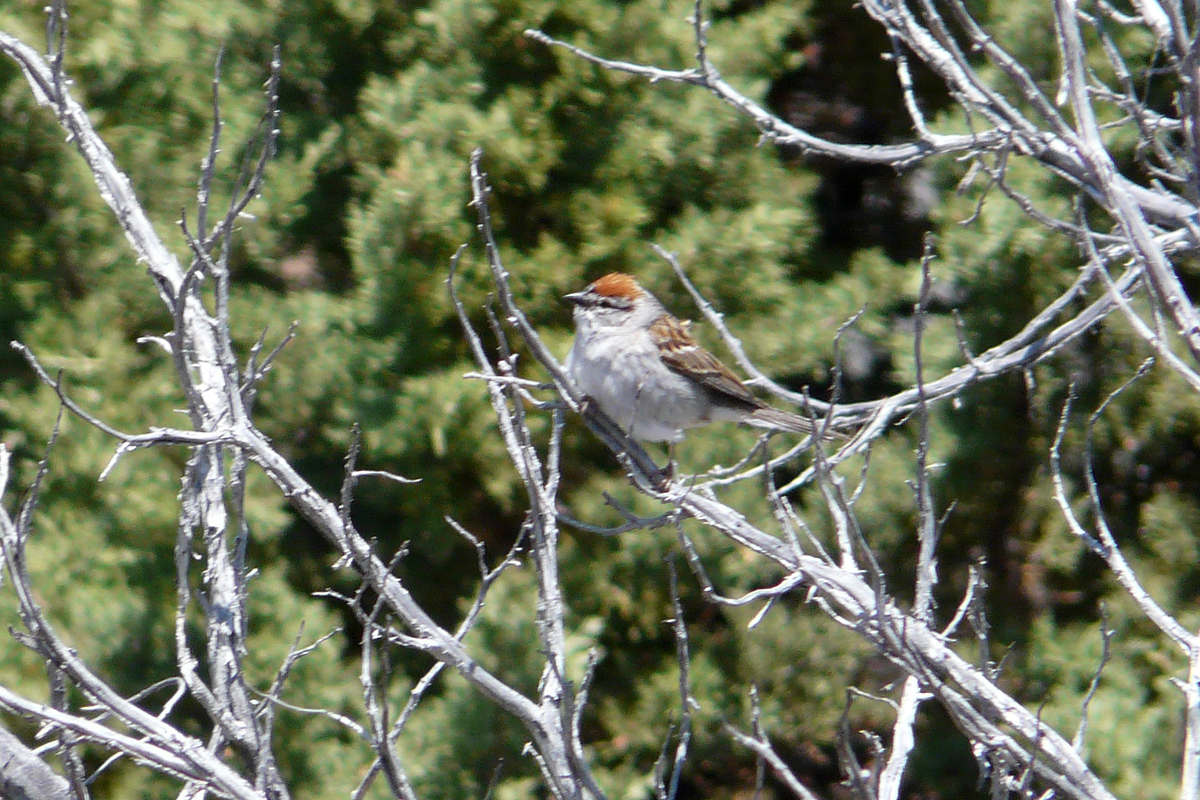
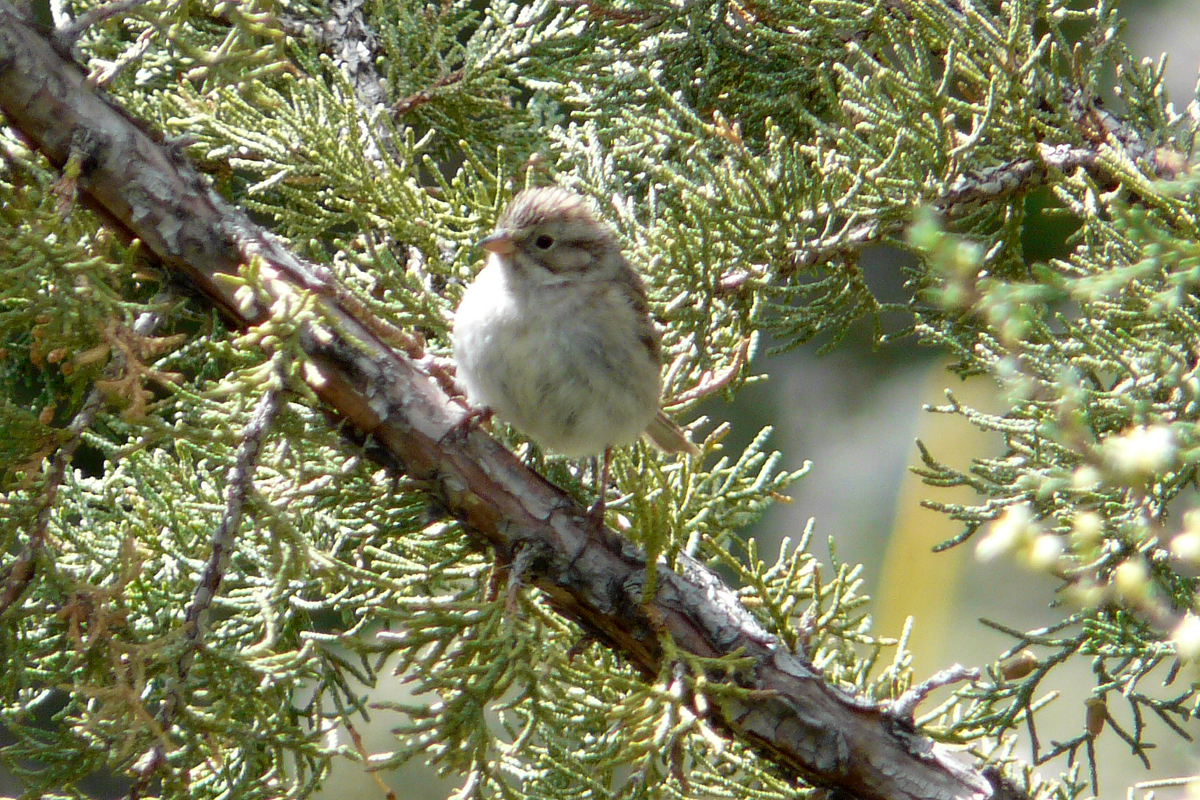
This blurry Chipping Sparrow was part of a small flock of sparrows near the start of the hike. A Black-throated Sparrow was a nice surprise.
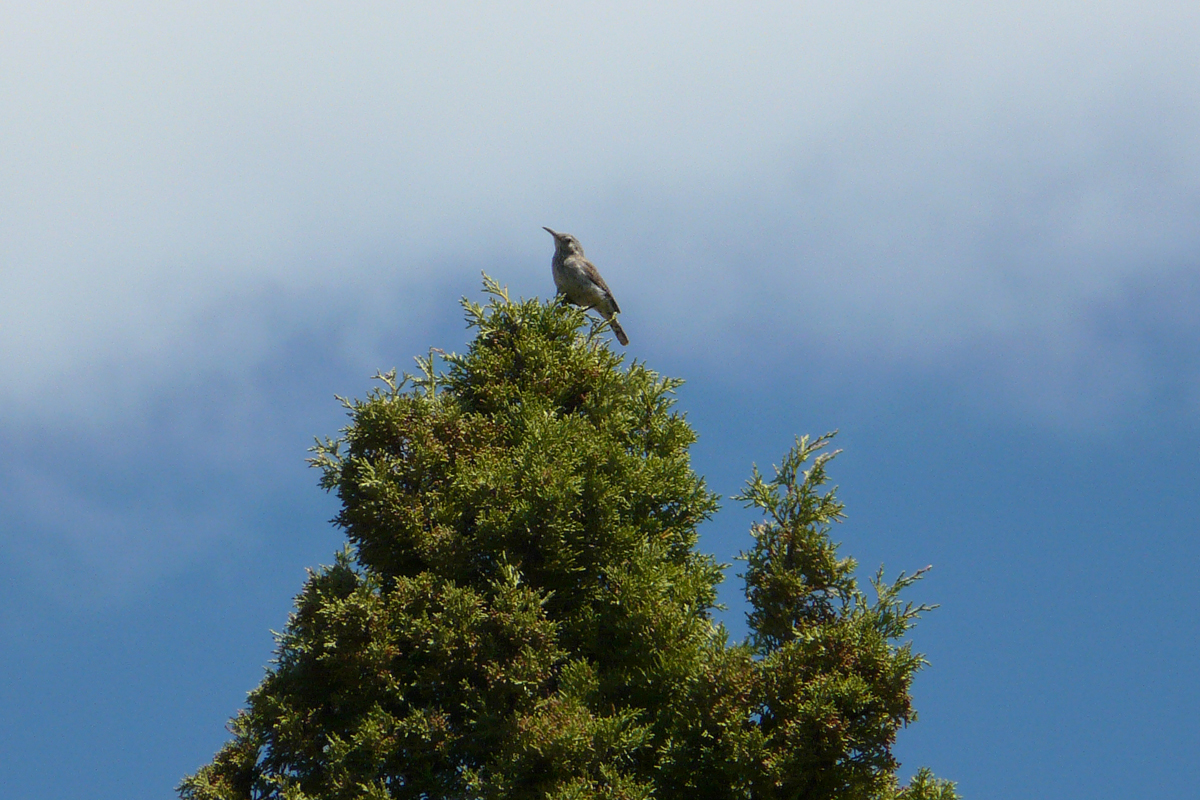
Rock Wrens were common on the way up the hill, perching in junipers, sage, and occasionally on rocks.

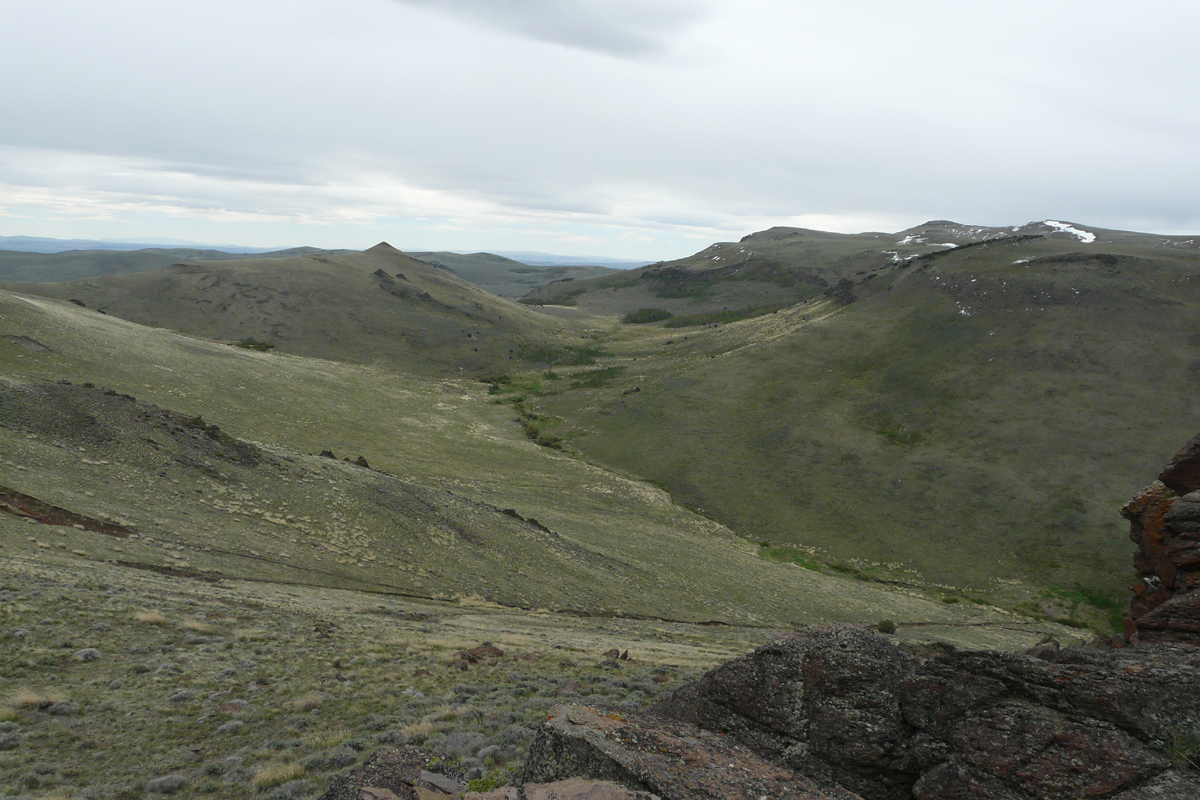
The view from about half-way up the hill, looking down toward the highway and Deep Creek
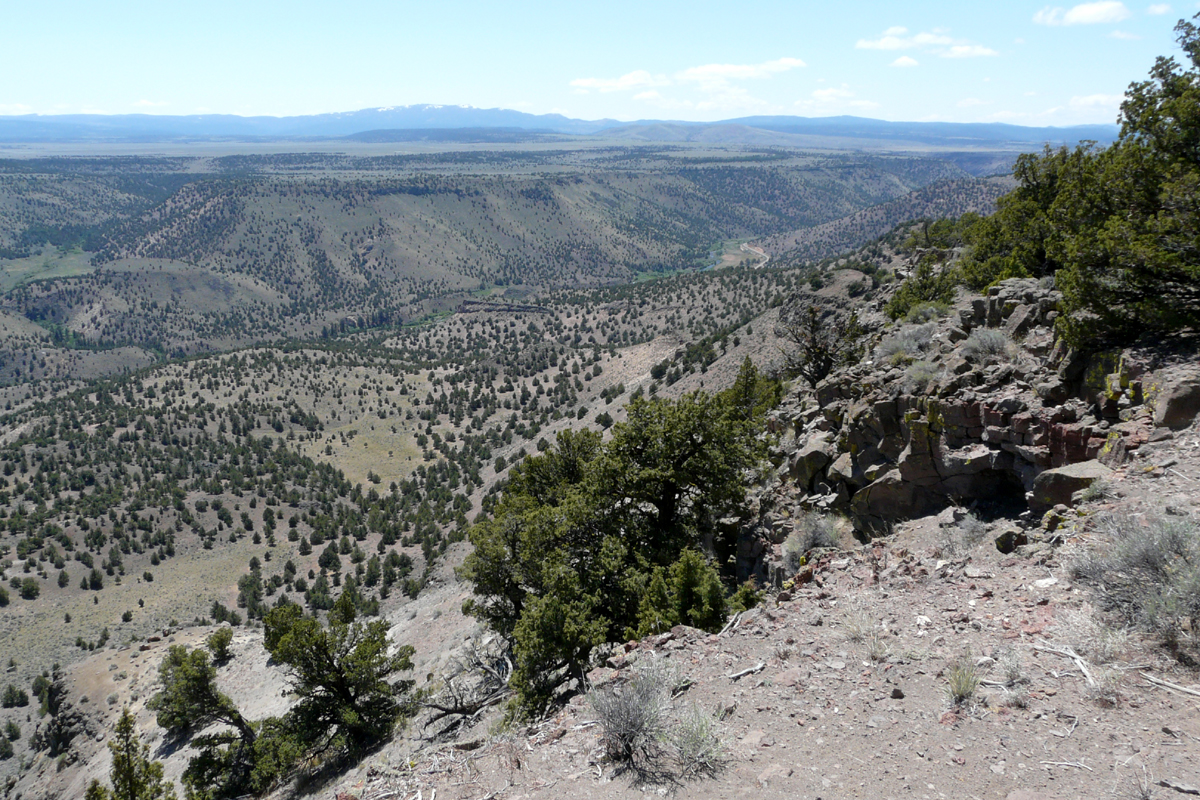
Farther up the hill

The view from the top, looking down on the Warner Valley. The wetlands in the valley are the source of the Ring-billed Gulls and American White Pelicans which can be seen soaring over the juniper woodlands.

The top of the rim is more tundra-like, with a few trees and short grasses. Mountain Bluebirds and Western Meadowlarks are common in this area.
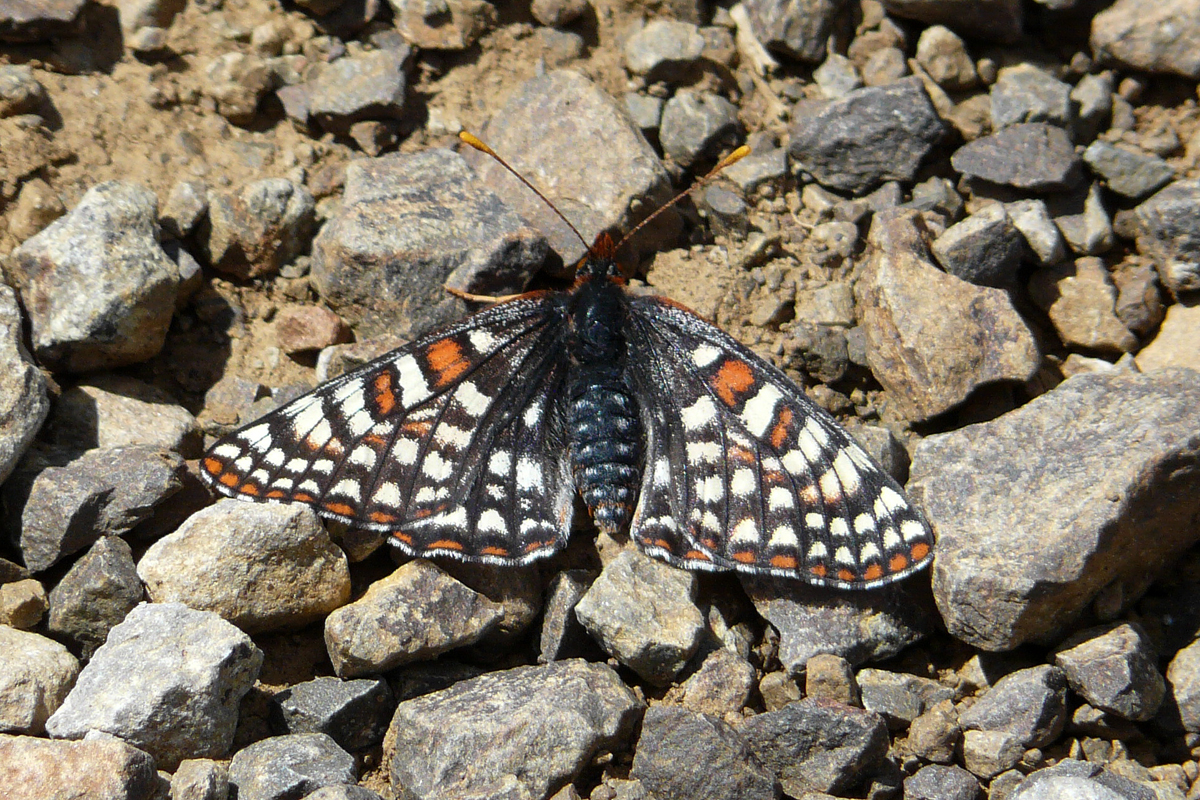
Variable Checkerspots were clinging to the road to avoid the strong winds.

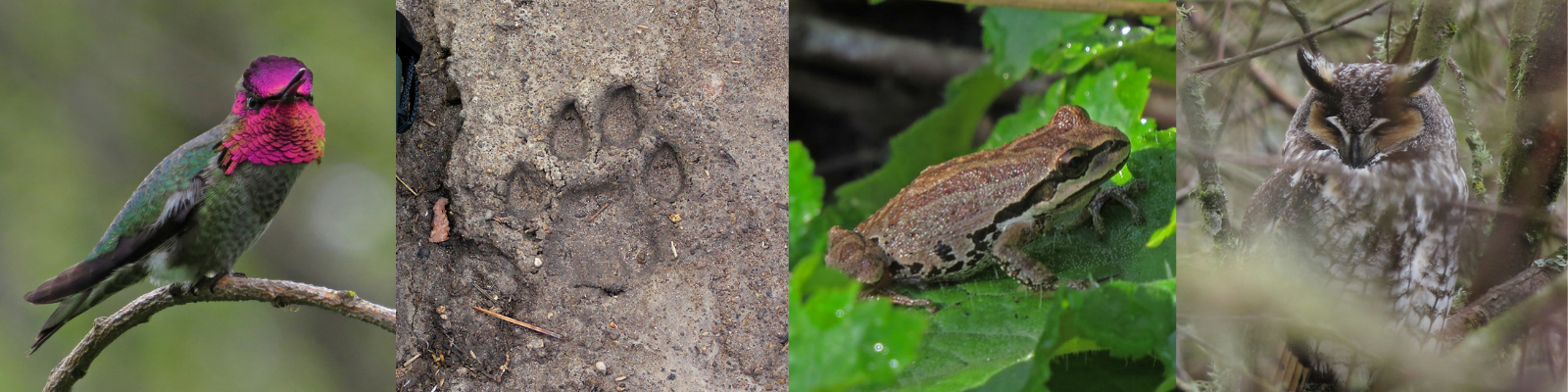
Mountain Lion tracks

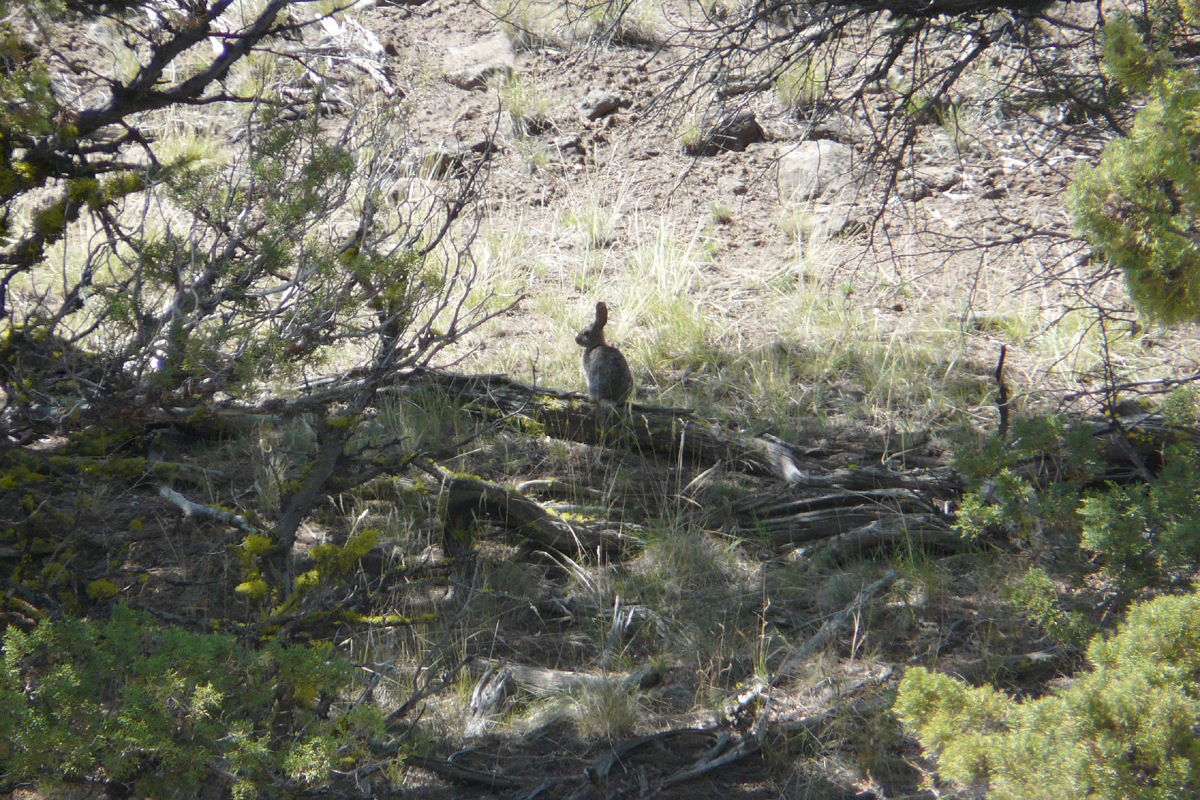
Mountain Cottontail

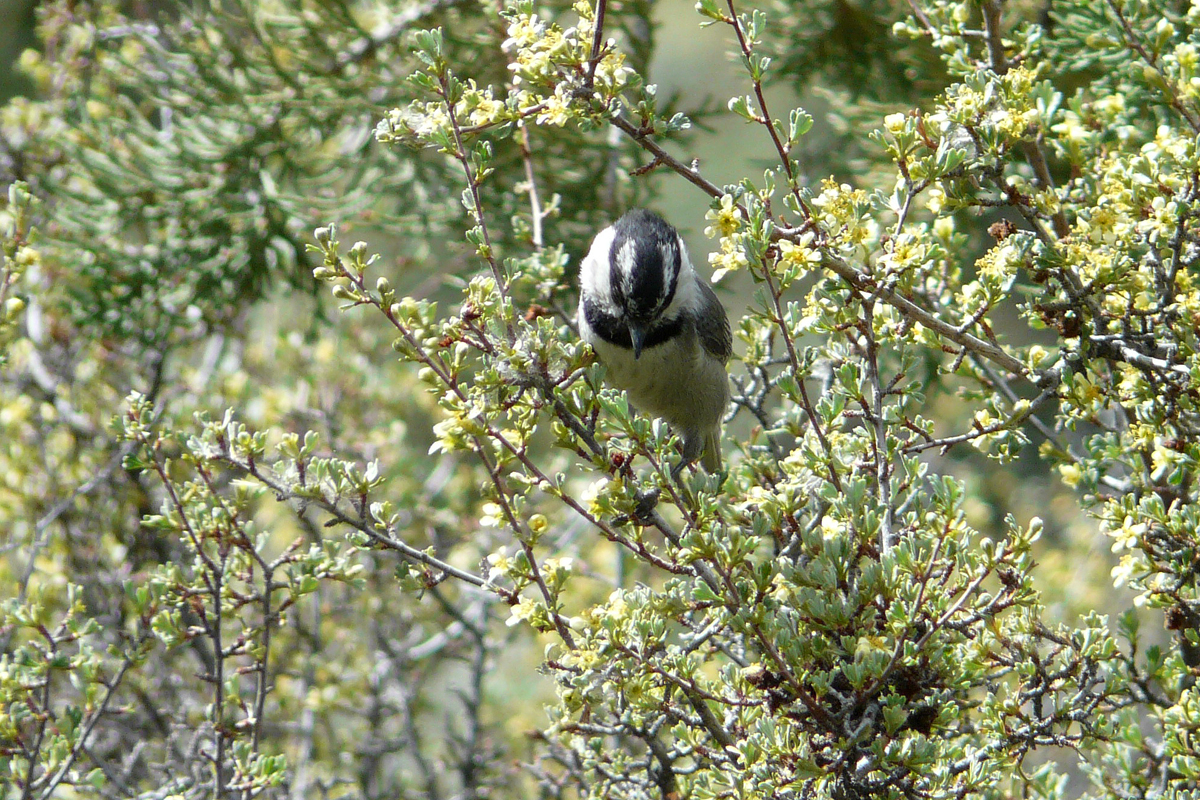
On the way back down the hill, three and a half hours into the four-hour hike, I did find a Juniper Titmouse. I try not to put too much emphasis on “target birds,” but it is nice when you actually find them.
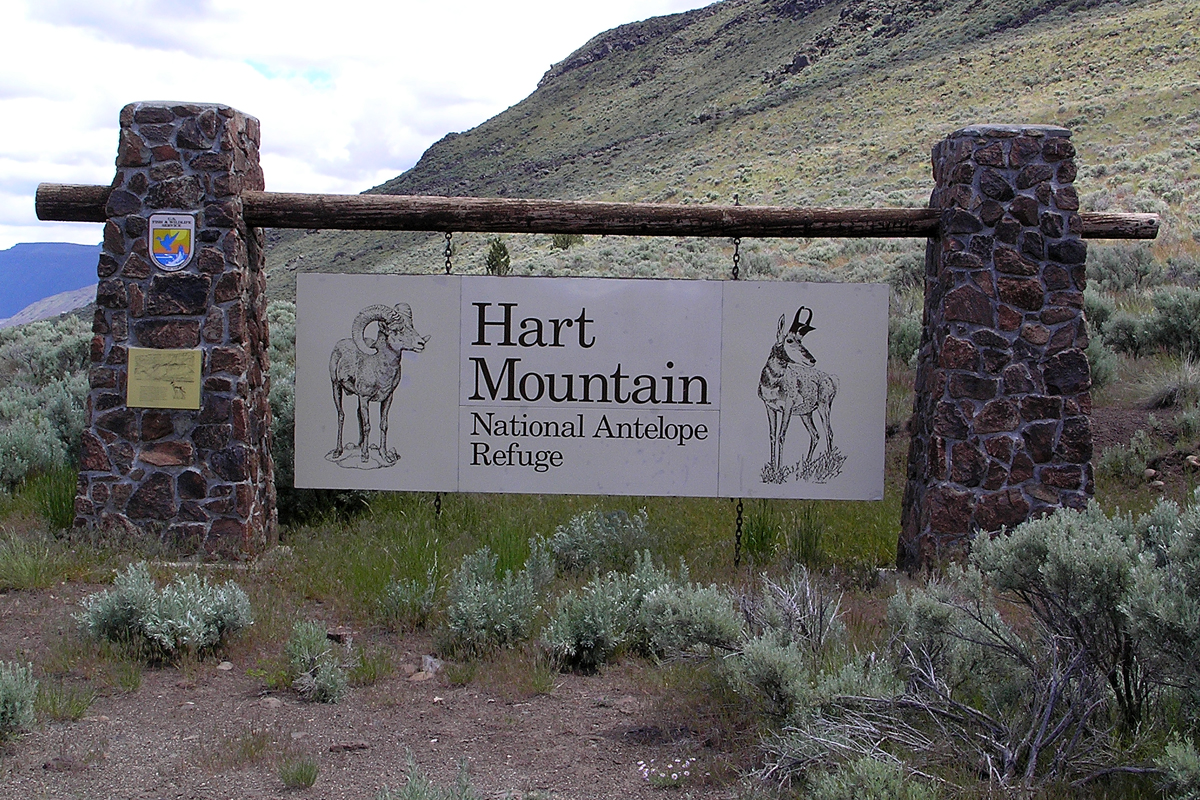
Where the Deer and the Antelope (and the Birders) Play

Hart Mountain National Antelope Refuge includes about a quarter million acres in Lake County, OR. It is not close to anything, but is definitely worth the trip. The weather here in early June tends to be cool and breezy, and my recent visit was true to form.

In the morning, I parked at the campground and walked up toward the top of the large fault block that is Hart Mountain. It was a four-hour round trip through low sage steppe with aspen groves along the creeks. The riparian areas held MacGillivray’s and Yellow Warblers, Dusky Flycatchers, Bullock’s Orioles, and lots of Robins. In the more open habitats, the most common birds were Brewer’s and Vesper Sparrows, Rock Wrens, and Horned Larks.
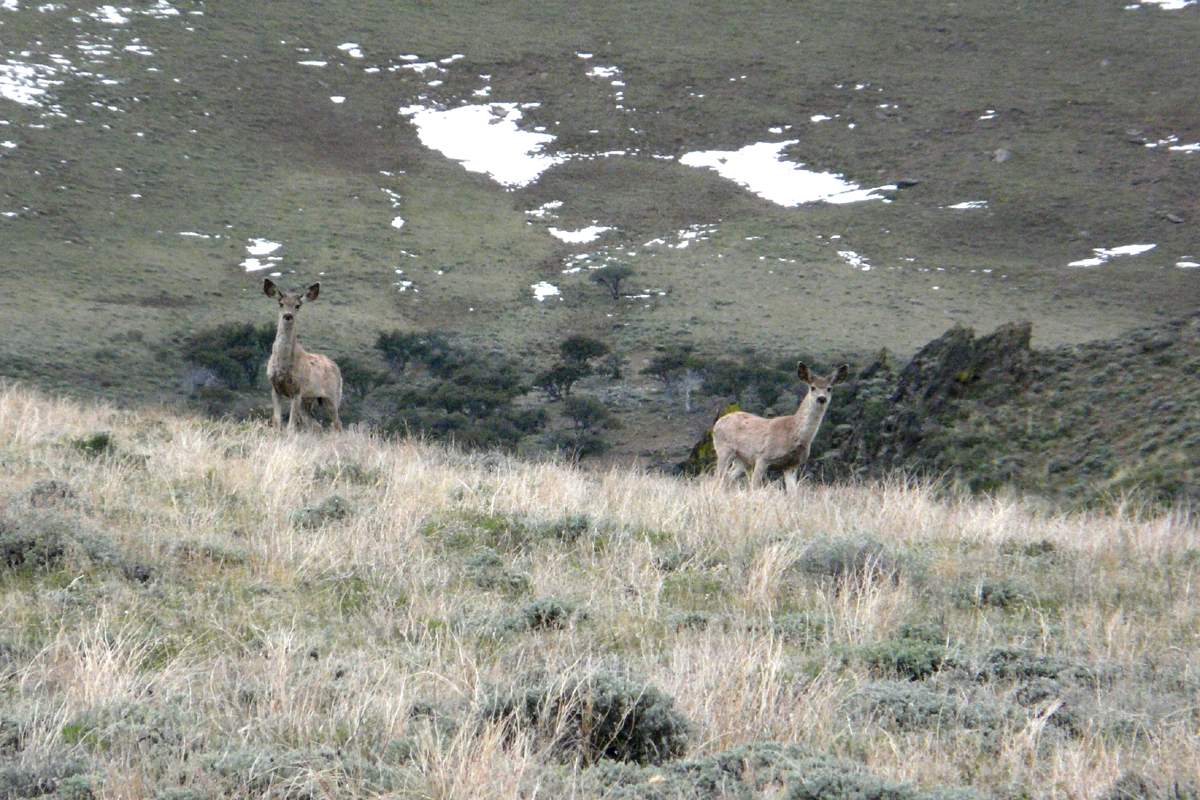
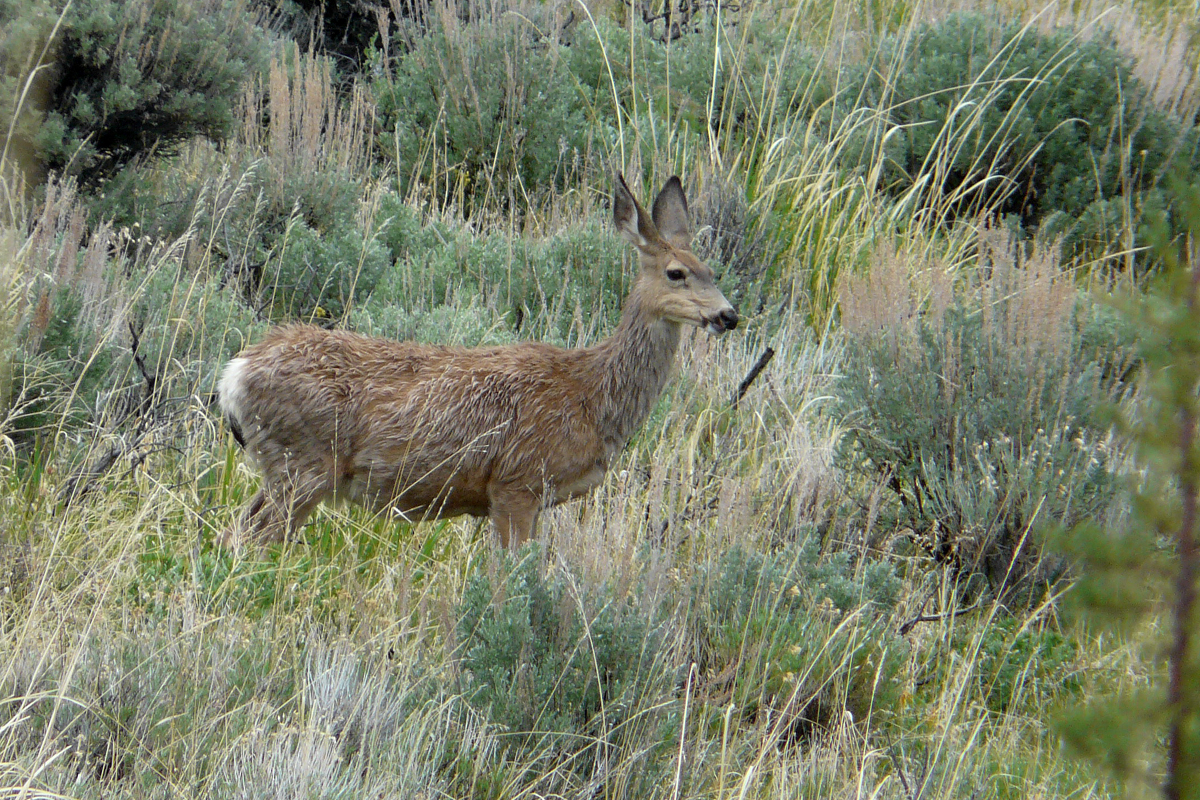
These two Mule Deer kept a close eye on me as a walked up the jeep trail.

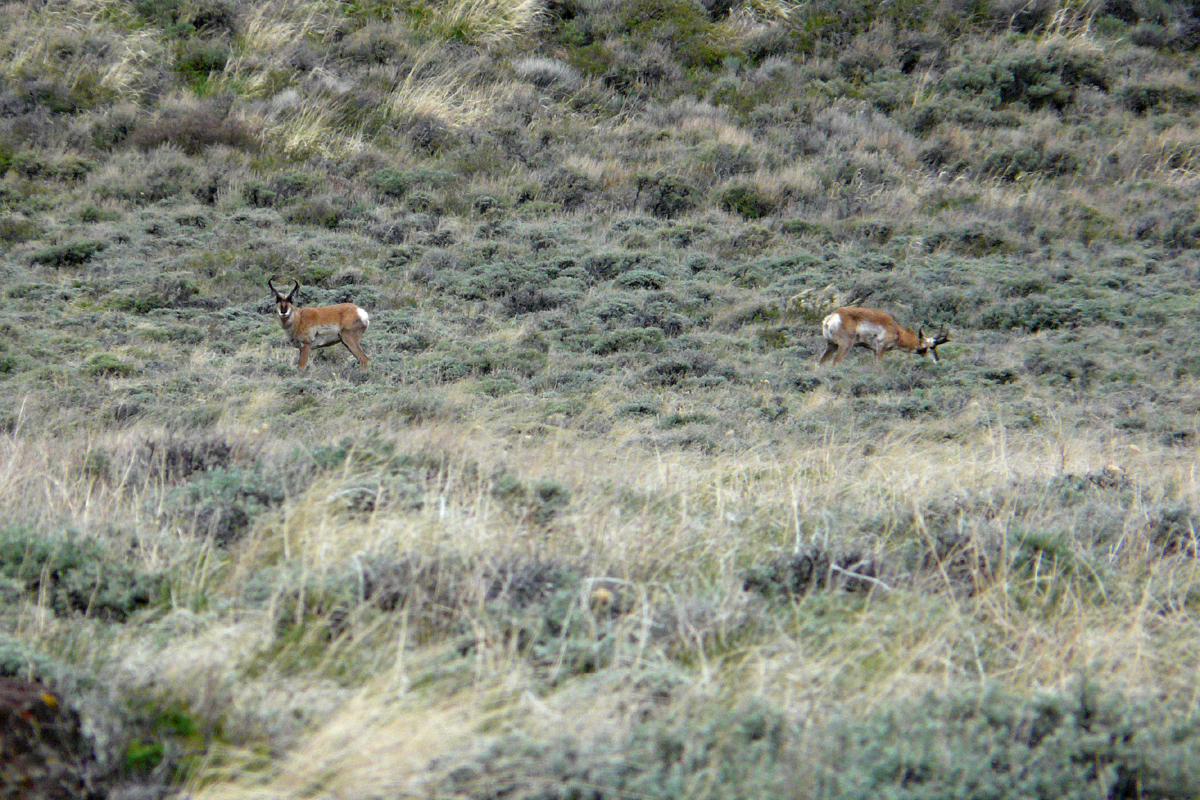
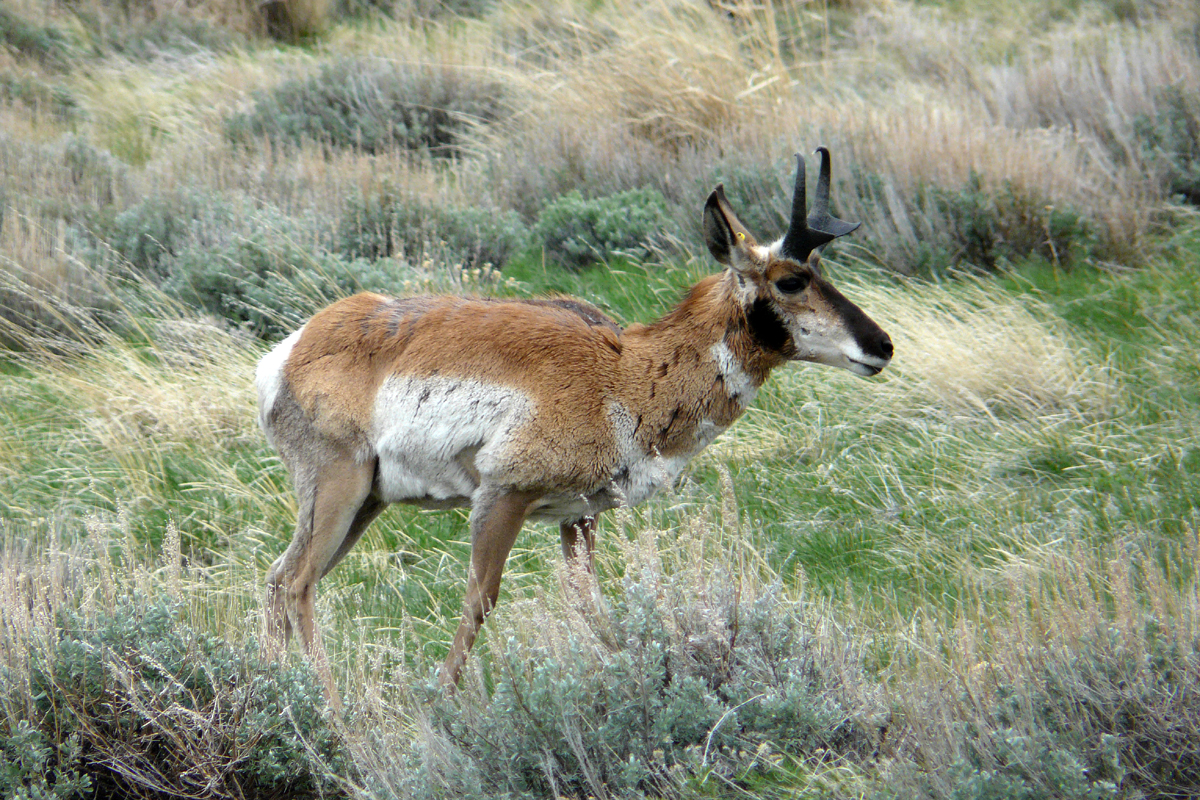
Pronghorns are the main reason this refuge came into being. Not actually antelope, Pronghorns are the fastest land animals in North America, having evolved alongside the now-extinct American Cheetah. Most of the Pronghorns I saw that day were rather skittish, keeping a good distance from me.

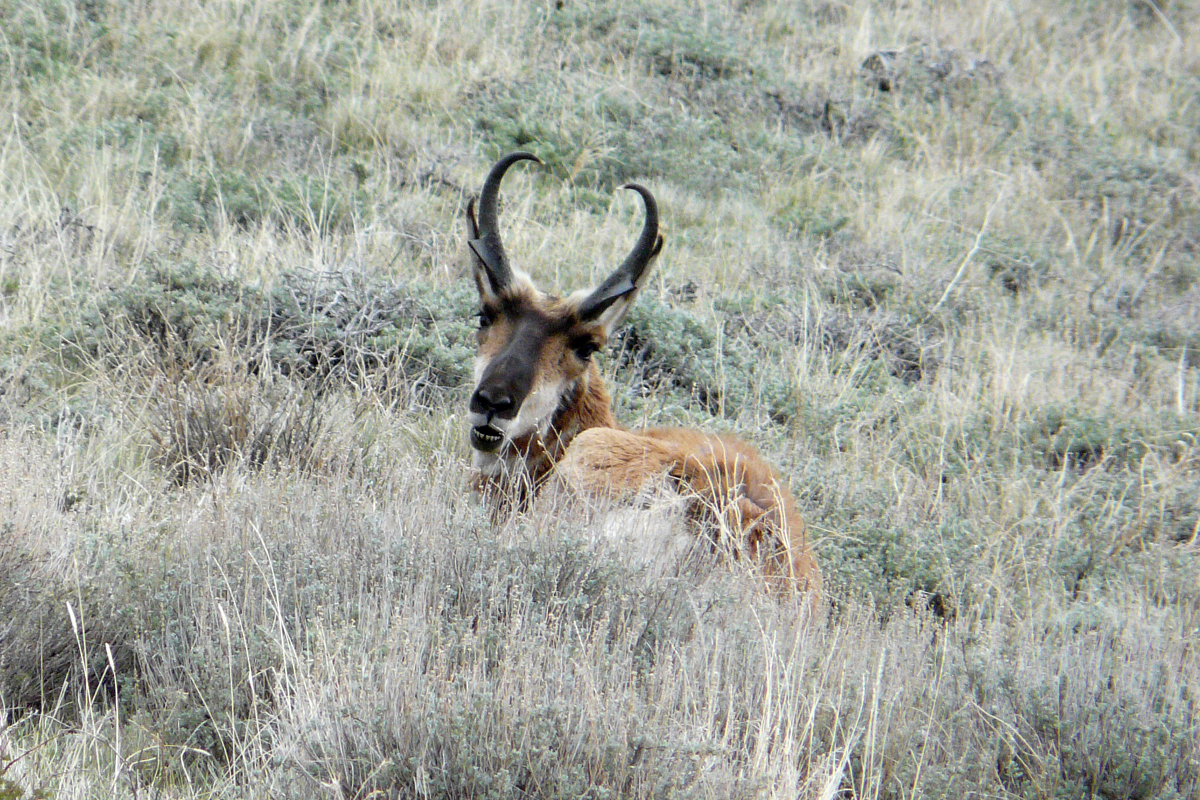
This individual was apparently not too concerned. On my way up the mountain, he lay fairly close to the road and watched me go by.

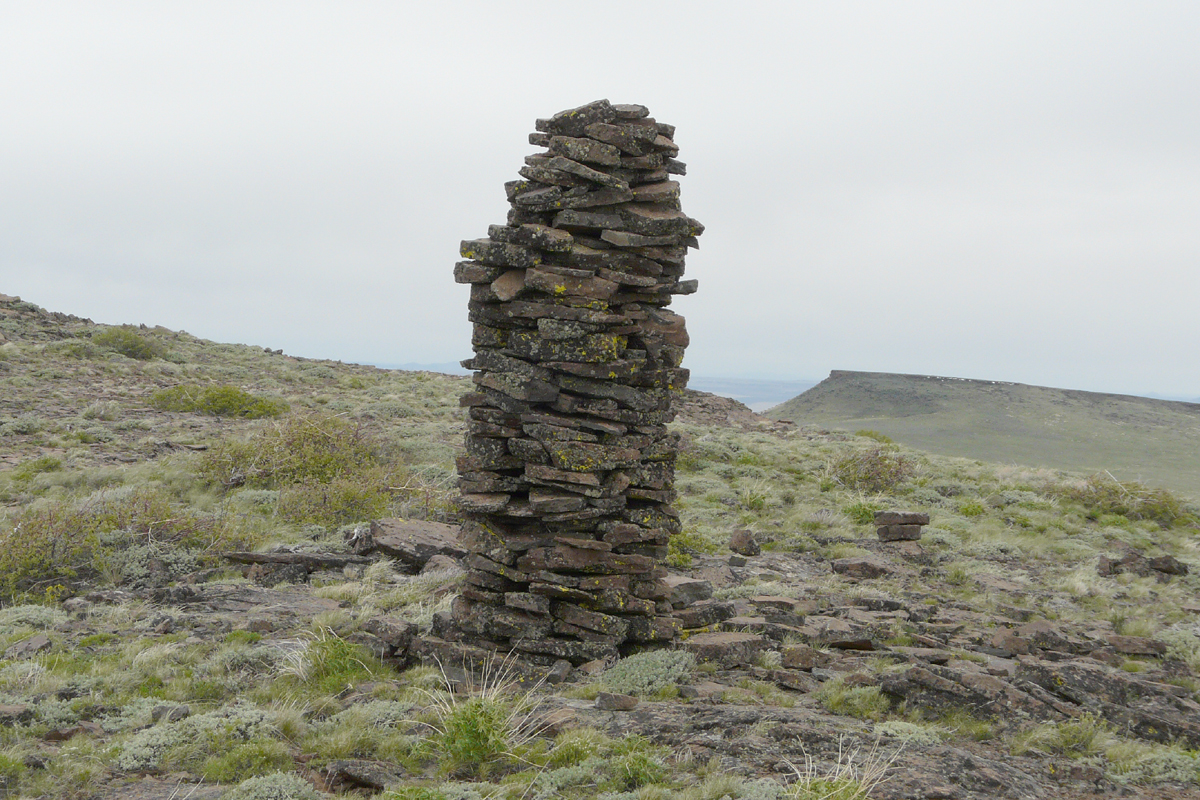
Near the top of the ridge is this large cairn, which stands almost eight feet tall. I’m not sure why some people are compelled to stack things. Monty Python addressed  this issue with their Royal Society for Putting Things On Top of Other Things.

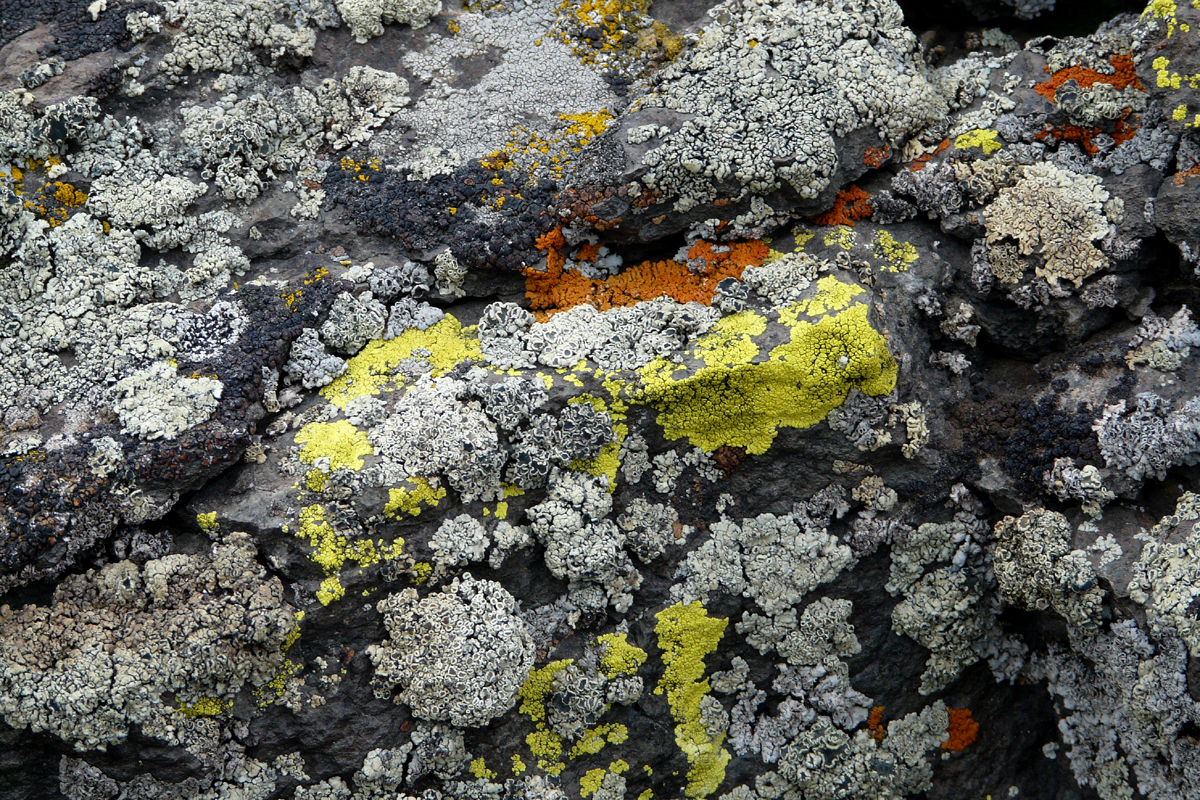
Exposure to cold and wind limits plant growth near the top of Hart Mountain, but many of the rocks host colorful lichens.

On my way back down the mountain, I again passed the unconcerned Pronghorn.
Despite the cold, he has already started to shed his winter coat. If you look closely, you can see just a bit of a yellow tag in his left ear. This identifies this animal as part of a study tracking Pronghorn migration between Hart Mountain and Sheldon NWR in Nevada.

Farther south on the refuge lies a little patch of Ponderosa Pine forest known as Blue Sky. Since the habitat is so different from the surrounding sage steppe, it is worth exploring for different bird species, especially in migration. On this cold blustery day, I found Lazuli Bunting, Green-tailed Towhee, Warbling Vireo, and White-crowned Sparrows. The large trees are attractive to various owls, I am told.

Another Mule Deer

Brewer’s Sparrow. Like most small songbirds, they live their lives in defiance of auto-focus point-and-shoot cameras.

Mountain Chickadee, in slightly better focus.


Warner Wetlands 6-7-12

Just north of the little town of Plush, OR, is Hart Bar, a small interpretive site at the southern end of the Warner Wetlands Area of Critical Environmental Concern (Birding Oregon p. 21). A short trail leads through the marsh, providing views of shorebirds and waterfowl. The parking area has a primitive toilet and several interpretive signs. On the day of my recent visit, the wind was quite strong, making it difficult to hold optics steady but also protecting me from the clouds of mosquitoes that can be a problem here.


White-faced Ibis feed in the grassy areas near the water. I think the tall grasses provided them with shelter from the wind.


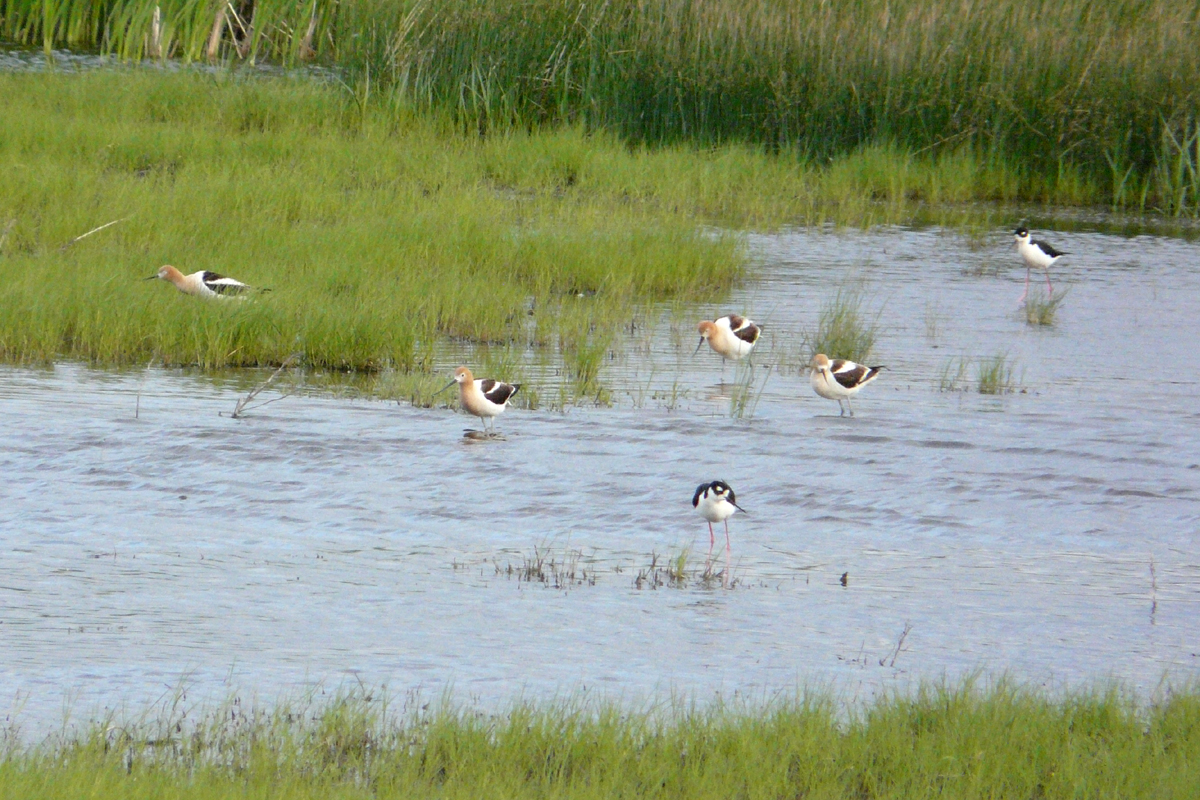
American Avocets and Black-necked Stilts are two common nesting species in this area. Willets are also common, but proved to be a little shy.


American Avocet


Black-necked Stilt


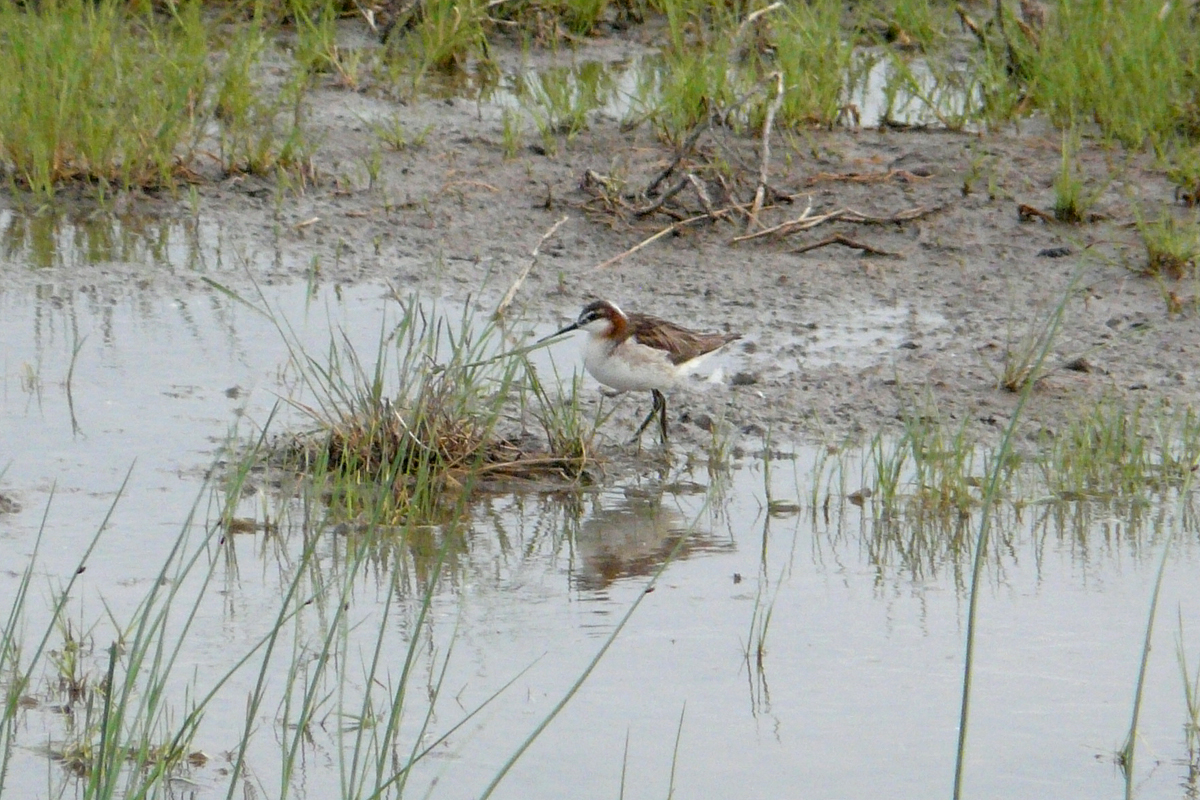
Wilson’s Phalarope


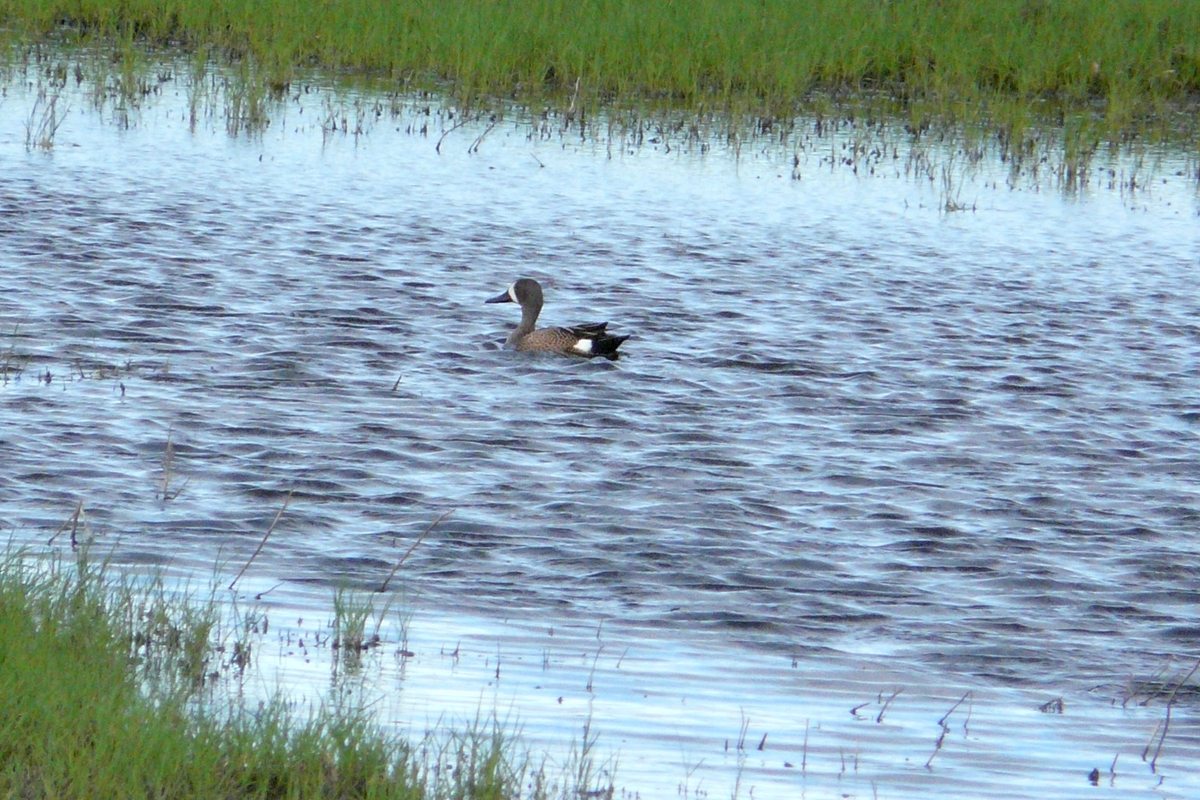
Blue-winged Teal is always a good find in Oregon. Gadwall and Cinnamon Teal are more plentiful here.


Yellow-headed Blackbirds share the marsh with Brewer’s Blackbirds.

There are gravel roads running through the Warner Valley. But Hart Bar is easily accessed from paved Hogback Road, and provides a nice variety of wetland species. It is definitely worth a stop on your way to Hart Mountain National Antelope Refuge.

Vanport Wetlands


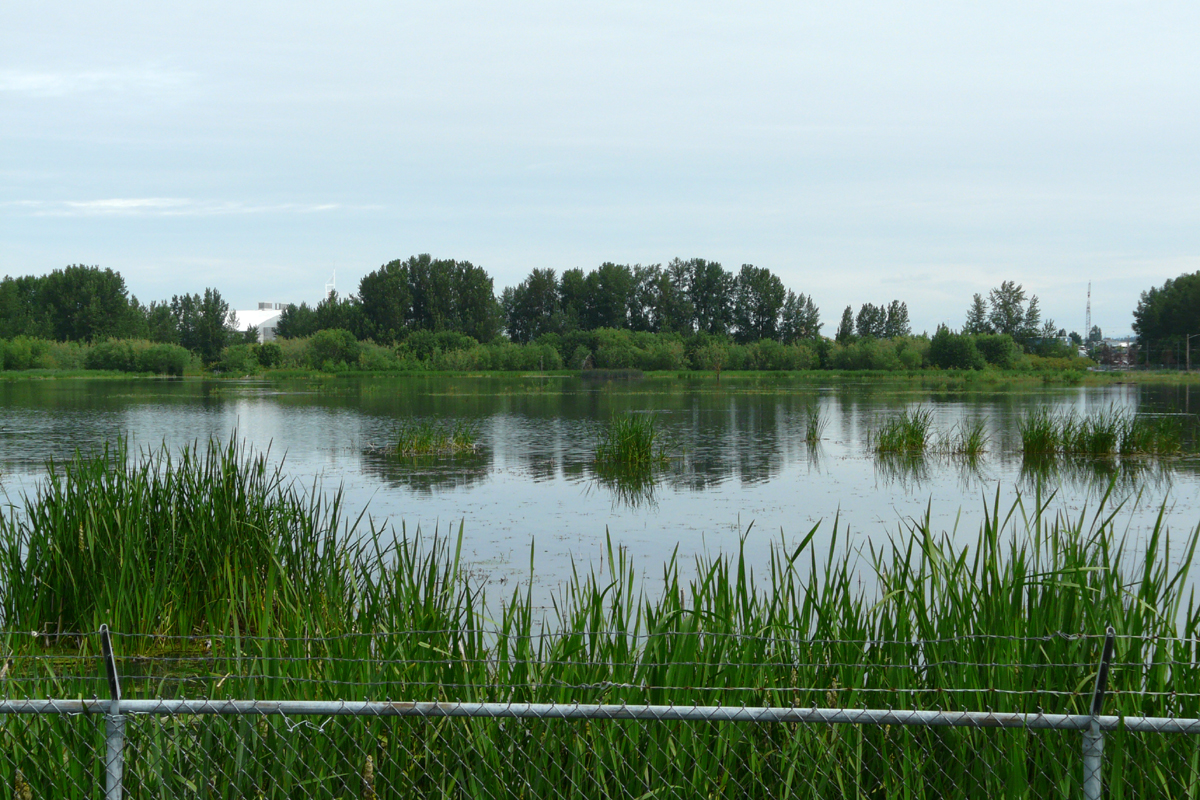
Vanport Wetlands, in north Portland, is an unassuming little site next to an off-leash dog park. A chain-link fence surrounds the property, so most views of birds are distant. Despite the small size and limited access, Vanport almost always hosts some interesting birds.


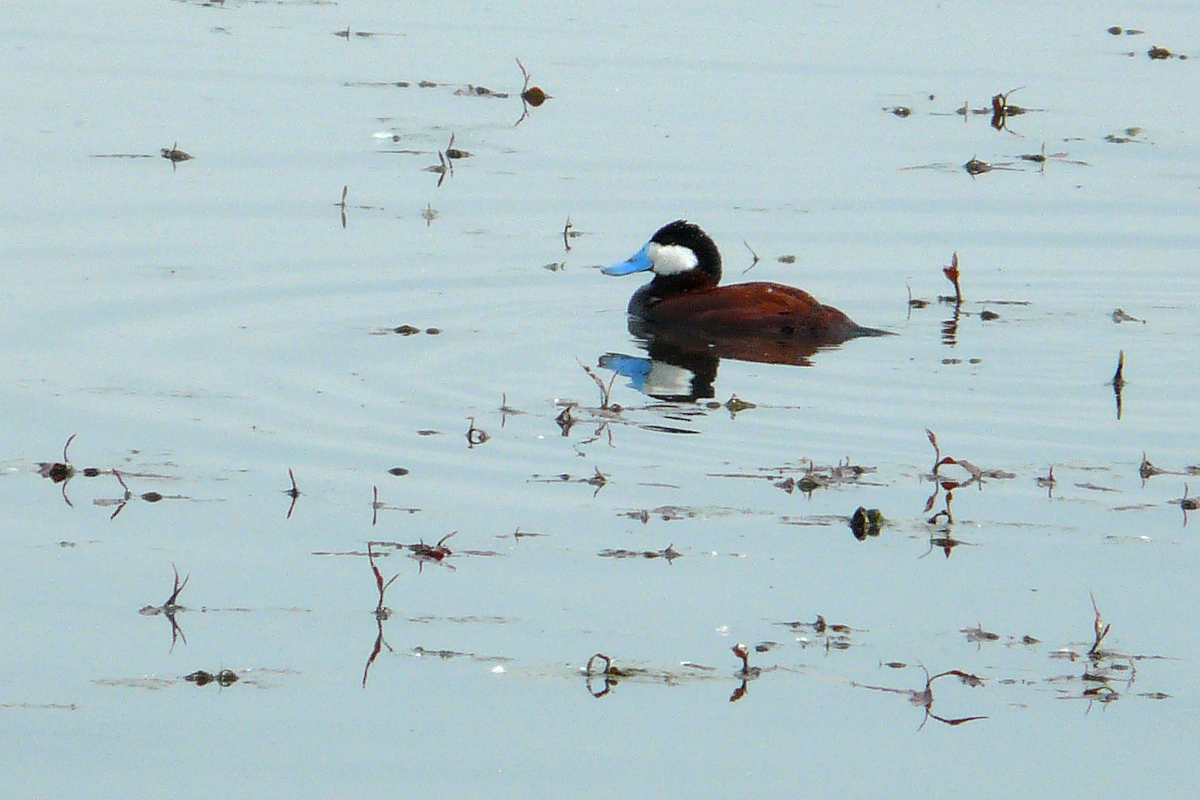
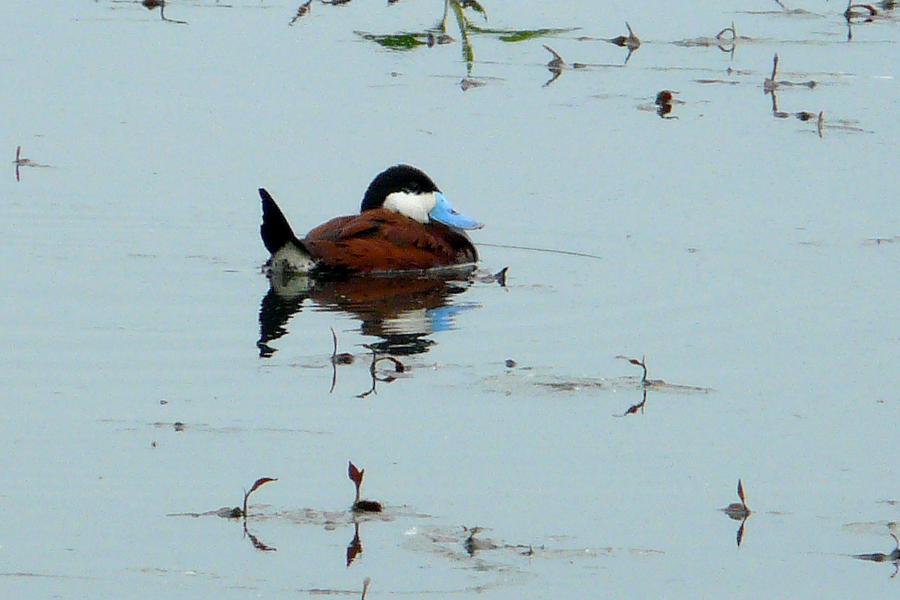
The Ruddy Ducks are sporting their breeding plumage.


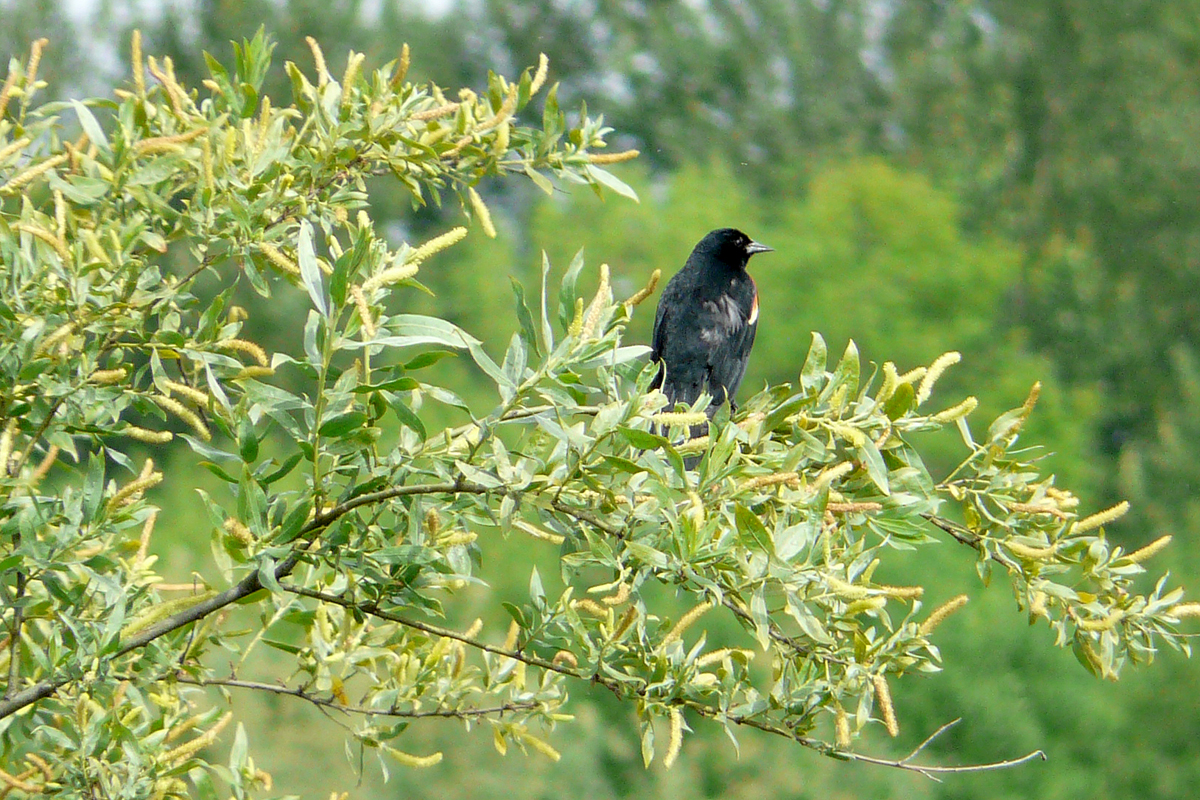
Red-winged Blackbird


Vanport is the only reliable site in Portland that I am aware of that hosts Yellow-headed Blackbirds.


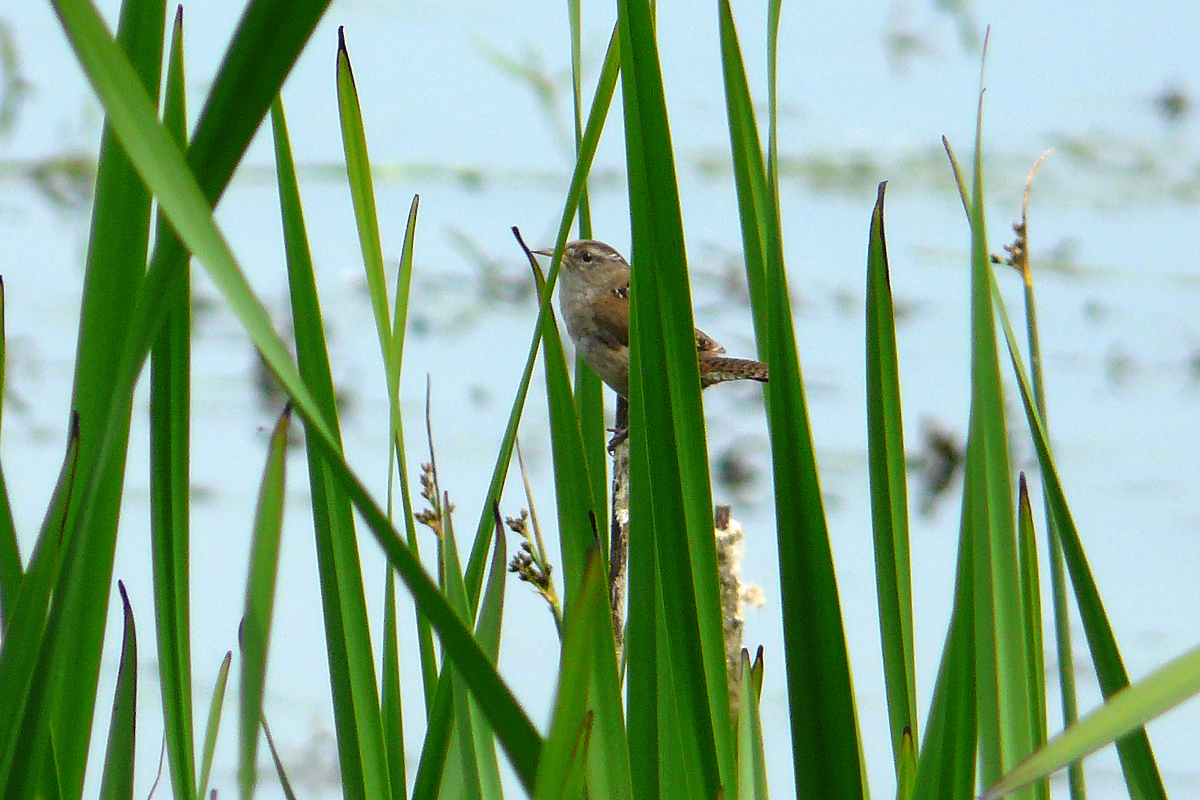
Marsh Wren


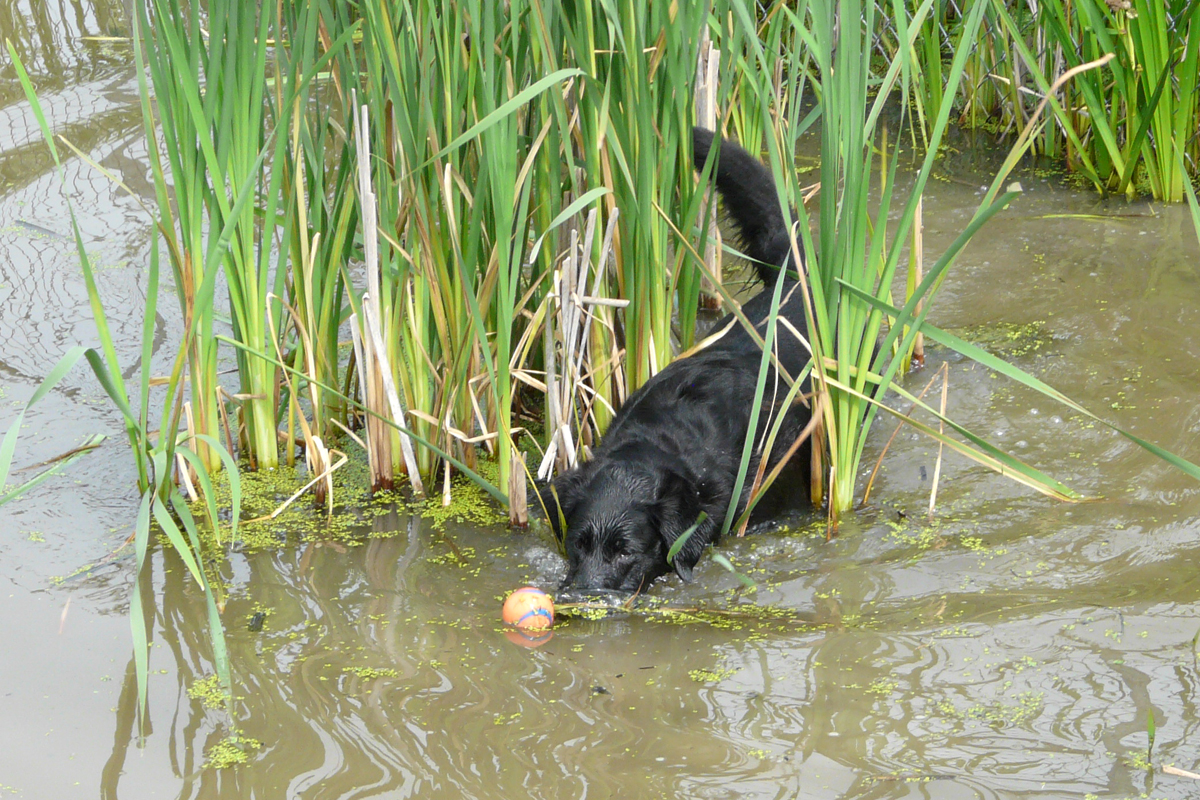
Nala, the Swamp Thing. The water currently extends beyond the fence, providing a place for dogs to play without disturbing the birds swimming nearby.

Sandy River Delta

Migration is winding down and the summer residents are back in force at the Sandy River Delta. Specialty species such as Eastern Kingbird and Yellow-breasted Chat put in appearances, but were not photogenic.


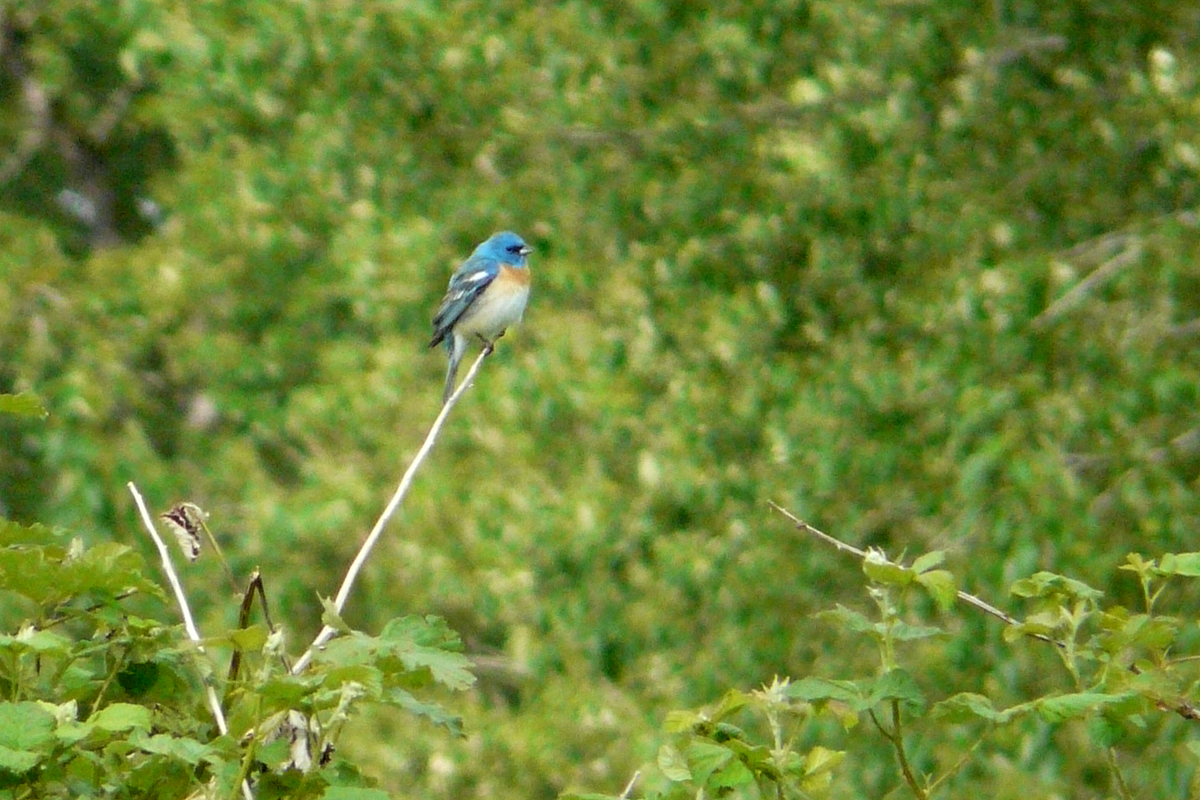
Lazuli Buntings can be found singing from virtually every blackberry thicket.


This male Brown-headed Cowbird was wooing a female. Cowbirds don’t really form pairs. The males display, sometimes in groups, to attract a female. After mating, the two go their separate ways. Since the female deposits her eggs in the nests of other species, there is no need for the male to stick around to help.


I never tire of seeing Bullock’s Orioles, especially when they pose in the open sunshine.


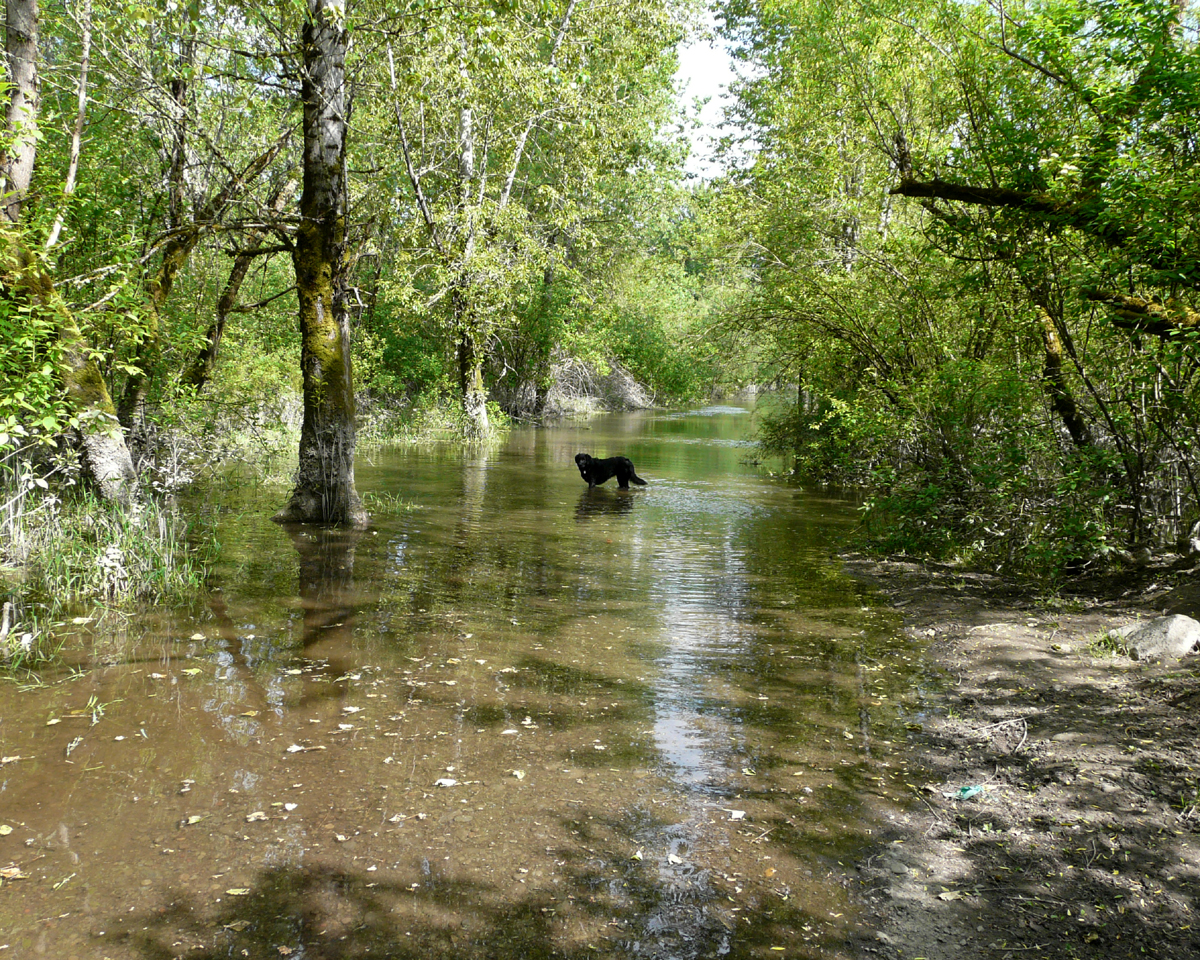
River levels are still very high, so some of the trails at the north end of the site are flooded. Nala, the all-weather, all-terrain, all-the-time puppy, does not mind at all.

Jackson Bottom 4/26/12

I took a client to Jackson Bottom Wetlands Reserve in Hillsboro (Birding Oregon p. 60).  Continuing restoration efforts at that site are creating some nice habitat, and the birds are responding.


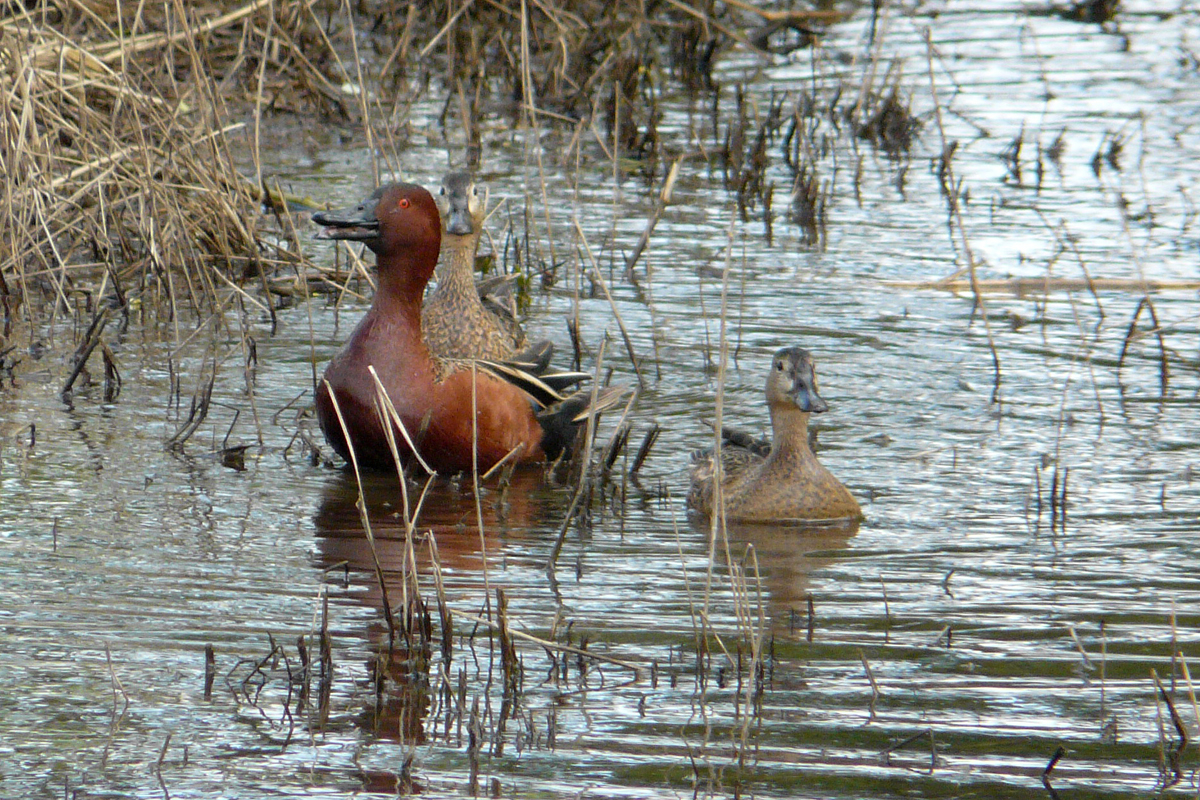
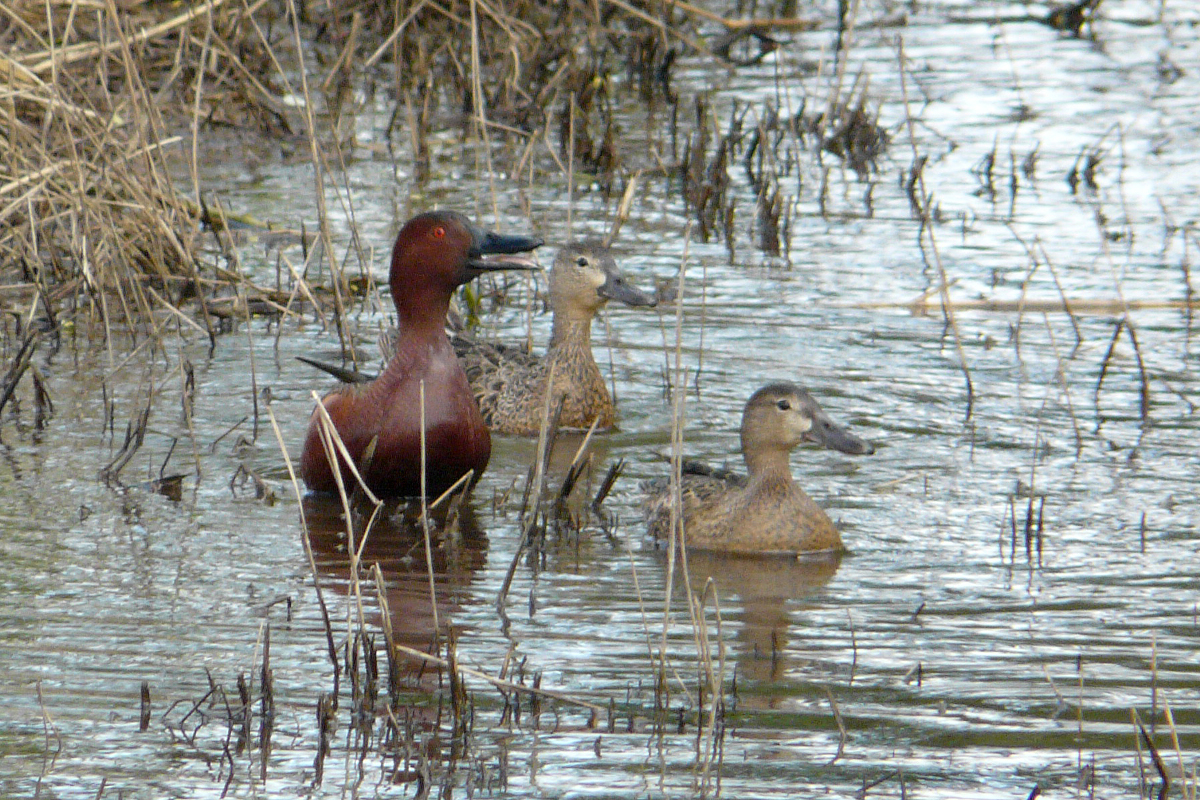
Cinnamon Teal were actively courting.

There was lots of head bobbing and chasing of rival males.

taking a break


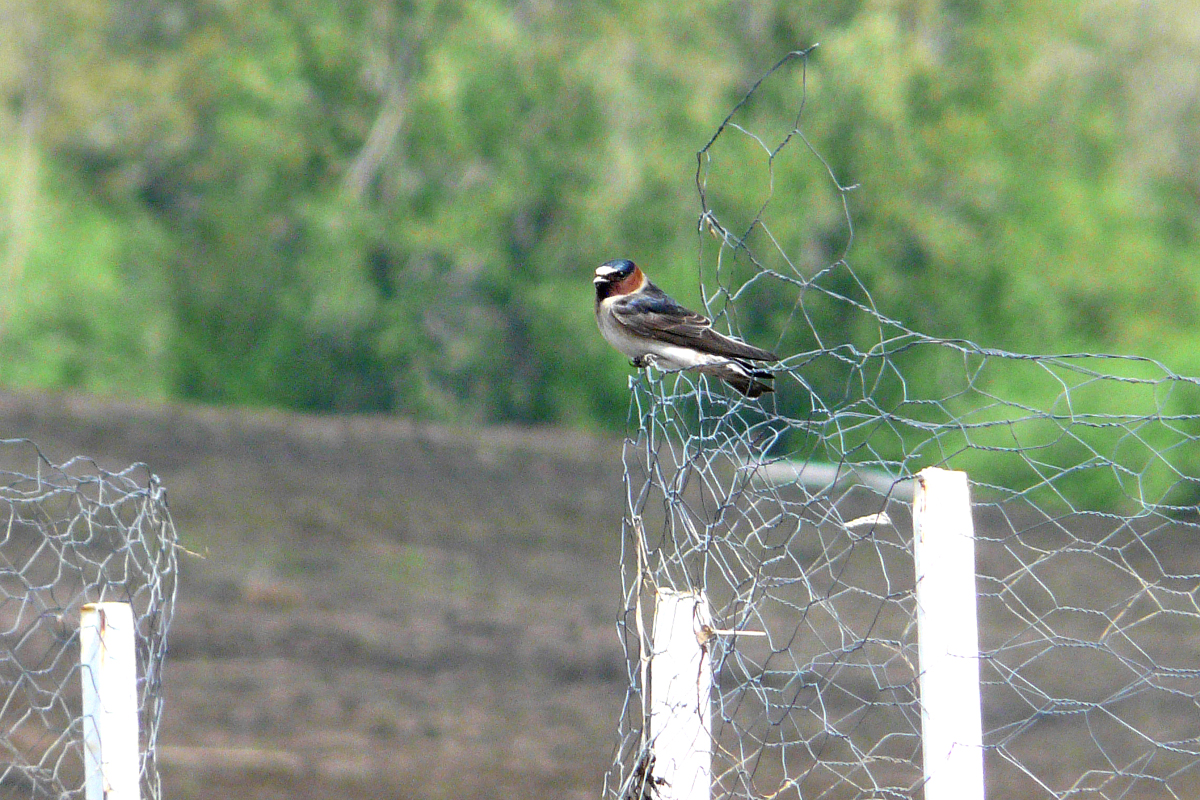
Jackson Bottom is swarming with swallows. Tree Swallows claim most of the many nest boxes.


Cliff Swallow


Restoration work has created shallow ponds and open mud, which is attractive to migrant shorebirds like these Western Sandpipers.


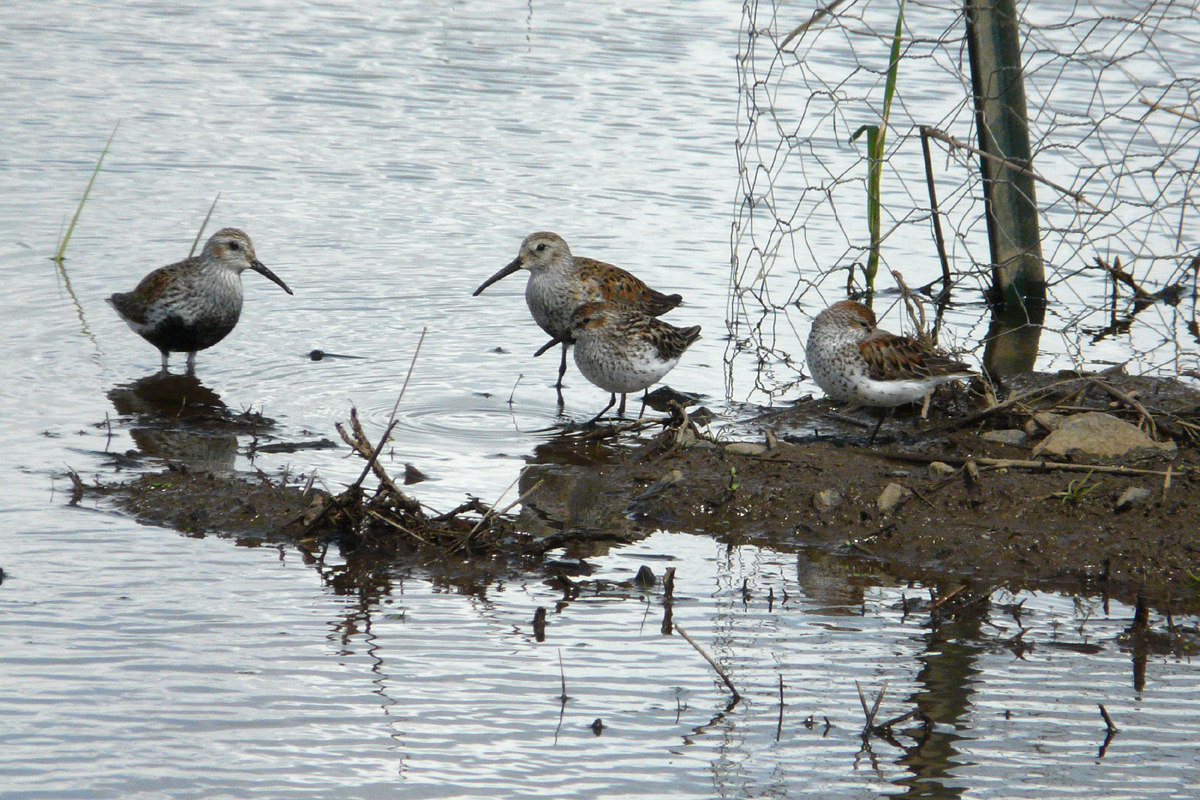
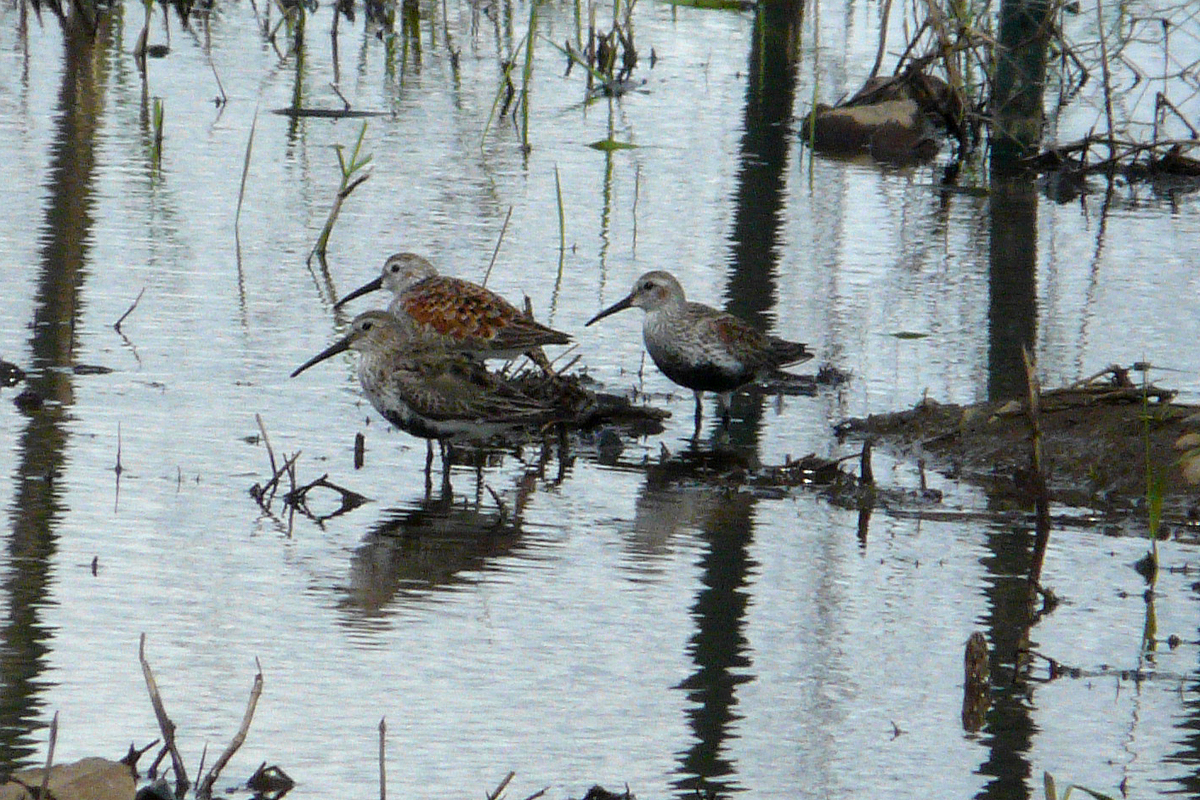
Three Dunlins in various states of molt. The front bird is least advanced, while the bird in back is in full breeding plumage.


Two Dunlins on the left, Western Sandpipers on the right.


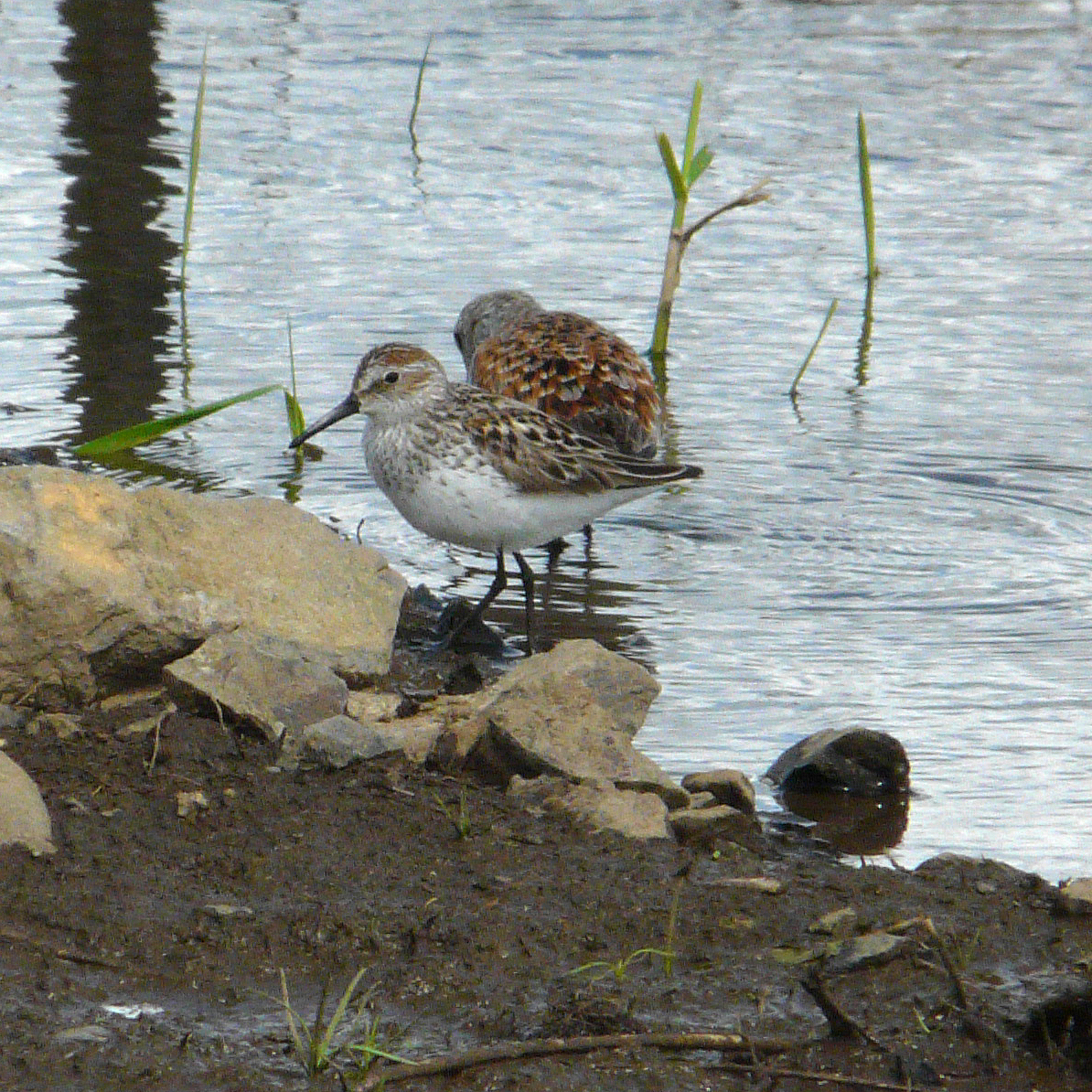
Western Sandpiper, with Dunlin in the background


Least Sandpipers


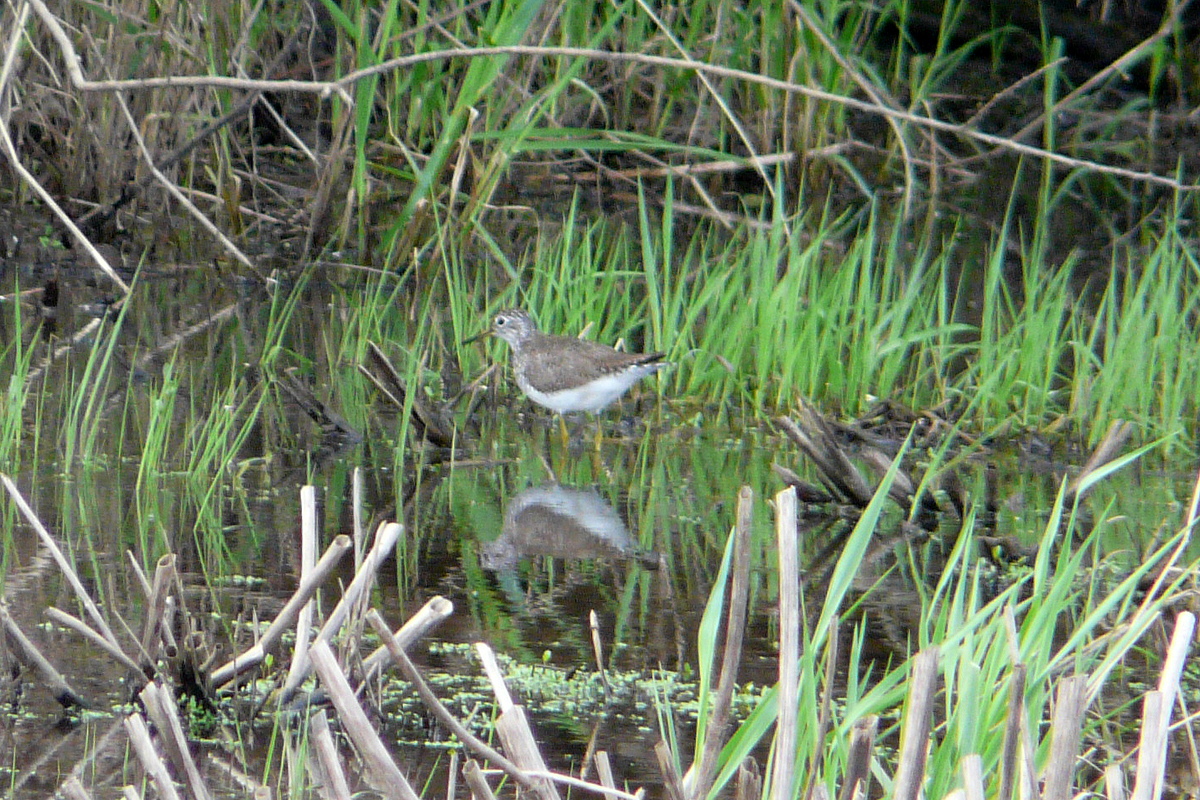
This Solitary Sandpiper was a nice surprise. They are an uncommon spring migrant.


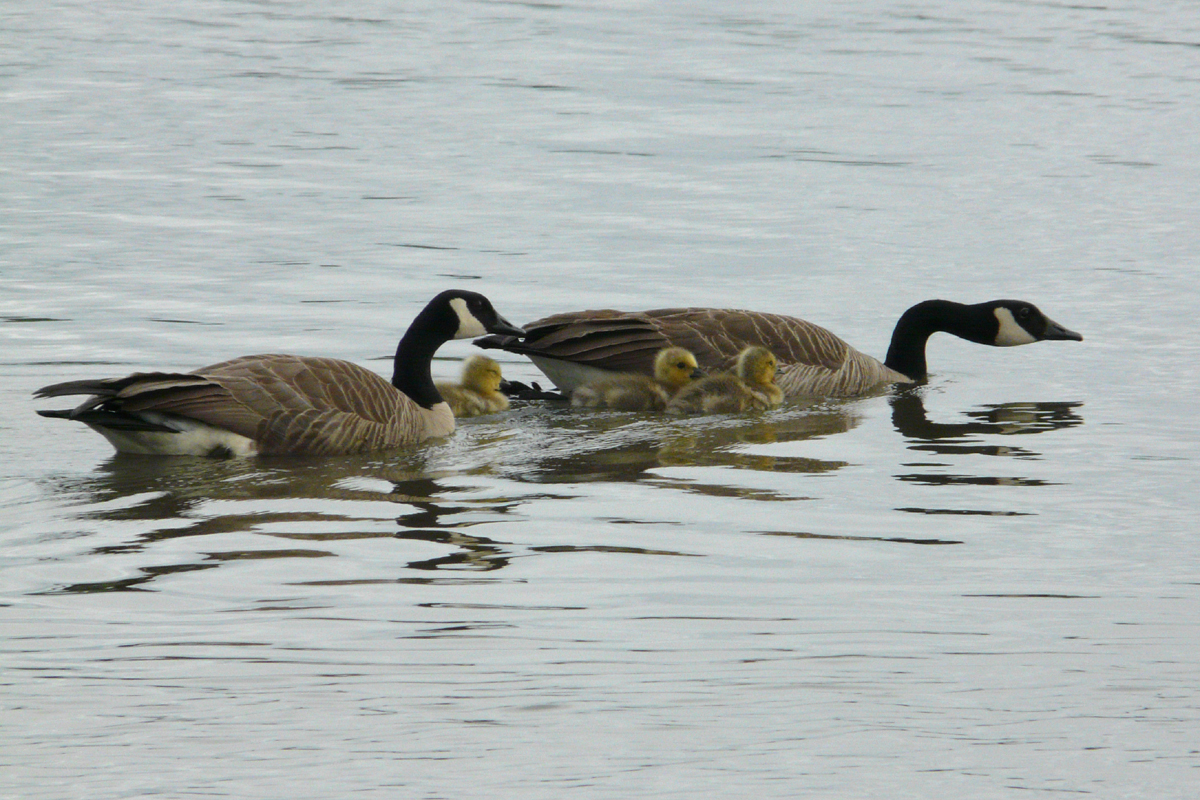
The resident Canada Geese have already hatched their broods.

April Teasers

After the wettest March on record, April has  provided a few sunny days to help awaken us from our rain-induced torpor.


I made a quick trip out to Fernhill Wetlands to look for the Swamp Sparrow that has been reported there. Between the sunbreaks, I still had to dodge a few passing squalls.


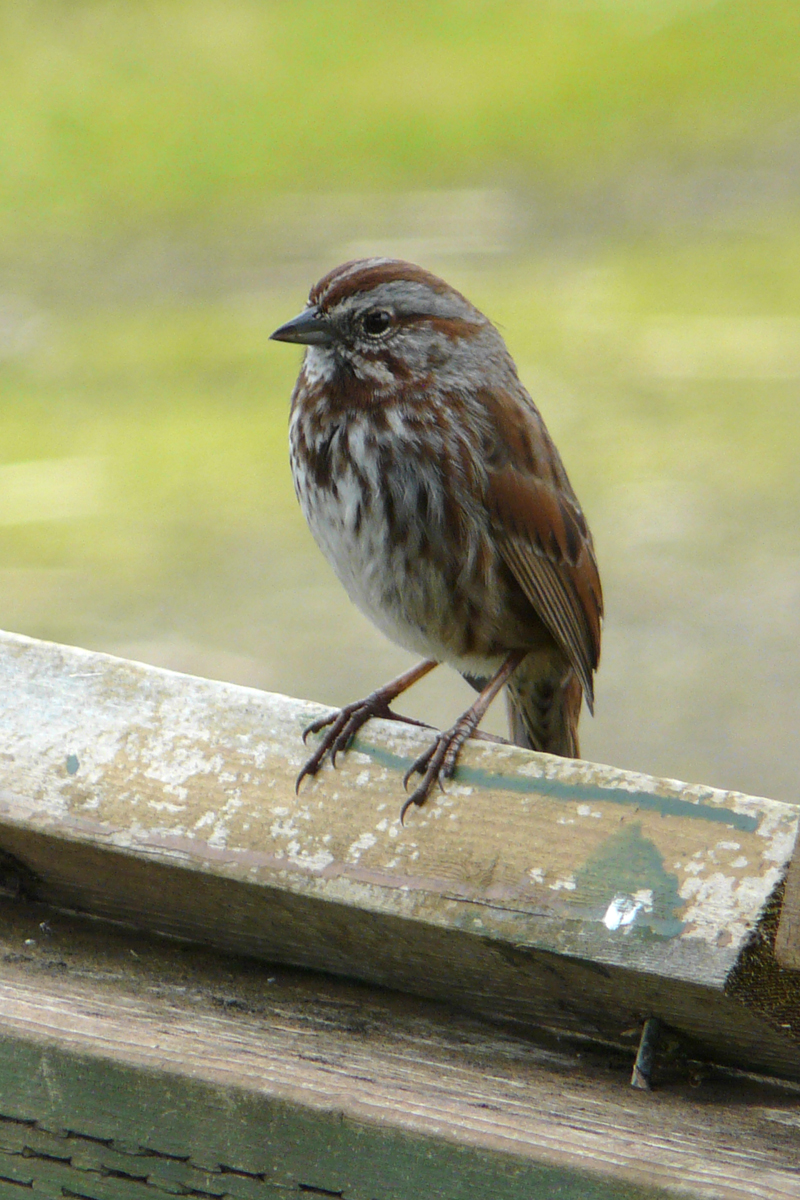
I missed the Swamp Sparrow, but this Song Sparrow was very cooperative.


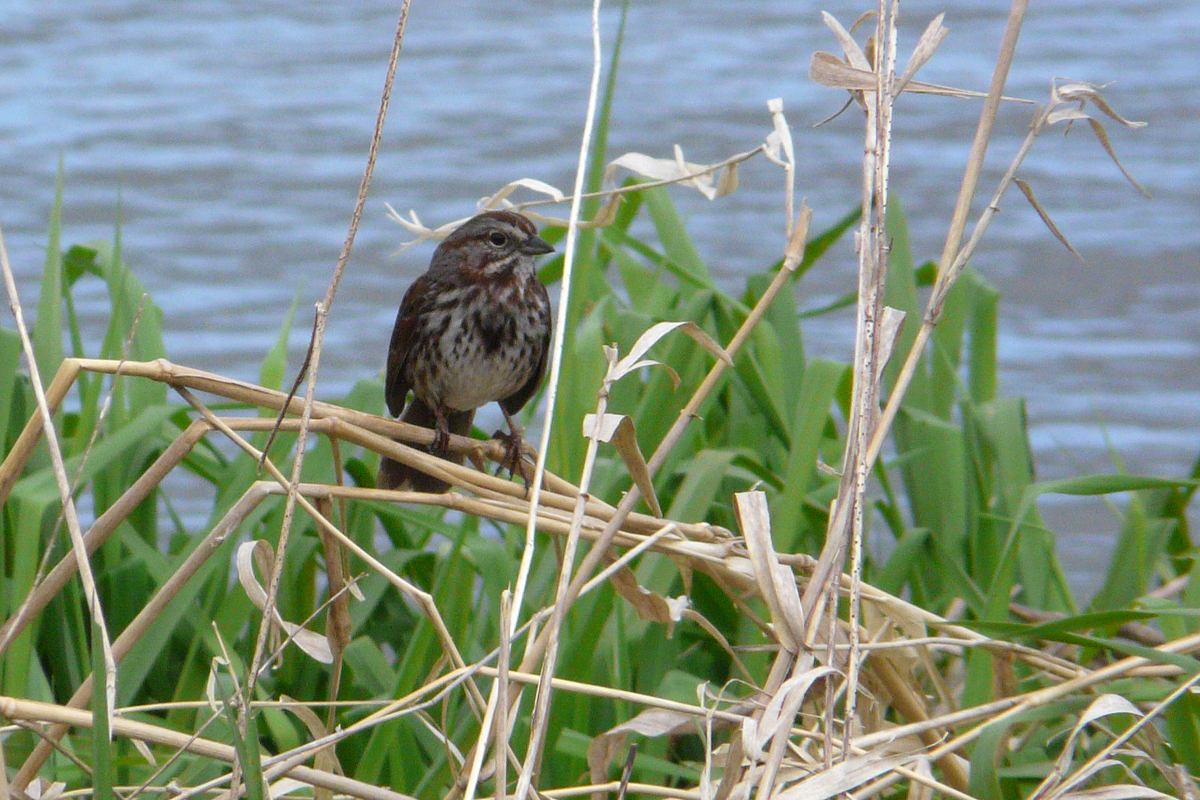
Here is the same Song Sparrow in a little more natural setting, if you consider invasive Reed Canary Grass to be natural.


Much of the loop around Fernhill Wetlands has been blocked off, supposedly to reduce disturbance to the new Bald Eagle nest.

A pair of eagles has been hanging out in this little grove of cottonwoods for years, so I would imagine they are used to birders and joggers going by, but better safe than sorry.


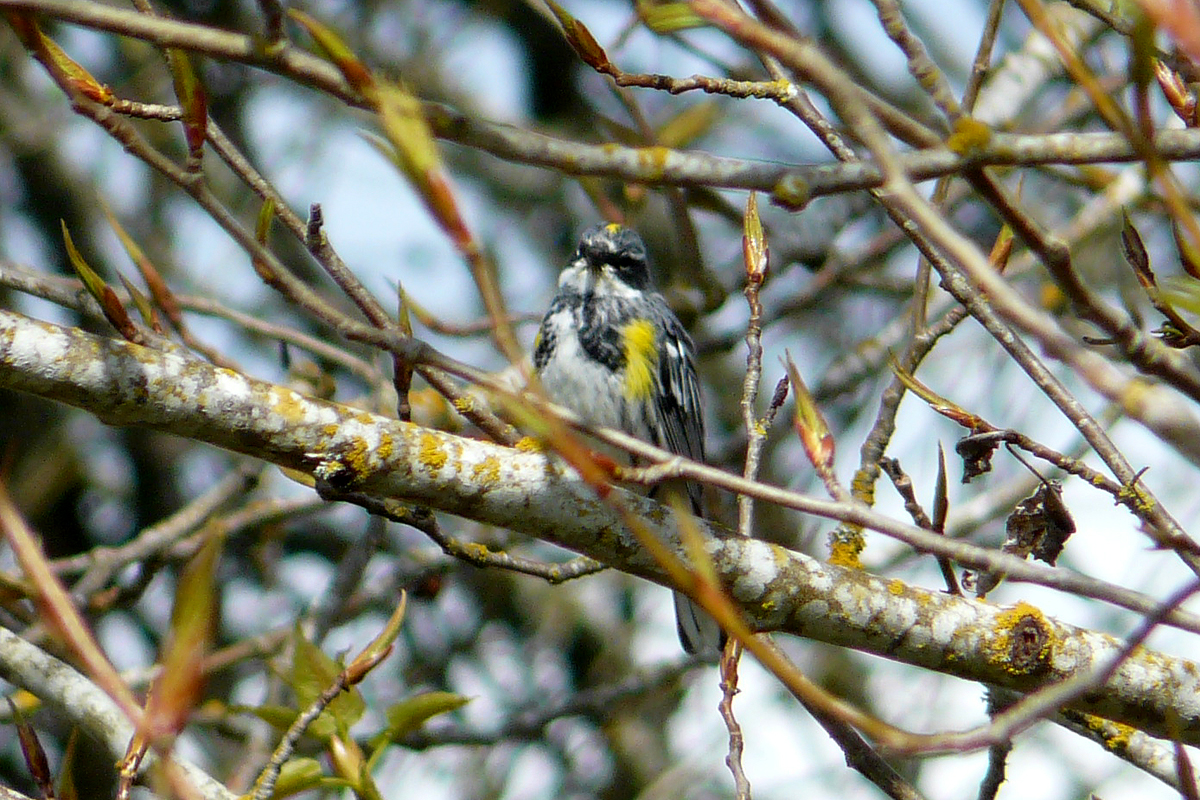
The Yellow-rumped Warblers have molted into their flashy breeding plumage. This one is an example of the “myrtle” race.


On Saturday I took some clients out to Sauvie Island for a morning of birding. This view of Mt. St. Helens is from the west end of Rentenaar Road.


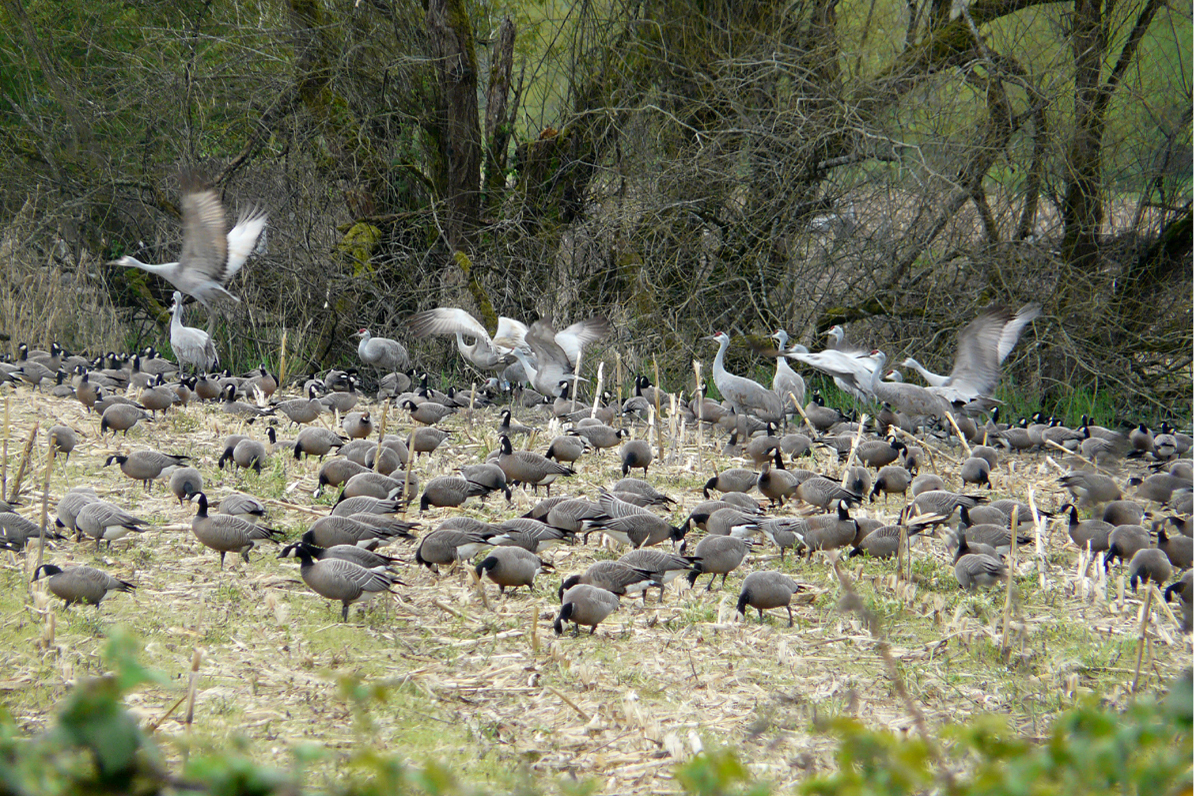
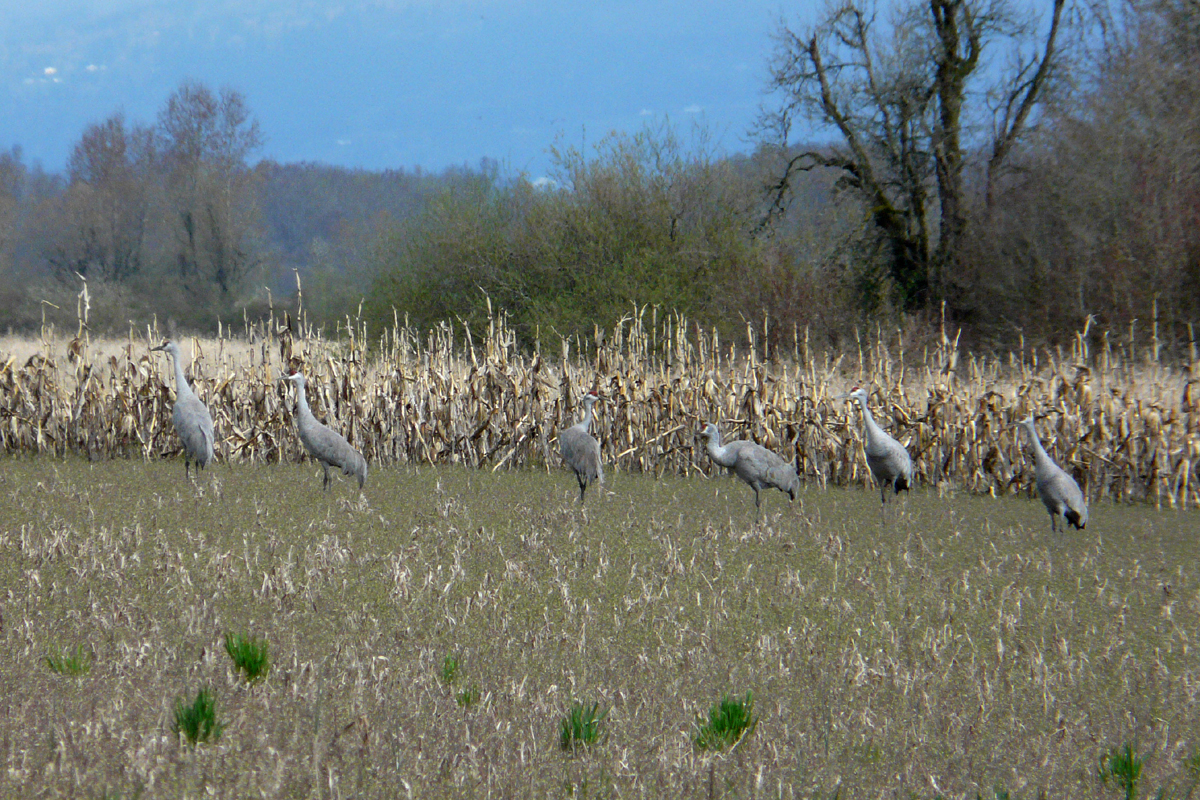
Sandhill Cranes, seen here with a flock of Cackling Geese, were common in the morning.  But as the day progressed, many birds circled up on thermals and then headed north. By noon, most of the cranes were gone.


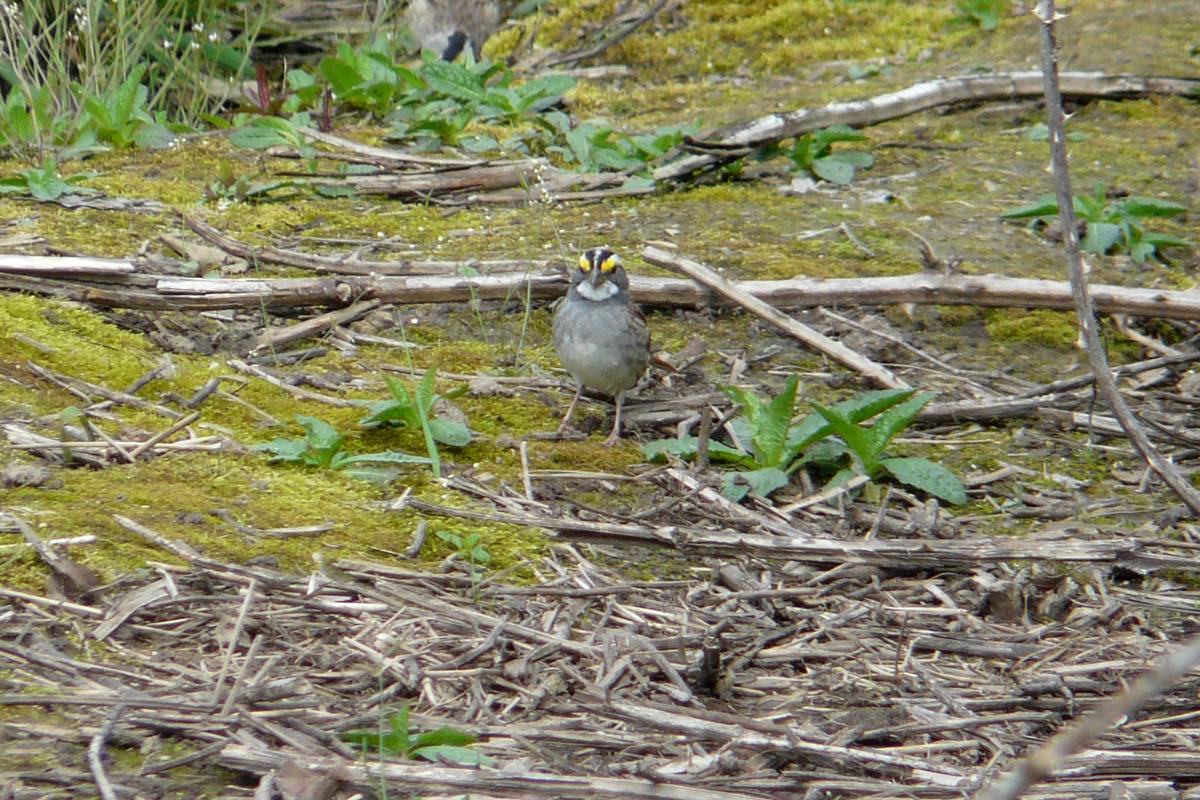
Most of the sparrows seen just a week earlier had moved on. Two White-throated Sparrows were a treat. Singing Orange-crowned Warblers and five species of swallows were other good signs that migration is stepping up. I’m looking forward to the next sunny day.

Sauvie Island 4/5/12

I took advantage of the dry weather to scout Sauvie Island (Birding Oregon p. 55) for my Little Brown Birds field trip.


Sandhill Cranes are still present in good numbers.


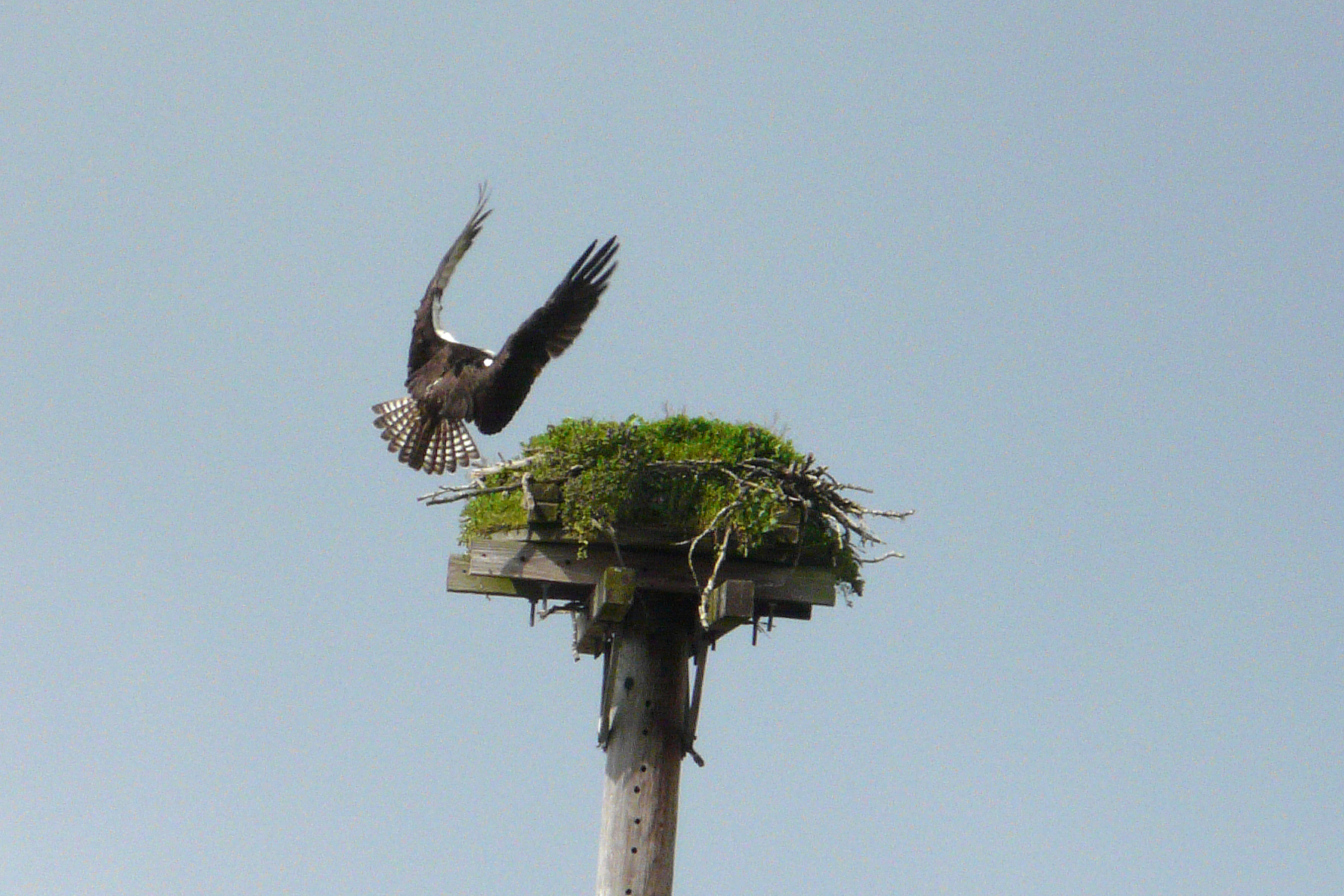
The Osprey nest along Rentenaar Road is occupied again.


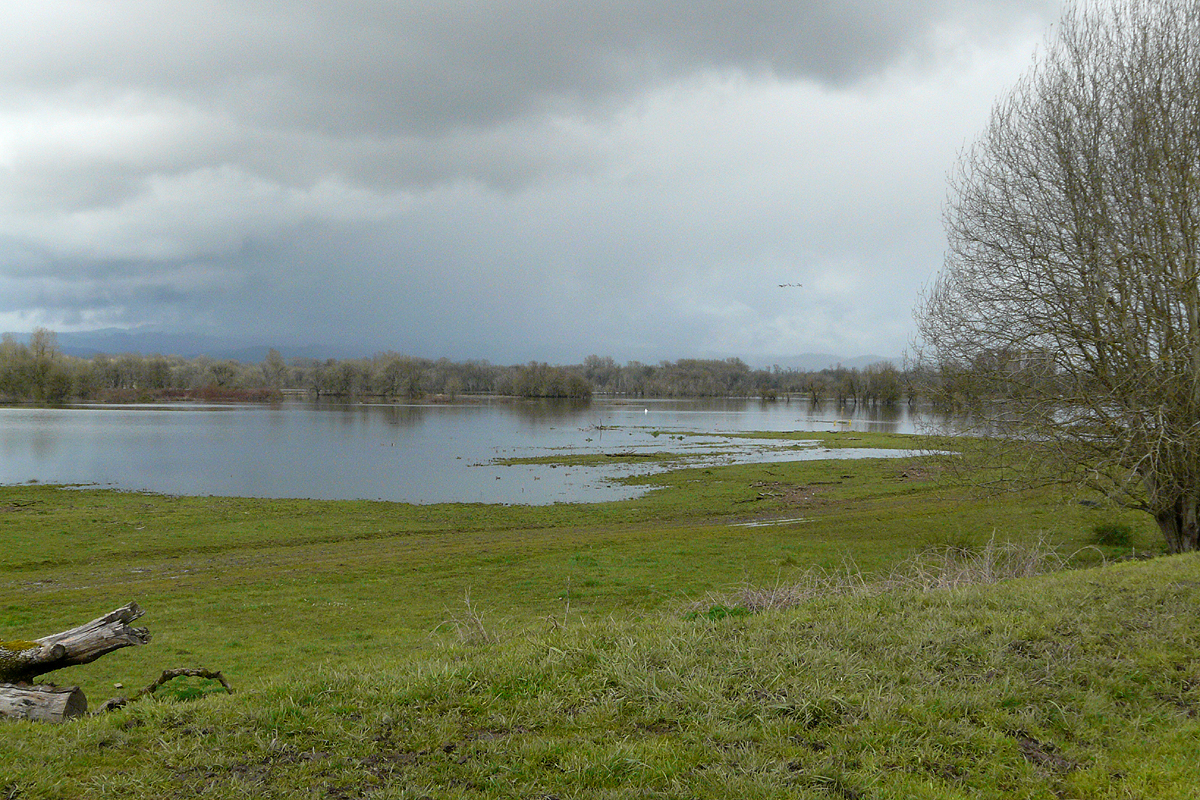
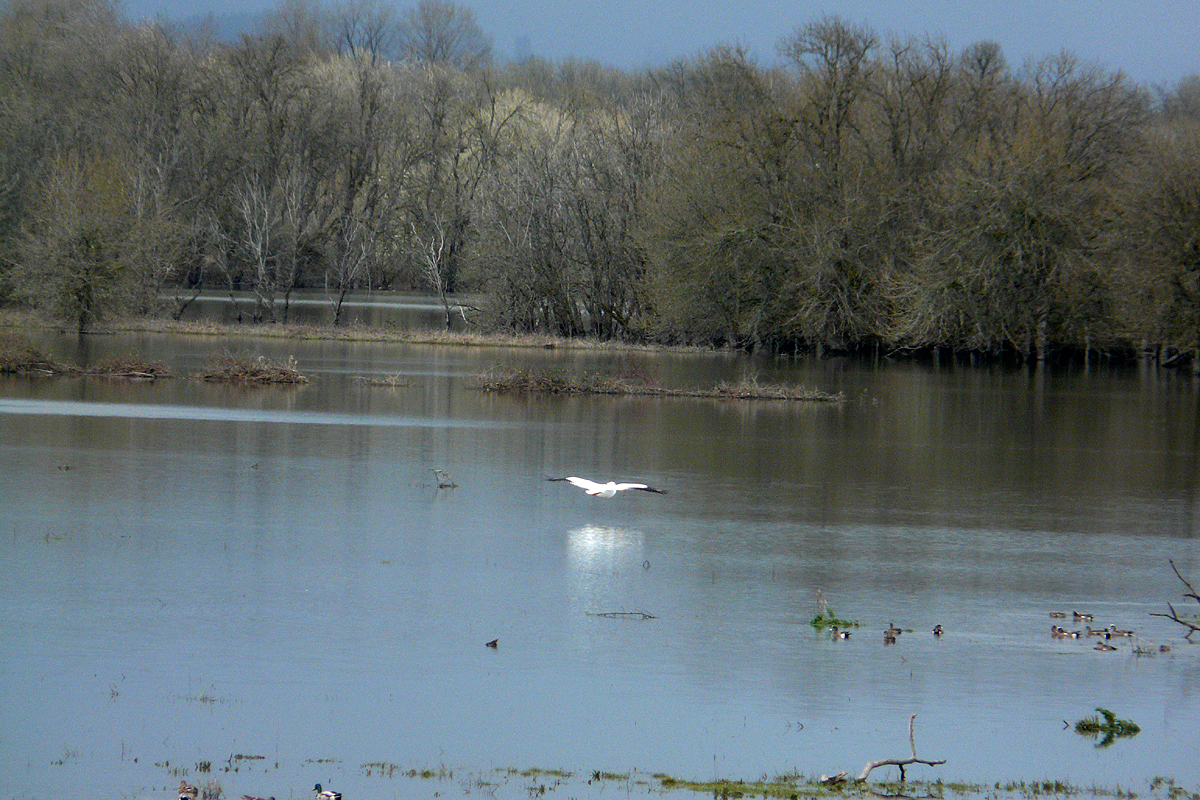
We just had our wettest March on record, so water levels are high. This is the view from the end of Rentenaar Road. The white speck on the lake is an American White Pelican. White Pelicans have become increasing common on Sauvie Island in recent summers, but sightings this early in the year are unusual.


Here is the same bird coming in to land.


I take my LBB class to Sauvie for the abundance of sparrows. (We ended up with ten species of sparrow on our trip.) Here is a White-throated Sparrow, one of the rarer species in our area.


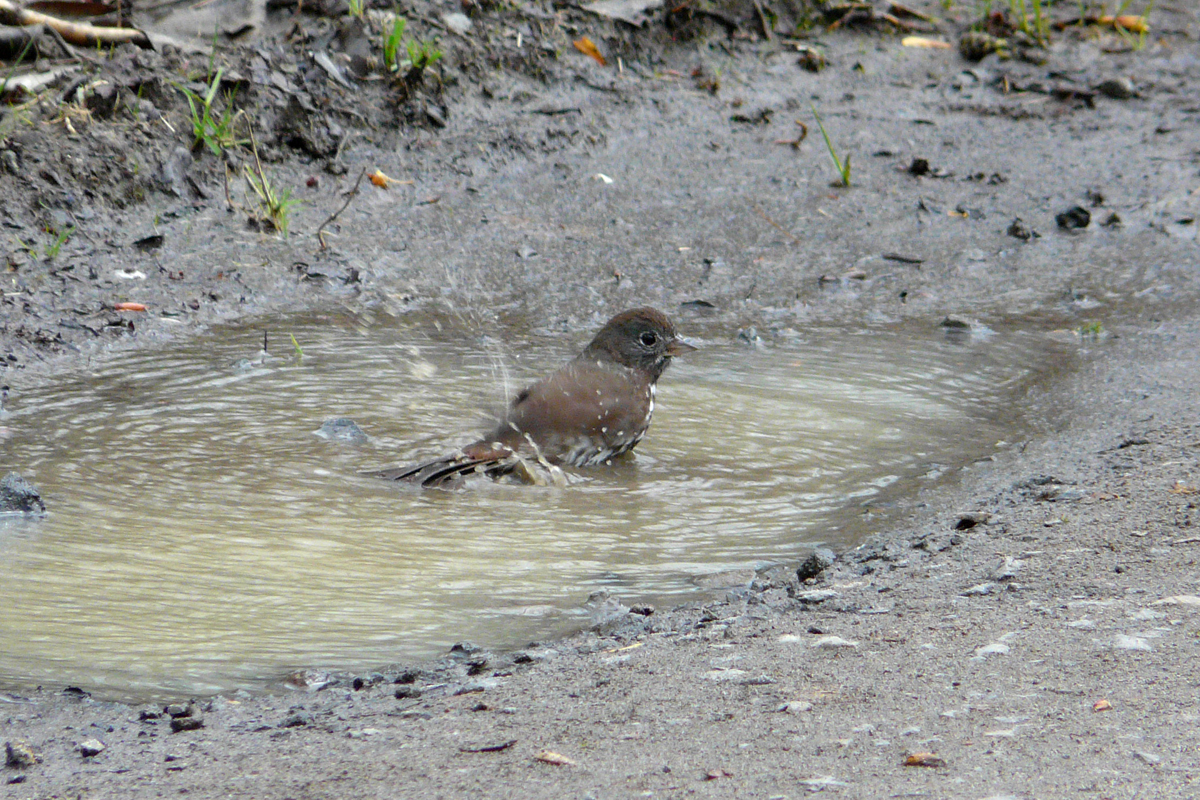
This Fox Sparrow was bathing in a puddle.


still bathing


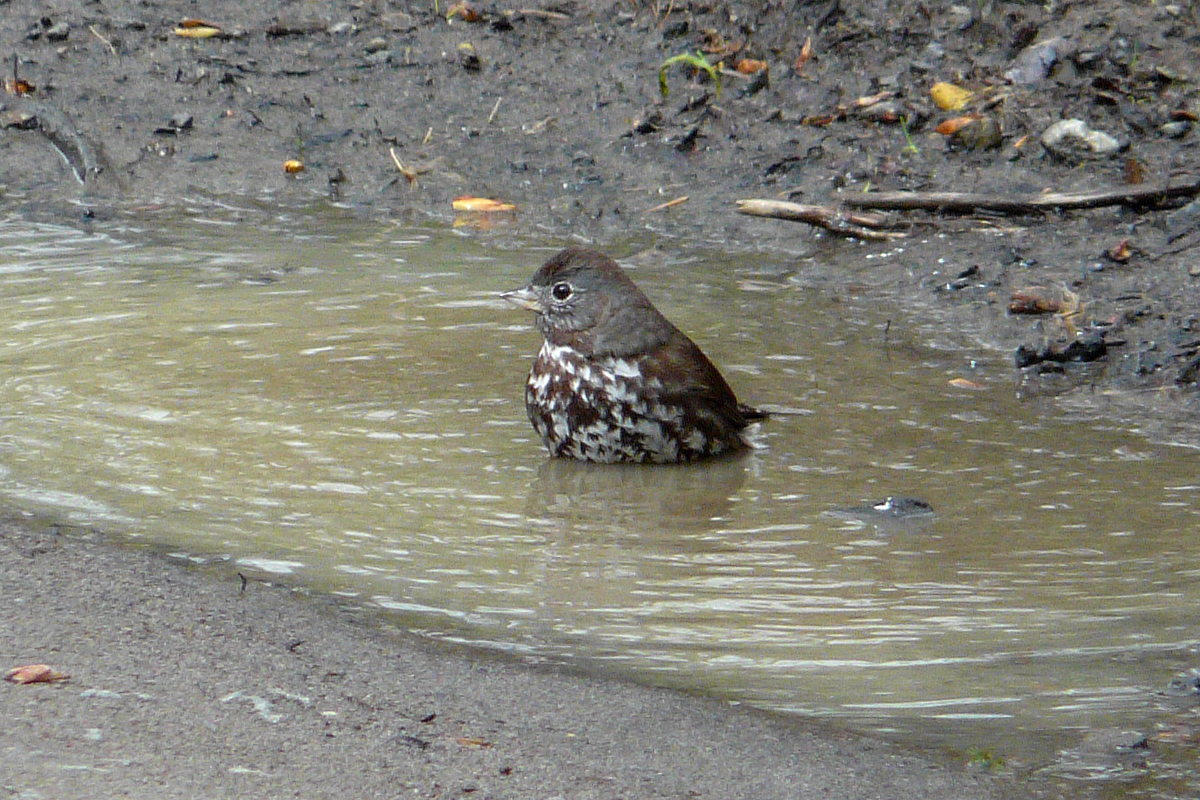
all clean

Tillamook

I took advantage of the glorious spring weather recently to visit Tillamook (Birding Oregon p. 125). Nala and I completed the Tillamook Death March, walking all the way around Bayocean Spit. This is the only spot I have visited on the Oregon coast where you can walk for several miles along the beach and not see another person. You can barely discern the south jetty on the horizon.


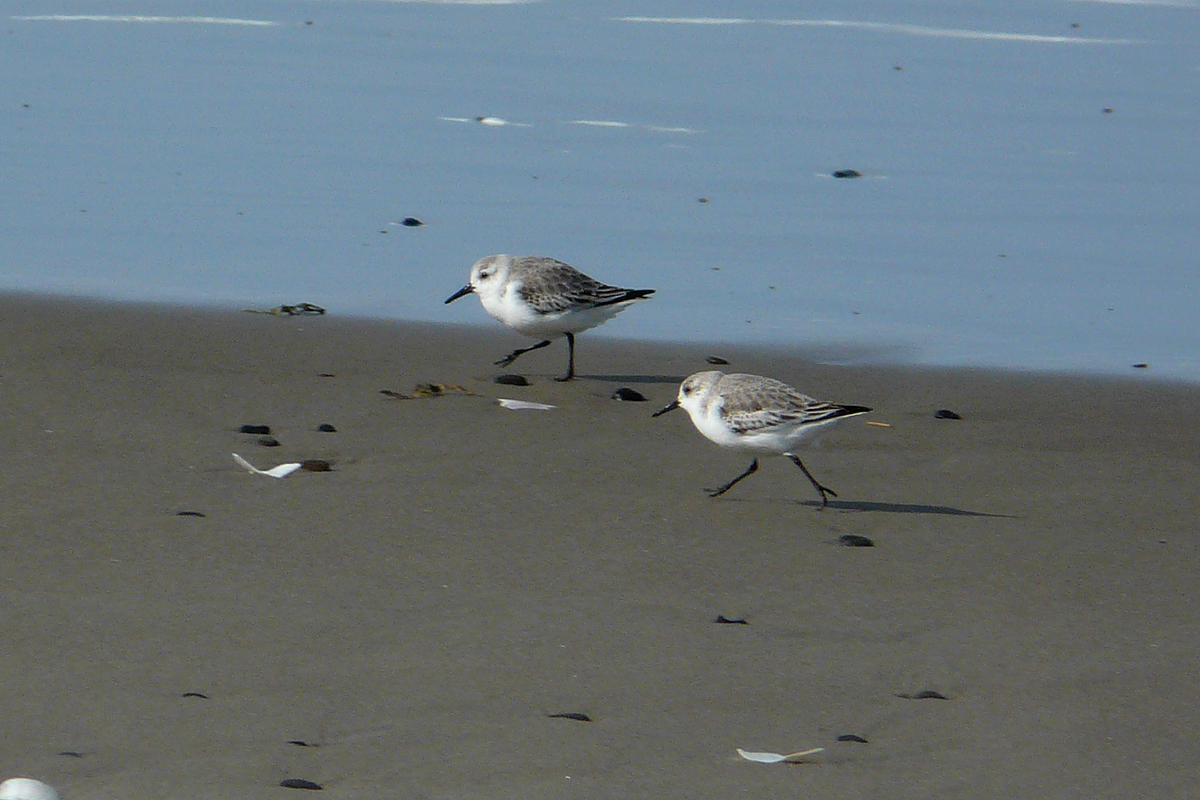
As expected, there weren’t a lot of birds on the ocean side of Bayocean. It is still too early for spring migrants and too late for winter specialties. Aside from one Black-bellied Plover, the only shorebirds were Sanderlings, shown here doing their typical running along the water’s edge.


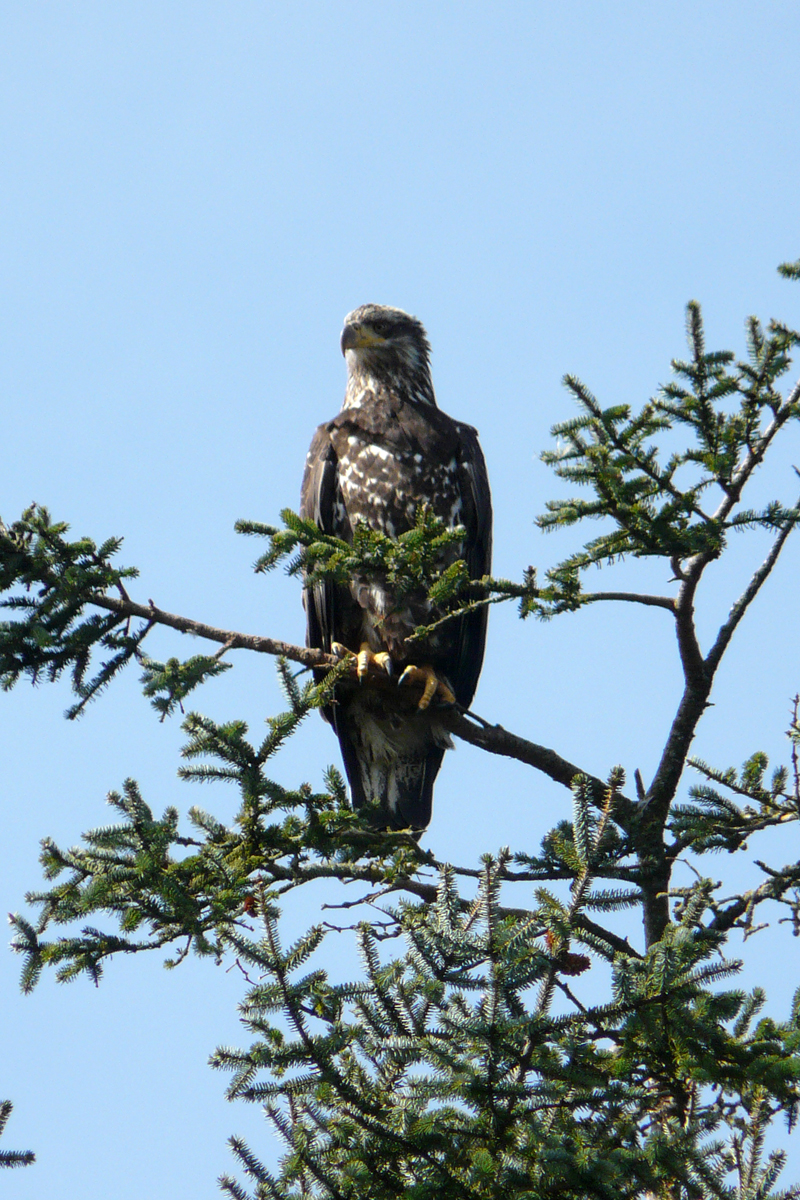
There wasn’t much going on, birdwise, on the bay side of the spit either. The tide was high and there were a lot of boats on the water. This was one of several Bald Eagles seen on our walk.


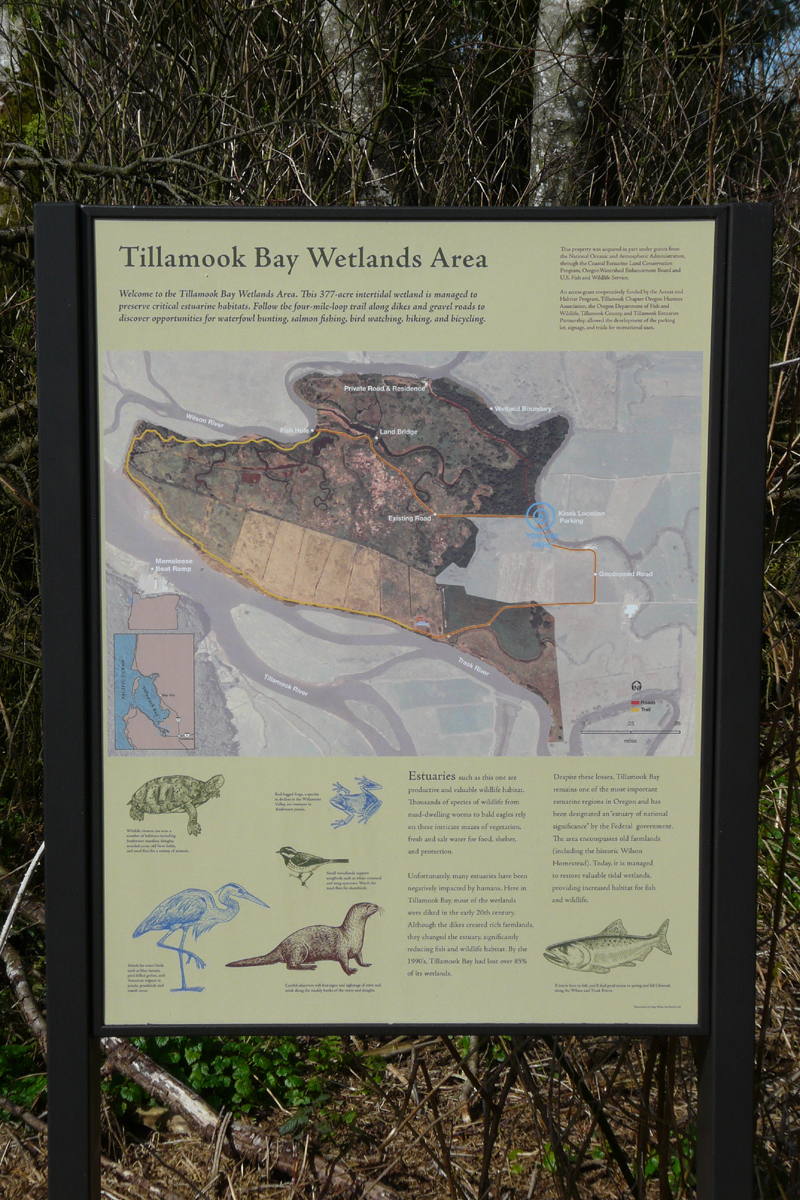
The main reason for my trip that day was to explore the Tillamook Bay Wetlands Area. While this isn’t the most scenic of sites, it provides wonderful access to wetland and meadow habitats along Tillamook Bay. From US 101 on the north edge of the city of Tillamook, turn west onto Goodspeed Road. Follow this very rough paved/gravel road for one mile, bear right, then left, then right again to end at a small parking area with this sign.


Wilson River


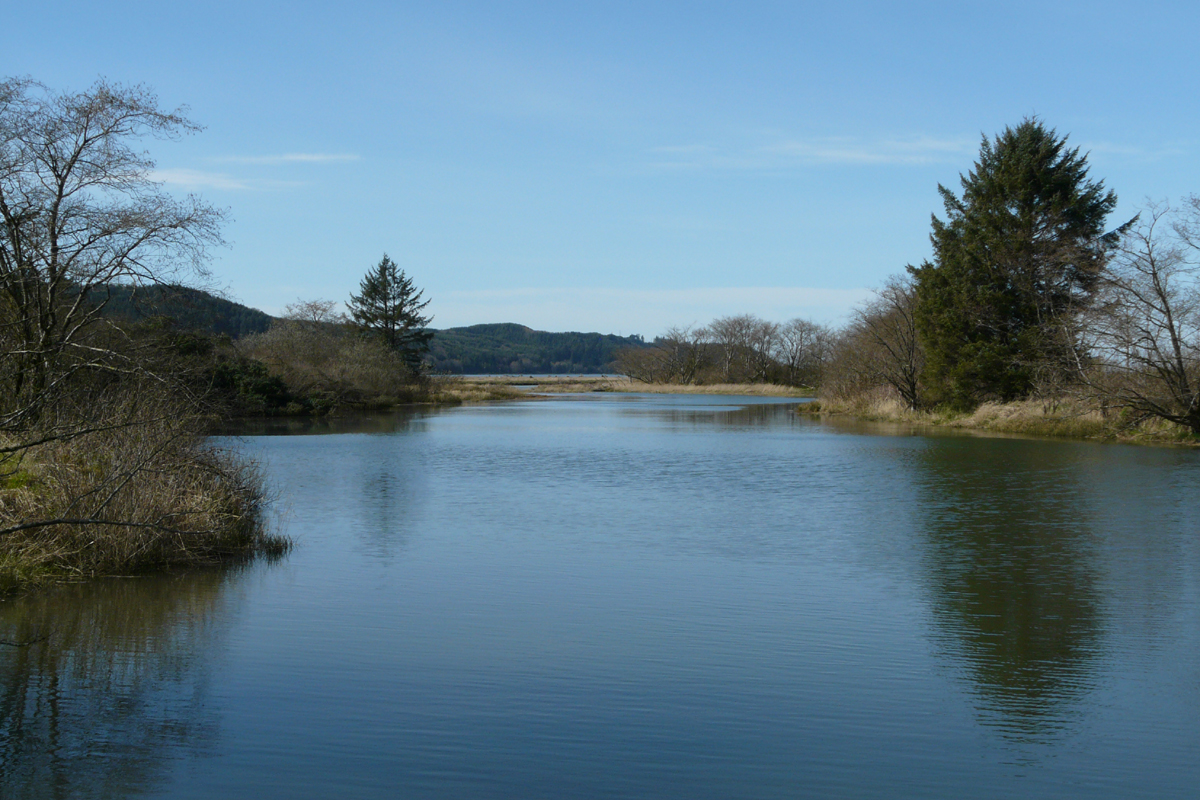
Wilson River, near where it empties into Tillamook Bay. The patch of trees in the distance is the wooded area of Bayocean Spit across the bay.


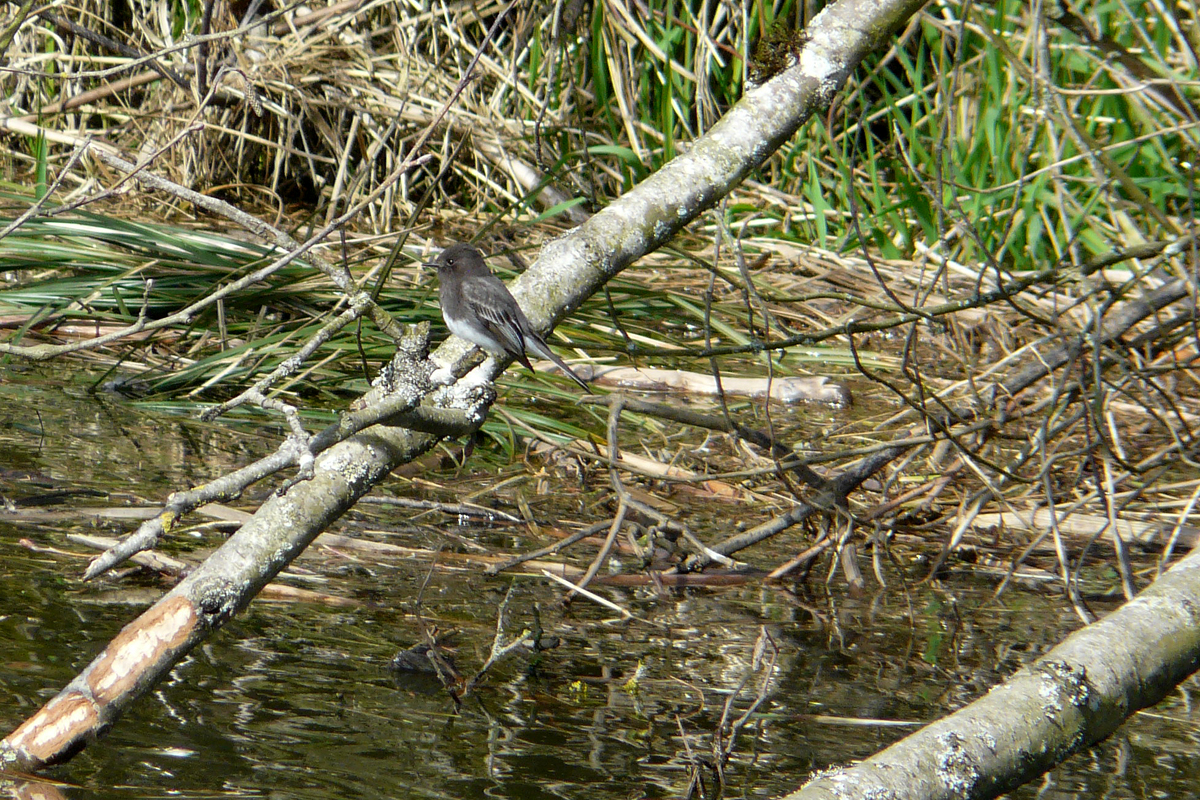
Black Phoebes were actively hunting from perches along the water’s edge.


Marshy habitat with the Coast Range in the distance. Snow is visible on the clear-cuts.

Ankeny NWR 2/23/12

I birded Ankeny National Wildlife Refuge in preparation for my waterfowl class. Waterfowl numbers have dropped considerably in the past week, suggesting that some birds have already started their northward migration.

Pintail Marsh


Pintail Marsh hosted this small flock of Tundra Swans and Dusky Canada Geese. Protecting winter habitat for the rare Duskies was the main reason for establishing the Willamette Valley National Wildlife Refuge Complex.


Most of the wintering geese were grazing in fields surrounding the marshes. The flock consists mostly of Taverner’s Cackling and Ridgeway’s Cackling Geese.


These very alert Northern Pintails seemed to be keeping watch over the nearby Green-winged Teals and American Wigeons.


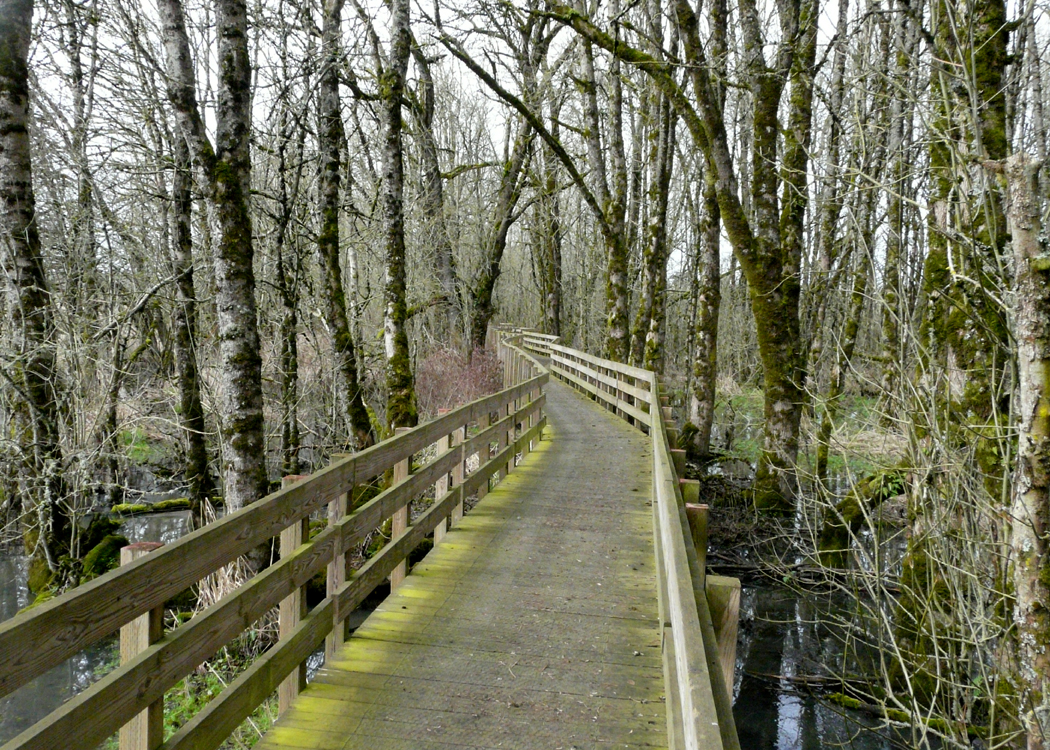
Ankeny has two boardwalks that provide access to flooded woodland habitat. This is the Rail Trail.


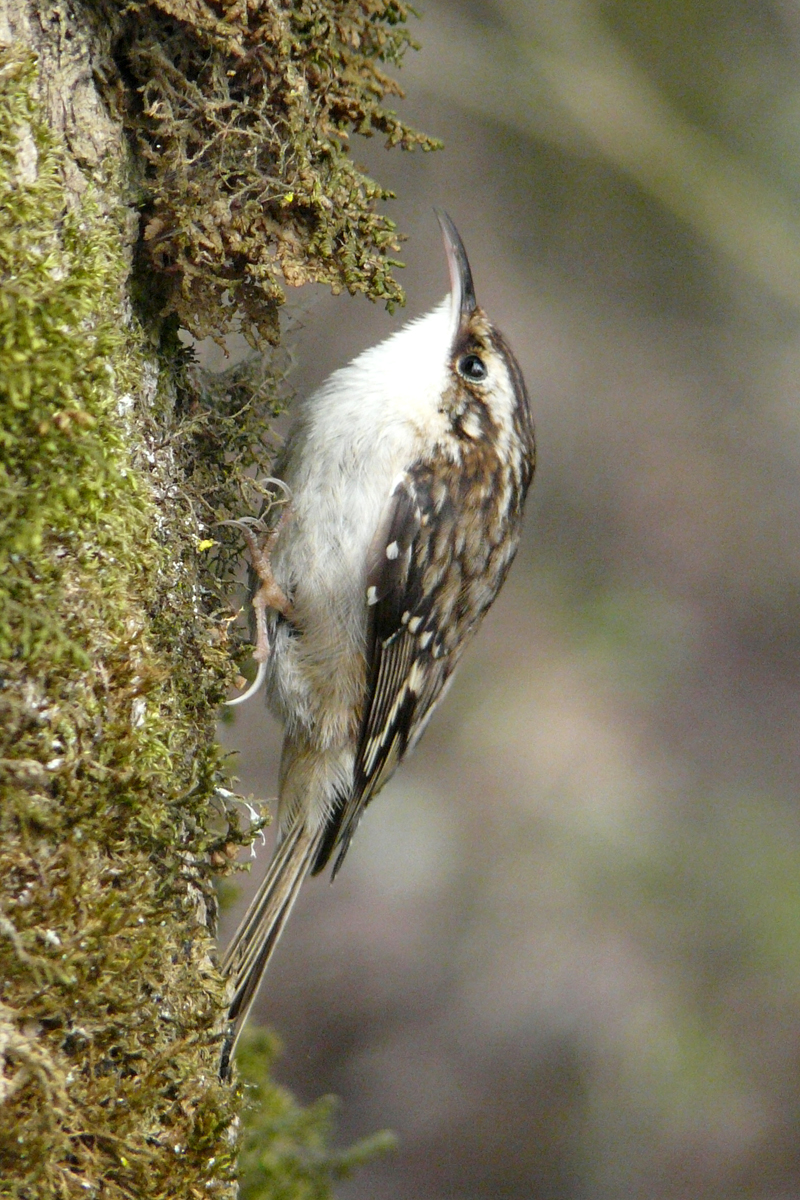
This Brown Creeper was probing patches of moss on the tree trunk.


If you look closely you can see he is holding a tiny organism in his bill.