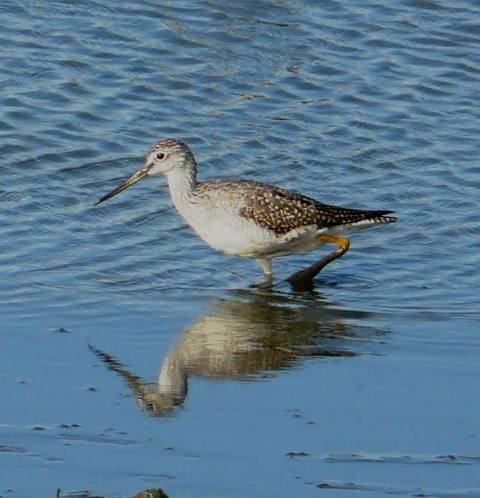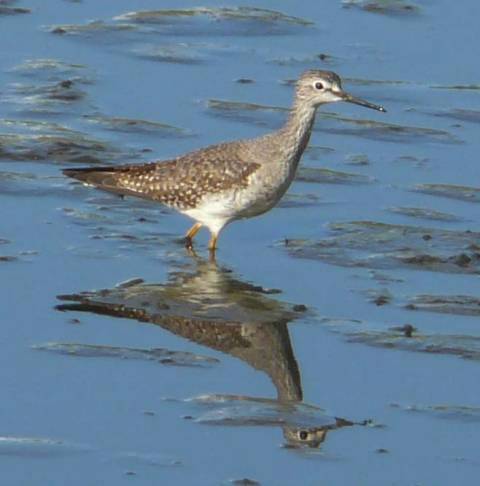
Shorebirds at Grays Harbor, WA

I took my shorebird class to Grays Harbor in Washington, one of the prominent staging areas for migrant shorebirds on the West Coast. The cold wet spring continues, so diversity was a little low, but there were lots of birds to see.
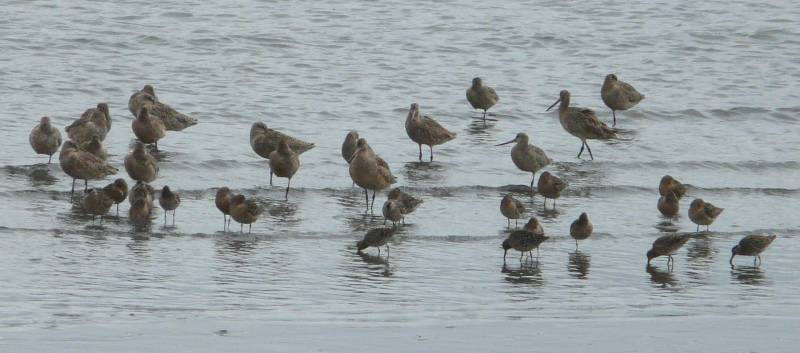
godwits-sbdowitchers
At Damon Point State Park, near the mouth of the bay, we found good numbers of Marbled Godwits and Short-billed Dowitchers.

flight
At Bowerman Basin, part of Grays Harbor NWR, a long boardwalk extends along the edge of the mudflats. As the basin fills with the rising tide, the birds are pushed closer to shore for excellent views.
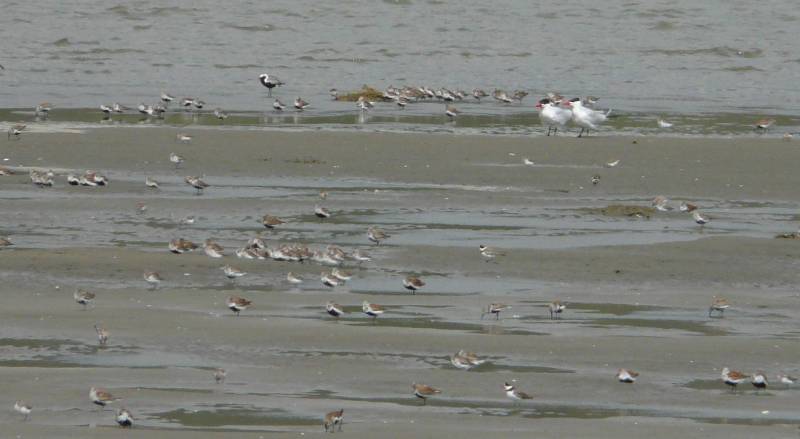
mixed-flock3
Here we can see a Black-bellied Plover, a couple of Semipalmated Plovers, two Caspian Terns, lots of Dunlin, and some Western Sandpipers.

semiplamated-plover
Here is a closer look at the lovely Semipalmated Plovers mixed in with Western Sandpipers.

western-least
I didn’t notice the bird at the time, but when I downloaded this shot of Western Sandpipers I immediately noticed the Least Sandpiper among them. Least Sandpipers feed in a crouched position with their feet far forward. On closer inspection, you can see the tiny bill and the pale legs. (lower right corner, if you are still looking)

least-western
Here’s a closer look at the Least Sandpiper between two Westerns.

Tundra Swan

tundra-swan

I watched two Tundra Swans feeding on Sturgeon Lake on Sauvie Island. The heads and necks were darkly stained from the turbid water. The profile of this bird seems very flat, suggesting Trumpeter Swan from a distance. But you can see the little yellow spot in front of the eye and the shape of the feathering on the face that identifies this bird as Tundra. I’m guessing the bulge at the base of the neck is due to the bird having a full crop. With such a long neck, it makes sense that the crop would extend up that far.

tundra-swan-takeoff

From this angle, the profile appears a little more concave, as you would expect on Tundra Swan.

Glaucous Gull

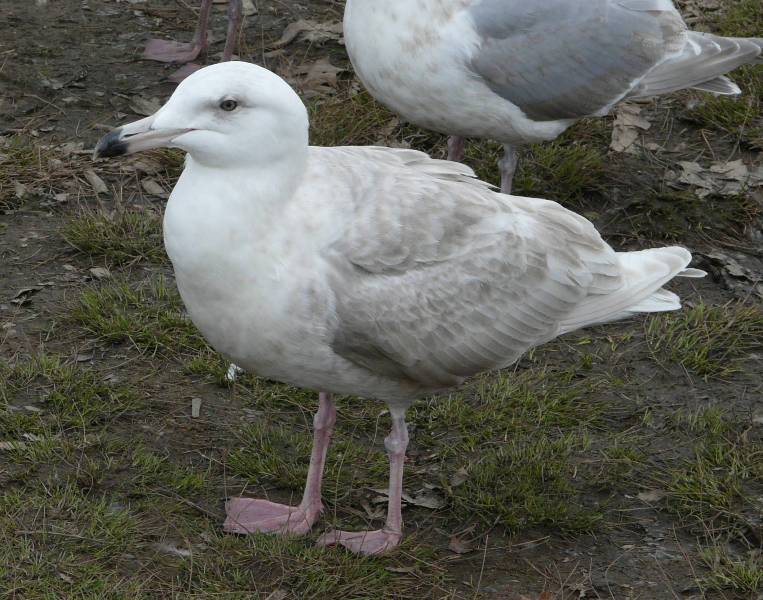
glaucous-gull
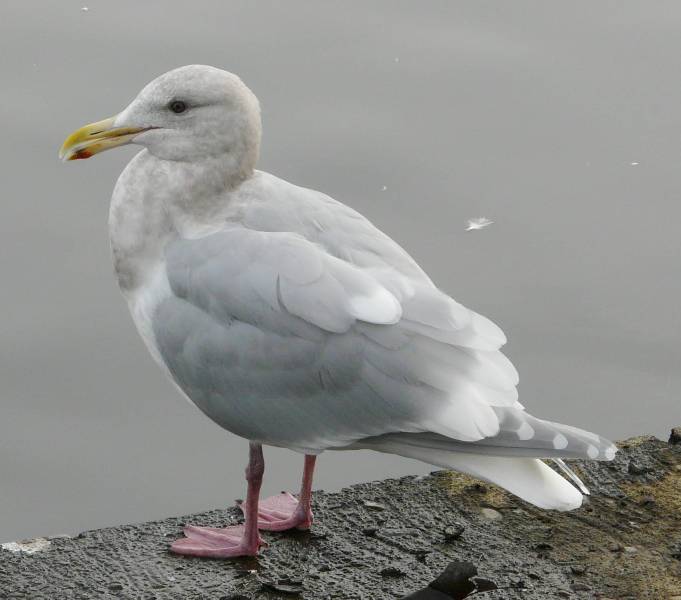
A first-cycle Glaucous Gull was among the large gull flock begging for bread at Portland’s Westmorland Park this afternoon. The large size, pale color overall, very pale wing tips,  and light pink bill with the neat black tip are all good field marks for this species at this age.

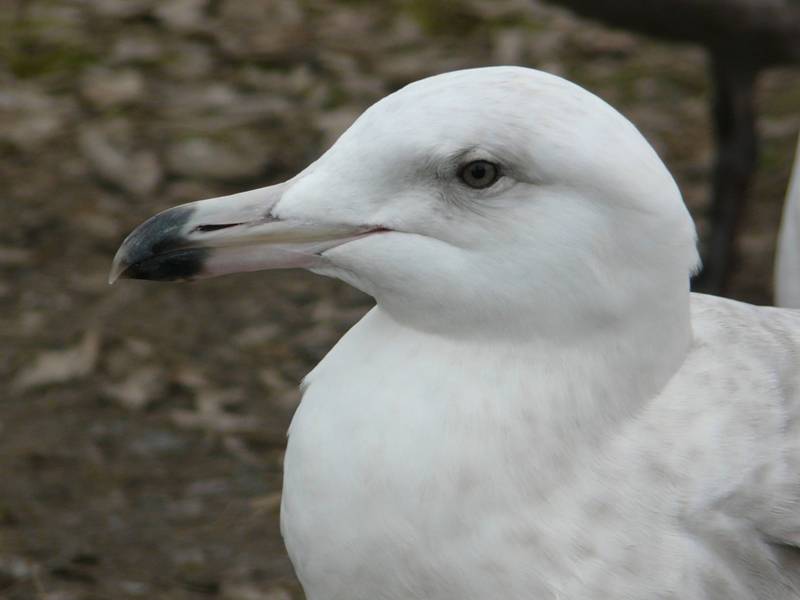
glaucous-gull-head
Here’s a closer view of the bill.  Glaucous Gulls are never common in Oregon, but several have been reported in the Portland area this winter.

Lesser Canada Goose

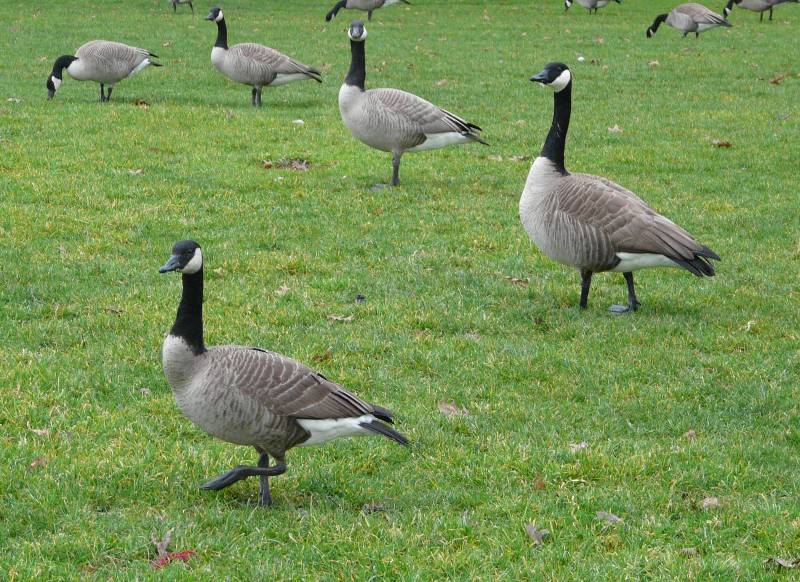
It’s time for another installment of my attempts to sort out the Canada/Cackling Goose complex. I recently had nice views of a Lesser Canada Goose (Branta canadensis parvipes).

lesser-canada-grazing
This bird stood out from the nearby Western Canada Geese by the slightly darker barring on his upper breast. Some populations of this subspecies are considerably darker than this.

lesser-canada-western-canada
Here is the Lesser Canada in front of the larger Western Canada Goose (Branta canadensis moffitti). Note the smaller overall size of the Lesser, and the proportionally shorter neck.

lesser-canada
Lesser Canada Goose in profile. The bill is almost half the total length of the head. The upper neck is quite thin.

taverners-cackling
Compare these Taverner’s Cackling Geese (Branta hutchinsii taverneri) to the Lesser Canada. Taverner’s Cackling has a uniformly thick neck and shorter bill. Notice how the wing tips extend just beyond the end of the tail. Canada Geese have shorter wings.

cackling-cackling-taverners-cackling
Here is a Taverner’s Cackling Goose within a flock of Cackling Cackling Geese (Branta hutchinsii minima). Note the longer thick neck and slightly longer bill than those on minima.

Slaty-backed Gull

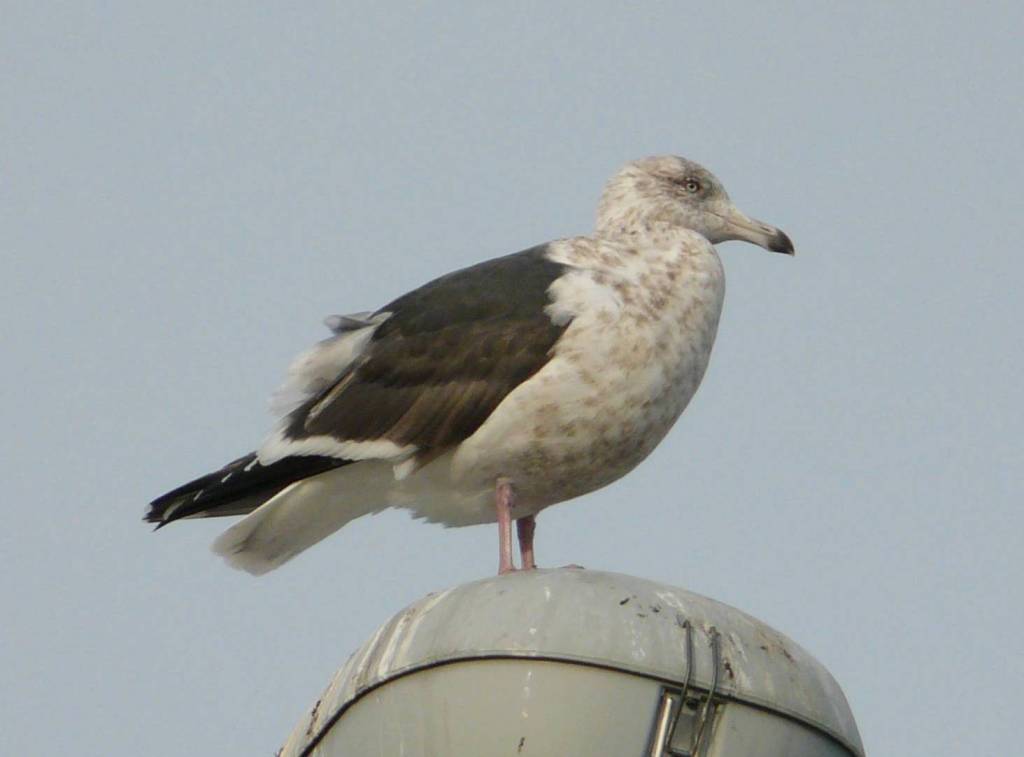
My first lifer of 2009 was a Slaty-backed Gull that has been hanging out in downtown Portland lately. It was a pretty painless twitch on the lifelist; 1. learn about the bird from email   2. drive downtown and find a parking space   3. find the gull standing on a light on the Broadway Bridge   4. ka-ching!

slaty-backed-gull

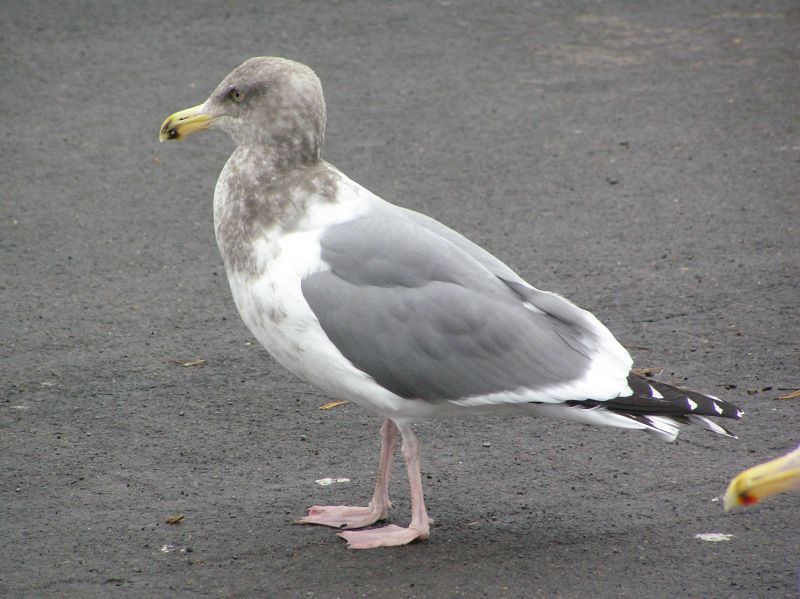
While I didn’t have to work very hard for this particular bird, it takes a well-earned spot on my list. I have been studying gulls rather intently for several years, learning to recognize the common species. (One needs to be familiar with the common birds if you want to recognize a rarity when you see one.) Slaty-backed has been very high on my want-list for two reasons. First, it is normally found in Asia, so it is hard to find in Oregon. Second, several years ago I thought I had found one, only to learn that I had made an identification error. While the incident was rather embarrassing (I immediately reported the bird, as I should have.) it did provide a valuable opportunity to learn what a Slaty-backed Gull really should look like.
westernxglaucous-winged2

This is the bird that got me excited a few years ago. It is actually a third-cycle WesternXGlaucous-winged hybrid. It bears some similarities to a Slaty-backed, but the mantle is too light, the markings on the head are too evenly mottled, and the bill is too fat and bulbous. The pale eye on this bird is unusual, adding to my confusion. While many birders pointed out my error, one actually explained why this wasn’t a Slaty-backed Gull, providing me with a great boost in my gull identification skills.

slaty-backed-dance

So while I didn’t need a lot of luck or effort to see this particular bird, seeing it provided a bit of closure for one facet of my birding development. Thus I join this third-cycle Slaty-backed Gull in the Happy Dance to celebrate another tick on the life list.

Gull Gallery

Portland’s Westmoreland Park is a great place to find a variety of gull species during winter. Seven species and one hybrid are regular, and there is always the possibility of something more unusual showing up.

california
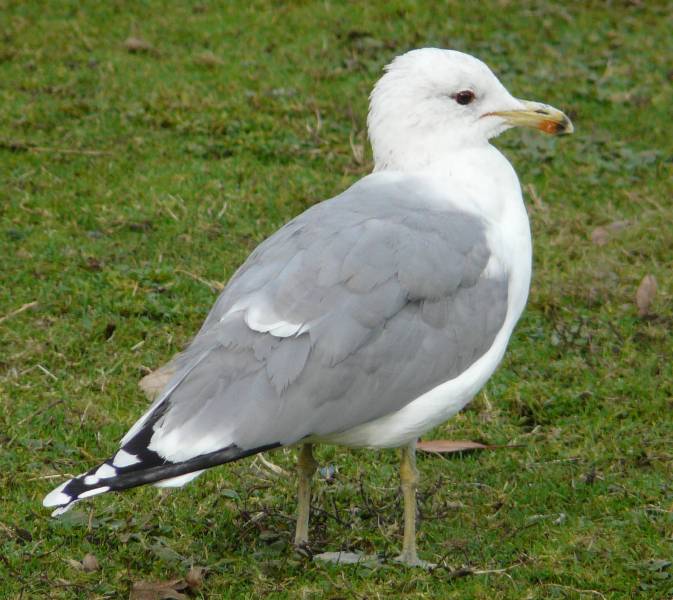
California Gull:  medium-gray mantle, long dark wingtips that extend well beyond the tail, long straight bill with both red and black gonydeal spots, yellowish legs and feet with blue-gray cast.

ring-billed
Ring-billed Gull:  smaller size, neat black ring around bill, long dark wingtips, yellow legs and feet.
ring-billed-tucked
Here’s the Ring-billed Gull at rest. Note the fine streaking on the head and the red orbital ring.

mew-gull
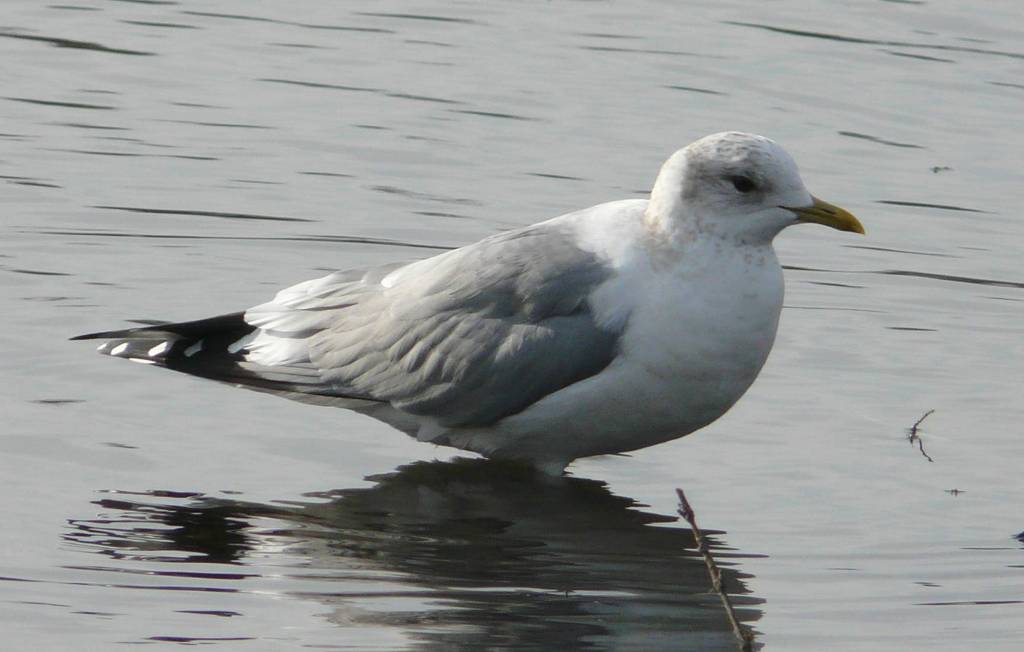
Mew Gull: petite yellow bill, round head, long wing extension. These small gulls will mix with the Ring-billed flock, but generally don’t mix with the larger gulls.

glaucous-winged
Glaucous-winged Gull:  Note the lack of contrast on this bird. The short wingtips are the same color as the mantle. The head and upper breast are covered with an even blurry mottling. The only parts that don’t blend in are the pink legs and feet.

western
Western Gull:  large size, dark gray mantle, short black wingtips, never any marks on the head – even in winter. This species is much more common on the coast, but a few make it in to the Willamette Valley in winter.

olympic-gull
Western Gull X Glaucous-winged Gull hybrid (Olympic Gull):  an even blending of characteristics of both parent species. The mantle is darker than a pure GW, but Westerns never show this much mottling on the head and neck.  The wingtips are dark, but not actually black. You can tell this is a third cycle individual by the tiny bit of black on the tail and by the odd pattern on the bill. These hybrids show a great deal of variation, and are often the most numerous gulls in the area.

herring
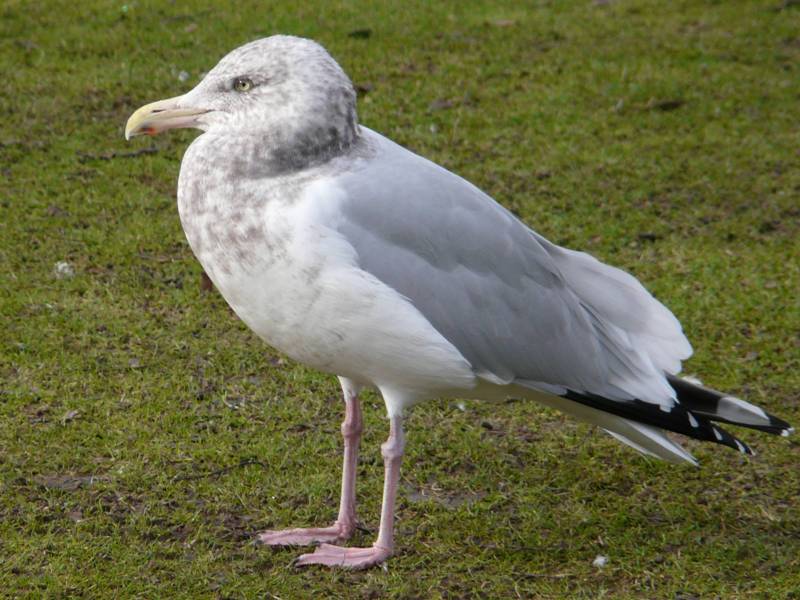
Herring Gull:  sloping forehead, pale eye, bill not too thick, black wingtips that extend beyond the tail.

thayers
Thayer’s Gull:  rounded forehead, thin bill, dark eye (usually, not always),  long black wingtips with much more white on the underside.

Wigeon ID

I combed the wigeon flocks at Portland’s Westmoreland Park and found examples of both species.

eurasian-wigeon-male
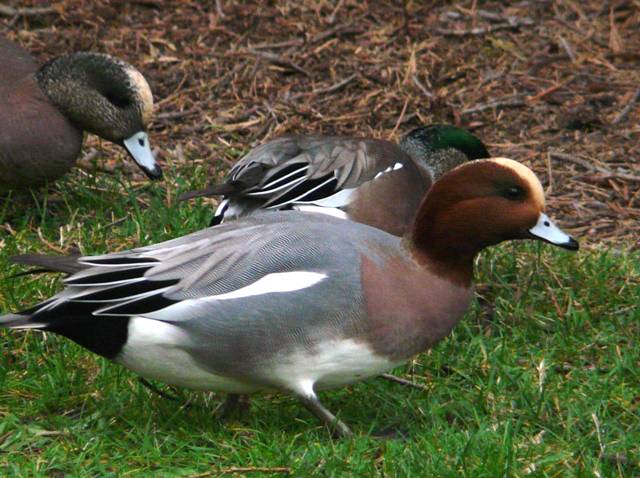
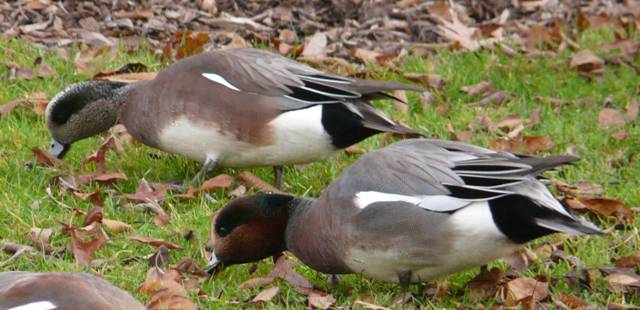
The bird in front is a male Eurasian Wigeon; the two in back are male American Wigeons. On the Eurasian, note the rusty head with the blond crown and the clear demarcation between the rose breast and gray sides.
eurasian-wigeon-male2
another shot of the male Eurasian

eurasian-wigeon-female
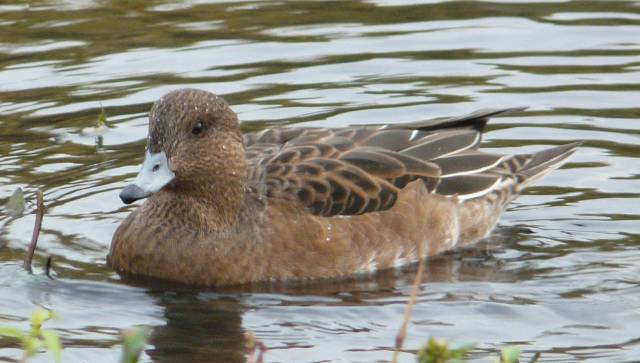
The female Eurasian Wigeon has a warm brown head that blends in with the breast. The markings on the head are diminshed in the throat area.

eurasian-wigeon-female2
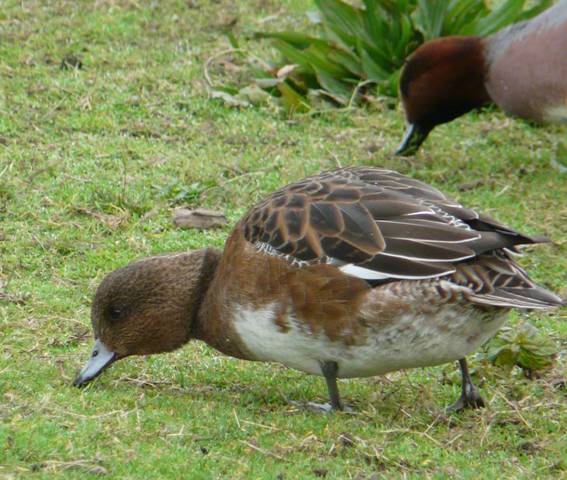
Here’s the female Eurasian Wigeon with the male in the background.

american-wigeon-female
On a female American Wigeon, the gray head contrasts with the brown breast. The head markings remain bold in the throat area.

blond-american-wigeon
On some male American Wigeons, the cream color of the crown extends over much of the face.

american-wigeonhybrid-wigeon
The bird in back is a typical male American Wigeon. The bird in front is a hybrid American X Eurasian Wigeon. The hybrid shows the rusty head coloring of a Eurasian with the green eye-stripe of an American. The bird’s sides show both rose and gray.

americanxeurasian-wigeon
The same hybrid, showing an even blending of characteristics from both species.

Sparrows

I am revving up for my Little Brown Birds class next month, so I spent some time with the sparrow flocks on Sauvie Island (Birding Oregon p.57). A walk down Rentenaar Road revealed five species, three of which sat still long enough to be photographed.

white-crowned
White-crowned Sparrows stand out with their bold head pattern.

white-crownedjuv
Immature White-crowned Sparrows have the same pattern as the adults, but in brown and buff instead of black and white.

golden-crowned
Two Golden-crowned Sparrows, immature on the left, adult on the right
song
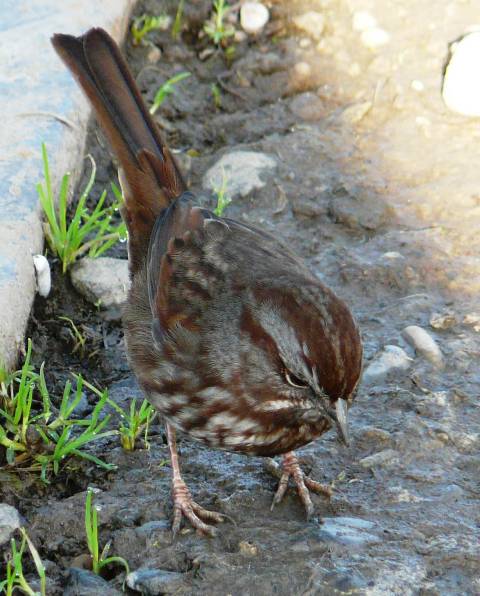
This Song Sparrow was feeding right at my feet, but insisted on staying in my shadow, thus messing up the lighting in the photo.

peregrine
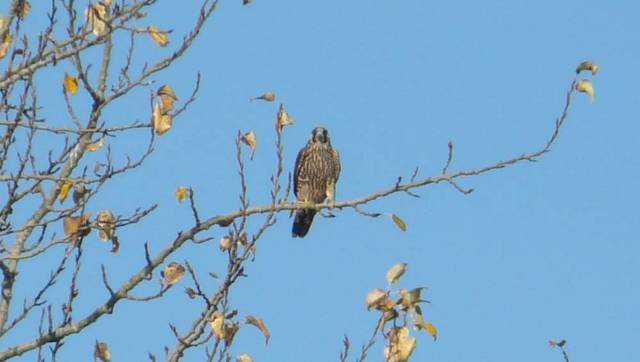
This Peregrine Falcon wasn’t much of a threat to the sparrows, but he did make the shorebirds and waterfowl nervous.

Great weather, if you’re a duck

I forced myself to go birding Saturday morning. It was one of those rainy November days when you want to hole up until May, so I forced myself out. (Can’t get tired of the rain this early in the season.) So I went to Smith and Bybee Wetlands in NW Portland. The rough weather kept most of the songbirds under heavy cover, but the ducks were out and about.

shovelers
While distant and poorly lit in the rainy weather, these ducks are clearly Northern Shovelers. The first clue is the fact that they are all swimming along with their faces in the water, typical shoveler feeding behavior. On the first and last ducks in line, you see a dark head, white breast, rusty sides, and white bottom, classic Northern Shoveler.

distant-ducks
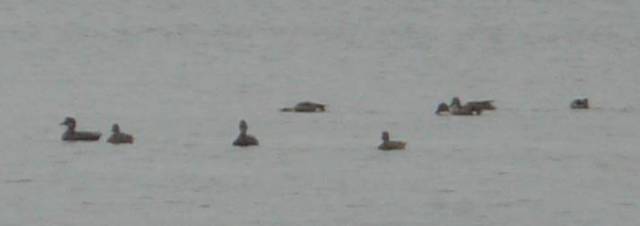
These birds were clear across the lake, but several are clearly identifyable. The line of four ducks in the upper right of the photo are Northern Shovelers, for the same reasons as in the photo above. The duck on the far left, and probably the bird next to him, is a Gadwall. The bird is slightly smaller than the shovelers, lacks any blatant pattern, seems to be dark on the backside, and has a blocky head shape.

The ability to ID ducks, or any other birds, at great distances is not so much a matter of skill, as it is familiarity. The more familiar you become with a species, the greater the distance you can recognize that species.

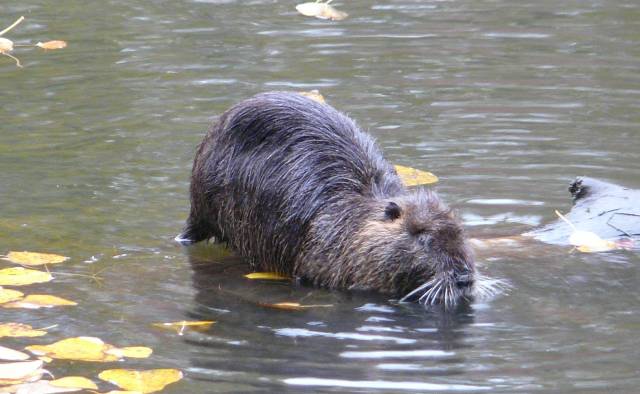
nutria
This Nutria was enjoying the day, munching away on something. Nutria are native to South America, but have been introduced in many areas by the fur trade. (and why would you want to dress yourself to look like a large aquatic rodent?) When raising Nutria failed to be profitable, many were released into the Pacific Northwest, where they flourish at the expense of some native mammals and wetland plants.

And More Shorebirds

Another quick trip to Fernhill Wetlands this afternoon produced a couple of species that were not present a few days ago.


A Long-billed Dowitcher (left) and a Pectoral Sandpiper. Both birds are in juvenal plumage, indicated by the pale edges on the scapulars and wing coverts which create a scaly pattern. The Pectoral has a clump of mud on the base of his bill.


Another view of the Pectoral Sandpiper with two Long-billed Dowitchers. The crouching posture suggests that the bird is on alert and ready to flush. That is a good clue for the birder to back off.


A Lesser Yellowlegs.   


Greater Yellowlegs on the left, Lesser Yellowlegs on the right