Shorebirds at Grays Harbor, WA

I took my shorebird class to Grays Harbor in Washington, one of the prominent staging areas for migrant shorebirds on the West Coast. The cold wet spring continues, so diversity was a little low, but there were lots of birds to see.
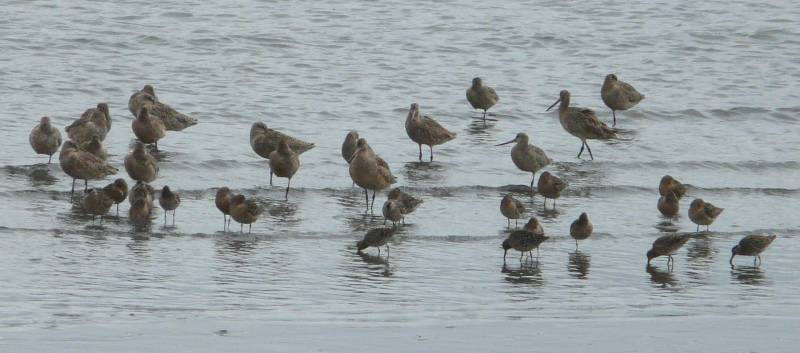
godwits-sbdowitchers
At Damon Point State Park, near the mouth of the bay, we found good numbers of Marbled Godwits and Short-billed Dowitchers.

flight
At Bowerman Basin, part of Grays Harbor NWR, a long boardwalk extends along the edge of the mudflats. As the basin fills with the rising tide, the birds are pushed closer to shore for excellent views.
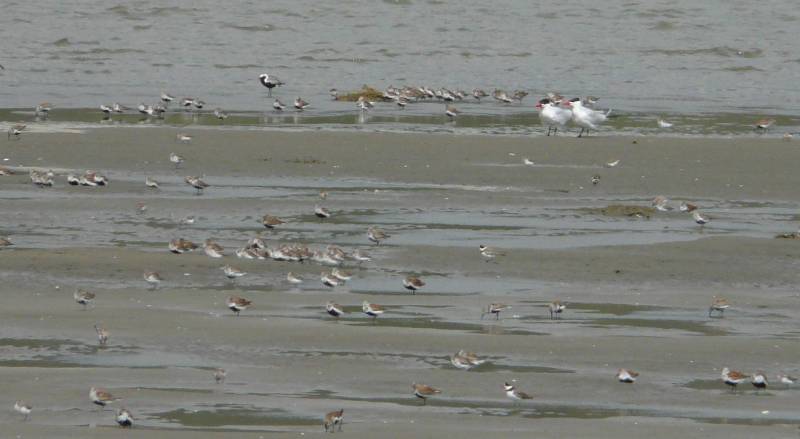
mixed-flock3
Here we can see a Black-bellied Plover, a couple of Semipalmated Plovers, two Caspian Terns, lots of Dunlin, and some Western Sandpipers.

semiplamated-plover
Here is a closer look at the lovely Semipalmated Plovers mixed in with Western Sandpipers.

western-least
I didn’t notice the bird at the time, but when I downloaded this shot of Western Sandpipers I immediately noticed the Least Sandpiper among them. Least Sandpipers feed in a crouched position with their feet far forward. On closer inspection, you can see the tiny bill and the pale legs. (lower right corner, if you are still looking)

least-western
Here’s a closer look at the Least Sandpiper between two Westerns.
Spring Valley Wildlife Area

One of the better birding spots in Greene County, Ohio, is Spring Valley Wildlife Area. It has a nice mix of wetland and riparian woods, and attracts many migrants in spring and a good variety of breeding birds in summer.


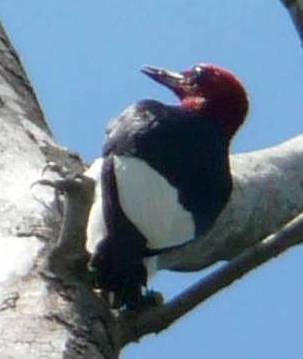
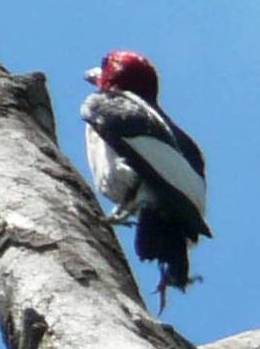
One of most stunning woodpeckers in North America, Red-headed Woodpeckers have experienced a severe decline in recent decades. I was delighted to hear that the birds had nested in Spring Valley this summer, after being absent for a couple of years.


Here is one of the young Red-headeds. Note the brownish head and the double black bars on the wing.


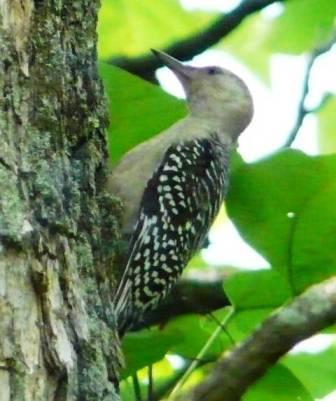
Here is a young Red-bellied Woodpecker. She doesn’t yet have the red nape of an adult.


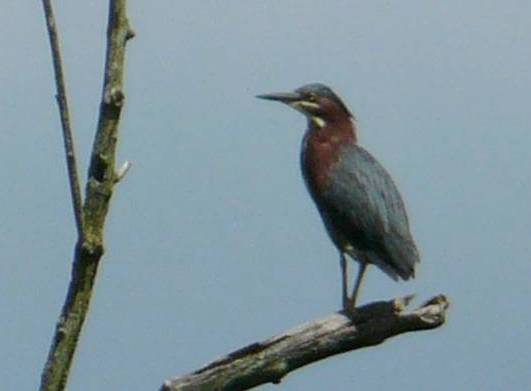
Lots of Green Herons live in the wetlands of Spring Valley. They make a tremendous metallic squawking noise for such a small bird.


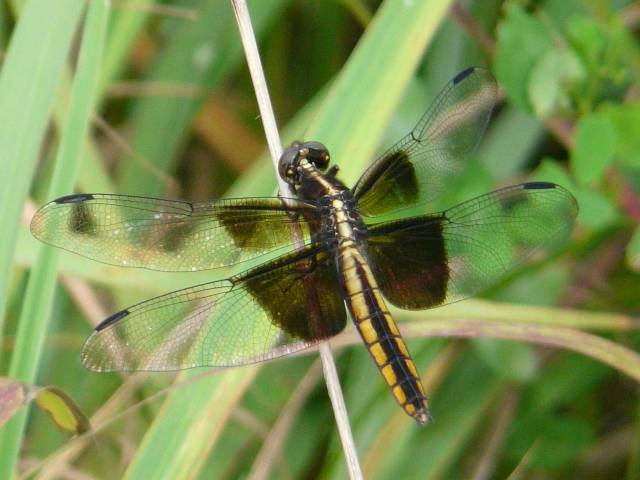
Not a bird, I know, but this dragonfly was particularly eye-catching. Does anyone know what species this is?

This will be my last post from my trip to the east and mid-west. It is always nice to reconnect with the flora and fauna I knew before moving to Oregon (except for the Chiggers, I don’t miss them at all). But I am quite ready to resume my explorations of the Beaver State.

Judy Burton Nature Preserve

On a recent visit to my home town in northern Indiana, I was struck by how much land is taken up by corn and soybeans. Mile after mile along the highways, it seems that these two crops are all you see, broken up by the occasional small woodlot or wind break. But there are a few little areas of replanted prairie and woodland edge. One such site is the Judy Burton Nature Preserve. Despite the high heat and humidity, my mid-morning visit provided a nice assortment of birds that I don’t get to see on the left coast.


Gray Catbirds were common and noisy, but didn’t want to sit out in the open long for photos.


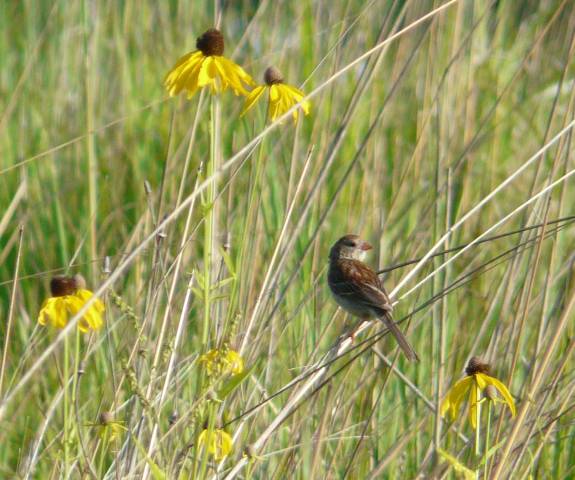
Field Sparrow. Note the plain face and the pink bill. Their loud bouncing song identifies them even if you don’t get a good look.

Common Yellowthroats and House Wrens are both found in Oregon, too, but it is always a pleasure to see them.
Schoodic Point

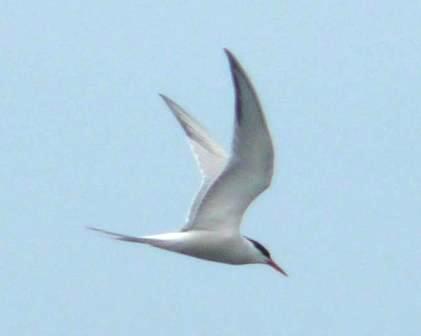
Schoodic Point is part of Acadia National Park in Maine. It is located on the mainland, away from the big crowds that visit the more popular Mount Desert Island. There are nice patches of boreal forest and shrubby habitat, but on a clear day the highlight of the area is the rocky shore. There is ample area to sit on a big rock and watch the seabirds fly by. On the morning I took these photos, I also enjoyed seeing Harbor Porpoises and Harbor Seals.


Common Tern


Common Eiders, in their rather scruffy summer molt.


Herring and Ring-billed Gulls, two species that I can find at home, but nice to see them on the “other” coast, too.


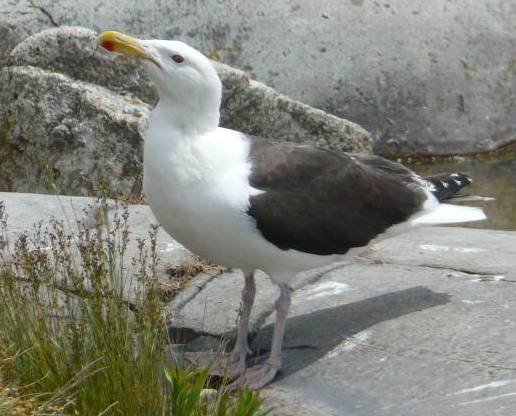
Great Black-backed Gull. These monsters are the largest gull species in North America, dwarfing the Western Gulls of the Pacific.

Best Bird Attractant Ever

With all due respect to Pete Dunne, I have never been a big fan of pishing. I am not very successful at bringing birds in with the technique, and I find it rather annoying in the field when other birders do it. But I still try it, having been taught for several decades that it is the thing to do.

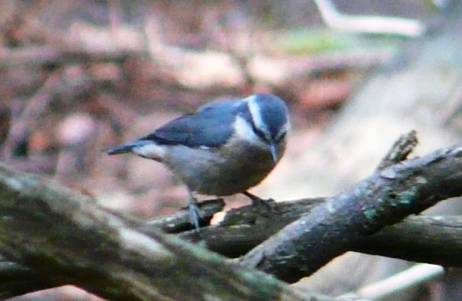
So it was recently as I birded Blue Hill in Maine. I heard some bird activity near a little rock bluff, and started pishing to draw birds down from the rim into better lighting. At first I heard Red-breasted Nuthatches and Black-capped Chickadees, joined by Golden-crowned Kinglets and Dark-eyed Juncos. More and more birds joined in as the flock started moving to the edge of the bluff.


The pishing seemed to be working. Birds started dropping down over the bluff.

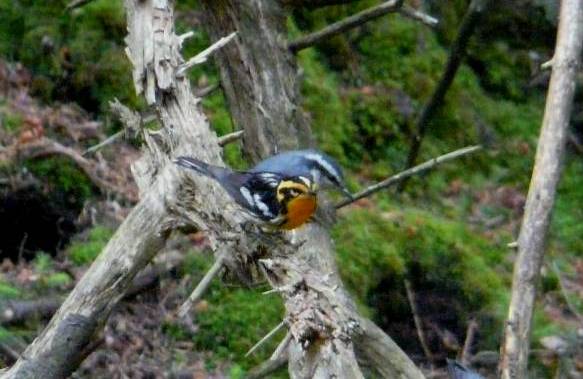
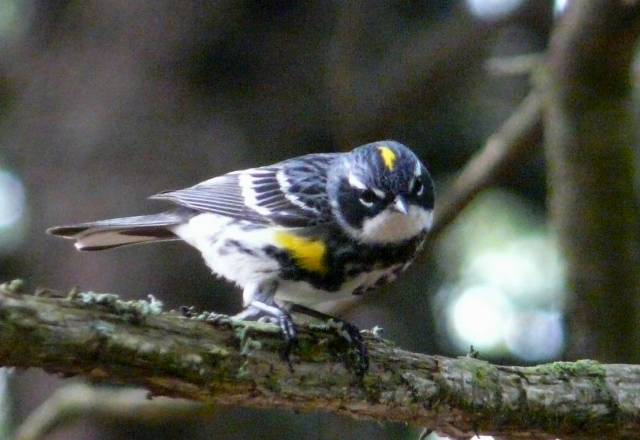
A Blackburnian Warbler joined the flock, as did several Yellow-rumped Warblers

Perhaps I had finally mastered the art of pishing. No. What really had this flock of birds worked up was nothing I was doing. It was something far more interesting to them, and myself.

It was an Eastern Milk Snake, a beautiful specimen about three feet in length (pretty large for this species). The birds were following the snake through the woods to keep an eye on it. Being at the right place at the right time allowed me to enjoy the snake and her entourage. My little pishing noises were of no consequence. So once again I am reminded to watch, blend in with the surroundings, and enjoy what happens by.

Worst Pelagic Trip Ever

I made my second attempt to visit Machias Seal Island off the coast of Maine this week. On my first attempt last year, the seas were “the roughest we’ve had all season” and it was too foggy to see much on the way out. When we arrived at the island, it was deemed too rough to land, so we coasted back and forth in the lee of the island before heading back. We still saw lots of birds, but couldn’t get on shore for nice close looks.

So I was really looking forward to this year’s trip. The forecast was for calm seas and sun. But I am a magnet for rough seas. The ocean was angrier than last year and the fog was thicker. I caught a brief glimpse of a Wilson’s Storm-petrel on the way out, but that was it. We couldn’t land on the island (although it didn’t look that bad to me) so we cruised around looking at foggy birds.


Here’s a foggy Atlantic Puffin


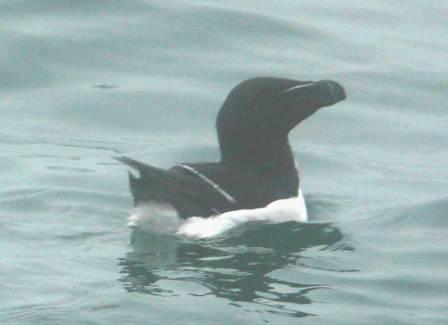
a foggy Razorbill


a very foggy Common Murre


This is our view of the island. Believe it or not, there is actually a lighthouse, several buildings, and observation blinds here.


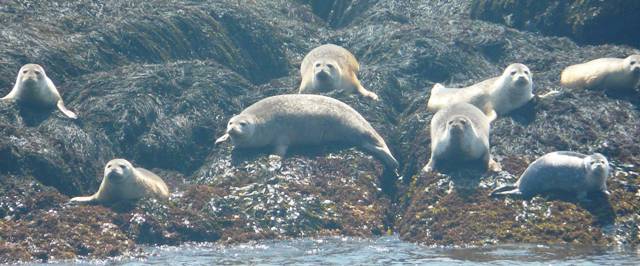
When we returned to the harbor in Jonesport, the sun emerged and revealed these harbor seals enjoying the beautiful summer weather. And so it goes. Perhaps, after enough time has passed to dull the memory of this trip, I will someday actually make it to the island and enjoy some face-to-face interaction with some Maine seabirds.

Sitting in Seattle

Marsha was working a table at the Seattle Greenfest last weekend, so I braved the traffic and found my way to Discovery Park. I walked out to the lighthouse and just sat on the shore of Puget Sound for a while. As a birder, I need to spend a lot more time sitting. Most of us are constantly moving, looking for the next good bird. But if you just sit in one place, good birds will often come to you. Out on the water were a big flock of Western Grebes, Horned Grebes, Ruddy Ducks, Harlequin Ducks, and a pair of Rhinoceros Auklets. These birds were out of camera range, but several species came in for closer scrutiny.


A flock of Black Brant were working the shoreline.


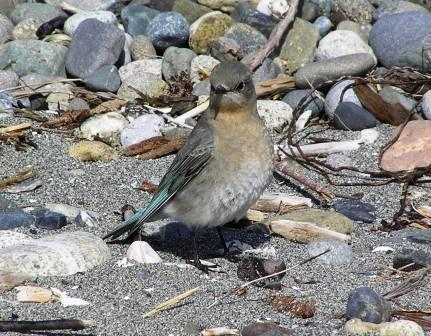
This Mountain Bluebird seemed a little out of place on the beach.


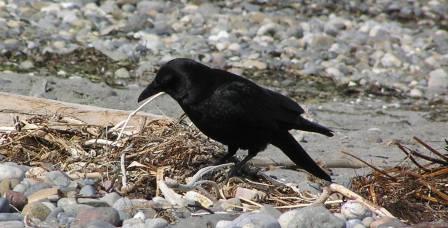
This crow found and ate a small crab. A little over a century ago, a crow on the coast of Puget Sound would have been assumed to be a Northwestern Crow. But when the forests were cleared, American Crows were able to colonize this area. So now, the crows around Seattle are presumed to be American or hybrids.


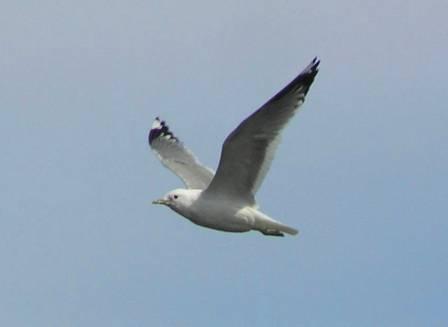
Mew Gull. Note the thin bill and large white mirrors on P1 and P2.


Red-necked Grebe

Sabal Palm Audubon Center to be fenced off?

The New York Times ran an article on the Sabal Palm Audubon Center in Brownsville, TX. There is a frightening chance that a border fence may be built north of the sanctuary, thus shutting off access to one of the most famous birding hot-spots in the U.S., and in effect ceding that 500+ acres to Mexico. While some argue that we need a fence to protect us from the illegal housekeeping and lawn care specialists invading our country from Mexico, I hope clearer heads will prevail and stop this project. The tropical palm forest ecosystem is one of the rarest in the country, and really can’t tolerate a major construction project like this fence. As a birder, my feathers get very ruffled at the prospect of being fenced out of one of the more important bird sanctuaries in my own country.

Here are some photos I took at Sabal Palm in April of 2007. I hope we all have the opportunity to visit this place in the future.
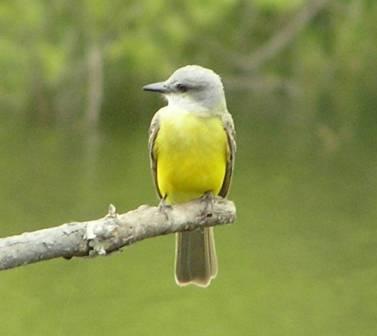
Couch's Kingbird
Couch’s Kingbird


Plain Chachalacas and White-tipped Doves


Neotropic Cormorant


White-eyed Vireo