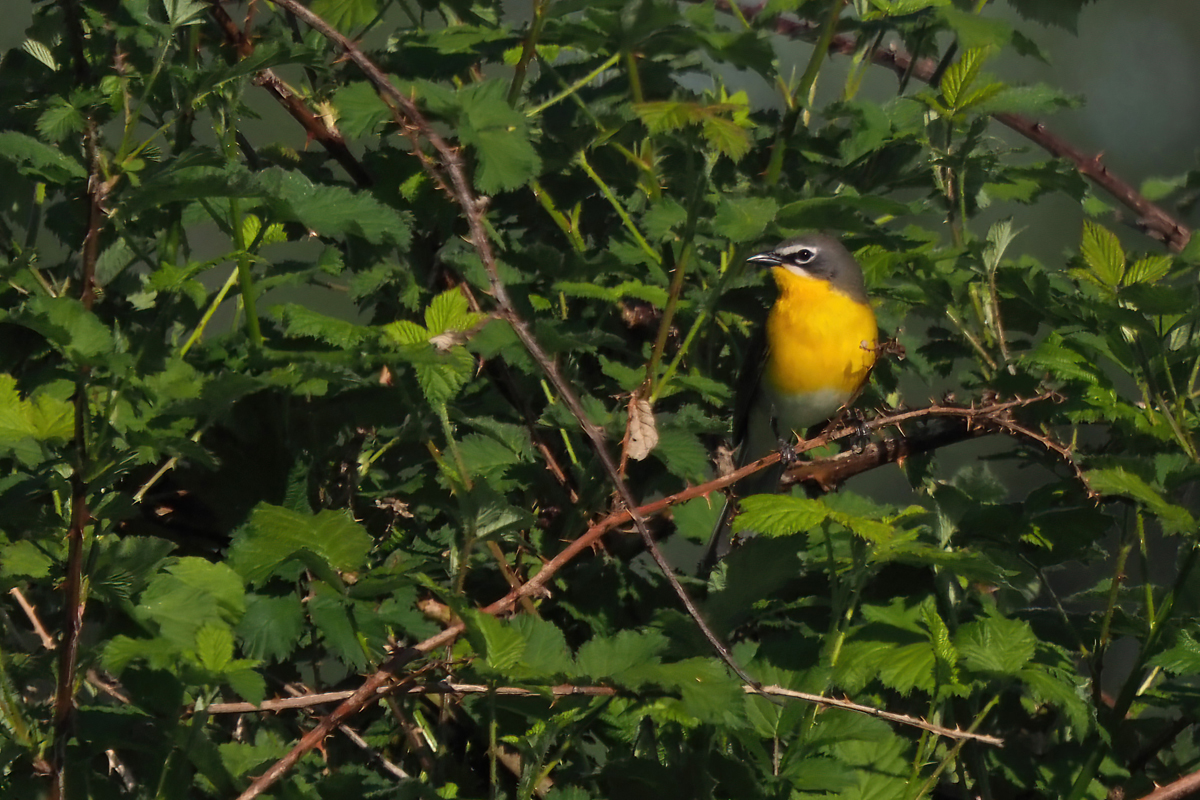
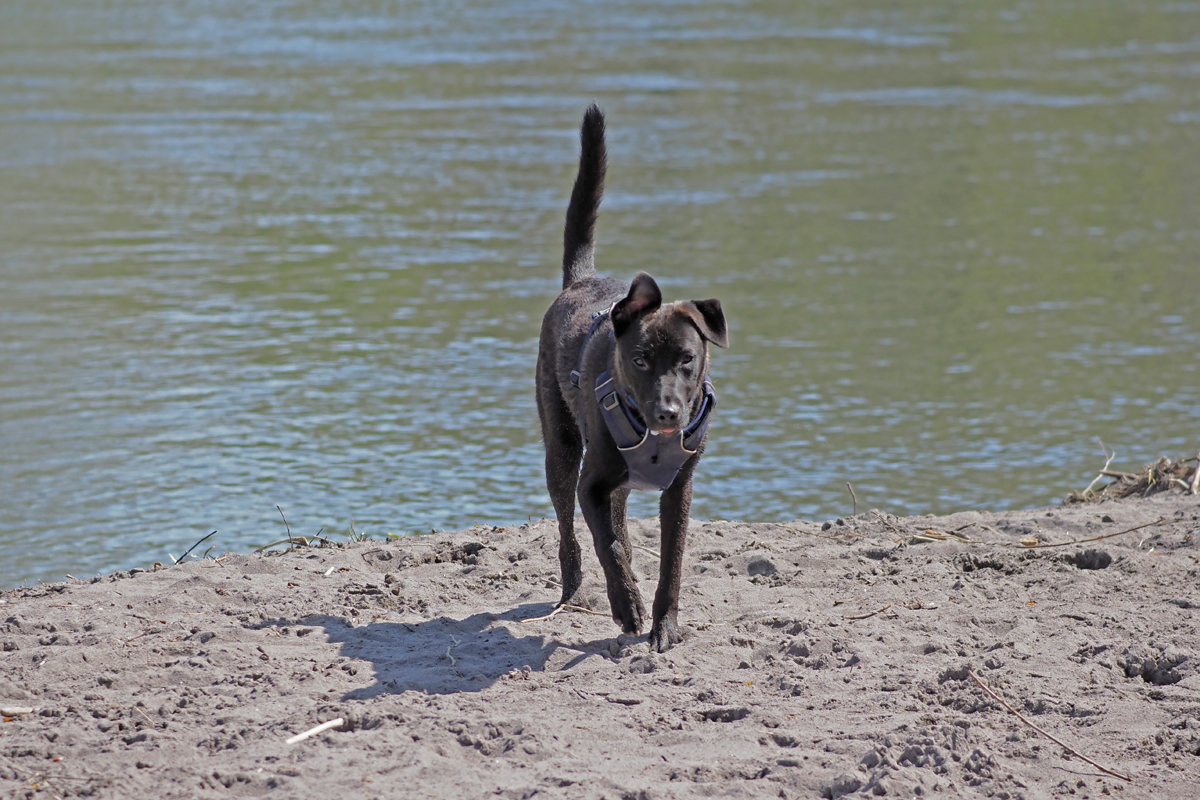
I’ve made several trips to the Sandy River Delta this spring. It is one of the few places where I can bird and the puppy can run around. The wide open spaces often mean that the birds are distant, but it is still a great spot.
Happy Spring
I’ve made several trips to the Sandy River Delta this spring. It is one of the few places where I can bird and the puppy can run around. The wide open spaces often mean that the birds are distant, but it is still a great spot.
Happy Spring

Located about 45 miles south of Bend, OR, Gilchrist Crossing (the eBird hotspot name) is best known as one of the few sites to reliably find Northern Waterthrush in Oregon. It is a brushy site along the Little Deschutes River at the edge of the forest.

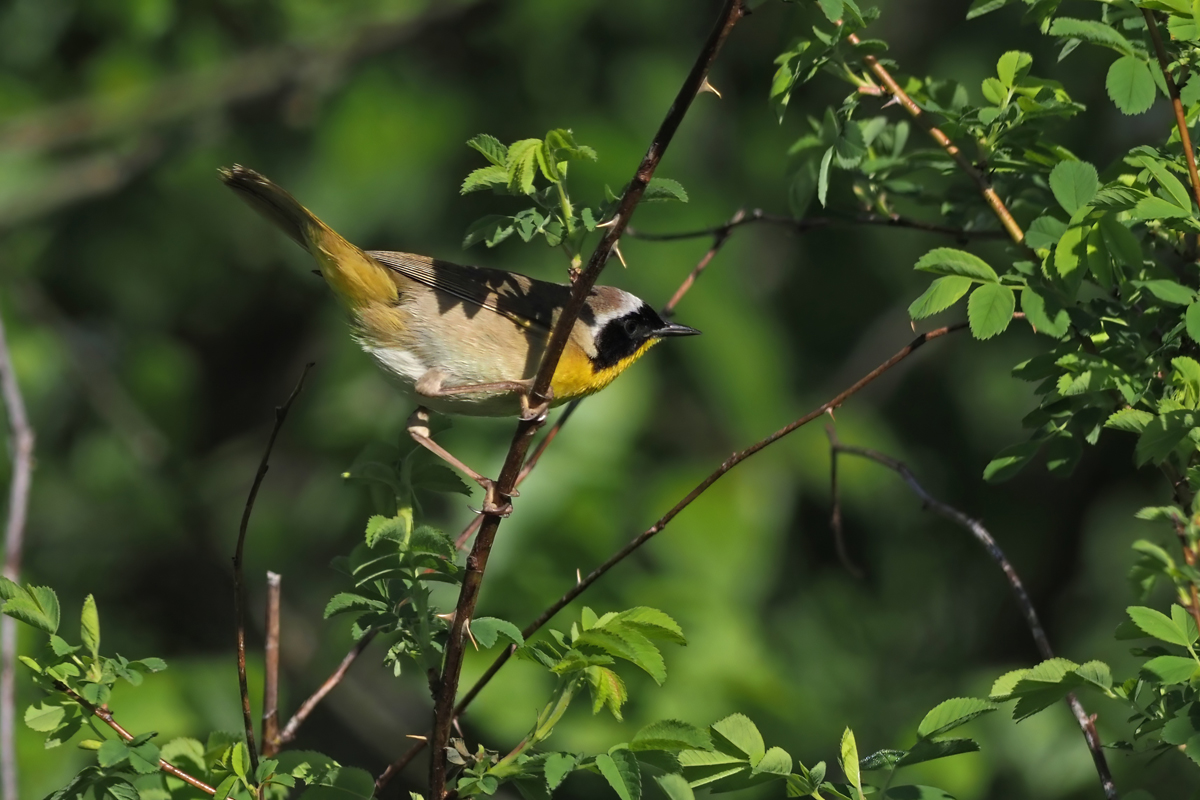
On my recent visit, one of the more common species was Yellow Warbler. Many of the birds at this site, including the Northern Waterthrush, were deep in heavy cover, so being able to recognize songs is essential.
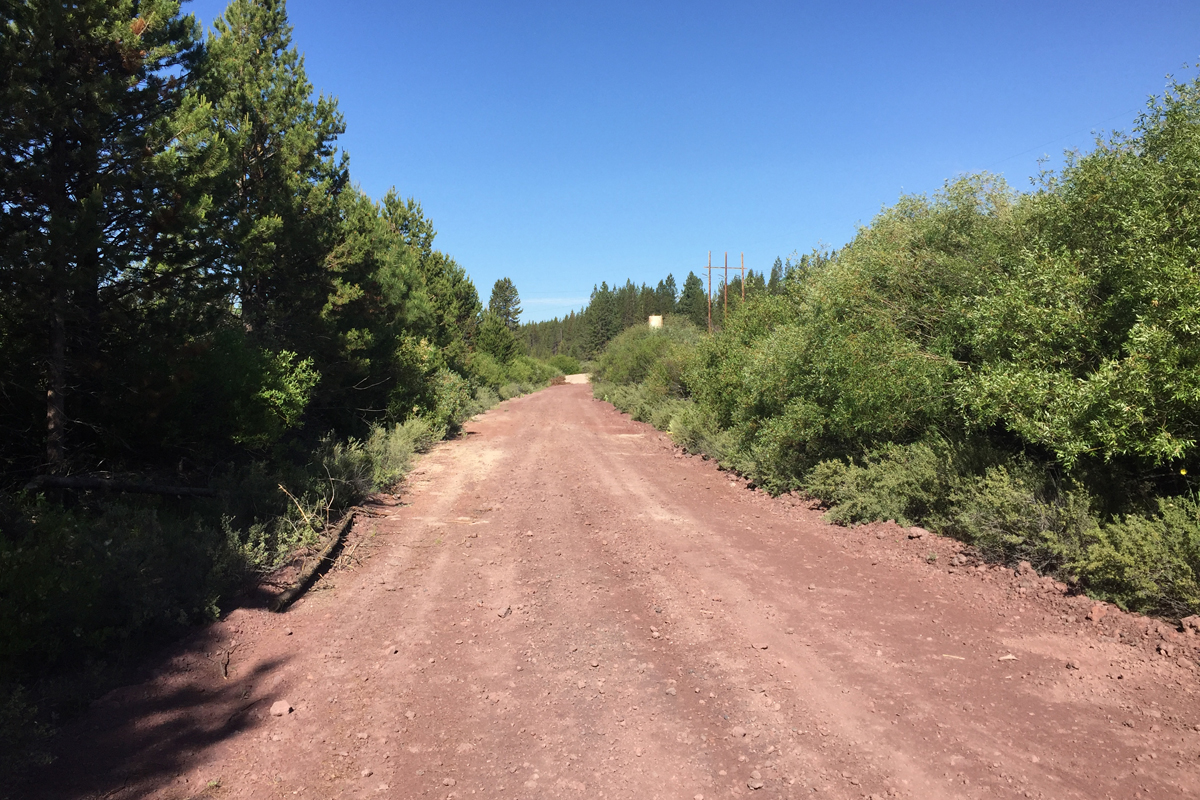
Looking west on the gravel road, with thick brush and water on both sides. To the east is a nice stand of forest.

This is “the bridge,” the farthest you can safely walk to the west. On the other side of the river is a large sawmill operation.
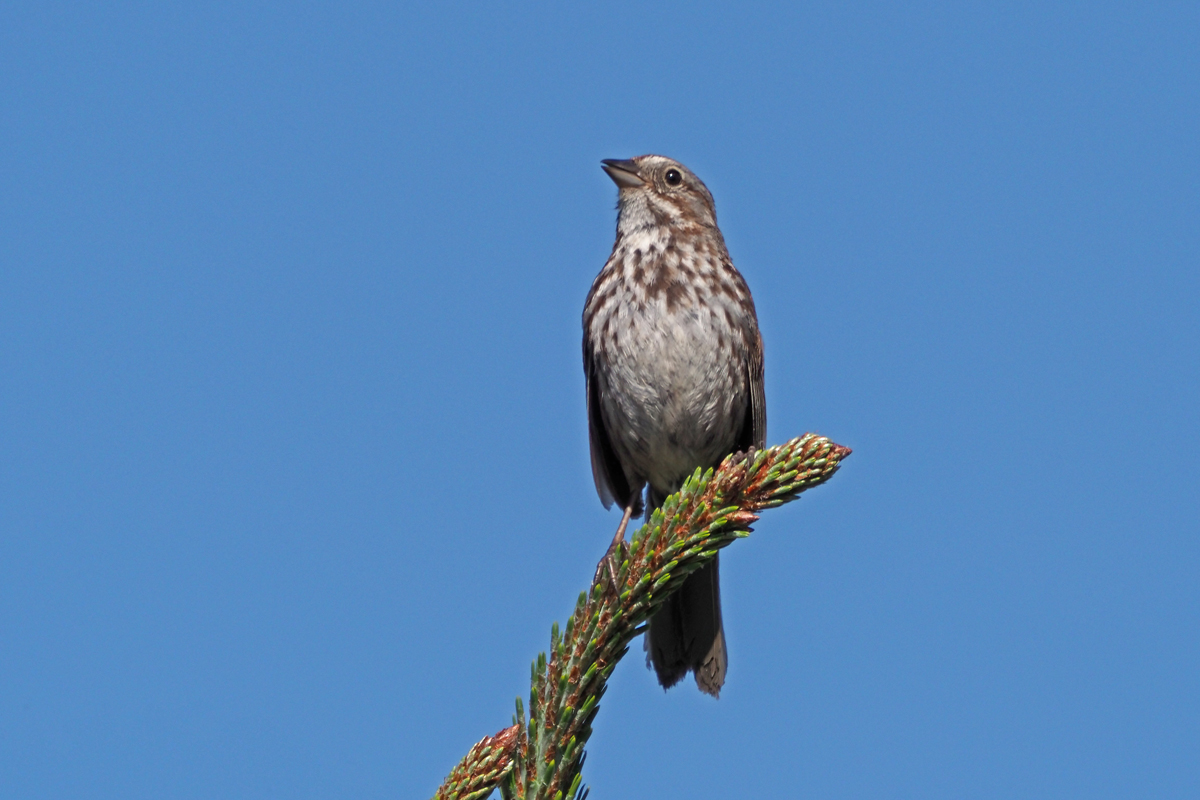
Song Sparrow singing from the top of a small pine
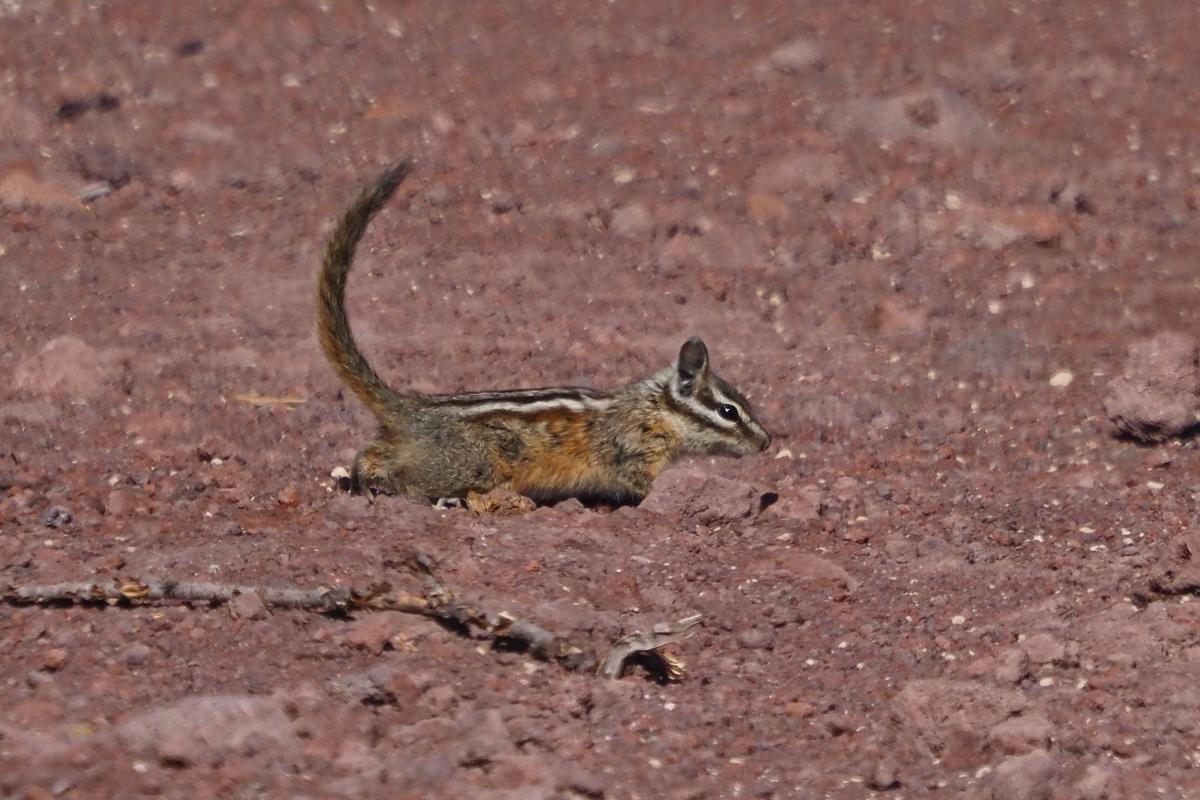
Yellow Pine Chipmunks are common along this stretch of road.
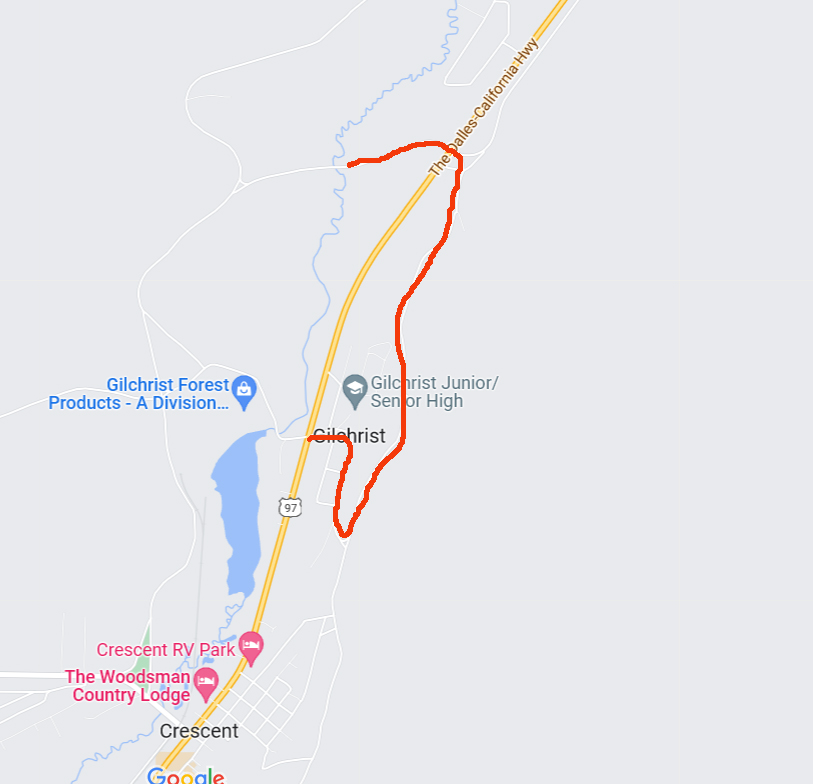
Getting there: Do not trust the directions that your navigation system may give you. Phone service is fine, so you can see where you are on your phone and follow the road that way.
From US 97 in Gilchrist, turn east onto Mountain View Drive (at the liquor store). Turn right onto Hillcrest Street and follow it to its end at a gravel road. Turn left onto the gravel road (Gilchrist Haul Road on some maps, but there are no signs) and follow it north for about 1.4 miles, where it curves left to go under the highway. Follow the road through the forest for less than half a mile. When the gravel turns from gray to red, park you car and walk in the rest of the way.
Mosquitos can be pretty brutal at this site, so be prepared. The gravel road was in very good shape, as of July 2022, and fine for a passenger car. While Northern Waterthrush is the star of this site, don’t neglect the dry forest habitat nearby.
Here are some non-waterfowl that I’ve seen in various wetlands recently.
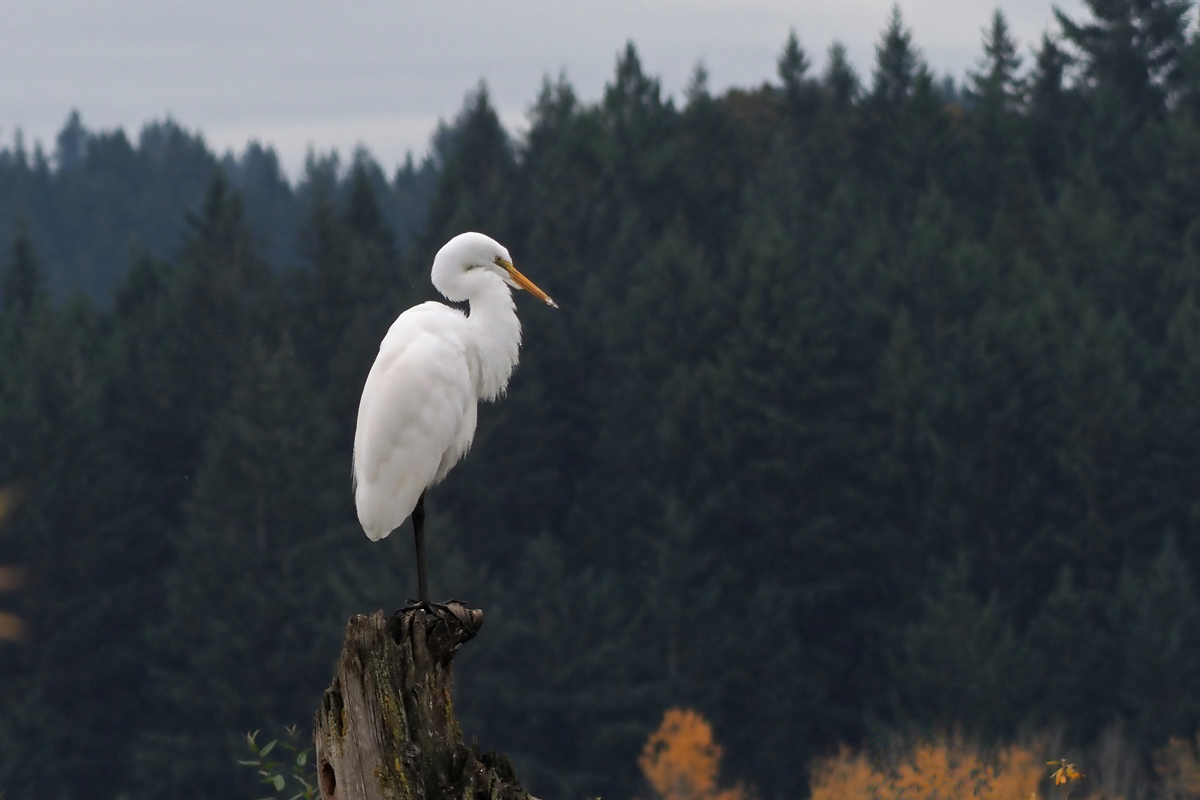
I often struggle with photographing white birds, but this Great Egret came out OK.

Most of the shorebirds have moved on, but a few Least Sandpipers are still around.
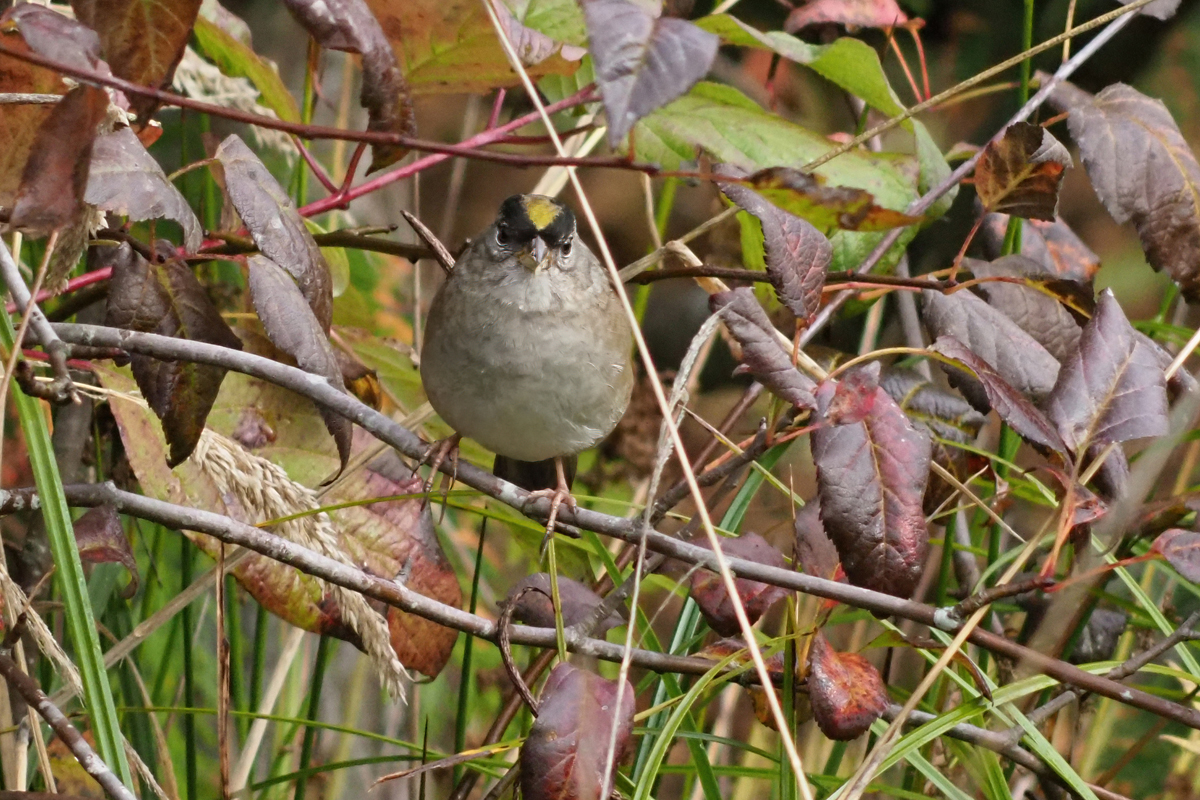
The winter sparrow flocks are building up. This Golden-crowned Sparrow was still sporting their breeding plumage.
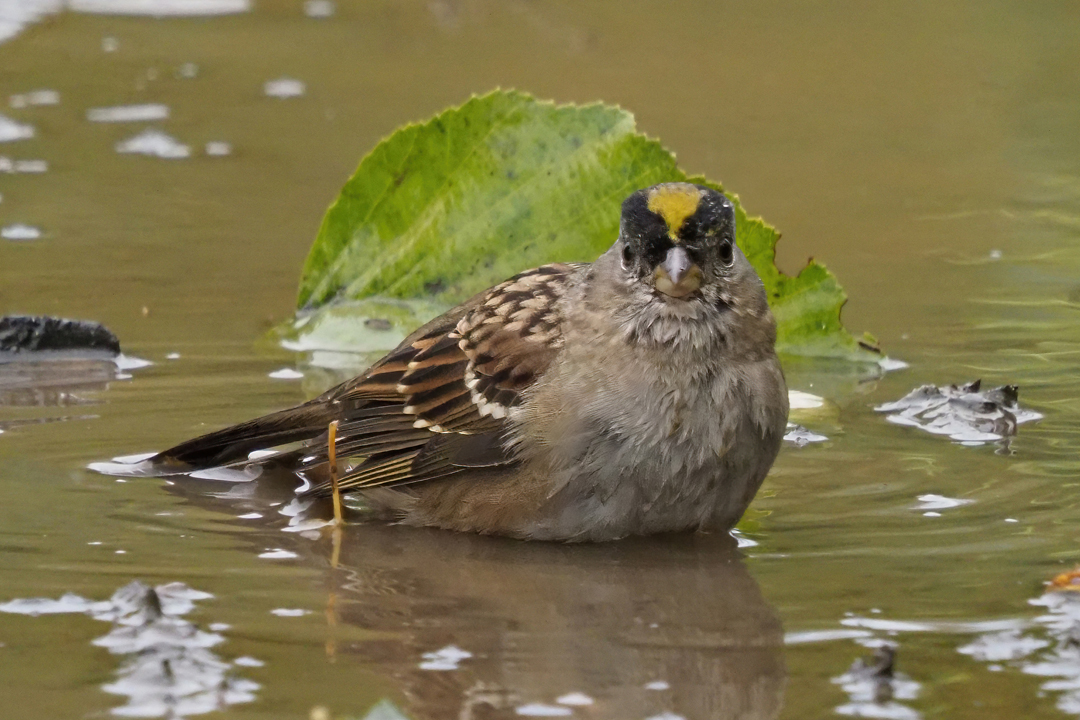
Golden-crowned Sparrow taking a bath

Song Sparrow
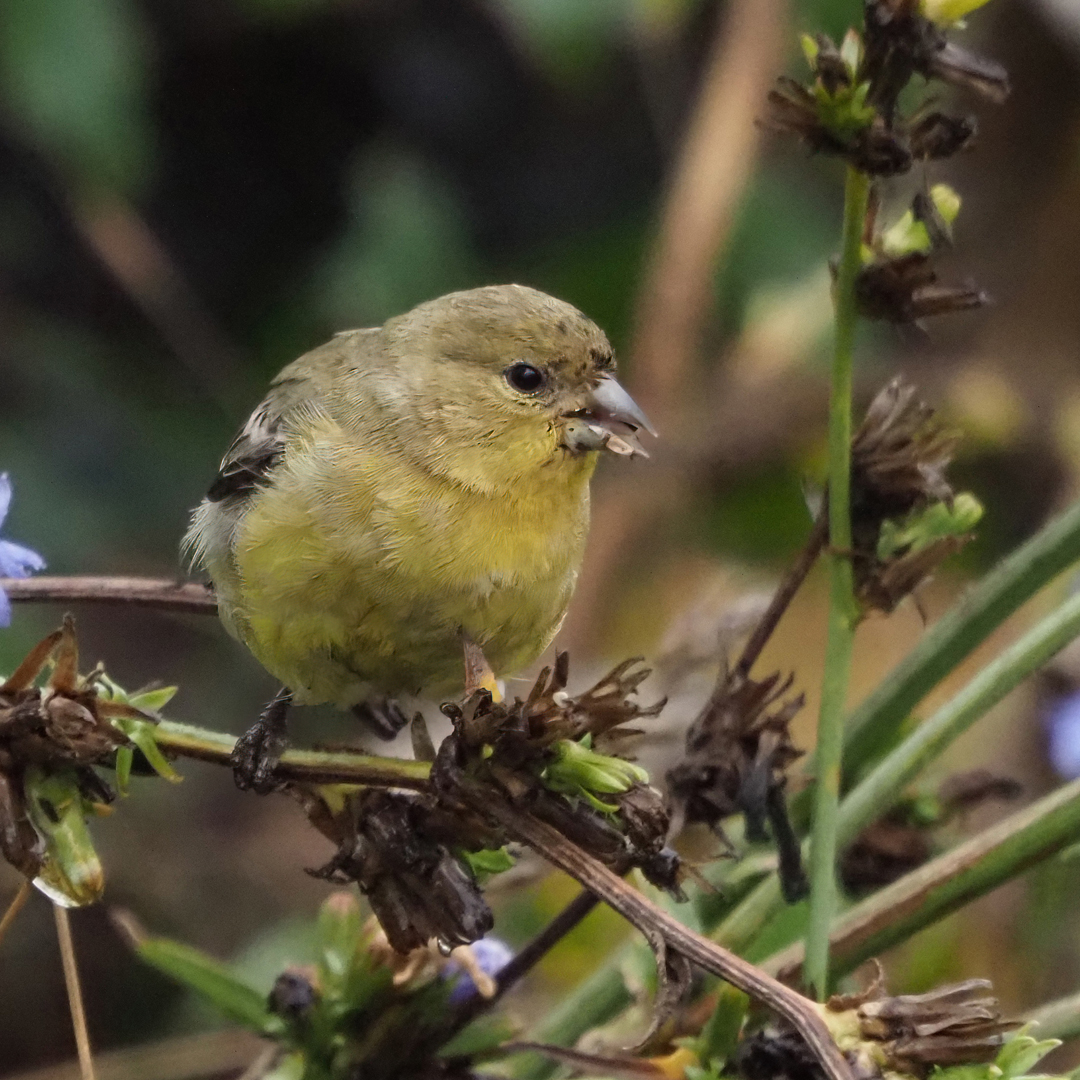
I remember when it was hard to find Lesser Goldfinches in the Portland area, but they usually outnumber American Goldfinches now.
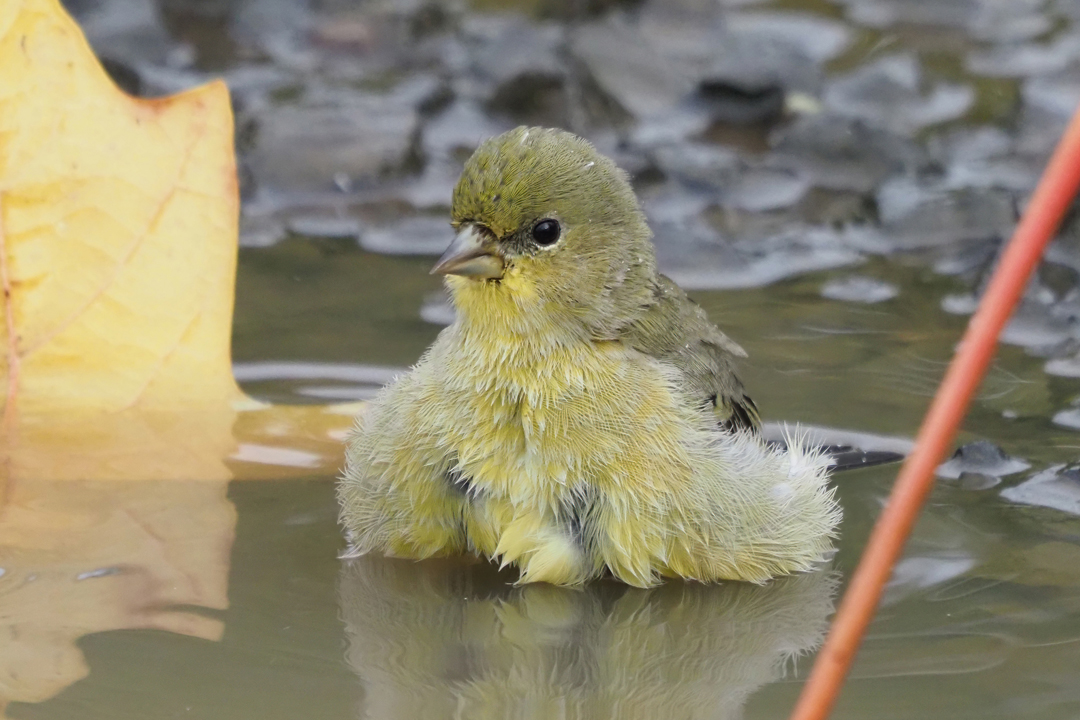
Lesser Goldfinch taking a bath


Belted Kingfisher sharing a perch with a European Starling

Red-winged Blackbird striking a pose
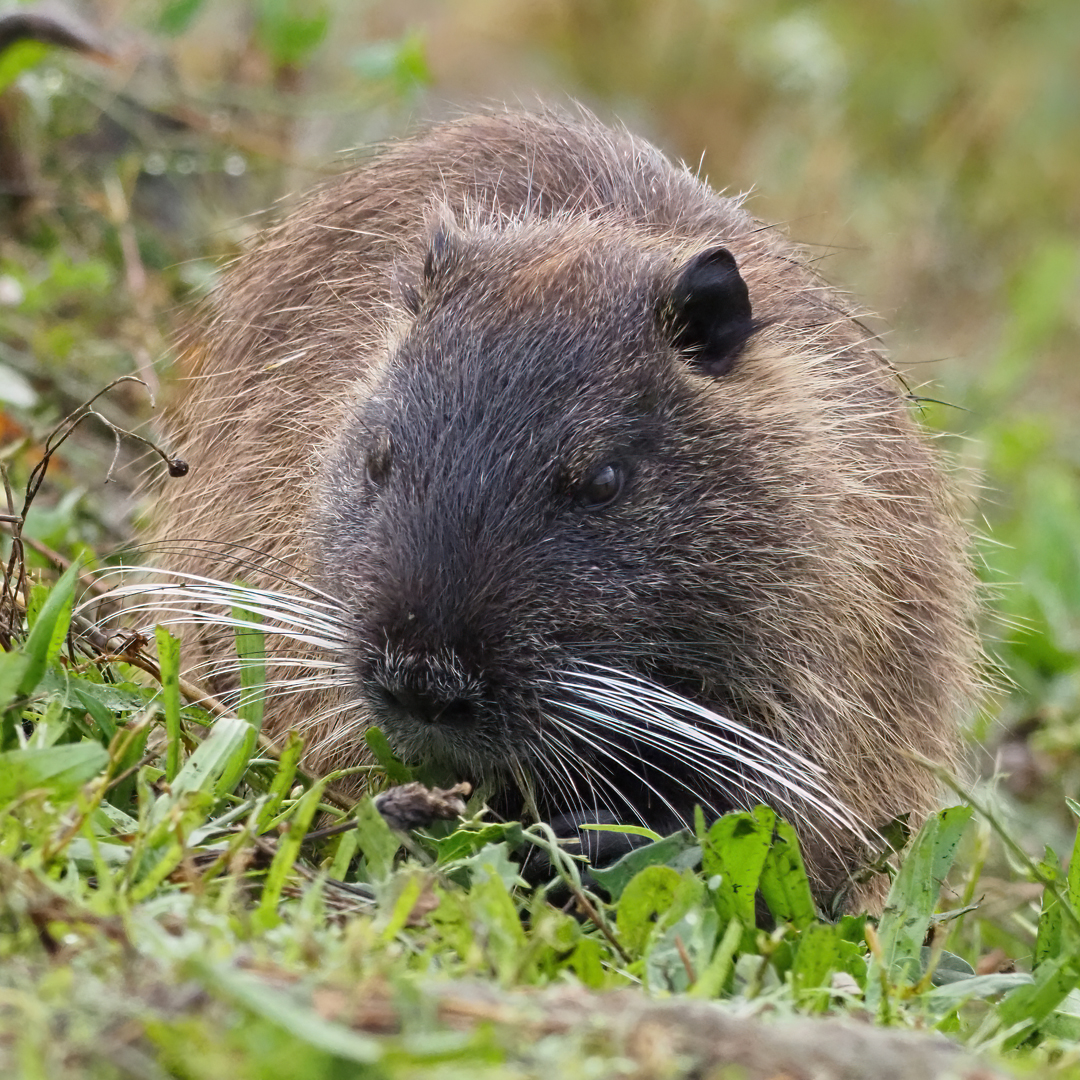
The numbers of Nutria in the Willamette Valley have exploded in recent years. The are indeed non-native and invasive, but the babies are so cute.
Happy Autumn
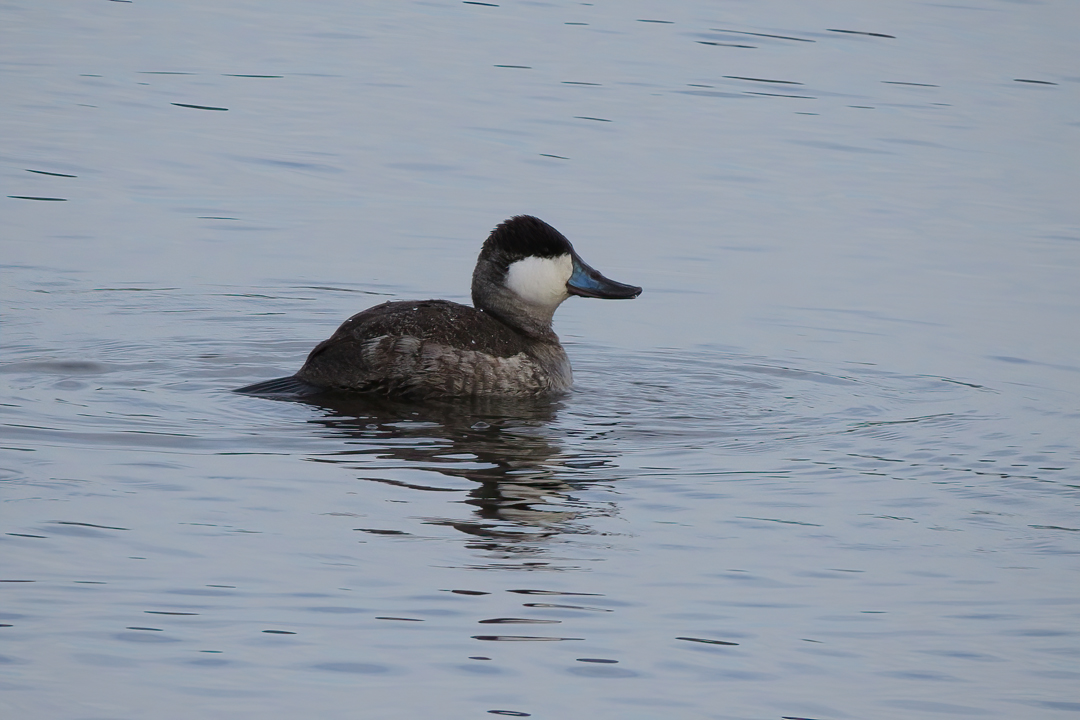 I made a quick trip to Ankeny National Wildlife Refuge, just south of Salem. Like the other refuges in the Willamette Valley, most of Ankeny is closed in winter to protect wintering waterfowl. But there are spots on the refuge open to birders year-round. Here is a male Ruddy Duck just starting to get a little color in his bill for spring.
 Song Sparrow at the edge of Pintail Marsh
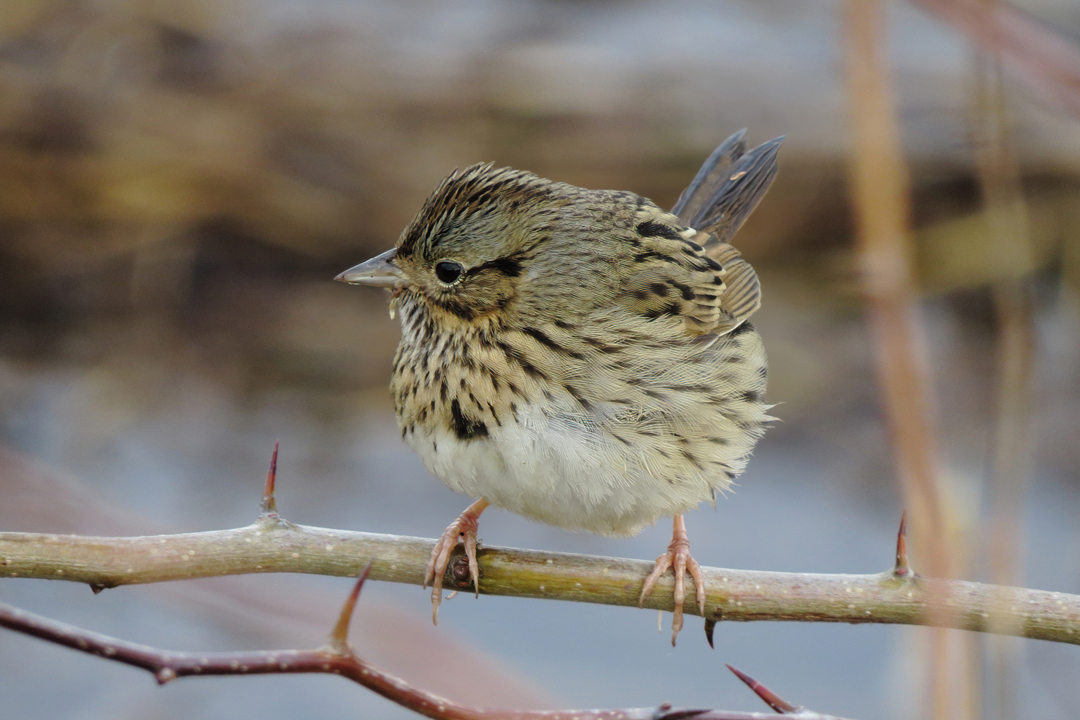 This Lincoln’s Sparrow popped up for just a second, but long enough for me to take his portrait.
 Here is a very distant Eurasian Green-winged Teal, or Common Teal, or Eurasian Teal, depending on who you talk to. In Europe, this is considered a separate species, but in the U.S., it is considered a subspecies of Green-winged Teal. I have been hoping for many years that North American authorities would recognize this form as a species (so I could add another tick to my list), but it doesn’t look like that is going to happen.
 This pair of Great Horned Owls was hanging out along the trail to the Rail Trail boardwalk, once again proving that my camera would much rather focus on branches than on birds.
 The main reason for my visit was a communal roost of Long-eared Owls discovered a few days before. This species is usually very hard to find in western Oregon, and had been a state nemesis bird for me.
There has been a lot of concern expressed about birders disturbing this group of birds. In Kansas and Ohio, where I have seen Long-eared Owls before, visiting winter roosts is the only way for birders to see this species. I believe it can be done without stressing the birds if birders speak softly (or not at all), maintain a respectful distance, and keep their visits brief. That is pretty easy to do at this site. Birders are confined to a boardwalk (assuming they are not assholes), and it is easy to make a quiet approach. If everyone exhibits just a modicum of self-control and common courtesy, this could be a sustainable birding experience for weeks to come. Fingers crossed.
Happy Winter
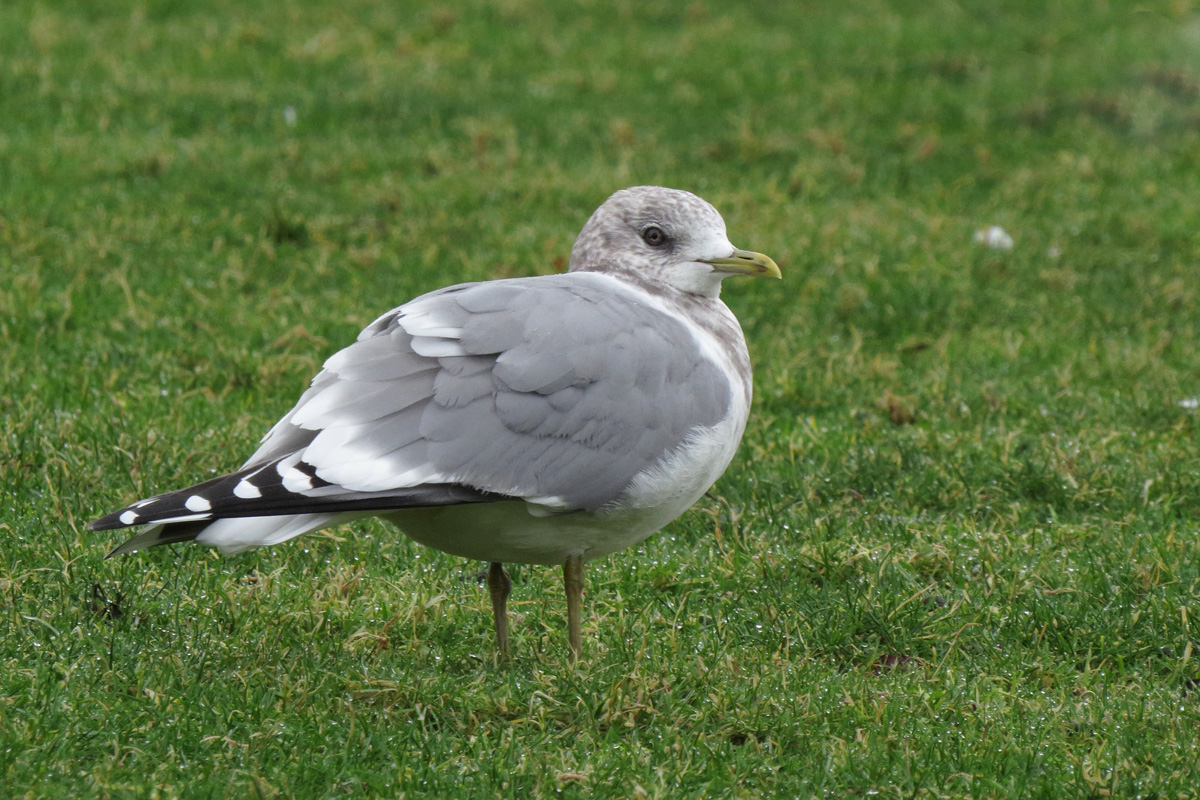 I made a quick trip to Amberglen Office Park in Hillsboro to check the lawn for gulls. Along with a small flock of Ring-billed Gulls were four Mew Gulls. Mews are one of my favorite gulls. They are easy to pick out of a mixed flock, they seldom if ever hybridize, and they possess a cuteness not found in most Larids.
Mew Gulls are found in Oregon from October to March. They are most common in estuaries along the coast, but you can find them in decent numbers in the Willamette Valley.
 As gulls go, Mews are pretty petite with their short slender bills and round pigeon-like heads. Eye color variable, but tends toward the dark side. Like Ring-bills, Mews show very long wing projection beyond the tail.
 This individual is heavily marked on the head and breast compared to the bird above.
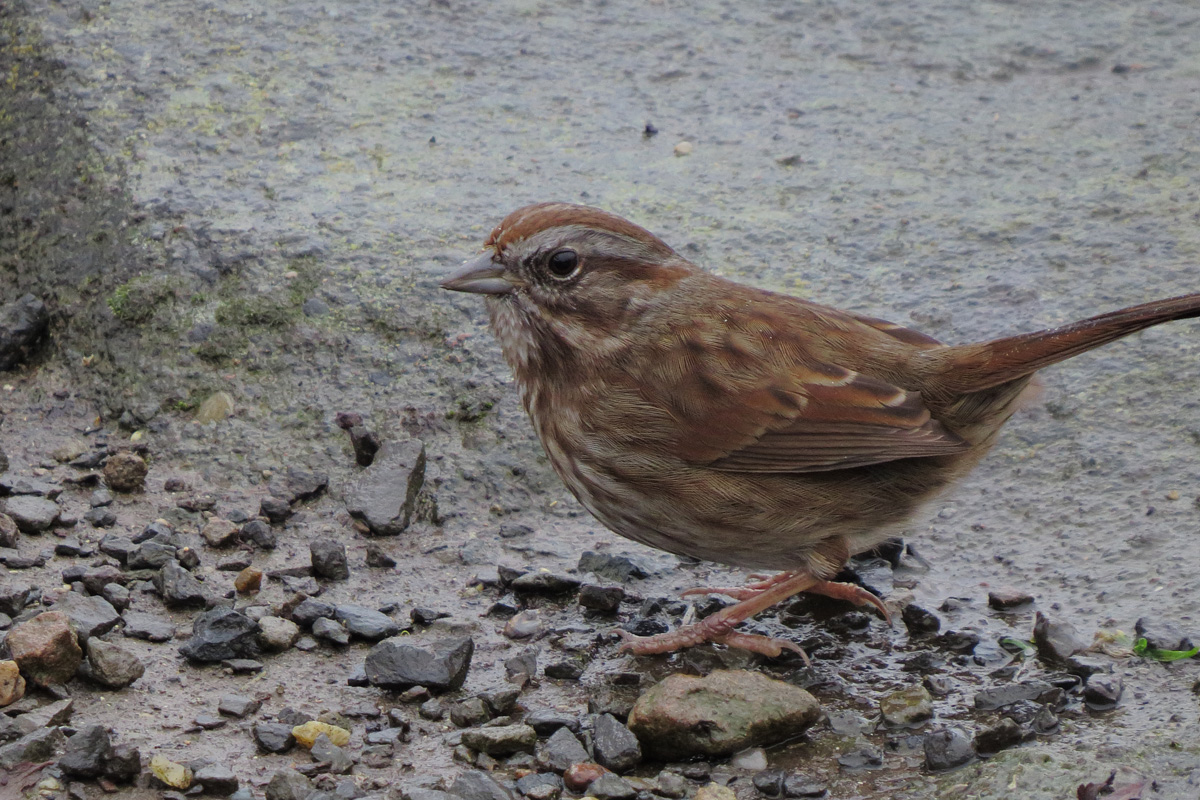 Amberglen is a good spot for waterfowl and attracts a few songbirds. Several sparrow species, including this Song Sparrow, were foraging around the main pond.
 Here is my obligatory photo of a Nutria. Cuteness transcends their invasive species status.
Happy Winter
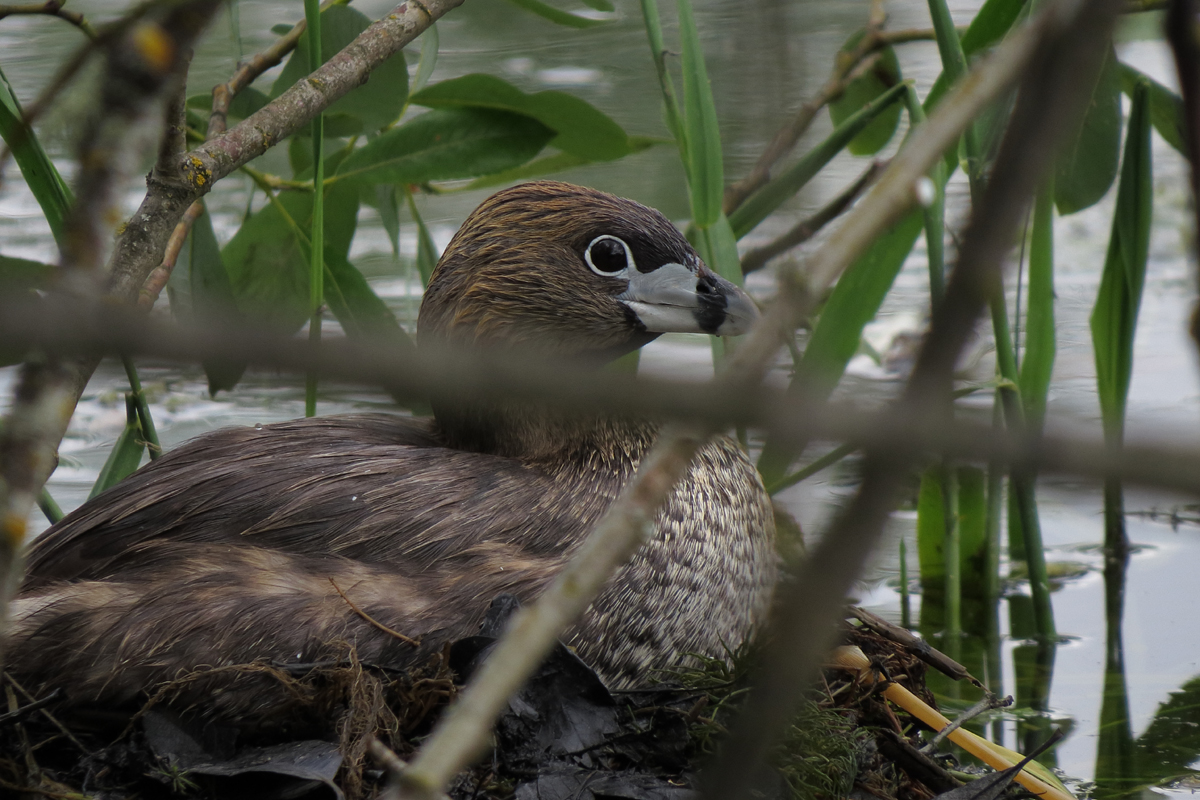 Nesting season continues to progress. While some songbirds have already fledged a batch of babies, other species are just getting under way. This Pied-billed Grebe was sitting on a nest at Commonwealth Lake.
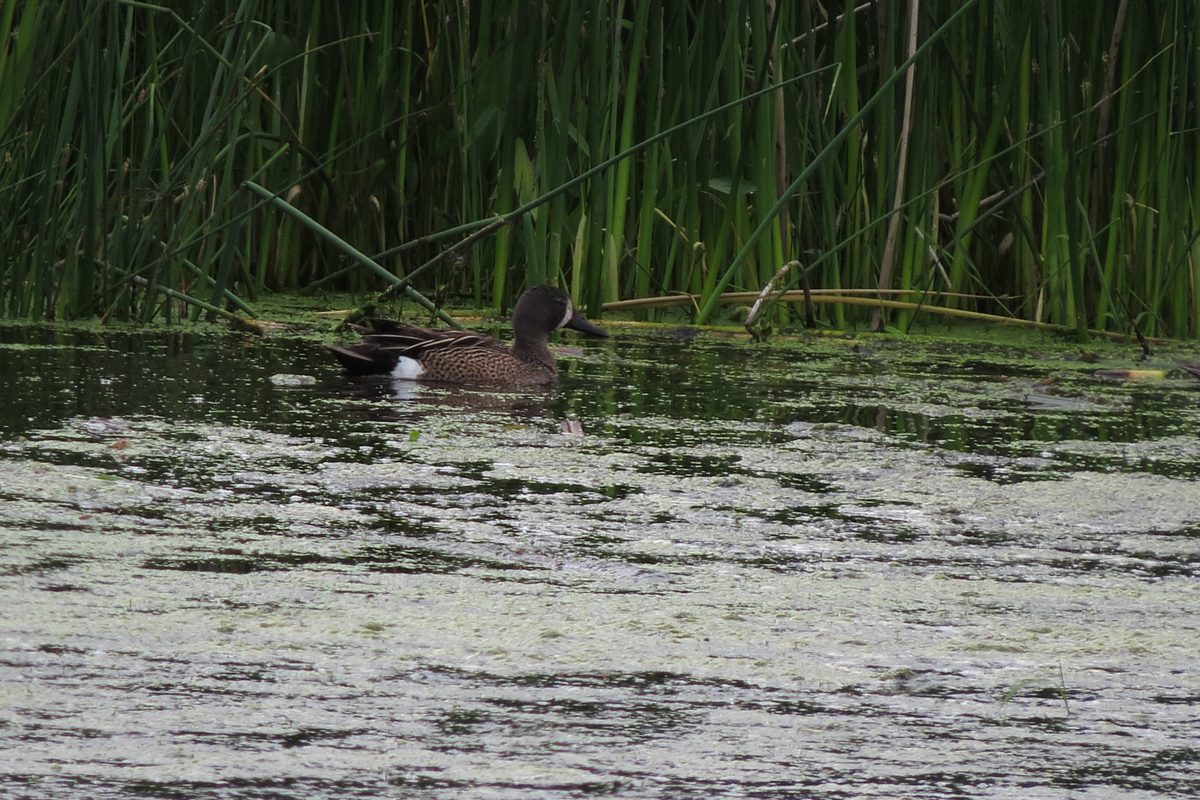 Blue-winged Teal can be hard to find in the Willamette Valley at any time, so it was nice to see a pair at Fernhill Wetlands.
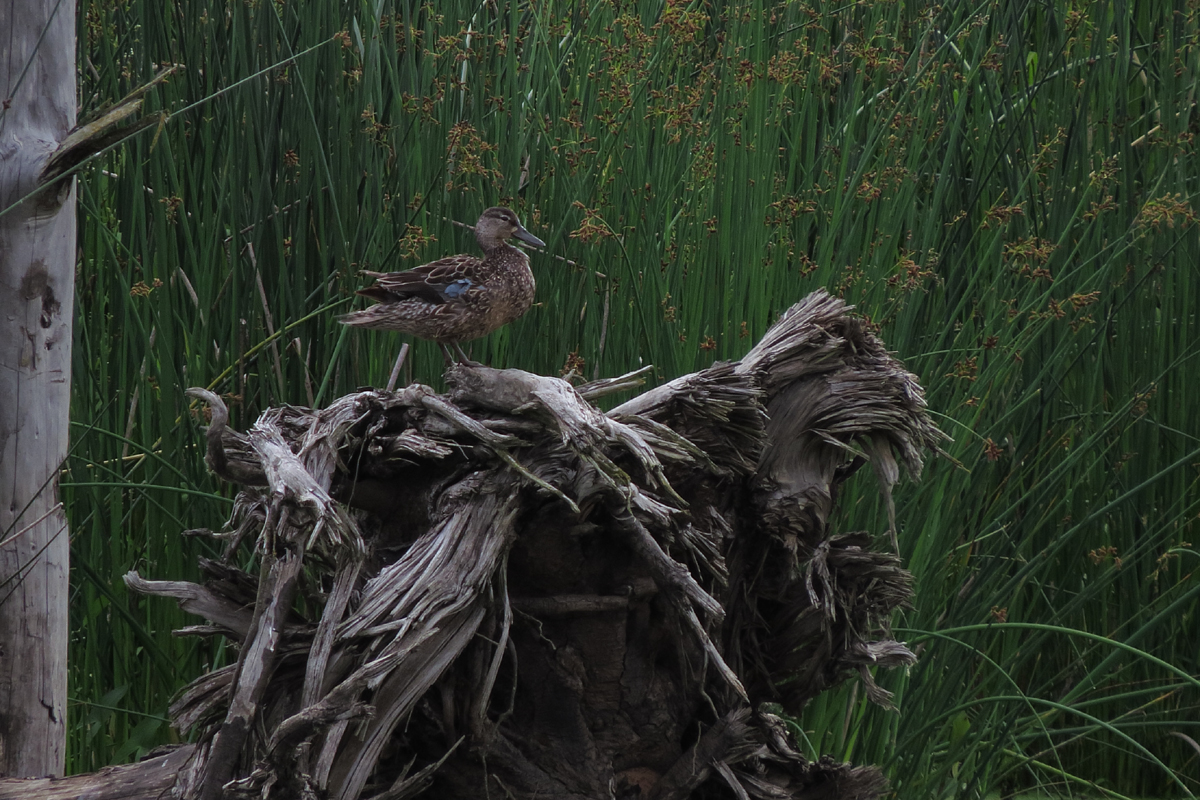 female Blue-winged Teal
 Eurasian Collared-Doves continue to expand their range and numbers in Oregon. It wasn’t all that long ago that these birds were first found in the state, or maybe I am just old. This bird was singing at Fernhill.
 Song Sparrow at Fernhill, living up to his name
 A few Purple Martins have returned to the nest boxes at Fernhill. They are still a treat to see here.
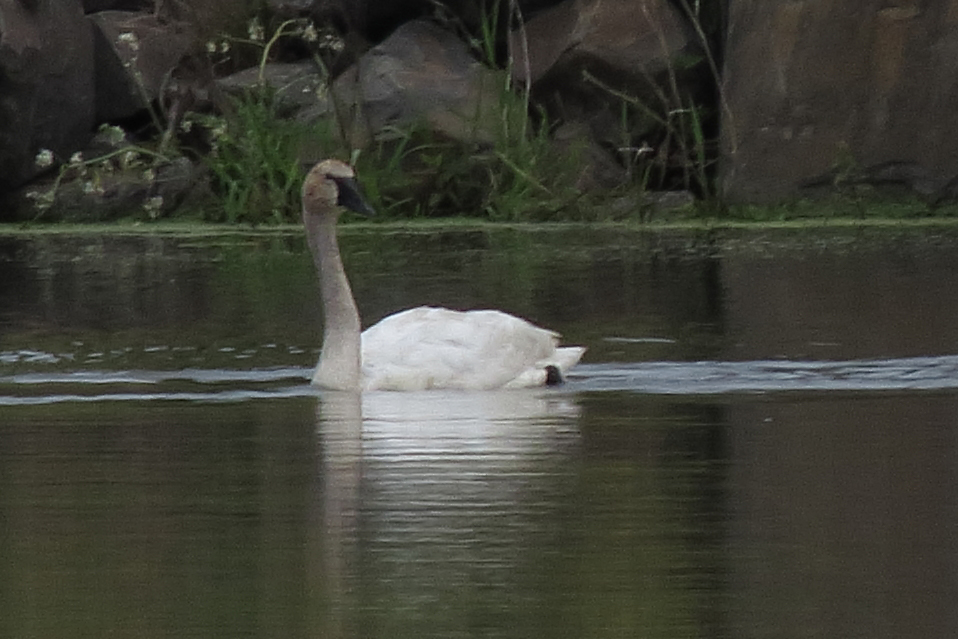 While most of the Tundra Swans that winter in Oregon left for the breeding grounds long ago, this individual continues to hang out at Fernhill. A few observers have reported this bird as a Trumpeter Swan, but the straight feathering across the forehead (as opposed to the widow’s peak on a Trumpeter) is consistent with Tundra.
Spring is coming on strong, despite the cold latter half of March. The season is most obvious in the open habitats around wetlands. Local nesters are starting to pair up and collect nesting material.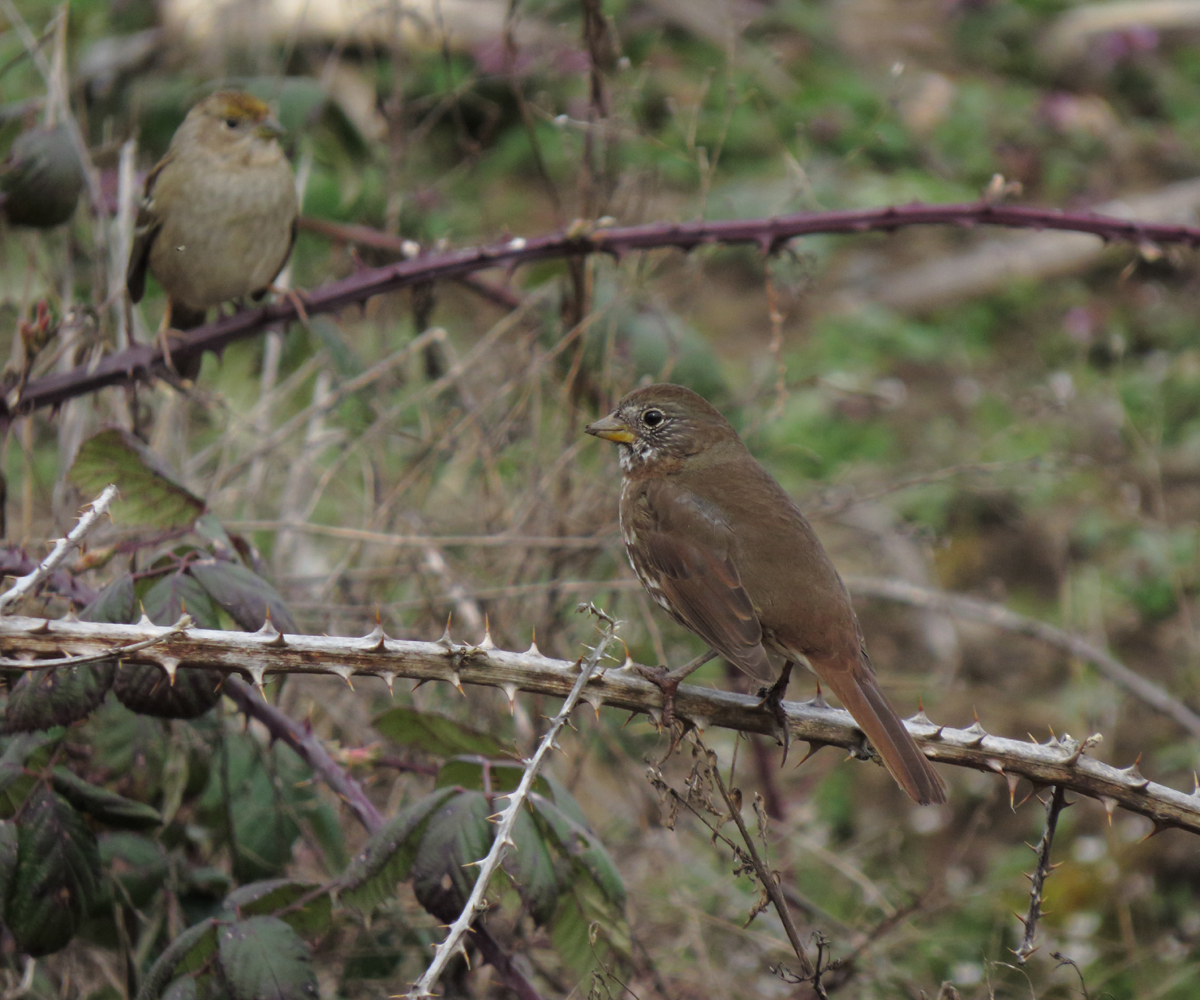 The winter sparrow flocks are starting to thin out, but the birds that remain are active and vocal. This Fox Sparrow (with a Golden-crowned Sparrow in the background) was at Fernhill Wetlands.
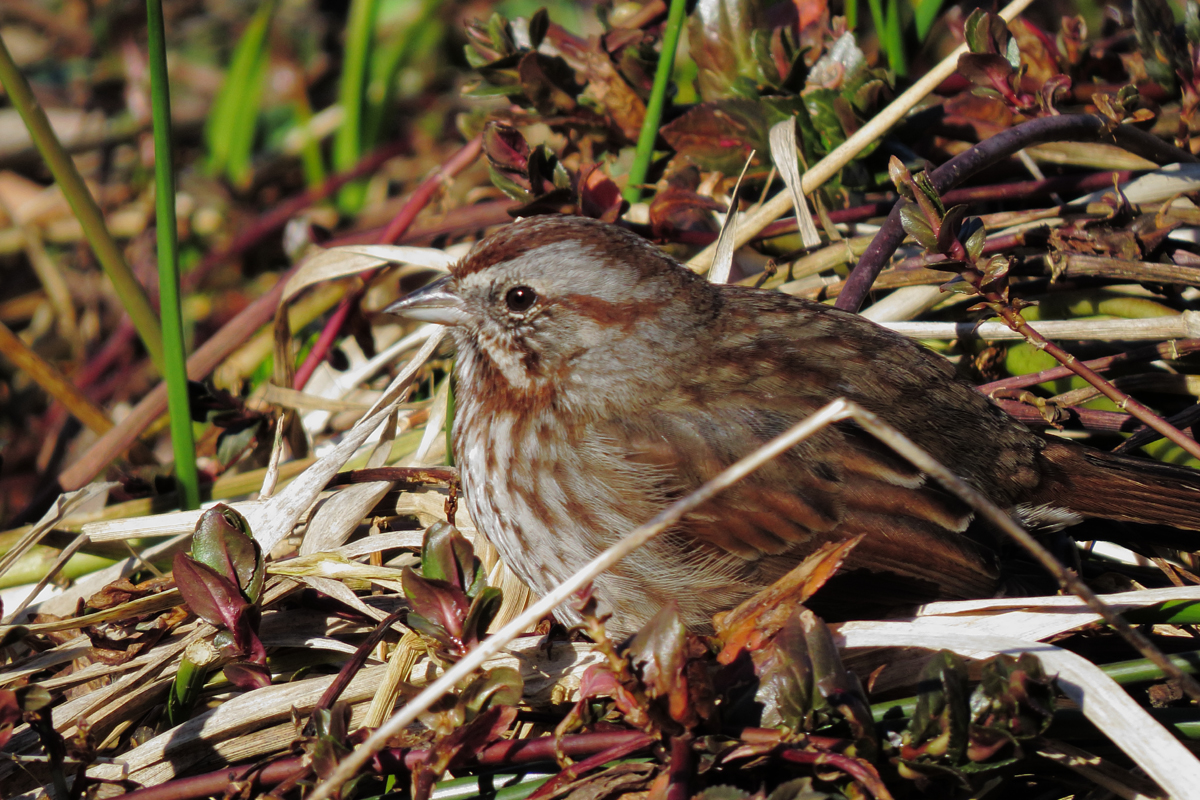 The local Song Sparrows are paired up and are defending territories.
 Bushtits are still in their winter flocks, but should be pairing off soon.
 This male Hooded Merganser caught a large crayfish at Westmoreland Park, but did not share it with the female that was nearby.
 Anna’s Hummingbird, feeding on currant
 This is one of five subadult Bald Eagles that flew over Westmoreland Park in a tight group. I don’t recall seeing a flock of Bald Eagles moving together like that before.
 Western Canada Goose, the locally nesting subspecies. I am trying to collect portraits of the various Canada and Cackling Goose subspecies for side-by-side comparison.
 These Red-eared Sliders were basking at Commonwealth Lake. There are only two native species of freshwater turtle in Oregon, and this is not one of them. This species is often released from the pet trade.
In the next few weeks, warblers and flycatchers should start arriving in good numbers, then the rush of spring shorebird migration.
While we continue to get above-average rainfall in the Portland area, there have been a few dry days of late, so I ran out for a quick tour of Fernhill Wetlands. Most of the wintering geese are gone, and there are signs that spring is slowly making progress.
 Yellow-rumped Warblers, both Audubon’s and Myrtle (shown) races, are coming through in large numbers.
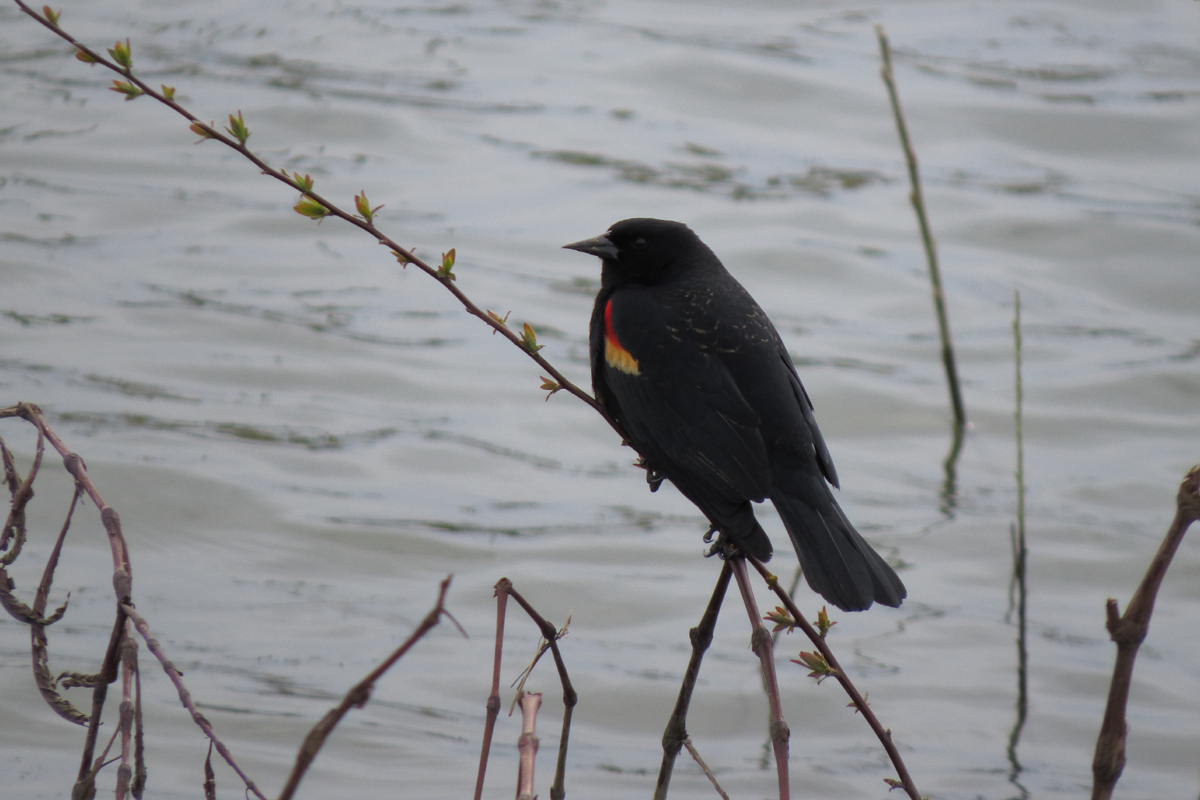 Red-winged Blackbirds are in full song and are staking out territories.
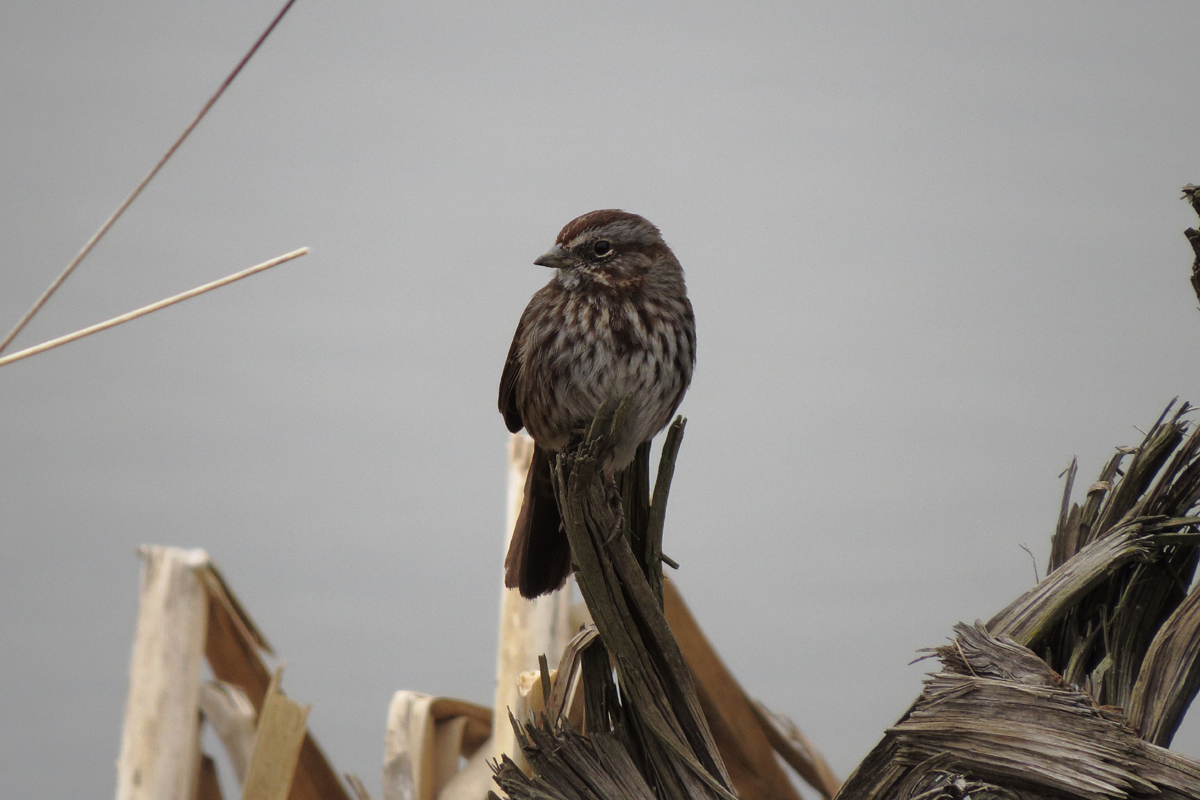 Song Sparrows start singing in January, but are increasingly vocal now.
 Several pairs of Cinnamon Teal were courting.
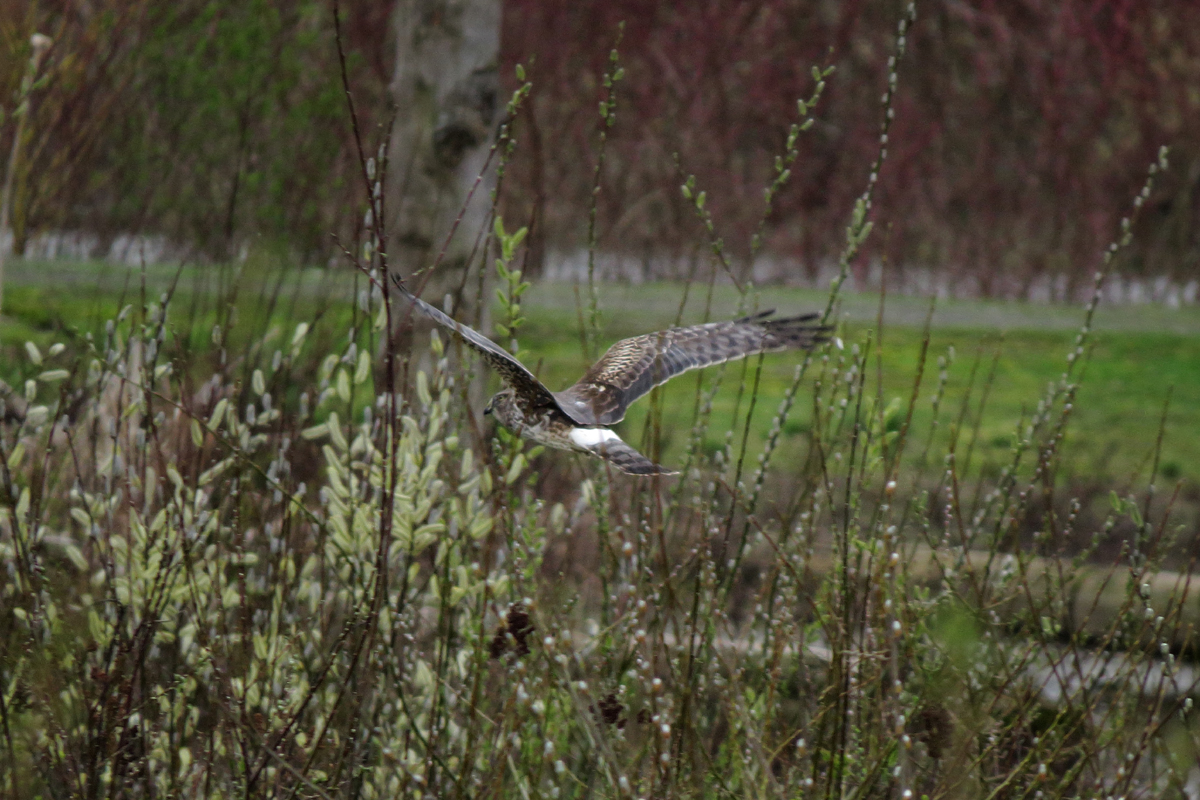 Northern Harrier
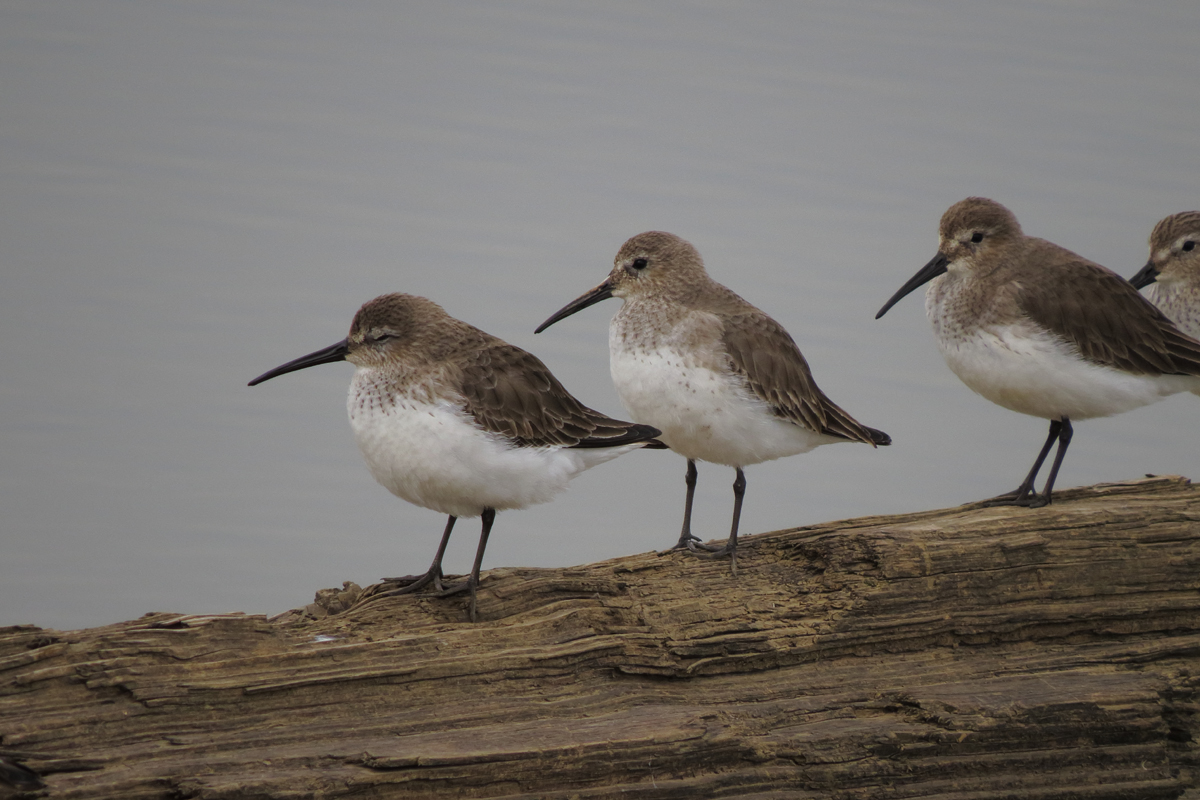
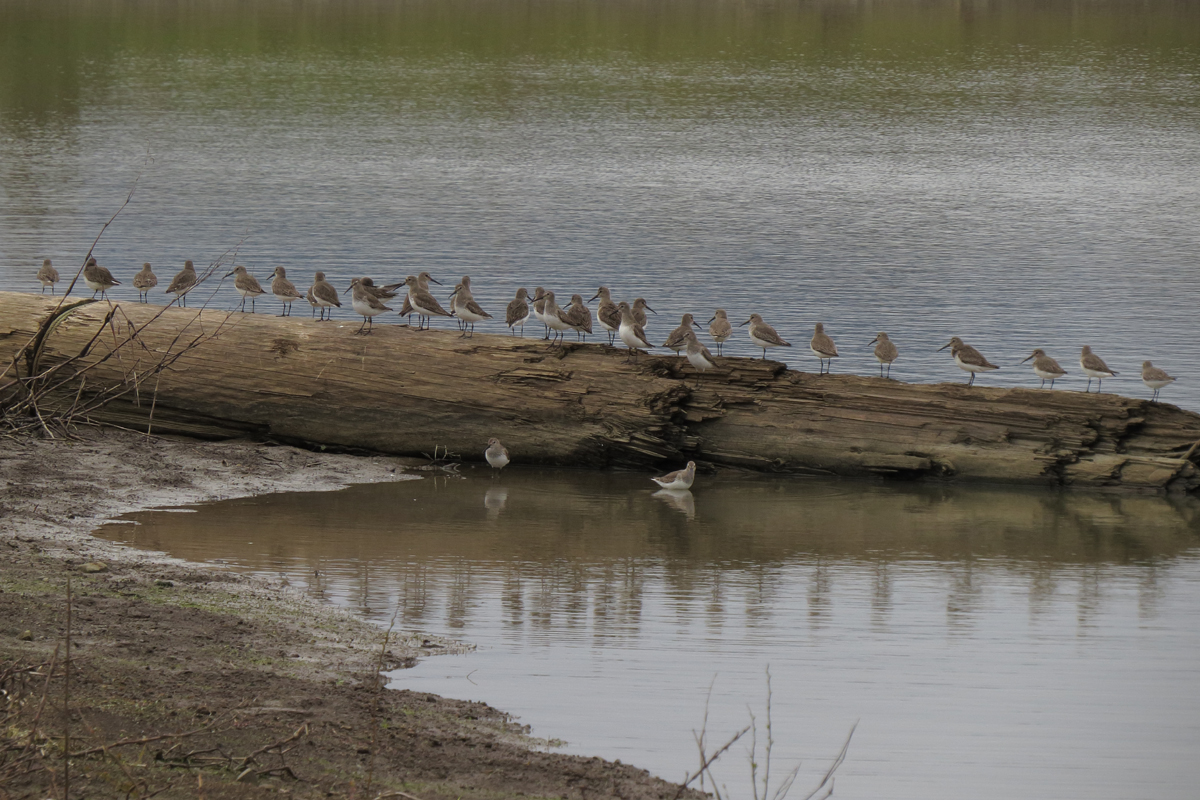 A flock of Dunlins was using this log to get out of the mud for a while. They were all still in winter plumage. Dunlins are one of the first species to arrive in spring.

 Spring shorebird migration peaks in late April/early May. There is still room in my shorebird class with Portland Audubon April 27/29.
 This Sora was being typically elusive.
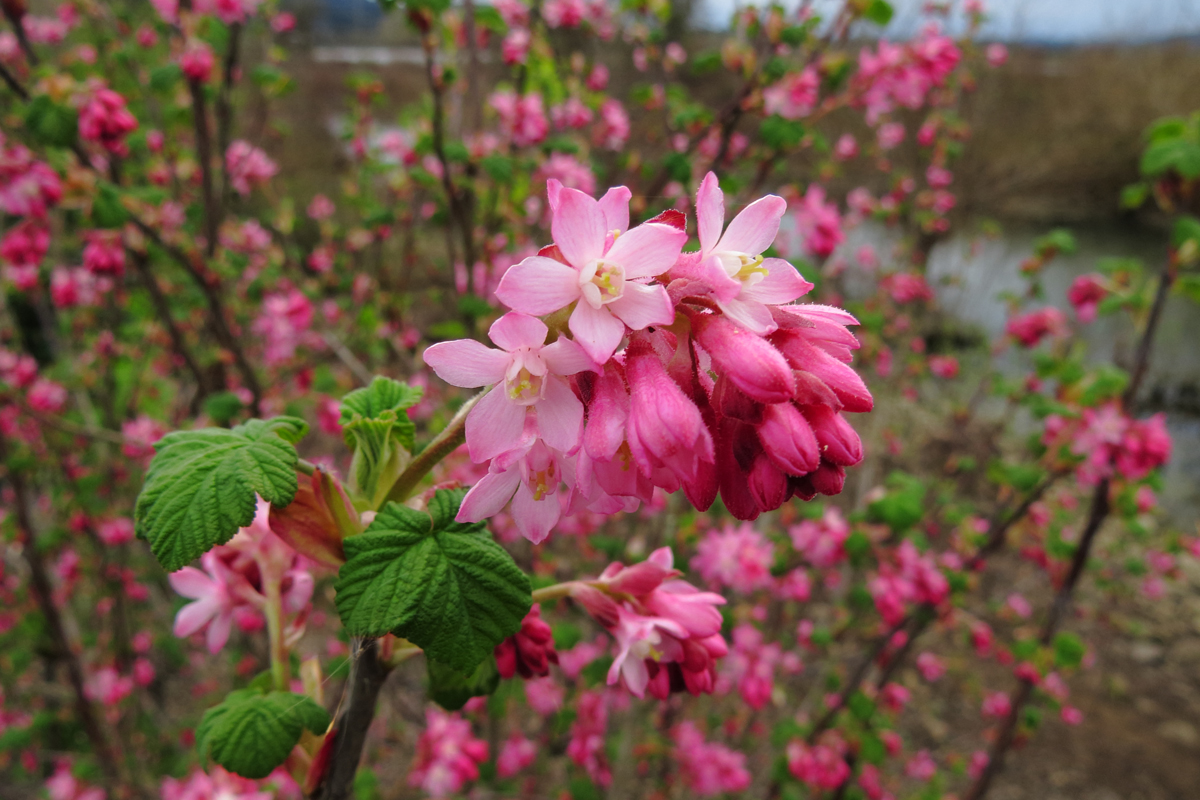 The red currants were is full bloom, attracting both Anna’s and Rufous Hummingbirds.
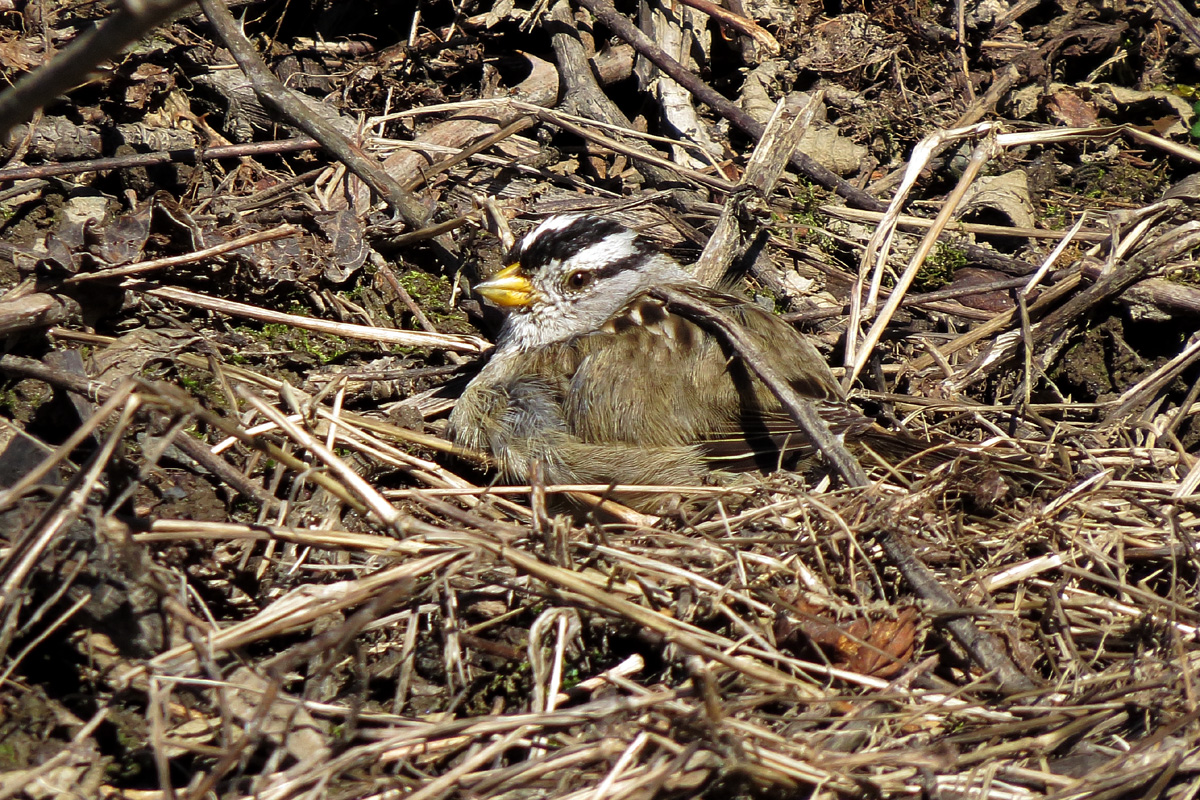 I went to Sauvie Island to scout areas for my Little Brown Birds class next week. The huge flocks of waterfowl that spend the winter there have dwindled, but there are still a lot of birds around. This White-crowned Sparrow was enjoying a dust bath on the first dry sunny day we have had in a long time.
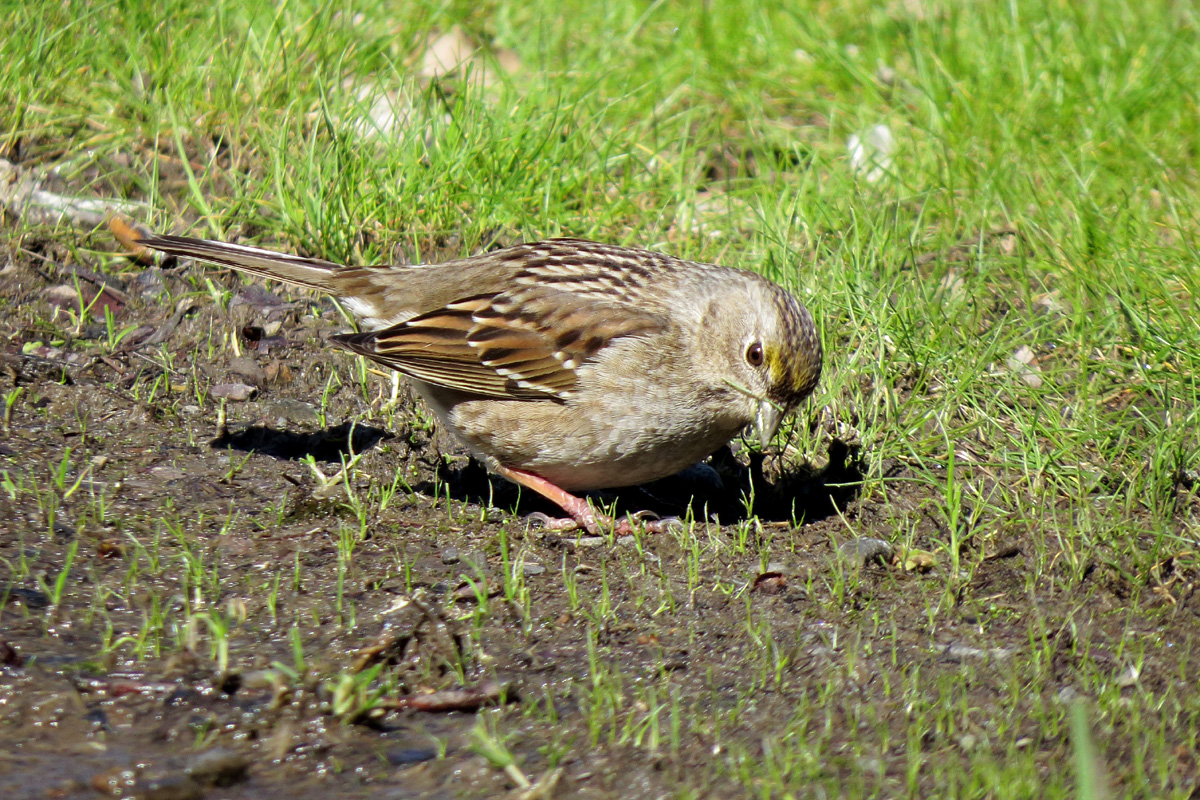 Golden-crowned Sparrows are still the most common species in the sparrow patches.
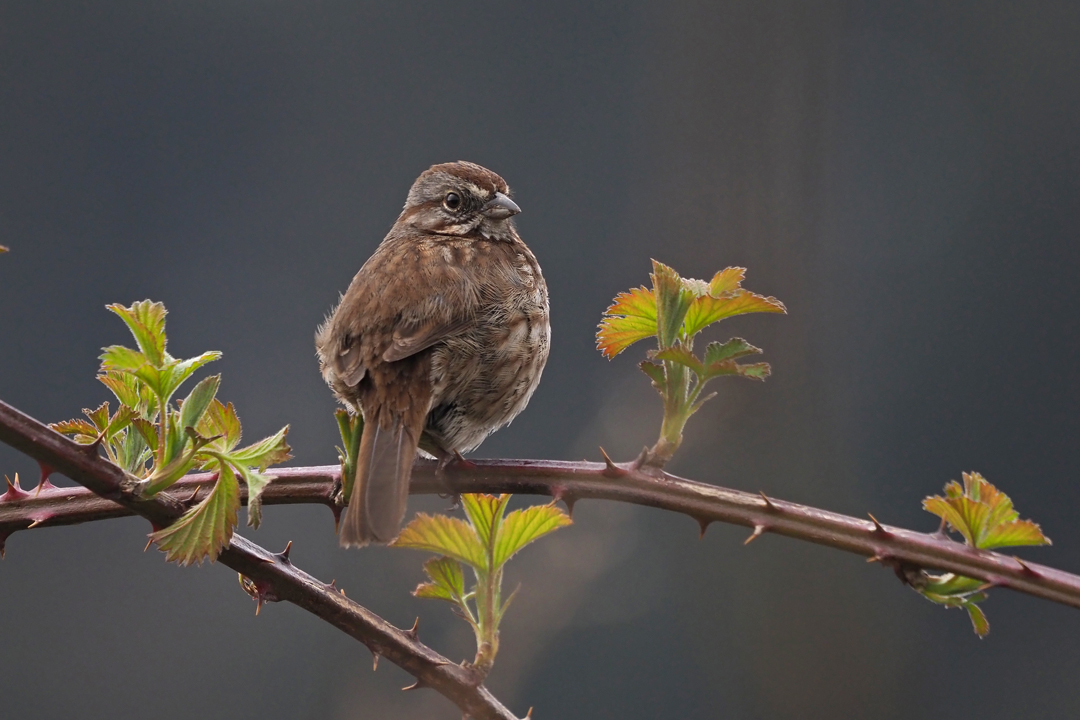
 Song Sparrows are not as numerous, but are very vocal right now.
 Raptors are still thick out at Sauvie. This Cooper’s Hawk did not make it any easier to find sparrows.
 One of many Bald Eagles seen that day.
 Red-tailed Hawk, scoping out the surrounding fields for rodents
 A distant Greater Yellowlegs. It is a little early for shorebirds, but their migration should be picking up in the next few weeks.
 There were Raccoon tracks all along Rentenaar Road.
Sandhill Cranes, Tundra Swans, and Cackling Geese are still present in good numbers, but spring migration should bring big changes soon.
I was interviewed on In the Garden with Mike Darcy on June 27 and discussed what you can do to attract birds to your yard in the summer. Due to various circumstances, including the continuing heat wave, I didn’t get out on a birding trip this week. Instead, I spent a little time observing the critters in the yard.
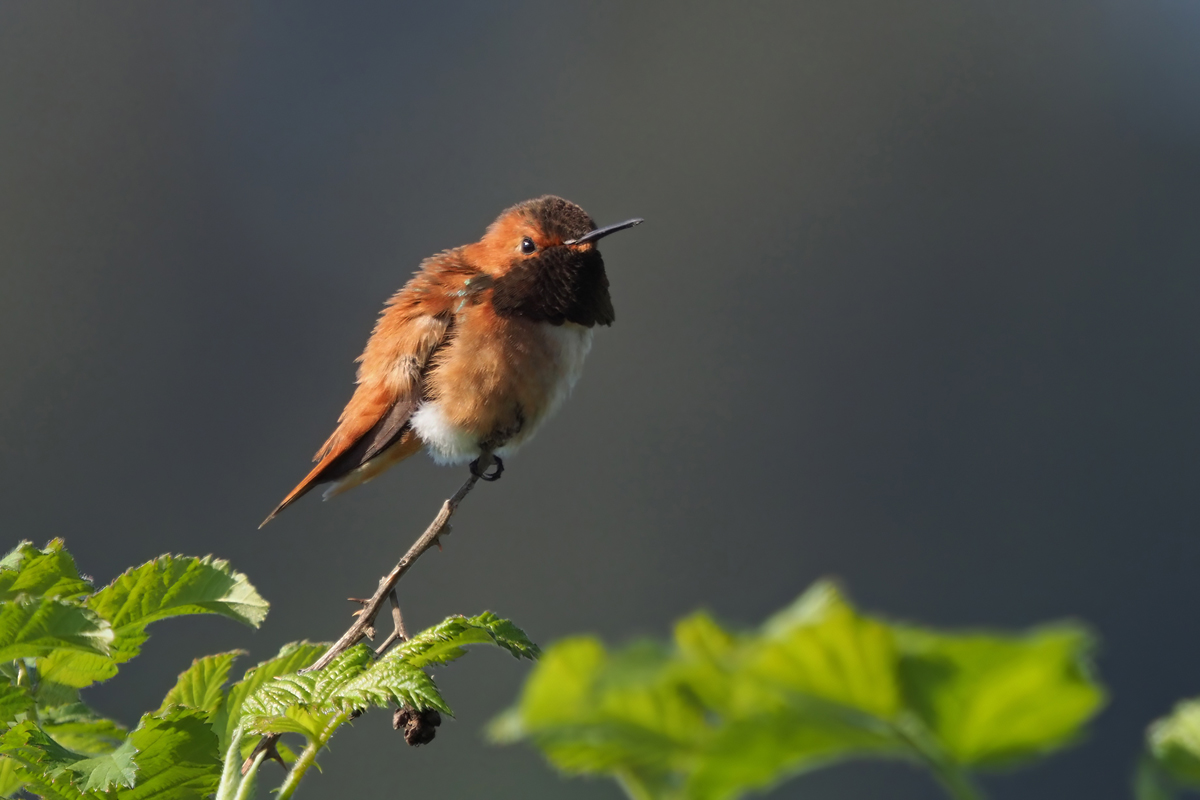
 Rufous Hummingbirds have been visiting in good numbers, a few weeks earlier than normal. Perhaps the drought has pushed them out of their more normal habitats.
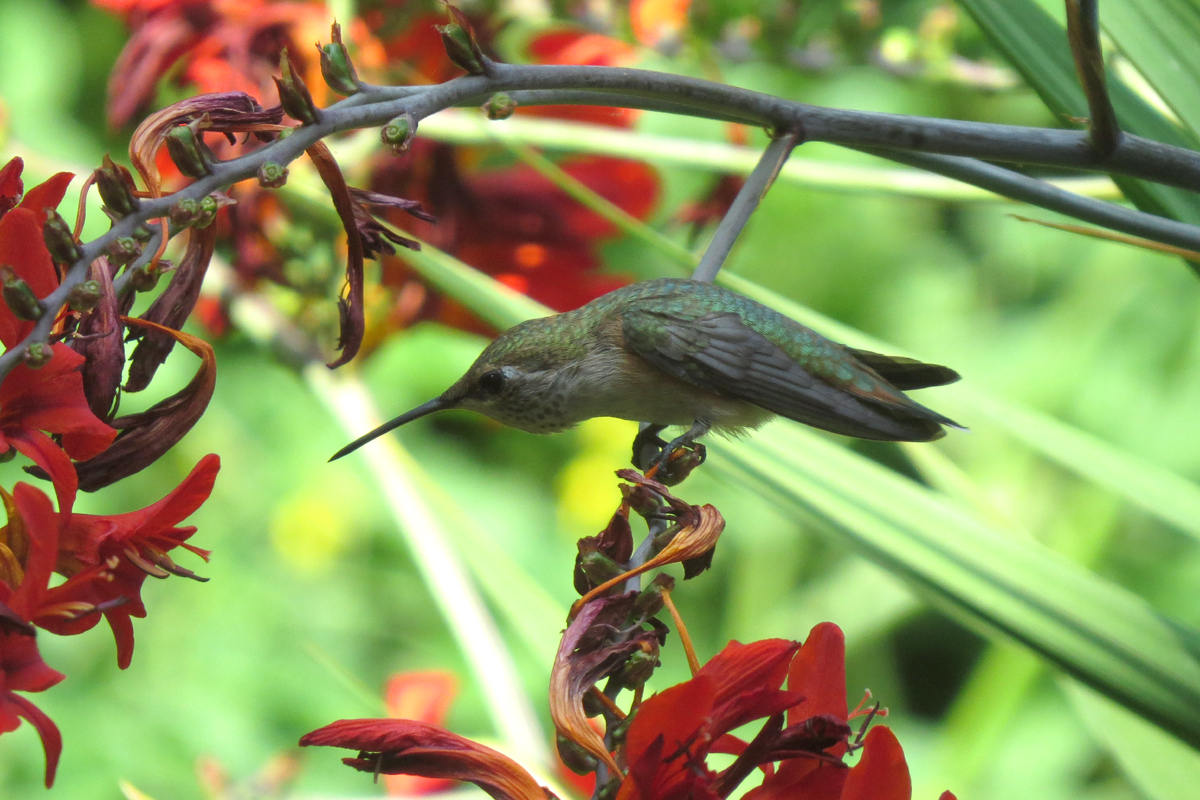
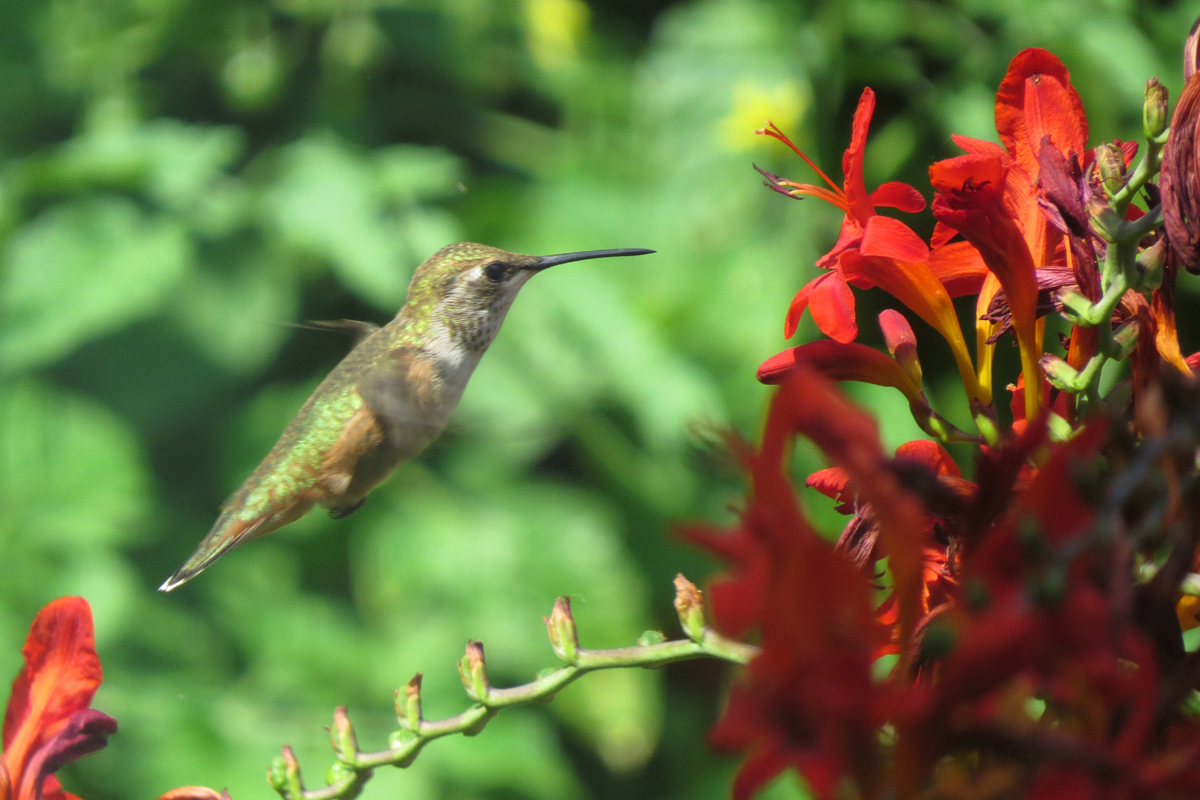
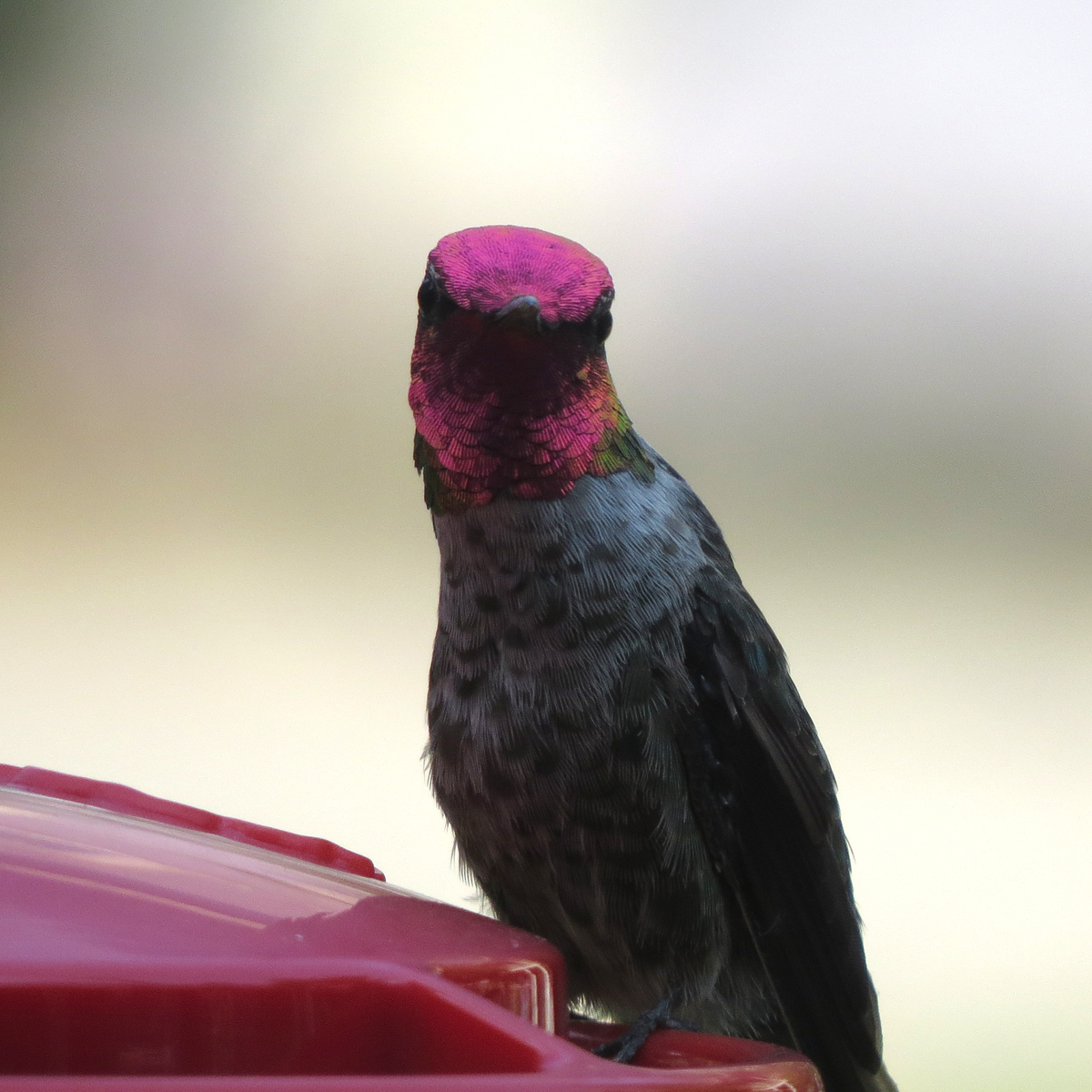 The resident Anna’s Hummingbird is not pleased with the Rufous invaders.
 This Song Sparrow has been enjoying the bird bath.
 juvenile House Finch at the feeder
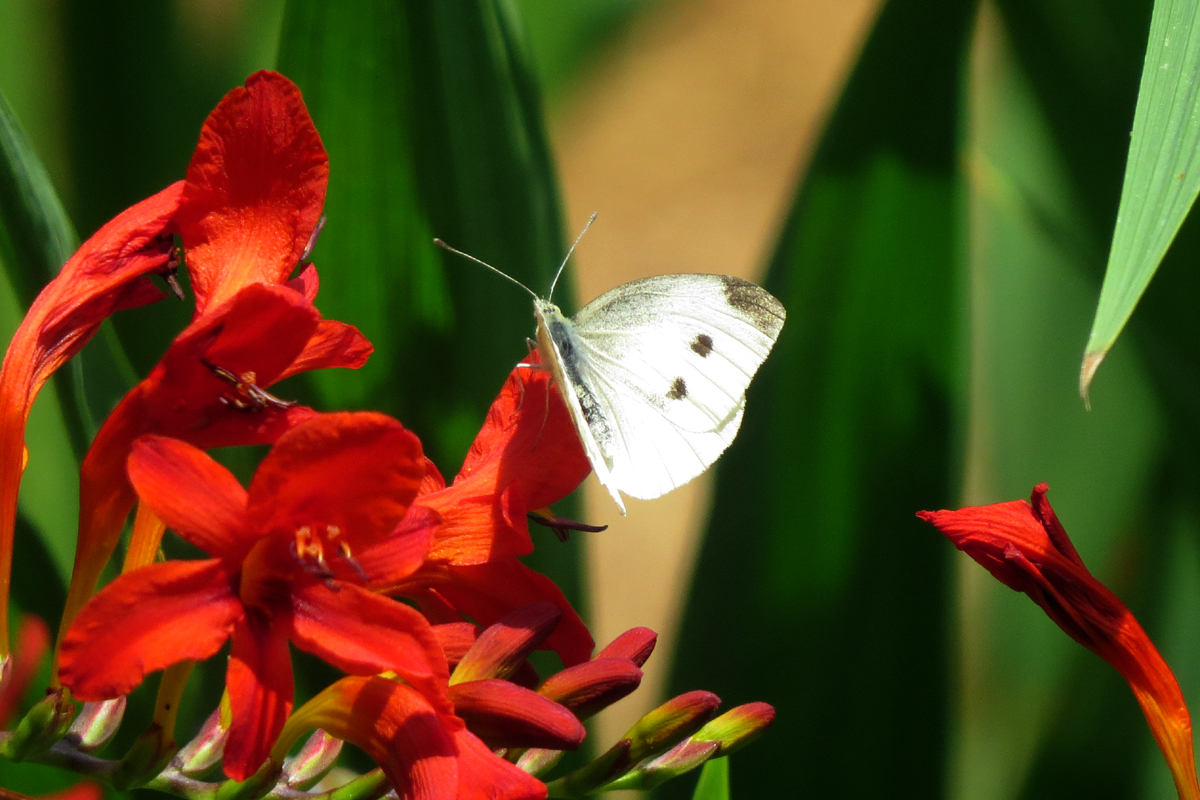 A Cabbage White, probably contemplating laying her eggs on my kale
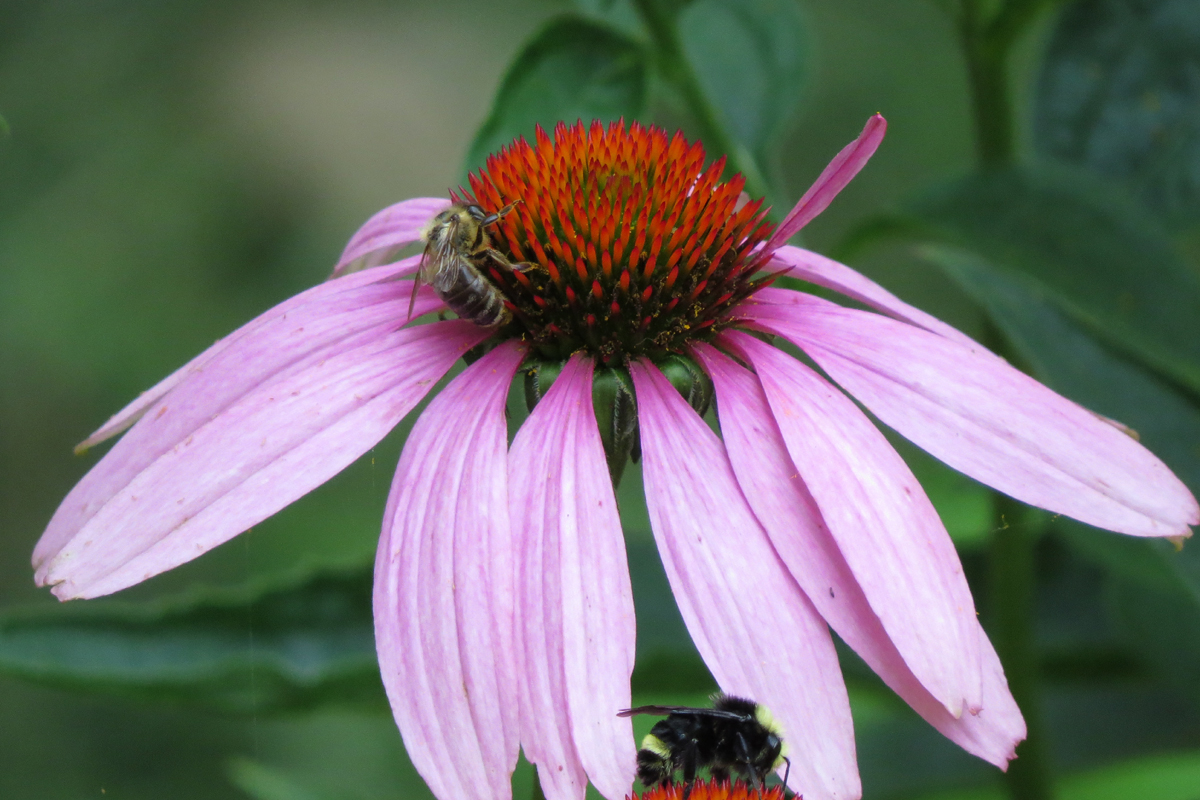 The bees are loving the Purple Coneflowers.

 Charismatic Megafauna
 Ethical Birder