Spring Shorebirds

I had hoped to get to the coast this week, but a big weather system was blowing in so I  visited Fernhill Wetlands and Jackson Bottom. Both sites had a few shorebirds sporting their breeding plumage.

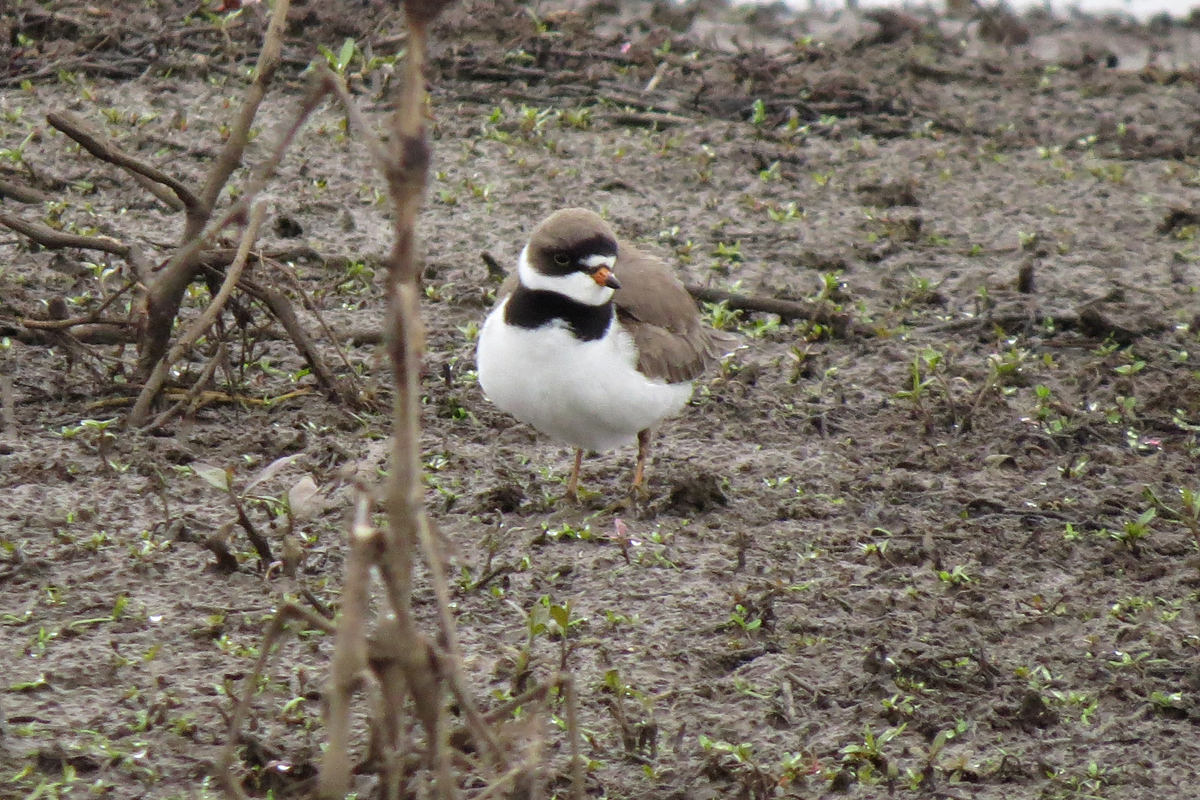
semipalmated plover fluffySemipalmated Plover

semipalmated plover 1

dunlinDunlin

least sandpipersLeast Sandpipers

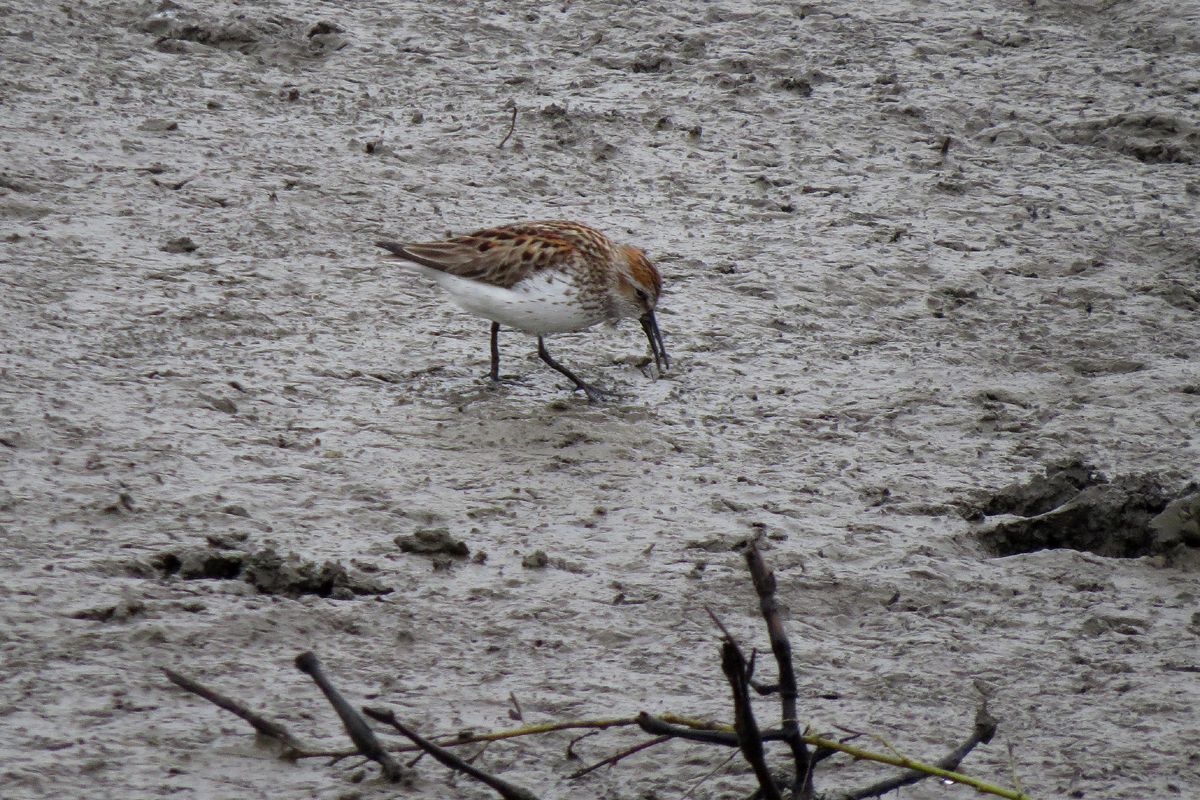
western sandpiperWestern Sandpiper

long-billed dowitchersLong-billed Dowitchers at Jackson Bottom. The sticks in the foreground are willow stakes planted by Clean Water Services. As these willows grow, they form a canopy over the mud flats, making the habitat useless to migrating shorebirds. Birders have been complaining about the practice at this site for years, to no avail.

North Coast, 21 November 2013

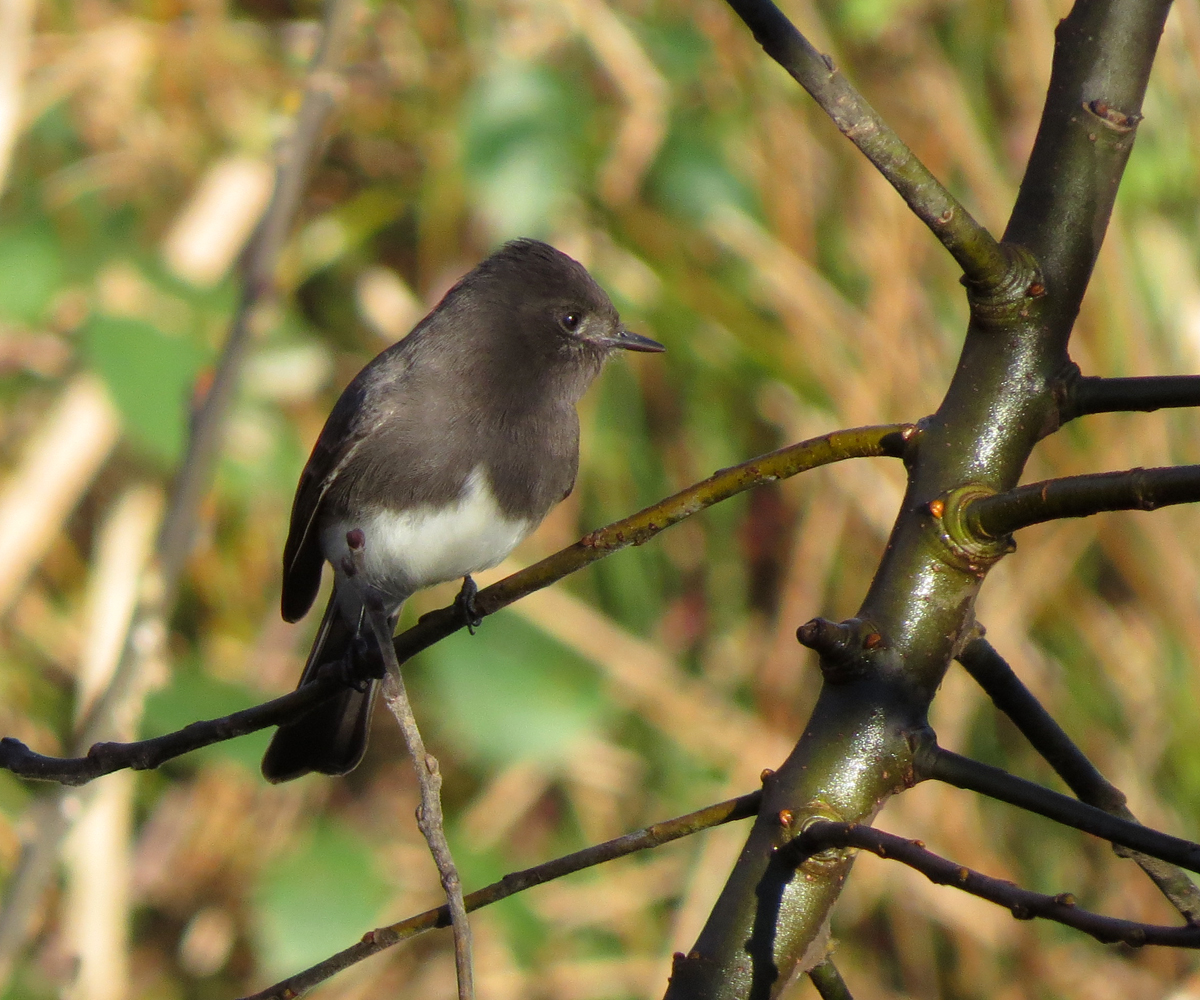
phoebe 2I spent a cold but sunny day on the coast, from Seaside to the Columbia River. One of the best surprises of the day was this Black Phoebe at Millponds Park in Seaside. This species continues to expand its range northward, both along the coast and in the Willamette Valley.

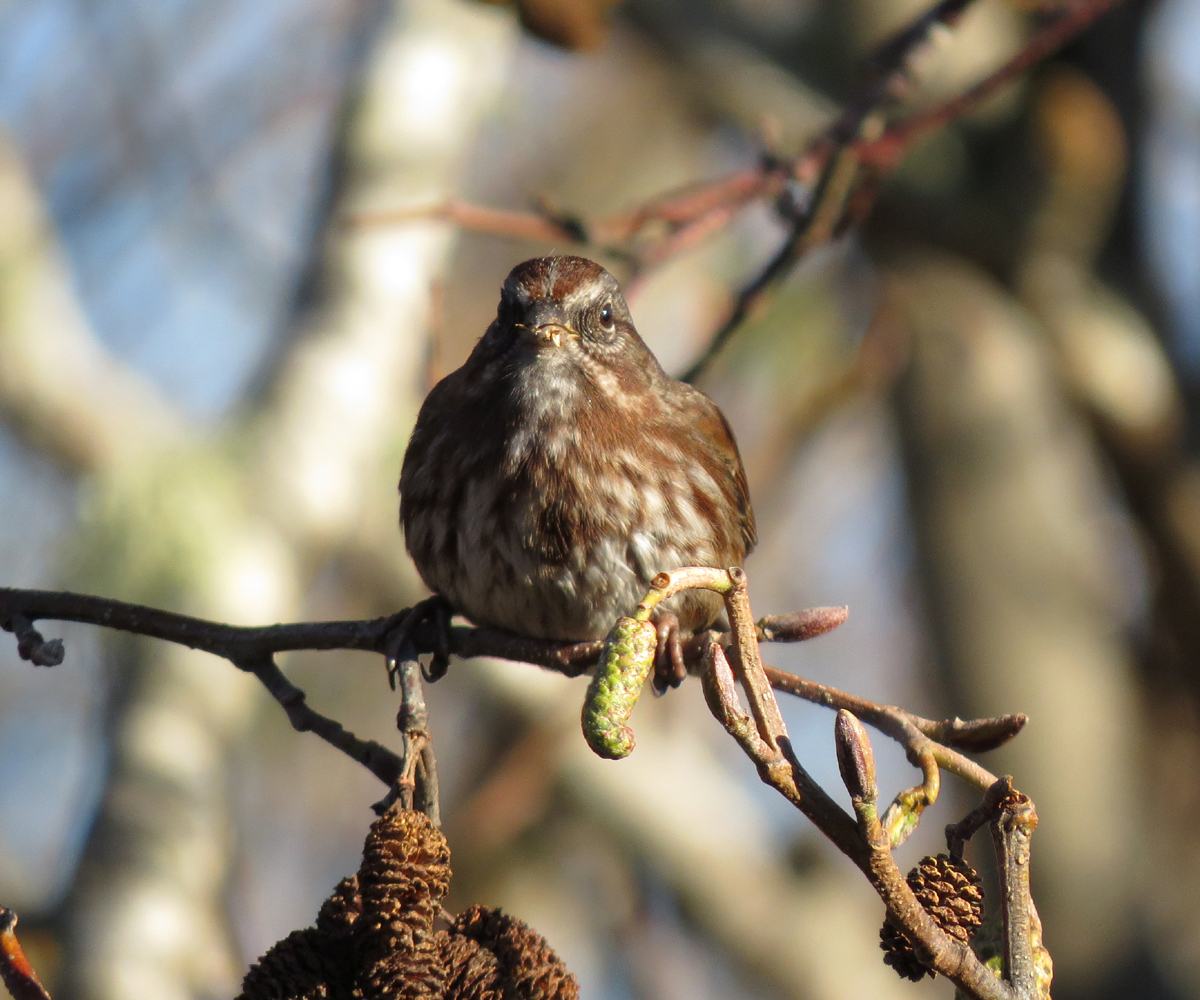
song sparrowWhile the ponds at this park are attractive to freshwater waterfowl like Ring-necked Ducks and Hooded Mergansers, the brushy areas hold good numbers of sparrows. Here is a Song Sparrow in the harsh sunlight.

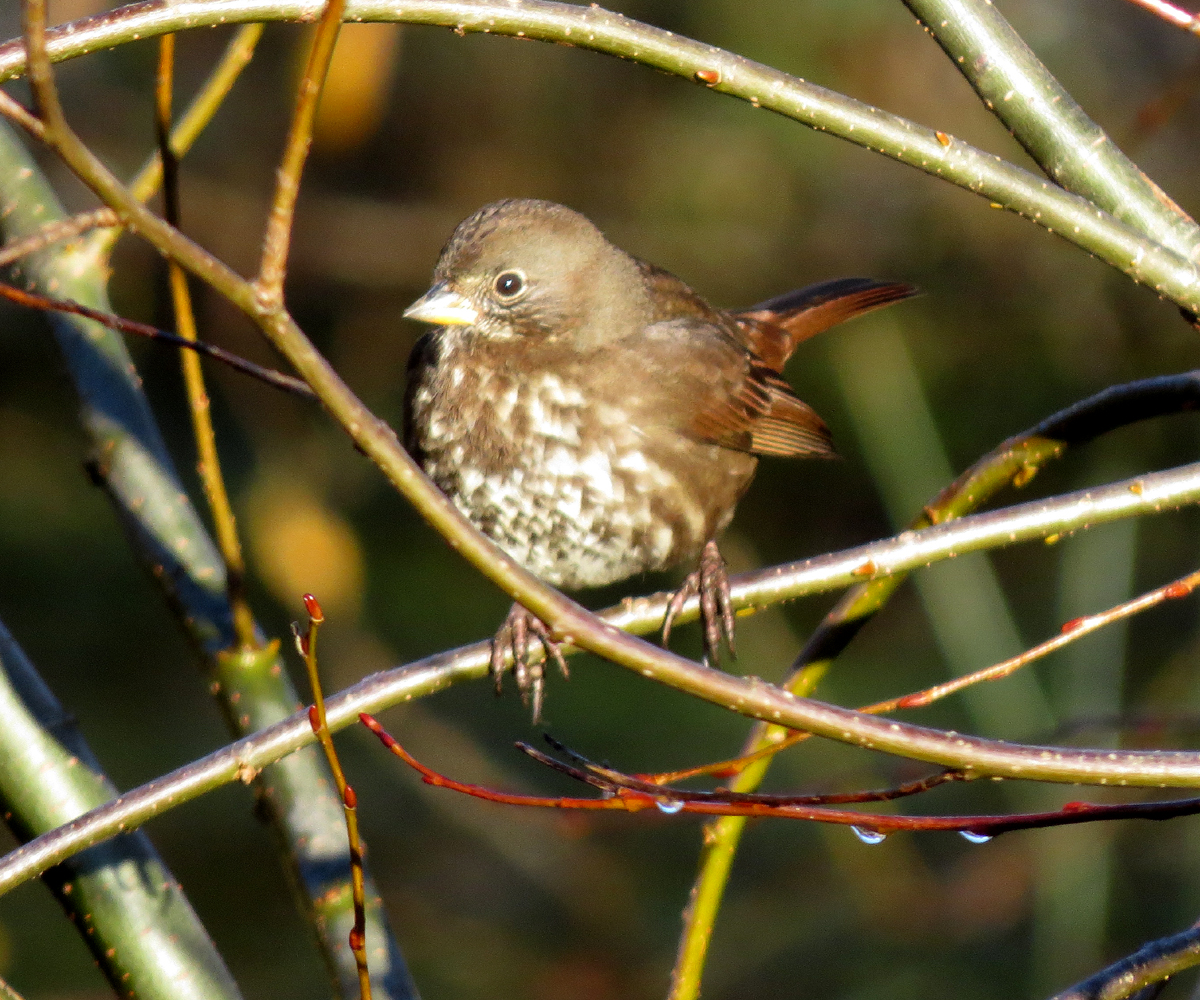
fox sparrowFox Sparrows are common in the brushy areas. Unfortunately, my camera prefers to focus on the brush, rather than on the birds.

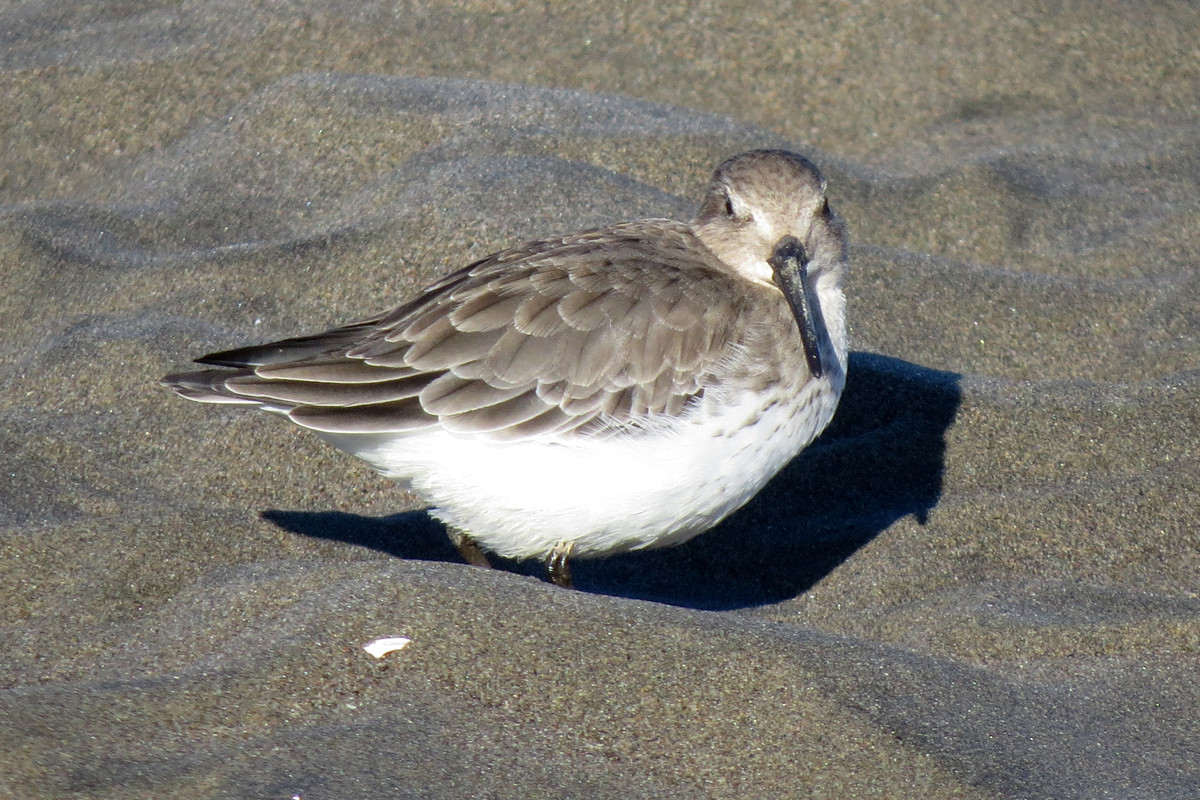
dunlin 6This lone Dunlin was the only shorebird I found at Fort Stevens. He was very tolerant of my presence.
dunlin 3The same bird, blending in well with the sand
dunlin 2
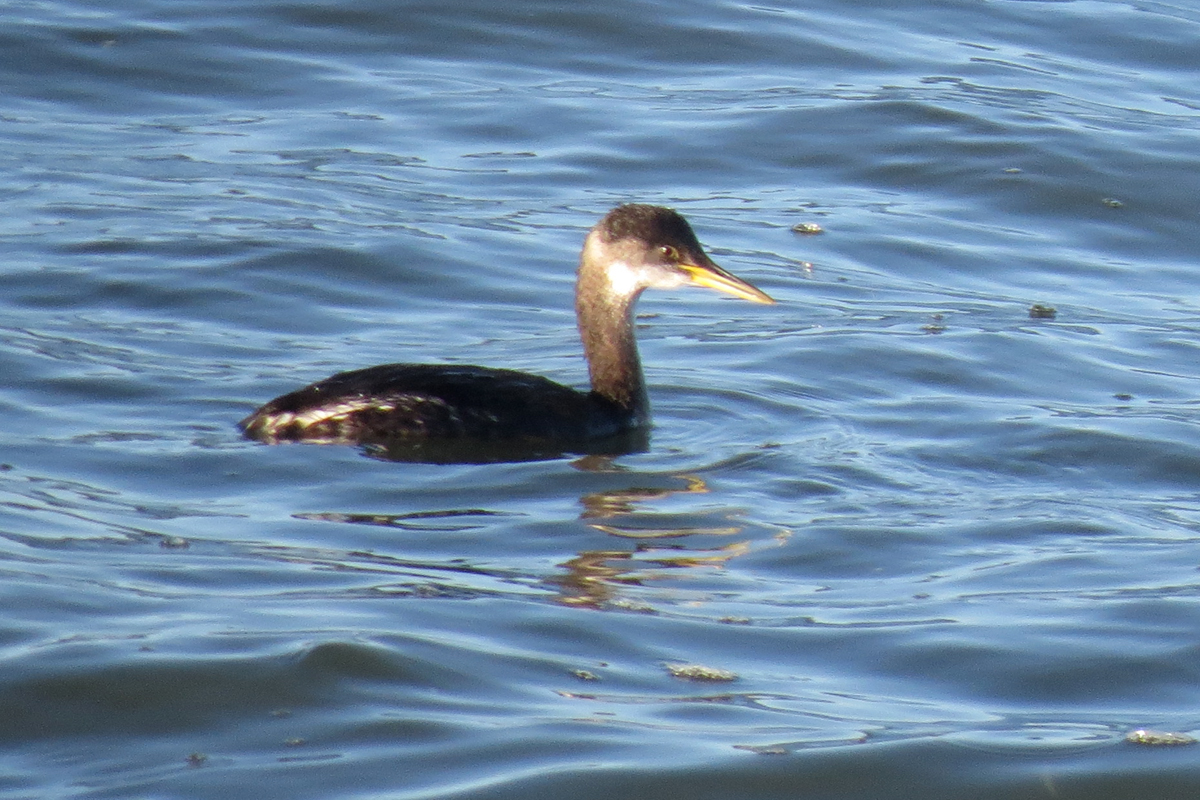
rn grebeThe Seaside Cove hosted huge rafts of birds; all three scoters, Greater Scaup, Western Grebe, and a single Long-tailed Duck. Most birds were beyond the breakers (aka beyond camera range), but this Red-necked Grebe came in close enough for a blurry photo.

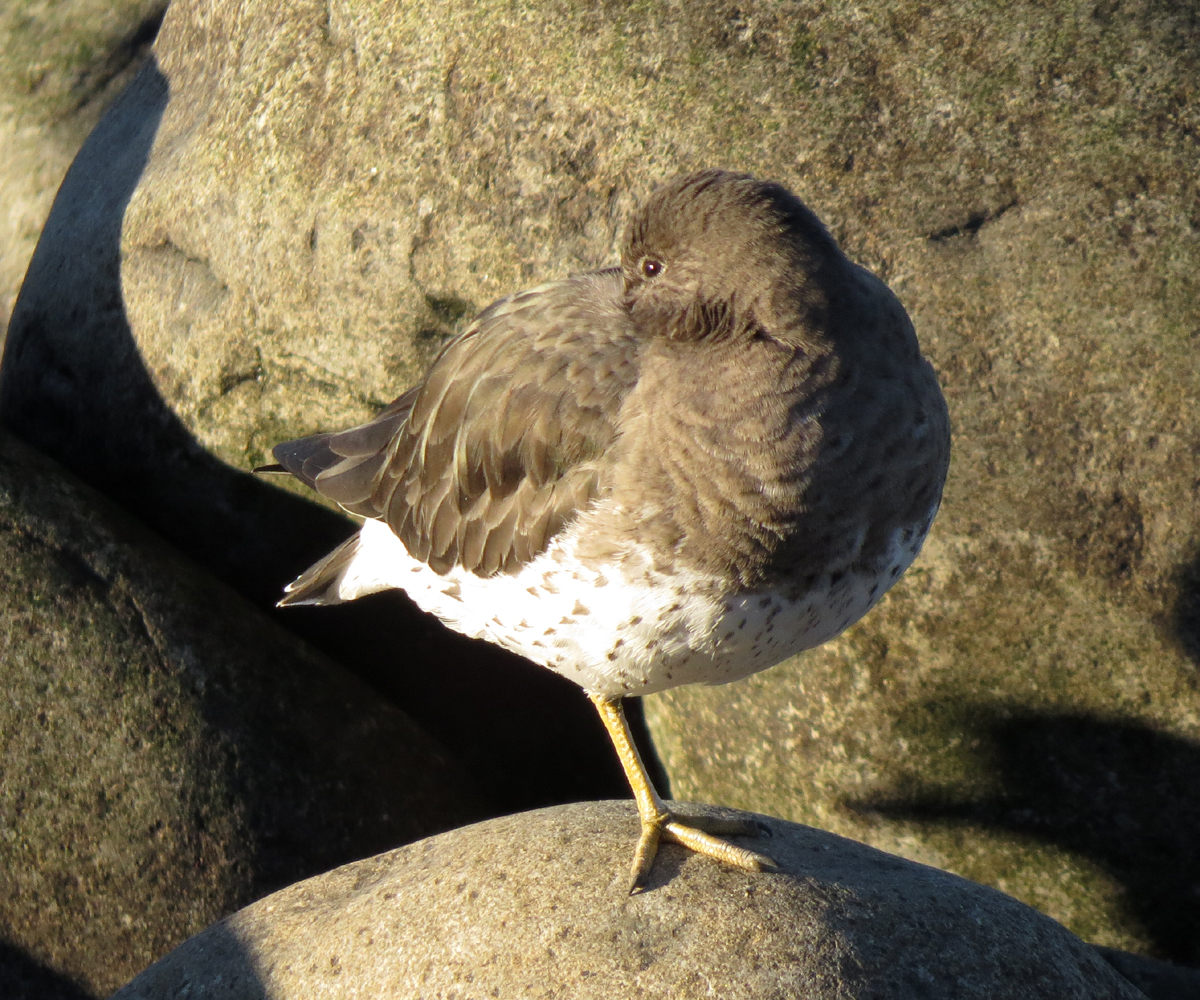
surfbird 1sleepy Surfbird

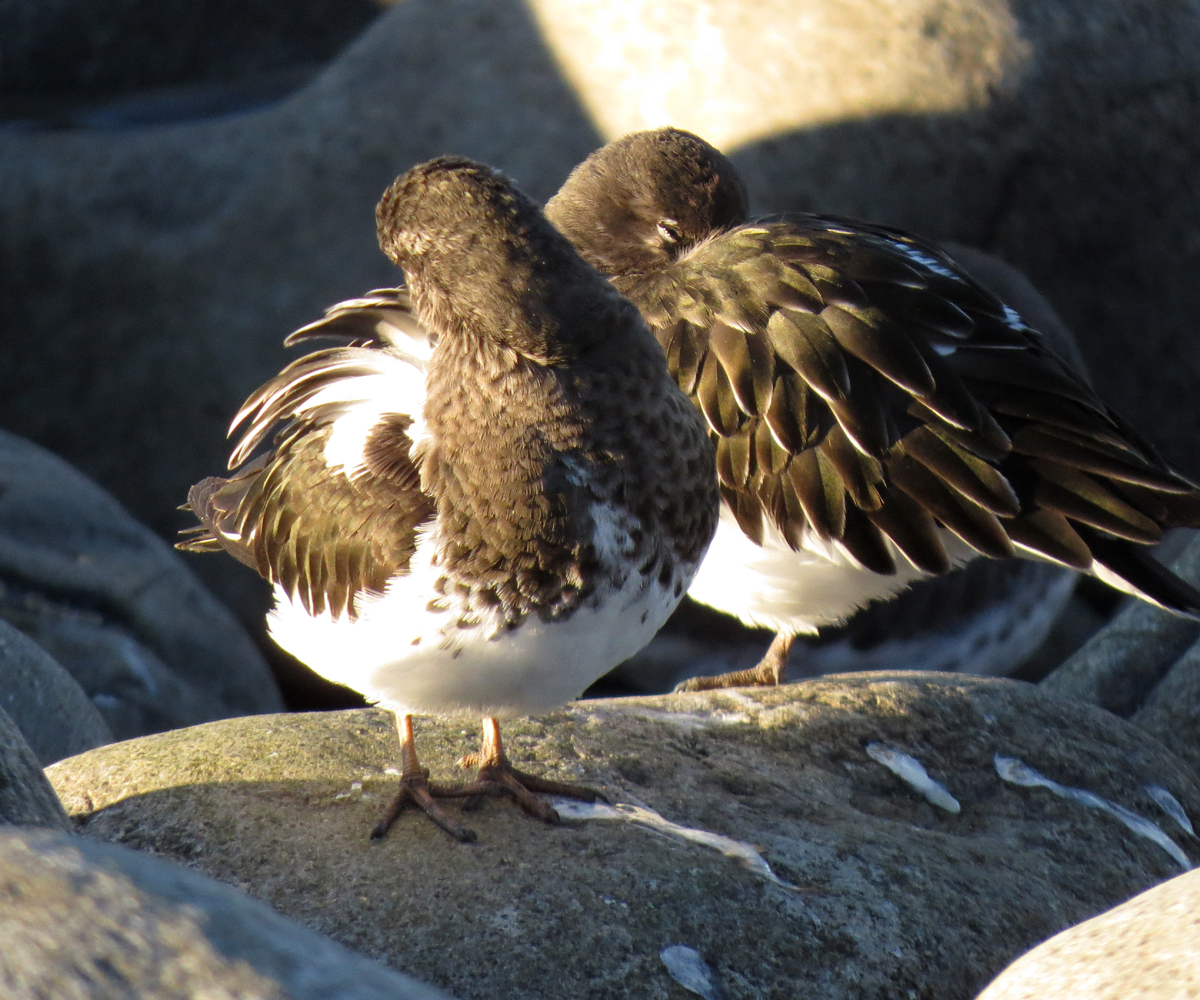
turnstones 1preening and sleeping Black Turnstones

turnstone and surfbird 2sleepy Black Turnstone and Surfbird

Jackson Bottom 4/26/12

I took a client to Jackson Bottom Wetlands Reserve in Hillsboro (Birding Oregon p. 60).  Continuing restoration efforts at that site are creating some nice habitat, and the birds are responding.


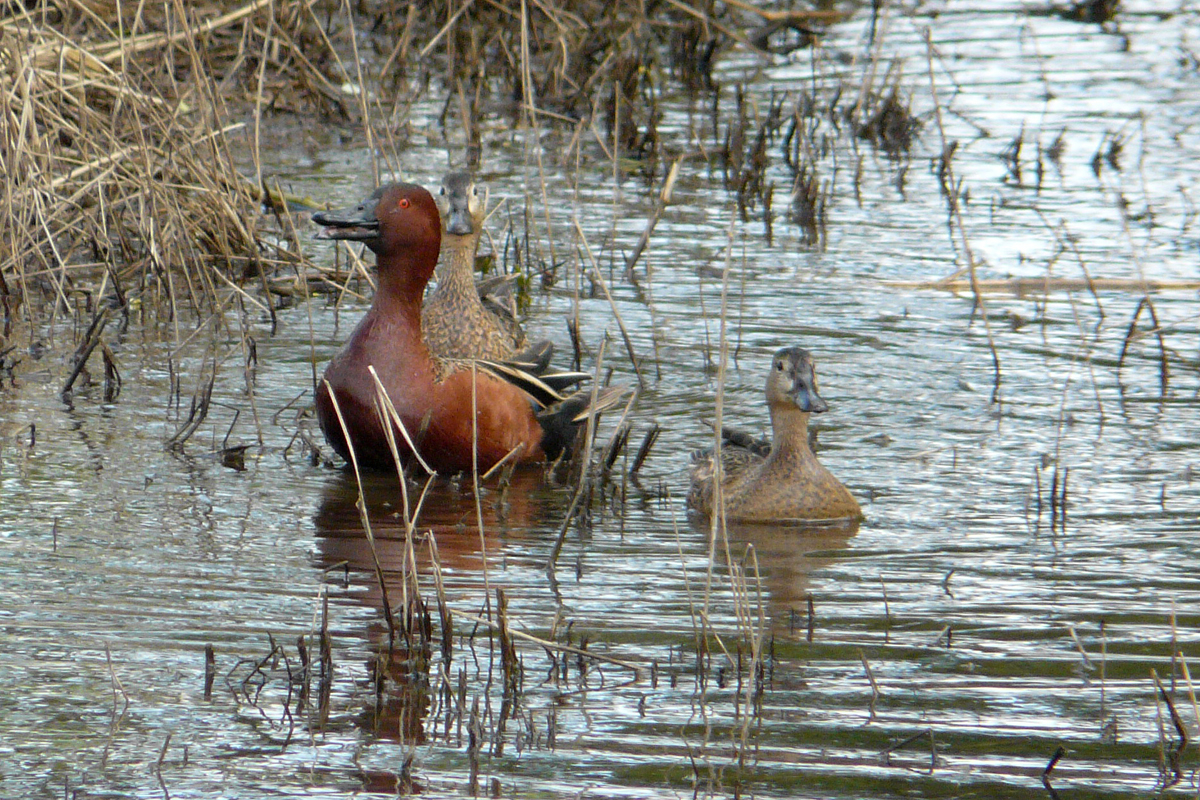
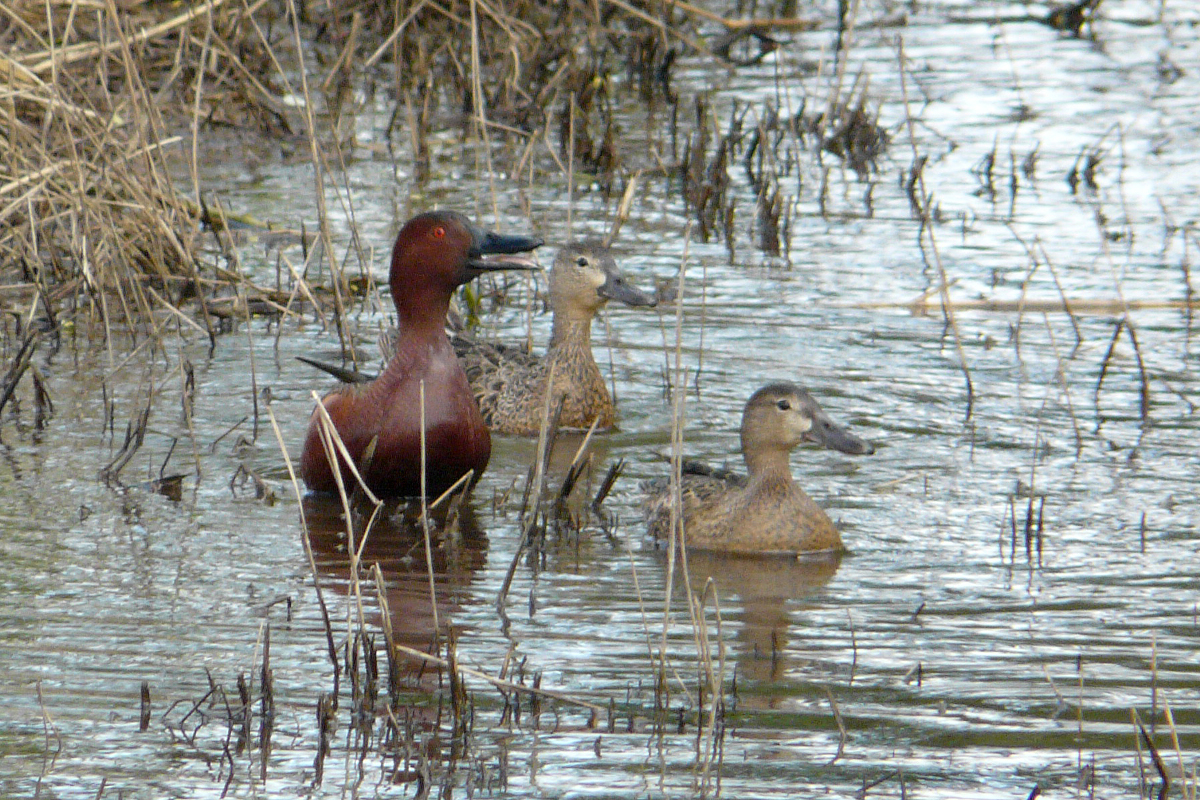
Cinnamon Teal were actively courting.

There was lots of head bobbing and chasing of rival males.

taking a break


Jackson Bottom is swarming with swallows. Tree Swallows claim most of the many nest boxes.


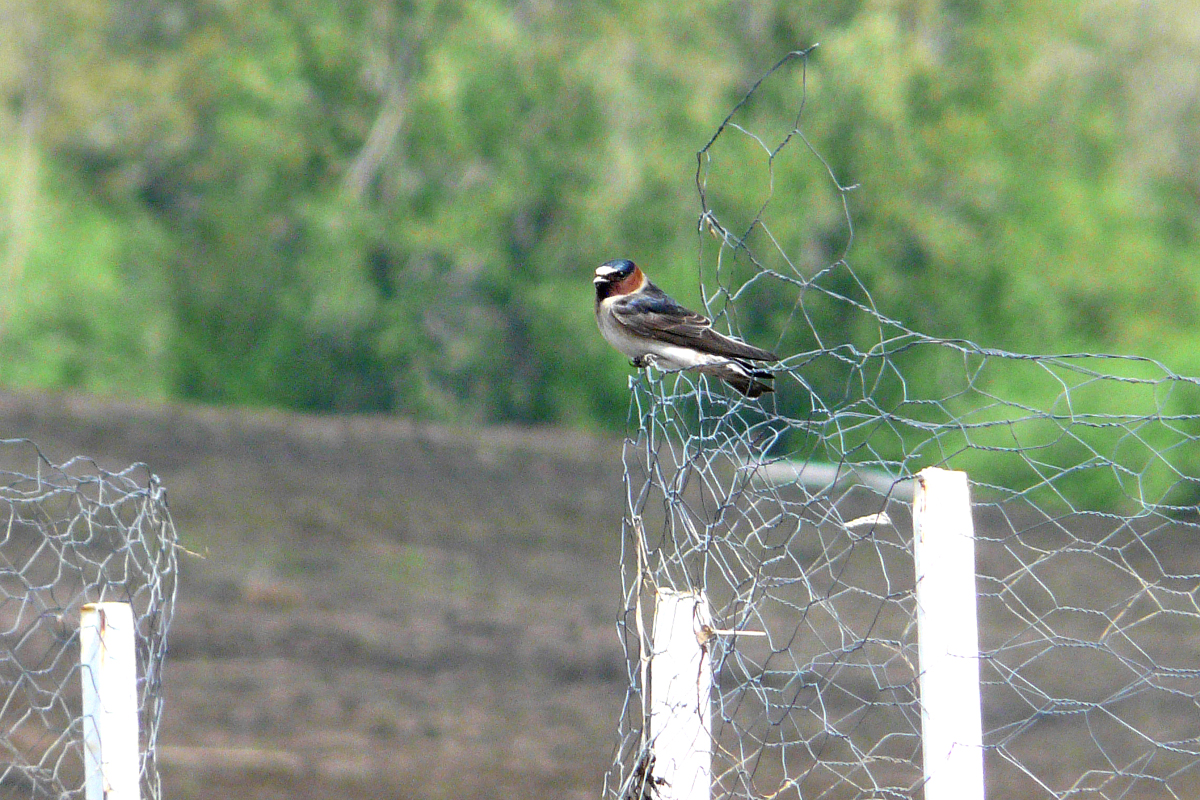
Cliff Swallow


Restoration work has created shallow ponds and open mud, which is attractive to migrant shorebirds like these Western Sandpipers.


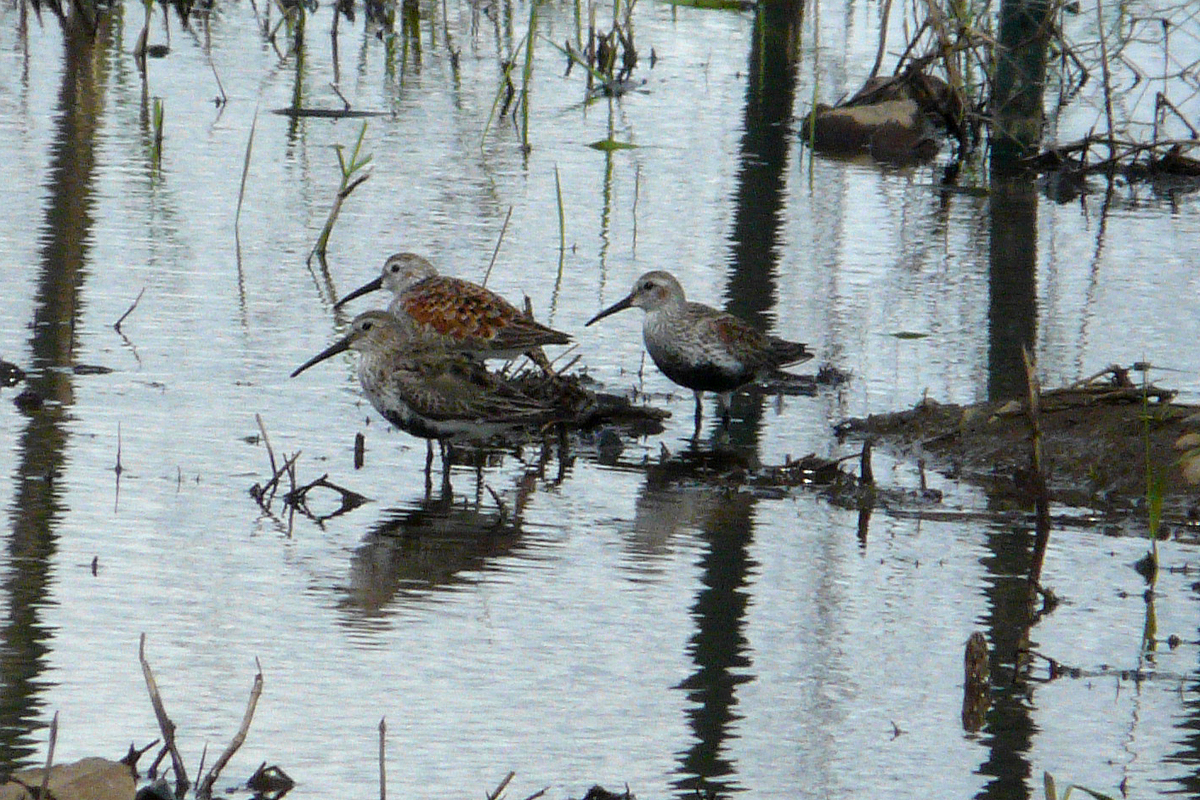
Three Dunlins in various states of molt. The front bird is least advanced, while the bird in back is in full breeding plumage.


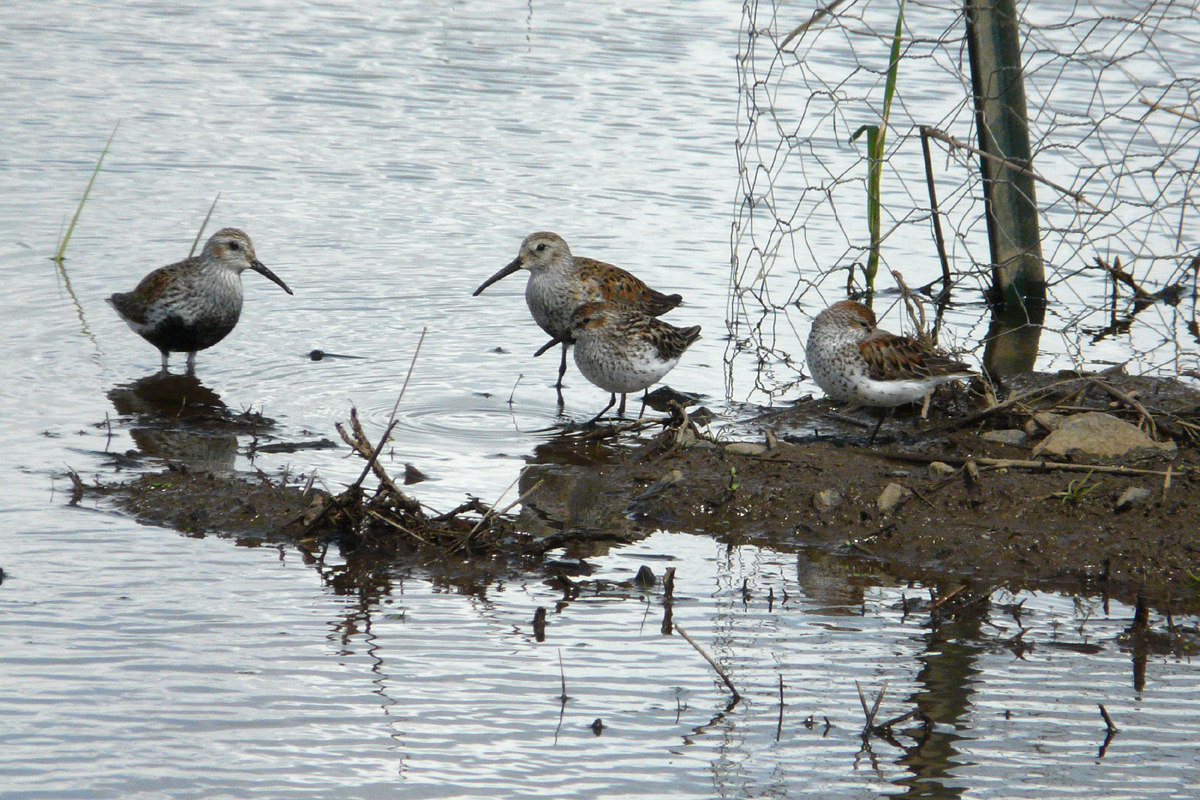
Two Dunlins on the left, Western Sandpipers on the right.


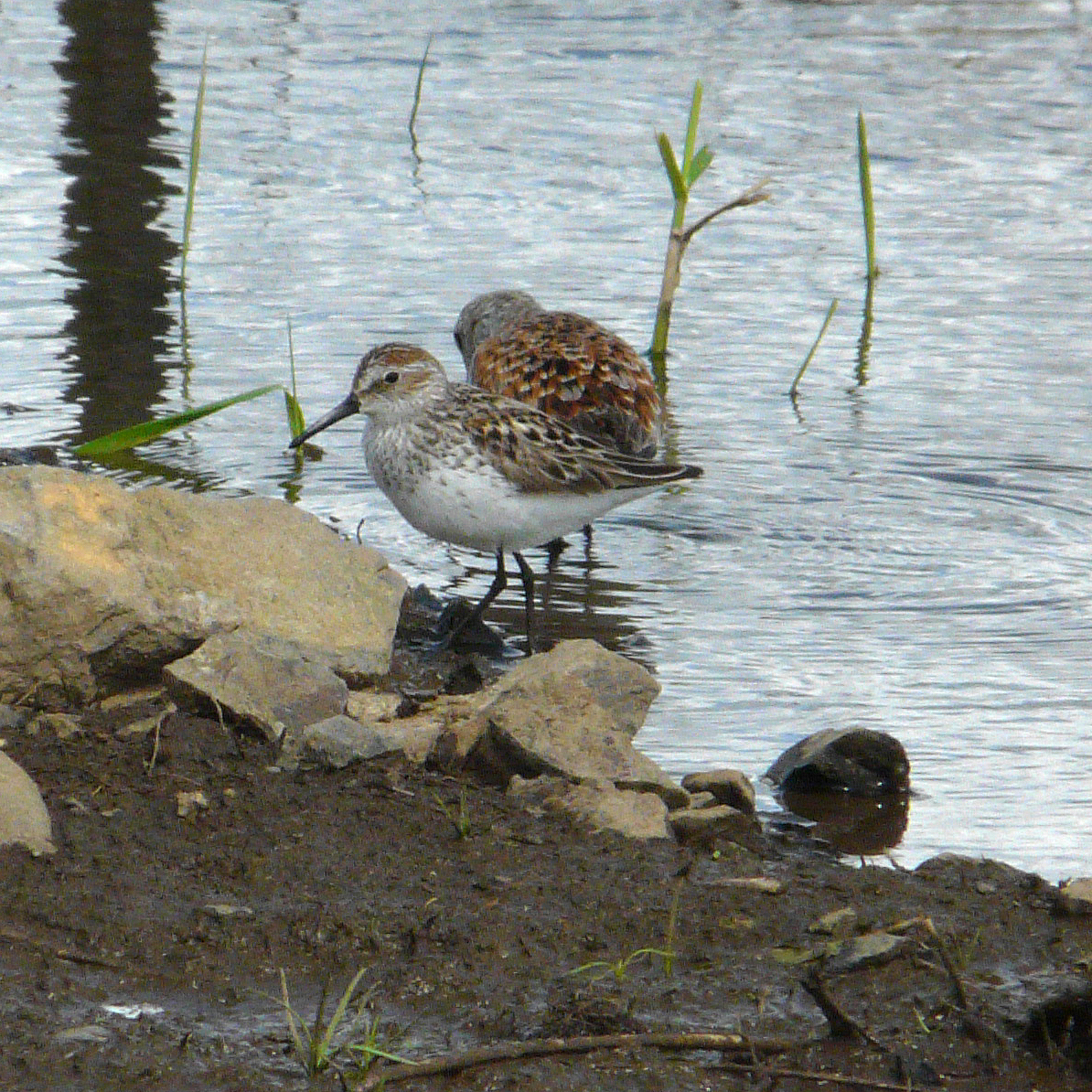
Western Sandpiper, with Dunlin in the background


Least Sandpipers


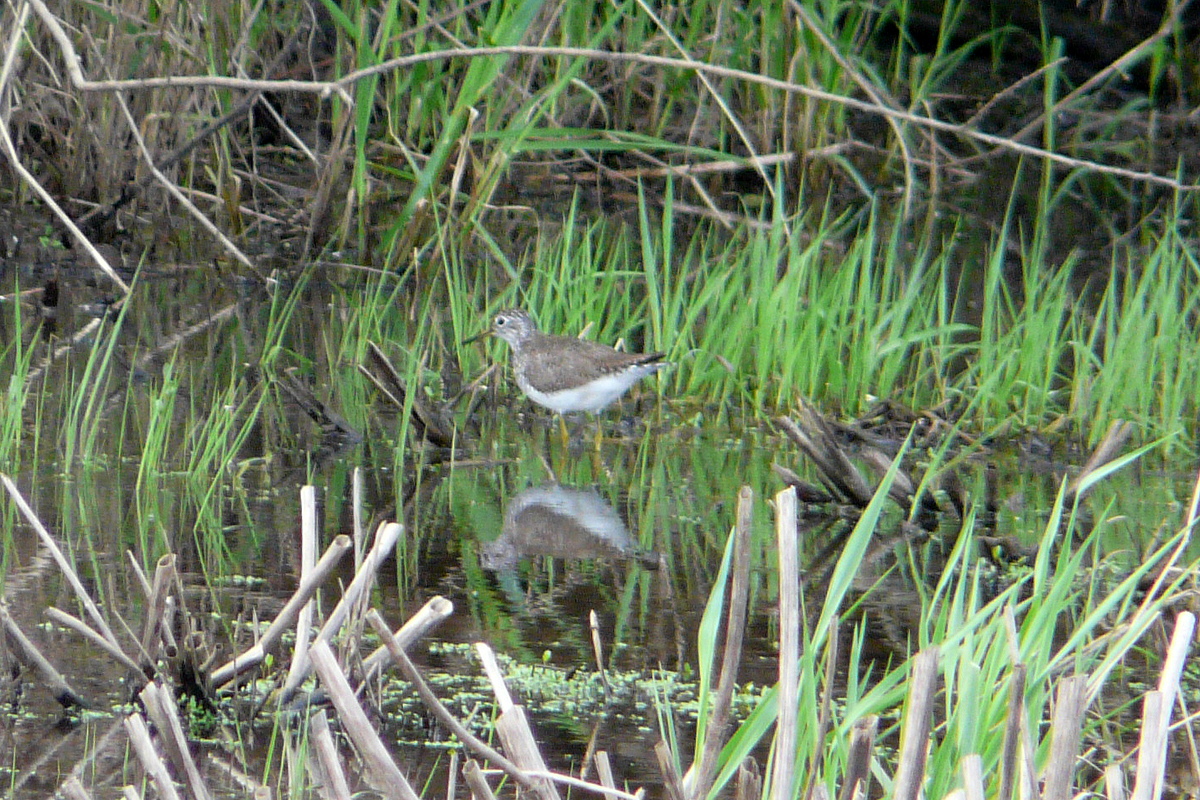
This Solitary Sandpiper was a nice surprise. They are an uncommon spring migrant.


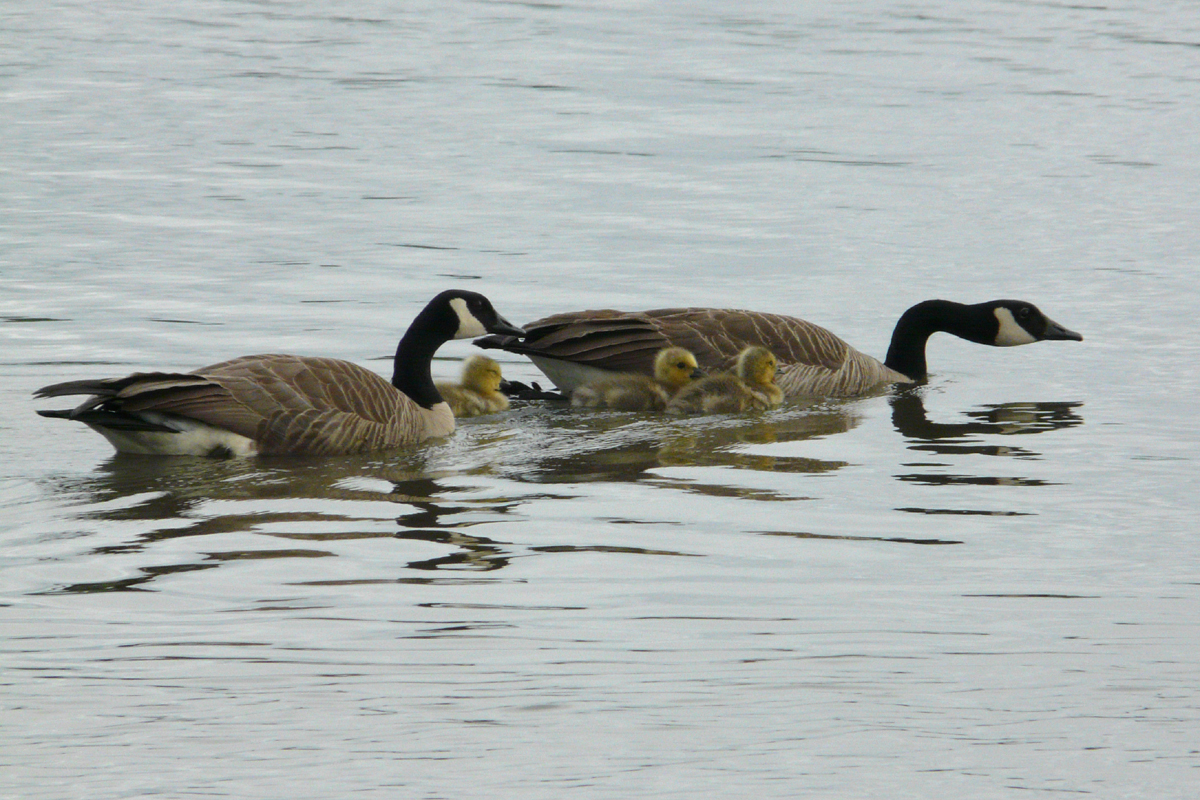
The resident Canada Geese have already hatched their broods.

Gray’s Harbor, WA

I’ve recently made two trips to Grays Harbor in Washington, once to scout and the other to lead my shorebird class. This estuary is a major staging area for migrating shorebirds in spring.


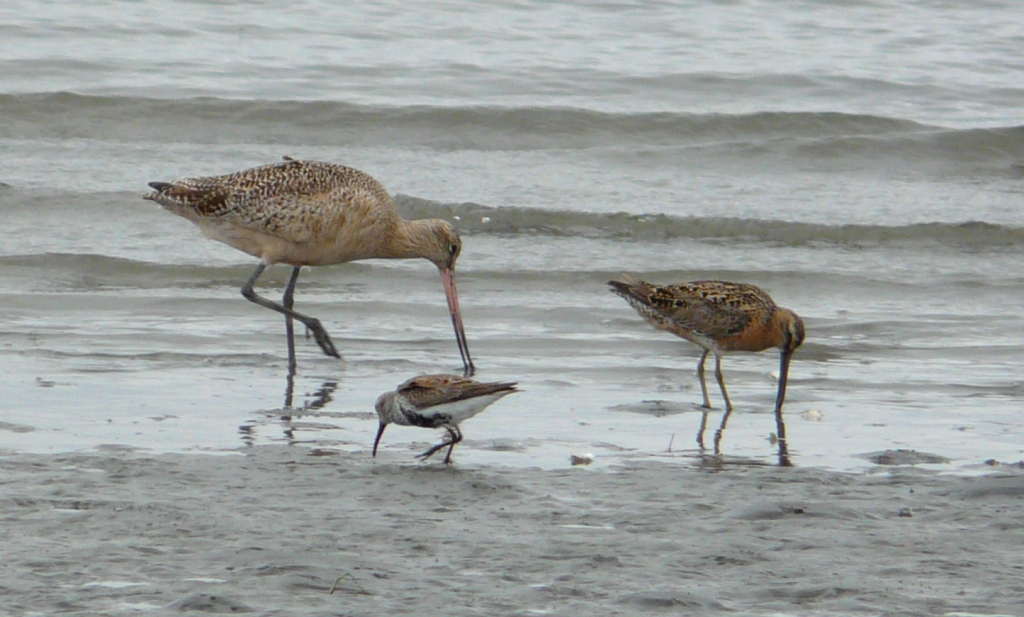
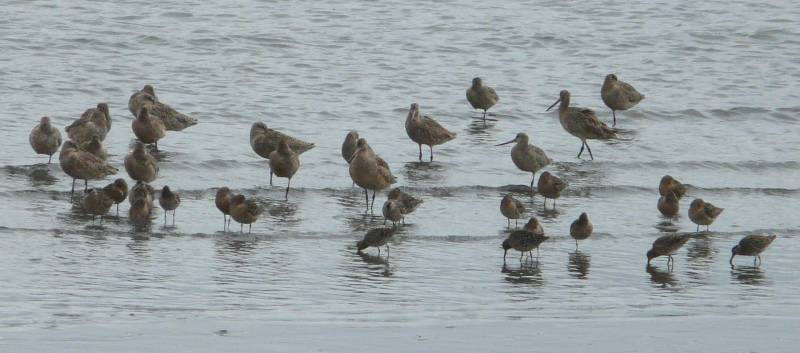
Marbled Godwit, Dunlin, and Short-billed Dowitcher feeding at Damon Point, near the mouth of the harbor


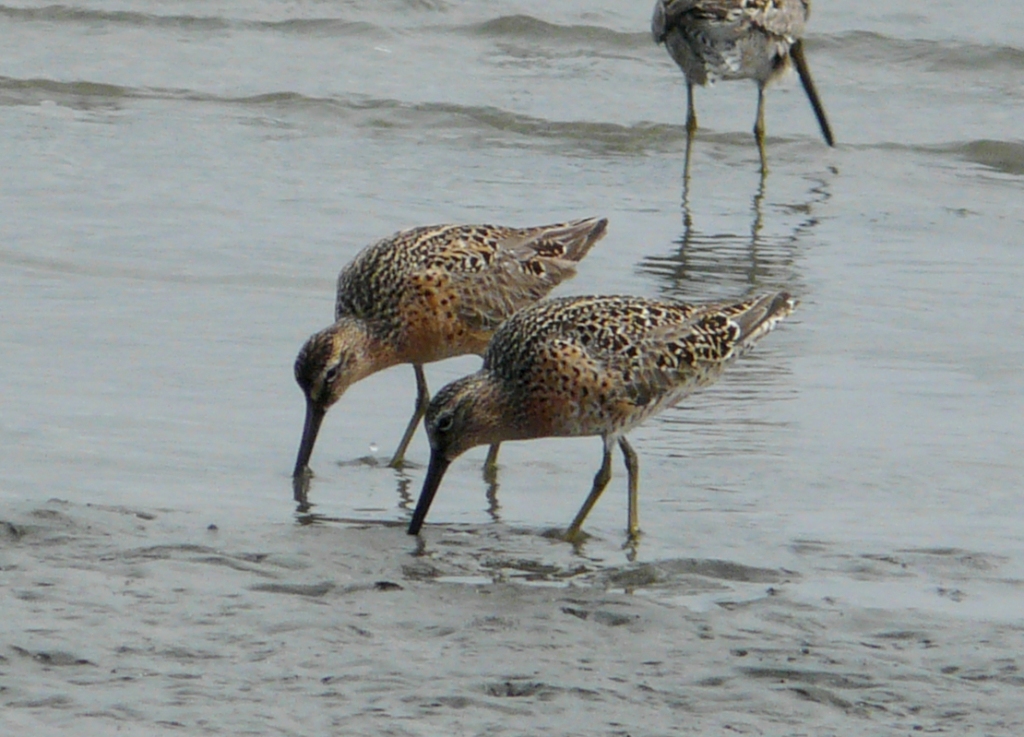
Short-billed Dowitchers


Don’t neglect to look at all the little brown ducks! This is a King Eider, a rare visitor from Alaska. It is distinguished from Common Eider by the slender bill and the scalloped markings on the sides.


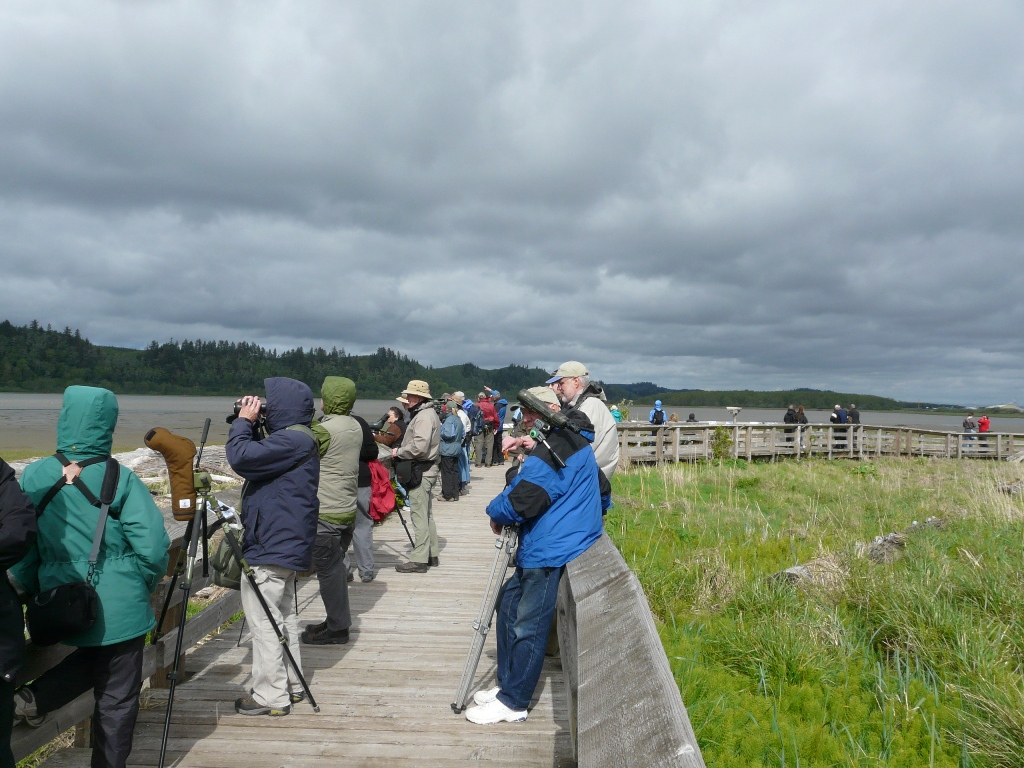
Bowerman Basin is an inlet on the north shore of the harbor. It is the last area to fill during high tides, so shorebirds often congregate here. This is a view from the boardwalk.


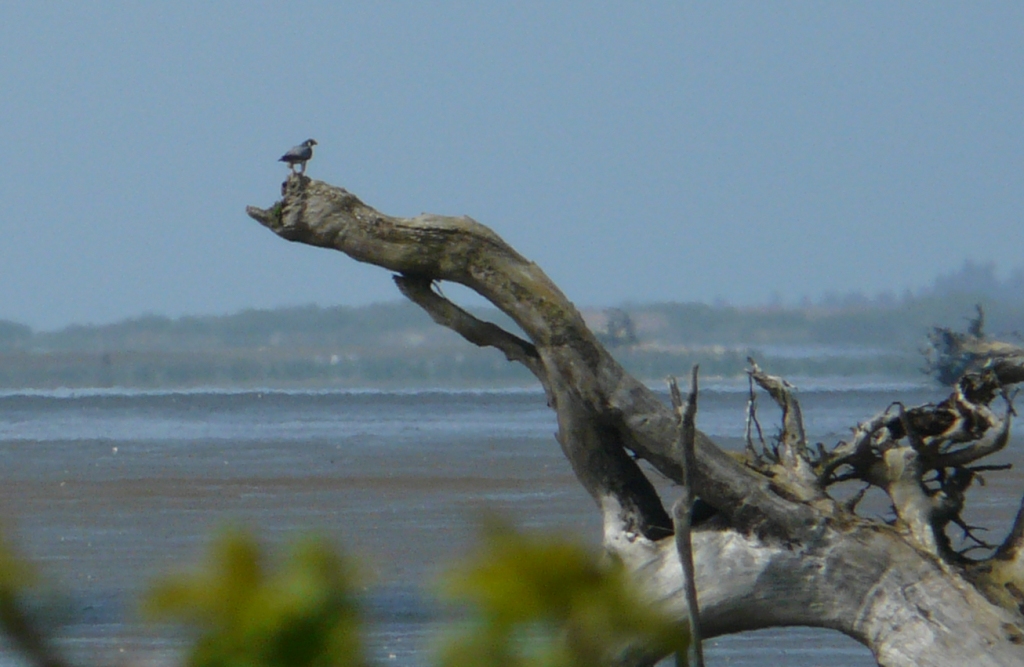
Peregrine Falcons are attracted by the large numbers of shorebirds in the harbor.


This is a view of the boardwalk on a Thursday morning.


This is the boardwalk on a Saturday afternoon. Unfortunately, birders outnumbered birds by about five to one on this afternoon.


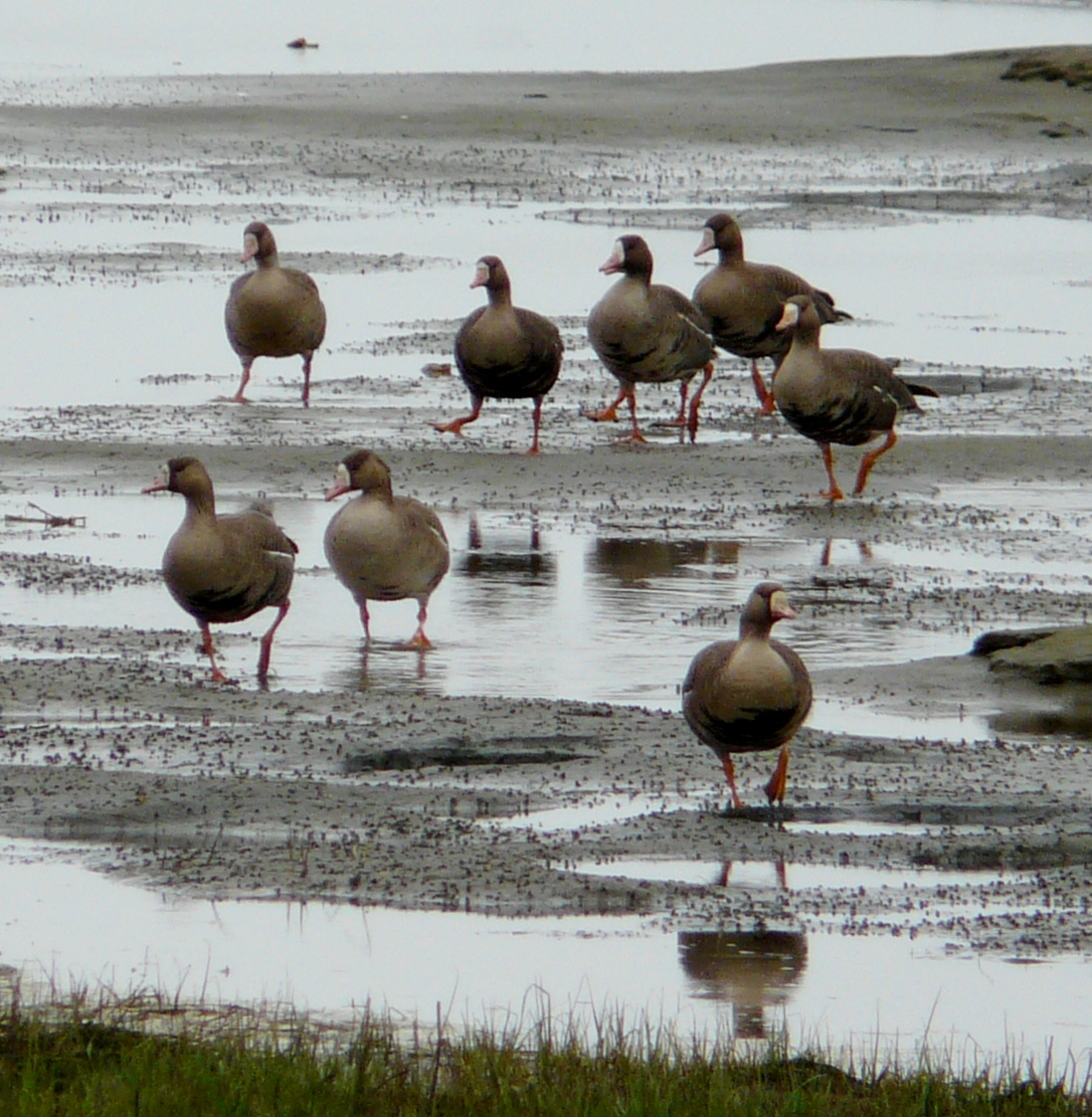
Greater White-fronted Geese


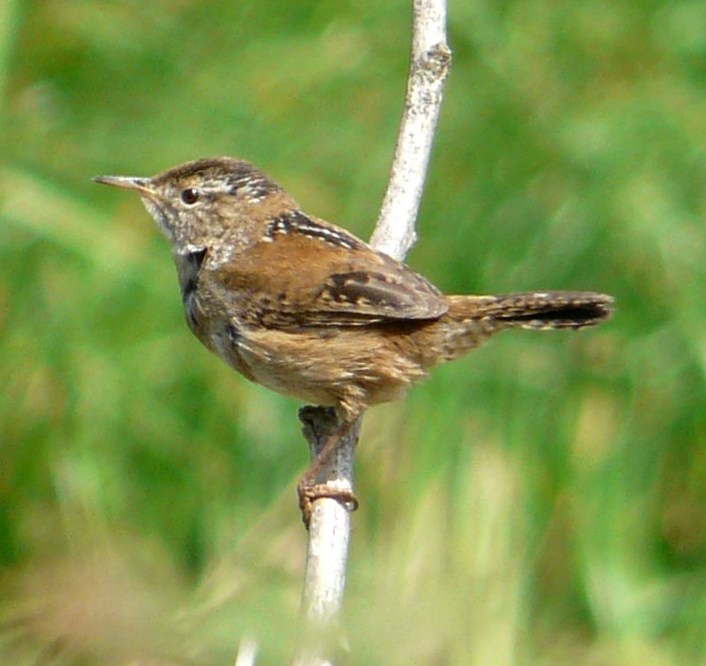
Marsh Wrens are common along the marshy edges of Bowerman Basin.


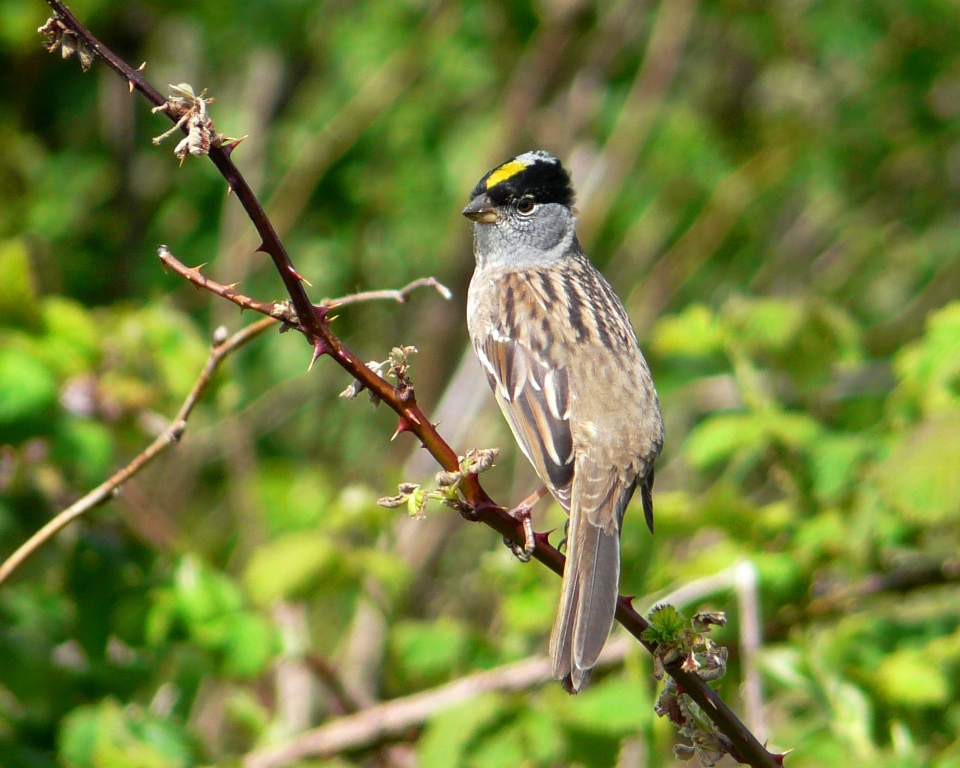
The willow thickets and woods along the boardwalk attract migrants like this Golden-crowned Sparrow.

Shorebirds at Grays Harbor, WA

I took my shorebird class to Grays Harbor in Washington, one of the prominent staging areas for migrant shorebirds on the West Coast. The cold wet spring continues, so diversity was a little low, but there were lots of birds to see.

godwits-sbdowitchers
At Damon Point State Park, near the mouth of the bay, we found good numbers of Marbled Godwits and Short-billed Dowitchers.

flight
At Bowerman Basin, part of Grays Harbor NWR, a long boardwalk extends along the edge of the mudflats. As the basin fills with the rising tide, the birds are pushed closer to shore for excellent views.
mixed-flock3
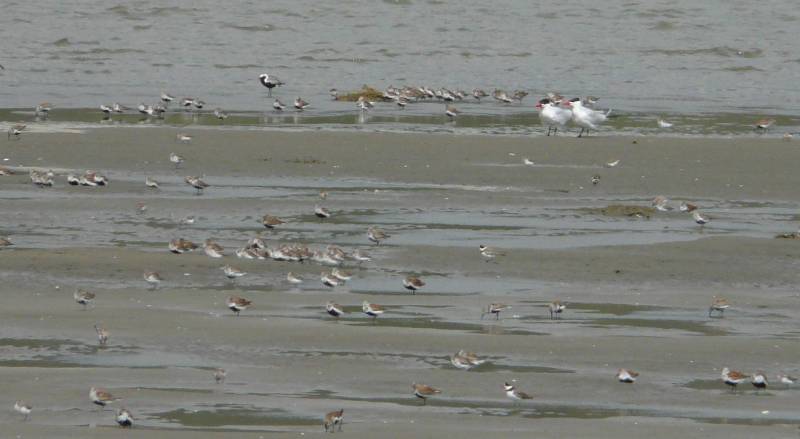
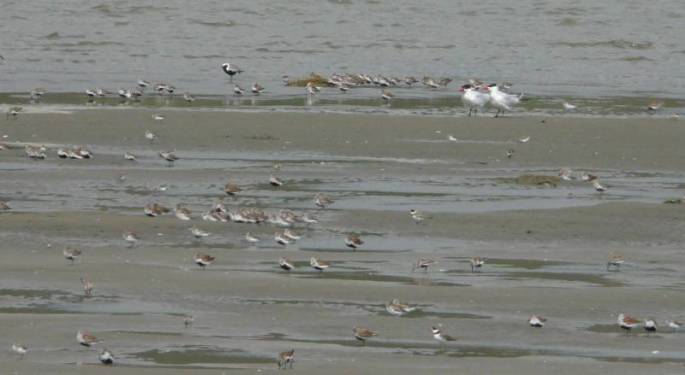
Here we can see a Black-bellied Plover, a couple of Semipalmated Plovers, two Caspian Terns, lots of Dunlin, and some Western Sandpipers.

semiplamated-plover
Here is a closer look at the lovely Semipalmated Plovers mixed in with Western Sandpipers.

western-least
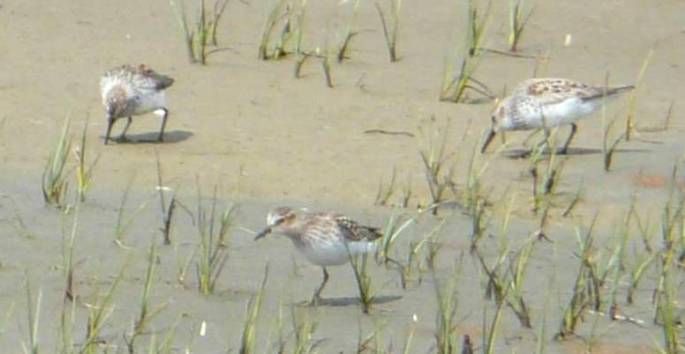
I didn’t notice the bird at the time, but when I downloaded this shot of Western Sandpipers I immediately noticed the Least Sandpiper among them. Least Sandpipers feed in a crouched position with their feet far forward. On closer inspection, you can see the tiny bill and the pale legs. (lower right corner, if you are still looking)
least-western
Here’s a closer look at the Least Sandpiper between two Westerns.
A Deluge of Dunlin

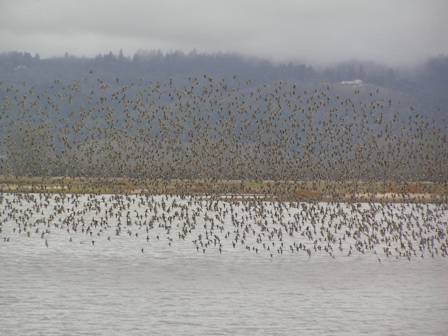
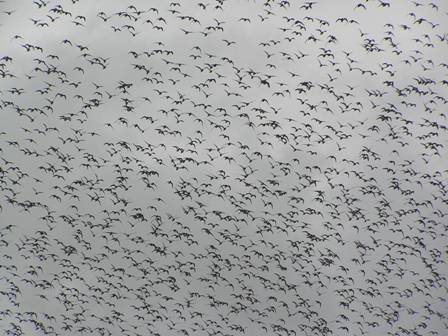
Here are a few photos of a flock of Dunlin at Ankeny NWR. I’m guessing the flock consisted of around 500 individuals. They circled in tight formation over the water for at least a half hour. When the flock turned, their wings made a roaring sound. Great fun. I don’t know why they did this for so long. There was no predator visible, and several birds were resting on the shore while the flock was carrying on. Perhaps getting in shape for migration?
dunlin1.jpg

dunlin2.jpg

dunlin3.jpg