Judy Burton Nature Preserve

On a recent visit to my home town in northern Indiana, I was struck by how much land is taken up by corn and soybeans. Mile after mile along the highways, it seems that these two crops are all you see, broken up by the occasional small woodlot or wind break. But there are a few little areas of replanted prairie and woodland edge. One such site is the Judy Burton Nature Preserve. Despite the high heat and humidity, my mid-morning visit provided a nice assortment of birds that I don’t get to see on the left coast.


Gray Catbirds were common and noisy, but didn’t want to sit out in the open long for photos.


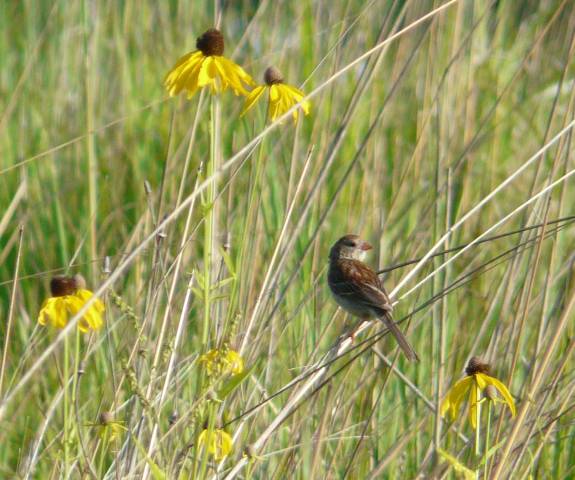
Field Sparrow. Note the plain face and the pink bill. Their loud bouncing song identifies them even if you don’t get a good look.

Common Yellowthroats and House Wrens are both found in Oregon, too, but it is always a pleasure to see them.

Schoodic Point

Schoodic Point is part of Acadia National Park in Maine. It is located on the mainland, away from the big crowds that visit the more popular Mount Desert Island. There are nice patches of boreal forest and shrubby habitat, but on a clear day the highlight of the area is the rocky shore. There is ample area to sit on a big rock and watch the seabirds fly by. On the morning I took these photos, I also enjoyed seeing Harbor Porpoises and Harbor Seals.


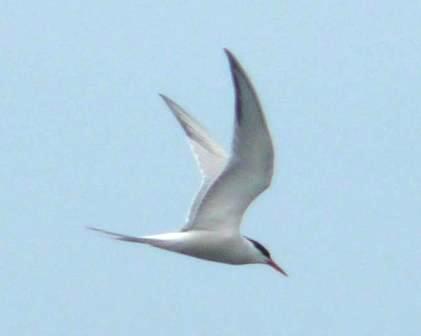
Common Tern


Common Eiders, in their rather scruffy summer molt.


Herring and Ring-billed Gulls, two species that I can find at home, but nice to see them on the “other” coast, too.


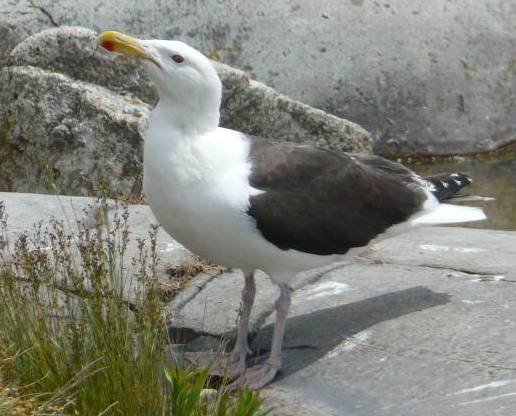
Great Black-backed Gull. These monsters are the largest gull species in North America, dwarfing the Western Gulls of the Pacific.

Best Bird Attractant Ever

With all due respect to Pete Dunne, I have never been a big fan of pishing. I am not very successful at bringing birds in with the technique, and I find it rather annoying in the field when other birders do it. But I still try it, having been taught for several decades that it is the thing to do.

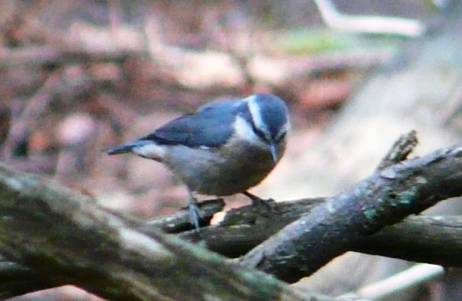
So it was recently as I birded Blue Hill in Maine. I heard some bird activity near a little rock bluff, and started pishing to draw birds down from the rim into better lighting. At first I heard Red-breasted Nuthatches and Black-capped Chickadees, joined by Golden-crowned Kinglets and Dark-eyed Juncos. More and more birds joined in as the flock started moving to the edge of the bluff.


The pishing seemed to be working. Birds started dropping down over the bluff.

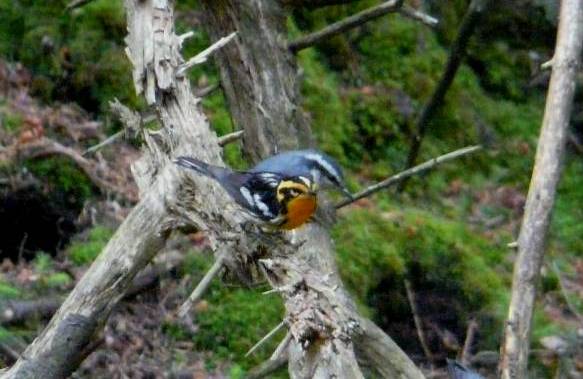
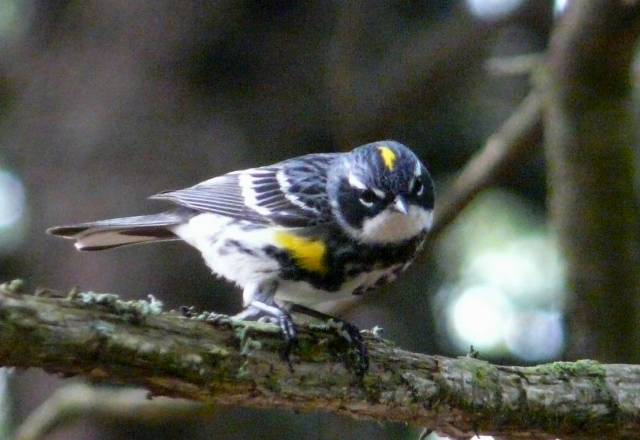
A Blackburnian Warbler joined the flock, as did several Yellow-rumped Warblers

Perhaps I had finally mastered the art of pishing. No. What really had this flock of birds worked up was nothing I was doing. It was something far more interesting to them, and myself.

It was an Eastern Milk Snake, a beautiful specimen about three feet in length (pretty large for this species). The birds were following the snake through the woods to keep an eye on it. Being at the right place at the right time allowed me to enjoy the snake and her entourage. My little pishing noises were of no consequence. So once again I am reminded to watch, blend in with the surroundings, and enjoy what happens by.

Worst Pelagic Trip Ever

I made my second attempt to visit Machias Seal Island off the coast of Maine this week. On my first attempt last year, the seas were “the roughest we’ve had all season” and it was too foggy to see much on the way out. When we arrived at the island, it was deemed too rough to land, so we coasted back and forth in the lee of the island before heading back. We still saw lots of birds, but couldn’t get on shore for nice close looks.

So I was really looking forward to this year’s trip. The forecast was for calm seas and sun. But I am a magnet for rough seas. The ocean was angrier than last year and the fog was thicker. I caught a brief glimpse of a Wilson’s Storm-petrel on the way out, but that was it. We couldn’t land on the island (although it didn’t look that bad to me) so we cruised around looking at foggy birds.


Here’s a foggy Atlantic Puffin


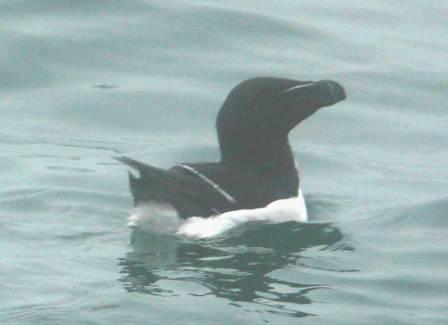
a foggy Razorbill


a very foggy Common Murre


This is our view of the island. Believe it or not, there is actually a lighthouse, several buildings, and observation blinds here.


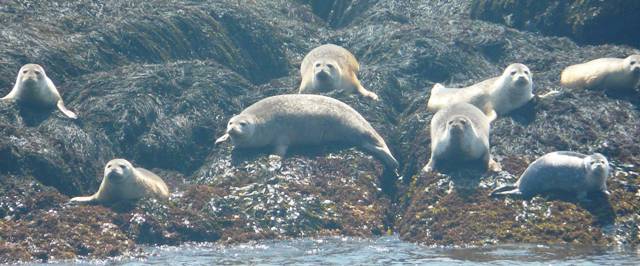
When we returned to the harbor in Jonesport, the sun emerged and revealed these harbor seals enjoying the beautiful summer weather. And so it goes. Perhaps, after enough time has passed to dull the memory of this trip, I will someday actually make it to the island and enjoy some face-to-face interaction with some Maine seabirds.

When Ruffed Grouse Attack

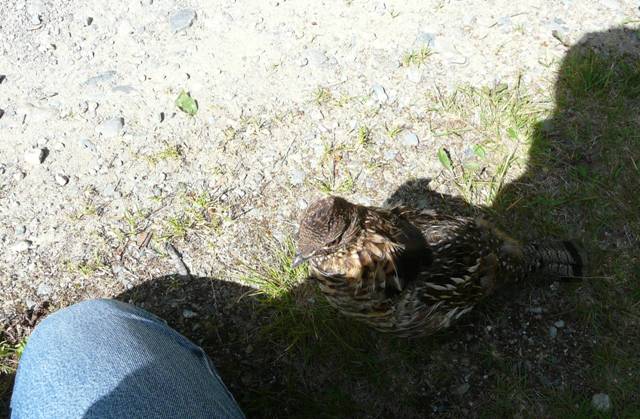
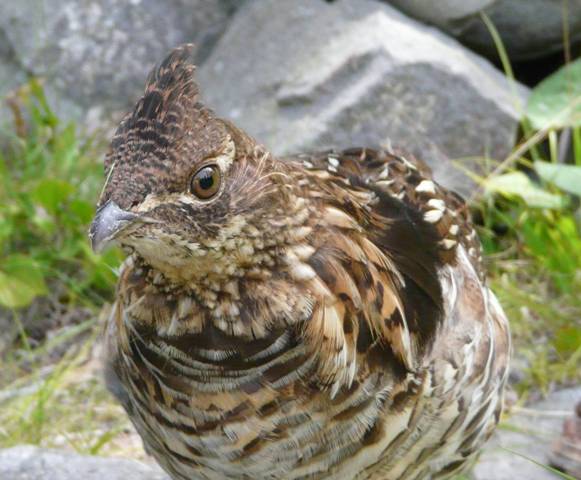
I had an interesting encounter with a Ruffed Grouse today. The bird came out of the woods, feeding and paying no attention to me. I stood still and watched, grateful for such a close view.

The grouse came closer, stopped feeding, and starting watching me. The bird walked around me repeatedly, giving a soft clucking noise.

I knelt down on the trail to get closer to the bird’s level. He kept circling. It seemed he was trying to intimidate me, but aside from one little rush at my foot, he didn’t launch any physical attack.

I eventually got up and continued down the trail. The grouse continued to circle me as I walked. He followed me as I turned onto another trail, finally stopping when I started climbing out of the aspens and into a spruce habitat. I was hoping for a Spruce Grouse to give a similar performance, but no such luck.

Ghost revisited

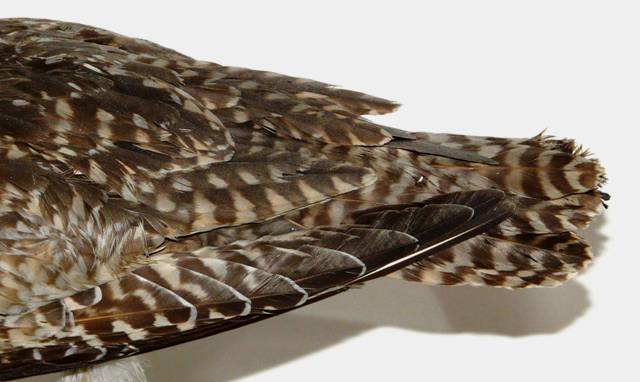
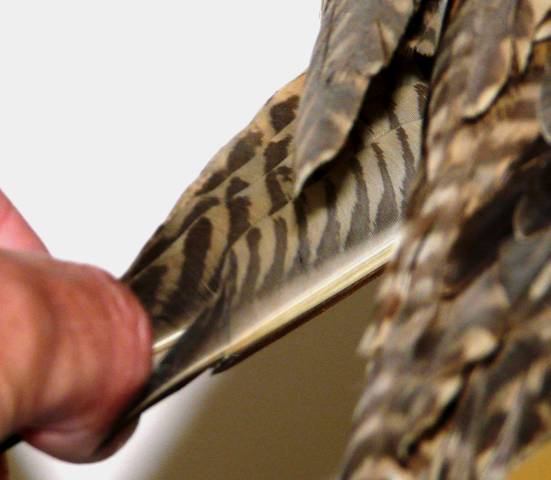
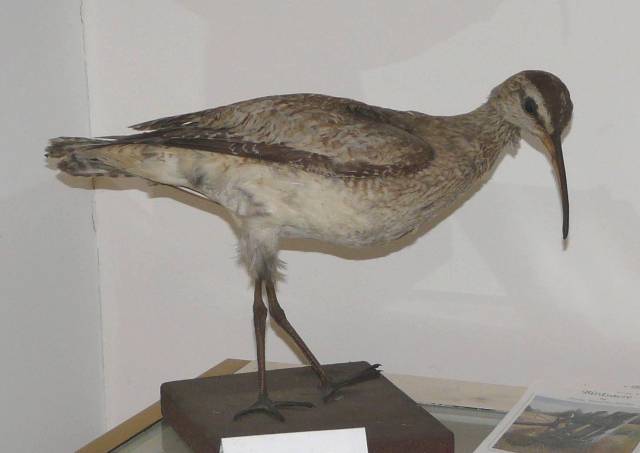
Of those who commented on the shorebird mount from Maine, some were convinced the bird was an Eskimo Curlew, some felt it was a small Whimbrel, and others said that the key field marks for distinguishing the two were not visible in the photos. So I went back today for a better look. When I arrived at the visitors’ center, no one was around. So I became “one of those people” who ignore the signs that tell you not to touch the displays. Here is what I discovered.

The wing tips do not come close to the end of the tail. On an Eskimo Curlew, the wing tips would normally extend beyond the tail.

And here is the clincher. The underside of the primaries are heavily barred. The primaries on an Eskimo Curlew would be solid gray. So we apparently have a small Whimbrel with a rather diminutive bill.

Personally, I was hoping the specimen was an Eskimo Curlew. That was my first impression when I saw it. But it is currently impossible to learn the “jizz” of an Eskimo Curlew. All we have are study skins and taxidermy pieces, all over a century old. I am hopeful that this species still exists. Perhaps we will have a chance to study living examples one day.

Ghost

I found this mounted shorebird at a little bird sanctuary in Ellsworth, Maine. It is part of an ancient taxidermy collection that was donated to the visitor’s center. The gentleman I spoke to did not know the history of the mount or the identity of the bird. My heart skipped a beat when I first saw the mount, but now I am not so sure. The mount is in terrible condition with extensive foxing and ruffled/damaged feathers. Please give me your ideas about the bird’s ID and how you eliminated other species.

Of Birding, Computer Pinball, and Insanity

Before shutting down my computer for the night, I sometimes play the video pinball game that came with the machine. Typically, I score about 400,000 points. On rare occasions, I have scored around 4 million points, through no skill or knowledge of my own. Last night, I scored 8,166,000 points, again, through no control on my part.

And what does this have to do with birding? The experience was actually amazingly similar. How many times have you walked through the same patch of woods looking for a bird you haven’t seen before? Experience tells you what species are likely to be at that location, just as experience tells me what my pinball score will likely be. But you keep hoping for something different, and sometimes, you get lucky.

Einstein defined insanity as doing the same thing over and over again and expecting different results. But that is exactly what birders do. We cover the same birding sites over and over, year after year, hoping for something different. It is that hope that keeps us going. If we accepted the likelihood that each trip to a given site will produce the same species, we would be less likely to go into the field. It is the insanity of expecting something different that makes birding such a joy.


I approached this nest box at Hart Mountain with the expectation, or at least hope, of finding a Flamulated Owl. Instead, this large nest box was occupied by a pair of Mountain Chickadees.
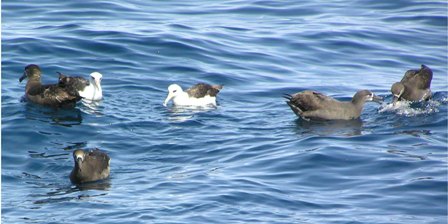

Pelagic birding is the epitome of insanity. You cover hundreds of square miles of open ocean, hoping to run across a rare bird that just happens to be at the same spot you are. Here are two Laysan Albatrosses swimming with the abundant Black-footed Albatrosses off the Oregon coast.

Am I insane for engaging in this hobby/sport/avocation/obsession that we know as birding? Heck yes, and loving it.
Nesting Cassin’s Vireo

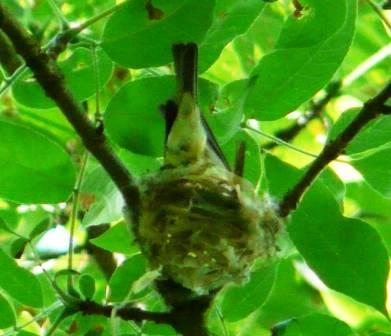
During a visit to Tualatin Hills Nature Park, I was watching a Cassin’s Vireo pulling material from tree trunks. Eventually she flew up to the nest site, where we can see her nest under construction.

Below is a typical view of a Cassin’s Vireo in the canopy (backlit and facing away). She was weaving material into the nest, then sat down to assure a good fit.

Oak Island

I am helping with a series of point counts on the Oak Island section of Sauvie Island (Birding Oregon p.56). The goal is to gather baseline information on bird species using this area before habitat restoration work begins. The habitat consists of large oaks, grassy fields, and scattered thickets along the shore of Sturgeon Lake.

The area has a nice variety of nesting species. Those who live in the wooded areas seldom display themselves in such a way that allows me to capture a photo. So here are some birds (and a couple of mammals) of the edge habitats.

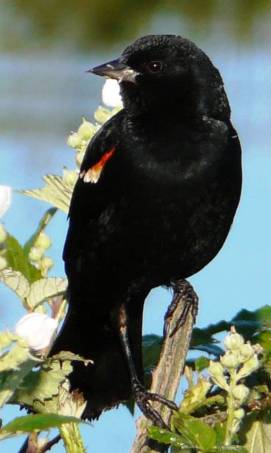
Red-winged Blackbird


Rufous Hummingbird


Black-headed Grosbeak


Townsend’s Chipmunk


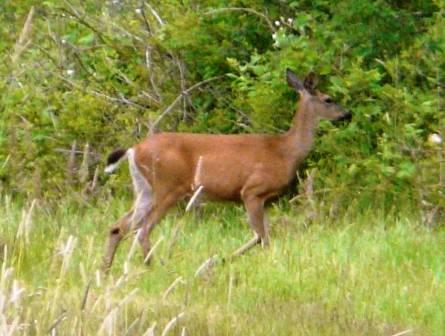
Black-tailed Deer