Rockpipers

Two of the more common rock-loving shorebirds along the coast are Black Oystercatcher and Black Turnstone. Both species hang out on rocky shorelines in the intertidal zone, probing the wave-splashed rocks for mollusks.

black oystercatcher
Black Oystercatchers would be very hard to see against the dark rocks if it weren’t for their bright red bills.

black oystercatchers

black turnstones
Black Turnstones nest in Alaska, but spend the winter along the west coast from Canada to Baja California. Their backs blend in with the rocks, but their underparts are bright white.

black turnstone

limpets
Limpets are among these birds’ prey species.  The shorebirds use their stout bills to pry the animals off the rocks to reveal the soft underparts.
Review: Birds of Western North America

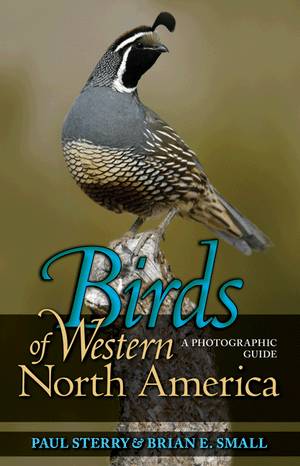
I came across a beautiful new field guide recently, Birds of Western North America: A Photographic Guide by Paul Sterry and Brian Small.
cover
I usually prefer field guides that feature paintings, rather than photos, since an artist can bring out key field marks and is not limited by the lighting or behavior captured in a single photograph. But the photos in this guide are a joy to look at, whether you are trying to identify a bird or are just flipping through the book.

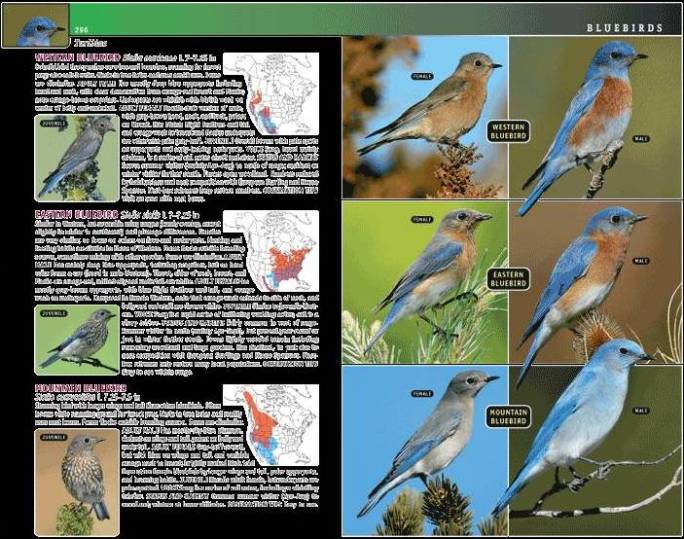
bluebird spread
The layout of the book makes it very easy to use. Similar species are grouped together, and the text and range maps are directly across from the photos.  I really like how the bird images spill out over the frame, making the birds look large and three-dimensional.

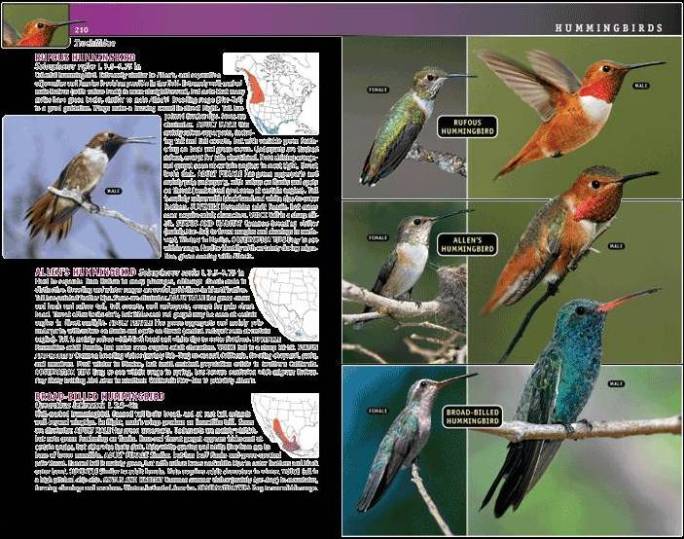
hummer spread
In the hummingbird section, several species are shown in positions that do not exhibit their bright colors. Since these colors are only visible at certain angles, these photos will be helpful to beginning birders who are confused when they see a hummingbird with a “black” head.

The text is concise but highlights all the key field marks and behaviors. You can’t read the text on the above screen captures, but you can see examples on the Princeton University Press website. A companion volume covers the species of eastern North America.

Seen it all

A birder recently told me that he didn’t do much local birding because he had “seen it all.” I understand what he meant; once you have birded an area long enough, it becomes increasingly unlikely that you are going to see any new species. But I will never reach the point where I have seen everything there is to see, no matter how small an area we are talking about.

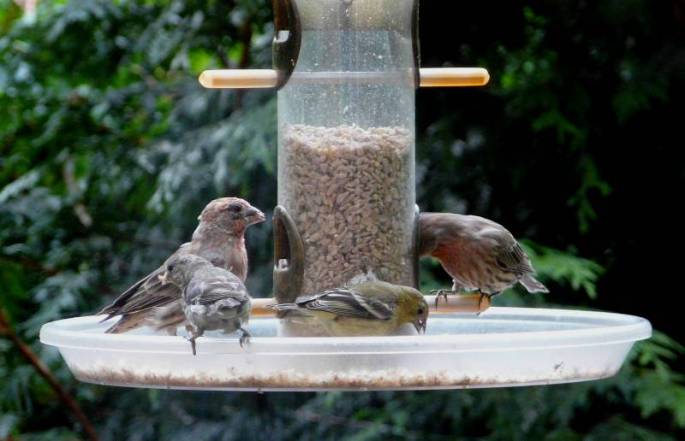
feeder

As I am currently being held captive by our new puppy, I haven’t been able to get out into the field to bird for about two weeks. The bird feeder has been busy, but with the same half-dozen species that I normally see. Yet I continue to look out the window at every opportunity, just to see what is going on. Why? Because you never know. If a Brambling or a Xantus’s Hummingbird or a Rustic Bunting shows up around here, it will probably be at a backyard bird feeder. Even if the mega-rarity never shows, there is still plenty to see and much to learn about the more mundane. When will the Pine Siskins arrive this year, or will they? Will there ever be a Common Redpoll among them? Just the other day, a Pileated Woodpecker flew over the property. This is a new bird for the yard list. I happened to see this bird when I was taking the puppy out for the gazillionth time and noticed a shadow pass over us. I turned to glimpse this large woodpecker flying over and then disappear. What other species have flown over when I didn’t happen to glance up? In the eight years I have lived here, there have been noticeable changes in the bird species that use the property. The Northern Saw-whet Owl was a one-day wonder eight years ago. Completely absent a few years ago, both Lesser Goldfinches and Western Screech Owls are now regular visitors. Population dynamics will continue to change. New species will continue to appear from time to time. There will always be something new to see or learn, even in my little yard, let alone the county or the state. Seen it all? Not in my lifetime.

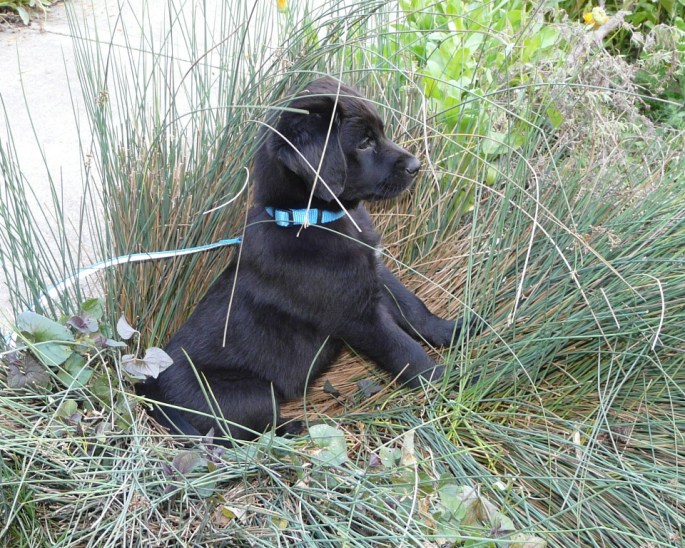
P1070430
Nala, future Birding Dog

Autumn

Autumn officially started just over a week ago. Here are a few shots of the season.

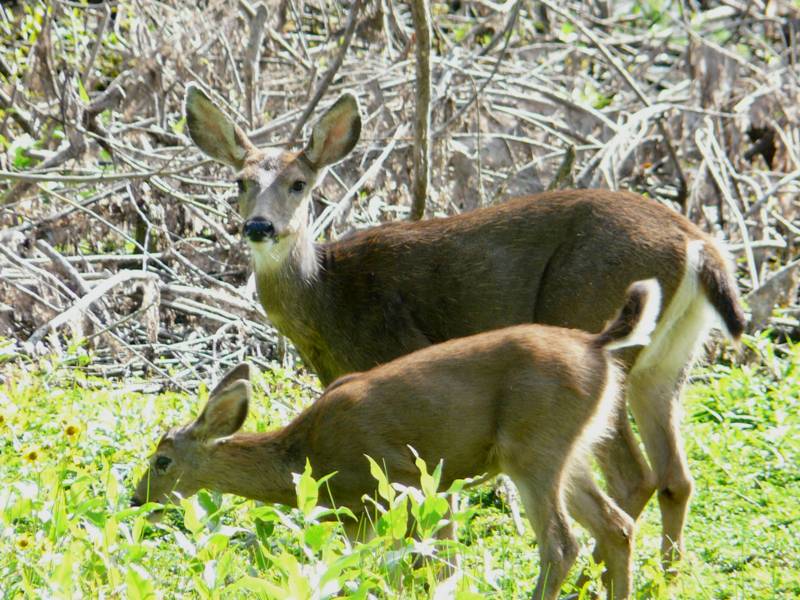
black-tailed doe and fawn
The Black-tailed Deer fawns have lost their spots, but are still smaller than the does.

black-tailed doe

cackling geese
The first flocks of Cackling Geese have arrived, soon to be followed by about 200,000 of their cohorts.

fungus
The cool nights and wetter weather bring out various fungi.

western gray squirrel
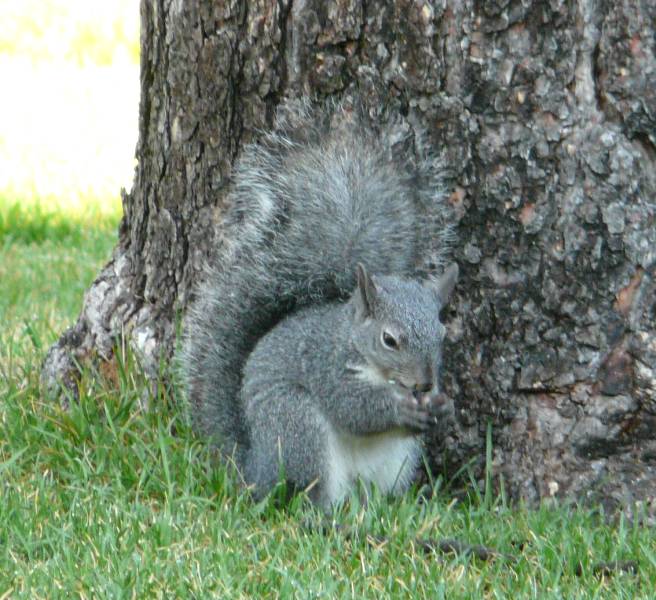
Squirrels, like this Western Gray Squirrel, are taking advantage of the acorn crop.

Fernhill Wetlands

While certainly not one of the more scenic sites in Oregon, Fernhill Wetlands (Birding Oregon p. 61) always attracts some noteworthy birds.

least and western sandpipers
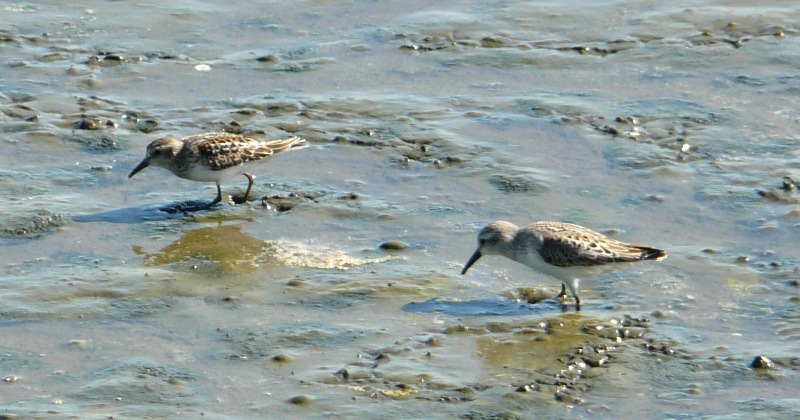
Least Sandpiper (left) and Western Sandpiper (right) are two of the more common shorebirds that use the mudflats at Fernhill. Both birds are juveniles (brightly colored fresh plumage, scapulars are small and rounded). The Least has a small, finely-pointed bill, yellowish legs, breast streaks, and feeds while squatting low to the mud. The Western has a longer drooping bill, dark legs (hidden in the mud),  is grayer overall, and looks “front heavy,” like he might tip forward.

pelican swimming
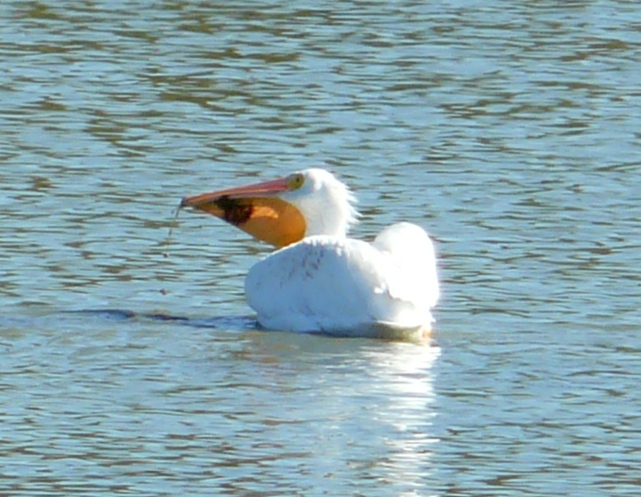
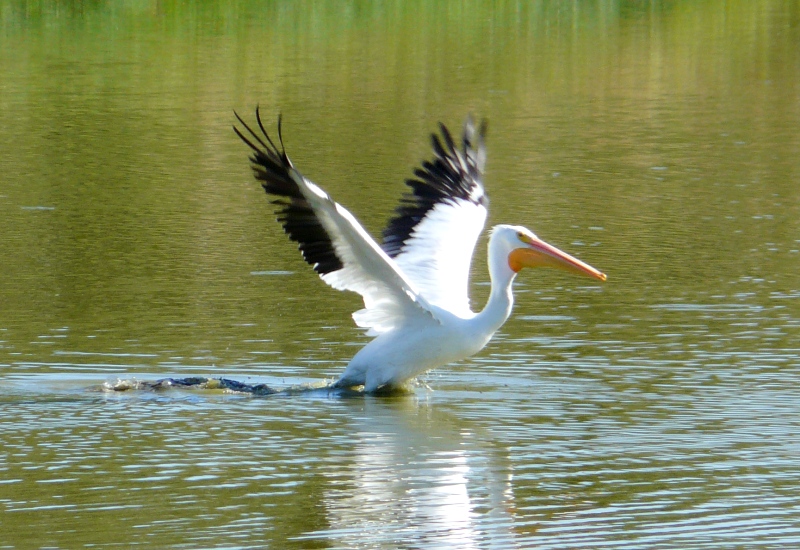
Two American White Pelicans have been at Fernhill lately. This species doesn’t nest in the Willamette Valley, but small flocks are often present in late summer/early autumn.
american white pelican

gb heron with catfish
A Great Blue Heron with a species of bullhead. Catfish have sharp spines on their dorsal and pectoral fins, so the heron has to position the fish carefully before swallowing.

Winchuck River Mouth

winchuck river
Less than a mile from the California border, the Winchuck River empties into the Pacific Ocean. Along with a lovely beach area, the site has a nice visitor center (bathroom!) with information about the surrounding National Forest.

brown pelicans
Brown Pelicans were feeding just offshore.

long-billed curlew
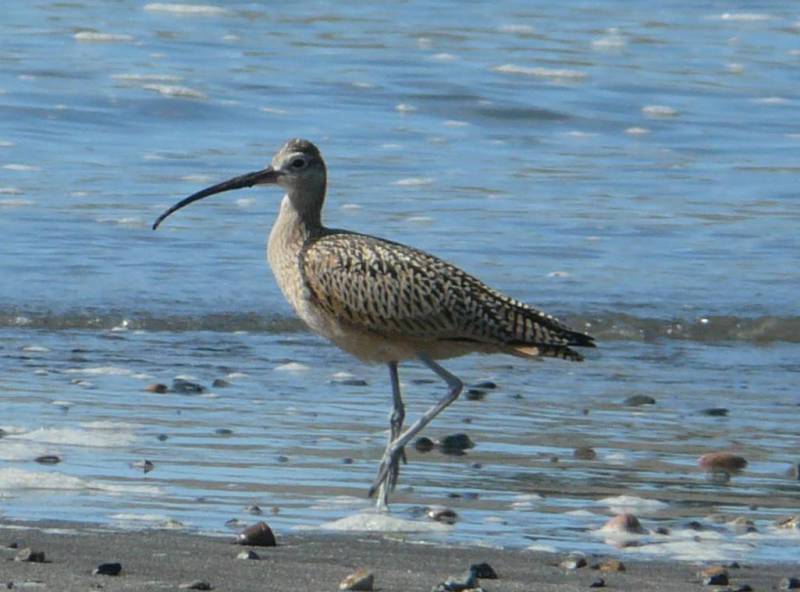
Two Long-billed Curlews were feeding near the river mouth, probing their long bills into the sand. The crisp pattern on the wing coverts (dark stripes with no cross bars) identifies this individual as a juvenile.

double-crested cormorant
This Double-crested Cormorant  fished  in the river while other fished offshore.

eurasian collared dove
Eurasian Collared-Doves can be expected just about anywhere in Oregon after a massive range expansion over the past few years.

western fence lizard 1
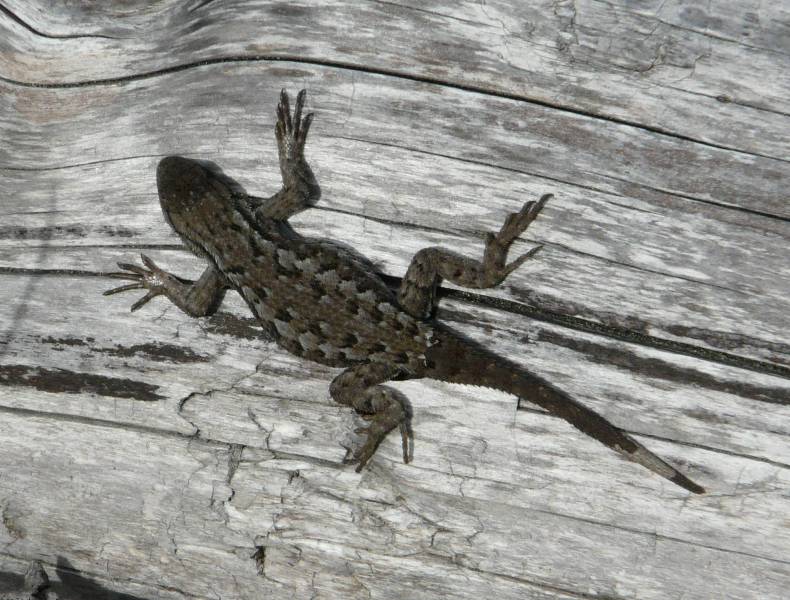
Western Fence Lizards were basking on the abundant driftwood. This one has recently shed, evidenced by the little patch of dead skin left on the tail. The one below has a less dramatic pattern, but with little blue flecks.

western fence lizard 2

Oregon Redwoods

The range of Coast Redwood (Sequoia sempervirens) extends into the extreme southwest corner of Oregon. While the groves found in Oregon are not as impressive as those in the state parks in northern California, it is still worth a visit to see these massive trees.

redwood
This is one of the trees along the Oregon Redwood Trail. From Brookings, drive south along Hwy 101 to Winchuck River Road. Turn east for two miles, then cross the river on Forest Service Road 1101. Follow this narrow gravel road for four miles to the trailhead. A more easily accessible grove is found at the Redwood Nature Trail, located on North Bank Chetco River Road about eight miles east of Brookings, but this grove has been closed to public access in an effort to reduce the spread of Sudden Oak Death.  The Redwood Nature Trail is scheduled to reopen in the summer of 2010.

steller's jay
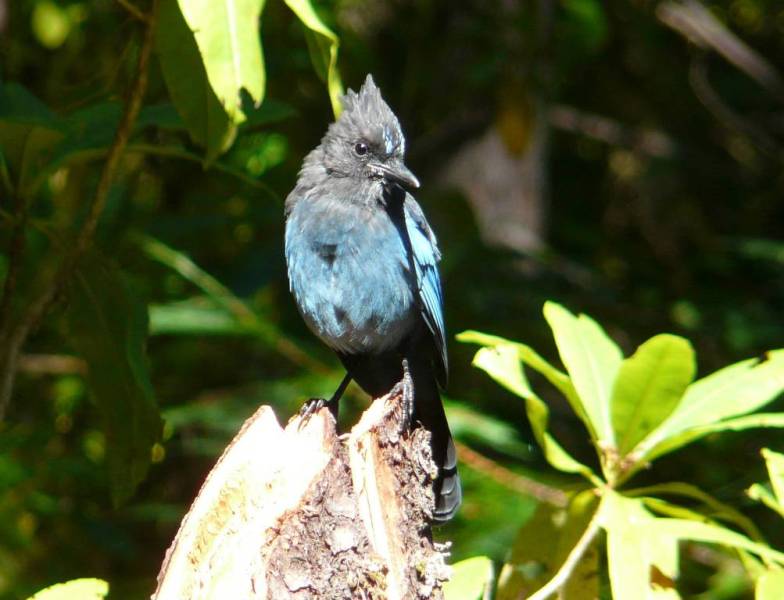
It is often the case that the most scenic areas are not necessarily the birdiest. Birds seen in the redwoods are often limited to Steller’s Jays, Chestnut-backed Chickadees, and Winter Wrens. With a little luck, you can find Varied Thrush, Hermit Warbler, and Pileated Woodpecker. Vaux’s Swifts fly above the forest. At dawn during the nesting season, listen for the harsh call of Marbled Murrelets as they leave their nests in the forest to forage on the ocean.

banana slugs
Banana Slugs are among the more easily approached species of wildlife in the forest. I’m not sure what these two were doing on the wall of the restroom at the trailhead. I’m guessing we are witnessing either  mating behavior or an act of canibalism.

Turkey Vultures

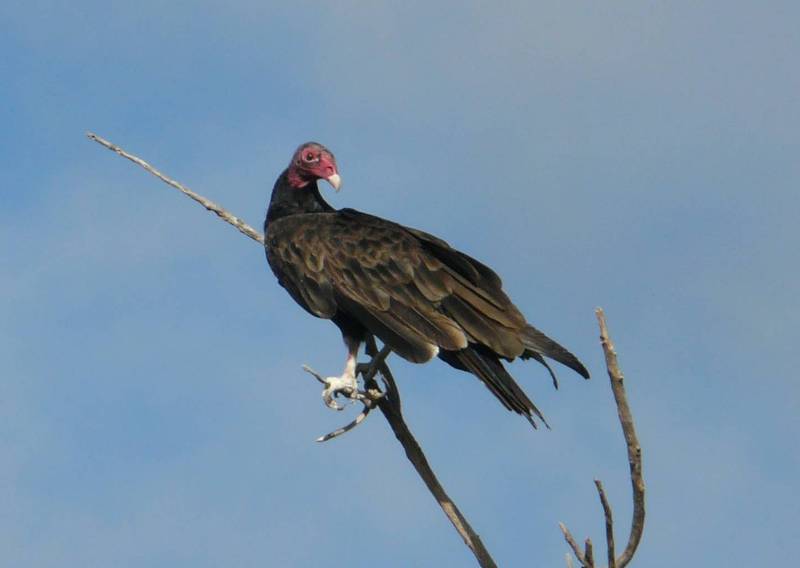
Today is International Vulture Awareness Day. Many species of vulture throughout the world are gravely imperiled. We are blessed in this country with healthy populations of both Turkey and Black Vultures.

turkey vulure roost
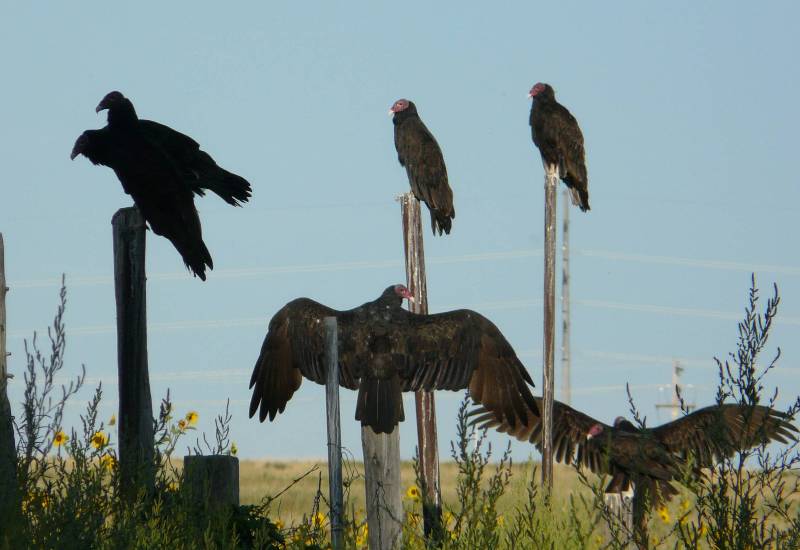
Birders should really appreciate Turkey Vultures, as they are so accommodating.  They roost in plain sight.

turkey vulture posts
They take their time getting up in the morning, so there is no need for us to get up at the crack of dawn to see them. These birds are catching a few rays while they wait for the sun to warm things up and provide updrafts to keep the birds aloft.

turkey vulture line-up
When they aren’t airborne, they perch out in the open for all to see. Those pesky warblers are seldom so generous.

turkey vulture turned
Birding has enough challenges. Don’t neglect to appreciate the easy birds, and the important roles they play.

Mississippi Kite

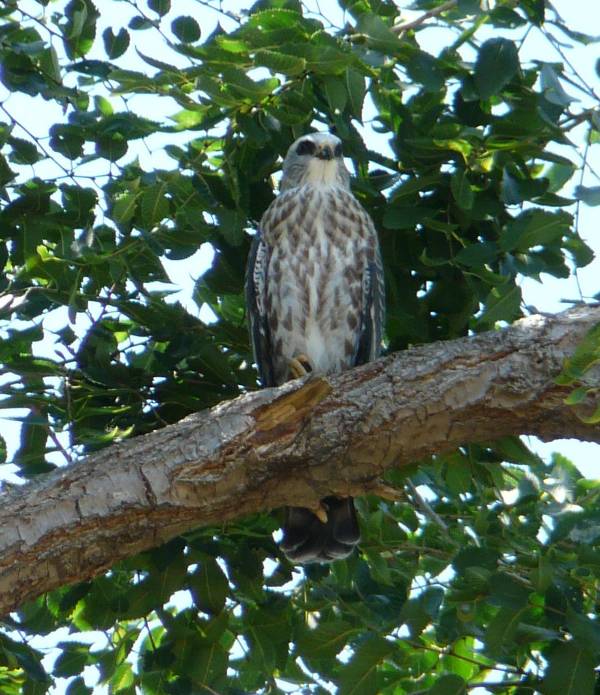
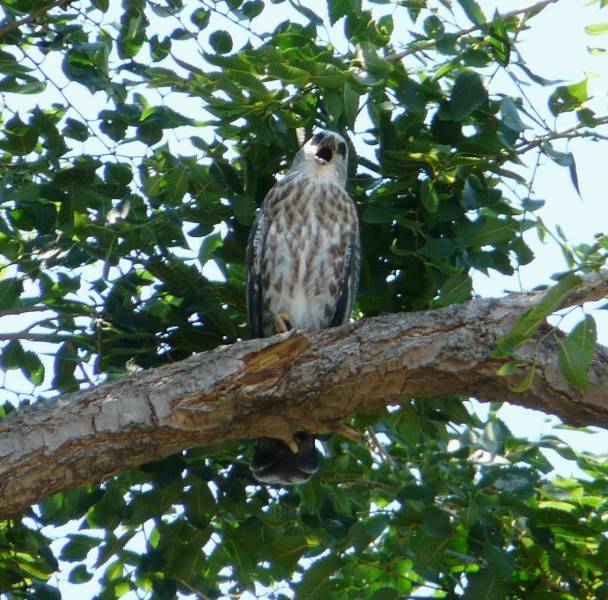
One of the highlights of my recent visit to Kansas was the opportunity to see Mississippi Kites. This raptor is common in towns, primarily because that’s where all the trees are. They feed on large insects, such as cicadas and dragonflies, and spend much of their time in the air, making them nearly impossible to photograph with a point-and-shoot camera.

ms kite
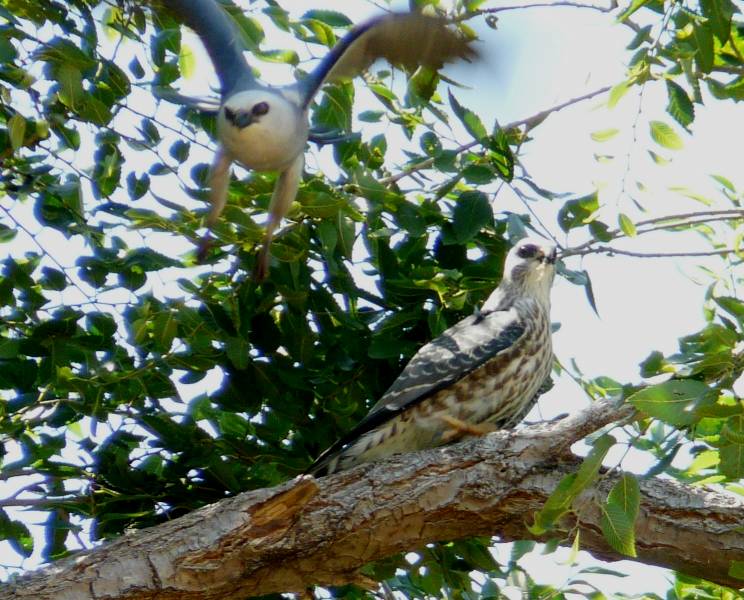
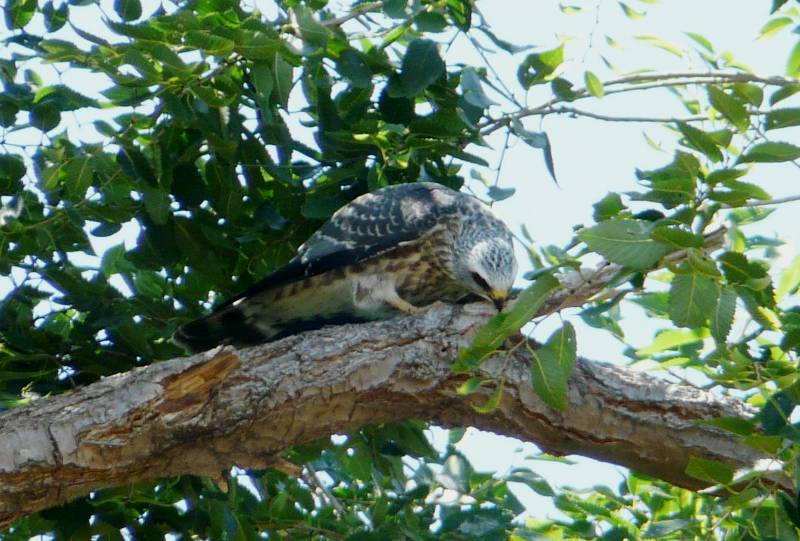
This juvenile spent much of the day in a tree by the house where I was staying. Young kites have an attractive pattern, with streaked breast, scaly upperparts, and banded tail, but the adults are a stunning pearly gray. You’ll just have to trust me on that.

ms kite calling
When hungry (all the time), the young kites make their long piercing PEE-PEEeeeeeee calls.

ms kite juv and adult
Eventually, a parent comes by to drop off a large insect and then quickly takes off again to continue hunting.

ms kite cleaning bill
After downing the insect, the young kite wipes her bill on the limb and waits for her next mouthful to be delivered.