Eurasian Teal

The American Ornithologists Union considers the Green-winged Teal and Eurasian (or Common) Teal to be subspecies of Anas crecca. Most other sources, however, consider the two to be separate species, Anas carolinensis and Anas crecca. I tend to agree with the latter set, primarily because it provides another species for my life list. Eurasian Teals range as far east as western Alaska, so a few end up in Oregon every winter.


Here we see a male Eurasian Teal on the left, and a male Green-winged Teal on the right. Eurasian Teals have a bold white line along their sides, while Green-wings have a vertical white line at the side of the breast. Hybrids between these two species show both the horizontal and vertical lines. I personally don’t know how to distinguish  female Green-winged Teals from Eurasians.
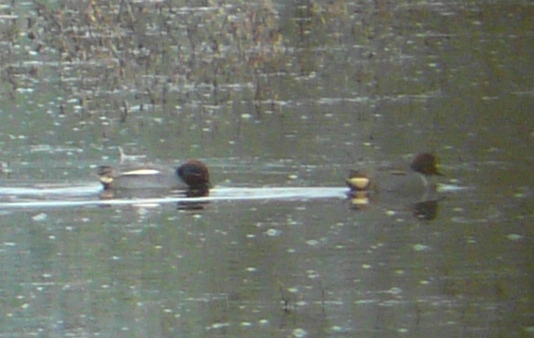

Here are the same two birds. While it is not obvious in these very distant photos, at close range we would notice that the pale lines surrounding the green eye patch are more pronounced on Eurasian Teal than on Green-winged.
Fernhill Wetlands 1/28/10

I enjoyed a quiet walk around the main lake at Fernhill Wetlands (Birding Oregon p. 61). By mid-morning, most of the geese that roost at this site are off feeding elsewhere.


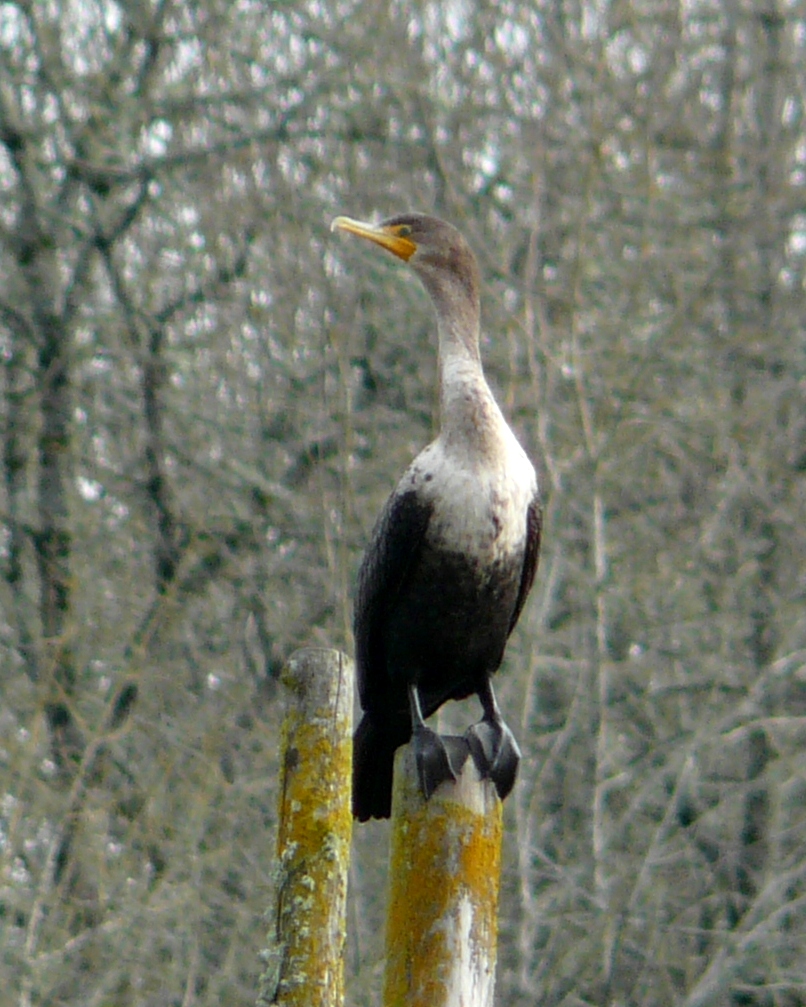
Double-crested Cormorants are commonly seen perched on dead trees and utility poles when they are not fishing. The light breast, neck, and head identify this individual as a young bird. The orange gular pouch is diagnostic in differentiating this species from the other two cormorants found along the Oregon coast.


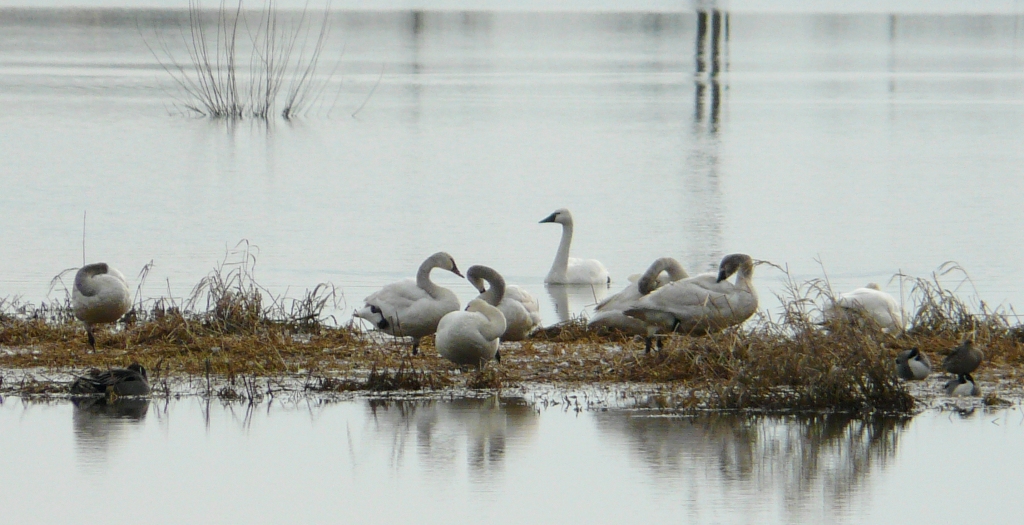
Several Tundra Swans were lounging in the marsh, always a delight to see. To get an idea of the size of these birds, compare the Cackling Geese and Mallard at the far right of the photo.


Golden-crowned Sparrows are common in the brushy areas. I was pleased that Nala, the Birding Dog, sat still long enough for me to capture this image.

Greater White-fronted Goose

A trip to the local duck/gull hang-out revealed four Greater White-fronted Geese (Anser albifrons). While this species migrates over Portland in large numbers, it is always a rare treat to see them here in winter.


These birds are examples of the smaller subspecies (A.a. frontalis). The larger, rarer “Tule” White-fronted Goose (A.a. elegasi) also passes through Oregon, with some spending the winter in the Klamath Basin.


These birds were all immature, lacking the black speckles on the belly seen on adults,  and showing a blackish nail on the bill.

Hooded Oriole

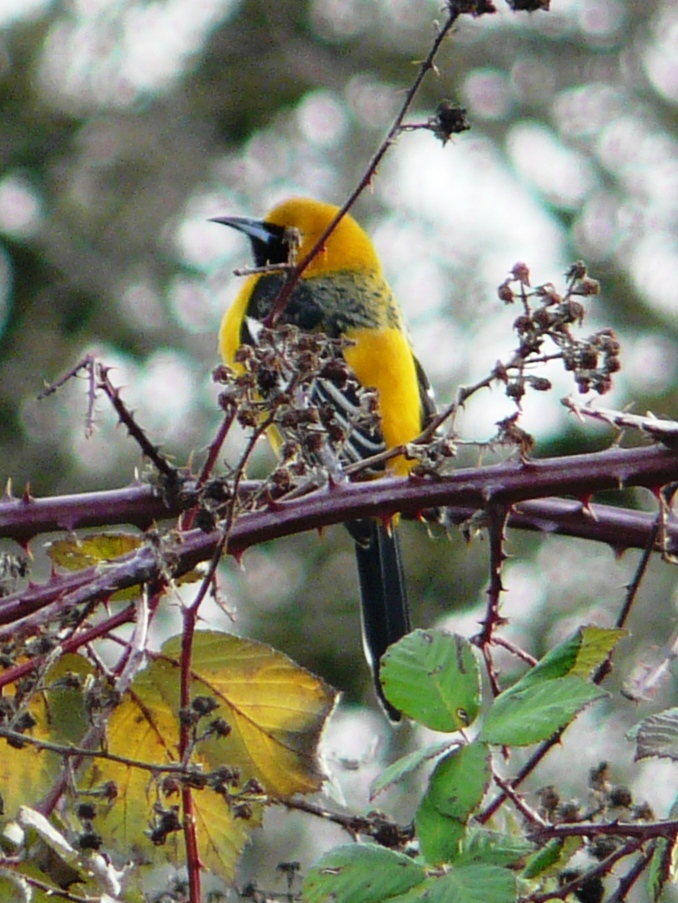
A Hooded Oriole has spent the last several weeks in Gaston, OR. This species normally ranges as far north as northern California, wintering in Mexico, so a winter visitor to Oregon is a special treat.


This grainy photo shows the bird’s thin bluish bill, facial pattern, and white tips of the tail feathers.


Much of the bird is hidden by blackberries in this shot, but we can see the scaly pattern on the bird’s upper back.

While I certainly appreciated seeing this species in Oregon, I still prefer to see birds in their natural range and habitat. I saw my first Hooded Orioles in southern Texas. They seemed to belong there, and finding birds not normally found in Oregon adds to the fun of traveling. Likewise, my first Varied Thrush was in a suburban yard in Ohio. They look so much better in Oregon.

Helping evolution along


Anna’s Hummingbird was first reported in Oregon in 1944. The first specimen wasn’t collected until 1966. But today, this species is a common year-round resident in western Oregon. They winter as far north as coastal British Columbia, and have even successfully wintered in central Oregon, where they get actual winter weather.

What has caused this rapid range expansion to the north? Climate change is having a measurable effect on some species, but Anna’s Hummingbird has undoubtably been helped along by the presence of bird feeders and exotic winter-blooming plants. While most of a hummingbird’s nutrition comes from the insects he eats, a reliable source of calories provided by a feeder of sugar solution can enable a bird to survive episodes of severe winter weather that would prove fatal without this supplemental food source. A higher winter survival rate provides more birds to breed in the spring, thus establishing the species in new areas.

Bird feeding is credited with helping other species expand their ranges. Northern Cardinal is a prime example in this country. In England, bird feeding is reportedly changing the evolution of one species. The European Blackcap historically migrated to Spain for the winter. With the increasing popularity of bird feeding, this species has stopped migrating south, opting instead to winter in the UK. In just 50 years, the bird has developed shorter wings (longer wings are useful in migration) and a narrower bill (better suited to eating out of bird feeders). These British birds are well on their way to becoming a new species. Read the story here.

Where all my sunflower seed goes

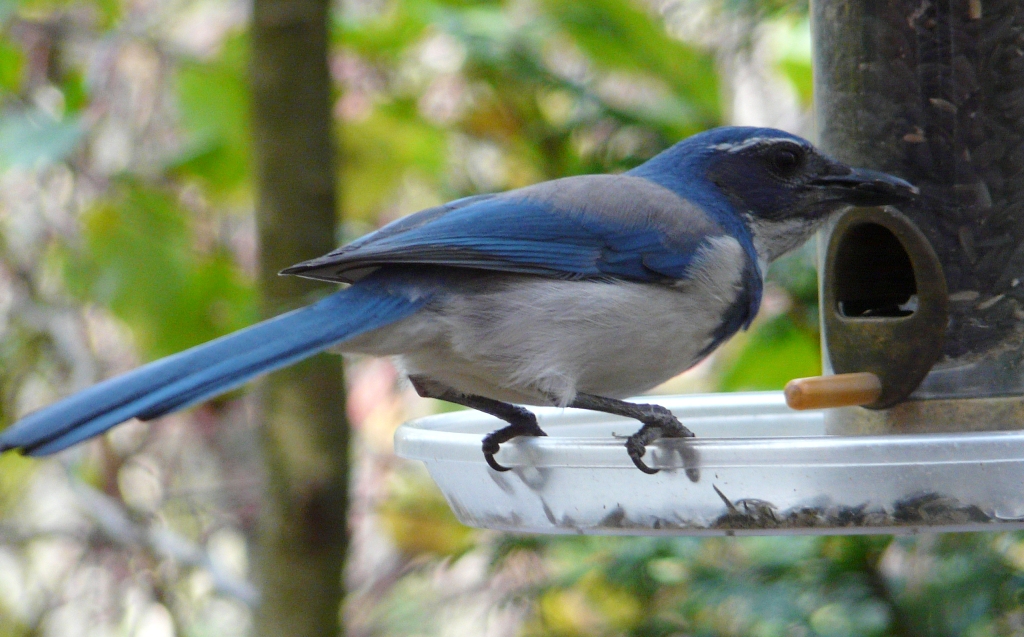
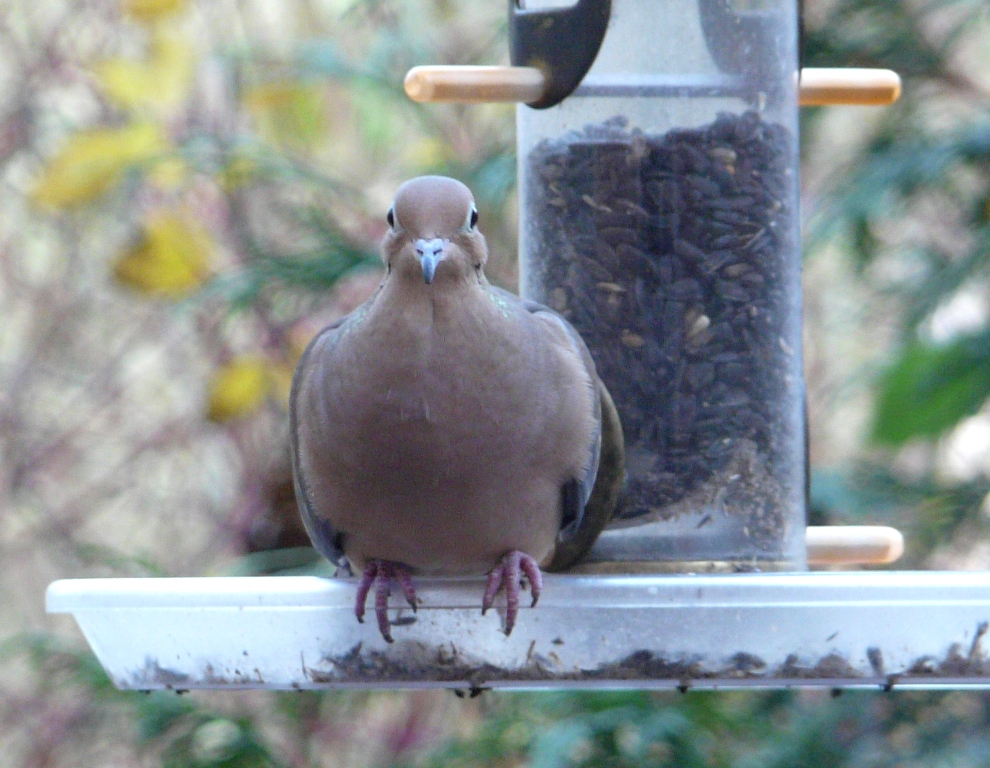
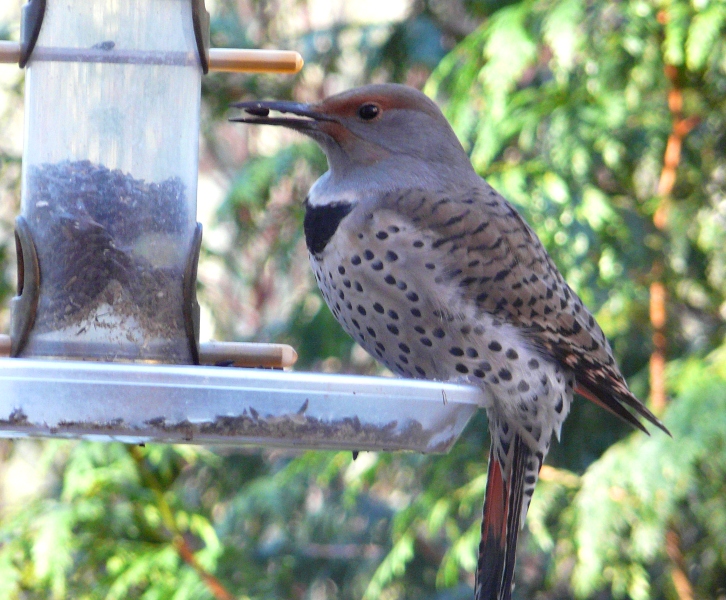
Along with the usual small songbirds that visit my bird feeder, I sometimes host larger birds that do their best to deplete the feeder as quickly as possible.


Western Scrub-Jays will fill their crops, then fly off to hide the seeds somewhere.


This Mourning Dove camped out on the feeder for the better part of a morning. Their thin bills are not designed to crack open seeds, so they swallow their food whole.


Northern Flickers don’t crack seeds open either, so they pull all the seeds out of the feeder until they find one that is already open.

Great Horned Owl

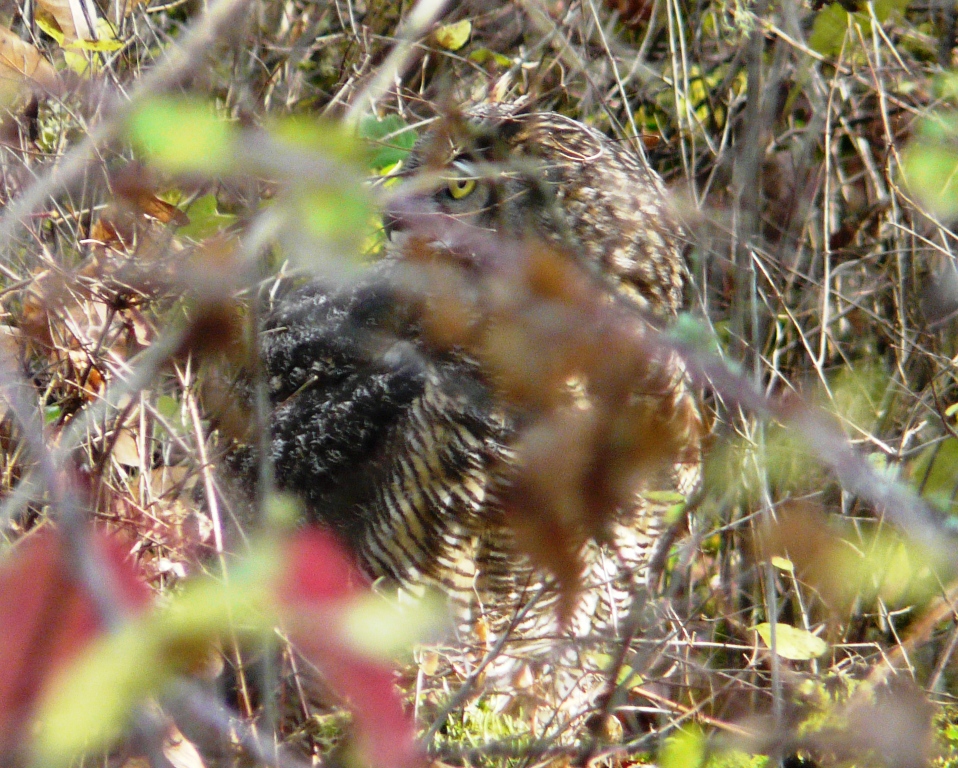
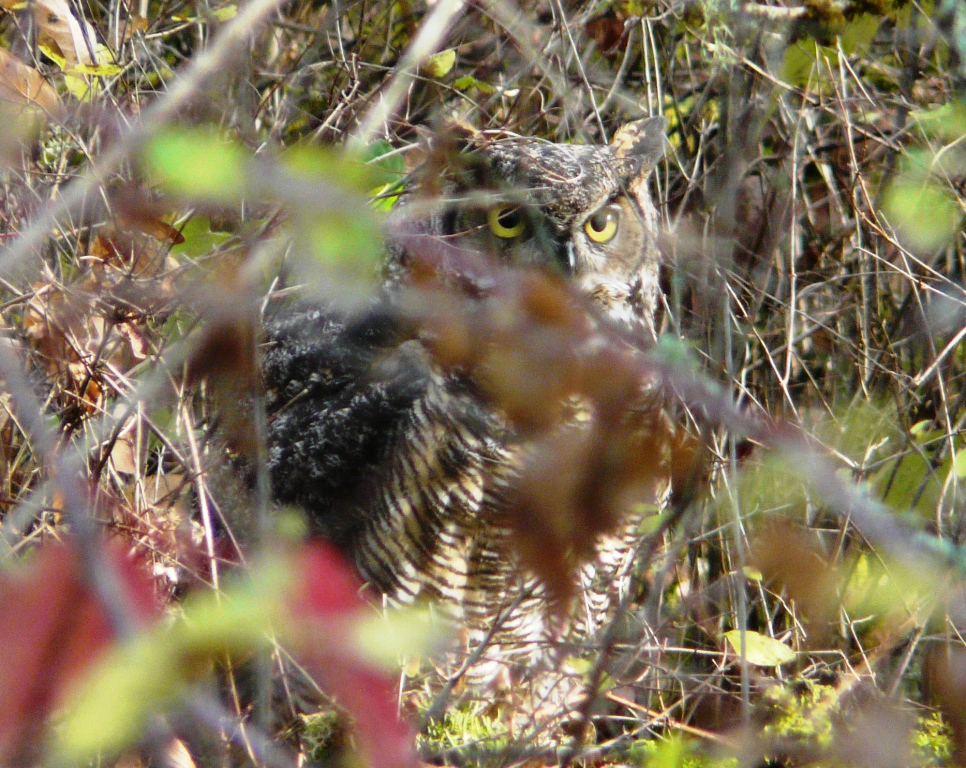
While doing a point count at the Oak Island unit on Sauvie Island (Birding Oregon p. 56), I heard something large rustling in the brush and saw this beasty.

She blended in with her surroundings very well, but those big yellow eyes stand out.


I have seen Great Horned Owls hunting on foot before, but after watching this bird for a while I guessed that she was injured. I considered trying to take her in for medical attention, but the idea of capturing a large predator bare-handed is seldom a good one. She watched me watching her for several minutes before trotting nimbly down a little path through the brush.


Photographing a bird within brushy cover is challenging with my little auto-focus camera. The camera wants to focus on the closest objects, the leaves and sticks, leaving the bird blurry in the background. I had to find a tree trunk that was about the same distance away as the owl, focus on that, and then aim at the owl. This works well with a big stationary target like a Great Horned Owl, but is more challenging with warblers.

Fernhill Wetlands 11/11/09

I took a brief walk around Fernhill Wetlands (Birding Oregon p. 61) while meeting with a reporter today. The weather was rather dreary, but, as always, there were some birds around.

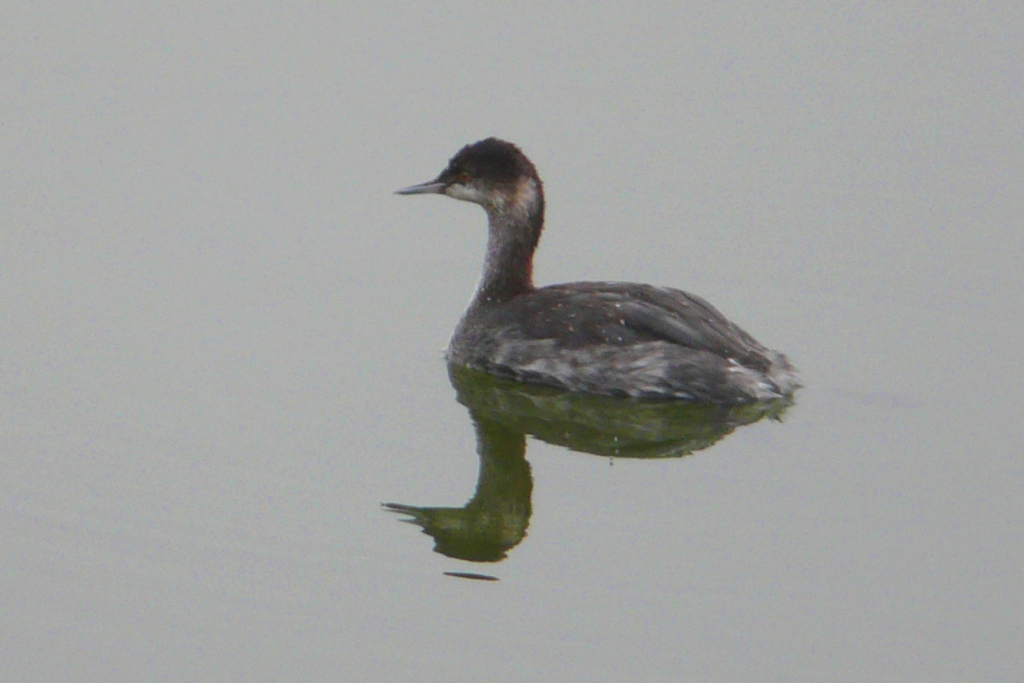
eared grebe
Eared Grebe is an unusual visitor to the main lake. Note the thin bill and dusky cheeks. The more common Horned Grebe has a thicker bill, white cheeks, and a neat black cap.
eared grebe 2
Another view of the Eared Grebe. The back end of this species tends to float fairly high in the water.

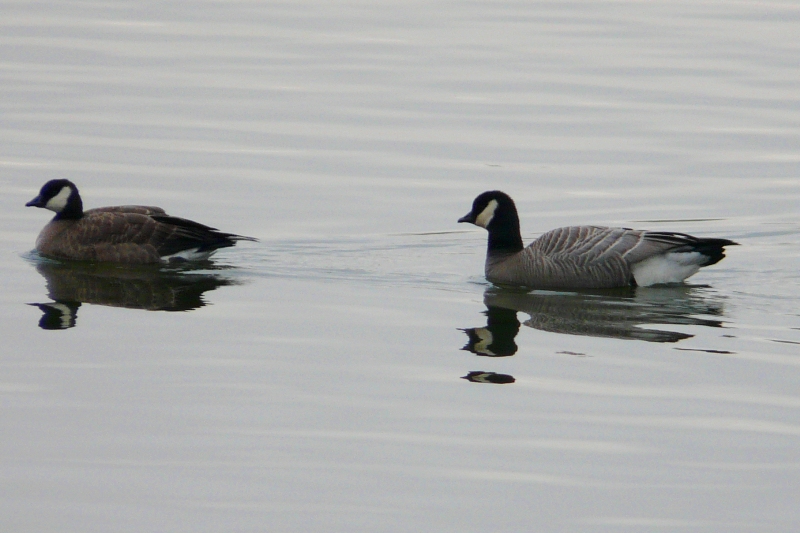
cackling geese
Most of the wintering Cackling Geese were off grazing somewhere, but these two were hanging out on the lake. The bird on the right has pale feather edges, indicating a young bird.

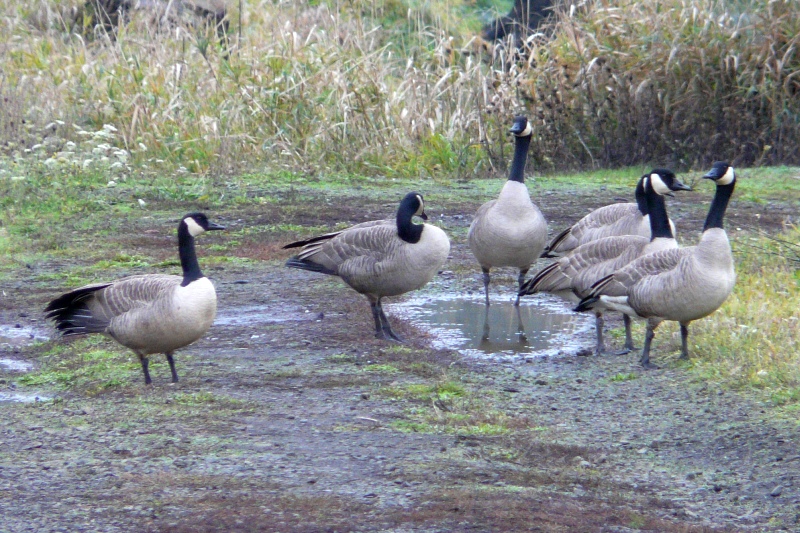
canada geese
In contrast to the Cackling Geese, these resident Canada Geese are much larger with long snakey necks.

common mergansers
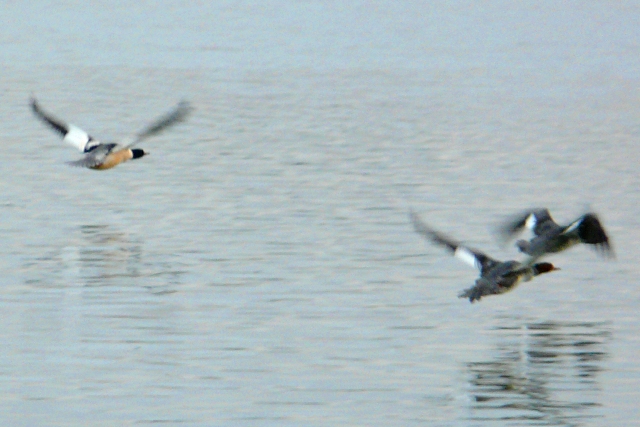
Common Mergansers were indeed common on the main lake this morning, but did not allow a close approach.

great egret
Great Egrets stand out on a dreary gray day.

Northern Flickers

northern flicker male front
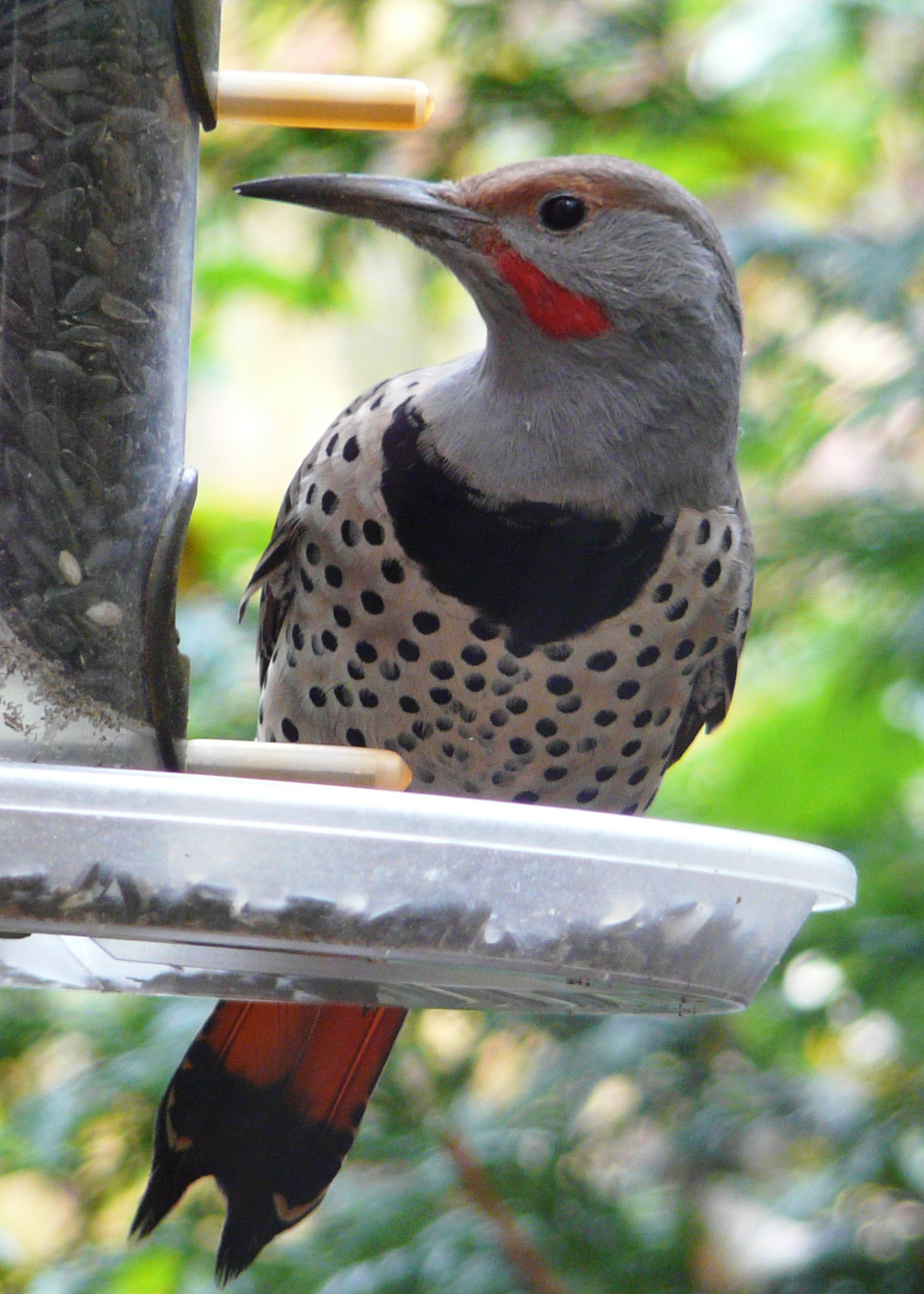
Northern Flickers have been visiting the bird feeder lately. Their bills are not designed to crack open seeds, so they just pull all the seeds out of the feeder until they find one that is already open.

northern flicker female
Females lack the red mustaches found on the males.

northern flicker male
Since they are a common backyard species, we tend to take Northern Flickers for granted, or focus on their destructive habit of drilling into house siding. But on close inspection, we see that these are truly stunning birds.

P1070674
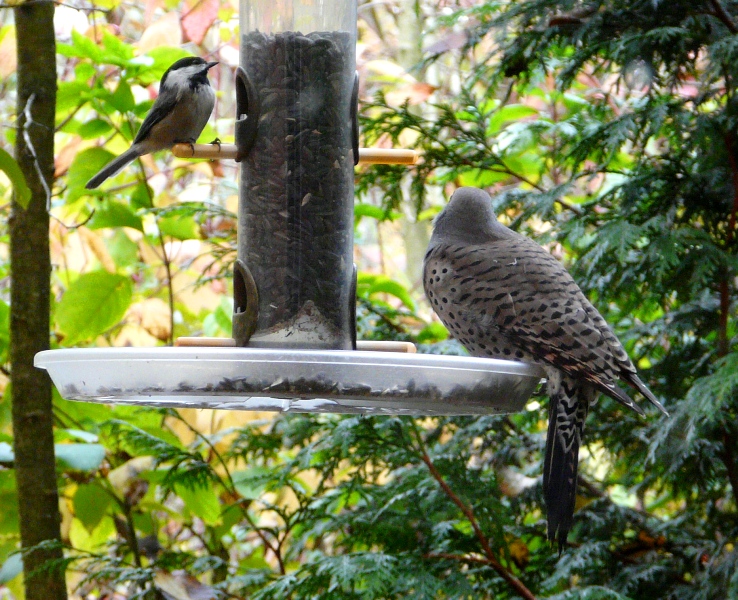
This Black-capped Chickadee, a more common species at bird feeders, is dwarfed by the monstrous flicker. Northern Flickers normally eat ants and other insects, but will come to feeders offering suet or sunflower seeds.