American White Pelican


In late summer, American White Pelicans become increasingly common in the Willamette Valley. These are post-breeding or non-breeding birds that have left their nesting areas in eastern Oregon and other sites throughout the interior West.


Sturgeon Lake, on Sauvie Island (Birding Oregon p. 55), is a popular lounging area for these birds.


This small flock at Fernhill Wetlands (Birding Oregon p. 61) has surrounded a school of fish and herded it toward the shoreline. Unlike the Brown Pelicans at the coast, American White Pelicans do not dive. These larger birds swim along and dip their bills in the water to capture fish.

Random Songbirds

Here are a few images from Fernhill Wetlands (Birding Oregon p. 61) on July 30, 2010. Songbirds push the limits of a point-and-shoot camera, but occasionally a bird will be close enough and stationary enough to allow a decent portrait.


Cedar Waxwings were flycatching from the brushy edges of the ponds.


This Song Sparrow was going through an extensive molt. He lacked most of his tail, and his body plumage is very disheveled.


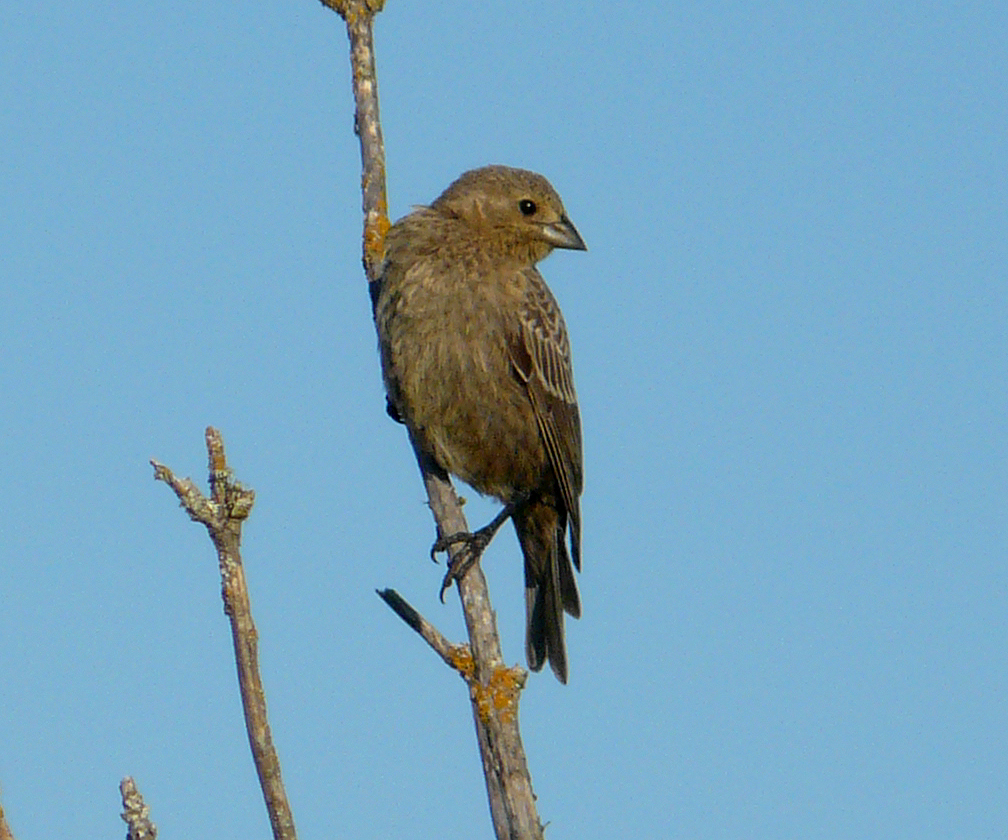
Brown-headed Cowbird. The scaly pattern on the scapulars and wing coverts identifies this bird as a juvenile.

Timberline Lodge


Timberline Lodge (Birding Oregon p. 74) is a great place to for some high-elevation birding in the Cascades. A good paved road leads right up to the treeline, and you can access the Pacific Crest Trail just uphill from the lodge. The parking lot is often full of tourists and skiers, even in late summer. But if you are willing to walk for a while, you can enjoy solitude and stunning scenery.


Cassin’s Finch


Brewer’s Blackbirds are common residents of parking lots in the Portland area, but it is nice to see them in a more natural setting here.


This female Brewer’s Blackbird is one of the small percentage of the population with pale eyes.


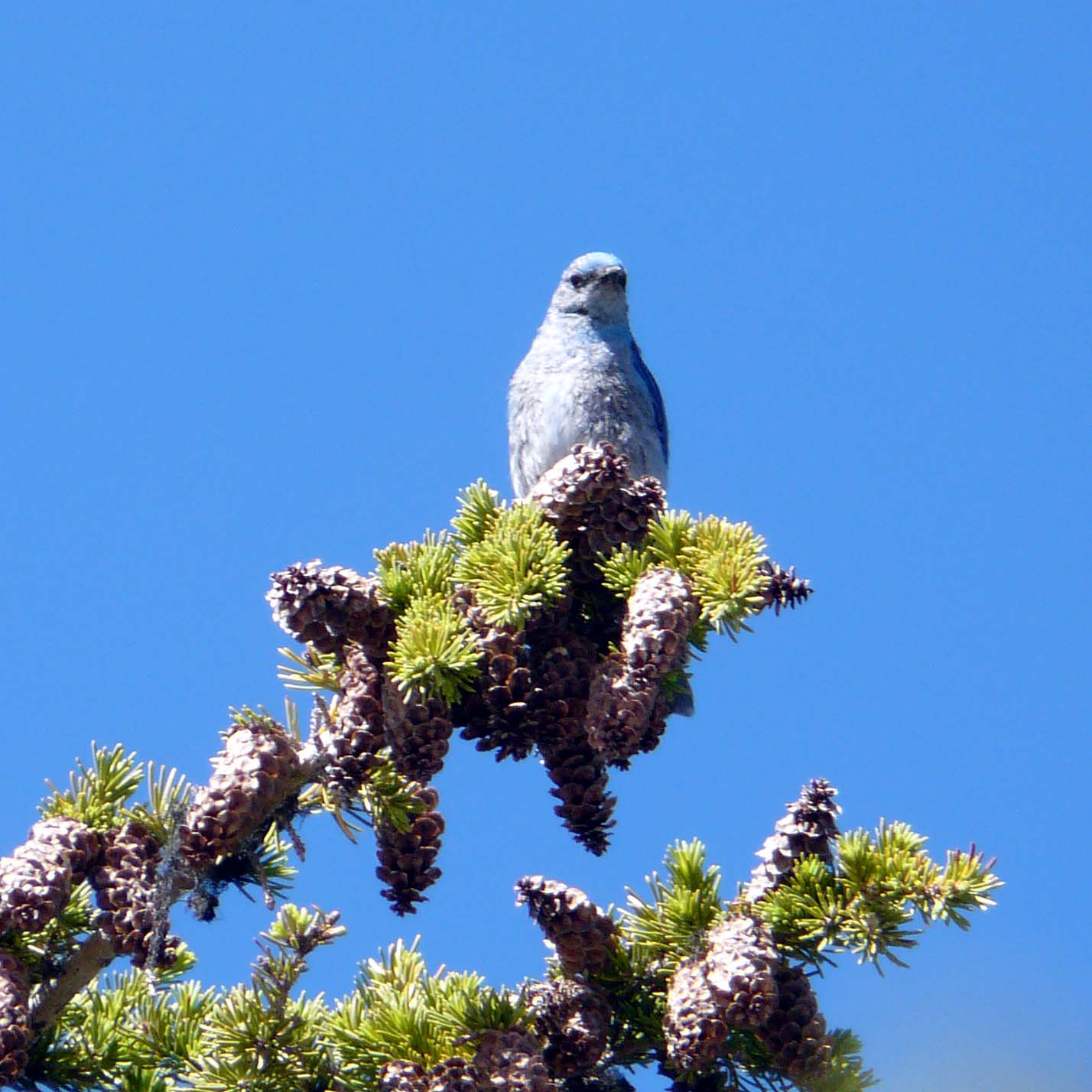
Mountain Bluebird, male


Mountain Bluebird, female


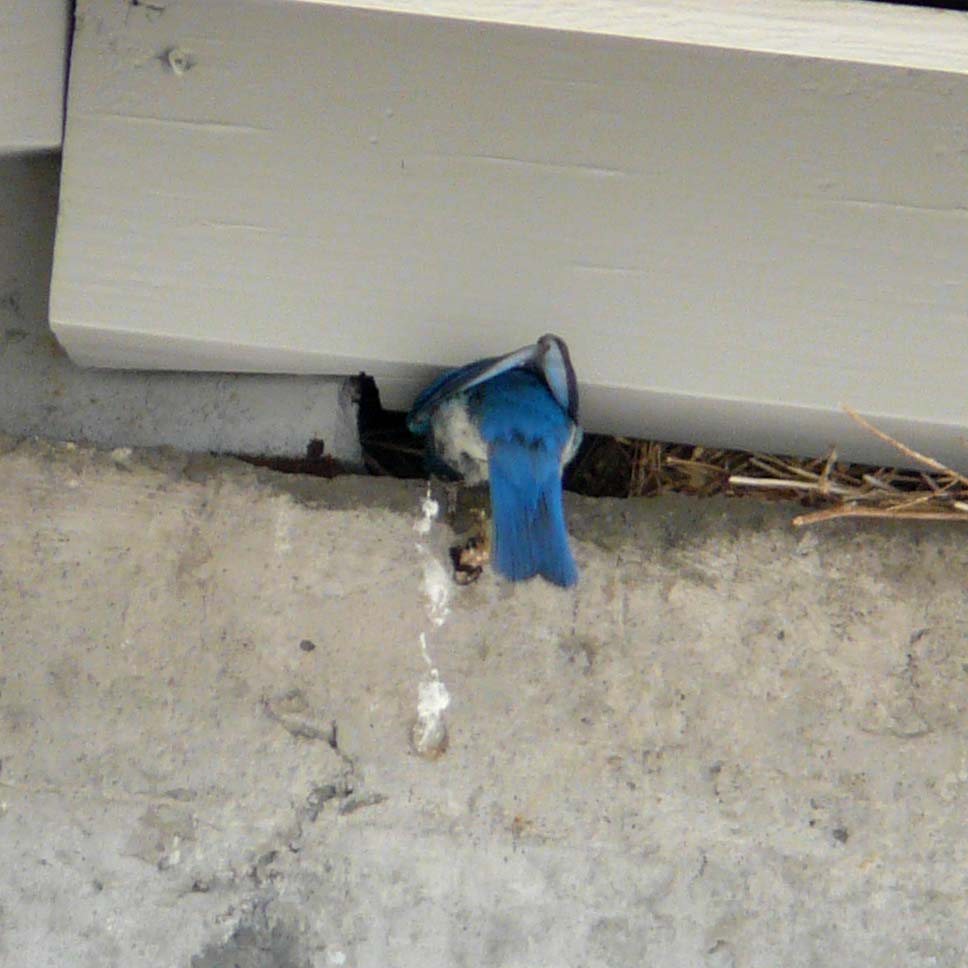
This pair of Mountain Bluebirds had built a nest in a gap under the eave of a small building above the lodge.


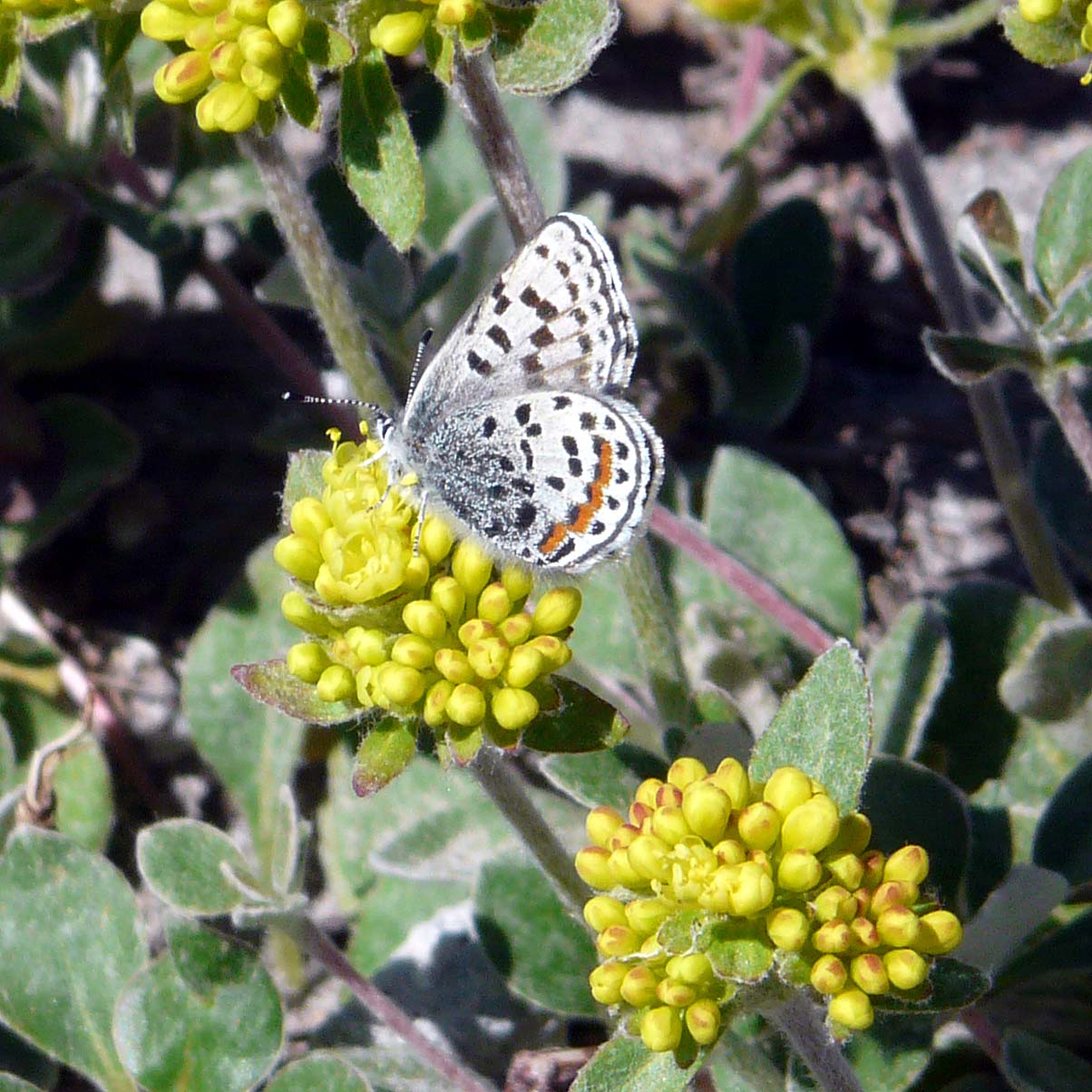
Lots of these little butterflies were feeding on the scattered wildflowers. My best guess is Acmon Blue.


The highlight of my long oxygen-deprived hike uphill from Timberline Lodge was this Yellow-bellied Marmot. He looks very regal in this pose.

Chukar


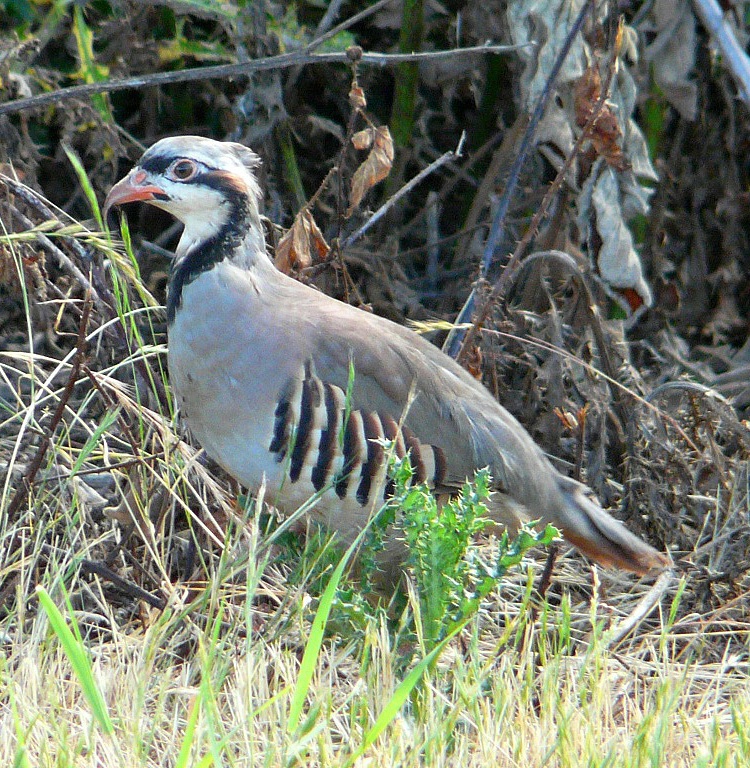
Native to Eurasia, Chukars (Alectoris chukar) have been introduced throughout dry habitats of  the western United States and southern British Columbia. Chukars are well established in rocky and steppe habitats in eastern Oregon.

This individual was found on Sauvie Island (Birding Oregon p.55), where it was probably released for hunting or dog-training purposes.  Since Chukars are game birds, and in fact were introduced to North America specifically for hunting, it is legal to raise them in captivity and sell the birds and their eggs. Of course, being legal and being ethical are not necessarily the same thing.


Even if we didn’t know the range of “wild” Chukars in Oregon, there are two clues that suggest that this bird was raised in captivity. First of all, the legs are very pale pink. The legs on a wild Chukar should be a dark red. The color of birds is often affected by diet. Second, if you look closely, you will notice that the bill has a long hook on the upper mandible. Birds held in captivity are often susceptible to bill abnormalities.  The bills on wild birds are naturally worn down as the birds forage.

Whatever this bird’s origins, it is always nice to see this attractive partridge in the wild.

Tree Swallow


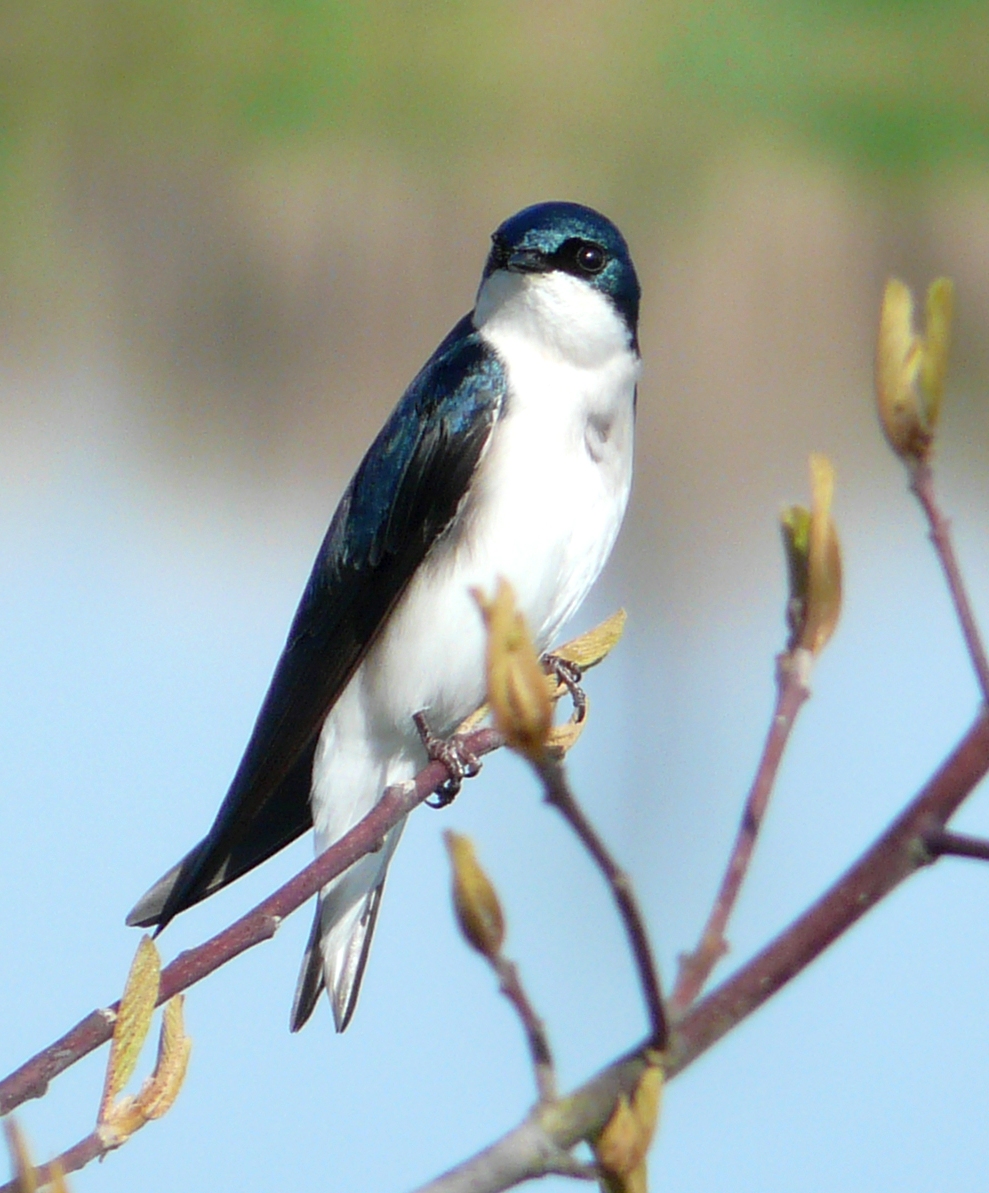
Tree Swallows are common summer residents throughout Oregon, wherever there are open spaces, water, and cavities for nesting. They are the first of the swallows to arrive in spring, usually in February in the Willamette Valley. They are also the only swallow to include fruit and seeds in their diet, a strategy which enhances their ability to survive wintry weather when insects are hard to find.


Nesting occurs in cavities, natural or man-made. This pair is using one of the many nest boxes at Fernhill Wetlands.


This female is using an old woodpecker cavity for nesting. When nest boxes are not available, Tree Swallow nesting success is directly tied to the availability of woodpecker cavities.

Mt. Hood National Forest

I spent a day exploring part of Mt. Hood National Forest along Forest Service Road 58 (Birding Oregon p. 75). A hot day in July is not the best time to find lots of birds, since singing has greatly diminished and there is so much great habitat for birds to hide in, but the scenery and solitude are well worth the trip.
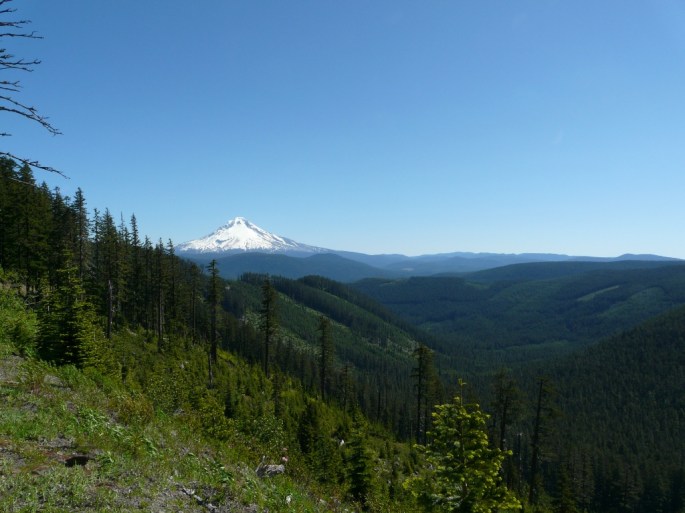

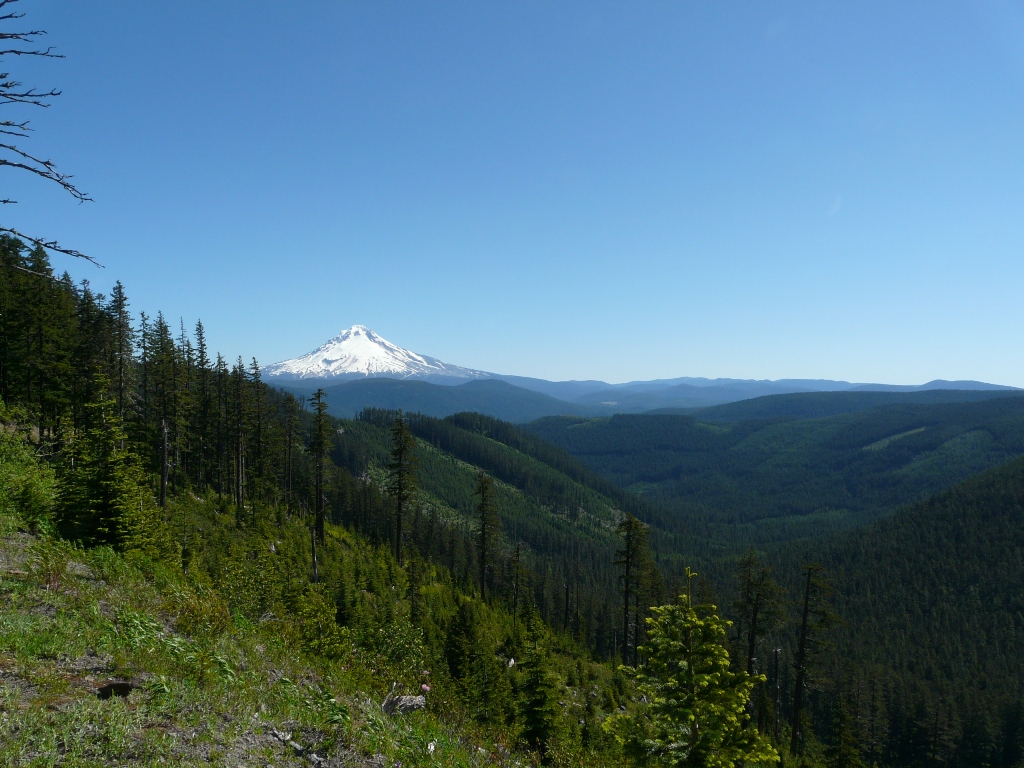
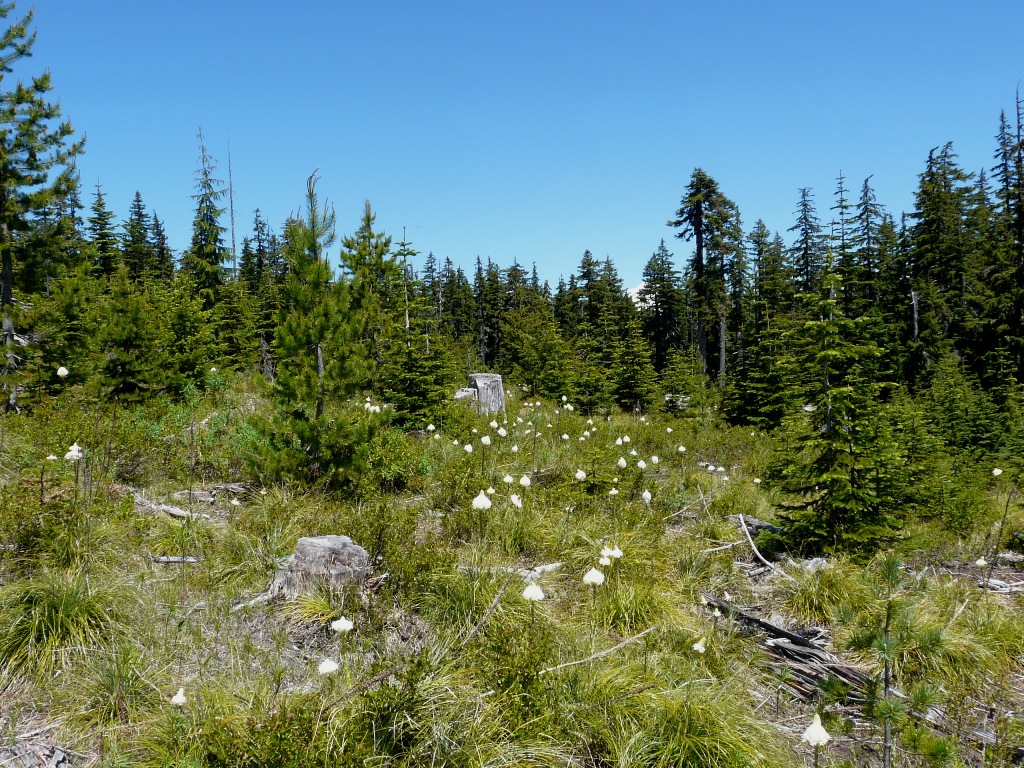
Here is the view from the High Rock area, showing the peak of Mt. Hood and the forest in various stages of regrowth.


This area of the forest is a patchwork of clearcuts, young forest, and groves of mature trees. While not nearly so scenic, clearcuts are often very productive for certain species of birds and other wildlife.
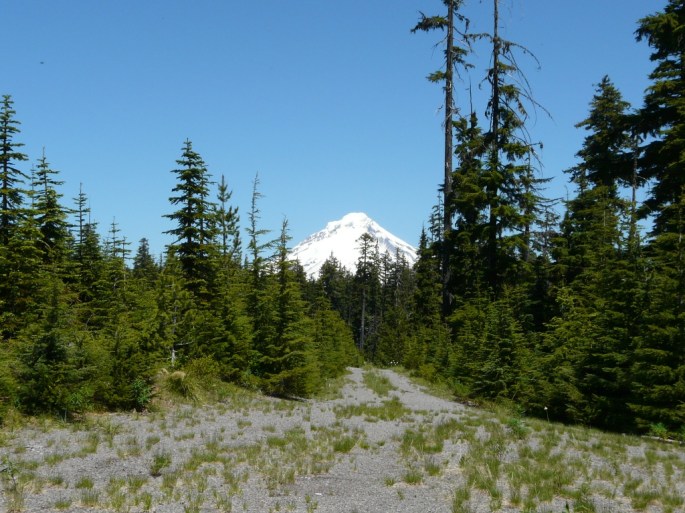

Forest Service roads that are too rough for vehicles provide easy hiking routes.
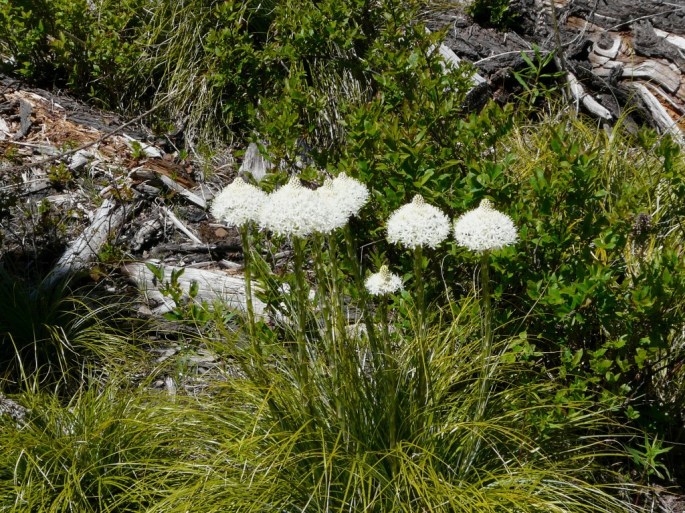

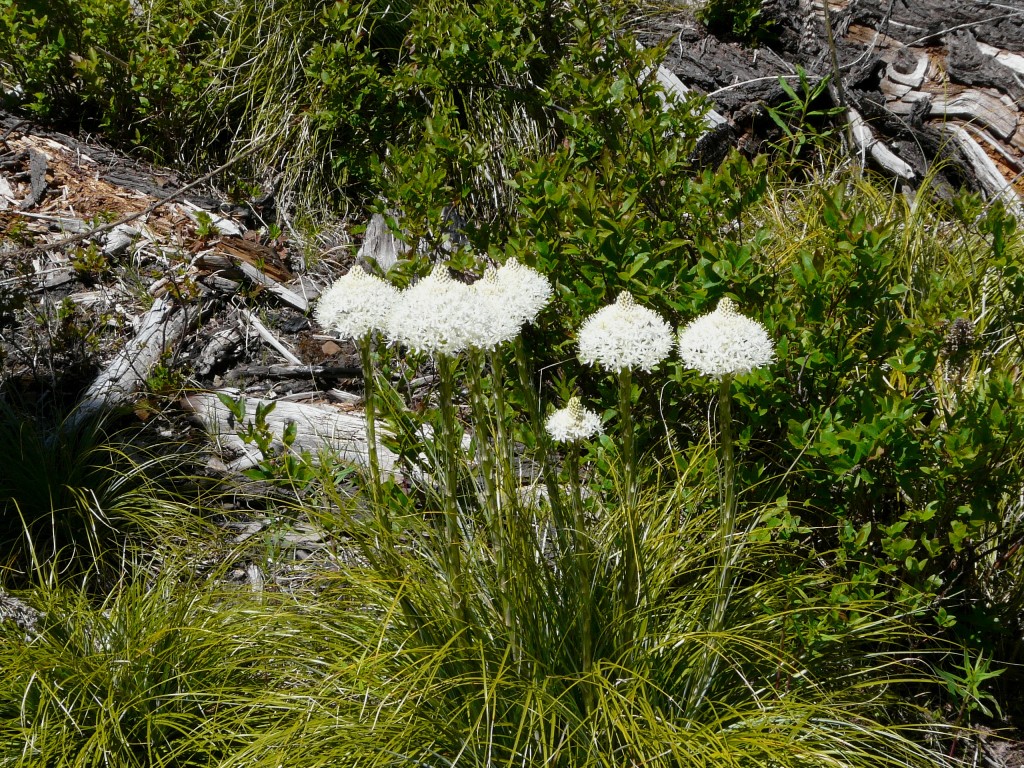
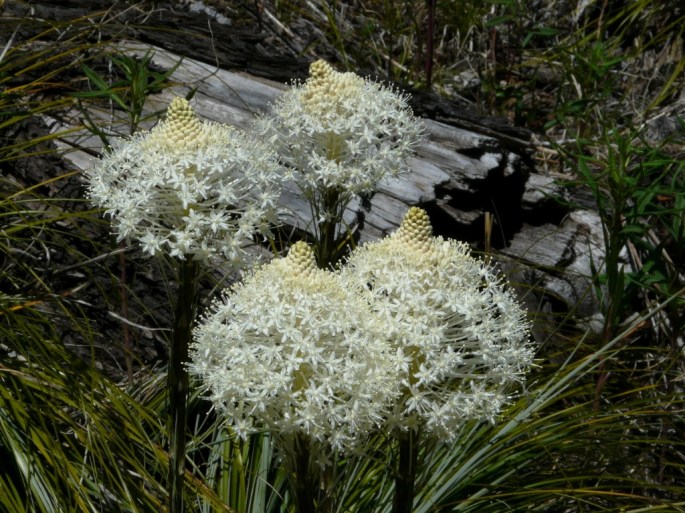
The Bear Grass was in full bloom.

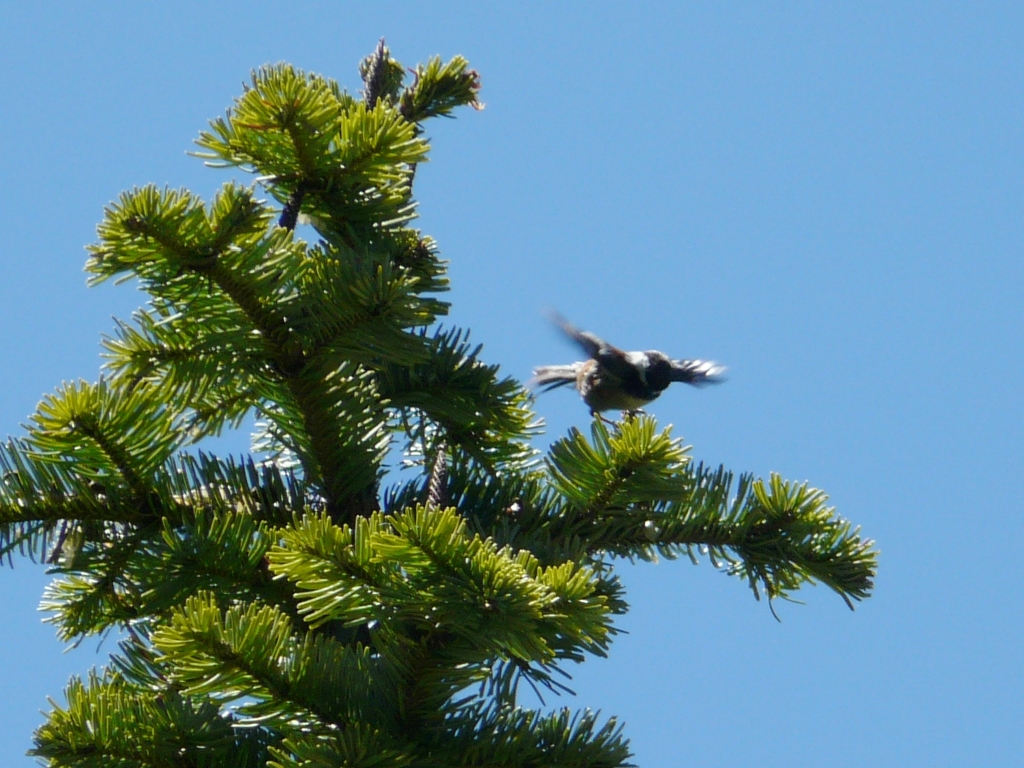
Chestnut-backed Chickadee
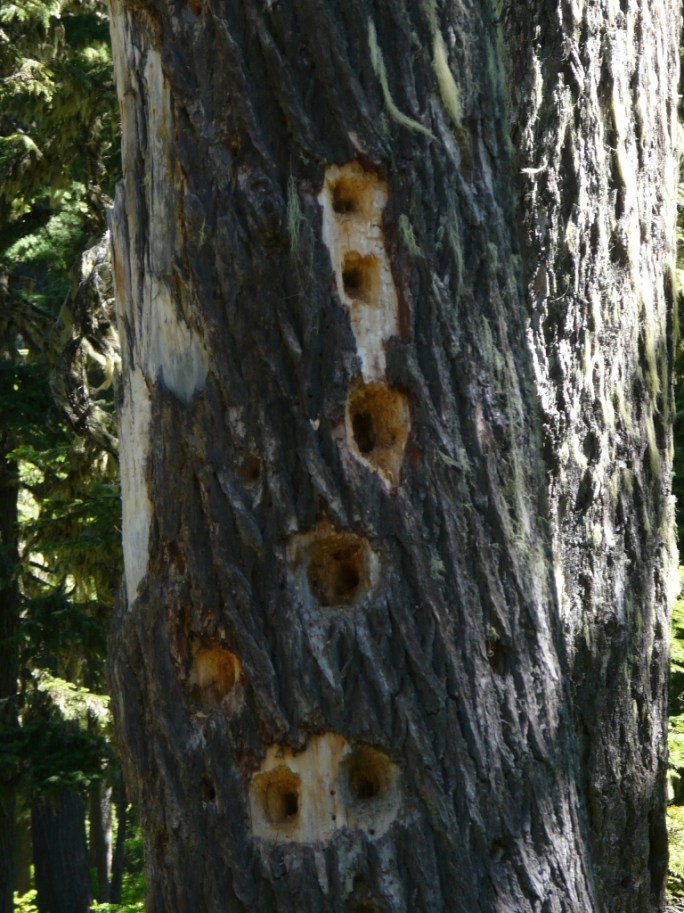

Pileated Woodpecker feeding site
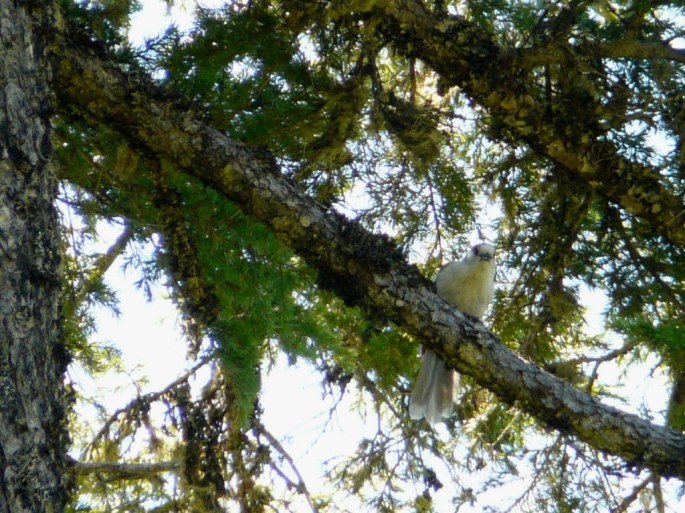

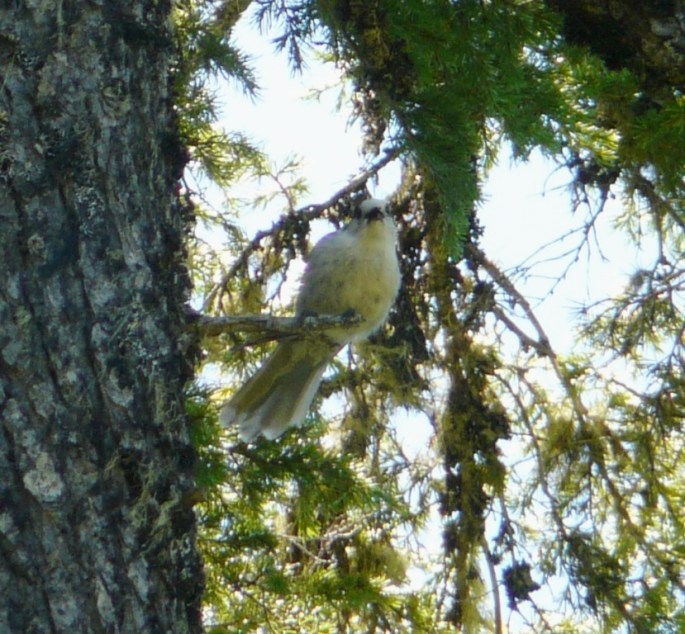
A pair of Gray Jays responded to a pygmy-owl imitation. Despite their reputation for stealing food from picnic tables, I usually find Gray Jays to be rather shy.

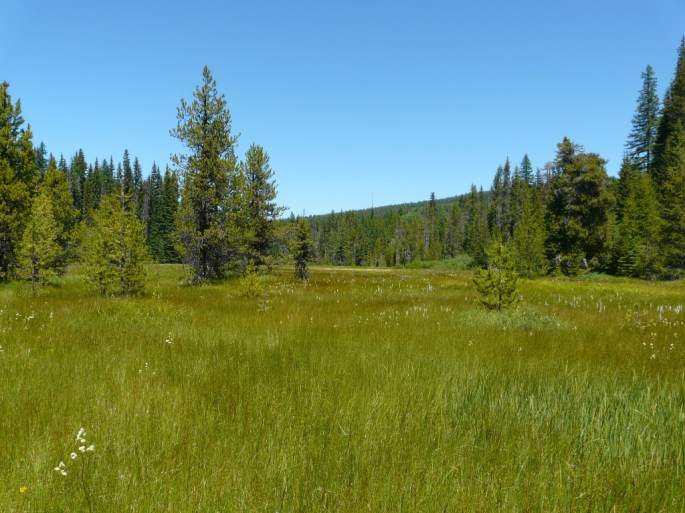
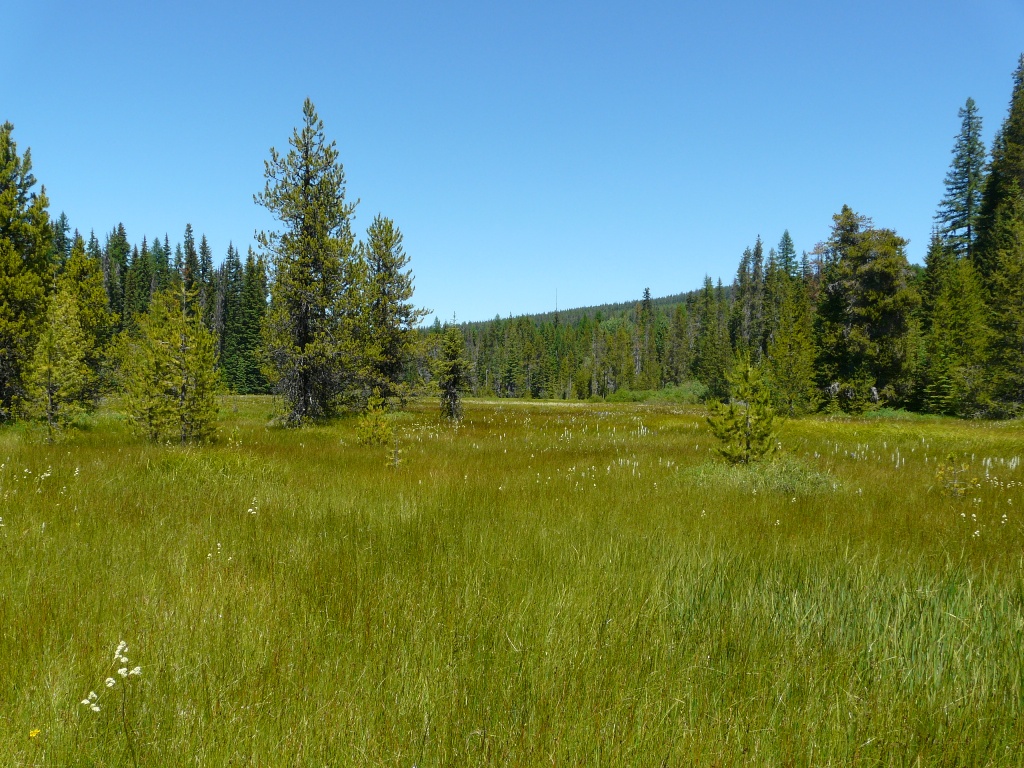
This is the meadow near Little Crater Lake.


A pond in the meadow, with Mt. Hood peaking over the trees.


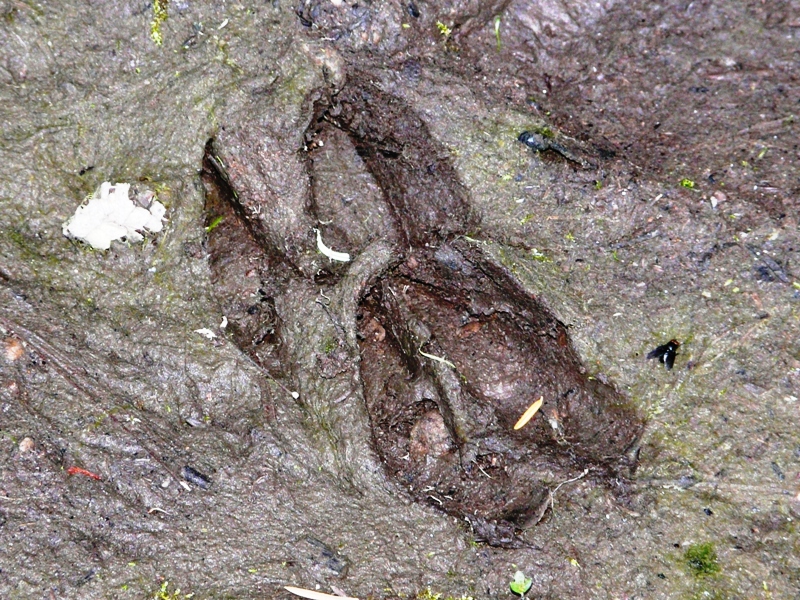
Always check muddy areas for tracks, like these from Black-tailed Deer.
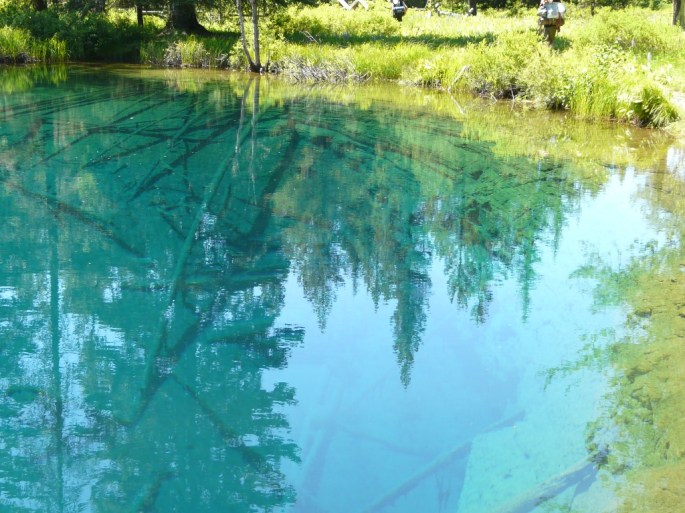

Little Crater Lake
Fernhill Wetlands 7/4/10

A quick walk around Fernhill Wetlands (Birding Oregon p. 61) produced two out-of-season species this morning.


Cackling Geese (Branta hutchinsii minima) winter here in the hundreds, but an individual in July is quite unexpected.


Note the stubby bill, short neck, and dark purplish breast typical of this subspecies.


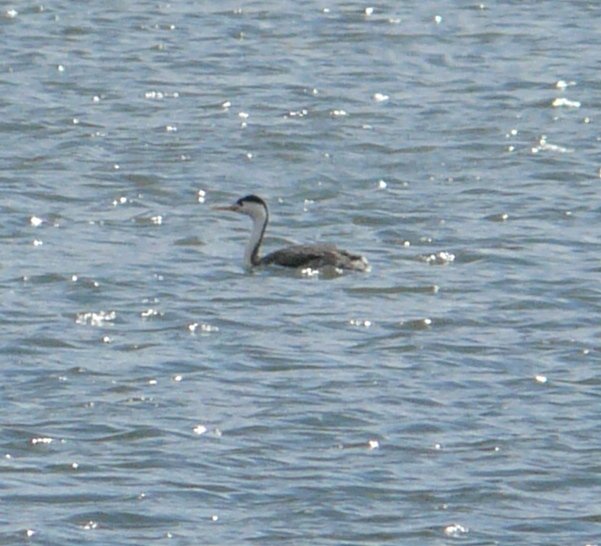
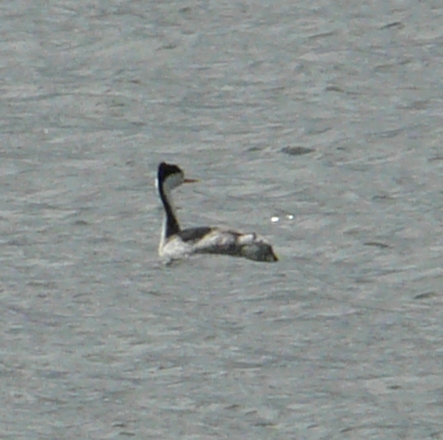
Clark’s Grebe is rare at Fernhill during migration, but never expected in summer. Here you can see the white of the face surrounding the eye, unlike the more expected Western Grebe, which shows the eye surrounded by the black of the cap.


With more white on the face and neck, Clark’s Grebe shows a more narrow black line down the back of the neck than does Western Grebe.


Green Herons are often flushed from the shores. This one sat in a tree briefly.


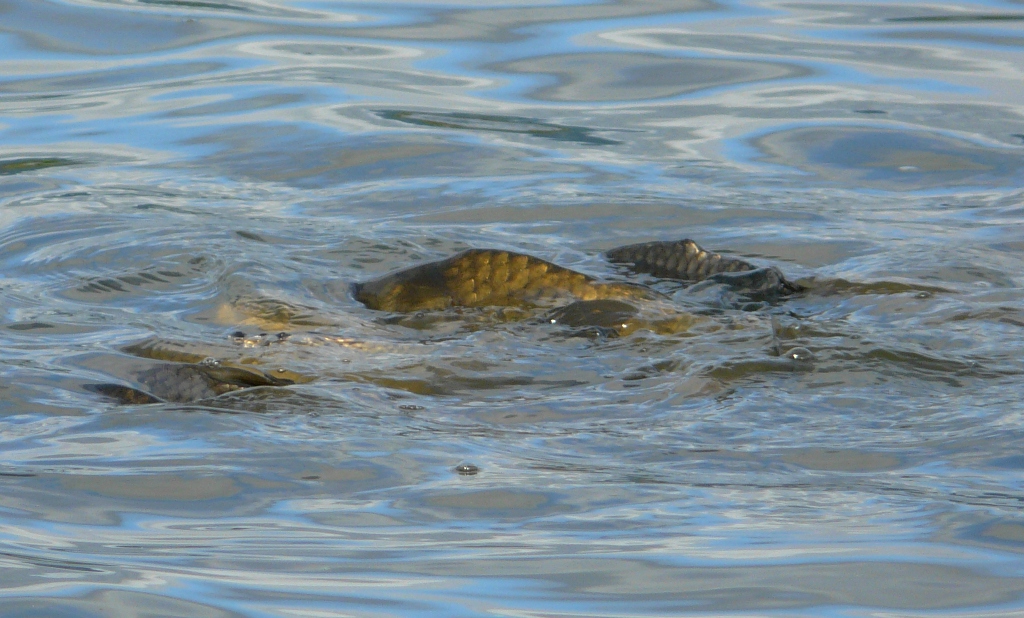
Common Carp were spawning in the main lake. Small groups of fish were swirling near the surface in several areas.

Larch Mountain Clearcut

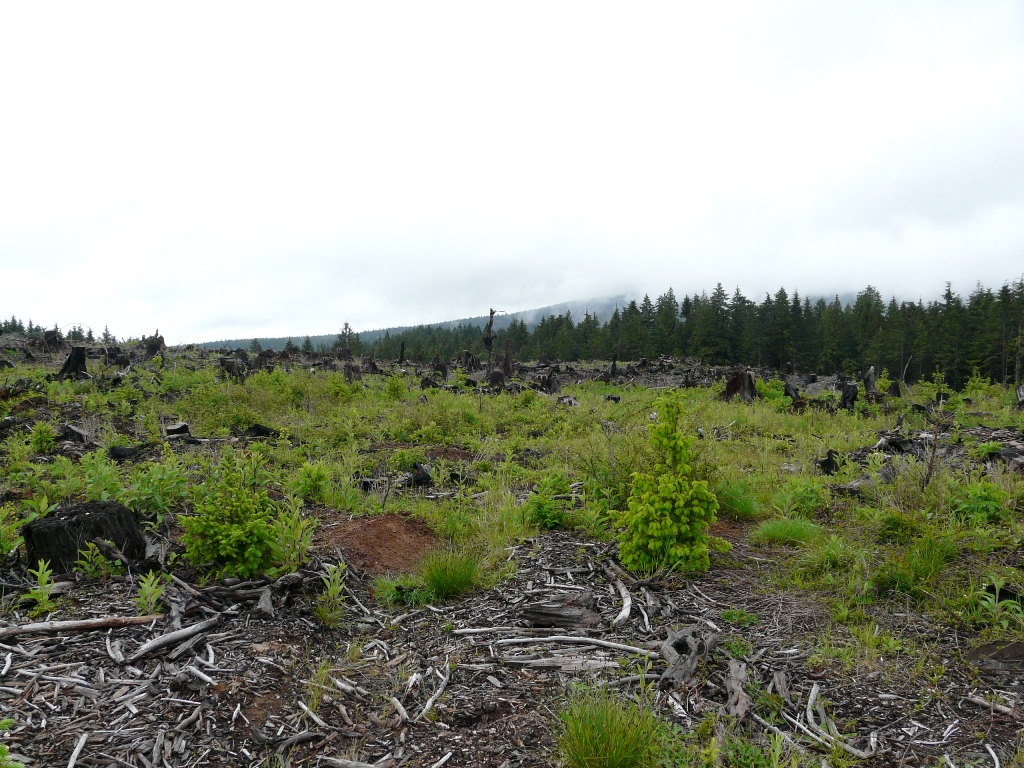
Larch Mountain (Birding Oregon p.71) is a great spot close to Portland to find birds of the forested west side of the Cascades. Mature forest covers the area near the summit and throughout much of the crater. Farther down the mountain are areas that have been logged.


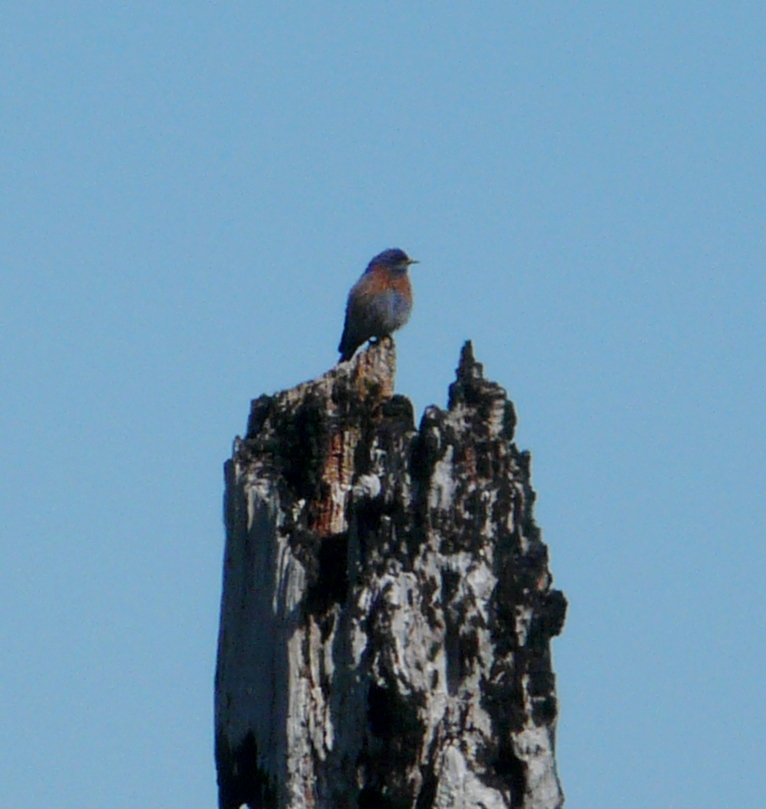
At first glance, a recent clearcut seems a desolate place. While it is sad to think of the great trees that used to stand there, you may actually see more birds in a clearcut than you will in a mature forest. The two clearcuts described in Birding Oregon have grown up to the point where you can’t walk into them any more. Young trees, shrubs, old stumps, rocks, and uneven ground make walking impossible. An easily accessible recent clearcut is found just downhill of milepost 8. Walk past the blue gate through a thin buffer of trees to get to the open habitat. In the past week I have seen Western Tanager, Red Crossbill, Gray Jay,  Band-tailed Pigeon, Western Bluebird, MacGillivray’s Warbler, Townsend’s Solitaire, Rufous Hummingbird, Violet-green Swallow, and White-crowned Sparrow in or along the edges of this clearcut.

Western Bluebird


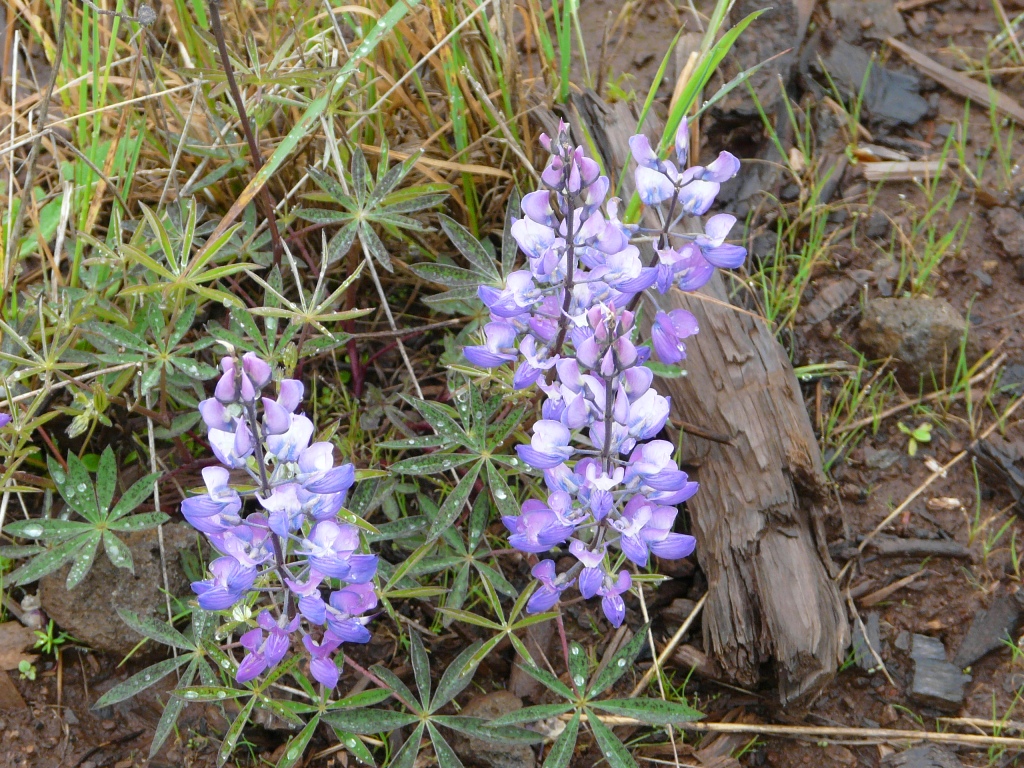
Lupines, along with Foxglove and other flowers, are common in clearcuts.


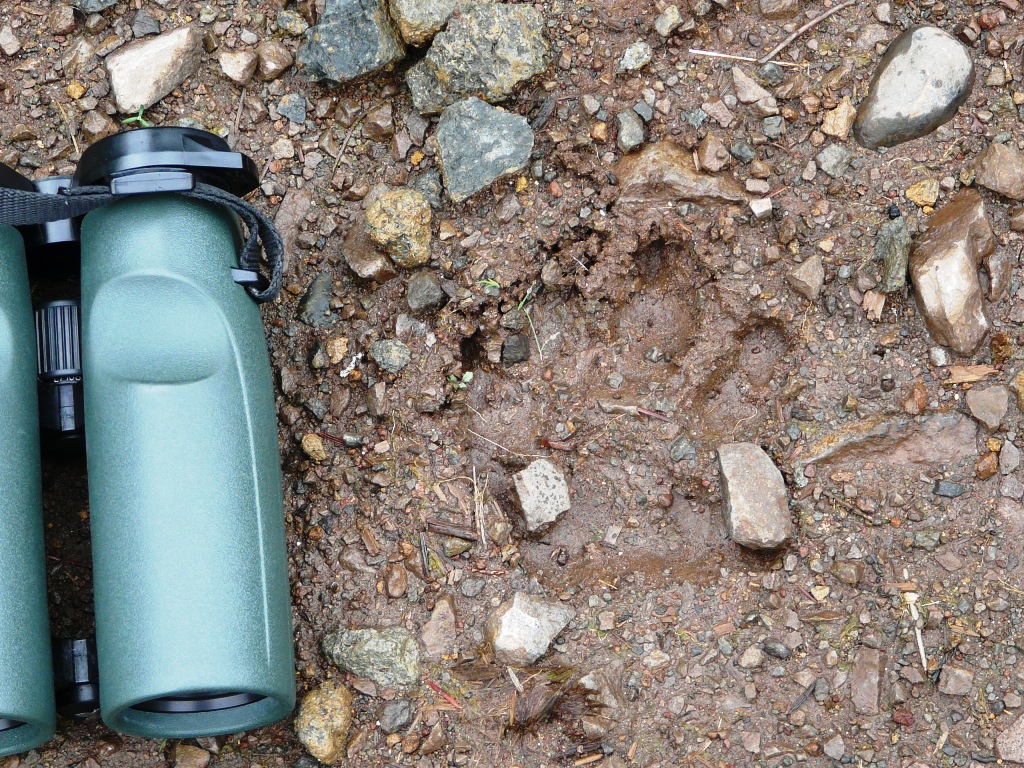
Clearcuts attract Black-tailed Deer and Roosevelt Elk, which in turn attract Mountain Lions. This set of tracks was leading from the clearcut to the woods.

California Ground Squirrel

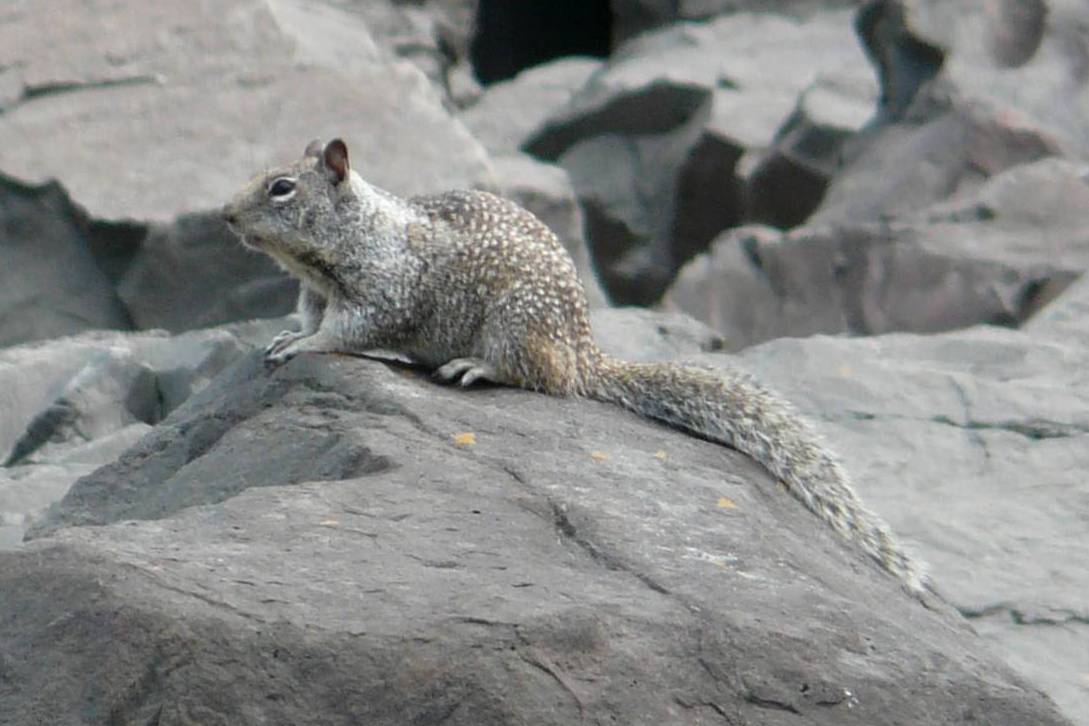
Ranging throughout the western third of Oregon, California Ground Squirrels (Spermophilus beecheyi) are much larger and bushier-tailed than other ground squirrels. They are found in open grasslands (including large lawns) and on rocky outcrops. Unlike other ground squirrels, they will also climb trees to obtain food.  A colloquial name for this  species is Gray Digger.


This individual was on Barview Jetty on the north shore of Tillamook Bay (Birding Oregon p.125). Rocky coastlines are an unusual habitat for ground squirrels.  Note the white dapples on the back.


This individual also shows the white speckles on the back. Note the bushy tail edged in white, similar to that of a Eastern Gray Squirrel.


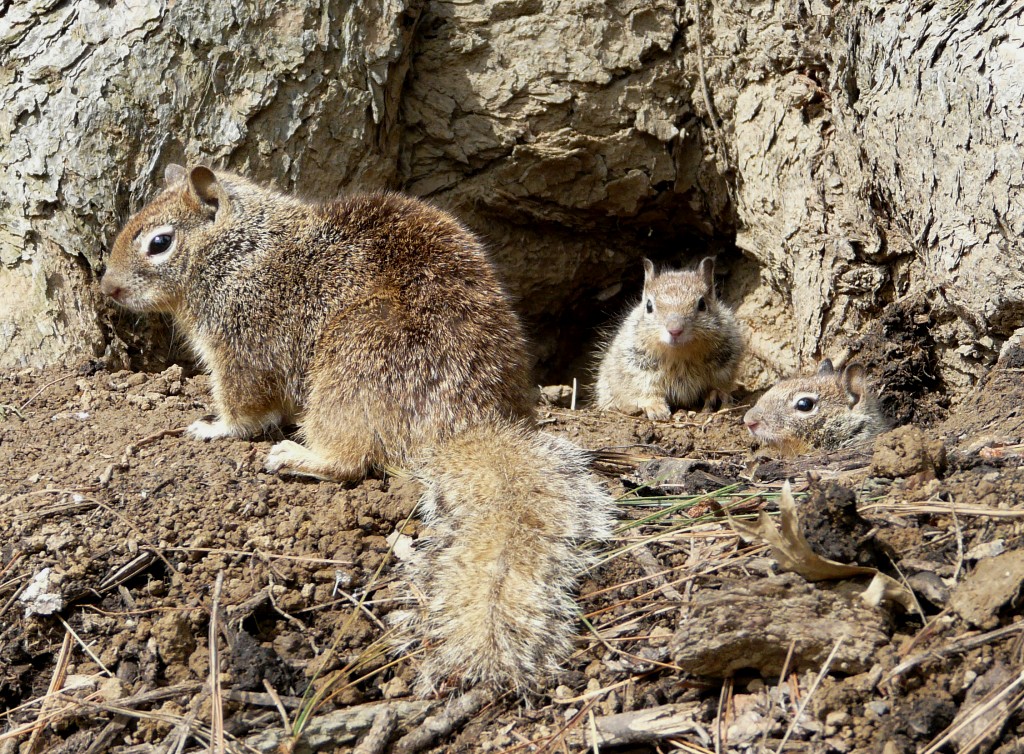
This female with her two young had a burrow at the base of a large tree at the Portland Rose Garden. Notice that when the fur is ruffed up, as on this individual, the white spots are much harder to see, making it harder to differentiate this species from one of the tree squirrels. California Grounds Squirrels can be solitary or live in loose colonies. When living in a colony, each individual has their own private burrow entrance.


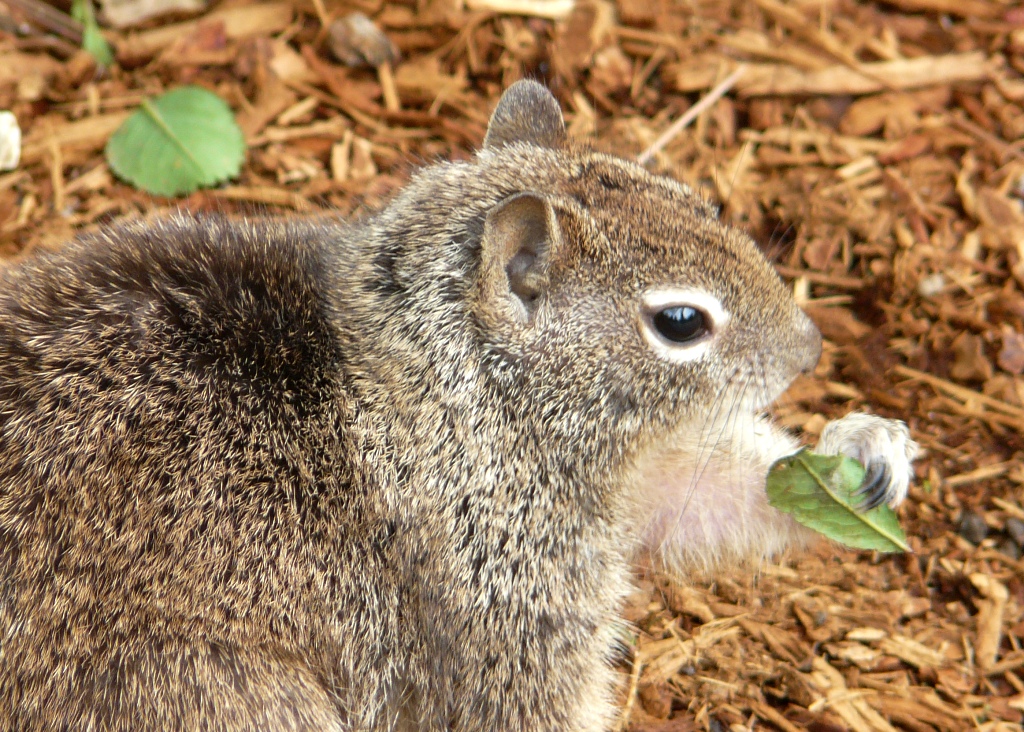
Here is the same female eating a leaf. California Ground Squirrels eat a wide variety of plant matter to build fat reserves for their winter  hibernation.