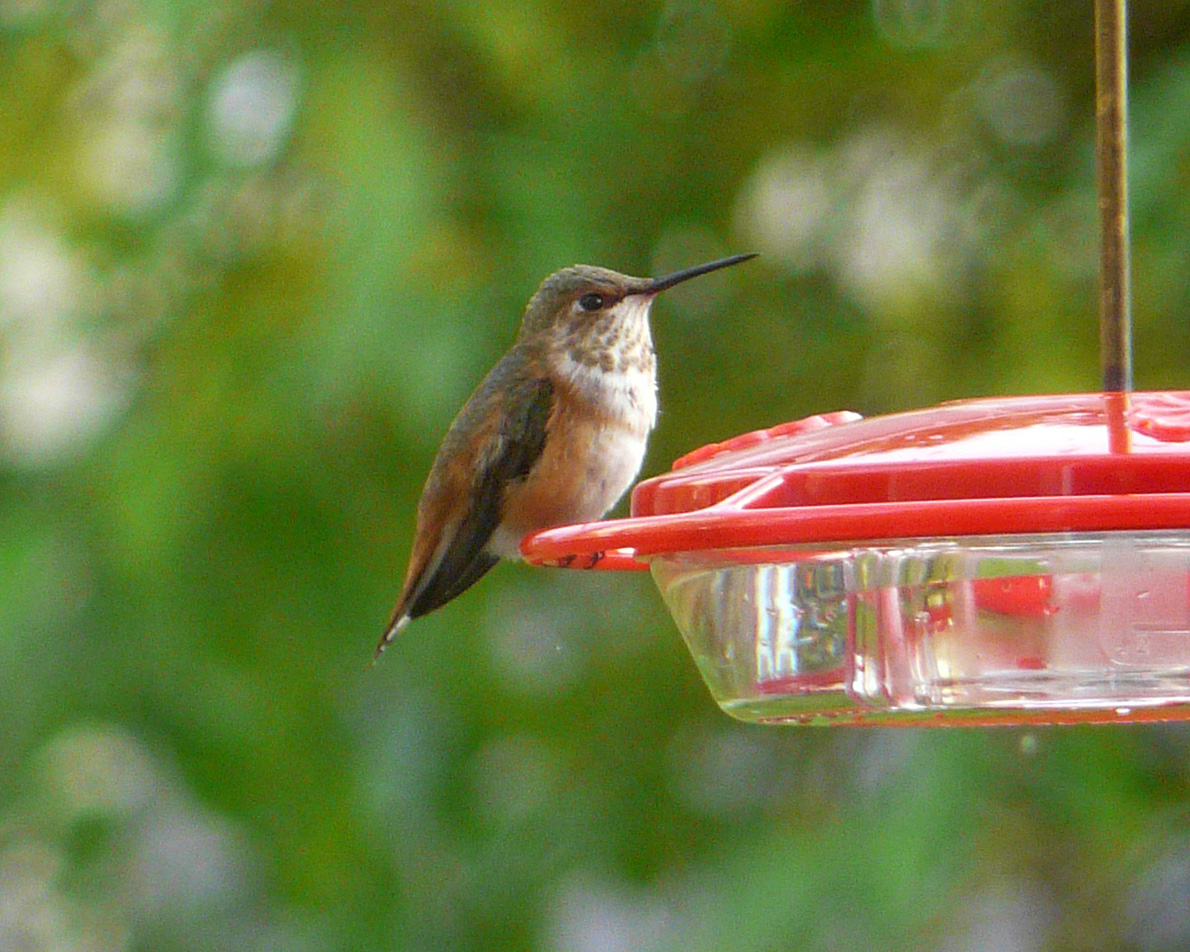
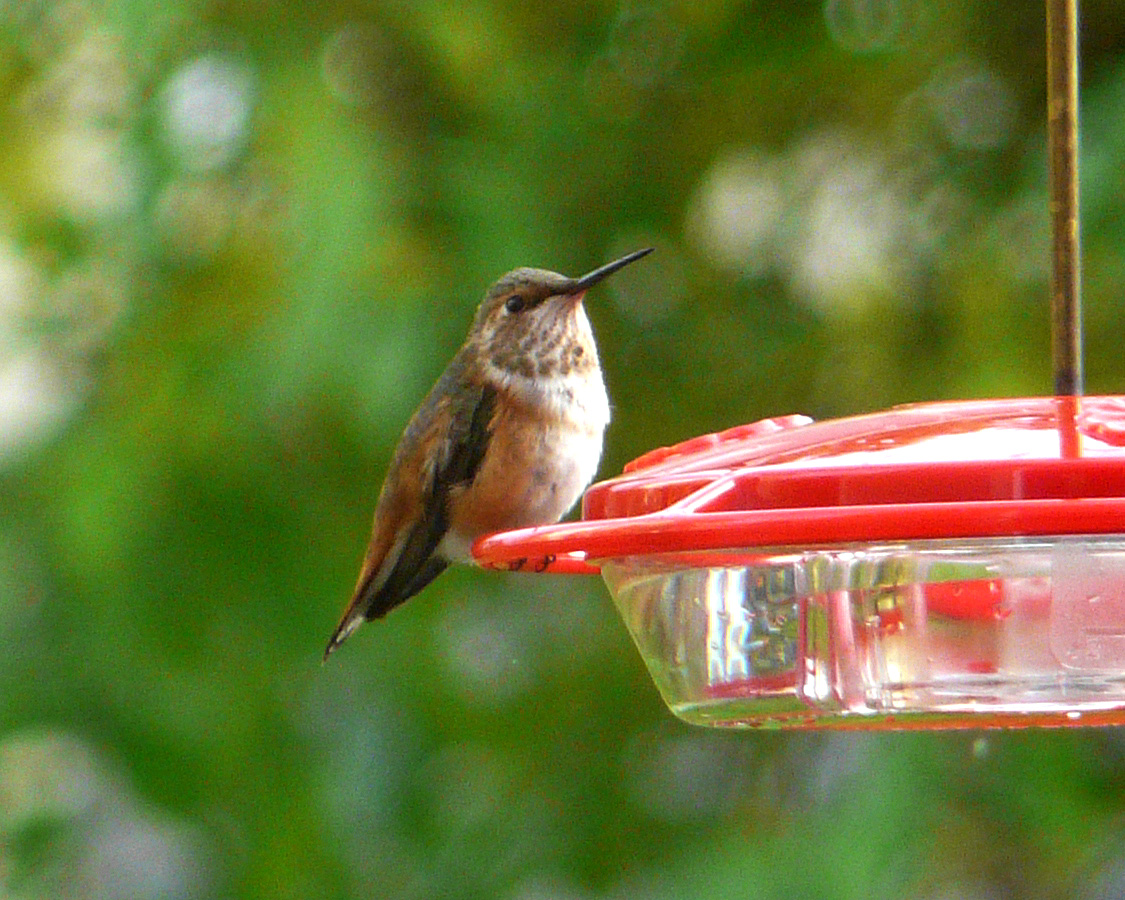
This Rufous Hummingbird made a brief appearance at my feeder this morning. Most Rufous Hummingbirds leave Oregon by September on their way to Mexico. This species is prone to wandering, however, with many individuals reported throughout the eastern U.S. in autumn, and increasing numbers wintering in the Southeast.
Category: seasonal movements
Autumn Sparrows
Autumn migration

It has been a good migration so far in the Portland area, with nice weather and good numbers of songbirds being reported. Swainson’s Thrushes always come through our property in September to eat dogwood berries. At night, you can hear the calls of these birds as they fly overhead.

Sunrise at Pittock Mansion (Birding Oregon p. 70) This tree, a large birch, was a warbler magnet this year, attracting all the common species plus two Northern Parulas. I missed the parulas by one day.

Orange-crowned Warbler, Pittock Mansion

Birds are not the only autumn migrants. Lots of dragonflies are on the move, as well. I don’t know the dragonflies, so if you can ID this one, please leave a comment.
Fernhill Wetlands 7/4/10
A quick walk around Fernhill Wetlands (Birding Oregon p. 61) produced two out-of-season species this morning.

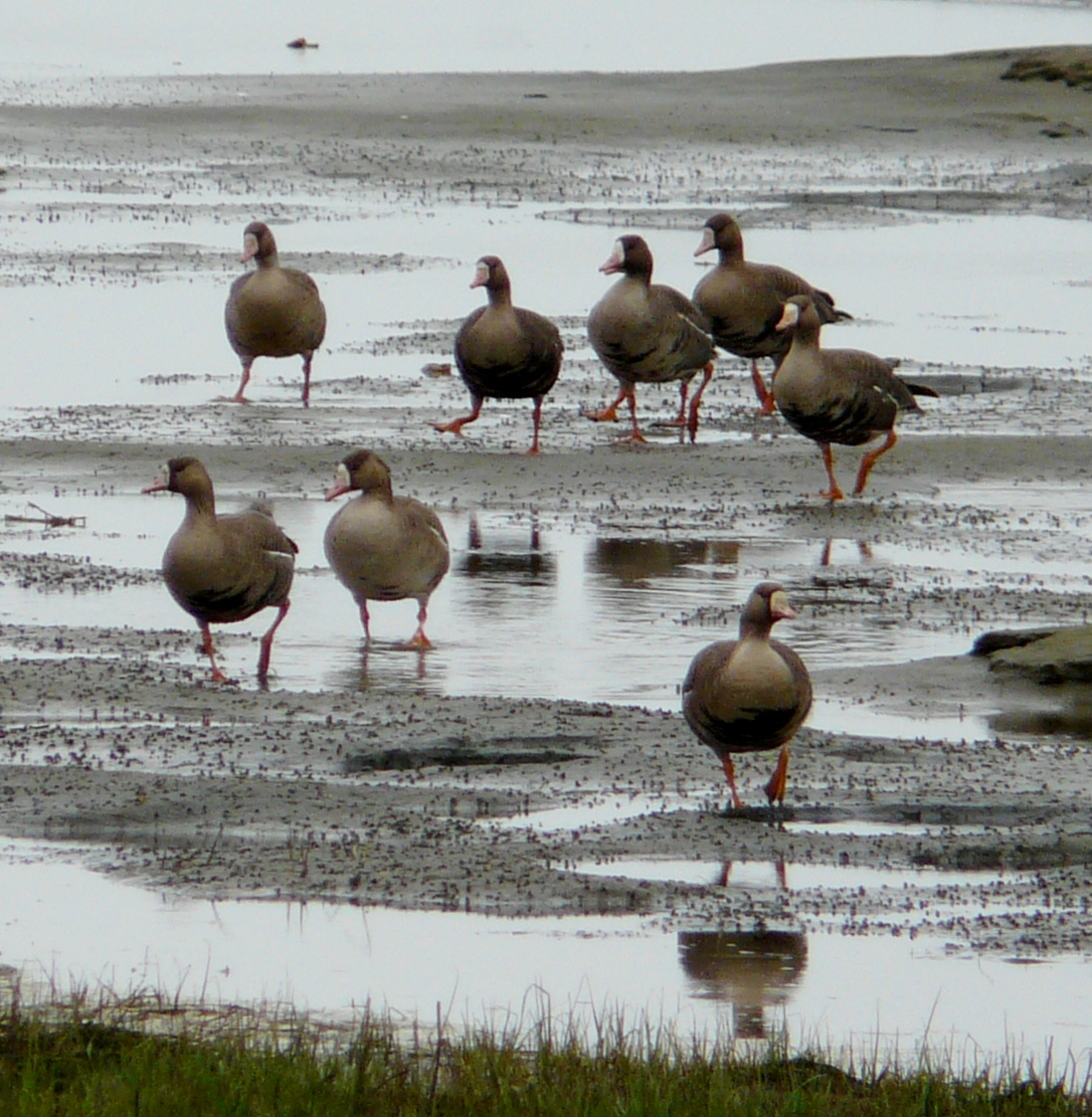
Cackling Geese (Branta hutchinsii minima) winter here in the hundreds, but an individual in July is quite unexpected.

Note the stubby bill, short neck, and dark purplish breast typical of this subspecies.

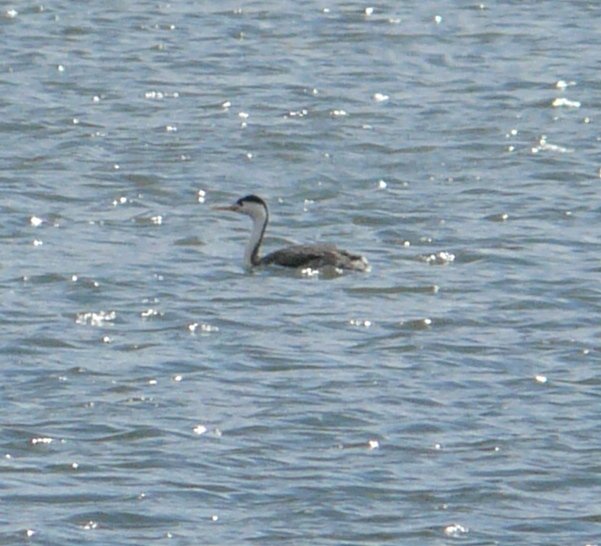
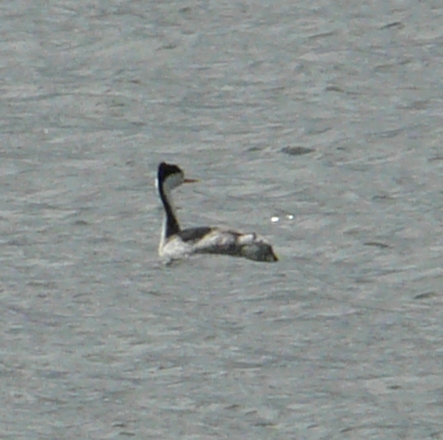
Clark’s Grebe is rare at Fernhill during migration, but never expected in summer. Here you can see the white of the face surrounding the eye, unlike the more expected Western Grebe, which shows the eye surrounded by the black of the cap.

With more white on the face and neck, Clark’s Grebe shows a more narrow black line down the back of the neck than does Western Grebe.

Green Herons are often flushed from the shores. This one sat in a tree briefly.

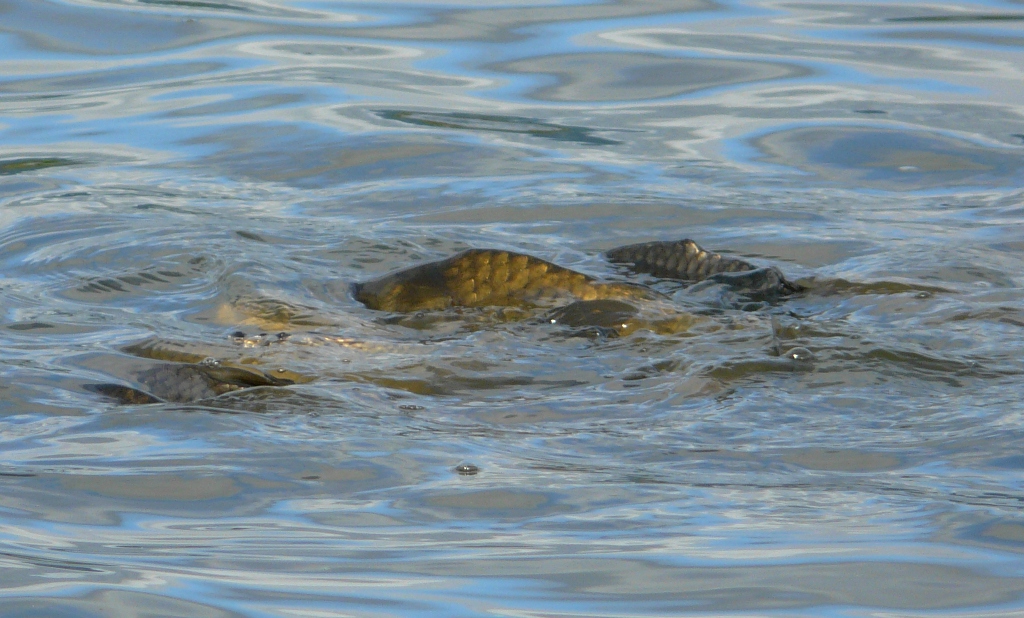
Common Carp were spawning in the main lake. Small groups of fish were swirling near the surface in several areas.
Gray’s Harbor, WA
I’ve recently made two trips to Grays Harbor in Washington, once to scout and the other to lead my shorebird class. This estuary is a major staging area for migrating shorebirds in spring.
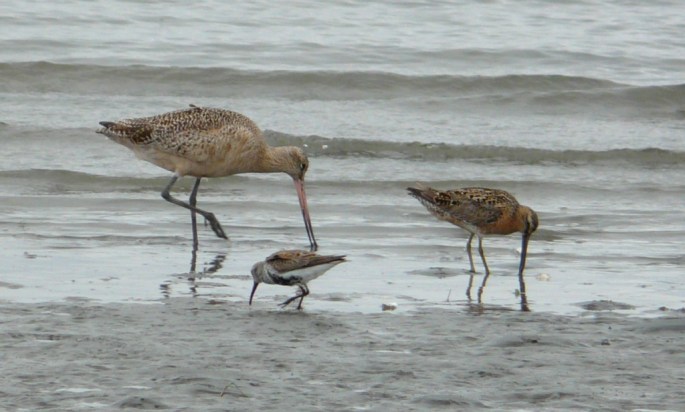
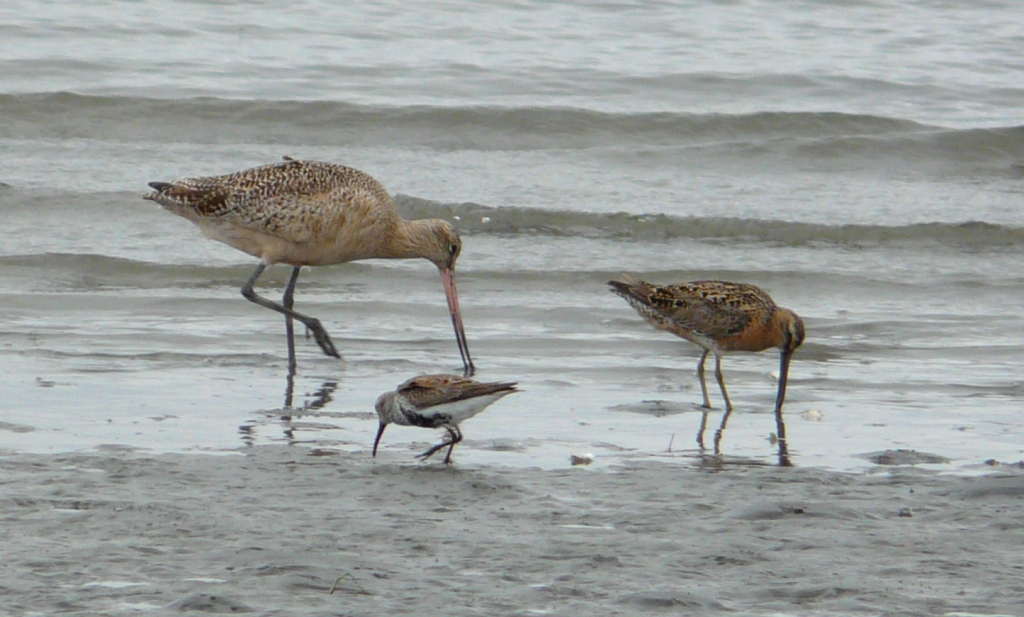
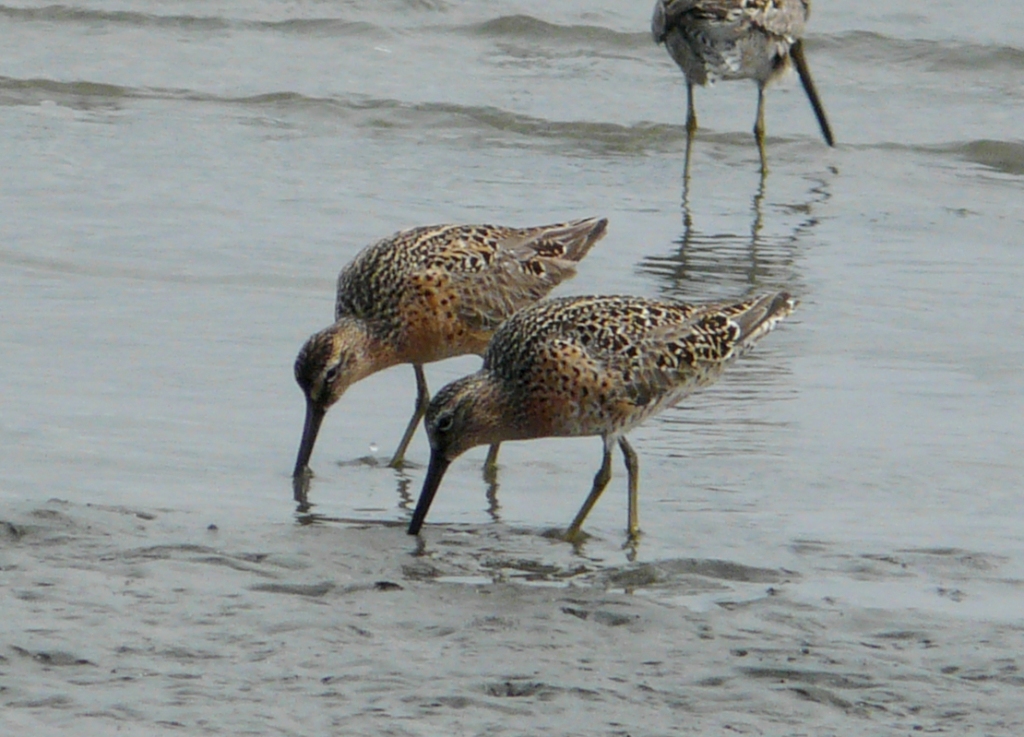
Marbled Godwit, Dunlin, and Short-billed Dowitcher feeding at Damon Point, near the mouth of the harbor

Don’t neglect to look at all the little brown ducks! This is a King Eider, a rare visitor from Alaska. It is distinguished from Common Eider by the slender bill and the scalloped markings on the sides.

Bowerman Basin is an inlet on the north shore of the harbor. It is the last area to fill during high tides, so shorebirds often congregate here. This is a view from the boardwalk.
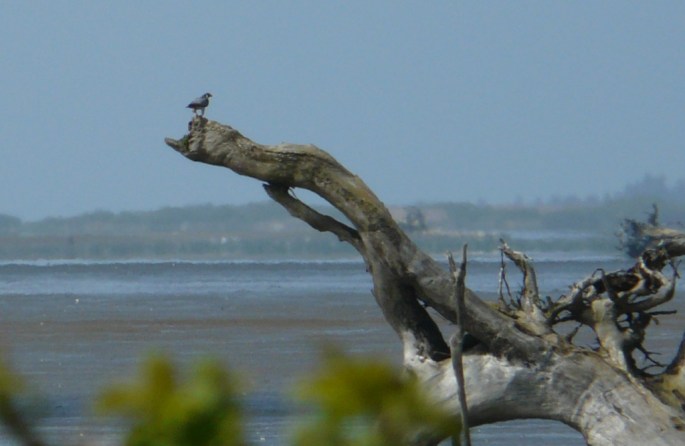
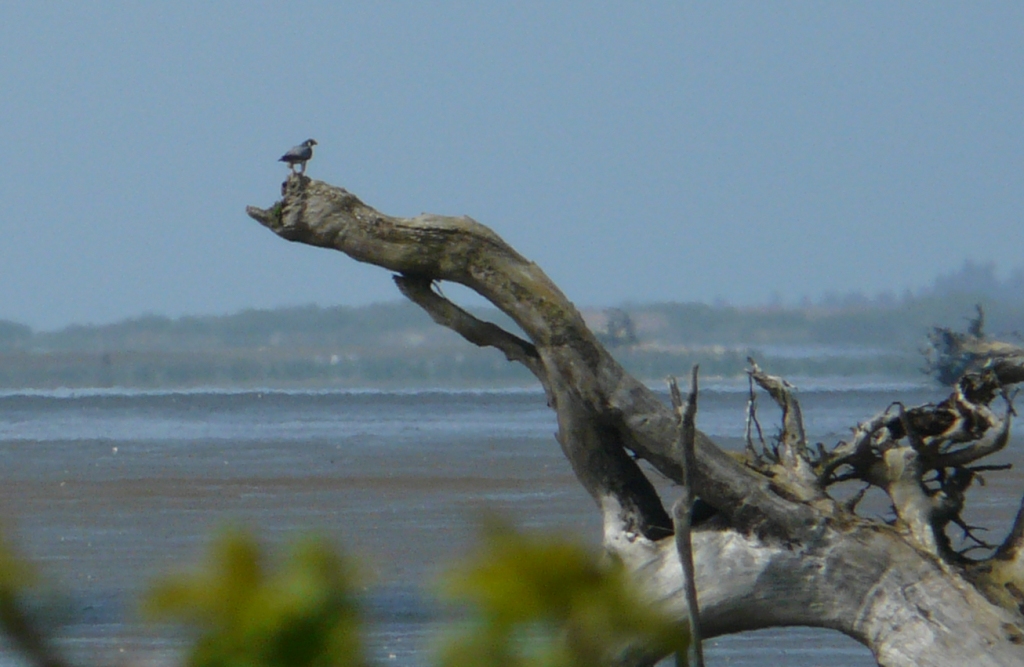
Peregrine Falcons are attracted by the large numbers of shorebirds in the harbor.

This is a view of the boardwalk on a Thursday morning.

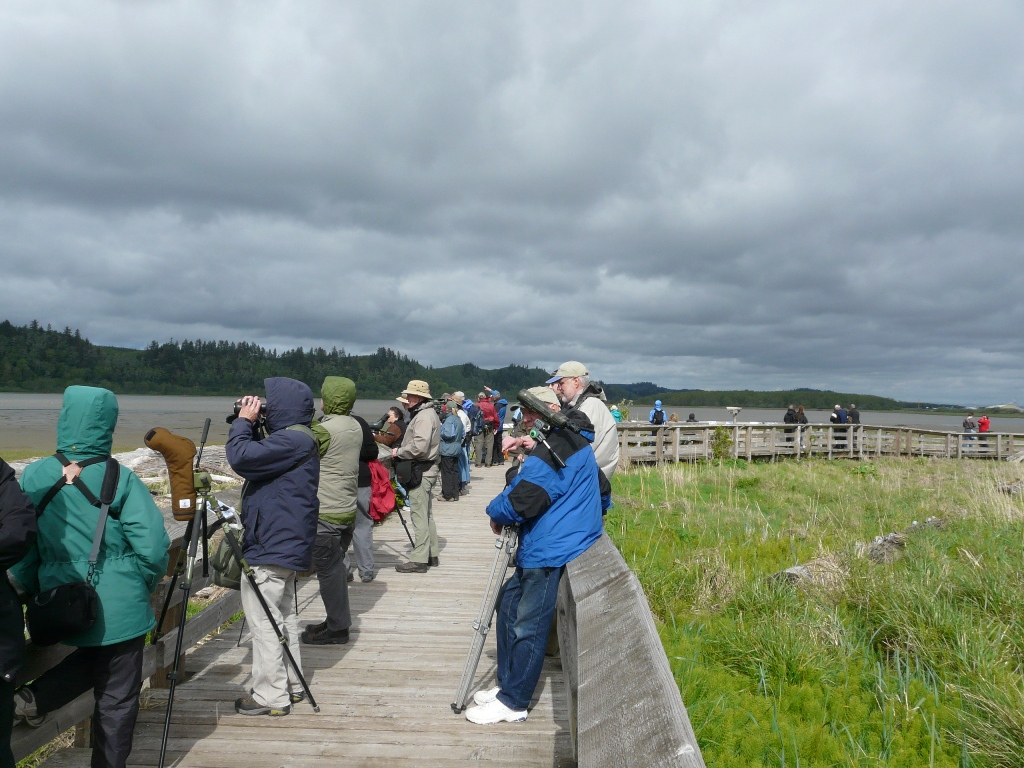
This is the boardwalk on a Saturday afternoon. Unfortunately, birders outnumbered birds by about five to one on this afternoon.
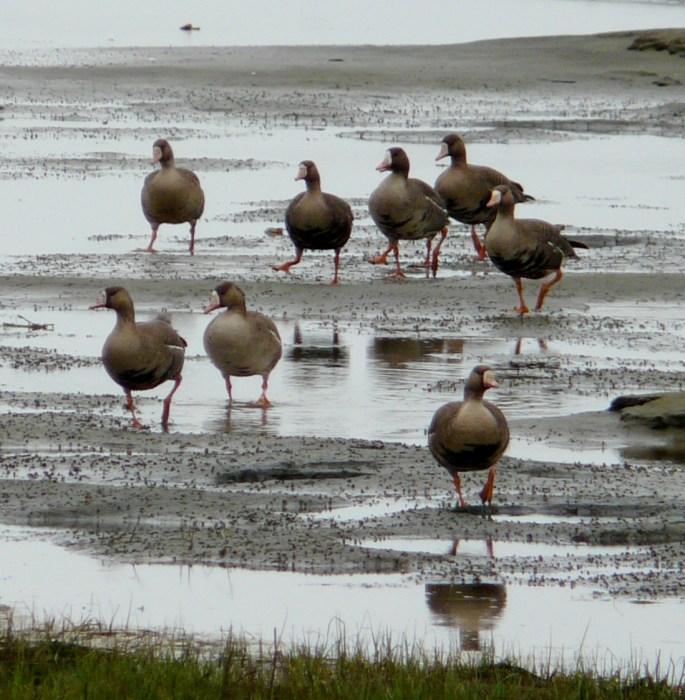
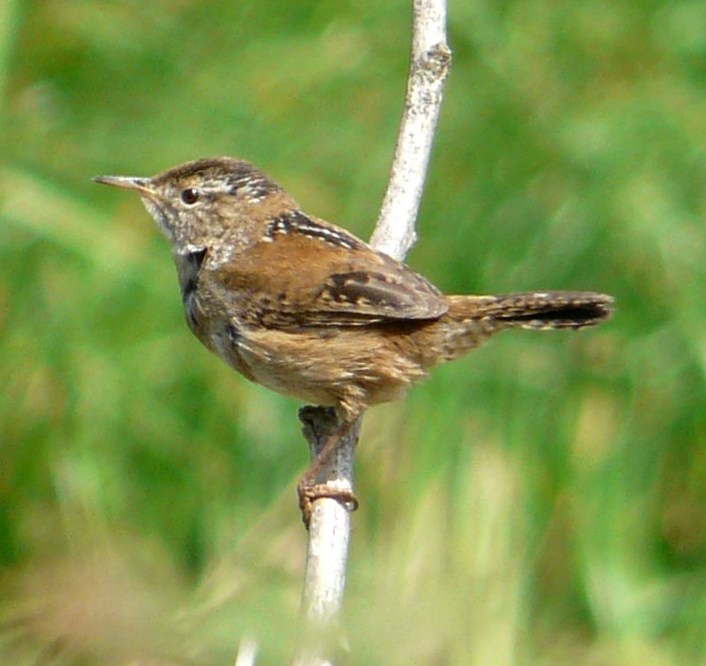
Marsh Wrens are common along the marshy edges of Bowerman Basin.

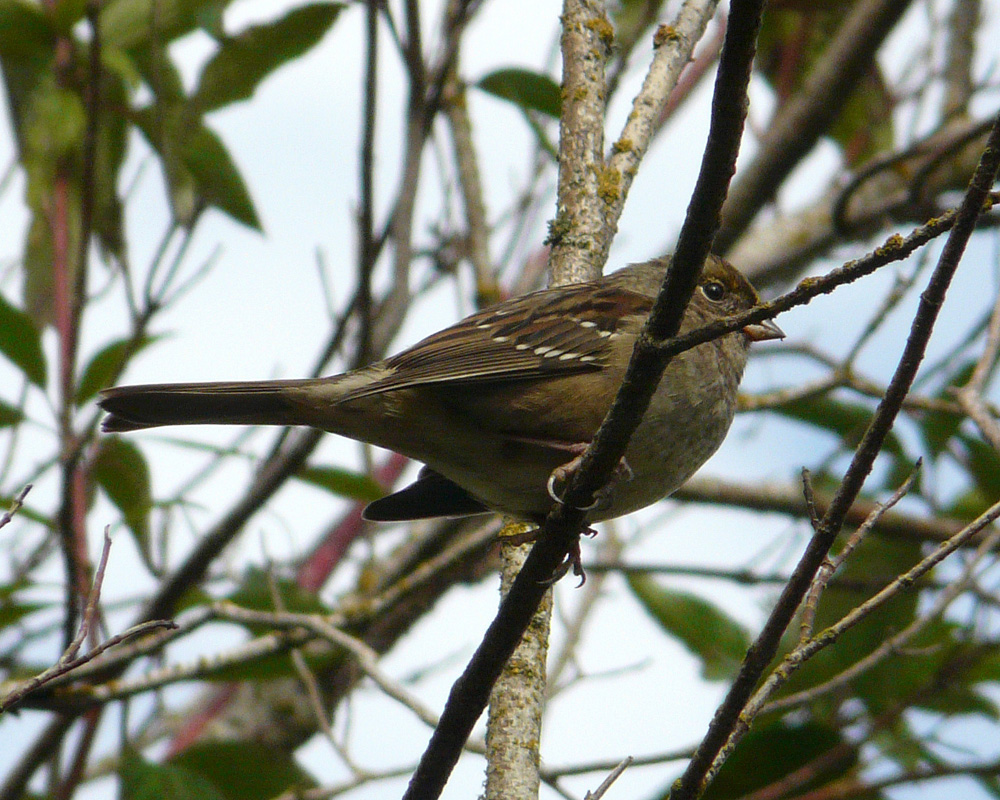
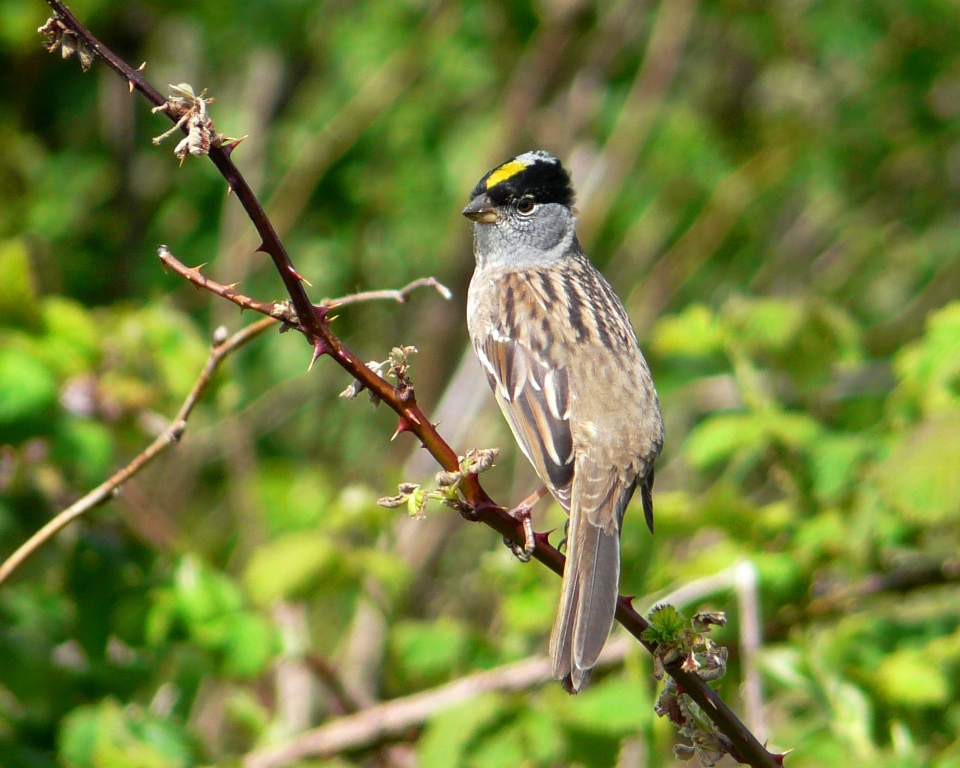
The willow thickets and woods along the boardwalk attract migrants like this Golden-crowned Sparrow.
Sauvie Island
Here are a few recent shots from Sauvie Island (Birding Oregon p. 55).

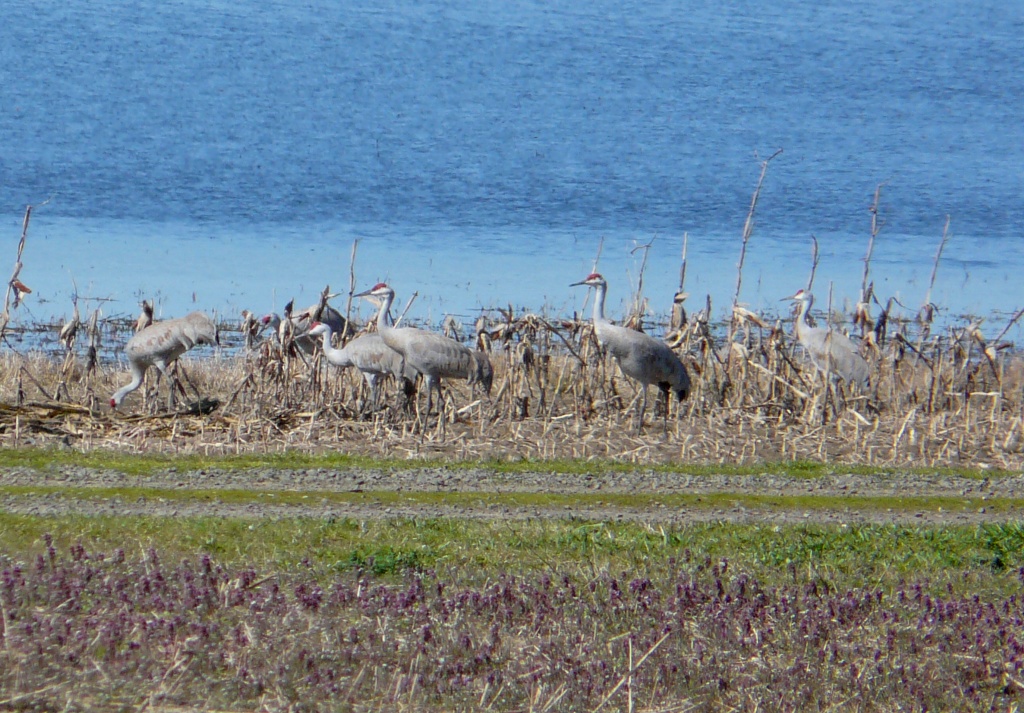
Sandhill Cranes are still present in good numbers.

Here are some Sandhills with three Dusky Canada Geese (Branta canadensis occidentalis). Note the red plastic collar on the goose on the far left. That is a quick way to identify this subspecies.

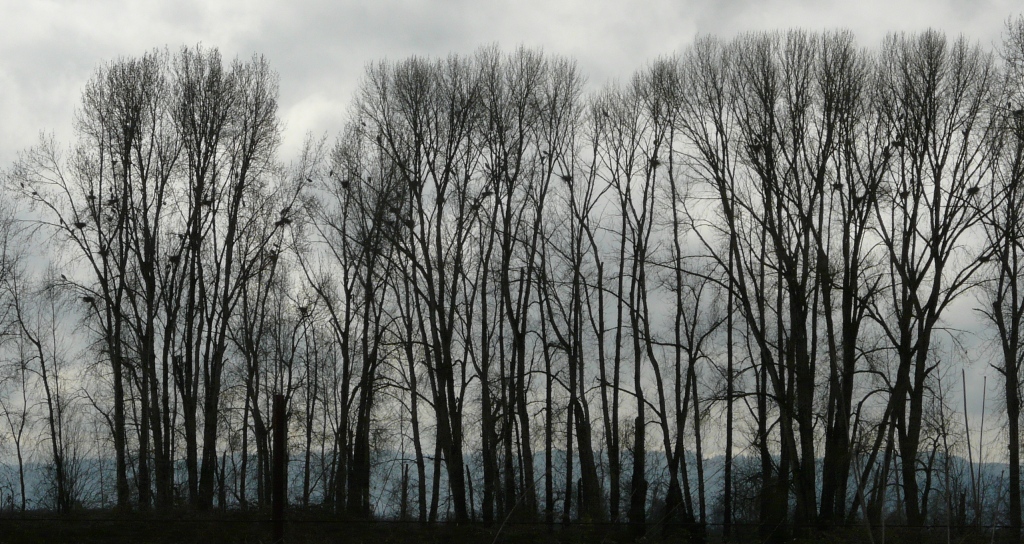
While the Sandhill Cranes and Dusky Canada Geese will fly to Alaska to nest, the Great Blue Herons are in full nesting mode now on Sauvie Island. Here is a section of a rookery in a distant tree line. You can see the bulky nests and, if you look closely, several birds perched in the branches.
Helping evolution along

Anna’s Hummingbird was first reported in Oregon in 1944. The first specimen wasn’t collected until 1966. But today, this species is a common year-round resident in western Oregon. They winter as far north as coastal British Columbia, and have even successfully wintered in central Oregon, where they get actual winter weather.
What has caused this rapid range expansion to the north? Climate change is having a measurable effect on some species, but Anna’s Hummingbird has undoubtably been helped along by the presence of bird feeders and exotic winter-blooming plants. While most of a hummingbird’s nutrition comes from the insects he eats, a reliable source of calories provided by a feeder of sugar solution can enable a bird to survive episodes of severe winter weather that would prove fatal without this supplemental food source. A higher winter survival rate provides more birds to breed in the spring, thus establishing the species in new areas.
Bird feeding is credited with helping other species expand their ranges. Northern Cardinal is a prime example in this country. In England, bird feeding is reportedly changing the evolution of one species. The European Blackcap historically migrated to Spain for the winter. With the increasing popularity of bird feeding, this species has stopped migrating south, opting instead to winter in the UK. In just 50 years, the bird has developed shorter wings (longer wings are useful in migration) and a narrower bill (better suited to eating out of bird feeders). These British birds are well on their way to becoming a new species. Read the story here.
Autumn
Autumn officially started just over a week ago. Here are a few shots of the season.

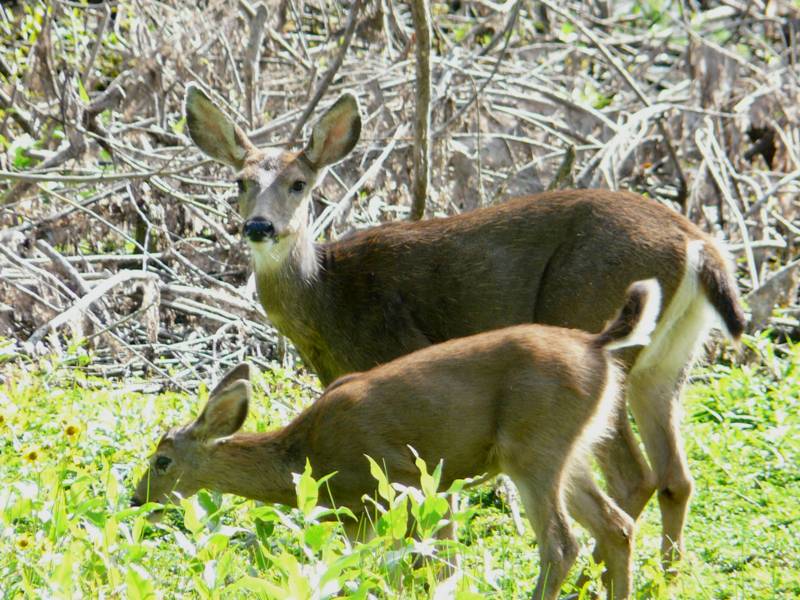
The Black-tailed Deer fawns have lost their spots, but are still smaller than the does.

The first flocks of Cackling Geese have arrived, soon to be followed by about 200,000 of their cohorts.

The cool nights and wetter weather bring out various fungi.

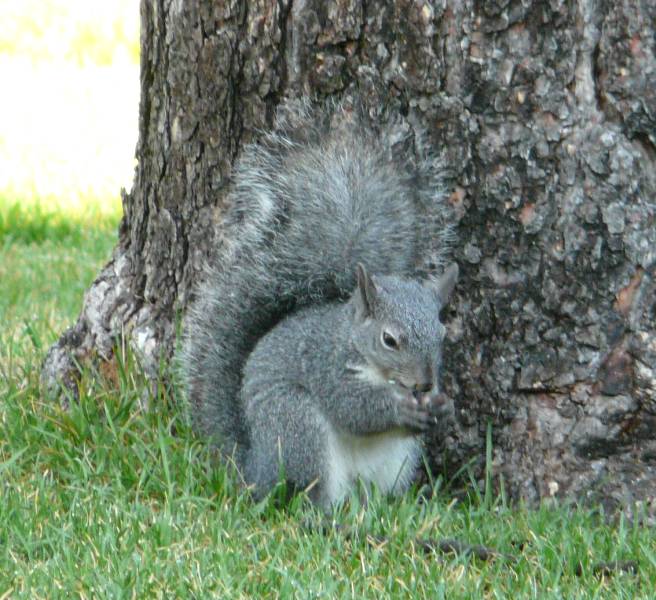
Squirrels, like this Western Gray Squirrel, are taking advantage of the acorn crop.
Fernhill Wetlands
While certainly not one of the more scenic sites in Oregon, Fernhill Wetlands (Birding Oregon p. 61) always attracts some noteworthy birds.

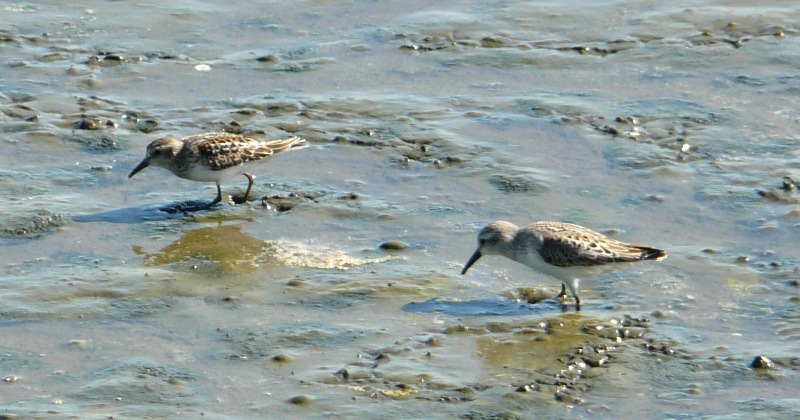
Least Sandpiper (left) and Western Sandpiper (right) are two of the more common shorebirds that use the mudflats at Fernhill. Both birds are juveniles (brightly colored fresh plumage, scapulars are small and rounded). The Least has a small, finely-pointed bill, yellowish legs, breast streaks, and feeds while squatting low to the mud. The Western has a longer drooping bill, dark legs (hidden in the mud), is grayer overall, and looks “front heavy,” like he might tip forward.

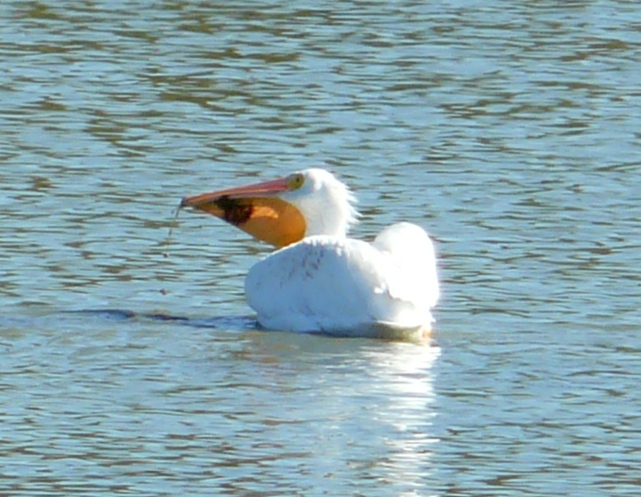
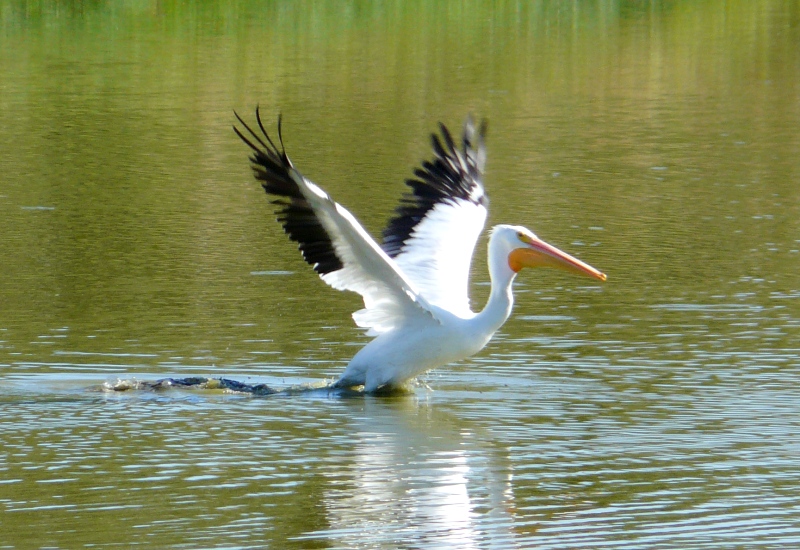
Two American White Pelicans have been at Fernhill lately. This species doesn’t nest in the Willamette Valley, but small flocks are often present in late summer/early autumn.


A Great Blue Heron with a species of bullhead. Catfish have sharp spines on their dorsal and pectoral fins, so the heron has to position the fish carefully before swallowing.
Crystal Springs in the Spring
I visited Crystal Springs Rhododendron Garden (Birding Oregon p. 69) on May 28. This site is best known as a good spot for wintering waterfowl. This late in the spring, most of the ducks and geese have moved on, leaving just a few resident species. But even with the lower diversity, it is still nice to be able to get such close looks at birds that are normally much more “wild” in other locations.

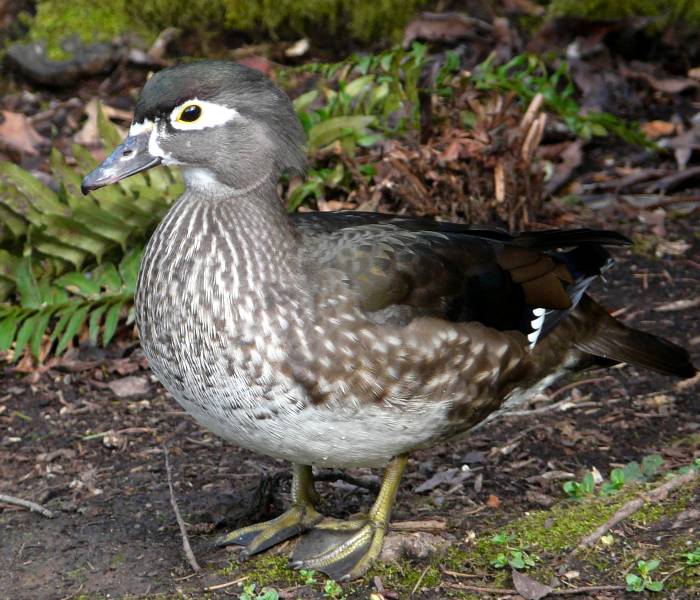
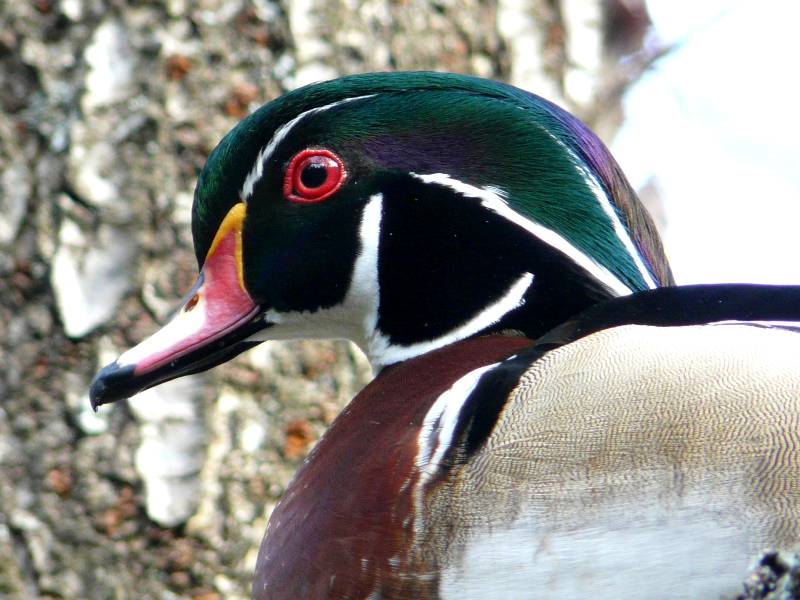
Wood Ducks are always a treat.

This male Wood Duck was in a tree, providing a view of the white throat.

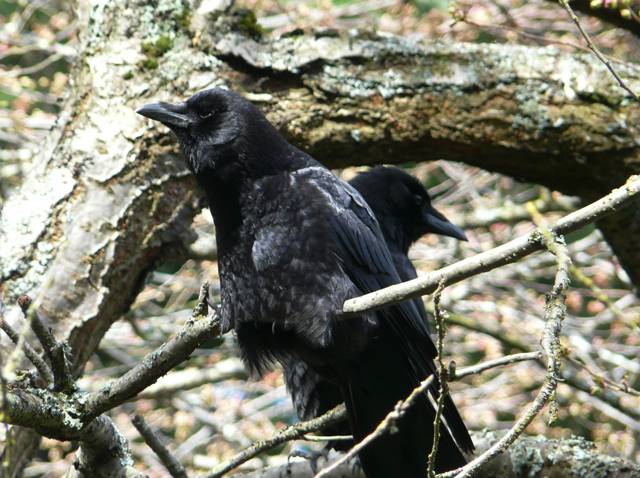
American Crows in the bright sun showed some interesting feather patterns.

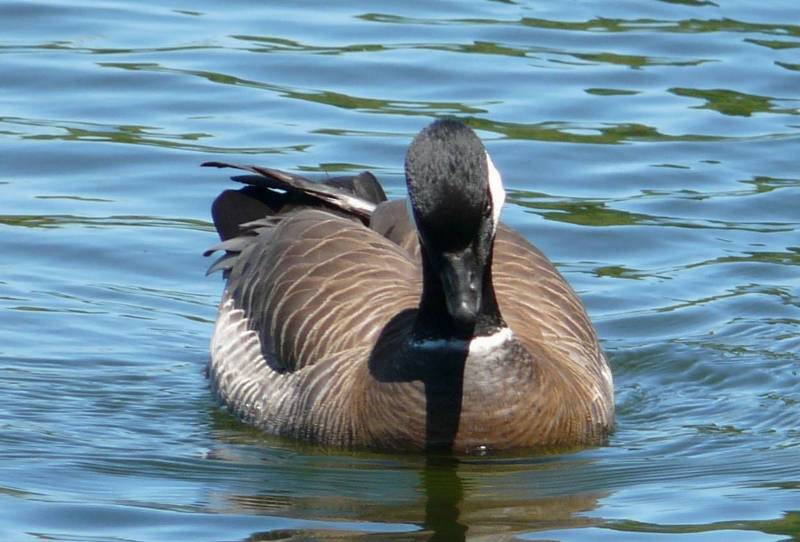
Two Cackling Geese (Branta hutchinsii minima) were still present. This is a very late date for this species to still be in Portland. This species nests on the Arctic tundra, so most have left by mid-April. Perhaps these two thought that a summer on the duck pond would be nicer than flying all that way.

Here is another view of the Cackling Goose. Notice how far the wing tips extend beyond the tail. Long wings are typical for species that migrate long distances.