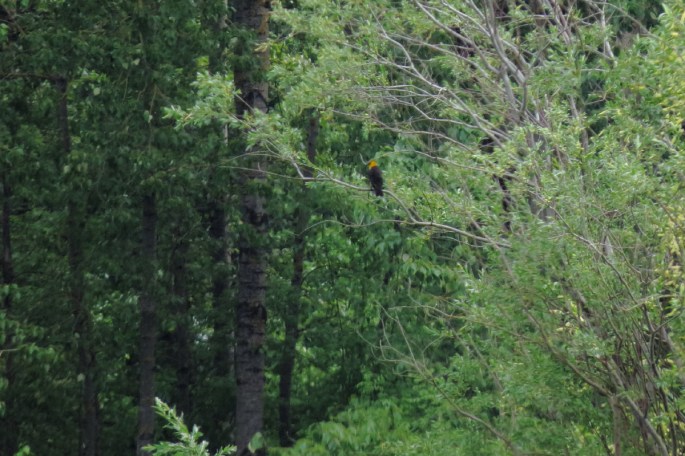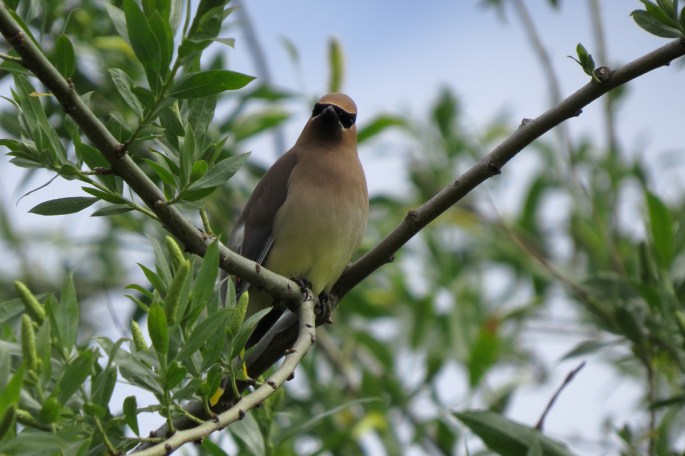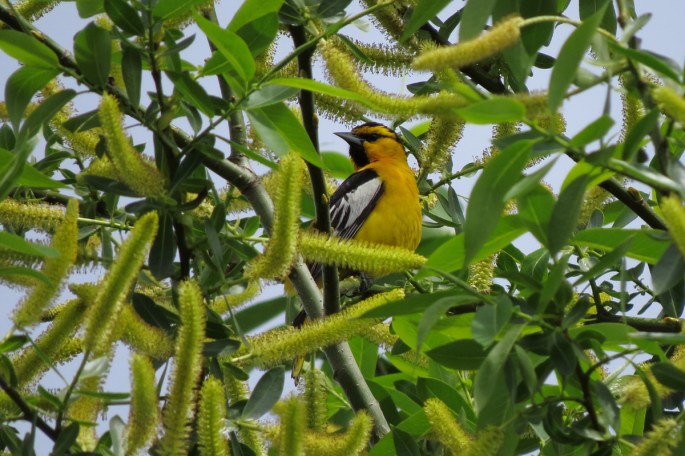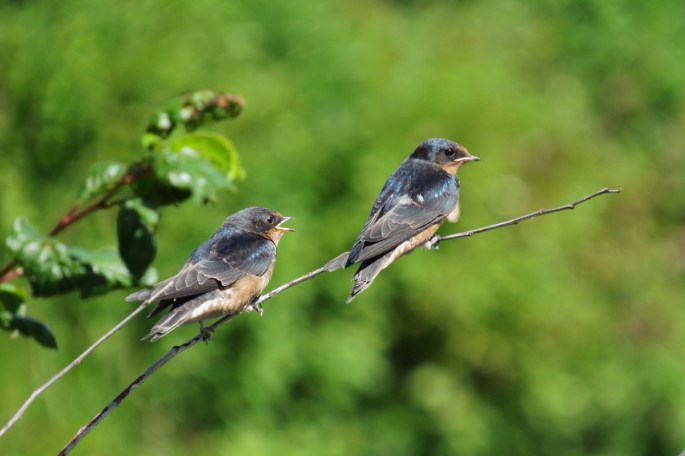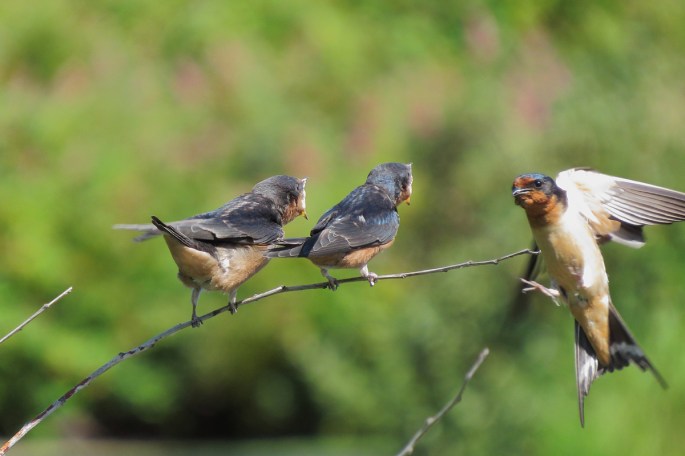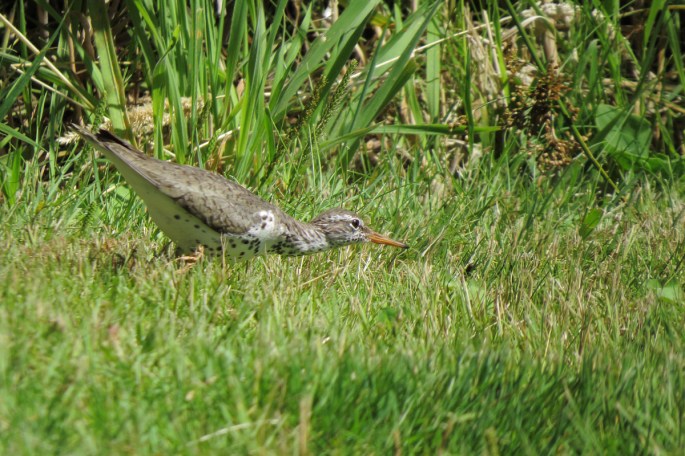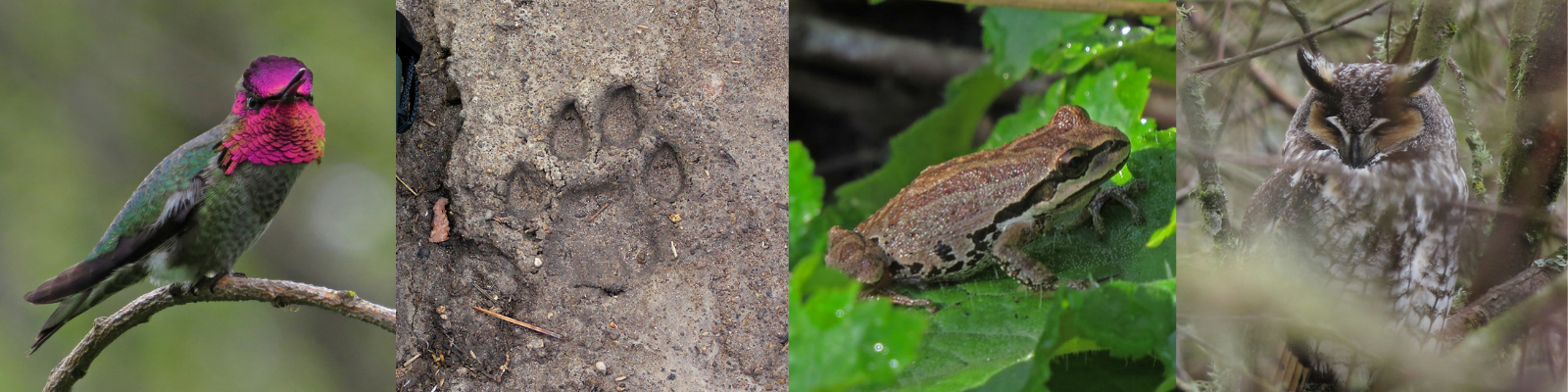
I am not sure why the hottest days of mid-summer are referred to as “dog days.” My dogs want nothing to do with the heat, and the hot weather puts a damper on bird activity as well. Wetlands tend to be a little more active than woodlands this time of year, so here are some recent images from area wetlands.
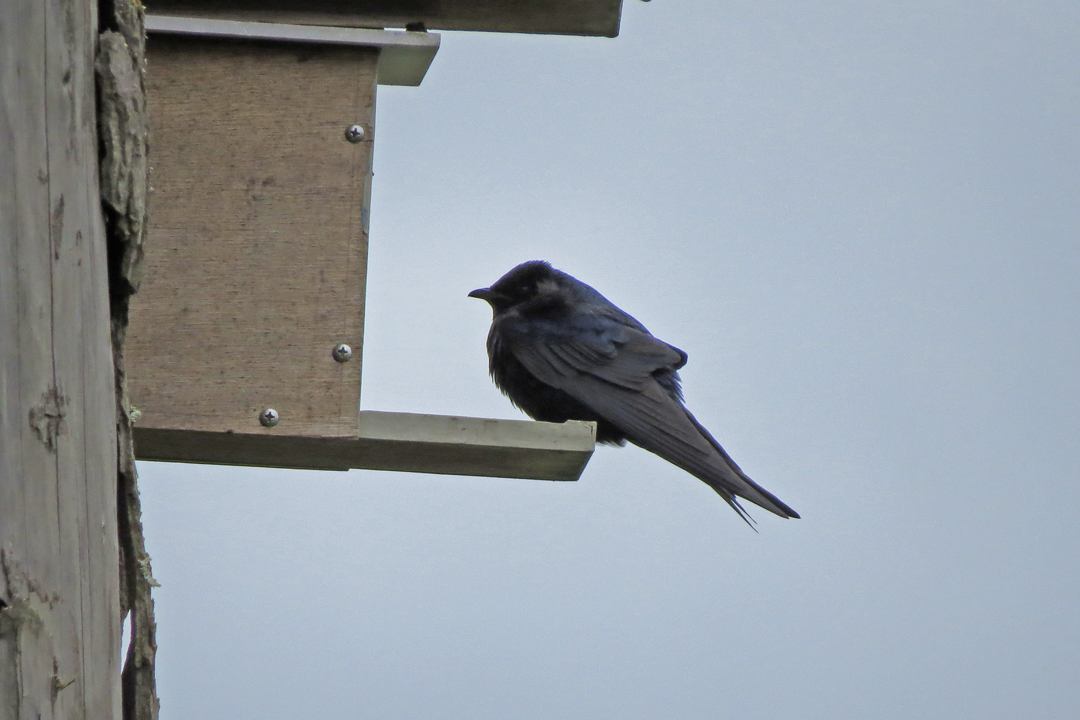
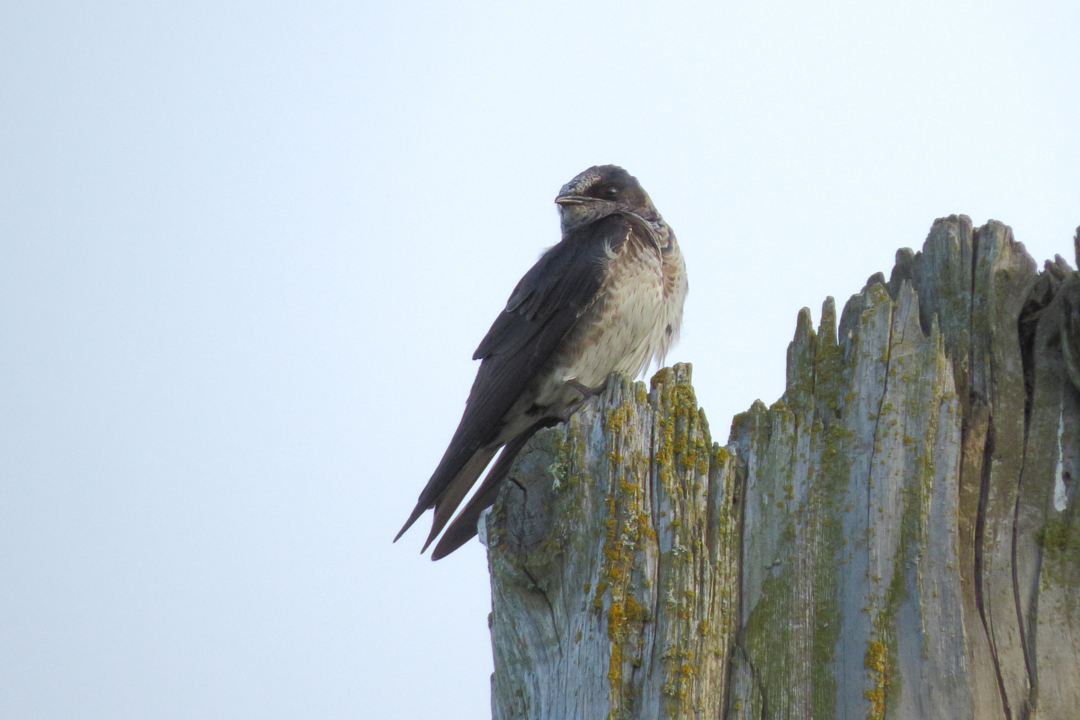 This Purple Martin is from the colony at Fernhill Wetlands. The recently installed nesting boxes there have been a great success.
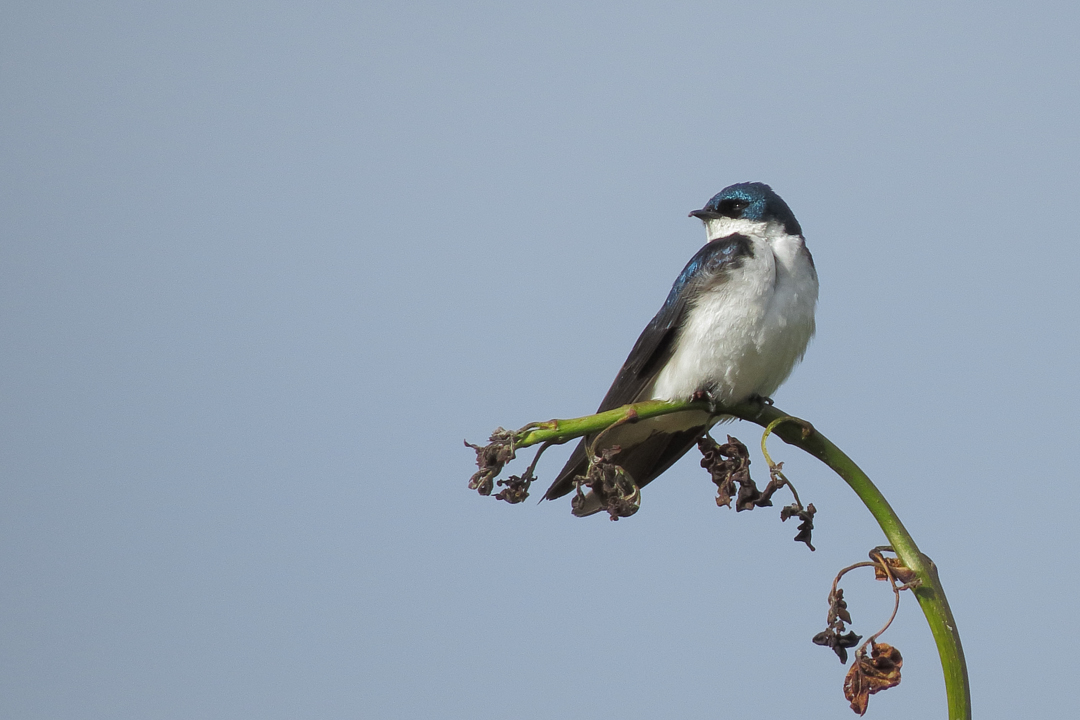 Tree Swallows are everywhere. It is nice to find one perched on a stick instead of on a nest box.
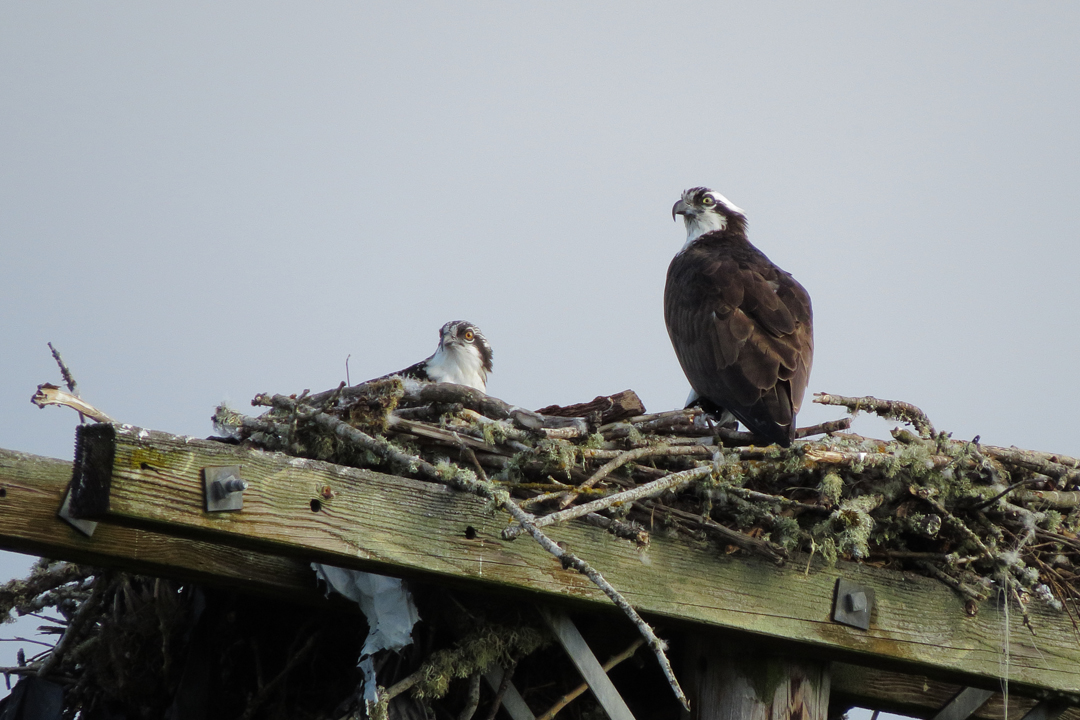 Ospreys on the nest at Jackson Bottom
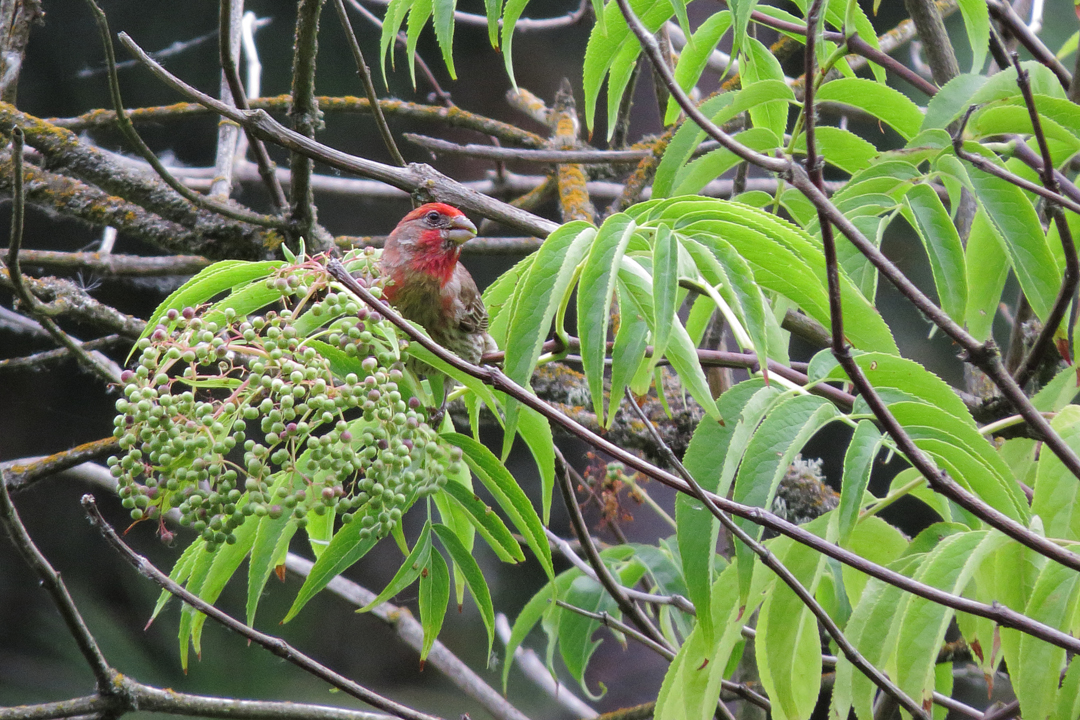 This House Finch was feeding on green Elderberries at Smith and Bybee Wetlands.
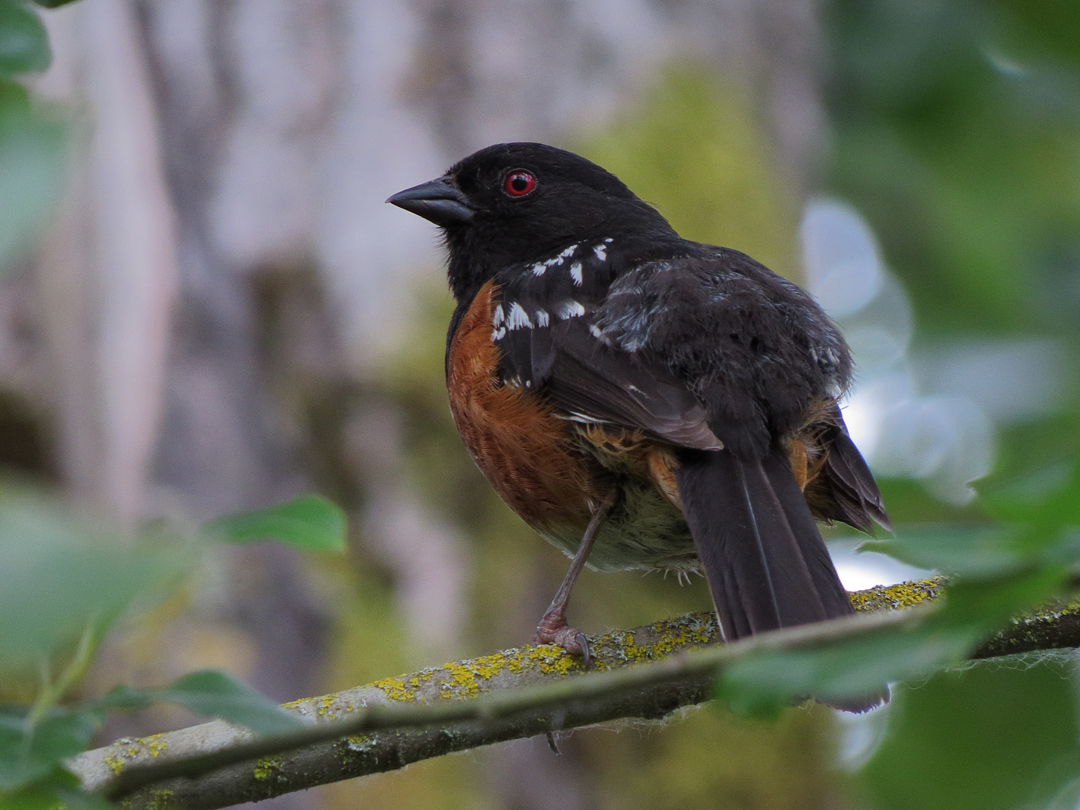 Spotted Towhee at Smith and Bybee
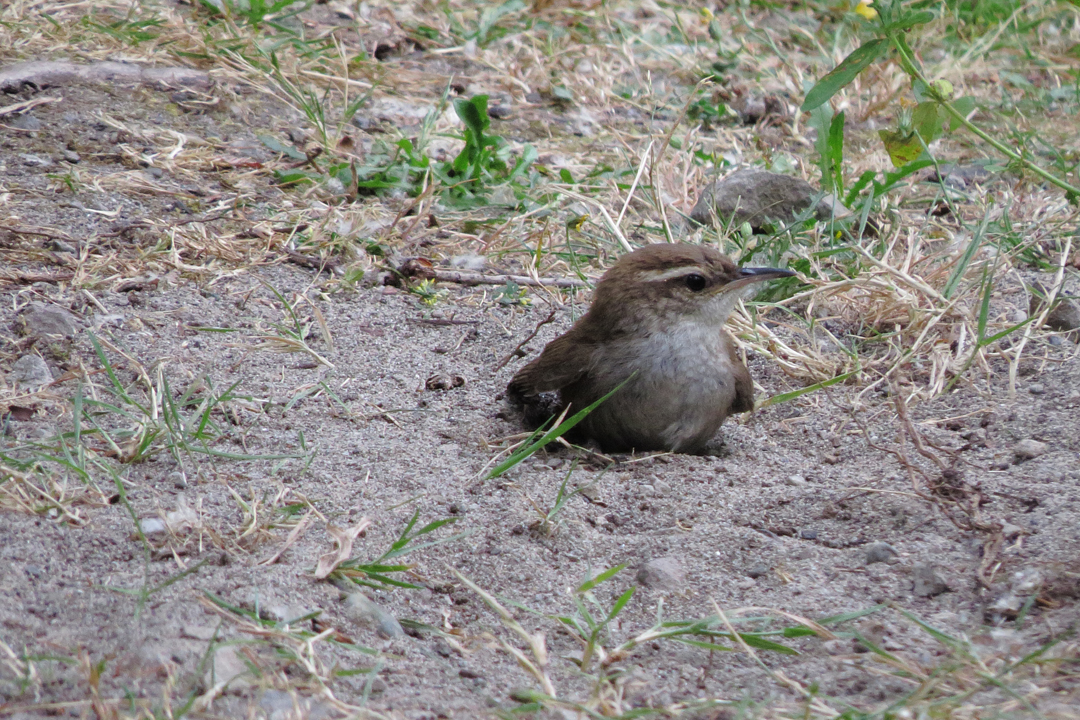 Bewick’s Wrens seem to be very fond of dust baths this time of year.
 It is baby crow season. These youngsters were exploring the shallow waters of a slough at Smith and Bybee.
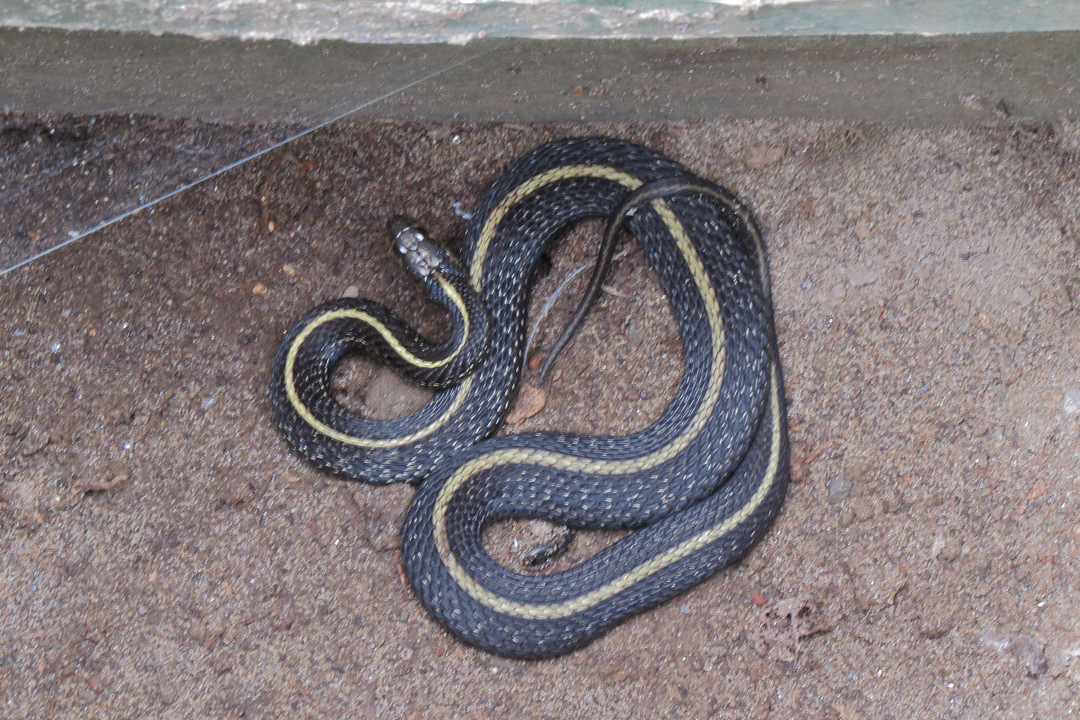 It is harder to find herps in the hot weather. This Northwestern Garter was stuck in a vault for a water shut-off valve. I lifted him out and sent him on his way.
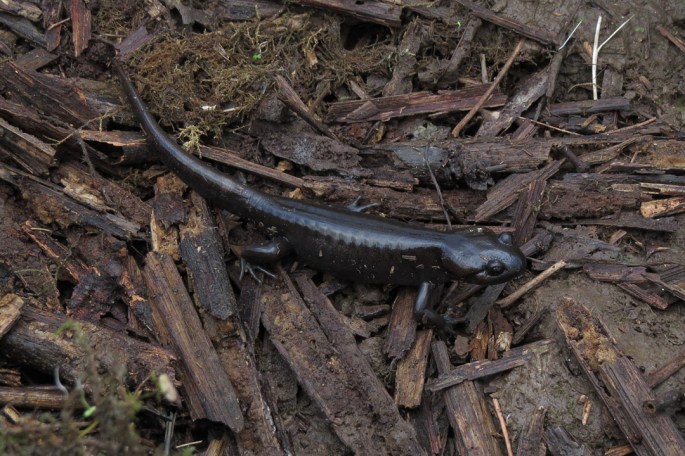
 This is a very small, very thin Long-toed Salamander (note the insect parts nearby for scale).
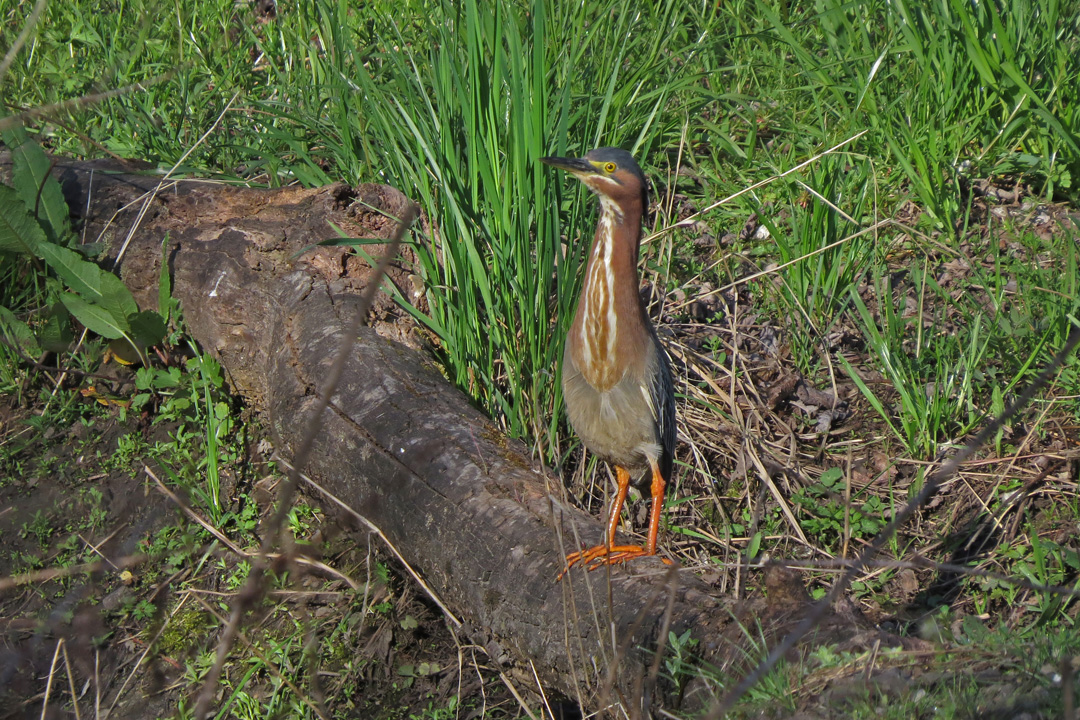
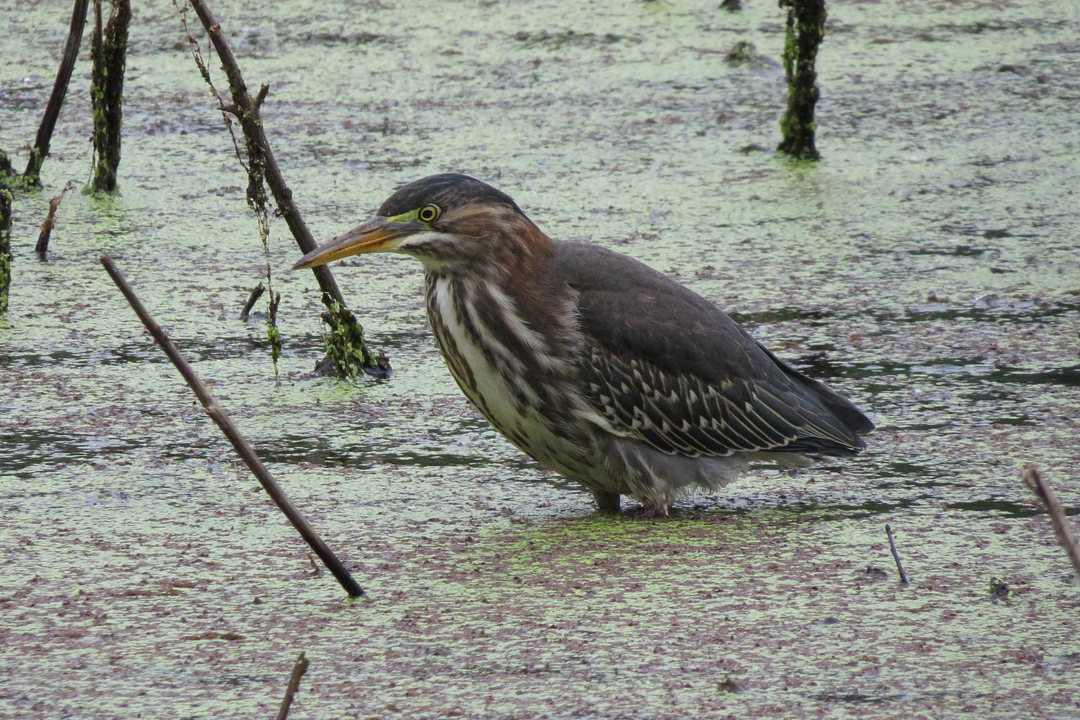 Smith and Bybee Wetlands is thick with Green Herons right now. There were at least a dozen in this little slough.
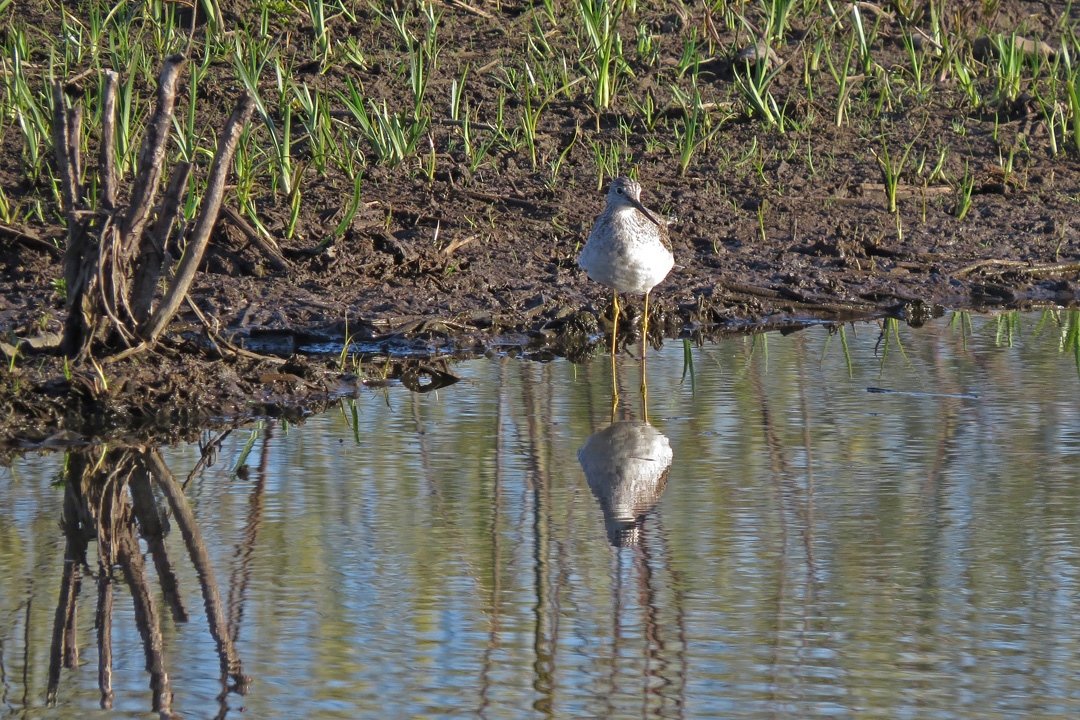
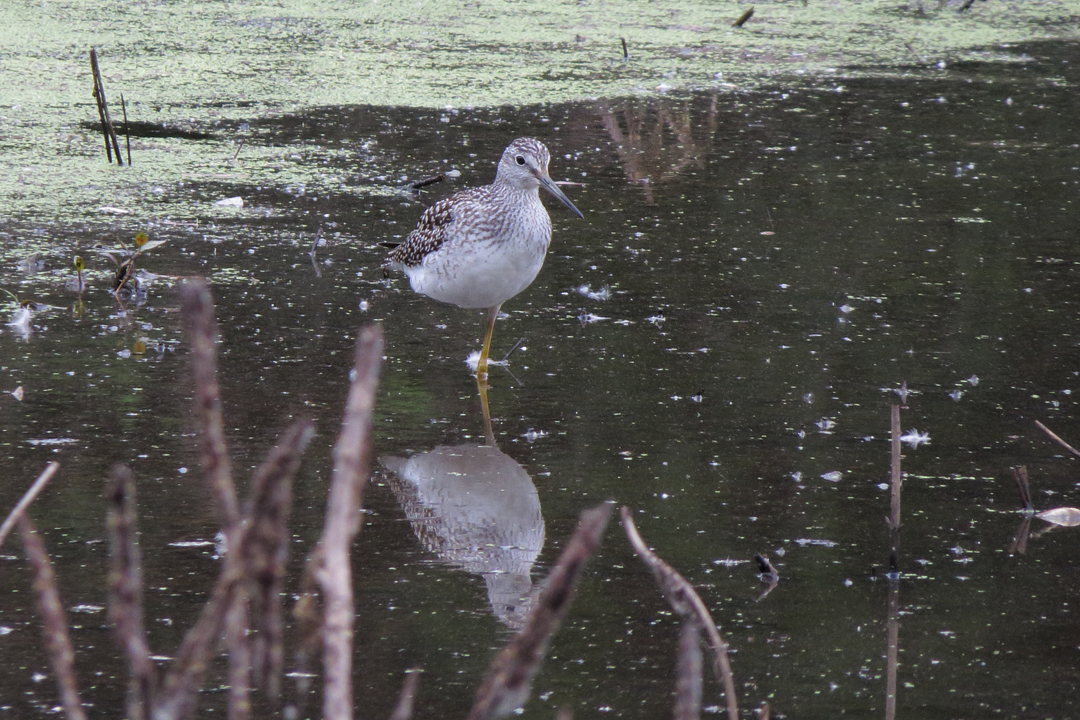 Shorebird migration is starting to pick up. Unfortunately, there is very little mudflat habitat in the Portland area right now. This Greater Yellowlegs was one of several sharing the slough with the Green Herons.
 Three Lesser Yellowlegs were also present at Smith and Bybee.
 On the home front, we were treated to three baby Western Screech-Owls playing in the back yard. Two of them perched on the rope holding the sunshade and tried to untie the knots. It was almost too dark to see, so this is the best image I was able to get (6400 ISO). Pretty adorable.
Happy Summer
















 Late winter is when I typically concentrate on sparrows. There isn’t much else going on this time of year, and the vegetation is worn down enough that visibility is pretty good. Rentenaar Road on Sauvie Island continues to be the best spot in the area for a variety of little brown birds. Some would say that the birding is too easy when you just throw down some seed and watch the birds swarm in, but I love the opportunity to see 10 sparrow species side-by-side at close range. Here is a Fox Sparrow.
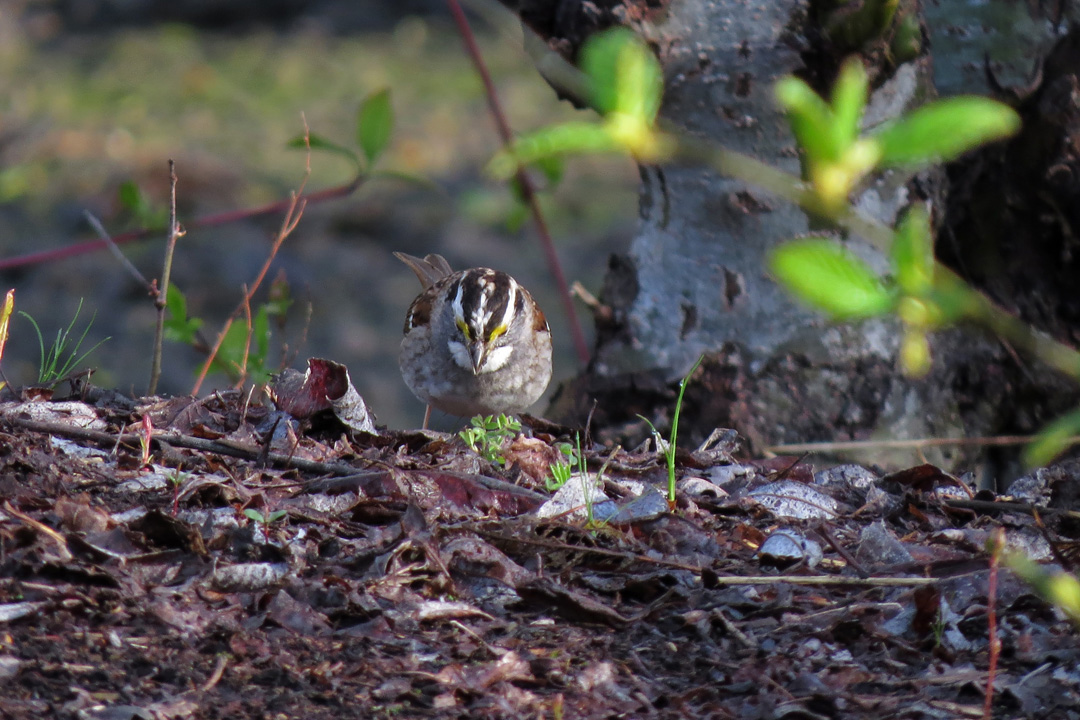
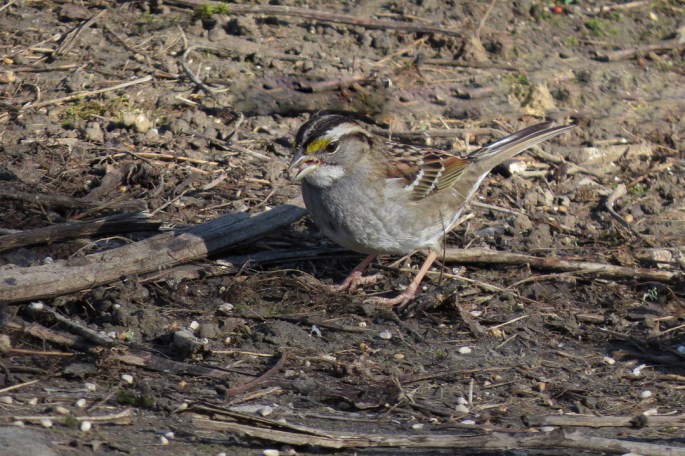 White-throated Sparrows were a rare treat around here 15 years ago, but they are an expected species now.
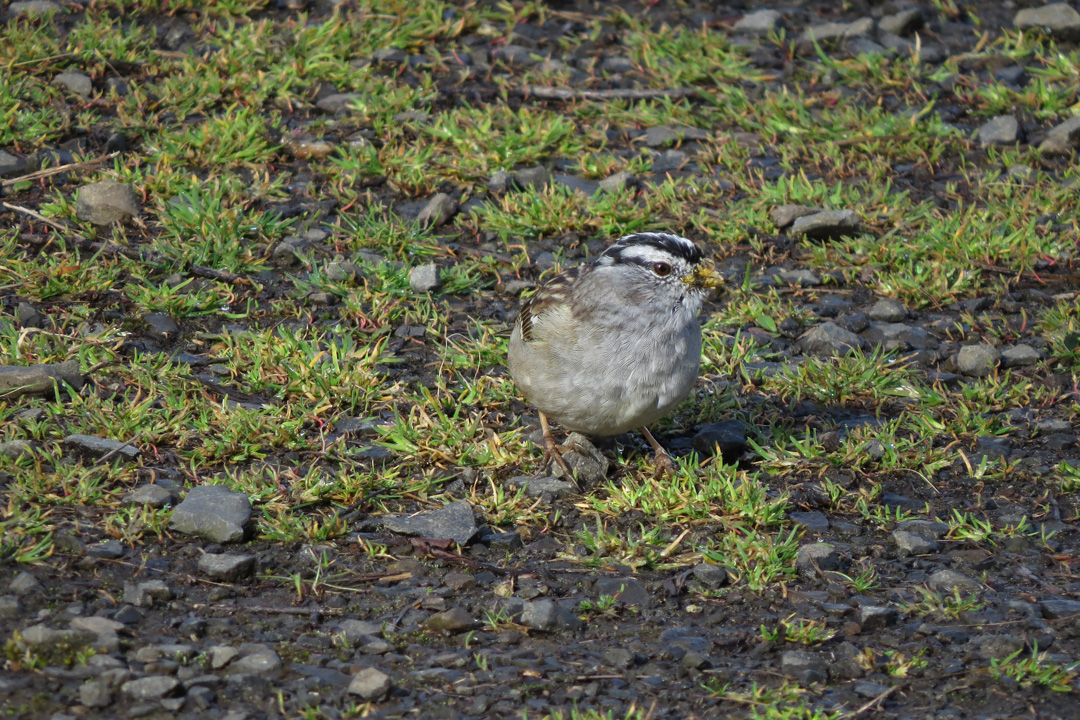
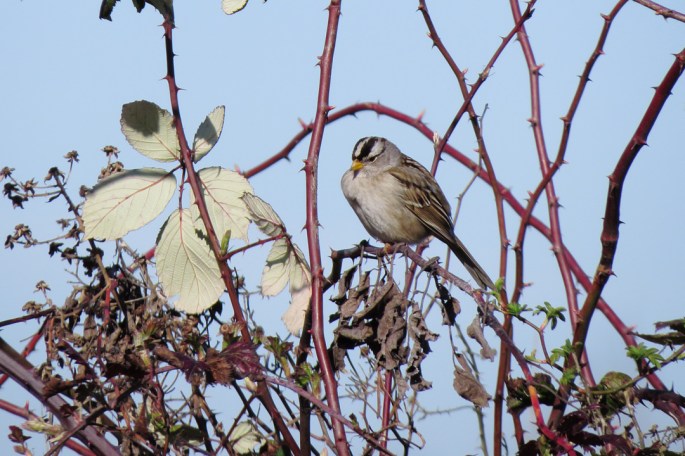 White-crowned Sparrow, always dapper
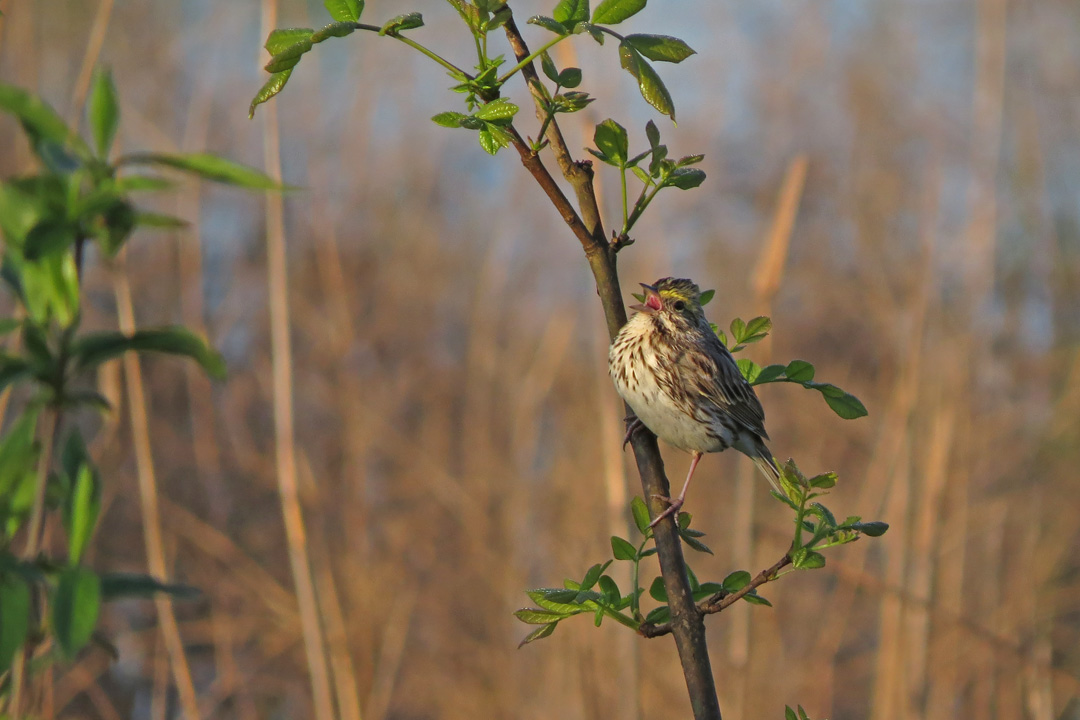
 There is usually a small flock of Savannah Sparrows along Rentenaar Road in winter. They tend to keep to themselves and don’t come in to feed at the chumming spots.
 The most noteworthy little brown bird in the area this winter has been the Siberian Accentor in Woodland, WA. I don’t keep a Washington list, but I did cross the river to see this bird. They are quite rare anywhere in North America, so this was probably my only chance to add this bird to my life list. It would have been much better for me if the bird had flown ten miles to the southwest and hung out in Oregon, but Asian vagrants don’t seem to care about my state list.
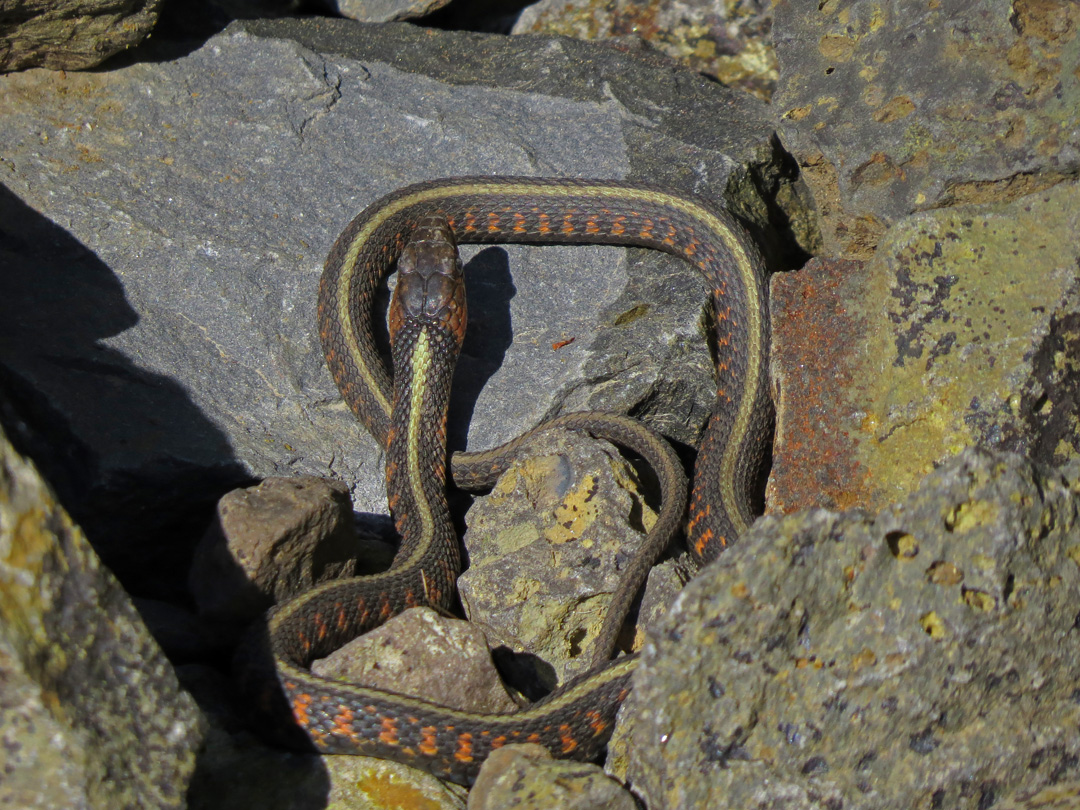
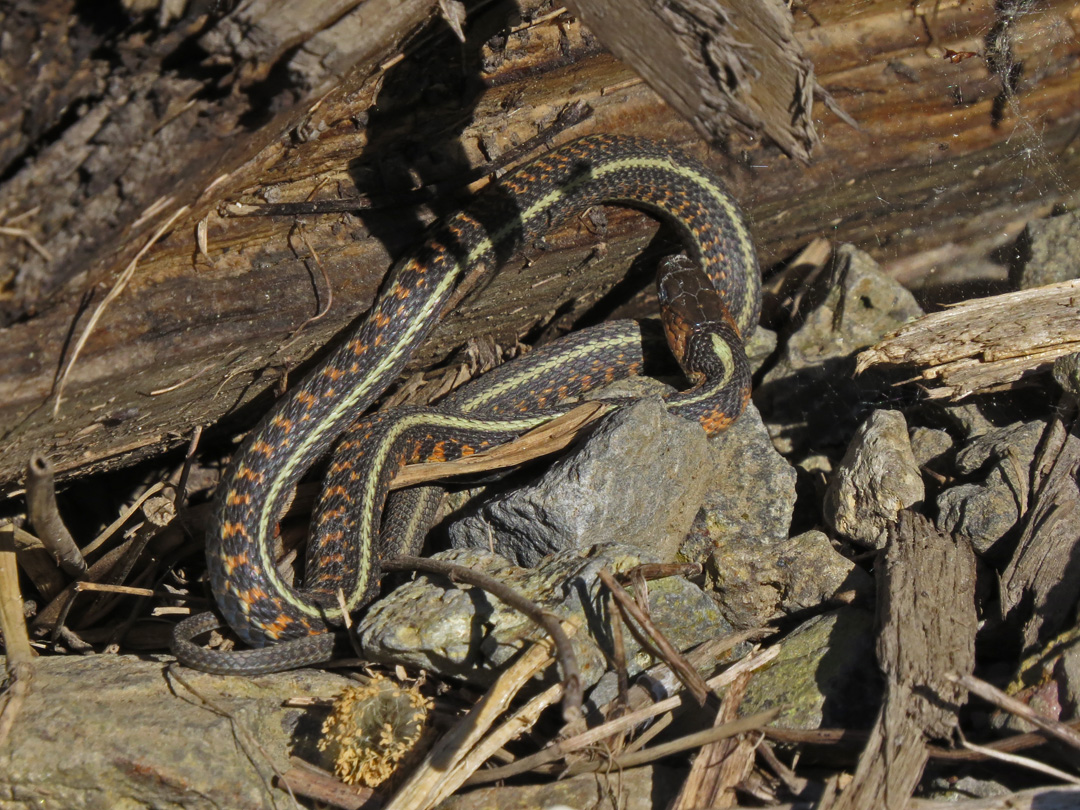
 This was my first snake of the season, found at Wapato Greenway State Park on Sauvie Island. I am not sure if this is a Common Garter or a Northwestern Garter. The body pattern most closely matches the local race of Common Garter, but they typically have red heads. Our local Northwestern Garters do not show red spots on the sides, but do have small dark heads. I did not apply one test that has often worked for me; If you pick them up and they bite you, they are Common Garters. If they don’t try to bite, they are Northwestern. I don’t know if other herpers have noticed this trend, but I have found it to be true of individual snakes of known identity.