A Day at the Beach

I took a client to the Necanicum Estuary (Birding Oregon p.122) last week. Shorebirds were surprisingly scarce on the mudflats. But the sand bars were covered with Caspian Terns. There was a huge concentration of these beautiful noisy birds resting, preening, diving for fish, and feeding their young. Here is a very small part of the flock.

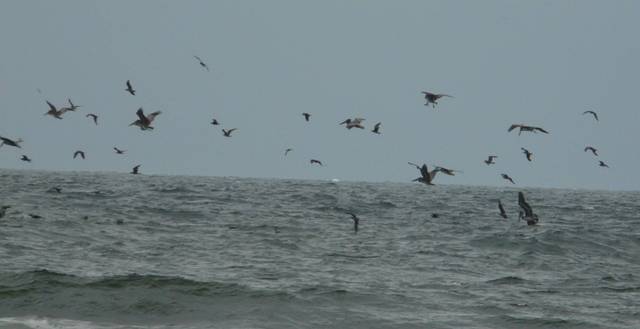
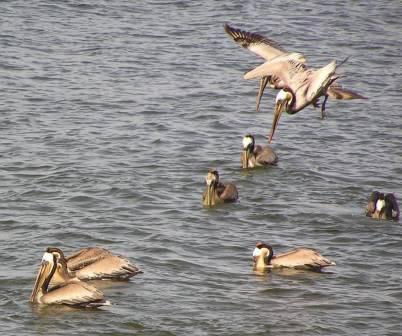
Offshore, Brown Pelicans were actively feeding. The smaller dark birds are Heerman’s Gulls, which make their living stealing fish from Brown Pelicans.

Finley NWR

I walked around much of William L. Finley NWR, one of the three in the Willamette Valley National Wildlife Refuge Complex. Of the three, Finley has the greatest diversity of habitats, as it lies right at the edge of the Coast Range.


At the heart of the refuge is Cabell Marsh, home to waterfowl, herons, and a small flock of American White Pelicans. Notable flyovers that day included White-tailed Kite and Red-shouldered Hawk.
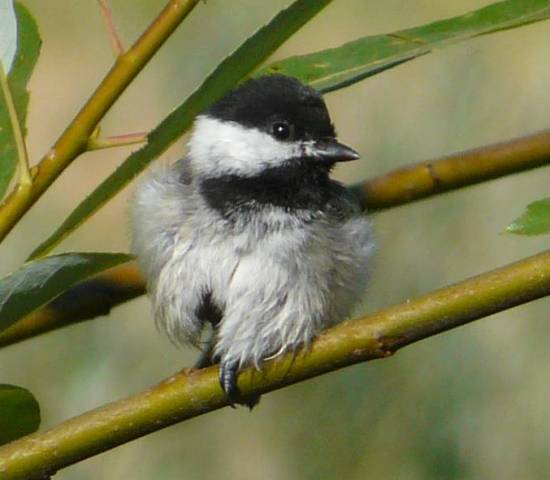

Black-capped Chickadees were everywhere, in the woods where you would expect them, and in the cattails which seemed a little odd.


Lazuli Buntings inhabit brushy areas in the oak savannahs.
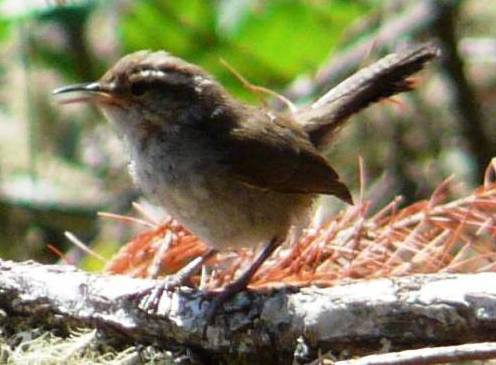

A family of Bewick’s Wrens were in a brush pile near the top of Pigeon Butte.


On the way home I stopped by Baskett Slough NWR, another refuge in the Willamette Valley complex. Most of the wetlands here were dry. South Slough Pond was actually being plowed. Cottonwood Pond still held water and was hosting these three American White Pelicans.


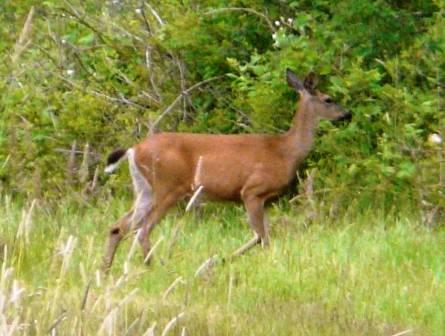
This Black-tailed Deer was panting as she walked across the dry grassland and crossed the road.
Oak Island

I am helping with a series of point counts on the Oak Island section of Sauvie Island (Birding Oregon p.56). The goal is to gather baseline information on bird species using this area before habitat restoration work begins. The habitat consists of large oaks, grassy fields, and scattered thickets along the shore of Sturgeon Lake.

The area has a nice variety of nesting species. Those who live in the wooded areas seldom display themselves in such a way that allows me to capture a photo. So here are some birds (and a couple of mammals) of the edge habitats.

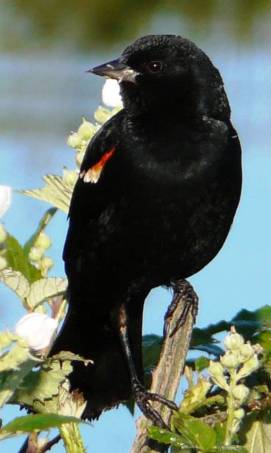
Red-winged Blackbird


Rufous Hummingbird


Black-headed Grosbeak


Townsend’s Chipmunk


Black-tailed Deer

Ankeny NWR

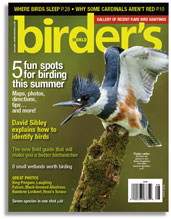
The August issue of Birder’s World Magazine features my brief site guide to Ankeny National Wildlife Refuge, just south of Salem. Like the other refuges in the Willamette Valley, Ankeny is a stronghold for wintering flocks of geese. But the refuge is good for other migrants and for nesting species, as well. The guide can be viewed at http://www.birdersworld.com/brd/default.aspx?c=a&id=1139 .

One of the better spots at Ankeny is the Rail Trail, a boardwalk through an ash swale. The woods are good for songbirds and owls. The boardwalk ends at a blind overlooking a marsh that hosts waterfowl and American Bitterns.

Fernhill Wetlands

I visited three of the Washington County wetlands today, but spent most of my time at Fernhill (Birding Oregon p.61). Nesting species were present in abundance, but overall species diversity was pretty low.


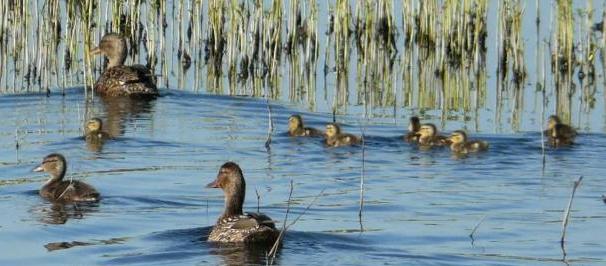
The duck at the top of this picture is a Gadwall, a rare breeder in western Oregon, with her newly hatched brood. The duck at the bottom is a Mallard with her larger duckling. We are quickly entering the “ugly brown duck” season, when all the waterfowl are molting and looking increasingly similar.


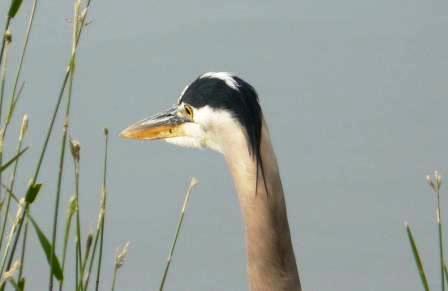
Great Blue Heron


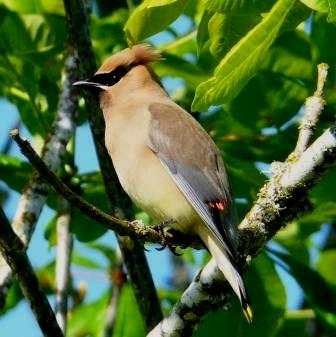
Cedar Waxwing


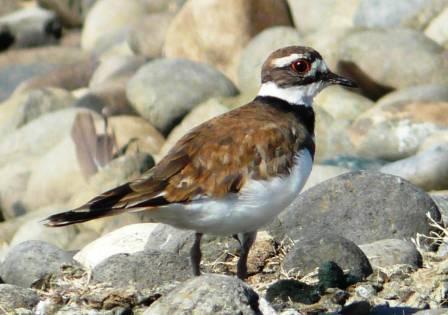
Killdeer were the only shorebirds present today. Migrant shorebirds should start appearing in about two weeks.

Sauvie Island

Migration has wound down by now, and the summer breeders are out in force. Here are a few birds I found on Sauvie Island this morning.


Savannah Sparrows can be heard at the edges of all the pastures.


Rufous Hummingbird


This Bald Eagle hovered over me, scolding the whole time. That behavior is more typical of Red-winged Blackbirds. I thought the eagles would be done nesting by now, but apparently they still have young in the nest.


Blue-winged Teal, uncommon in the Willamette Valley


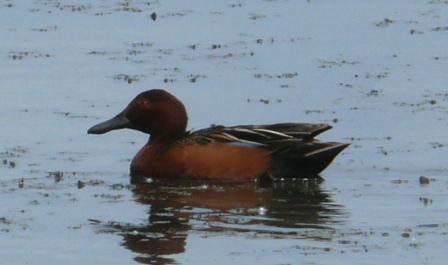
Cinnamon Teal, common, but always a delight


hungry Barn Swallow chicks


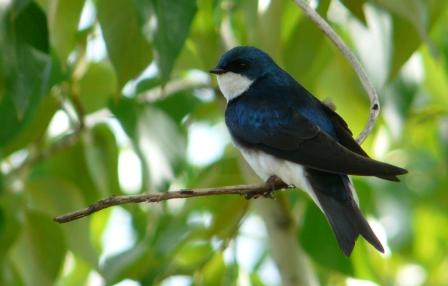
Tree Swallow

Bear Valley

While not nearly as scenic as Logan Valley, Bear Valley (Birding Oregon p. 33), west of Seneca, has its share of birds. It is the only site where birders have reported Upland Sandpipers this spring. My recent attempt to find these birds was unsuccessful, but the pastures hosted plenty of Long-billed Curlews, Willets, Wilson’s Phalaropes, and more Wislon’s Snipes than I have ever heard in one place.


As you would expect in a county that has only one stoplight, car traffic is pretty light. Traffic is delayed occasionally by herds of cattle crossing the highway.


Western Meadowlark


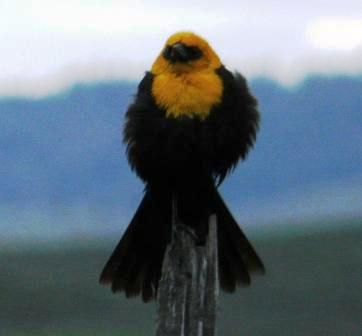
Yellow-headed Blackbird, showing off for the ladies


Mule Deer, displaying the enormous ears that give the species its name.

Logan Valley


On a recent trip to Grant County, I visited one of my favorite sites in Oregon. Located 17 miles west of Seneca, Logan Valley (Birding Oregon p.32) is a vast meadow. The area attracts the typical grassland species; Savannah Sparrow, Brewer’s and Red-winged Blackbirds, California Quail, and Western Meadowlarks.


Sandhill Cranes and Long-billed Curlews are two of the more dramatic birds found in the valley. This site used to host Upland Sandpipers, one of the rarest breeding birds in Oregon, but that species has not been reported from Logan Valley in recent years. One can always hope.

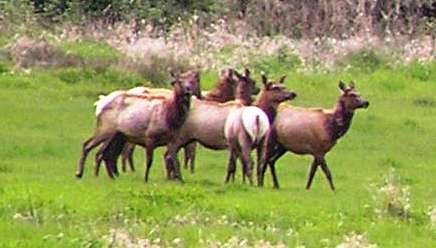
Aside from the birds, the main attraction of Logan Valley is watching the herds of grazing animals. Pronghorn, Mule Deer, and Elk can often been seen simultaneously.

John Day Fossil Beds


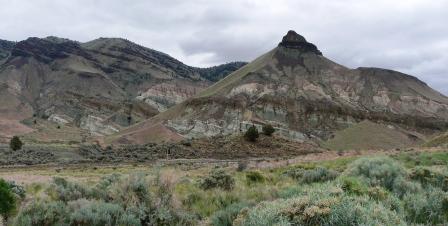
Marsha and I visited the Thomas Condon Paleontology Center, part of the John Day Fossil Beds National Monument in the Painted Hills (Birding Oregon p. 34). This site offers a great combination of beautiful scenery, a museum with excellent fossil specimens, and, of course, a few birds of the sage steppe and rimrock habitats.


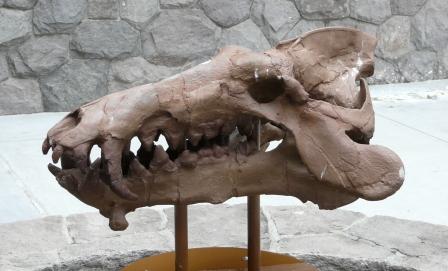
This skull replica graces the courtyard in front of the museum. Just above, several Cliff Swallows were building their mud nests.

The sage around the center held several Western Meadowlarks and Western Kingbirds

A pair of Say’s Phoebes had a nest in a shed by the monument headquarters, just down the road from the museum.

These birds would perch on a set of Mule Deer antlers mounted above the door before entering the shed to attend the nest. The fact that this bird is carrying food indicates that the eggs have hatched.

Brown Pelicans

On a recent visit to the Charleston boat basin (Birding Oregon, p. 142) I enjoyed watching a flock of Brown Pelicans feeding close to shore.

After plunging into the water, the birds would swim with their bills submerged, slowly letting the water out as they strained out whatever fish they had captured in the dive.

Later in the summer, the Brown Pelicans will be accompanied by Heerman’s Gulls. These beautiful dark gulls make their living stealing fish from Brown Pelicans. The Heerman’s are currently on their nesting grounds in California, so for now, the pelicans can eat in peace.