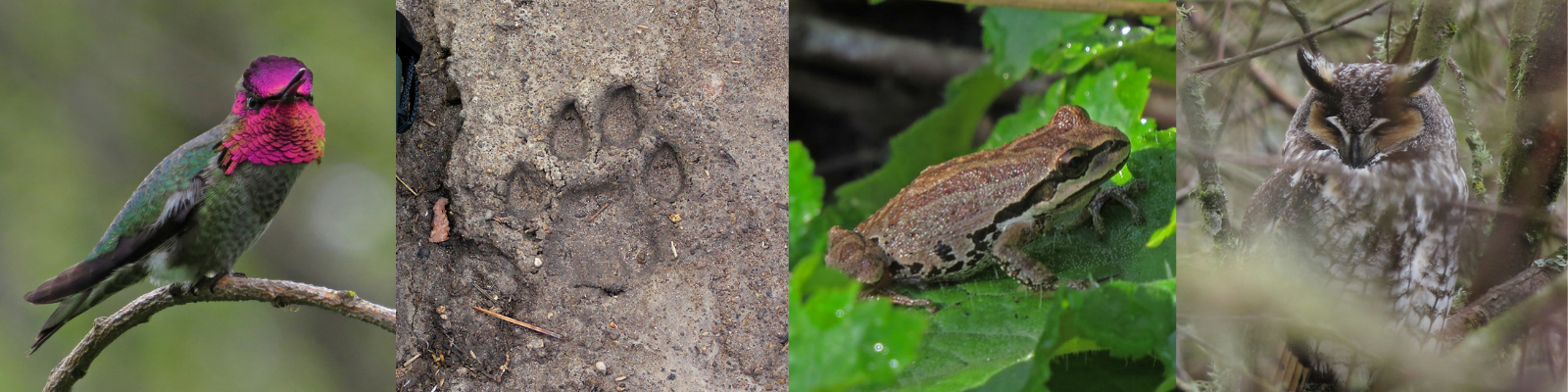
Autumn migration


It has been a good migration so far in the Portland area, with nice weather and good numbers of songbirds being reported. Swainson’s Thrushes always come through our property in September to eat dogwood berries. At night, you can hear the calls of these birds as they fly overhead.


Sunrise at Pittock Mansion (Birding Oregon p. 70) This tree, a large birch, was a warbler magnet this year, attracting all the common species plus two Northern Parulas. I missed the parulas by one day.


Orange-crowned Warbler, Pittock Mansion


Birds are not the only autumn migrants. Lots of dragonflies are on the move, as well. I don’t know the dragonflies, so if you can ID this one, please leave a comment.

Pelagic Trip 9/11/2010

I took a pelagic birding trip out of Newport, OR, on September 11. This was a trip offered by Greg Gilson of The Bird Guide, Inc. His trips are always well organized and I highly recommend them.


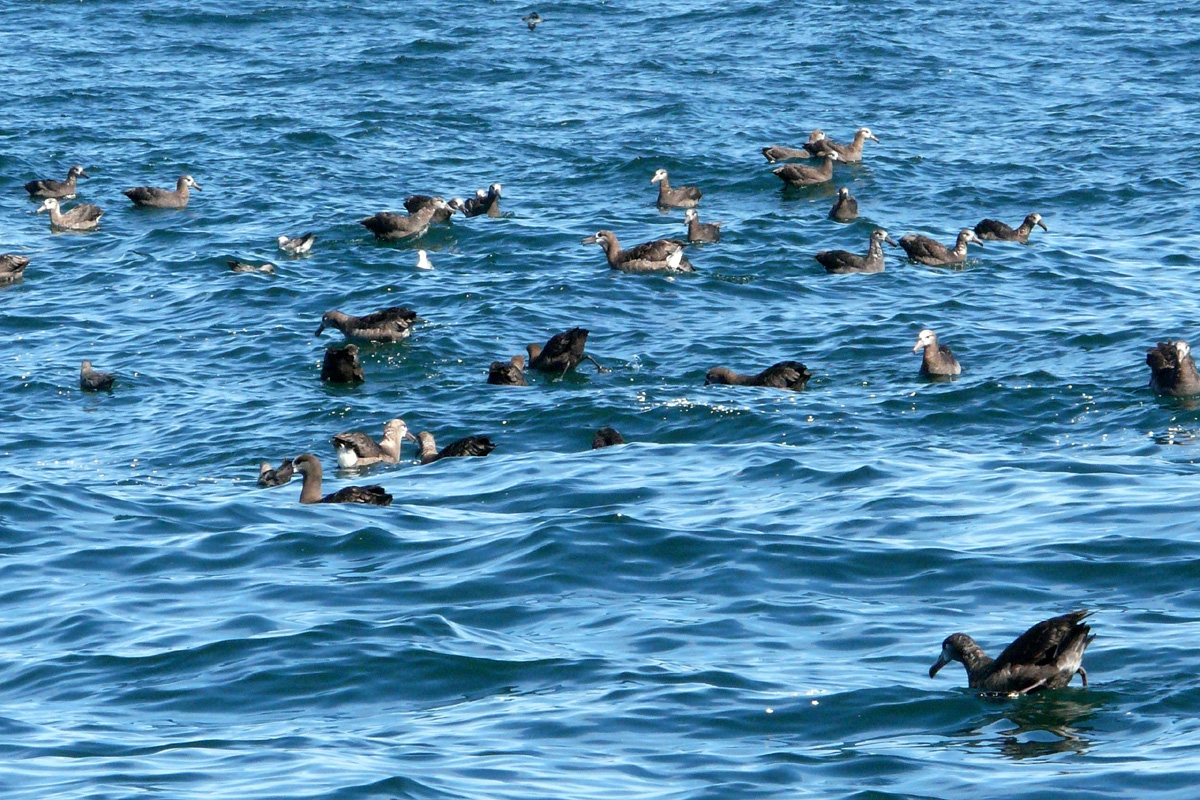
Black-footed Albatrosses are common off the Oregon Coast, and are readily attracted to chumming.


This is a small portion of the flock of Black-footed Albatrosses attracted to our boat. The older birds have white on their heads, while younger birds are darker overall. The smaller birds near the upper left corner are Northern Fulmars.


Pink-footed Shearwaters were the most numerous shearwater species on this trip, with well over 2000 birds seen. Despite their abundance, they seldom got close enough or still enough for a chance at a decent photo.


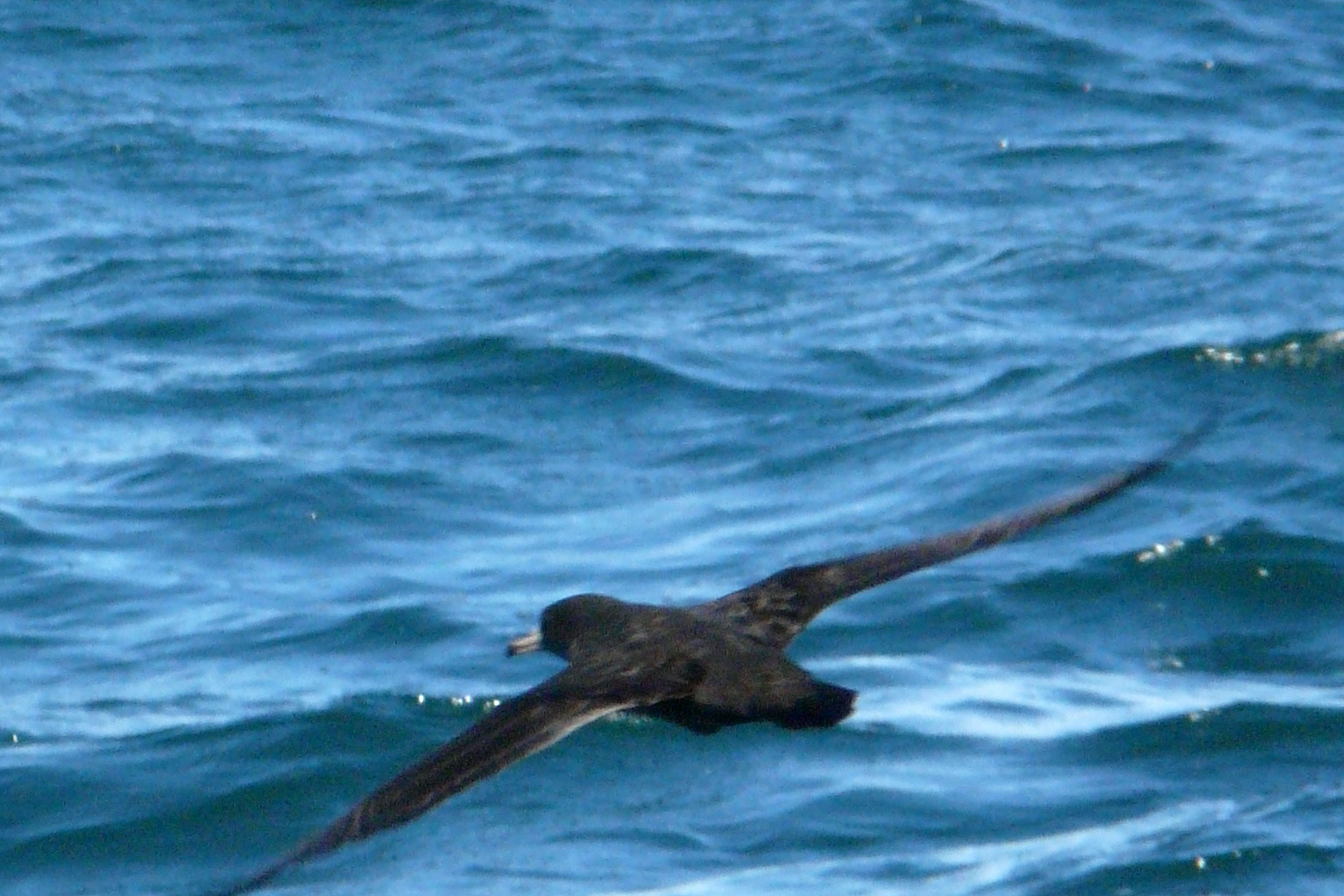
The rarest bird of the trip was this Flesh-footed Shearwater, which I almost captured in the frame of this photo.


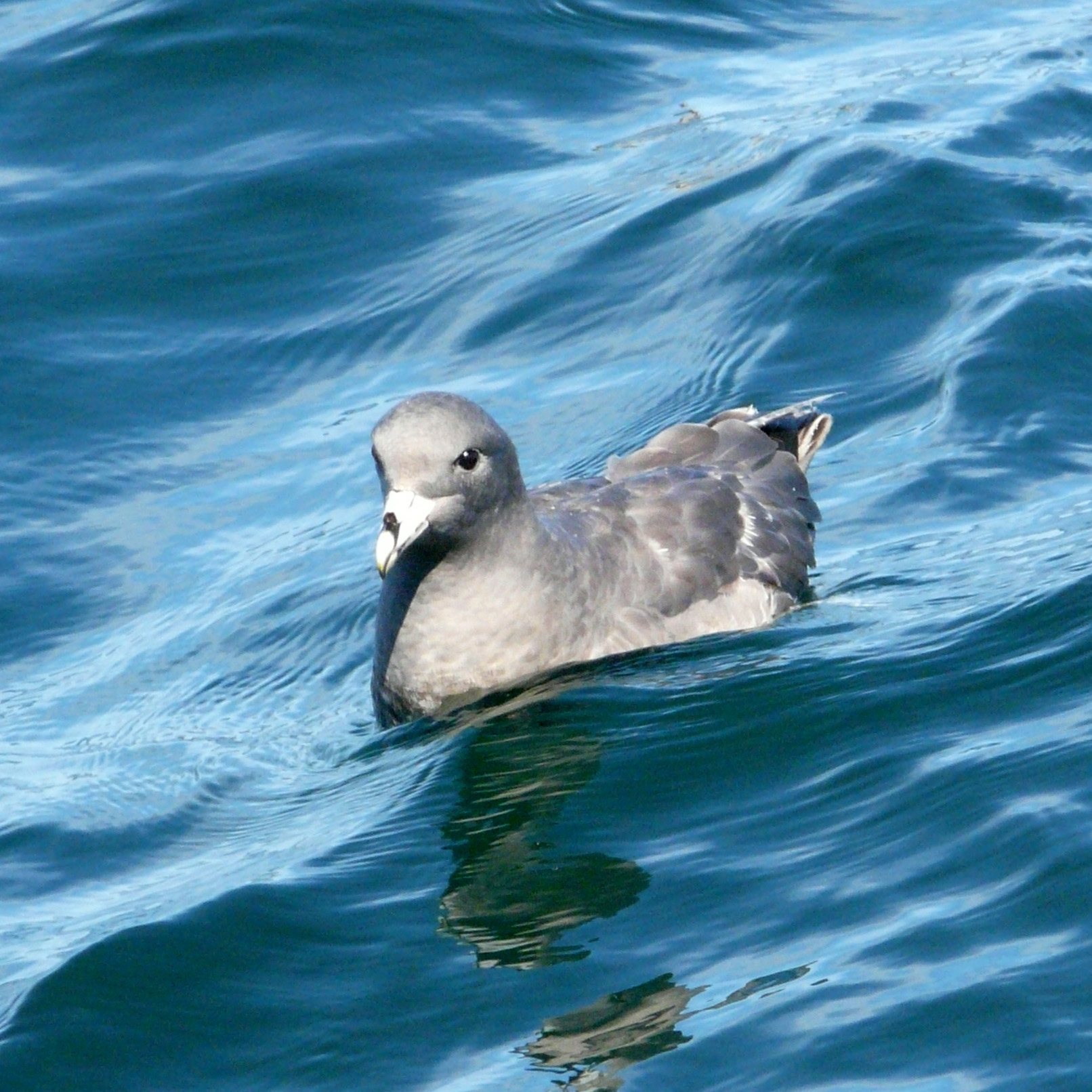
Northern Fulmars will often come very close to the boat. Notice the tube on top of the bird’s bill.


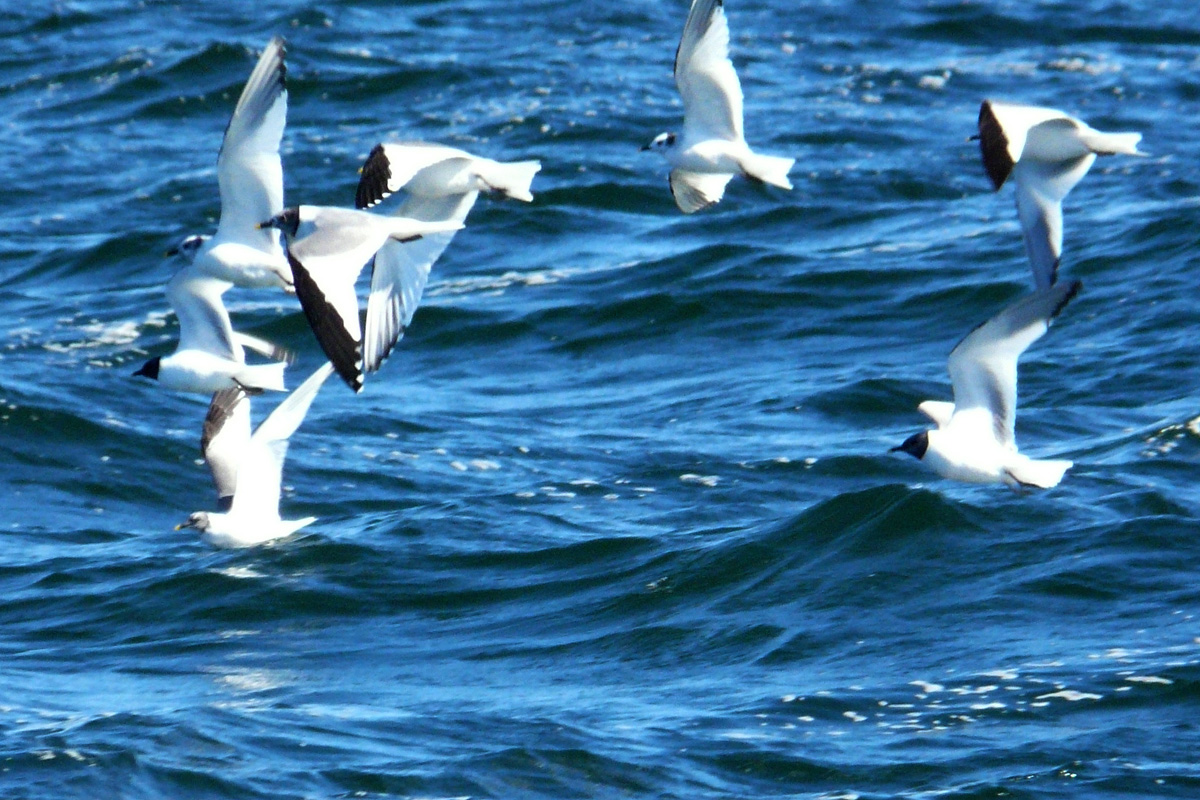
Sabine’s Gulls are easily recognized by their striking wing pattern.


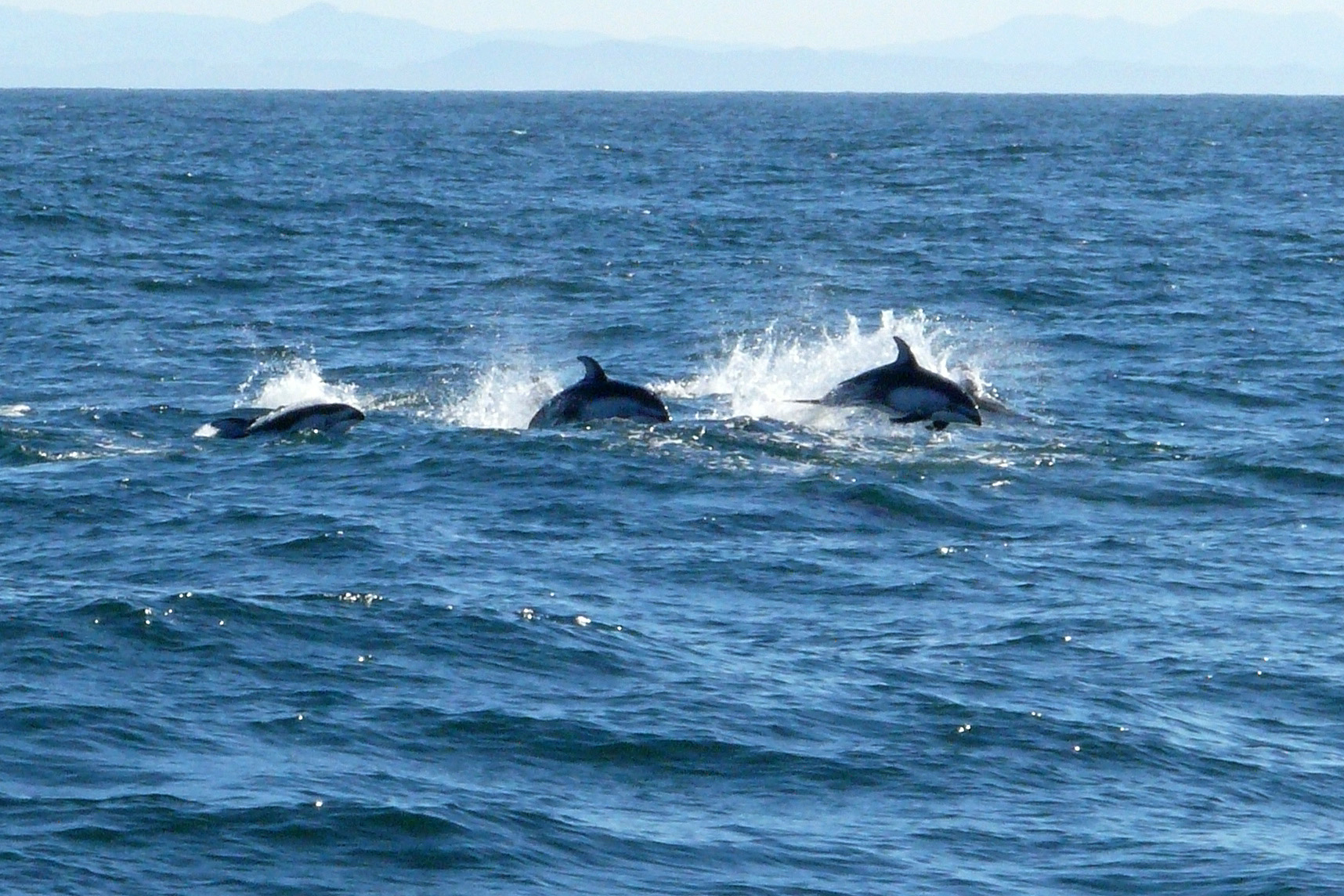
Pacific White-sided Dolphins surfed the boat’s wake.

Bayocean Spit

It had been a while since I had walked all the way around Bayocean Spit (Birding Oregon p. 128). This is a great walk which takes about four hours, assuming you stop and look at birds along the way.

This morning was one of those misty gray days when the sky blends into the ocean. The fog and drizzle make photography rather difficult, giving everything a blurry grainy look. The dark line on the horizon is the south jetty. The crane in the distance is working on the end of the north jetty.

Shorebirds were few and far between this day. This is an adult Black-bellied Plover.

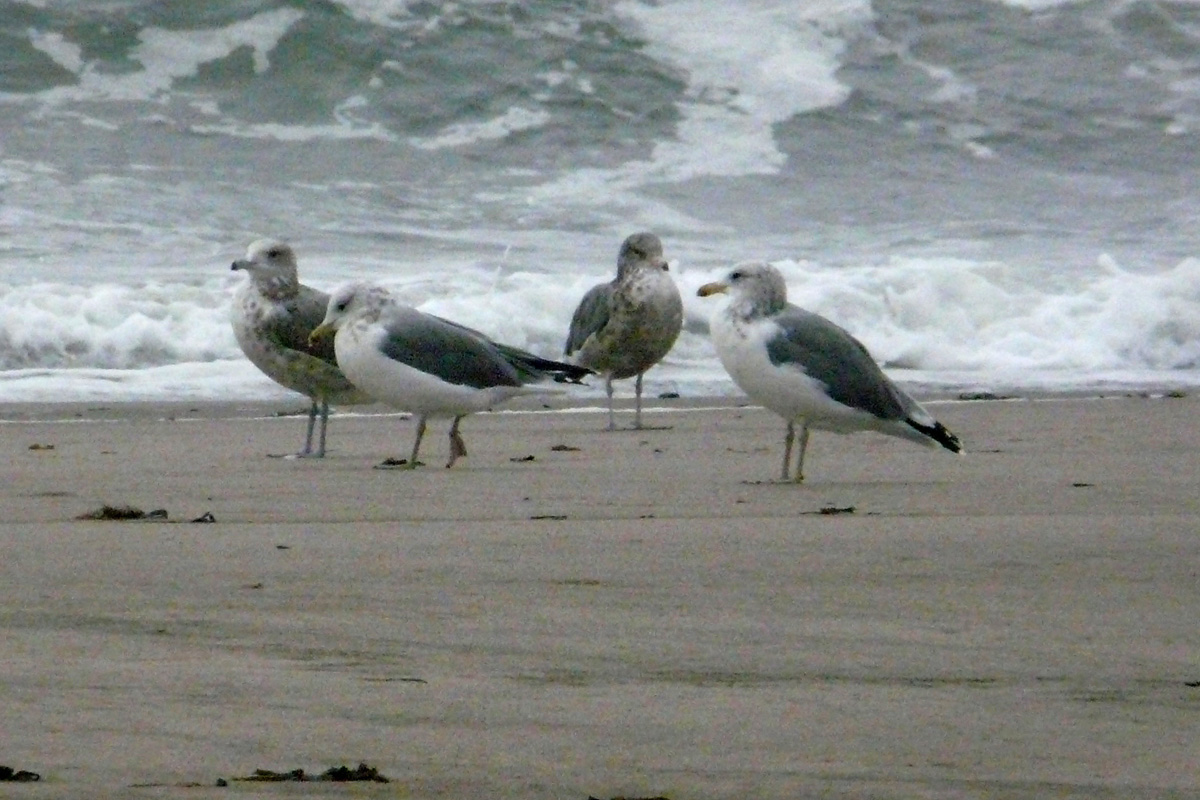
Western Gulls


California Gulls


The rocks of the jetty are home to many Ochre Sea Stars.


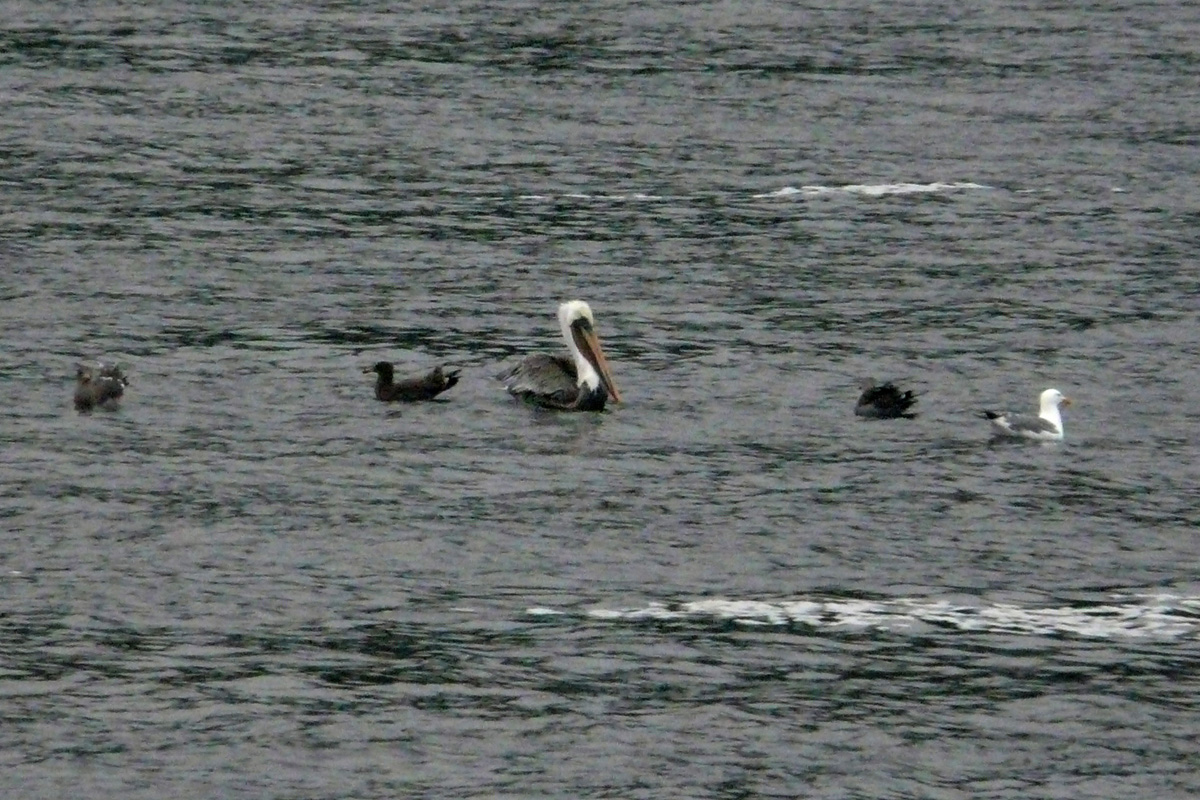
Brown Pelicans are constantly being harassed by other birds, especially Heerman’s Gulls, which make their living stealing fish from the pelicans. In this photo we see a young Western Gull, three Heerman’s Gulls, a Glaucous-winged Gull, and a Pelagic Cormorant, all hoping the Brown Pelican drops his fish. Notice the Heerman’s Gull hanging on to the pelican’s feet.


Brown Pelican with his posse.


The woods and brushy areas on Bayocean Spit are home to Wrentits. These birds tend to remain hidden in heavy cover, but their loud and unique vocalizations are heard throughout the year. This bird sat still just long enough for my point-and-shoot camera to get off one shot at 1/13th of a second.

Random Songbirds

Here are a few images from Fernhill Wetlands (Birding Oregon p. 61) on July 30, 2010. Songbirds push the limits of a point-and-shoot camera, but occasionally a bird will be close enough and stationary enough to allow a decent portrait.


Cedar Waxwings were flycatching from the brushy edges of the ponds.


This Song Sparrow was going through an extensive molt. He lacked most of his tail, and his body plumage is very disheveled.


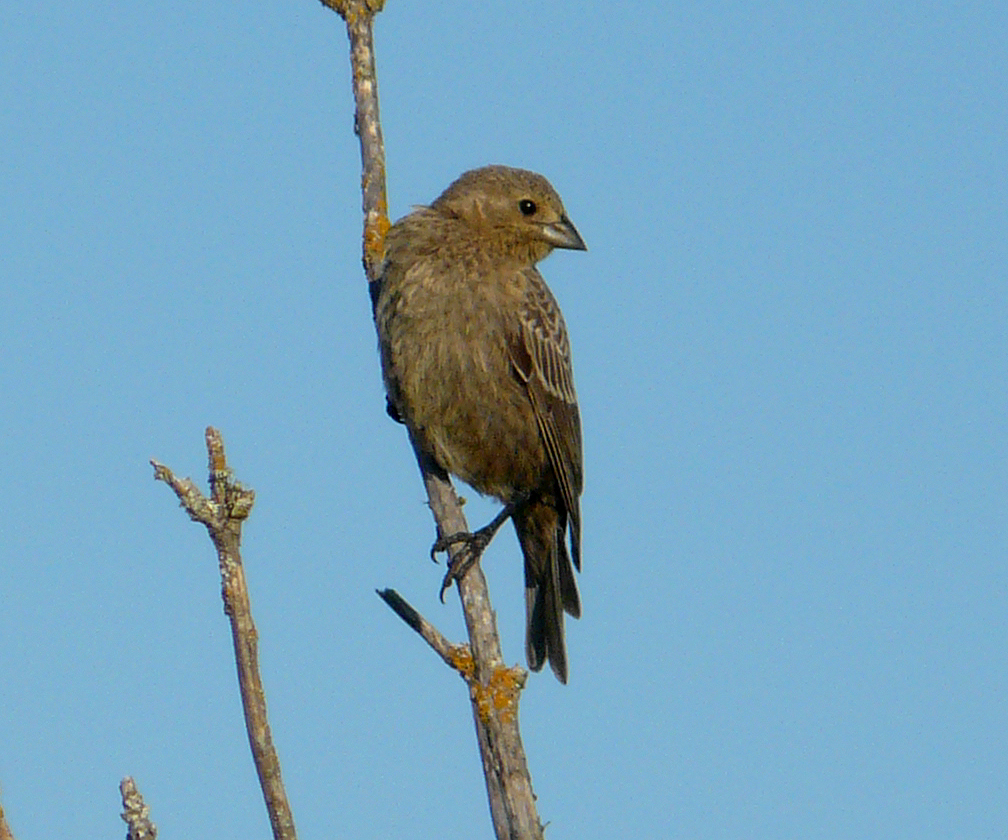
Brown-headed Cowbird. The scaly pattern on the scapulars and wing coverts identifies this bird as a juvenile.

Timberline Lodge


Timberline Lodge (Birding Oregon p. 74) is a great place to for some high-elevation birding in the Cascades. A good paved road leads right up to the treeline, and you can access the Pacific Crest Trail just uphill from the lodge. The parking lot is often full of tourists and skiers, even in late summer. But if you are willing to walk for a while, you can enjoy solitude and stunning scenery.


Cassin’s Finch


Brewer’s Blackbirds are common residents of parking lots in the Portland area, but it is nice to see them in a more natural setting here.


This female Brewer’s Blackbird is one of the small percentage of the population with pale eyes.


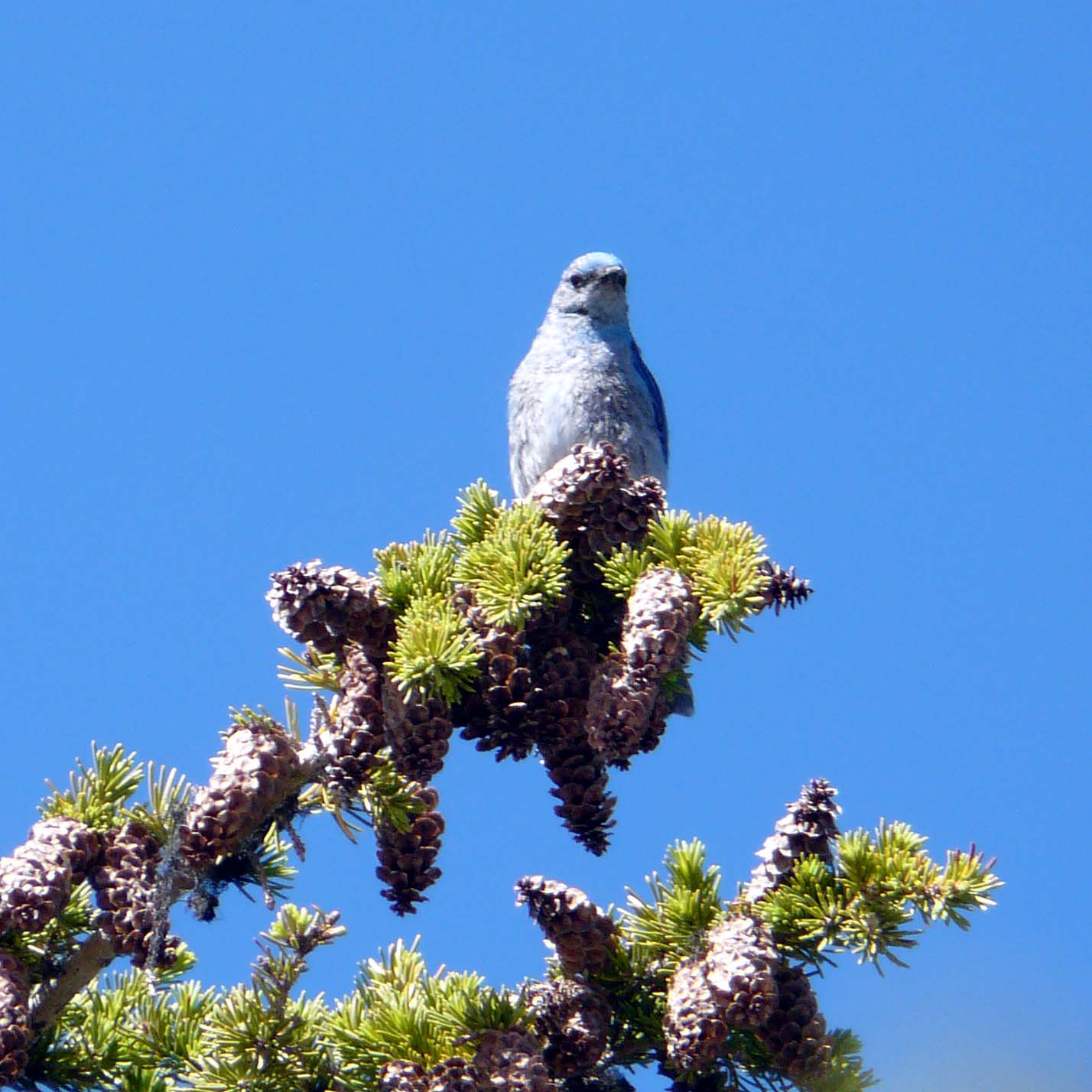
Mountain Bluebird, male


Mountain Bluebird, female


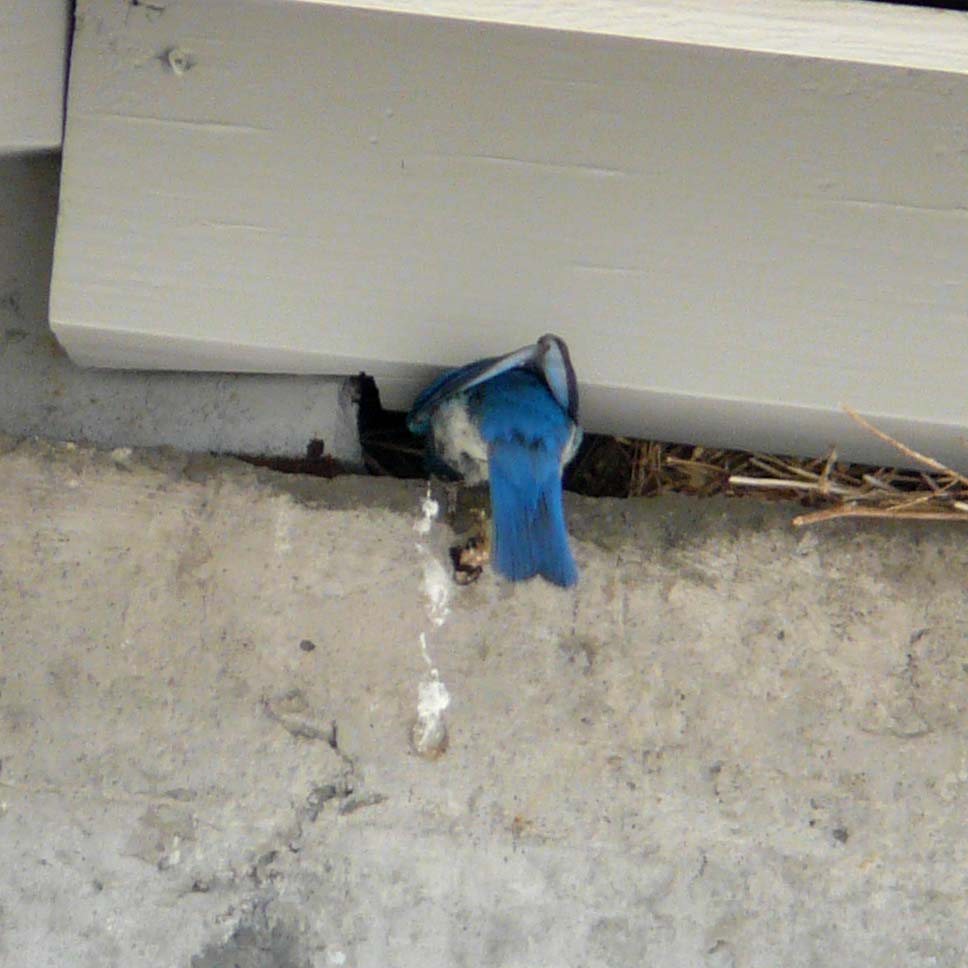
This pair of Mountain Bluebirds had built a nest in a gap under the eave of a small building above the lodge.


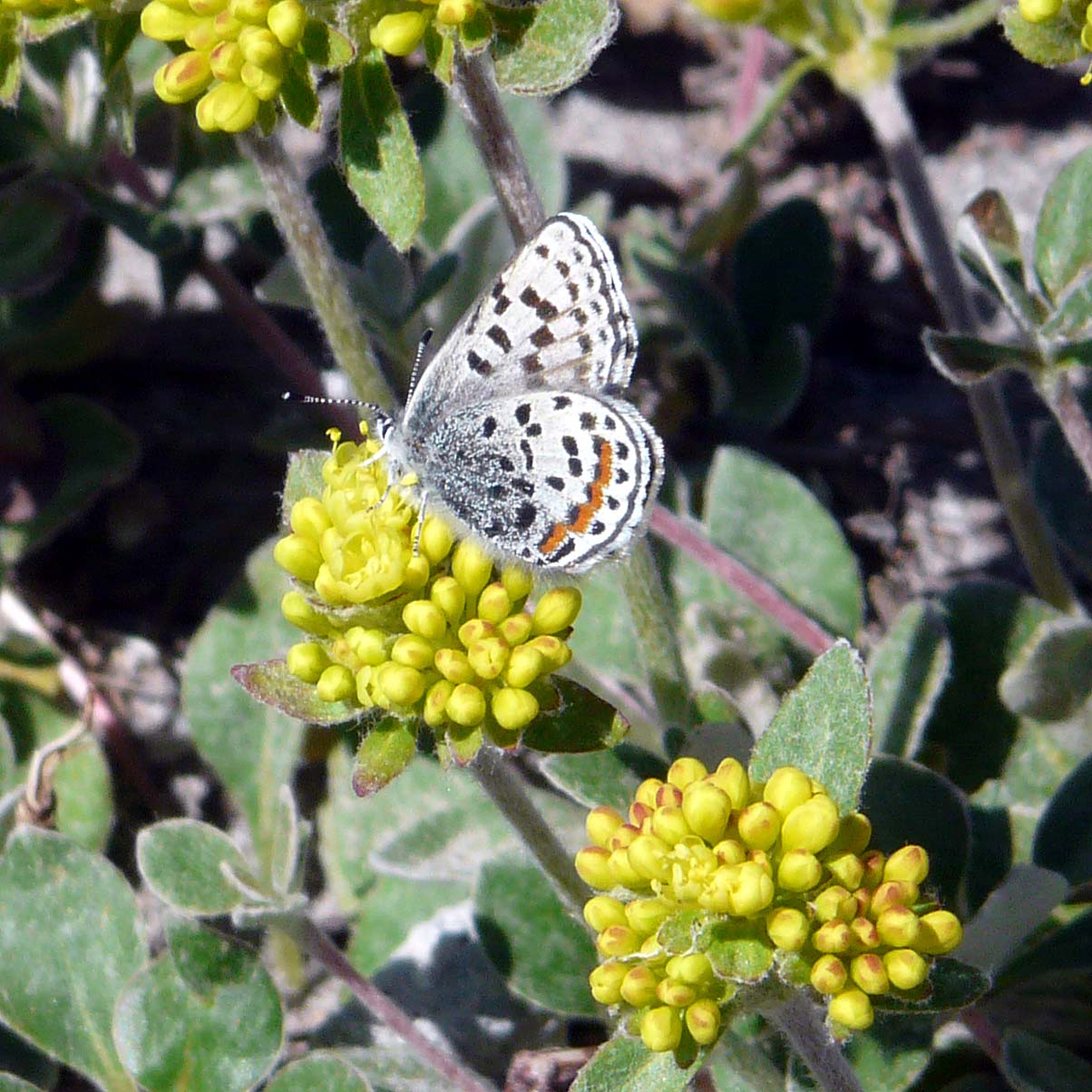
Lots of these little butterflies were feeding on the scattered wildflowers. My best guess is Acmon Blue.


The highlight of my long oxygen-deprived hike uphill from Timberline Lodge was this Yellow-bellied Marmot. He looks very regal in this pose.

Mt. Hood National Forest

I spent a day exploring part of Mt. Hood National Forest along Forest Service Road 58 (Birding Oregon p. 75). A hot day in July is not the best time to find lots of birds, since singing has greatly diminished and there is so much great habitat for birds to hide in, but the scenery and solitude are well worth the trip.


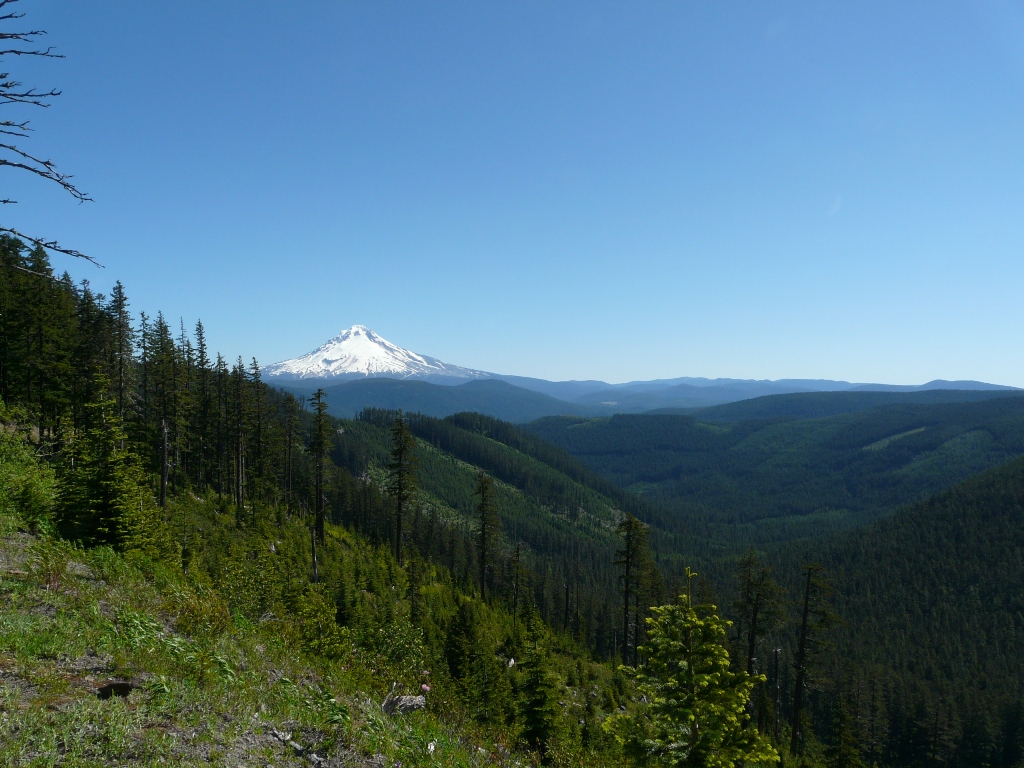
Here is the view from the High Rock area, showing the peak of Mt. Hood and the forest in various stages of regrowth.


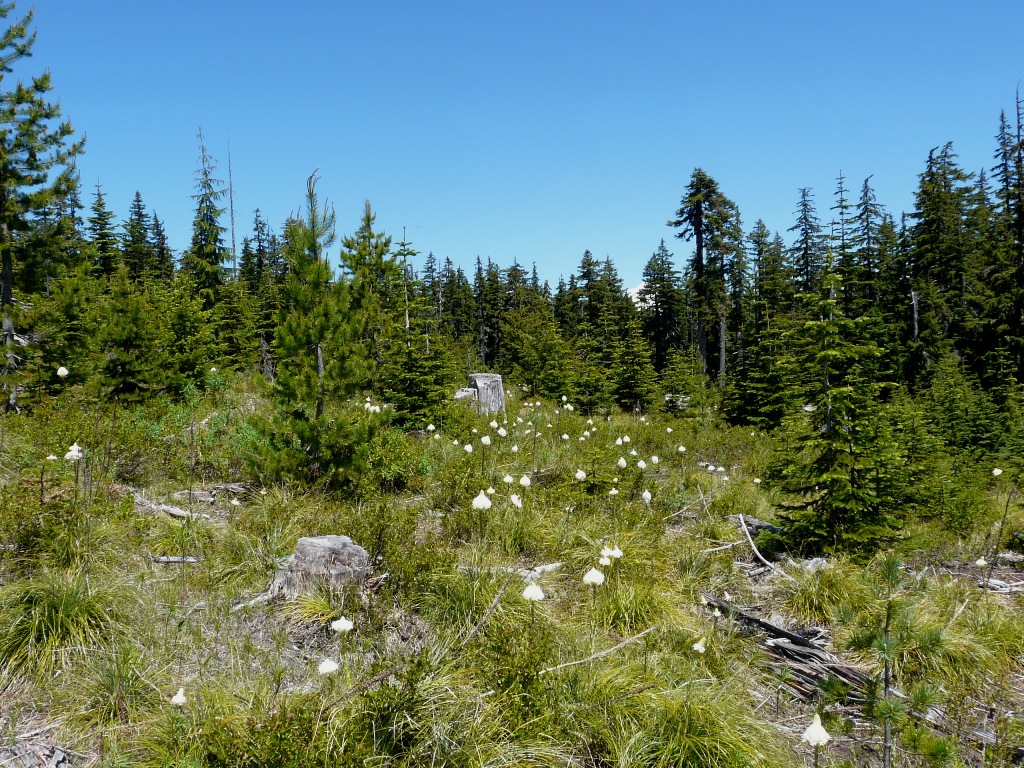
This area of the forest is a patchwork of clearcuts, young forest, and groves of mature trees. While not nearly so scenic, clearcuts are often very productive for certain species of birds and other wildlife.


Forest Service roads that are too rough for vehicles provide easy hiking routes.


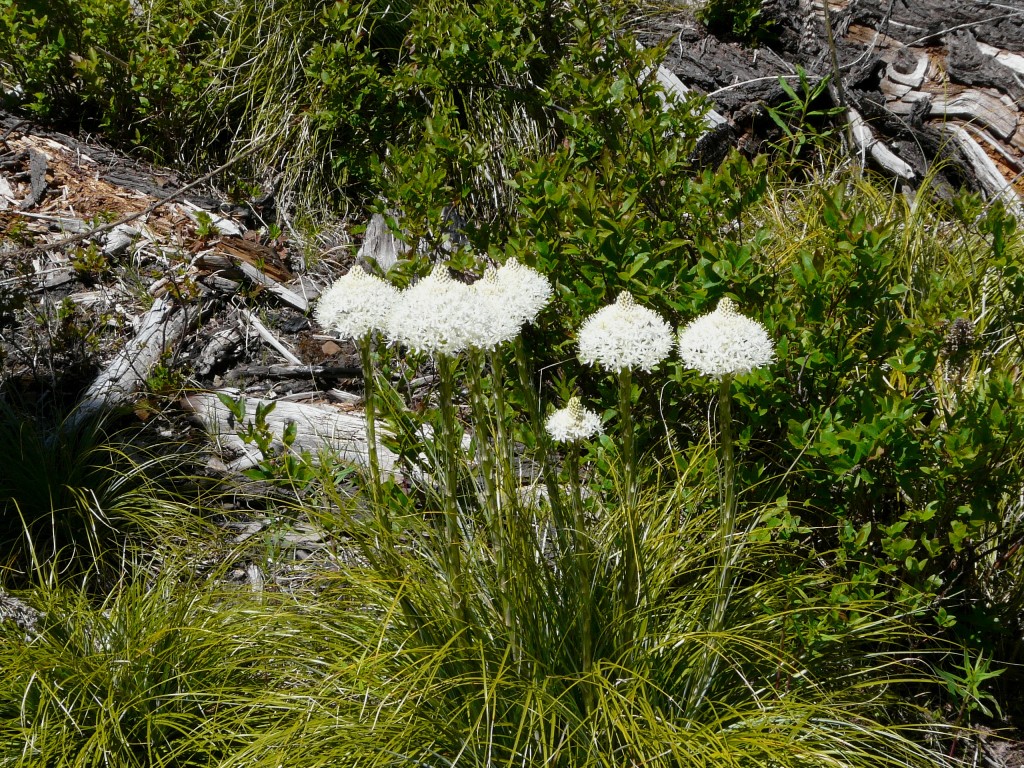
The Bear Grass was in full bloom.


Chestnut-backed Chickadee


Pileated Woodpecker feeding site


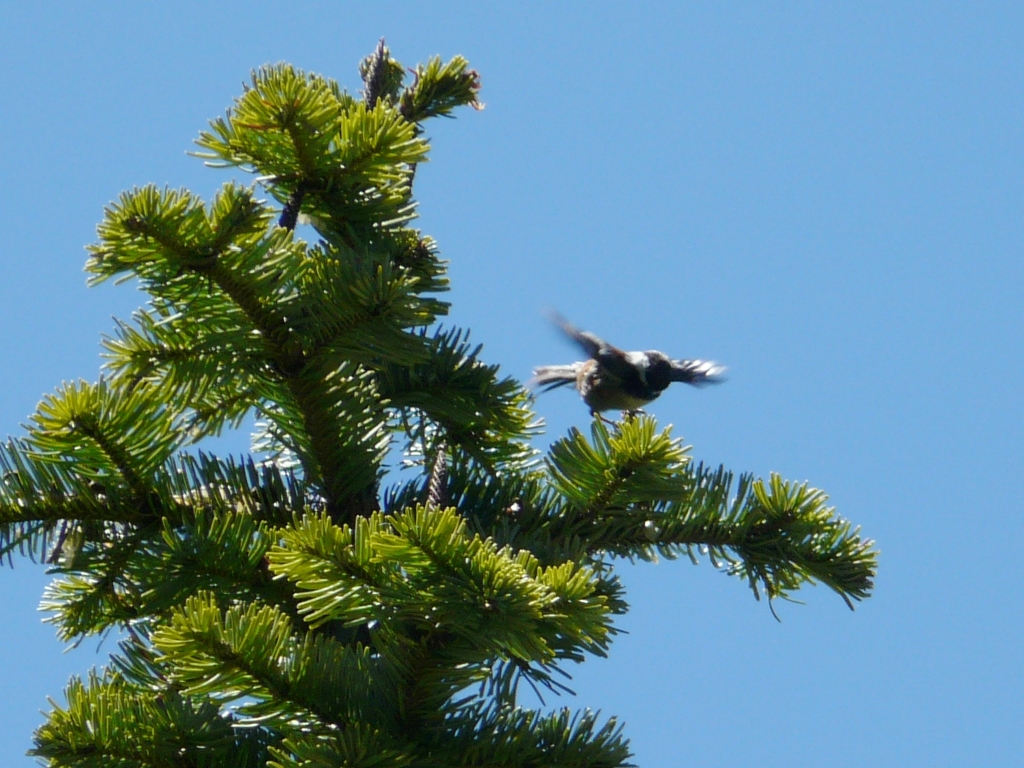
A pair of Gray Jays responded to a pygmy-owl imitation. Despite their reputation for stealing food from picnic tables, I usually find Gray Jays to be rather shy.


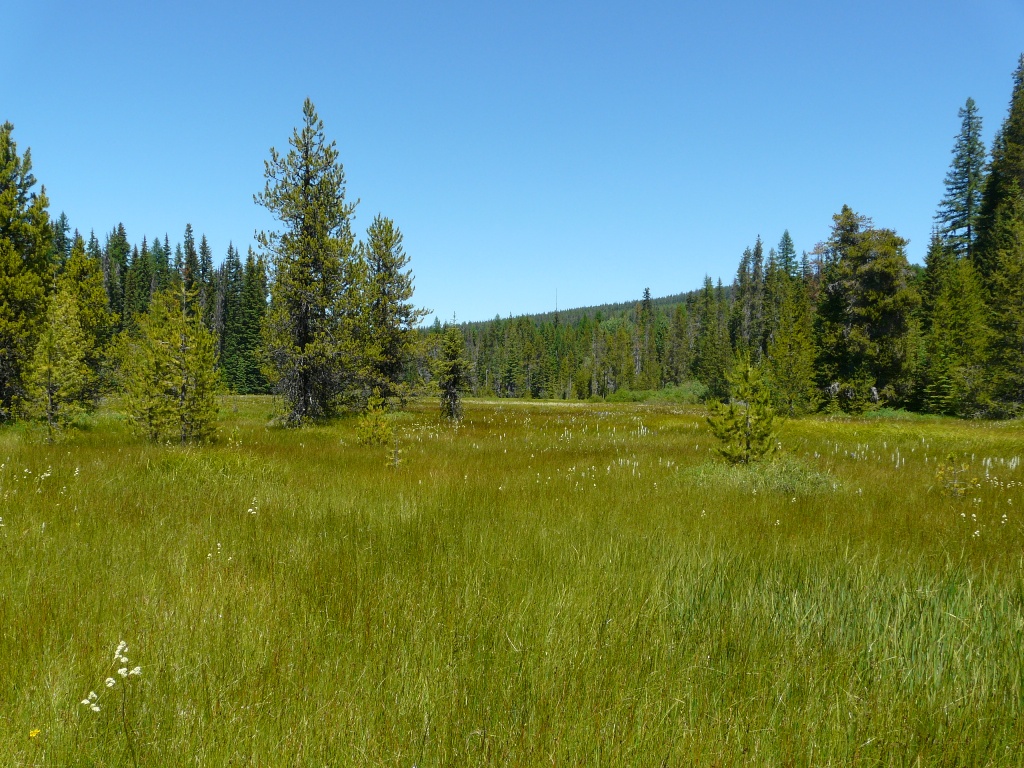
This is the meadow near Little Crater Lake.


A pond in the meadow, with Mt. Hood peaking over the trees.


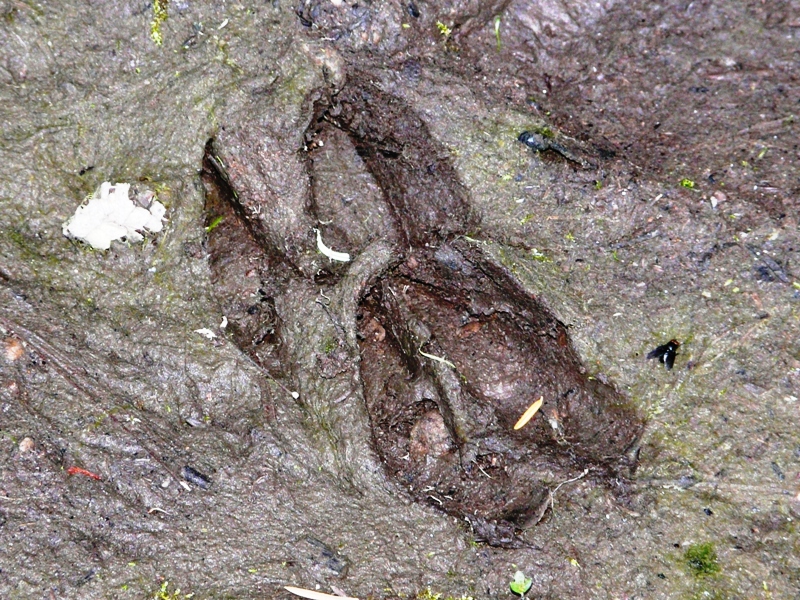
Always check muddy areas for tracks, like these from Black-tailed Deer.


Little Crater Lake

Fernhill Wetlands 7/4/10

A quick walk around Fernhill Wetlands (Birding Oregon p. 61) produced two out-of-season species this morning.


Cackling Geese (Branta hutchinsii minima) winter here in the hundreds, but an individual in July is quite unexpected.


Note the stubby bill, short neck, and dark purplish breast typical of this subspecies.


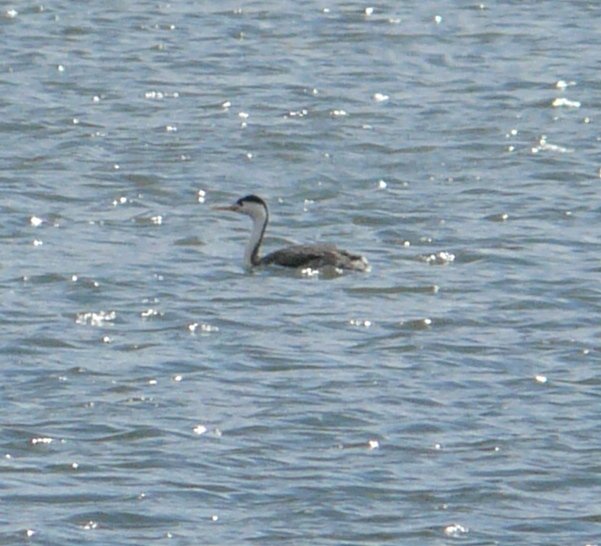
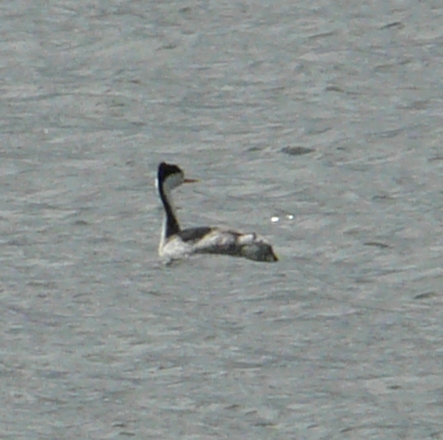
Clark’s Grebe is rare at Fernhill during migration, but never expected in summer. Here you can see the white of the face surrounding the eye, unlike the more expected Western Grebe, which shows the eye surrounded by the black of the cap.


With more white on the face and neck, Clark’s Grebe shows a more narrow black line down the back of the neck than does Western Grebe.


Green Herons are often flushed from the shores. This one sat in a tree briefly.


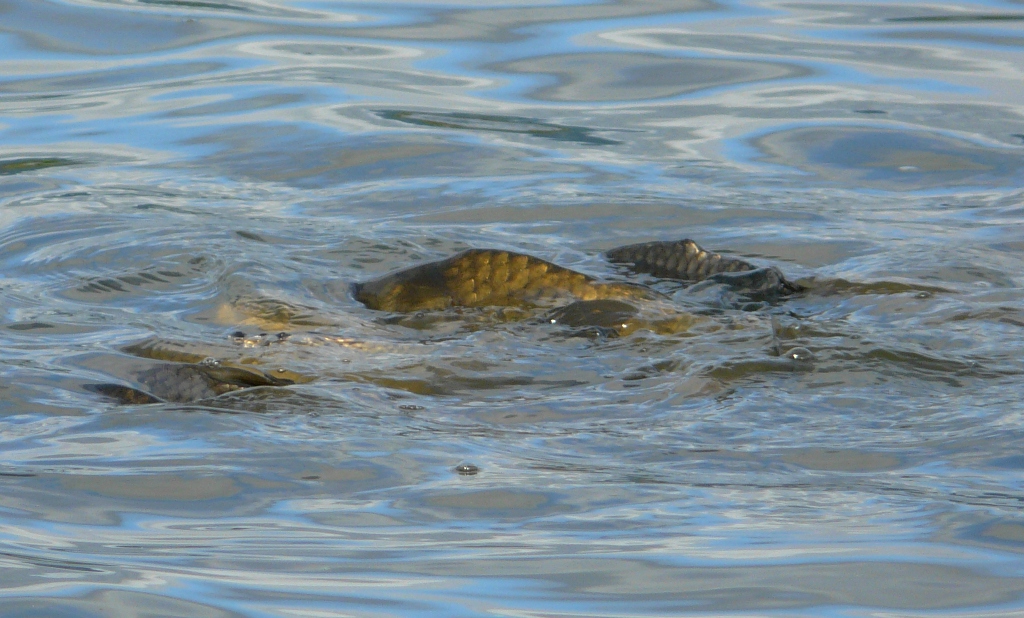
Common Carp were spawning in the main lake. Small groups of fish were swirling near the surface in several areas.

Larch Mountain Clearcut

Larch Mountain (Birding Oregon p.71) is a great spot close to Portland to find birds of the forested west side of the Cascades. Mature forest covers the area near the summit and throughout much of the crater. Farther down the mountain are areas that have been logged.


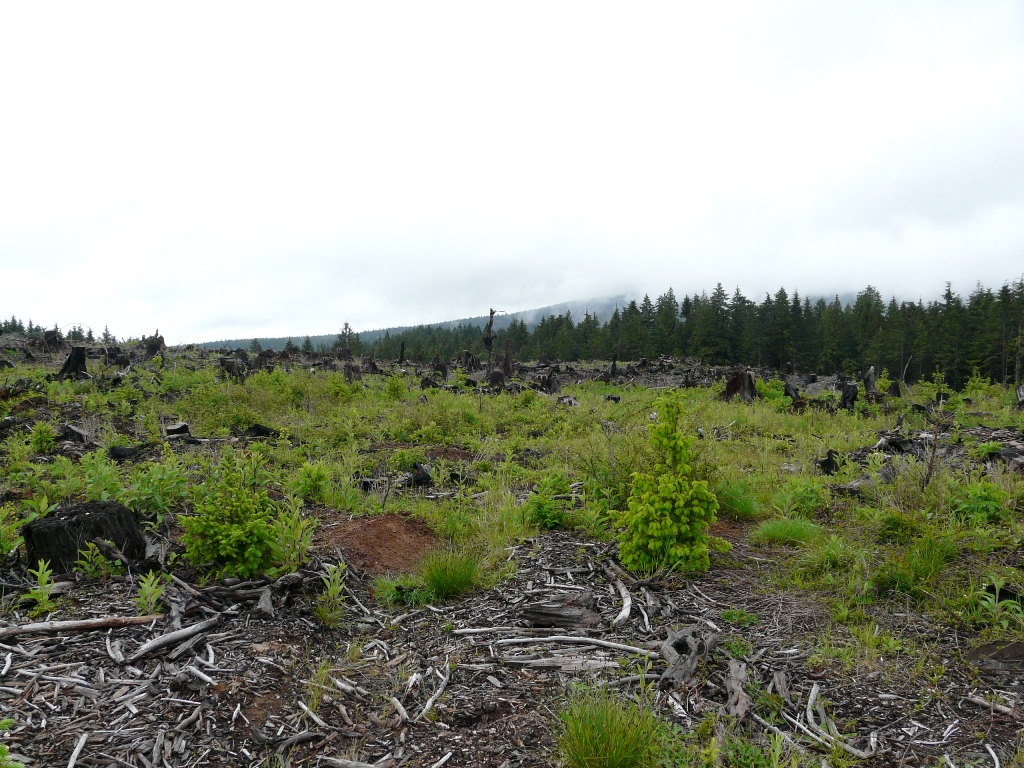
At first glance, a recent clearcut seems a desolate place. While it is sad to think of the great trees that used to stand there, you may actually see more birds in a clearcut than you will in a mature forest. The two clearcuts described in Birding Oregon have grown up to the point where you can’t walk into them any more. Young trees, shrubs, old stumps, rocks, and uneven ground make walking impossible. An easily accessible recent clearcut is found just downhill of milepost 8. Walk past the blue gate through a thin buffer of trees to get to the open habitat. In the past week I have seen Western Tanager, Red Crossbill, Gray Jay,  Band-tailed Pigeon, Western Bluebird, MacGillivray’s Warbler, Townsend’s Solitaire, Rufous Hummingbird, Violet-green Swallow, and White-crowned Sparrow in or along the edges of this clearcut.


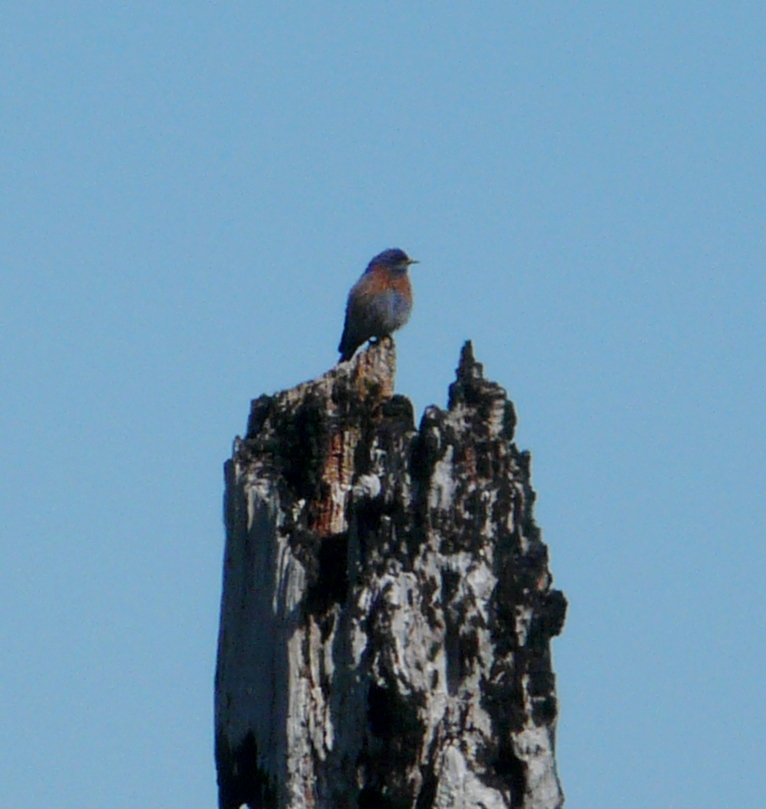
Western Bluebird


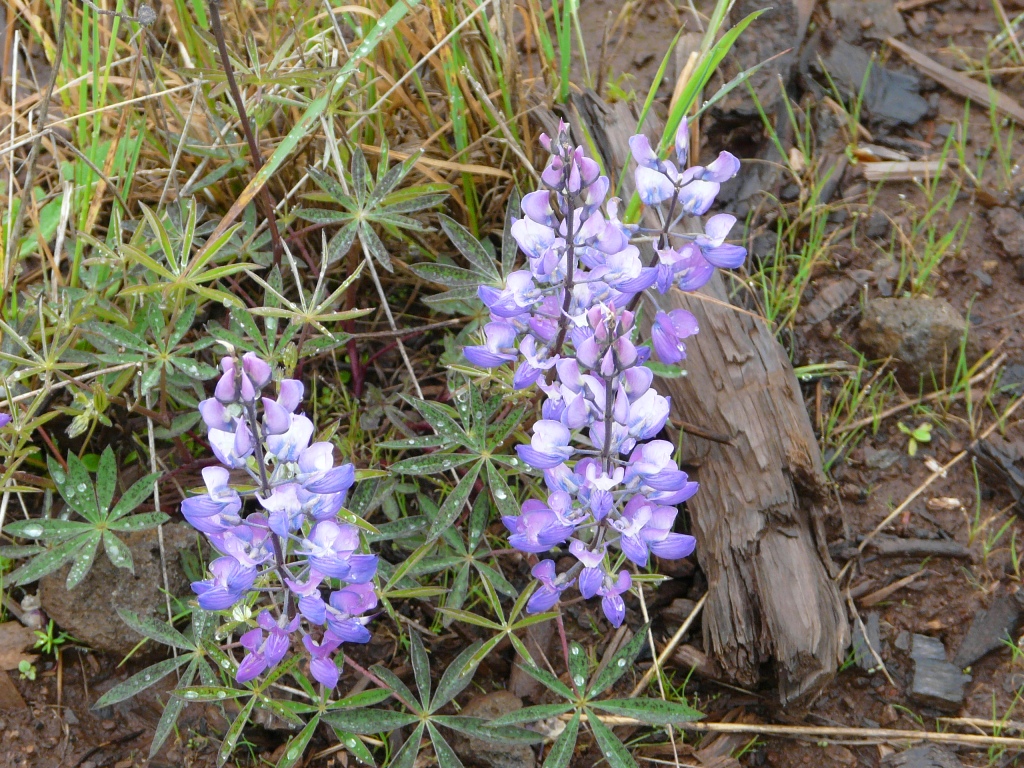
Lupines, along with Foxglove and other flowers, are common in clearcuts.


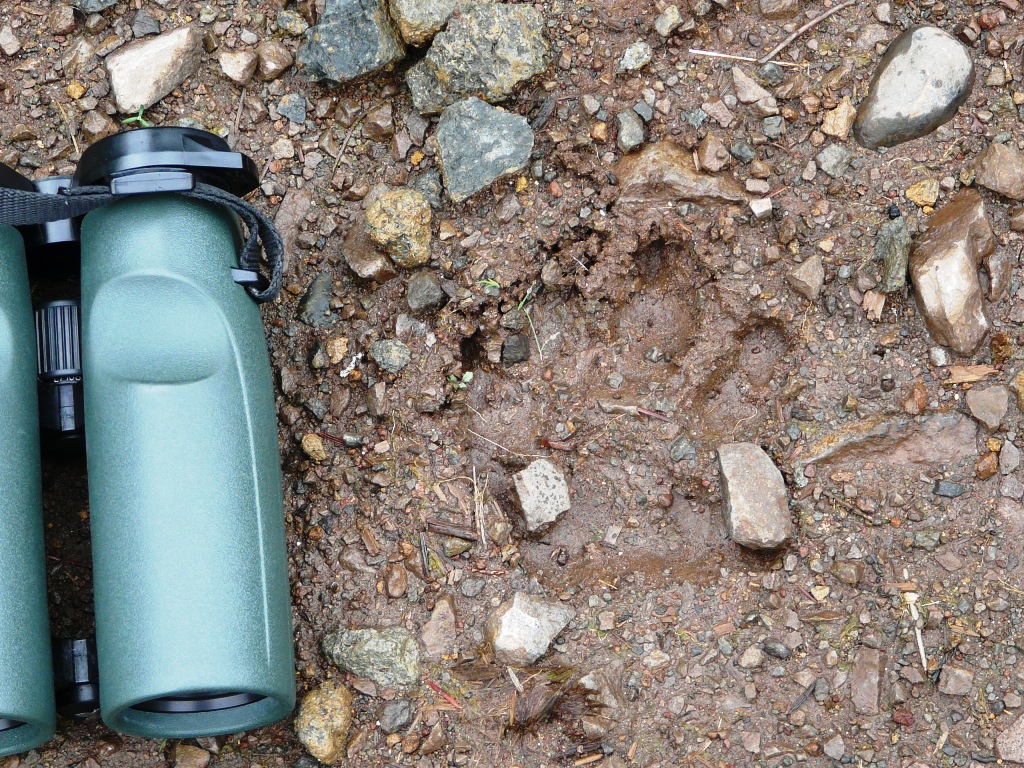
Clearcuts attract Black-tailed Deer and Roosevelt Elk, which in turn attract Mountain Lions. This set of tracks was leading from the clearcut to the woods.

Klamath Basin

Here are some photos from a recent trip to the Klamath Basin.


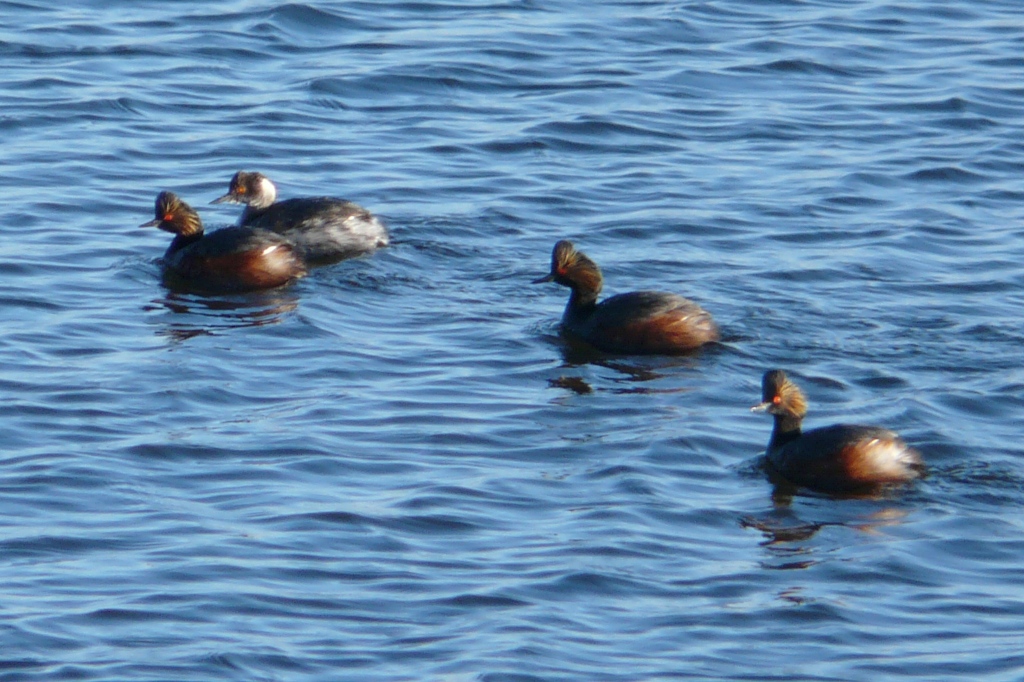
Eared Grebes are common  in the wetlands along State Line Road (Birding Oregon p. 116). The second bird from the left is still in basic plumage, while all the other birds seen that day had already molted into alternate plumage.


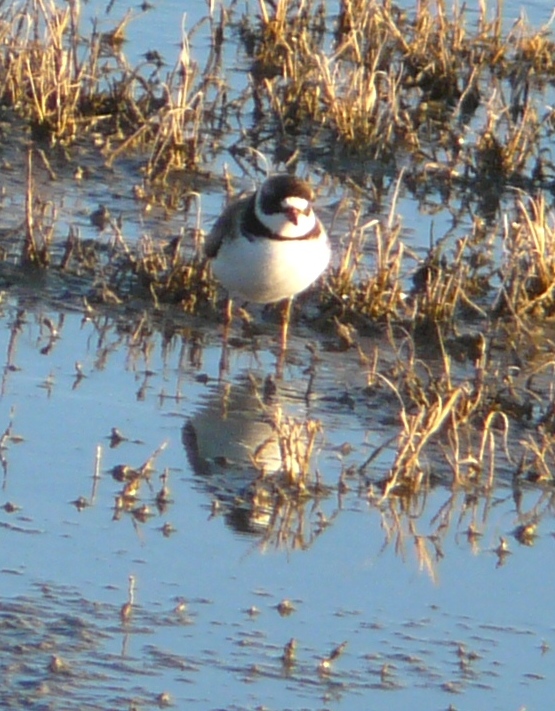
Shorebirds, such as this Semipalmated Plover, can be found on the mudflats along State Line Road.


This Pied-billed Grebe was nesting at Wood River Wetlands (Birding Oregon p.111).

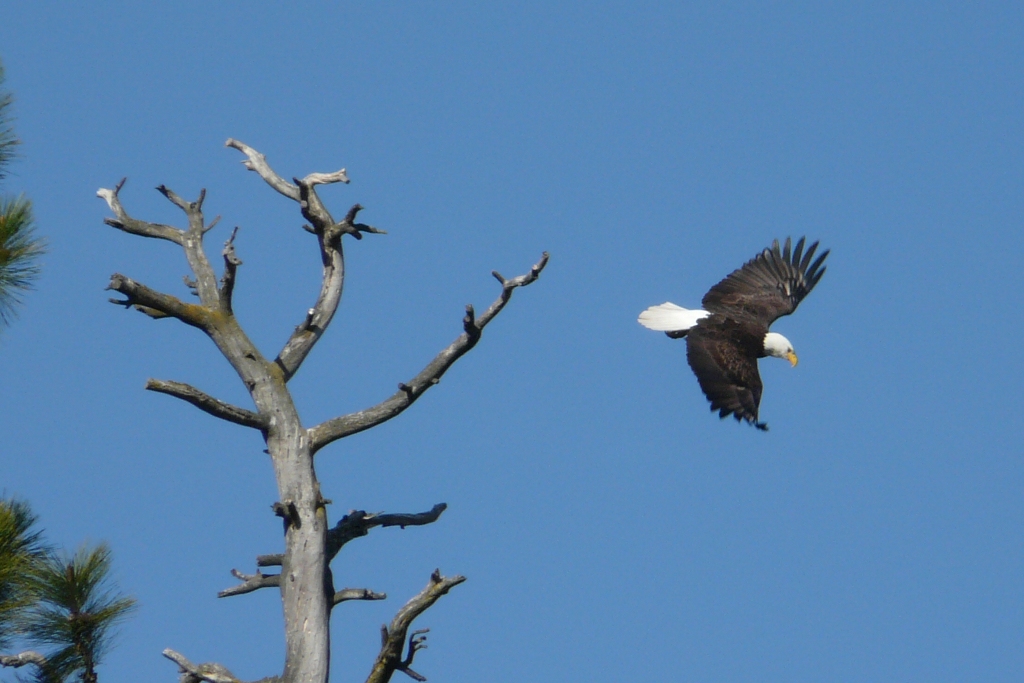
The Klamath Basin is famous for its large wintering population of Bald Eagles, but a few pairs  stay to nest. This bird was found in Moore Park in Klamath Falls.


Moore Park is also home to Mule Deer. Note the fuzzy antlers starting to grow on the deer in the center of the photo.

Three Graces Tidal Area

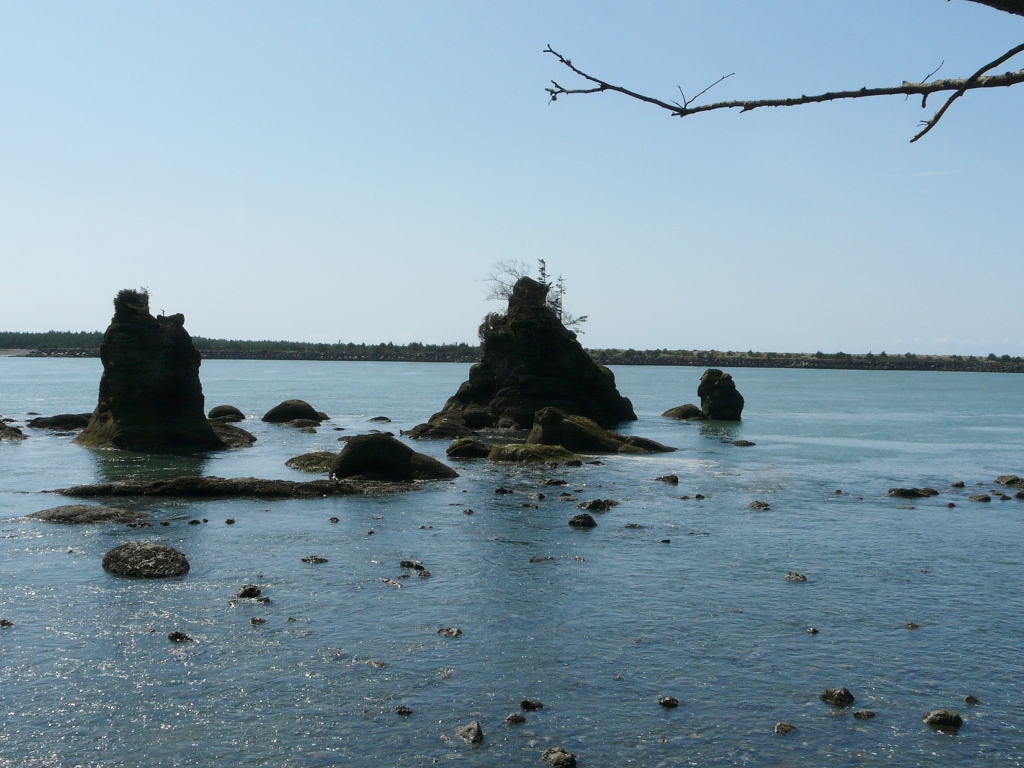
The Three Graces Tidal Area (Birding Oregon p. 127) lies along the shore of Tillamook Bay, just south of the town of Barview. It is a small site, but the offshore rocks and rocky shoreline attract a nice variety of birds.

The best times to bird this site are in between high and low tides. When the tide is up, the small rocks are submerged. When the tide is too low, people sometimes walk out to the rocks, thus scaring the birds.  Brown Pelicans, Common Loons, Harlequin Ducks, and other waterfowl are often seen swimming in the area.  In winter, Rock Sandpipers and Surfbirds feed on the exposed rocks and shoreline.


Peer over the edge of the path to scan the shoreline for rockpipers and gulls.  A scope is useful for checking the more distant offshore rocks.


A closer view of that distant rock. Pelagic, Brandt’s, and Double-crested Cormorants can all be found here, sometimes allowing side-by-side comparison. This photo shows mostly Pelagic Cormorants, with a possible young Double-crested on the right.