Jackson Bottom, 11 July 2013

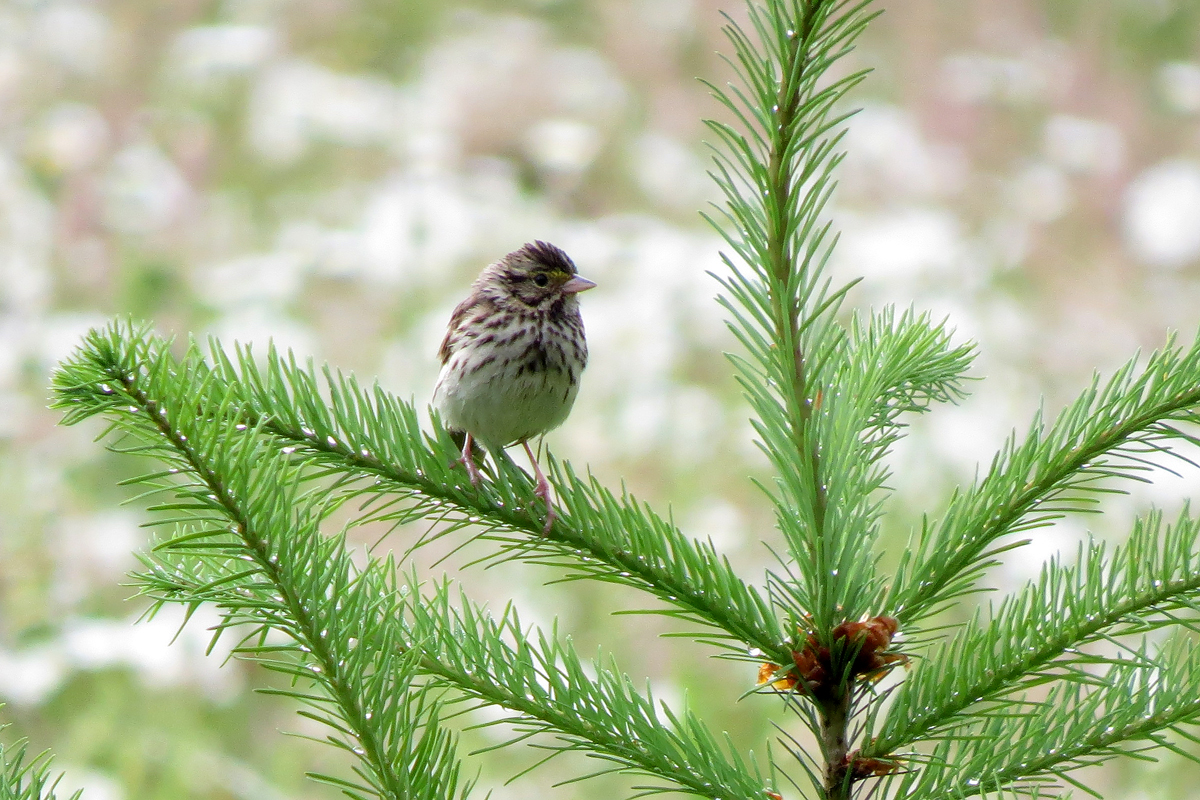
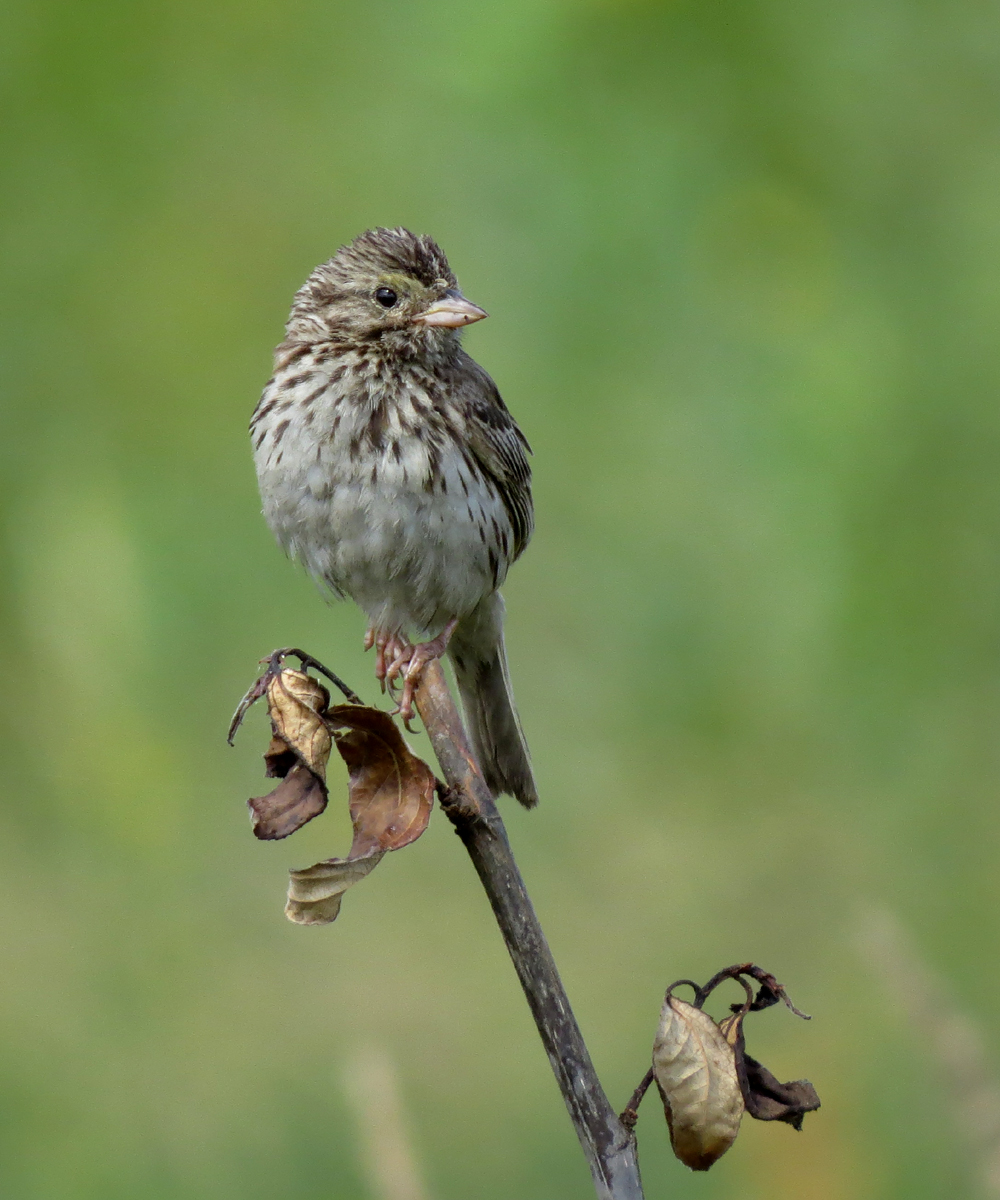
savannahI walked around Jackson Bottom in Hillsboro this morning. As you would expect at this time of year, there were lots of young birds around.  This young Savannah Sparrow posed nicely. His parents have not taught him to skulk in the weeds yet.

blue-winged and cinnamon tealThe best bird of the day was this male Blue-winged Teal (right foreground), always hard to find in the Willamette Valley. He flew in with a small flock of Cinnamon Teal.
blue-winged teal

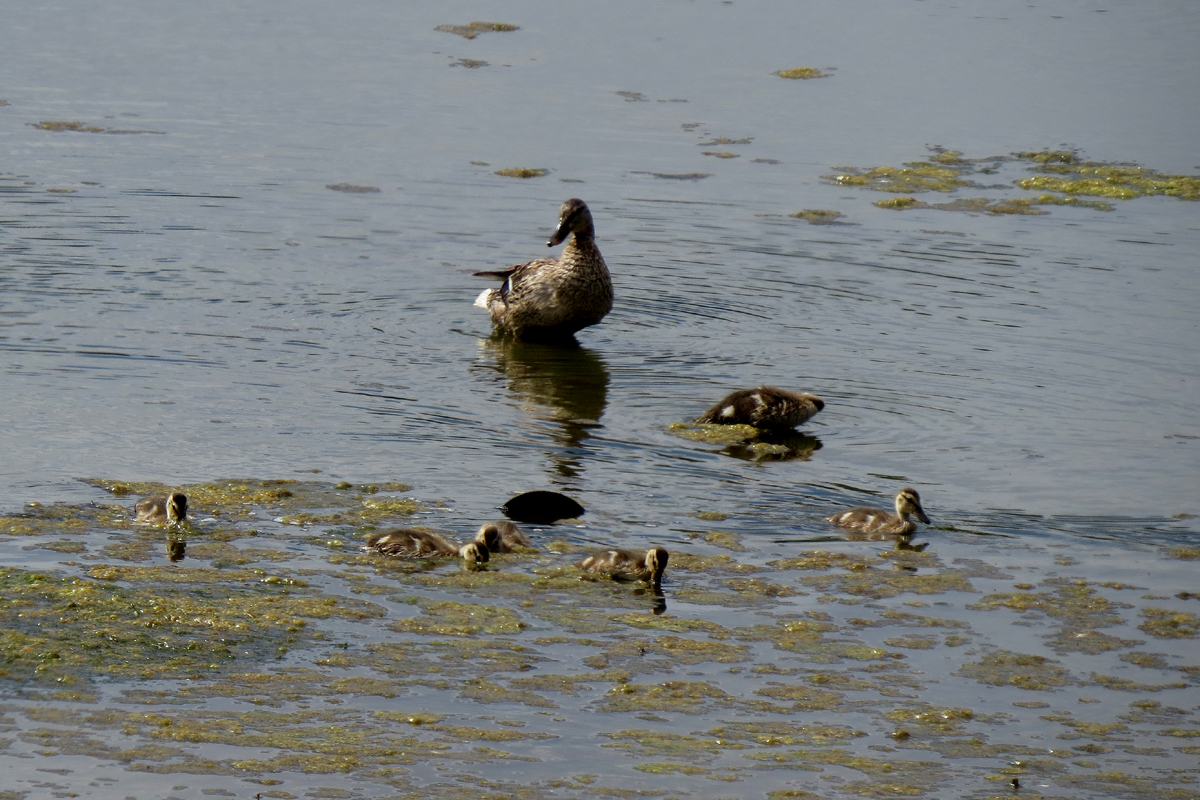
mallard familyFamilies of young Mallards were everywhere.

canada goose familyThese Canada Geese are mostly grown, but retain a bit of their cute fuzziness.
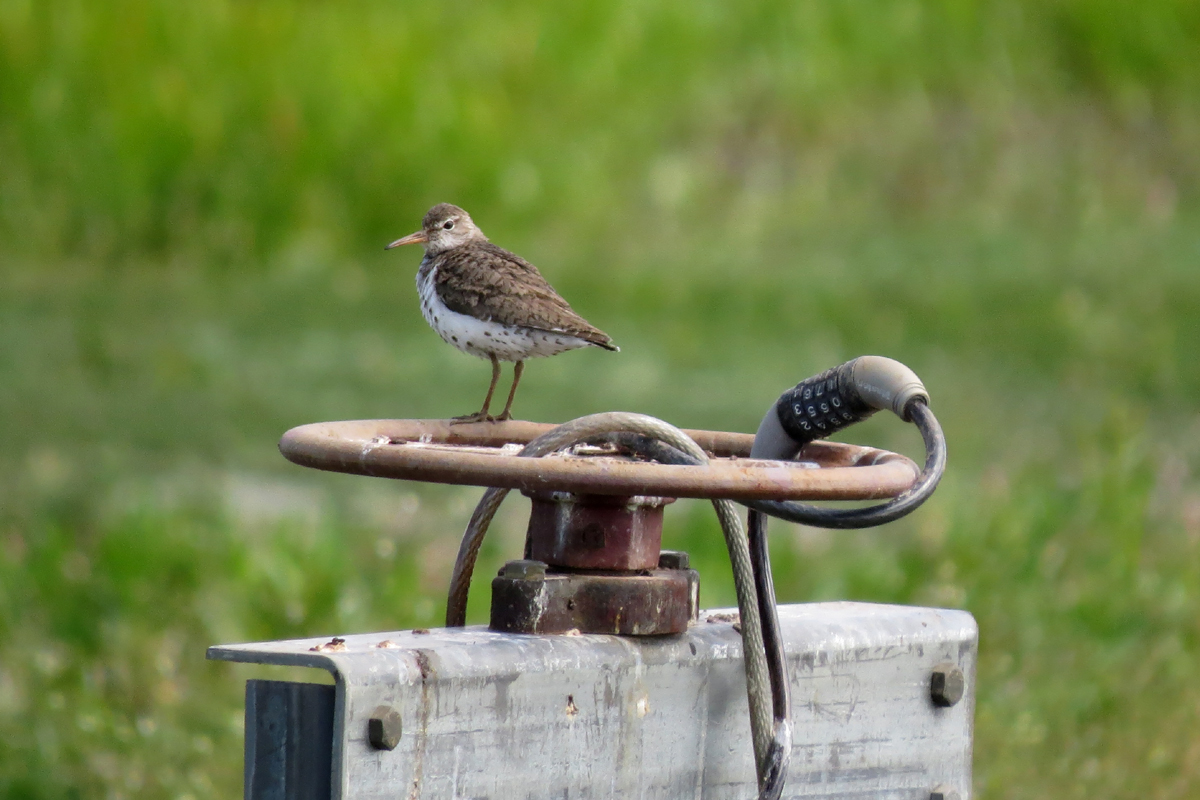
spotty left 1I was surprised by the lack of migrant shorebirds. The resident Spotted Sandpipers were well represented.

nutriaLots of Nutria were out this morning. Yes, introduced species often wreak havoc on native ecosystems, AND, Nutria look like adorable little bears.
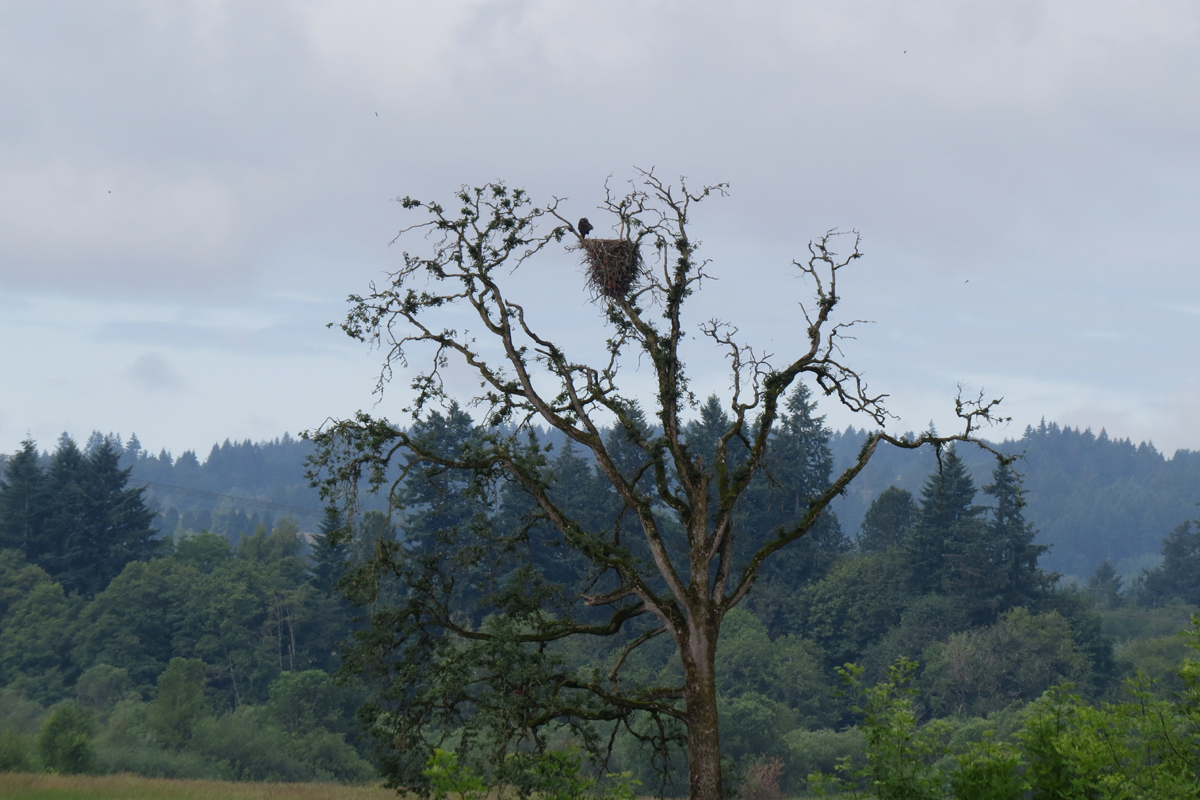
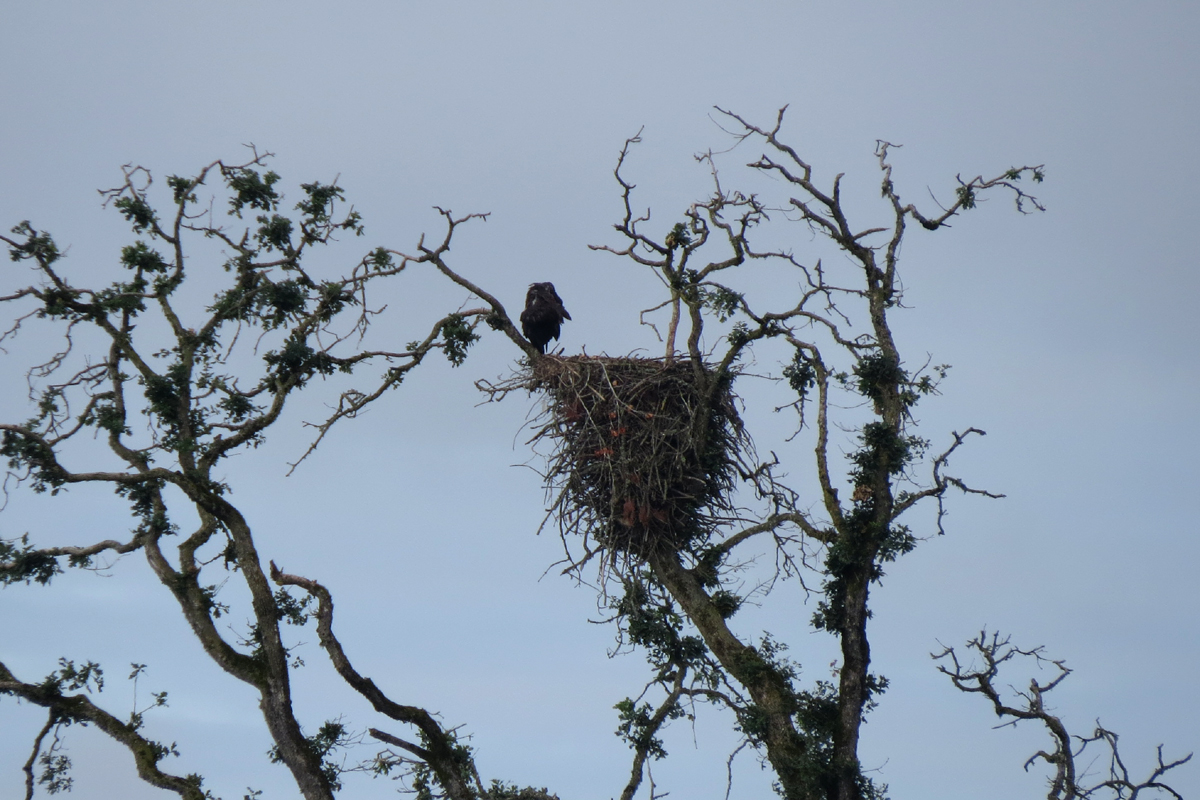
Tualatin River NWR

eagle nestWhile the bird diversity has thinned out considerably in the past couple of weeks, I had some nice views of the summer residents at Tualatin River NWR. The resident Bald Eagles still have one youngster in the nest. He is expected to fledge any day now.

eagle nest 2

bald eagleOne of the parents was hanging out near the refuge headquarters, looking all regal.

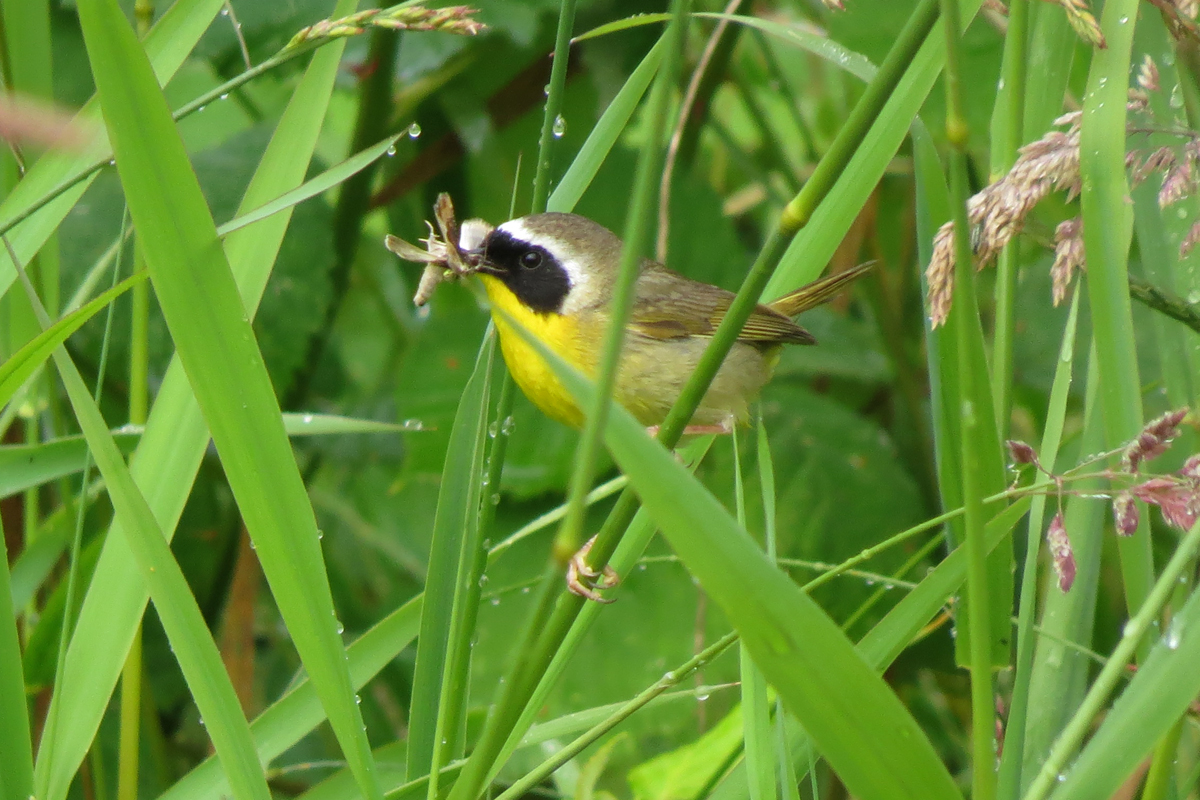
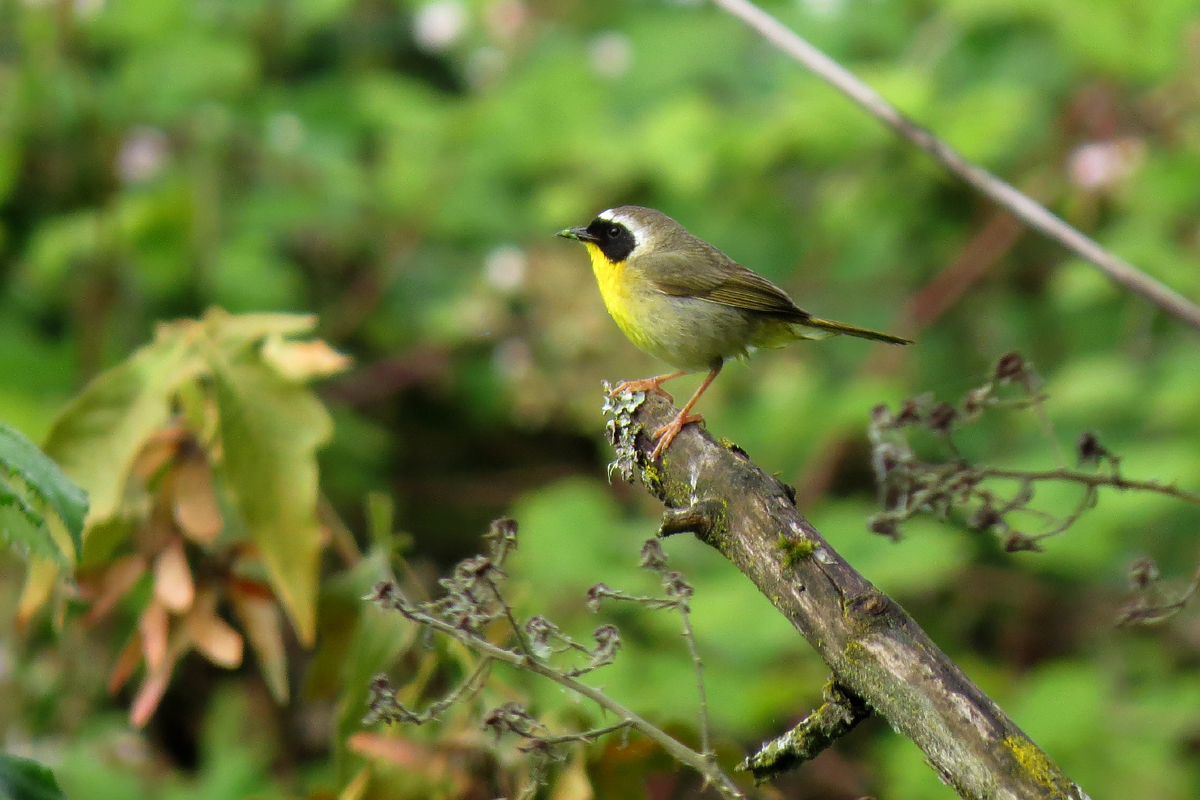
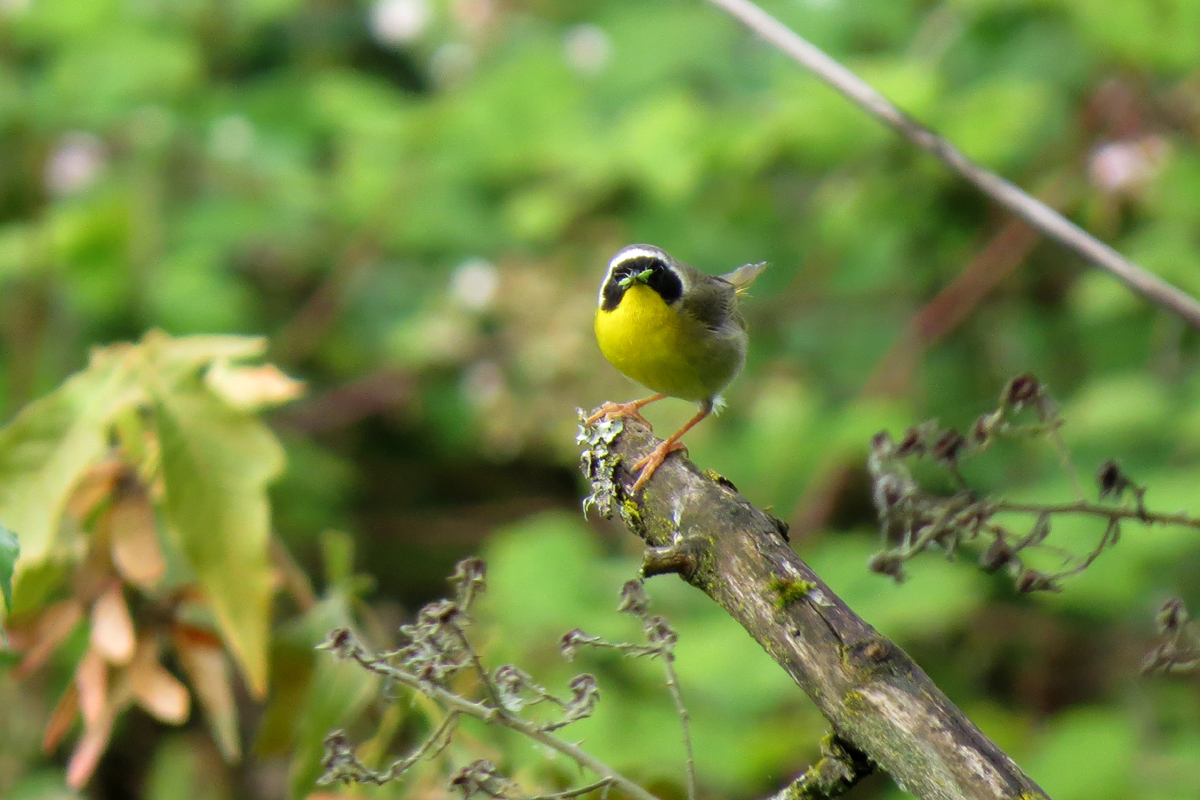
common yellowthroat 1This Common Yellowthroat was frequently seen carrying food, indicating he had a nest nearby.
common yellowthroat 2 common yellowthroat front

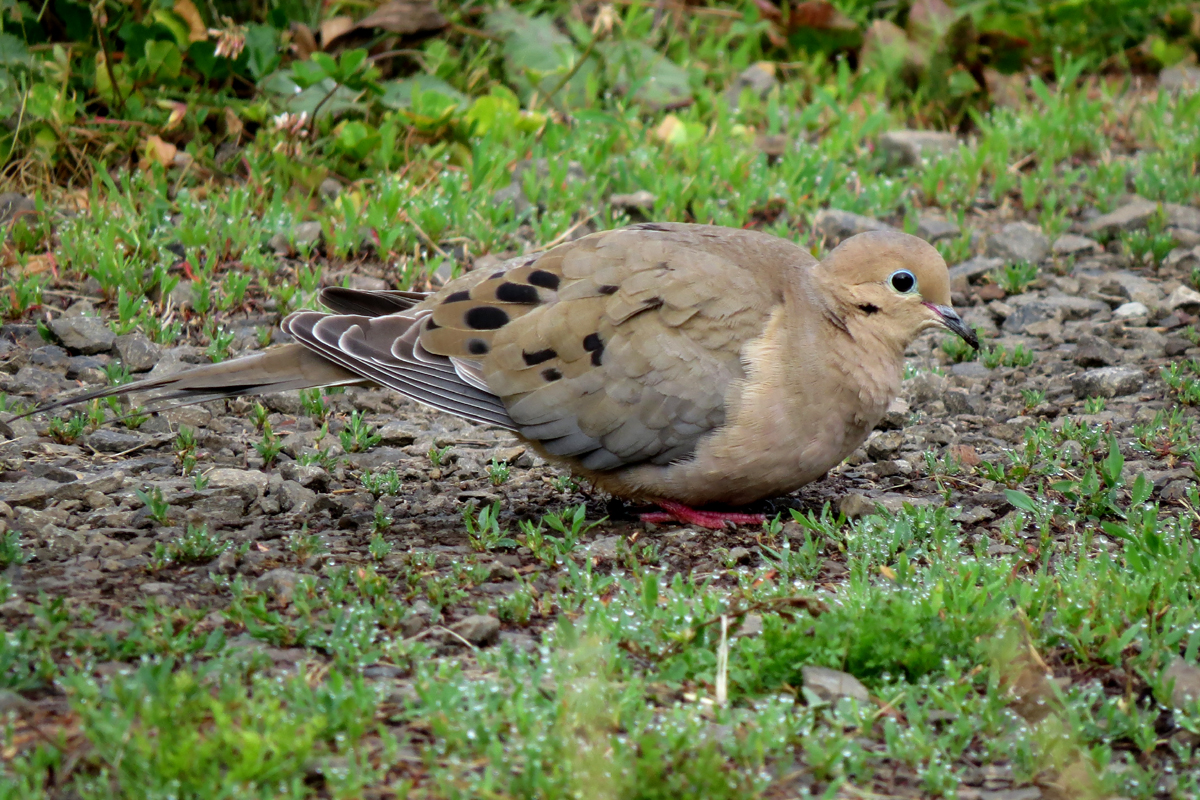
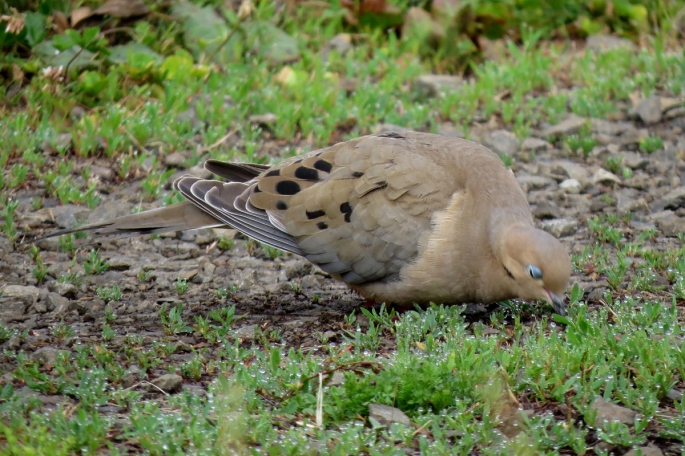
mourning dove3Mourning Dove, feeding on the gravel road.
mourning dove eyes closedI think the blue eye shadow makes her look a little trashy.
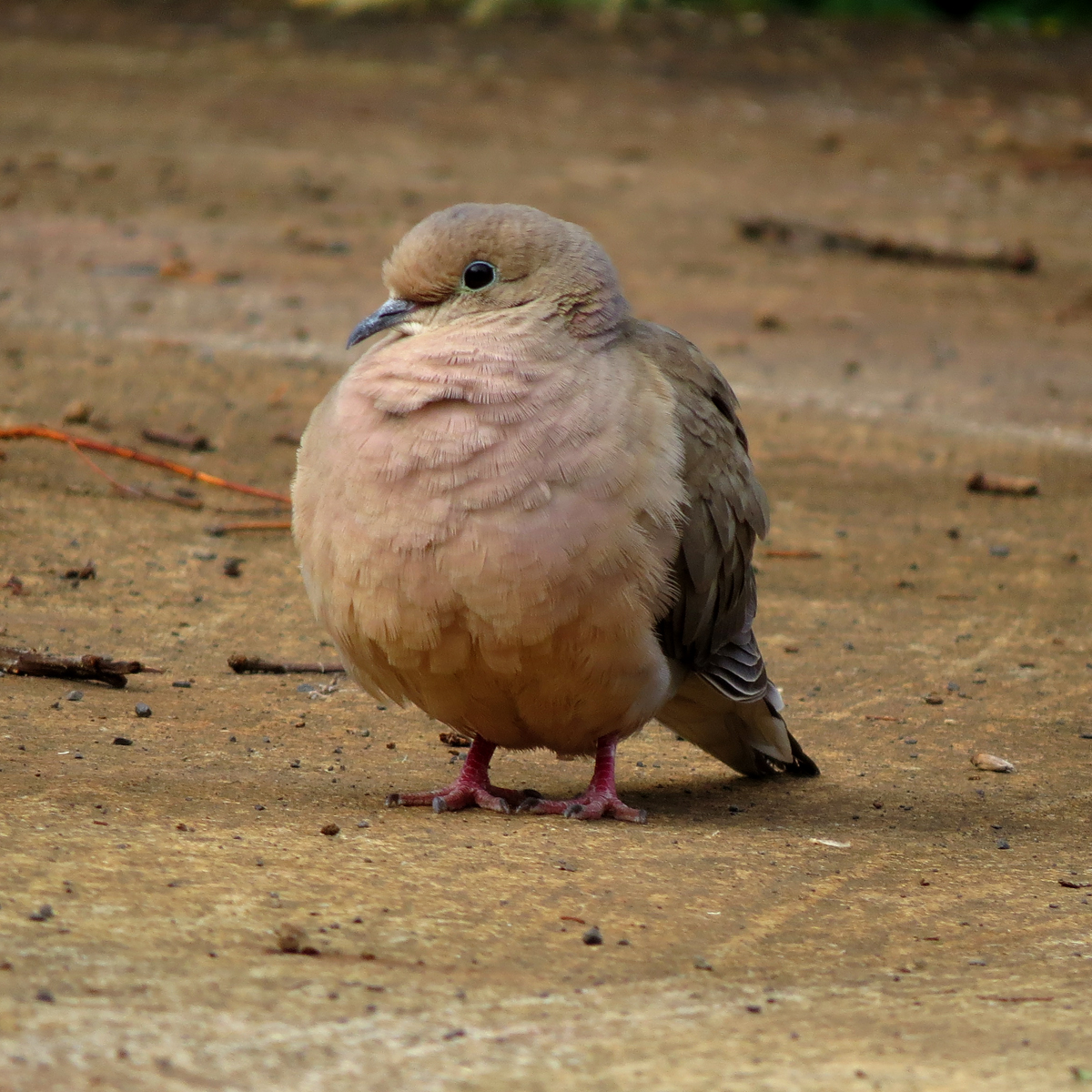
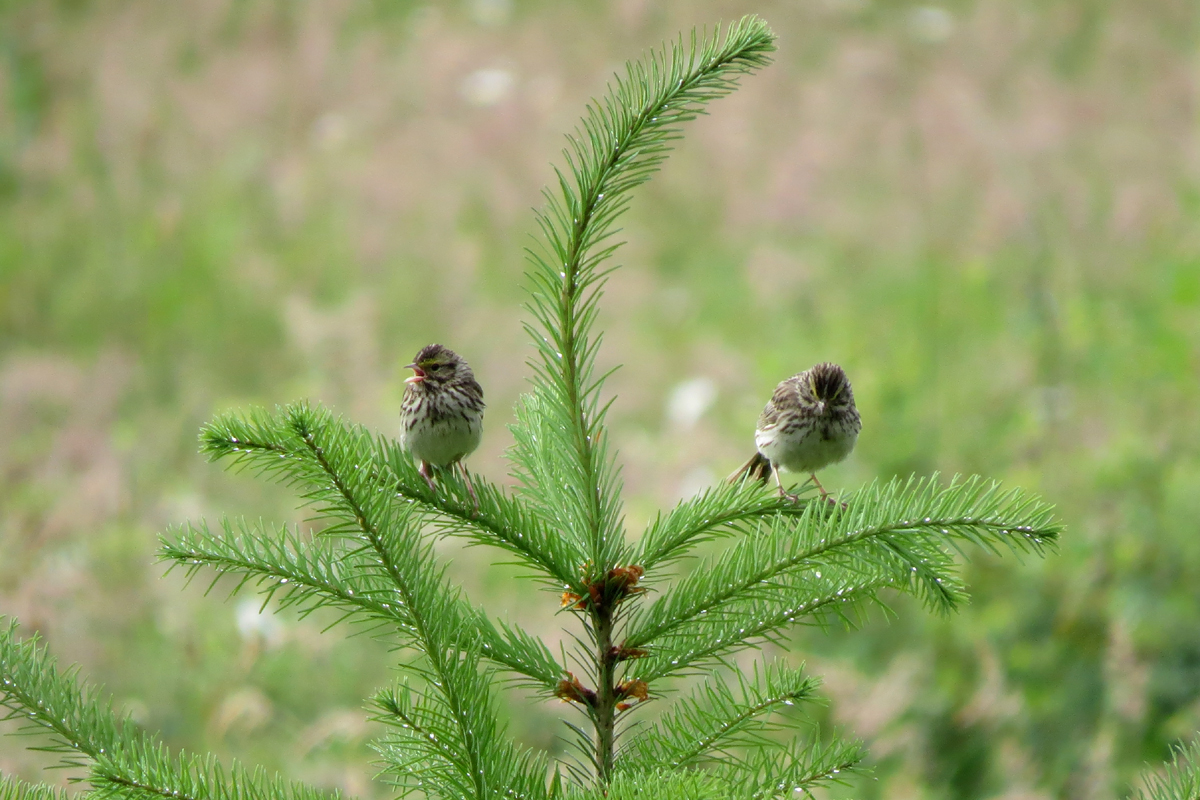
mourning dove front

savannah sparrowsSavannah Sparrows are common in the open habitats here.
savannah sparrow

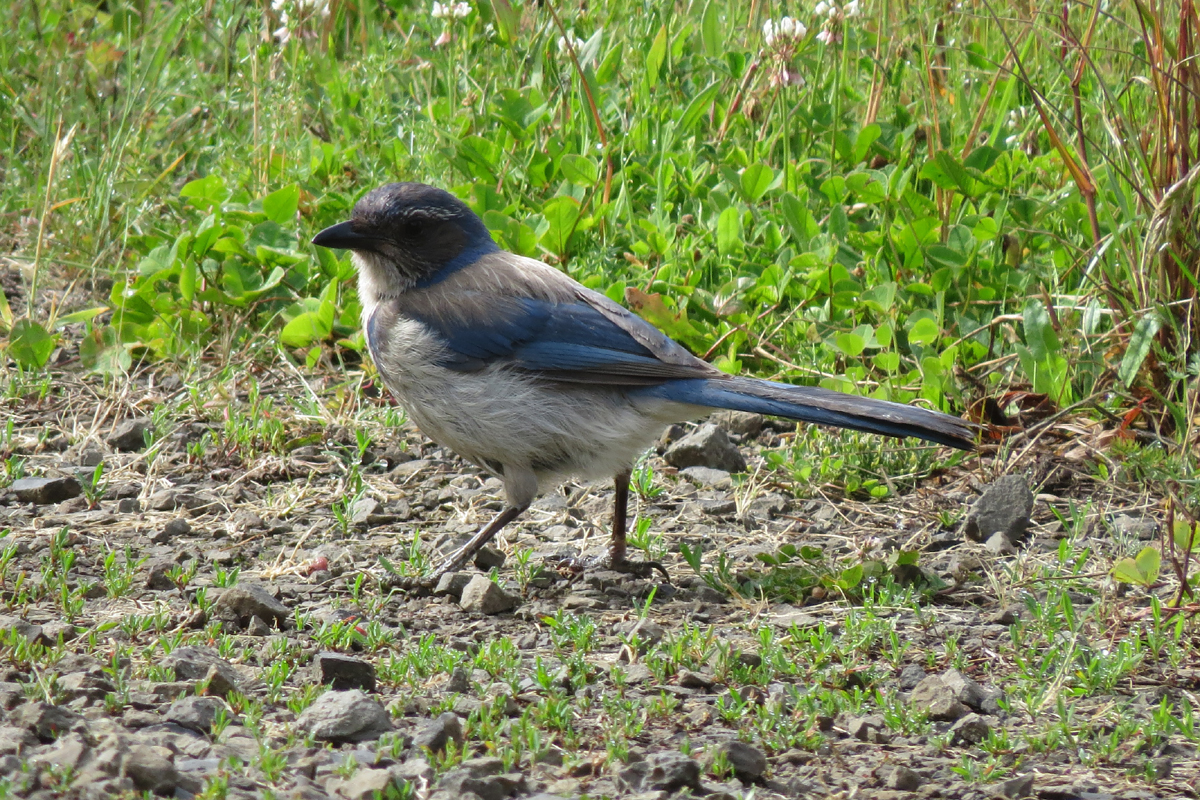
western scrub-jayWestern Scrub-Jay

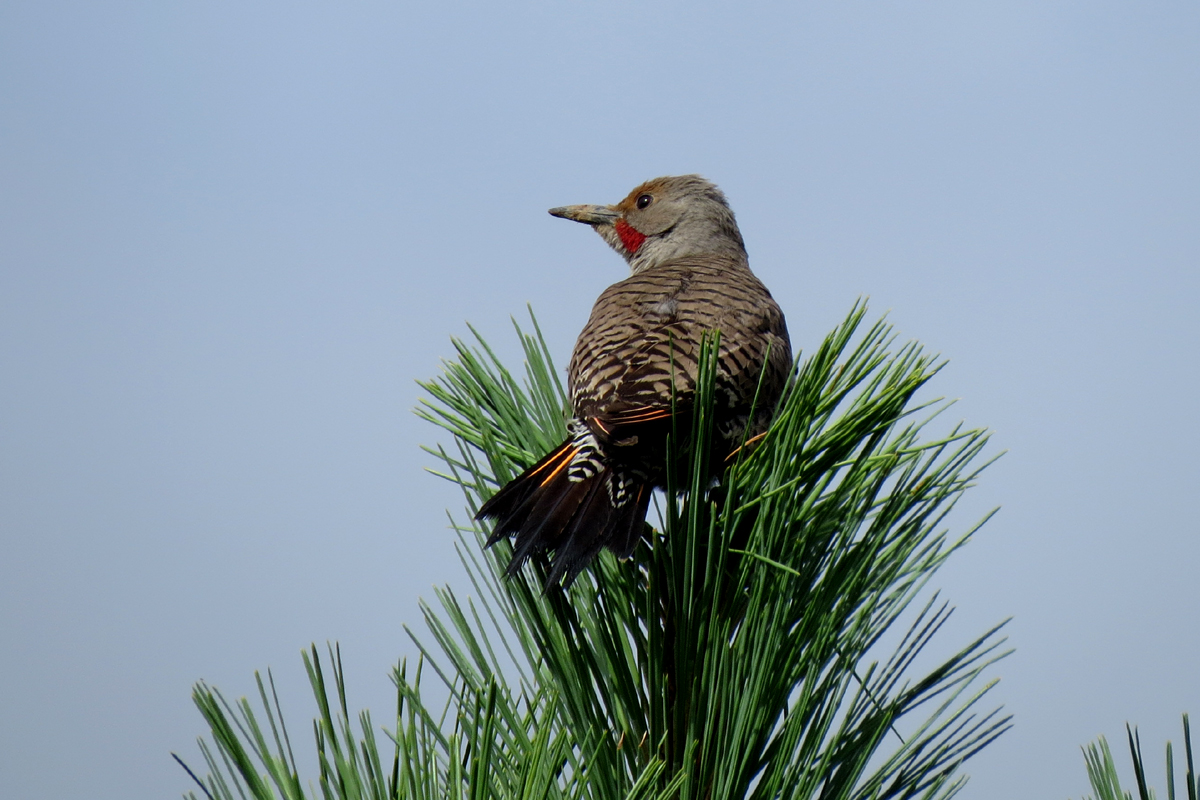
northern flickermale Northern Flicker

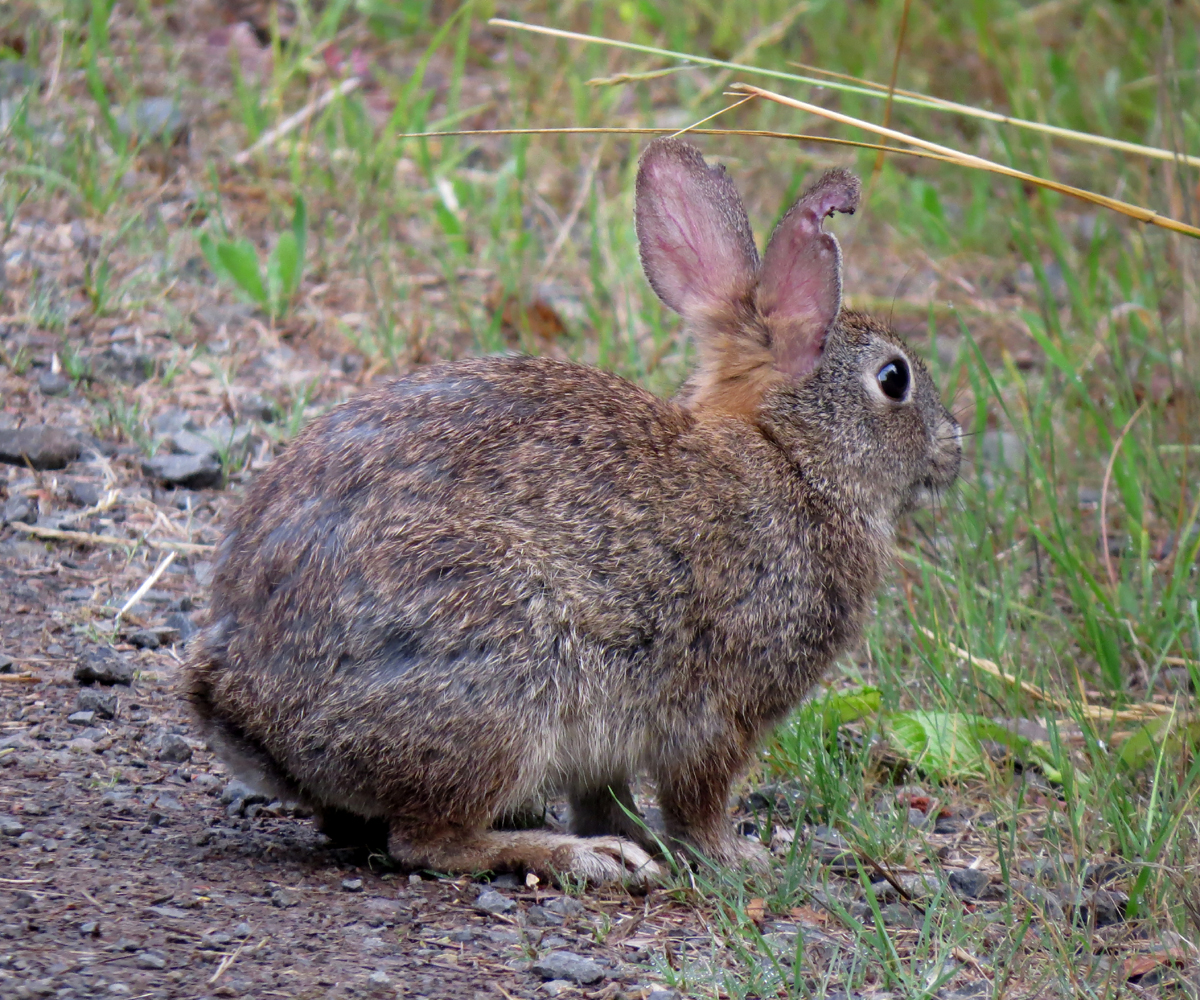
brush rabbit 1Brush Rabbit. The tattered ear suggests that he has had a close escape or two.

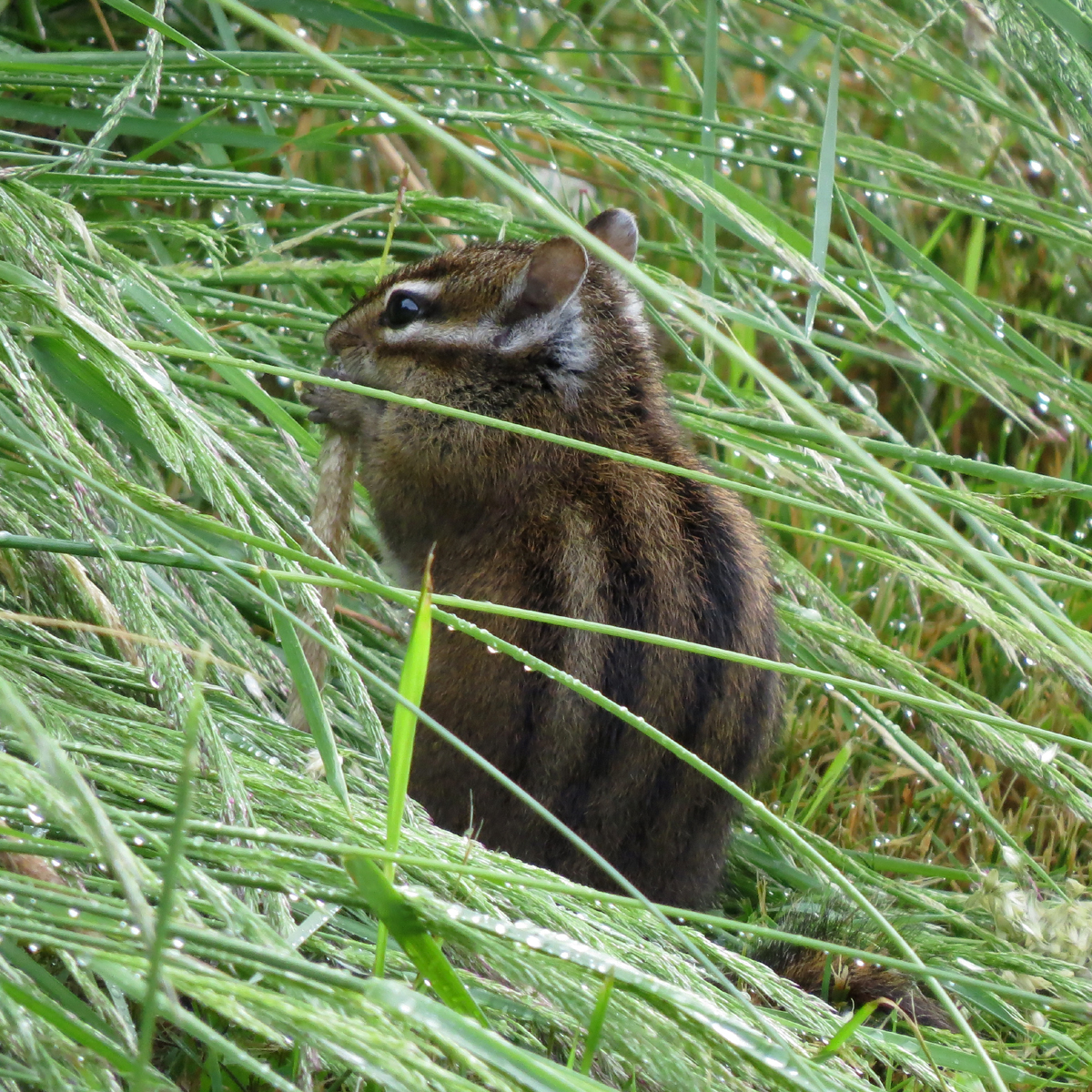
townsend's chipmunkThis Townsend’s Chipmunk was eating grass seeds.

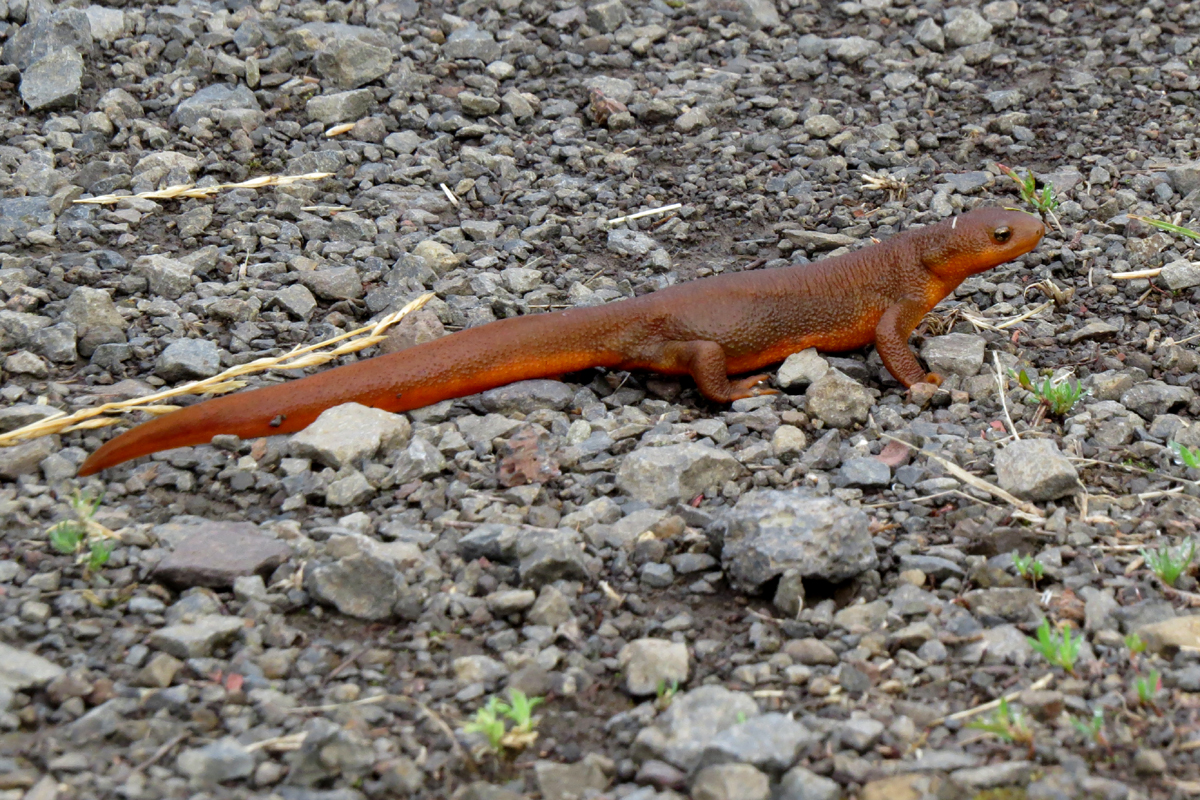
rough-skinned newt 2I saw two Rough-skinned Newts crossing the road. One of the most poisonous animals known to science, this species exudes equal amounts of toxins and cuteness.

Sauvie Island 30 May 2013

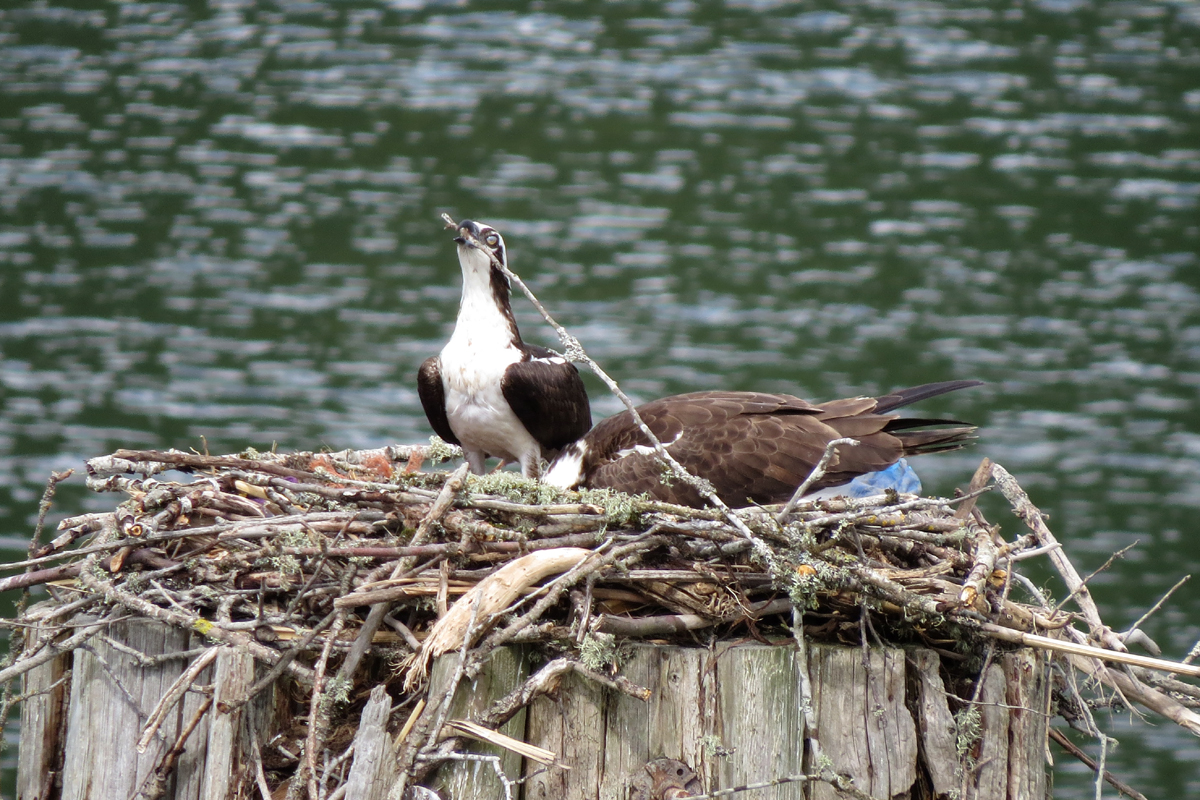
osprey 2This pair of Ospreys is nesting on a piling along Sauvie Island Road. The elevation of the road provides an eye-level view of the nest. Note the piece of blue plastic.

osprey 3The female is sitting on eggs, so she remained pretty still the whole time I was there, aside from from making a few adjustments. Meanwhile, the male was bringing additional sticks and continued to build the nest around her.

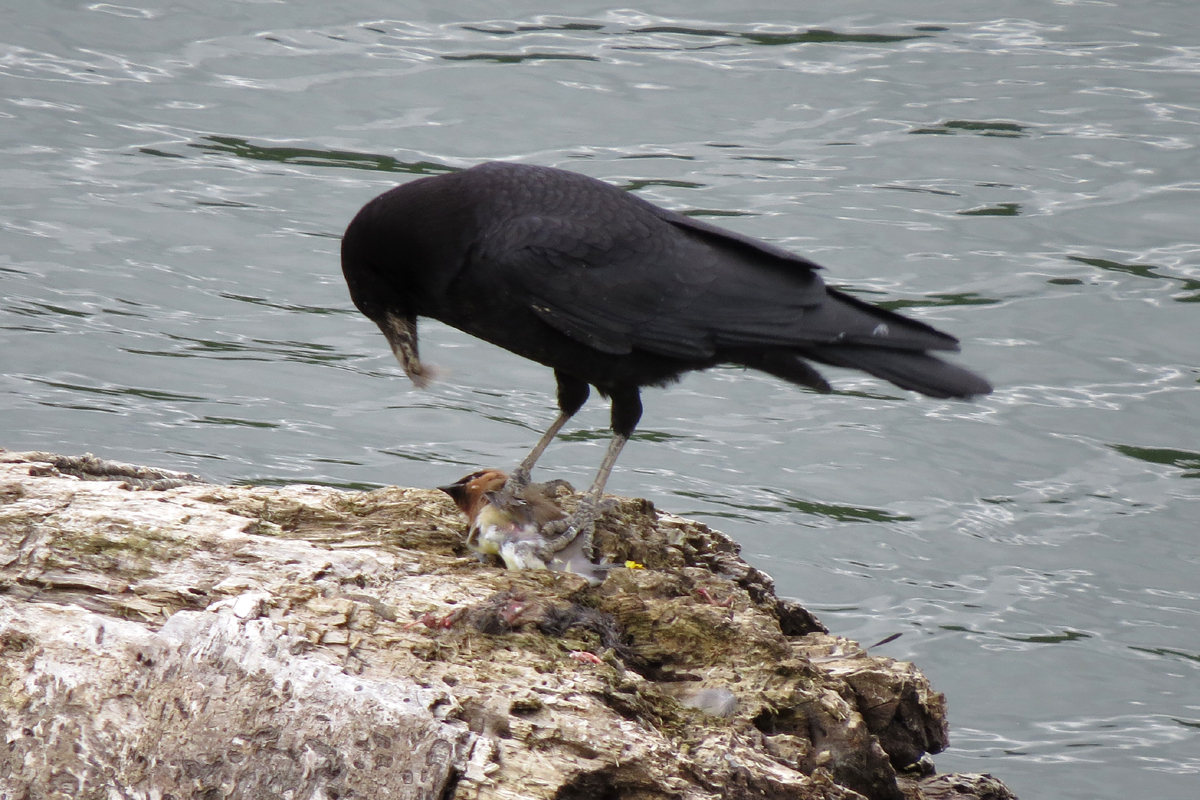
crow 1While I was watching the Ospreys, this young American Crow flew in carrying a Cedar Waxwing, landed on a log, and proceeded to eat. I don’t know if the crow actually caught the waxwing or happened to find a dead one, but the crow didn’t hesitate to chow down and had the waxwing consumed in about one minute.  crowI am aging this bird as a youngster by the pale color on the bill and the scaly pattern on the back.
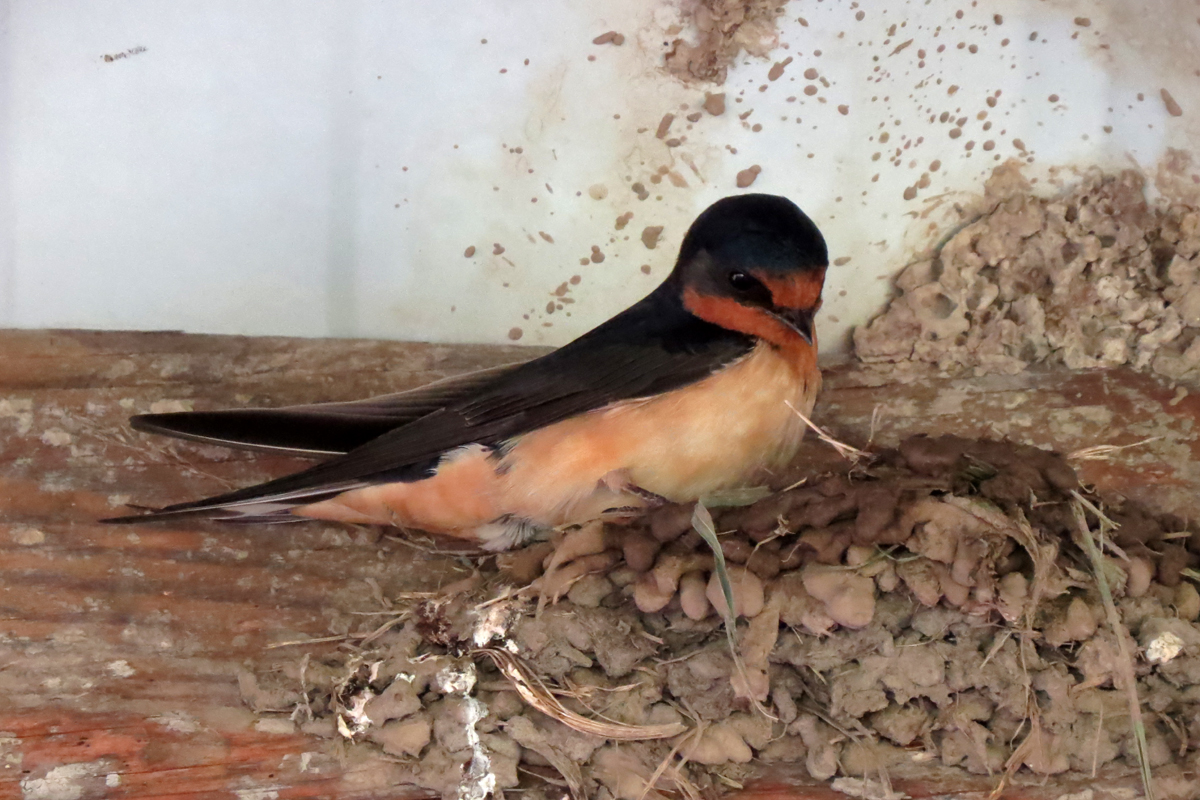
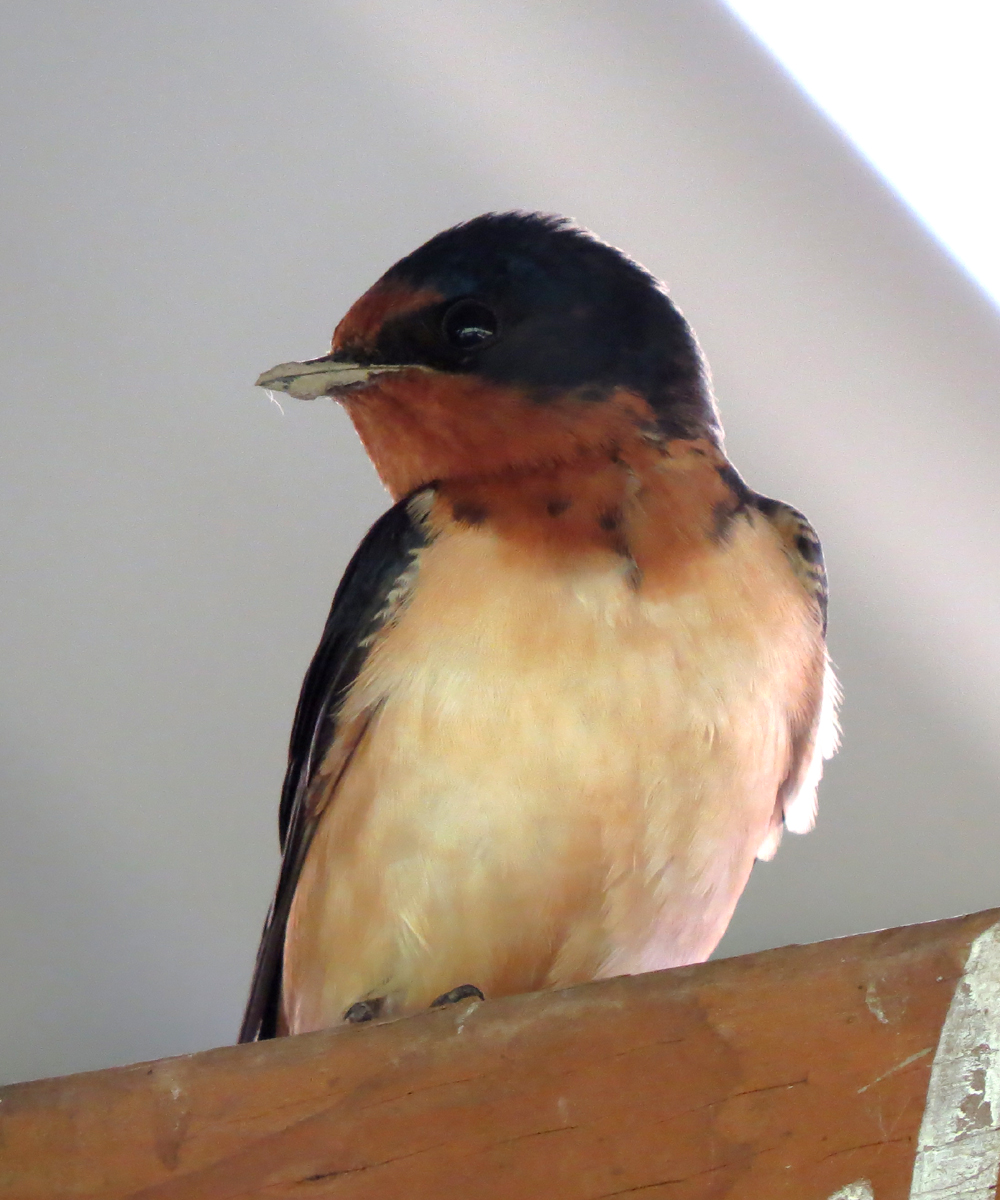
barn swallow 1On a less gruesome note, a pair of Barn Swallows was building a nest in the observation platform on Reeder Road.

barn swallow 4

barn swallow 5

IMG_1991This is a view from the end of Rentenaar Road, lots of flowers and Great Egrets.
 

Hooded Merganser


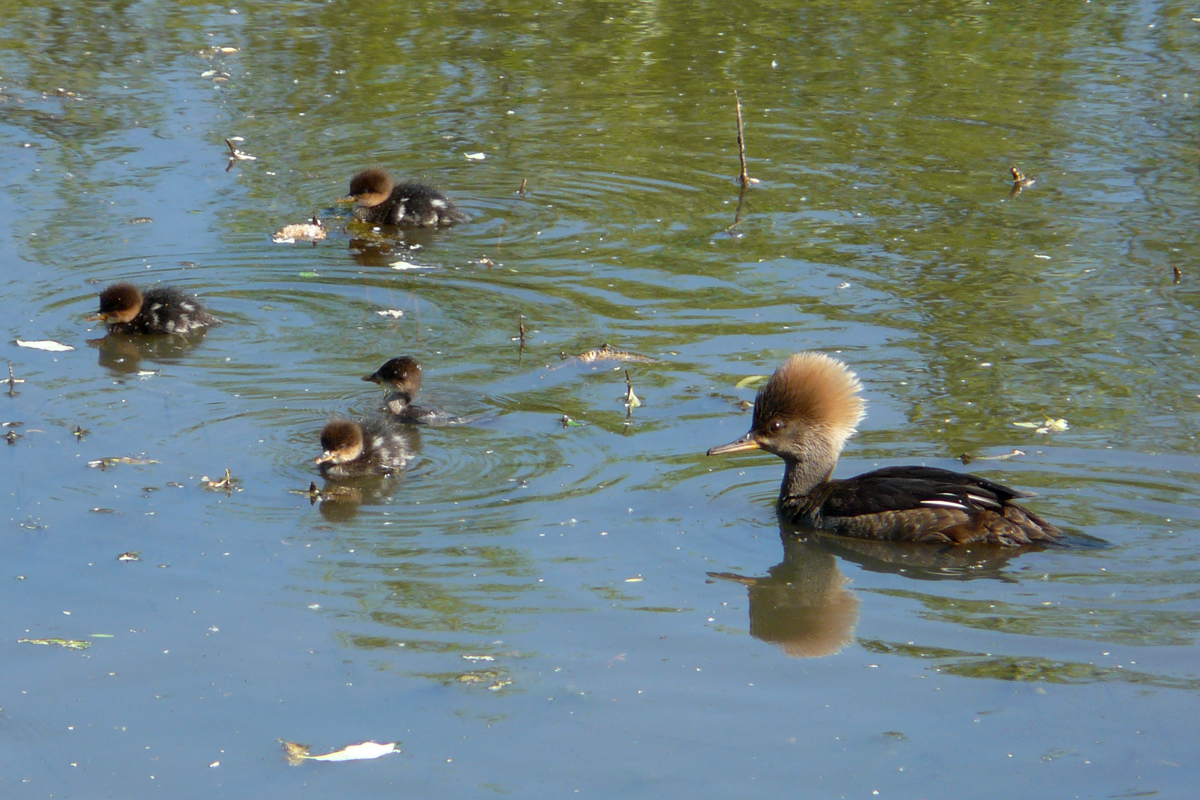
This Hooded Merganser, found at Jackson Bottom Wetlands Reserve, had a brood of 10 little ones. The young birds were spread out over a large area, so I could never get them all in the same frame. They were actively feeding among the emergent vegetation, and a few of them were diving.

Hooded Mergansers nest in hollow trees or nest boxes, just as Wood Ducks do.

Malheur NWR

Malheur National Wildlife Refuge is one of the most popular birding destinations in Oregon, not just for the abundant expected species, but also for the eastern vagrants that turn up there every year. Our Birdathon team from the Audubon Society of Portland visited the area June 7-9.


The trees and shrubs around the refuge headquarters are very attractive to birds.


Pine Siskins


Yellow-headed Blackbird


Western Tanagers were abundant in the trees and in the sagebrush.


The lawn at headquarters hosts a large colony of Merriam’s Ground Squirrels.


The view from Buena Vista, with Steens Mountain in the background


In warmer weather, this part of the state is great for herps, like this Western Fence Lizard.


Eastern Kingbird


Black-necked Stilt


Common Nighthawk


Northern Flicker, nesting in the town of Frenchglen, near the southern end of the refuge

Fields Oasis

The oasis at Fields (Birding Oregon p. 19) is a tiny site, but one of the better known hotspots in Oregon. This little clump of willows around a spring is surrounded by miles of sage steppe, so it is very attractive to species normally found in woodland habitats.


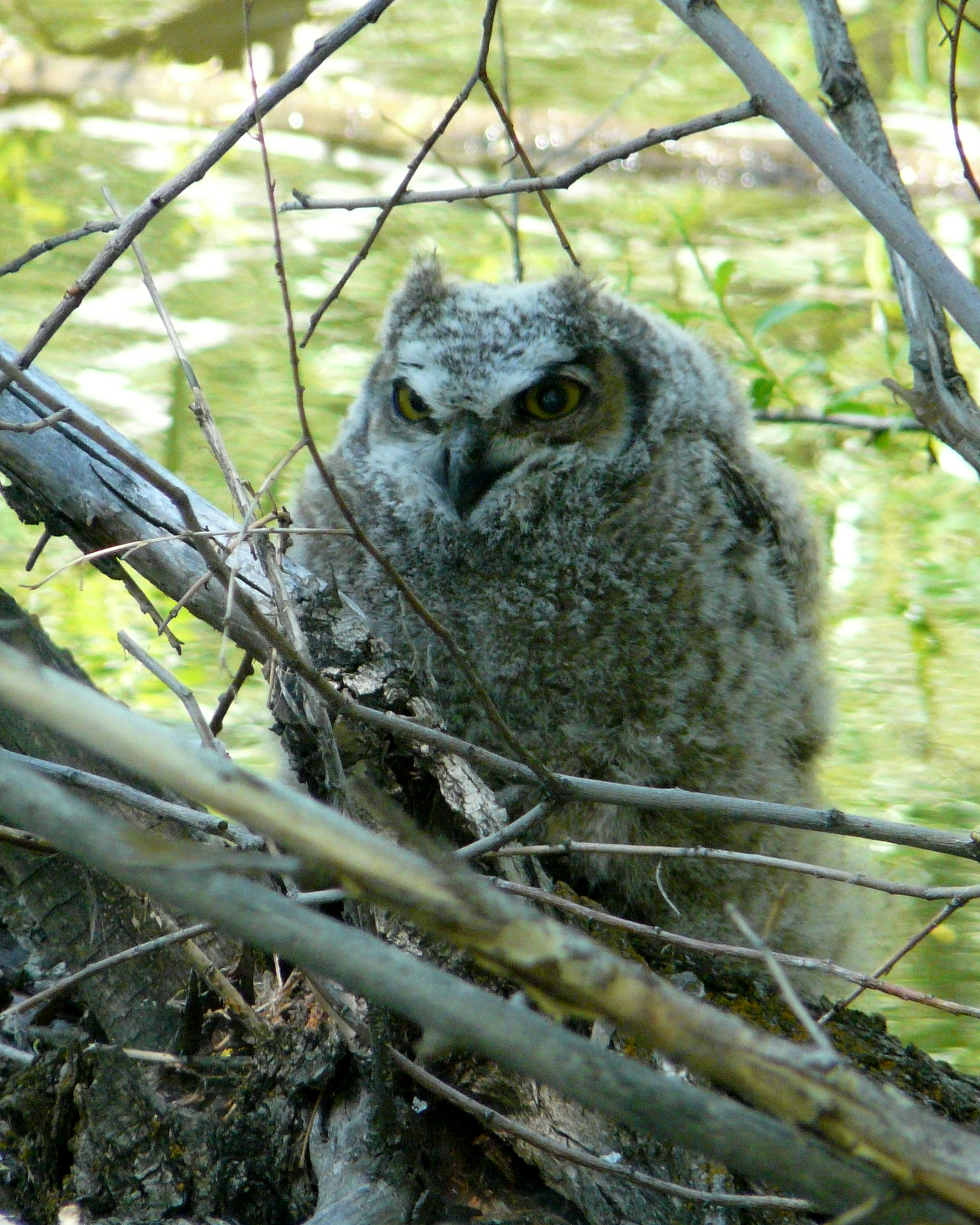
A pair of Great Horned Owls can usually be seen here.


This adult was sitting on a fallen tree right over the water.


They were keeping track of this little guy.


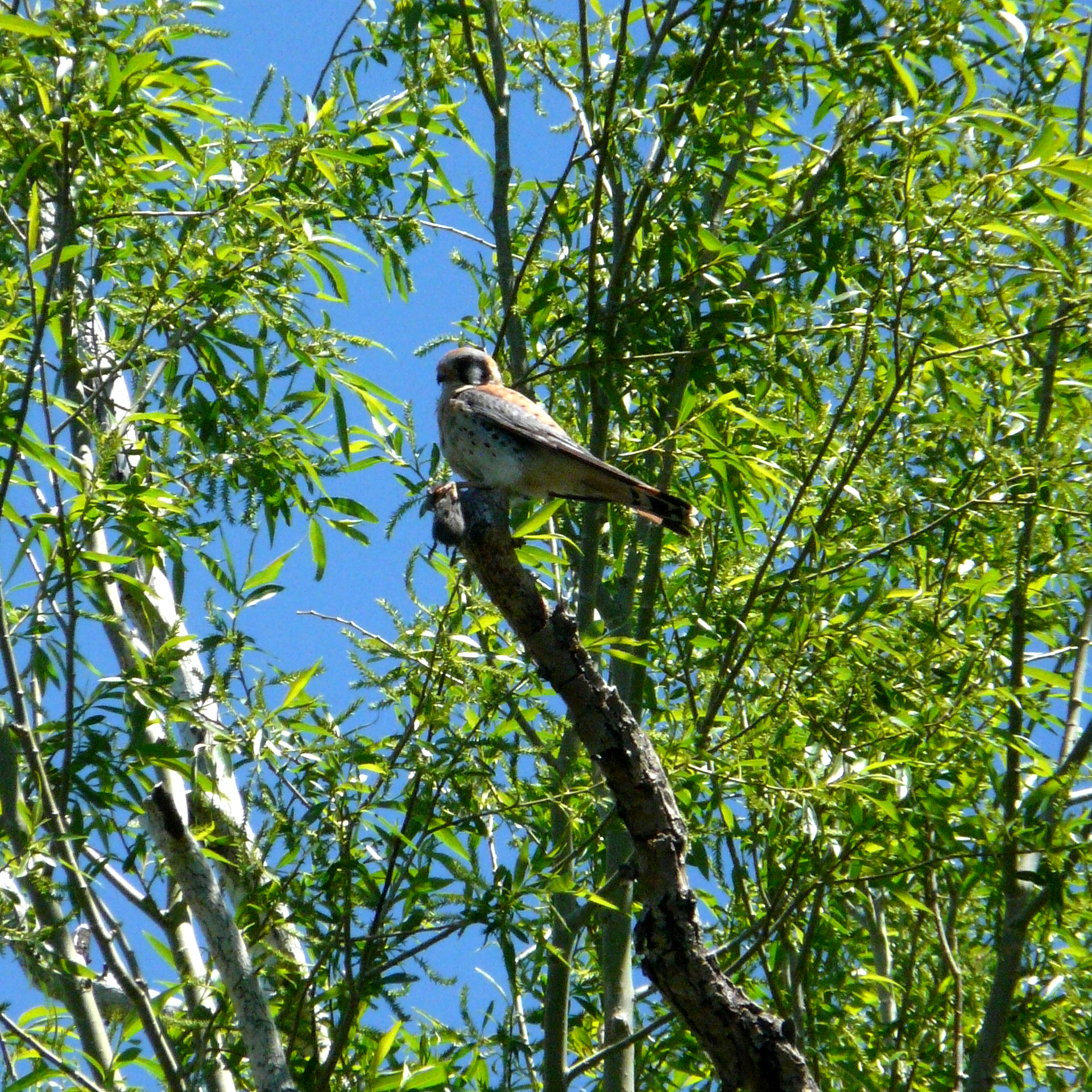
A pair of American Kestrels were also nesting at the oasis. Here is the male with a rodent.


The big attraction for birders is the possibility of vagrants from the east. On this day a Northern Parula was the highlight. Other eastern warblers had been found the week before, and still others appeared later. One never knows what will show up on a given day.

Klamath Basin

Here are some photos from a recent trip to the Klamath Basin.


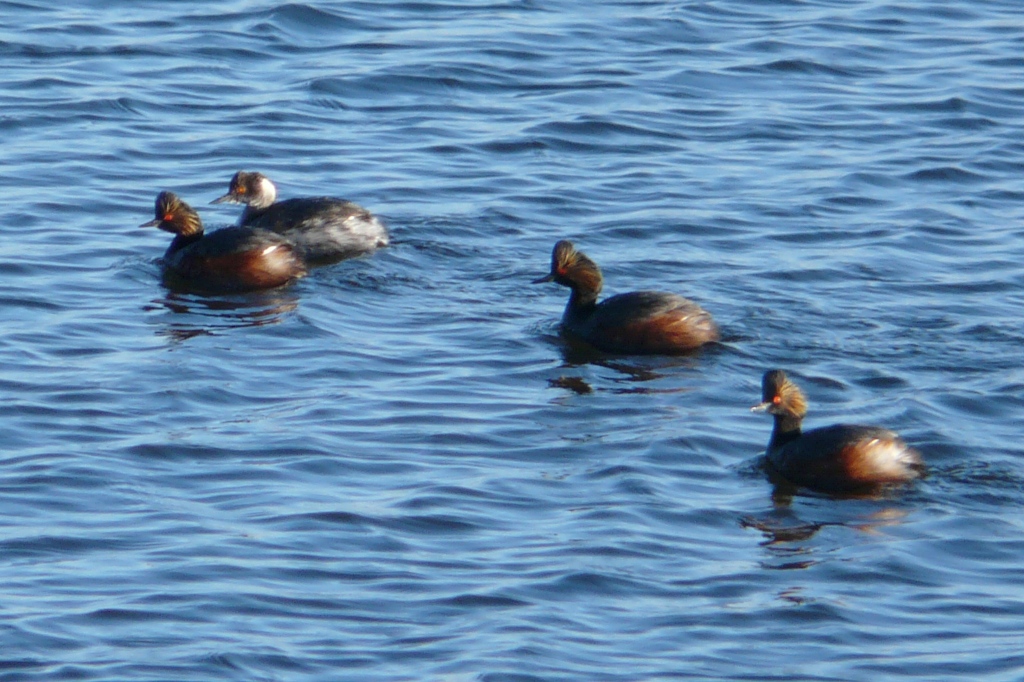
Eared Grebes are common  in the wetlands along State Line Road (Birding Oregon p. 116). The second bird from the left is still in basic plumage, while all the other birds seen that day had already molted into alternate plumage.


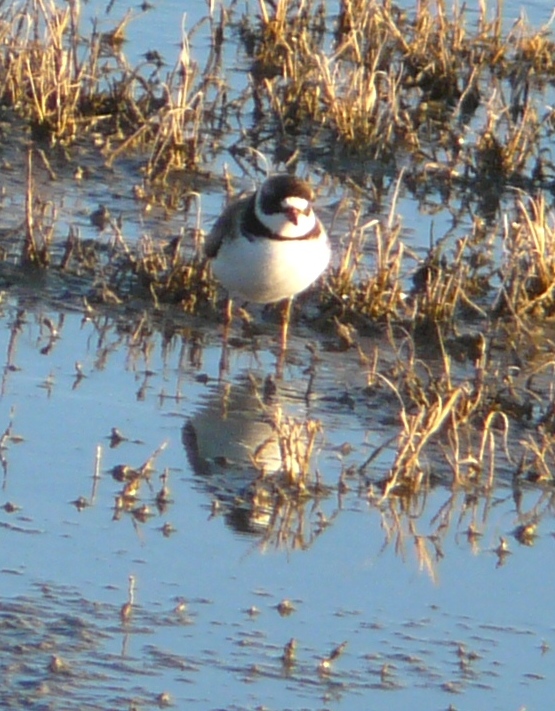
Shorebirds, such as this Semipalmated Plover, can be found on the mudflats along State Line Road.


This Pied-billed Grebe was nesting at Wood River Wetlands (Birding Oregon p.111).

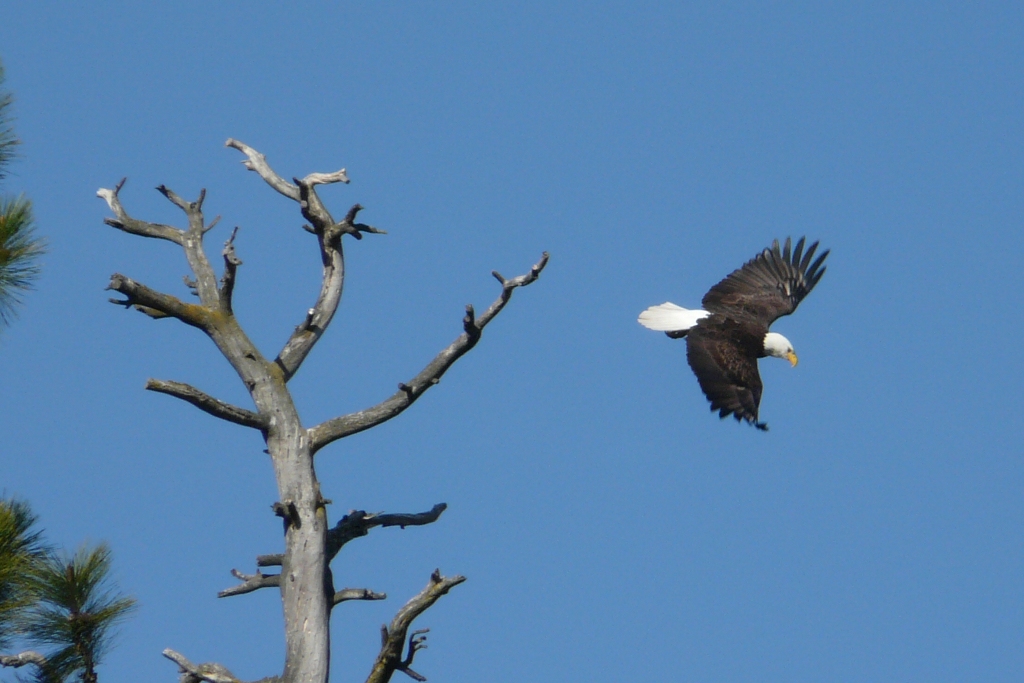
The Klamath Basin is famous for its large wintering population of Bald Eagles, but a few pairs  stay to nest. This bird was found in Moore Park in Klamath Falls.


Moore Park is also home to Mule Deer. Note the fuzzy antlers starting to grow on the deer in the center of the photo.

Sauvie Island

Here are a few recent shots from Sauvie Island (Birding Oregon p. 55).


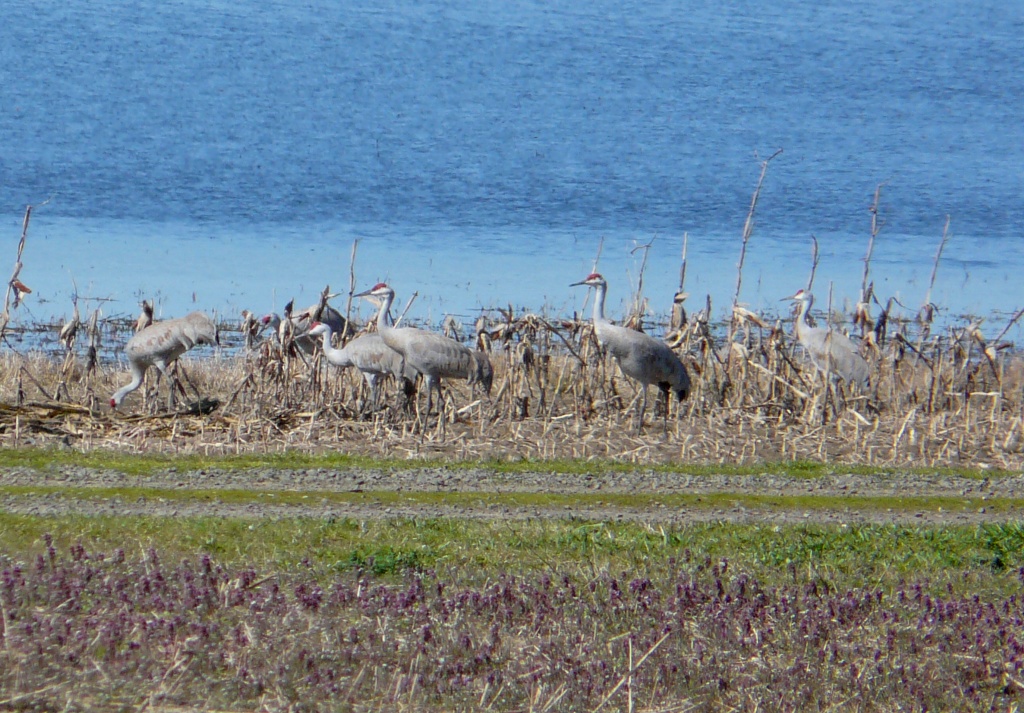
Sandhill Cranes are still present in good numbers.


Here are some Sandhills with three Dusky Canada Geese (Branta canadensis occidentalis). Note the red plastic collar on the goose on the far left. That is a quick way to identify this subspecies.


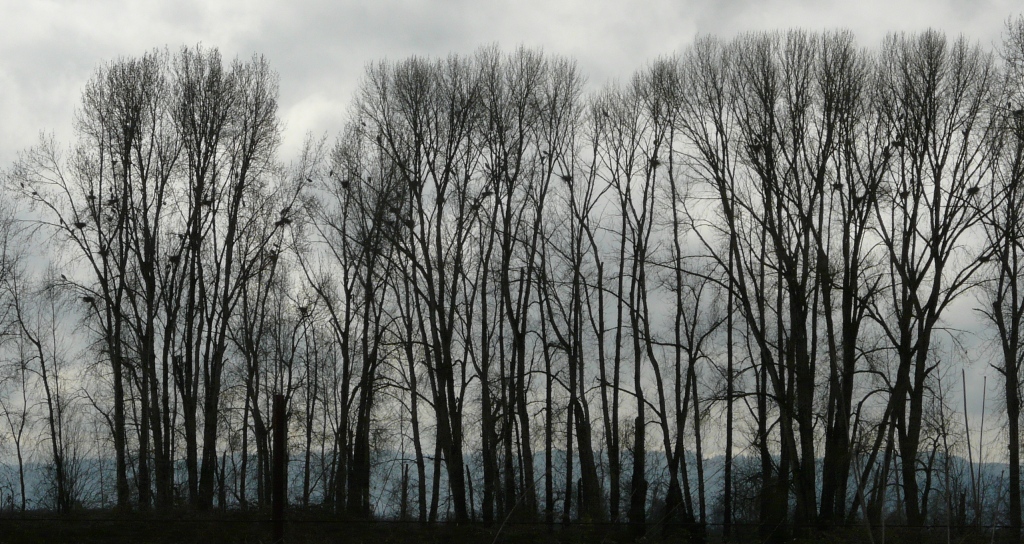
While the Sandhill Cranes and Dusky Canada Geese will fly to Alaska to nest, the Great Blue Herons are in full nesting mode now on Sauvie Island. Here is a section of a rookery in a distant tree line. You can see the bulky nests and, if you look closely, several birds perched in the branches.

Brown-headed Cowbird

bh cowbird 2

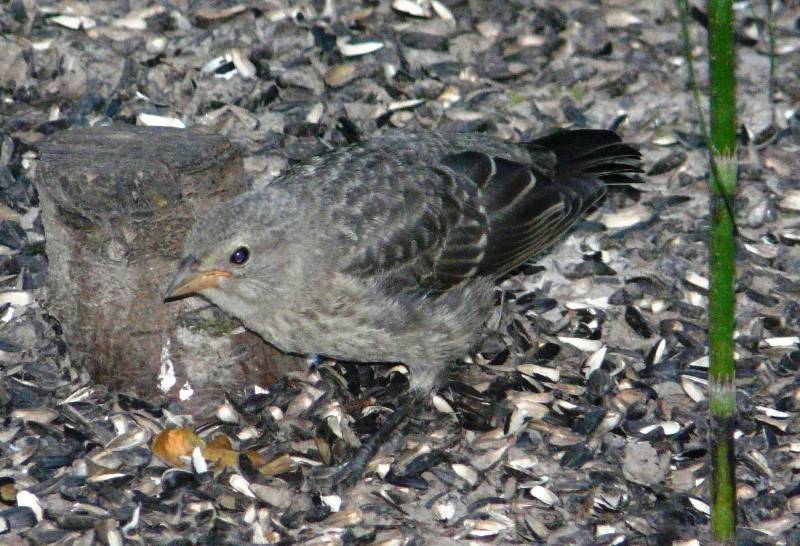
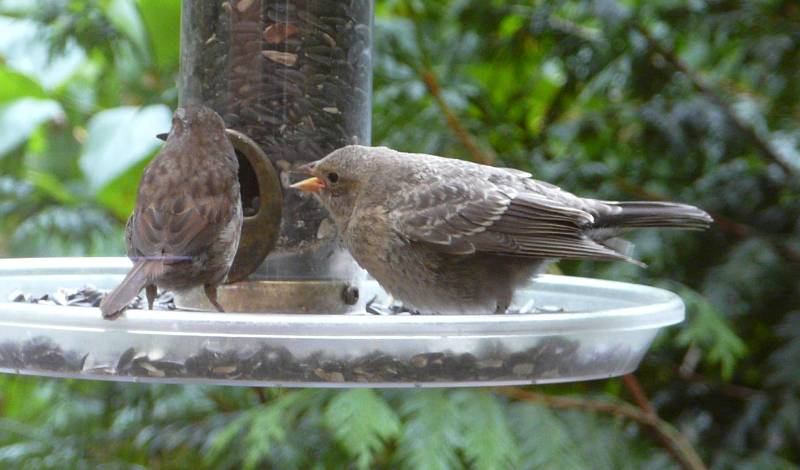
Two Brown-headed Cowbird fledglings have been hanging out at the feeder lately. This species is a parasitic nester, laying eggs in the nests of other species. Historically, Brown-headed Cowbirds were common in the Great Plains, where flocks would follow wandering herds of American Bison. Since the bison herds didn’t stay in one place long enough for cowbirds to nest, it makes sense that these birds would “adopt” their offspring out to other birds. As forests in the east and west were cleared, creating edge habitat, Brown-headed Cowbirds greatly expanded their range, which now covers most of North America. This has led to the decline of many eastern songbirds, as young cowbirds displace the young of the host species.

song sparrow - bh cowbird
The two birds coming to my feeder were being fed by a Song Sparrow, one of the more common hosts of Brown-headed Cowbirds. Cowbirds have been known to lay eggs in the nests of over 200 different species, including Blue-winged Teal, Ferruginous Hawk, and Ruby-throated Hummingbird. These species do not successfully raise young cowbirds, but enough eggs end up with compatible hosts to create a strong cowbird population. (Female Brown-headed Cowbirds can lay up to 40 eggs in a year.)

bh cowbird on feeder
This youngster is feeding himself. After leaving their host families, young cowbirds find others of their kind and form flocks.

Swallow Nests

barn swallow back
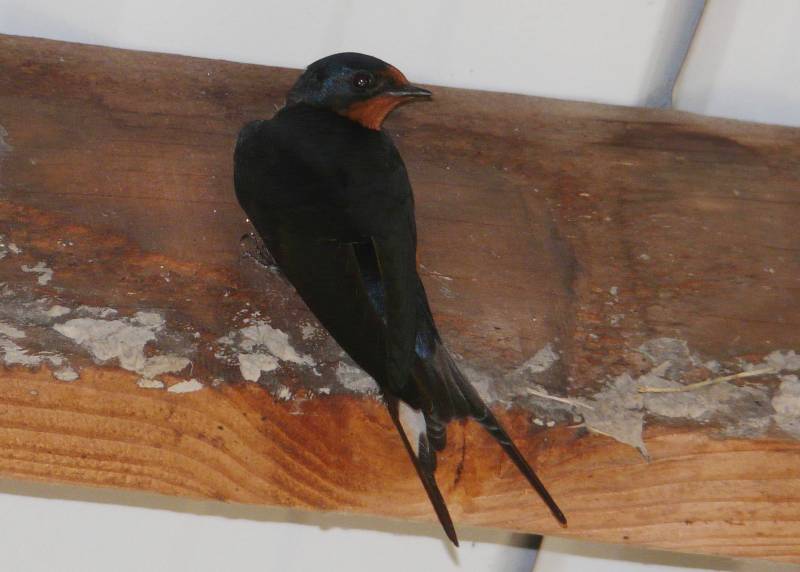
Barn Swallows (pictured here) and Cliff Swallows build nests almost entirely out of mud. Historically, these structures were built on cliffs or near the mouth of caves, but are now most often found on man-made structures.

barn swallow front
The disadvantage of building nests in buildings is that sometimes the mud does not stick well to the smooth wood. Sometimes people remove the nests in an attempt to prevent a build-up of droppings. At this location, someone decided to give the birds a hand.

barn swallow berry box
A cardboard berry carton was tied to a rafter, and the Barn Swallow has used it as a foundation for her nest. You can see the mud, plant fibers, and feathers sticking out over the top of the carton. Notice how the rafter is nearly covered with mud from previous nests or nesting attempts.

cliff swallow nest
Here is a beautifully formed Cliff Swallow nest. The overhanging metal serves as the top of the structure, reducing the amount of mud needed. Notice how the mud at the bottom of the nest is a different color and includes plant fibers, suggesting that this nest was built on the foundation of an old Barn Swallow nest.