Birdathon

Our team for the Audubon Society of Portland’s Birdathon made a 360-mile loop through the Willamette Valley, across the Cascades, and east to the high desert. We tallied 110 species for the day. Here are a few.

Acorn Woodpeckers are reliable near Ankeny NWR. This one was hanging out in a nest hole.
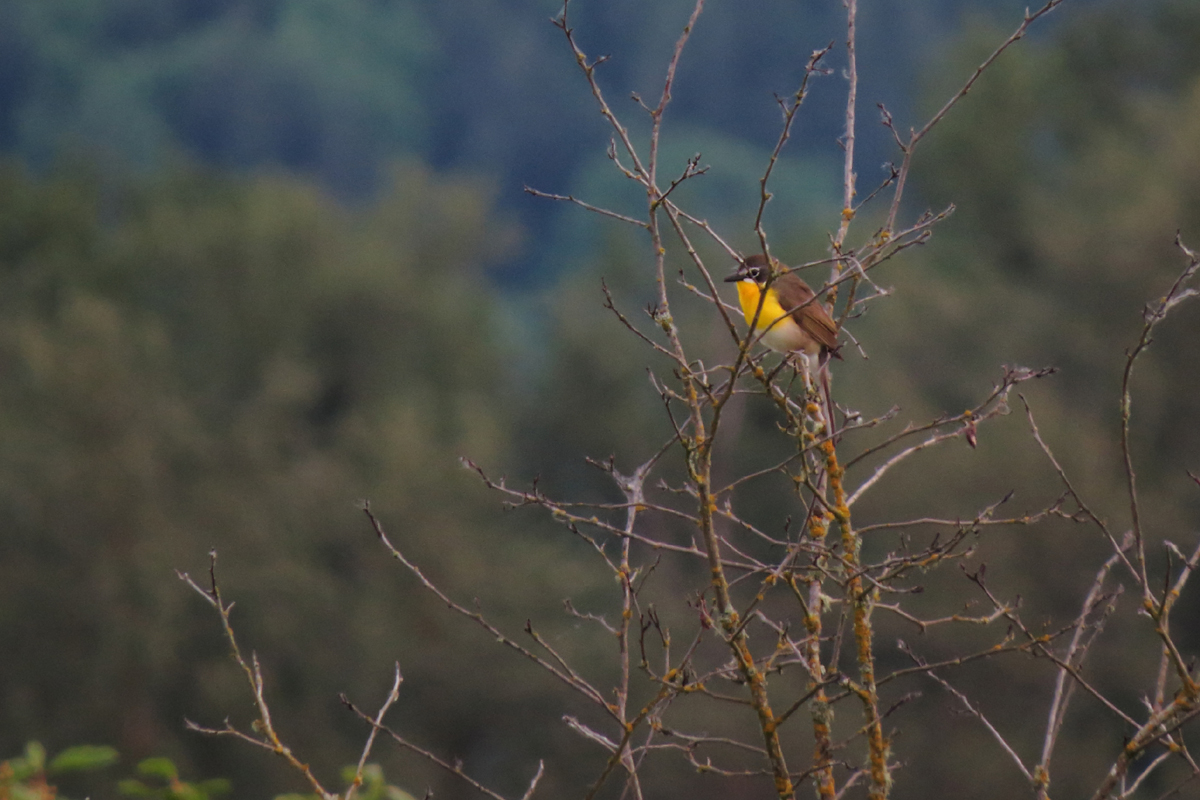
Also at Ankeny, this Yellow-breasted Chat posed and sang for us.

This Pygmy Nuthatch was nesting at Black Butte Ranch, just east of Sisters.
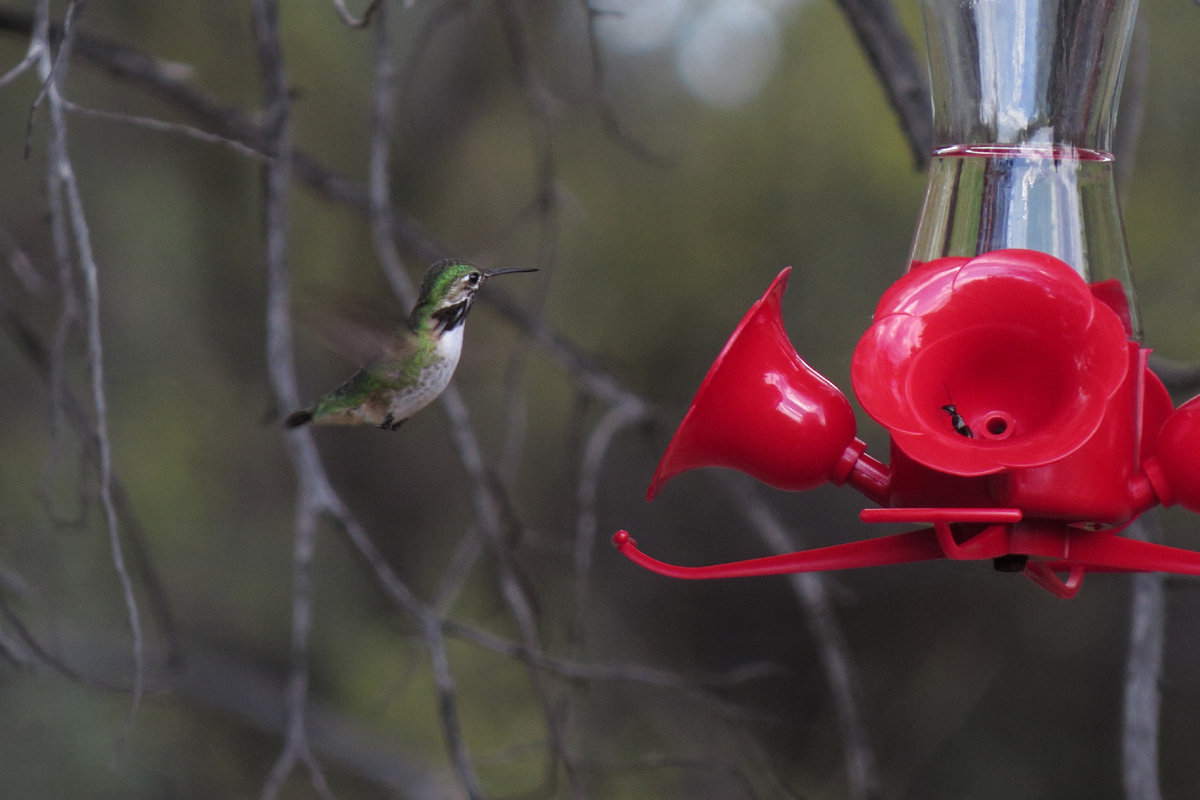
Calliope Crossing, north of Sisters, came through with several examples of its namesake hummingbird. The feeder, placed by one of my teammates on a scouting trip, made watching these little guys easier.
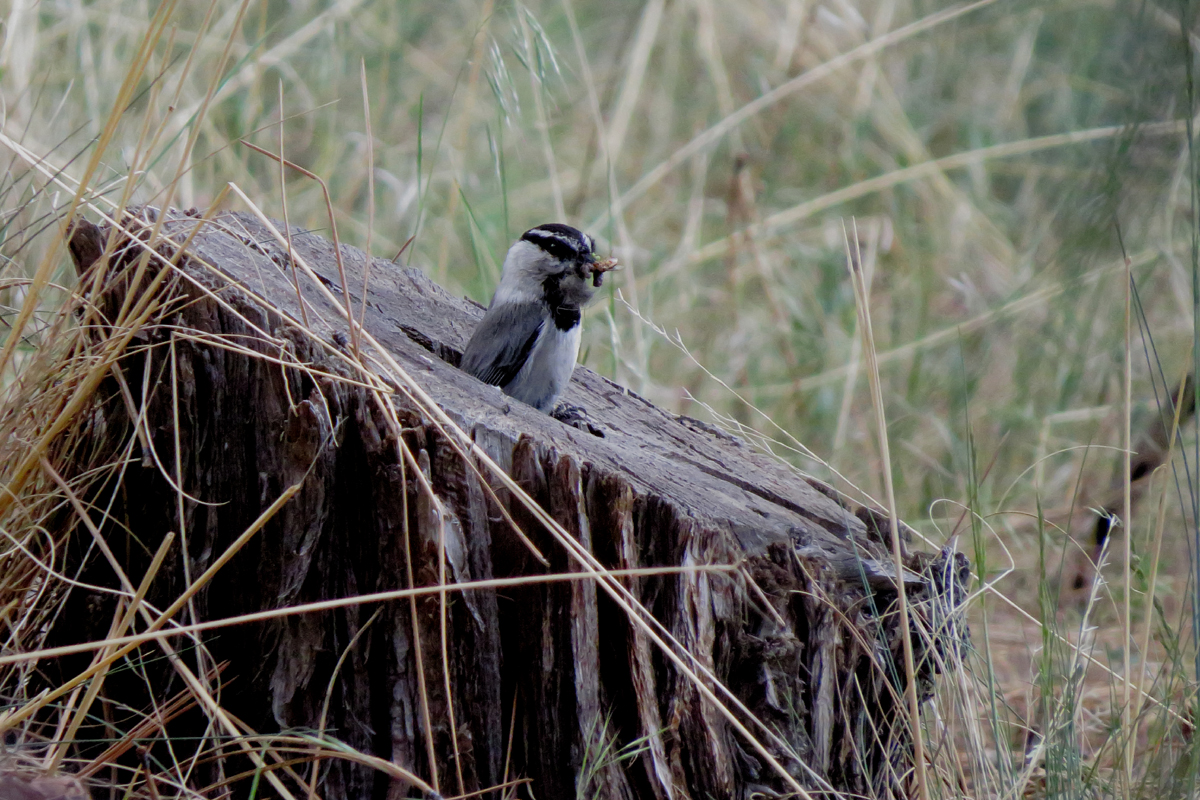
Mountain Chickadees were nesting in a hollow stump just inches from the ground.
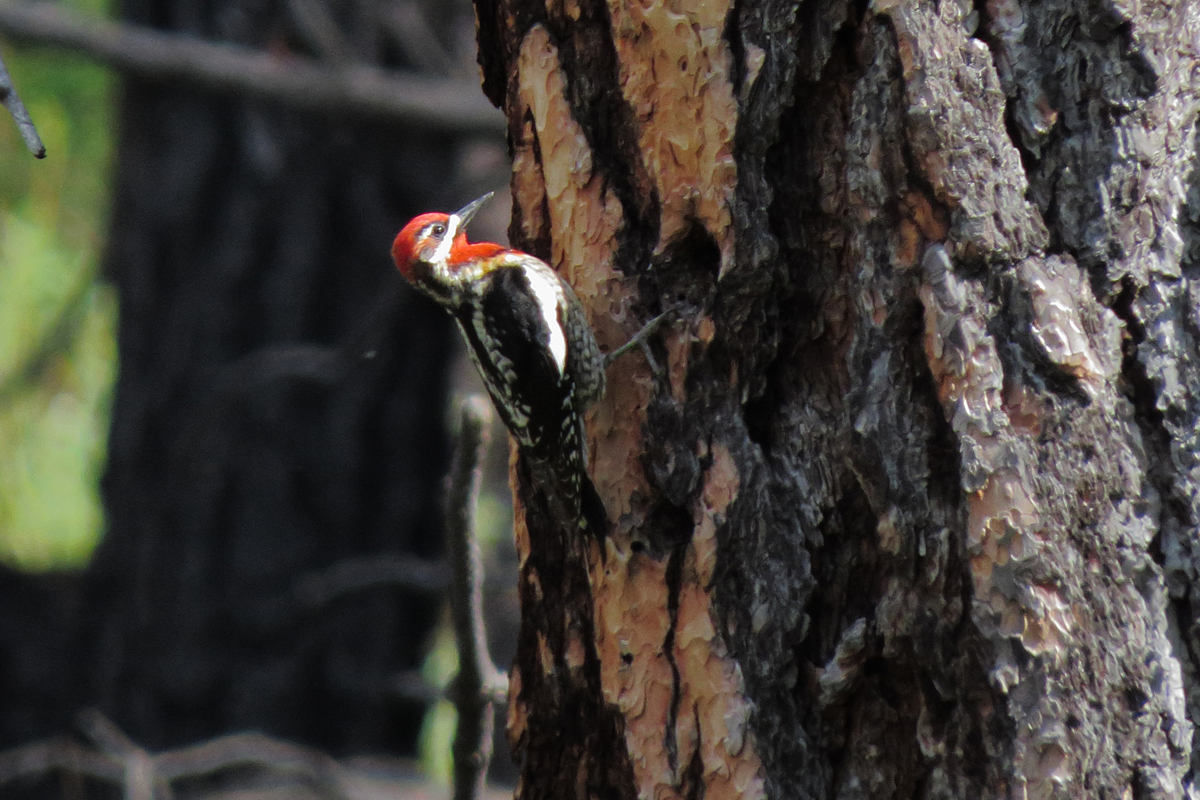
Calliope Crossing is also famous for hosting a great variety of woodpeckers. This is a hybrid Red-naped X Red-breasted Sapsucker.

At Smith Rock, we watched this Golden Eagle nest with one downy chick.

Bald Eagles were also nesting at Smith Rock.

Ogden Wayside hosted a colony of ground Squirrels. I believe these are Merriam’s Ground Squirrels, although I have trouble distinguishing Merriam’s from Belding’s Ground Squirrel. I need to do some rodent research.

It was a fun, albeit exhausting, day. There is still time to contribute to Portland Audubon’s fundraiser. Click here for more information.


Ridgefield NWR

On rare occasions, I cross the Columbia River to visit Washington. When the weather is less than stellar, the auto tour at Ridgefield National Wildlife Refuge offers a nice way to get close to wildlife without getting too wet.

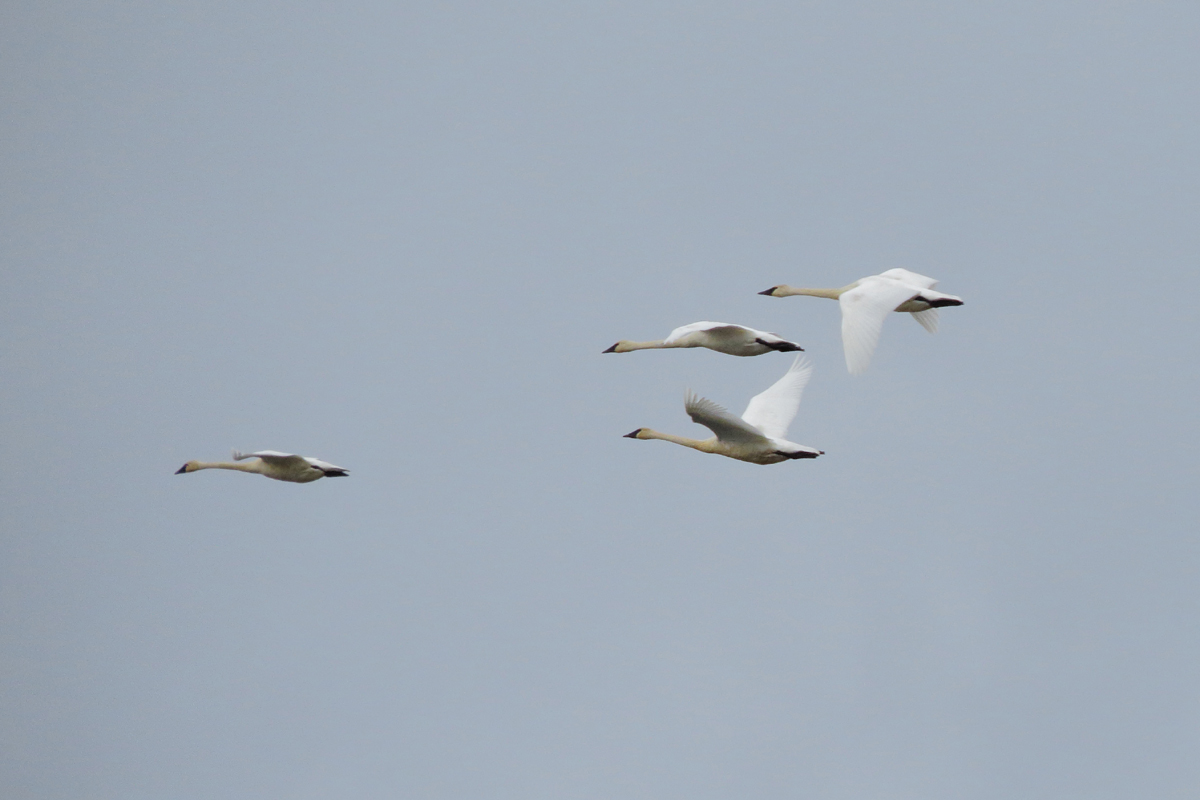
A lot of Tundra Swans are wintering at Ridgefield this year. There are Trumpeter Swans, too, but I did not get any close looks at them.
   Tundra Swan bathing

Northern Harriers are common throughout the refuge. This one was having a good stretch.
A family of Nutria put on a nice show. Invasive, but adorable.

Columbian White-tailed Deer, a threatened subspecies, have been introduced to the refuge in recent years. This fawn was born last spring, so at least some of the deer are making themselves at home. Unfortunately, I believe many of the Coyotes that used to be so visible on the refuge have been “removed” to make conditions safer for the rare deer.

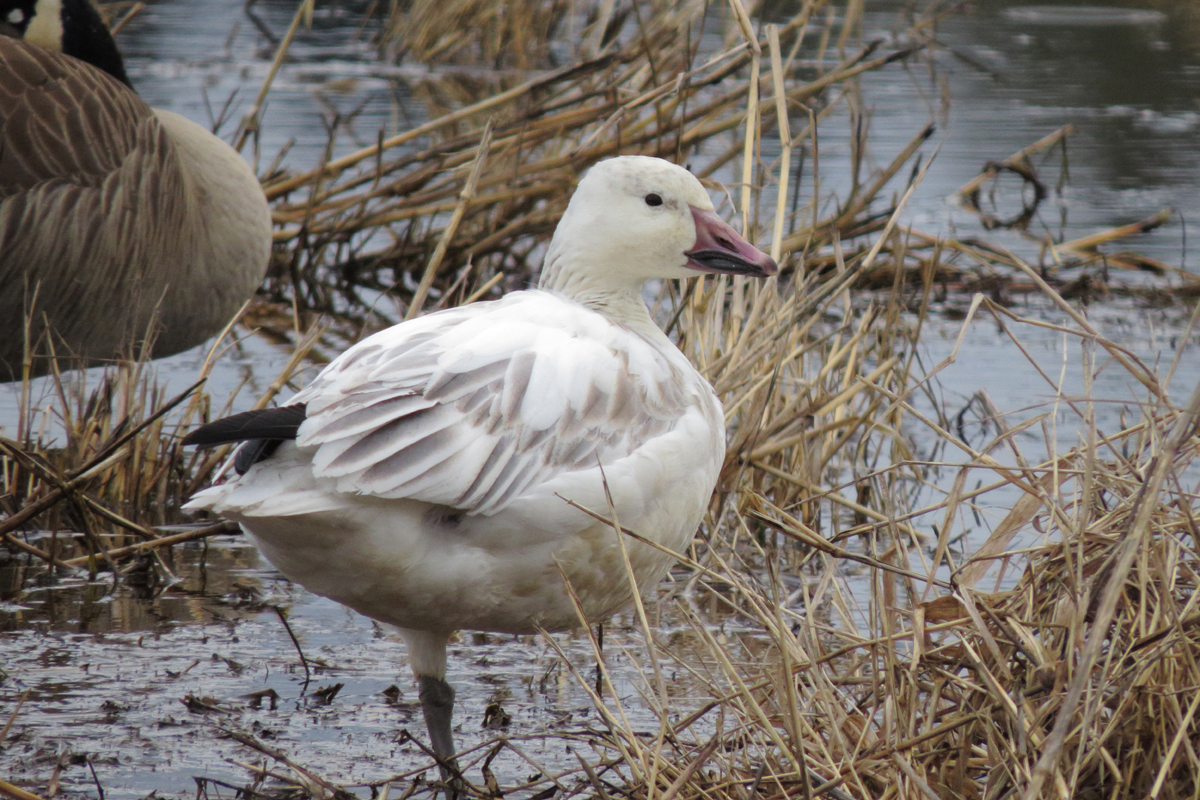
This lone Snow Goose was hanging out with the numerous Canada and Cackling Geese.

Northern Pintail

Sandhill Cranes were feeding in the grassy fields.

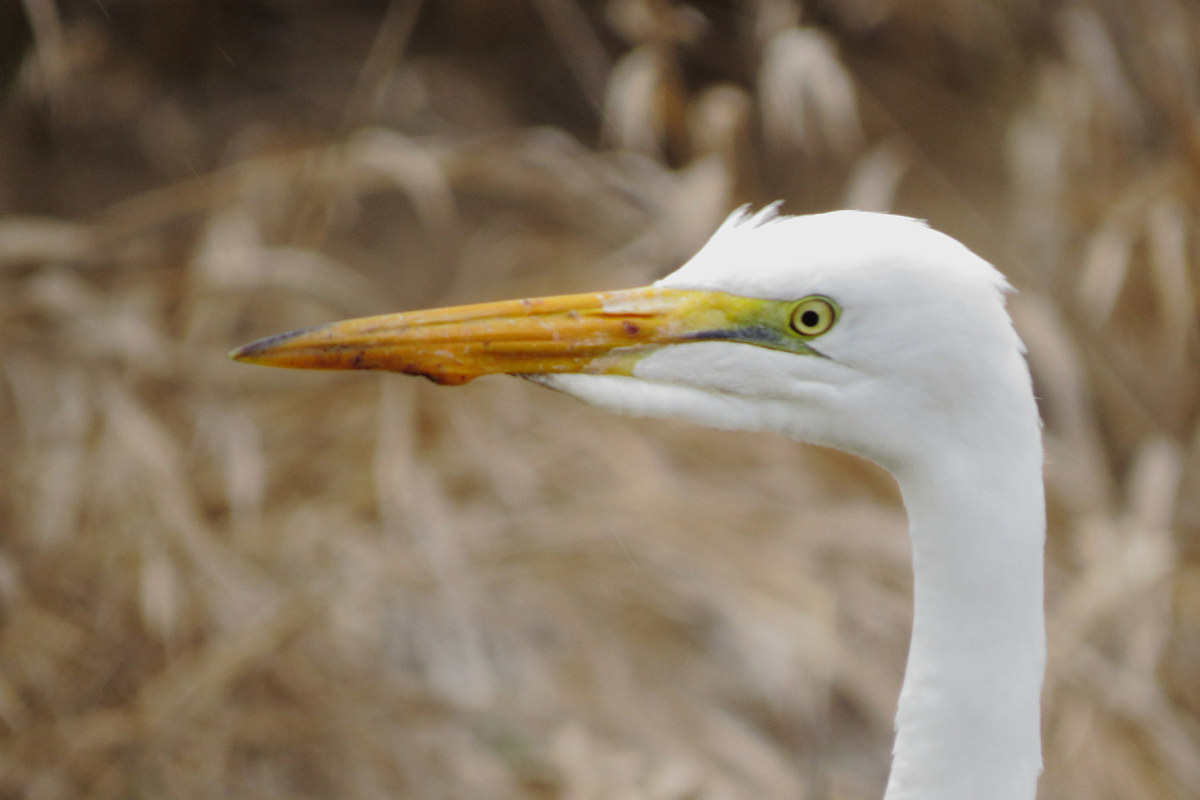
The last time I visited Ridgefield was during my mom’s final visit to Portland. Her mobility was not great, so the auto tour provided a great way for us to get out to do some birding together. During that visit, the highlight was a cooperative American Bittern. I didn’t find any Bitterns on this trip, but this Great Egret did his best to fill the void.

Koll Center Wetlands

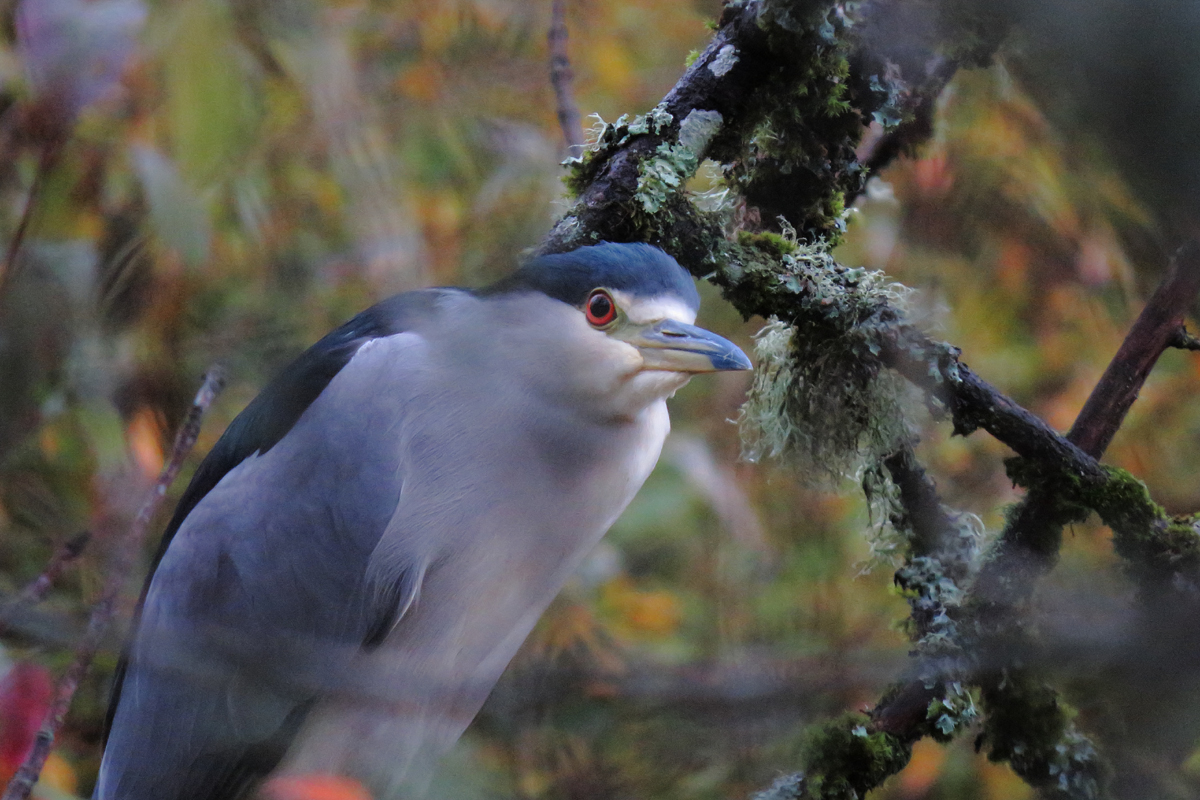
A couple of Black-crowned Night-Herons has been hanging out at Koll Center Wetlands recently. This spot is strictly parking lot birding (pull up, get out of the car, and scan the pond), but it has attracted more than it’s share of interesting sightings – like Black-crowned Night-Herons.
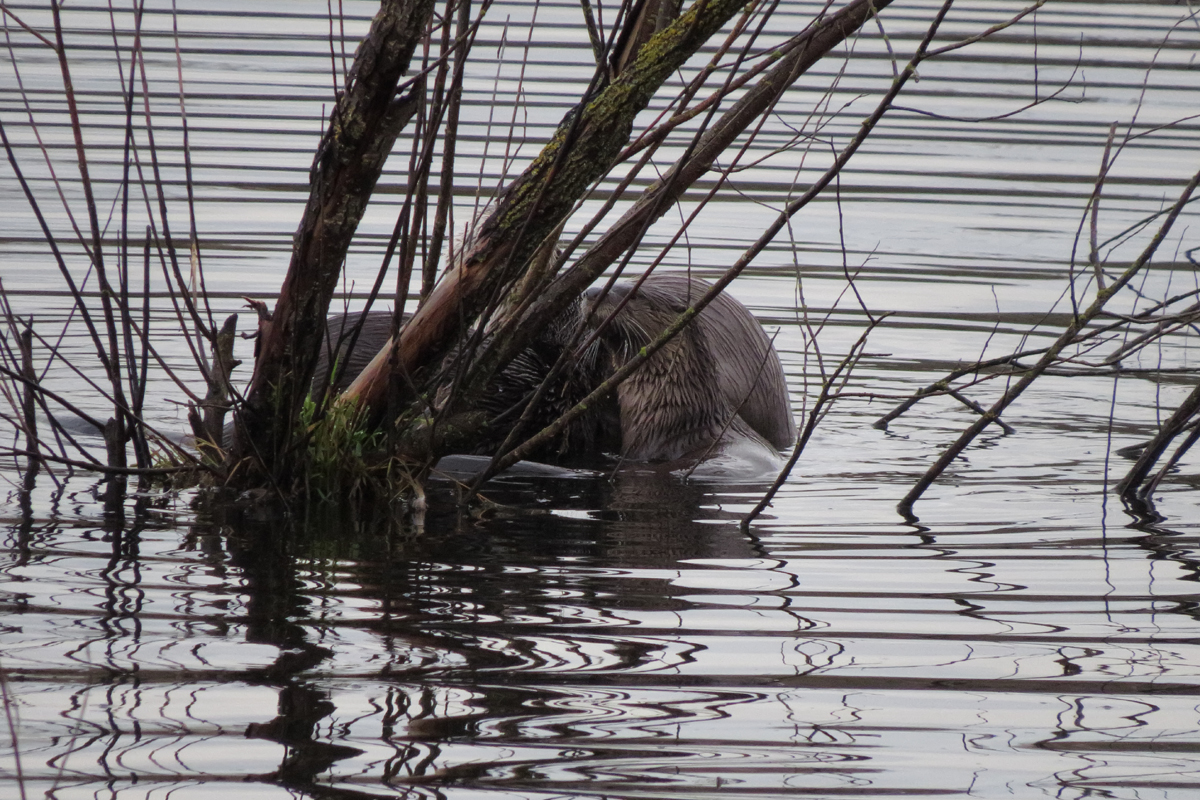
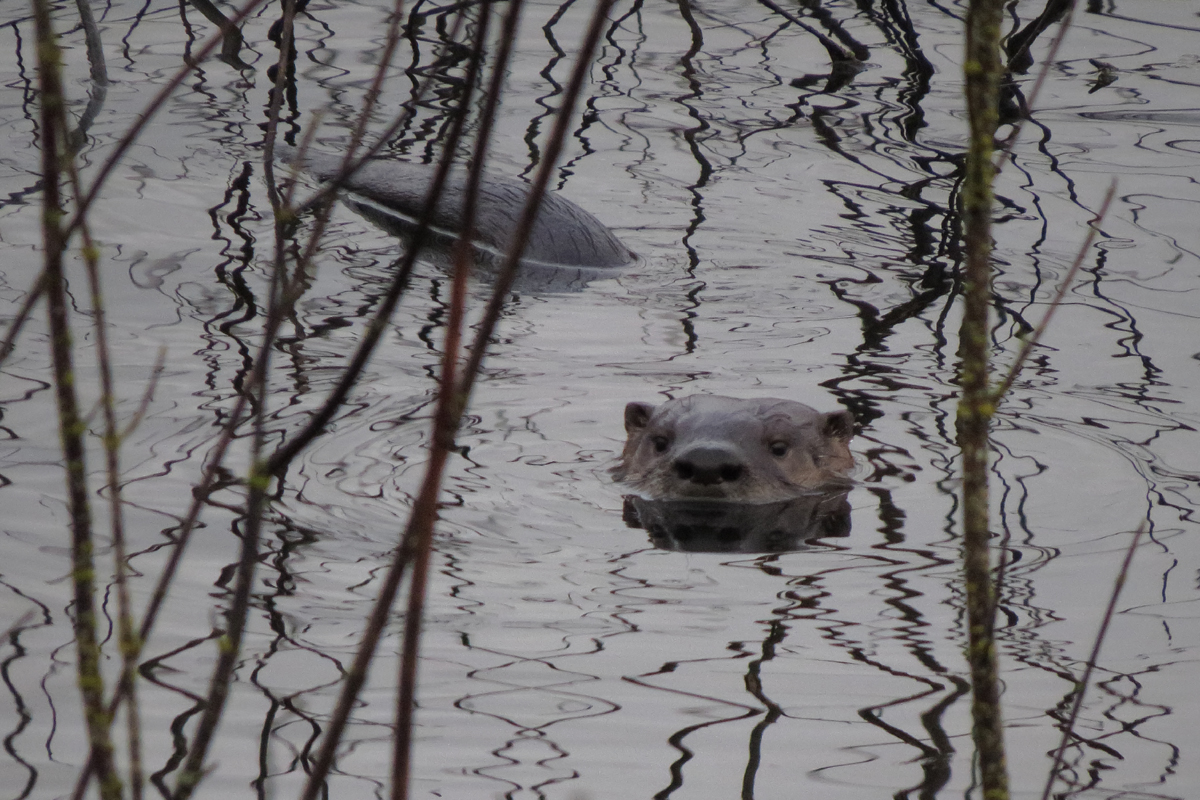
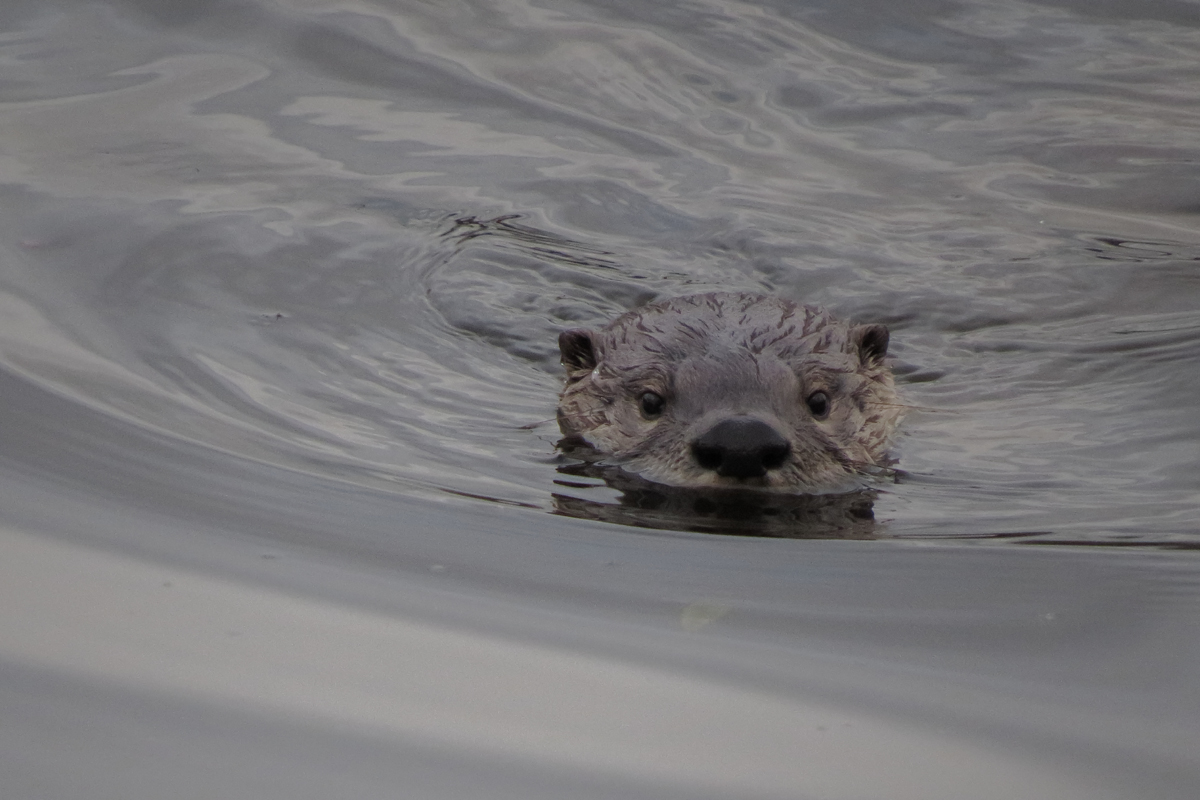
Other recent celebrities at this site include a group of up to six River Otters. These are such neat animals. It is a treat to find them in such an urban setting.
Common Mergansers, like these two males, are some of the many species of waterfowl currently using the wetlands.
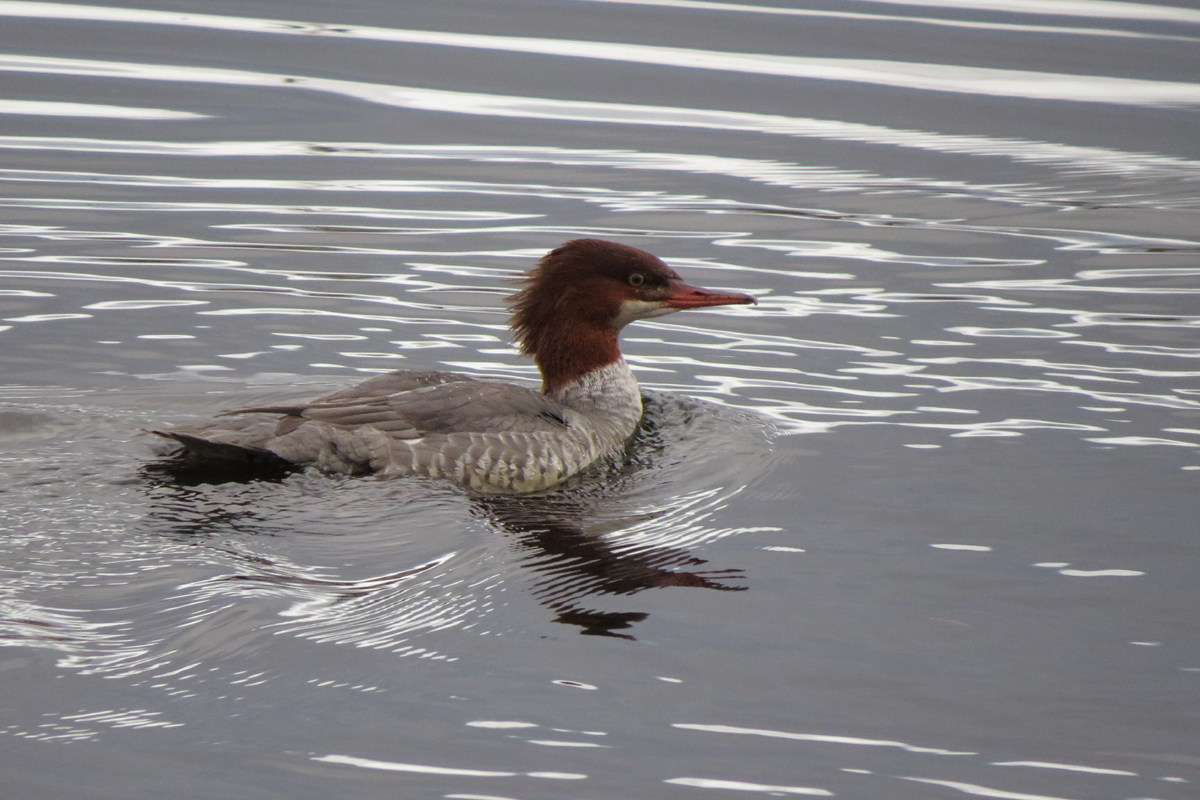
female Common Merganser

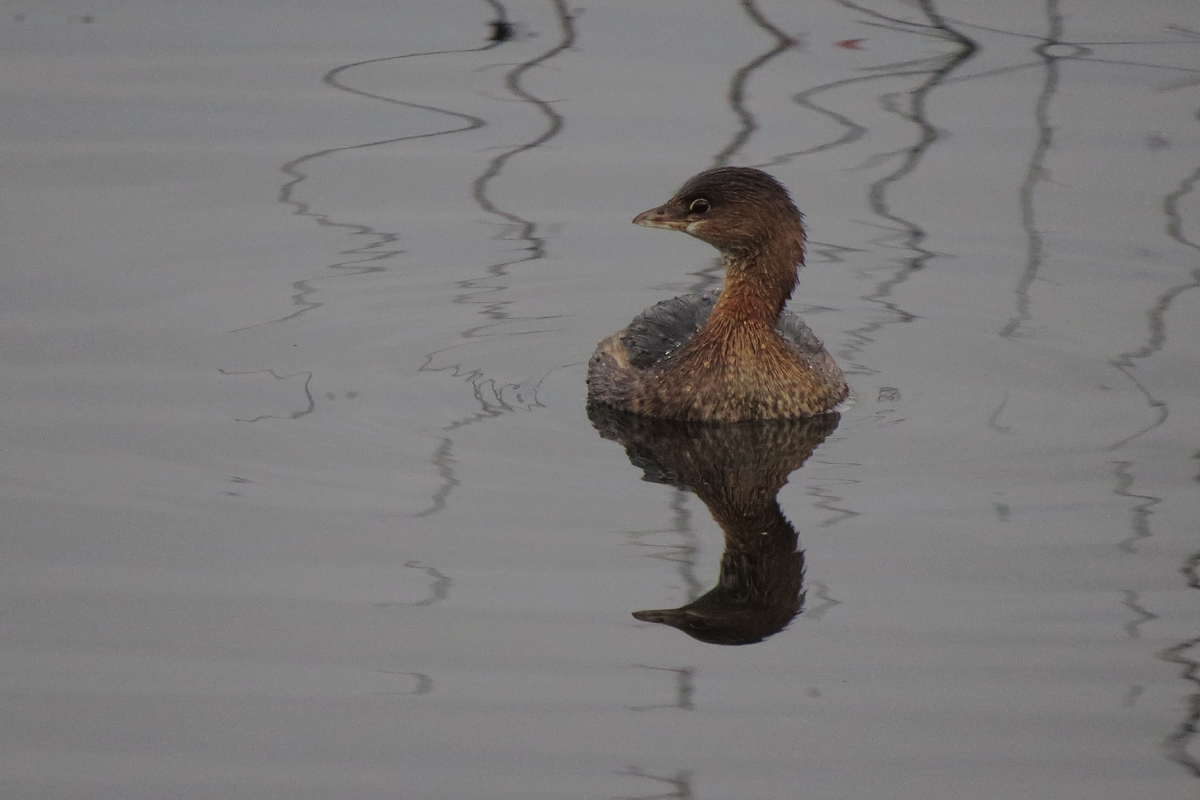
Pied-billed Grebe
Nothing too rare or exotic, but we are lucky to have this little urban wetland to spice up an otherwise dreary autumn day.

Mount Hood

At least once a year I like to visit the moonscape that is Mount Hood above Timberline Lodge. The birding there is hit or miss, sometimes yielding great spectacles like a flock of 200 Gray-crowned Rosy-Finches, and sometimes offering little besides a distant Common Raven. This trip was somewhere in between.

Every trip to the mountain results in at least one photo of a Golden-mantled Ground Squirrel. Yes, we see them every time, but their cuteness knows no bounds.

Mountain Bluebirds are expected here in the warmer months.

Townsend’s Solitaires are a little harder to come by, but are usually around in small numbers.

The sun at this elevation is pretty intense, making even this Common Raven glisten.

Another bird on a stick; Red-tailed Hawk. I hope to see migrating raptors when I visit Timberline in autumn. There wasn’t much movement on this day, but I did see several Red-tails, a Prairie Falcon, and at least one Sharp-shinned Hawk.

California Tortoiseshells were present in good numbers. I don’t know what they were eating, as all the blossoms had long since dried up.

So ends another visit to Timberline. While the birding varies, it is always fun to explore this part of the mountain.

Fernhill Wetlands

With the ongoing renovations taking place at Fernhill Wetlands, each visit throughout the year is a new experience. Most of the breeding species have done their thing, and the resident waterfowl have molted into ugly duck season. Water levels are still a little too high to provide shorebird habitat, but that should change soon enough.

brush rabbit
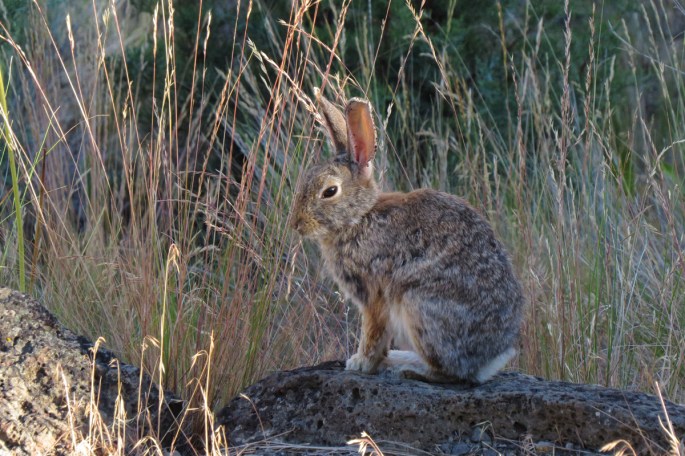
Afternoon temperatures have been getting quite warm, so the brush rabbits come out early in the morning to enjoy the cool. The backlighting on this guy highlights the blood vessels in his ears.

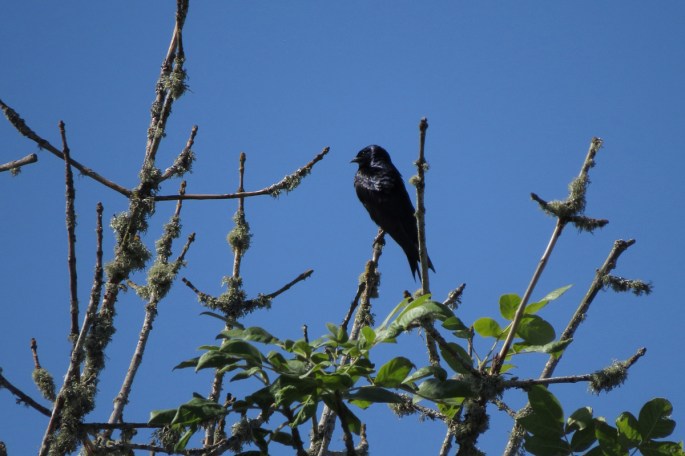
purple martin
Purple Martins are a new addition to Fernhill this year. A new nesting box installed beside the main lake has attracted at least one pair. If you build it, they will come.

cinnamon teal
These Cinnamon Teal were plowing through a thick mat of algae. Note the very large bills on these ducks, which help identify them in their summer plumage.

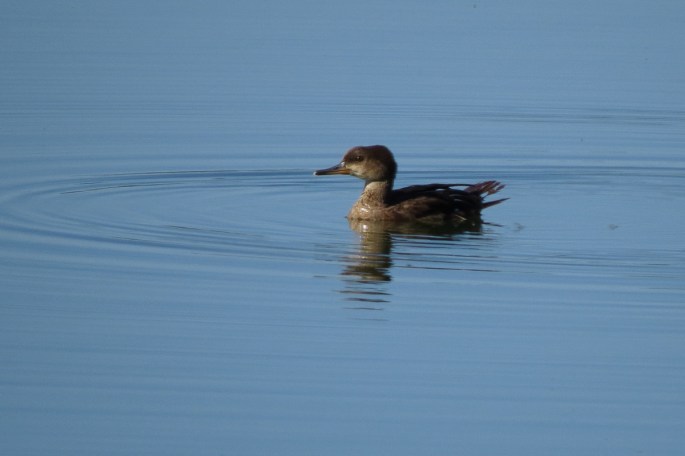
merg
This hatch-year Hooded Merganser was hanging out in the middle of the lake. The unusual habitat choice and the unfamiliar juvenile plumage caused many birders, myself included, to initially call this a bird a Red-breasted Merganser. While a Red-breasted had been documented at this site in May, closer inspection of this bird reveals the solid head shape and the slightly smaller bill of a Hooded. Another reminder to actually look at every bird and don’t rely on others to identify them for you. 

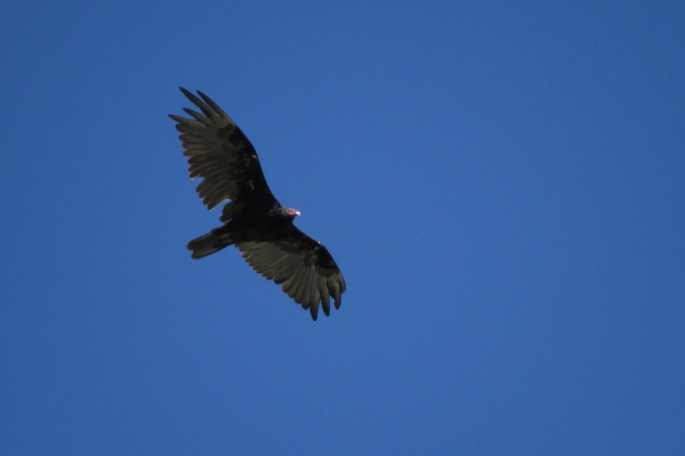
turkey vulture
Turkey Vulture, experiencing some wing molt

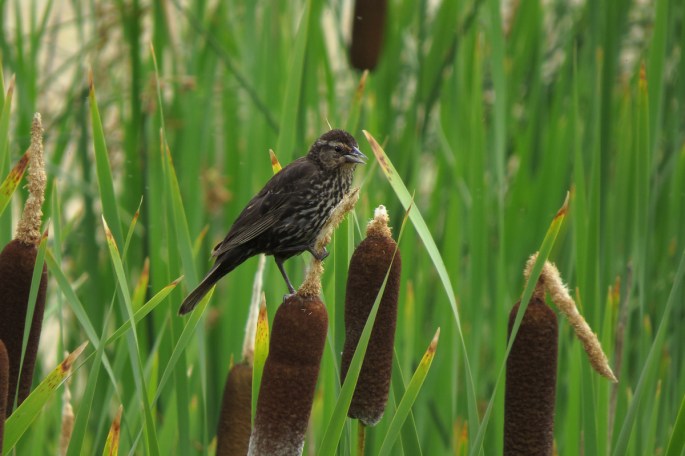
red-winged
This Red-winged Blackbird was one of a large flock feeding in the cattails.

barn swallow chicks
Some of the local breeders are working on a second clutch. These young Barn Swallows are waiting for someone to come feed them. Soon the power lines will be crowded with young swallows preparing for their first migration. 

Smith Rock State Park

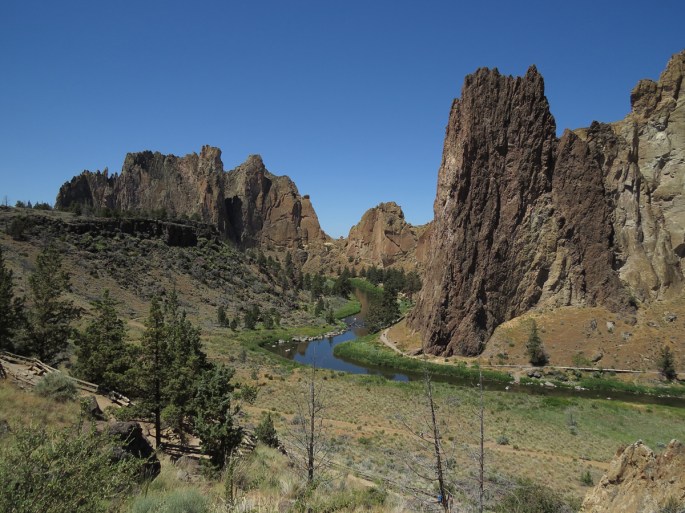
I hadn’t been to the dry side of Oregon for far too long, so I took a trip to Smith Rock State Park. The avian stars of this site are the White-throated Swifts that nest here. They did not disappoint, but those little winged rockets are far too fast for my photographic abilities.

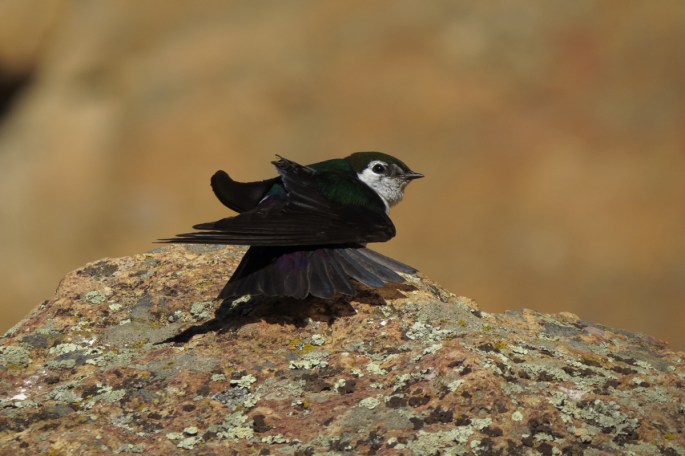
Unlike the swifts, the abundant Violet-green Swallows will occasionally pose for a photo.

There was apparently a good crop of Black-billed Magpies this year, so lots of youngsters were hopping around near the parking lot.

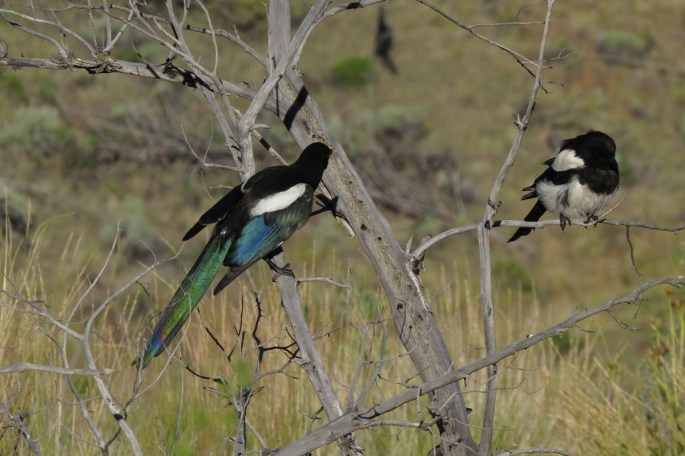
Direct sunlight and iridescence make for a lovely flash of color on these black birds.

Desert Cottontail. Note all the ticks on the edge of his ear.

itchy rabbit

I hiked over the rock formation on the aptly named Misery Ridge Trail, then back along the Crooked River. Rock Wrens were plentiful, but whenever I try to photograph that species I end up with crystal clear images of rocks with blurry birds on them.

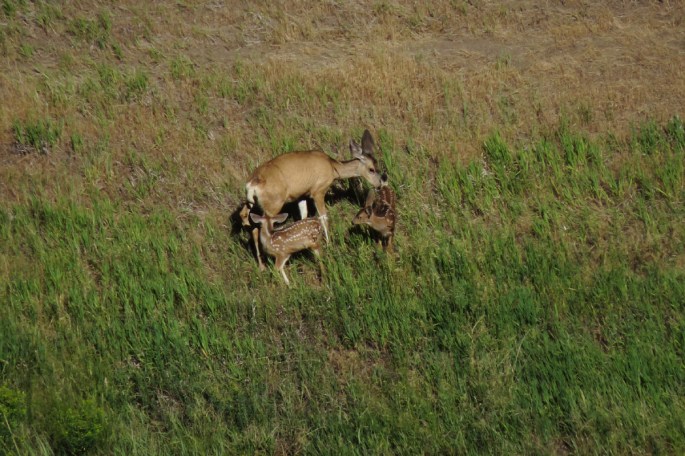
Mule Deer were common in the grassy areas along the river.

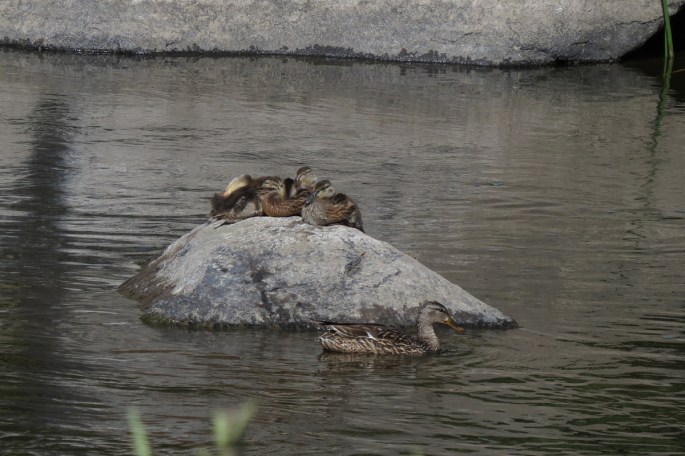
The river held lots of Mallards, like the family pictured here, and Canada Geese.

Looking up at the cliff face from the river

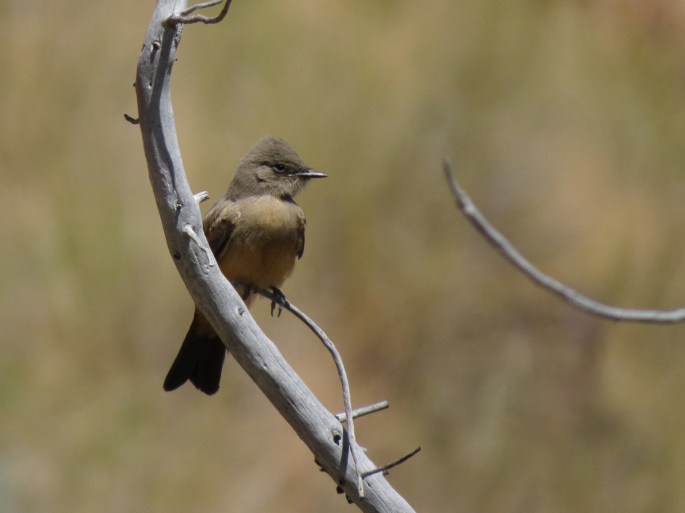
Say’s Phoebe, looking regal

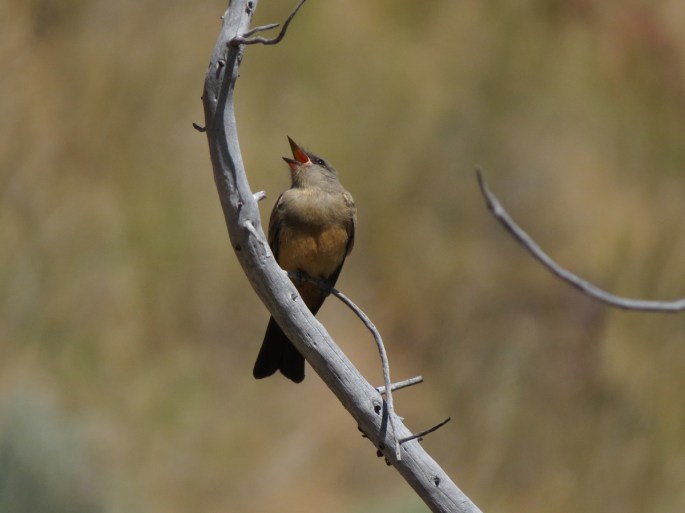
The same Say’s Phoebe, about to hork up something

By noon, the park was getting pretty crowded and the heat was intense so I headed for home. Birding was quite good despite the heat and the lateness of the season. I think a trip here in early June would be even more productive.

Northwest Portland Wetlands

I went out to Smith and Bybee Wetlands and Vanport Wetlands to check for migrants. The Smith and Bybee area was pretty slow. Water levels were high so some of the trails were inaccessible. Vanport had some really interesting birds, including several Redheads and Yellow-headed Blackbirds, both hard to find in the Portland area.

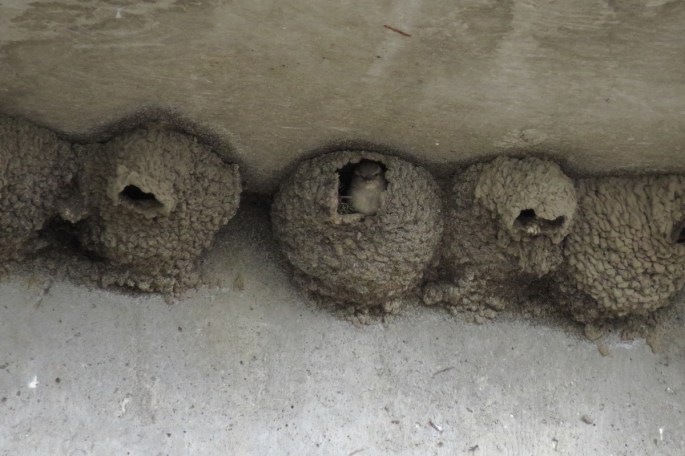
The small colony of Cliff Swallows at Smith and Bybee was active with nest building.

This House Sparrow had moved into an old Cliff Swallow nest.

American Bullfrogs were enjoying the spring weather.

Brush Rabbit scratching an itch

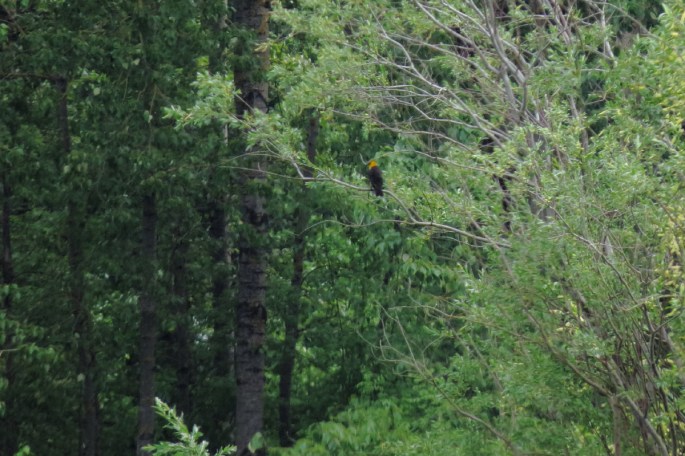
At Vanport, most birds were pretty far away, like this Yellow-headed Blackbird. His song was easily heard, even from across the lake.

This Ruddy Duck was doing his motorboat impression to impress the ladies.

This Cooper’s Hawk was atop a tall tree overlooking the racetrack. The loud engines did not seem to bother him. I can’t say the same for me.

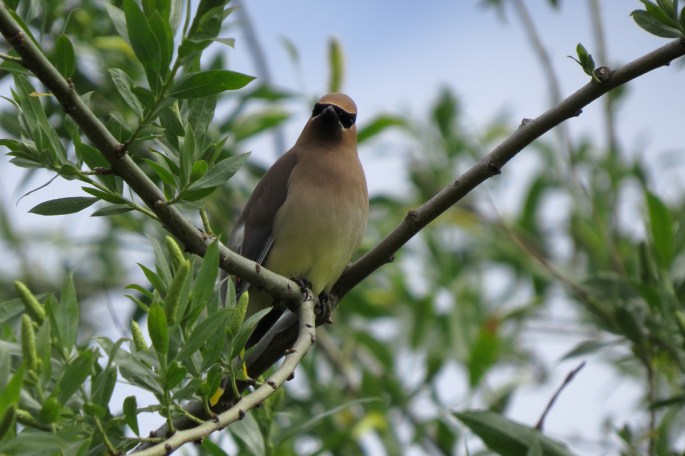
A few birds, like this Cedar Waxwing, were down in the small trees along the near shore of the lake.

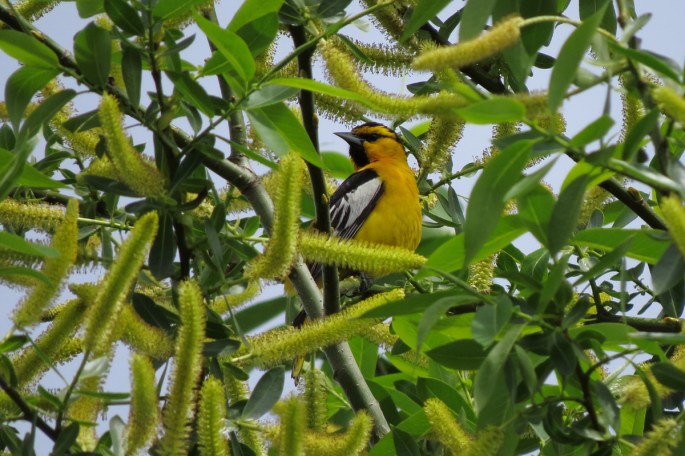
Bullock’s Orioles are often obscured by foliage in the treetops. This individual was low enough for a brief glimpse among the blossoms.

Siletz Bay

common-scoter-1This Common Scoter was recently found in Siletz Bay, just south of Lincoln City. This is only the second record of this species in North America, so he was definitely worth chasing.

common-scoter-2The Common Scoter seems pretty comfortable in Siletz Bay, feeding and resting near the pull-out just south of the Schooner Creek bridge, so he was an easy tick. I just showed up and there he was. It can seem a little anticlimactic when a staked-out bird is too easy to find. But the advantage of such a situation is that you have the time to explore the surrounding area. On this day I birded from the D River in Lincoln City to Boiler Bay. This whole area is covered on pages 155 – 157 of Birding Oregon. There are a lot of birds packed into just over two pages. Or perhaps my writing is just very concise.
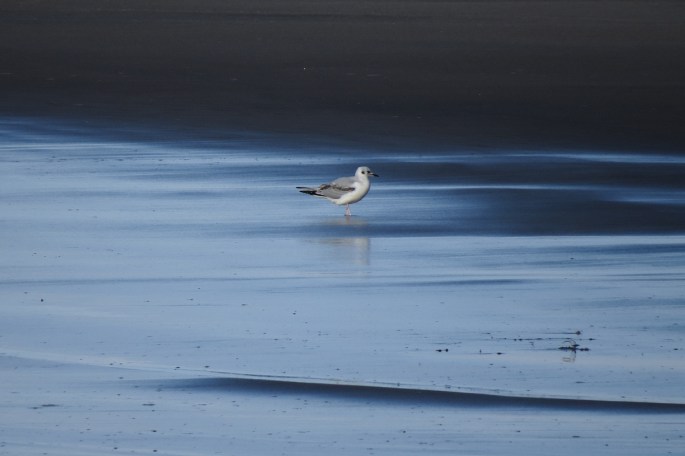
bonapartesThis Bonaparte’s Gull was hanging out at the D River.

brewers-1male Brewer’s Blackbird, D River

brewers-2female Brewer’s Blackbird, D River. I find female Brewer’s to be much more photogenic than males. Perhaps my camera just doesn’t do well with extreme blacks and whites.

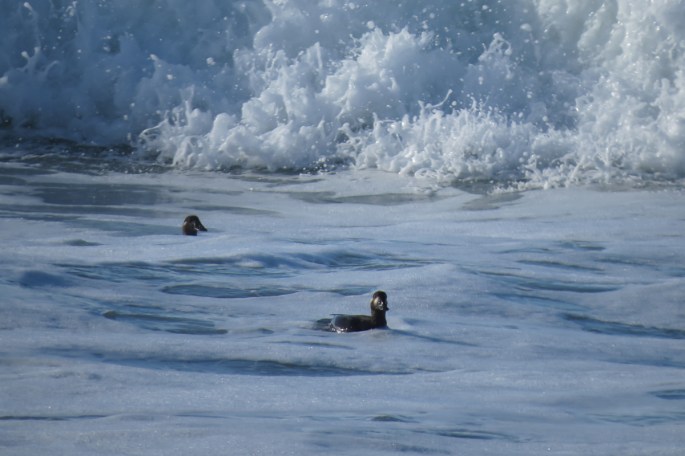
surf-scotersSurf Scoters in the surf

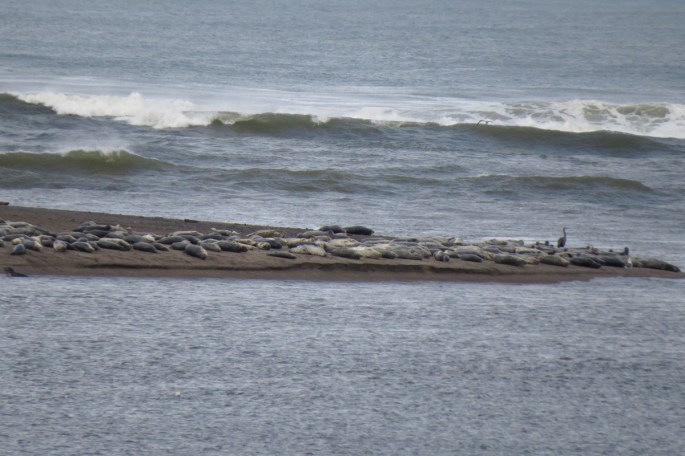
harbor-sealsThe sand spit at the mouth of Siletz Bay is a favorite haul out spot for Harbor Seals.

harbor-sealhappy Harbor Seal

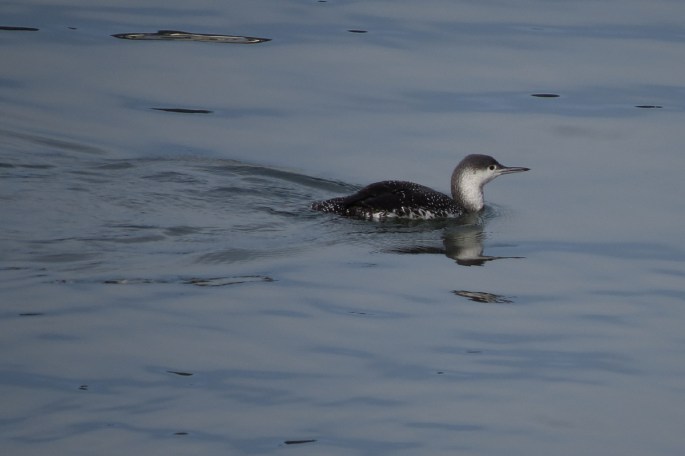
red-throated-loonRed-throated Loon

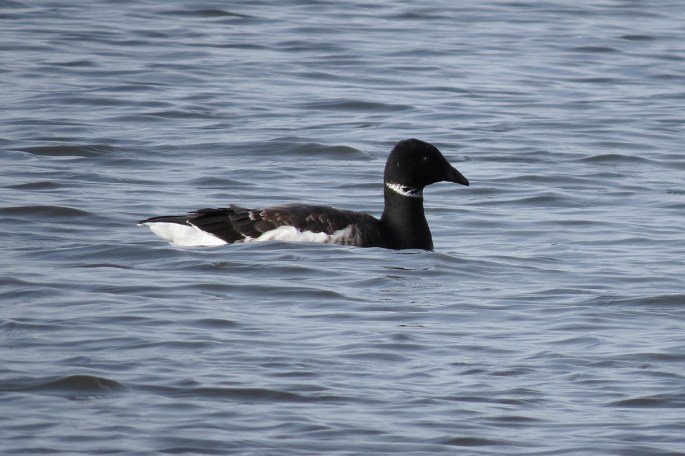
brantA little farther up the bay, I found two Brant. I don’t get to see then often enough.

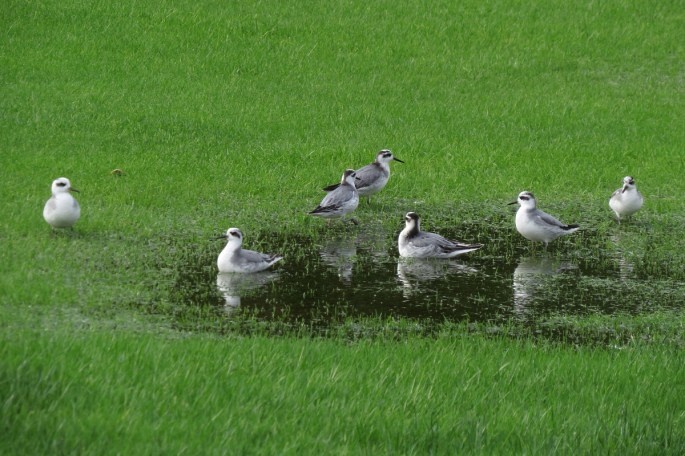
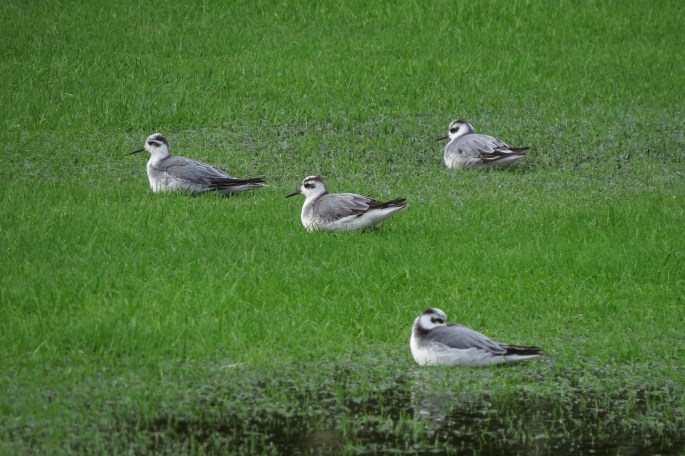
red-phalarope-1Recent storms have brought a lot of Red Phalaropes to the coast and points inland. These birds were hanging out at the Salishan golf course.
red-phalarope-2It’s nice that a golf course is actually being good for something.

thayers-1I saw some nice birds at Boiler Bay, but most were too far out for photos. This Thayer’s Gull was perched on this little knob of rock for several hours.

black-oystercatcher-3One can often get close looks at Black Oystercatchers at Boiler Bay. This bird was particularly vocal.
black-oystercatcher-2Black Oystercatcher, sleeping with one eye open

The Siletz Bay area is typically not a big birding destination, with the exception of Boiler Bay. But this stretch of the coast can be very birdy, so it was nice that the Common Scoter has inspired so many birders to explore the area. Cheers.

Timberline

landscapeI hiked from Timberline Lodge to the snow fields above Silcox Hut. My main target was Gray-crowned Rosy-Finch. I missed the finches, but there is always something fun to see on the mountain. There were a lot of skiers and snowboarders on the remaining snow fields. I don’t know how you expect to find Rosy-Finches while going that fast, but to each their own.

clark'sSeveral Clark’s Nutcrackers were hanging out near the lodge. This species can be quite tame, but the ones near Timberline tend to be shy and keep their distance. Perhaps I need to carry more snacks.

lupineLupines were one of several wildflowers that are currently in bloom.

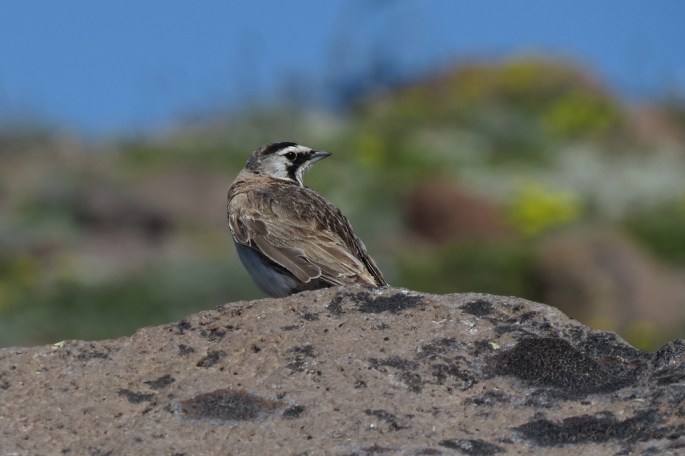
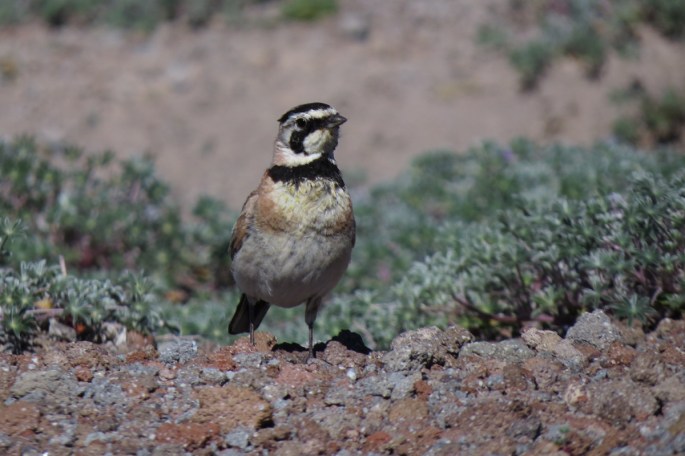
horned lark 3A couple of Horned Larks were pretty cooperative.
horned lark

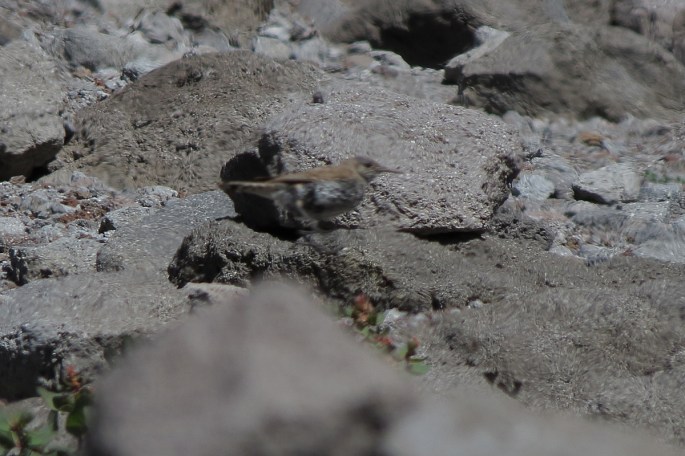
rock wrenThis blurry creature is a juvenile Rock Wren. The pale sandy brown plumage had me stumped for a while, as the adults are more clearly marked with cold brown and gray colors and speckling.

gm ground 2No visit to Timberline is complete without Golden-mantled Ground Squirrels, the Alpine Ambassadors of Cuteness.
gm ground

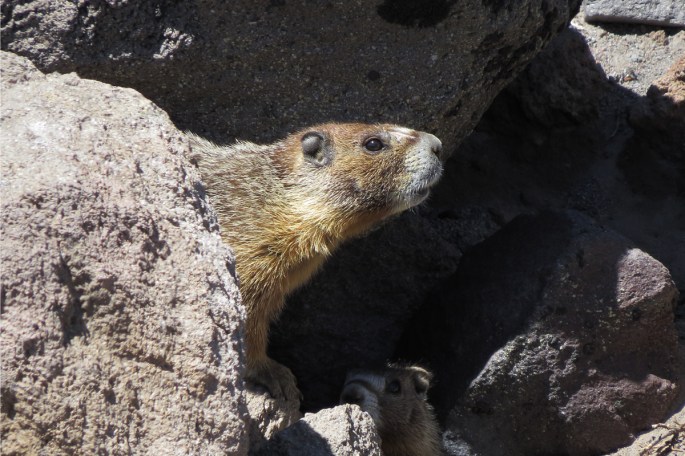
marmot pairYellow-bellied Marmots reign over the higher slopes. The vegetation is so sparse here it is hard to imagine how these guys find enough to eat.

yb marmot 1
yb marmotwalking that fine line between majestic and adorable

Birdathon 2016

Weekday WarblersThe Weekday Warblers birdathon team made its inaugural trip on May 12. We birded the north coast from Cannon Beach to Fort Stevens, with a stop at the Sunset Rest Stop on the way. We did well with seabirds and shorebirds, but were sorely lacking in upland species. A few tweaks to the route and a longer day would probably get us a bigger list, but we had a great time with great weather and ended the day with 80 species.

ravenThis is one of a couple of Common Ravens who were hanging out in the parking lot of the Sunset Rest Area.

whimbrelOne of many Whimbrels seen on the beach

bonaparte's gullsThis flock of Bonaparte’s Gulls was flying around the South Jetty at Fort Stevens.

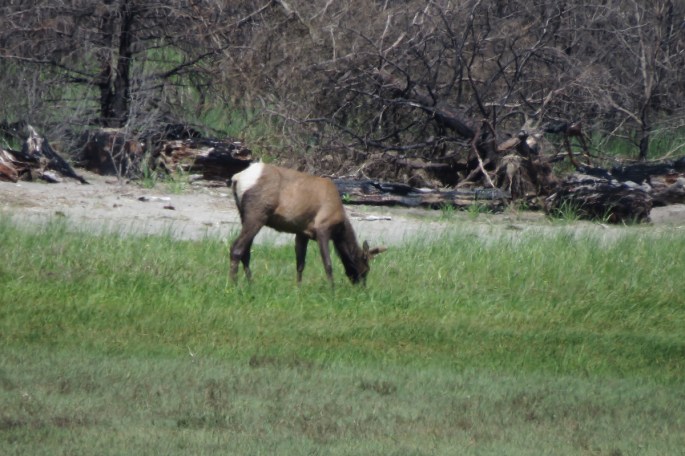
elka distant Roosevelt Elk at Fort Stevens

white-winged scoterWe made two quick stops at The Cove in Seaside. Most of the few birds that were there were quite a ways out, requiring lots of squinting through a scope, but this White-winged Scoter came close to shore for some nice views.

western and dunlinThe best find of the day was the large shorebird flock on the beach at Fort Stevens. The Oregon Coast does not usually get huge numbers of migrant shorebirds. Birders joke about he Shorebird Dome that covers the coast, forcing birds to fly directly from northern California to Gray’s Harbor, Washington. But this past week the dome was breached and good numbers and diversity of shorebirds worked the beaches of the north coast.  We found these birds mid-afternoon, so the sun was already in the west causing terrible lighting for photos. But this will give you an idea. The photo above shows a Western Sandpiper with two Dunlin.

sanderlingSanderling

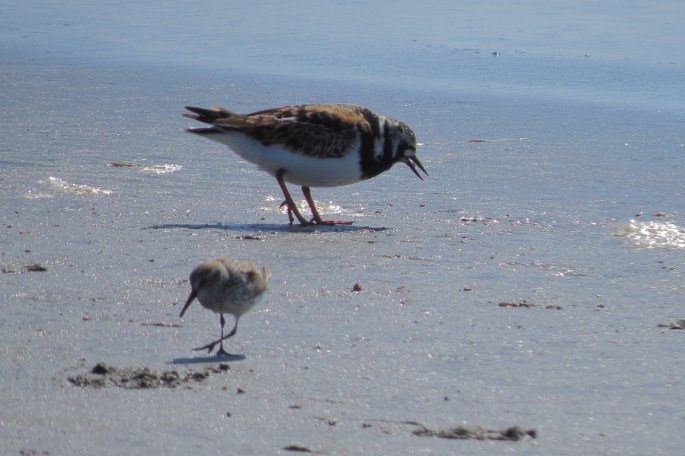
ruddy and westernRuddy Turnstone with Western Sandpiper

knotRed Knot, a rare treat along the Oregon coast

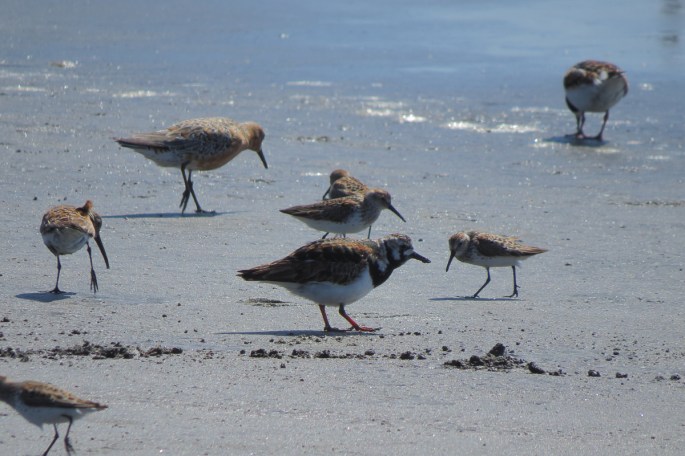
comboa nice combo of Dunlin, Red Knot, Western Sandpiper, and Ruddy Turnstone

IMG_8679Boat for Sale. Needs work .

A great day on the Oregon coast.