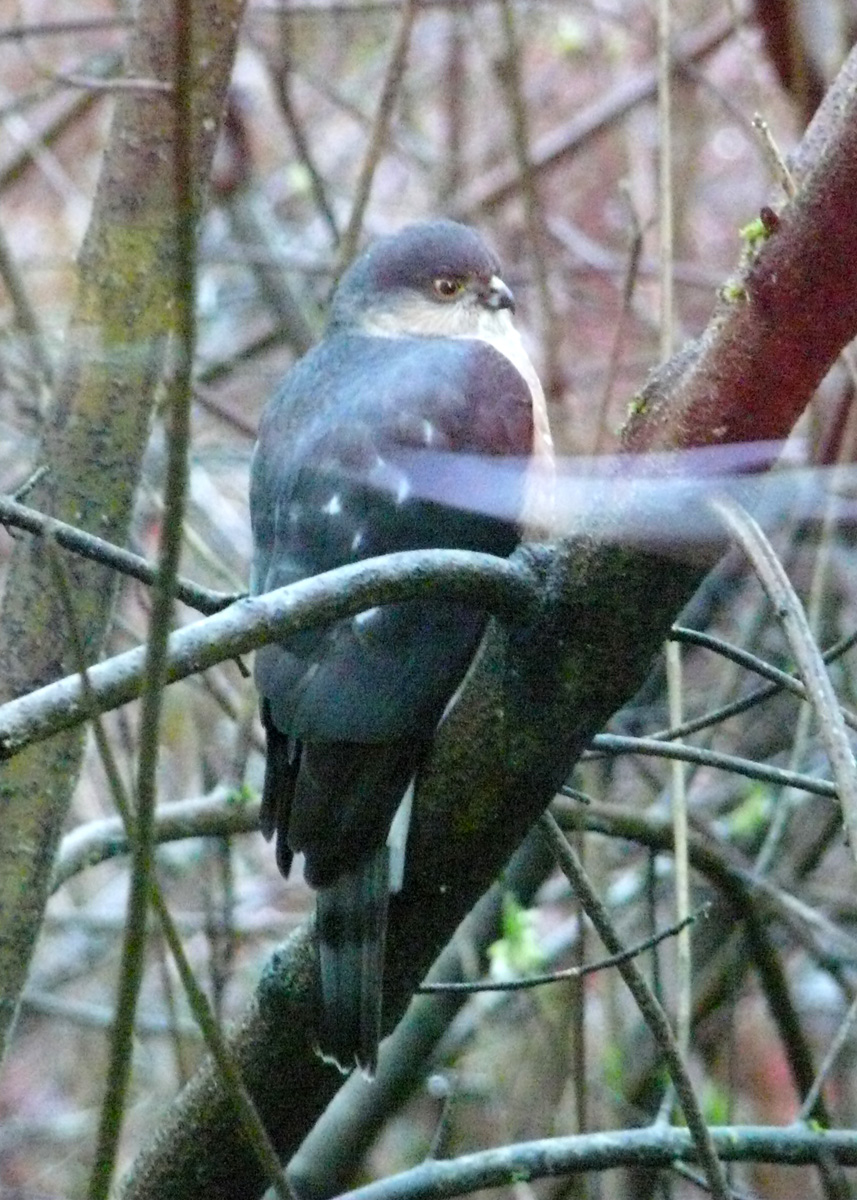
Sharp-shinned Hawk

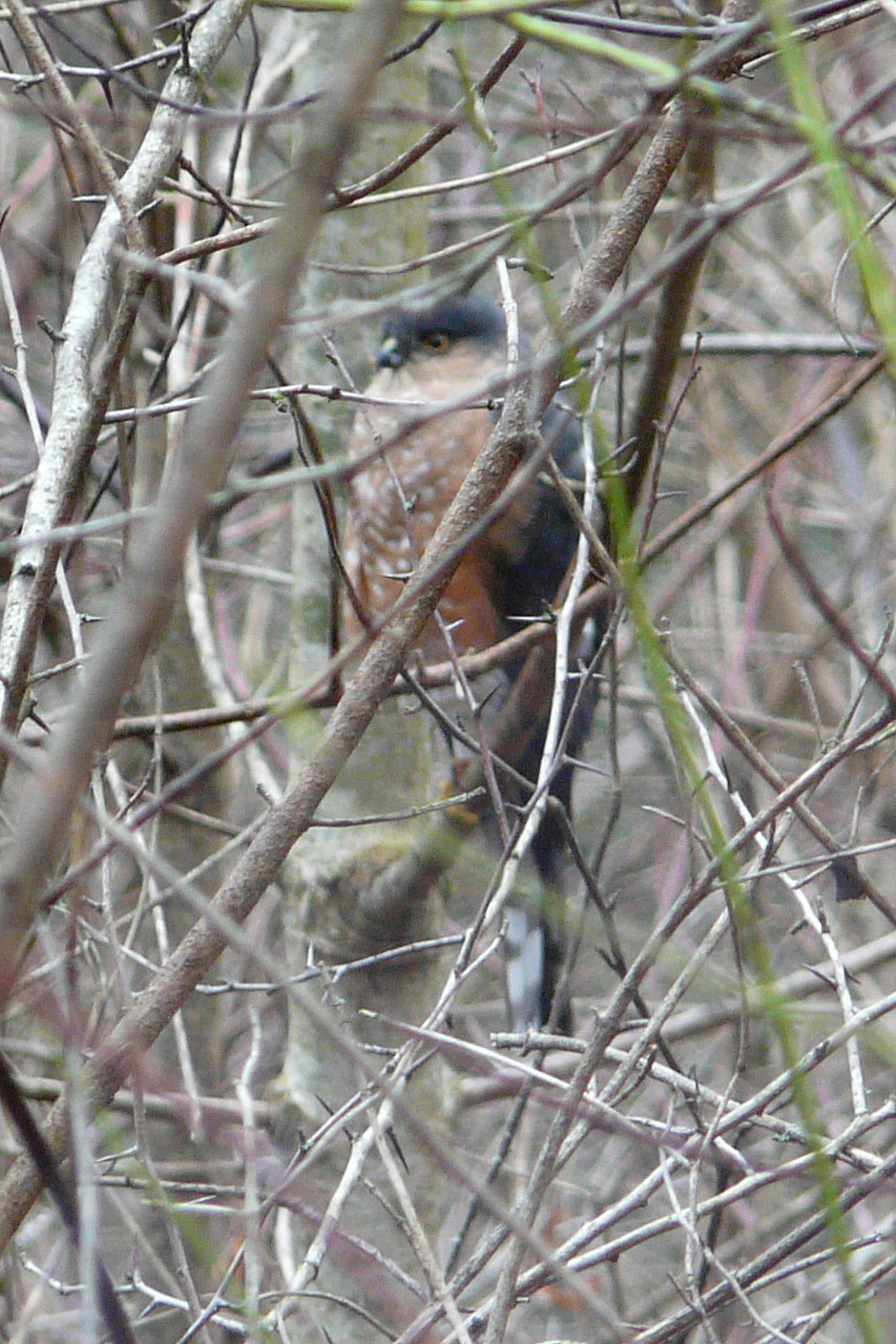
This Sharp-shinned Hawk was trying to be inconspicuous while hanging out near the bird feeders. As usual, the songbirds were nowhere to be seen as long as this guy was around. Some of the field marks for distinguishing Sharp-shinned Hawks from Cooper’s (shape of the head, capped appearance of Cooper’s vs. the uniform crown and nape on Sharp-shinned, shape of the tail, and thickness of legs) are not visible in this photo. A hawk bander recently shared another clue for this species; Sharp-shins have a “bug-eyed” look to them, while Cooper’s Hawks always look angry. These may seem to be subjective terms, but the shape of the head and position of the eye on the head does give each species a unique expression.


Here is a little better view where you can see the shape of the head, the uniformity of the crown and nape, and the neat square tail.

Tufted Ducks

Two male Tufted Ducks (Aythya fuligula) have been spending the winter on the Columbia River near the Portland airport (Birding Oregon p. 63). One of these birds appears to be a Tufted Duck X scaup hybrid.


Bearing in mind that I have no experience with young Tufted Ducks, these are the features that cause me to question this bird’s parentage:

  • The back is a dark gray, not black as expected on a male Tufted Duck.
  • The sides are dingy, not brilliant white, but this is common on young Tufted Ducks.
  • The bill is virtually identical to that of a Greater Scaup. A Tufted Duck should show more black on the bill tip.
  • The tuft, though short, is very thick and stiff, not whispy as I would expect on a molting Tufted.


Here is the same bird with some Greater Scaups. Notice that the back is darker gray, but not really black, and the sides and bills of the two species are identical.


Here is an adult male Tufted Duck. Note the gleaming white sides and black back.


Adult Tufted Duck with female Common Goldeneye and some scaup.

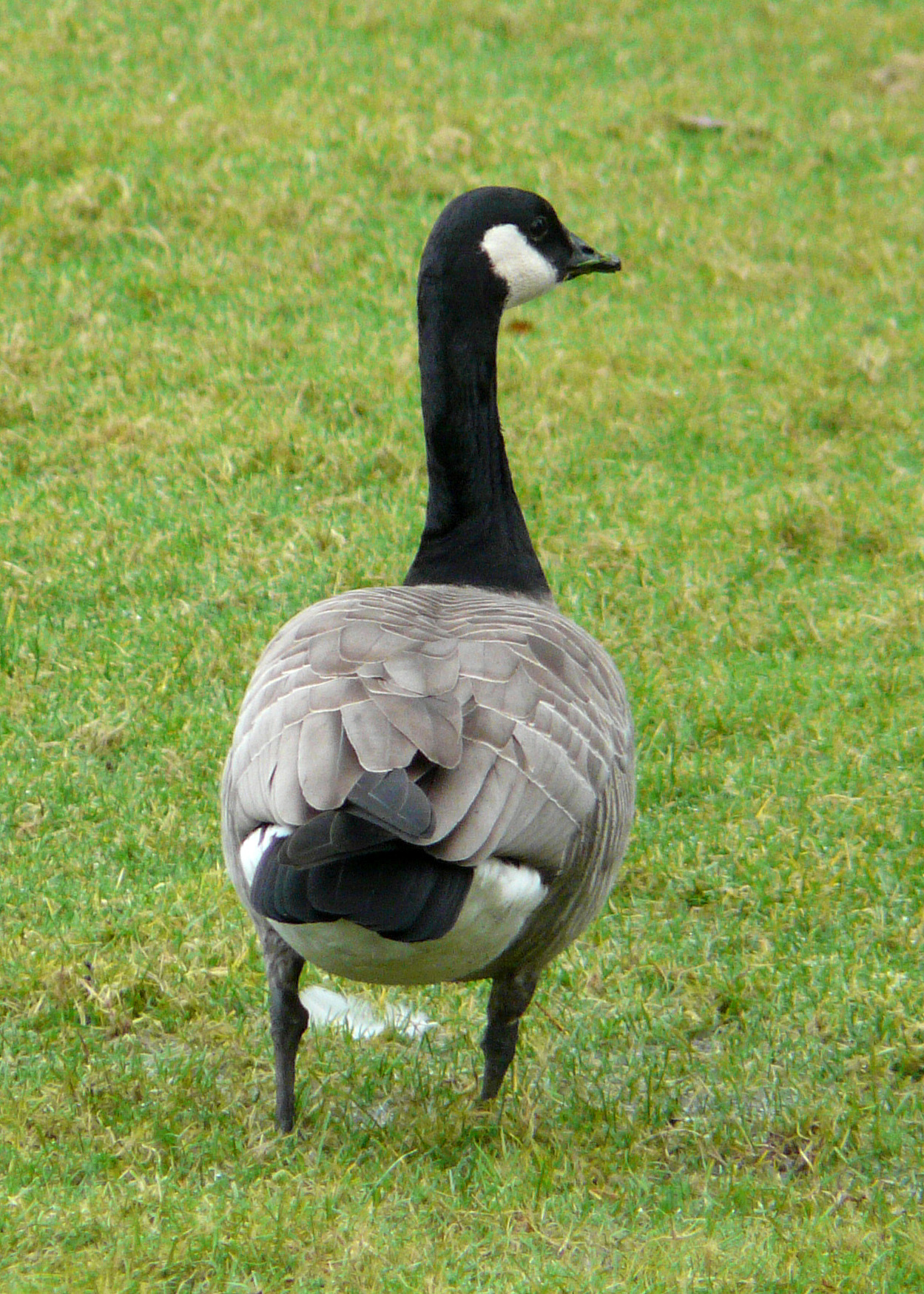
Lesser Canada Goose

It is time for another installment in the constant effort to separate Lesser Canada Goose (Branta canadensis parvipes) from Taverner’s Cackling Goose (Branta hutchinsii taverneri). The two species overlap in size and coloring, but structural differences are often apparent to those of us nerdy enough to study lawns covered in geese.


Here are two Western Canada Geese (B. c. moffitti) and a Lesser Canada Goose. They are nearly identical in color and shape, but the Lesser is about 2/3 the size of the Western. This is your best clue to identifying Lessers.


Without the size comparison, you might be hard pressed to distinguish this Lesser Canada from a Western. The neck is long and thin. The bill and forehead form a smooth, gentle slope.


Compare these Taverner’s to the Lesser. On a Taverner’s Cackling Goose, the neck appears thicker and often shorter. The forehead forms a noticeable bump where it meets the bill. (This causes the bill to appear stubby, but there actually isn’t much difference in the bill shape between the two species.) The breast on Taverner’s is often lighter in color than that of Lesser Canada, but both species show a lot of individual variation.

Third Cycle Western Gull

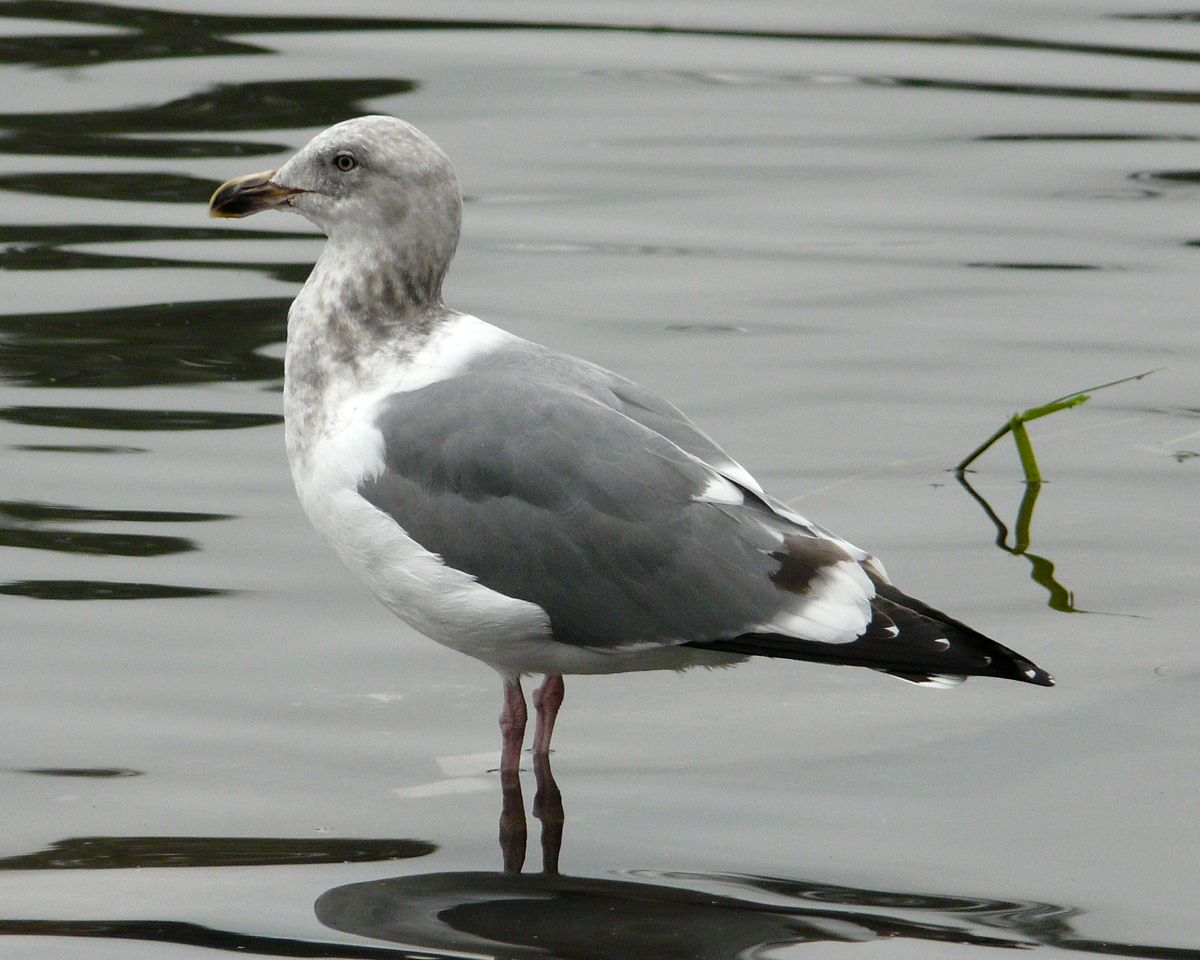
On a recent sweep through Portland’s Westmoreland Park, this gull immediately stood out from the flock. When you see a large gull that just doesn’t fit, chances are good that it is in its third plumage cycle. Large gulls (Western, Glaucous-winged, Thayer’s, Herring, to name a few) go through four plumages to reach their adult look. These species are often referred to as “four-year” gulls, but that term is not always correct. Some individuals go through all four plumages in less than four years, while others may take longer. It is more accurate to refer to these birds as four-cycle gulls.

The third cycle can be confusing for two reasons. Birds in their third cycle are the least common, as many individuals from their hatch year have not survived to make it to their third plumage cycle, so you don’t see that many third cycle birds. Secondly, third cycle birds look very similar to an adult, but with a lot of little oddities that can throw you off.
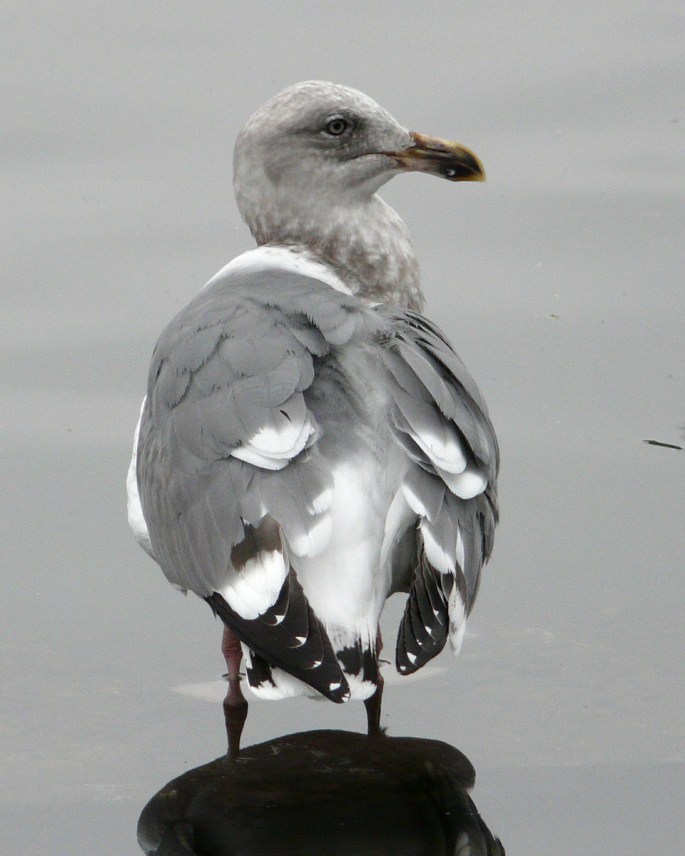
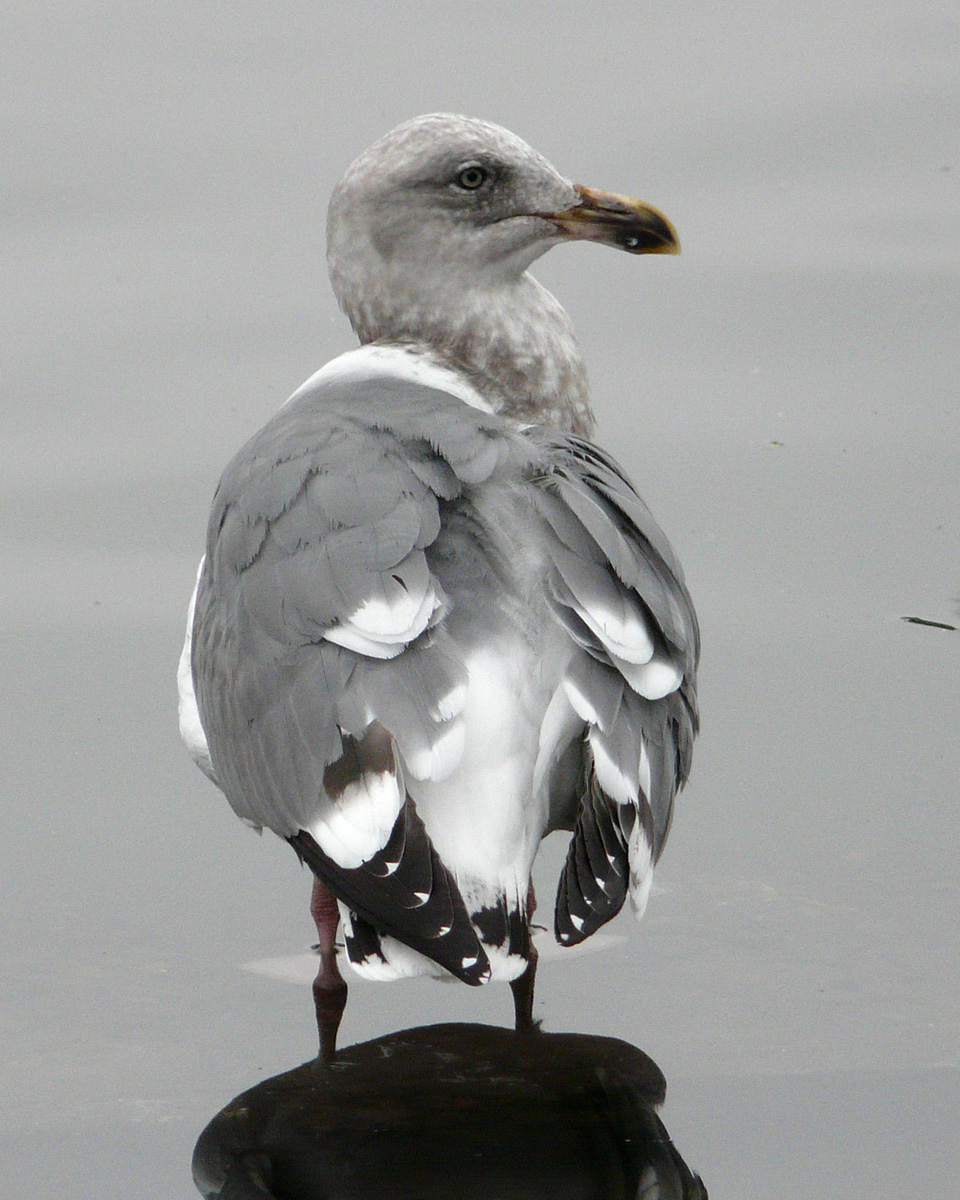
The bird from Westmoreland has a dark gray mantle, pink legs, and a ridiculously thick paddle-shaped bill. This all points to Western Gull. Some marks that keep this from being an adult Western include:

  • Extensive mottling on the head, neck, and upper breast. Adults never show this. (It could also indicate cross-breeding with Glaucous-Winged Gull, a common occurrence in Oregon.)
  • Black primaries with tiny white tips. An adult’s outer primaries have large white spots (mirrors).
  • Big black blotches on the tertials
  • A ragged black band on the tail. An adult’s tail is pure white.
  • Instead of the bill being school-bus-yellow with a red spot on the lower mandible, this billed is marbled.

So when you find a gull that looks mostly like an adult, but has a little black on the tail, primaries darker than normal, and an oddly colored bill, chances are good that you have a third cycle bird.
Lesser Goldfinch


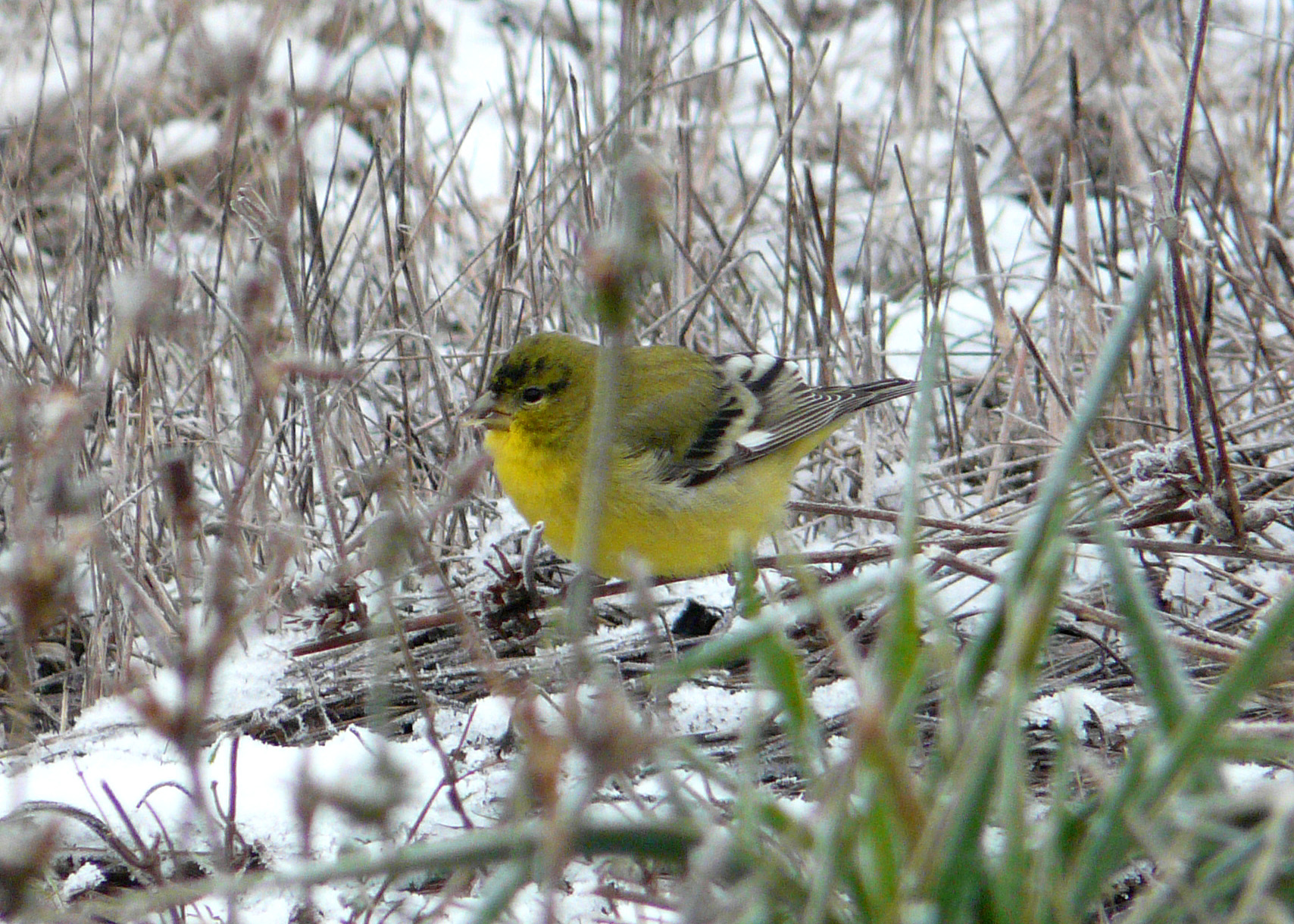
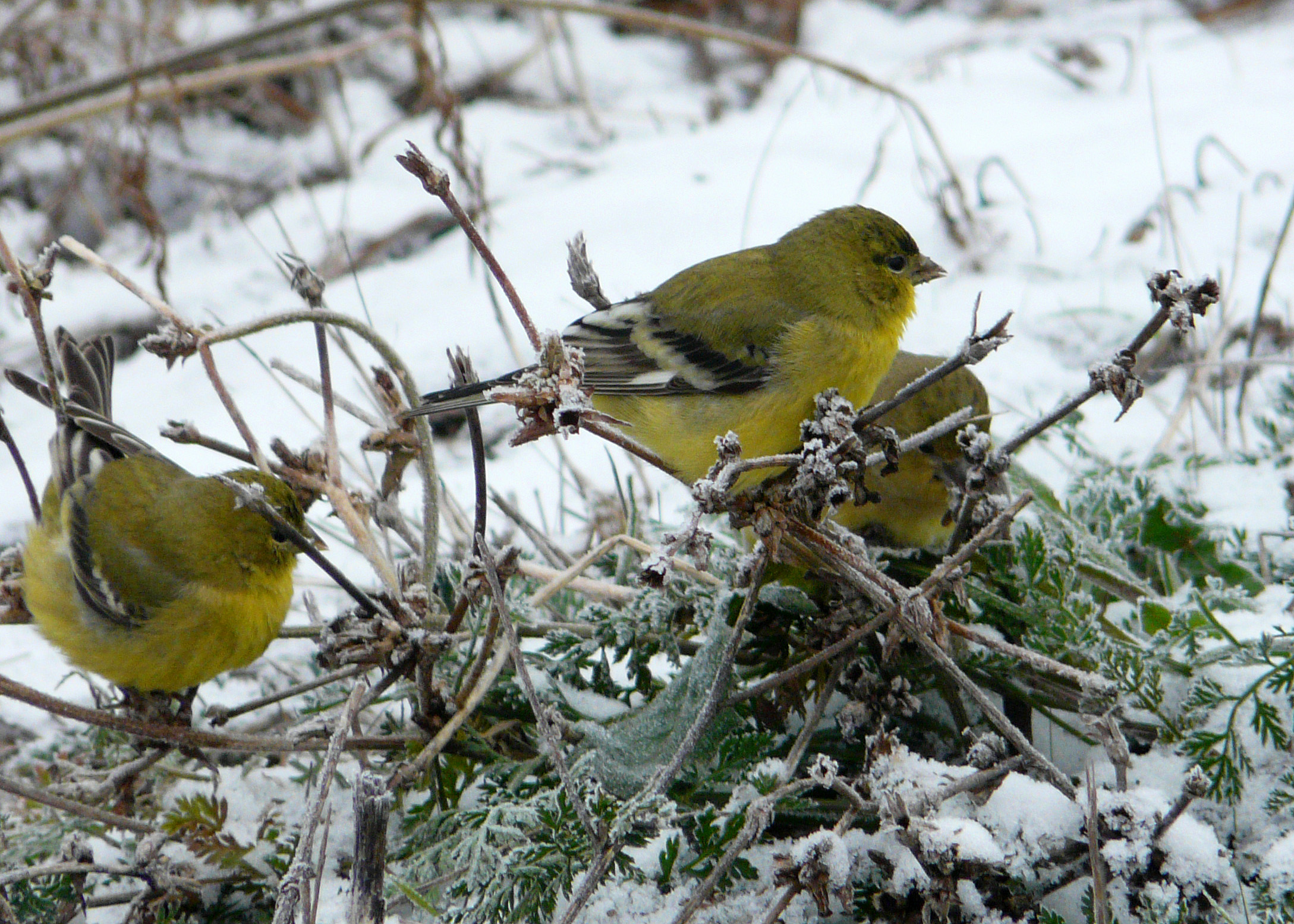
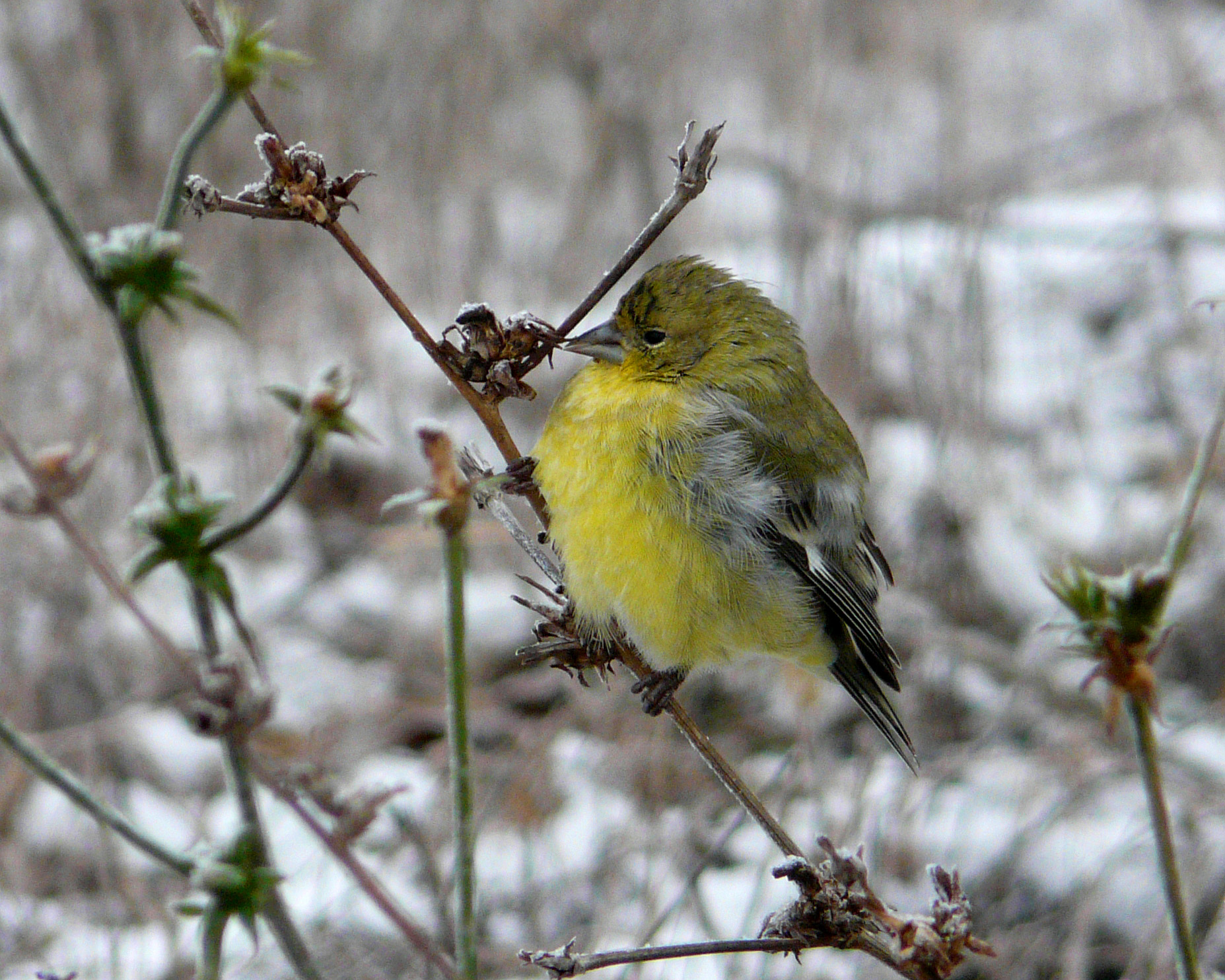
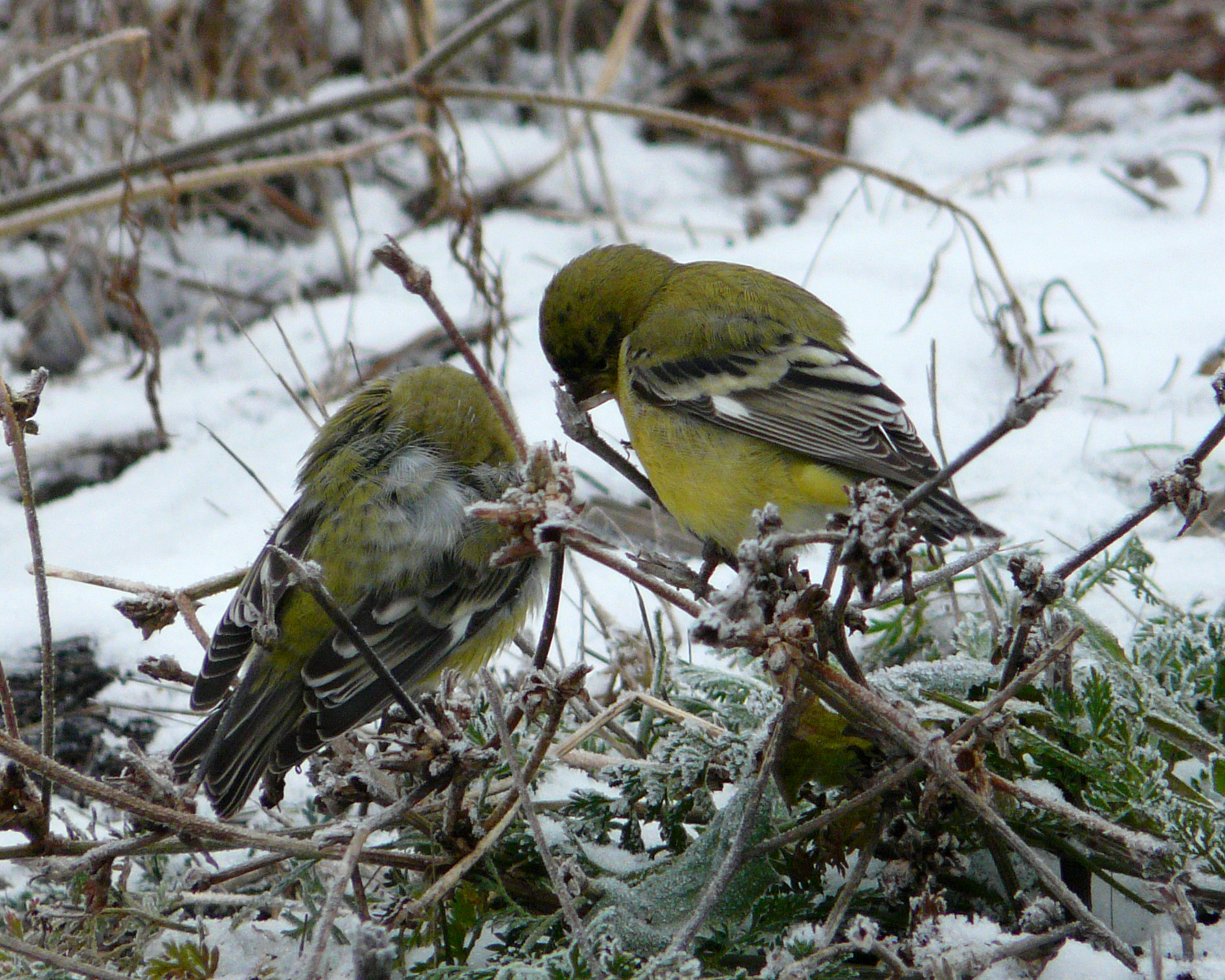
I recently came across a small flock of Lesser Goldfinches. This species has become much more common in the northern Willamette Valley in the past decade.


This species really stands out in the winter with their bright yellow underparts and cold greenish backs. Note the white wing bar and the little white patch at the base of the primaries. The more common American Goldfinch has a warmer golden brown cast in winter, and has buffy, not white, wing bars.


This is a male, probably a young bird given the lack of an extensive black cap. Notice the white patch on the spread tail feather. Females do not have white patches on their tails.


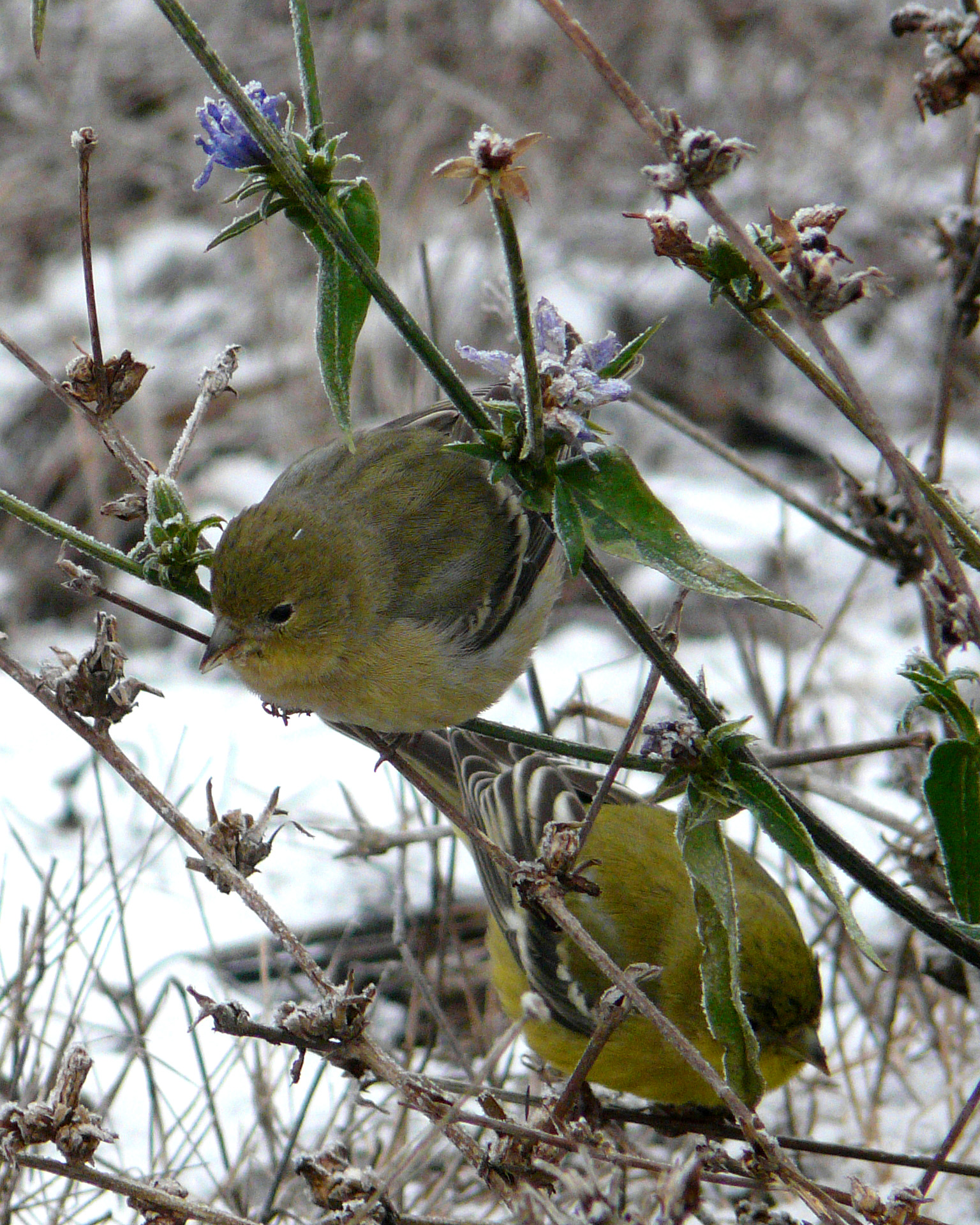
Pale females, like the top bird, are harder to distinguish from female American Goldfinches, as they lack the bright yellow underparts. Note the cold greenish back (not golden brown) and the white (not buffy) wing bars.


Compare this female American Goldfinch to the Lessers above and below.

Random Waterfowl

Here are some random shots of some of the many waterfowl species that winter in the Willamette Valley


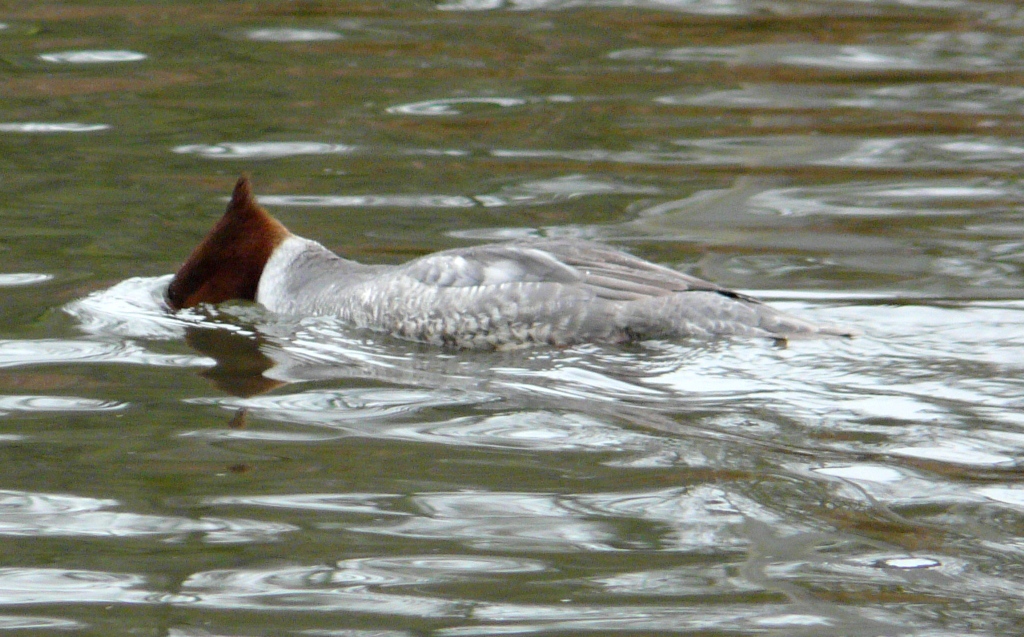
This Common Merganser was swimming with her face submerged, looking for fish. I have also seen loons hunt in this way.


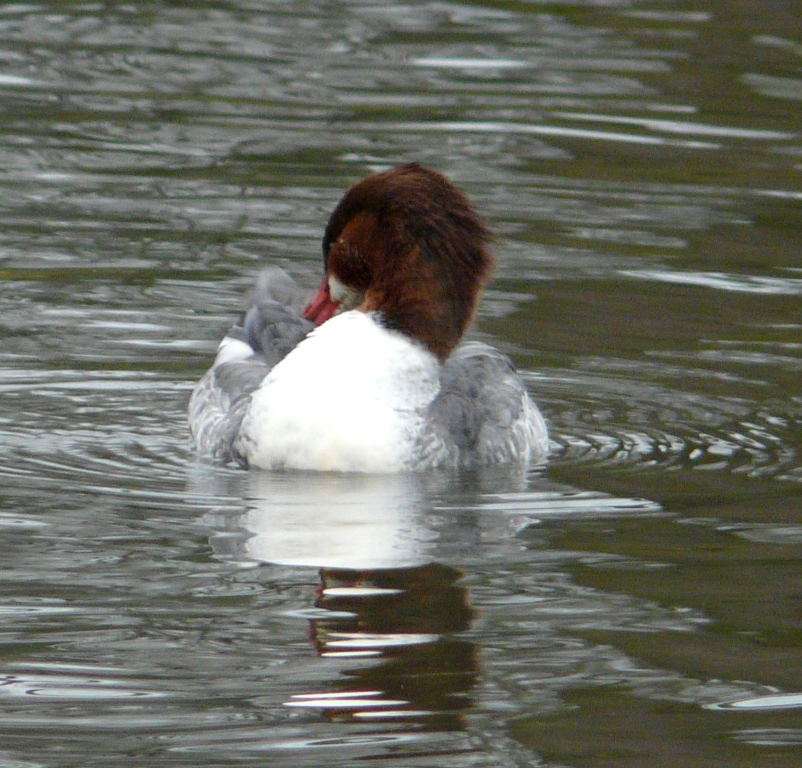
the same bird preening


Here she finally shows her face. The clearly demarcated white chin helps to differentiate this species from the similar Red-breasted Merganser.


This female Eurasian Wigeon is recognized by her brown head. Notice the female American Wigeon on the right with her gray head.


Here is a distant shot of a mixed flock of waterfowl (click to enlarge). From left to right, you can see Ring-necked Duck, Canvasback, Cackling Goose, American Coot, and American Wigeon.

Mew Gull

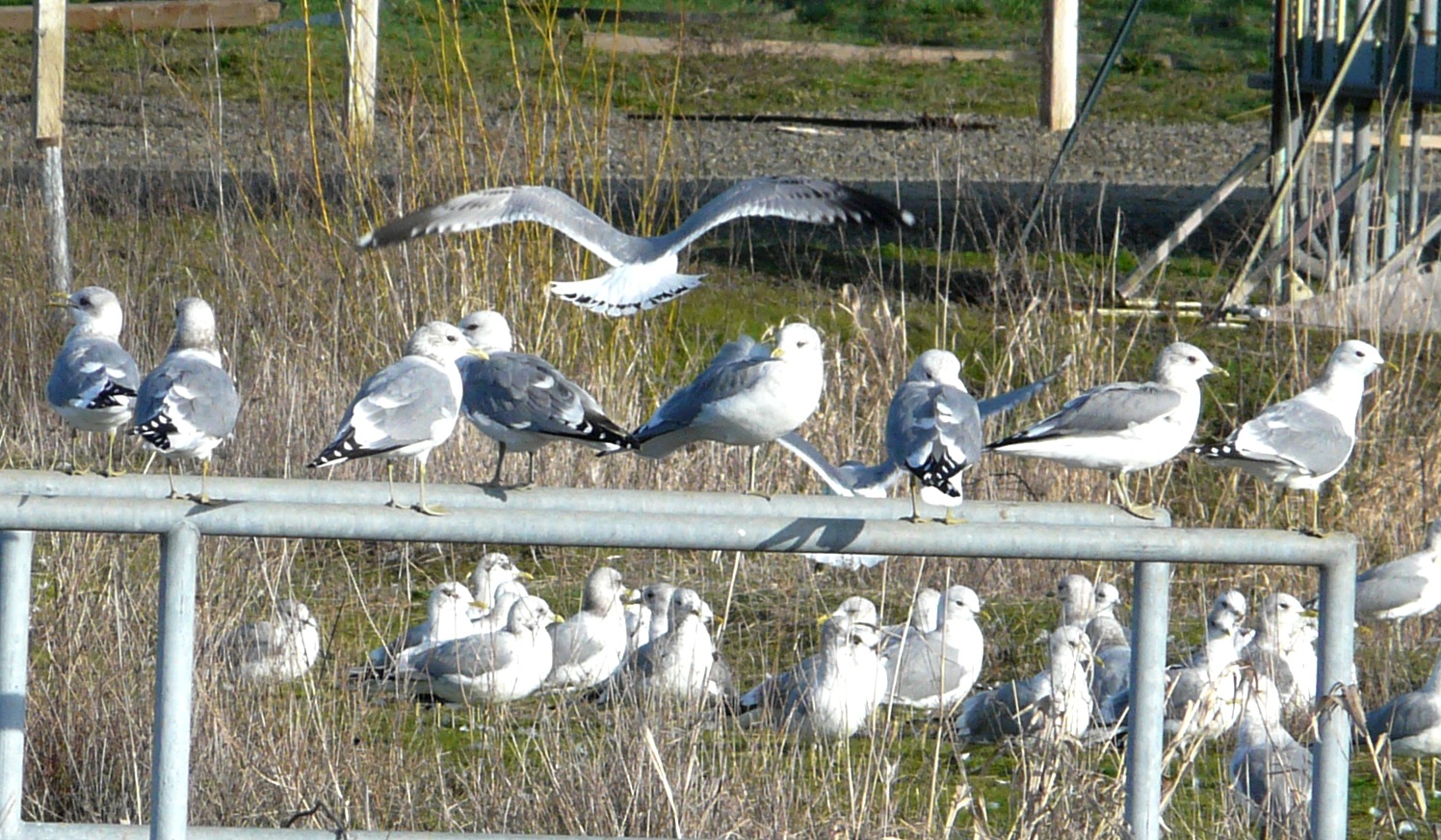
A large flock of Mew Gulls (Larus canus) spends the winter at the waste water treatment plant in Forest Grove and at adjacent Fernhill Wetlands (Birding Oregon p. 61).


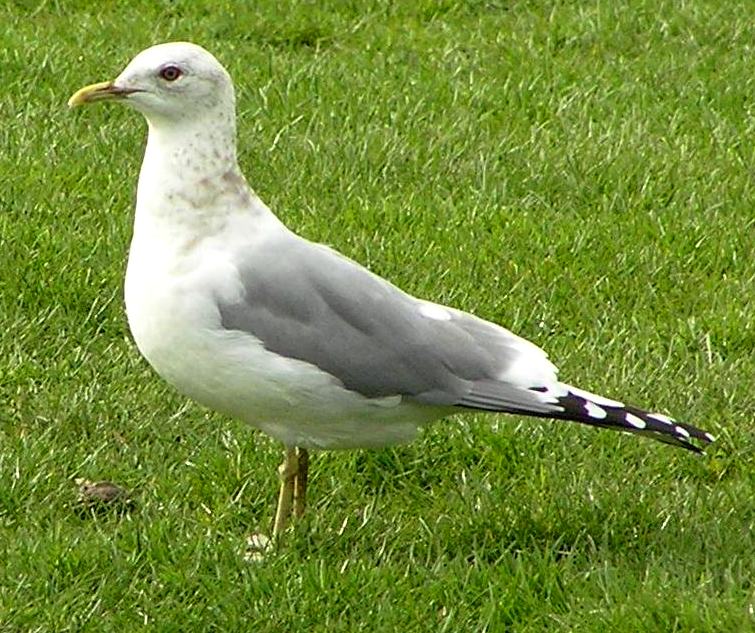
Mew Gulls look like a petite version of Ring-billed Gulls, with a round head, big eyes, and fine yellow bill.


Adult Mew Gulls are easily recognized in flight by the large white mirrors on the outer two primaries. Ring-billed Gulls have a smaller white mirror on the outermost primary (P10) and a tiny one on P9. You wouldn’t think the size of the white spots on two feathers would make much of a difference in identifying a flying bird, but it really does.


The bird in flight is a second-cycle Mew. He/she has lost the brown plumage of a first-cycle bird, but the tail still shows a broken blackish band, and the primaries (and primary coverts) have more black than those of an adult. Notice the small white mirror on P10 and little or no white on P9.

Eurasian Teal

The American Ornithologists Union considers the Green-winged Teal and Eurasian (or Common) Teal to be subspecies of Anas crecca. Most other sources, however, consider the two to be separate species, Anas carolinensis and Anas crecca. I tend to agree with the latter set, primarily because it provides another species for my life list. Eurasian Teals range as far east as western Alaska, so a few end up in Oregon every winter.


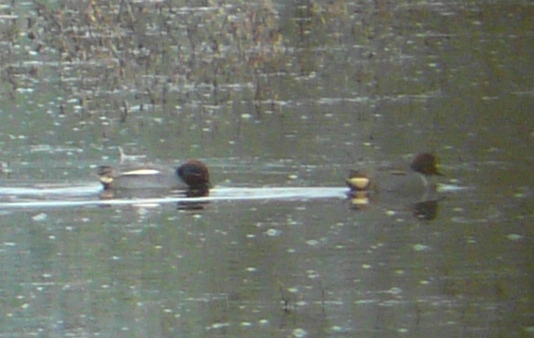
Here we see a male Eurasian Teal on the left, and a male Green-winged Teal on the right. Eurasian Teals have a bold white line along their sides, while Green-wings have a vertical white line at the side of the breast. Hybrids between these two species show both the horizontal and vertical lines. I personally don’t know how to distinguish  female Green-winged Teals from Eurasians.


Here are the same two birds. While it is not obvious in these very distant photos, at close range we would notice that the pale lines surrounding the green eye patch are more pronounced on Eurasian Teal than on Green-winged.

Bad Bird Photo ID Quiz

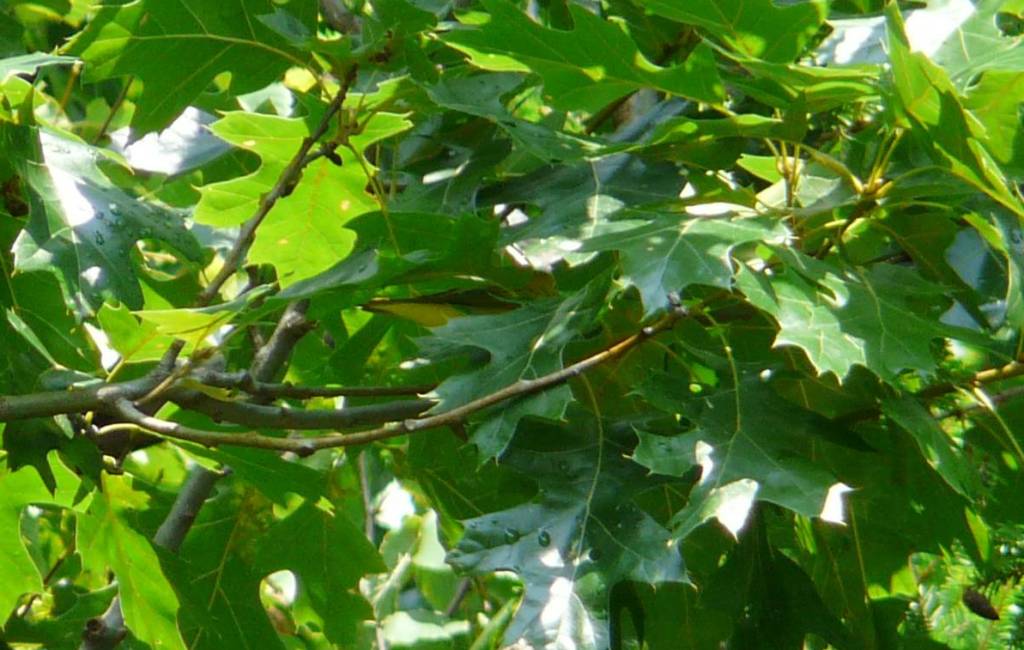
Here is another terrible bird photo that provides practice for our ID skills. We tend to get spoiled by the wonderful full-frame shots in birding magazines that show every detail. Birds don’t often look that good in the field. Remember, sometimes the best field mark is the lack of field marks. This photo was taken in Brattleboro, VT, but the species occurs throughout most of North America. Leave a comment with your ideas, and how you reached that conclusion.

quiz bird

Bad Bird Photograph ID Quiz

Because if birds always looked like they do in the magazines, birding would be too easy.

quiz
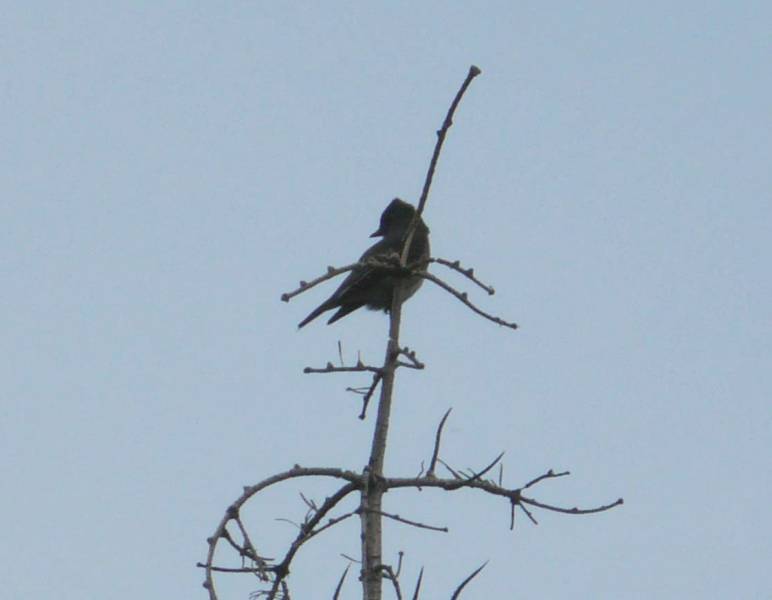
Here we have a photo of a distant bird, backlit, in low light. It was taken on the east slope of the Cascades on May 29. We can’t see much in the way of color or feather detail. But we do have some clues to the bird’s ID.

1. The crown has a definite peak
2. If you look closely, you can seen a line of demarcation between the dark side and the lighter belly.
3. The bird is perched at the very top of a dead tree.
4. The bird appears rather stout.
5. There appears to be a bit of white at the side of the rump.

So what bird is this? Leave a comment with your answer. I’ll reveal the ID in the comments in a couple of days.