Clatsop Spit

I had the chance to visit Clatsop Spit at Fort Stevens State Park. Parking Lots C and D, the usual access points, are still compromised due to continued work on the south jetty of the Columbia. So the best place to access the beach along the Columbia River is the little road halfway in between the two parking lots. This road takes you to the access locally known as Social Security Beach.

One of the highlights of this trip was seeing many Snowy Plovers. This species just wasn’t found on the northern Oregon coast until a few years ago. It is great to see them making a comeback.

This Snowy Plover is sitting in a tire track from a large pickup that had just gone by. I really dislike that vehicles are allowed on so many beaches. Even if they are not directly squashing wildlife, they certainly disrupt and deface things. Baby Snowy Plovers have been known to get stuck in deep tire tracks.

While not threatened like the Snowy Plover, Black-bellied Plovers are always nice to see.

The Black-bellied Plovers were more wary and harder to approach than the Snowy Plovers.
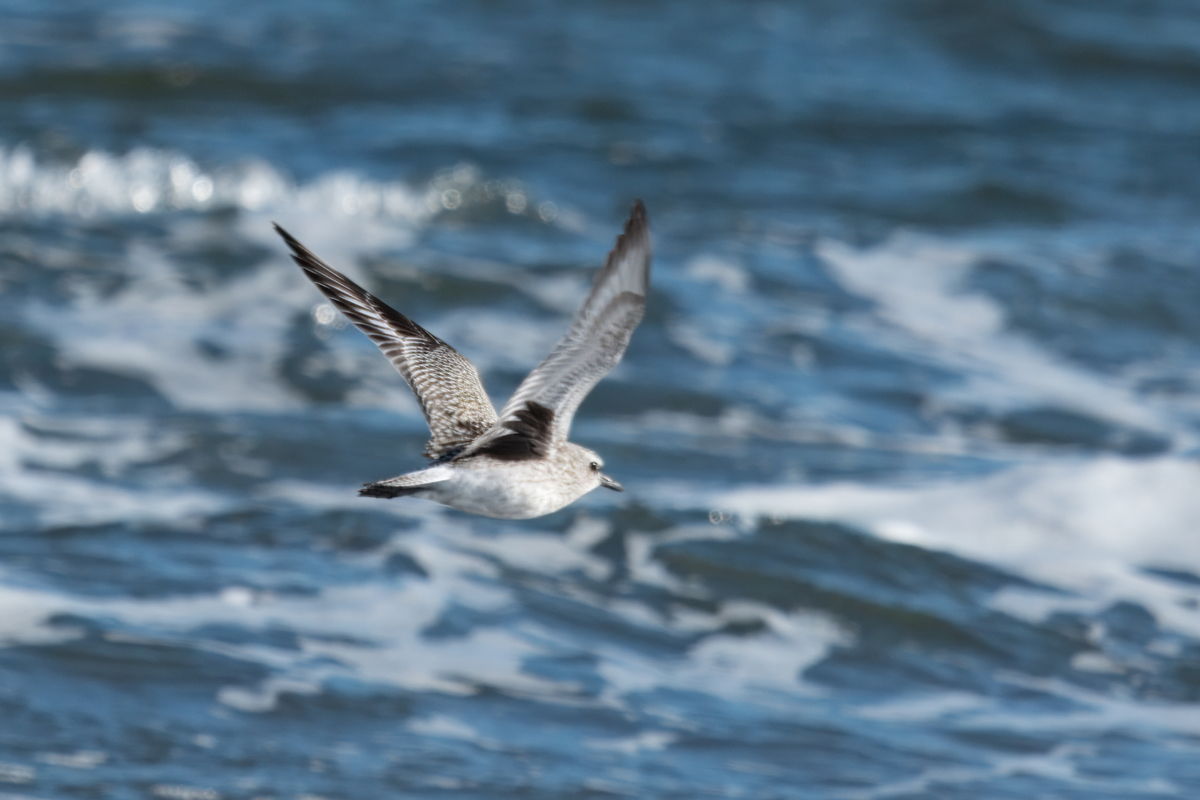
This blurry photo shows the black axillaries (wing pits) of a Black-bellied Plover. This mark makes the species identifiable from a great distance.

The most common shorebird of the day was Dunlin. While they don’t sport their bold markings this time of year, the dull brownish upperparts and bright white underparts are distinctive.

A lone Dunlin following a group of Sanderlings
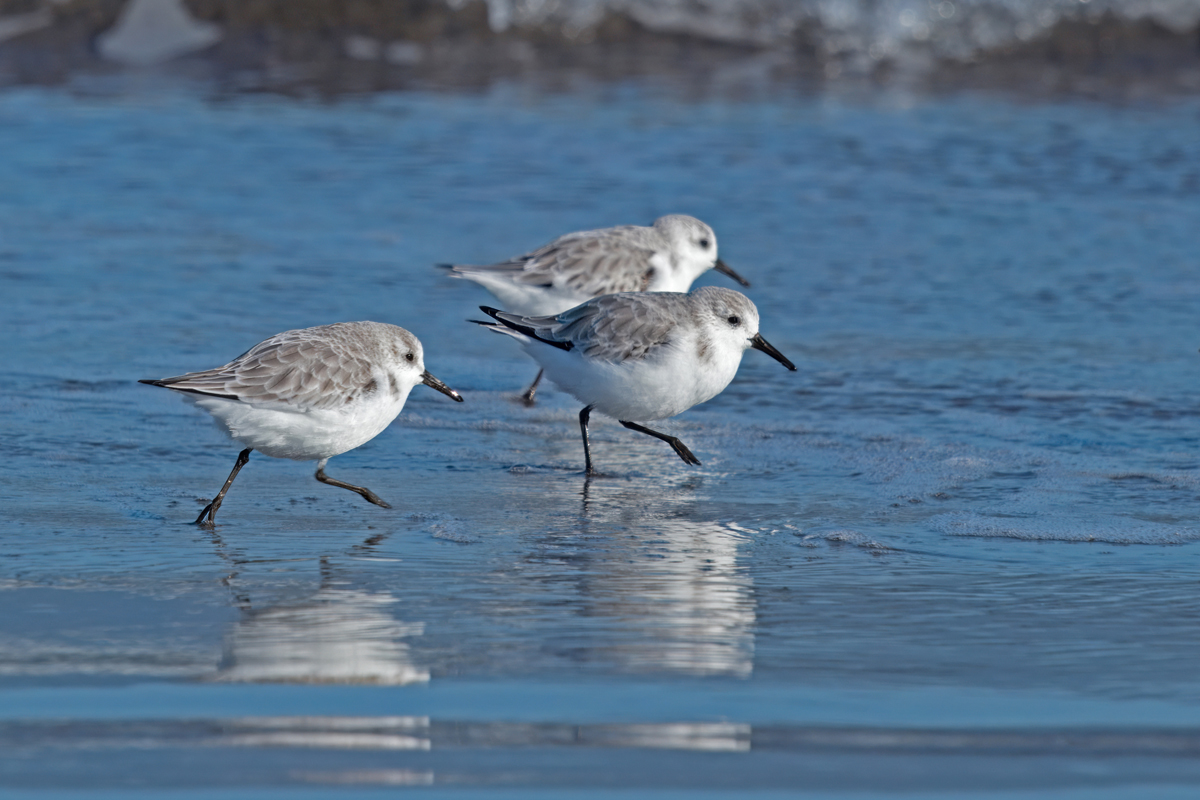
More Sanderlings

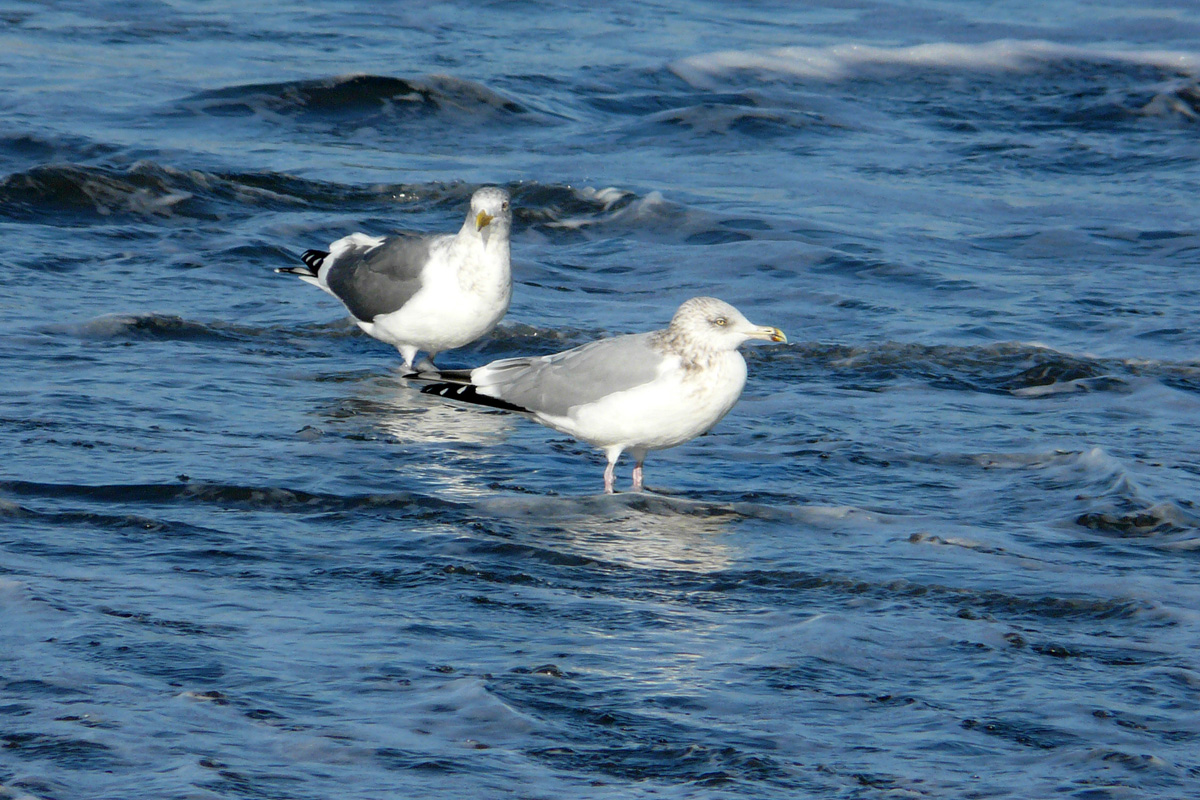
Of course you have to stop and appreciate the gulls this time of year. Here is a dapper pair of Herring Gulls.

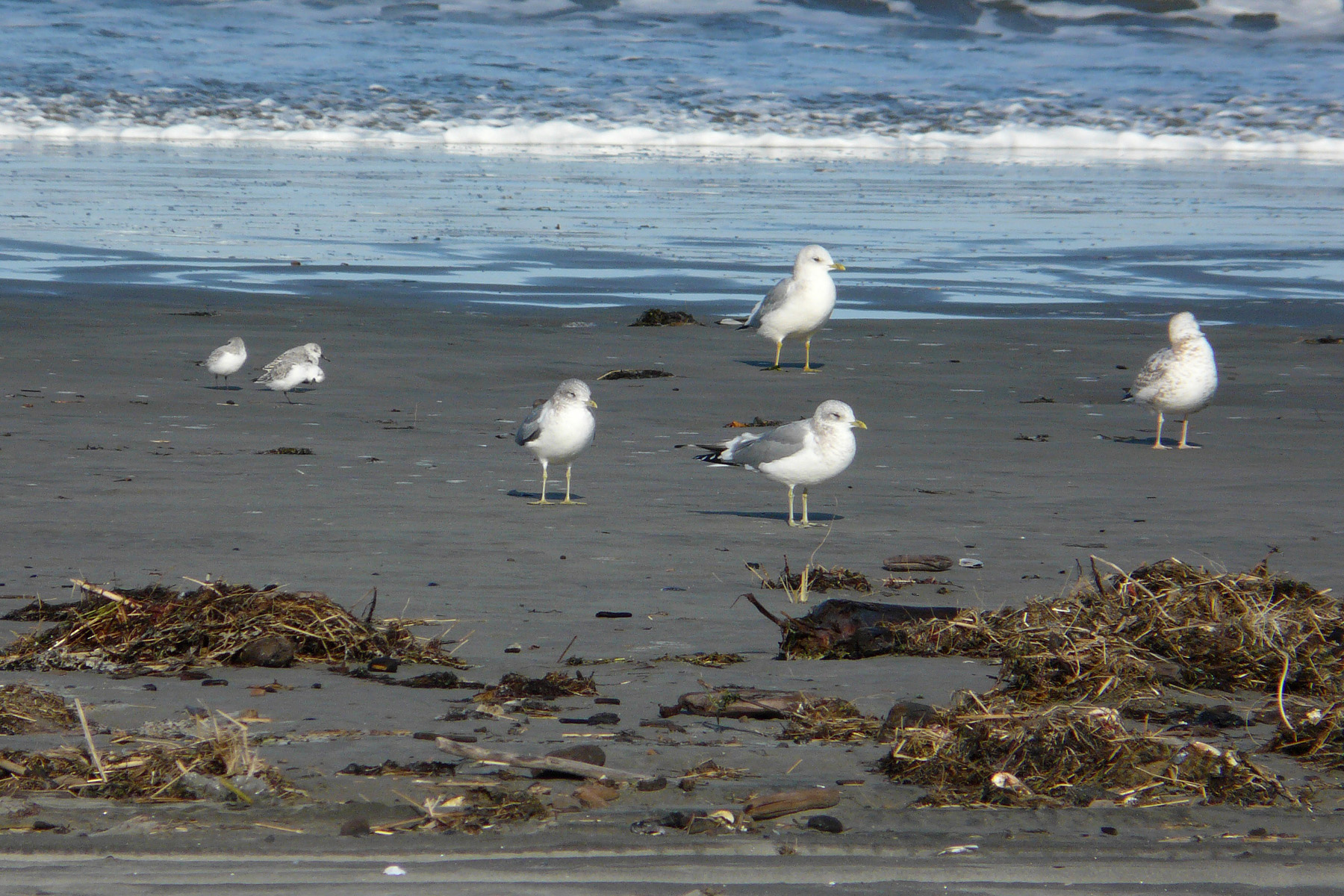
Short-billed Gull, until recently called Mew Gull. Some feel that Mew Gull is a better name.

A lone California Gull stands in front of a group of Short-billed Gulls.
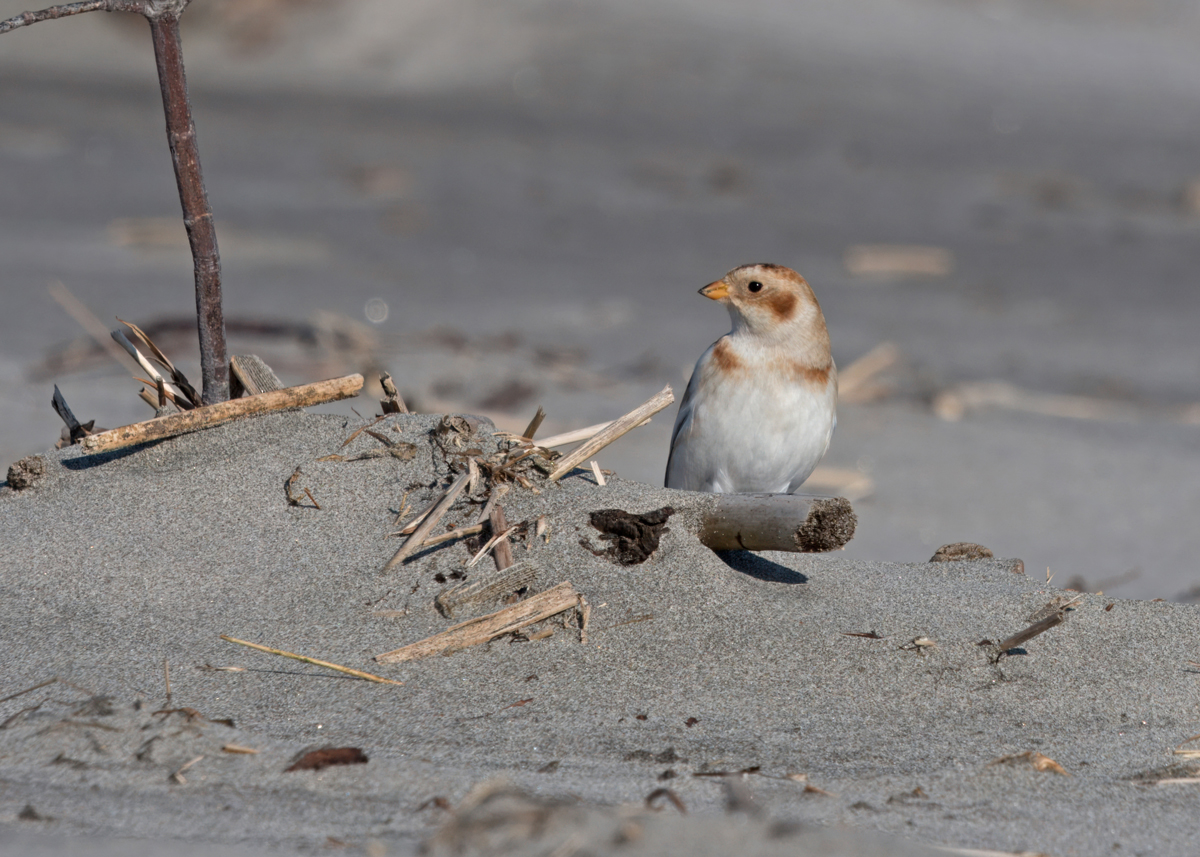
Probably the best bird of the trip was Snow Bunting. It is not unusual to find a few of these birds on the coast in winter, but it is hard to get them to sit still long enough for a photo.

Work on the jetty is scheduled to be completed by the fall of 2025. It will be nice to have easy access to all of Clatsop Spit again.

Happy Solstice
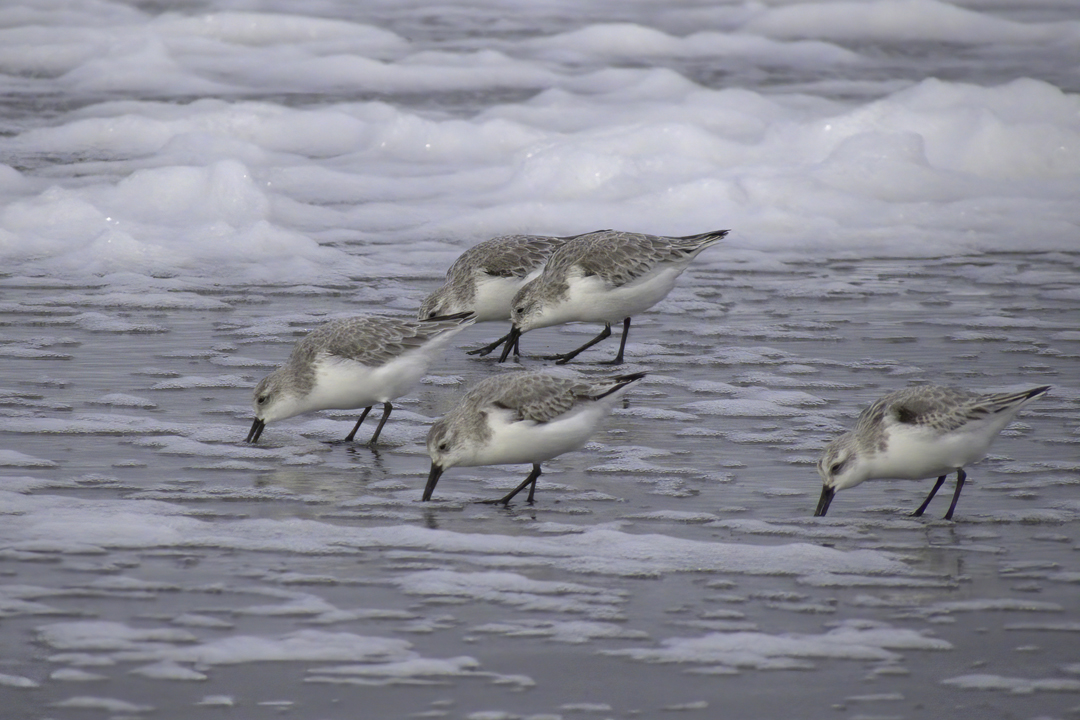
Beach Birds

I spent a few days on the north Oregon coast to escape the New Year’s fireworks in Portland. As expected this time of year, there was plenty of wind and rain. But there were enough breaks in the weather to get out and enjoy some coastal birds.

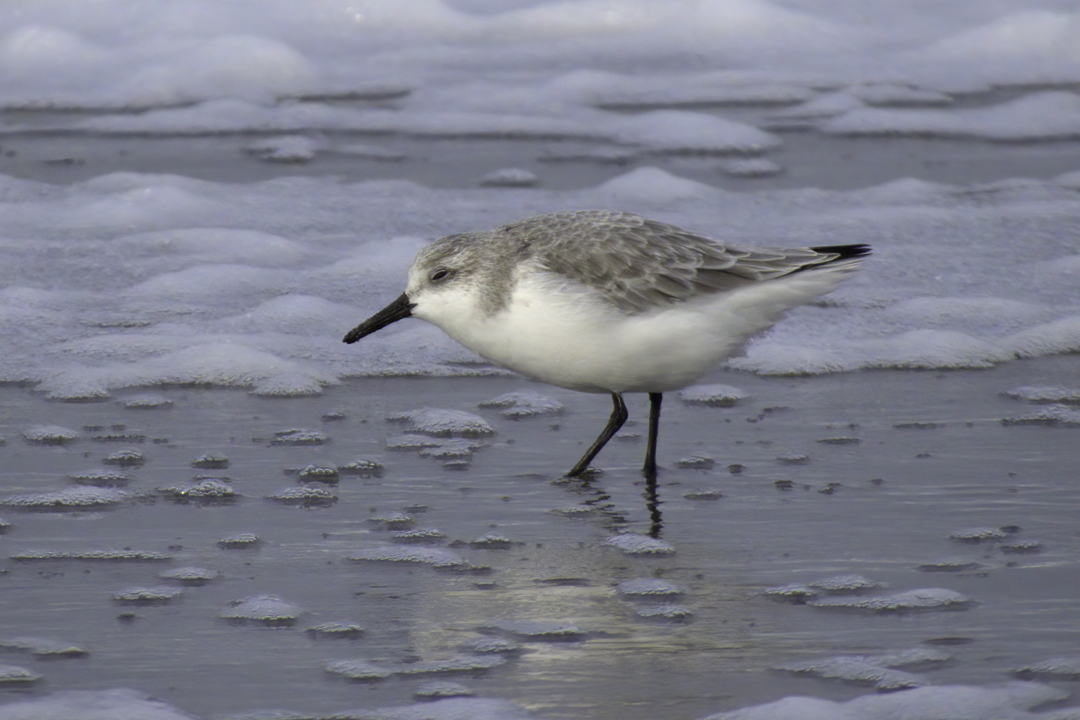
Sanderlings are always a treat. This bird was squinting into the howling wind.

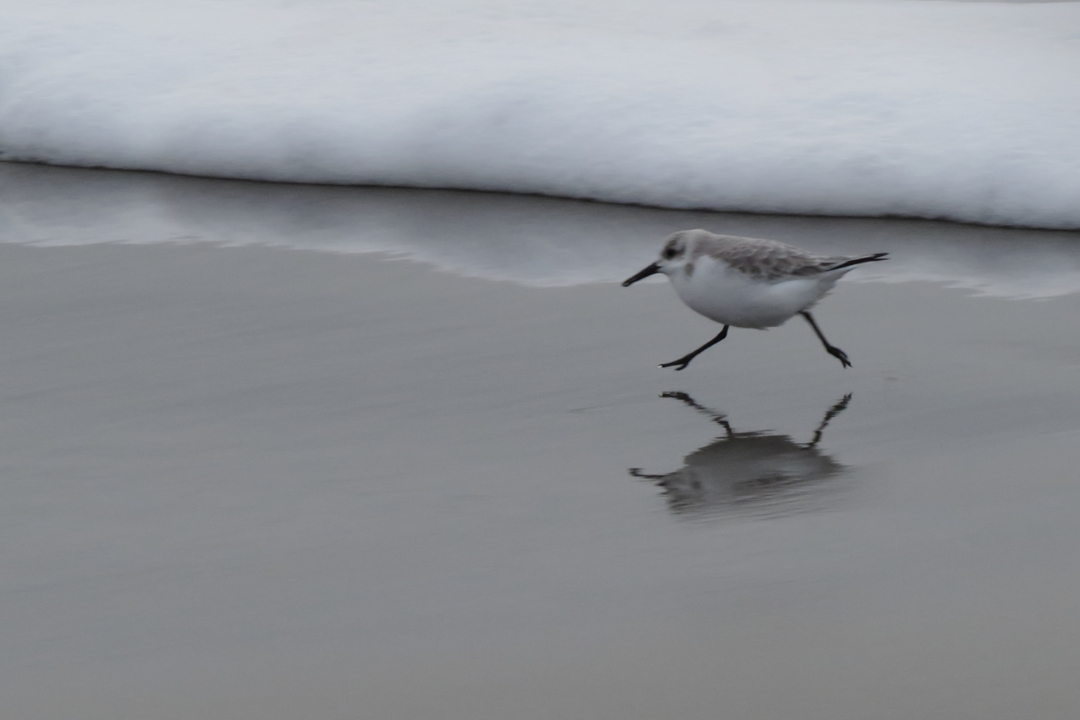
A blurry photo of typical Sanderling wave-running

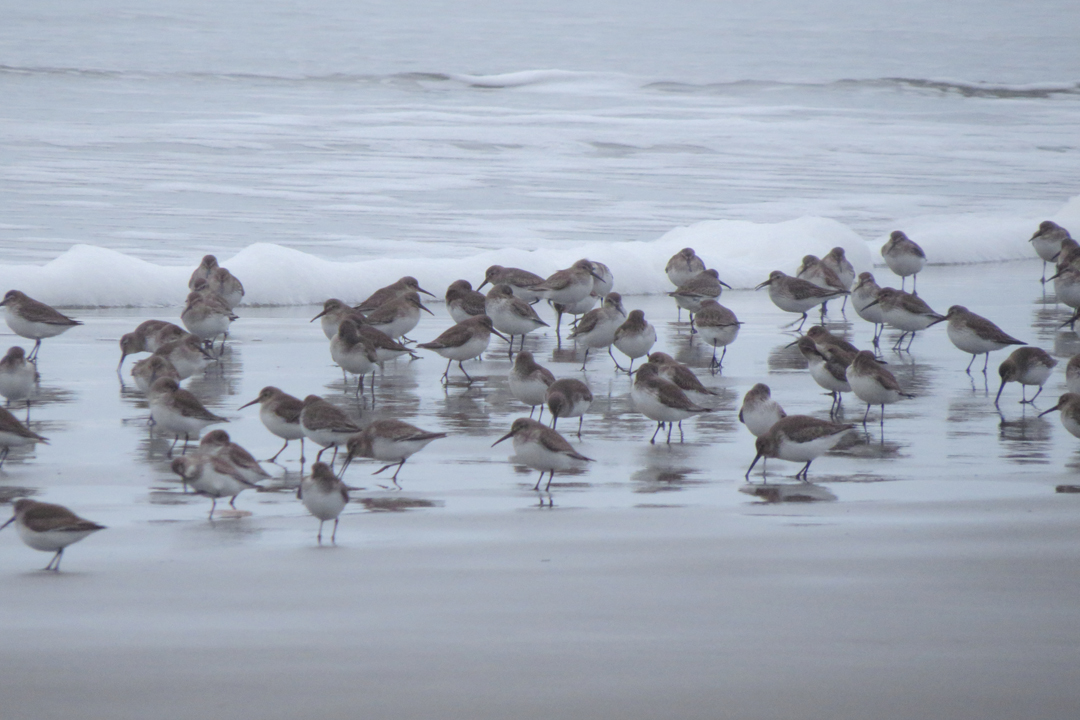
This time of year, the largest shorebird flocks are made up of Dunlin.

This gull caught my eye. The marbled pattern on the bill indicates a third-cycle bird. The dark mantle and black wing tips suggest Western Gull. The heavy mottled hood suggests some Glaucous-winged Gull in this bird’s ancestry.

I ran into a small flock of Snowy Plovers. This species is making a great comeback on the Oregon Coast after nearly being extirpated.

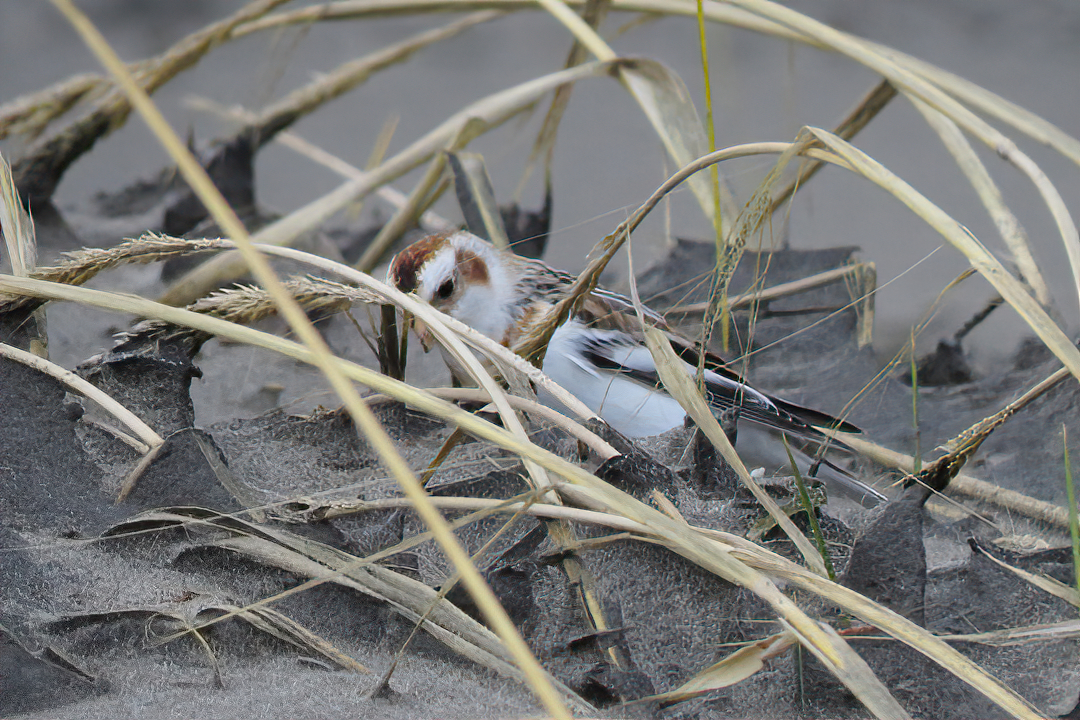
A flock of Snow Buntings was a special treat. The high winds kept the birds moving around and usually hunkered down in the beach grass, so I couldn’t get a clear photo.

A washed-up log hosted a colony of Pelagic Gooseneck Barnacles. These were actually quite lovely despite the strong fishy smell. The gulls were delighted to find these tasty snacks.

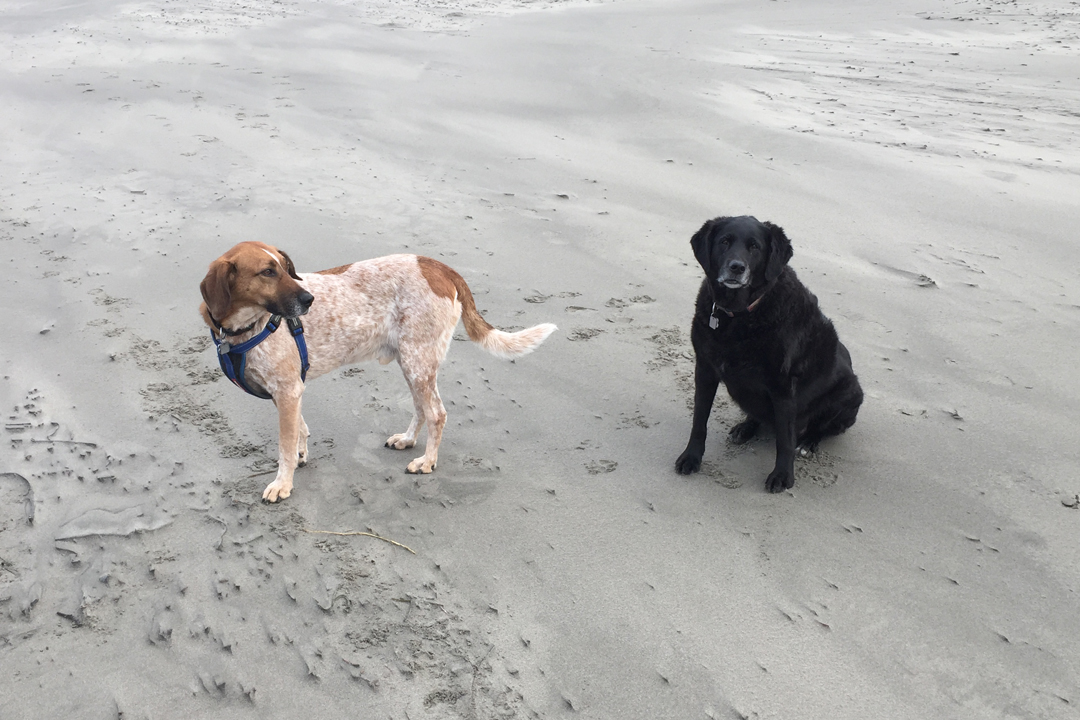
Bodhi and Nala love a good romp on the beach, despite the weather.

We play hard, we rest hard. Happy New Year

Ft. Stevens, 11-10-2011


I spent a warm sunny November day at Ft. Stevens (Birding Oregon p. 119). The tide and winds were both high, so the sea was too rough to find any birds on the water near the south jetty at parking lot C.


The best birds of the trip were a flock of five Snow Buntings, a species that has eluded me in Oregon until now. They appeared on the beach near the jetty, then quickly moved on.


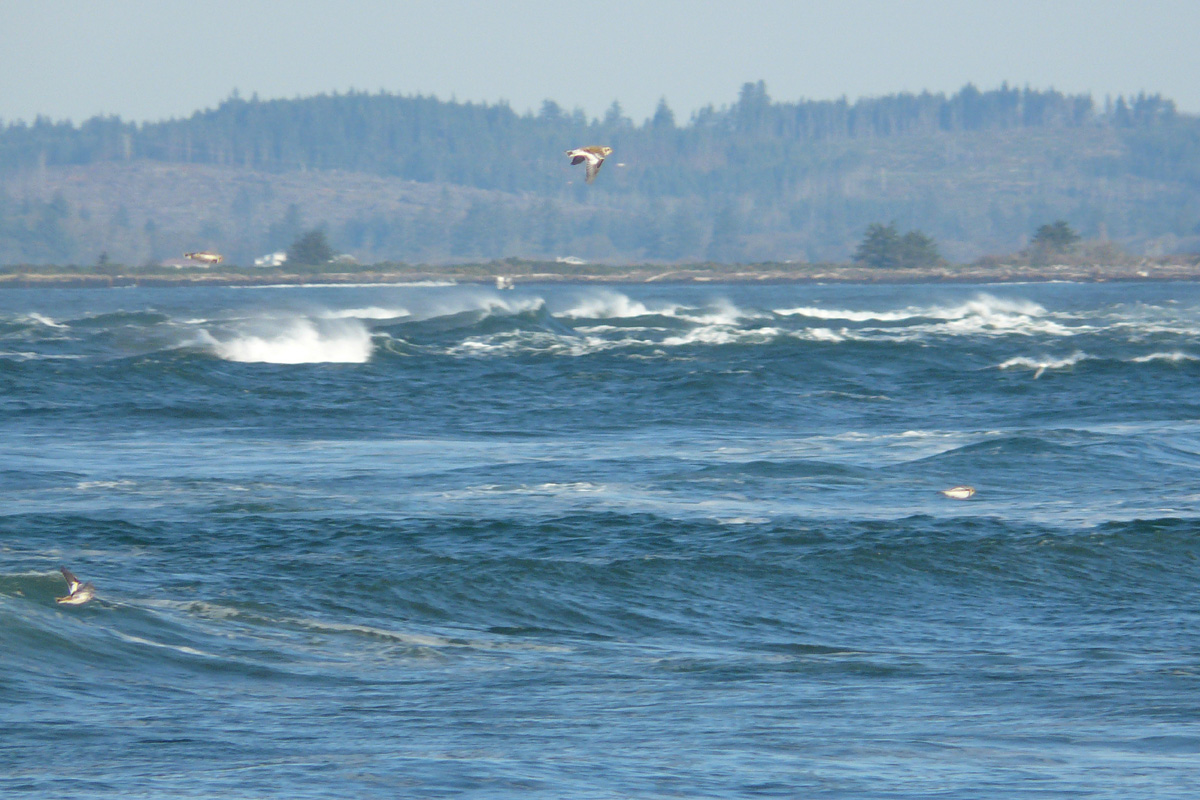
This image shows three Snow Buntings in flight. No, really.


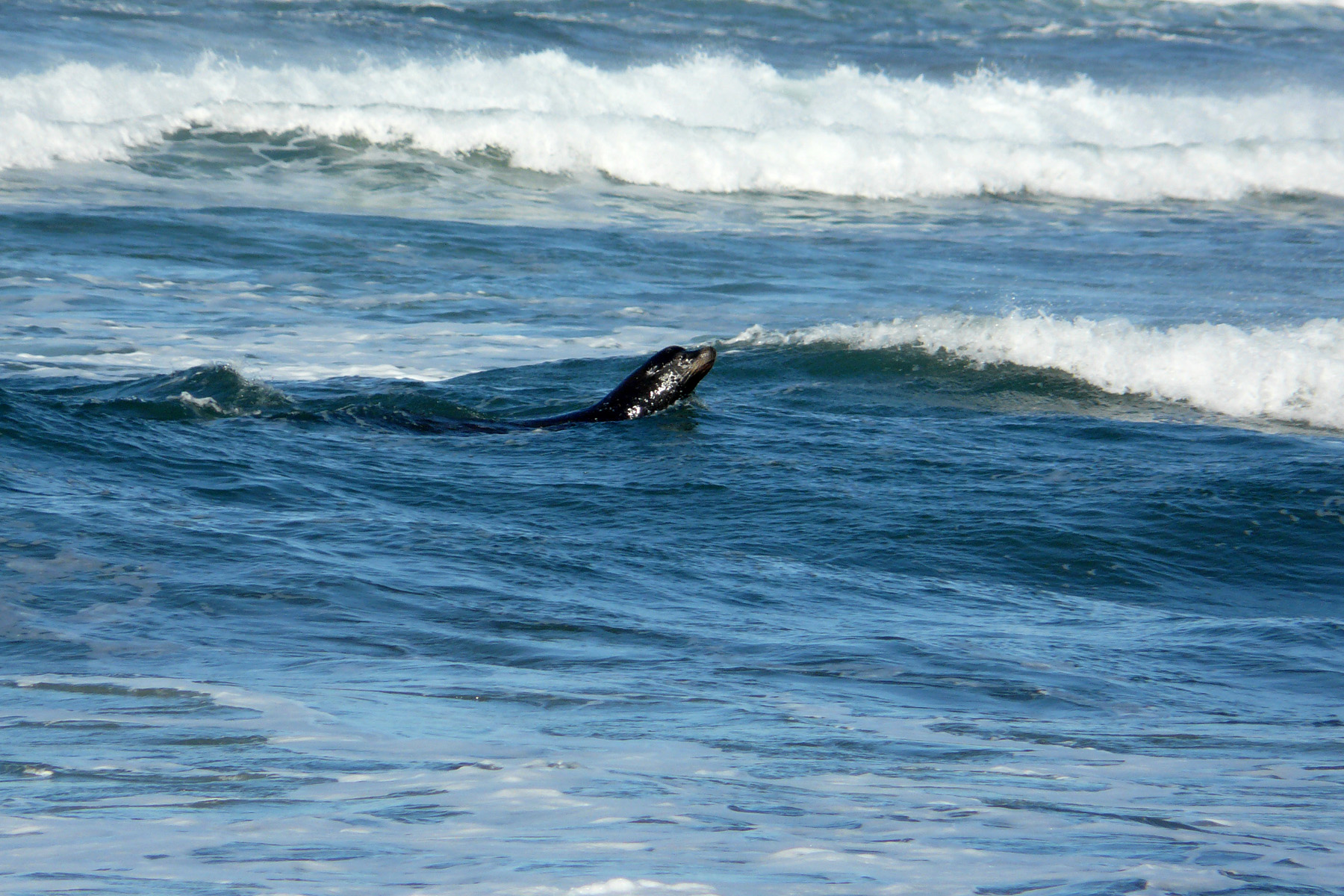
There were hundreds of California Sea Lions in the area, both on the jetty and in the surf.


A flock of at least 35 Semipalmated Plovers were working the wrack line. There are ten in this image. No, really.


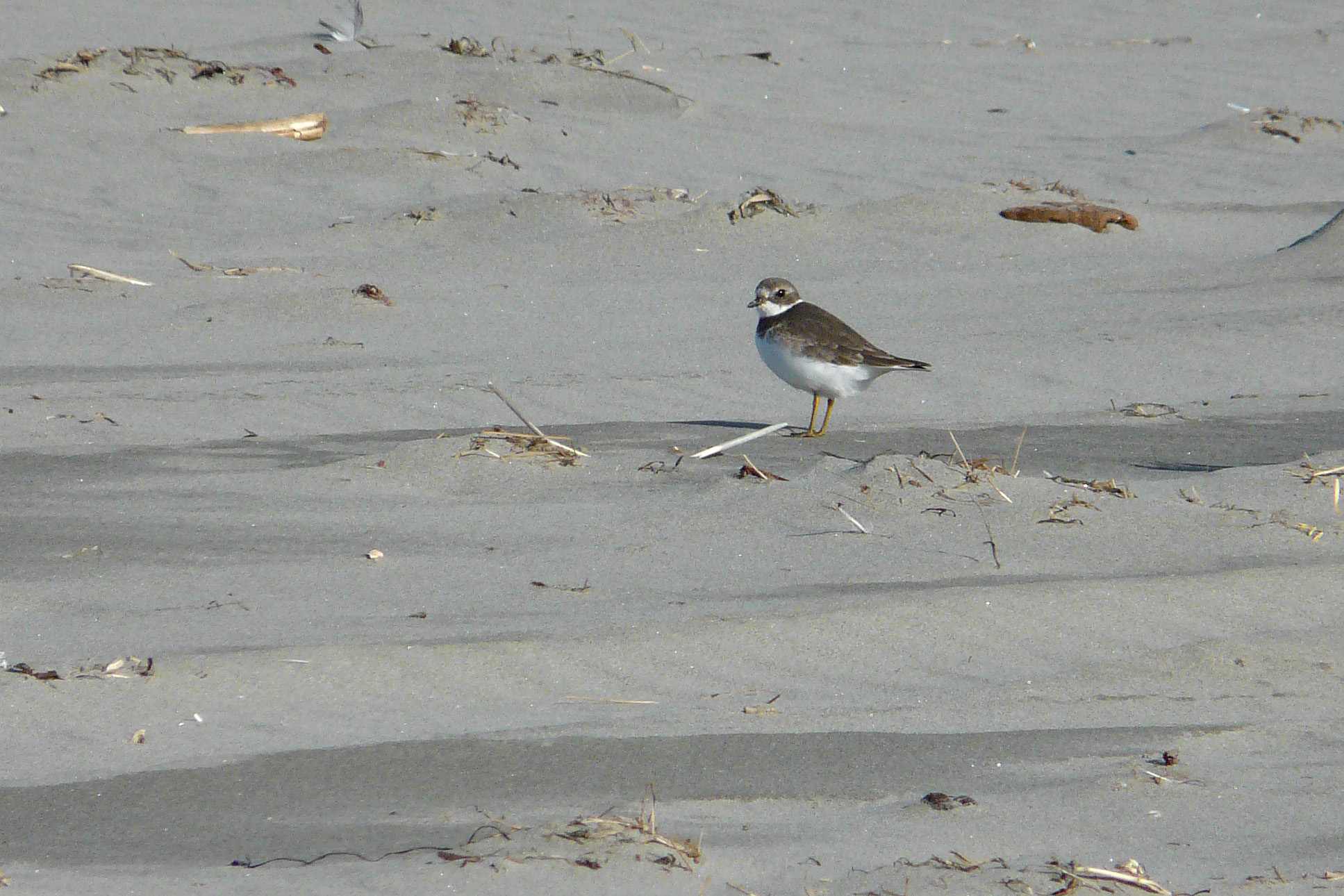
Here’s a better view of a Semipalmated Plover.


This Palm Warbler was a nice surprise. This species is rare along the coast in autumn.


Brown Pelicans were very common. The Heerman’s Gulls that harass them during the summer have already moved south for the winter, so the pelicans can feed in relative peace.


An adult (left) and juvenile Brown Pelican


Western Gull (left) and Herring Gull. The gulls on the beach are much more wary than those that spend the winter in Portland.


Sanderlings and Mew Gulls

Other goodies that escaped the camera were a Peregrine Falcon on the beach, a Northern Shrike, and three Western Meadowlarks. It was a great day to enjoy the sun before the cold wet weather settles in to stay.