Buff-breasted Sandpiper

A couple of Buff-breasted Sandpipers have been staging at the Necanicum Estuary (Birding Oregon p.121) in Gearhart. I have wanted to see this species in Oregon for some time, but I have been unable to connect until this year. Buff-breasteds are uncommon to begin with, and most of the population migrates through the center of the continent or over the Atlantic. A few (almost always juveniles) are found in Oregon in September most years, and the Necanicum Estuary seems to be one of the more reliable sites for this species.
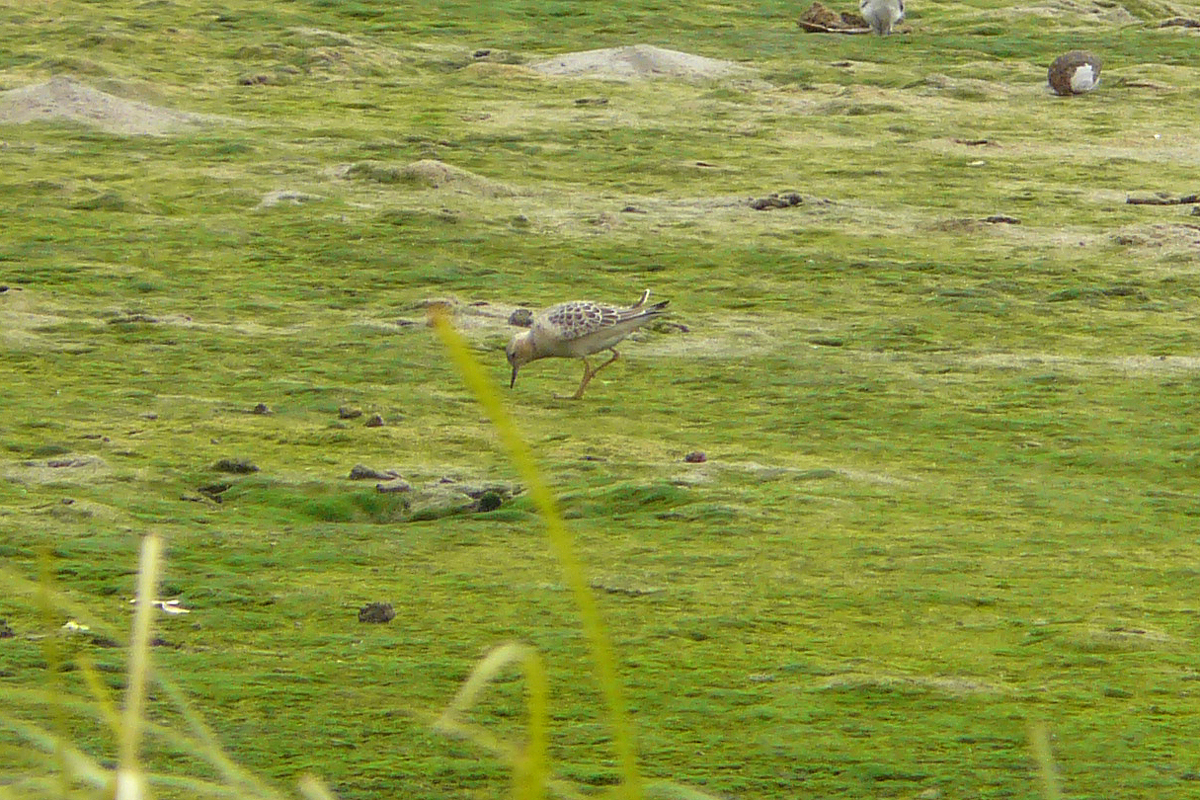
After nesting in the Arctic, Buff-breasted Sandpipers fly to southern South America for the winter. Such a long migration requires that the birds occasionally stop off for a week or so to build up fat reserves before continuing their long flight. Thankfully for us birders, these long rest stops give us a good chance to go see these rare beauties when they are reported.
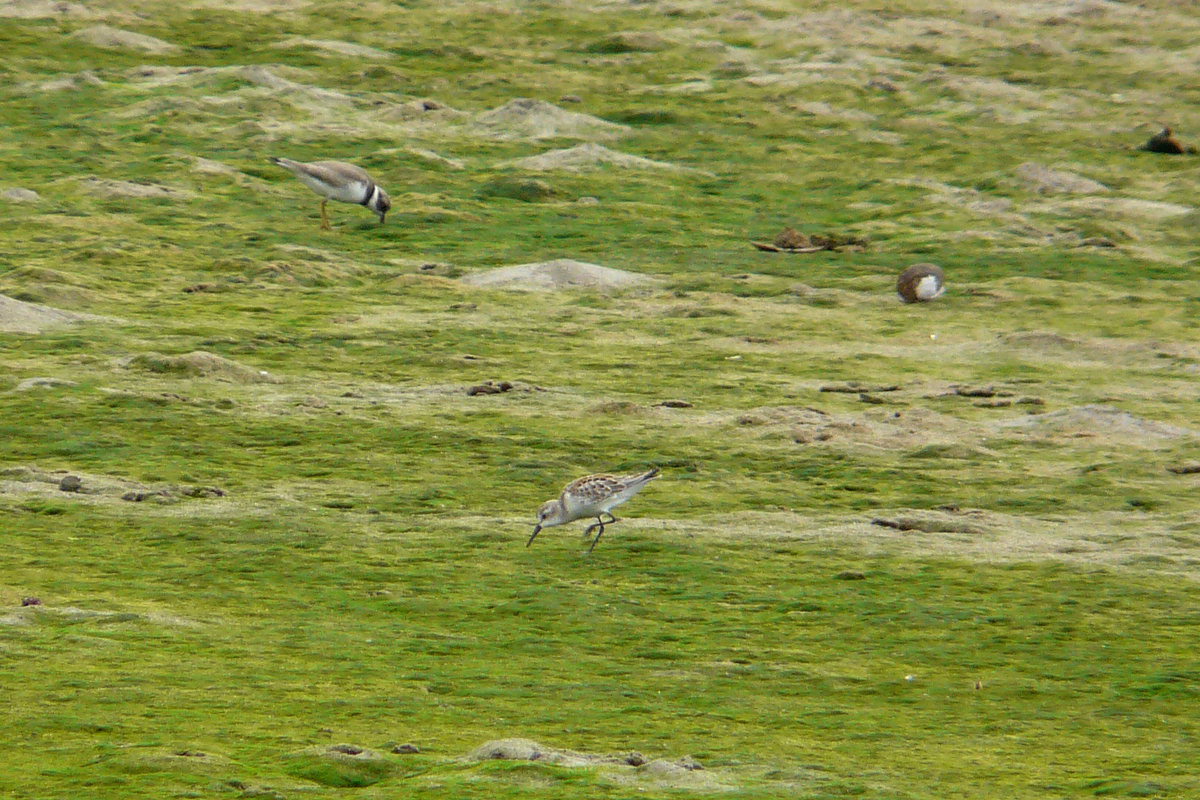
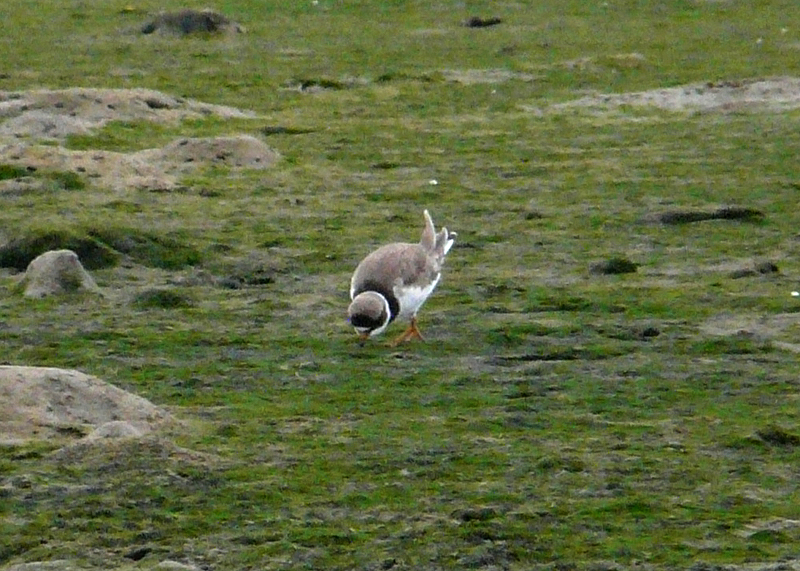
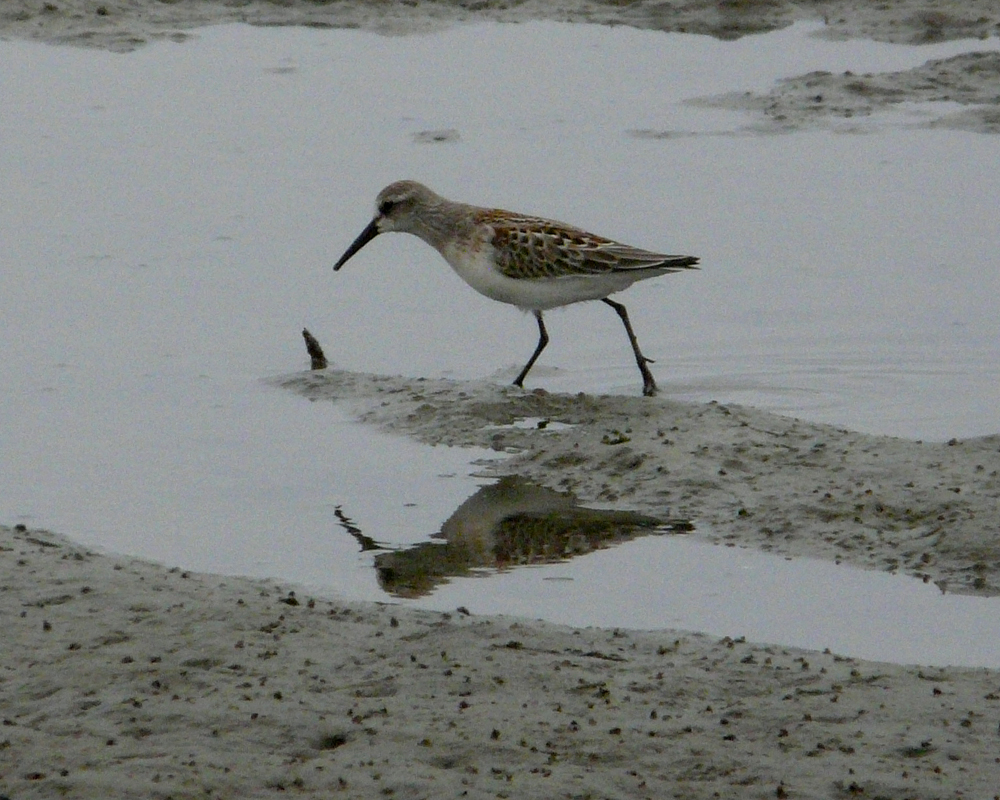
The algae mats that are hosting the Buffy are also attracting good numbers of other shorebirds. Several Baird’s Sandpipers were present on this visit. Pictured above are a Western Sandpiper and a Semipalmated Plover. Shorebird viewing at this location should remain good throughout September.

Ft. Stevens, 11-10-2011


I spent a warm sunny November day at Ft. Stevens (Birding Oregon p. 119). The tide and winds were both high, so the sea was too rough to find any birds on the water near the south jetty at parking lot C.


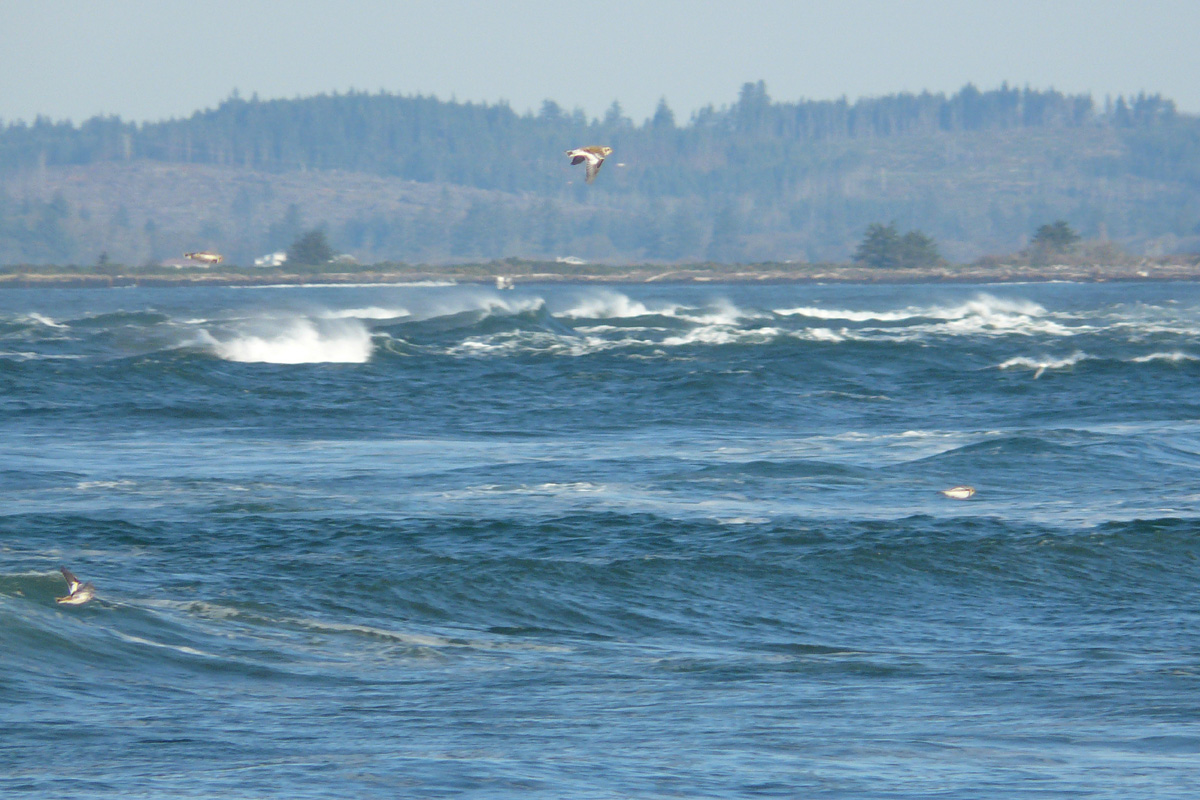
The best birds of the trip were a flock of five Snow Buntings, a species that has eluded me in Oregon until now. They appeared on the beach near the jetty, then quickly moved on.


This image shows three Snow Buntings in flight. No, really.


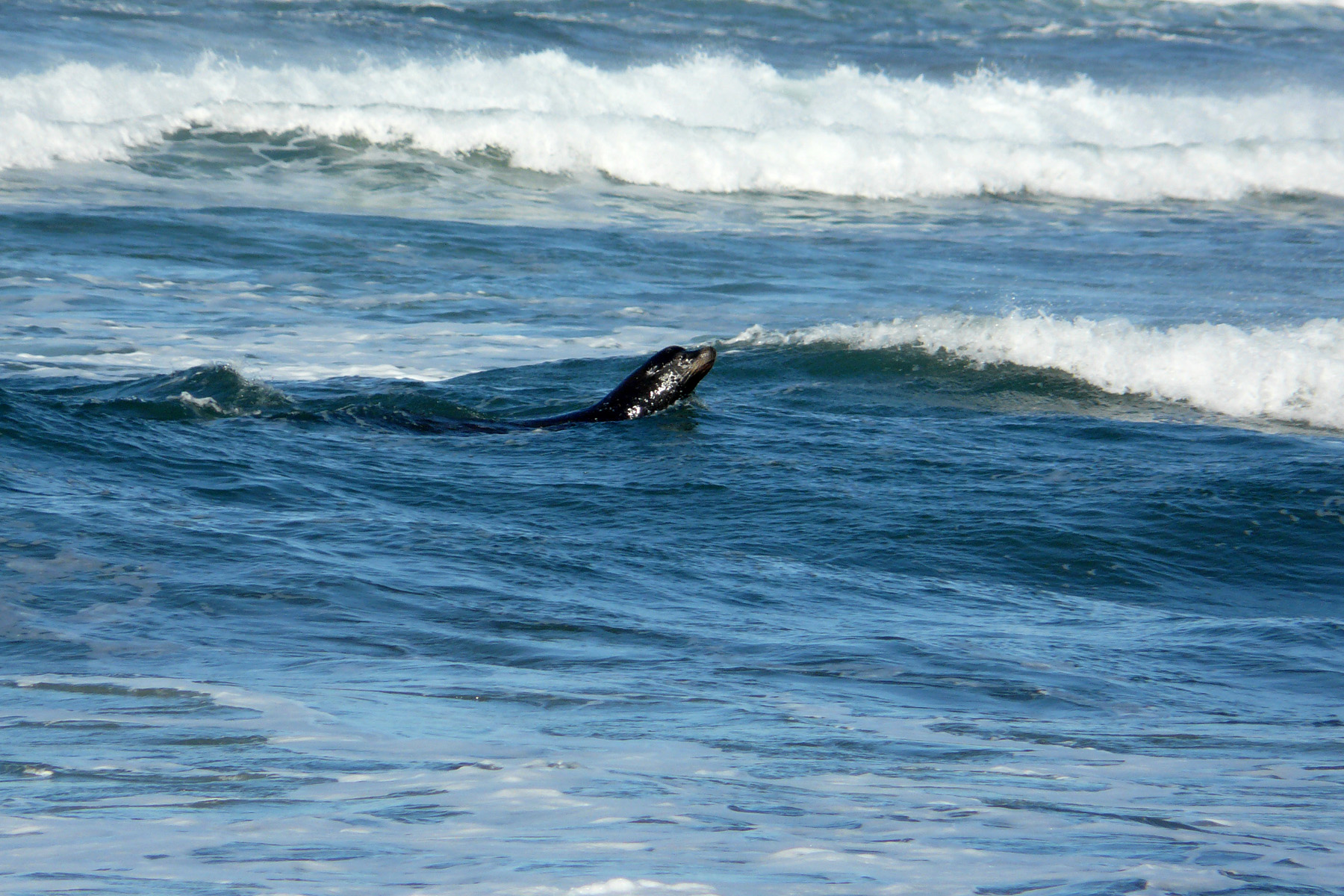
There were hundreds of California Sea Lions in the area, both on the jetty and in the surf.


A flock of at least 35 Semipalmated Plovers were working the wrack line. There are ten in this image. No, really.


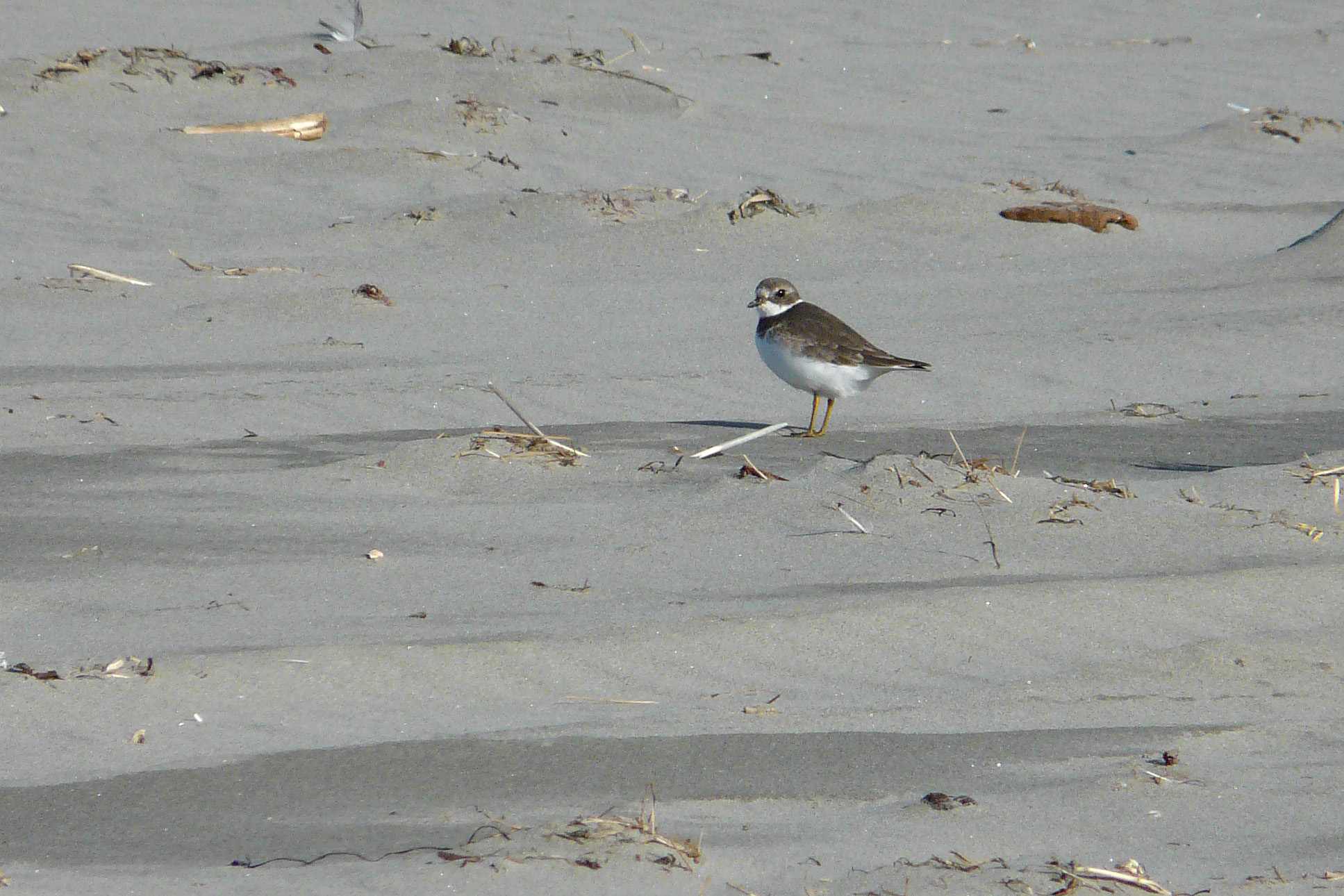
Here’s a better view of a Semipalmated Plover.


This Palm Warbler was a nice surprise. This species is rare along the coast in autumn.


Brown Pelicans were very common. The Heerman’s Gulls that harass them during the summer have already moved south for the winter, so the pelicans can feed in relative peace.


An adult (left) and juvenile Brown Pelican


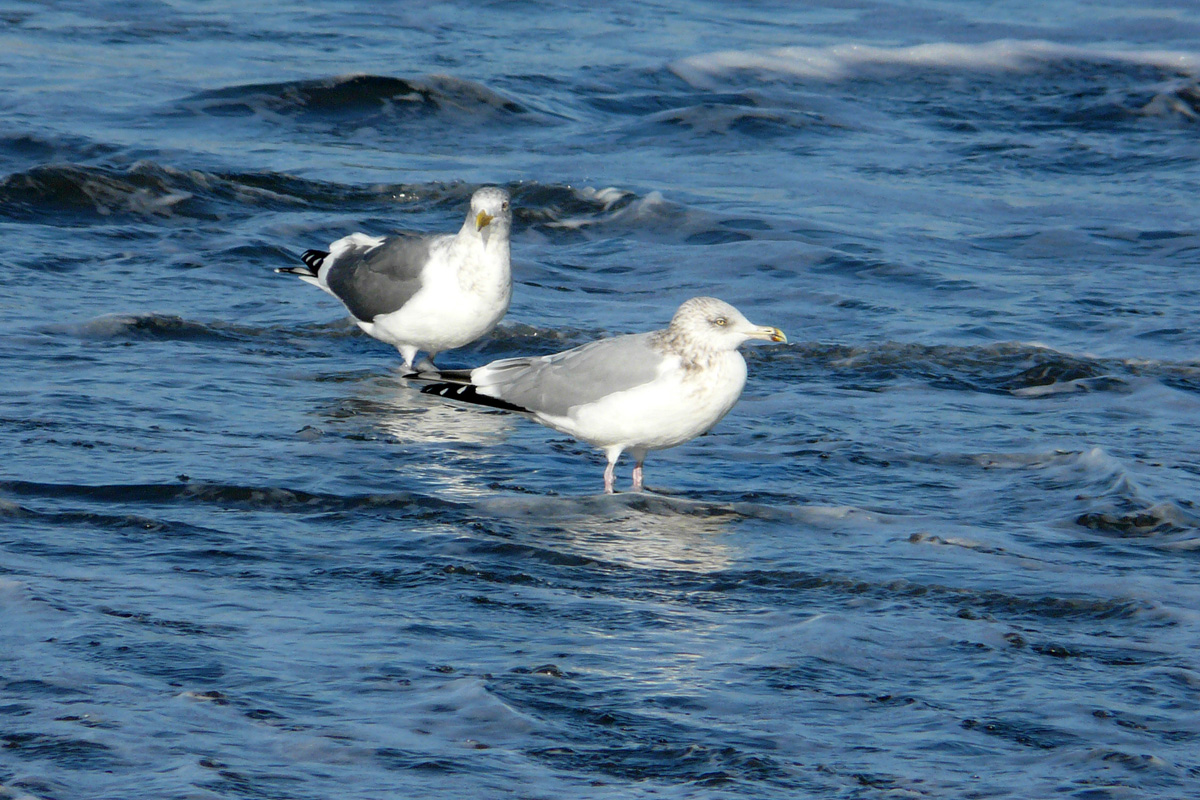
Western Gull (left) and Herring Gull. The gulls on the beach are much more wary than those that spend the winter in Portland.


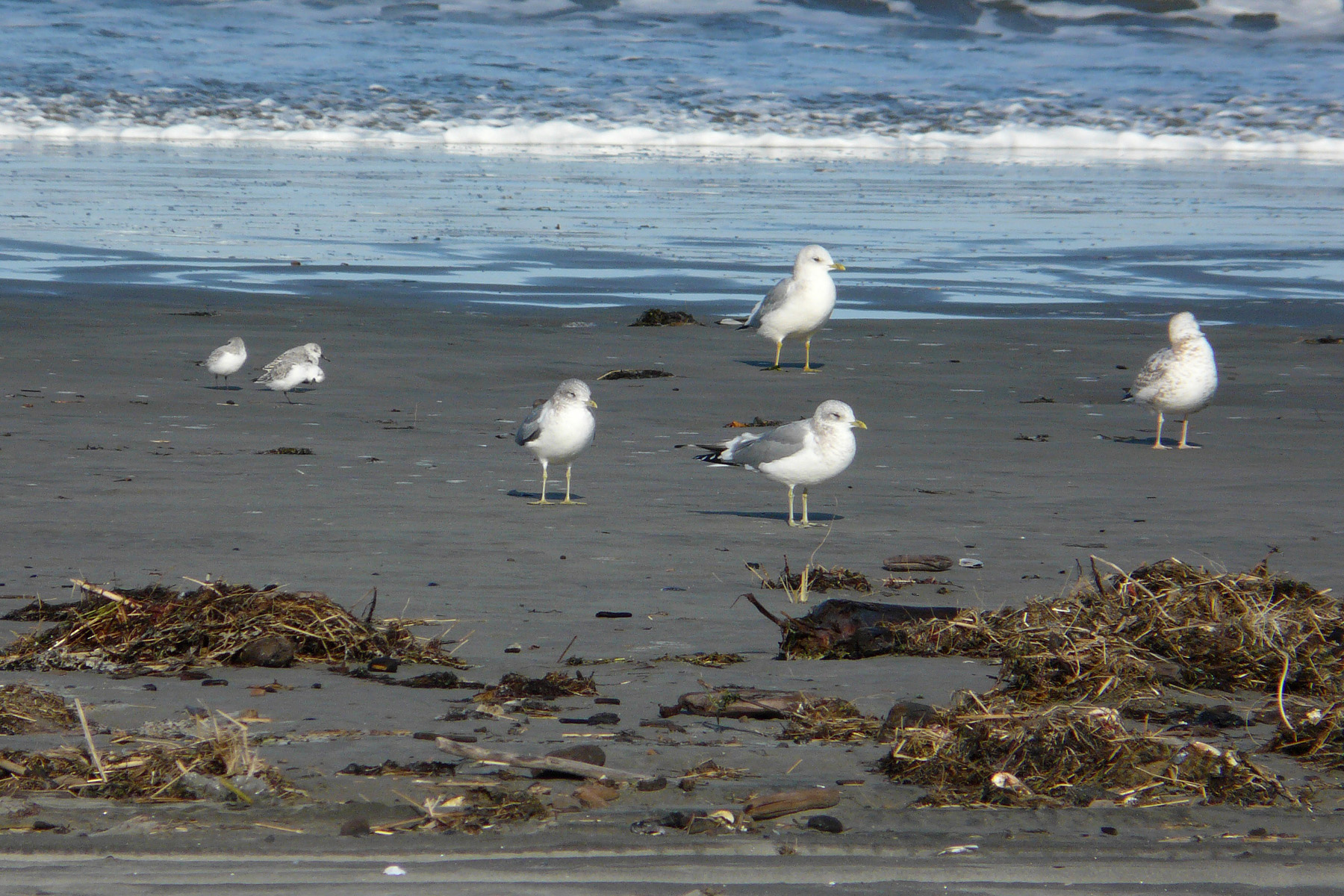
Sanderlings and Mew Gulls

Other goodies that escaped the camera were a Peregrine Falcon on the beach, a Northern Shrike, and three Western Meadowlarks. It was a great day to enjoy the sun before the cold wet weather settles in to stay.

Seaside, OR 8-4-11

I spent the day birding sites around Seaside, OR (Birding Oregon p. 121).


The tide was the lowest I have seen at The Cove, revealing its sandy bottom.


The low tide allowed lots of beach-combers to wander along the rocky edges, so the only shorebirds present was a small flock of Black Turnstones.


This is a Western Gull in very worn plumage. Note the black-tipped primary just starting to grow in. The lumpy neck on this bird was caused by the large sea star he had just swallowed.


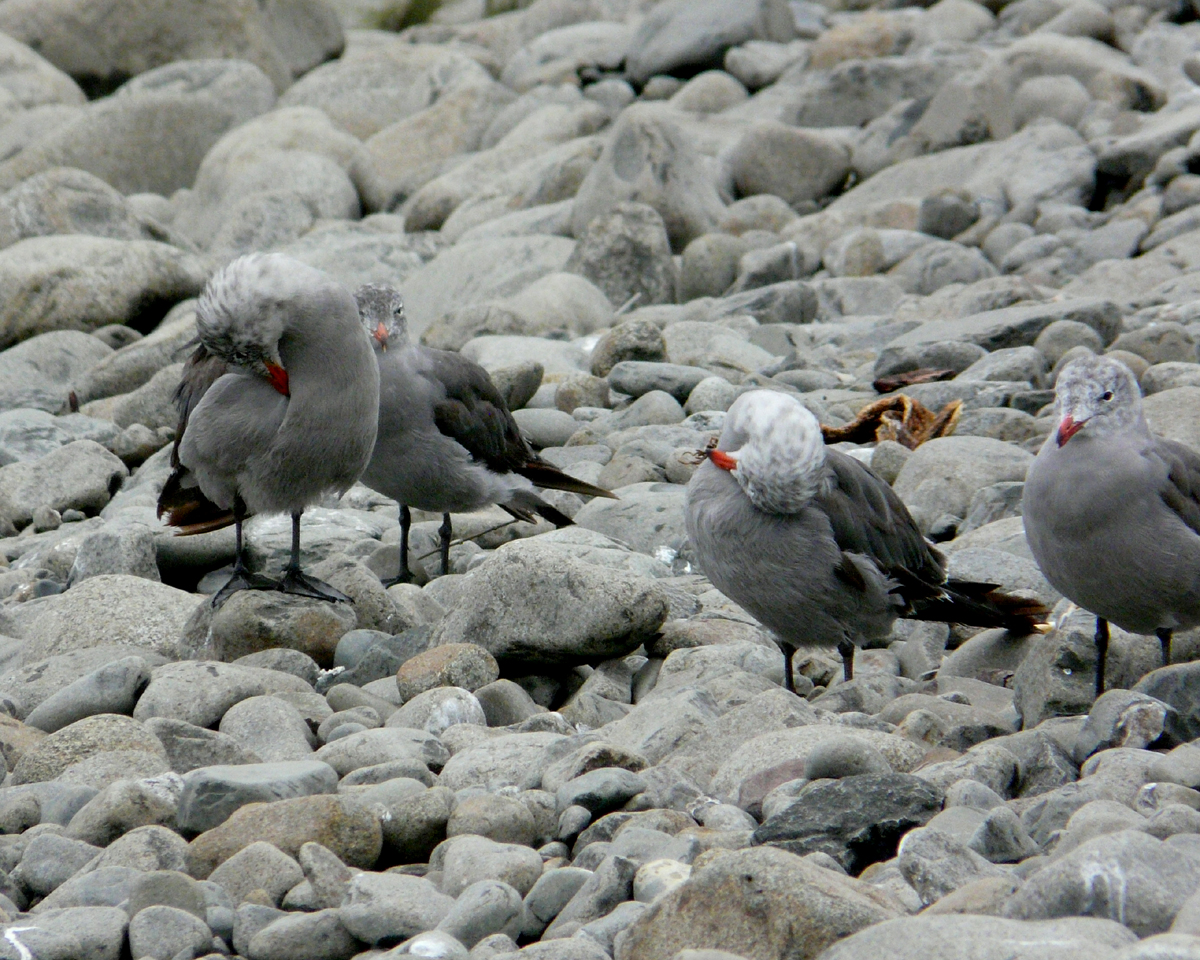
Heerman’s Gulls are normally one of the most beautiful gull species, but this individual was also extremely worn.


These birds were in better shape.


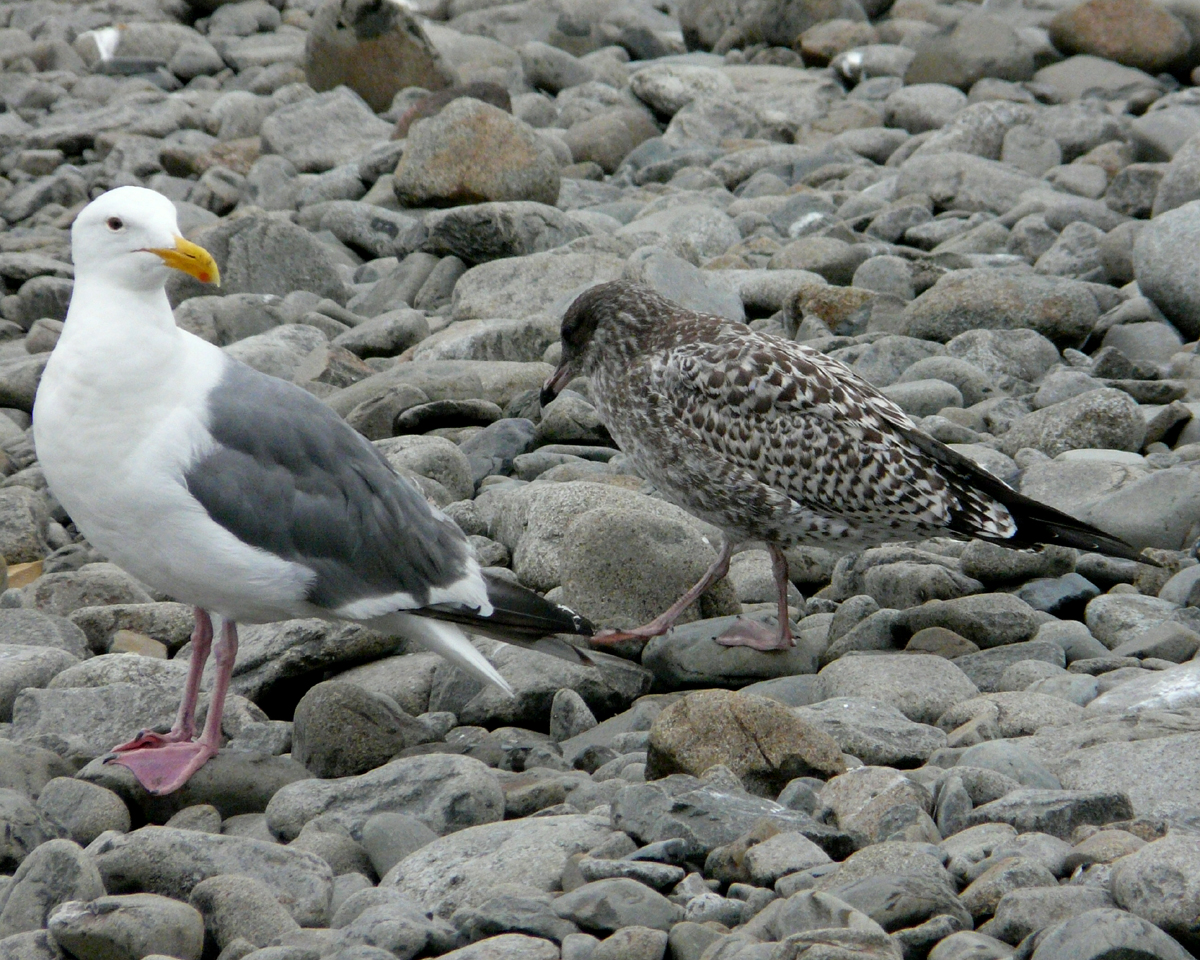
California Gulls are starting to gather along the Oregon coast. This juvenile was keeping company with an adult Western Gull.


At the north end of town is the Necanicum Estuary, also at very low tide. The exposed mud and aquatic vegetation attracted nice numbers of shorebirds.


Semipalmated Plover


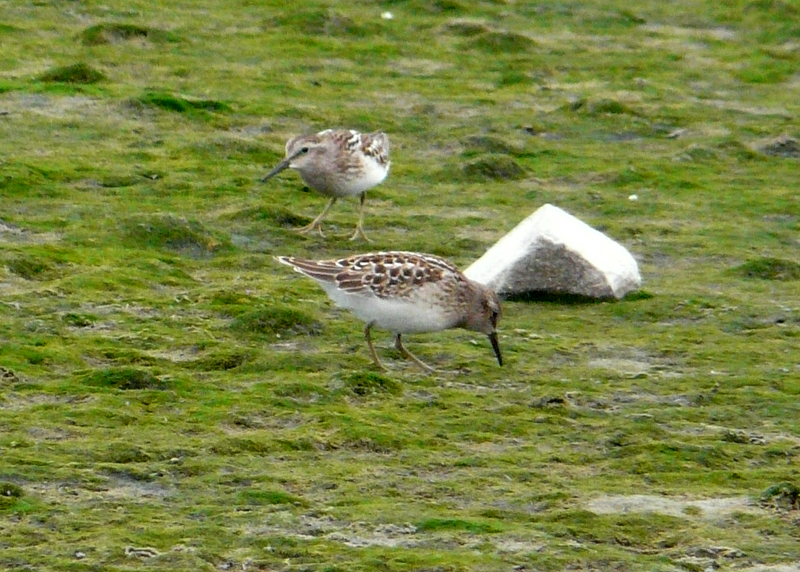
Least Sandpipers


Western Sandpiper


The rarest bird of the day was this Semipalmated Sandpiper.


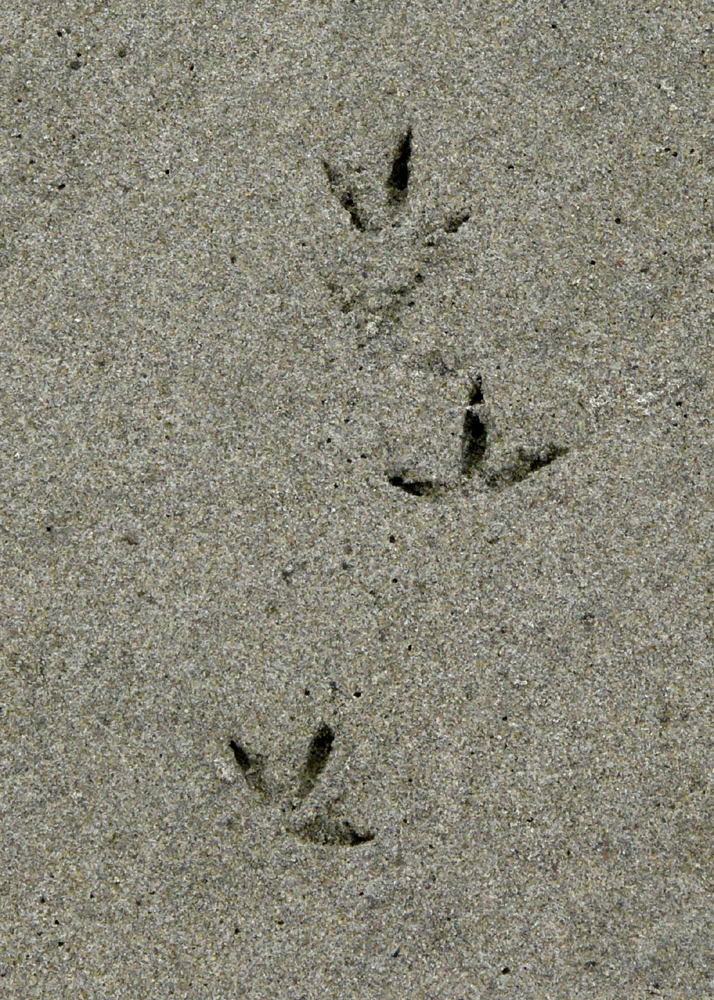
Notice on these shorebird tracks that the toes are partially webbed, or semipalmated. So these tracks were made by either a Western Sandpiper, Semipalmated Plover, or Semipalmated Sandpiper.


These tracks don’t show any sign of webbing, so they were probably made by a Least Sandpiper.


The estuary is a favorite hang-out for Caspian Terns, here joined by California Gulls.


Klamath Basin

Here are some photos from a recent trip to the Klamath Basin.


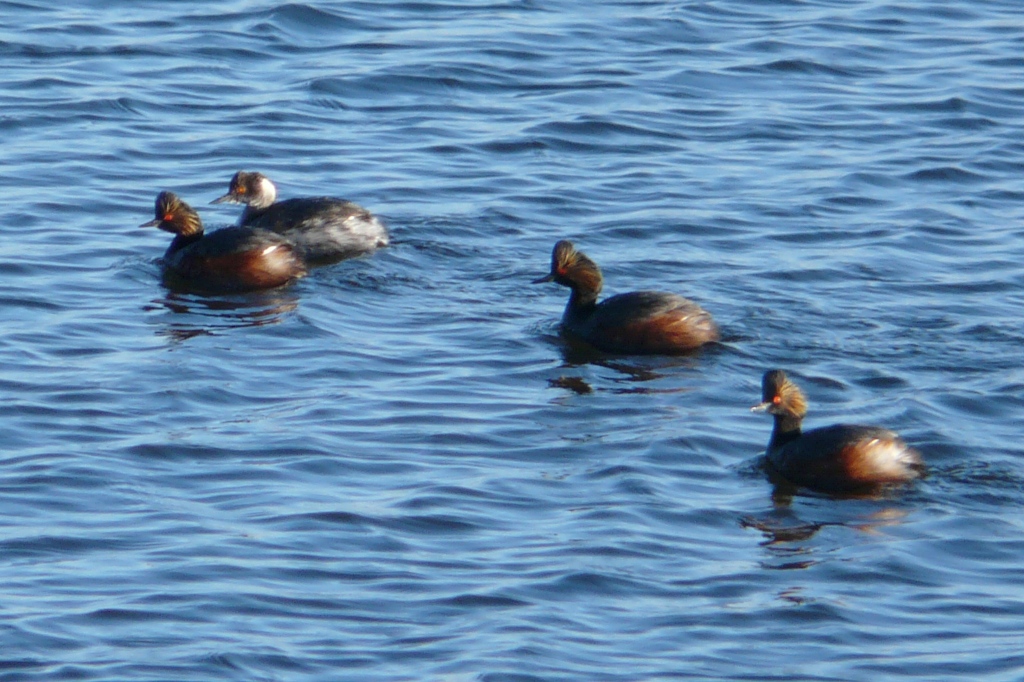
Eared Grebes are common  in the wetlands along State Line Road (Birding Oregon p. 116). The second bird from the left is still in basic plumage, while all the other birds seen that day had already molted into alternate plumage.


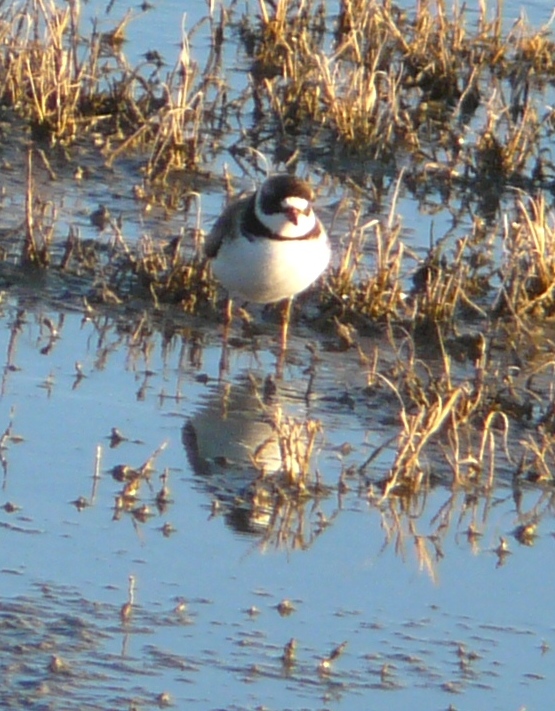
Shorebirds, such as this Semipalmated Plover, can be found on the mudflats along State Line Road.


This Pied-billed Grebe was nesting at Wood River Wetlands (Birding Oregon p.111).

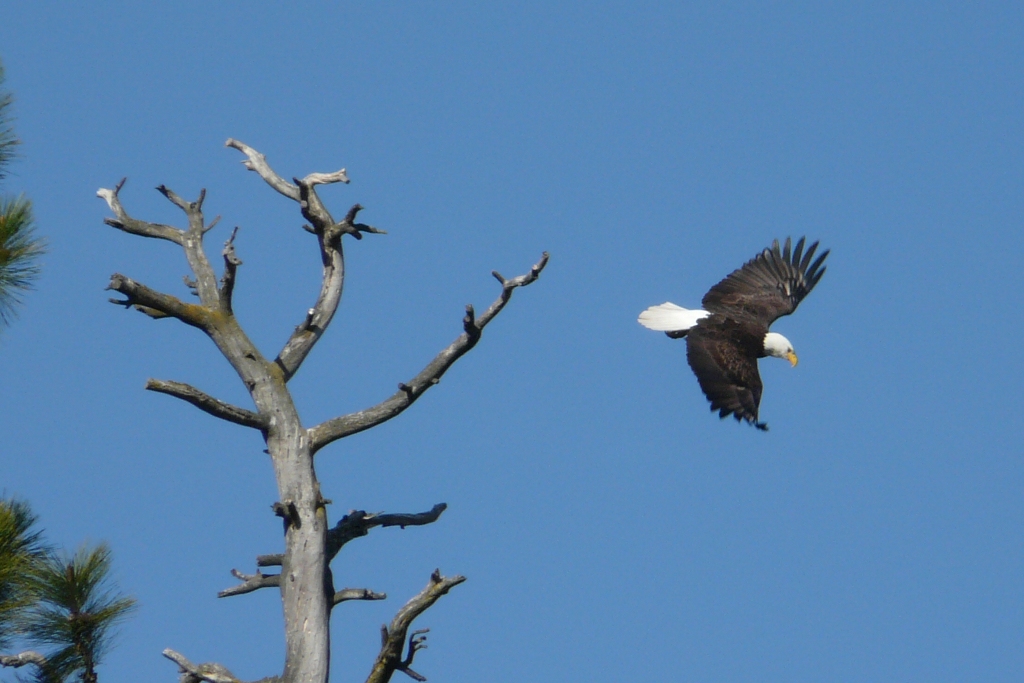
The Klamath Basin is famous for its large wintering population of Bald Eagles, but a few pairs  stay to nest. This bird was found in Moore Park in Klamath Falls.


Moore Park is also home to Mule Deer. Note the fuzzy antlers starting to grow on the deer in the center of the photo.

Shorebirds at Grays Harbor, WA

I took my shorebird class to Grays Harbor in Washington, one of the prominent staging areas for migrant shorebirds on the West Coast. The cold wet spring continues, so diversity was a little low, but there were lots of birds to see.

godwits-sbdowitchers
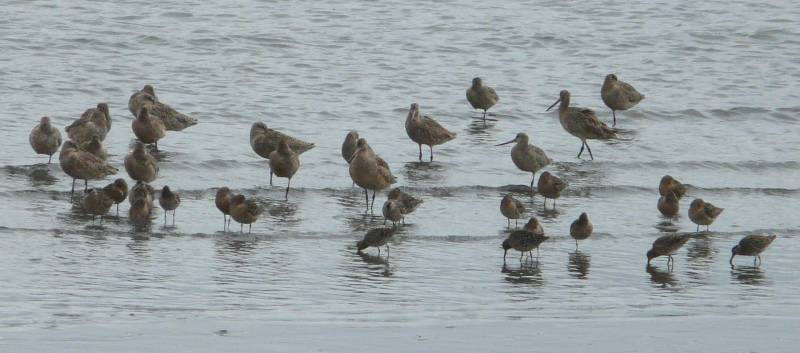
At Damon Point State Park, near the mouth of the bay, we found good numbers of Marbled Godwits and Short-billed Dowitchers.

flight
At Bowerman Basin, part of Grays Harbor NWR, a long boardwalk extends along the edge of the mudflats. As the basin fills with the rising tide, the birds are pushed closer to shore for excellent views.

mixed-flock3
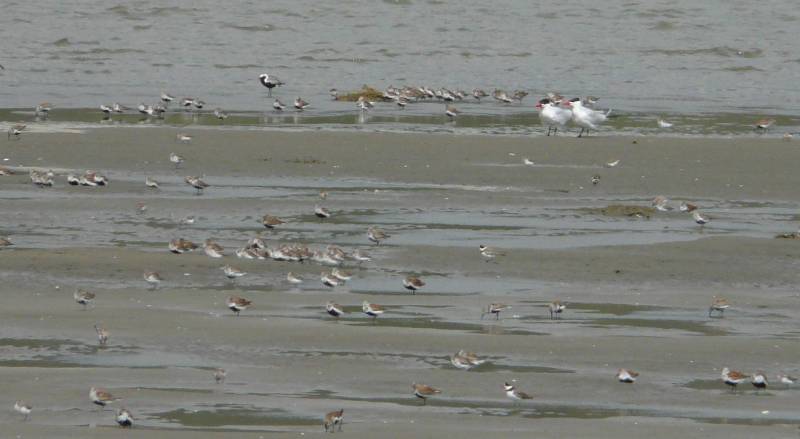
Here we can see a Black-bellied Plover, a couple of Semipalmated Plovers, two Caspian Terns, lots of Dunlin, and some Western Sandpipers.

semiplamated-plover
Here is a closer look at the lovely Semipalmated Plovers mixed in with Western Sandpipers.

western-least
I didn’t notice the bird at the time, but when I downloaded this shot of Western Sandpipers I immediately noticed the Least Sandpiper among them. Least Sandpipers feed in a crouched position with their feet far forward. On closer inspection, you can see the tiny bill and the pale legs. (lower right corner, if you are still looking)

least-western
Here’s a closer look at the Least Sandpiper between two Westerns.