Purple Martins

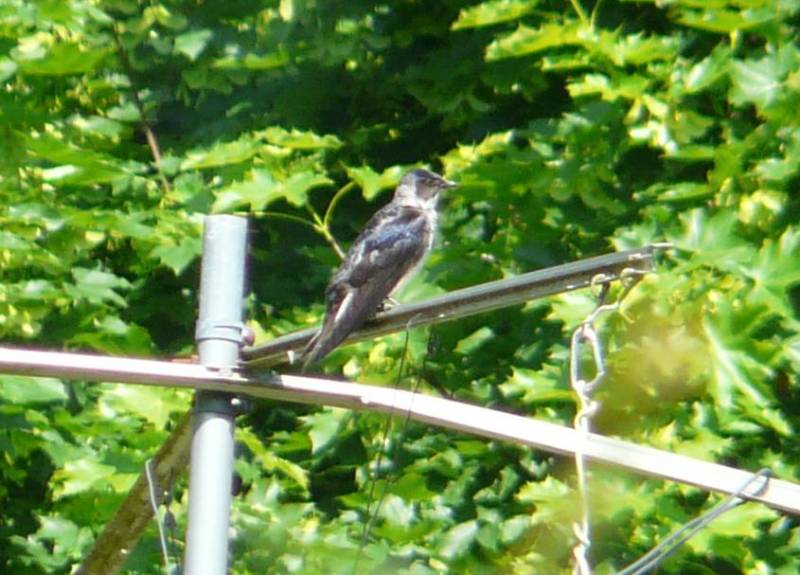
purple martin

I always enjoy checking out the Purple Martin houses behind a home on Sauvie Island.  These large swallows are one of the more popular yard birds in the eastern U.S. , but the species is much less common in the West. This site on  Sauvie Island is one of the few places in the Portland area to find them.

martin nest
Here a female is putting nesting material into a martin house. The “natural” nesting habitat for Purple Martins is a cavity, usually an old woodpecker hole. But for the past two centuries, most of the population has chosen to nest in man-made structures.

Sparrows

I am revving up for my Little Brown Birds class next month, so I spent some time with the sparrow flocks on Sauvie Island (Birding Oregon p.57). A walk down Rentenaar Road revealed five species, three of which sat still long enough to be photographed.

white-crowned
White-crowned Sparrows stand out with their bold head pattern.

white-crownedjuv
Immature White-crowned Sparrows have the same pattern as the adults, but in brown and buff instead of black and white.

golden-crowned
Two Golden-crowned Sparrows, immature on the left, adult on the right
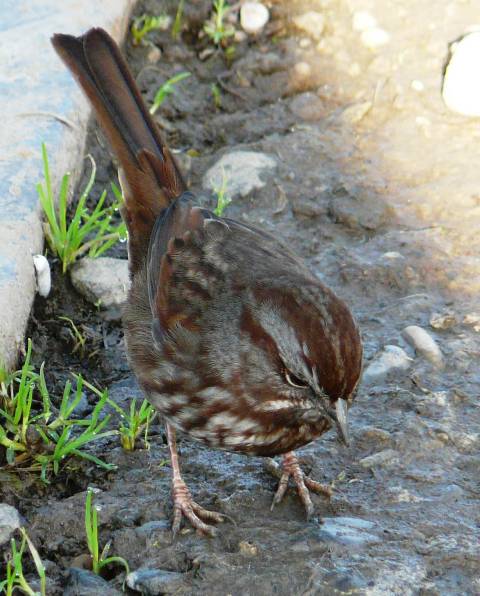
song
This Song Sparrow was feeding right at my feet, but insisted on staying in my shadow, thus messing up the lighting in the photo.

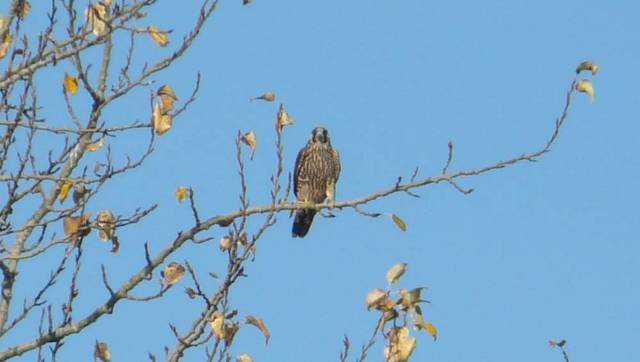
peregrine
This Peregrine Falcon wasn’t much of a threat to the sparrows, but he did make the shorebirds and waterfowl nervous.

Autumn Movements

With the autumnal equinox this week, we are seeing migrants returning to the Willamette Valley. The first flocks of Cackling Geese have arrived along with good numbers of Greater White-fronted Geese. The brambles are once again hosting Golden-crowned Sparrows.


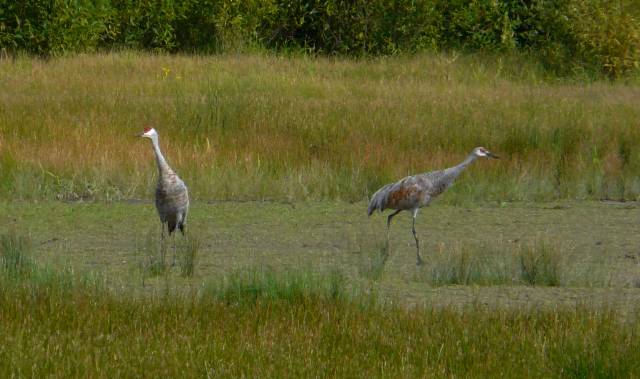
Sandhill Cranes are gathering on Sauvie Island (Birding Oregon p. 55). These birds were seen along Sturgeon Lake on Oak Island.


Flocks of Yellow-rumped Warblers were moving through the woods and brushy areas of Oak Island today. This individual is a female of the Myrtle race. Notice how the white throat is cleanly separated from the gray cheek, with the white starting to wrap around the ear coverts. Audubon’s race does not show this clear demarcation.

Oak Island

I am helping with a series of point counts on the Oak Island section of Sauvie Island (Birding Oregon p.56). The goal is to gather baseline information on bird species using this area before habitat restoration work begins. The habitat consists of large oaks, grassy fields, and scattered thickets along the shore of Sturgeon Lake.

The area has a nice variety of nesting species. Those who live in the wooded areas seldom display themselves in such a way that allows me to capture a photo. So here are some birds (and a couple of mammals) of the edge habitats.

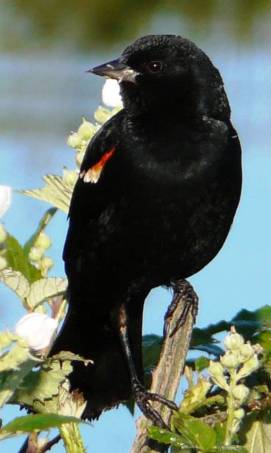
Red-winged Blackbird


Rufous Hummingbird


Black-headed Grosbeak


Townsend’s Chipmunk


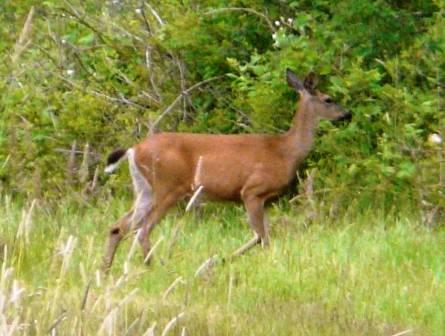
Black-tailed Deer

Sauvie Island

Migration has wound down by now, and the summer breeders are out in force. Here are a few birds I found on Sauvie Island this morning.


Savannah Sparrows can be heard at the edges of all the pastures.


Rufous Hummingbird


This Bald Eagle hovered over me, scolding the whole time. That behavior is more typical of Red-winged Blackbirds. I thought the eagles would be done nesting by now, but apparently they still have young in the nest.


Blue-winged Teal, uncommon in the Willamette Valley


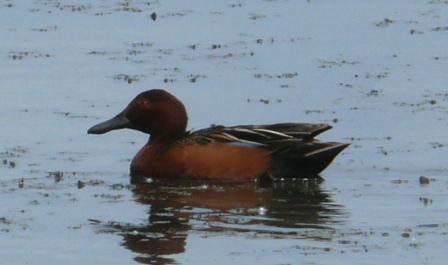
Cinnamon Teal, common, but always a delight


hungry Barn Swallow chicks


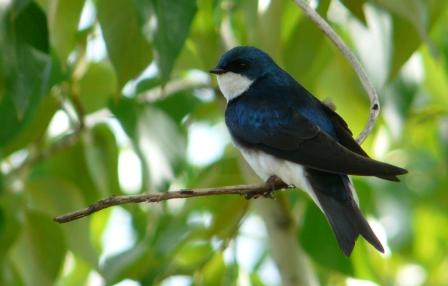
Tree Swallow

Sauvie Island

Some lovely weather at last. I walked along Rentenaar Road on Sauvie Island today. Many of the geese have moved on, but there were still a few good flocks of Cackling Geese and Sandhill Cranes.

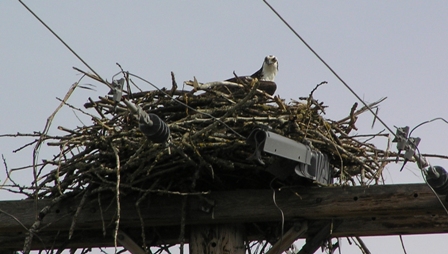
osprey-nest.jpg
A pair of Ospreys are working on a nest. There is a platform built for them just a few yards from this spot, but these birds prefer to build on the power lines.

osprey.jpg
This individual was eating a fish while the other tended the nest.

Two Coyotes were sniffing around in a pasture. I never get tired of watching these guys.
coyote.jpg coyote2.jpg

What a difference a day makes

Last Friday I went to Sauvie Island to scout out locations for my class field trip on Saturday. The birding was great, not only for sparrows (which was the topic of the class) but for other birds as well. Along Rentenaar Road I found large flocks of White-crowned and Golden-crowned Sparrows, several Lincoln’s Sparrows and a Fox Sparrow. More unusual were three Common Ravens, a dark-morph Rough-legged Hawk, and a pair of Pileated Woodpeckers flying over the farm fields. California Quail were calling from the blackberry thickets along the road.

The following morning, with my class in tow, I walked the same stretch of road. The White-crowned flock was much smaller. We saw only one distant Lincoln’s. The ravens, Rough-legged, and Pileateds were nowhere to be seen, and the California Quail called from way back in the fields. But we did find a White-throated Sparrow, a Peregrine Falcon, and a Red-breasted Sapsucker, which I hadn’t seen the day before.

This brings up an obvious, but often forgotten tenet of birding: Those who find the greatest diversity of species and the most rarities are those that spend the most time in the field. If it seems like other birders are finding a lot more birds than you are, take a look at how often you actually go birding. Successful birding is not entirely dependent on skill and experience. Sometimes it is just a matter of getting out to where the birds are.
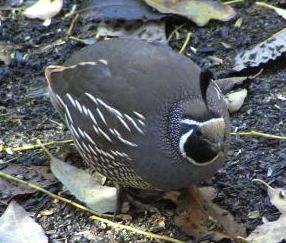
ca-quail.jpg
California Quail