Ft. Stevens, 11-10-2011


I spent a warm sunny November day at Ft. Stevens (Birding Oregon p. 119). The tide and winds were both high, so the sea was too rough to find any birds on the water near the south jetty at parking lot C.


The best birds of the trip were a flock of five Snow Buntings, a species that has eluded me in Oregon until now. They appeared on the beach near the jetty, then quickly moved on.
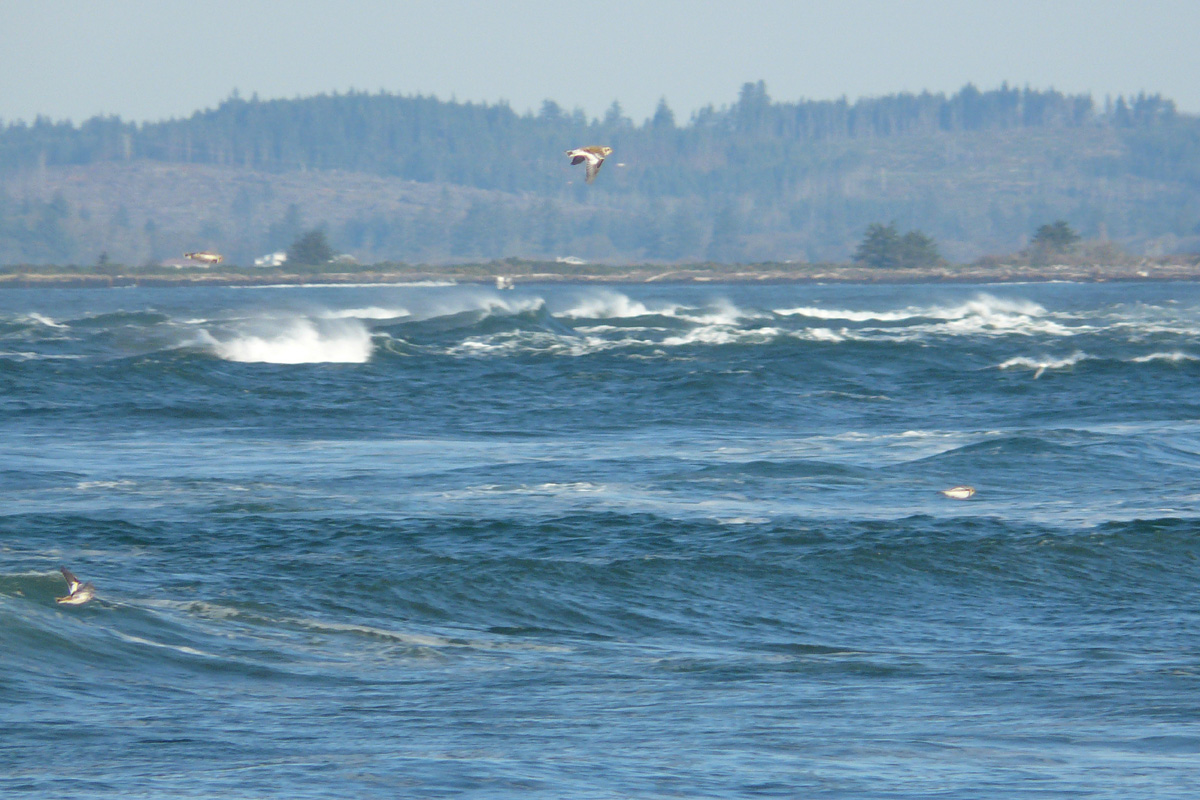

This image shows three Snow Buntings in flight. No, really.
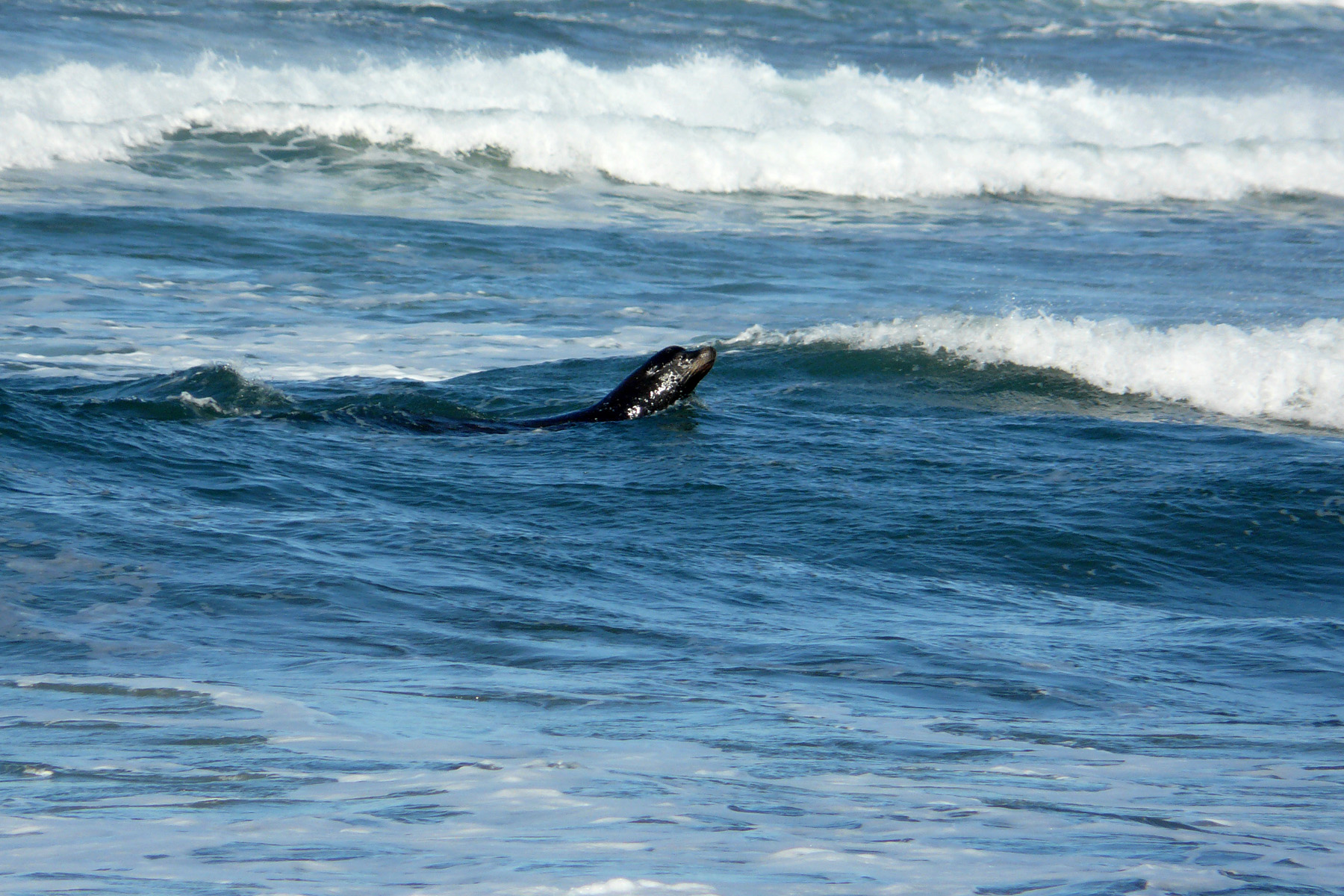

There were hundreds of California Sea Lions in the area, both on the jetty and in the surf.


A flock of at least 35 Semipalmated Plovers were working the wrack line. There are ten in this image. No, really.
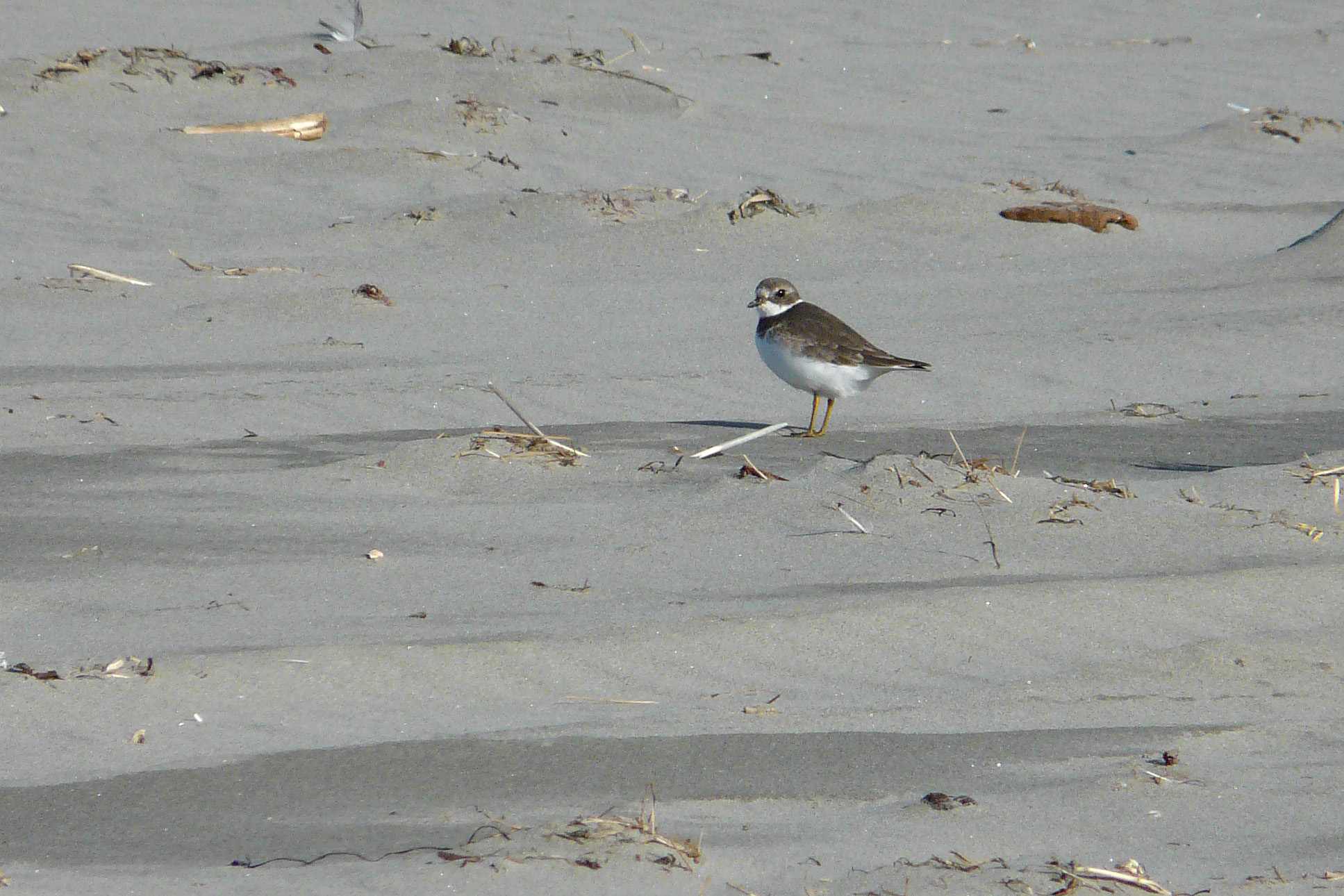

Here’s a better view of a Semipalmated Plover.


This Palm Warbler was a nice surprise. This species is rare along the coast in autumn.


Brown Pelicans were very common. The Heerman’s Gulls that harass them during the summer have already moved south for the winter, so the pelicans can feed in relative peace.


An adult (left) and juvenile Brown Pelican
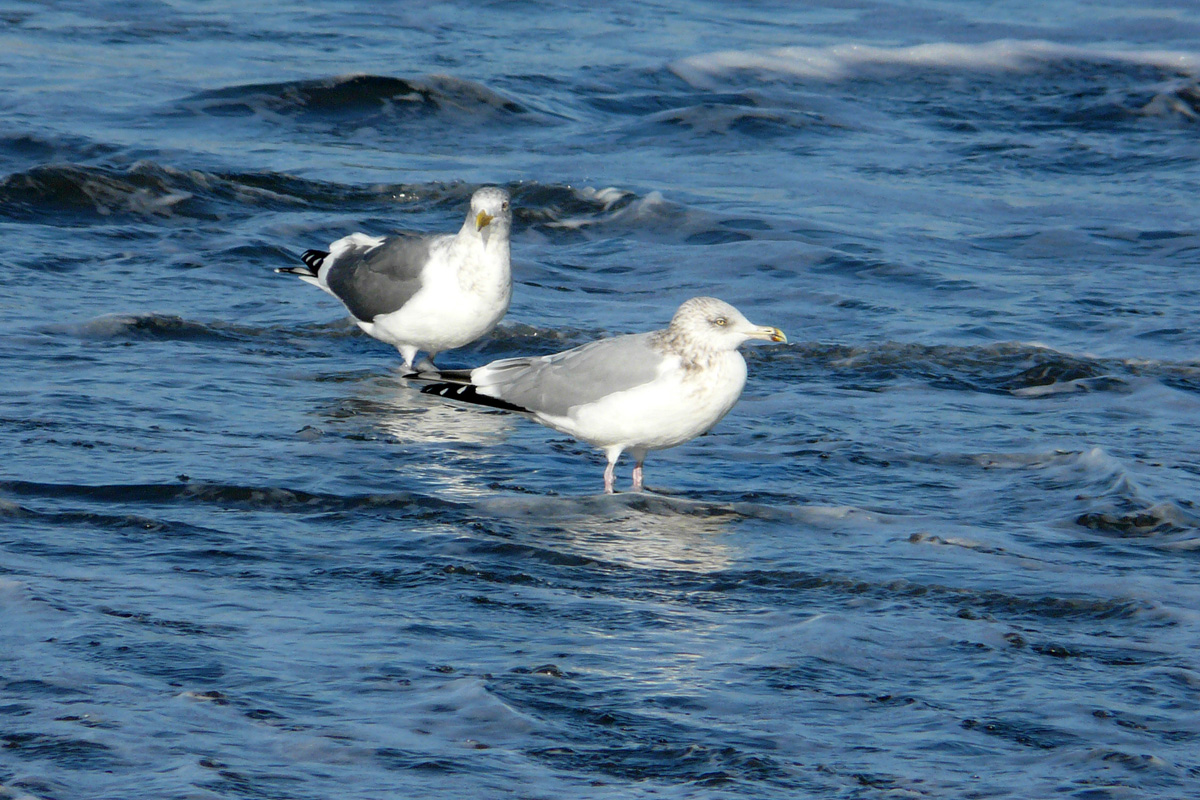

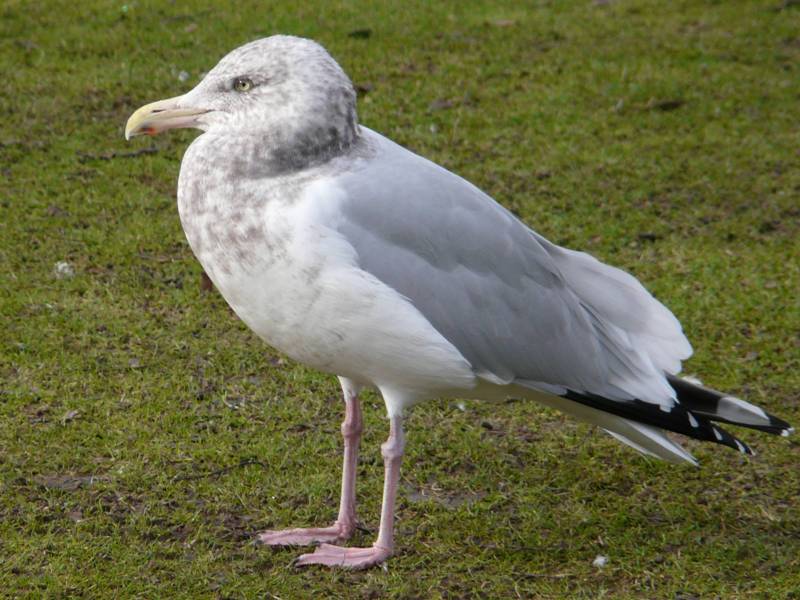
Western Gull (left) and Herring Gull. The gulls on the beach are much more wary than those that spend the winter in Portland.
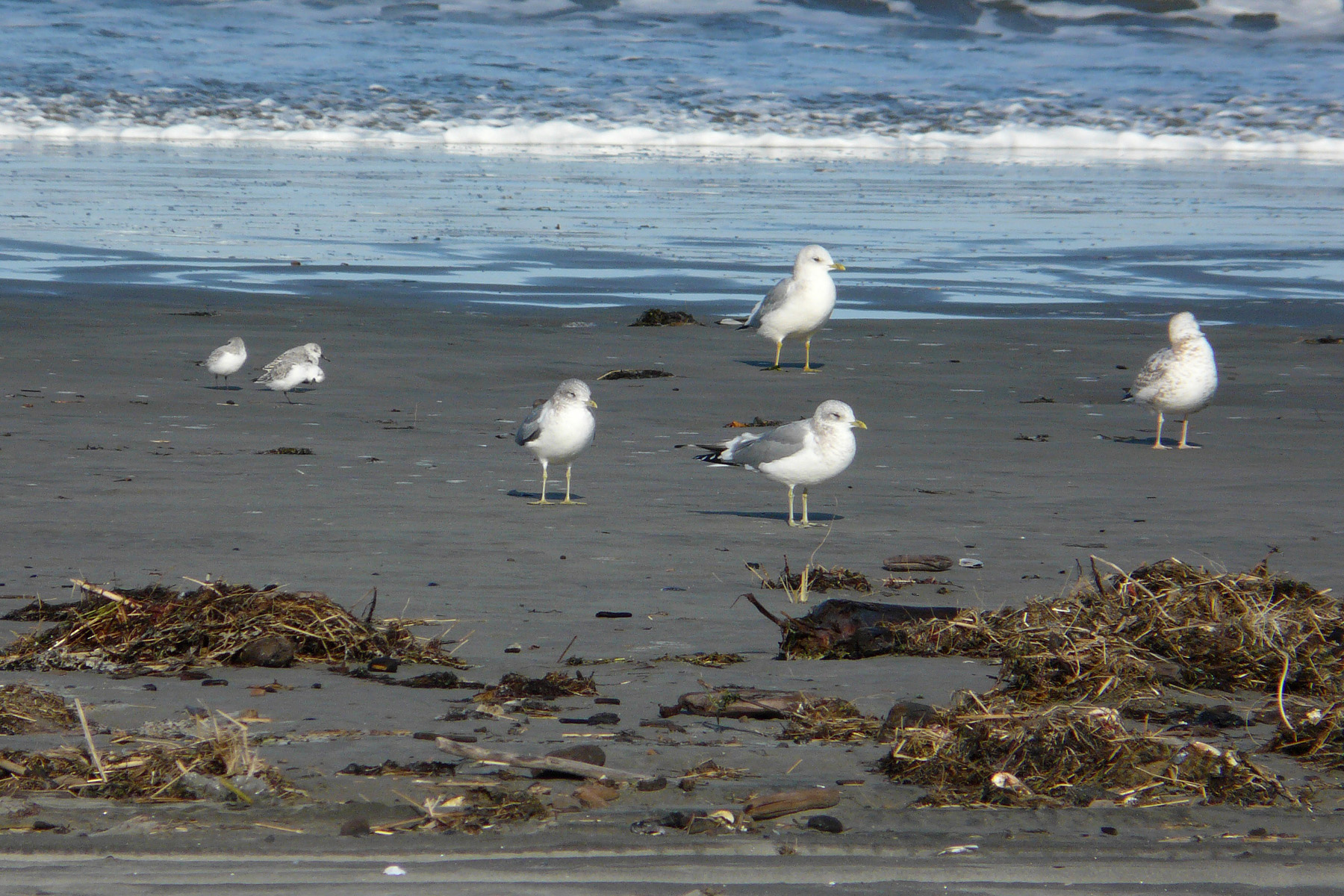

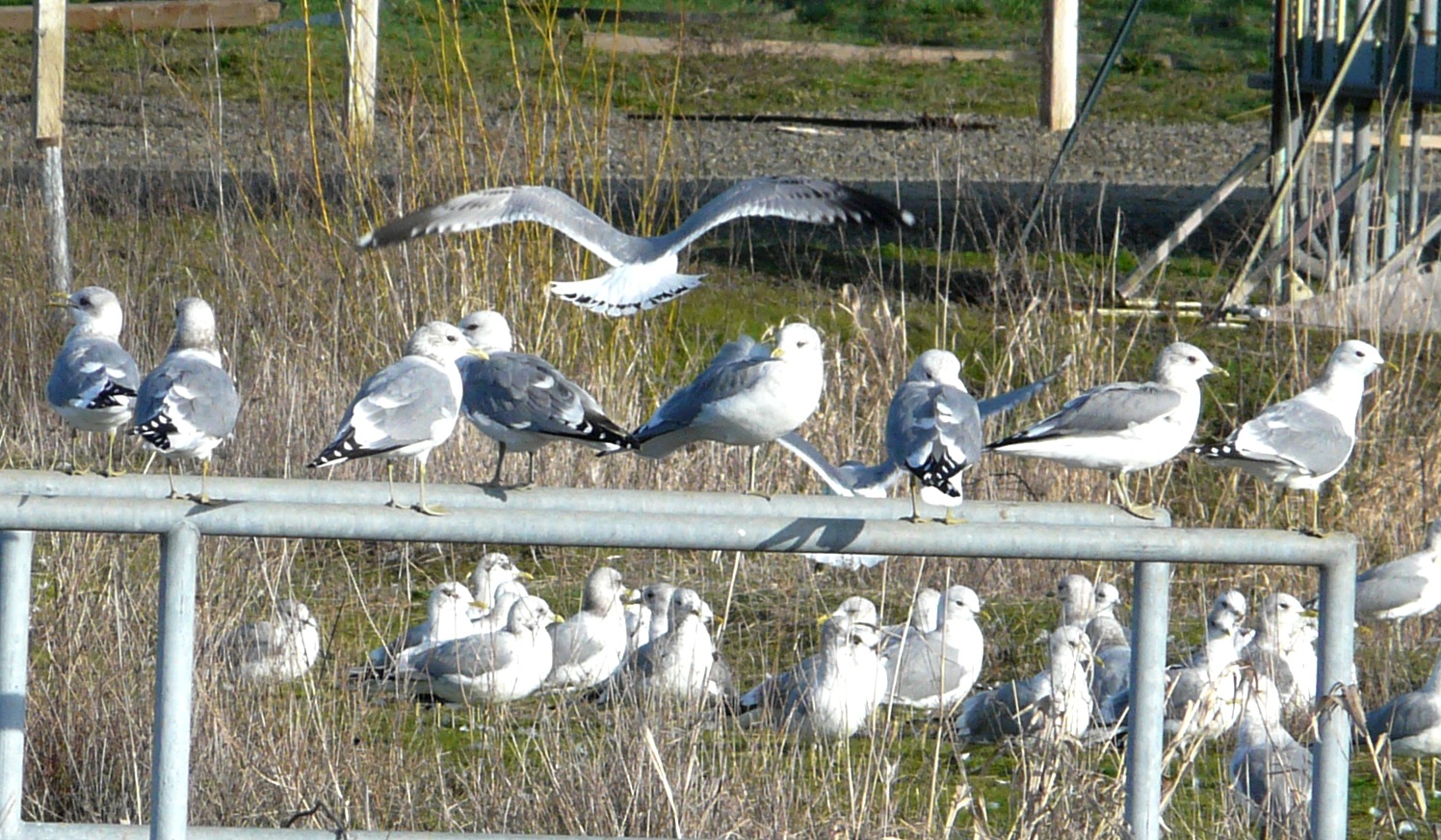
Sanderlings and Mew Gulls

Other goodies that escaped the camera were a Peregrine Falcon on the beach, a Northern Shrike, and three Western Meadowlarks. It was a great day to enjoy the sun before the cold wet weather settles in to stay.
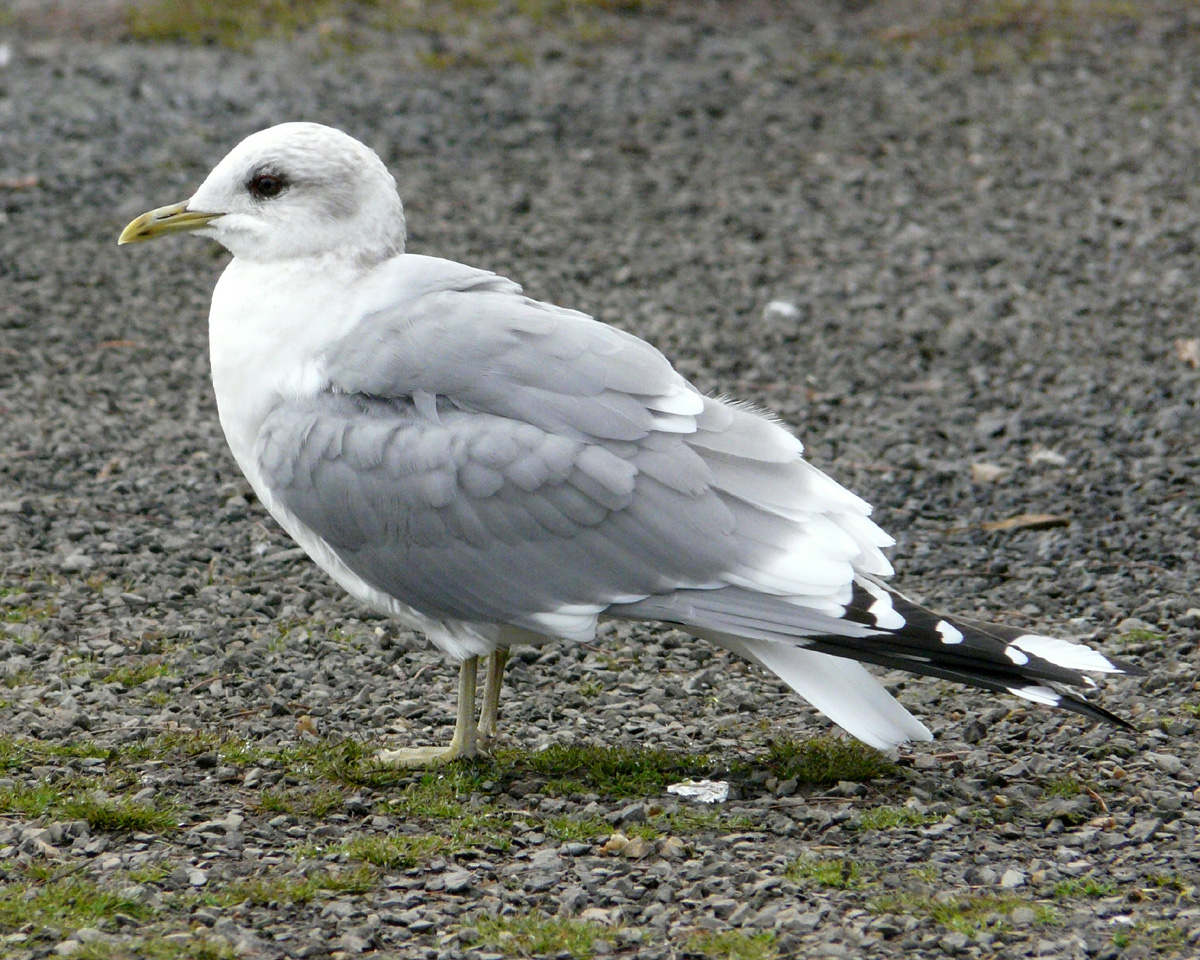
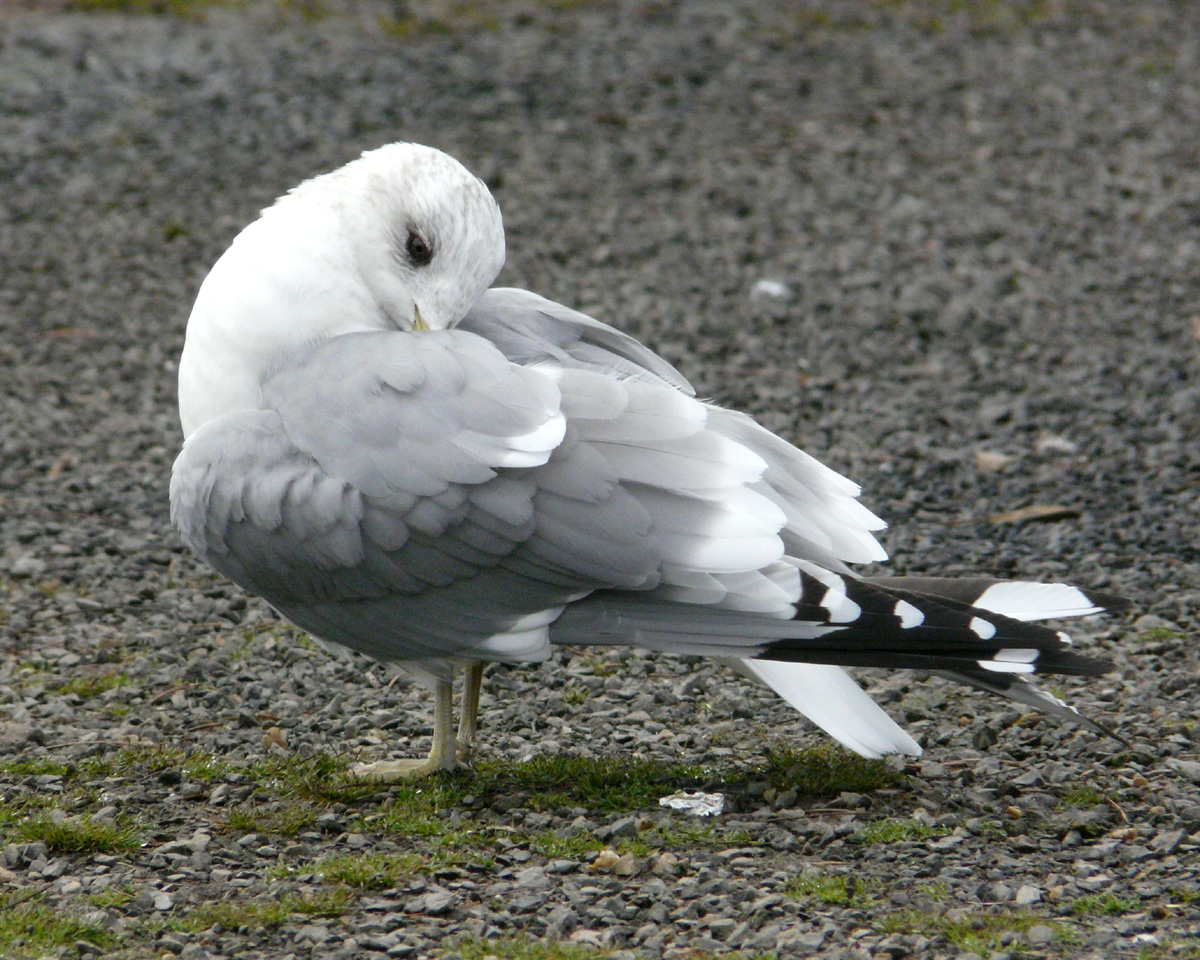
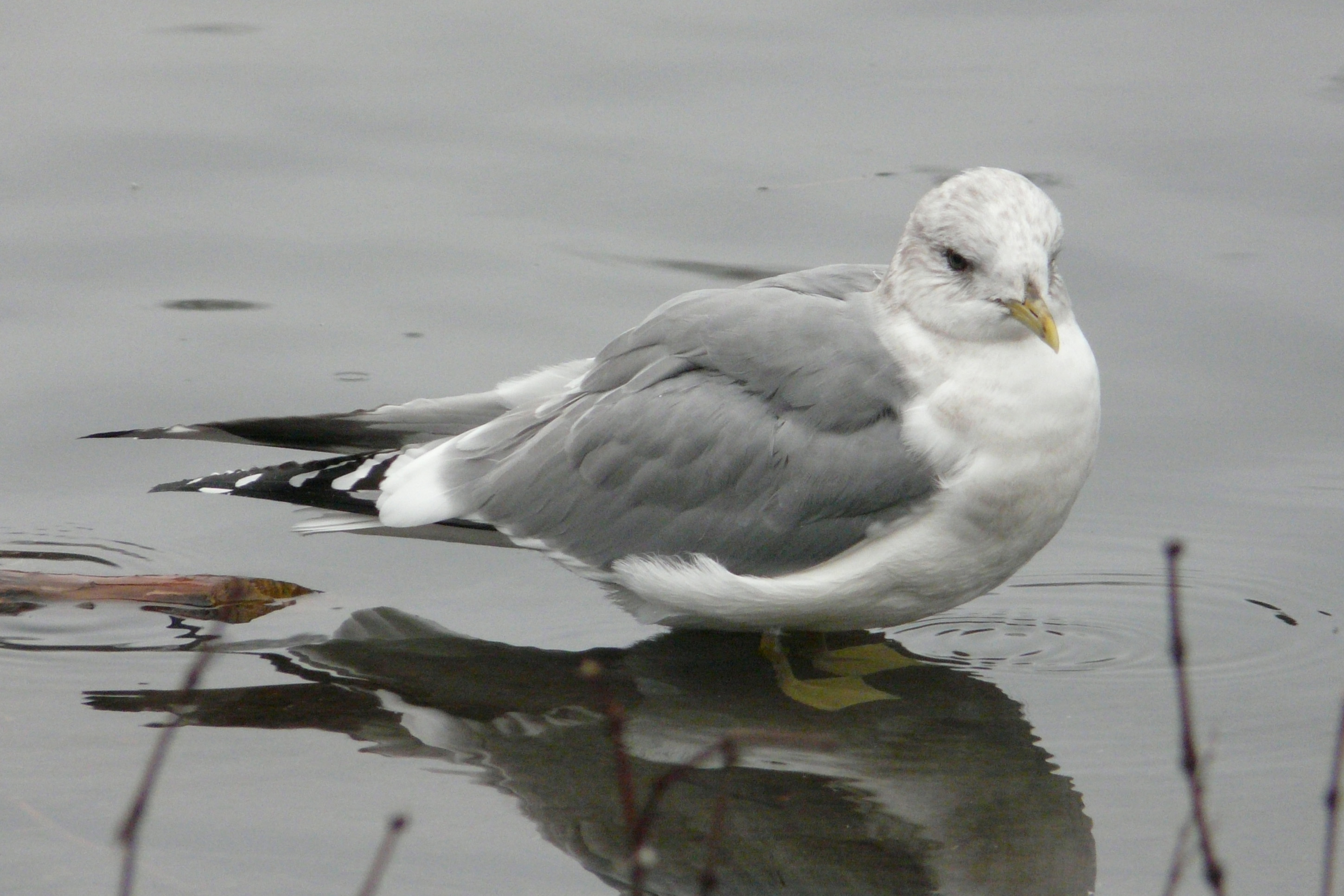
Mew Gull


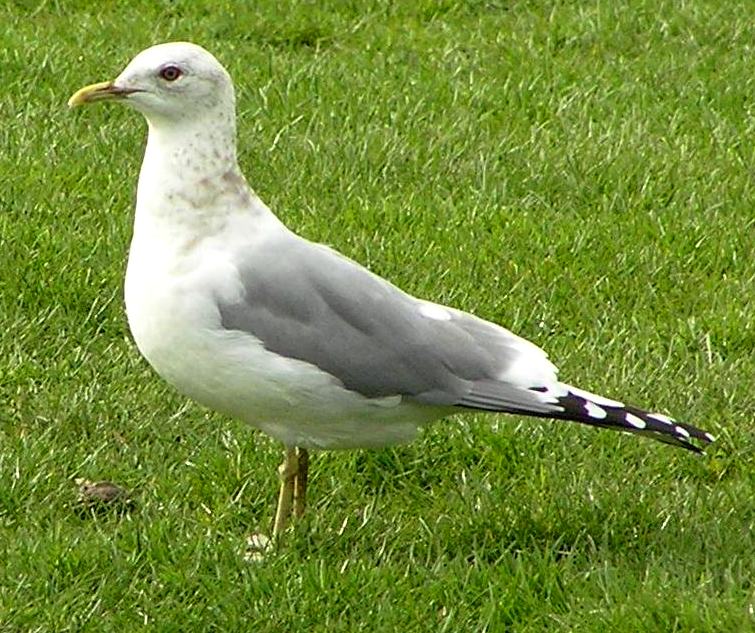
As gulls go, Mew Gulls are very petite. They are instantly recognized by their round head, dark eye with a brick-red orbital ring, long wings, yellow legs, and thin bill with just a hint of a “ring” in winter.


Mew Gulls have a very large white mirror on the outermost primary (P10) and a fairly large one on P9. On flying birds, the amount of white in the wingtips helps to differentiate Mew Gulls from Ring-billed Gulls from quite a distance.


Mew Gull bathing.


Mew Gulls are common in winter along the Oregon Coast (usually at river mouths and in meadows) and in the Willamette Valley. Due to their small size, they normally form single-species flocks or associate with Ring-billed and California Gulls, avoiding concentrations of larger gull species.

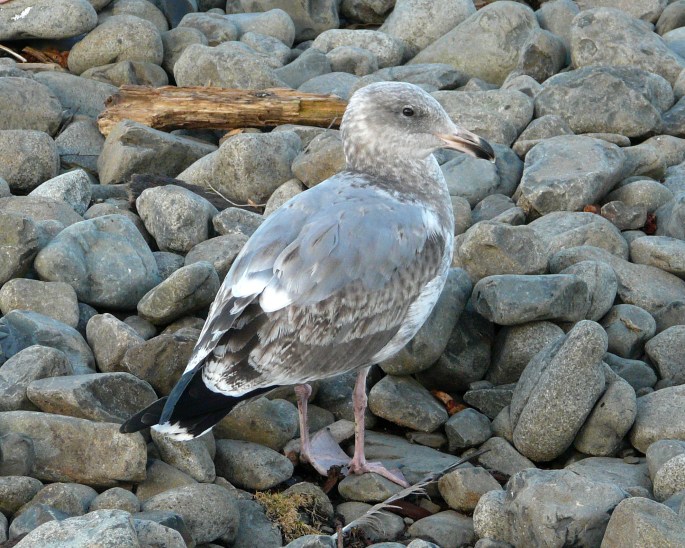
Second cycle gulls

Here are a few gulls in their second plumage cycle (often referred to as their second year, but that is not always the case). The first two birds are four-cycle gulls. On a four-cycle gull, the second cycle looks much like the first, but the mantle feathers are coming in gray.


Western Gull, second cycle.  Note the blackish primaries and tail, the dark gray mantle, the heavy bill, and the fairly extensive mottling on the underparts.


Herring Gull, second cycle.  Note the pale iris and the slender pinkish bill with the black tip.

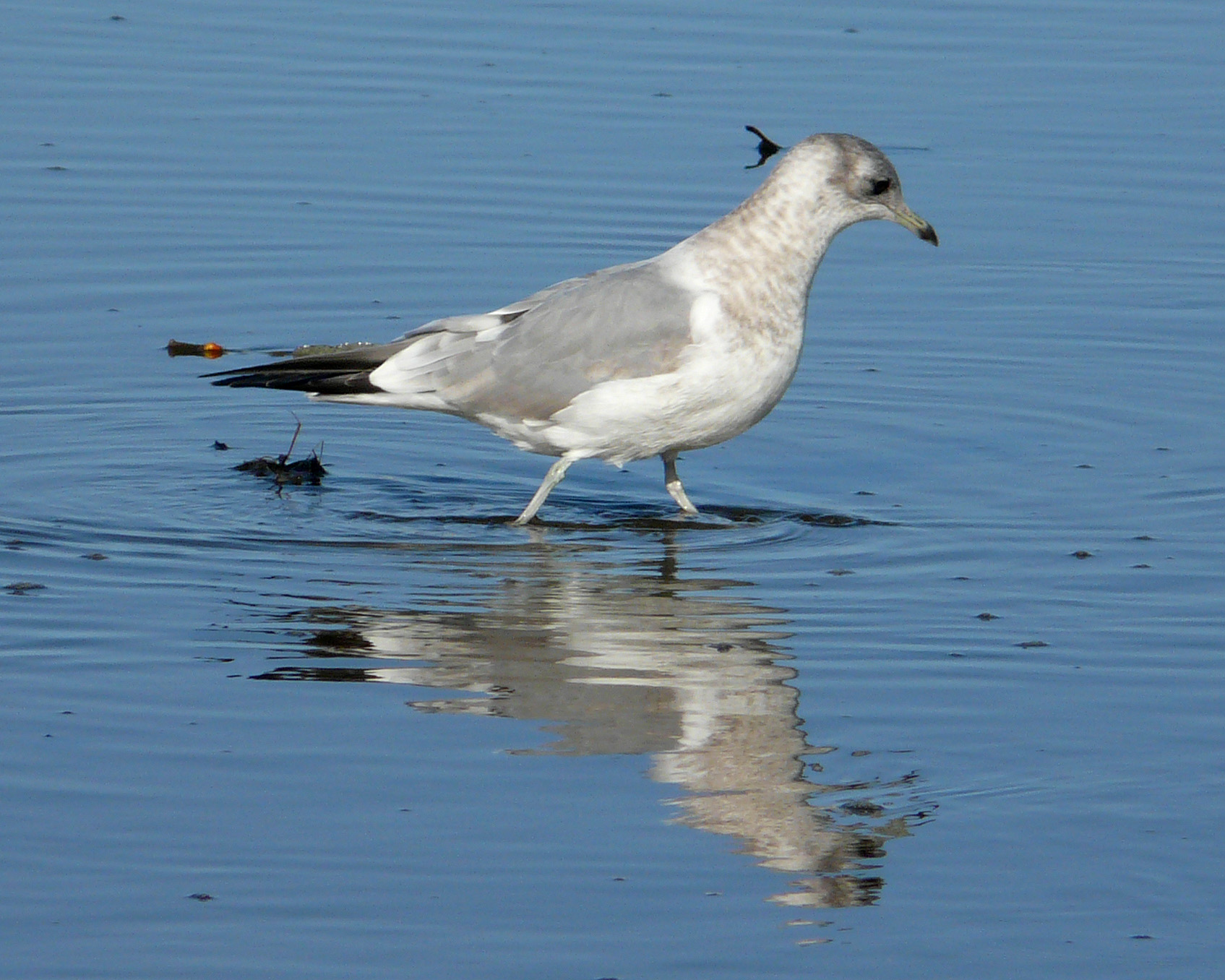
Three-cycle gulls skip the all-brown phase seen on young four-cycle gulls. (So a first cycle Ring-billed Gull has a gray mantle like a second cycle Herring Gull.) The second cycle on a three-cycle gull shows a gray mantle and wing coverts, but the primaries lack the white tips and mirrors seen on an adult.


Ring-billed Gull, second cycle.   Note the sloping forehead, pale eye, yellow bill with dark near the tip, fine streaking on face, and crisp scaly pattern on breast and sides.


Mew gull, second cycle.  Note round head and very thin bill.


Mew Gull

A large flock of Mew Gulls (Larus canus) spends the winter at the waste water treatment plant in Forest Grove and at adjacent Fernhill Wetlands (Birding Oregon p. 61).


Mew Gulls look like a petite version of Ring-billed Gulls, with a round head, big eyes, and fine yellow bill.


Adult Mew Gulls are easily recognized in flight by the large white mirrors on the outer two primaries. Ring-billed Gulls have a smaller white mirror on the outermost primary (P10) and a tiny one on P9. You wouldn’t think the size of the white spots on two feathers would make much of a difference in identifying a flying bird, but it really does.


The bird in flight is a second-cycle Mew. He/she has lost the brown plumage of a first-cycle bird, but the tail still shows a broken blackish band, and the primaries (and primary coverts) have more black than those of an adult. Notice the small white mirror on P10 and little or no white on P9.

Gull Gallery

Portland’s Westmoreland Park is a great place to find a variety of gull species during winter. Seven species and one hybrid are regular, and there is always the possibility of something more unusual showing up.

california
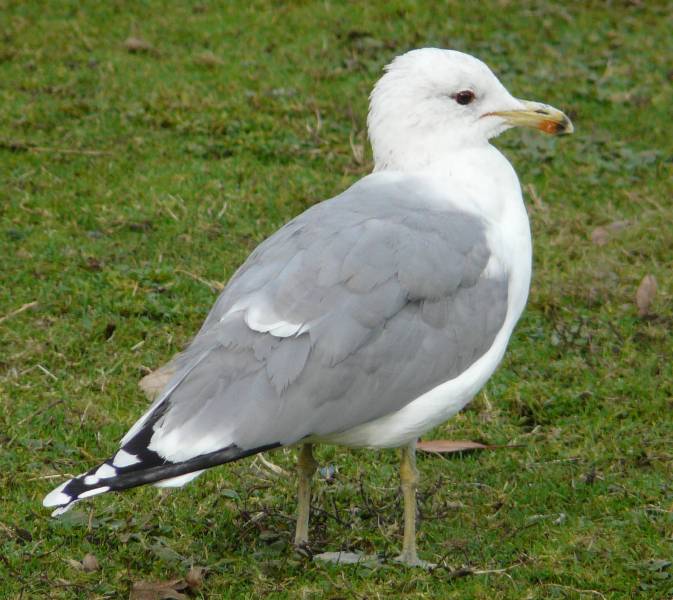
California Gull:  medium-gray mantle, long dark wingtips that extend well beyond the tail, long straight bill with both red and black gonydeal spots, yellowish legs and feet with blue-gray cast.

ring-billed
Ring-billed Gull:  smaller size, neat black ring around bill, long dark wingtips, yellow legs and feet.
ring-billed-tucked
Here’s the Ring-billed Gull at rest. Note the fine streaking on the head and the red orbital ring.

mew-gull
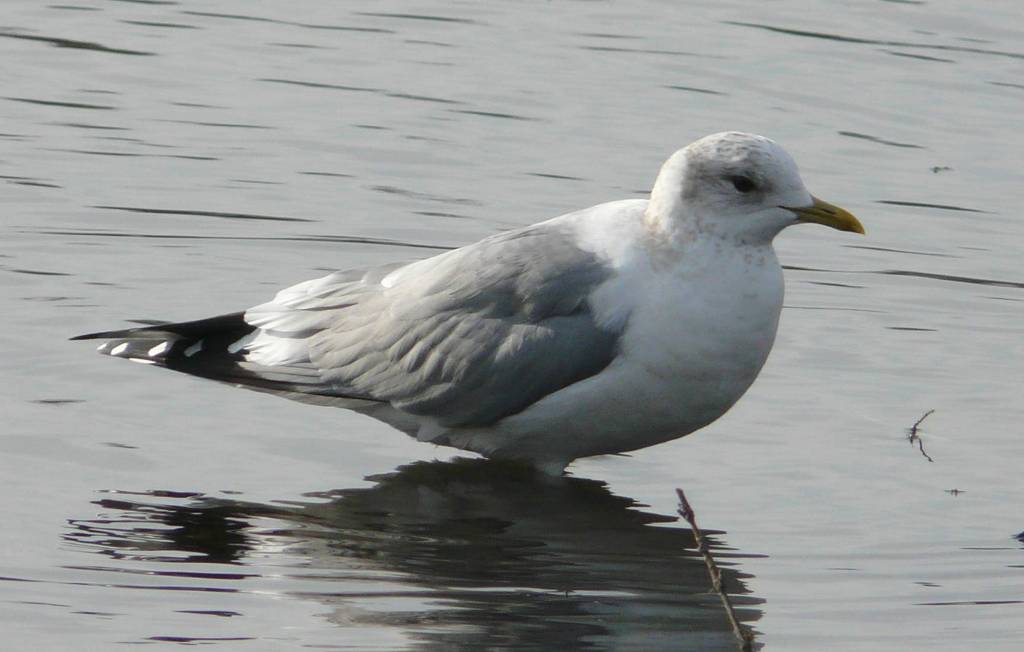
Mew Gull: petite yellow bill, round head, long wing extension. These small gulls will mix with the Ring-billed flock, but generally don’t mix with the larger gulls.

glaucous-winged
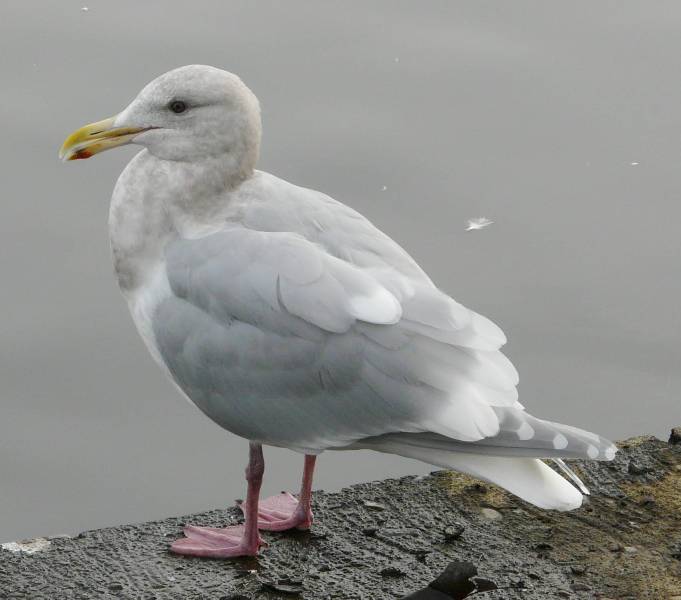
Glaucous-winged Gull:  Note the lack of contrast on this bird. The short wingtips are the same color as the mantle. The head and upper breast are covered with an even blurry mottling. The only parts that don’t blend in are the pink legs and feet.

western
Western Gull:  large size, dark gray mantle, short black wingtips, never any marks on the head – even in winter. This species is much more common on the coast, but a few make it in to the Willamette Valley in winter.

olympic-gull
Western Gull X Glaucous-winged Gull hybrid (Olympic Gull):  an even blending of characteristics of both parent species. The mantle is darker than a pure GW, but Westerns never show this much mottling on the head and neck.  The wingtips are dark, but not actually black. You can tell this is a third cycle individual by the tiny bit of black on the tail and by the odd pattern on the bill. These hybrids show a great deal of variation, and are often the most numerous gulls in the area.

herring
Herring Gull:  sloping forehead, pale eye, bill not too thick, black wingtips that extend beyond the tail.

thayers
Thayer’s Gull:  rounded forehead, thin bill, dark eye (usually, not always),  long black wingtips with much more white on the underside.

Sitting in Seattle

Marsha was working a table at the Seattle Greenfest last weekend, so I braved the traffic and found my way to Discovery Park. I walked out to the lighthouse and just sat on the shore of Puget Sound for a while. As a birder, I need to spend a lot more time sitting. Most of us are constantly moving, looking for the next good bird. But if you just sit in one place, good birds will often come to you. Out on the water were a big flock of Western Grebes, Horned Grebes, Ruddy Ducks, Harlequin Ducks, and a pair of Rhinoceros Auklets. These birds were out of camera range, but several species came in for closer scrutiny.


A flock of Black Brant were working the shoreline.


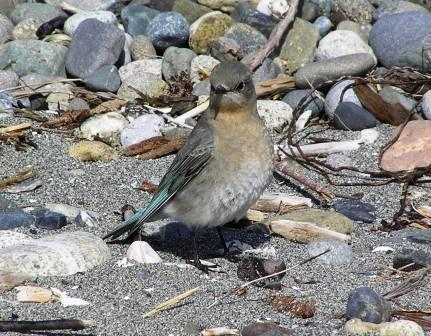
This Mountain Bluebird seemed a little out of place on the beach.


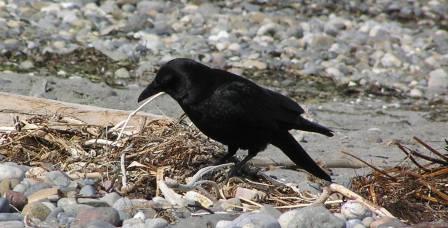
This crow found and ate a small crab. A little over a century ago, a crow on the coast of Puget Sound would have been assumed to be a Northwestern Crow. But when the forests were cleared, American Crows were able to colonize this area. So now, the crows around Seattle are presumed to be American or hybrids.


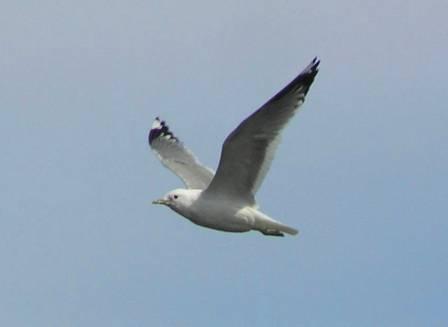
Mew Gull. Note the thin bill and large white mirrors on P1 and P2.


Red-necked Grebe