Changes Continue at Fernhill Wetlands

Exciting changes continue at Fernhill Wetlands (Birding Oregon p. 61). This photo is from the drying lake bed of Fernhill Lake. Low water levels this summer have created some great shorebird habitat. Notice the clump of cottonwood trees that have sprung up already. The construction (note the equipment in the background) will create rocky waterfalls that will cool and aerate the water that flows into the lake. I will be leading a free tour of the site on Saturday, October 6, at 10:00 AM as part of the Birds and Beer at Fernhill Wetlands event. Click on the Classes page for more details.
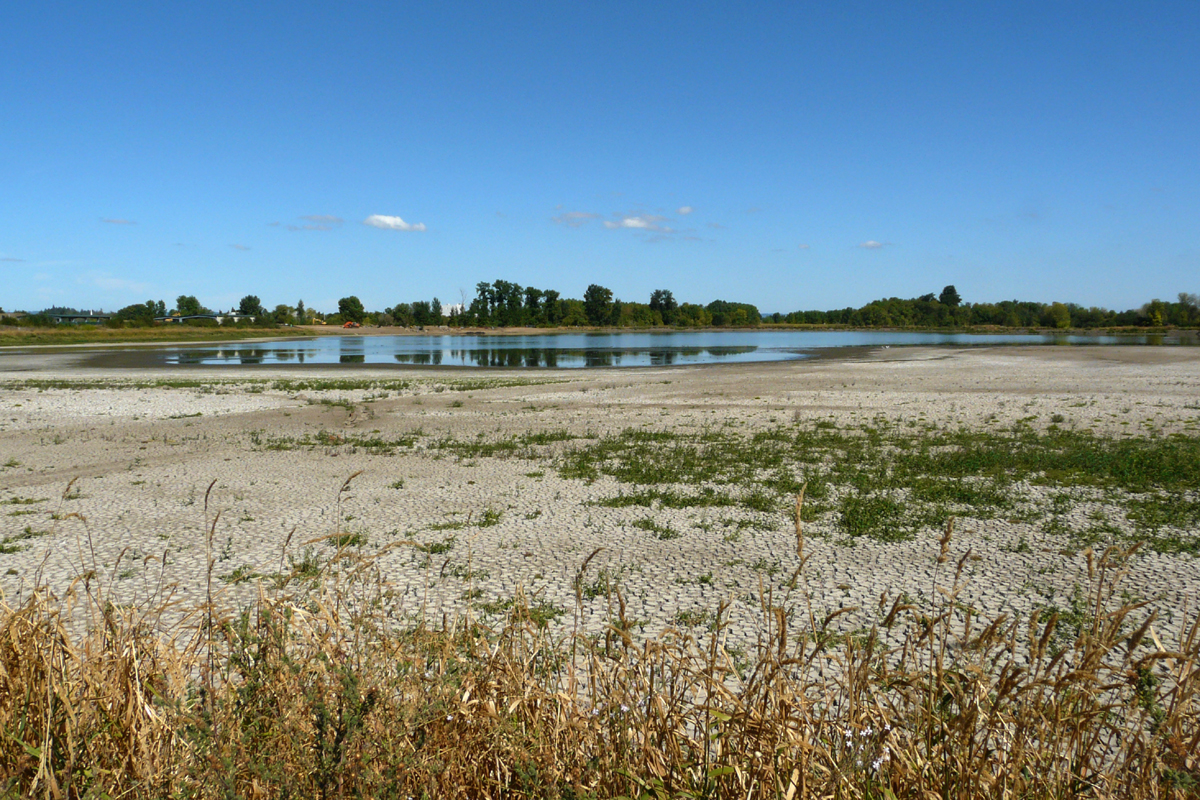
In addition to creating shorebird flats this summer, the low water levels are also helping to purge the lake of carp, which compete with birds for aquatic prey and muddy the waters with their feeding habits.

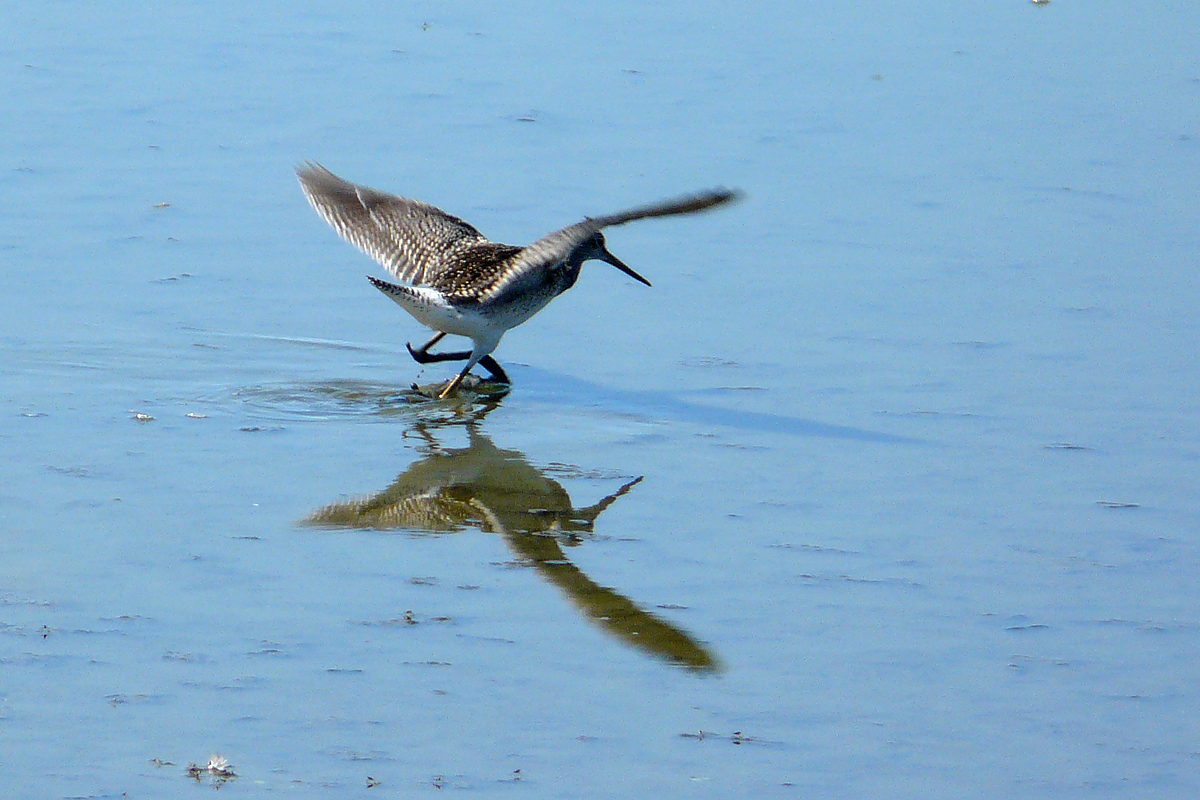
Greater Yellowlegs, sinking into the soft mud
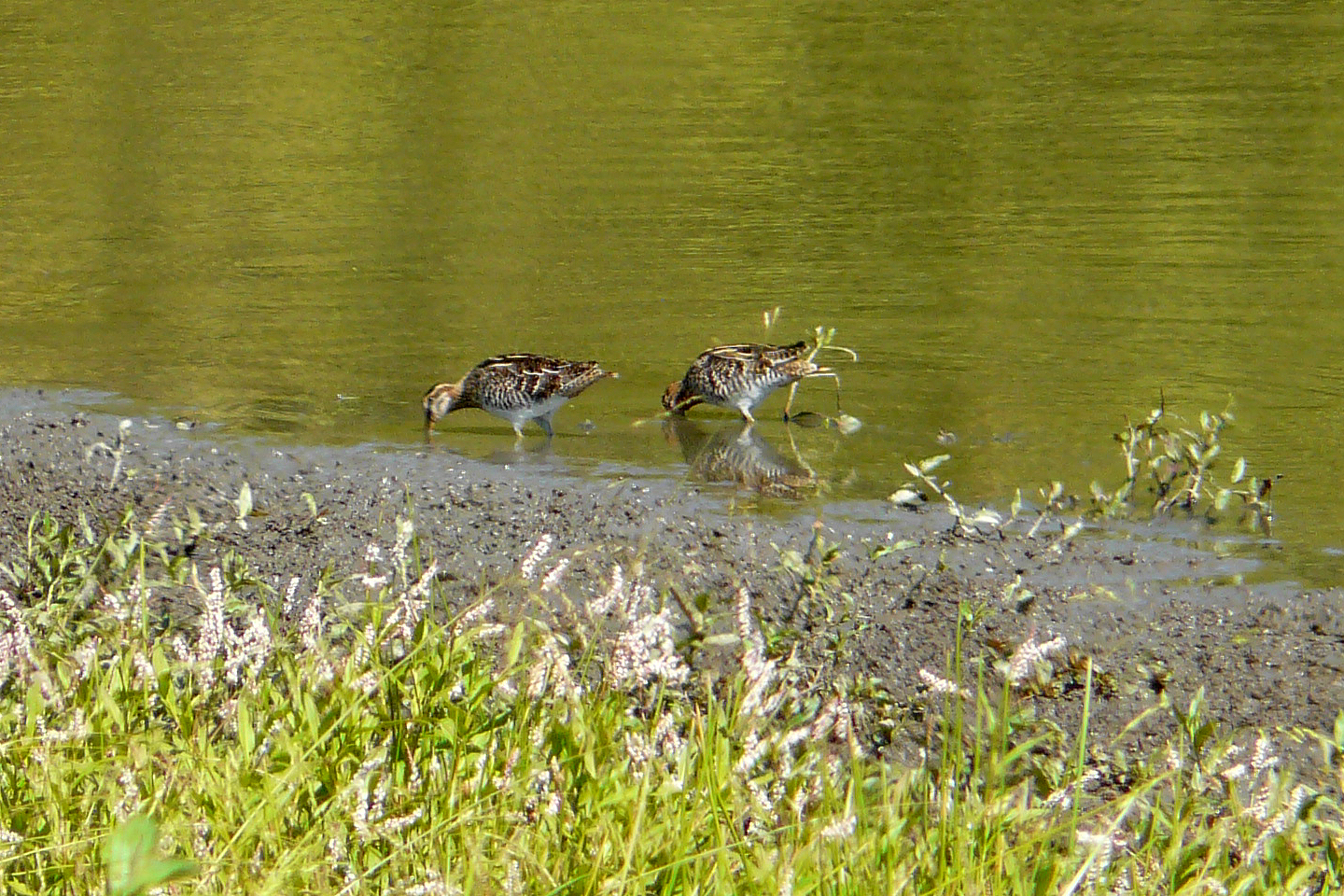
In the Mitigation Marsh, two Wilson’s Snipe were feeding out in the open, which is rather uncharacteristic of this species.
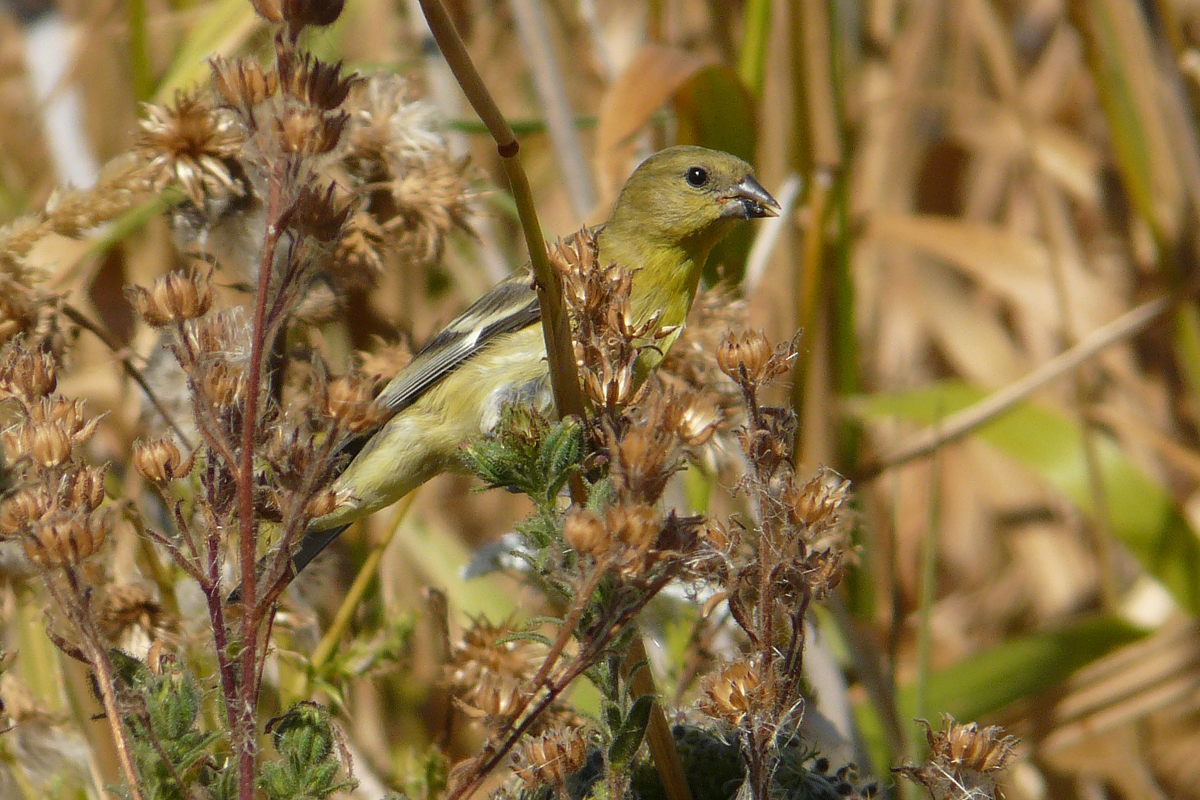
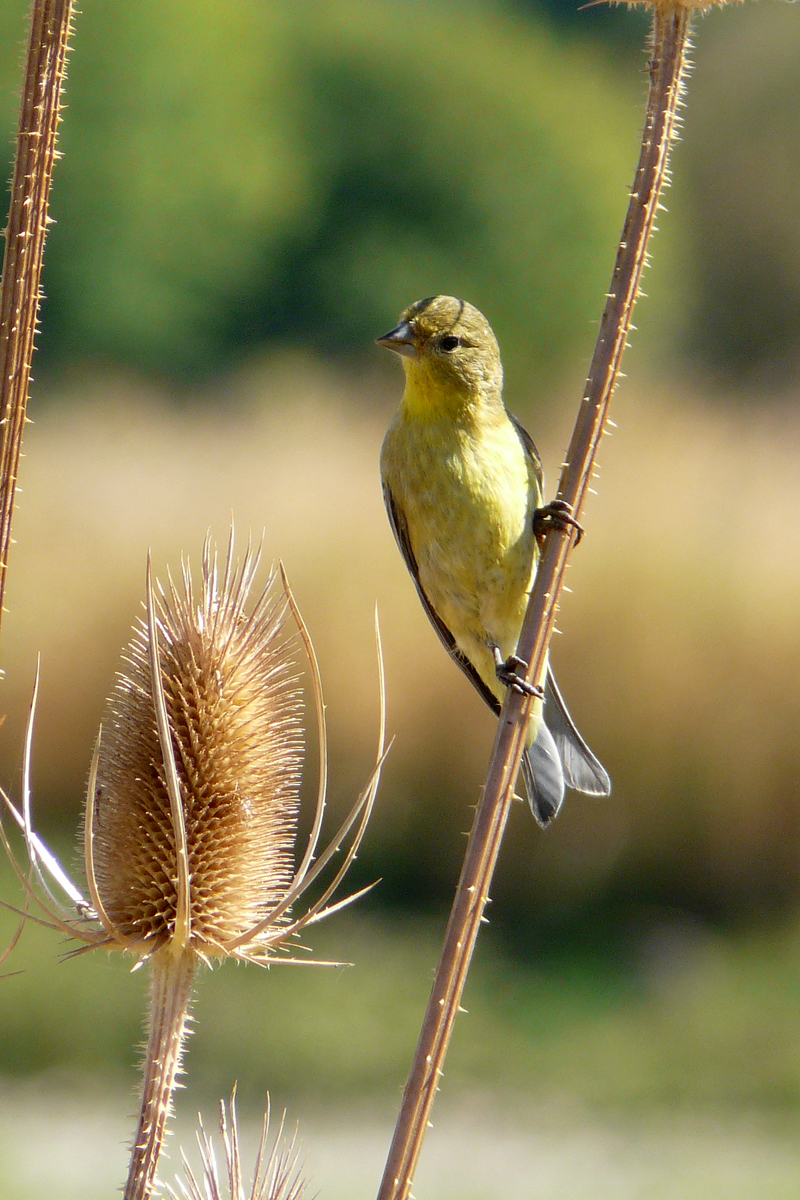
On this visit, a flock of Lesser Goldfinches was working the weedy patches. It is always a treat to get close looks at these birds.
The coming weeks should see increases in sparrows, shorebirds, waterfowl and raptors.

Feeding Frenzy

For the past few weeks I have been enjoying a large flock of Pine Siskins at my feeder. But as often occurs during years of high siskin numbers, I started noticing a few sick birds. So I stopped feeding for a few days. With the feeder empty, the large flocks of birds dispersed, reducing the risk of disease spreading from bird to bird.

Packing birds into unnaturally high densities at a bird feeder can create risks for the birds we are trying to help. While many of us enjoy feeding birds and other wildlife, it is important to do so mindfully. We have to be aware that feeding birds is something we do for our own entertainment, not something that the birds actually need. My feeder is outside my window for the sole purpose of drawing birds in close so that I can enjoy watching them from the comfort of my home. If the feeder wasn’t there, the birds would do just fine. It is my responsibility to be aware of how my bird feeding impacts the birds.

It was reported recently that Scotts Miracle-Gro was selling bird food treated with pesticides known to be harmful to birds (see story here). A few years ago, it was revealed that sunflower farmers in the Dakotas have taken such measures as destroying cattail marshes and poisoning and/or shooting birds to reduce the impact of blackbirds feeding in their fields. These stories illustrate how the seemingly innocuous hobby of feeding birds can have broader implications. We need to know where the food comes from and what is in it.

My feeder is filled again and, with the large flock of siskins gone, other species are becoming more visible.


Lesser Goldfinches, our smallest finch, are coming more frequently now that things have quieted down.


Two Purple Finches have appeared this week.


A few Pine Siskins stayed behind when the main flock left. A Purple Finch towers in the background.

Lesser Goldfinch


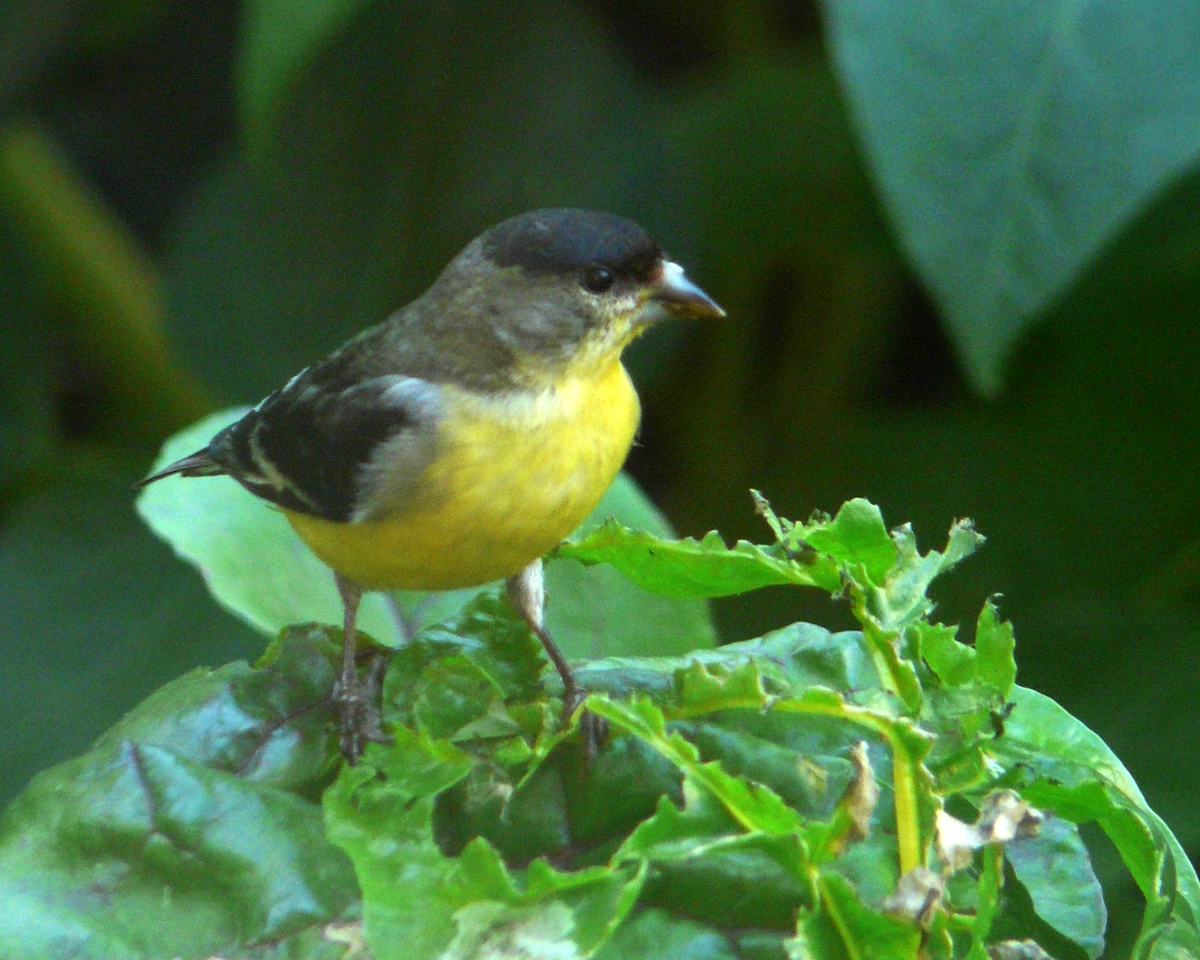
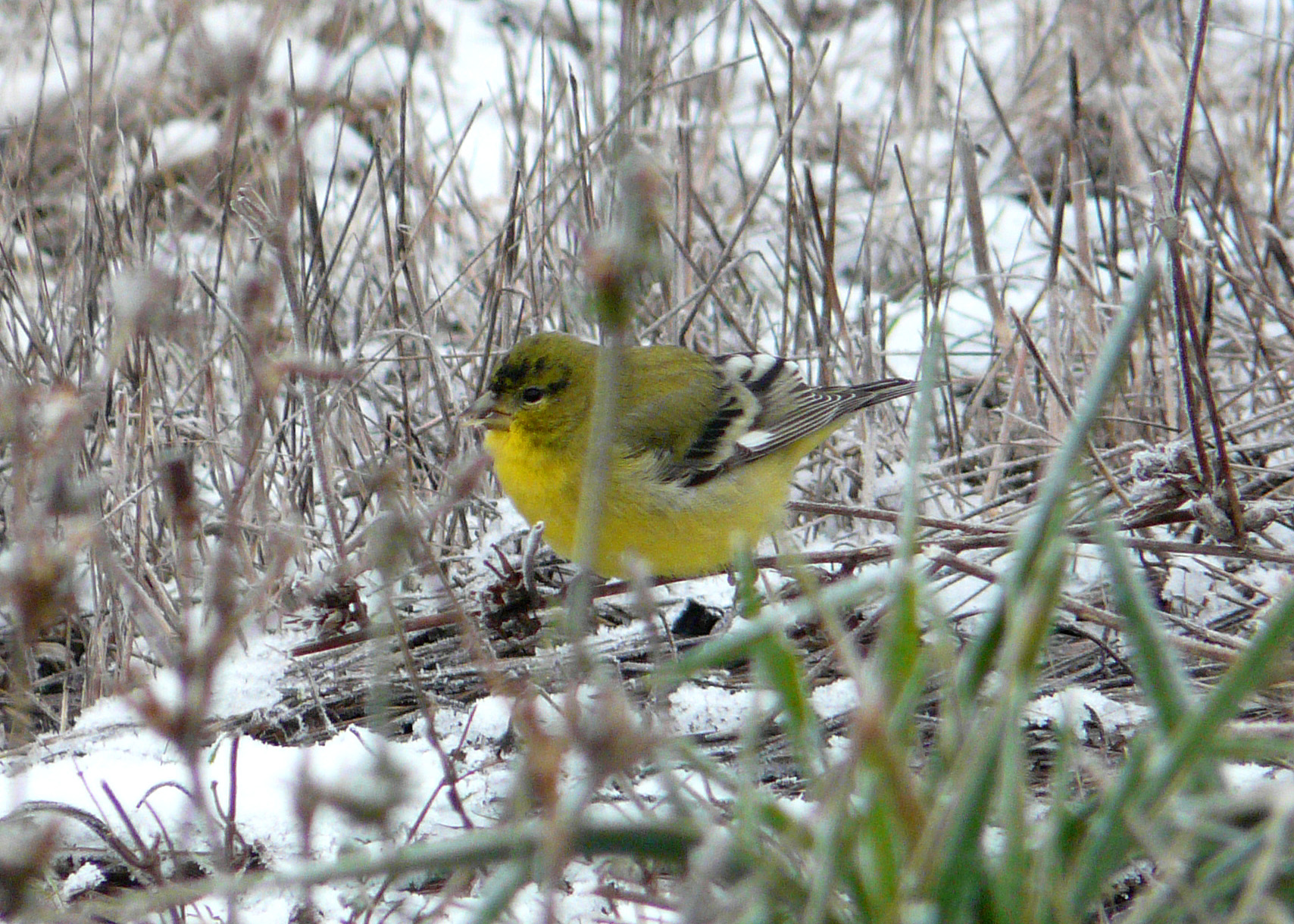
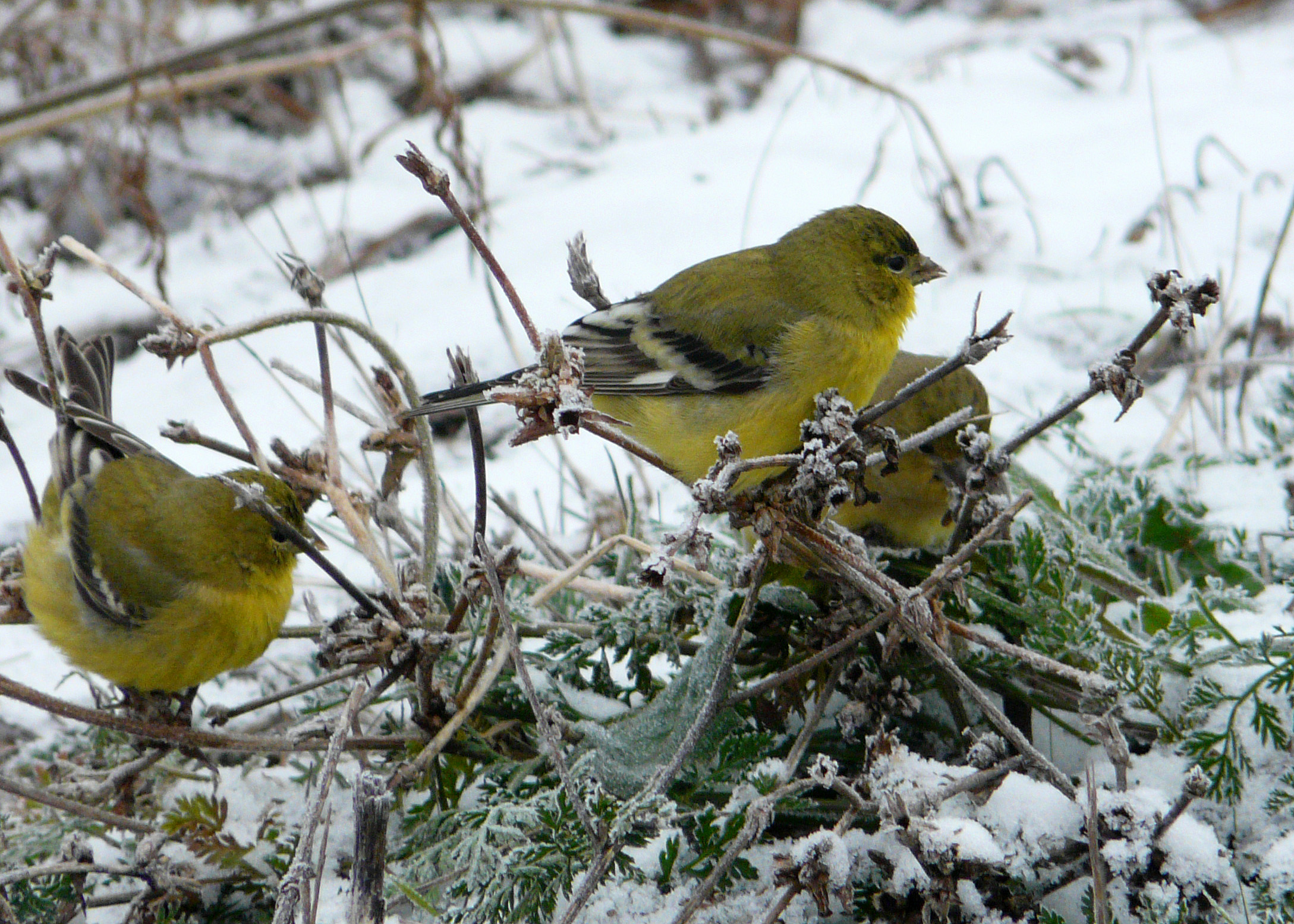
I recently came across a small flock of Lesser Goldfinches. This species has become much more common in the northern Willamette Valley in the past decade.


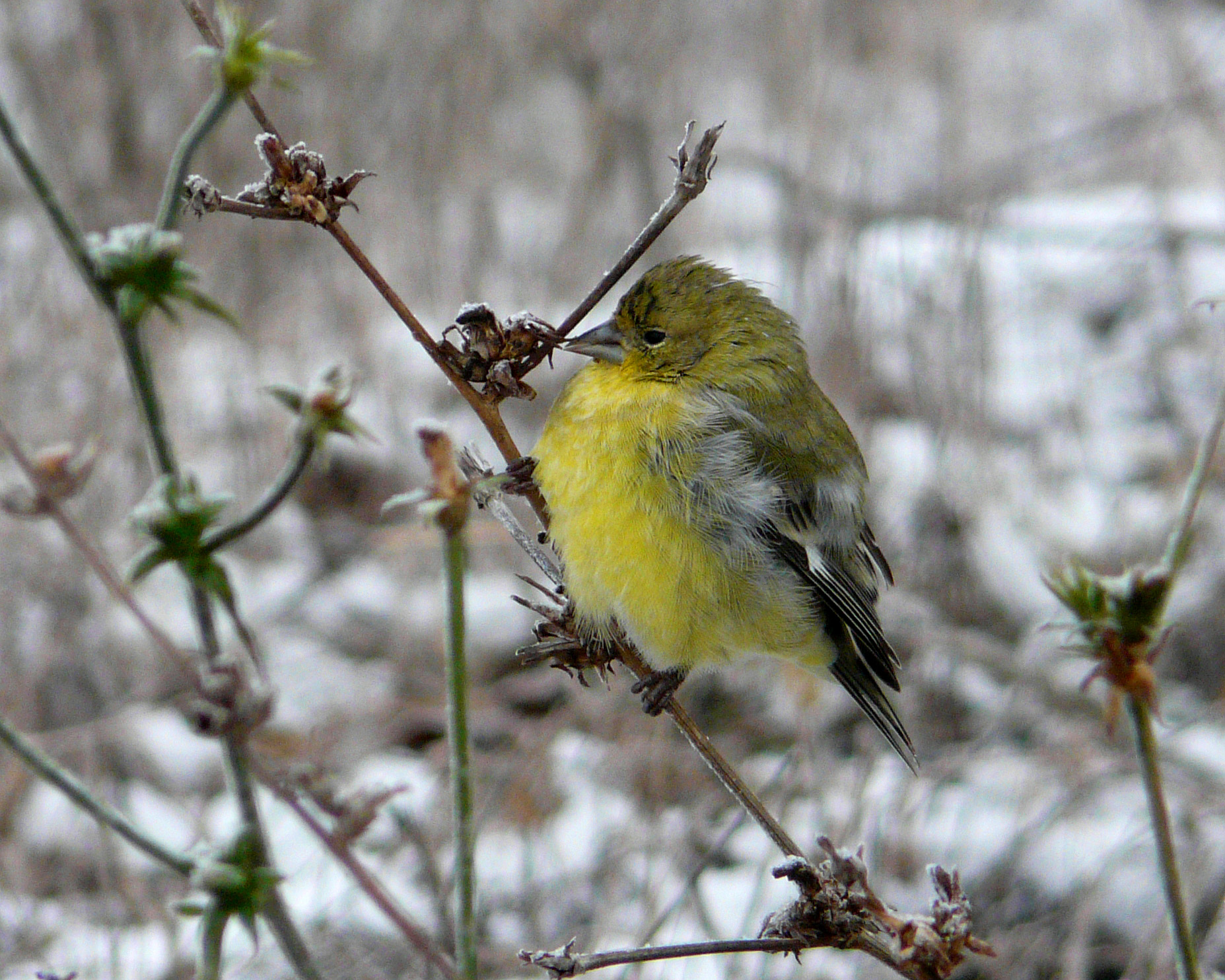
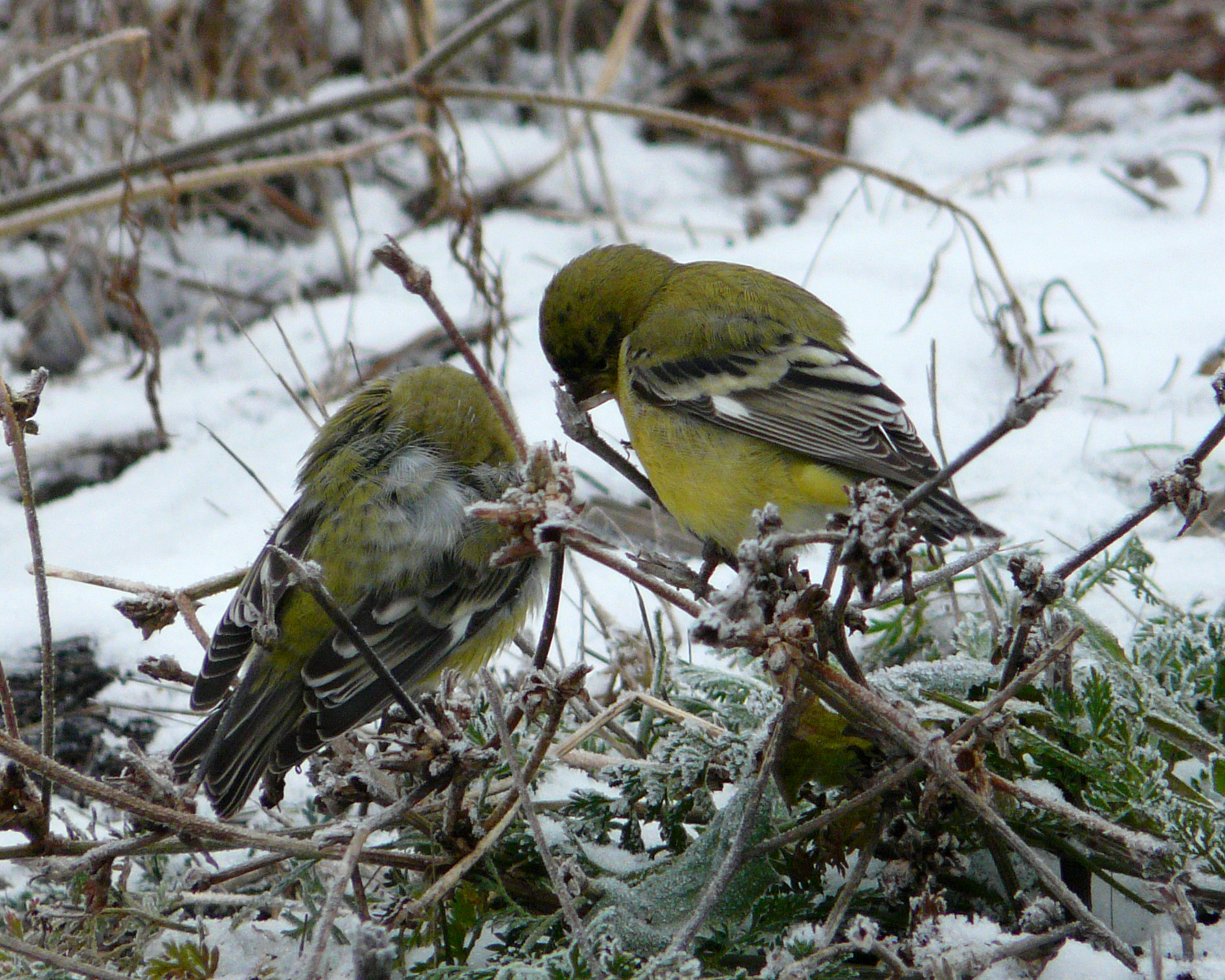
This species really stands out in the winter with their bright yellow underparts and cold greenish backs. Note the white wing bar and the little white patch at the base of the primaries. The more common American Goldfinch has a warmer golden brown cast in winter, and has buffy, not white, wing bars.


This is a male, probably a young bird given the lack of an extensive black cap. Notice the white patch on the spread tail feather. Females do not have white patches on their tails.


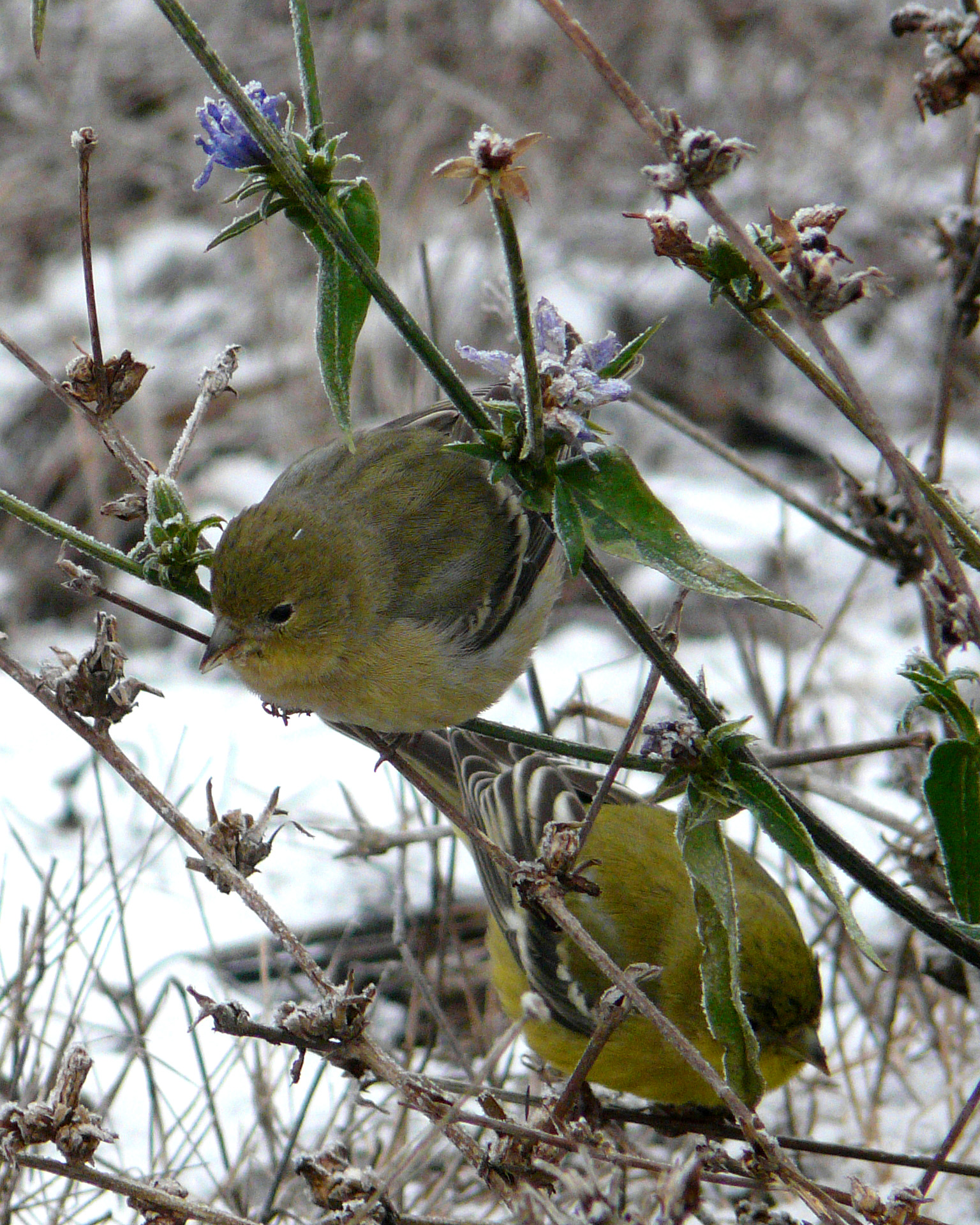
Pale females, like the top bird, are harder to distinguish from female American Goldfinches, as they lack the bright yellow underparts. Note the cold greenish back (not golden brown) and the white (not buffy) wing bars.


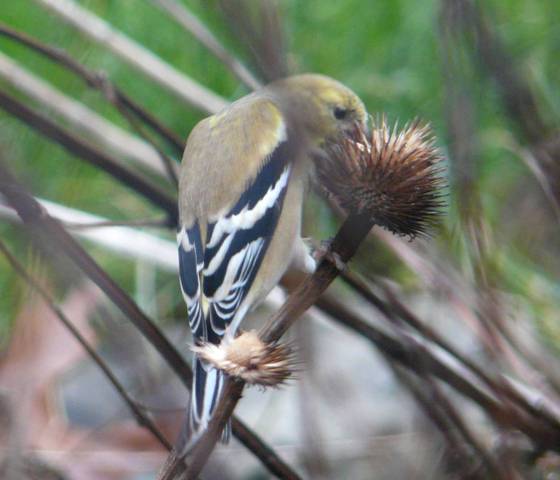
Compare this female American Goldfinch to the Lessers above and below.

Finches in the garden

The great advantage to being a slovenly gardener is the chance to see the local wildlife using your plants long after they have died. A mixed flock of resident finches passed through recently, feeding on seeds from neglected flower corpses.

american-goldfinch
This American Goldfinch was munching on Purple Coneflower seeds.

house-finch
a seldom-studied, but diagnostic view of a male House Finch

lesser-goldfinch
Lesser Goldfinch

A Bewick’s Wren often hunts for insects in the dead leaves of the clematis, but I doubt he will ever sit still long enough for a photograph.

Lesser Goldfinch

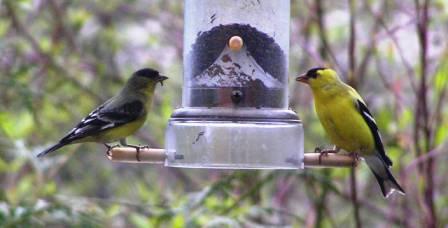
Five years ago, it would have been an unusual treat to find a Lesser Goldfinch at my feeders. But in recent years, this species has expanded its range in the Portland area and now nests on our property. A large flock of American Goldfinches and Pine Siskins still crowds the feeders, but the Lessers assert themselves quite well. Soon the Americans and siskins will leave and the Lessers will have the nyger feed to themselves.


Lesser and American Goldfinches