Fernhill Wetlands

While certainly not one of the more scenic sites in Oregon, Fernhill Wetlands (Birding Oregon p. 61) always attracts some noteworthy birds.
least and western sandpipers
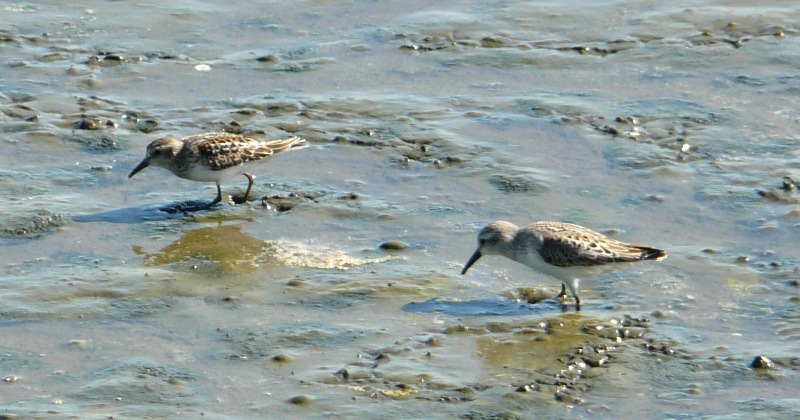
Least Sandpiper (left) and Western Sandpiper (right) are two of the more common shorebirds that use the mudflats at Fernhill. Both birds are juveniles (brightly colored fresh plumage, scapulars are small and rounded). The Least has a small, finely-pointed bill, yellowish legs, breast streaks, and feeds while squatting low to the mud. The Western has a longer drooping bill, dark legs (hidden in the mud),  is grayer overall, and looks “front heavy,” like he might tip forward.
pelican swimming
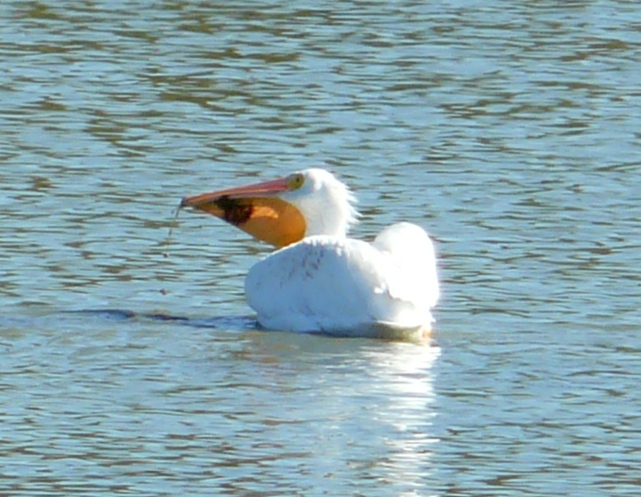
Two American White Pelicans have been at Fernhill lately. This species doesn’t nest in the Willamette Valley, but small flocks are often present in late summer/early autumn.
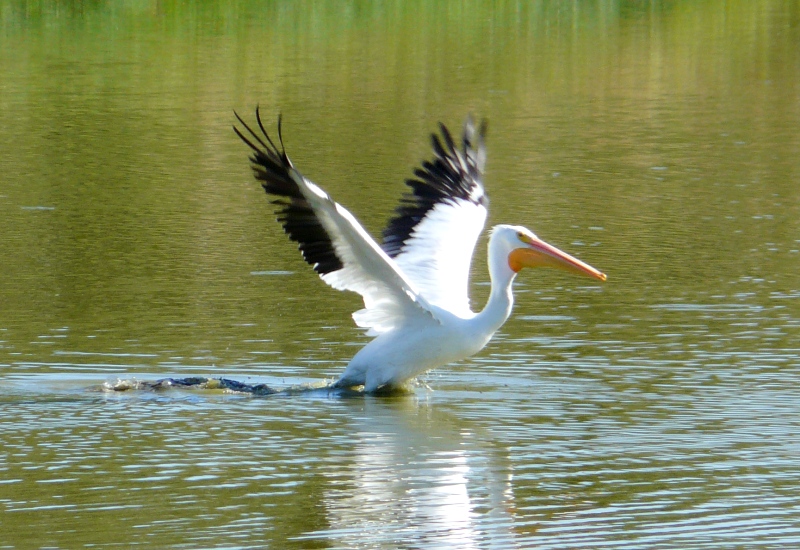
american white pelican

gb heron with catfish
A Great Blue Heron with a species of bullhead. Catfish have sharp spines on their dorsal and pectoral fins, so the heron has to position the fish carefully before swallowing.
Shorebirds at Grays Harbor, WA

I took my shorebird class to Grays Harbor in Washington, one of the prominent staging areas for migrant shorebirds on the West Coast. The cold wet spring continues, so diversity was a little low, but there were lots of birds to see.

godwits-sbdowitchers
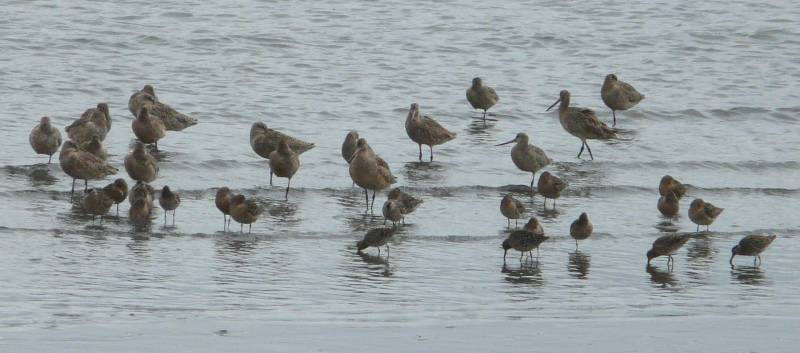
At Damon Point State Park, near the mouth of the bay, we found good numbers of Marbled Godwits and Short-billed Dowitchers.

flight
At Bowerman Basin, part of Grays Harbor NWR, a long boardwalk extends along the edge of the mudflats. As the basin fills with the rising tide, the birds are pushed closer to shore for excellent views.

mixed-flock3
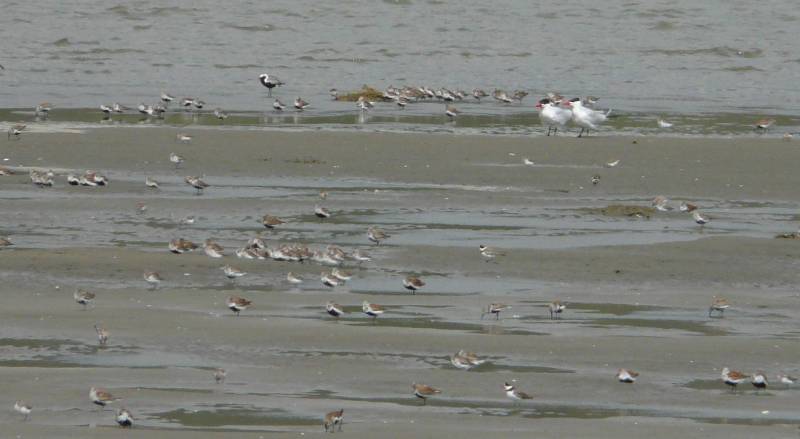
Here we can see a Black-bellied Plover, a couple of Semipalmated Plovers, two Caspian Terns, lots of Dunlin, and some Western Sandpipers.

semiplamated-plover
Here is a closer look at the lovely Semipalmated Plovers mixed in with Western Sandpipers.

western-least
I didn’t notice the bird at the time, but when I downloaded this shot of Western Sandpipers I immediately noticed the Least Sandpiper among them. Least Sandpipers feed in a crouched position with their feet far forward. On closer inspection, you can see the tiny bill and the pale legs. (lower right corner, if you are still looking)

least-western
Here’s a closer look at the Least Sandpiper between two Westerns.