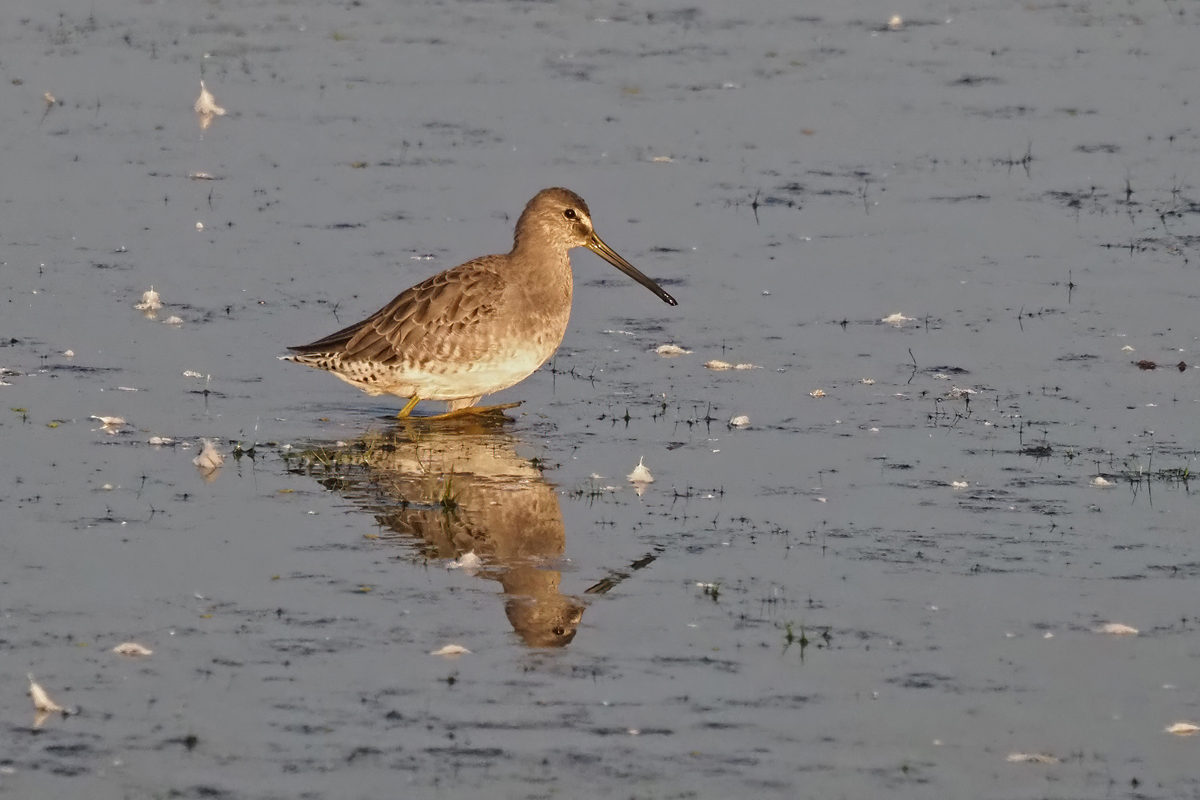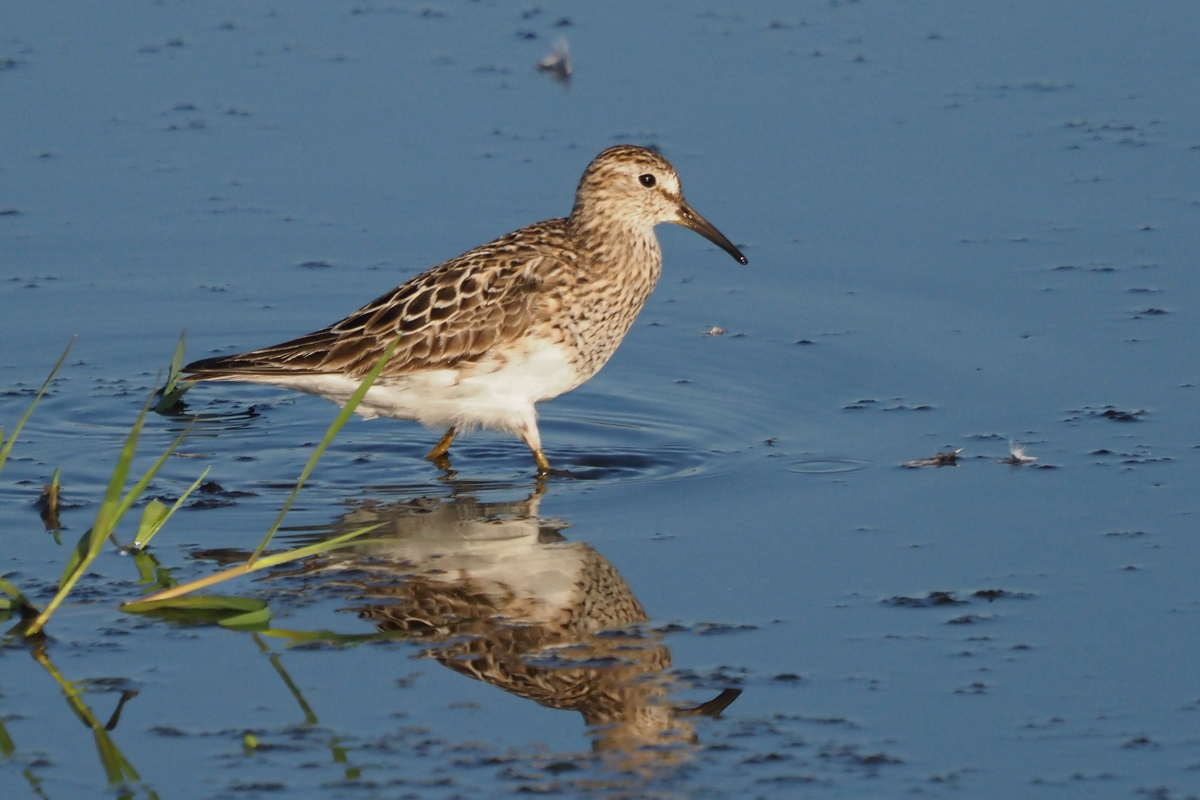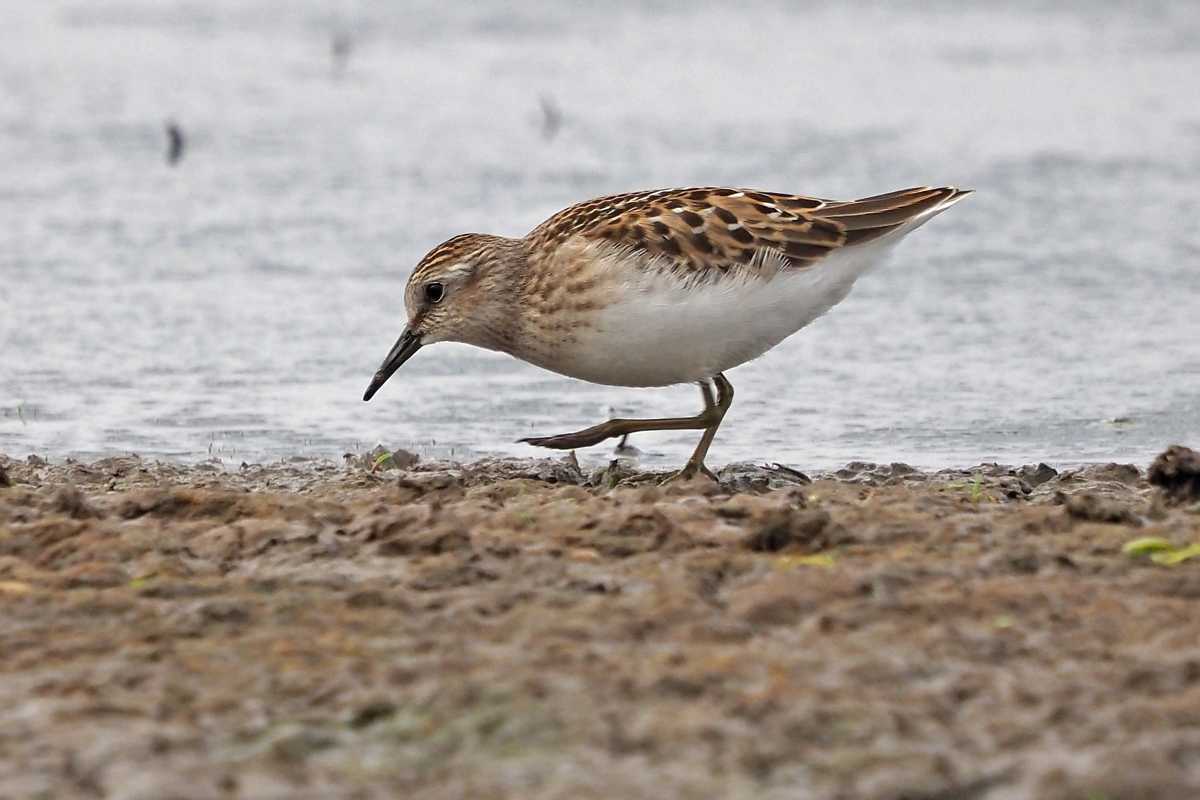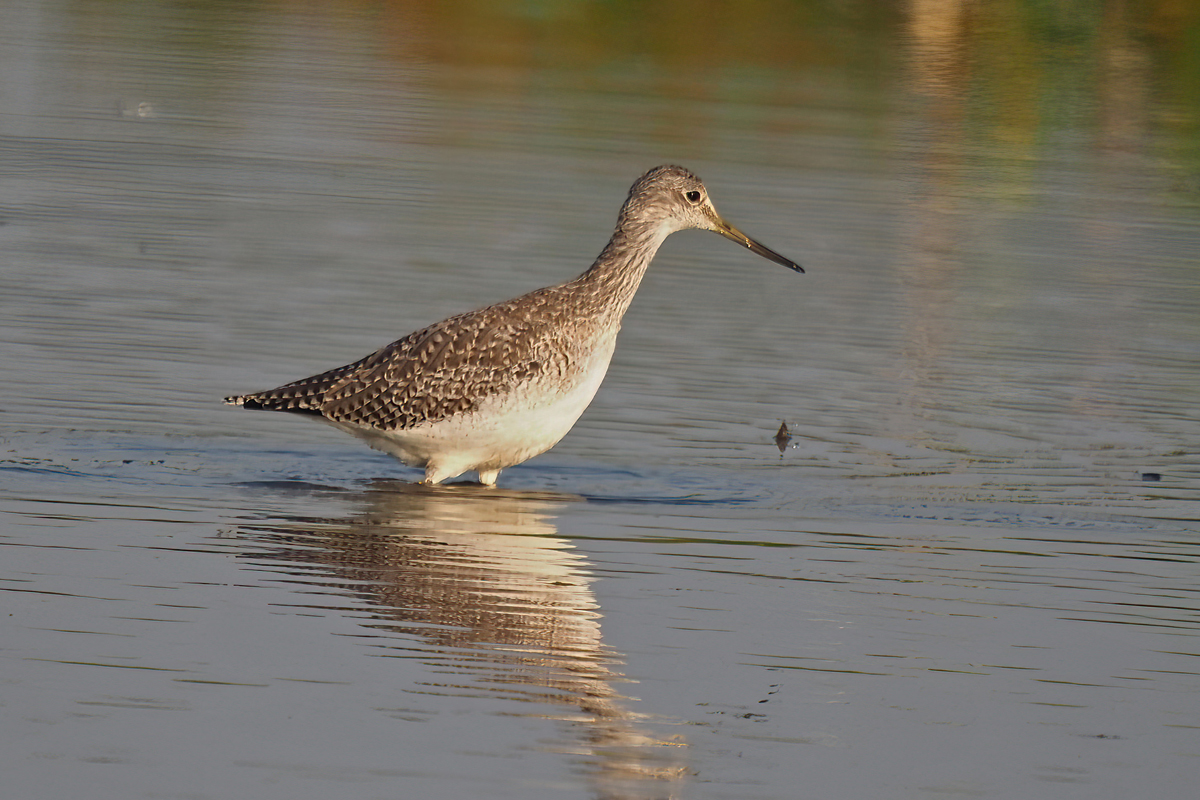
Autumn Begins

The equinox has passed and the rains have begun, so we are officially in autumn.
OLYMPUS DIGITAL CAMERA

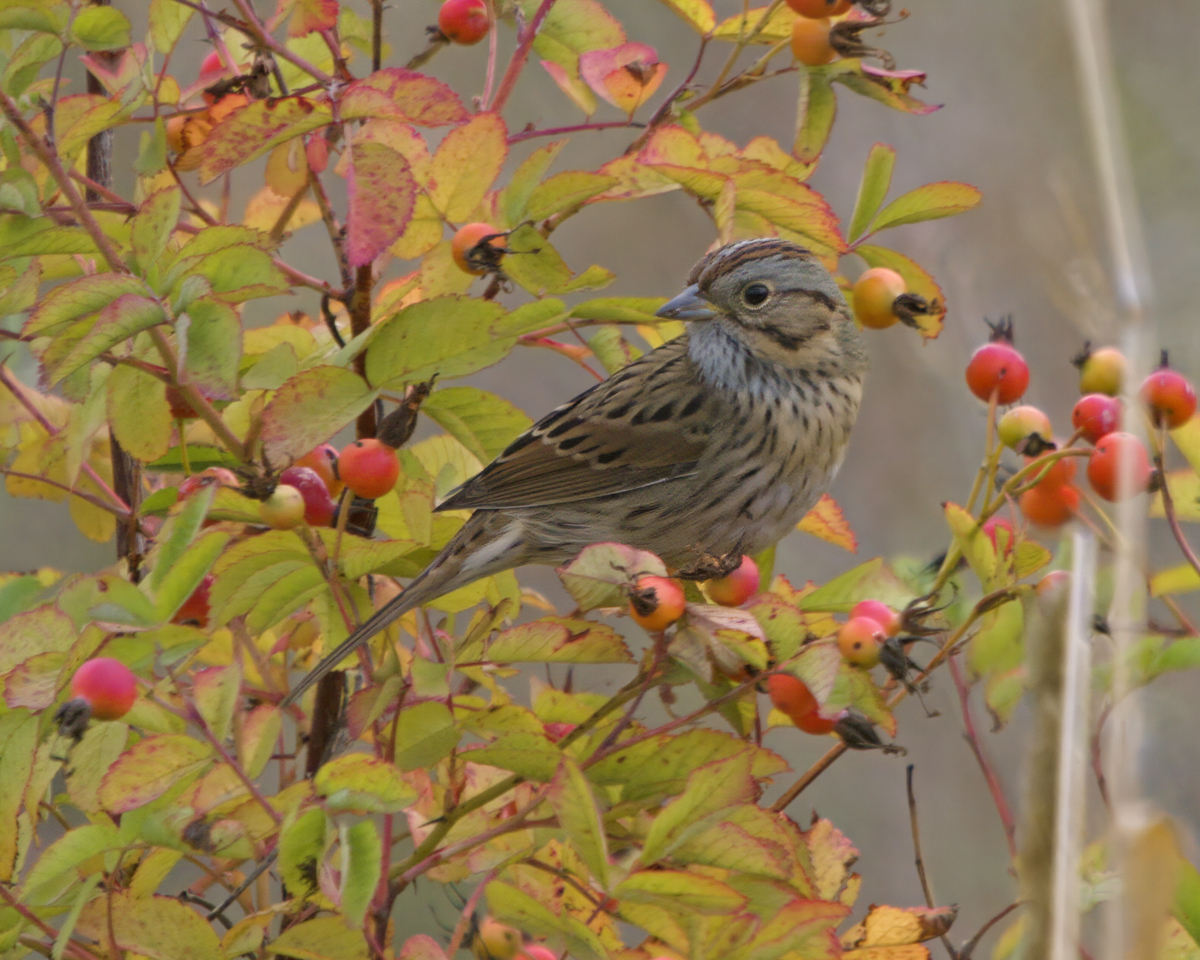
The winter sparrows have returned. This Lincoln’s Sparrow was posing with rose hips.
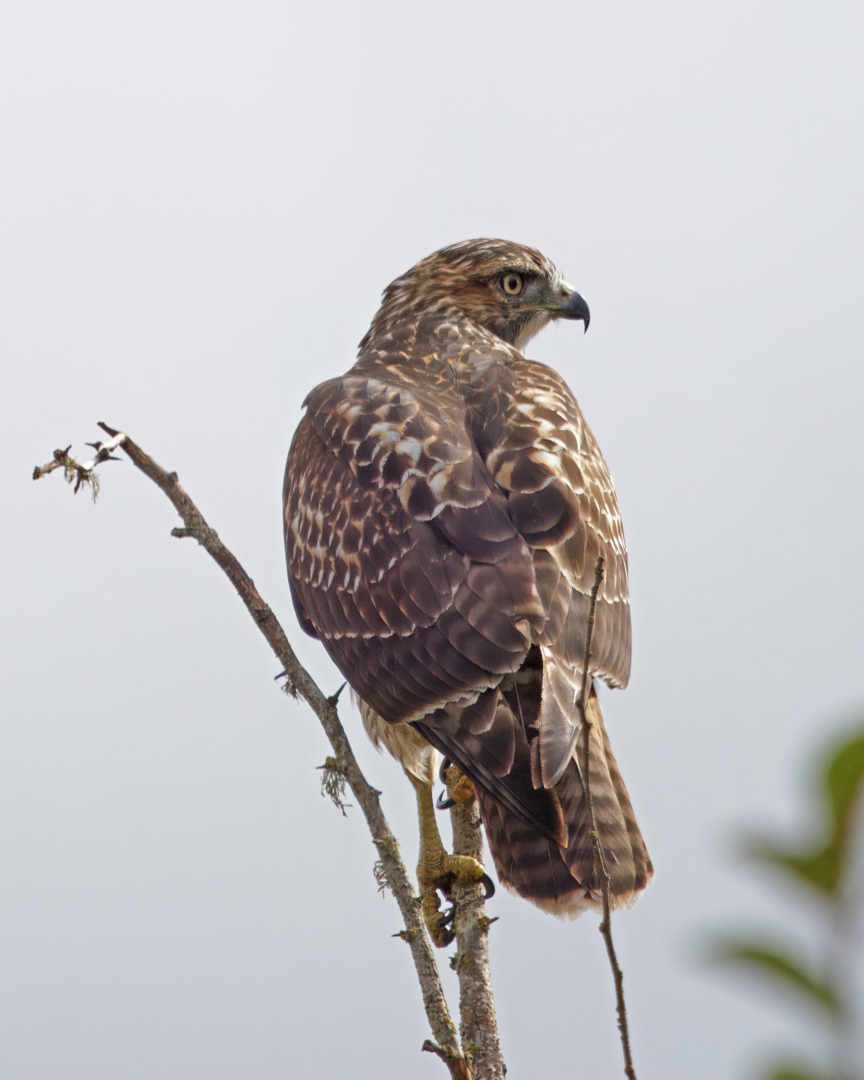
OLYMPUS DIGITAL CAMERA

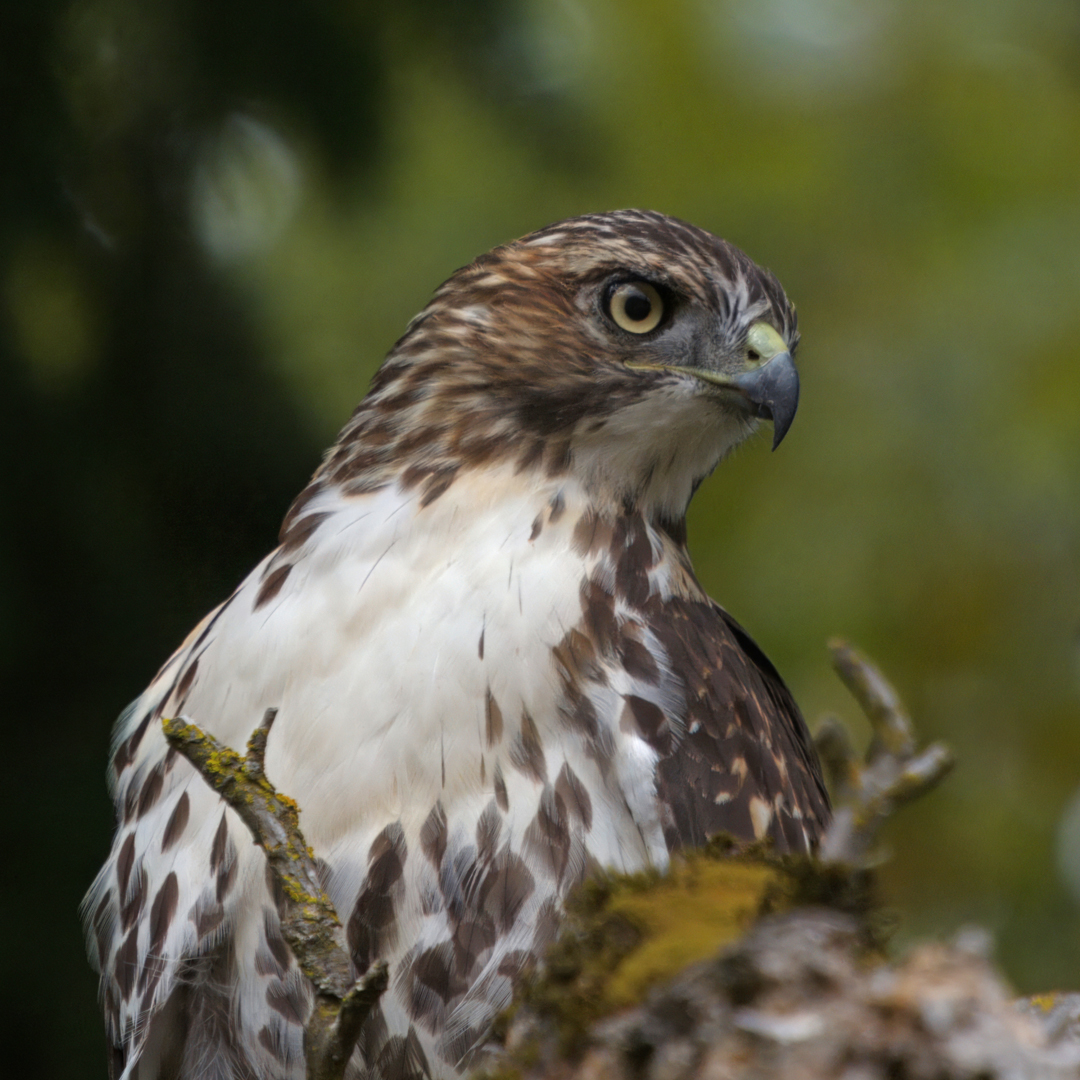
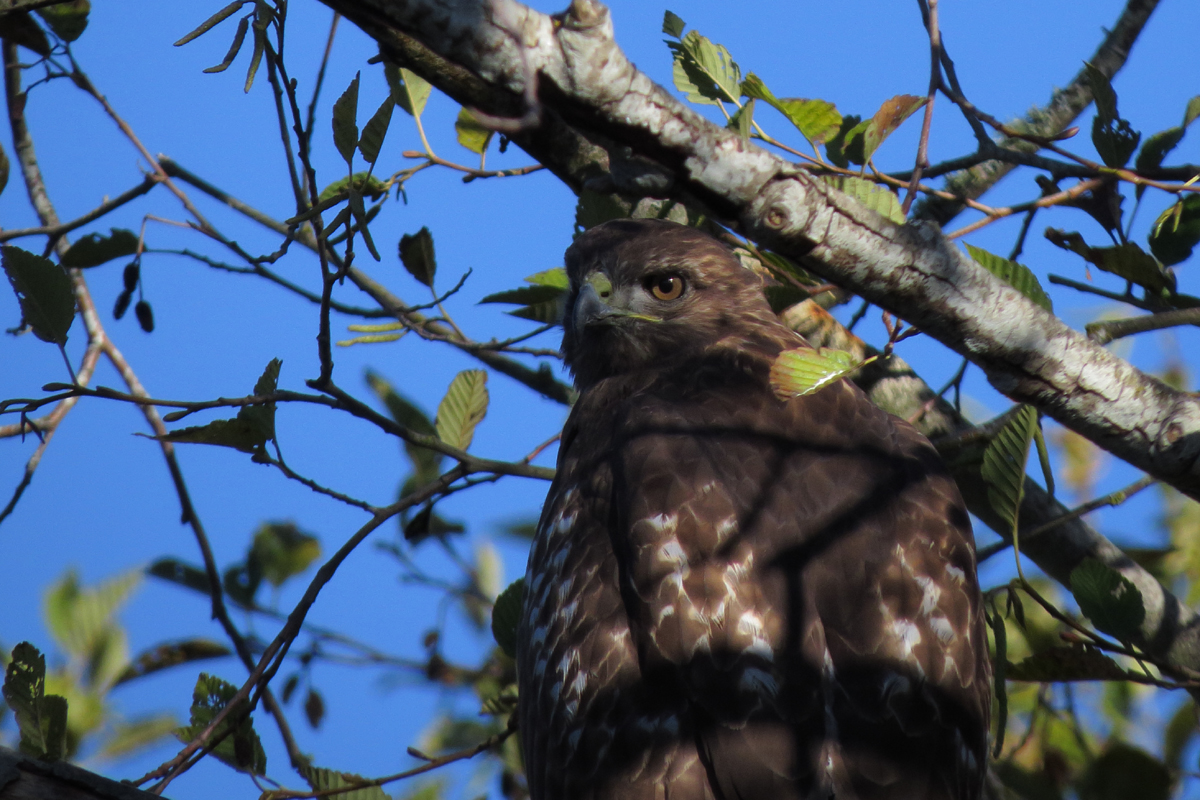
juvenile Red-tailed Hawk

OLYMPUS DIGITAL CAMERA

Here is another view of the same individual.
OLYMPUS DIGITAL CAMERA

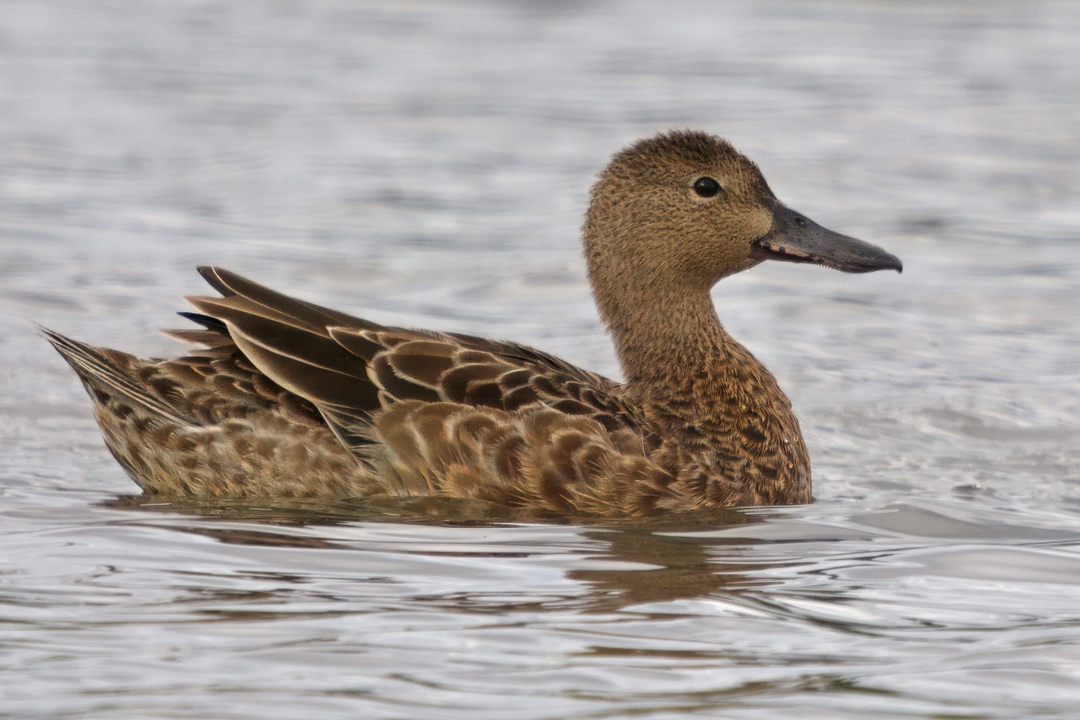
We are still in what I call Ugly Duck Season, when most birds are still in their dull summer patterns. I have heard it referred to as Brown Duck Season, which sounds a little more respectful. This brown duck is a Cinnamon Teal.
OLYMPUS DIGITAL CAMERA

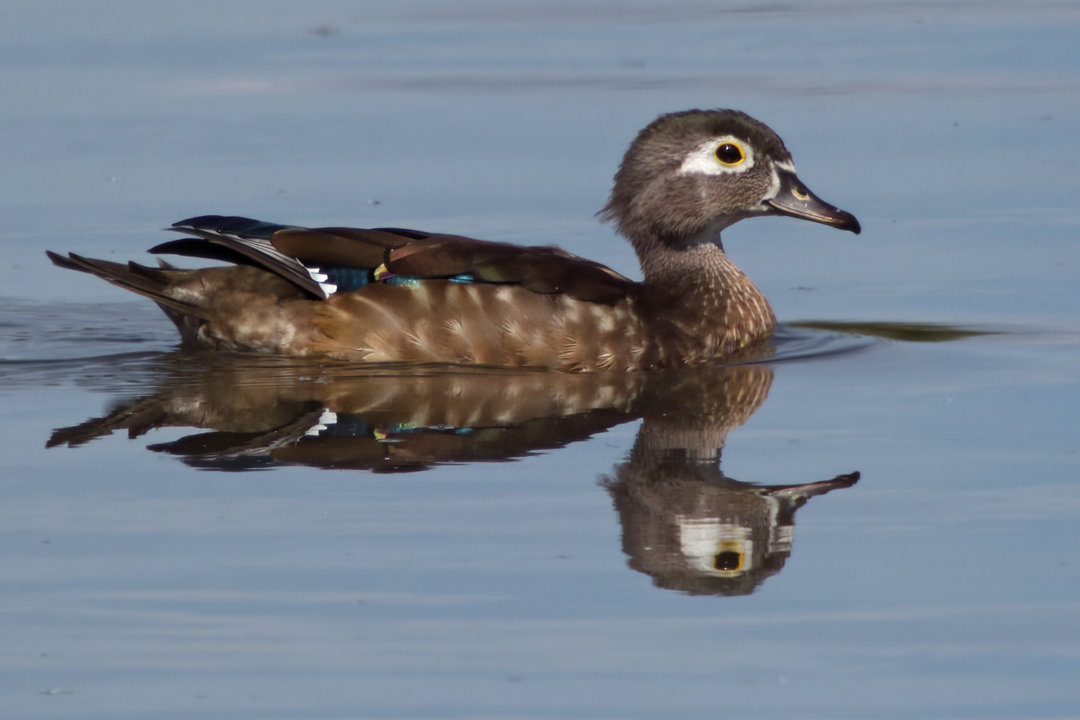
This female Wood Duck is slightly more fancy.
OLYMPUS DIGITAL CAMERA

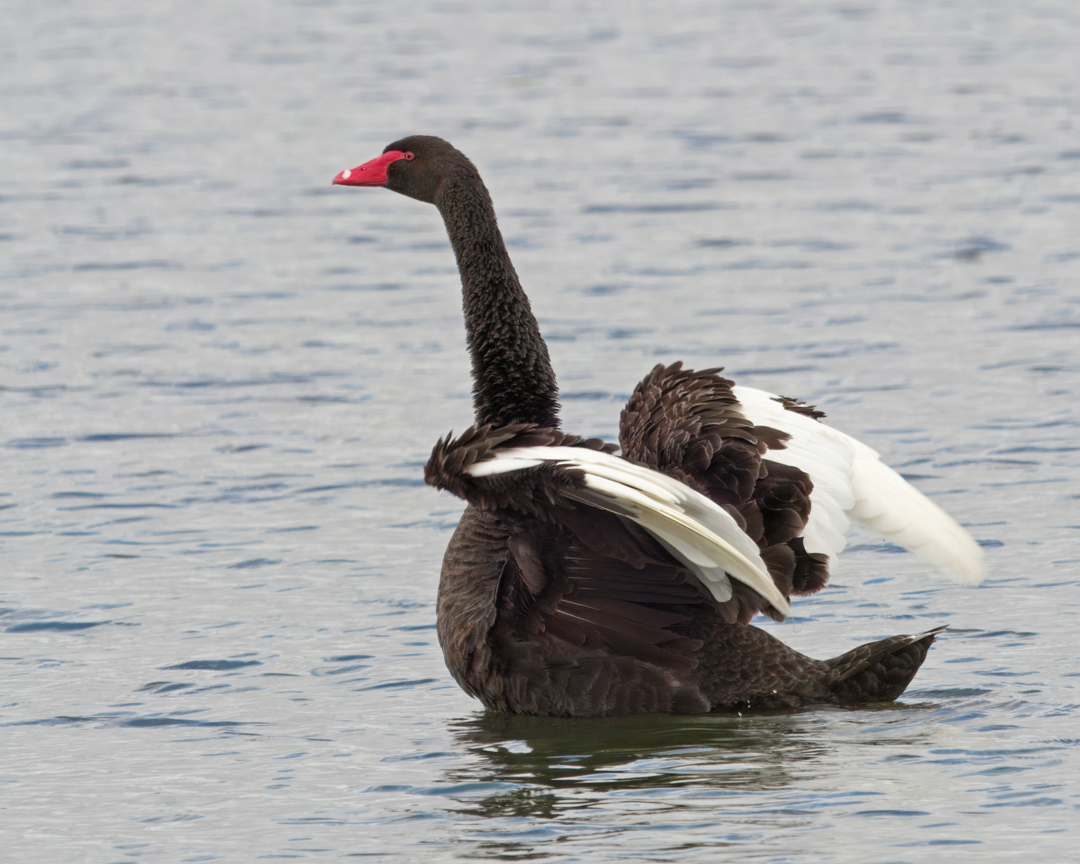
Speaking of fancy, this Black Swan escaped from captivity and is living the high life at Tualatin River NWR.
OLYMPUS DIGITAL CAMERA

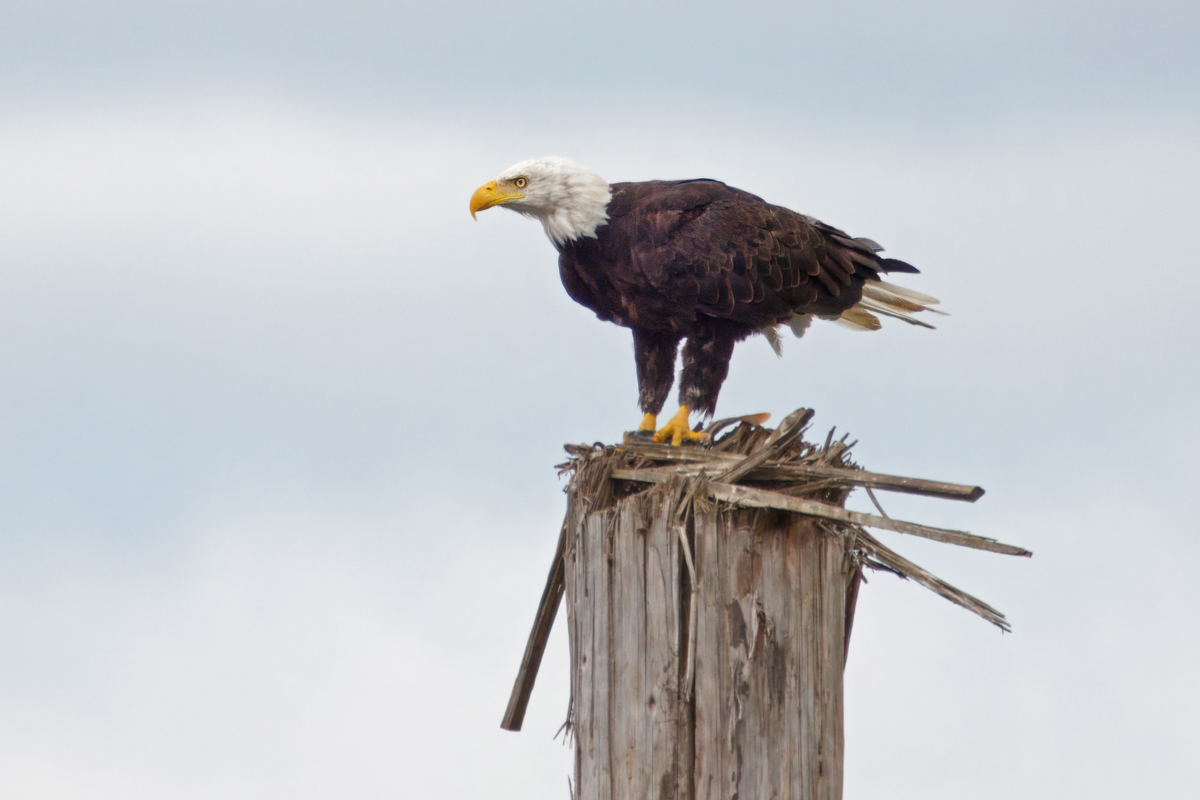
Bald Eagle with a fish

OLYMPUS DIGITAL CAMERA

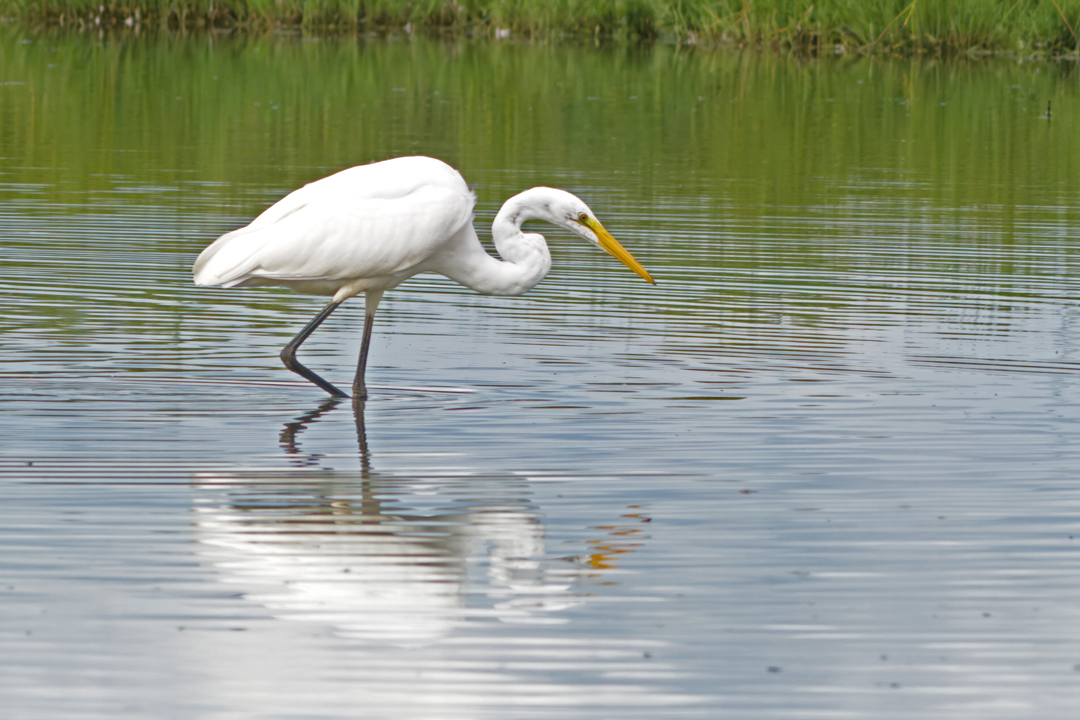
I have never gotten a good photo of a Great Egret, so here is a mediocre one.
OLYMPUS DIGITAL CAMERA

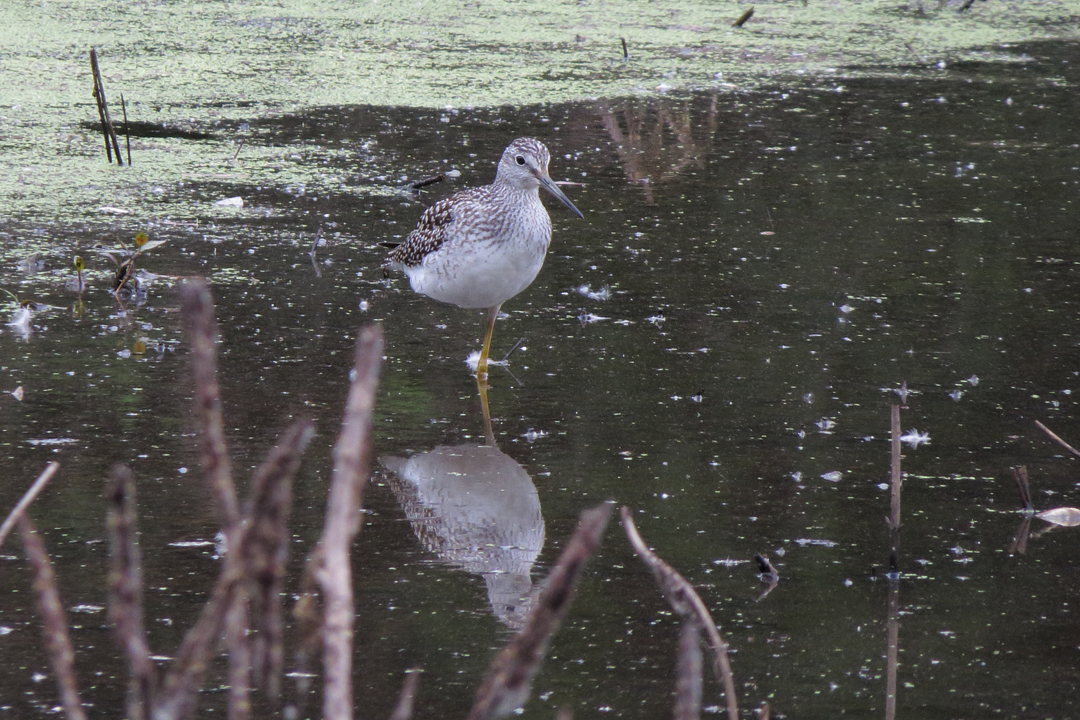
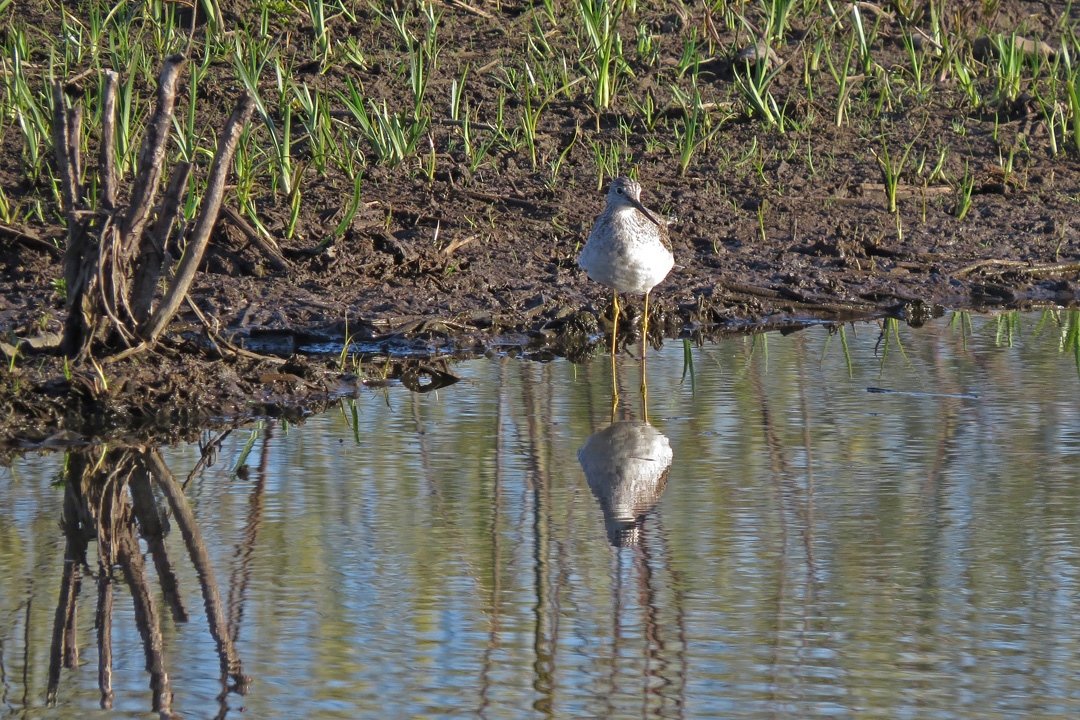
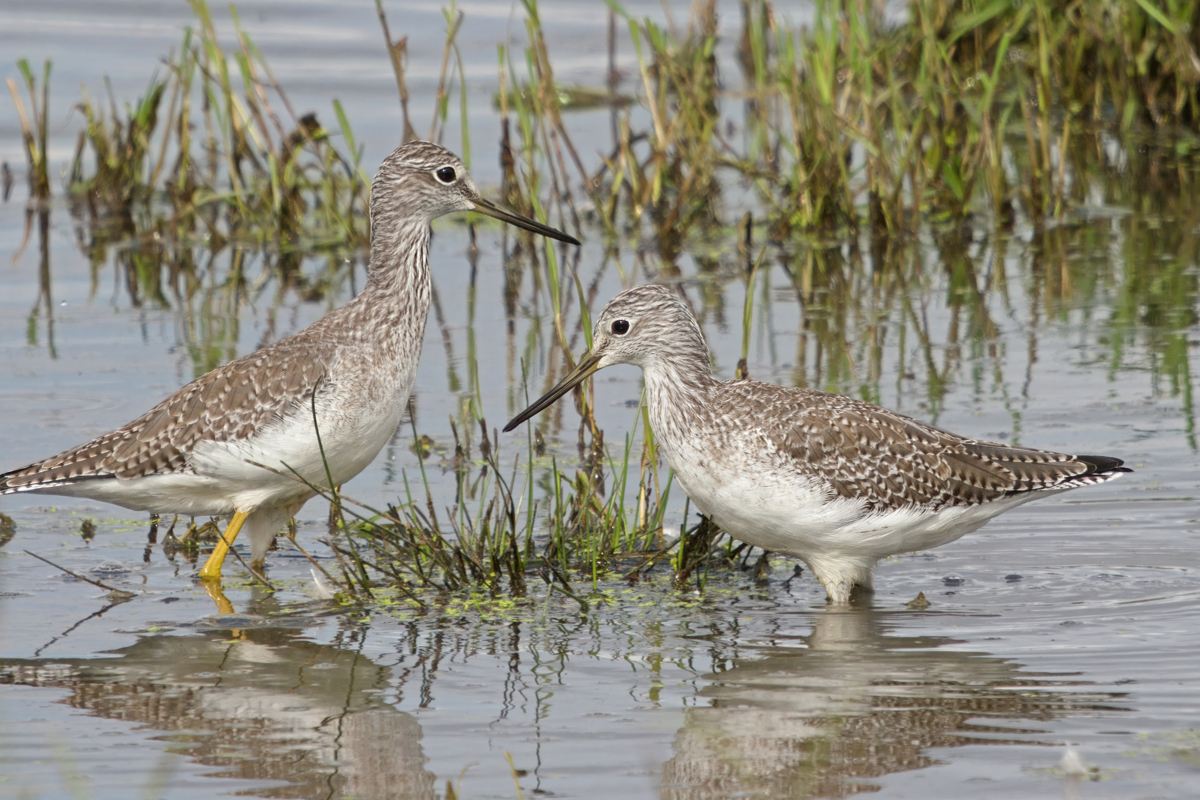
There are still decent numbers of shorebirds around, including these Greater Yellowlegs, but their numbers should be thinning out pretty quickly.
OLYMPUS DIGITAL CAMERA

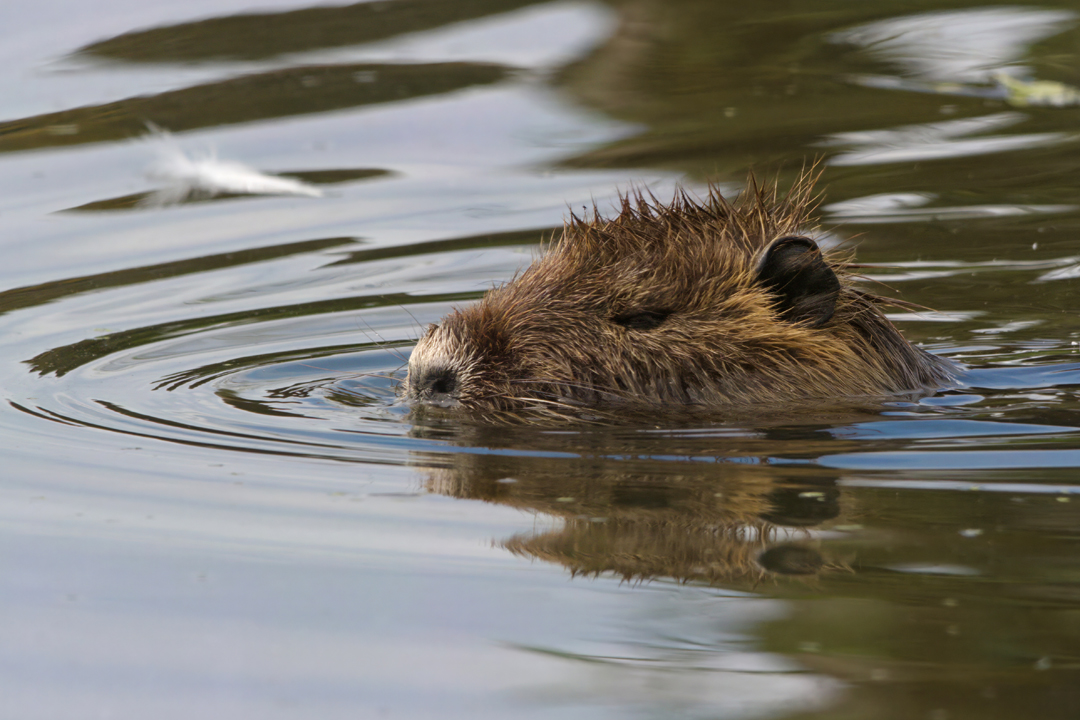
I’ll leave you with this Nutria with a spiky punk hairdo.

Happy Autumn!
Late Summer

Summer birding can be tough. Songbird activity has slowed way down. Shorebirds are starting to come through on their southward migrations, but hot and bright conditions limit one’s birding to the early morning hours. Unfortunately for me, our young dog also demands attention in the early morning hours, so my outings have been limited. Here are a few photos from recent weeks.

OLYMPUS DIGITAL CAMERA
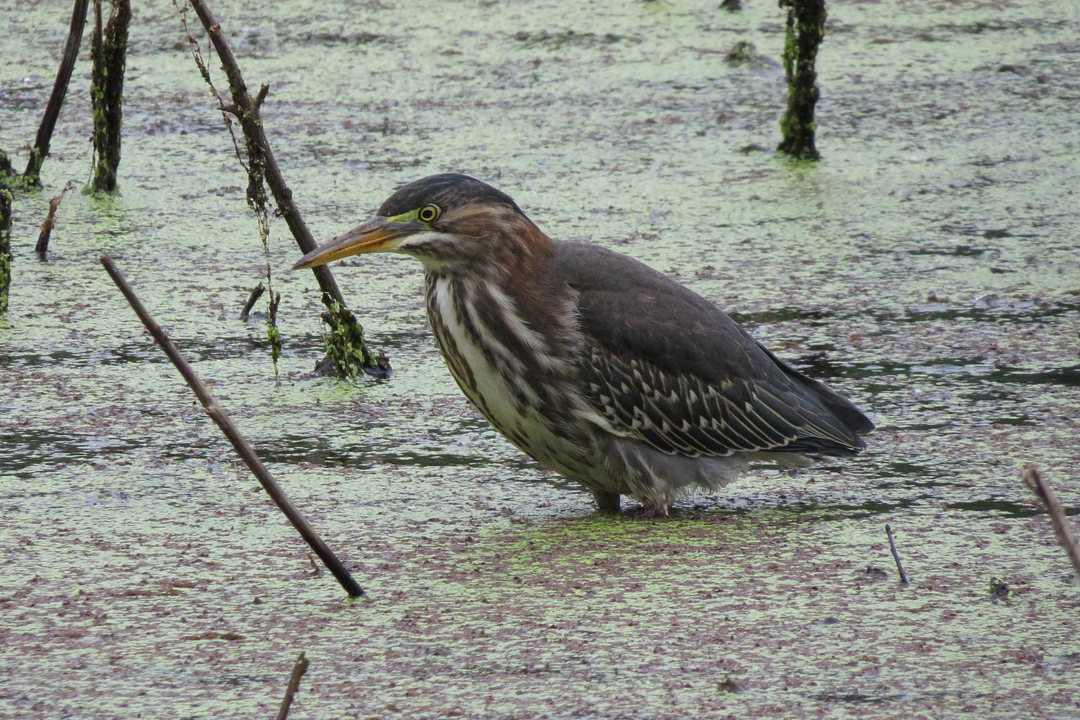
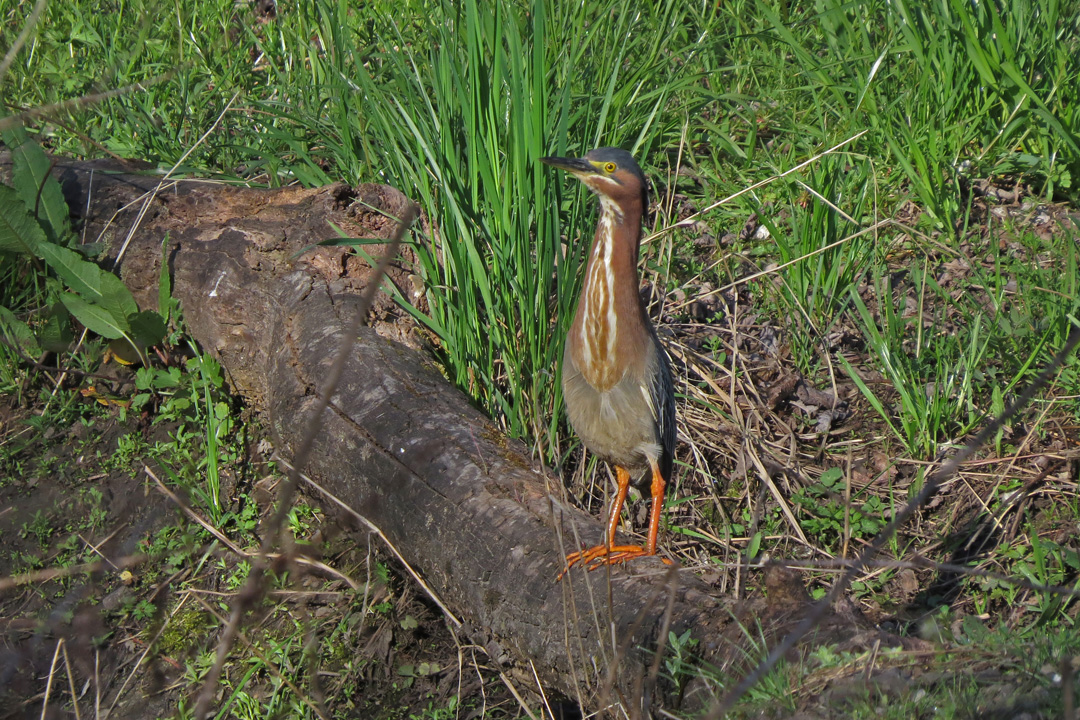
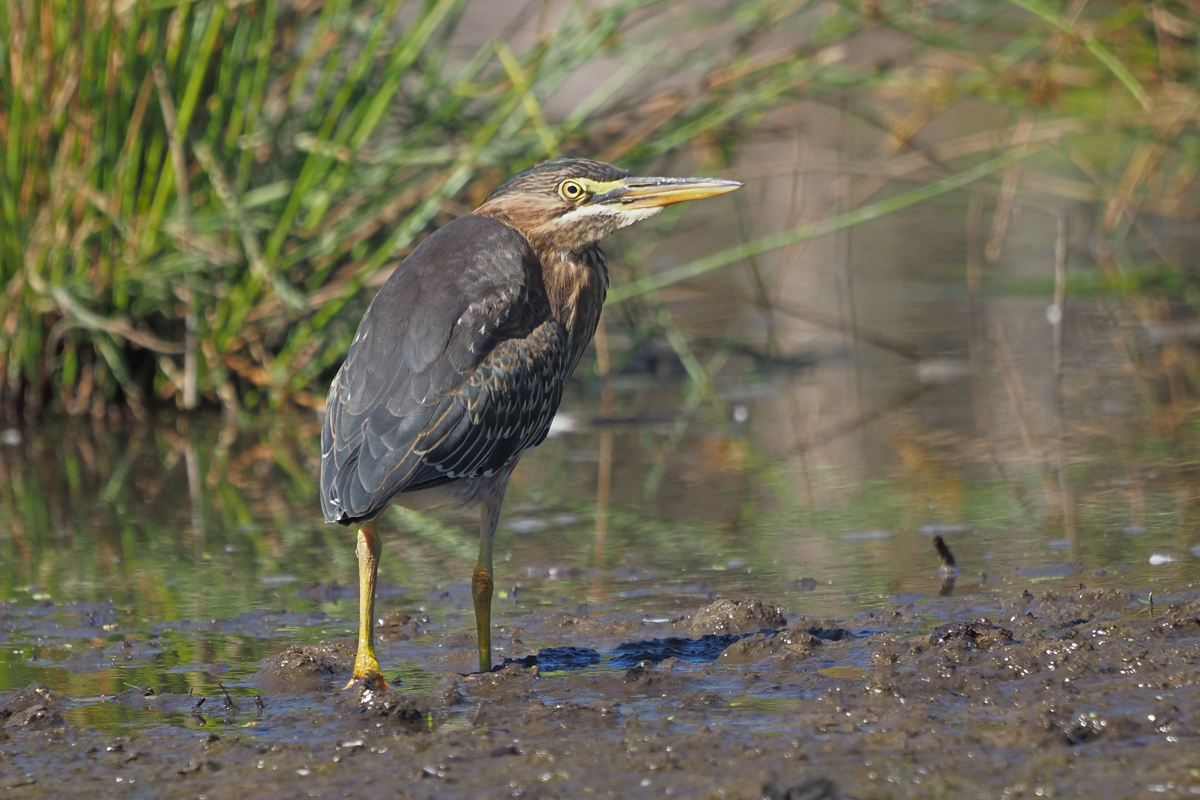
Green Herons are fickle. They often stay hidden in thick vegetation along the shore, but sometimes they will just strut out into the open sunshine.

OLYMPUS DIGITAL CAMERA
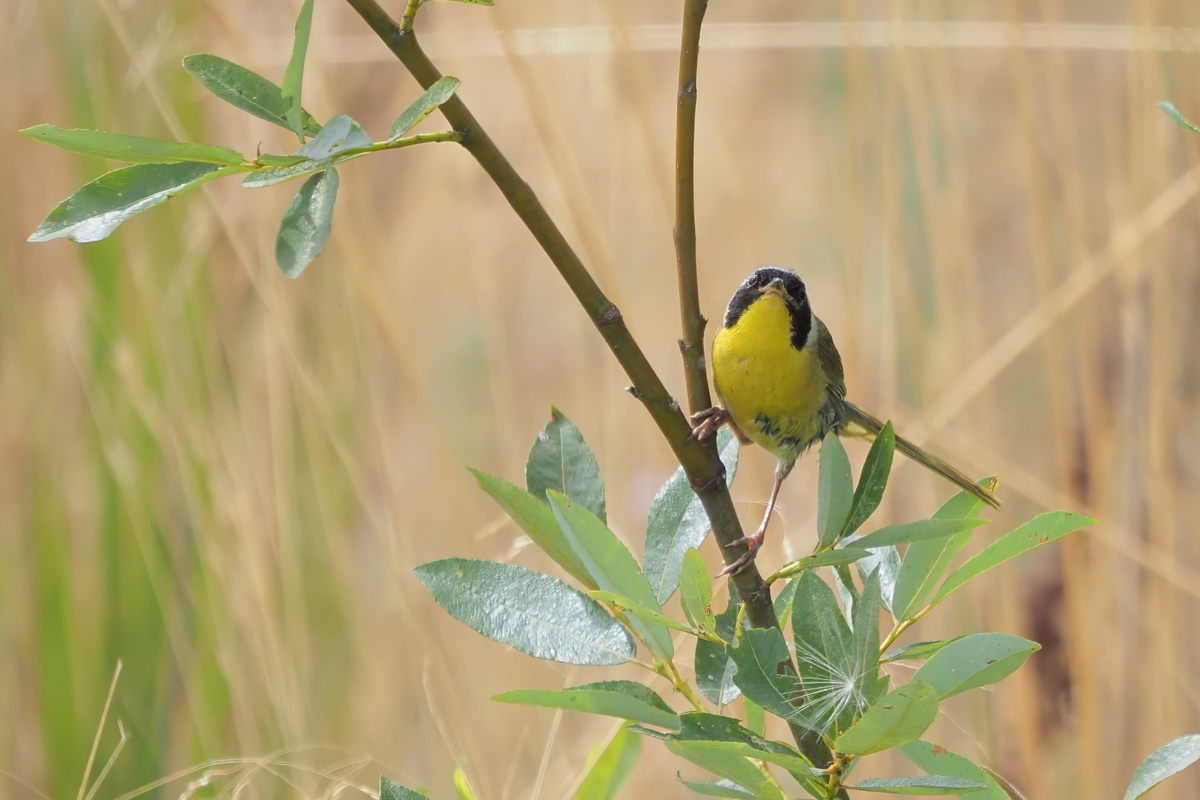
Common Yellowthroat, showing off his namesake

OLYMPUS DIGITAL CAMERA
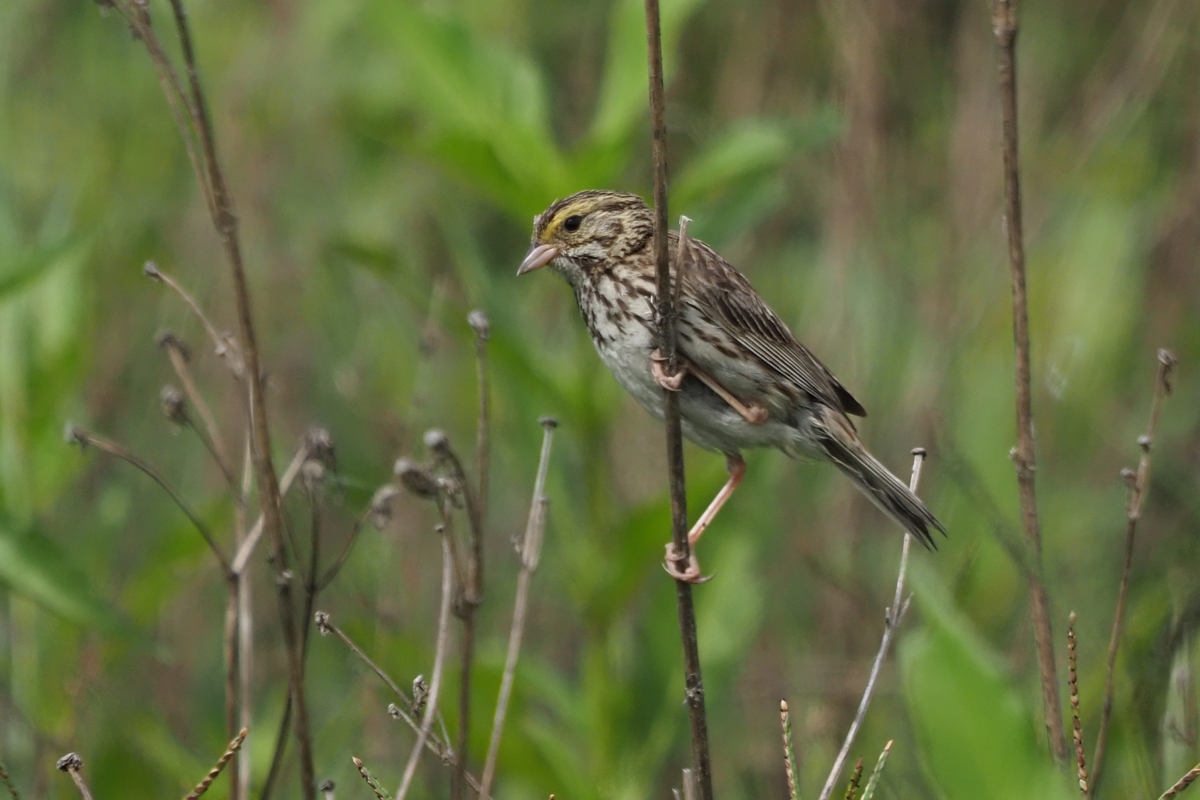
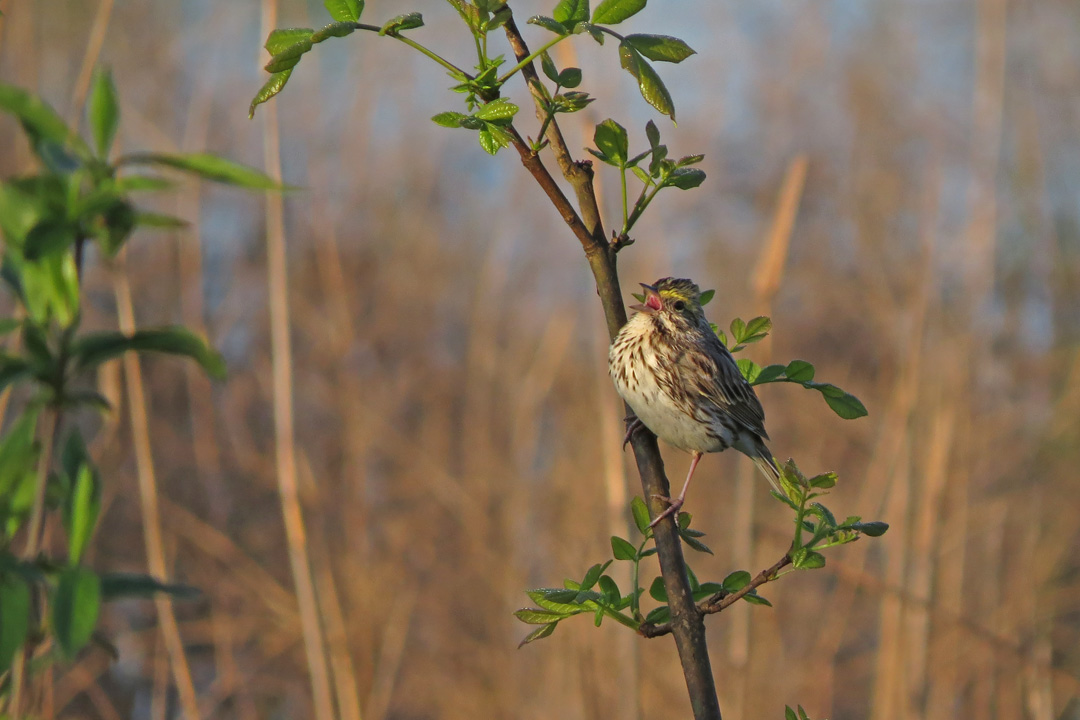
Savannah Sparrow

OLYMPUS DIGITAL CAMERA
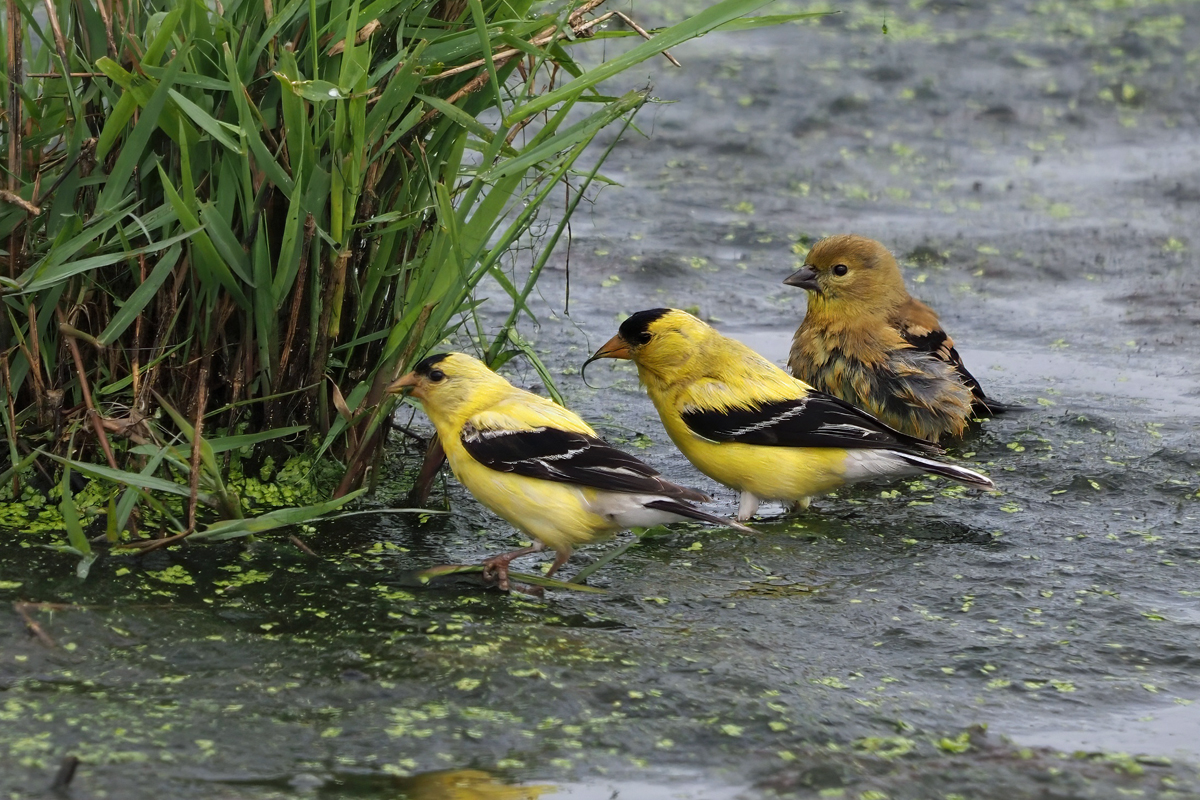
These American Goldfinches were wading into the wetland at Tualatin River NWR to find food.

OLYMPUS DIGITAL CAMERA
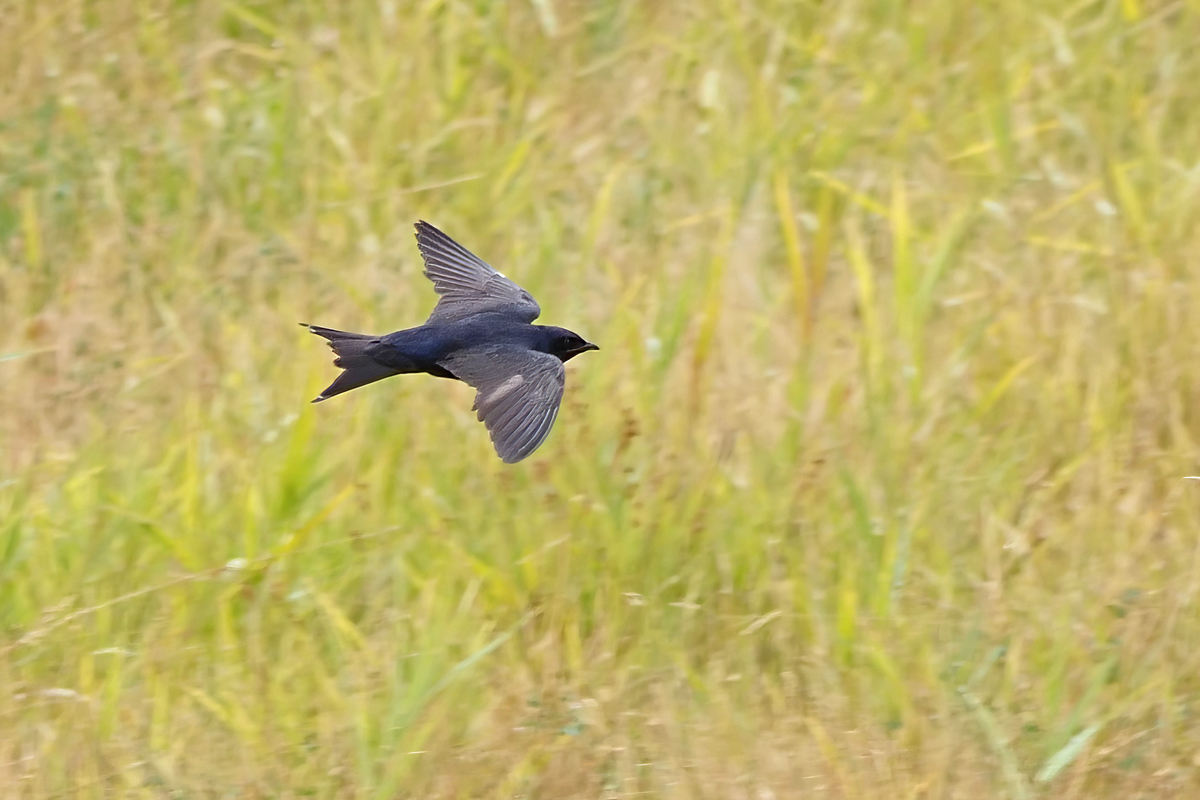
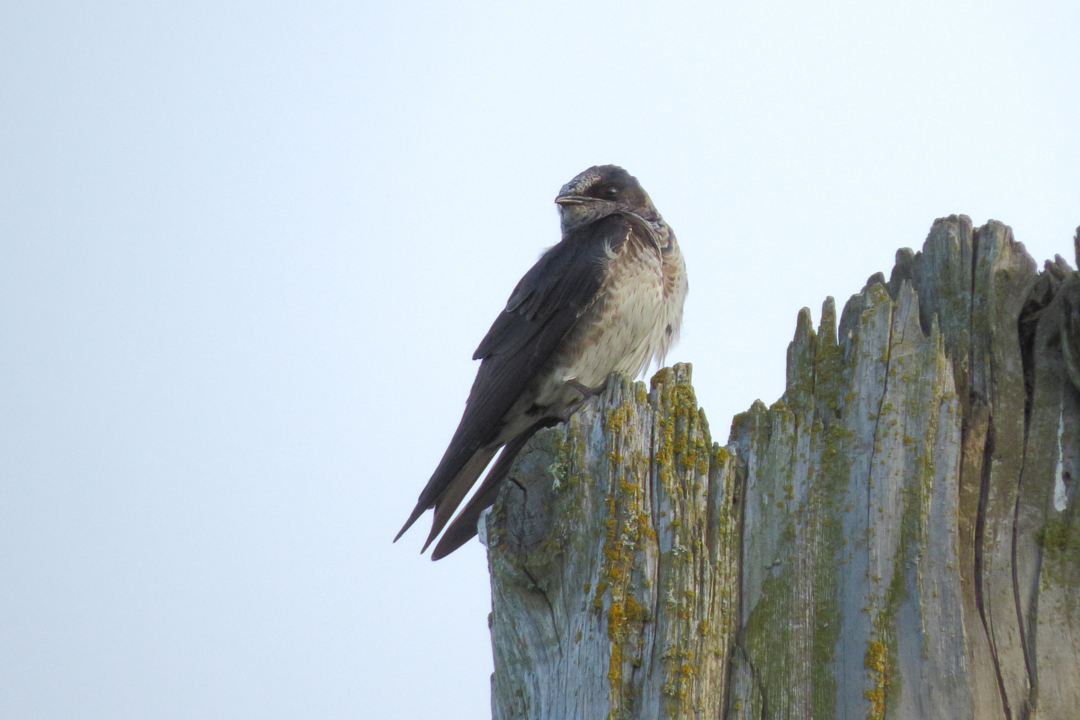
A male Purple Martin from the colony at Tualatin River NWR

OLYMPUS DIGITAL CAMERA
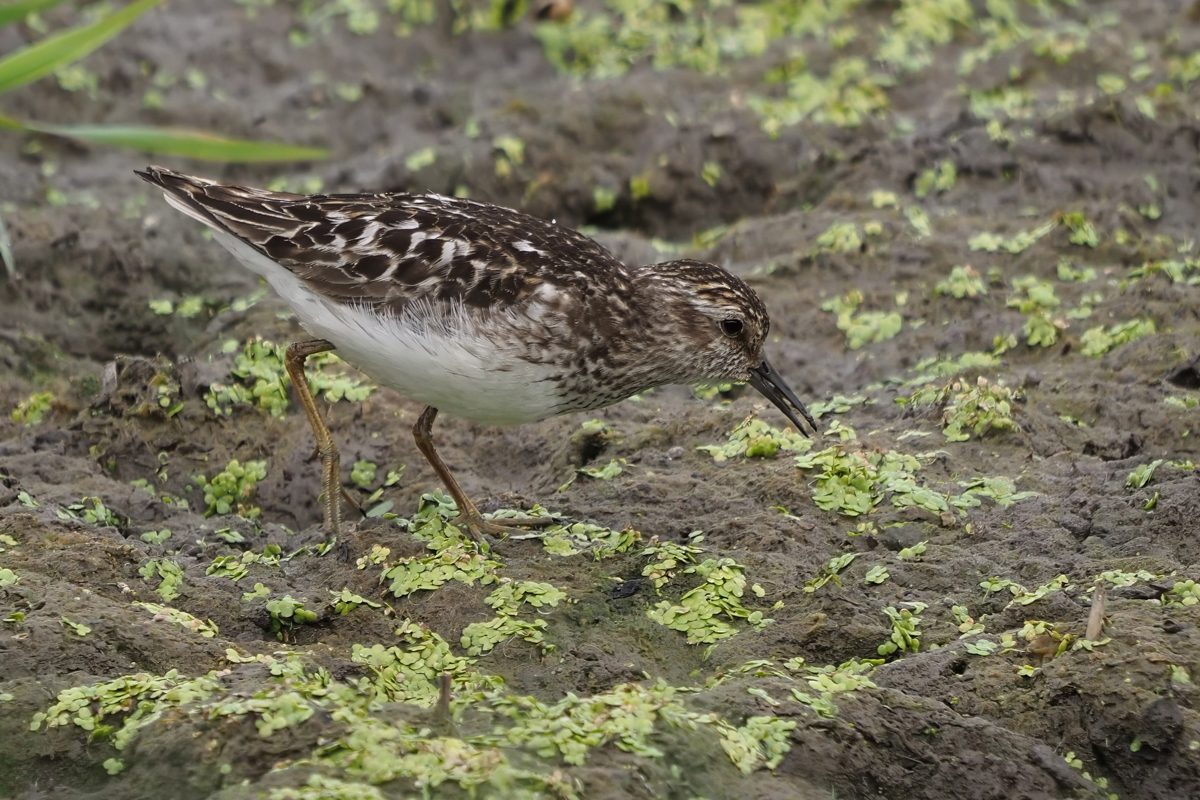
As I mentioned, shorebirds are starting to come through. This is a Least Sandpiper.

OLYMPUS DIGITAL CAMERA
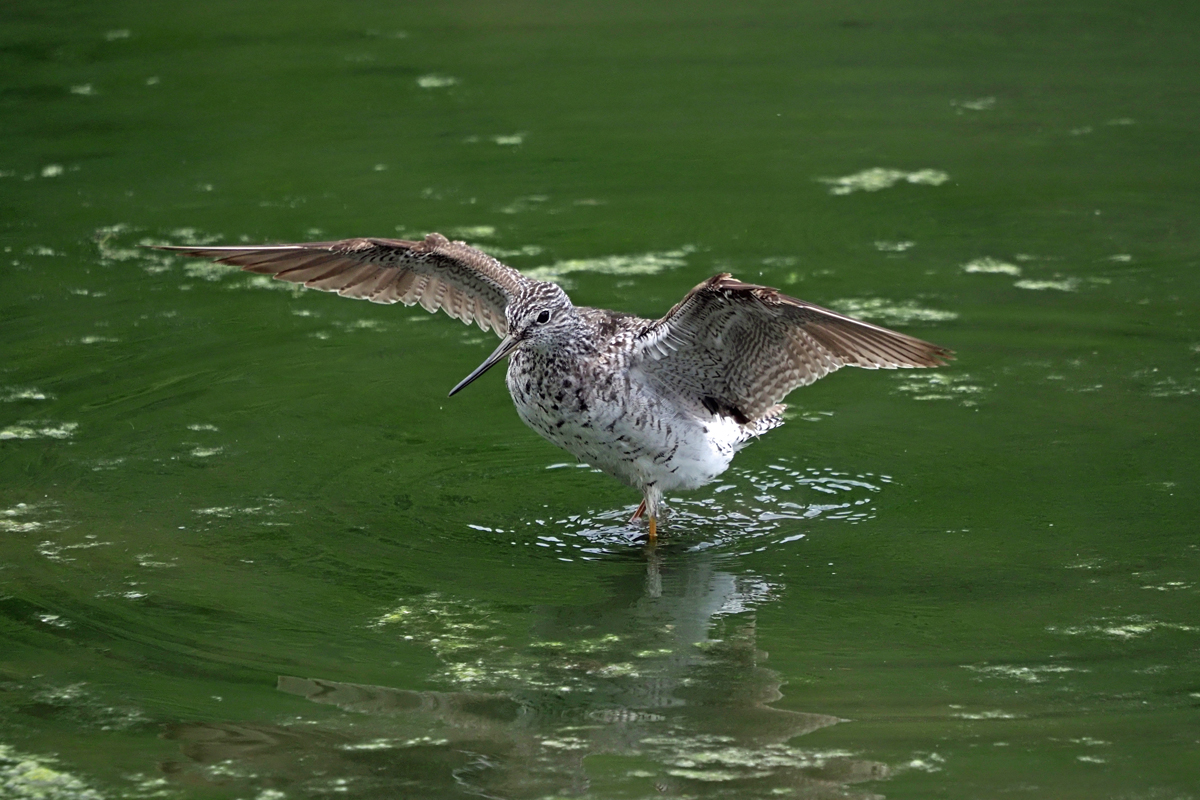
Greater Yellowlegs

OLYMPUS DIGITAL CAMERA
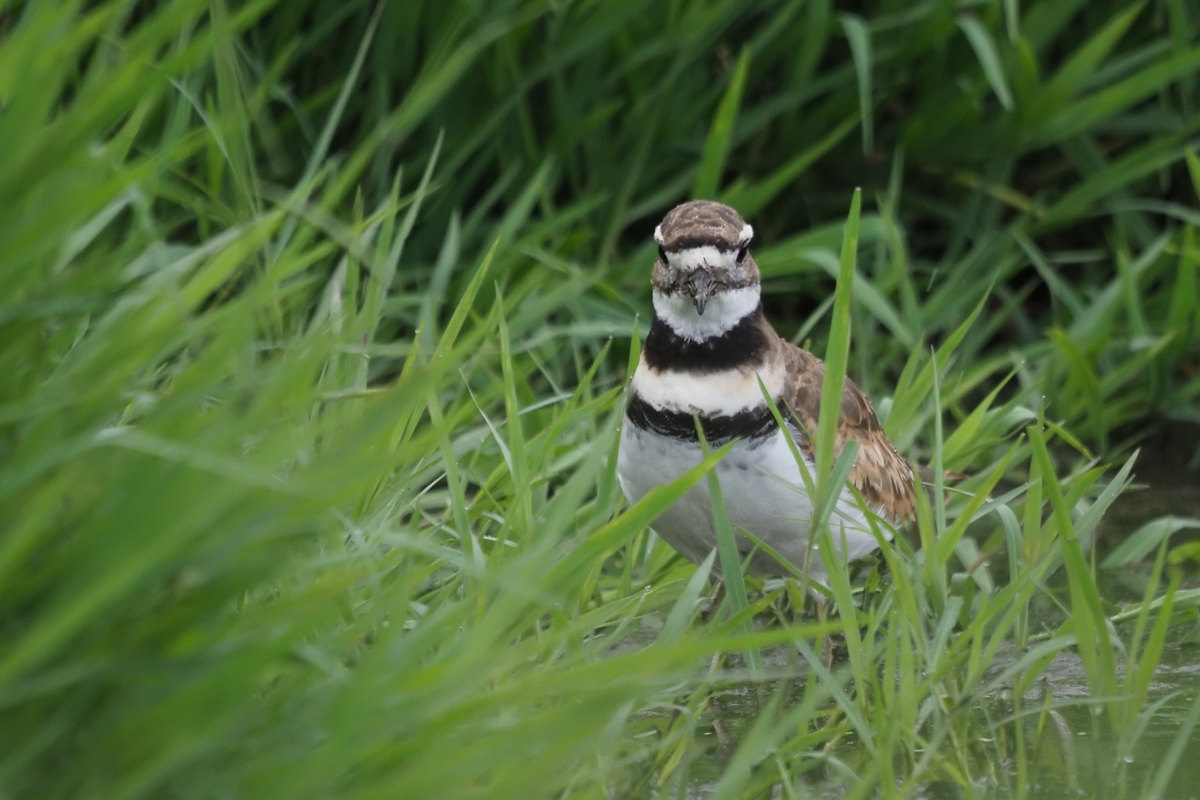
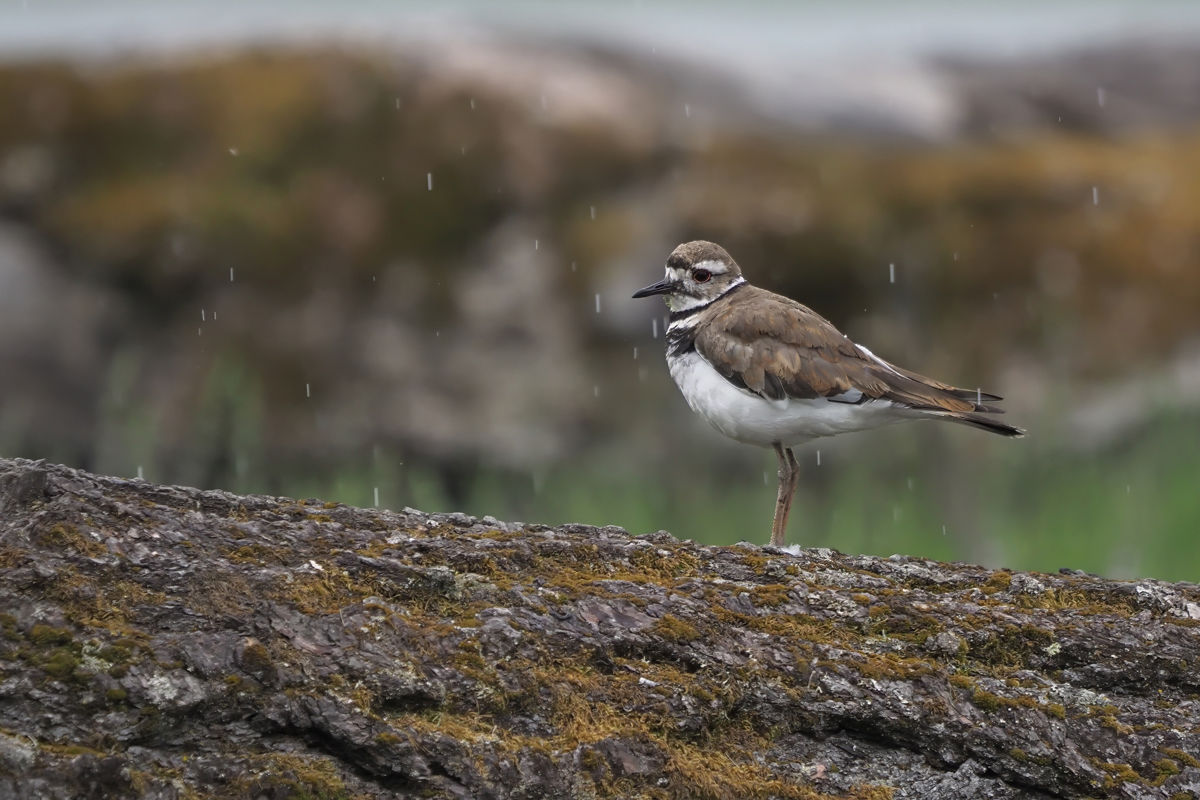
Killdeer are common and noisy, and can be found here most of the year, but they are really lovely shorebirds.

OLYMPUS DIGITAL CAMERA
We actually had a few minutes of rain in late July.

Happy summer.

Shorebirds at Tualatin River NWR

Tualatin River National Wildlife Refuge has been good for southbound shorebirds this summer. Early in the season, the Long-billed Dowitchers were still sporting their breeding plumage.

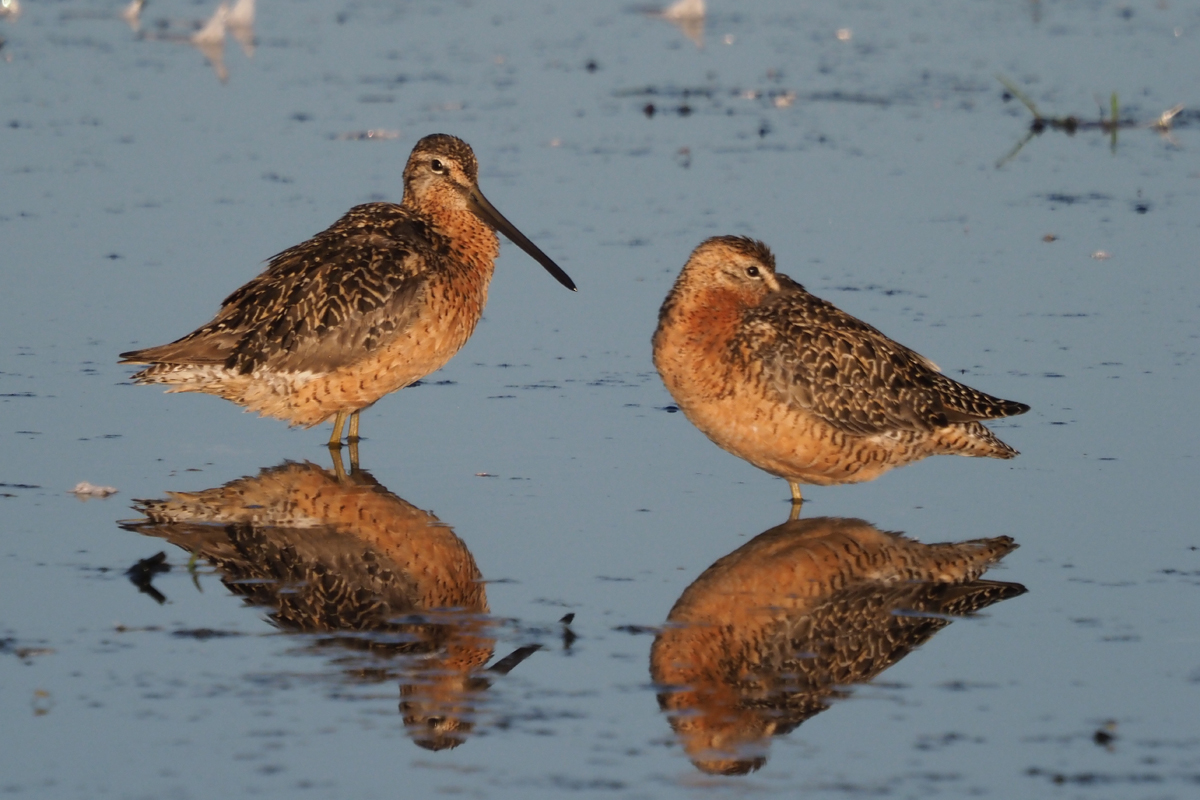
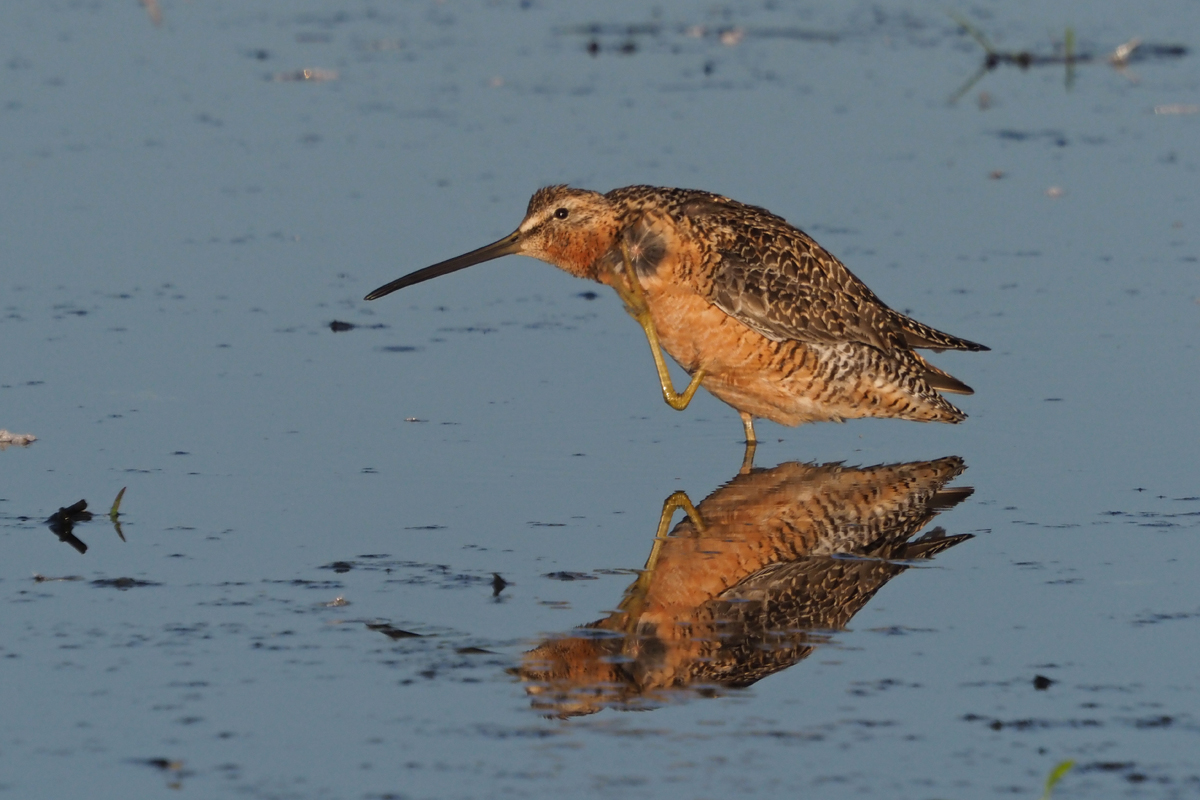
At this point, most of the dowitchers have molted into winter plumage.

Normally seen later in the fall, a few Pectoral Sandpipers have made an appearance at the refuge.

Up to three young Wilson’s Phalaropes were at the refuge this summer.

Least Sandpiper

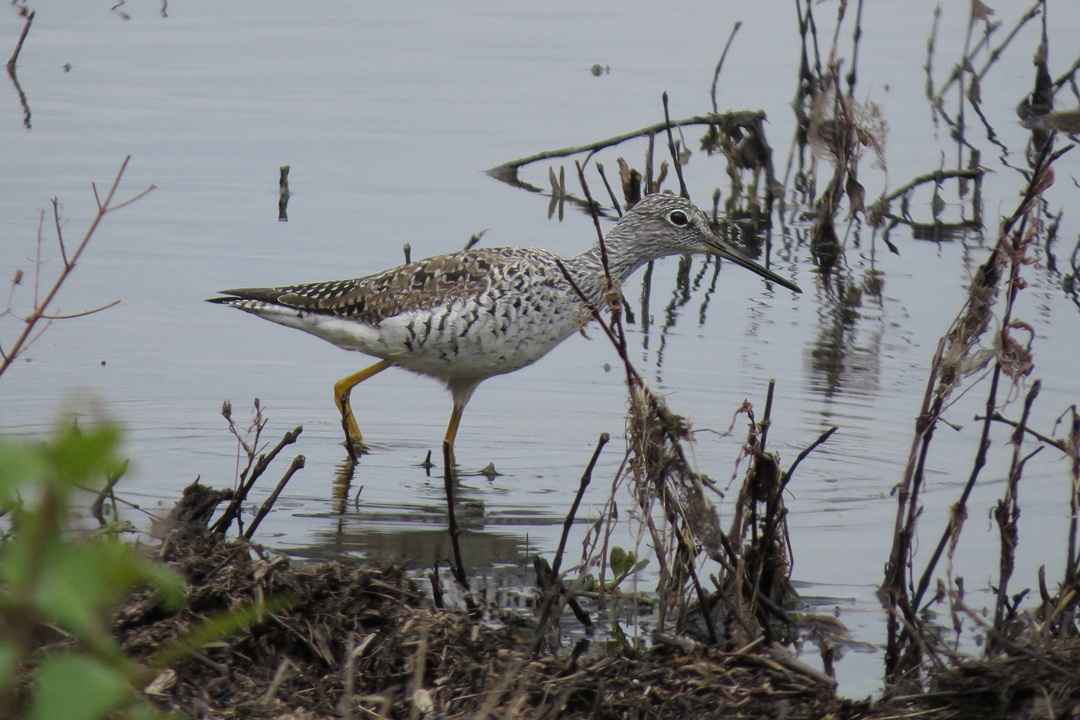
Greater Yellowlegs are one of the more common, and more vocal, of the migrant shorebirds.

Lesser Yellowlegs are harder to find, but have been reliable at the refuge this summer.

Occasionally, the Greater and Lesser Yellowlegs will pose together for a nice comparison.

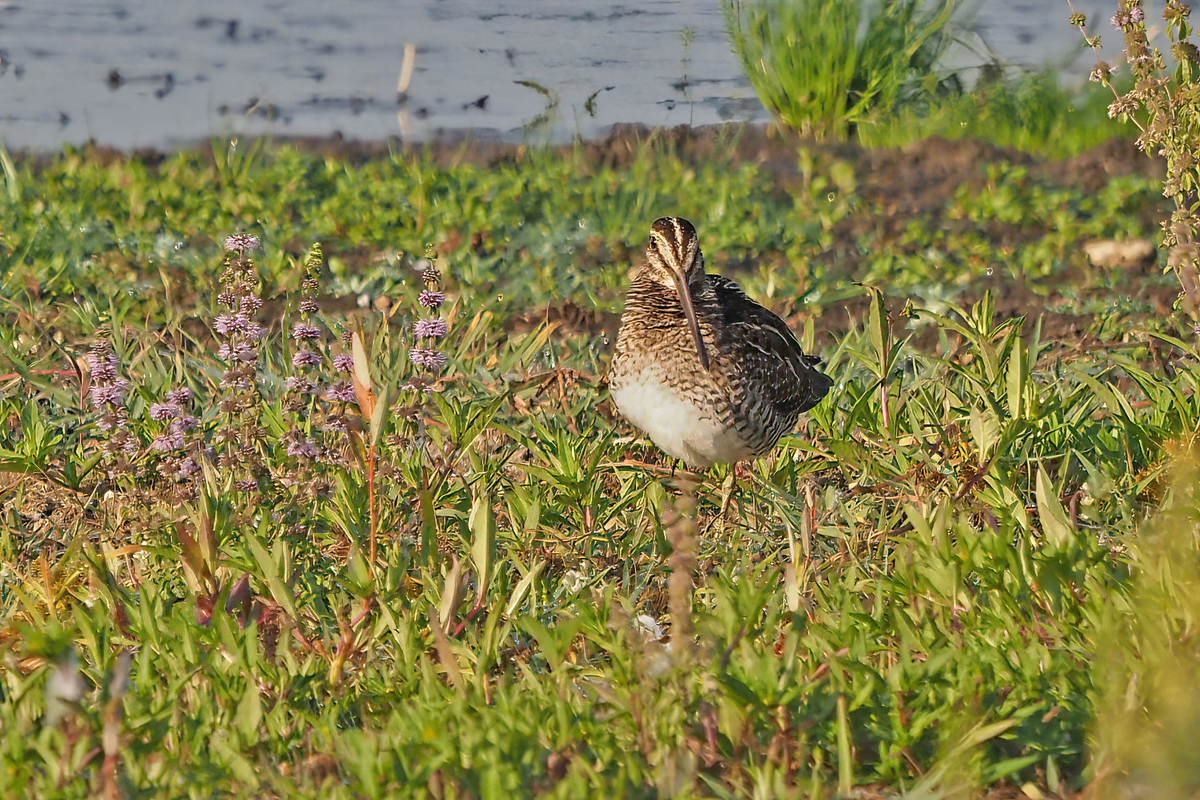
This Wilson’s Snipe made an unusual appearance out in the open.

Shorebird migration lasts through October, but the water at the refuge typically dries up before then. We’ll see how recent restoration efforts affect water levels this year.

Happy summer

September Shorebirds

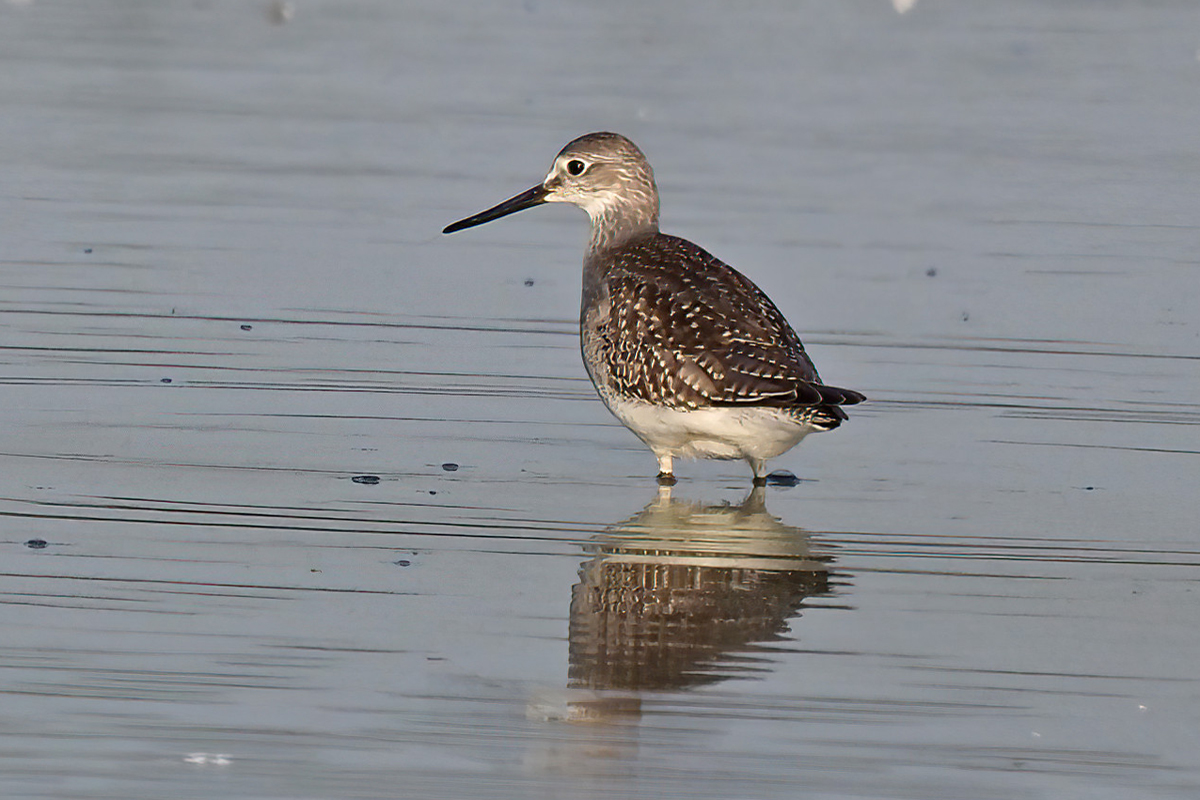
Greater Yellowlegs

Shorebirds have been trickling through the Portland area all month. Finding proper habitat can be challenging. As wetlands dry up during the summer, we have to hope that deeper bodies of water recede enough to create mudflats for shorebirds to feed on. This Greater Yellowlegs was at Force Lake in north Portland.

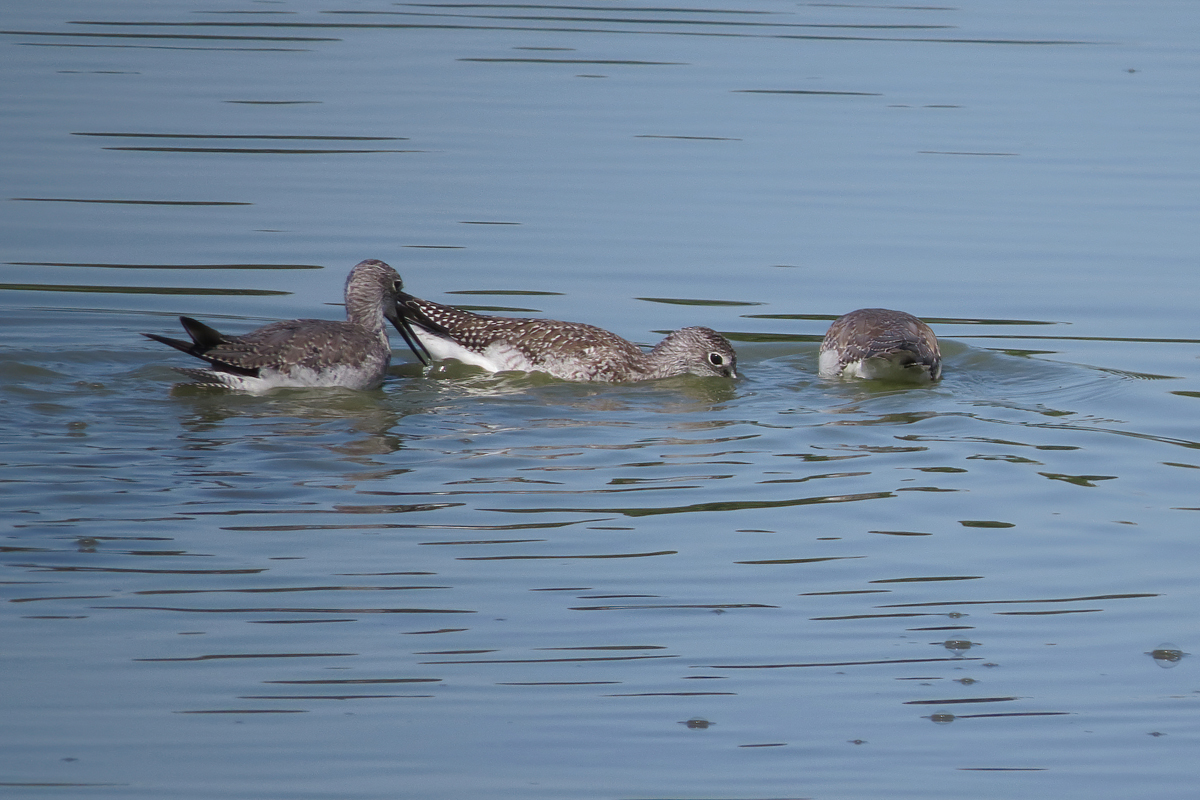
g yellowlegs trioTypically seen wading, Greater Yellowlegs will occasionally swim in groups to catch small fish.
greater yellowlegs swimming

westernThis juvenile Western Sandpiper, showing the characteristic rusty suspenders, was taking advantage of low water levels at Smith and Bybee Wetlands.

pectoral sandpiperThe main lake at Fernhill Wetlands has receded enough to create some nice mudflats, here being enjoyed by a Pectoral Sandpiper.

long-billed dowitcherjuvenile Long-billed Dowitcher, showing the characteristic solid dark tertials

short-billed dowitcher smalljuvenile Short-billed Dowitcher, showing the characteristic tiger-striped tertials

spotted sandpiper smallSpotted Sandpipers nest in the Portland area. Juveniles, like this one, can be recognized by the barring on the wing coverts.

semipalmated plover smallSemipalmated Plovers are surely one of the cutest shorebirds. The scaly pattern on the wings tells us that this is a juvenile.
Happy Autumn

Smith and Bybee Wetlands

I went out to Smith and Bybee Wetlands in north Portland. This site can be a little challenging to bird, as the noise from Marine Drive makes it difficult to hear bird song and other natural sounds. But as you make your way farther from the road, birding tends pick up.

One of the first critters of the trip was this Eastern Cottontail. This species has been introduced into several urban areas in the Pacific NW. The rusty nape and blazing white tail help distinguish this species from the native Brush Rabbit.

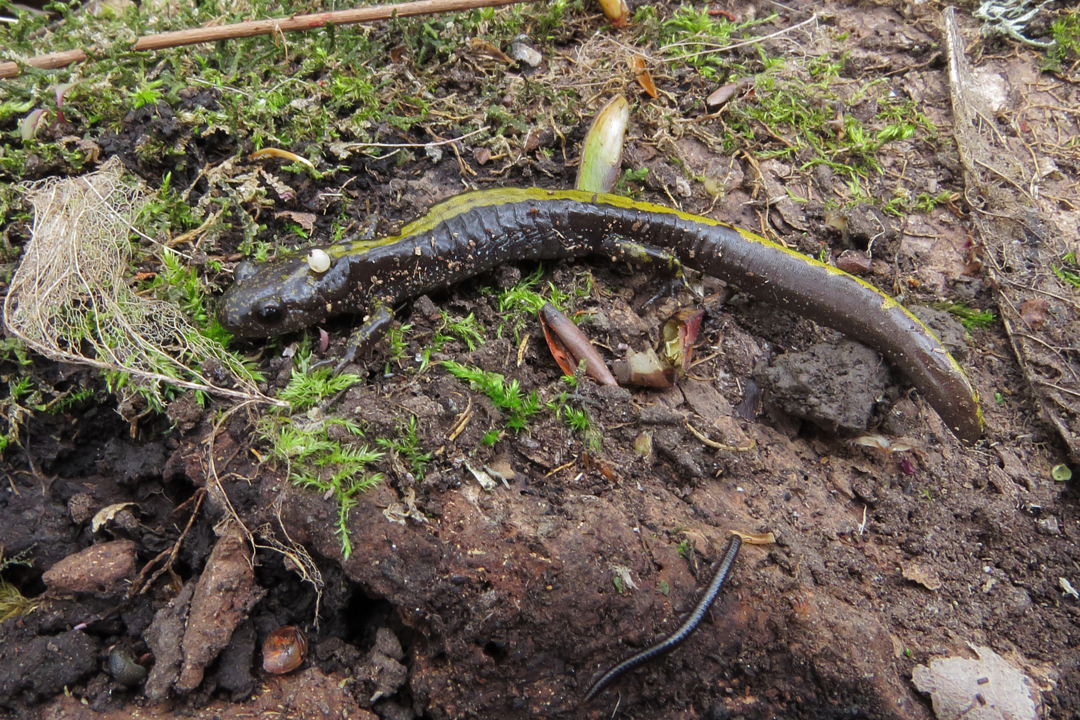
Long-toed Salamanders have been the only species of salamander I have been able to find lately. This individual is the largest I have seen.

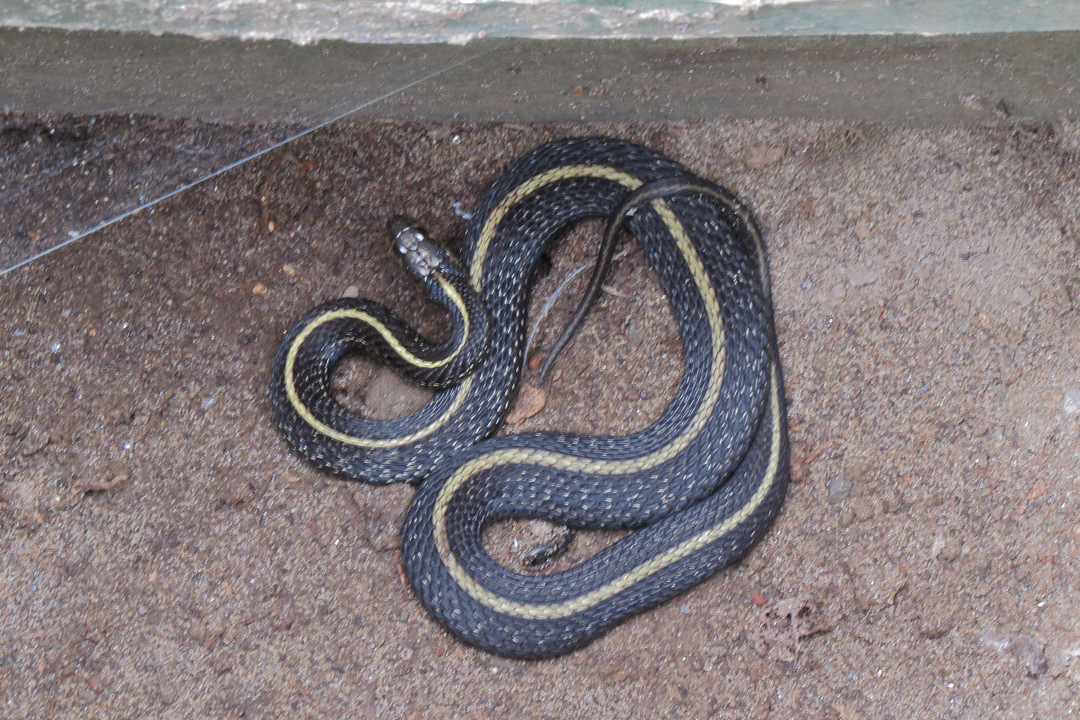
The weather was quite cool, so there were no snakes out. I found this baby Northwestern Garter under a little piece of asphalt. He was too cold to flee, so he just coiled up tightly.

Water levels were very high, so there wasn’t much shorebird habitat. This lone Greater Yellowlegs put on a nice show.
Shorebird migration is just starting to pick up, just in time for my shorebird webinar on April 13.

Happy Spring

Dog Days

I am not sure why the hottest days of mid-summer are referred to as “dog days.” My dogs want nothing to do with the heat, and the hot weather puts a damper on bird activity as well. Wetlands tend to be a little more active than woodlands this time of year, so here are some recent images from area wetlands.

This Purple Martin is from the colony at Fernhill Wetlands. The recently installed nesting boxes there have been a great success.

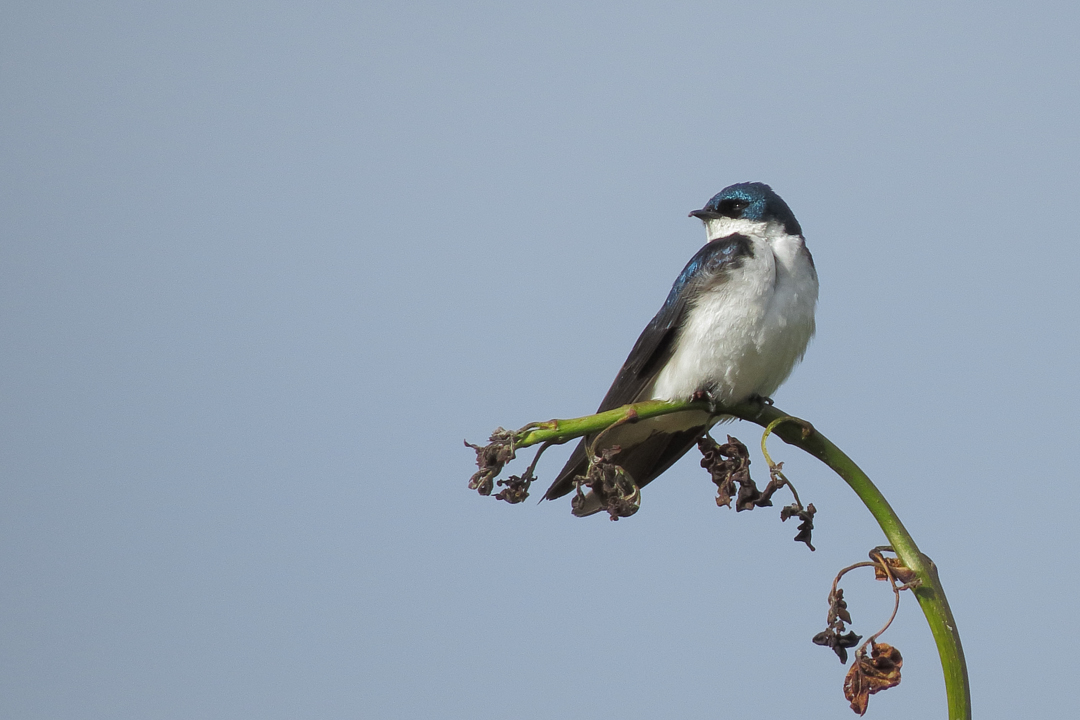
Tree Swallows are everywhere. It is nice to find one perched on a stick instead of on a nest box.

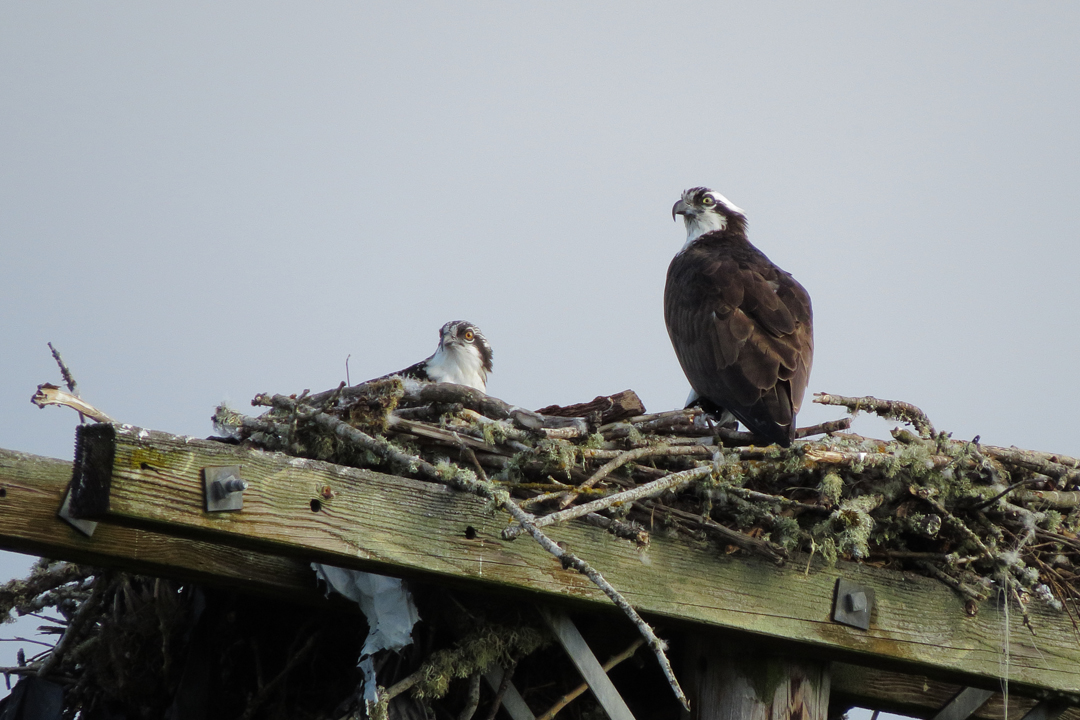
Ospreys on the nest at Jackson Bottom

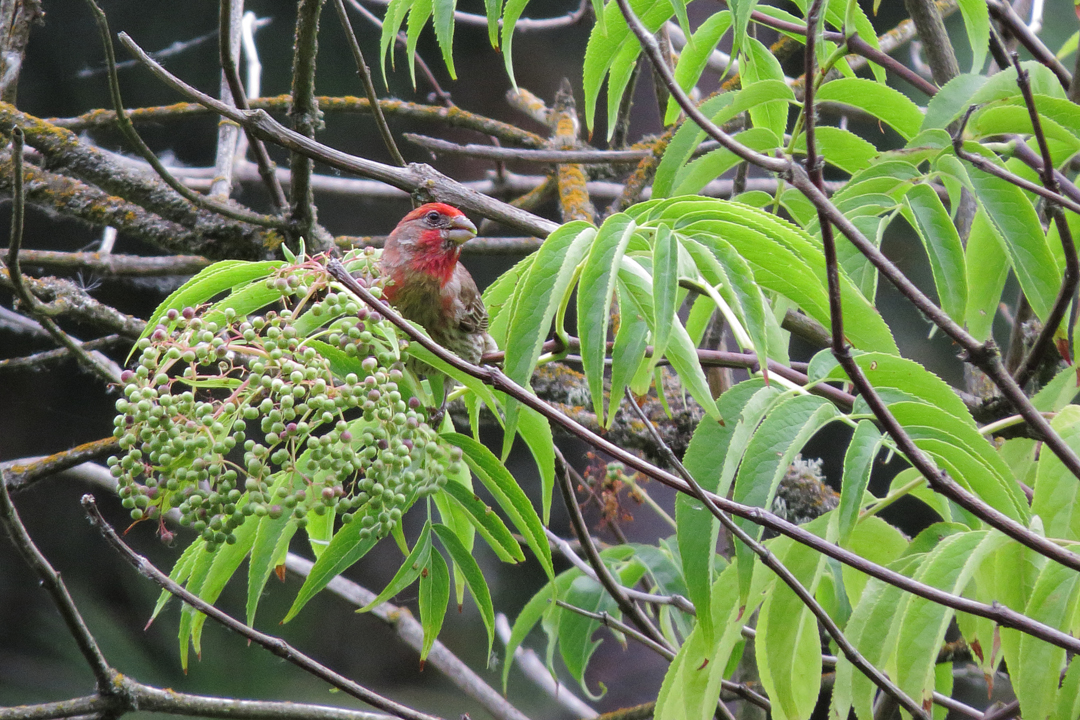
This House Finch was feeding on green Elderberries at Smith and Bybee Wetlands.

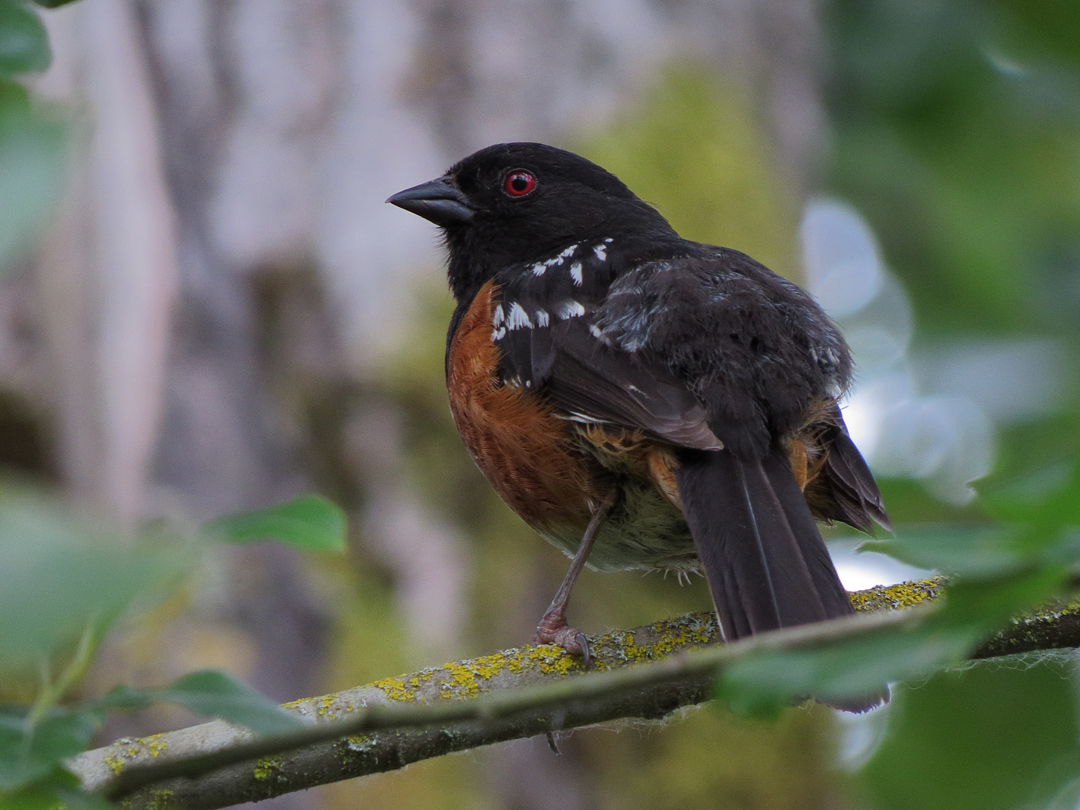
Spotted Towhee at Smith and Bybee

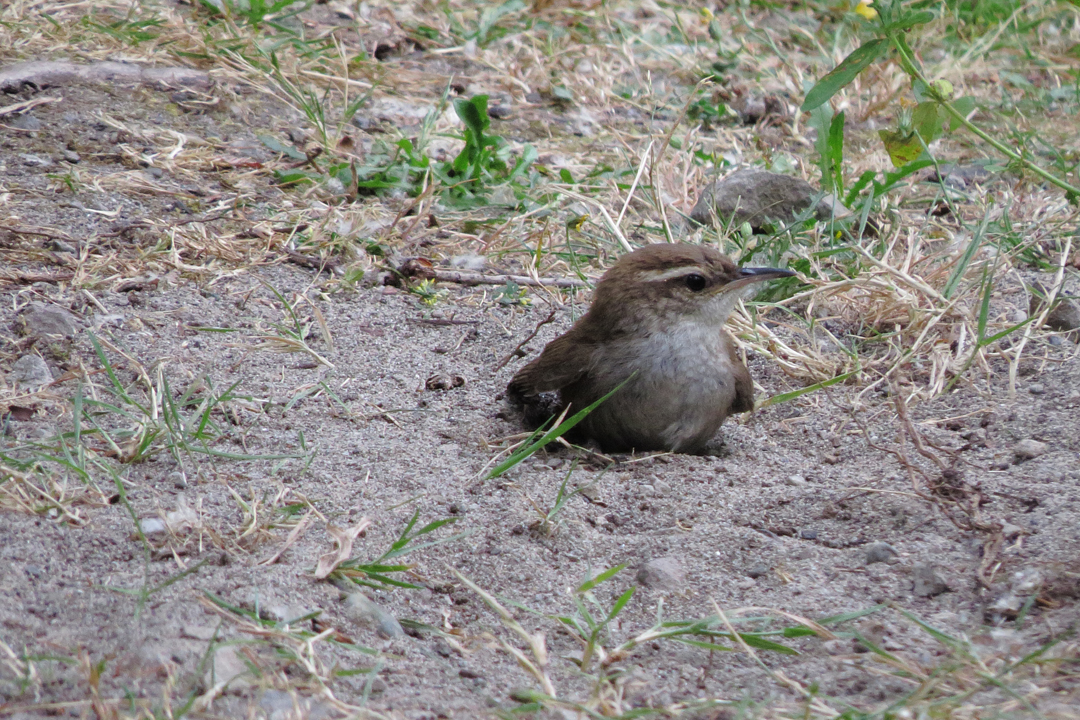
Bewick’s Wrens seem to be very fond of dust baths this time of year.

It is baby crow season. These youngsters were exploring the shallow waters of a slough at Smith and Bybee.

It is harder to find herps in the hot weather. This Northwestern Garter was stuck in a vault for a water shut-off valve. I lifted him out and sent him on his way.

This is a very small, very thin Long-toed Salamander (note the insect parts nearby for scale).

Smith and Bybee Wetlands is thick with Green Herons right now. There were at least a dozen in this little slough.

Shorebird migration is starting to pick up. Unfortunately, there is very little mudflat habitat in the Portland area right now. This Greater Yellowlegs was one of several sharing the slough with the Green Herons.

Three Lesser Yellowlegs were also present at Smith and Bybee.

On the home front, we were treated to three baby Western Screech-Owls playing in the back yard. Two of them perched on the rope holding the sunshade and tried to untie the knots. It was almost too dark to see, so this is the best image I was able to get (6400 ISO). Pretty adorable.

Happy Summer

Still Waiting for Spring – Jackson Bottom

Jackson Bottom is another site that I can visit during the pandemic, assuming I get there early. The big push of spring migration has not hit, but you can tell it’s so close. Tree Swallows have been back for quite a while now. They are usually perched on the many bird houses at this site, so it was nice to catch a couple actually using a tree.
The Savannah Sparrows are setting up territory. This would have been a nice shot if I could have caught a reflection in the bird’s eye.

There we go.

This Osprey spent a lot of time preening while I was there. He still looks pretty disheveled.

Anna’s Hummingbird, just high enough that I can’t get a good flash from his gorget

Common Yellowthroat

witchity-witchity-witchity

I’m still waiting for shorebirds to show up. Greater Yellowlegs have been the only arrivals so far.

Some Killdeer have started nesting already.

Brush Rabbit

Long-toed Salamander

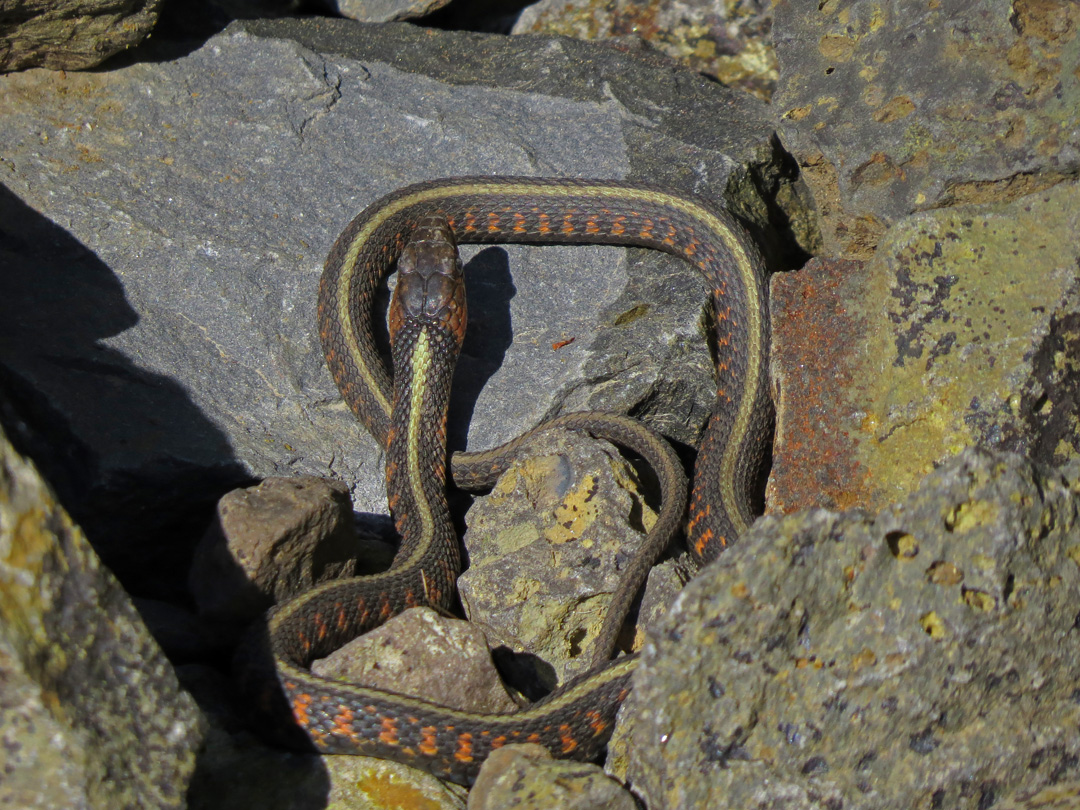
Several Common Garters (Red-spotted) were sunning themselves on this rock pile.
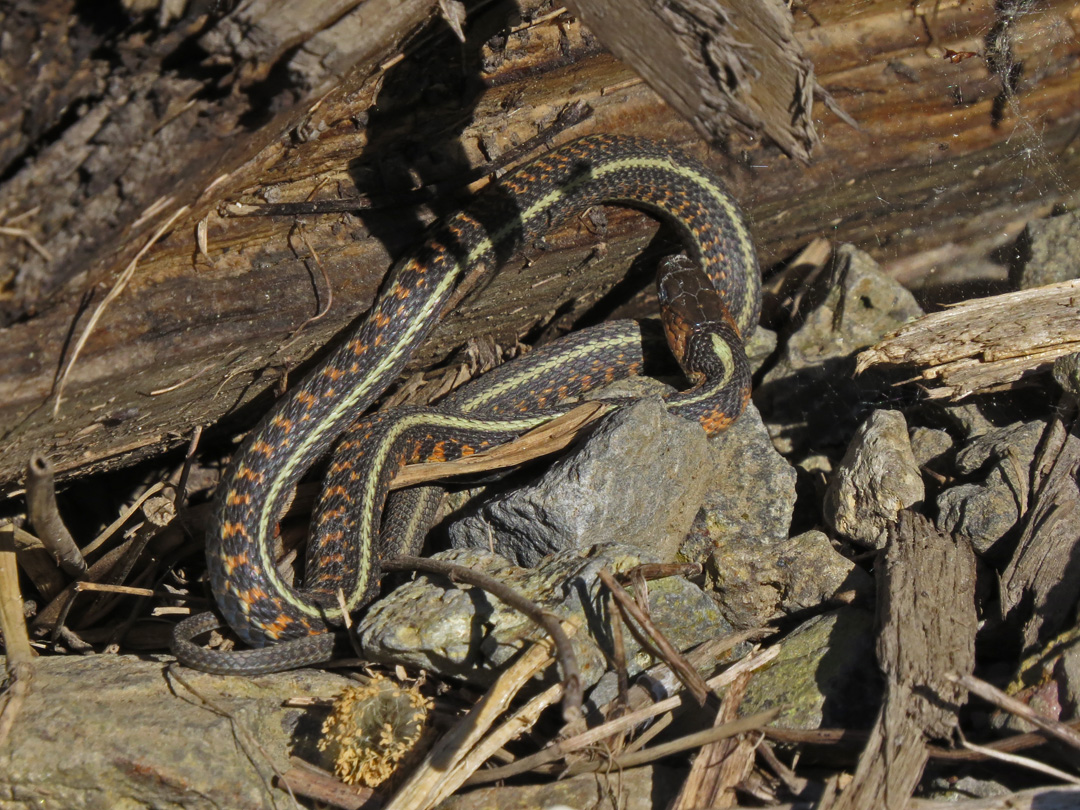
This garter had propped her body up against a log to better catch the morning sun.

I don’t remember seeing Camas at Jackson Bottom before, but they were in full bloom on this trip.

Happy spring

Fernhill Wetlands

During the current pandemic, it is not always easy to visit favorite birding sites. I have found that if I go very early, I can get some good birding in at Fernhill Wetlands without encountering too many folks. (Of course, this is my goal even without a pandemic.) This Marsh Wren put on a nice show.

Greater Yellowlegs is the only species of migrant shorebird I have seen so far this spring. We are still about two weeks away from the peak.

Green Heron, completely failing at camouflage. The auto-focus on my camera insists on focusing on the vegetation behind birds, rather than on the bird. (Yes, I am blaming the equipment.)

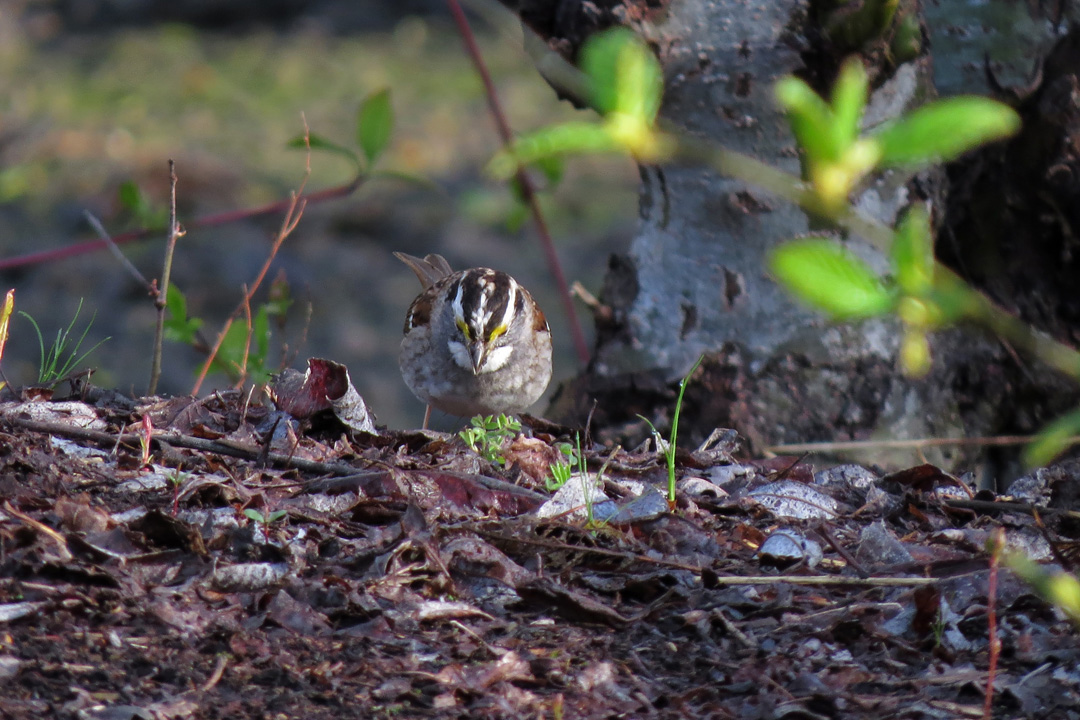
White-throated Sparrows have been regular at Fernhill lately.

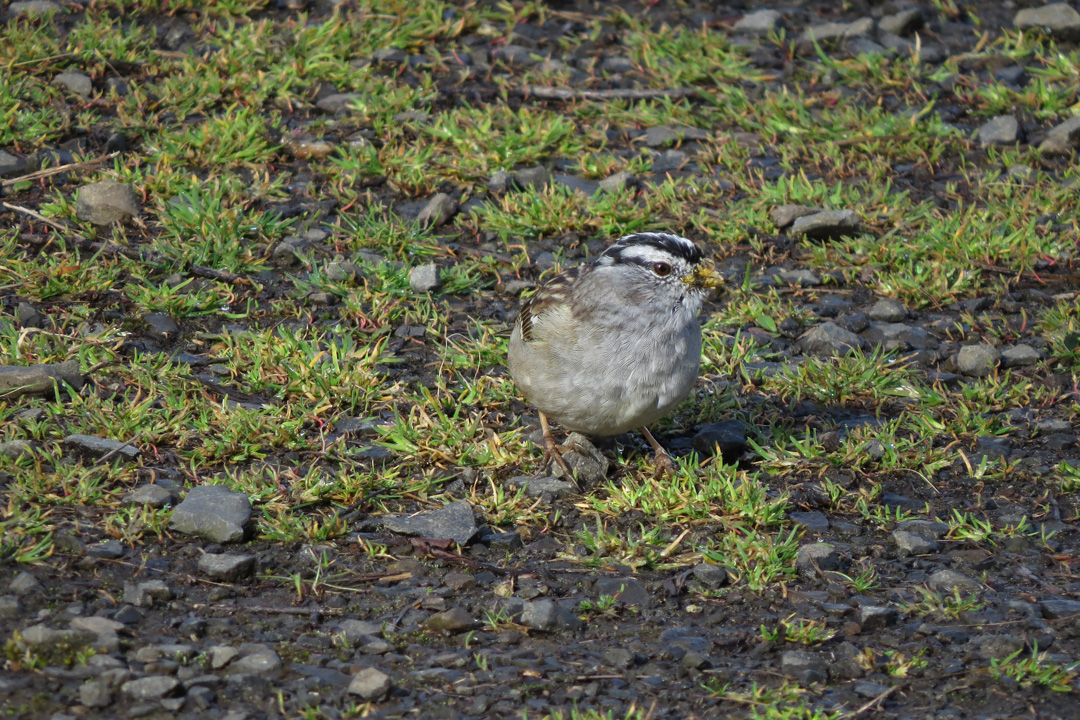
White-crowned Sparrow

Fox Sparrow

This Northern Flicker was hanging out on the gravel dike in the wetland, perfect woodpecker habitat.

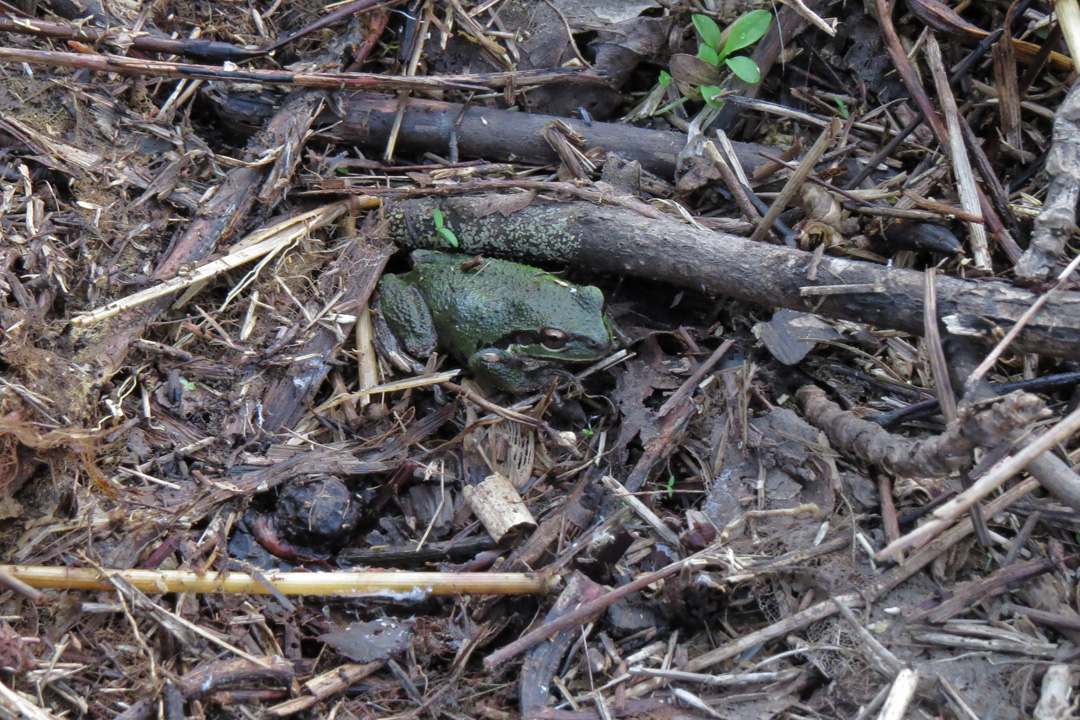
This Pacific Chorus Frog was hanging out under a log on a cold morning.

Long-toed Salamander is a lifer amphibian for me this year. As is typical when I see a new species of whatever, I now see them all the time.

More Long-toed Salamanders

This Muskrat would like to remind you to eat your greens.

Still waiting for spring migration to kick in.

Happy Spring

Autumn Images

Between the recent bouts of rain, we have seen a few sunny days. The birds seem to really take advantage of the nice weather to bulk up for winter. Cedar Waxwings, like this juvenile, have been working fruiting trees and shrubs. Most of these images were taken at Koll Wetlands in Beaverton.

adult Cedar Waxwing

The red nape on this Downy Woodpecker blended in with the red berries.

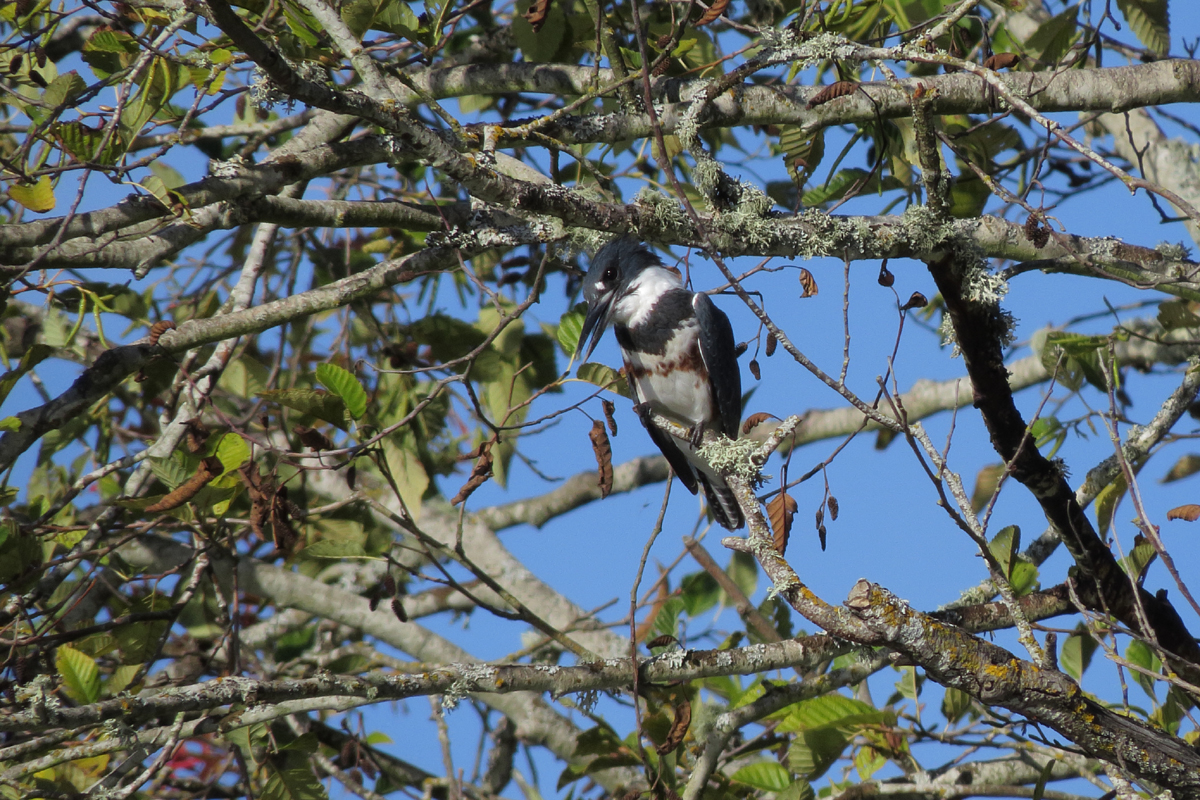
This noisy Belted Kingfisher blended in amazingly well with the foliage.

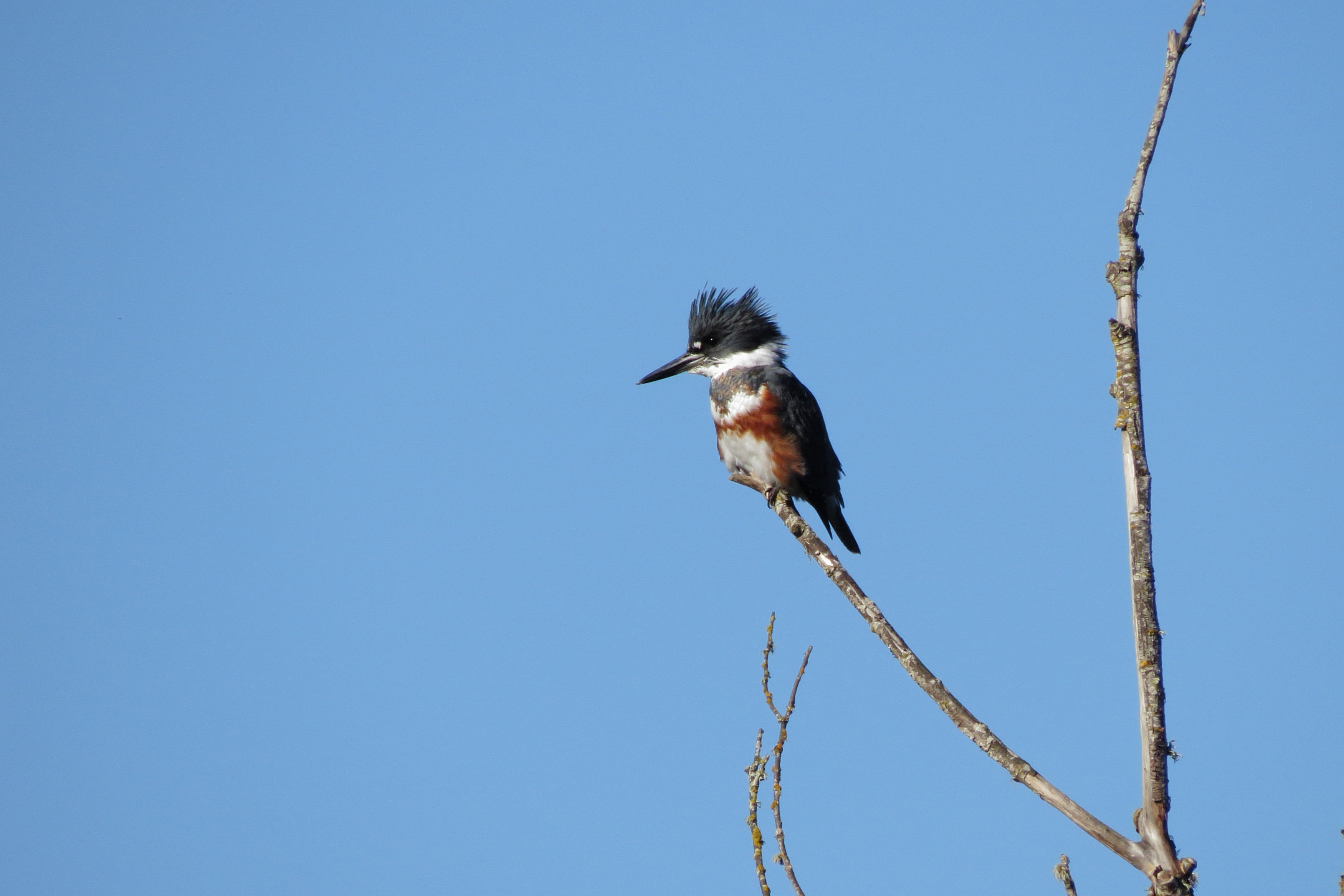
This one was not so well camouflaged.

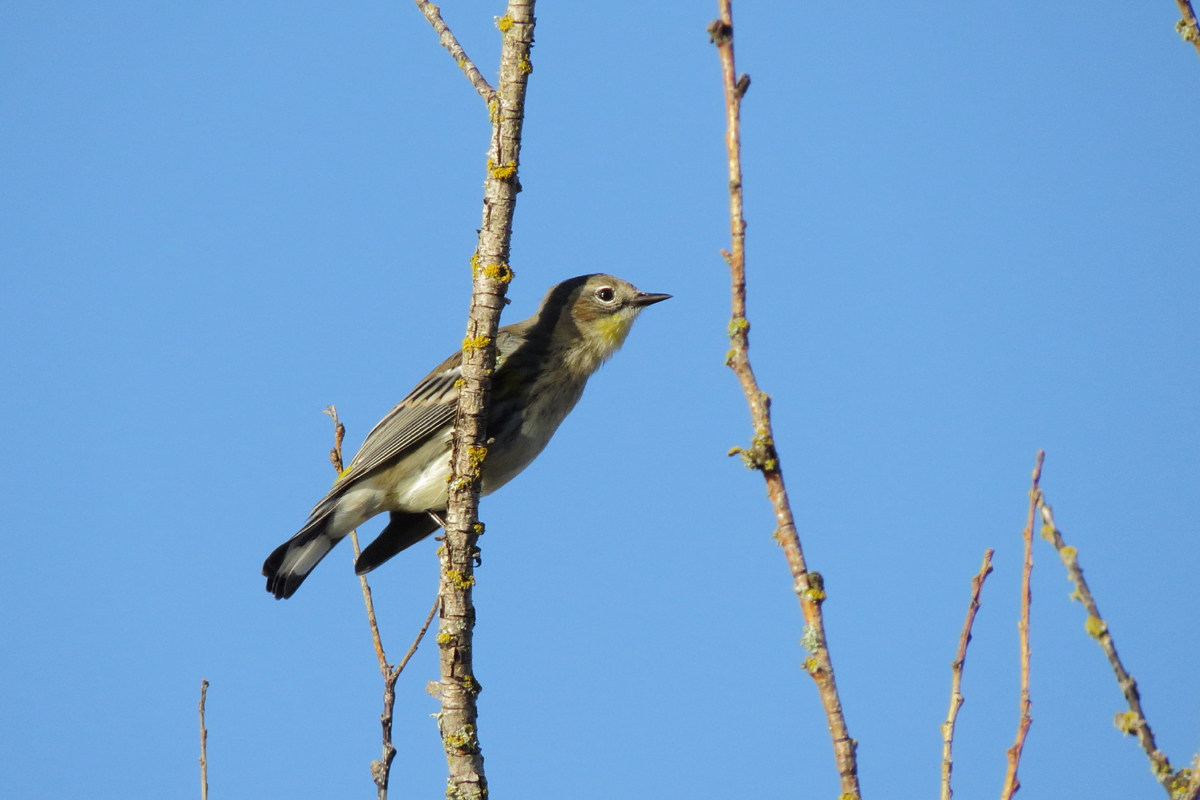
Yellow-rumped Warblers are starting to arrive in the valley.

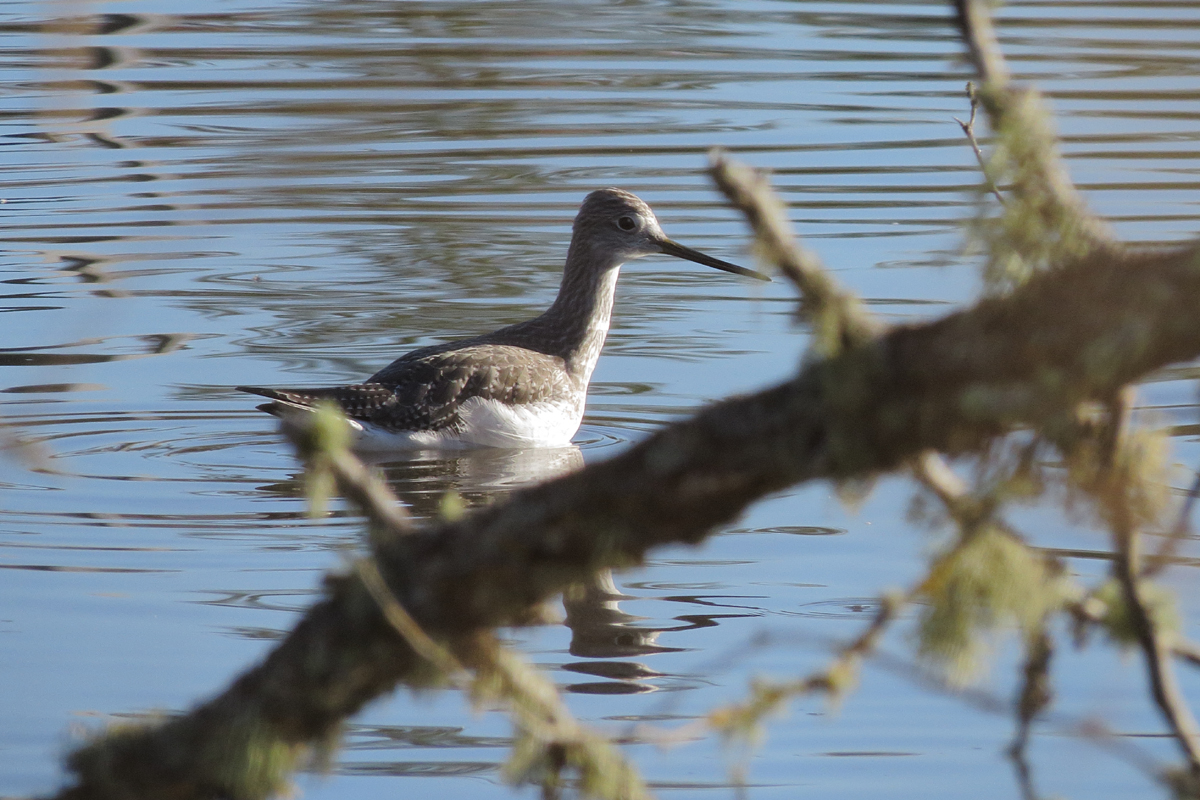
Most migrant shorebirds are long gone, but three Greater Yellowlegs were lingering at Koll. There is no exposed mud, so the birds were wading deep or actually swimming.

Young Red-tailed Hawk, keeping an eye on me

The male ducks have mostly finished their molt into their colorful plumage, a nice change from the dreary summer look of “Ugly Duck Season.” These Wood Ducks were at Commonwealth Lake.

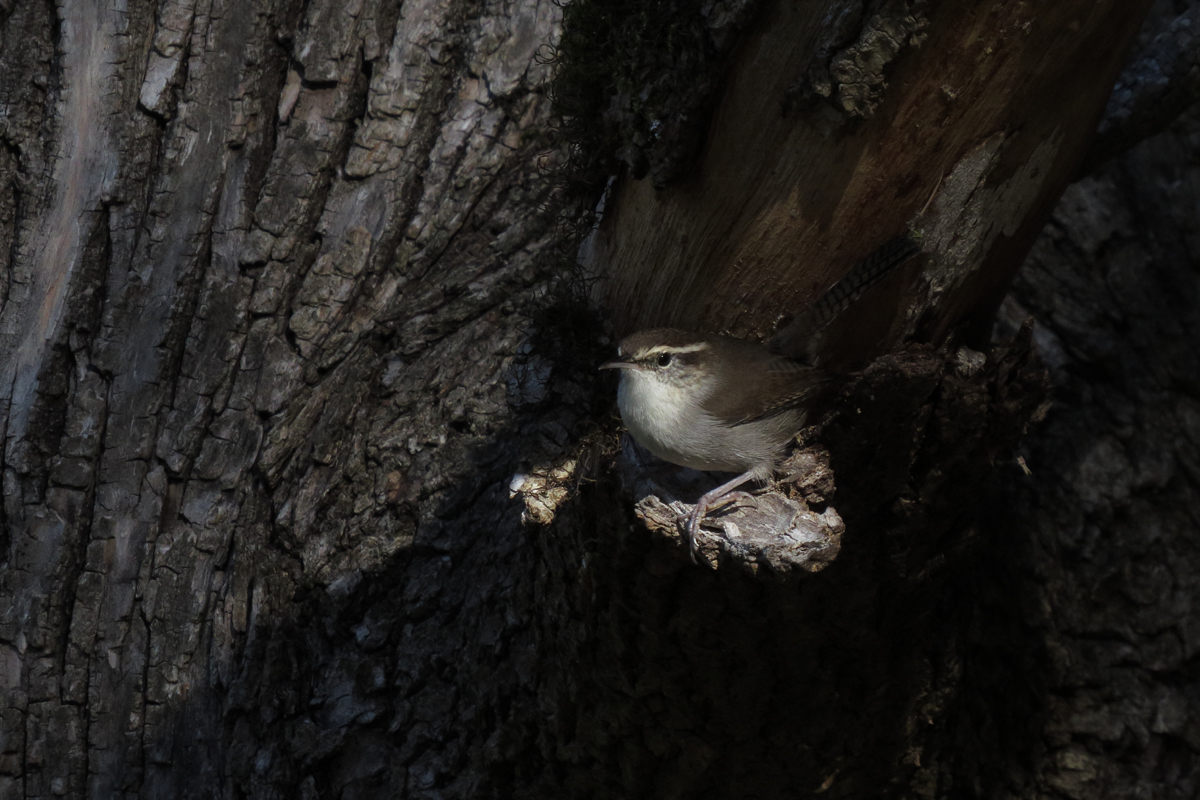
I followed this Bewick’s Wren around for a while, waiting for him to emerge from the shade and land in a bit of sunshine. When I shoot in RAW, my camera cannot shoot multiple frames, so I only got one chance when the bird popped up into the light.

A much more cooperative model, this Barred Owl hung out by my bird feeder for about half and hour one day. He watched the little birds flitting around, but I think he was hoping for one of the squirrels or rats that often clean up under the feeder. Unfortunately, the rodents did not make an appearance, so the owl eventually moved on.

Happy Autumn

Early Spring in the 5MR

The weather has gone from winter rain to spring rain, still rather gloomy but definitely more pleasant overall. Spring migration is slowly picking up with new species gradually accumulating in my 5-Mile Radius.

Most of the new sites that I have explored in my 5MR have been very underwhelming, but I was recently introduced to Cedar Mill Wetlands in Beaverton. This little site has produced 45 species in two short visits, as well as this encounter with a Coyote.

Sharp-shinned Hawk at Cedar Mill Wetlands

Great Egret, sporting their nuptial plumes

The little wetland associated with Commonwealth Lake Park continues to be a favorite site with local birders. The flock of Wilson’s Snipes has thinned out a bit.

This Greater Yellowlegs was a nice surprise at Commonwealth. Hopefully the habitat will attract other shorebirds as the spring progresses.

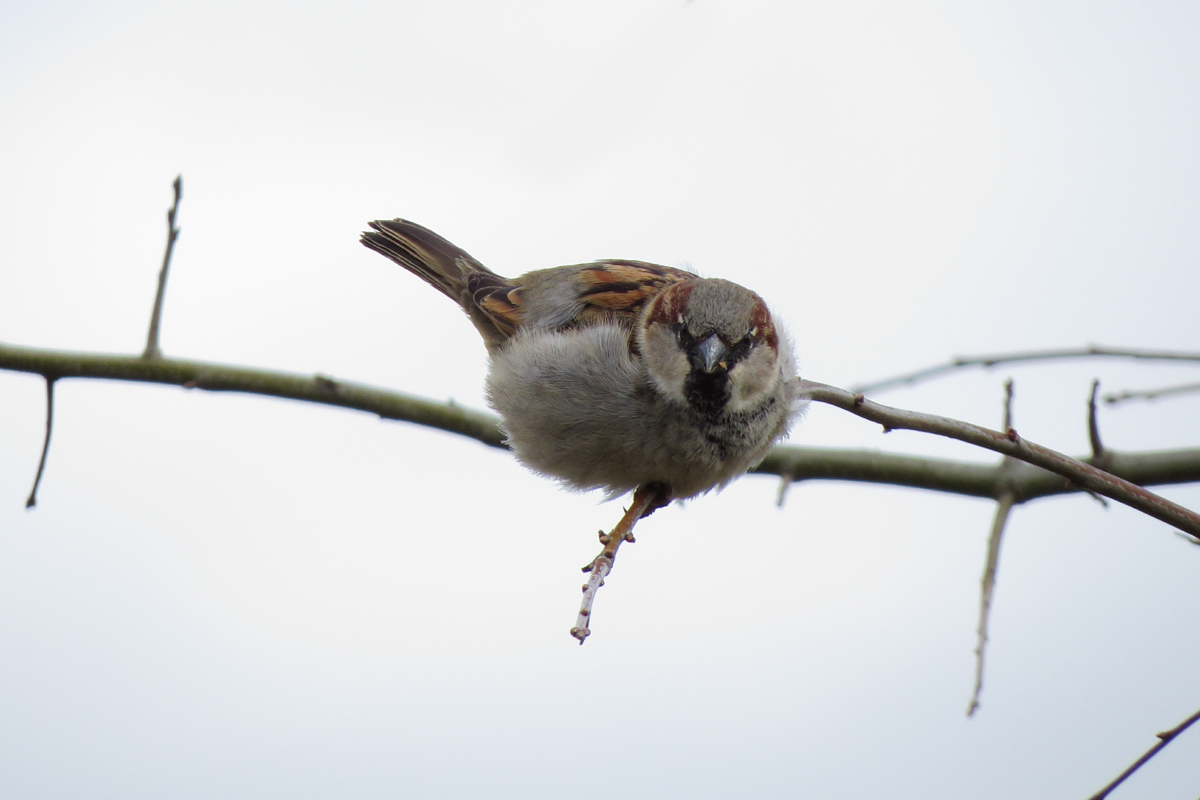
Commonwealth is the only reliable spot in my 5MR for House Sparrow.

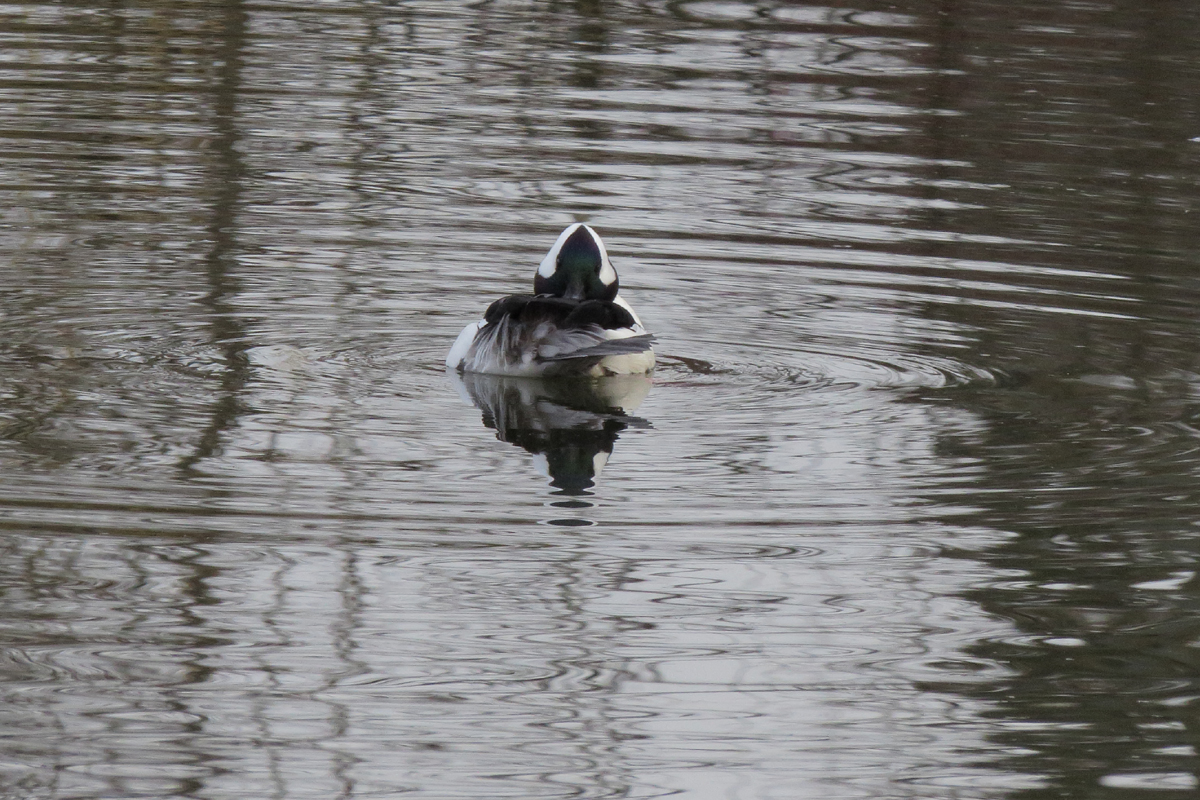
Bufflehead, Commonwealth Lake

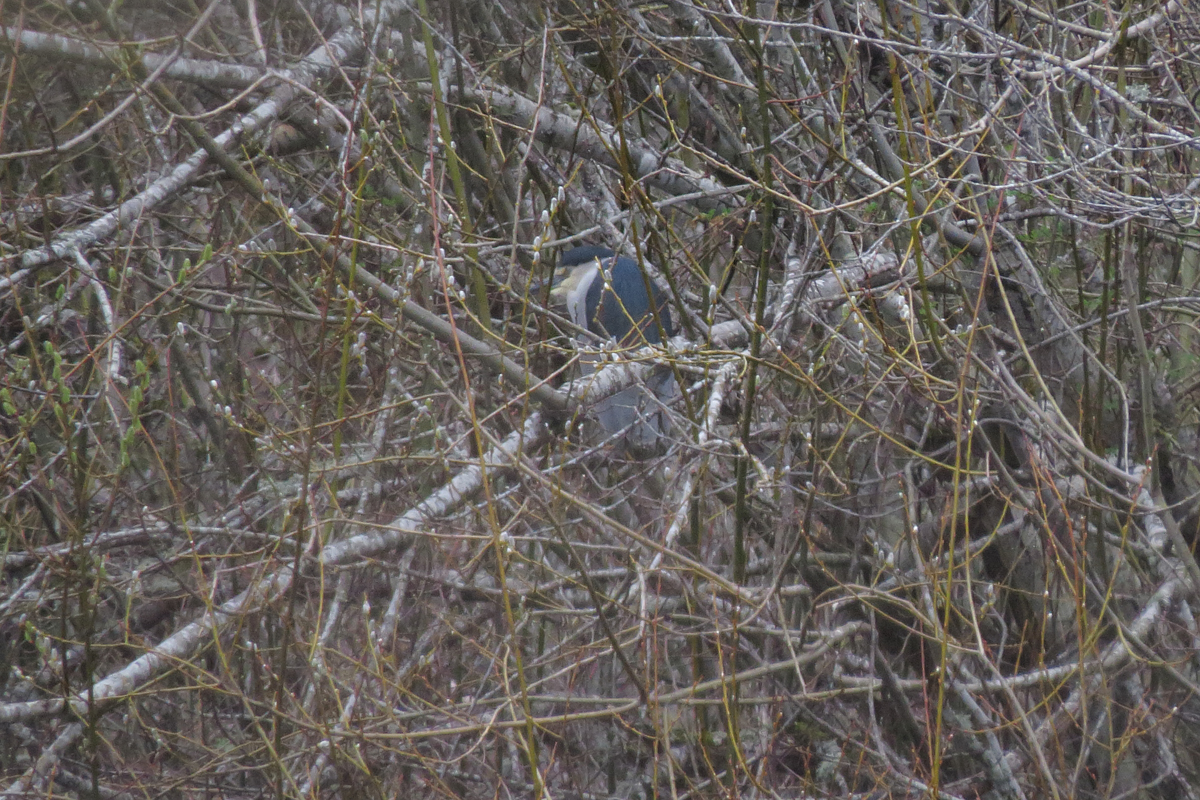
Koll Center Wetlands in Beaverton is not the most pleasant place to bird. You are basically peering into the wetlands from various parking lots. But there are a few species here that are hard to find elsewhere. This Black-crowned Night-Heron was barely visible through the brush.

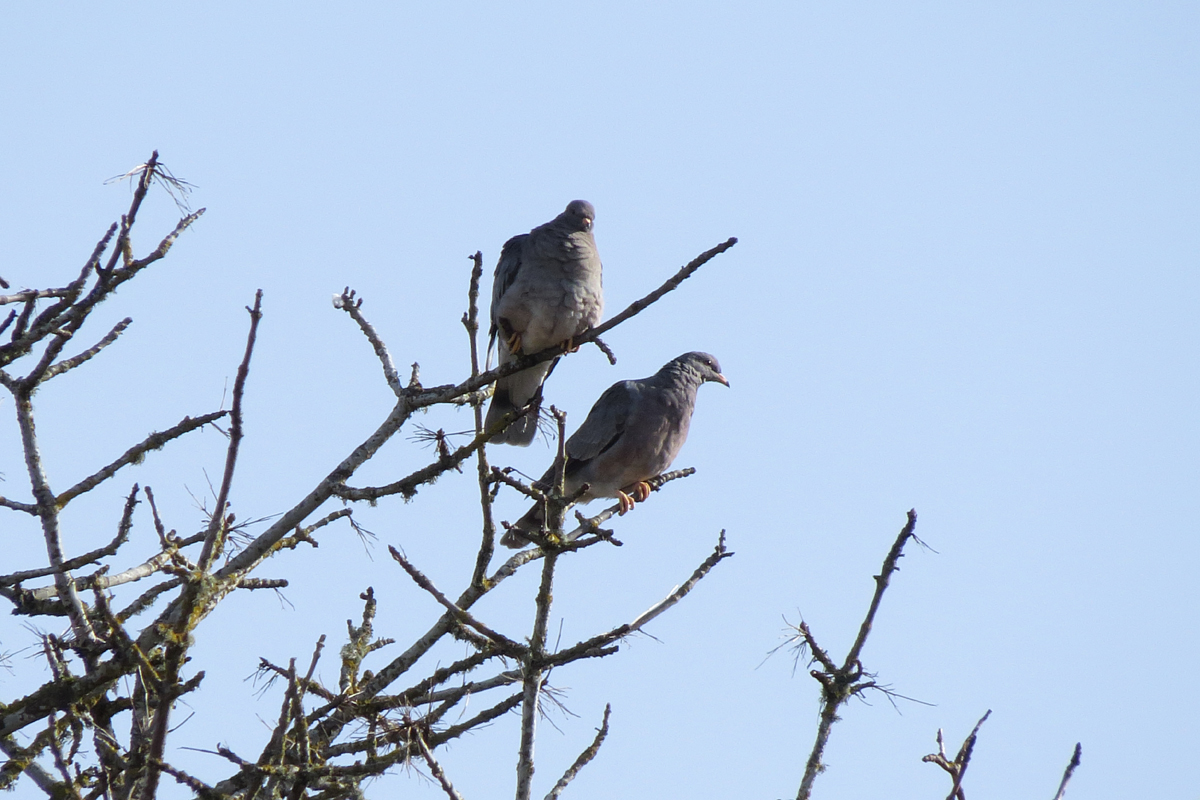
A small flock of Band-tailed Pigeons is reliable at Koll.

Yellow-rumped Warblers have been common all year at Koll, but some are just now molting into breeding plumage.

I have only birded outside my 5MR twice so far this year, both times while teaching Little Brown Bird Classes. This Rufous Hummingbird was at Jackson Bottom Wetlands in Hillsboro. I have yet to find this species in my 5MR, but it is one of many that I expect to see in the coming weeks.

Happy Spring