Frozen Fernhill

An arctic air mass brought cold temperatures and ice to Fernhill Wetlands (Birding Oregon p. 61), but there was no shortage of birds. Here are some grainy gray photos from a lap around the ponds.


Horned Grebe


Tundra Swans and California Gull


Taverner’s Cackling Goose and Northern Shovelers


Cackling Geese and Northern Pintails


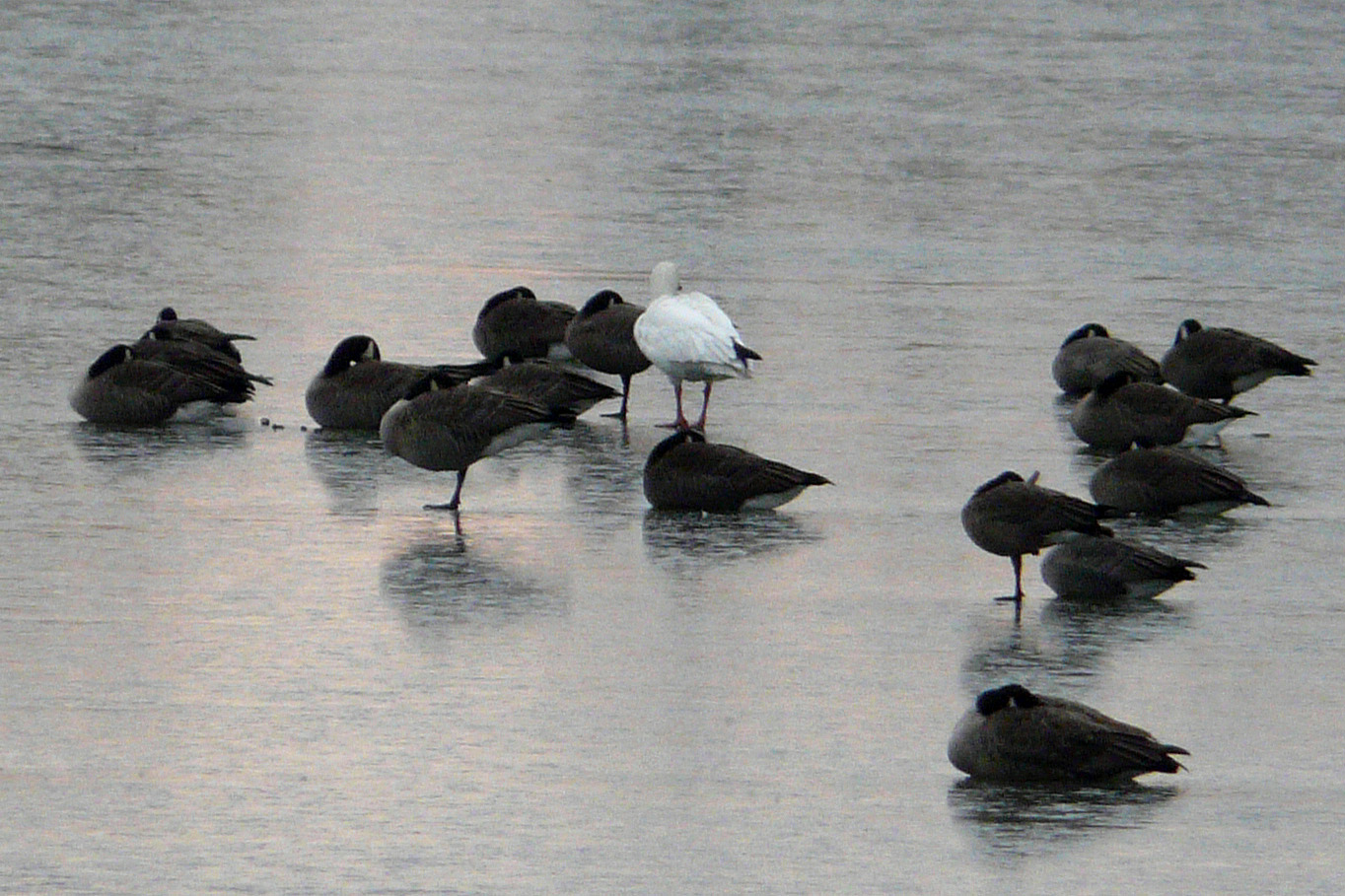
Snow Goose and Cackling Geese


American Kestrel


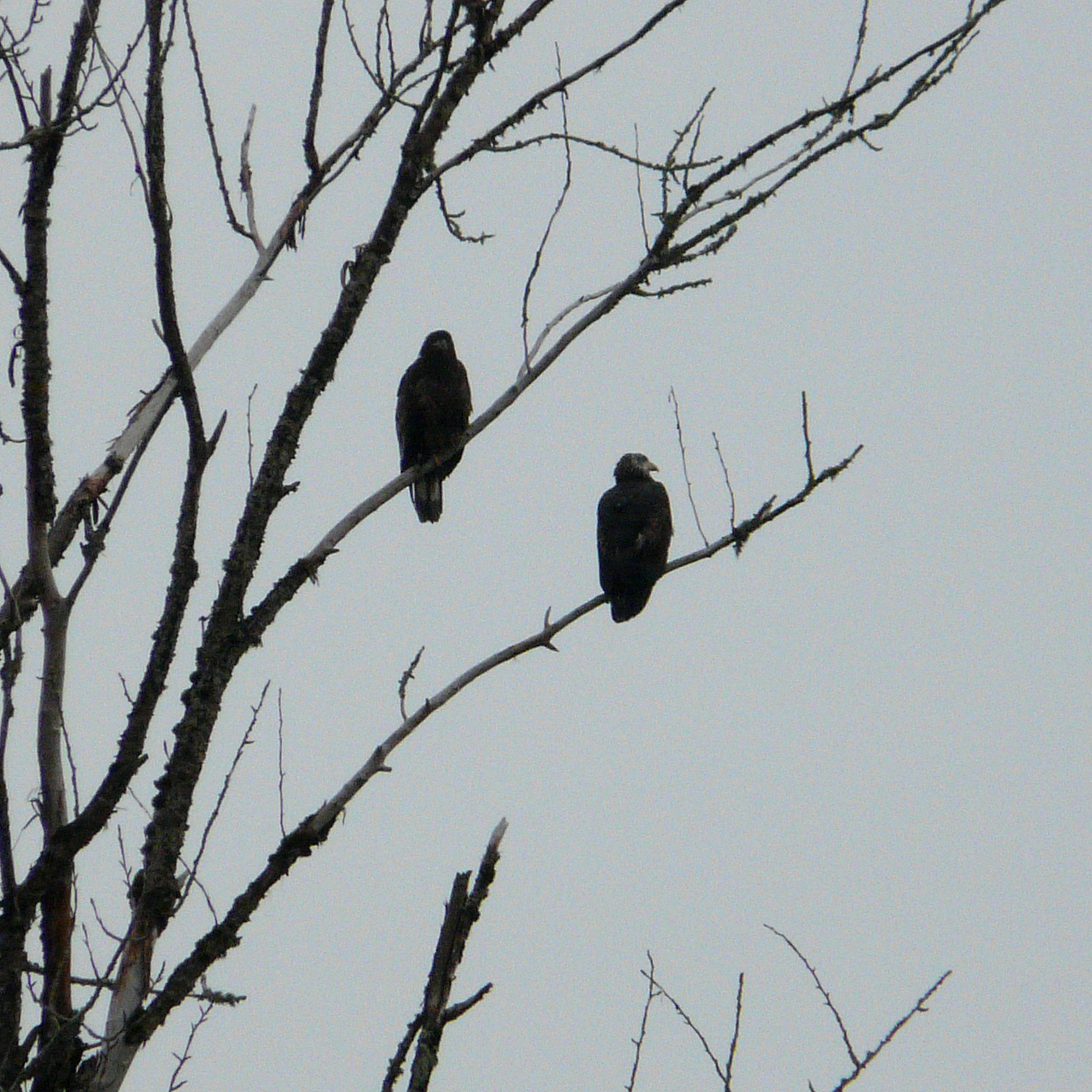
immature Bald Eagles


This American White Pelican, a very late straggler, was circling high overhead, trying to find a thermal on this cold cloudy morning.


Cackling Cackling Geese


Great Blue Heron standing on a Beaver dam. Note the frost on the bird’s back.

Random Songbirds

Here are a few images from Fernhill Wetlands (Birding Oregon p. 61) on July 30, 2010. Songbirds push the limits of a point-and-shoot camera, but occasionally a bird will be close enough and stationary enough to allow a decent portrait.


Cedar Waxwings were flycatching from the brushy edges of the ponds.


This Song Sparrow was going through an extensive molt. He lacked most of his tail, and his body plumage is very disheveled.


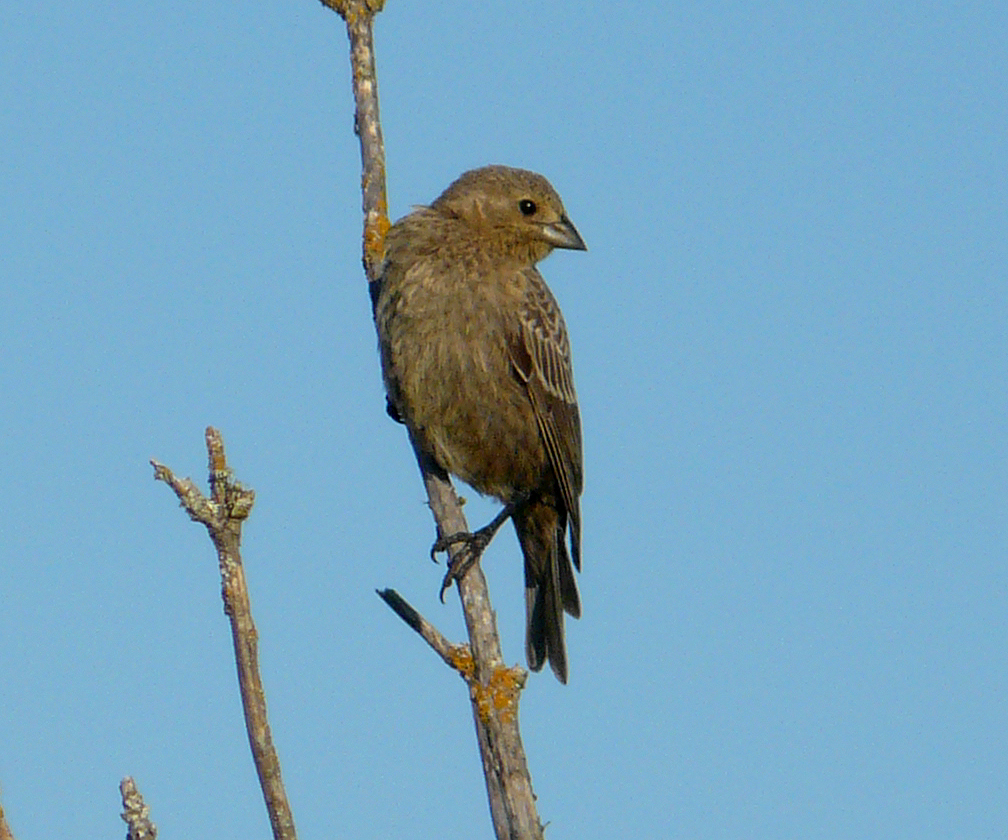
Brown-headed Cowbird. The scaly pattern on the scapulars and wing coverts identifies this bird as a juvenile.

Fernhill Wetlands 7/4/10

A quick walk around Fernhill Wetlands (Birding Oregon p. 61) produced two out-of-season species this morning.


Cackling Geese (Branta hutchinsii minima) winter here in the hundreds, but an individual in July is quite unexpected.


Note the stubby bill, short neck, and dark purplish breast typical of this subspecies.


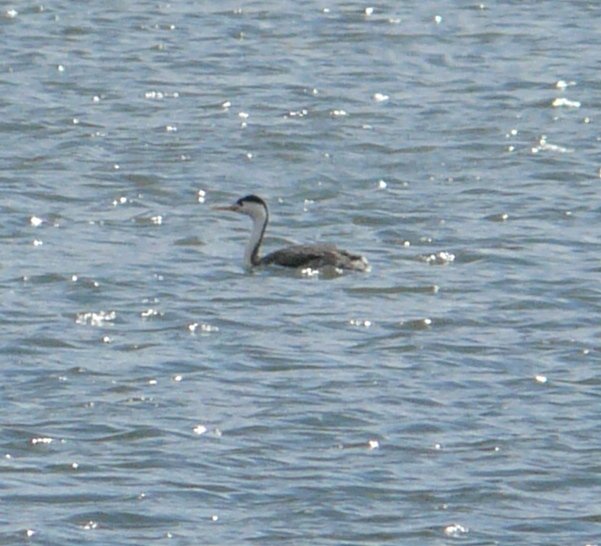
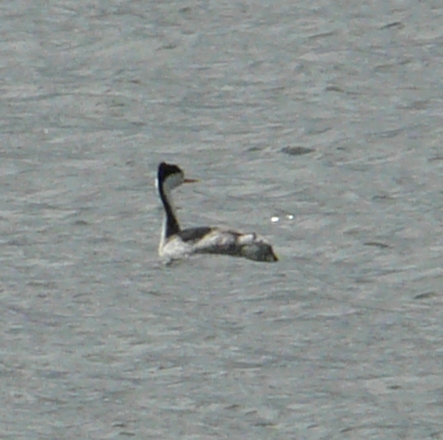
Clark’s Grebe is rare at Fernhill during migration, but never expected in summer. Here you can see the white of the face surrounding the eye, unlike the more expected Western Grebe, which shows the eye surrounded by the black of the cap.


With more white on the face and neck, Clark’s Grebe shows a more narrow black line down the back of the neck than does Western Grebe.


Green Herons are often flushed from the shores. This one sat in a tree briefly.


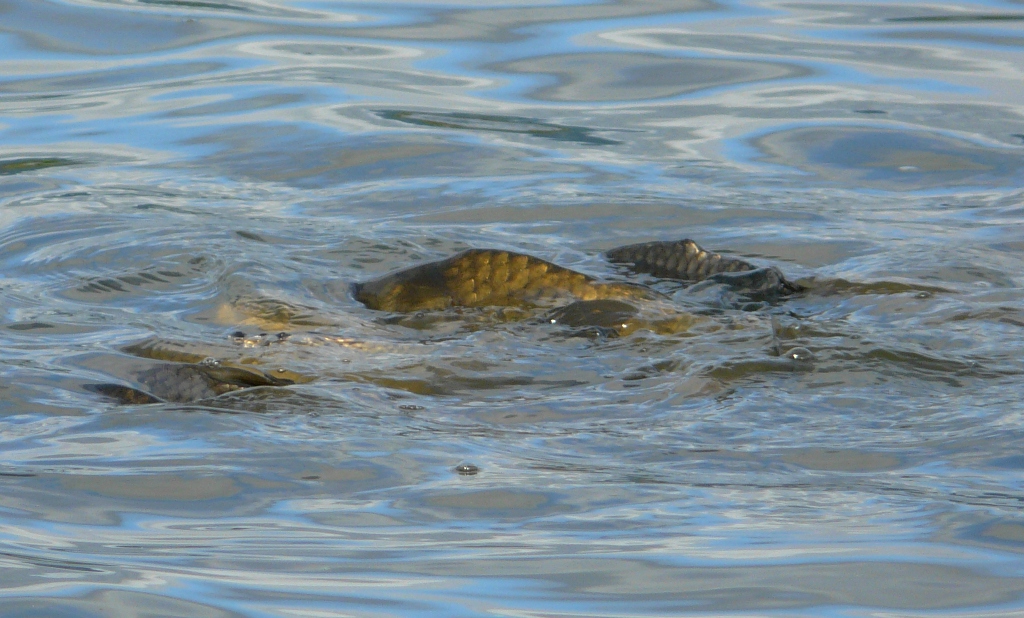
Common Carp were spawning in the main lake. Small groups of fish were swirling near the surface in several areas.

Mew Gull

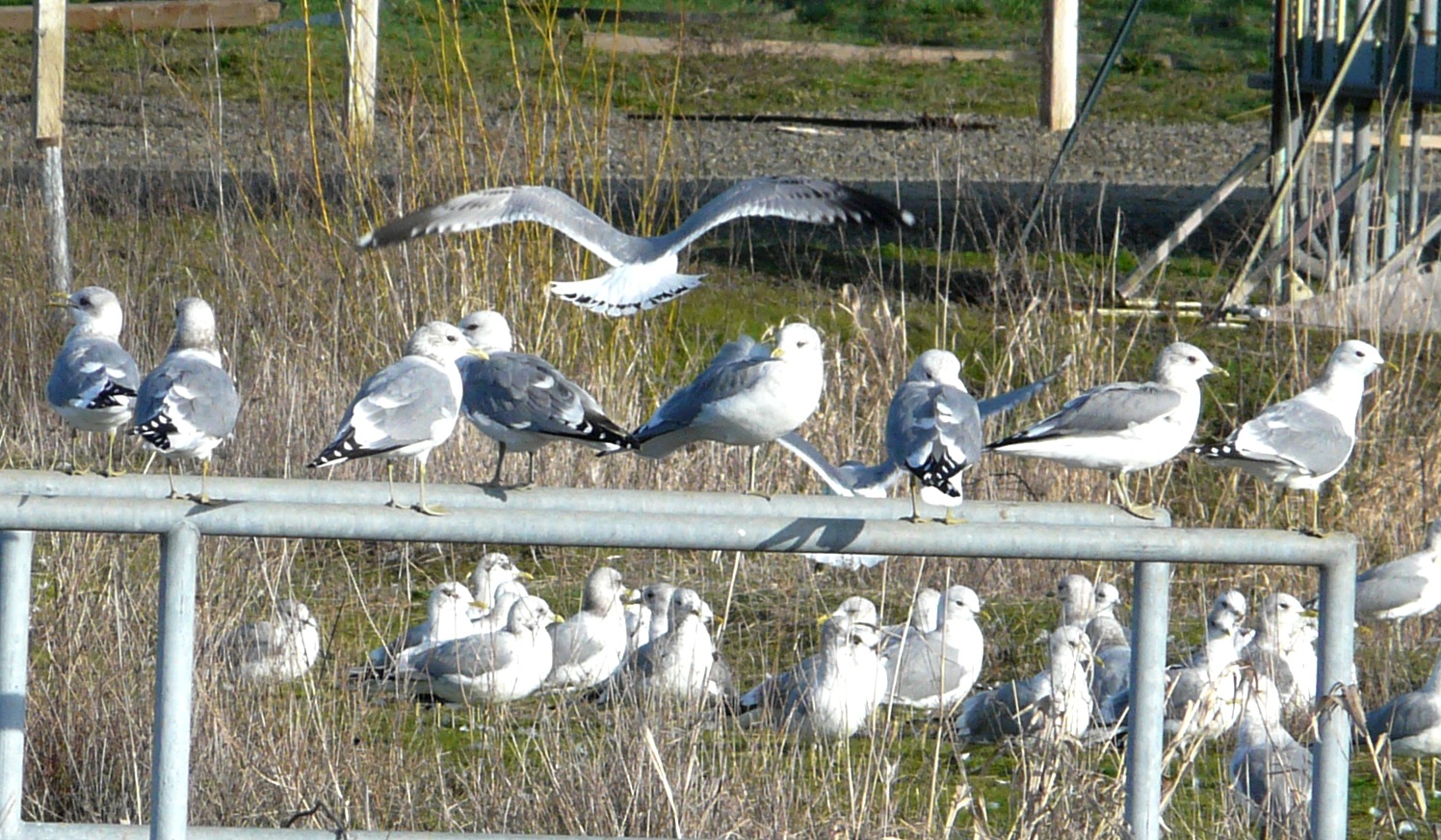
A large flock of Mew Gulls (Larus canus) spends the winter at the waste water treatment plant in Forest Grove and at adjacent Fernhill Wetlands (Birding Oregon p. 61).


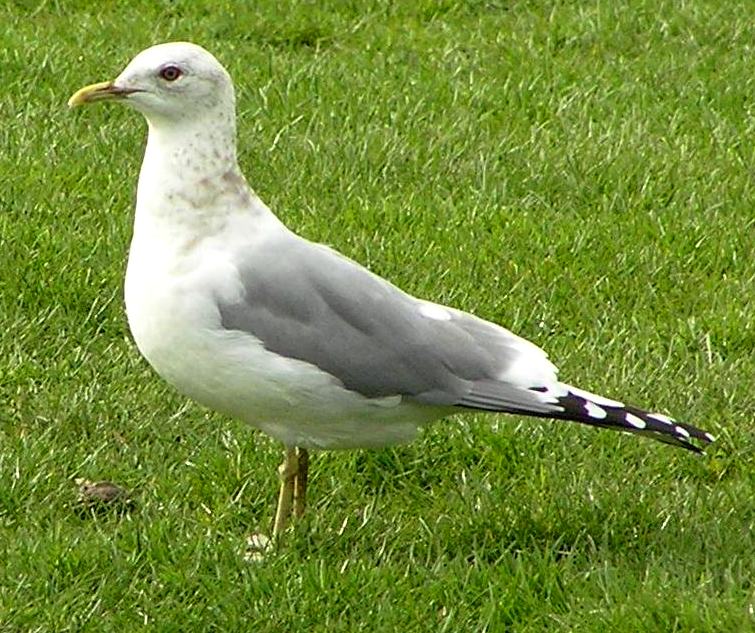
Mew Gulls look like a petite version of Ring-billed Gulls, with a round head, big eyes, and fine yellow bill.


Adult Mew Gulls are easily recognized in flight by the large white mirrors on the outer two primaries. Ring-billed Gulls have a smaller white mirror on the outermost primary (P10) and a tiny one on P9. You wouldn’t think the size of the white spots on two feathers would make much of a difference in identifying a flying bird, but it really does.


The bird in flight is a second-cycle Mew. He/she has lost the brown plumage of a first-cycle bird, but the tail still shows a broken blackish band, and the primaries (and primary coverts) have more black than those of an adult. Notice the small white mirror on P10 and little or no white on P9.

Fernhill Wetlands 1/28/10

I enjoyed a quiet walk around the main lake at Fernhill Wetlands (Birding Oregon p. 61). By mid-morning, most of the geese that roost at this site are off feeding elsewhere.


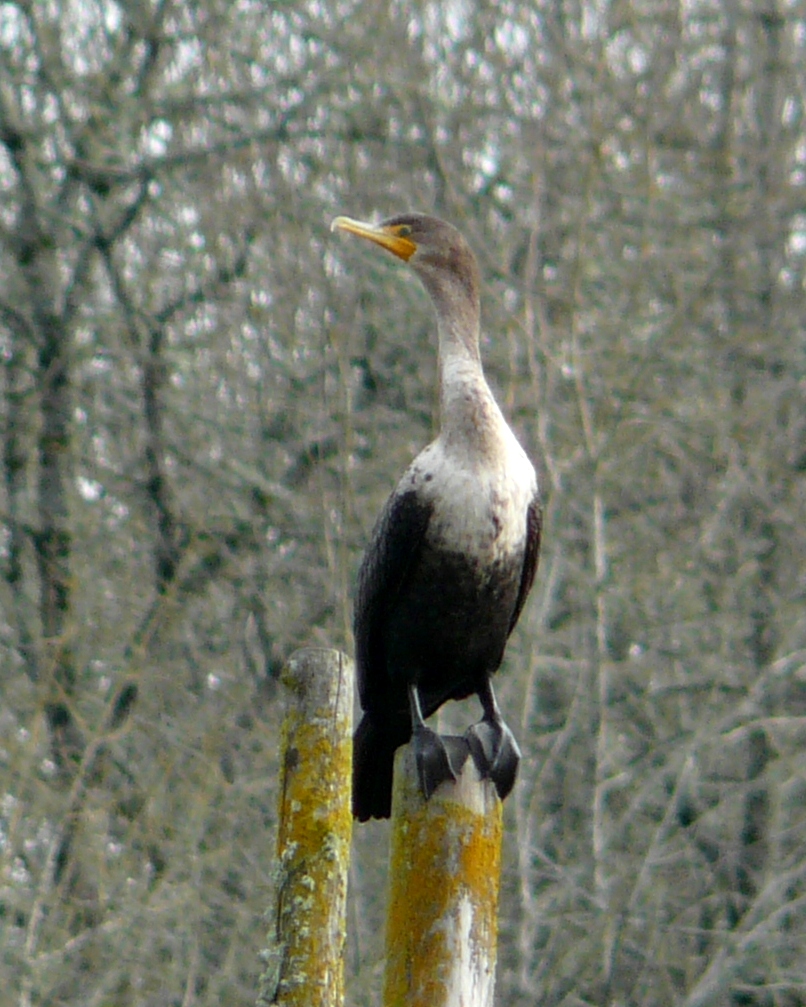
Double-crested Cormorants are commonly seen perched on dead trees and utility poles when they are not fishing. The light breast, neck, and head identify this individual as a young bird. The orange gular pouch is diagnostic in differentiating this species from the other two cormorants found along the Oregon coast.


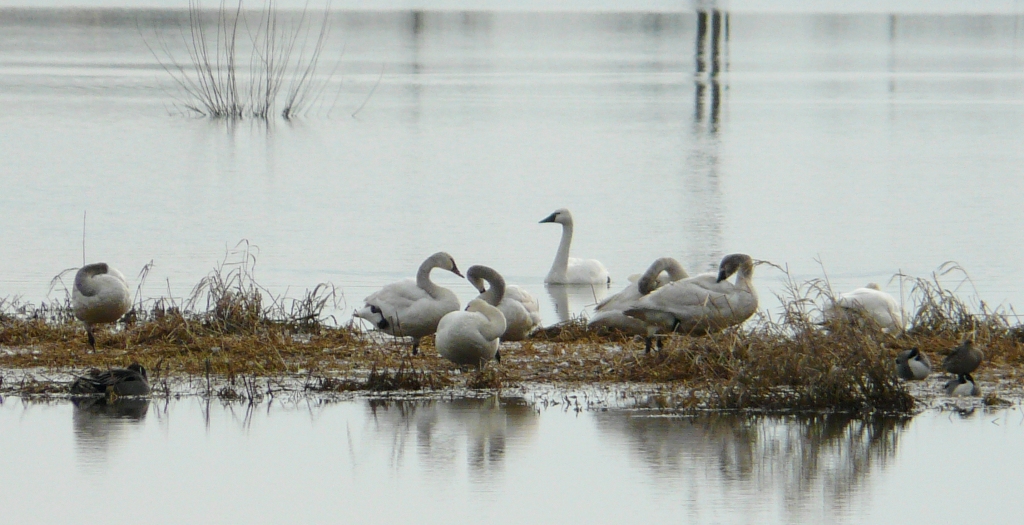
Several Tundra Swans were lounging in the marsh, always a delight to see. To get an idea of the size of these birds, compare the Cackling Geese and Mallard at the far right of the photo.


Golden-crowned Sparrows are common in the brushy areas. I was pleased that Nala, the Birding Dog, sat still long enough for me to capture this image.

Fernhill Wetlands

While certainly not one of the more scenic sites in Oregon, Fernhill Wetlands (Birding Oregon p. 61) always attracts some noteworthy birds.

least and western sandpipers
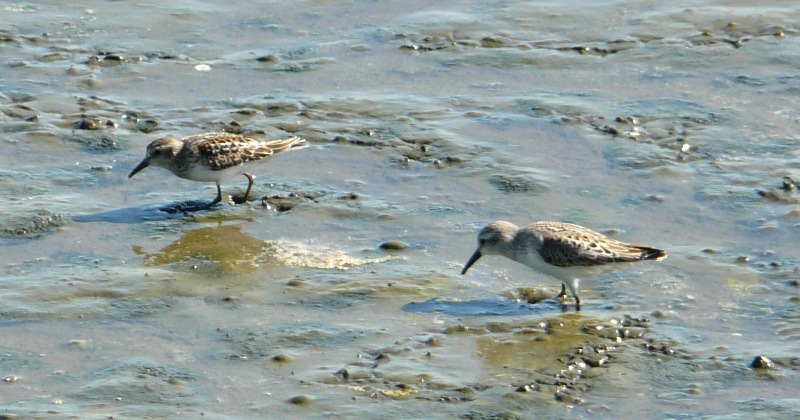
Least Sandpiper (left) and Western Sandpiper (right) are two of the more common shorebirds that use the mudflats at Fernhill. Both birds are juveniles (brightly colored fresh plumage, scapulars are small and rounded). The Least has a small, finely-pointed bill, yellowish legs, breast streaks, and feeds while squatting low to the mud. The Western has a longer drooping bill, dark legs (hidden in the mud),  is grayer overall, and looks “front heavy,” like he might tip forward.

pelican swimming
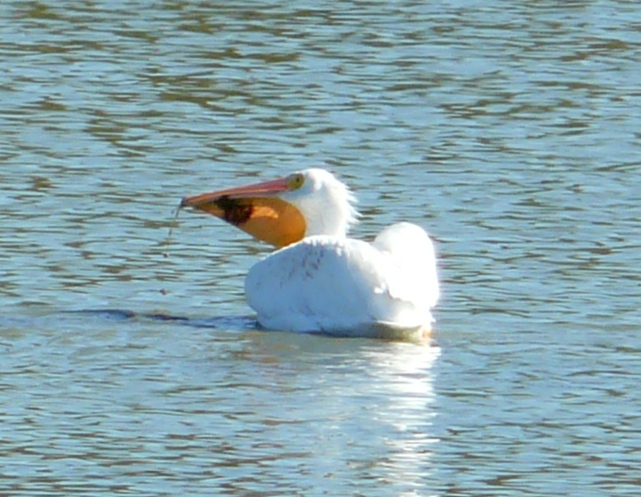
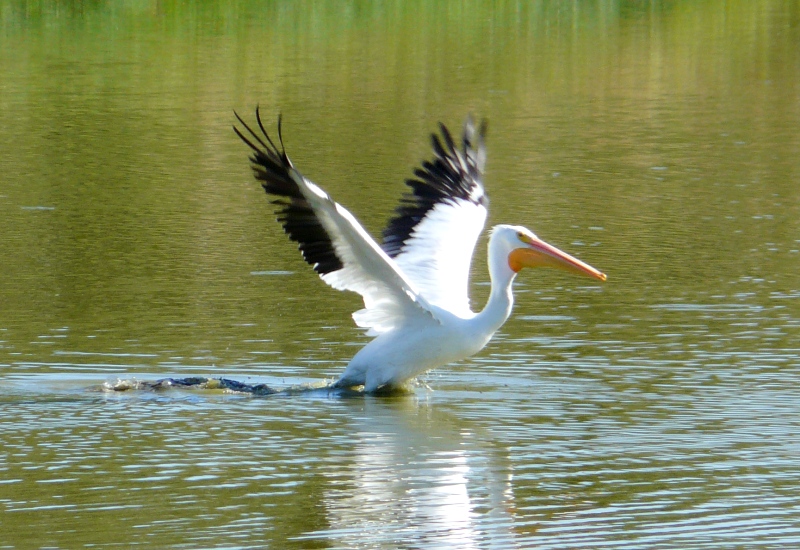
Two American White Pelicans have been at Fernhill lately. This species doesn’t nest in the Willamette Valley, but small flocks are often present in late summer/early autumn.
american white pelican

gb heron with catfish
A Great Blue Heron with a species of bullhead. Catfish have sharp spines on their dorsal and pectoral fins, so the heron has to position the fish carefully before swallowing.

Sharp-tailed Sandpiper

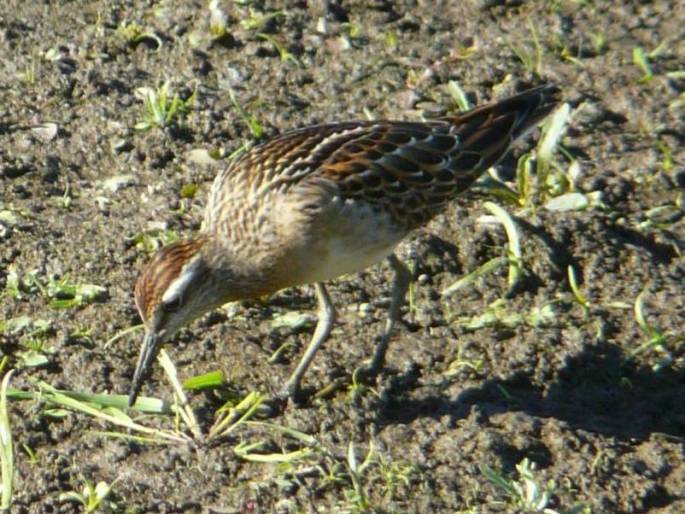
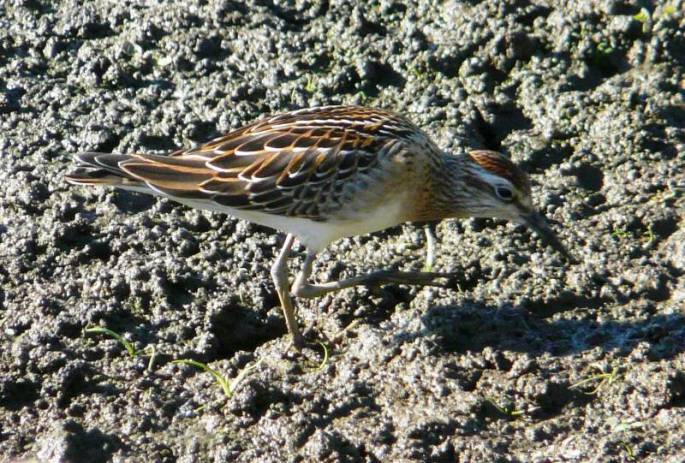
I enjoyed watching a Sharp-tailed Sandpiper at Fernhill Wetlands this afternoon. While most Sharp-tailed Sandpipers migrate from Siberia to Australia via the coast of Asia, a few young birds work their way down the west coast of North America before crossing the Pacific. The pattern on this species is quite stunning, at least by shorebird standards.

Shorebirds

The big news in Oregon birding this week is the Wood Sandpiper found at Fern Ridge Reservoir west of Eugene (Birding Oregon p. 90). This is the first record for Oregon, and one of only a few records for North America south of Alaska. Of regional interest was a Buff-breasted Sandpiper at Tualatin River NWR, just west of Tigard. I wasn’t able to chase either of these birds, so I had to settle for a few more common species at Fernhill Wetlands (Birding Oregon p. 61).


While we can’t see the bill on this individual, the bold stripes and orange tail identify this bird as a Wilson’s Snipe.


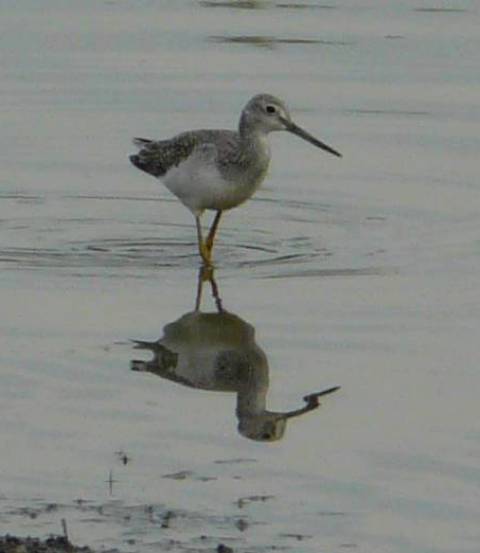
Here is a Greater Yellowlegs. The bill is more than half the total length of the head. On a Lesser Yellowlegs, the bill is about half the total head length, and the bird is considerably smaller overall.

The best laid plans

It is sometimes the case, when I plan to look for a certain type of bird, that my target species are nowhere to be found. On those days we have to let go of our expectations and open ourselves to whatever treasures the birding fates have for us. I helped with a field trip today that was supposed to visit a hawk watch site. The ridge was completely socked in by low clouds, so we had to scrap our plans and instead birded open range and farm land.

Likewise, I recently visited Fernhill Wetlands (Birding Oregon p. 61) to look for shorebirds. Despite the decent amount of mudflat habitat available, shorebirds were almost non-existent. While I was disappointed in the lack of waders, there is always something interesting to watch.
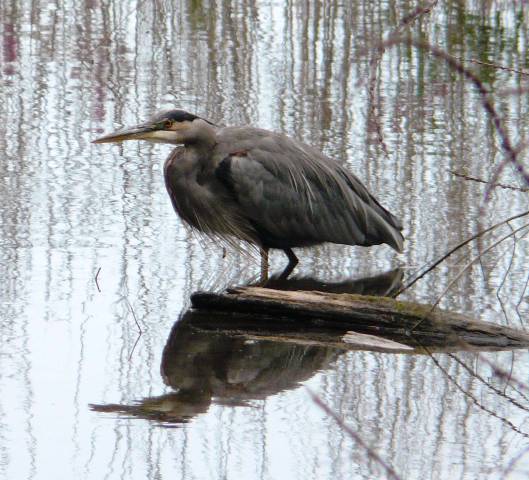

Always common, but always worth a look, Great Blue Herons will often surprise you with the interesting creatures they are attempting to swallow. On this day I watched one bird swallow a large catfish.


Great Egrets congregate this time of year to fish in the receding waters.
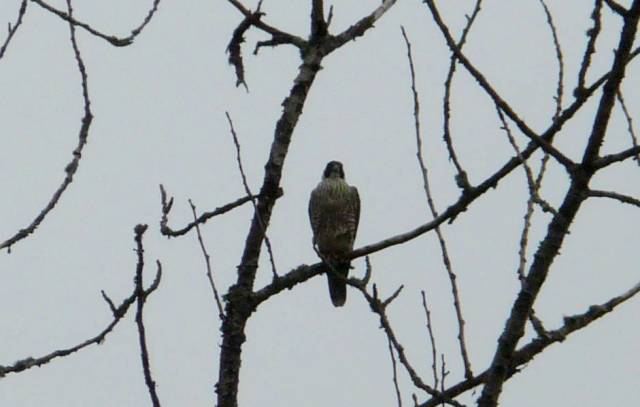

This Peregrine Falcon was keeping watch over the wetlands. This might explain the lack of shorebirds.


We are still in the “ugly brown duck season,” when many birds are still in eclipse plumage. Despite the lack of characteristic colors, most birds can be identified by shape or by tell-tale field marks. This picture shows two Northern Pintails on either side of a Green-winged Teal. The pintails are identified by their pointy backsides and their blue sloping bills. The tiny teal is displaying the green speculum on the wing that give the species its name.
Washington County

I checked some of the birding sites in Washington County recently. The first stop was Rogers Park in Forest Grove (Birding Oregon p. 62). This is the home of one of the northernmost colonies of Acorn Woodpeckers. These are fascinating woodpeckers, both for their habit of storing acorns in tree bark, utility poles, wooden siding, etc., and for their interesting pattern. One this particular day, a young Cooper’s Hawk was hanging out in the park, driving the woodpeckers and most other species into hiding.

The next stop was Fernhill Wetlands (Birding Oregon p. 61). While this is one of the best birding spots in Oregon, it is currently in the summer doldrums. The breeding season has about wrapped up, and the fall migrants haven’t begun in earnest. Shorebirds are starting to come through. There isn’t a lot of mudflat habitat available yet, but as water levels continue to drop conditions should improve.

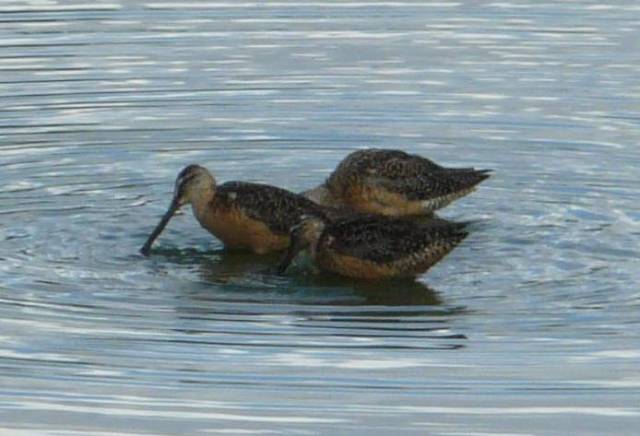
Long-billed Dowitchers


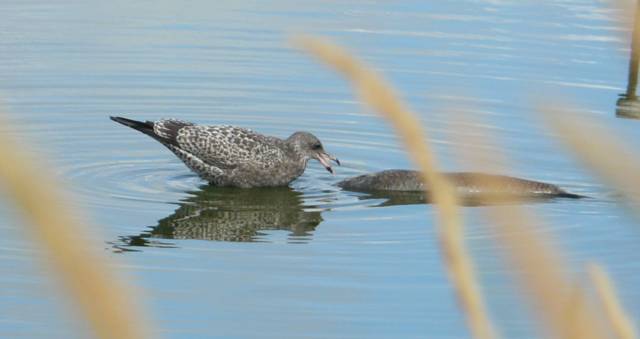
Here is a first cycle California Gull munching on a dead carp. (who says birding isn’t glamorous?) I know what you’re thinking. “It’s only August. Is he going to start with the gulls already?” You betcha! We know this is a young California Gull by the long thin bill with the clearly demarcated dark tip, and by the long dark wingtips that extend well beyond the tail. My friend, the Northwest Nature Nut, has not yet developed a love of gull ID, but I hope to gradually chip away her resistance.

An exploration of Haag Lake in Scoggins Valley Park didn’t reveal a lot of birds, but a Beaver lounging in one of the quiet arms of the reservoir was a nice treat. I don’t get to see Beaver out in the daylight very often.