Mid to late summer is the prime time to watch shorebirds in western Oregon, partly because it is the peak of southbound shorebird migration, and partly because the locally nesting songbirds have stopped singing and are very hard to see. Shorebirding in the Portland area has been a little more challenging this summer with major construction projects occurring at Fernhill Wetlands, Smith and Bybee Wetlands, and Jackson Bottom.
Broughton Beach, near the airport, has not hosted large numbers of birds this year, but has attracted some good species.
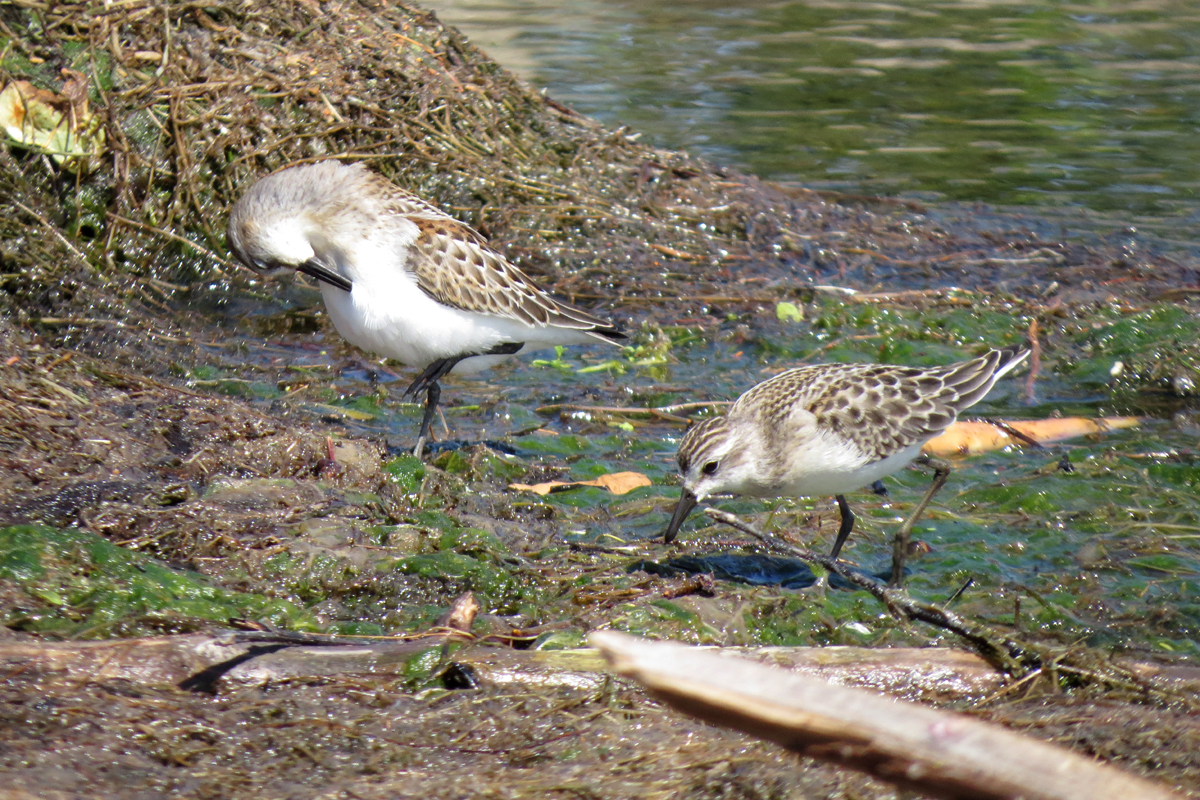
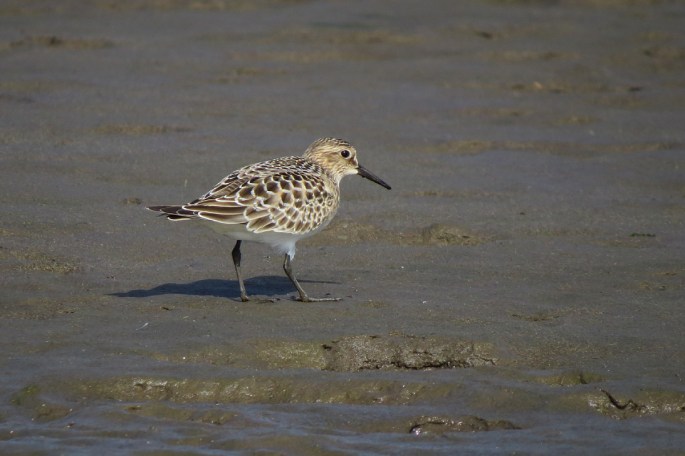 Baird’s Sandpipers come through Oregon every year, but never in huge numbers, so finding one is always a treat. They stand out with their buffy coloring and long wings.
 Almost all of the Baird’s that pass through in summer are juveniles, so they show a strong scaly pattern.
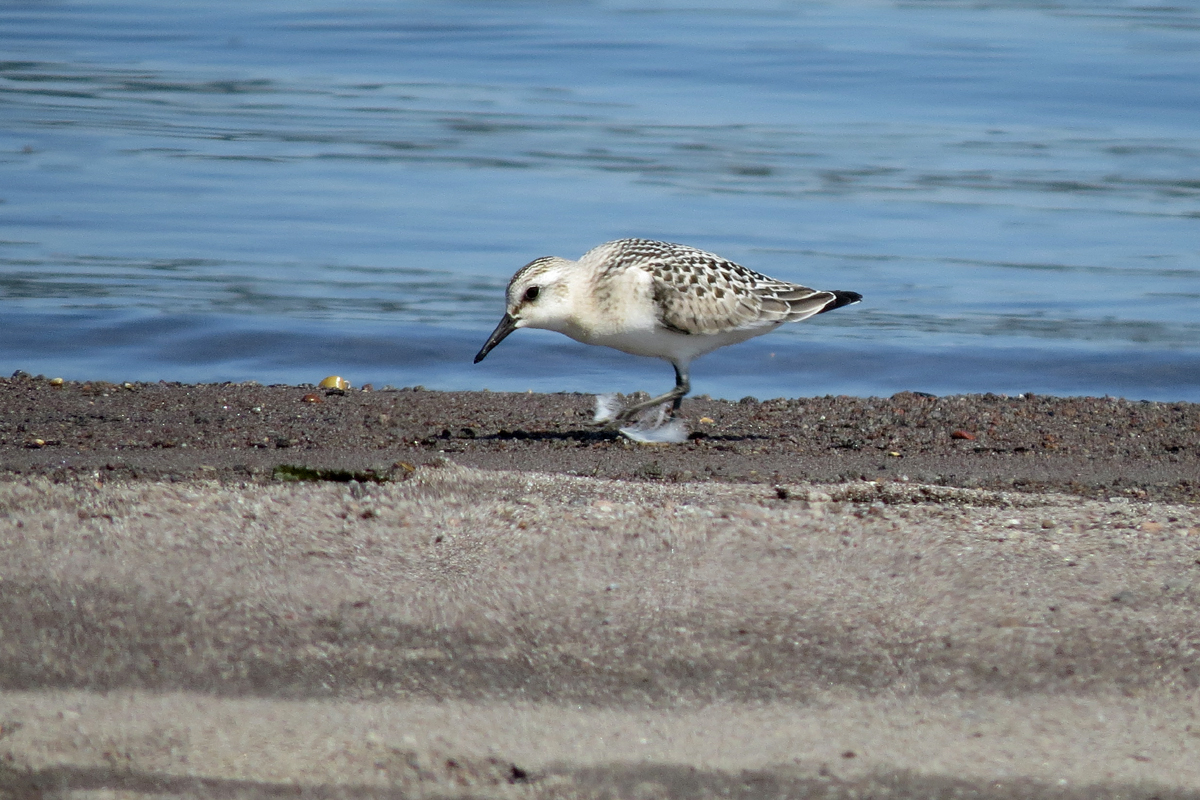
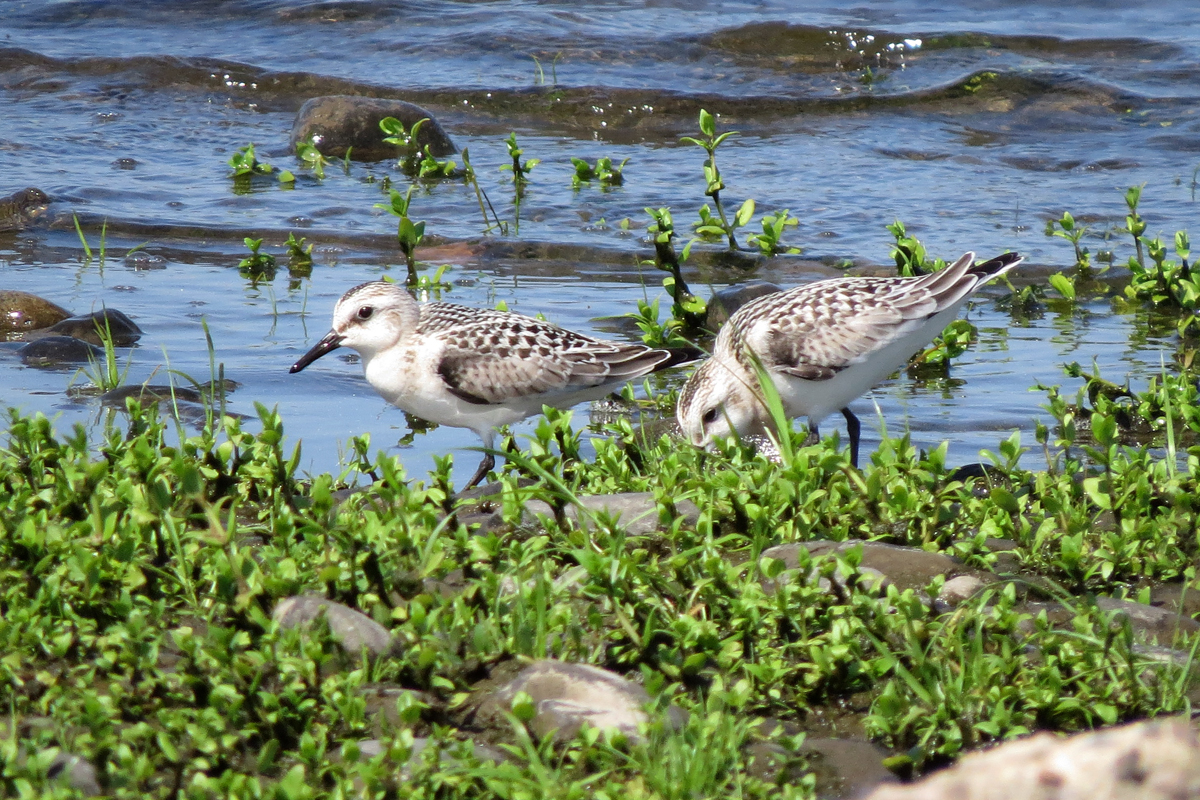
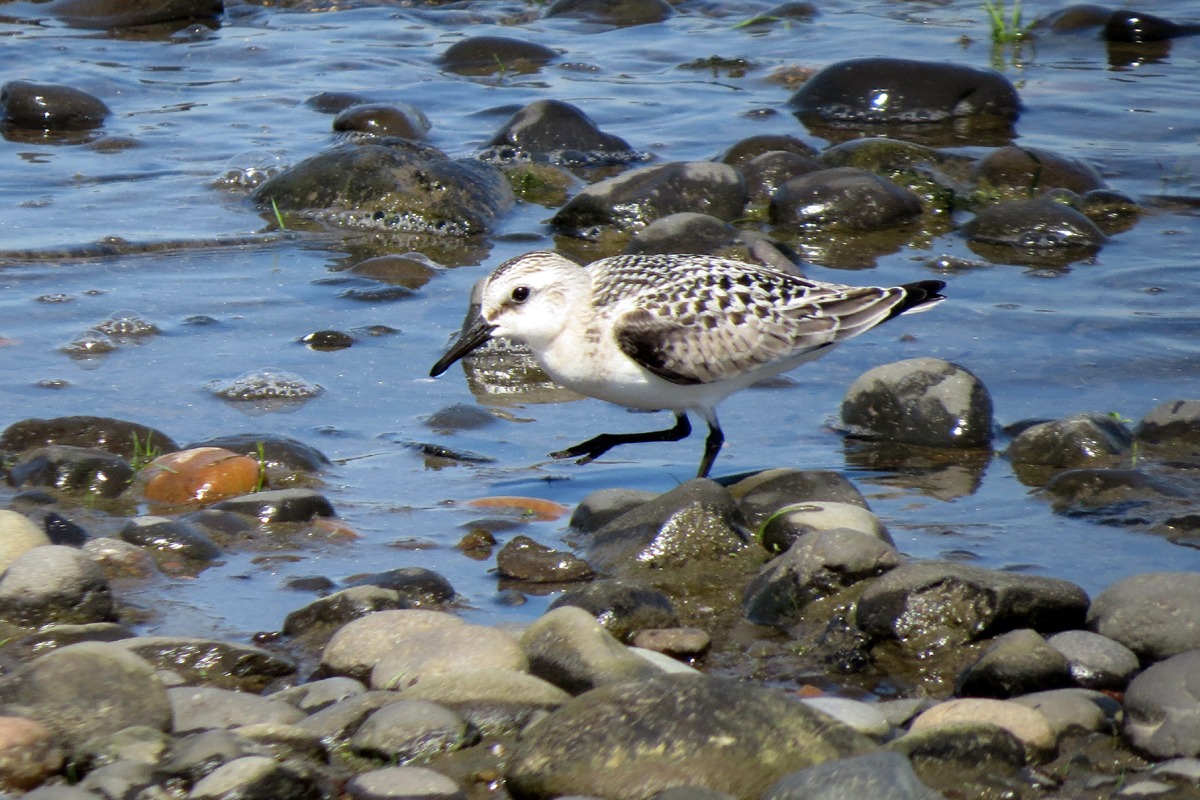
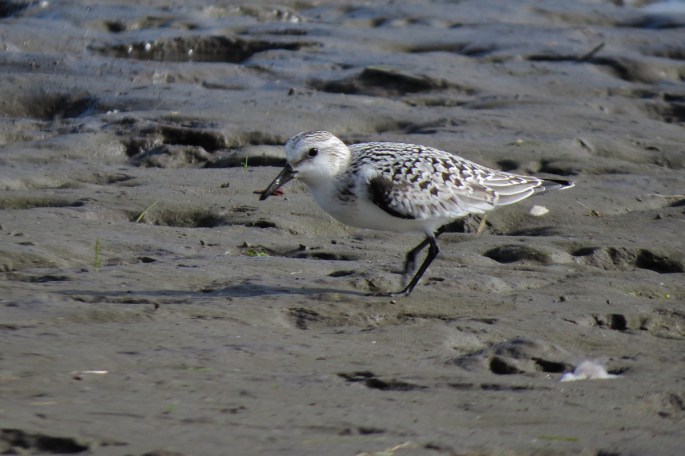 While Sanderlings are quite common along the coast, it is rare to find them inland. Broughton seems to be a good spot to find them in Portland.

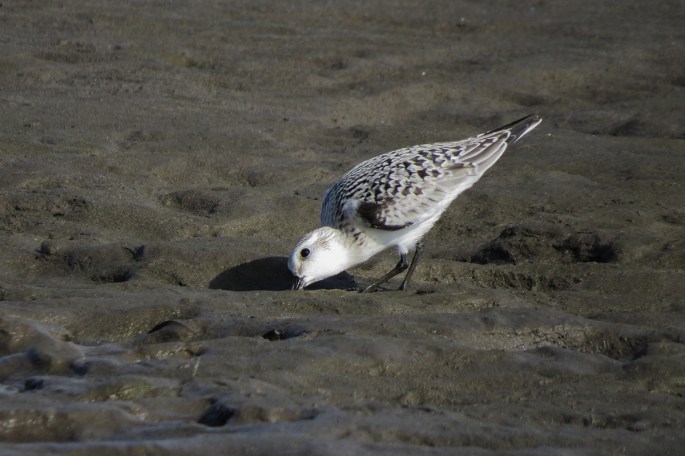
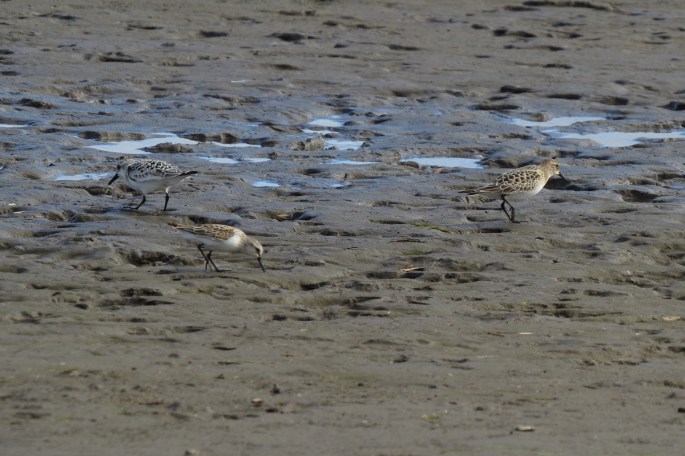 Here is a group shot of (L to R) a Sanderling, a Western Sandpiper, and a Baird’s Sandpiper, all juveniles. While it is fun to sort through thousands of shorebirds when the birding fates align, when birding is slow it does us good to take advantage of small numbers and really study the few birds at hand. Shorebird migration runs for another month, so I am hoping to have many more encounters before the rains return and the shorebirds depart.
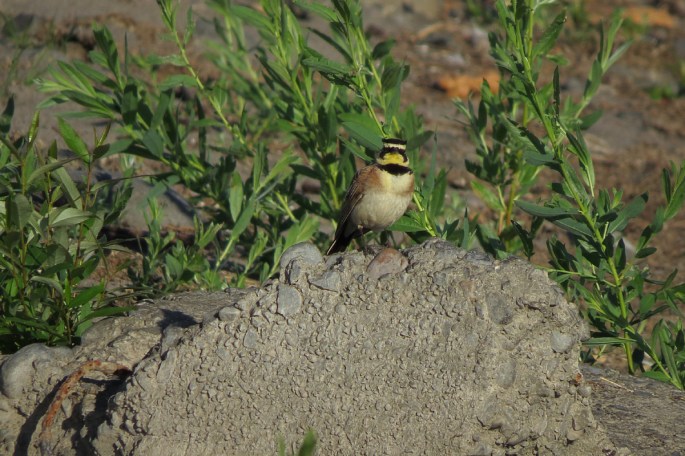 Broughton Beach, along the Columbia River, has been a favorite spot in Portland to check for shorebirds, gulls, and waterfowl, depending on the season. On my recent visit I enjoyed watching a family of Horned Larks working the beach. There are many subspecies of Horned Lark, and I don’t have a reference that provides a good description of the possible subspecies in this area. These birds had much more yellow on their faces than did the birds I saw recently on Mount Hood.
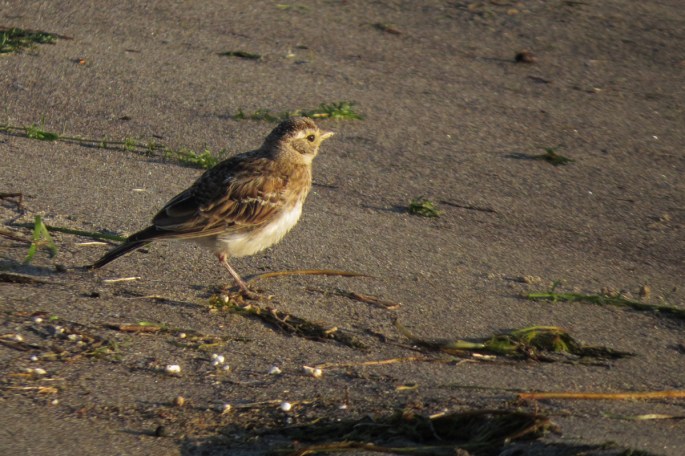 This juvenile showed more muted colors and lacked the distinctive facial pattern of the adults.
 I’m not sure if this bird is a juvenile or an adult female.
 adult female, I think
 adult male, I think
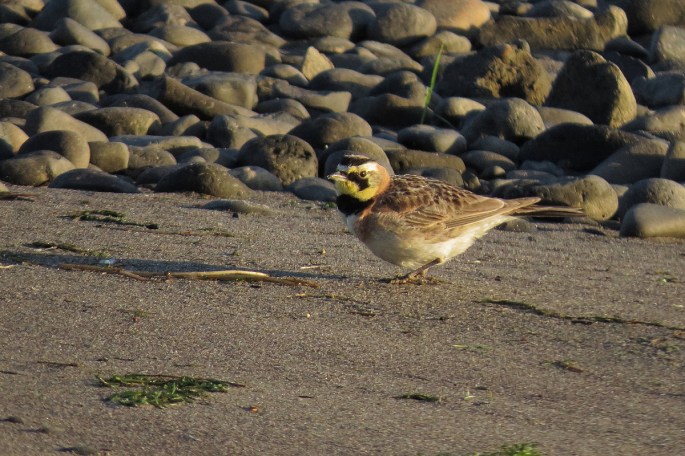 adult male
 Not a Horned Lark, but Brewer’s Blackbirds are among my favorites. This is a female.
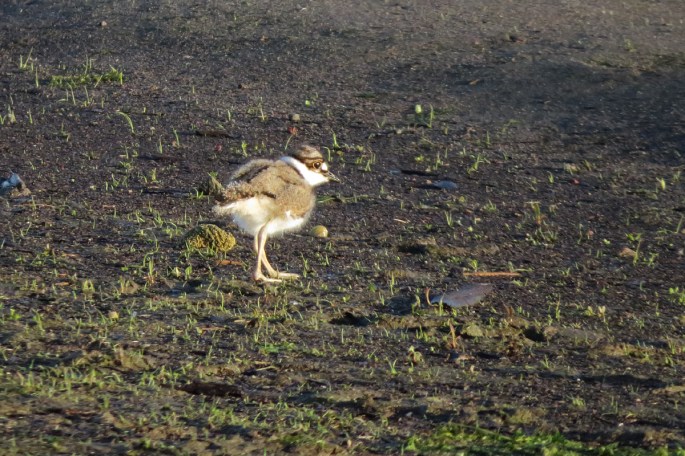 And we end with a ball of fluffy cuteness. I was surprised to find such a young Killdeer so late in the summer.








 Ethical Birder