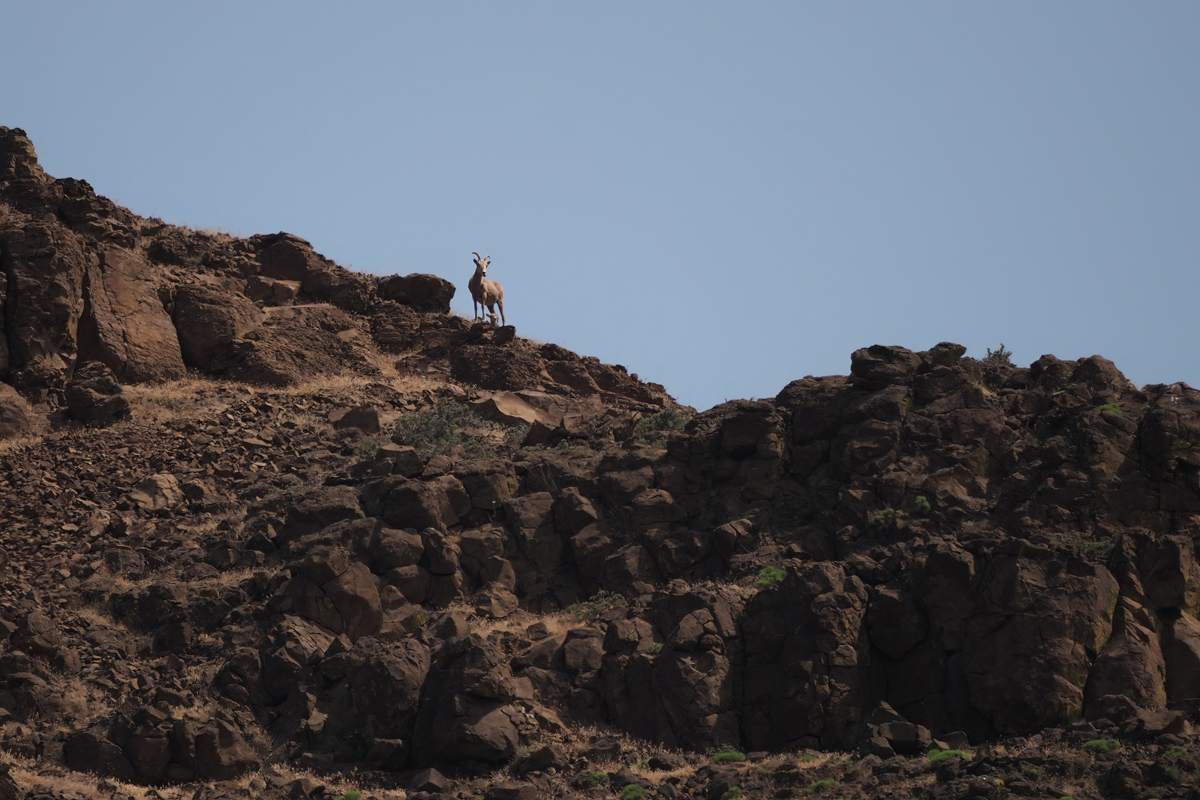
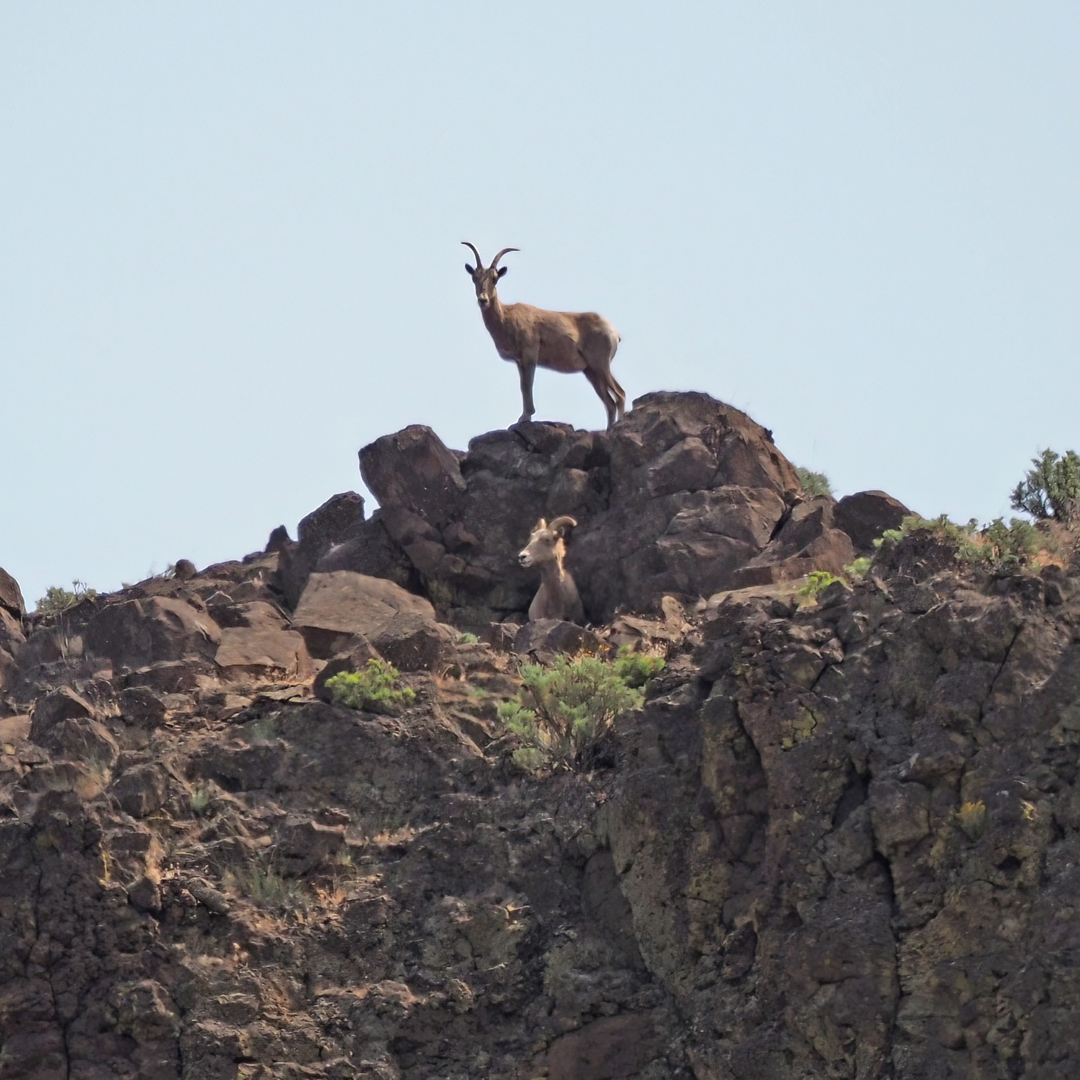
My team for the Portland Audubon Birdathon visited Cottonwood Canyon State Park in late May. Birding was a little slow that day, but it is always a treat for me to get to the east side of Oregon.




Happy Summer
My team for the Portland Audubon Birdathon visited Cottonwood Canyon State Park in late May. Birding was a little slow that day, but it is always a treat for me to get to the east side of Oregon.
Happy Summer
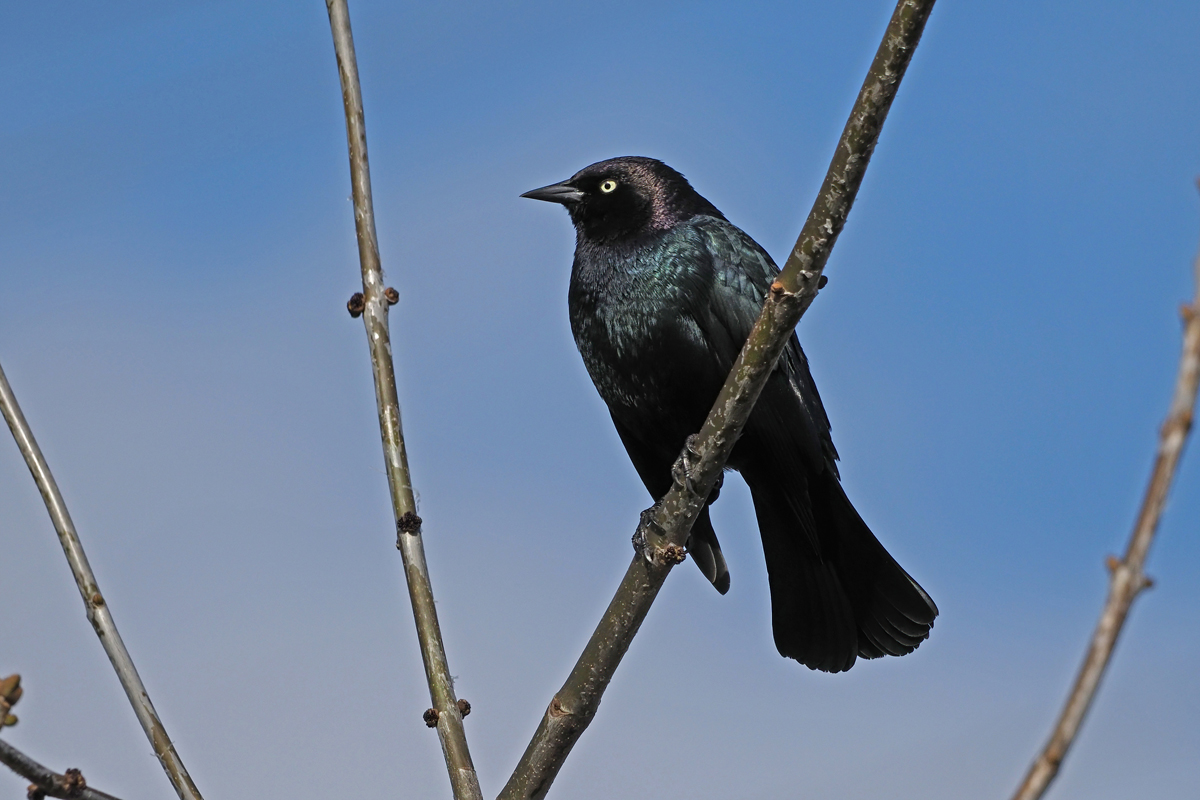
Spring migration hasn’t really kicked in, yet, but the birds that are here are getting more active. Here are some recent images from Fernhill Wetlands. This Brewer’s Blackbird was looking good in the sunshine.
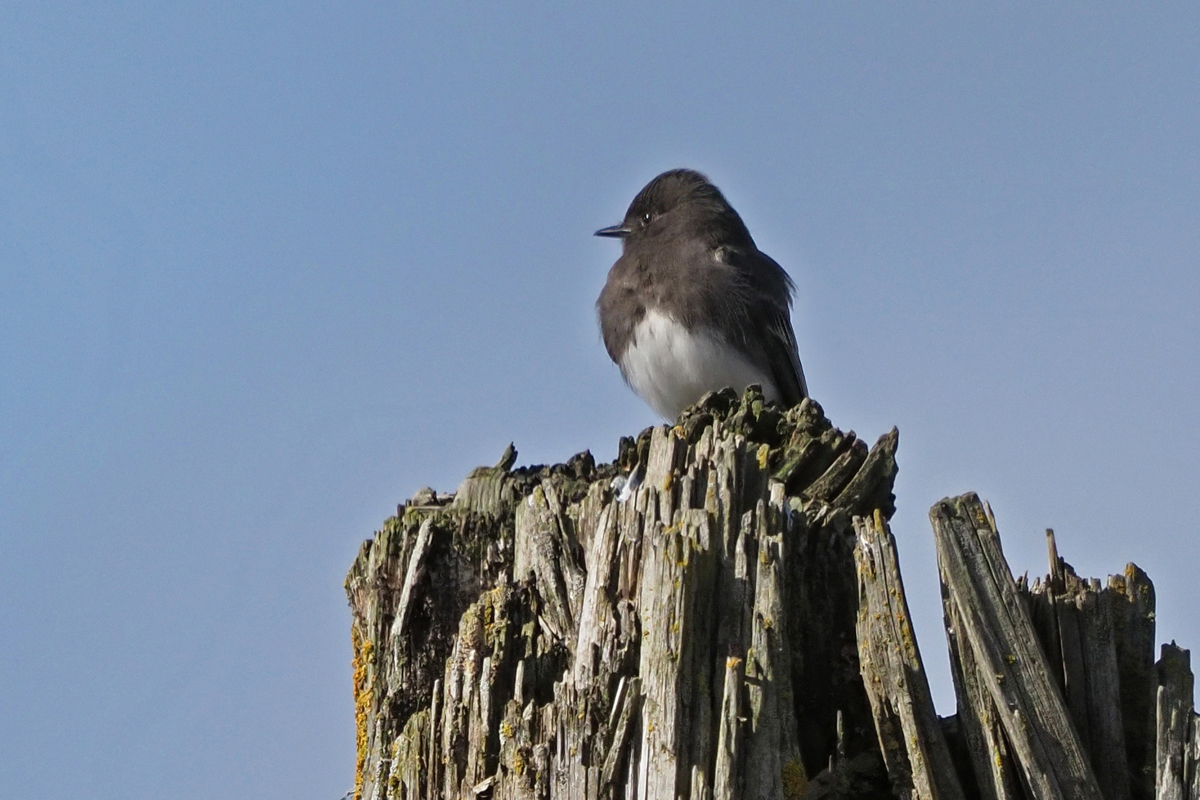
Black Phoebes are now expected at Fernhill Wetlands. It doesn’t seem like that long ago that I found Washington County’s first Black Phoebe there.

This was my first Rufous Hummingbird of the year. He refused to perch in decent light.
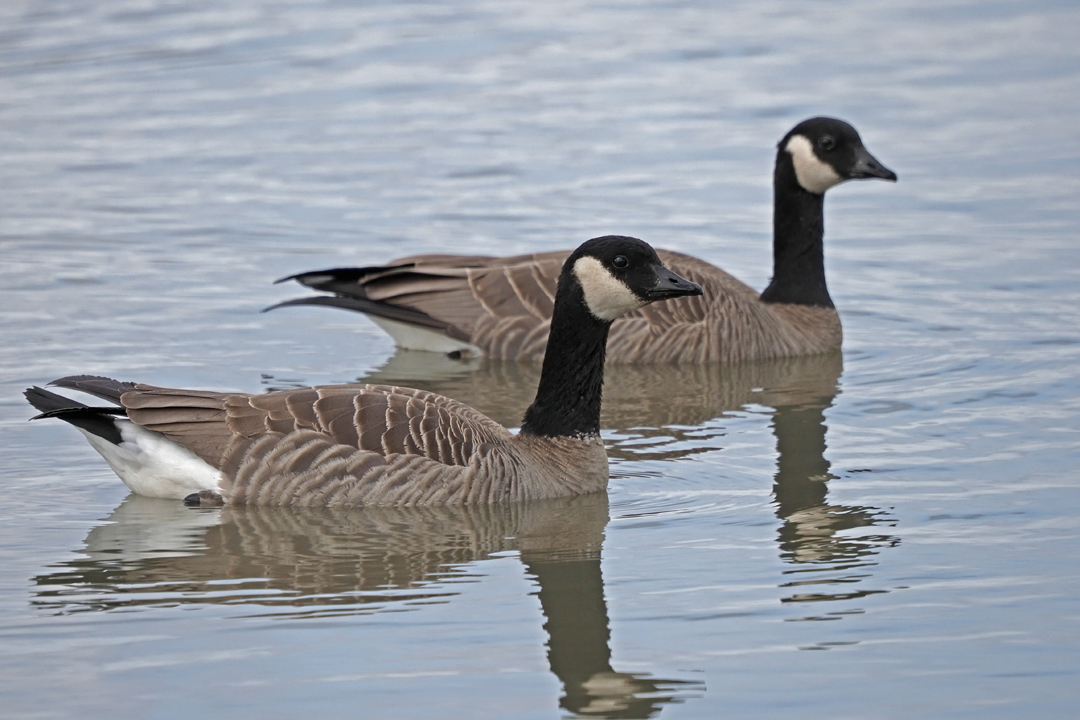
A large flock of Taverner’s Cackling Geese were hanging out on Fernhill Lake. The Ridgeway’s Cackling Geese were either off feeding somewhere or have moved on.

Brush Rabbit, always adorable
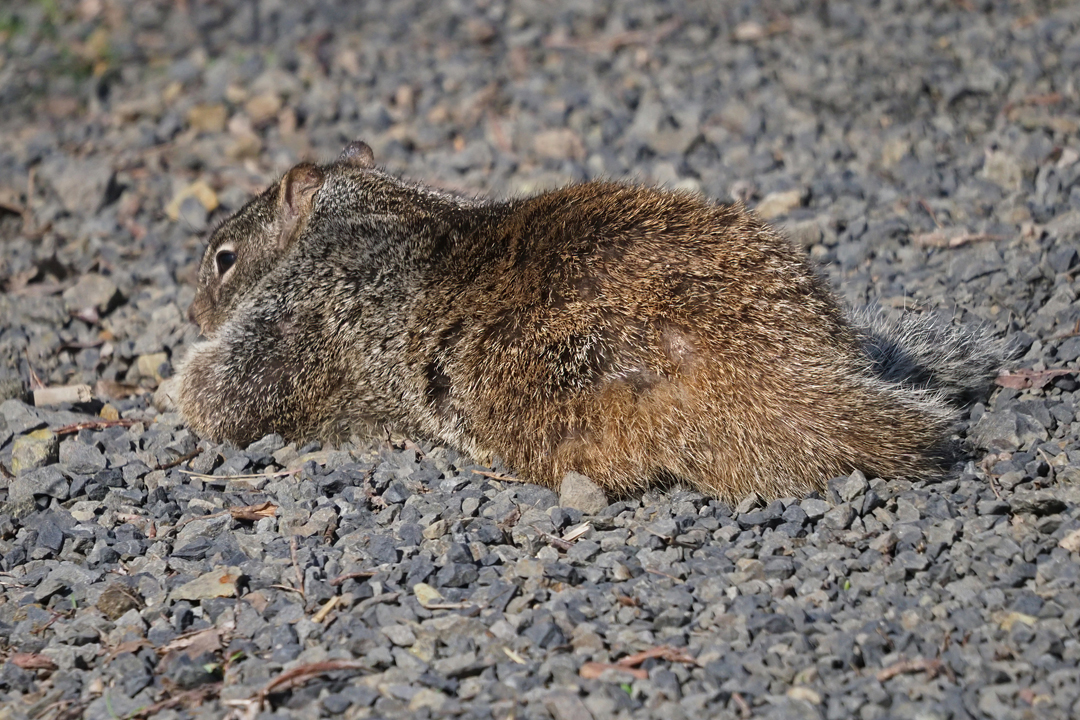
California Ground Squirrel, soaking up the sun

Spotted Towhee

Downy Woodpecker

Bright sunlight makes it hard for me to get a decent of photo of an American Coot, but this bird’s yoga pose was too good not to share.
Happy Spring!
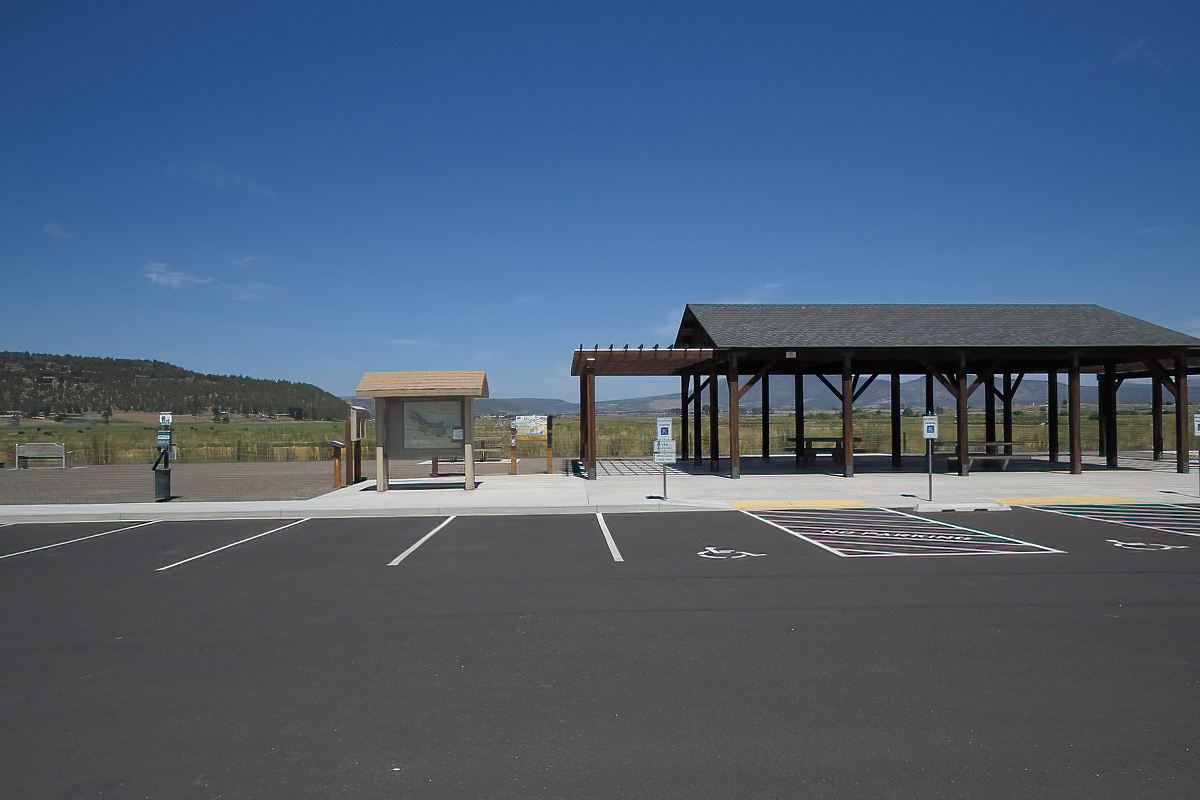 I had a chance to visit Crooked River Wetlands near Prineville. Like Fernhill Wetlands, this site was constructed as part of a wastewater treatment system. But Crooked River Wetlands was designed from the beginning to accommodate both birds and birders. The parking lot has a covered picnic area (the only shade on the property) and a restroom. Paved and gravel paths provide easy viewing of the wetlands.
 There are 15 bodies of water in the complex, which is right next to the Crooked River. Water levels vary with the seasons, so there is a variety of water depths which attract different species.
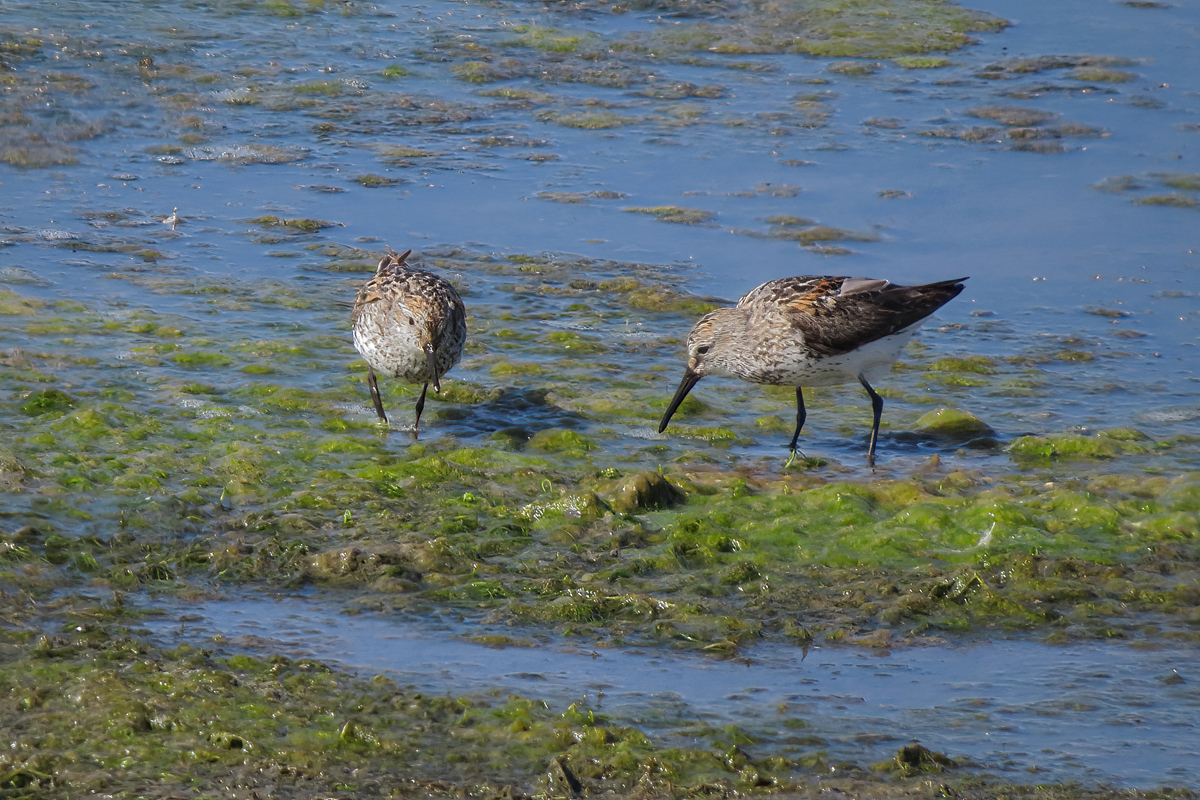 Shorebird migration is getting underway. Here are some Western Sandpipers.
 Spotted Sandpiper
 One of the deeper ponds held this pair of Ruddy Ducks.
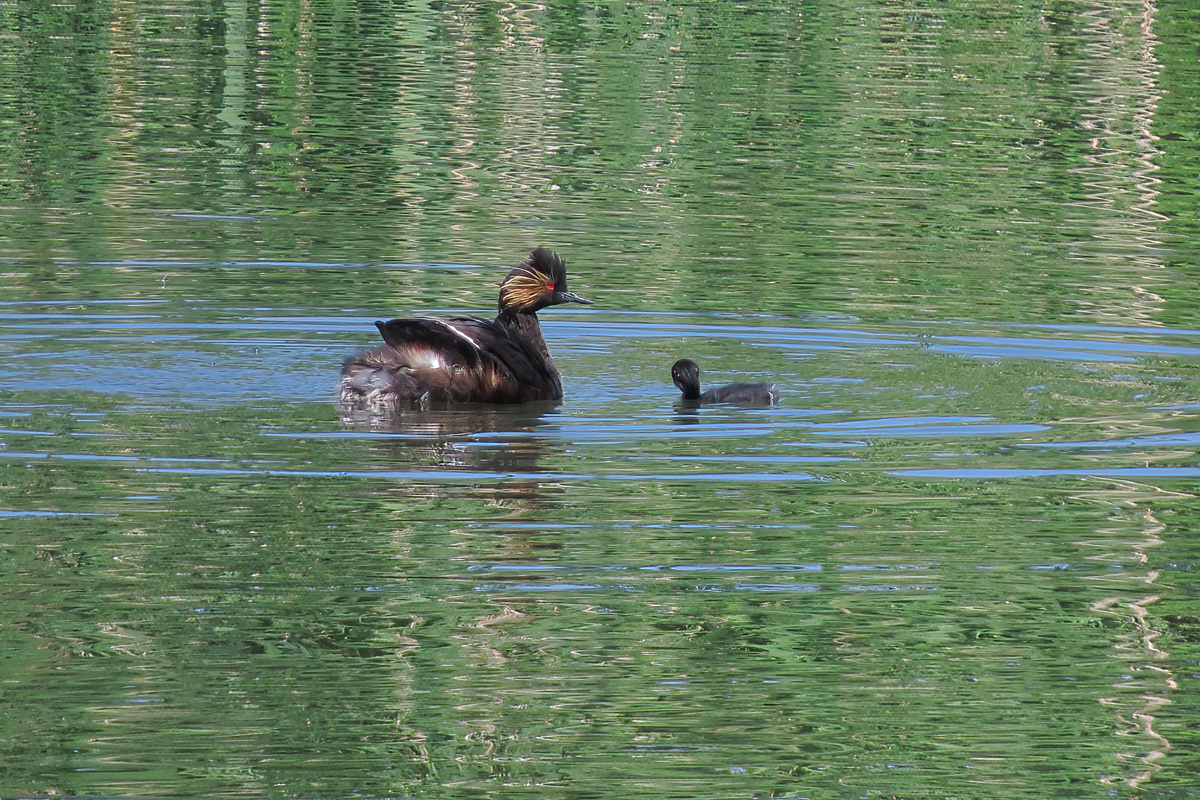 Eared Grebe with baby
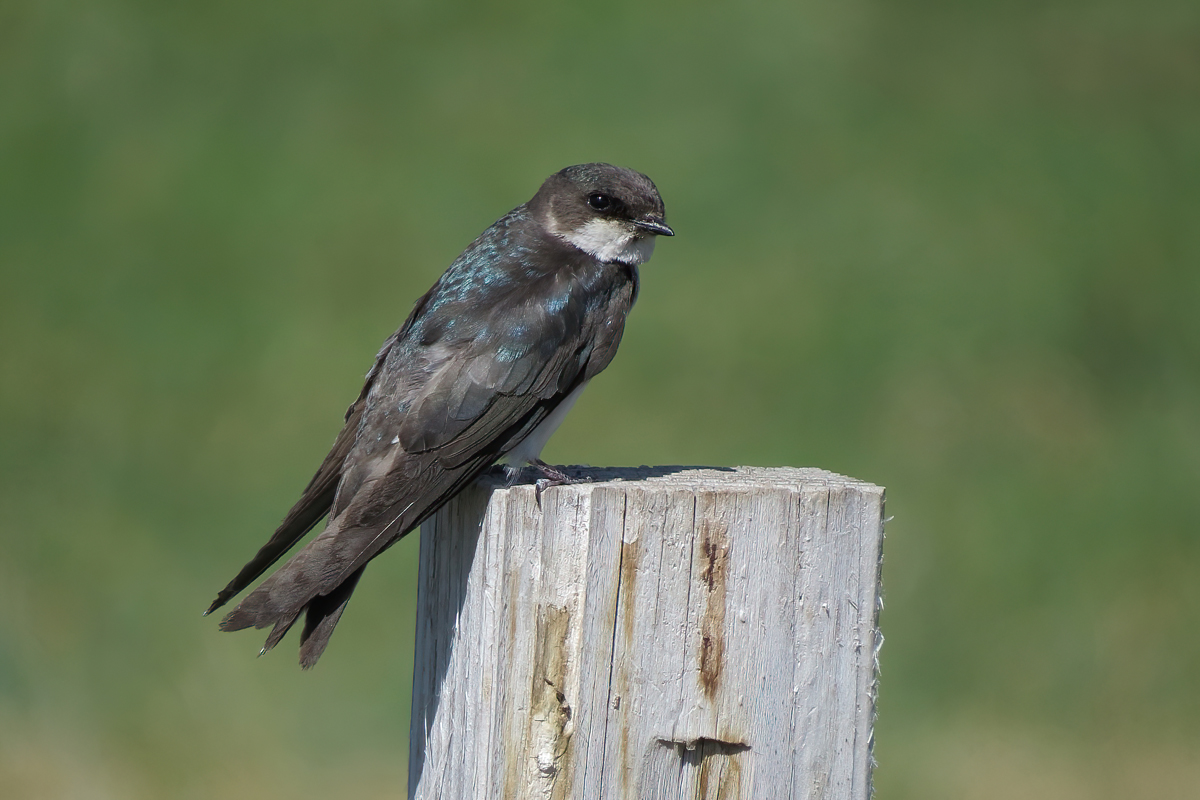 Between the river, the ponds, and the adjacent wastewater plant, this site attracts swarms of swallows. Tree Swallows use the many nest boxes.
 This is one of the easiest places I know to see Bank Swallows.
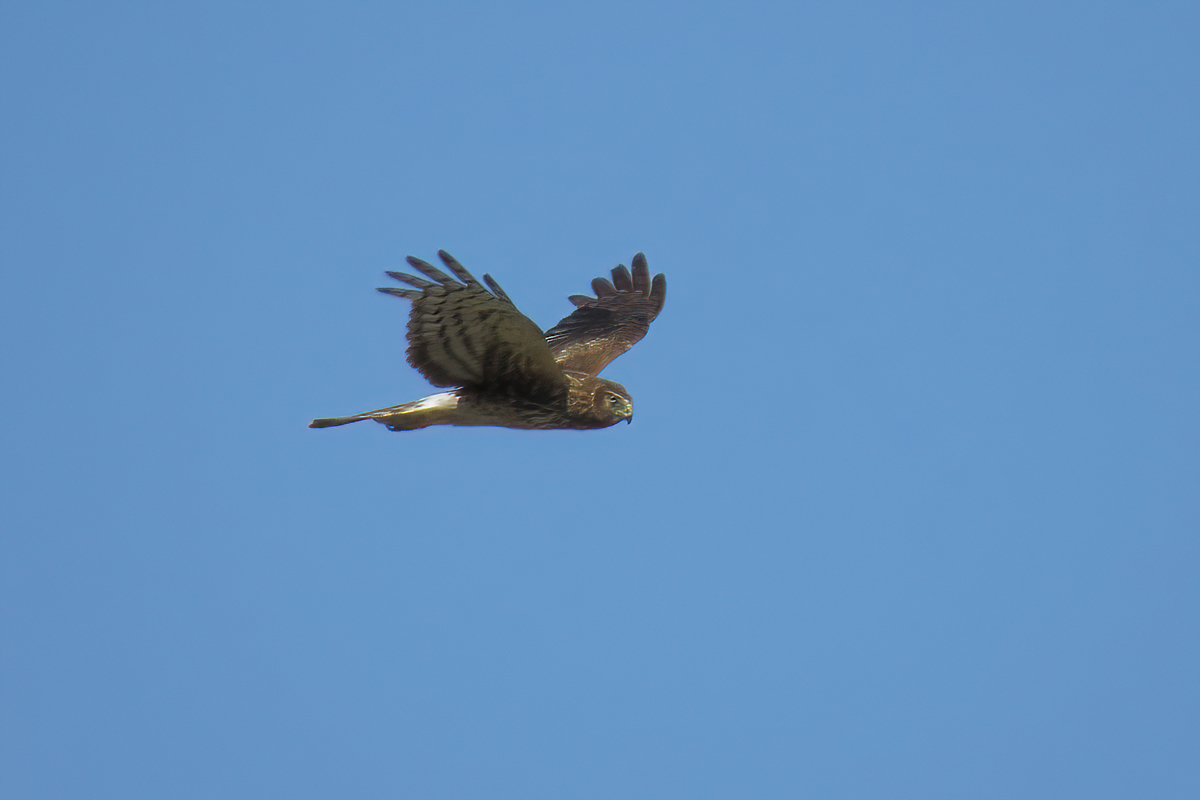 Northern Harrier
 Brewer’s Blackbird was one of five blackbird species I saw on this visit.
 Tricolored Blackbirds can be hard to find in Oregon, but this site is pretty reliable.
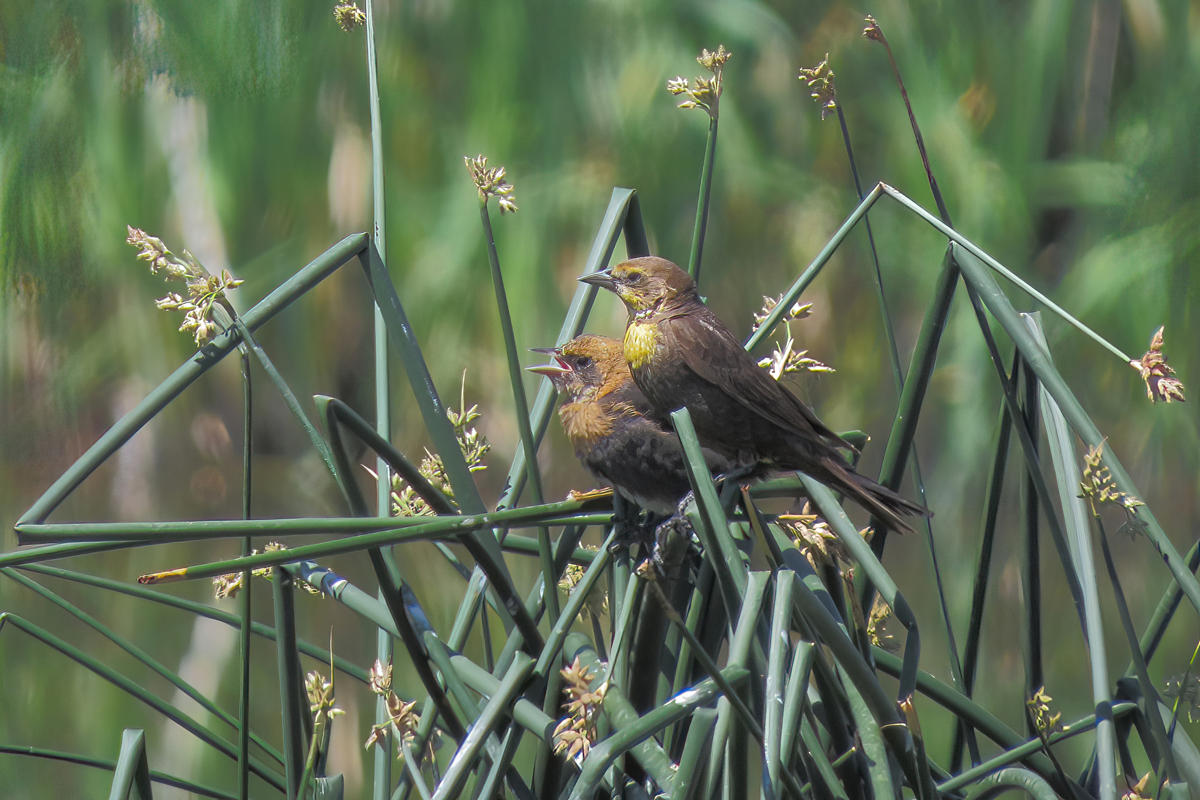 Yellow-headed Blackbirds are common here. The males tended to hide in the reeds, but this female and youngster posed nicely.
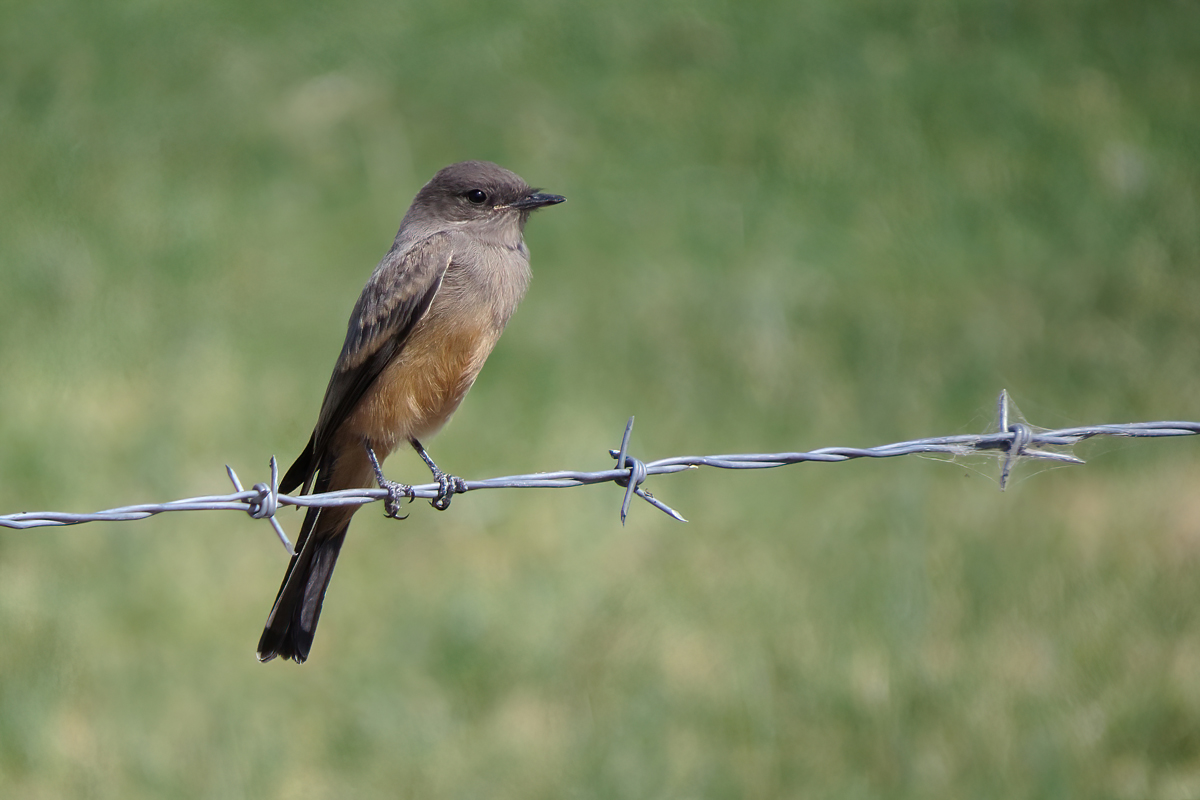 This is one of two Say’s Phoebes that were working the fence line at the edge of the property.
Crooked River Wetlands is one of the best birding sites in central Oregon, providing access to a great variety of wetland species in a very dry part of the state. It provides a nice pocket of avian diversity at a time of year when birding can be pretty slow.
Happy Summer
 The long hiking trail at Tualatin River NWR is open, and this refuge always offers some good birding in the spring and early summer. A pair of Blue-winged Teal was in the southwest pond.
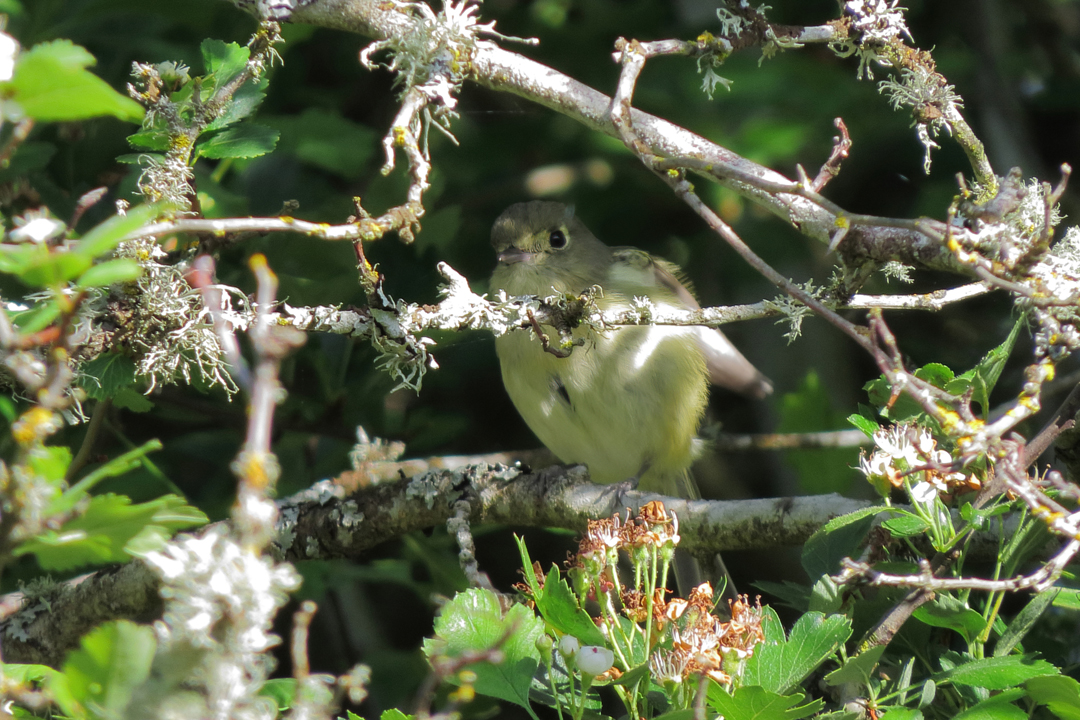 As is typical for this species, this Hutton’s Vireo stayed back in heavy cover.
 It is really hard to shoot a Brewer’s Blackbird against the sky without ending up with just a silhouette, but I keep trying.
 Long-billed Dowitcher was the most common shorebird on this visit. It is nice to see them in full breeding plumage.
 The best bird of the trip was this Pectoral Sandpiper. Pectorals are regular autumn migrants in this area, but are very rare in spring.

Happy Spring
 A quick tour of Fernhill Wetlands showed bird activity picking up, with the appearance of newly arrived migrants and nest building by the local breeders. This Tree Swallow was staking out a cavity.
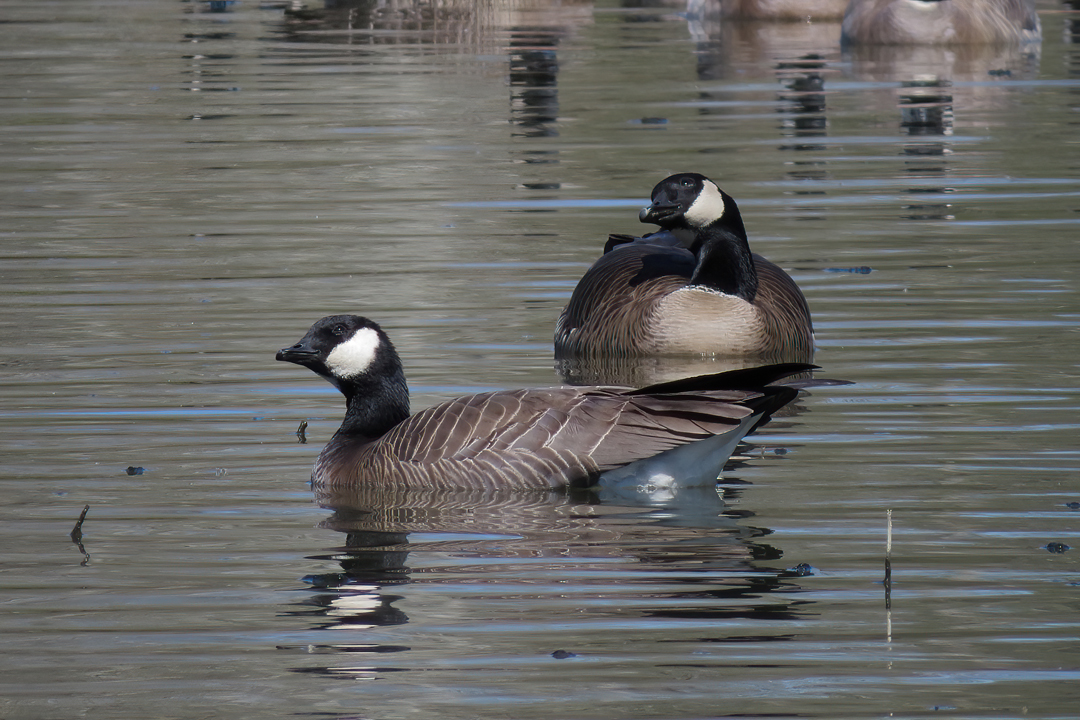 There are still some Cackling Geese around, although they should be heading north any day now. Here is a nice side-by-side view of a Ridgeway’s Cackling Goose and a Taverner’s Cackling Goose.
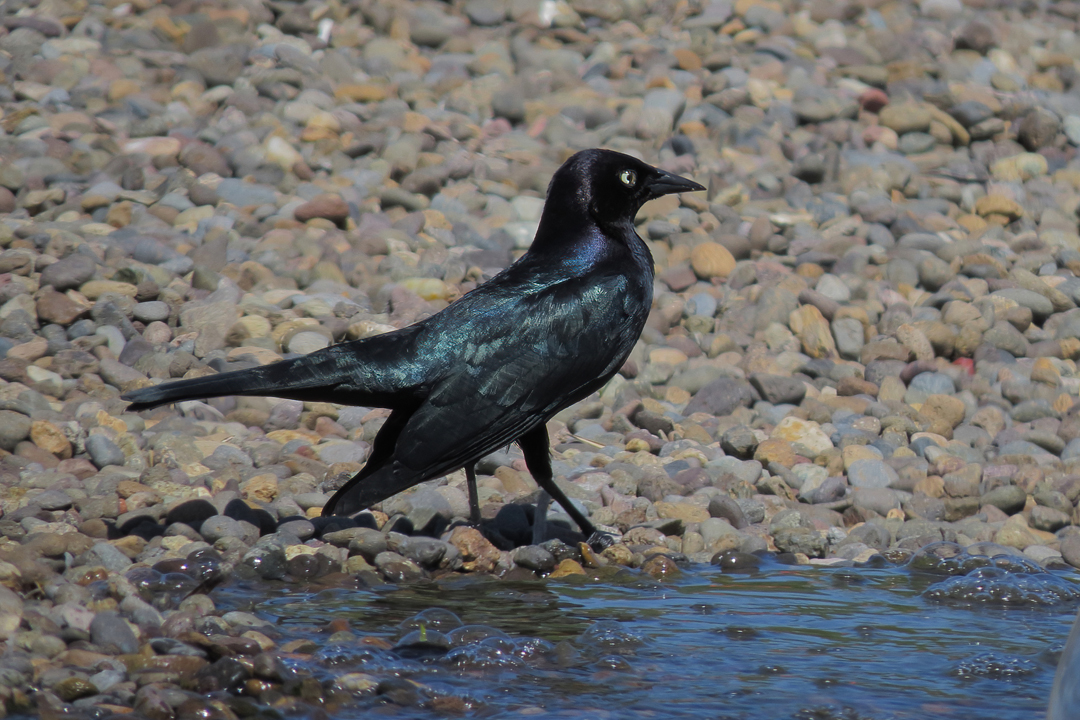 The male Brewer’s Blackbird was showing his colors in the bright sunlight. I caught him in the middle of a blink, so his eye looks weird.
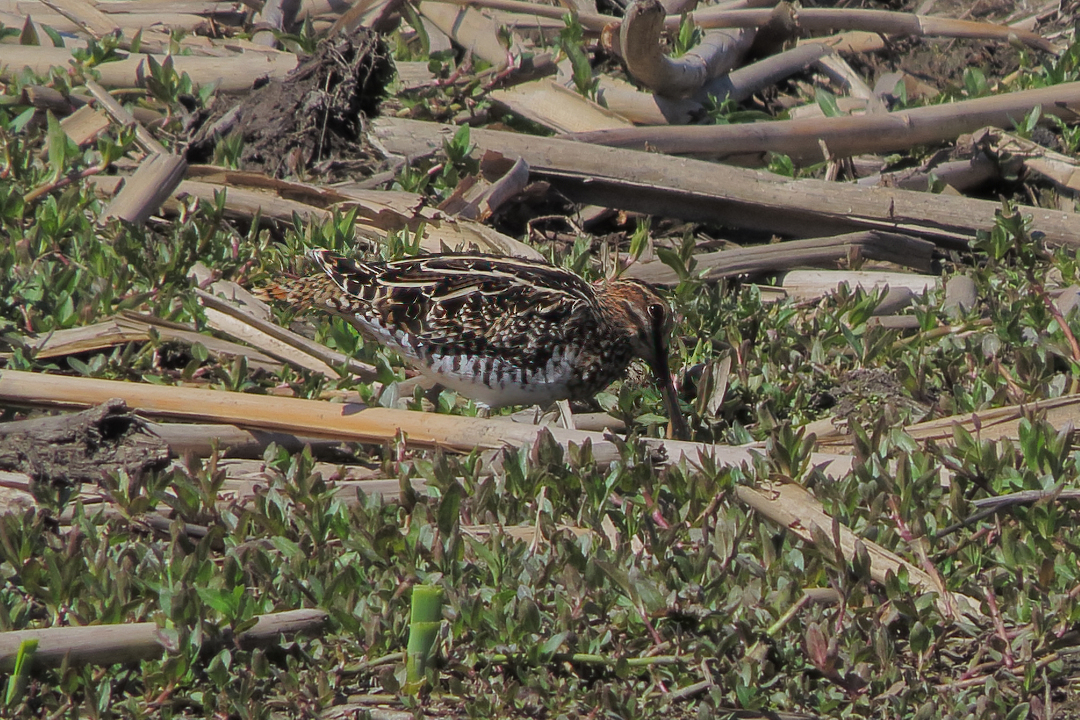 Wilson’s Snipe
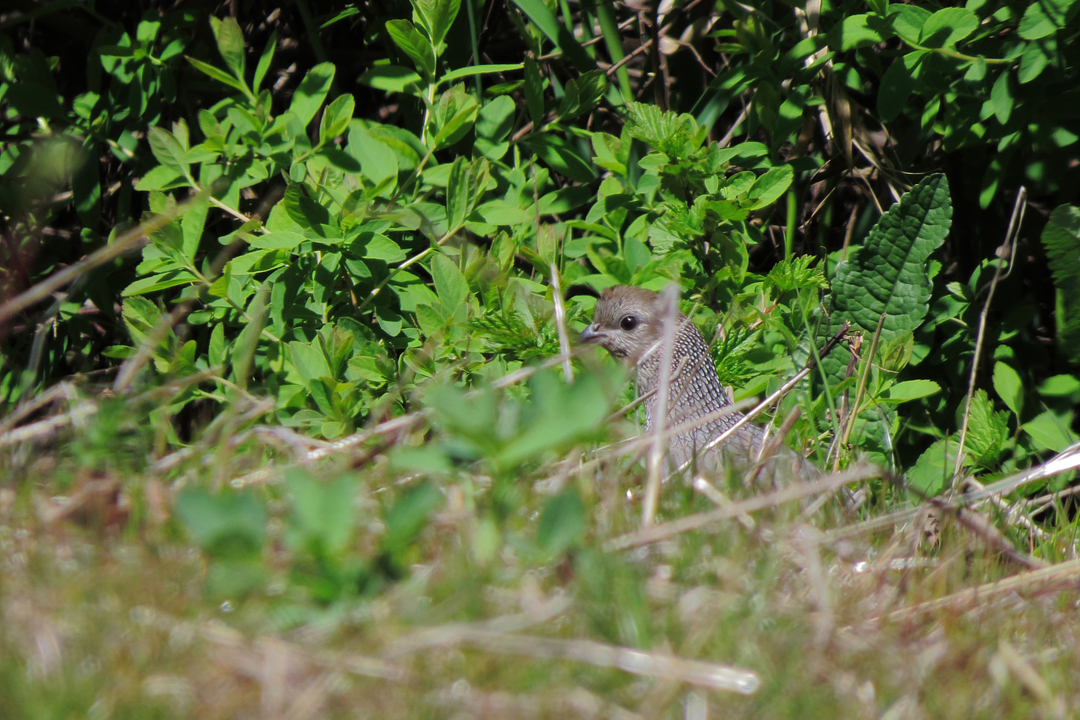 California Quail have become slightly more common at Fernhill in recent years.
 The Common Carp are spawning in Fernhill Lake.
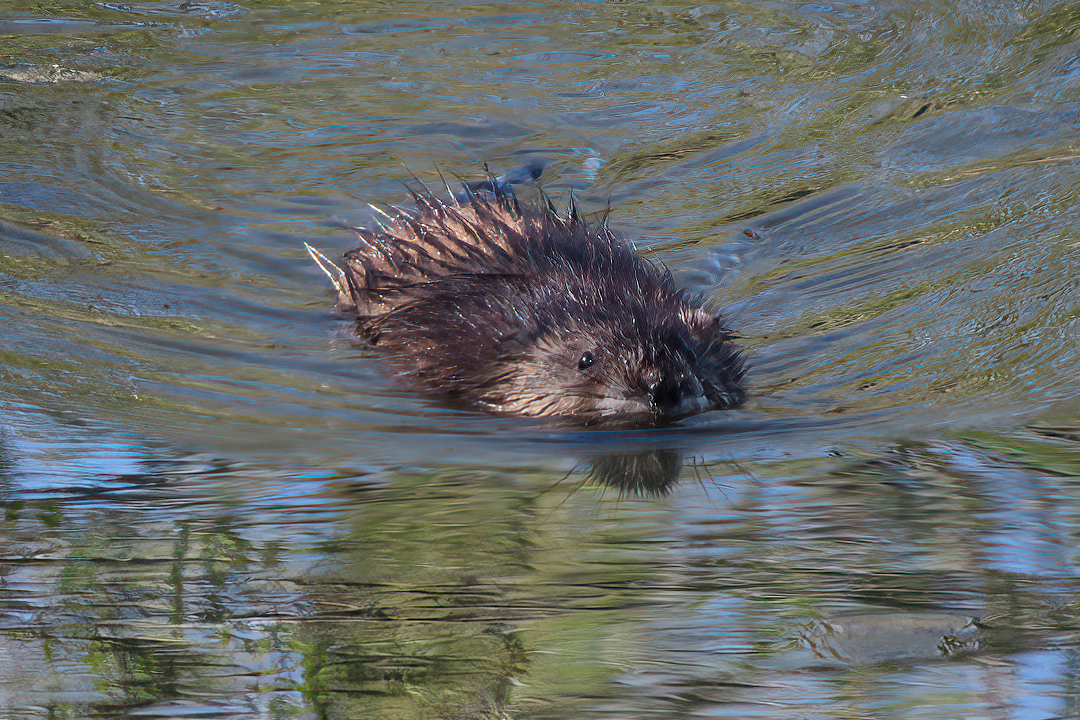 I was pleased to find this Muskrat. The non-native Nutria have become so common at this site I worry they might crowd out the native Muskrats and Beavers.
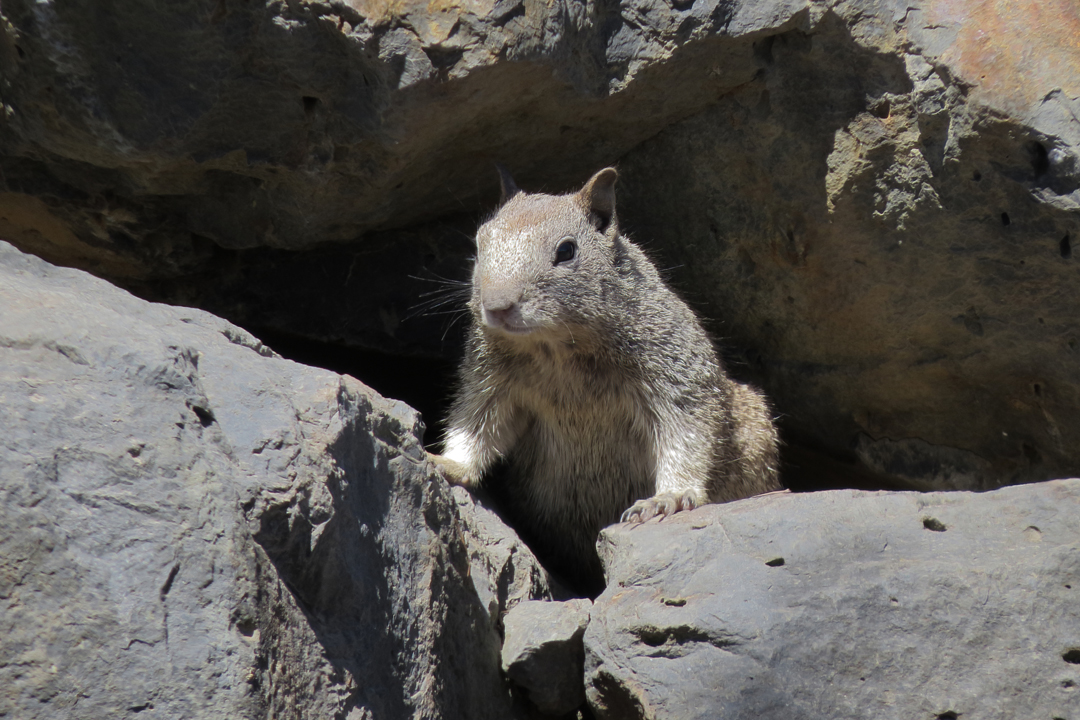 California Ground Squirrels have been taking advantage of the large rocks used in the landscaping at this site.
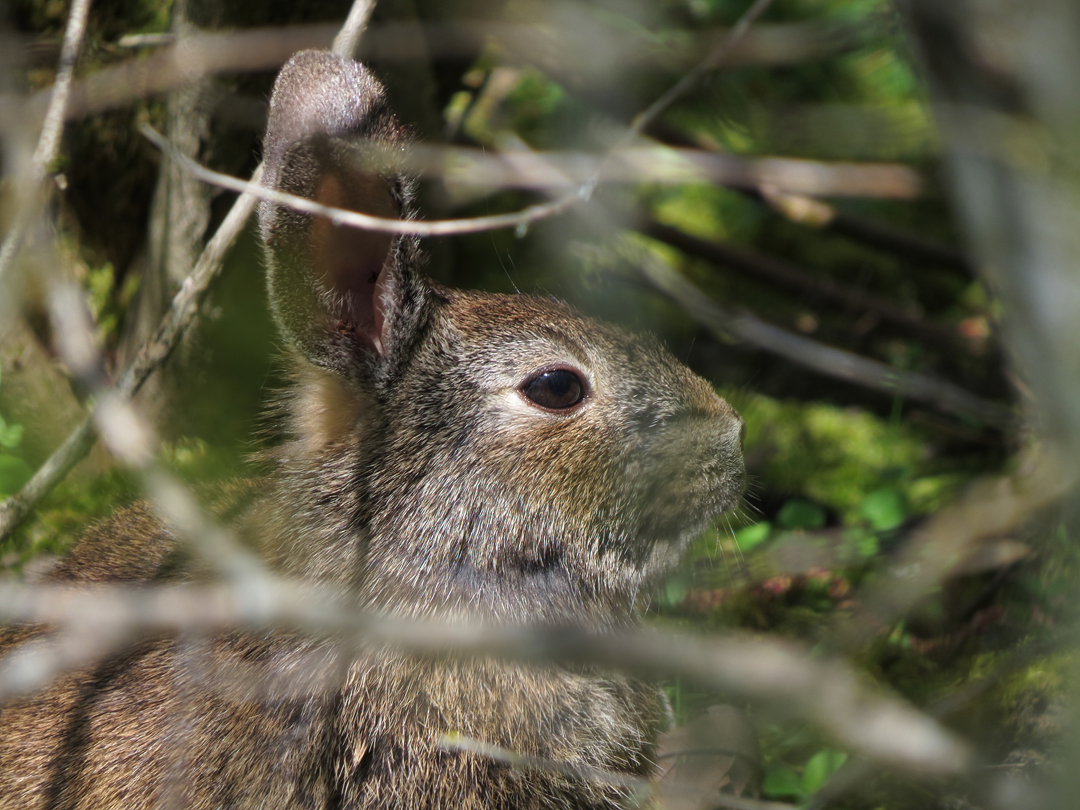 This Brush Rabbit was looking very regal in his thicket.
Happy Spring
 This Common Scoter was recently found in Siletz Bay, just south of Lincoln City. This is only the second record of this species in North America, so he was definitely worth chasing.
 The Common Scoter seems pretty comfortable in Siletz Bay, feeding and resting near the pull-out just south of the Schooner Creek bridge, so he was an easy tick. I just showed up and there he was. It can seem a little anticlimactic when a staked-out bird is too easy to find. But the advantage of such a situation is that you have the time to explore the surrounding area. On this day I birded from the D River in Lincoln City to Boiler Bay. This whole area is covered on pages 155 – 157 of Birding Oregon. There are a lot of birds packed into just over two pages. Or perhaps my writing is just very concise.
 This Bonaparte’s Gull was hanging out at the D River.
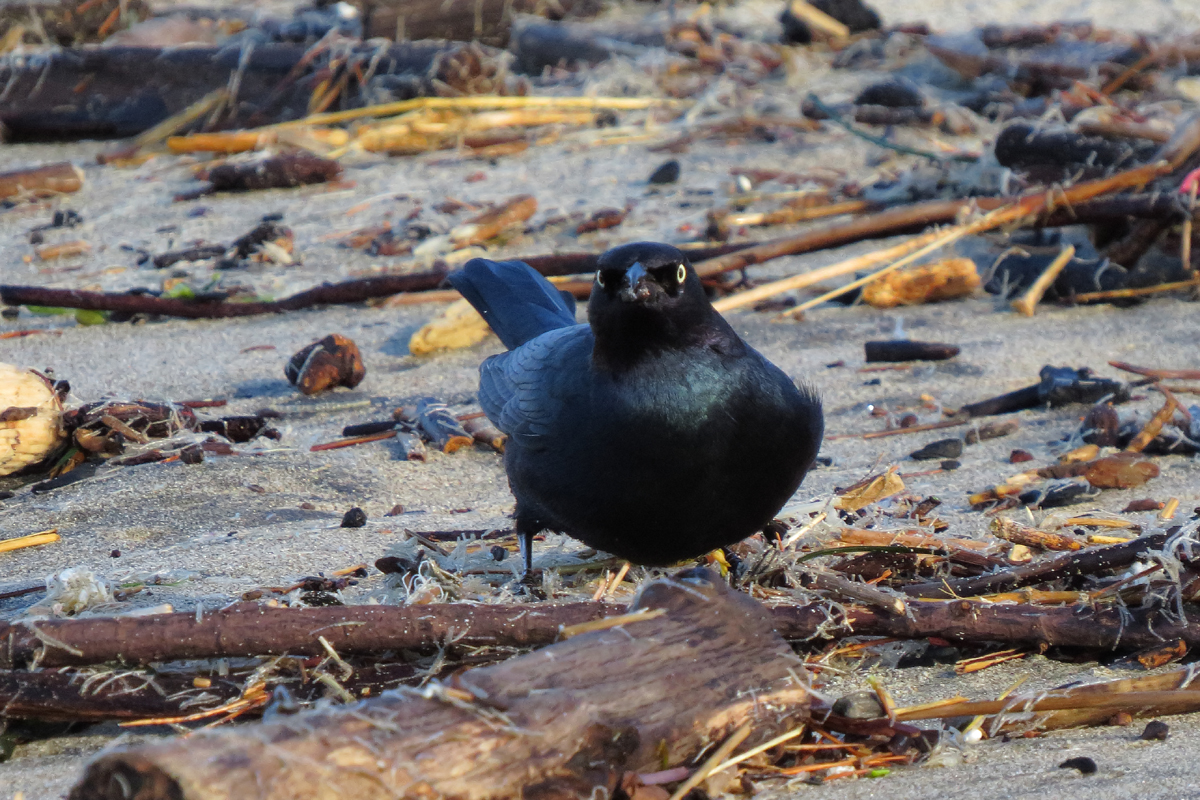 male Brewer’s Blackbird, D River
 female Brewer’s Blackbird, D River. I find female Brewer’s to be much more photogenic than males. Perhaps my camera just doesn’t do well with extreme blacks and whites.
 Surf Scoters in the surf
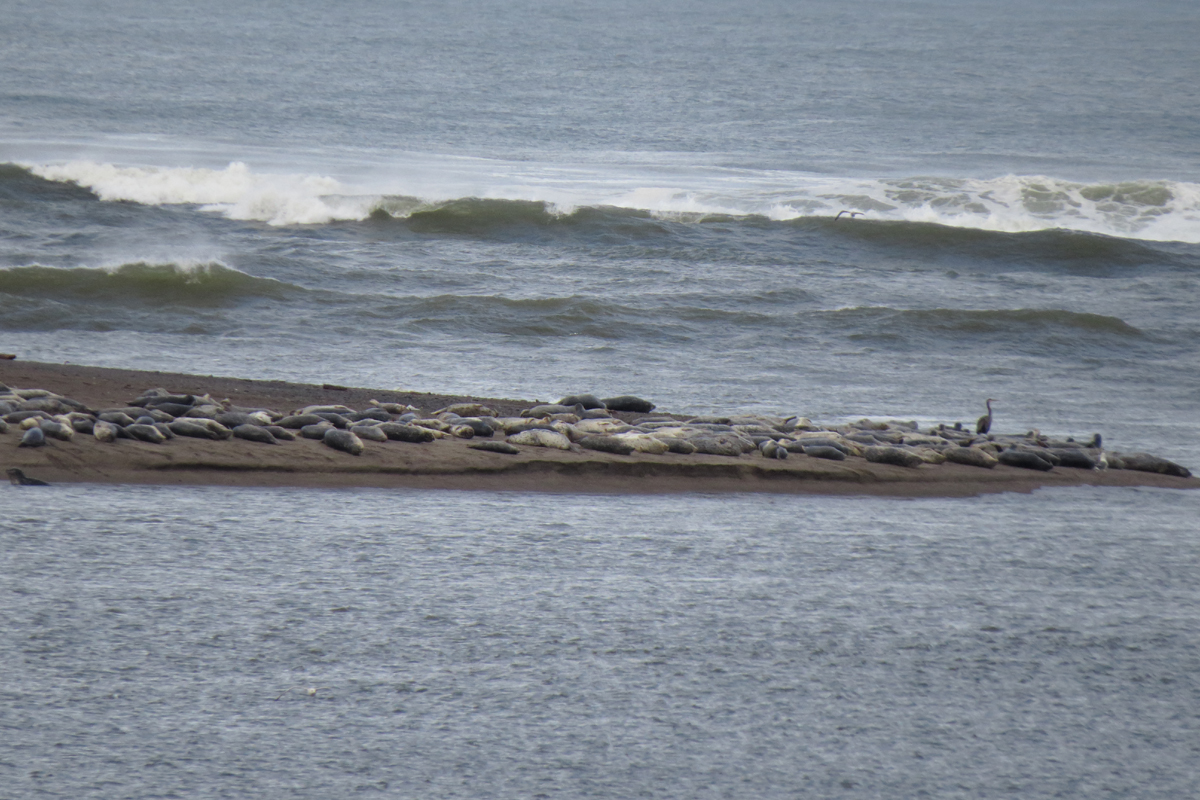 The sand spit at the mouth of Siletz Bay is a favorite haul out spot for Harbor Seals.
 happy Harbor Seal
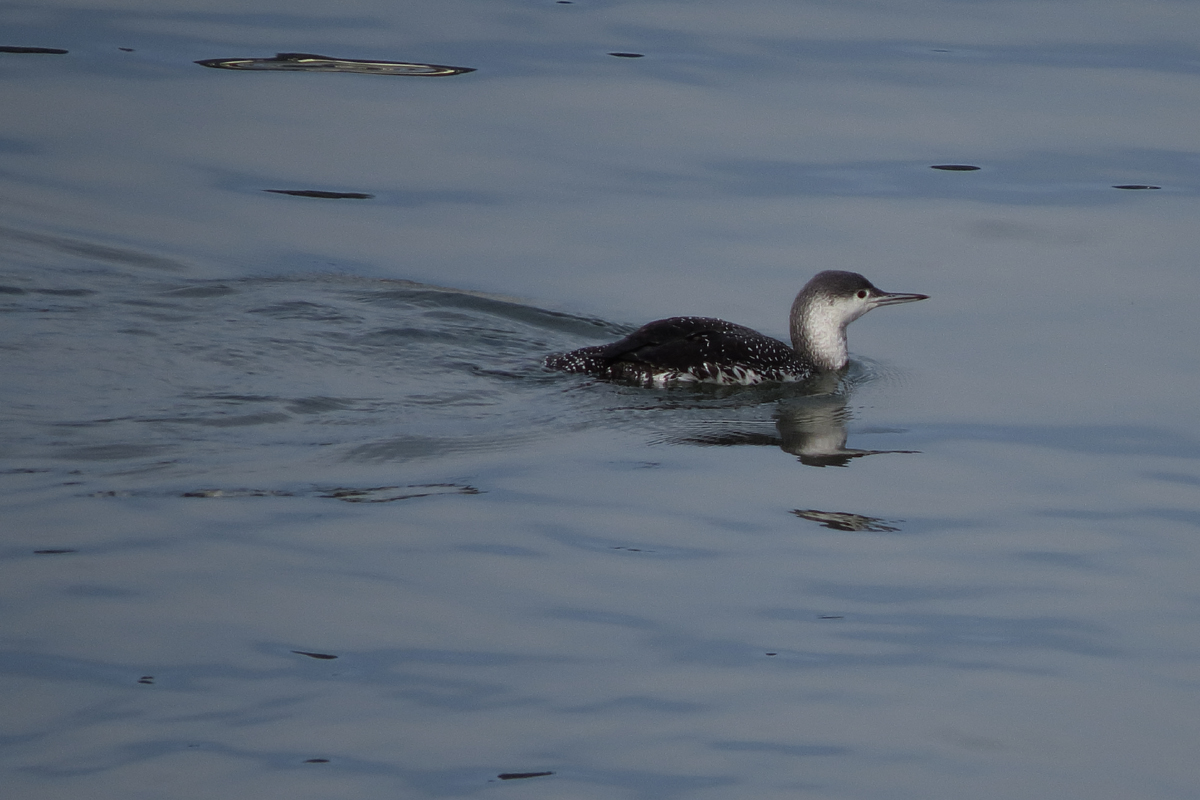 Red-throated Loon
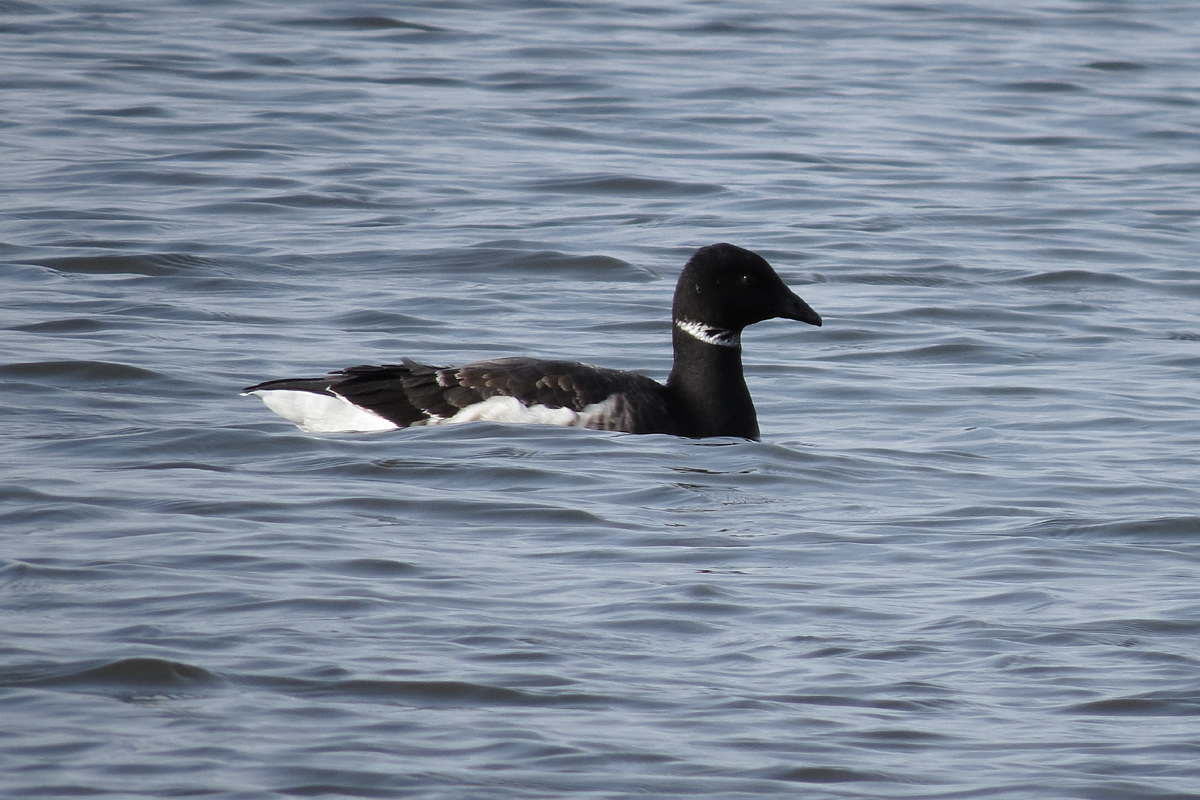 A little farther up the bay, I found two Brant. I don’t get to see then often enough.
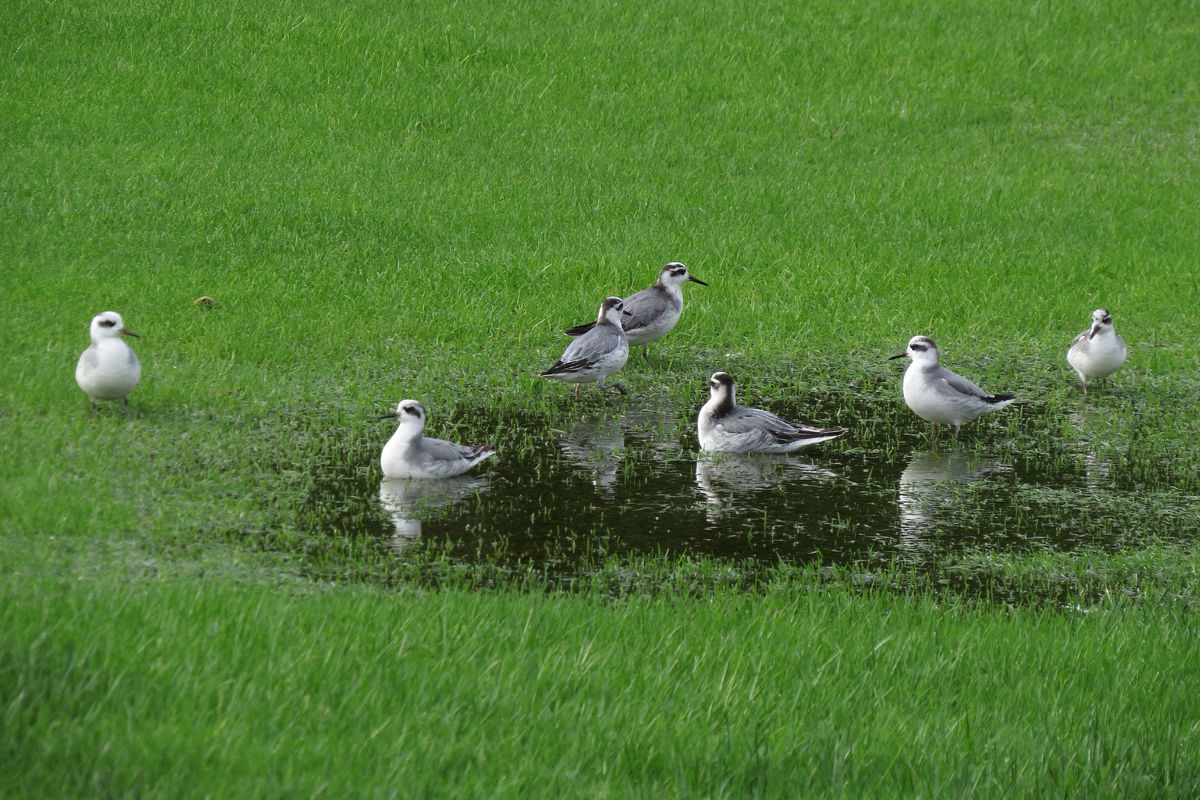 Recent storms have brought a lot of Red Phalaropes to the coast and points inland. These birds were hanging out at the Salishan golf course.
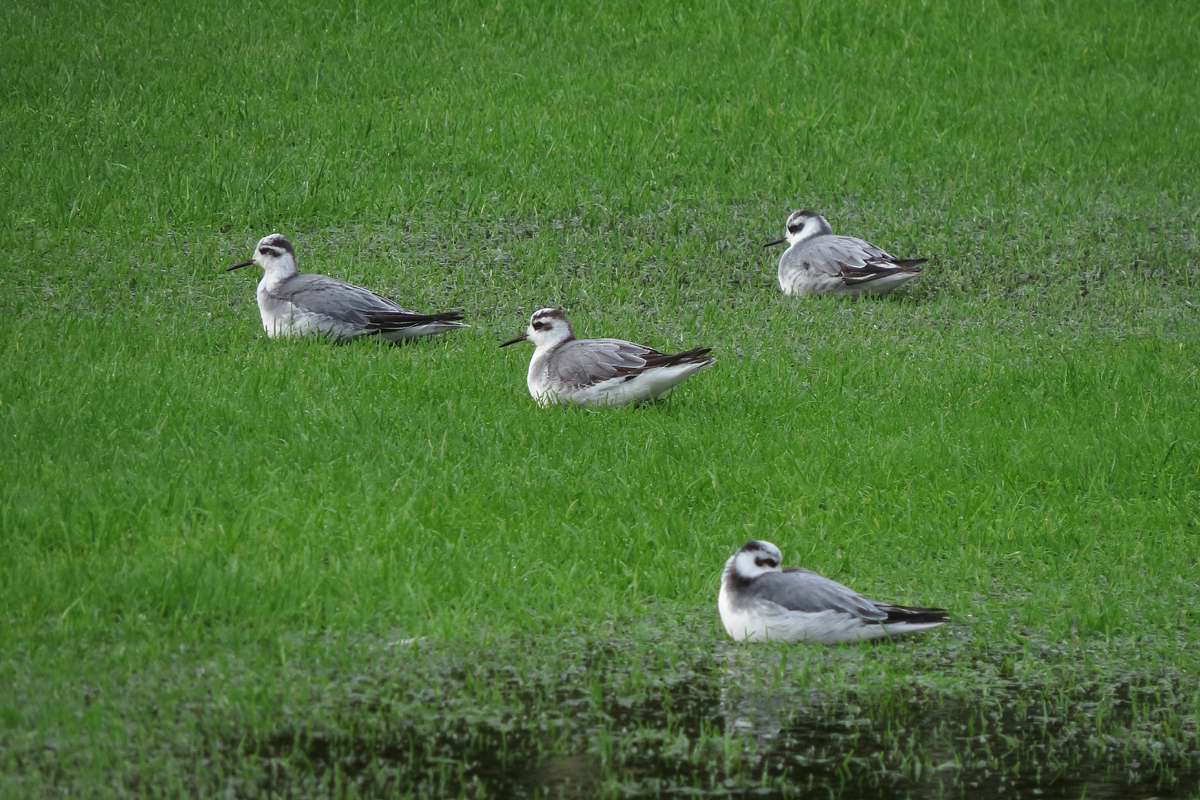 It’s nice that a golf course is actually being good for something.
 I saw some nice birds at Boiler Bay, but most were too far out for photos. This Thayer’s Gull was perched on this little knob of rock for several hours.
 One can often get close looks at Black Oystercatchers at Boiler Bay. This bird was particularly vocal.
 Black Oystercatcher, sleeping with one eye open
The Siletz Bay area is typically not a big birding destination, with the exception of Boiler Bay. But this stretch of the coast can be very birdy, so it was nice that the Common Scoter has inspired so many birders to explore the area. Cheers.
 Broughton Beach, along the Columbia River, has been a favorite spot in Portland to check for shorebirds, gulls, and waterfowl, depending on the season. On my recent visit I enjoyed watching a family of Horned Larks working the beach. There are many subspecies of Horned Lark, and I don’t have a reference that provides a good description of the possible subspecies in this area. These birds had much more yellow on their faces than did the birds I saw recently on Mount Hood.
 This juvenile showed more muted colors and lacked the distinctive facial pattern of the adults.
 I’m not sure if this bird is a juvenile or an adult female.
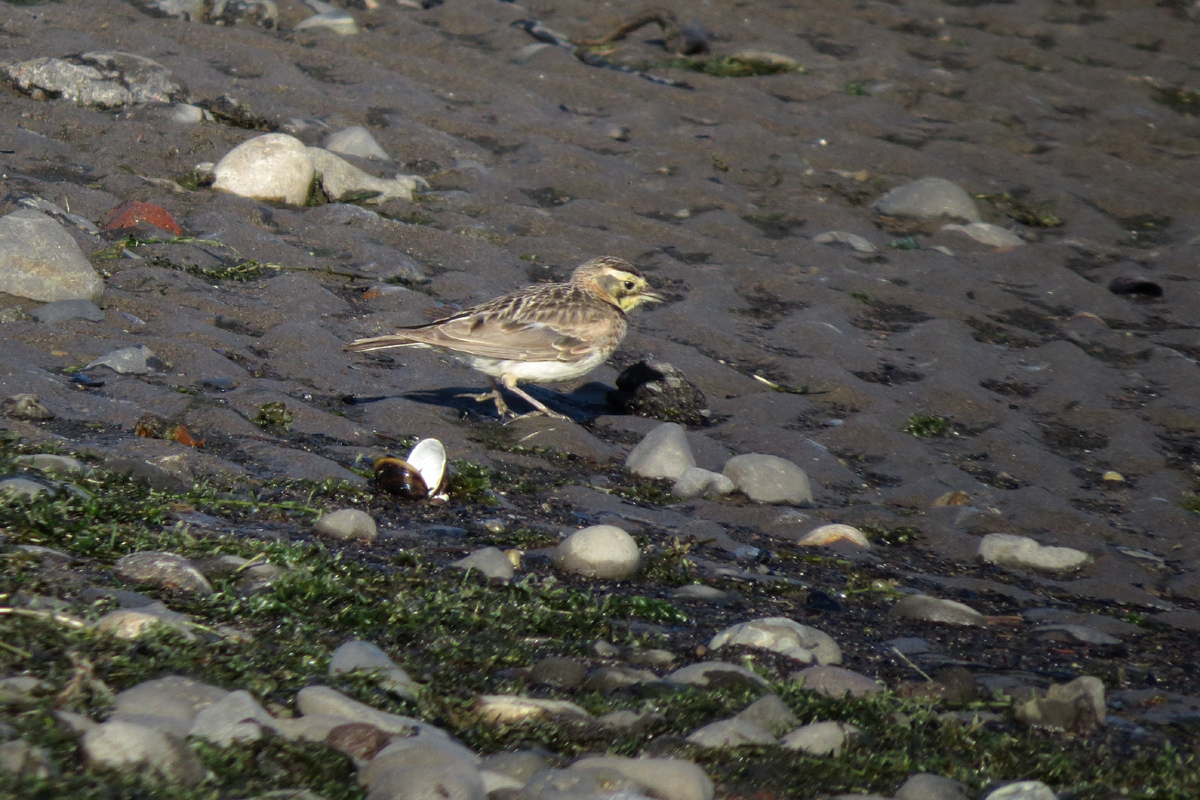 adult female, I think
 adult male, I think
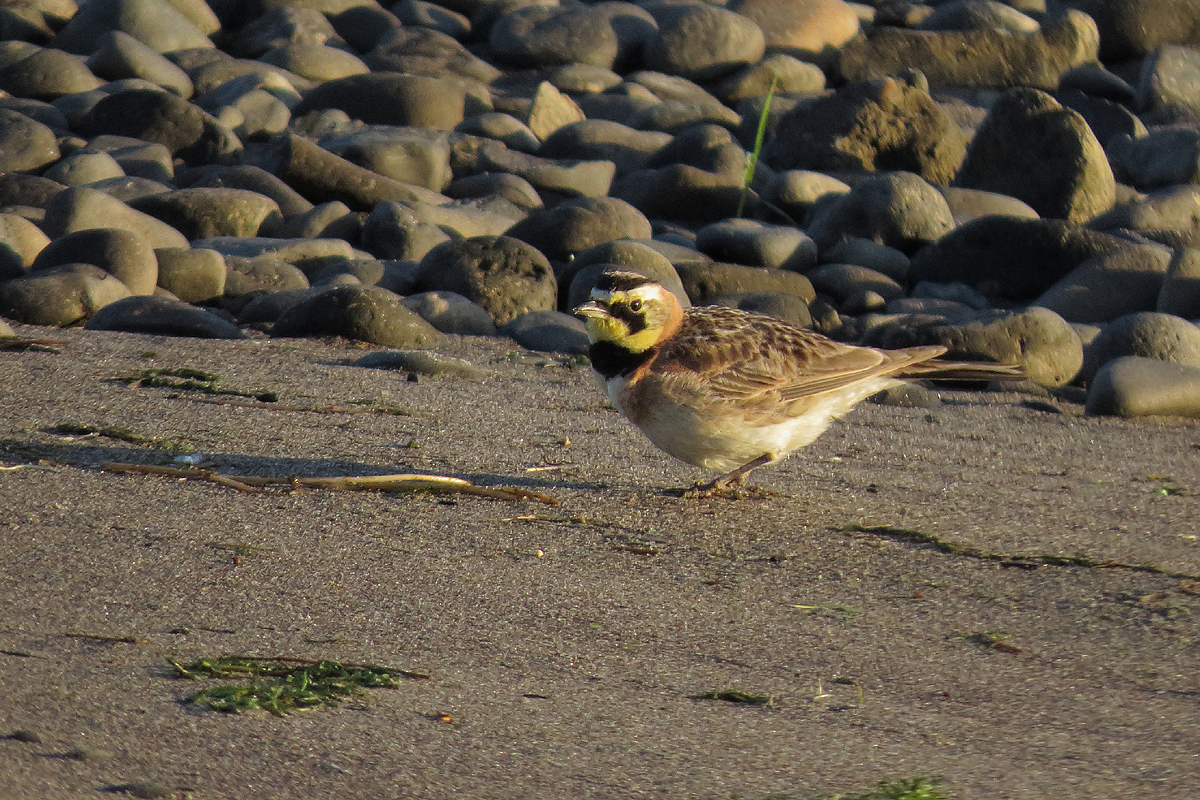 adult male
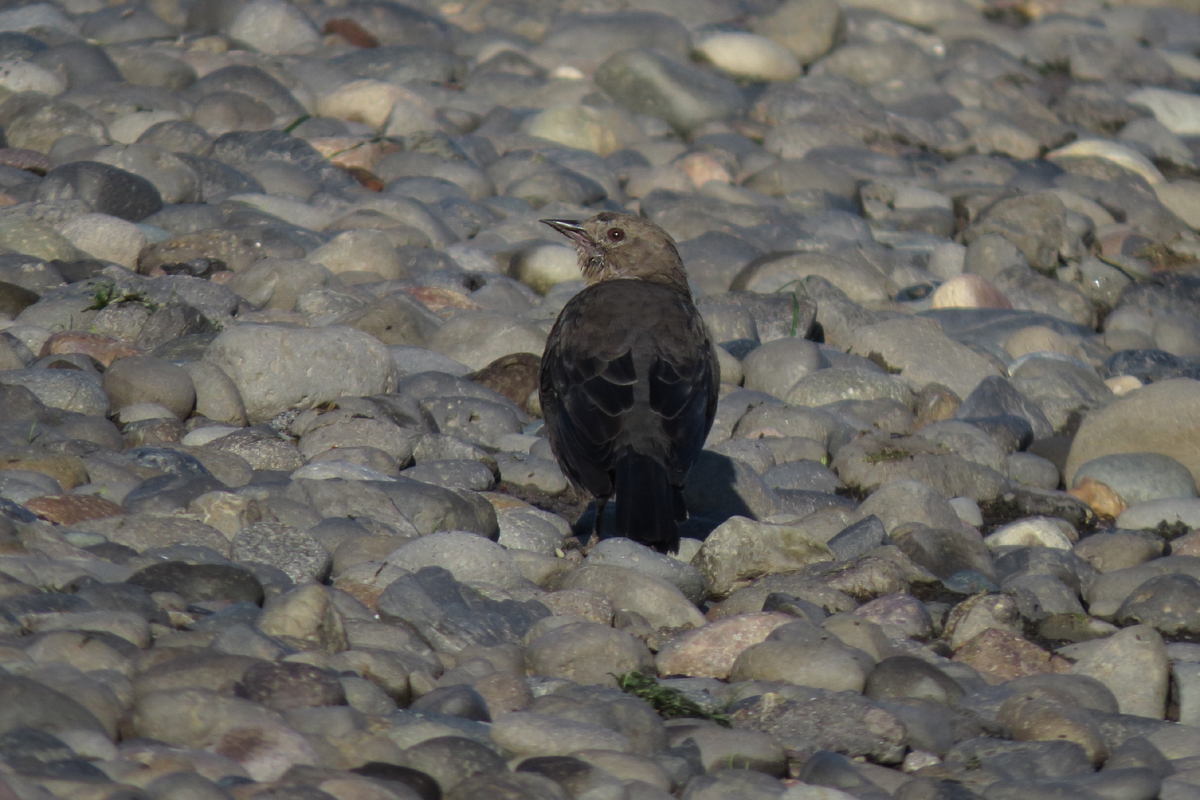 Not a Horned Lark, but Brewer’s Blackbirds are among my favorites. This is a female.
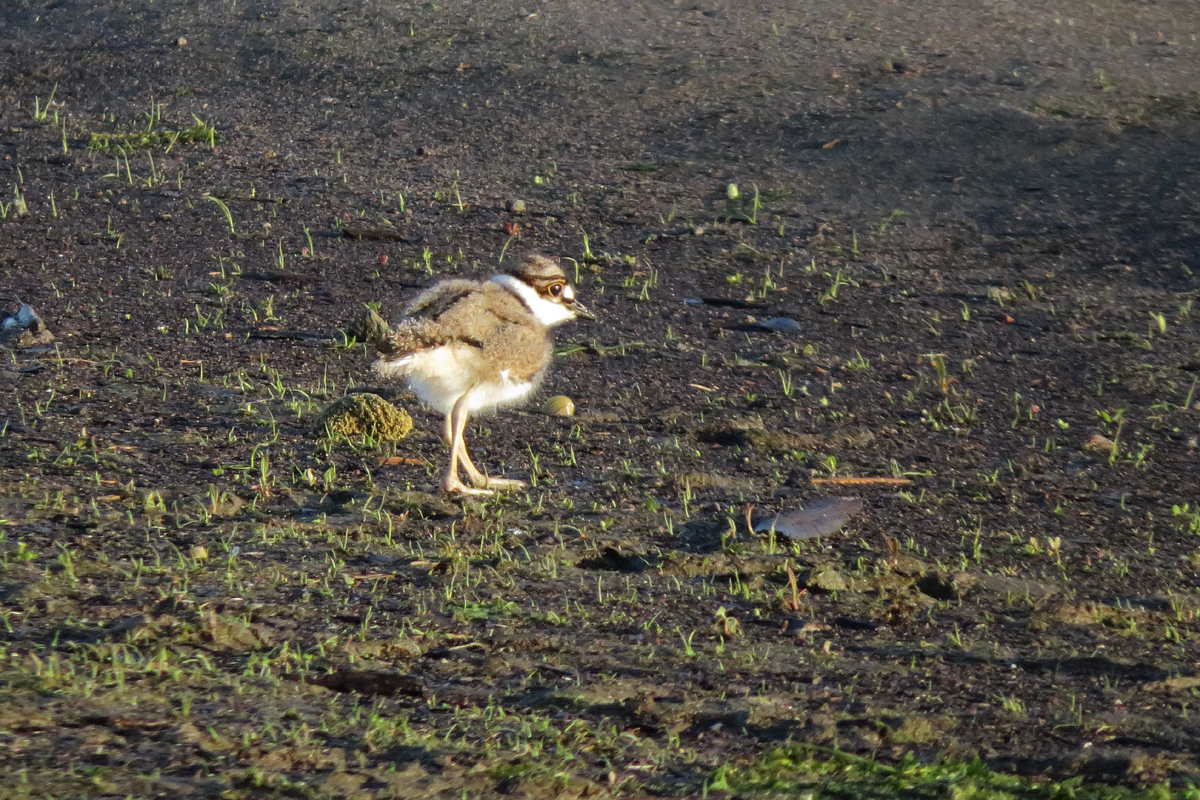 And we end with a ball of fluffy cuteness. I was surprised to find such a young Killdeer so late in the summer.
If you haven’t been to Fernhill Wetlands since the major renovations were completed, you should definitely check it out. There is still a fairly large lake to attract divers, but now there is also a large emergent wetland to explore.
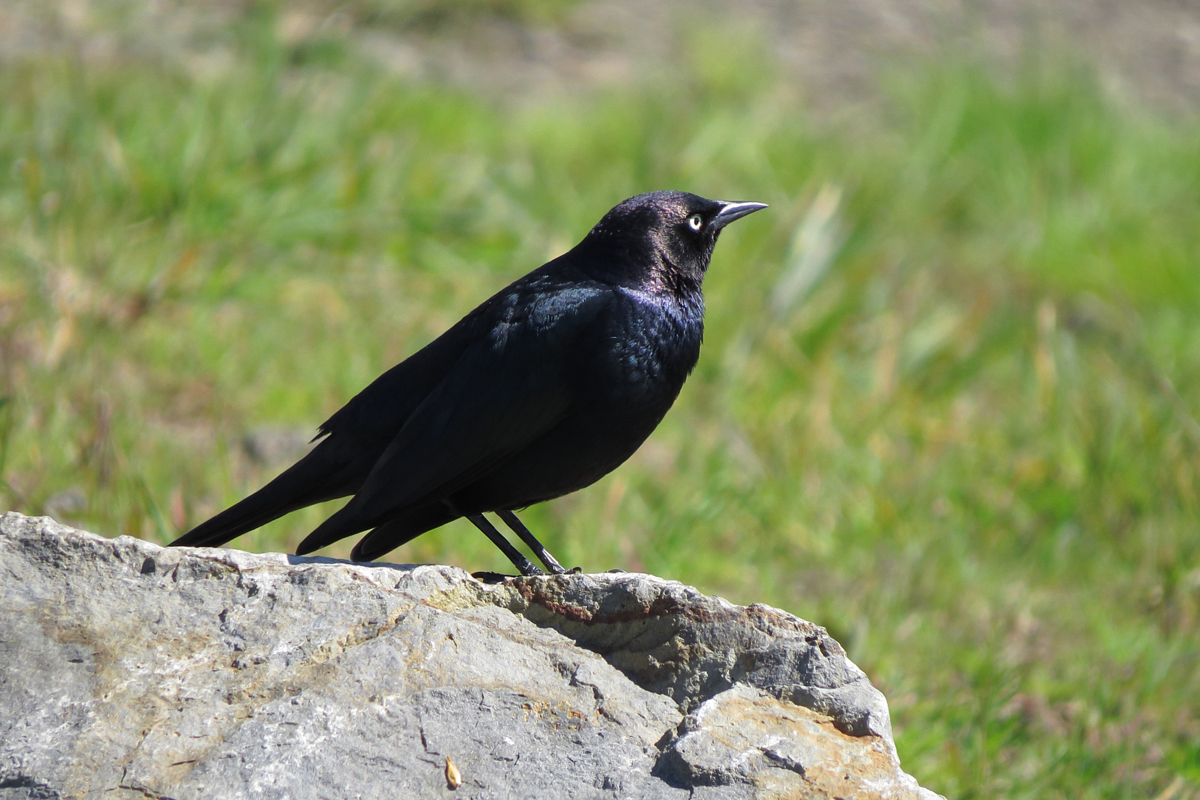 Brewer’s Blackbirds were holding court in the parking lot.
 The Red-winged Blackbirds are setting up their territories.
 Tree Swallows, giving each other that “come hither” look.
 Even though the local nesters are getting down to business, there are still plenty of wintering Cackling Geese around. These are Ridgeway’s Cackling Geese.
 There is certainly no shortage of American Bullfrogs at Fernhill, which may explain why I didn’t find any native frogs.
 The shallow waters are teaming with these minnows. I can’t tell what species they are.
 I surprised this little Northwestern Garter Snake while she was sunning herself. I saw a Common Garter later in the visit.
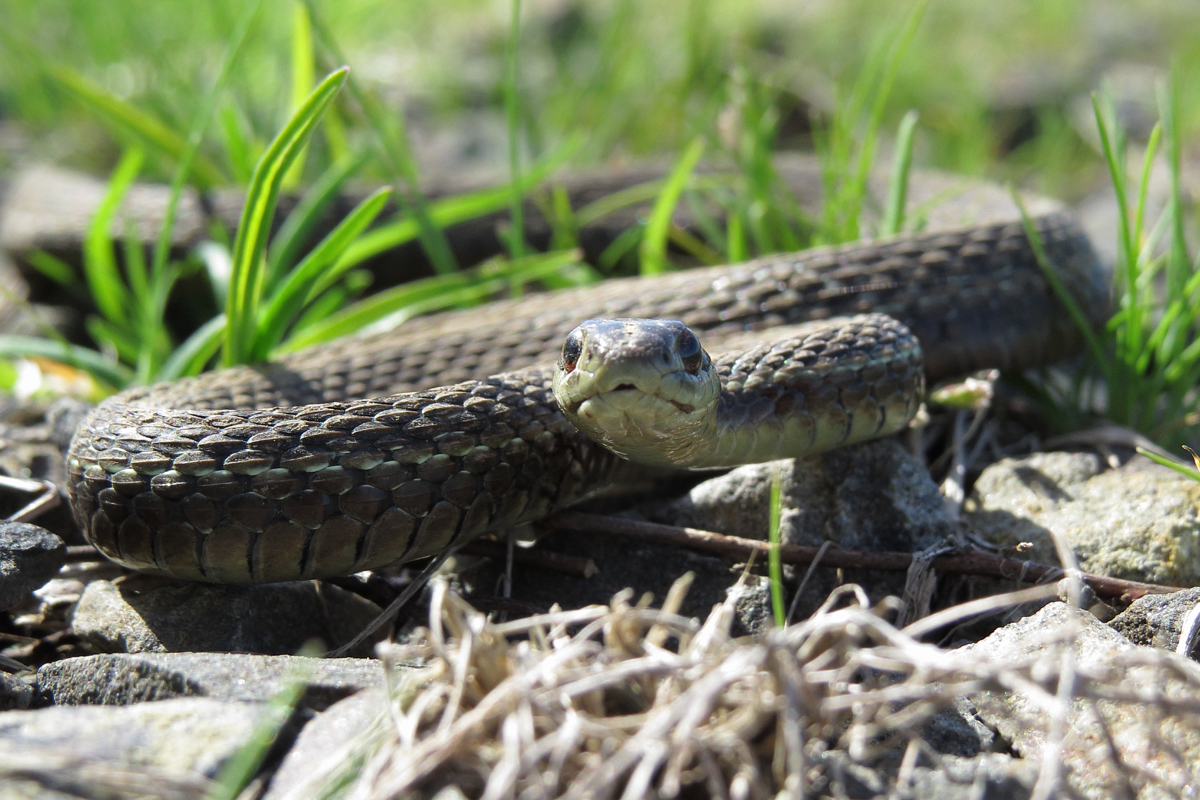 Northwestern Garter Snake
 Fort Rock (Birding Oregon p. 27) is a wonderful open ring of rock rising out of the flat sage steppe of Lake County. The remnant of a lava eruption, worn down by the waves of an immense lake, the high rock walls are home to White-throated Swifts, Rock and Canyon Wrens, and various raptors. The sage flats inside and surrounding the structure attract Sage Sparrows and Green-tailed Towhees.
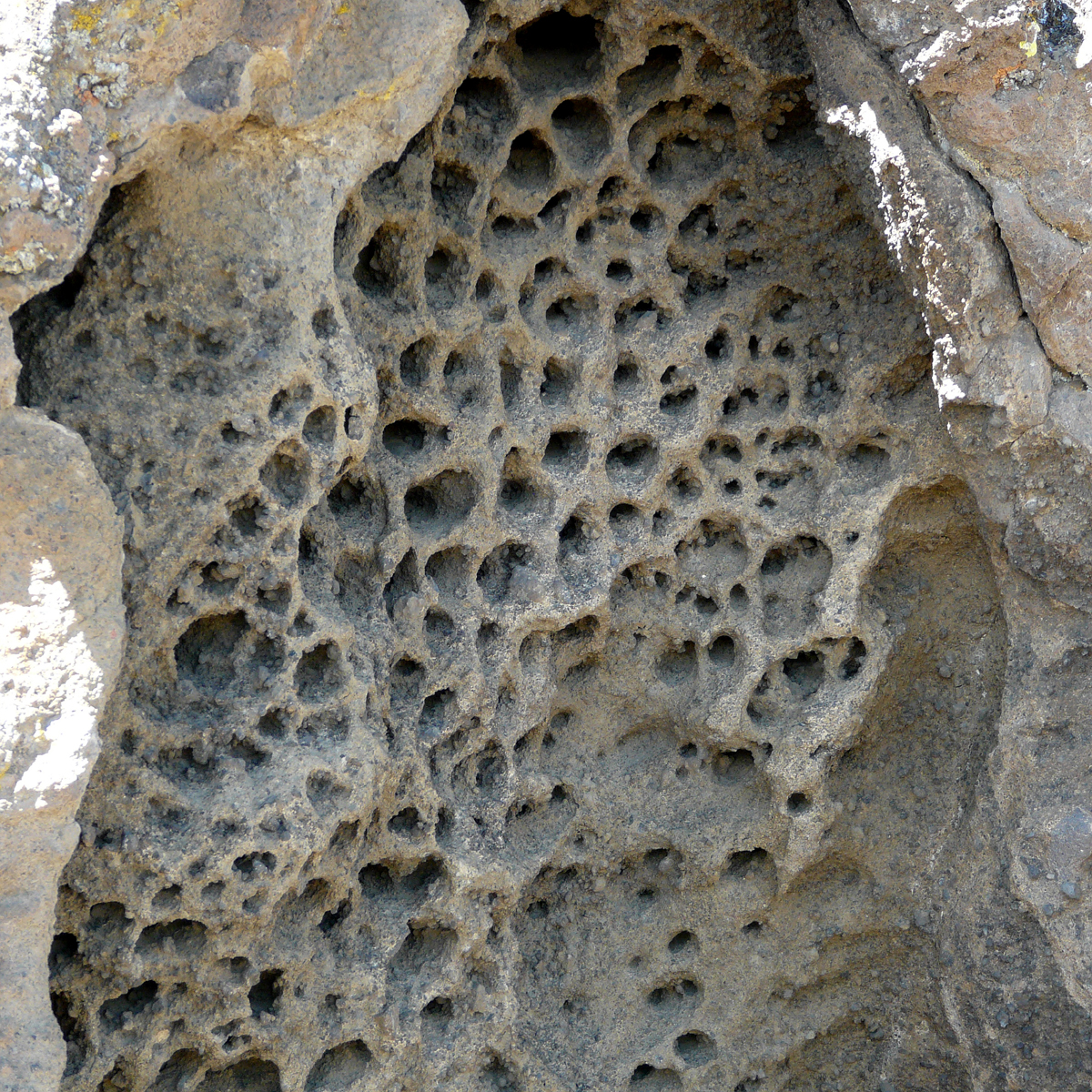 The rock is filled with bubbles, the result of lava erupting into a lake.
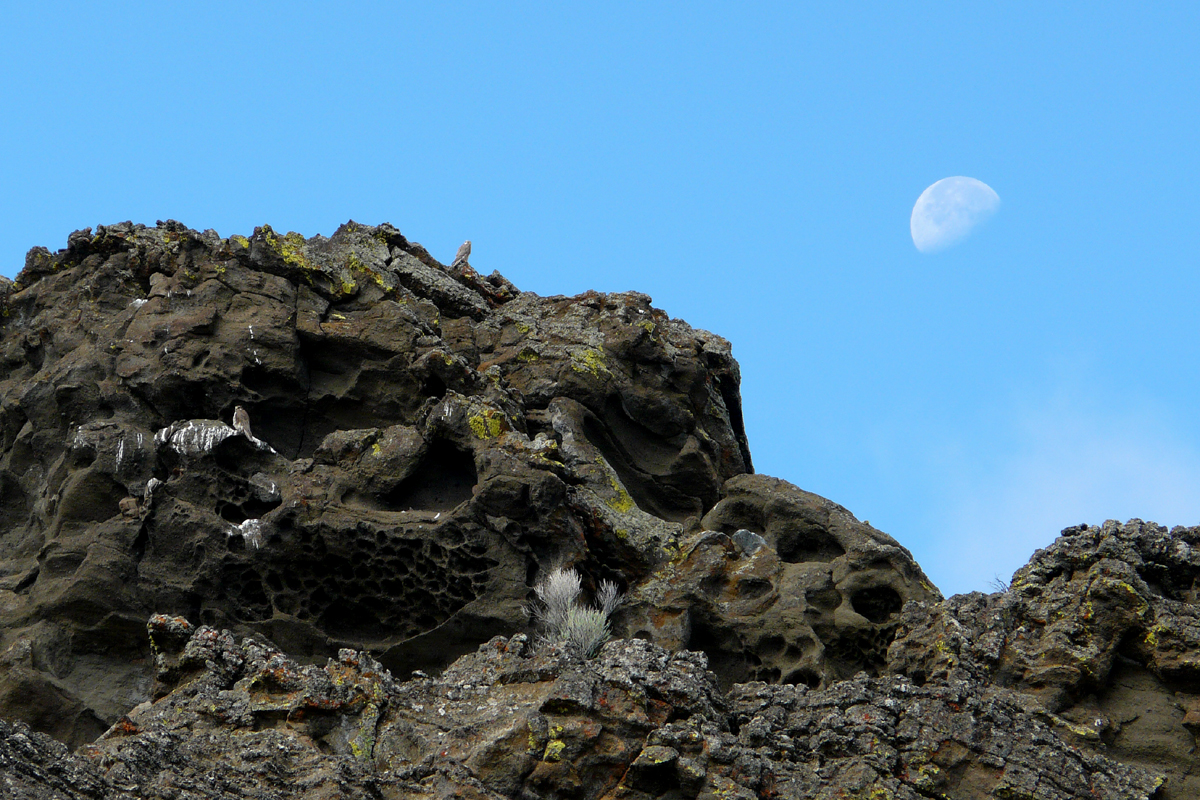 The moon over the western wall. There is a pair of Prairie Falcons in this photo, the male is on top of the ridge and the female is down and to the left near the whitewash.
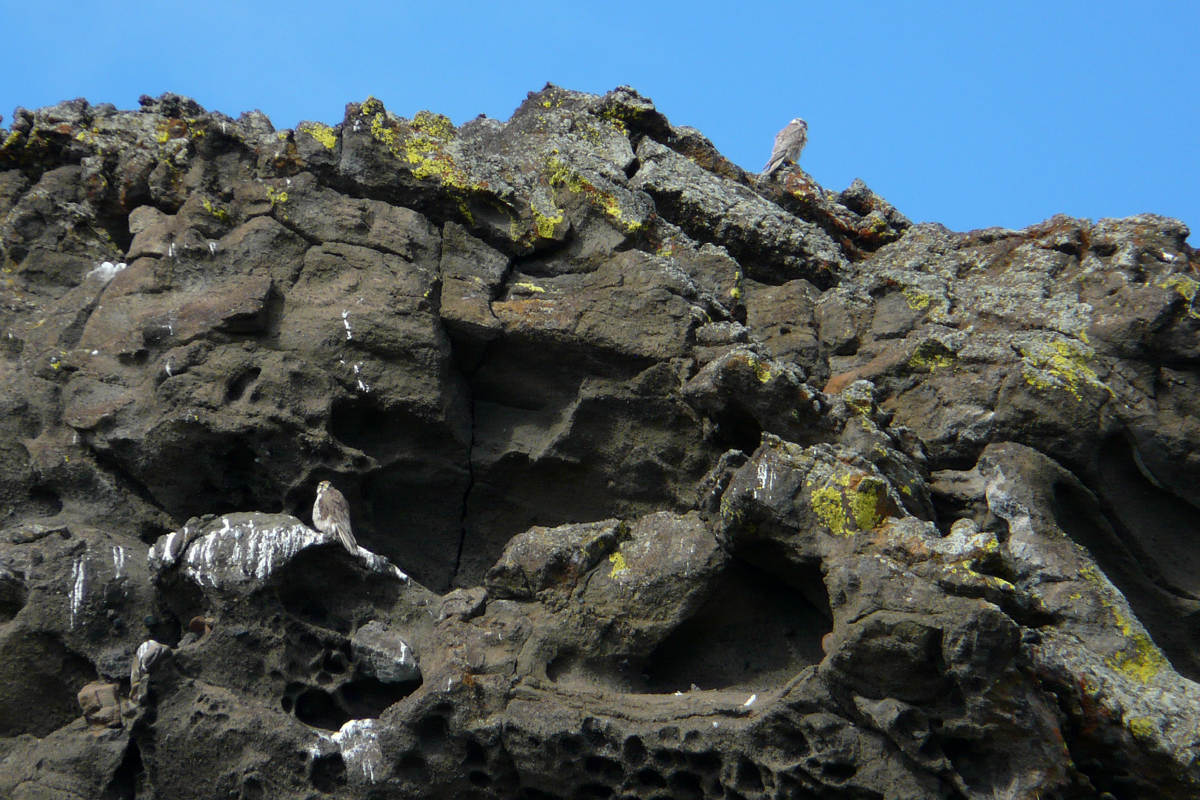 Here’s a closer look at the Prairie Falcons.
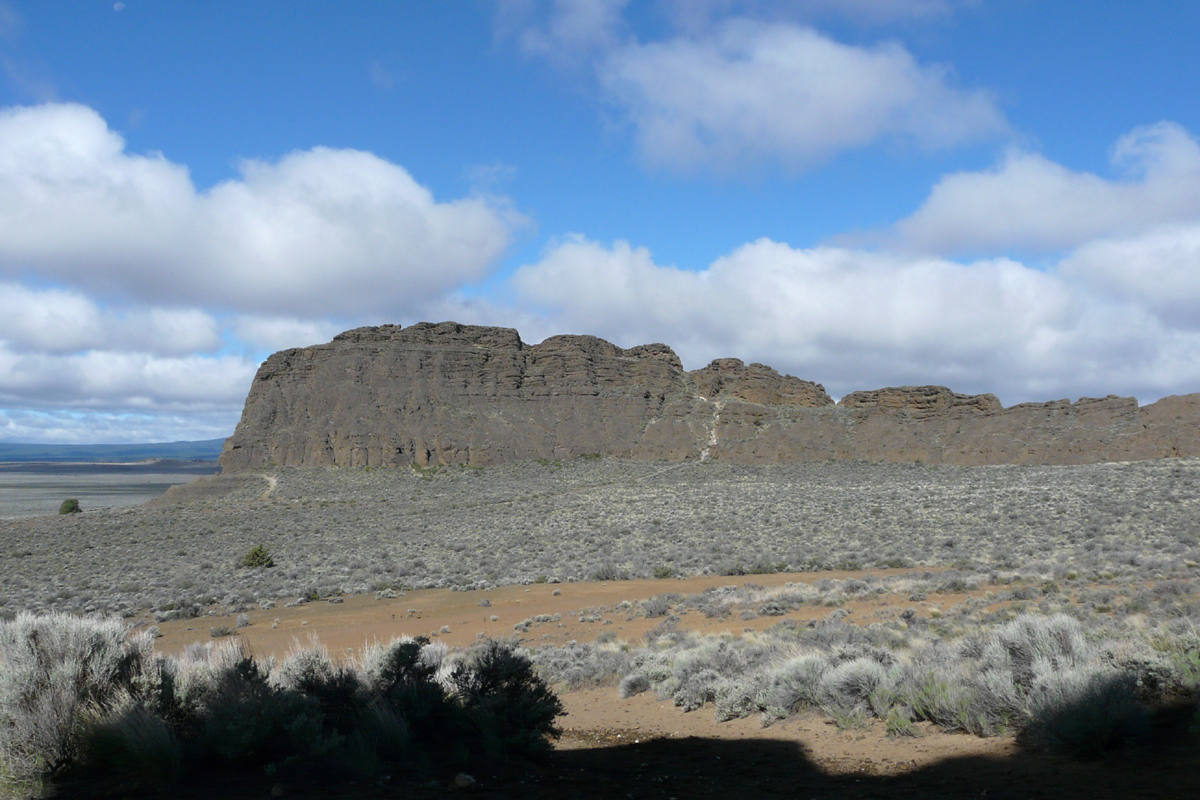 A view of the west wall from inside the crater.
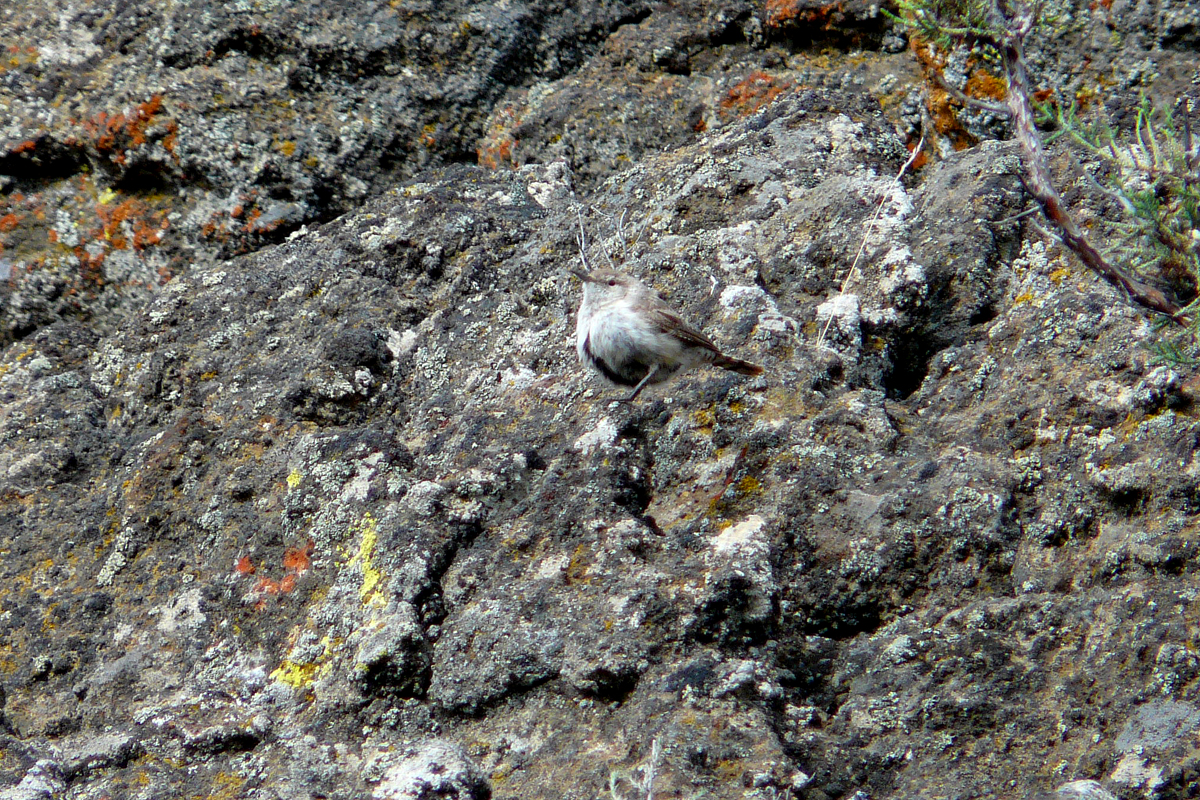 Rock Wren, blending in well with his surroundings
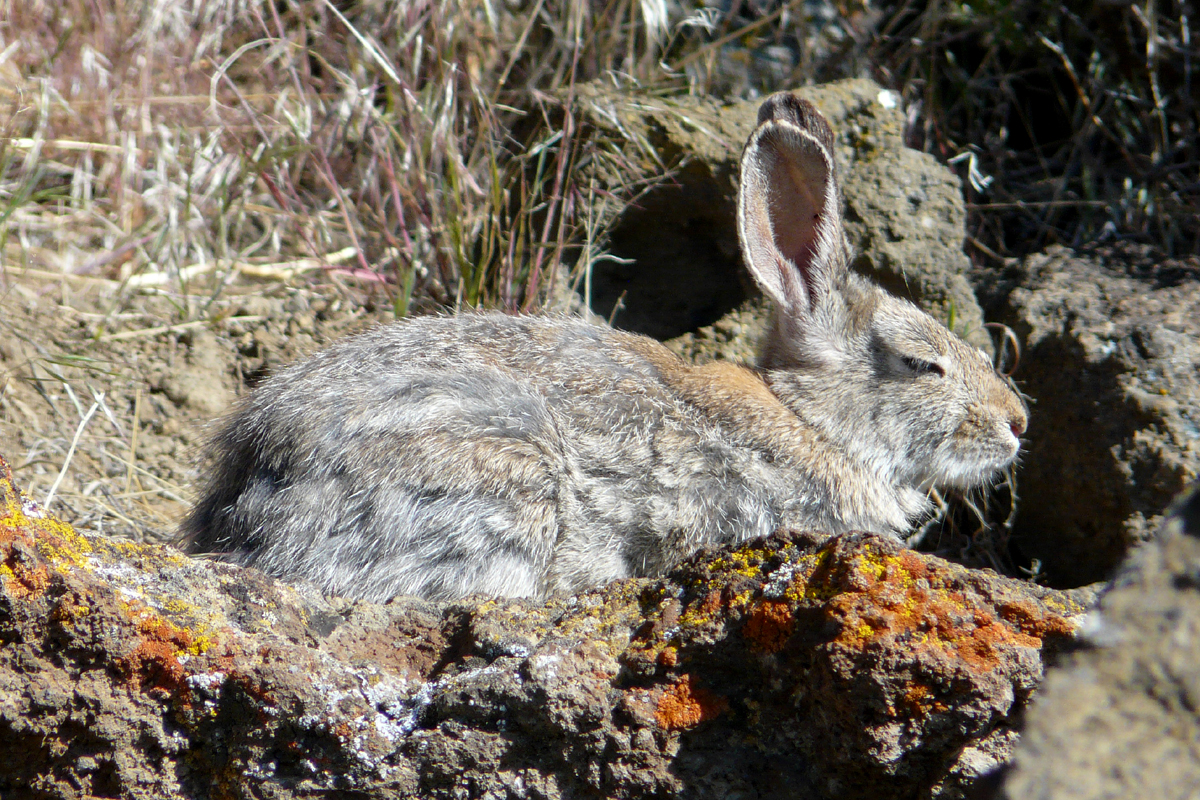 This Mountain Cottontail was soaking up a little sun on this cold windy morning.
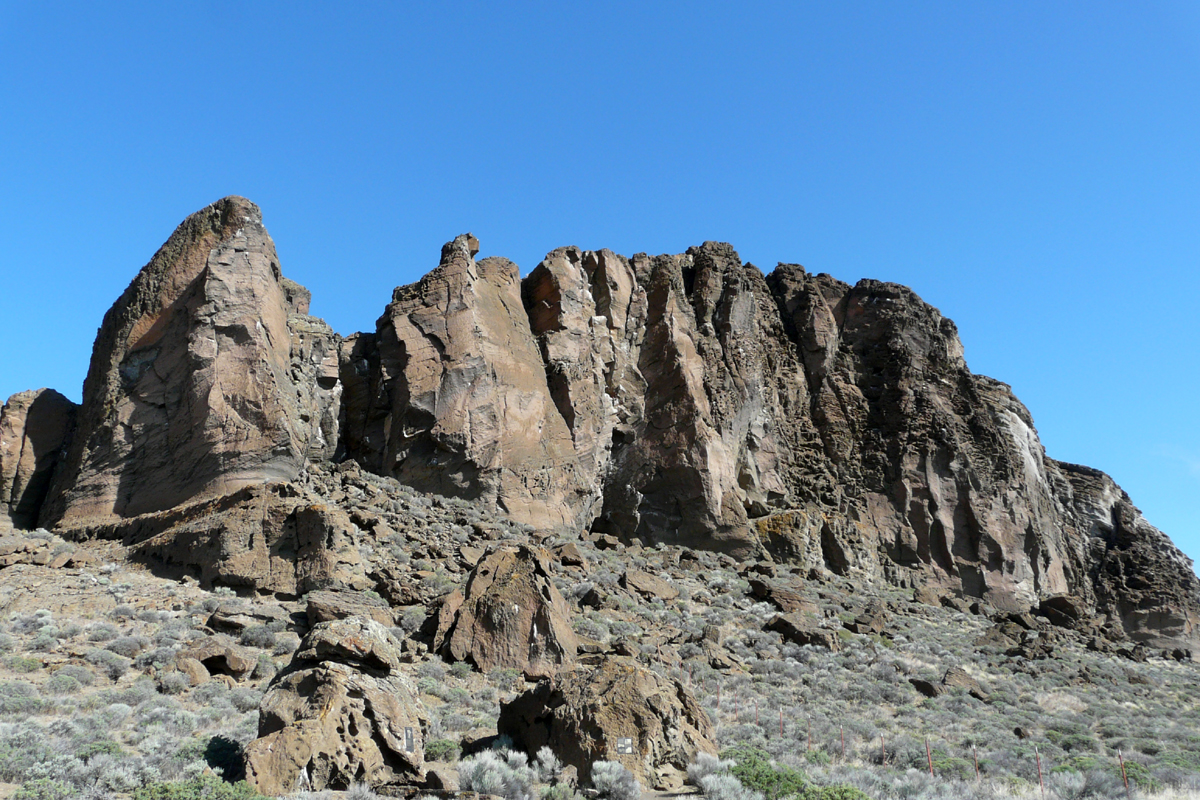 The outside of the eastern wall near the parking area. This area seems to be best for White-throated Swifts and Canyon Wrens.
 The vegetation near the parking lot attracts both migrant and resident birds. Brewer’s Blackbirds are common here.
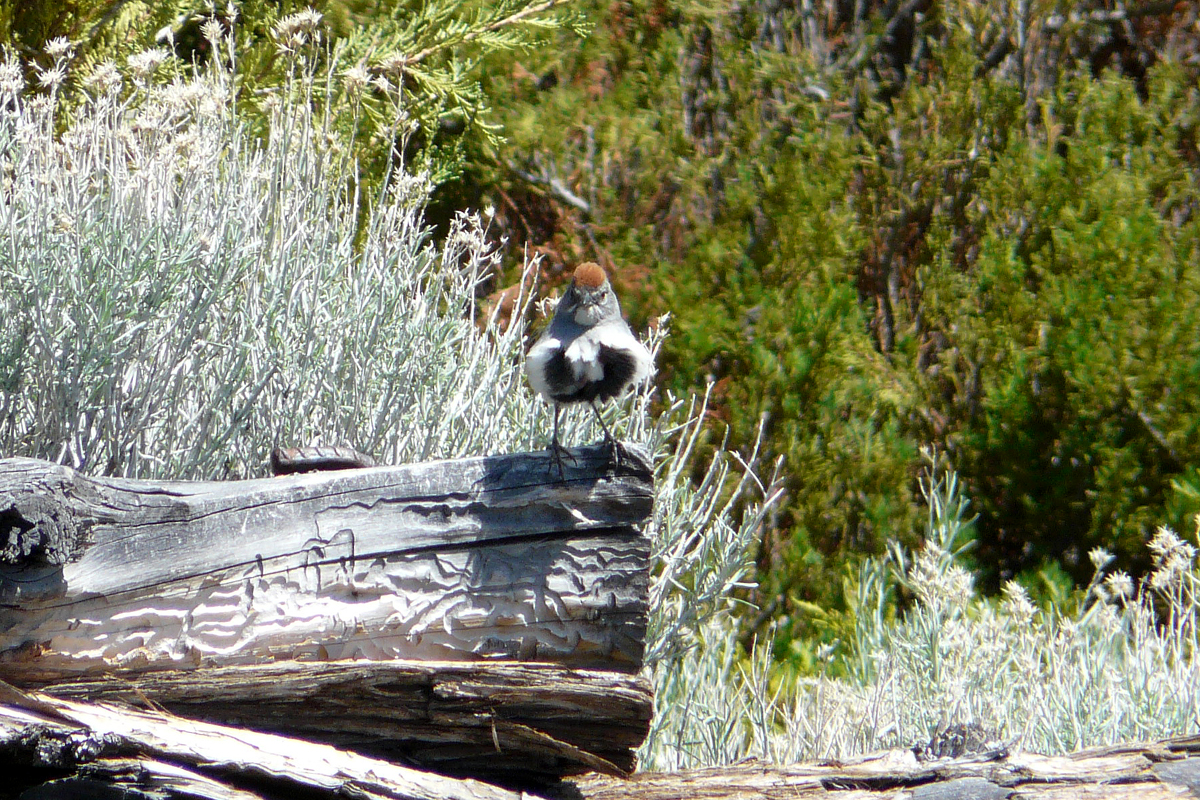 Green-tailed Towhee being buffeted by the wind
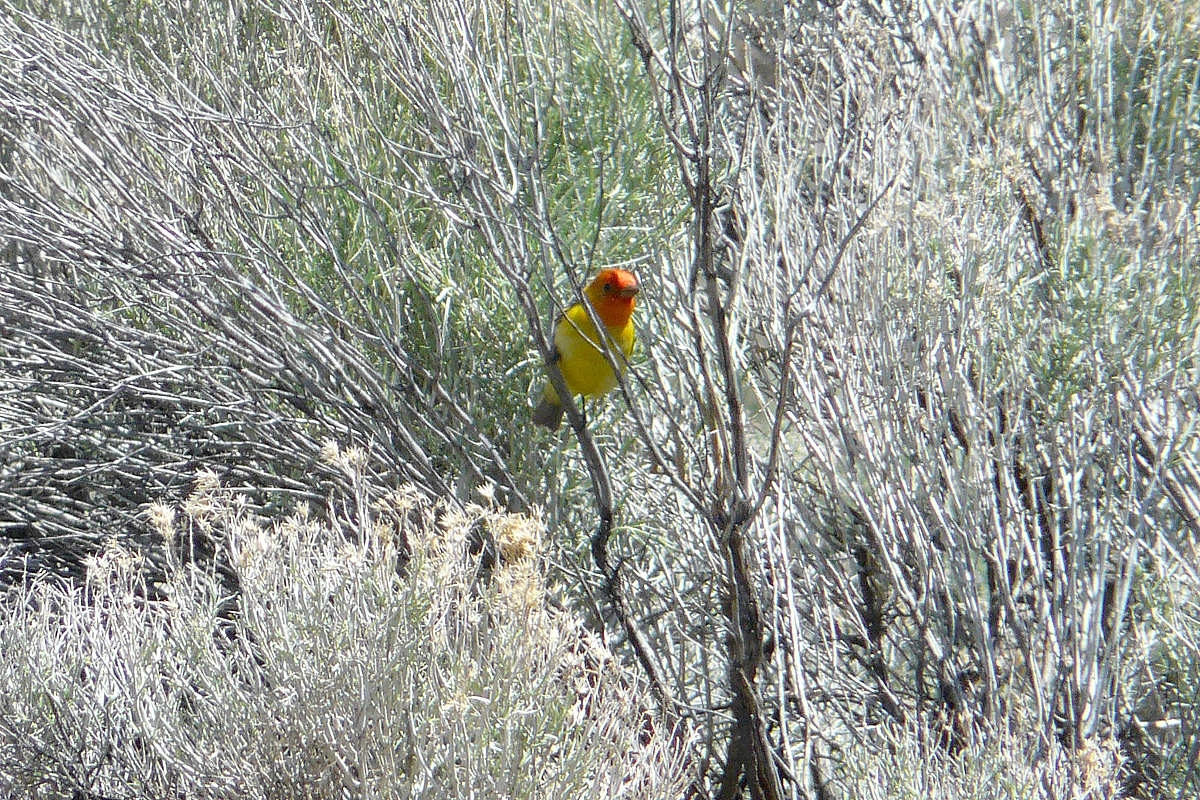 Western Tanager
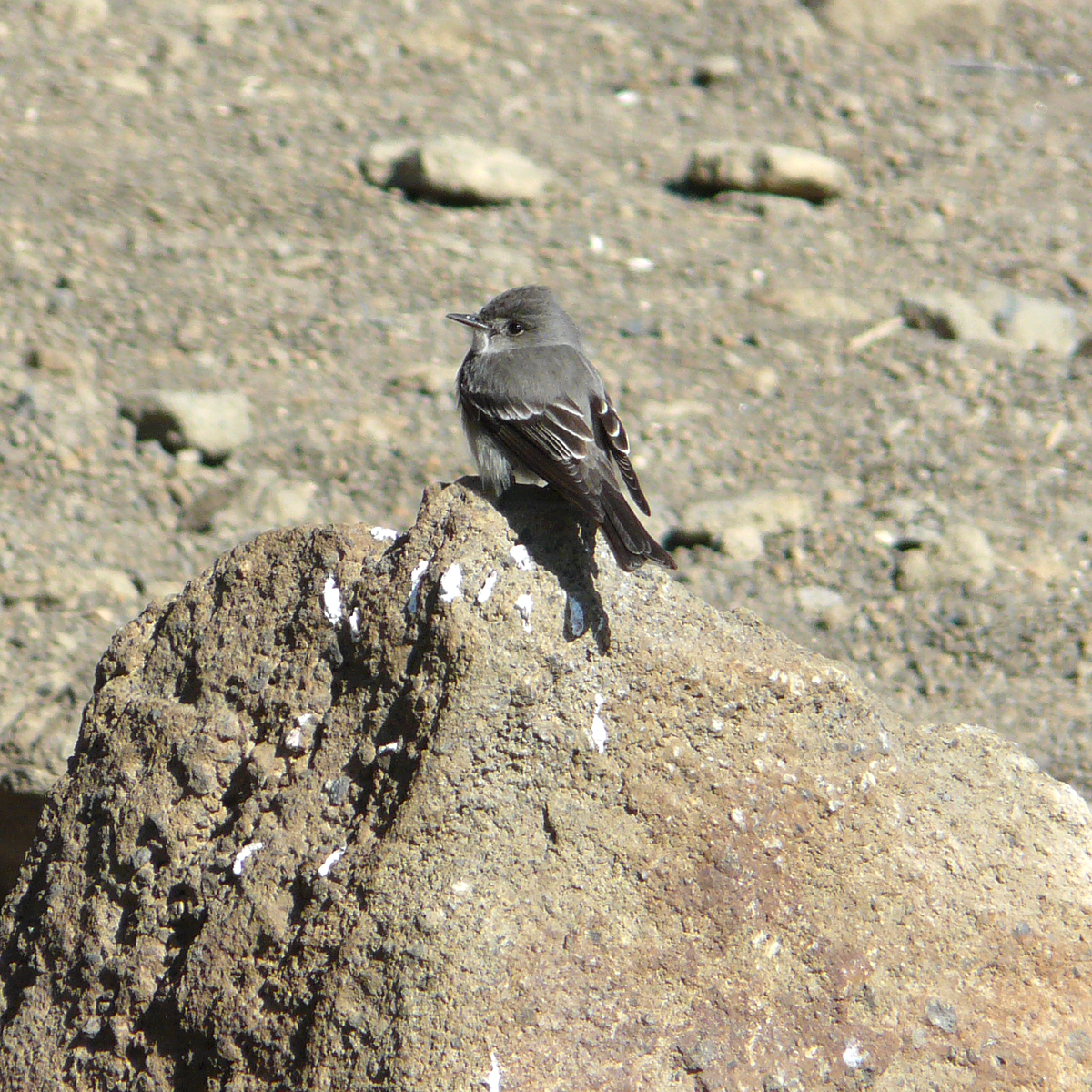 Cold temperature and high winds forced this Western Wood-Pewee to hunt from the ground.
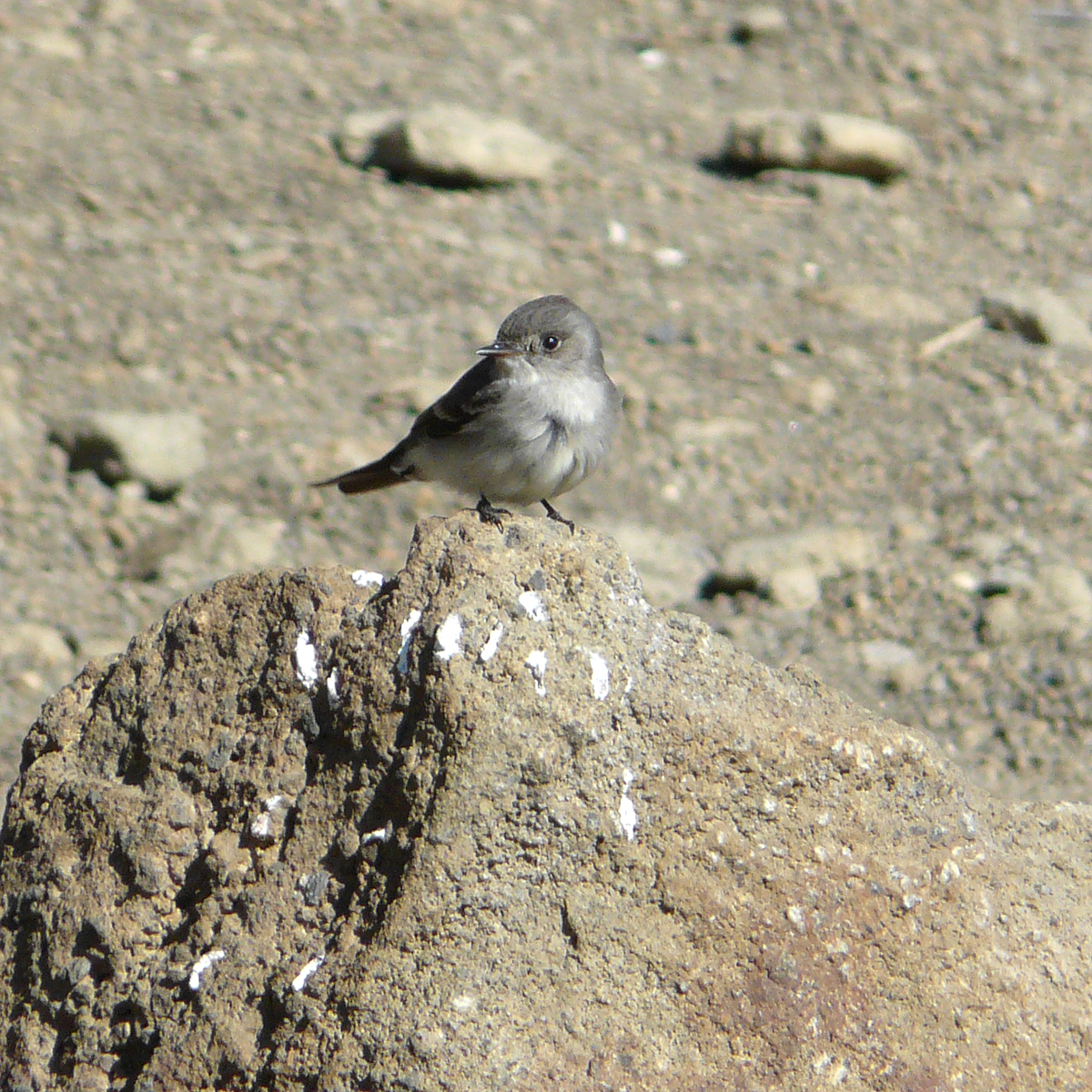
I walked around Fernhill Wetlands (Birding Oregon, p. 61) in the mid afternoon. Most of the waterfowl that roost here on winter evenings were still off feeding in the area fields, but there is always something to see.

A flock of Brewer’s Blackbirds were hanging out in a tree by the parking lot.

This American Kestrel was in the same tree as the blackbirds, but the two didn’t seem to pay any attention to each other.
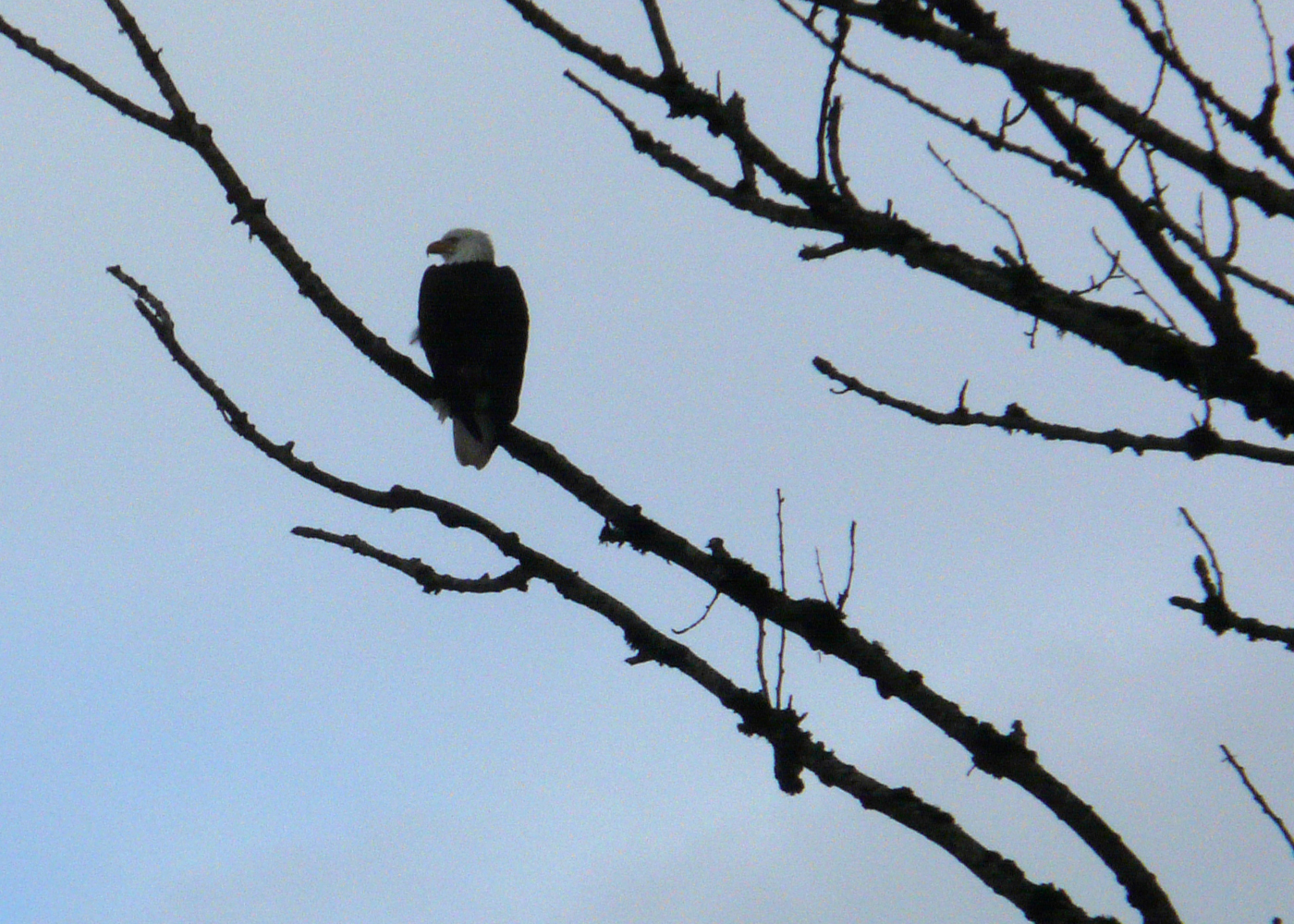
A pair of Bald Eagles is usually visible in the grove of large cottonwoods on the southeast corner of the property.

The eagles have started a new nest this year.
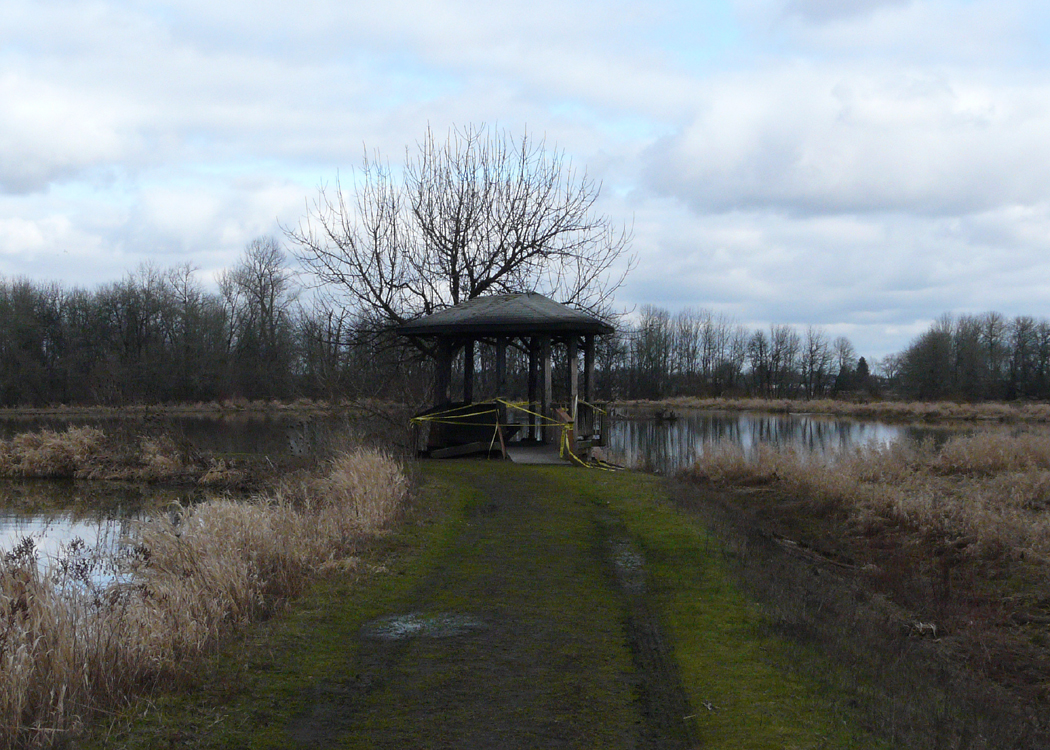
This observation platform was destroyed by arsonists. Fernhill Wetlands is not a park, but is owned by the area waste water department. As a result, there are few resources for facilities or habitat management.

Tundra Swans were flying in to roost. They tend to stay in the more distant parts of Mitigation Marsh.
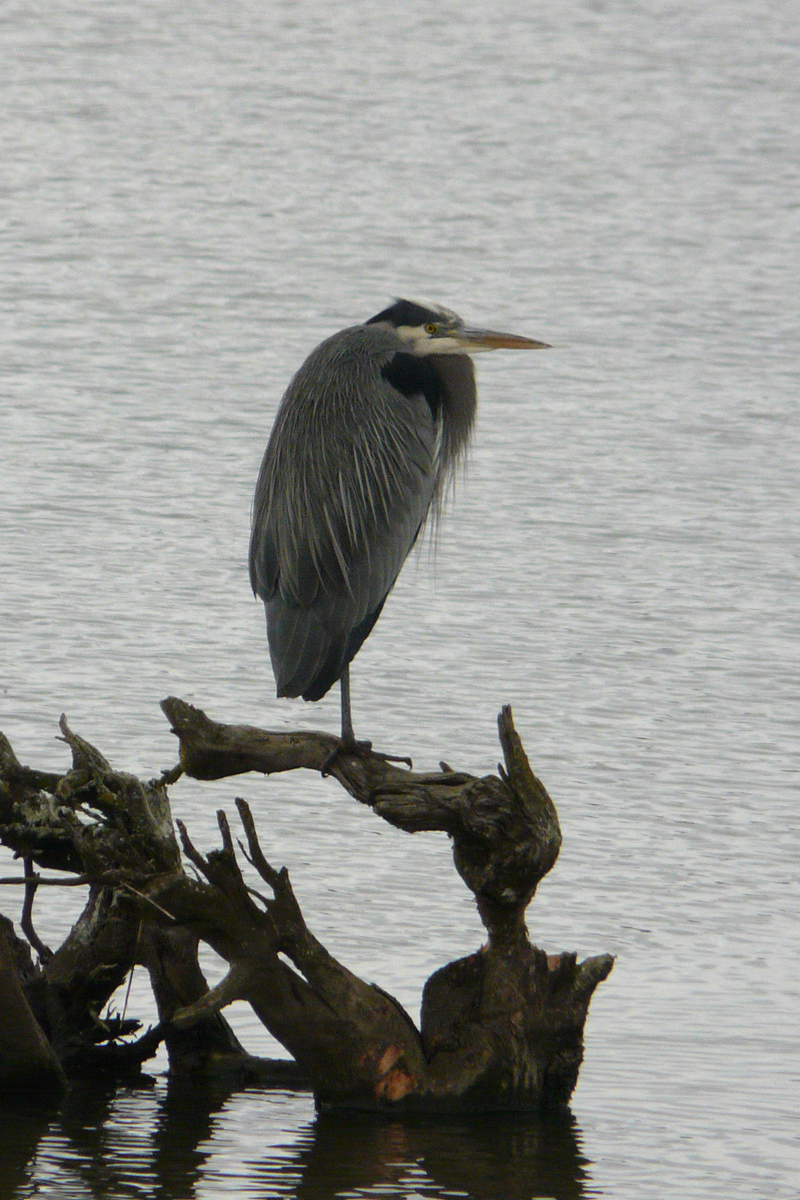
Great Blue Herons are nesting in the trees to the east of the wetlands. This individual was resting on a snag in Cattail Marsh.
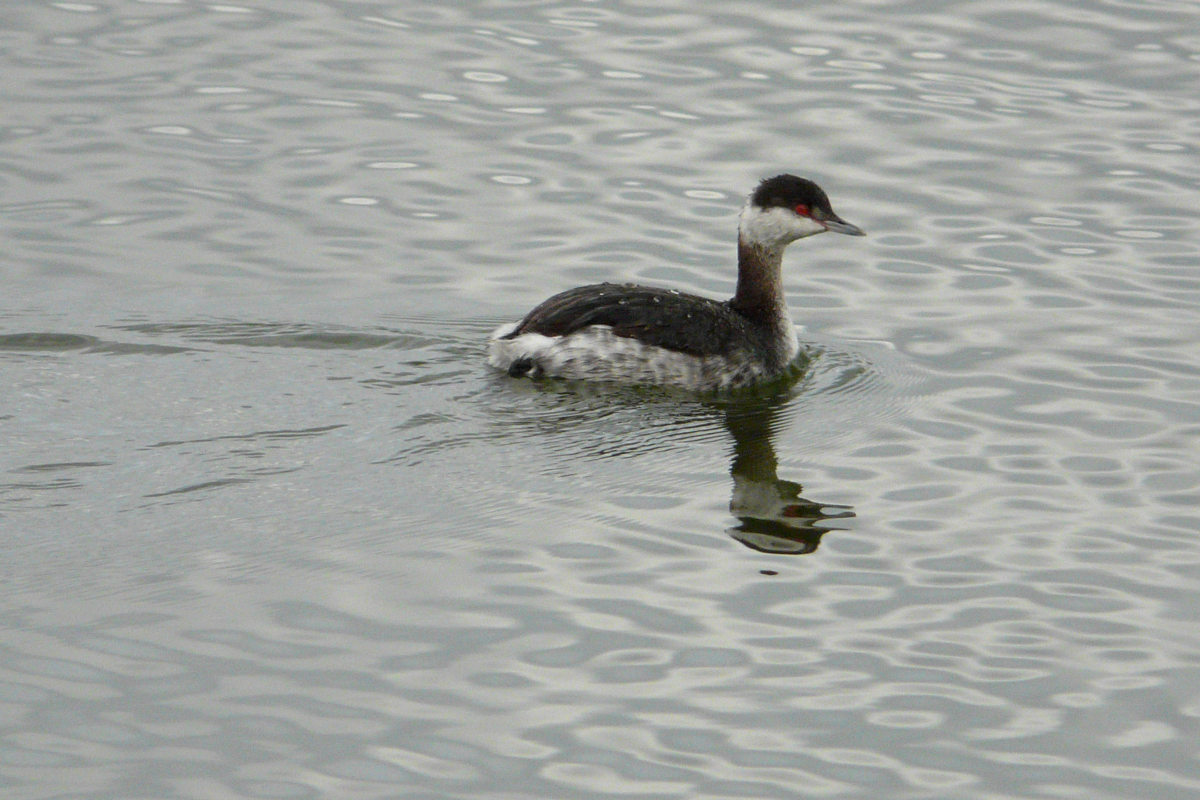
The deeper water of Fernhill Lake attracts divers like this Horned Grebe.
 Ethical Birder