Ankeny NWR

The August issue of Birder’s World Magazine features my brief site guide to Ankeny National Wildlife Refuge, just south of Salem. Like the other refuges in the Willamette Valley, Ankeny is a stronghold for wintering flocks of geese. But the refuge is good for other migrants and for nesting species, as well. The guide can be viewed at http://www.birdersworld.com/brd/default.aspx?c=a&id=1139 .

One of the better spots at Ankeny is the Rail Trail, a boardwalk through an ash swale. The woods are good for songbirds and owls. The boardwalk ends at a blind overlooking a marsh that hosts waterfowl and American Bitterns.

Fernhill Wetlands

I visited three of the Washington County wetlands today, but spent most of my time at Fernhill (Birding Oregon p.61). Nesting species were present in abundance, but overall species diversity was pretty low.


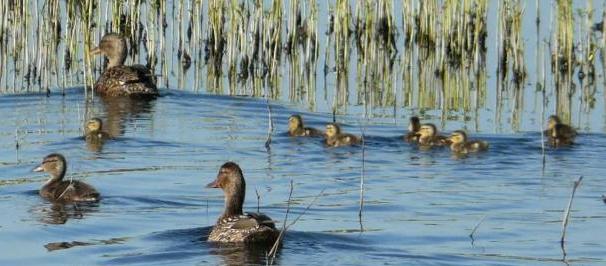
The duck at the top of this picture is a Gadwall, a rare breeder in western Oregon, with her newly hatched brood. The duck at the bottom is a Mallard with her larger duckling. We are quickly entering the “ugly brown duck” season, when all the waterfowl are molting and looking increasingly similar.


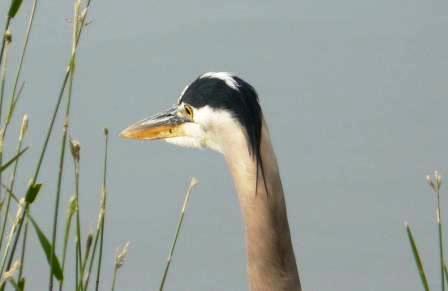
Great Blue Heron


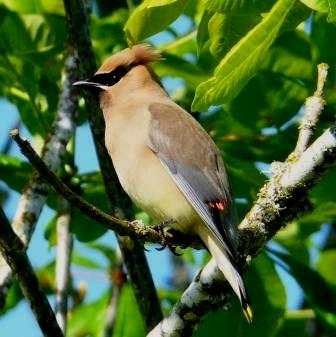
Cedar Waxwing


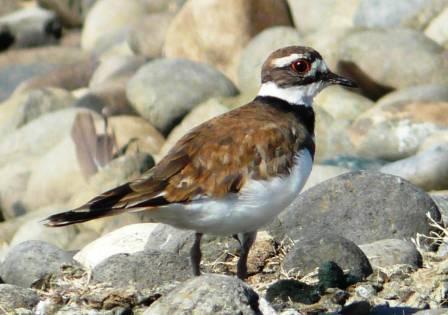
Killdeer were the only shorebirds present today. Migrant shorebirds should start appearing in about two weeks.

Sauvie Island

Migration has wound down by now, and the summer breeders are out in force. Here are a few birds I found on Sauvie Island this morning.


Savannah Sparrows can be heard at the edges of all the pastures.


Rufous Hummingbird


This Bald Eagle hovered over me, scolding the whole time. That behavior is more typical of Red-winged Blackbirds. I thought the eagles would be done nesting by now, but apparently they still have young in the nest.


Blue-winged Teal, uncommon in the Willamette Valley


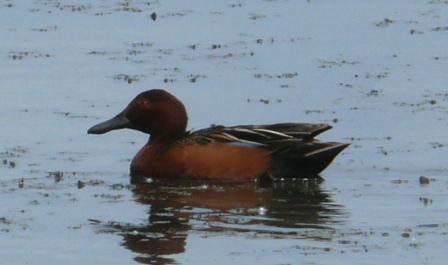
Cinnamon Teal, common, but always a delight


hungry Barn Swallow chicks


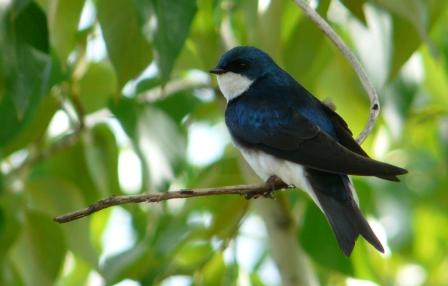
Tree Swallow

Bear Valley

While not nearly as scenic as Logan Valley, Bear Valley (Birding Oregon p. 33), west of Seneca, has its share of birds. It is the only site where birders have reported Upland Sandpipers this spring. My recent attempt to find these birds was unsuccessful, but the pastures hosted plenty of Long-billed Curlews, Willets, Wilson’s Phalaropes, and more Wislon’s Snipes than I have ever heard in one place.


As you would expect in a county that has only one stoplight, car traffic is pretty light. Traffic is delayed occasionally by herds of cattle crossing the highway.


Western Meadowlark


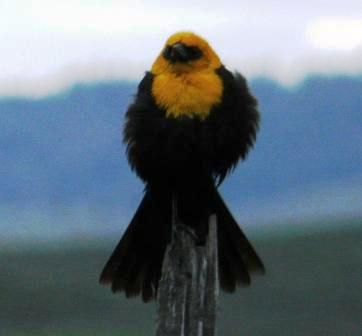
Yellow-headed Blackbird, showing off for the ladies


Mule Deer, displaying the enormous ears that give the species its name.

Logan Valley


On a recent trip to Grant County, I visited one of my favorite sites in Oregon. Located 17 miles west of Seneca, Logan Valley (Birding Oregon p.32) is a vast meadow. The area attracts the typical grassland species; Savannah Sparrow, Brewer’s and Red-winged Blackbirds, California Quail, and Western Meadowlarks.


Sandhill Cranes and Long-billed Curlews are two of the more dramatic birds found in the valley. This site used to host Upland Sandpipers, one of the rarest breeding birds in Oregon, but that species has not been reported from Logan Valley in recent years. One can always hope.

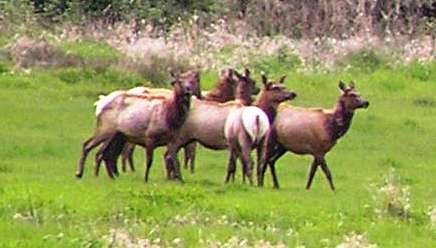
Aside from the birds, the main attraction of Logan Valley is watching the herds of grazing animals. Pronghorn, Mule Deer, and Elk can often been seen simultaneously.

John Day Fossil Beds


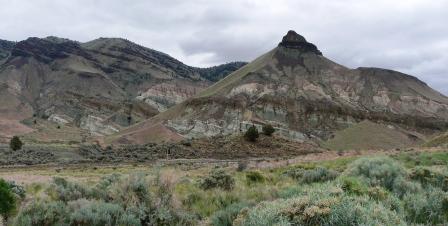
Marsha and I visited the Thomas Condon Paleontology Center, part of the John Day Fossil Beds National Monument in the Painted Hills (Birding Oregon p. 34). This site offers a great combination of beautiful scenery, a museum with excellent fossil specimens, and, of course, a few birds of the sage steppe and rimrock habitats.


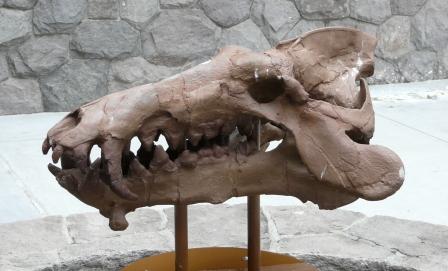
This skull replica graces the courtyard in front of the museum. Just above, several Cliff Swallows were building their mud nests.

The sage around the center held several Western Meadowlarks and Western Kingbirds

A pair of Say’s Phoebes had a nest in a shed by the monument headquarters, just down the road from the museum.

These birds would perch on a set of Mule Deer antlers mounted above the door before entering the shed to attend the nest. The fact that this bird is carrying food indicates that the eggs have hatched.

Of birds and aesthetics

Several people have asked me why Birding Oregon doesn’t include any sites in the Columbia River Gorge. One reviewer recently bemoaned the fact that I did not include the Painted Hills. (Actually, I list several sites in the Painted Hills on page 34. I did not include any sites in the Gorge because the birding there is not any different from several other sites described in the Cascades.)


People tend to assume that beautiful scenery automatically produces great birding. But as Gershwin put it,”It ain’t necessarily so.” When I snapped this lovely picture of Crater Lake, there were about three species of birds present. I can usually find far more species at a little city park. In the winter, a certain urban duck pond in Portland often hosts six species of gull and a dozen waterfowl.

The truth is, birds, like all other organisms, require food, water, shelter and space. Some species can only find these in old-growth forests or pristine alpine meadows. But some find all they need in parking lots, city parks, dumps, and sewage treatment plants.
Birds do not share our aesthetic values. Do not assume where birds will be based on the view. It is nice when the two come together. But quite often, birds will lead us to ugly places. And that’s OK. What could be better at adding beauty to an ugly place than a bird? So celebrate that White-crowned Sparrow singing in the parking lot of the local shopping center. Find comfort in the Ring-billed Gull perched on the dumpster behind a restaurant. These are gifts that sustain us until we can make our way back to the beautiful places.
Torn between two seasons

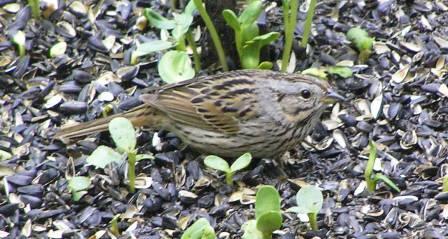
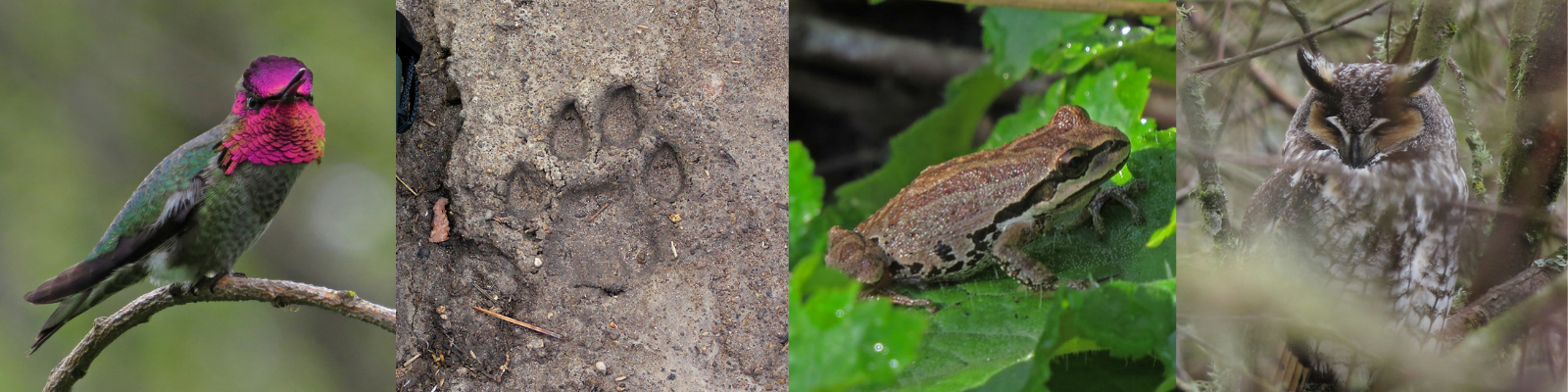
Since the March-like weather has continued into mid-May, we are seeing an interesting mix of species in the Willamette Valley. Even as spring migration kicks into high gear, with a major push of Western Tanagers joining the expected warblers and flycatchers, a few winter residents, like the flock of Pine Siskins, are still hanging around. Two Lincoln’s Sparrows spent a couple of days under my feeder last week, and a Golden-crowned Sparrow is still visiting. Some have suggested that the heavy snows in the mountains this year are keeping birds in the valley a little later than usual. Meanwhile, the young American Robins and House Finches have already fledged.


Lincoln’s Sparrow, one of my favorites

Just for fun, you get extra points if you can name the insipid song from the mid-1970s that inspired the title of this post.

Brown Pelicans

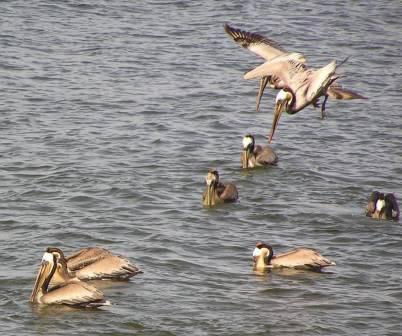
On a recent visit to the Charleston boat basin (Birding Oregon, p. 142) I enjoyed watching a flock of Brown Pelicans feeding close to shore.

After plunging into the water, the birds would swim with their bills submerged, slowly letting the water out as they strained out whatever fish they had captured in the dive.

Later in the summer, the Brown Pelicans will be accompanied by Heerman’s Gulls. These beautiful dark gulls make their living stealing fish from Brown Pelicans. The Heerman’s are currently on their nesting grounds in California, so for now, the pelicans can eat in peace.

Klamath Basin

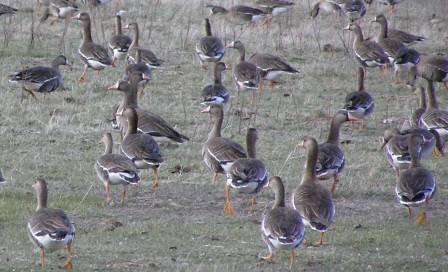
Some colleagues and I made a quick sweep through the Klamath Basin on April 30 and May 1. Late snows and cold weather have really delayed spring in that area, causing the Greater White-fronted Geese to remain in unusually high numbers. The morning of May 1 was clear and calm, inspiring thousands of geese to continue north.

Two of our favorite birding sites around Fort Klamath were snowed in, so we missed some upland species we were hoping for. We did spend some time at the Williamson River Day Use Area, across the highway from Collier State Park. As we were walking back toward the car, this Clark’s Nutcracker put on a nice show in the lawn.