Chestnut-backed Chickadee

cbchickadee2

The chickadees are starting to excavate their nest cavities. This Chestnut-backed Chickadee was working on a dead snag right along the trail at Nestucca Bay NWR. Even though the birds choose soft dead wood on which to work, it seems a herculean task for a bird with such a diminutive bill to excavate a cavity large enough for nesting.
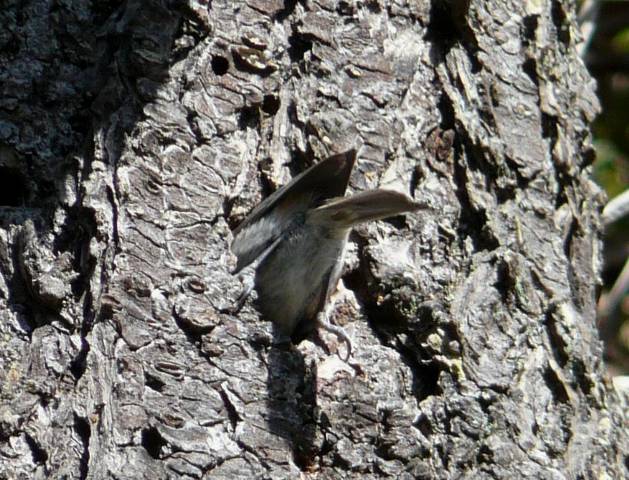
cbchickadee-in-cavity

She can fit about half her body into the cavity so far. It takes about seven days to complete a nest.

cbchickadee-with-chips

Here she spits out a mouthful of wood chips. Larger chips are carried away from the nest site before being dropped. A big pile of wood chips at the base of the nest tree would alert predators to the location of the nest.

Duckzilla

Domestication is a strange thing. It enhances certain traits while diminishing others, usually not for the better. A classic example is the Muscovy Duck. In its wild form, this large duck is black with green iridescence and white wing panels. It nests and roosts in trees along tropical rivers, reaching the U.S. only along the Rio Grande River in Texas. The domesticated form is found in parks and farms throughout the country, and bears little similarity to its wild ancestors.

duckzilla

This photo shows two domestic Muscovy Ducks, a female on the left and a gargantuan male on the right. For a size comparison, note the Wood Duck in the background. The male weighs close to 20 pounds, larger than most Wild Turkeys I have seen. This is not a bird that will be flying to a tree cavity any time soon. While some might admire this bird for his formidable size and brightly colored facial skin, I think domestication has robbed him of his true nature and, if I may be anthropomorphic (and I may because this is my blog), his dignity. If ducks dream, I hope this bird envisions himself sleek and black, flying along a tropical river and roosting in a hollow tree.

Tundra Swan

tundra-swan

I watched two Tundra Swans feeding on Sturgeon Lake on Sauvie Island. The heads and necks were darkly stained from the turbid water. The profile of this bird seems very flat, suggesting Trumpeter Swan from a distance. But you can see the little yellow spot in front of the eye and the shape of the feathering on the face that identifies this bird as Tundra. I’m guessing the bulge at the base of the neck is due to the bird having a full crop. With such a long neck, it makes sense that the crop would extend up that far.

tundra-swan-takeoff

From this angle, the profile appears a little more concave, as you would expect on Tundra Swan.

New Arrivals at the Hummingbird Feeder

rufous-hummer-2

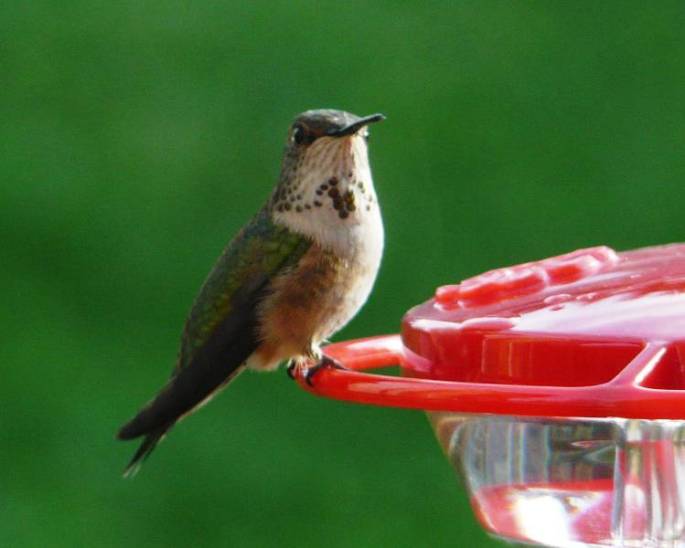
Rufous Hummingbirds have returned, causing much angst among the resident Anna’s Hummers. This guy caught my eye with his gorget of copper, gold, and green.

rufous-hummer-3
Notice how the colors change with the angle of the light.

female-rufous
Here’s a female rufous, with her few irridescent dots and buffy sides.

rufous-stretch
She flashes her tail colors when the male is being too pesky.

goldfinch-on-hummer-feeder
I’m not sure what this American Goldfinch was doing, but he was checking out the hummingbird feeder for over a minute.

American Coot

american-coot

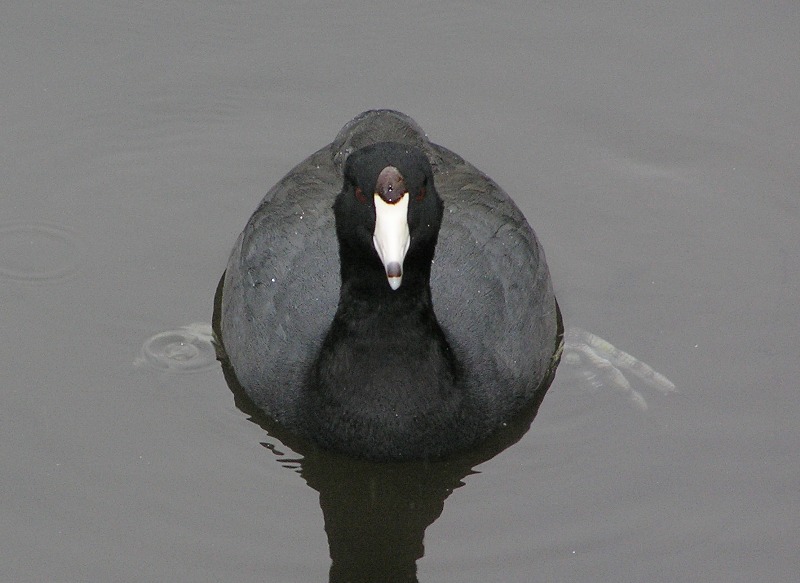
American Coots are quite common throughout much of the country, so we tend to overlook them. But they are strange little beasts, and worthy of study. They spend much of their time on the water, feeding on aquatic plants, propelling themselves with their lobed toes. Despite the fact that at least some populations undertake long migrations, you almost never see these birds in the air. When alarmed they often run along surface  of the water, flapping their wings, but they seldom actually become airborn. One observation from 1931 described a large flock of coots migrating on foot.

These birds do fly, after a long running start, but migration apparently occurs at night in small groups. I think I will make it a goal to actually notice a coot in flight. Despite the many thousands of these birds I have seen over the years, I have no recollection of a flying coot. As I rapidly approach the status of “old coot” myself, I think this is a worthy goal.

coot

Bath Time

lesser-scaup-male
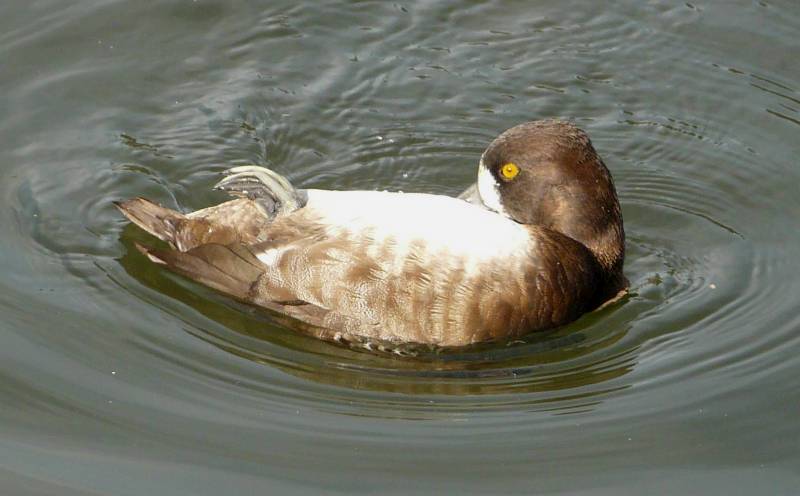
I had the opportunity to watch some Lesser Scaups preening. Like other diving ducks, scaups’ legs are set far back on their bodies. This makes it easier to propel themselves under water, but makes walking on land difficult. So their daily activities, like sleeping and preening, are performed on the water.

lesser-scaup-female-back
This female is floating on her back while preening her belly.

lesser-scaup-female-side
And now the side stroke.

Glaucous Gull

glaucous-gull
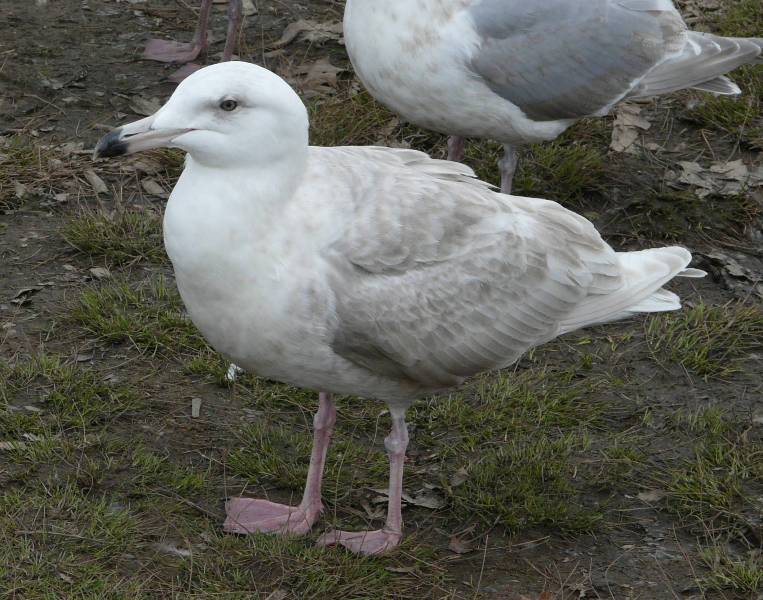
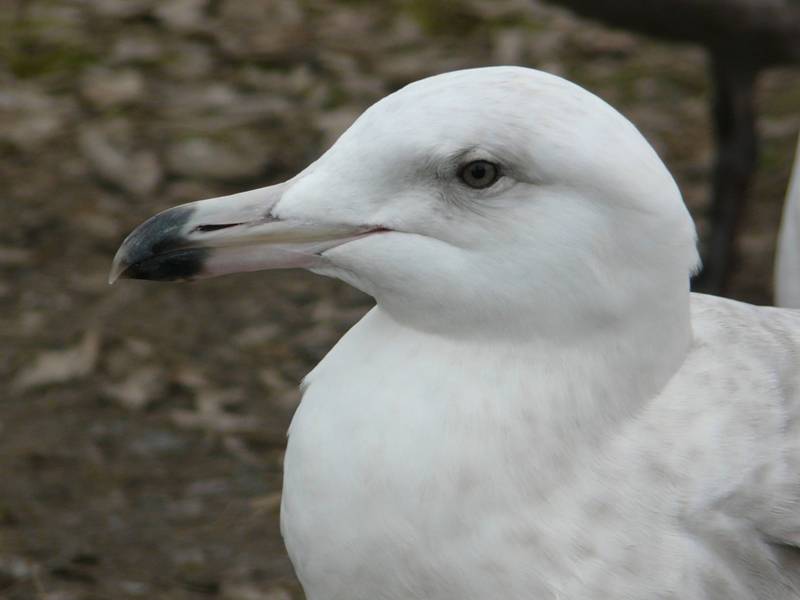
A first-cycle Glaucous Gull was among the large gull flock begging for bread at Portland’s Westmorland Park this afternoon. The large size, pale color overall, very pale wing tips,  and light pink bill with the neat black tip are all good field marks for this species at this age.

glaucous-gull-head
Here’s a closer view of the bill.  Glaucous Gulls are never common in Oregon, but several have been reported in the Portland area this winter.

Lesser Canada Goose

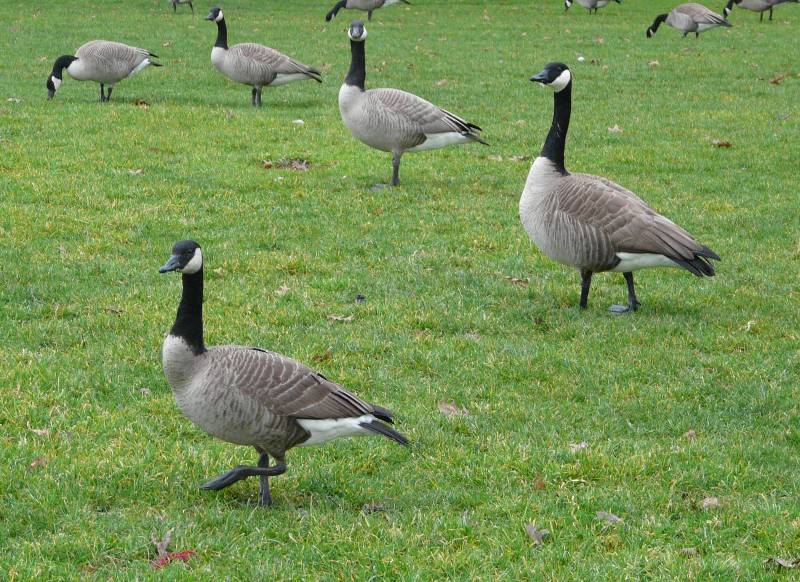
It’s time for another installment of my attempts to sort out the Canada/Cackling Goose complex. I recently had nice views of a Lesser Canada Goose (Branta canadensis parvipes).

lesser-canada-grazing
This bird stood out from the nearby Western Canada Geese by the slightly darker barring on his upper breast. Some populations of this subspecies are considerably darker than this.

lesser-canada-western-canada
Here is the Lesser Canada in front of the larger Western Canada Goose (Branta canadensis moffitti). Note the smaller overall size of the Lesser, and the proportionally shorter neck.

lesser-canada
Lesser Canada Goose in profile. The bill is almost half the total length of the head. The upper neck is quite thin.

taverners-cackling
Compare these Taverner’s Cackling Geese (Branta hutchinsii taverneri) to the Lesser Canada. Taverner’s Cackling has a uniformly thick neck and shorter bill. Notice how the wing tips extend just beyond the end of the tail. Canada Geese have shorter wings.

cackling-cackling-taverners-cackling
Here is a Taverner’s Cackling Goose within a flock of Cackling Cackling Geese (Branta hutchinsii minima). Note the longer thick neck and slightly longer bill than those on minima.

Gull Glamour Shots

The gulls along the Willamette River in downtown Portland are quite used to people, and, in fact, seek them out in hopes of a handout. (A similar behavior is exhibited by some people along the river in downtown Portland.) This gives you an excellent opportunity to look at these birds up close and personal. Who says gulls aren’t sexy?

slaty-backed-gull1
This is the third-cycle Slaty-backed Gull that has been hanging out in Portland. Part of the appeal of this bird, of course, is the novelty associated with this exotic visitor from Siberia.

thayers-gull
Thayer’s Gulls always seem to have this demure air about them. Is it their gentle features and brooding dark eyes? Or are they contemplating whether they are, in fact, a separate species or just the western subspecies of Iceland Gull?

western-gull
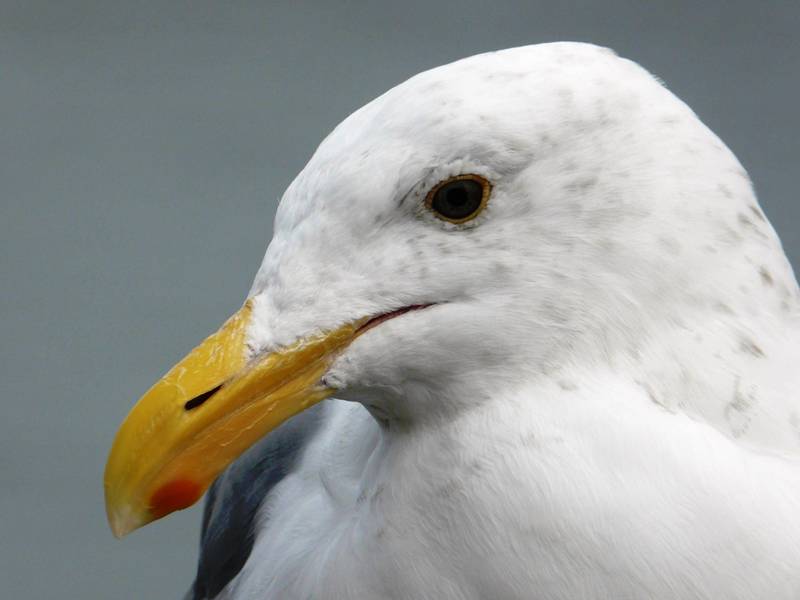
This bird shows off the massive school-bus-yellow bill and yellow orbital ring of a Western Gull. The bit of streaking on the head and neck reveals that a Glaucous-winged Gull perches somewhere in this bird’s family tree.

Finches in the garden

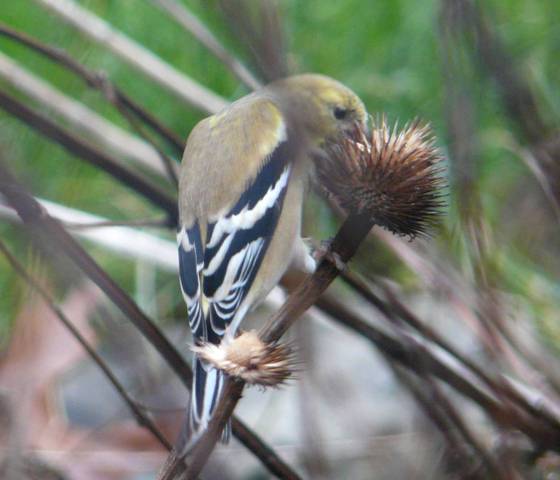
The great advantage to being a slovenly gardener is the chance to see the local wildlife using your plants long after they have died. A mixed flock of resident finches passed through recently, feeding on seeds from neglected flower corpses.

american-goldfinch
This American Goldfinch was munching on Purple Coneflower seeds.

house-finch
a seldom-studied, but diagnostic view of a male House Finch

lesser-goldfinch
Lesser Goldfinch

A Bewick’s Wren often hunts for insects in the dead leaves of the clematis, but I doubt he will ever sit still long enough for a photograph.