Feeding Frenzy

For the past few weeks I have been enjoying a large flock of Pine Siskins at my feeder. But as often occurs during years of high siskin numbers, I started noticing a few sick birds. So I stopped feeding for a few days. With the feeder empty, the large flocks of birds dispersed, reducing the risk of disease spreading from bird to bird.

Packing birds into unnaturally high densities at a bird feeder can create risks for the birds we are trying to help. While many of us enjoy feeding birds and other wildlife, it is important to do so mindfully. We have to be aware that feeding birds is something we do for our own entertainment, not something that the birds actually need. My feeder is outside my window for the sole purpose of drawing birds in close so that I can enjoy watching them from the comfort of my home. If the feeder wasn’t there, the birds would do just fine. It is my responsibility to be aware of how my bird feeding impacts the birds.

It was reported recently that Scotts Miracle-Gro was selling bird food treated with pesticides known to be harmful to birds (see story here). A few years ago, it was revealed that sunflower farmers in the Dakotas have taken such measures as destroying cattail marshes and poisoning and/or shooting birds to reduce the impact of blackbirds feeding in their fields. These stories illustrate how the seemingly innocuous hobby of feeding birds can have broader implications. We need to know where the food comes from and what is in it.

My feeder is filled again and, with the large flock of siskins gone, other species are becoming more visible.


Lesser Goldfinches, our smallest finch, are coming more frequently now that things have quieted down.


Two Purple Finches have appeared this week.


A few Pine Siskins stayed behind when the main flock left. A Purple Finch towers in the background.

Tillamook

I took advantage of the glorious spring weather recently to visit Tillamook (Birding Oregon p. 125). Nala and I completed the Tillamook Death March, walking all the way around Bayocean Spit. This is the only spot I have visited on the Oregon coast where you can walk for several miles along the beach and not see another person. You can barely discern the south jetty on the horizon.


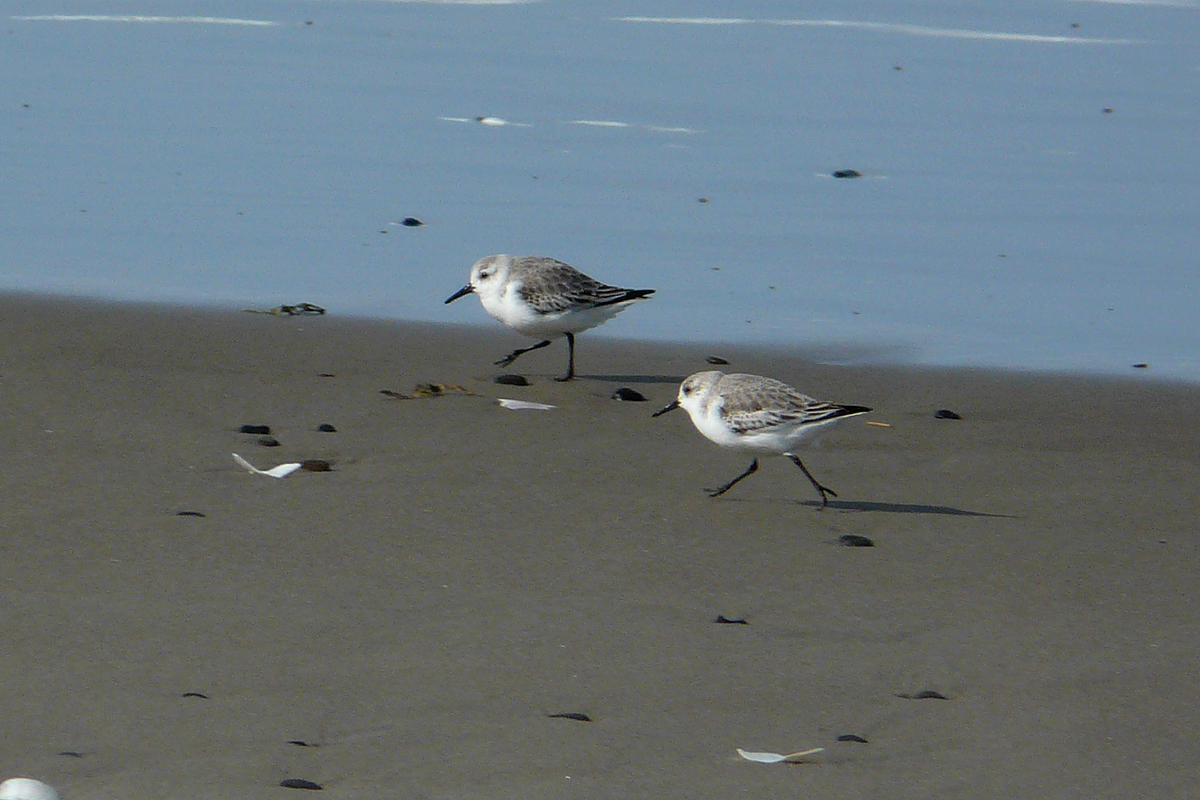
As expected, there weren’t a lot of birds on the ocean side of Bayocean. It is still too early for spring migrants and too late for winter specialties. Aside from one Black-bellied Plover, the only shorebirds were Sanderlings, shown here doing their typical running along the water’s edge.


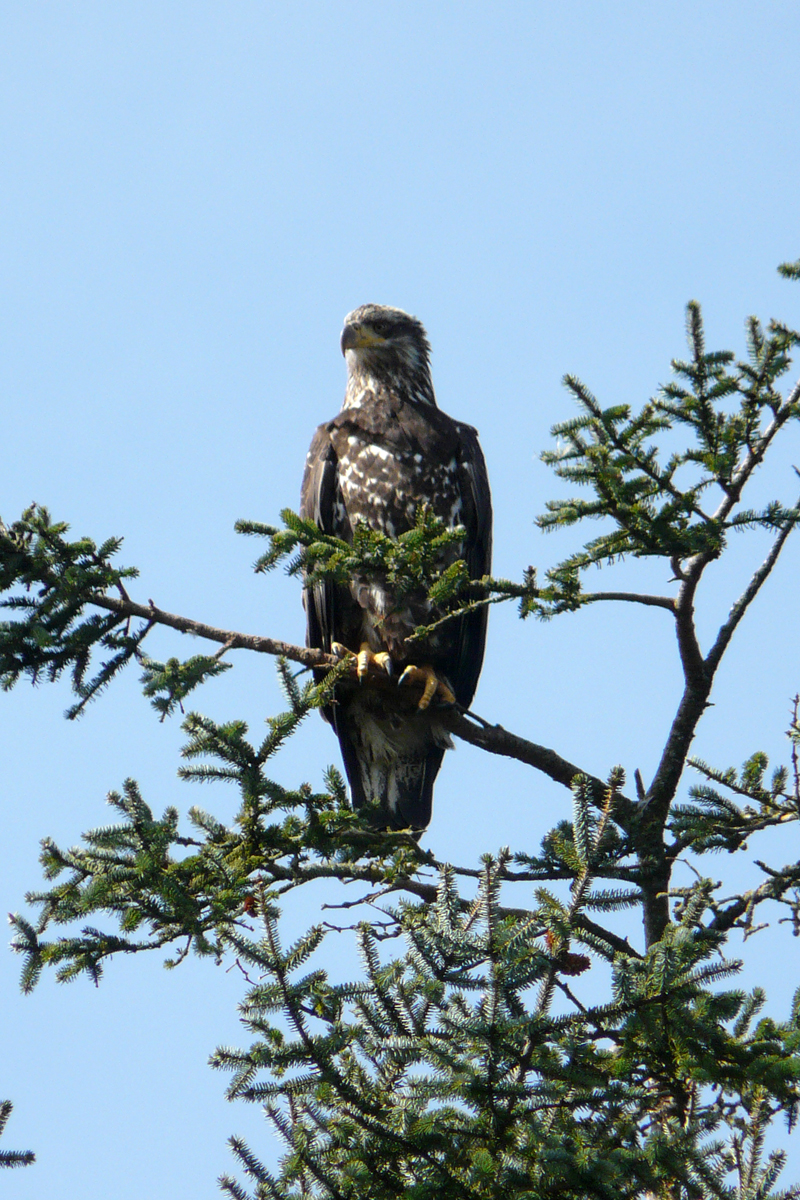
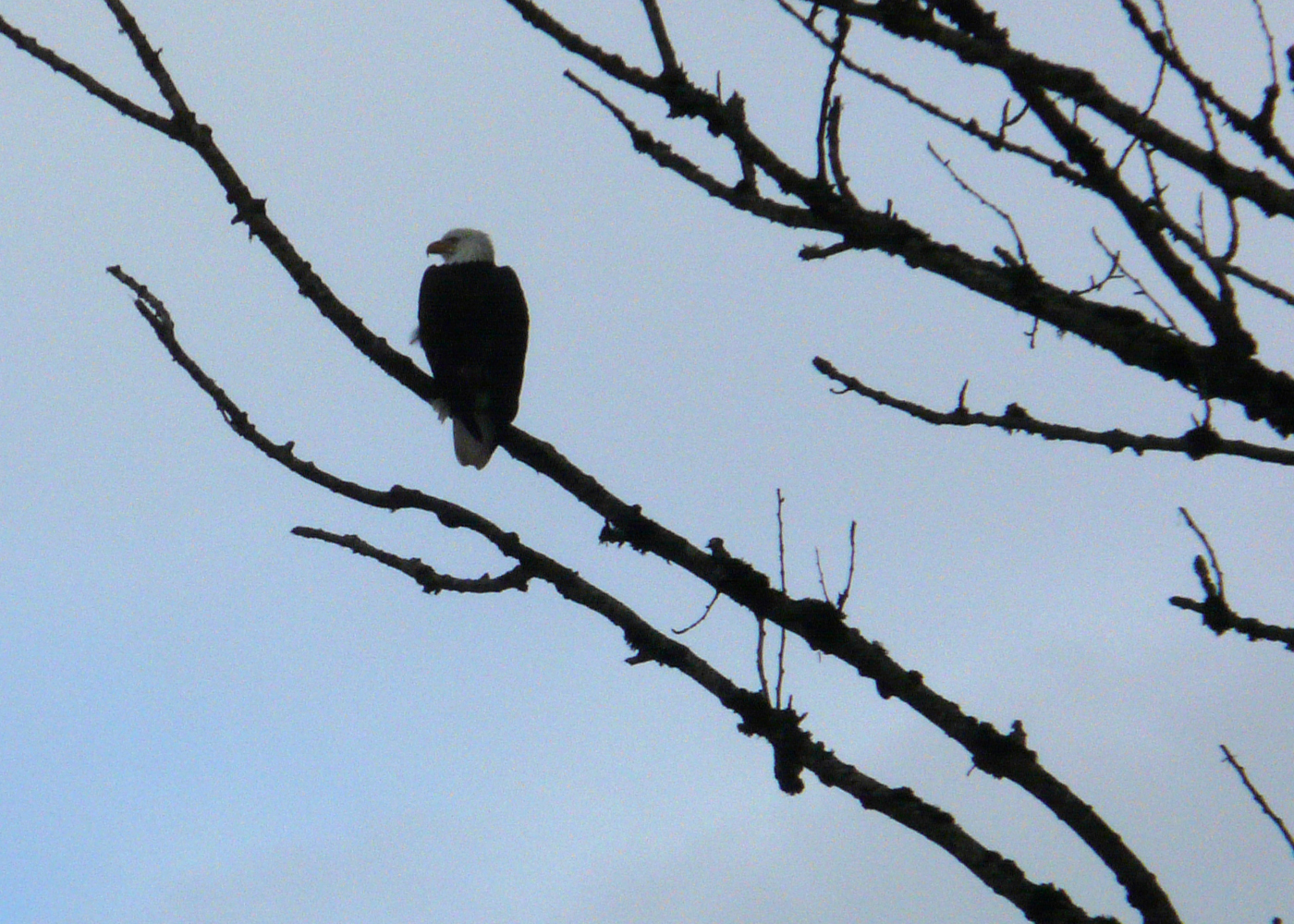
There wasn’t much going on, birdwise, on the bay side of the spit either. The tide was high and there were a lot of boats on the water. This was one of several Bald Eagles seen on our walk.


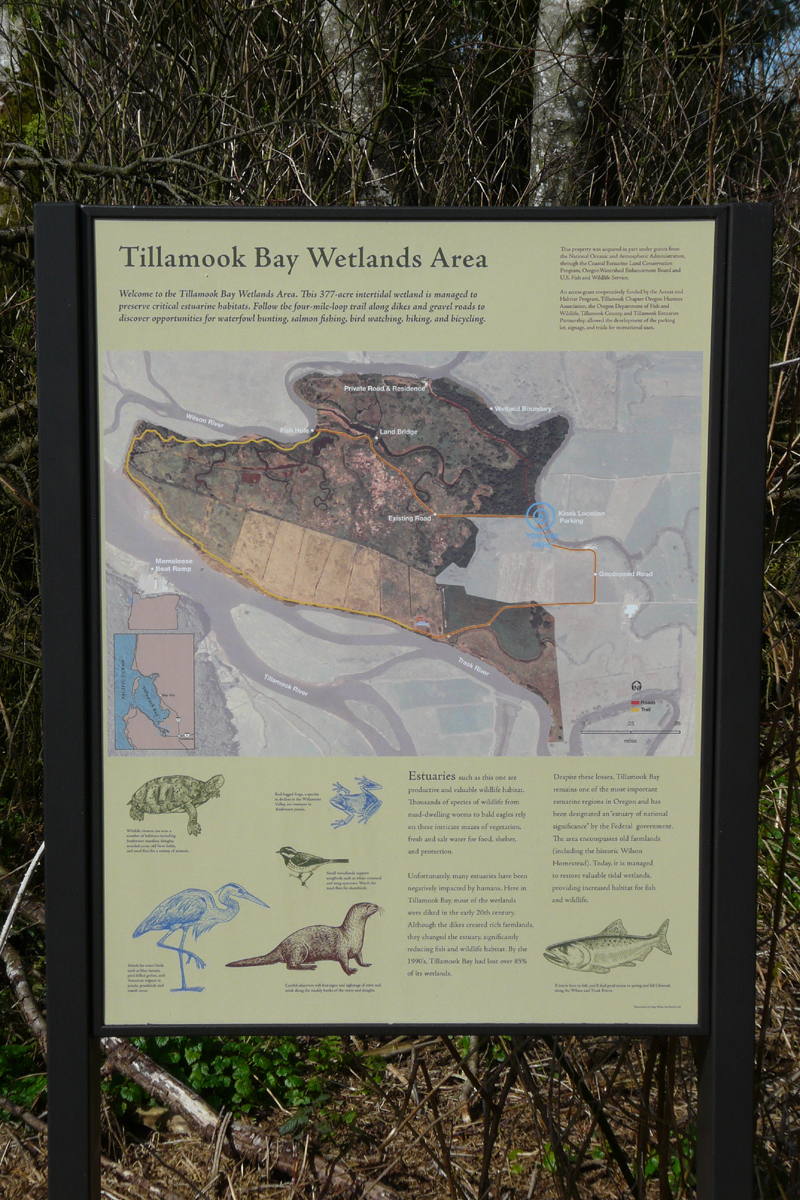
The main reason for my trip that day was to explore the Tillamook Bay Wetlands Area. While this isn’t the most scenic of sites, it provides wonderful access to wetland and meadow habitats along Tillamook Bay. From US 101 on the north edge of the city of Tillamook, turn west onto Goodspeed Road. Follow this very rough paved/gravel road for one mile, bear right, then left, then right again to end at a small parking area with this sign.


Wilson River


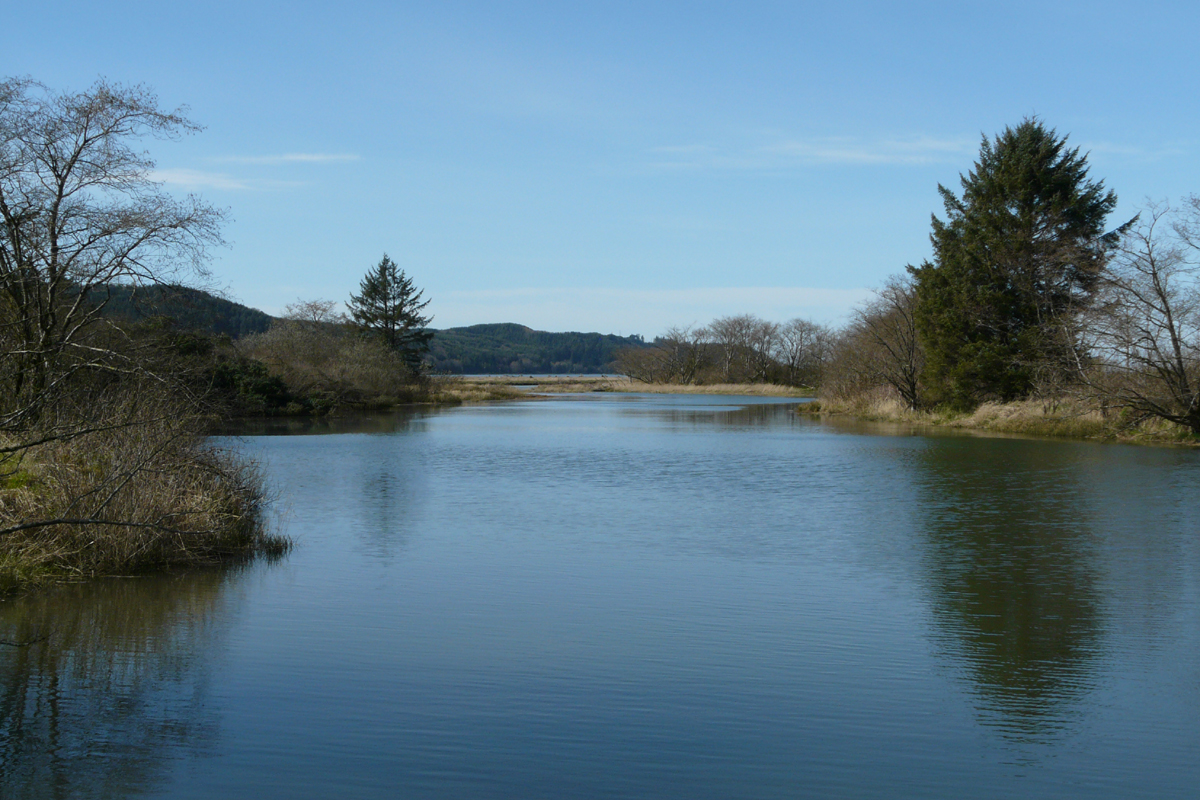
Wilson River, near where it empties into Tillamook Bay. The patch of trees in the distance is the wooded area of Bayocean Spit across the bay.


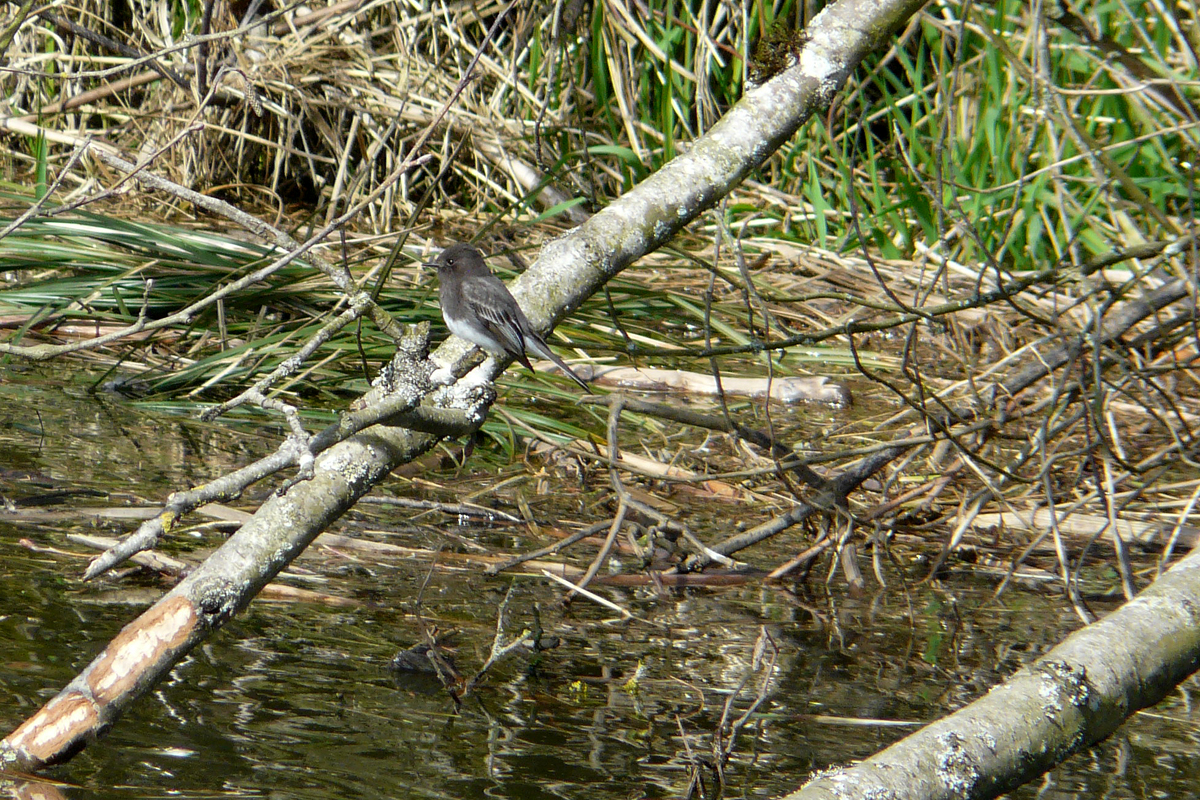
Black Phoebes were actively hunting from perches along the water’s edge.


Marshy habitat with the Coast Range in the distance. Snow is visible on the clear-cuts.

Ankeny NWR 2/23/12

I birded Ankeny National Wildlife Refuge in preparation for my waterfowl class. Waterfowl numbers have dropped considerably in the past week, suggesting that some birds have already started their northward migration.

Pintail Marsh


Pintail Marsh hosted this small flock of Tundra Swans and Dusky Canada Geese. Protecting winter habitat for the rare Duskies was the main reason for establishing the Willamette Valley National Wildlife Refuge Complex.


Most of the wintering geese were grazing in fields surrounding the marshes. The flock consists mostly of Taverner’s Cackling and Ridgeway’s Cackling Geese.


These very alert Northern Pintails seemed to be keeping watch over the nearby Green-winged Teals and American Wigeons.


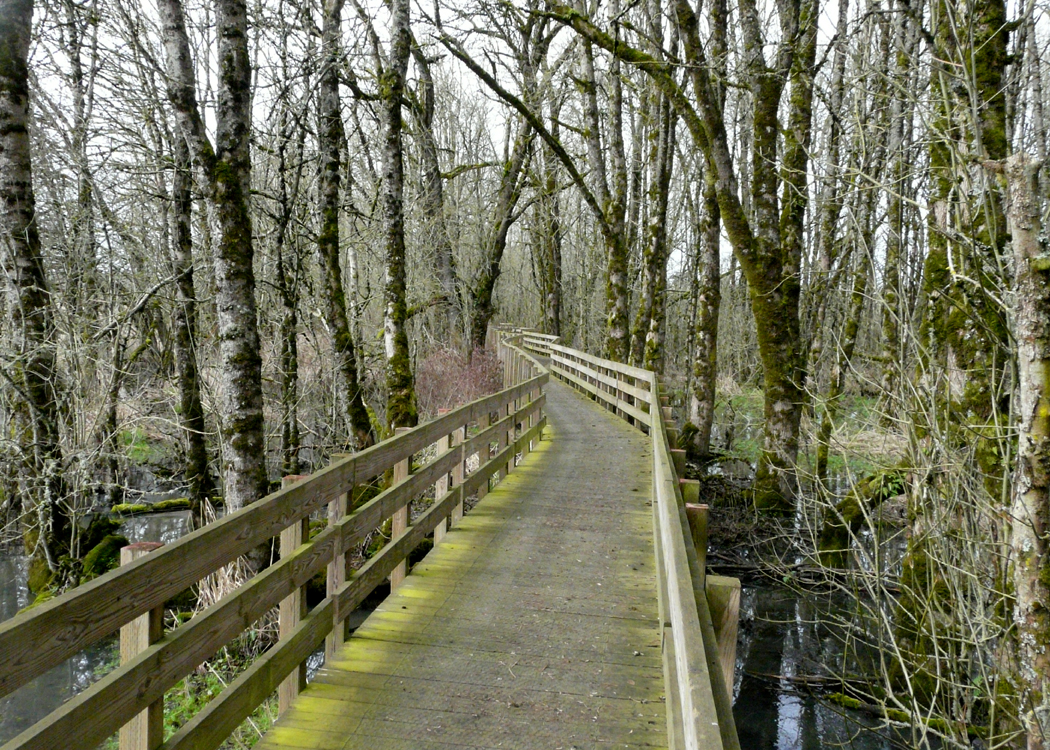
Ankeny has two boardwalks that provide access to flooded woodland habitat. This is the Rail Trail.


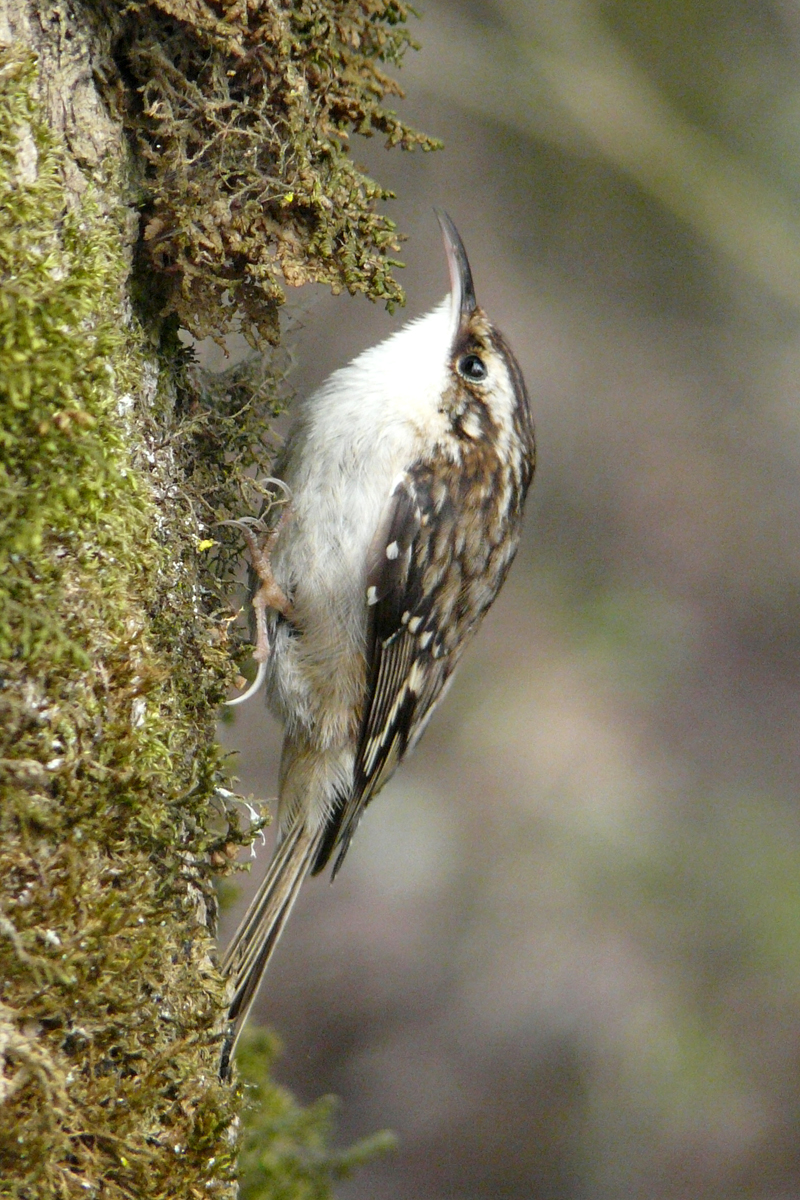
This Brown Creeper was probing patches of moss on the tree trunk.


If you look closely you can see he is holding a tiny organism in his bill.

Fernhill Wetlands, 2-15-12

I walked around Fernhill Wetlands (Birding Oregon, p. 61) in the mid afternoon. Most of the waterfowl that roost here on winter evenings were still off feeding in the area fields, but there is always something to see.


A flock of Brewer’s Blackbirds were hanging out in a tree by the parking lot.


This American Kestrel was in the same tree as the blackbirds, but the two didn’t seem to pay any attention to each other.


A pair of Bald Eagles is usually visible in the grove of large cottonwoods on the southeast corner of the property.


The eagles have started a new nest this year.


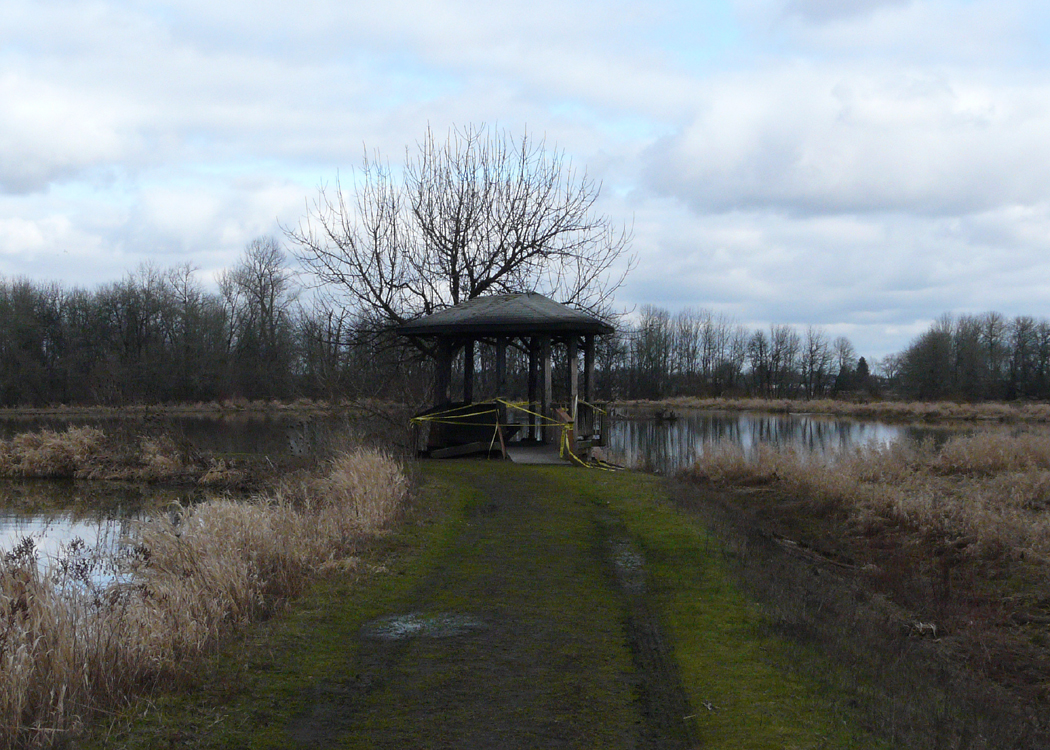
This observation platform was destroyed by arsonists. Fernhill Wetlands is not a park, but is owned by the area waste water department. As a result, there are few resources for facilities or habitat management.


Tundra Swans were flying in to roost. They tend to stay in the more distant parts of Mitigation Marsh.


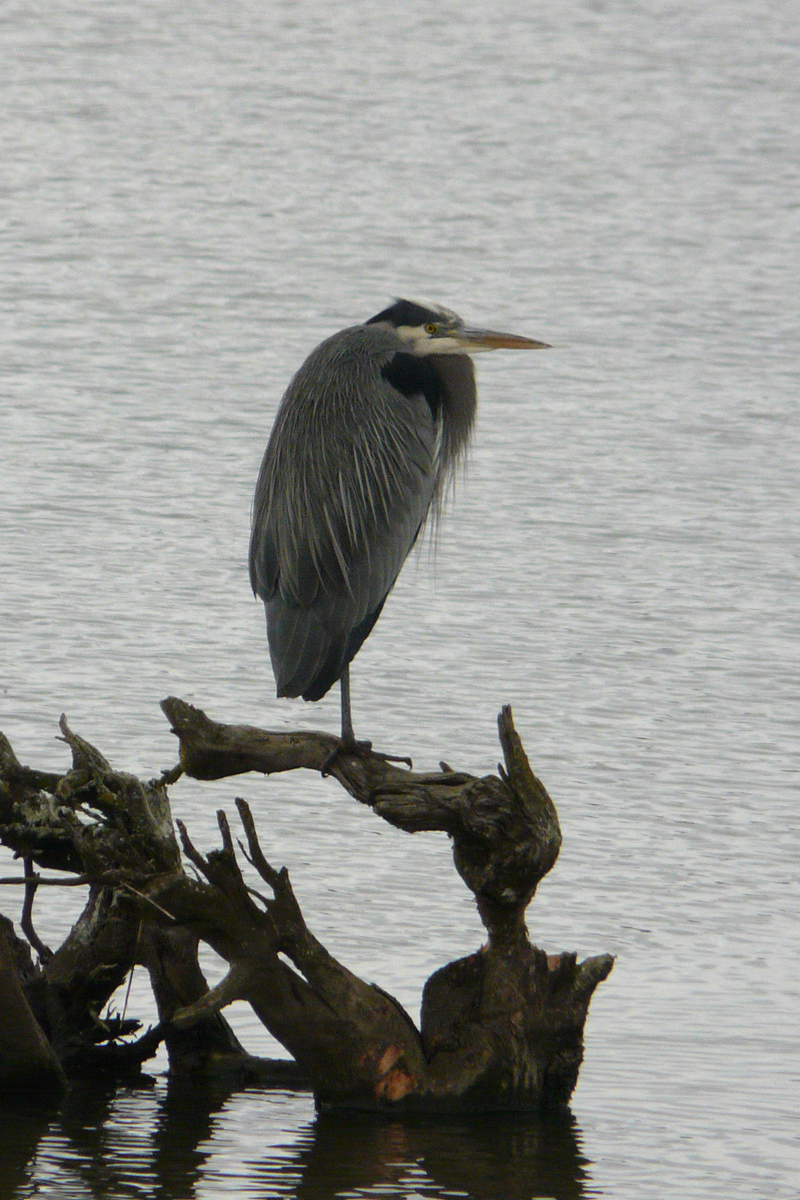
Great Blue Herons are nesting in the trees to the east of the wetlands. This individual was resting on a snag in Cattail Marsh.


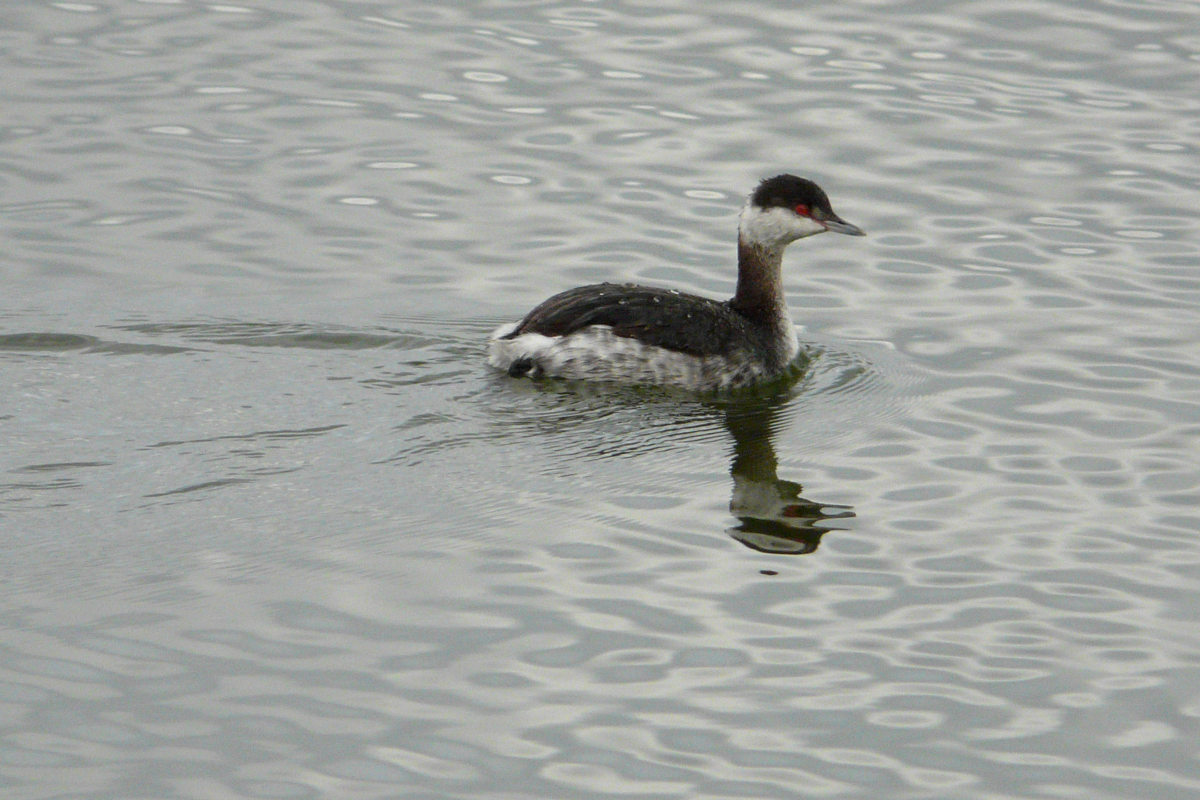
The deeper water of Fernhill Lake attracts divers like this Horned Grebe.

Siletz Bay area

I spent a day birding around Siletz Bay (Birding Oregon chapter 37). This part of the coast is not one of the more scenic areas, but there are a couple spots tucked away that are worth a look.


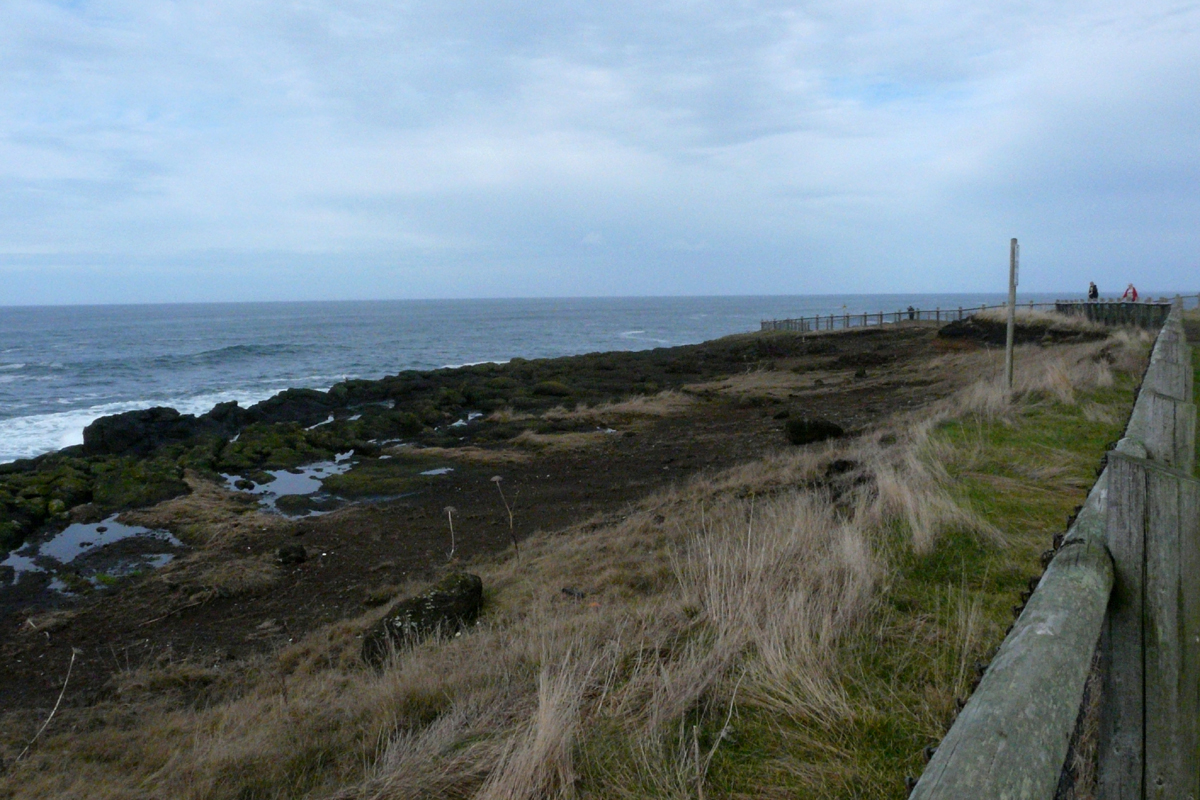
The main stop for the day was Boiler Bay State Wayside. This spot gets a lot of press as one of the best birding sites on the Oregon coast. While it is true that Boiler Bay is the most likely spot to find a lot of seabird species from shore, the birding here is not easy. On many days, you must patiently scan the ocean with a scope, hoping to find a robin-sized seabird from several hundred yards away. While bird numbers were low overall, two hours of scanning produced a nice variety of birds, including Ancient Murrelets (a nemesis bird for me), Marbled Murrelet, Horned and Western Grebes, and a Rhinoceros Auklet.


Several Harbor Seals were snoozing near the mouth of Siletz Bay. You can often see seals hauled out on the beach near the entrance to the bay.


Cutler City Wetlands is a nice patch of woods worthy of exploration, especially during migration. From US 101, turn west onto SW 63rd Street. About one block from the highway, there is a small parking area on the right side of the road, just across from this sign.


The property has a nice network of trails through a variety of habitats.


This Pacific Wren put on a good show, singing and perching out in the open for a few minutes. This species is seldom so visible.

Varied Thrush


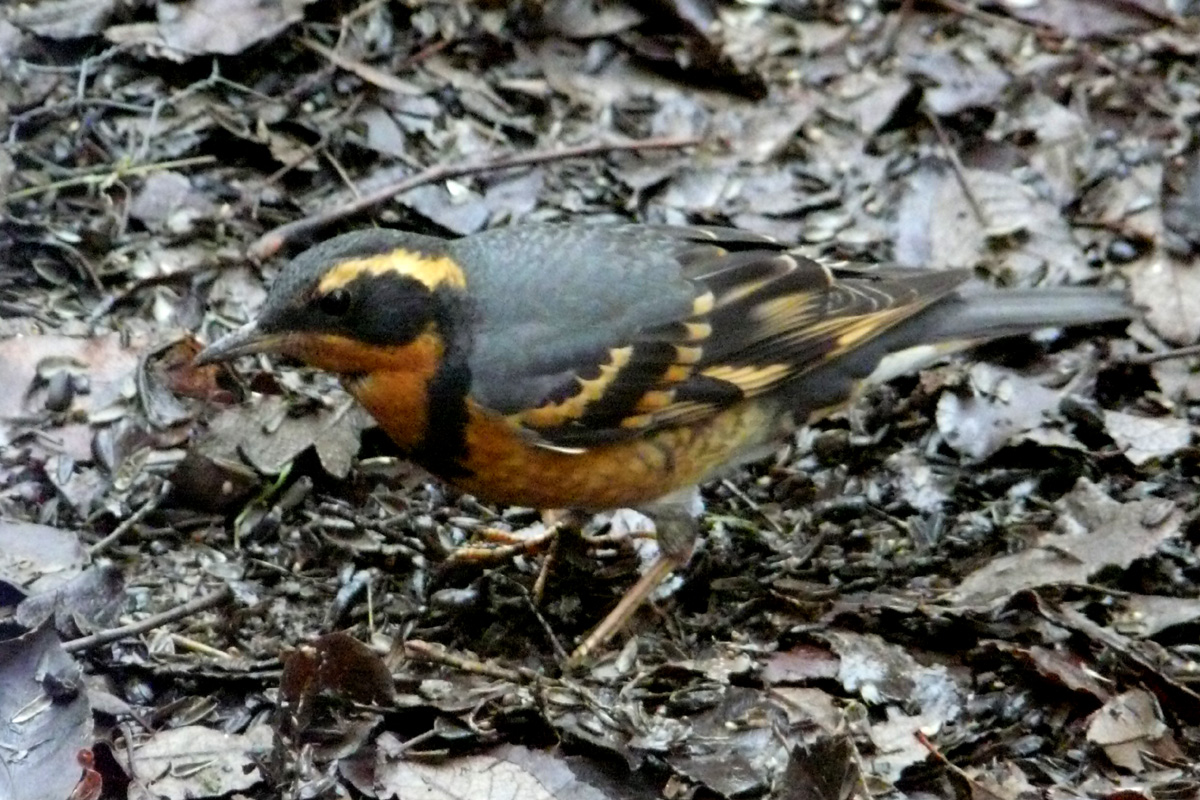
One consolation to the dreary wet weather of winter is the occasional appearance of a Varied Thrush. These are birds of the shadows, nesting in mature forests of the Coast Range and Cascades. In winter, they move to lower elevations, where they rummage through the leaf litter looking for insects.


Along with a flash of pumpkin orange from their bellies, Varied Thrushes reveal themselves through their odd song. Like other thrushes, Varied Thrushes produce sounds consisting of two pitches at once. This polyphony is made possible by the syrinx, the birds sound organ, located at the branch of the trachea. Since each branch has its own membrane, multiple pitches are produced at the same time. The result is a single buzzy tone, often described as ethereal (or just eerie).


I saw my first Varied Thrush in a back yard in Ohio. While it is always fun to see a vagrant, I much prefer seeing Varied Thrushes in Oregon, either in the deep forests in summer, or in the winter gloom of my Portland yard. Perhaps it is in their native gloom that these colorful thrushes shine brightest.

Review: Petrels, Albatrosses & Storm-Petrels of North America


Short Version: If you bird on or near the ocean, buy this book and read it.

Slightly Longer Version: Steve Howell’s guide to petrels (including shearwaters), albatrosses, and storm-petrels is a must-have resource for anyone who aspires to identify birds on the open ocean. Some would argue that those of us who don’t get out to sea very often don’t really need such an in-depth guide, that a standard field guide will suffice for the occasional pelagic trip. But I would argue that such a detailed treatment of seabirds is actually more important for less experienced seabirders.

Pelagic birding is very different from land-based birding. On a moving boat in rough seas, optics are all but useless. A birder cannot focus on small details. Seabirds are identified by their shape, general color pattern, and flight style. Until now, the only way to learn these characteristics is to spend a lot of time on the ocean. Howell gives his readers the benefit of his extensive experience at sea, illustrated with lots of photos showing realistic views of seabirds. Along with beautifully detailed close-ups, we have photos of birds in the fog, birds in flight at a distance, birds in various stages of molt and feather wear, and birds sleeping on the water. In other words, real-life views of birds on the ocean. You can’t find those in a standard field guide.

The size, and price, of this book are both hefty, but Petrels, Albatrosses & Storm-Petrels of North America is a great investment for anyone who wants to learn more about seabirds. It will probably inspire you to take more pelagic trips, or at least spend more time looking out on the ocean.

To Bird or to Twitch?

I finally had a few hours to get out birding, and had planned to visit some of the Washington County wetlands. But a Brambling visiting a feeder in Woodburn presented me with a dilemma. Should I spend my birding time standing around in someone’s back yard hoping to see a particular bird, or should I explore large areas of habitat and find birds on my own?

The Brambling, an uncommon visitor from Asia, was only a 30 minute drive from home, well within my “chase radius.” (I will drive up to an hour and a half to chase a rarity, although it had better be a darned good bird if it is over an hour away.) The species would be a lifer for me, a nice tick on my Oregon list, and this would perhaps be my only chance to see this species. Then again, if the bird didn’t show up, I would have spent my limited birding time not looking at birds. With some reluctance, I decided to go for the twitch.

When I arrived at the stake-out site, a small group of birders informed me that I had just missed the Brambling. How typical is that? So I began my wait, hoping that the bird would maintain her schedule of repeated visits to her favorite feeder. I had come this far, so I might as well stick it out.


As luck would have it, this yard was very birdy. A small flock of Evening Grosbeaks was a rare treat. Several species of finches and sparrows worked the feeders, interrupted occasionally by a hungry Cooper’s Hawk. After about an hour of waiting, three things happened; my cell phone rang, the owner of the home came out to offer me a cup of coffee, and the Brambling appeared.


So with one hand holding my phone (it was an important call), I used the other hand to hold my binocular to get a brief look at the bird, then snap a few photos, all while thanking my host for the coffee (he didn’t realize that I was on the phone, and didn’t know that I don’t drink coffee). Then the Brambling flew away.

So now what? I had gotten a brief glimpse of the Brambling, although not a very satisfying view of a lifer, and had no idea if any of my photos would be usable or not. The bird had established a pattern of visiting the yard about once an hour for less than a minute. Do I hang out for another hour (did I mention it was really cold?), or do I cut my losses and go do some real birding? I was leaning toward the latter when an acquaintance of mine arrived to look for the bird. The prospect of visiting with him, along with the general birdiness of the this yard, convinced me to stay and try for another look at the Brambling.


This Downy Woodpecker worked on the suet feeder.


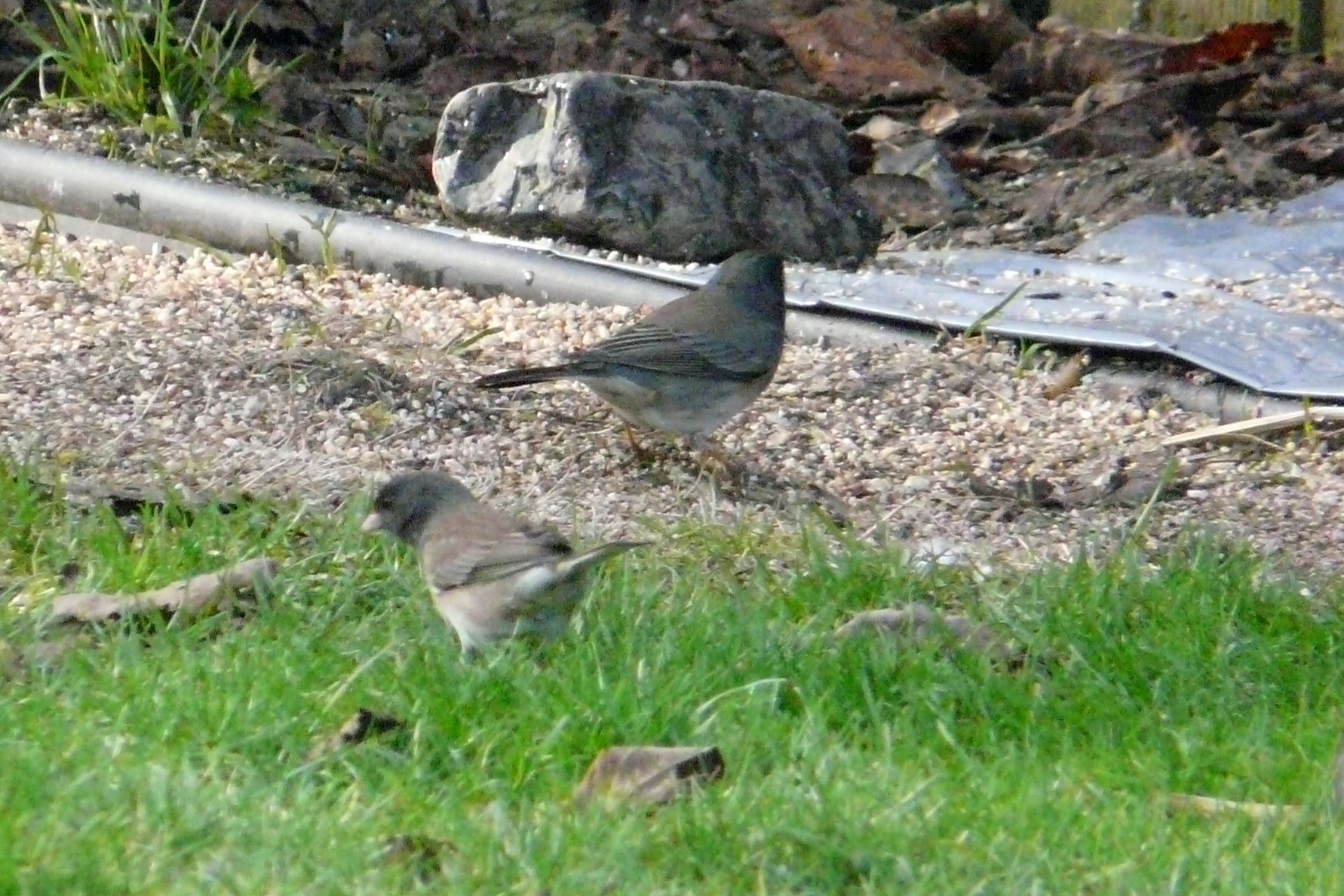
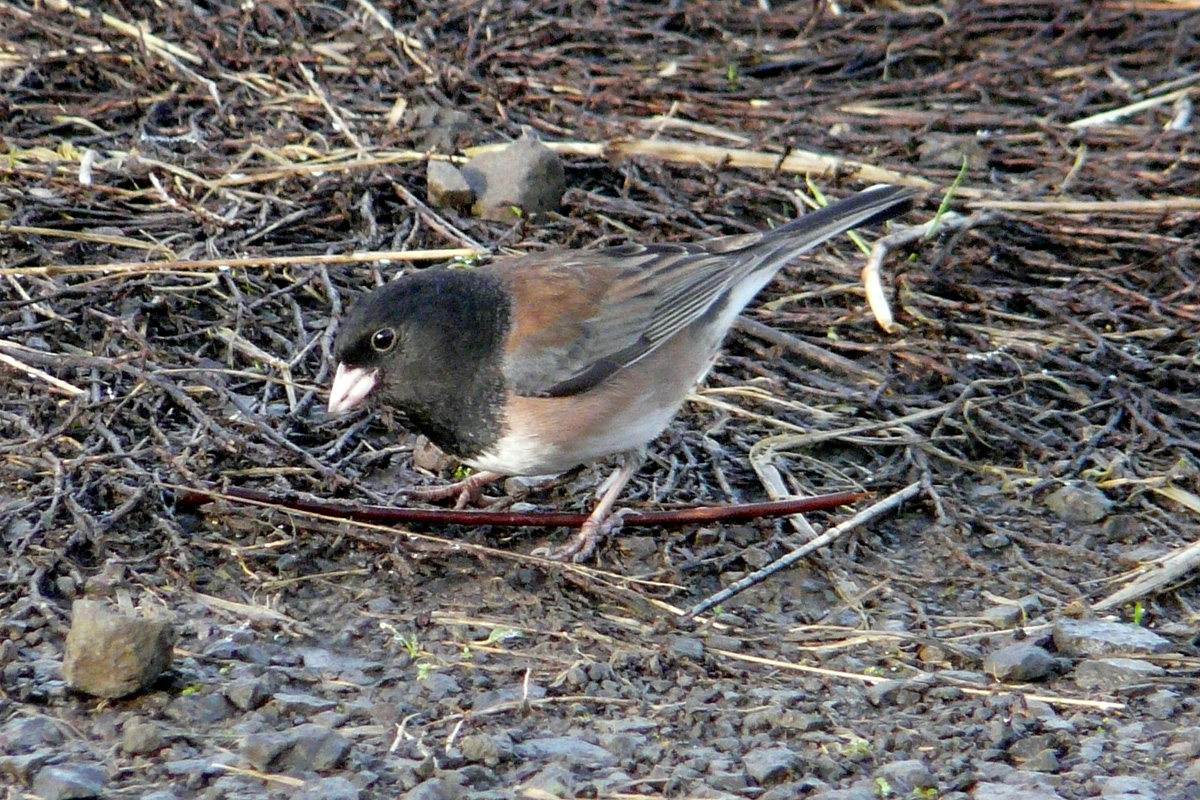
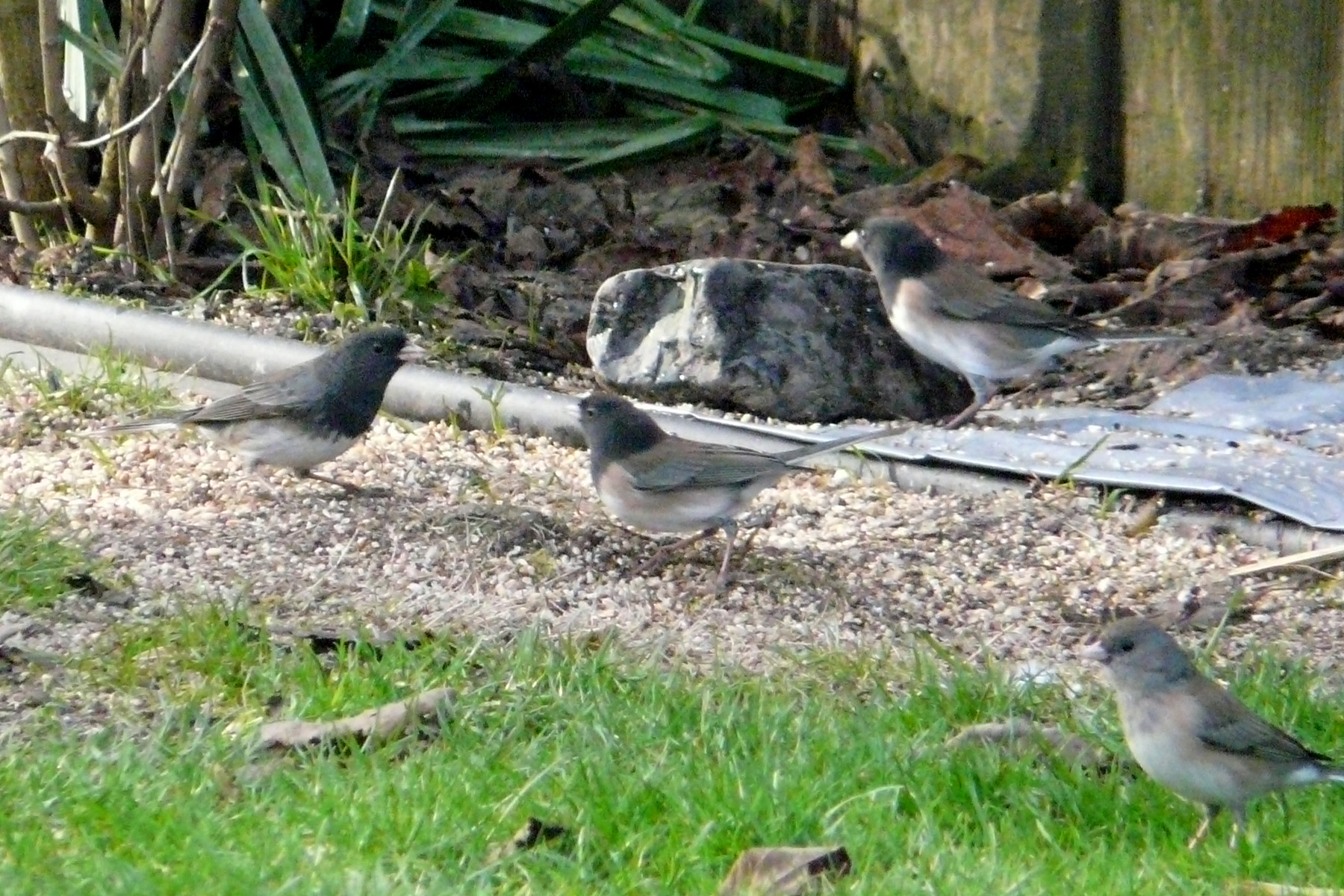
Notice that the Dark-eyed Junco on the left has some dark gray on the sides and a darker back than the typical Oregon race birds.

Here is the same bird from the back. The brownish cast on the bird’s back is not right for a pure Slate-colored Junco, so I think this bird is an intergrade Slate-colored/Oregon.


After about an hour, the Brambling returned for less than twenty seconds. I spent the entire time watching her with my binocular, making up for the fleeting view of the previous visit.

So I had gotten my lifer, adding my twitch to the checklist, but I had also gotten some actual birding in, as well. I had seen about 20 species in that little yard, and had a nice visit with some other birders. While I really enjoy getting out and finding large numbers of species, there is often birding to be had in confined situations such as this. I will still struggle with the choice of birding or twitching, but hopefully I will allow myself to find the joy in either.

Tualatin River NWR


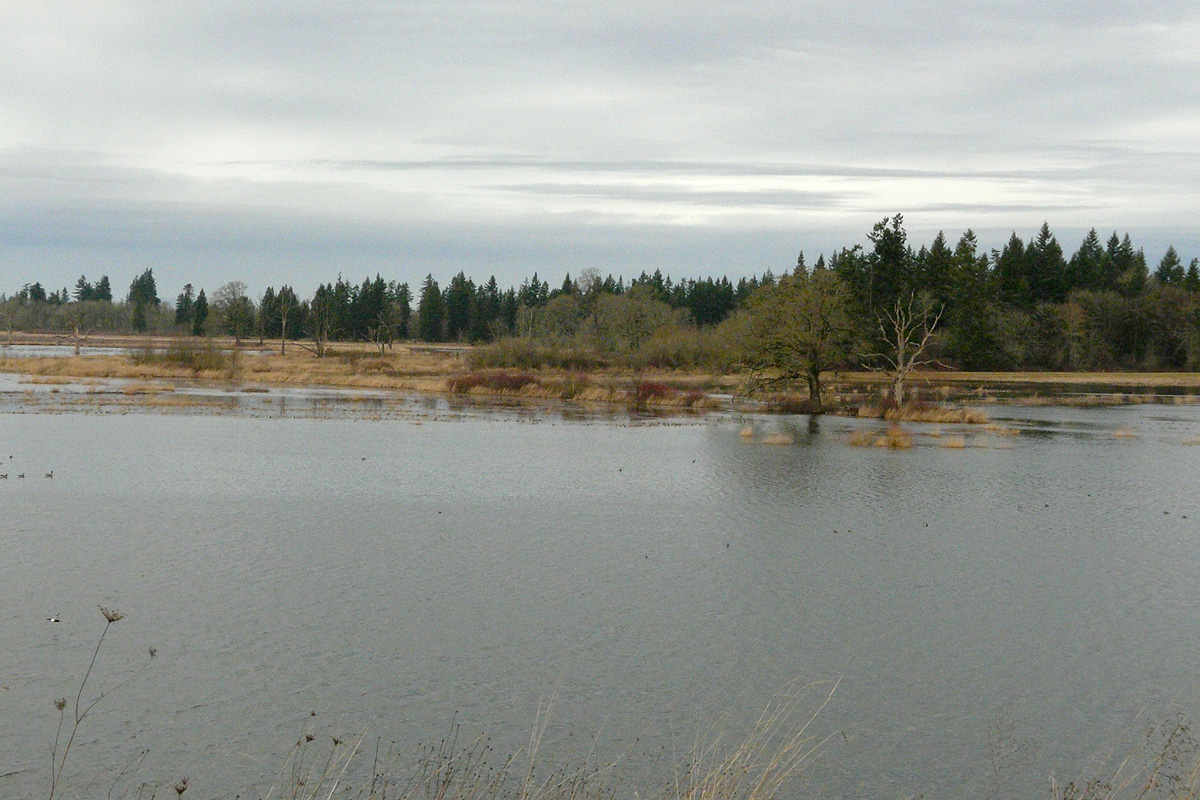
Tualatin River National Wildlife Refuge, located just a few miles southwest of Portland on Hwy 99W, is a wonderful refuge for wintering waterfowl, despite its location in such an urban area.


The dikes around the wetland areas are closed to public access in the winter to prevent disturbance to the birds. But the trail leading through the wooded habitat beyond the wetland is open year round.

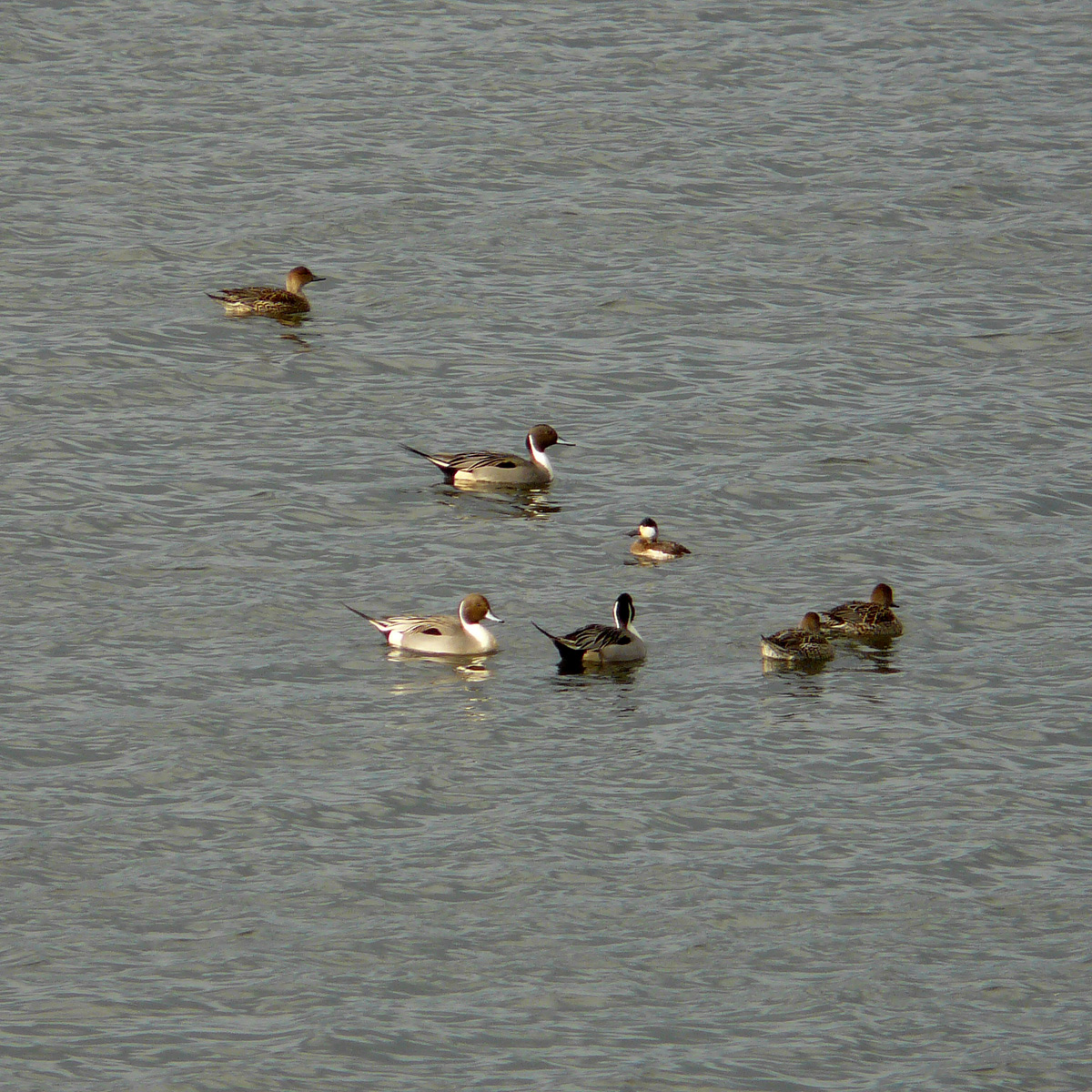
Northern Pintails and a Ruddy Duck


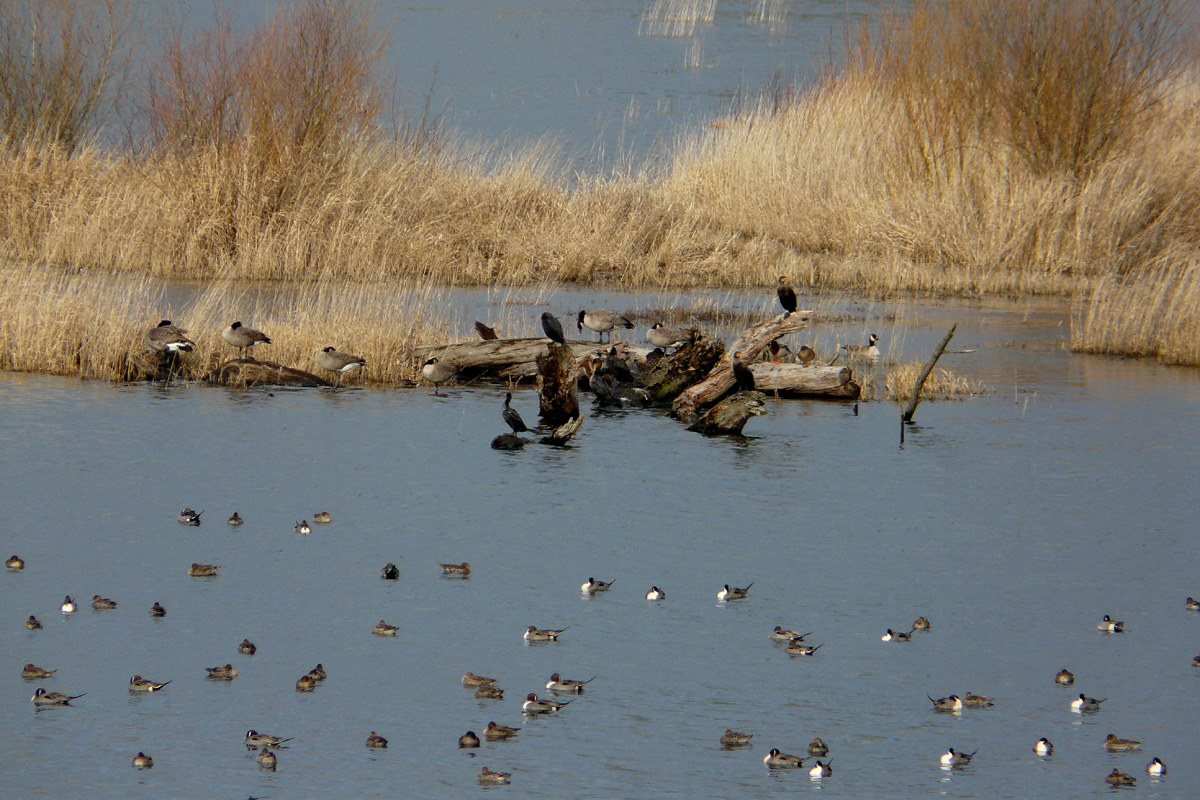
several Double-crested Cormorants perched on a log


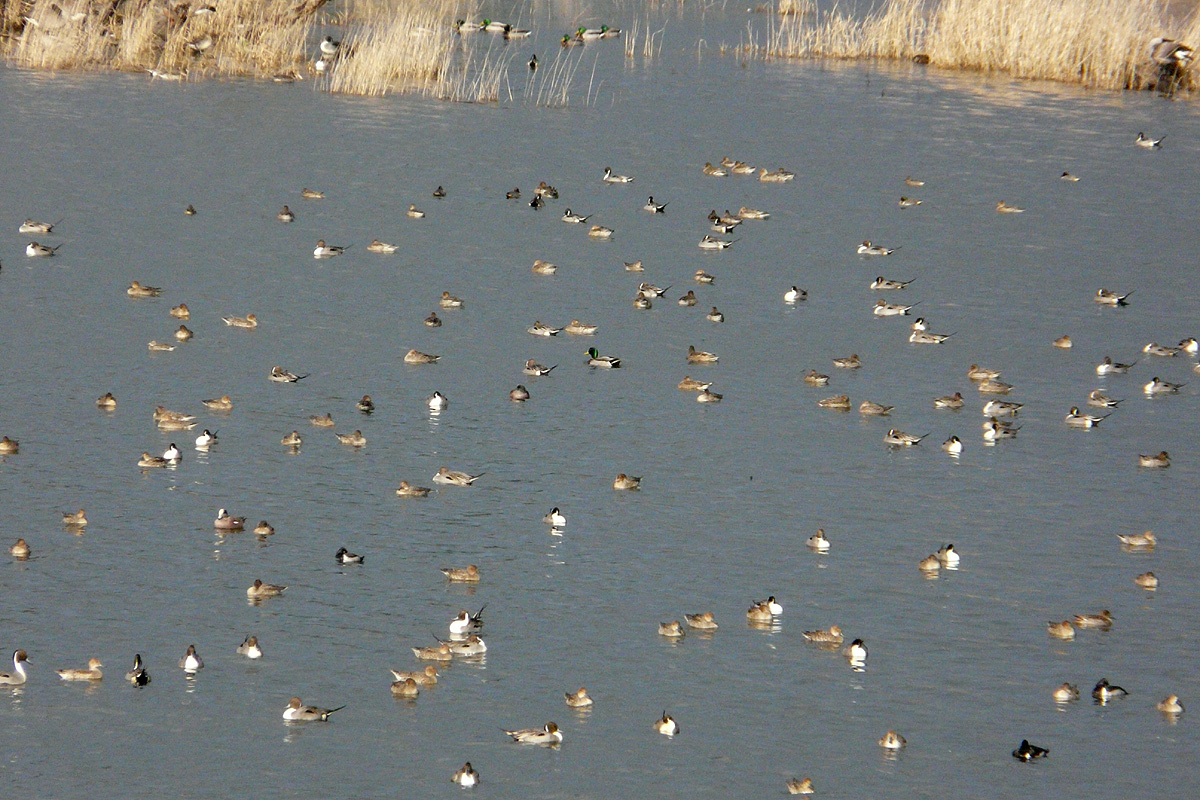
a congregation of Northern Pintails, Mallards, and Ring-necked Ducks


The star of the refuge in recent weeks has been a lone Emperor Goose. He is the pale gray blob with the white neck tucked under his wings, right in the center of the photo. No, really.

This Dark-eyed Junco was a little more photogenic than the goose was.


Given the amount of brown on the crown and hind neck of this Dark-eyed Junco, I’m guessing she is a first-year female.


Golden-crowned Sparrow and Dark-eyed Junco