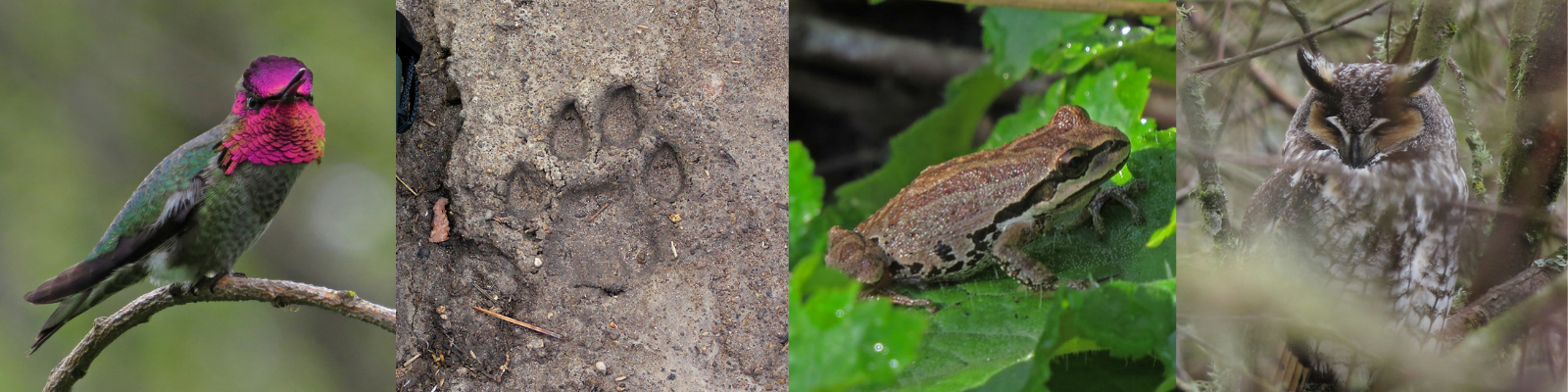
Late autumn and early winter is the time to find the biggest diversity of gulls in Oregon. I led a field trip to the coast at the end of October. Strong storms from the west had moved a lot of birds close to shore earlier in the week, but on the day we arrived, strong east winds had driven a lot of birds back out to sea. At least we didn’t get rained on.

At the Seaside Cove, a few gulls posed for us in the sun. This gull is mostly Western, but the streaking on the head and neck suggest some Glaucous-winged ancestry.

This is a fairly robust Iceland Gull (Thayer’s subspecies).
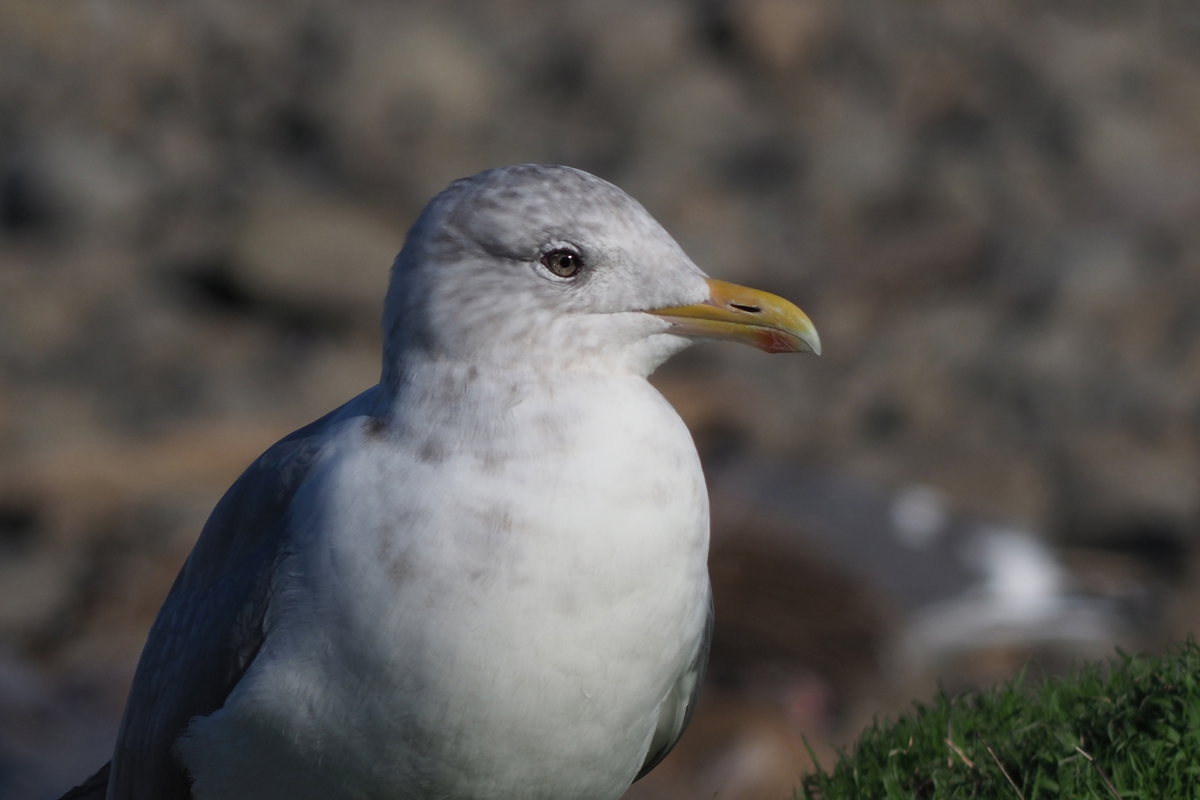
A closer look at the Iceland. The yellow bill will fade as the season progresses.
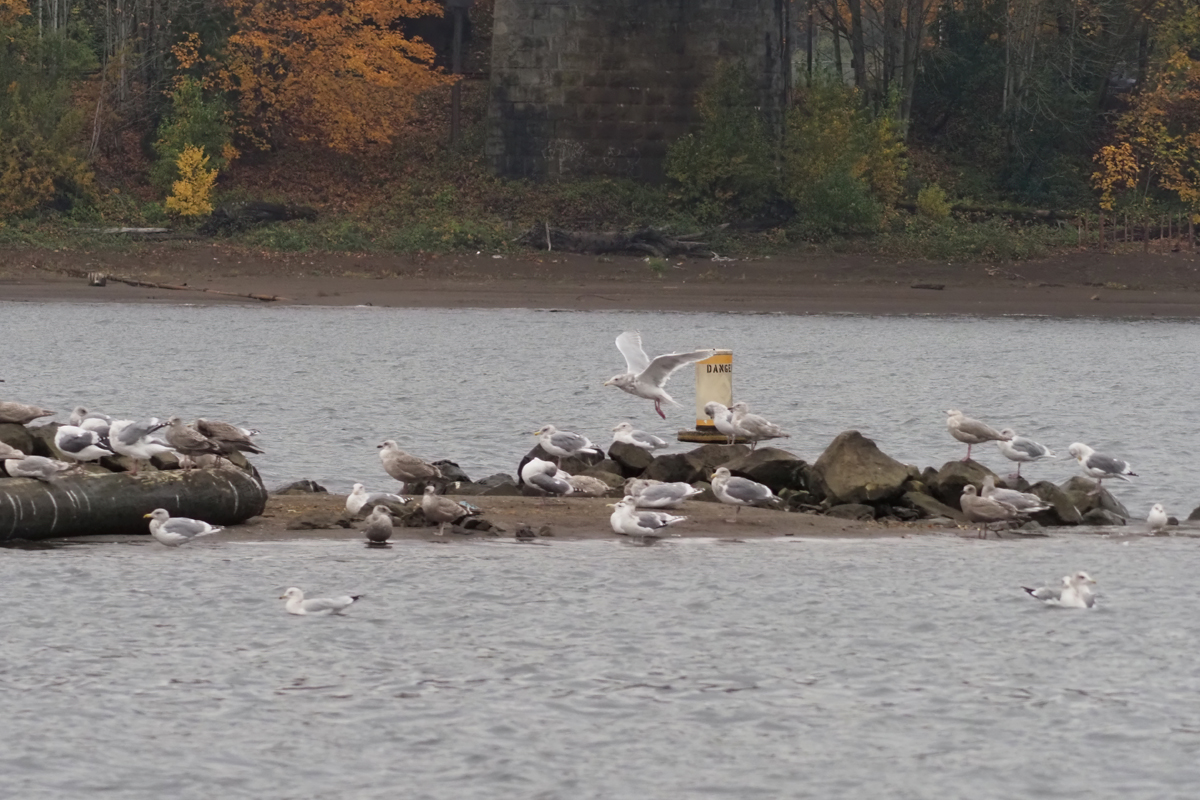
There aren’t a lot of places in the Portland area to get close looks at gulls anymore. This group was hanging out on a bar in the Willamette River. The flock was a mix of California, Ring-billed, Herring, Iceland, Glaucous-winged, Western, and a mass of messy hybrids.
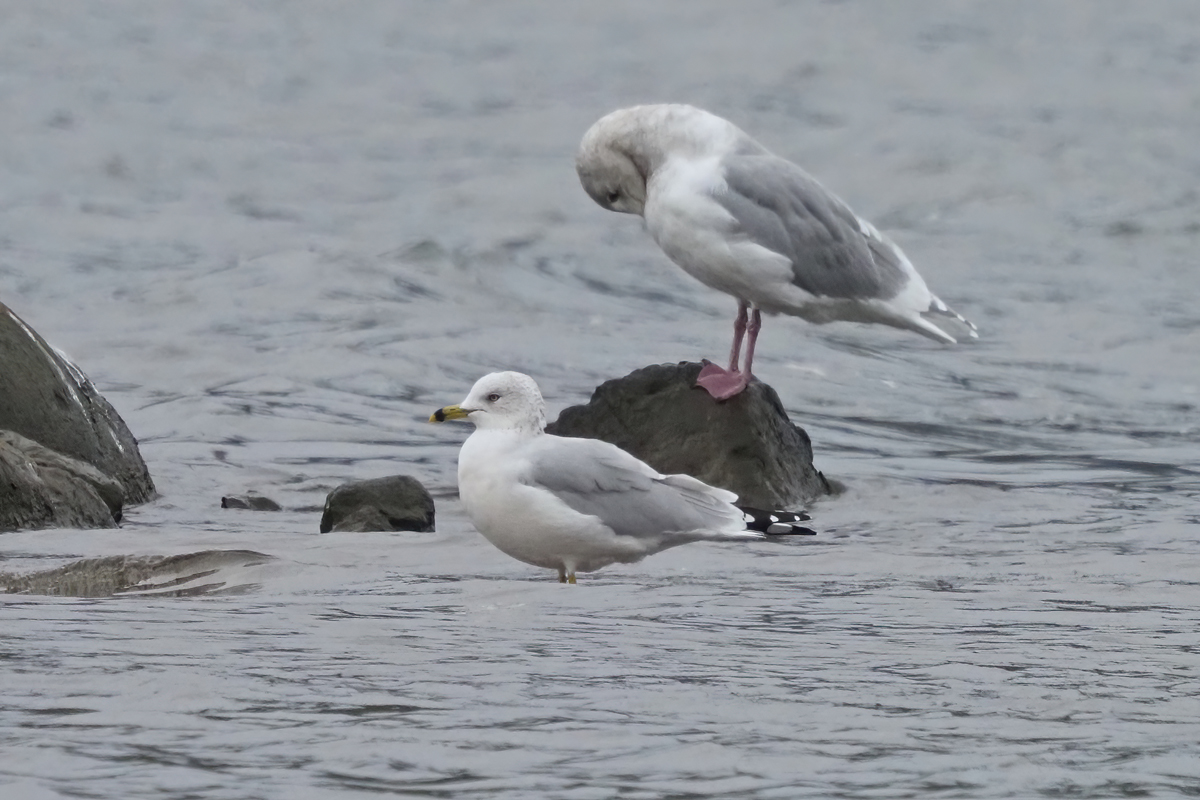
While scanning the genetic soup of confusing hybrids, it was refreshing to land on a Ring-billed Gull.

California Gull

While this bird ticks most of the boxes for Herring Gull, the bill seemed a little too heavy to me. This, combined with the primaries which were slightly less than jet black, suggest this might be a Cook Inlet Gull (Herring X Glaucous-winged).

This Glaucous-winged Gull was hanging out in a flock of Cackling Geese at Amberglen Park. I am guessing that the grazing geese were stirring up worms for the gull.
Happy Gulling!


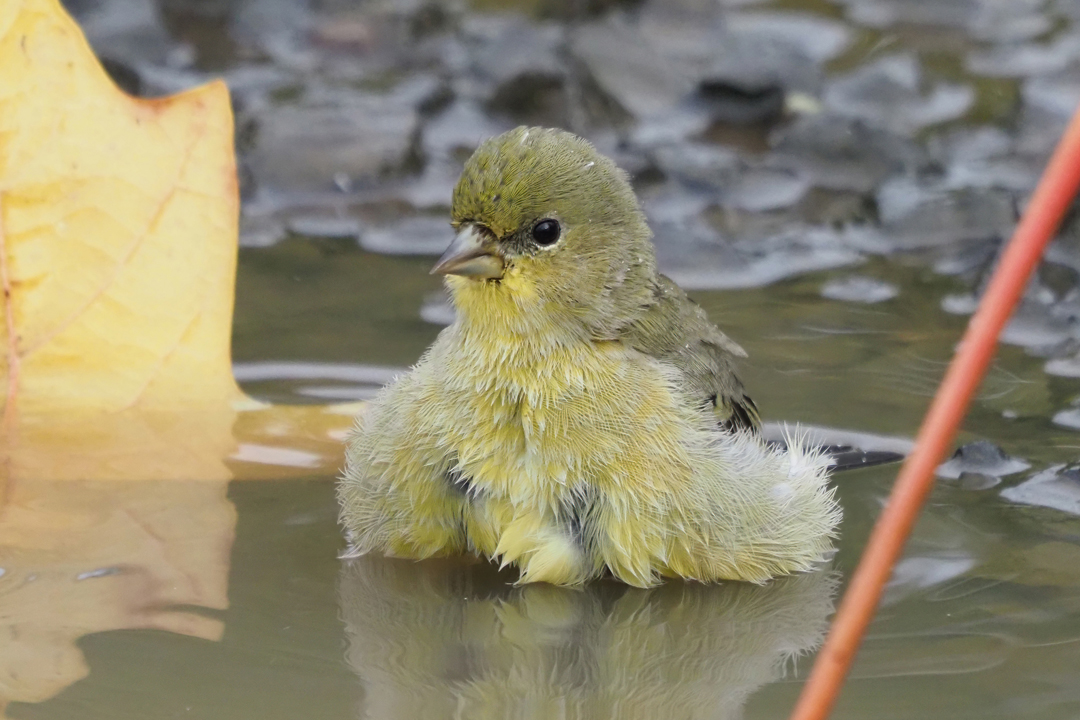


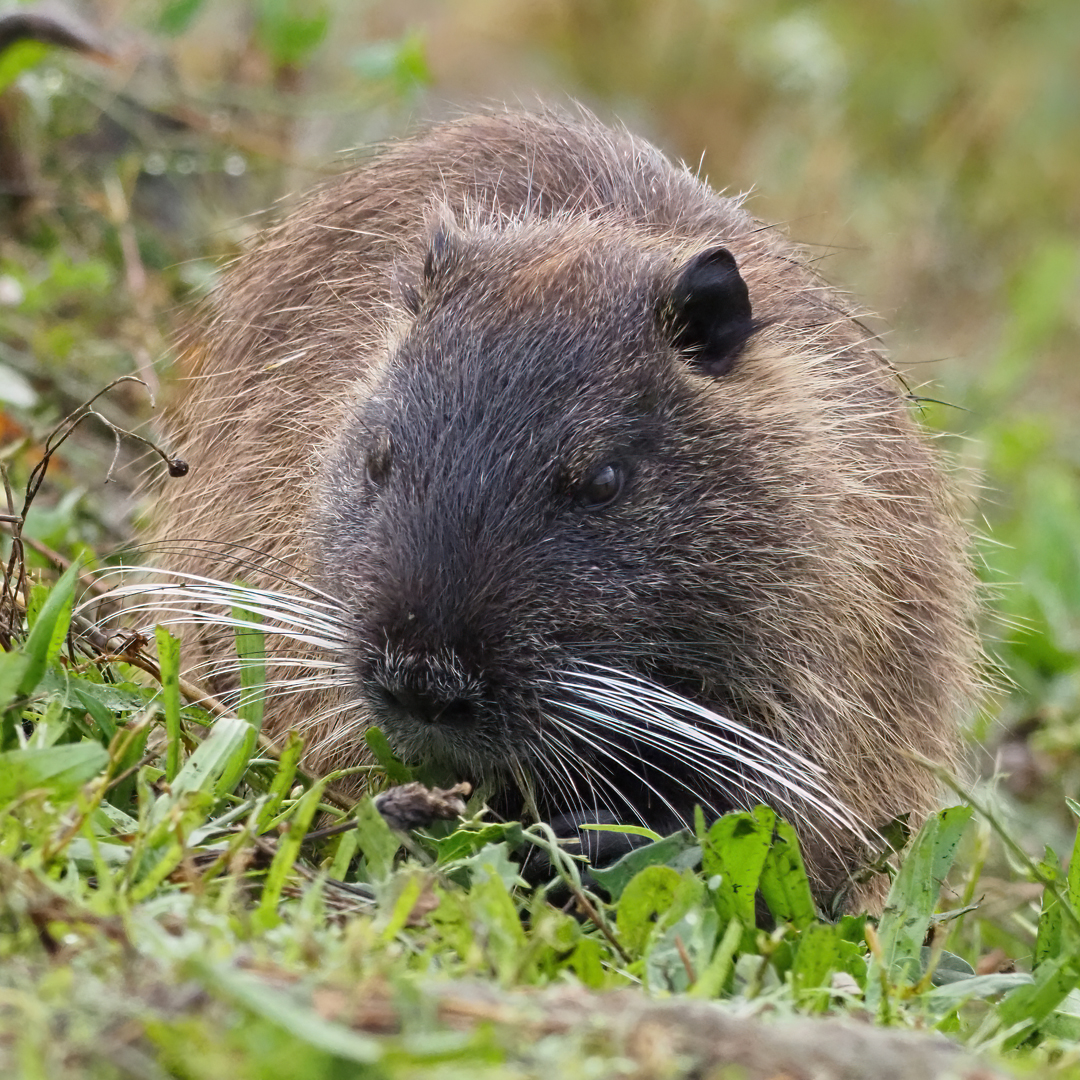


 Belted Kingfisher on a very fancy perch
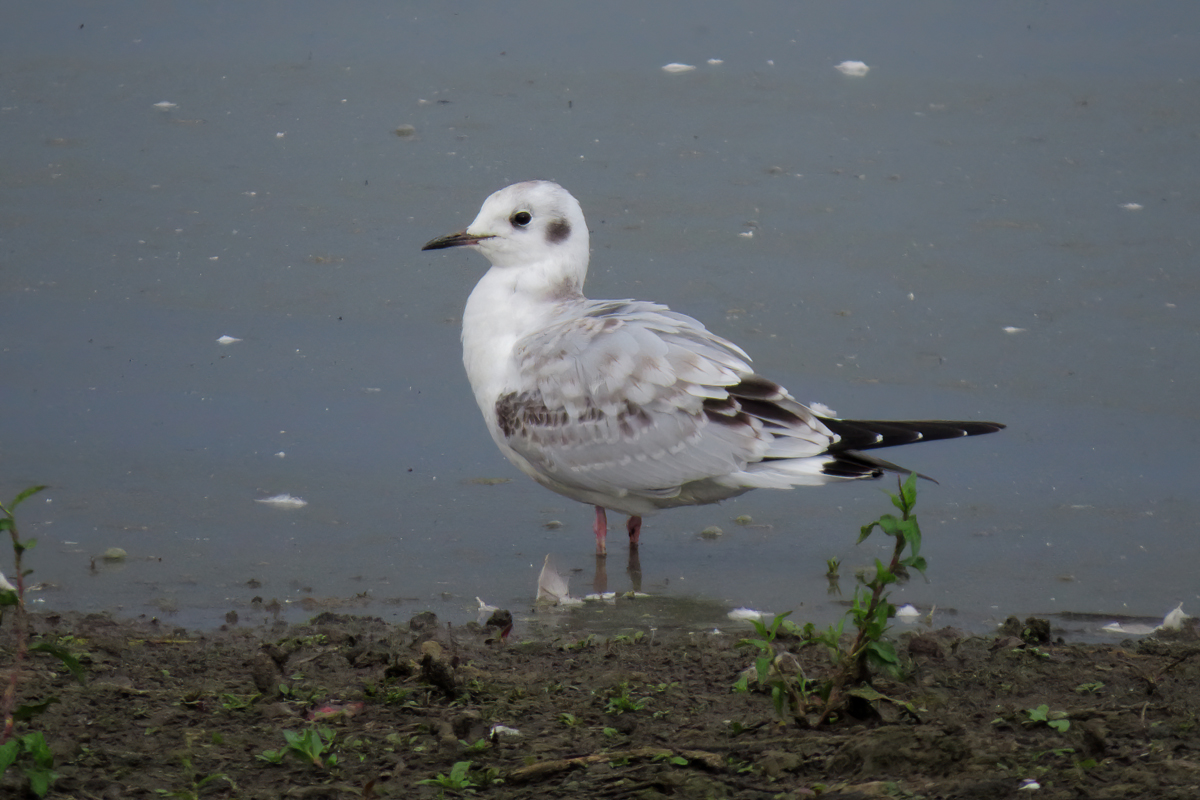 Bonaparte’s Gull in first winter plumage
 Gull Season is just around the corner.
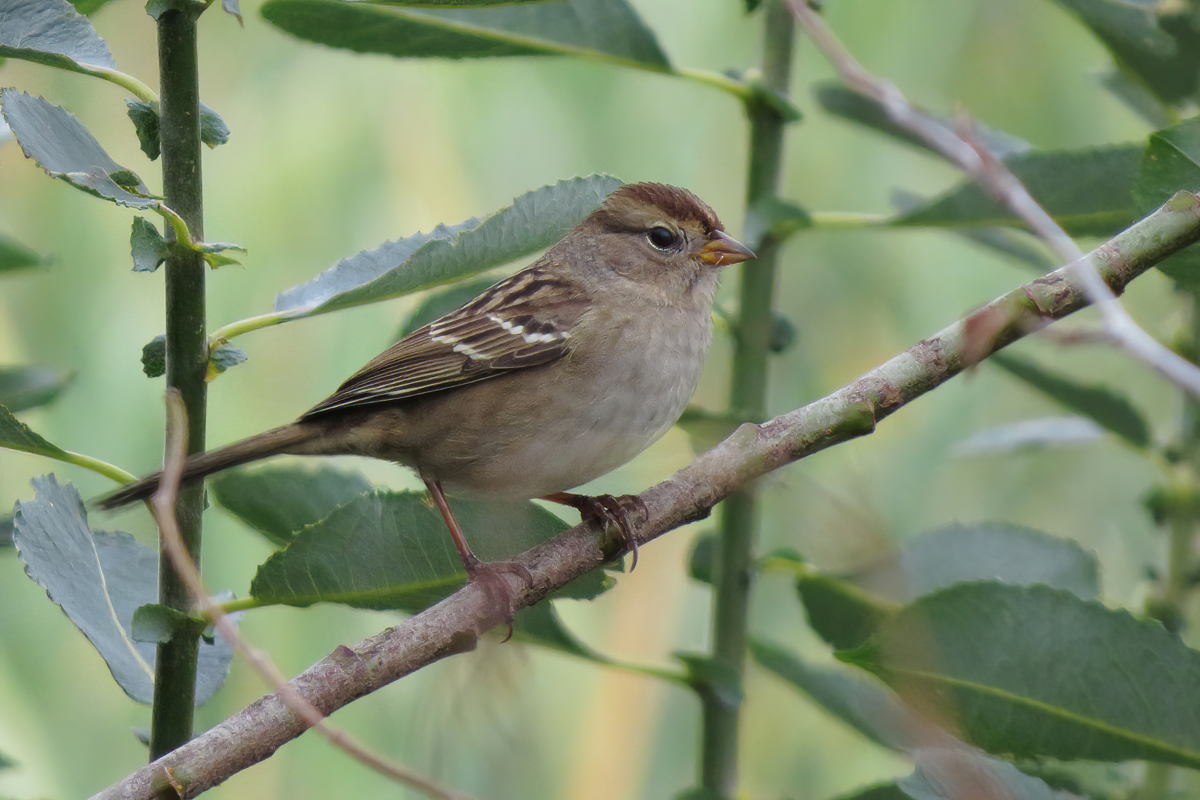 juvenile White-crowned Sparrow
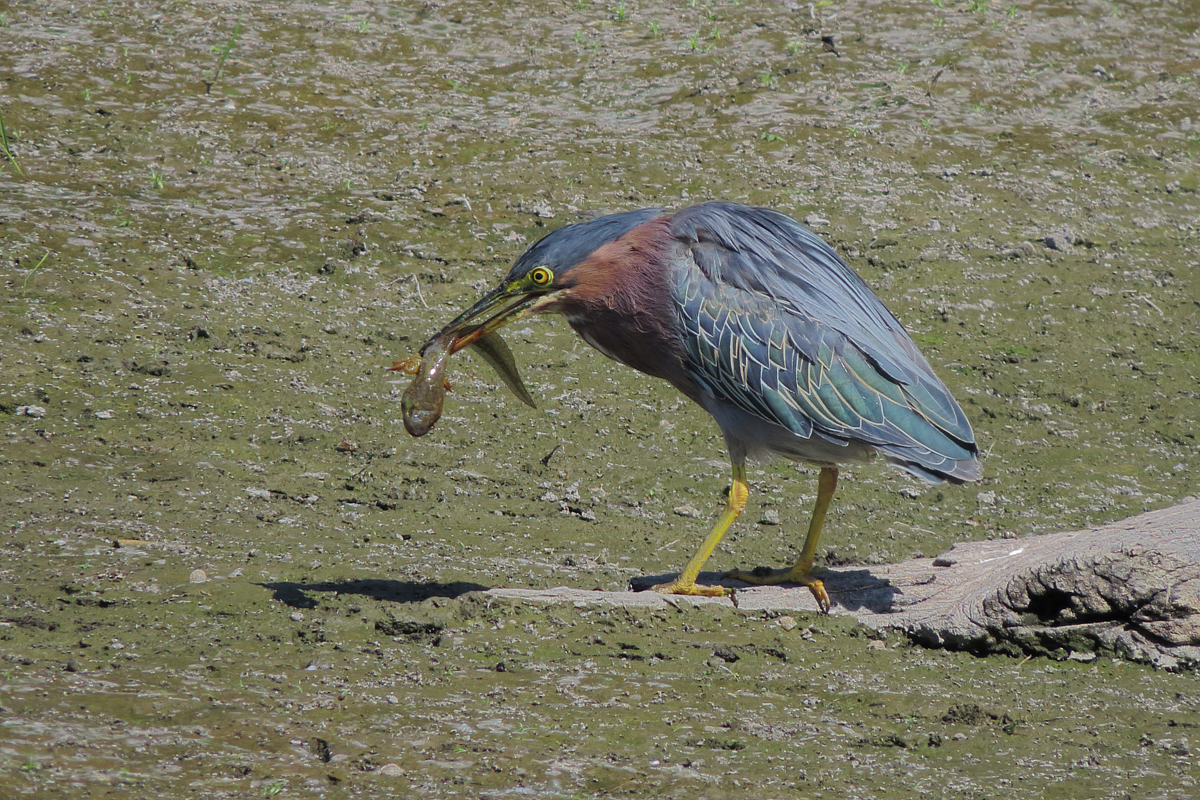 Green Heron with an American Bullfrog tadpole. It is nice when the native species eat the invasive ones. It is often the other way around.
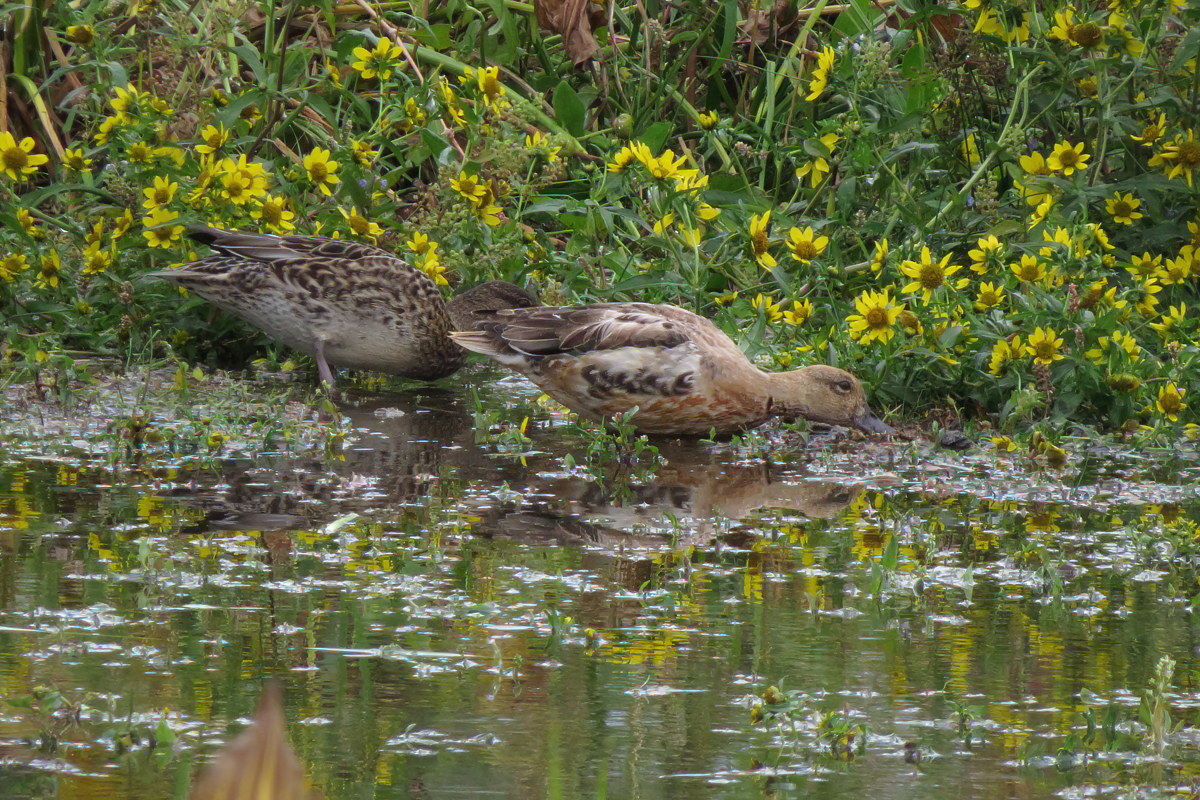 This is an odd duck. It is a teal, probably Cinnamon, but is either leucistic or is going through a brutal molt.
 American White Pelicans are now common in the Portland area in late summer.
 American White Pelican coming in for a landing
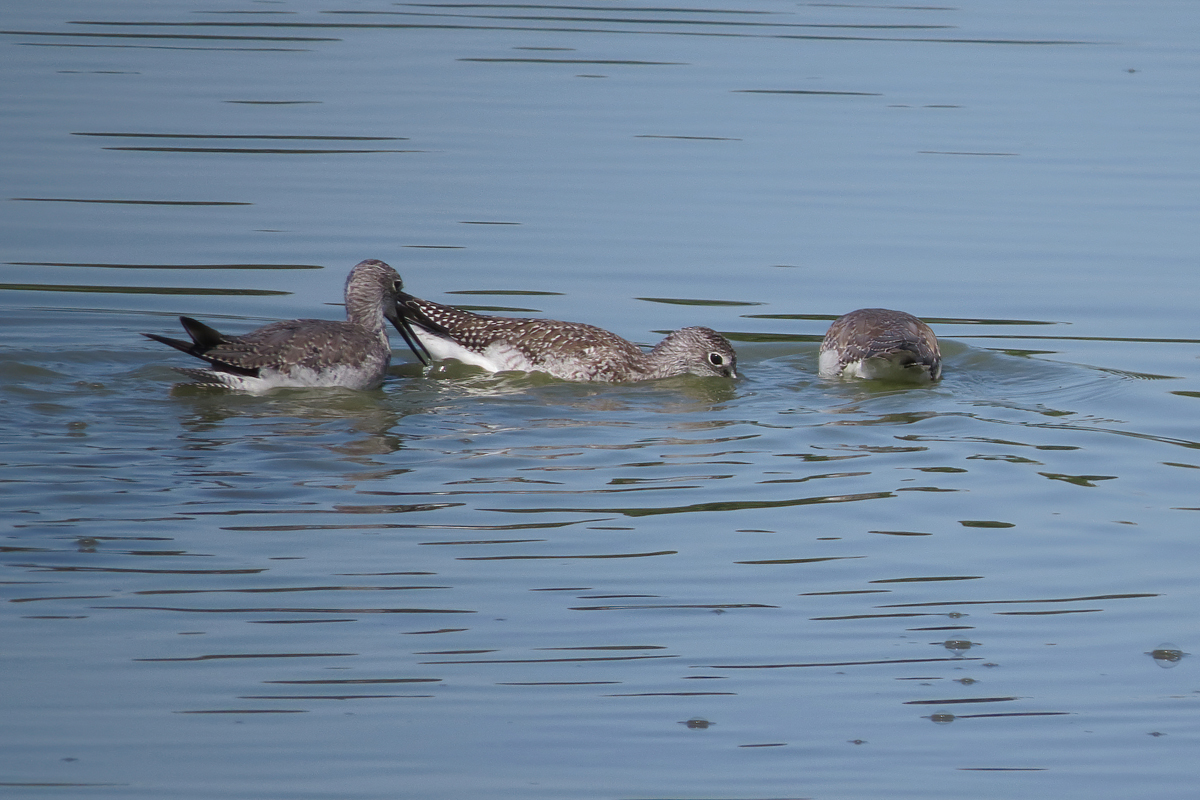 Typically seen wading, Greater Yellowlegs will occasionally swim in groups to catch small fish.
 This juvenile Western Sandpiper, showing the characteristic rusty suspenders, was taking advantage of low water levels at Smith and Bybee Wetlands.
 The main lake at Fernhill Wetlands has receded enough to create some nice mudflats, here being enjoyed by a Pectoral Sandpiper.
 juvenile Long-billed Dowitcher, showing the characteristic solid dark tertials
 juvenile Short-billed Dowitcher, showing the characteristic tiger-striped tertials
 Spotted Sandpipers nest in the Portland area. Juveniles, like this one, can be recognized by the barring on the wing coverts.
 Semipalmated Plovers are surely one of the cutest shorebirds. The scaly pattern on the wings tells us that this is a juvenile.
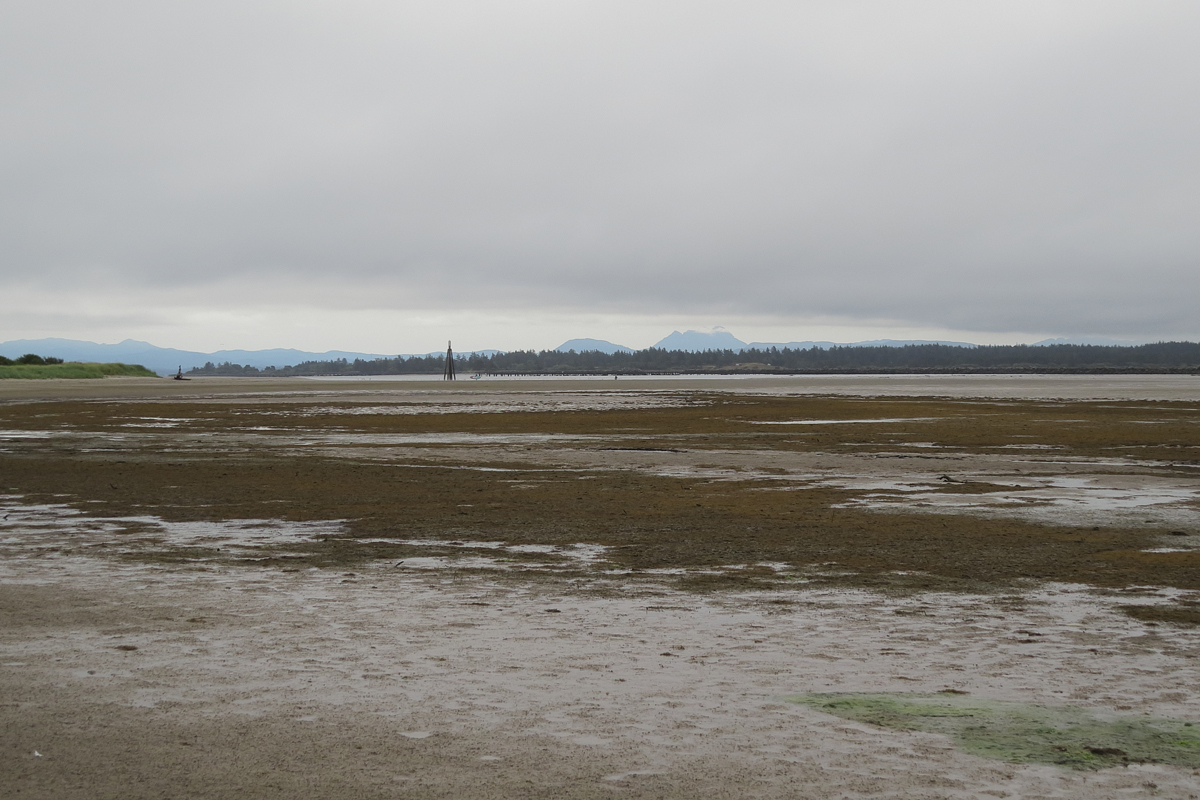 Trestle Bay, just off Parking Lot D at Fort Stevens State Park, can be one of the more productive shorebird spots on the north coast. Timing is critical, as the bay fills completely with the high tide.
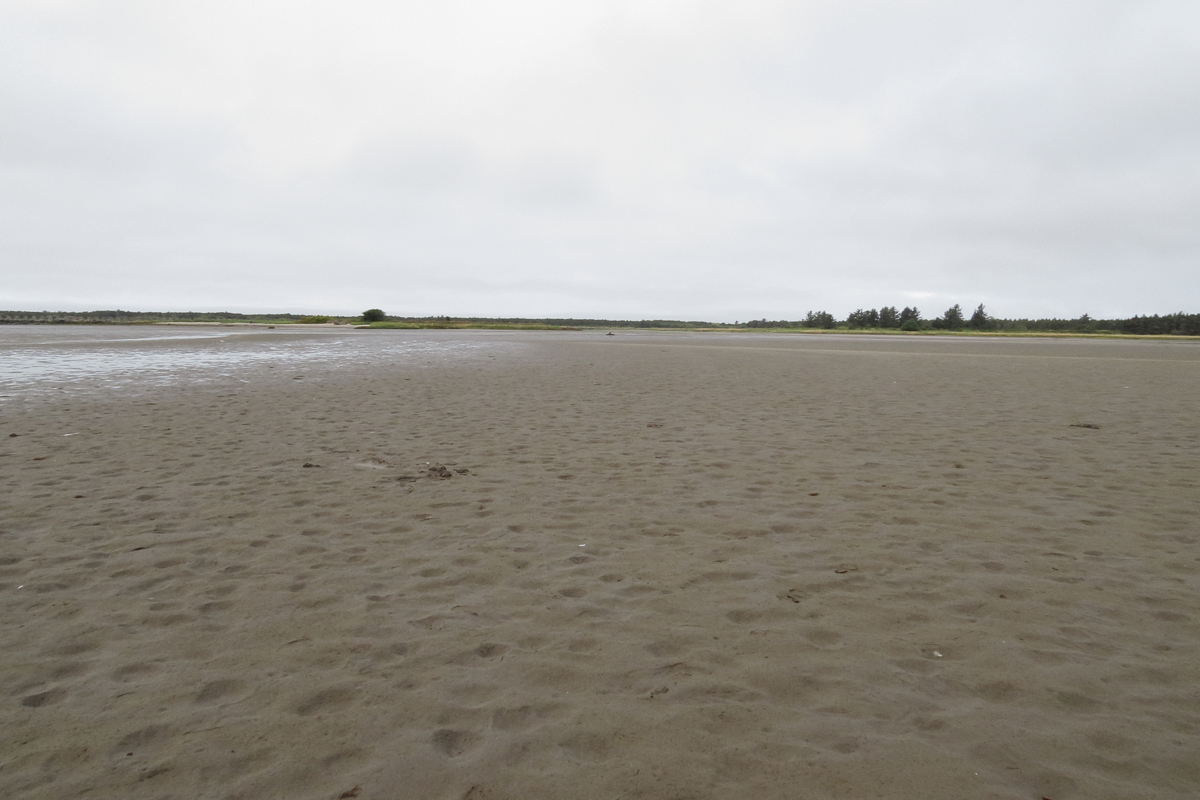 When the tide is out, the bay provides extensive mudflats. With this much exposed mud, the birds can be quite distant, so timing your visit when the tide is coming in can produce some nice viewing.
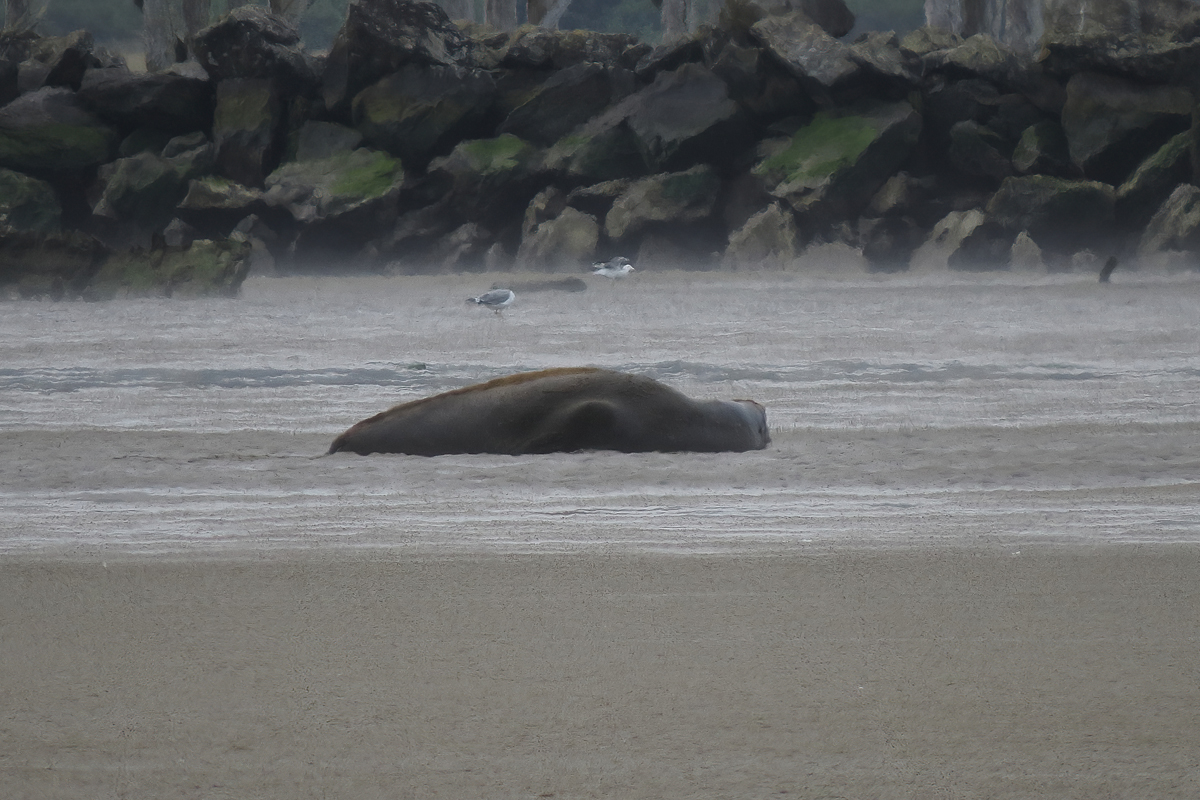 On this visit we observed what we thought was a California Sea Lion carcass way out on the flat.
 Later we noticed the the sea lion had rolled over and extended a flipper. Apparently he was just hanging out on the mudflat catching some sun.
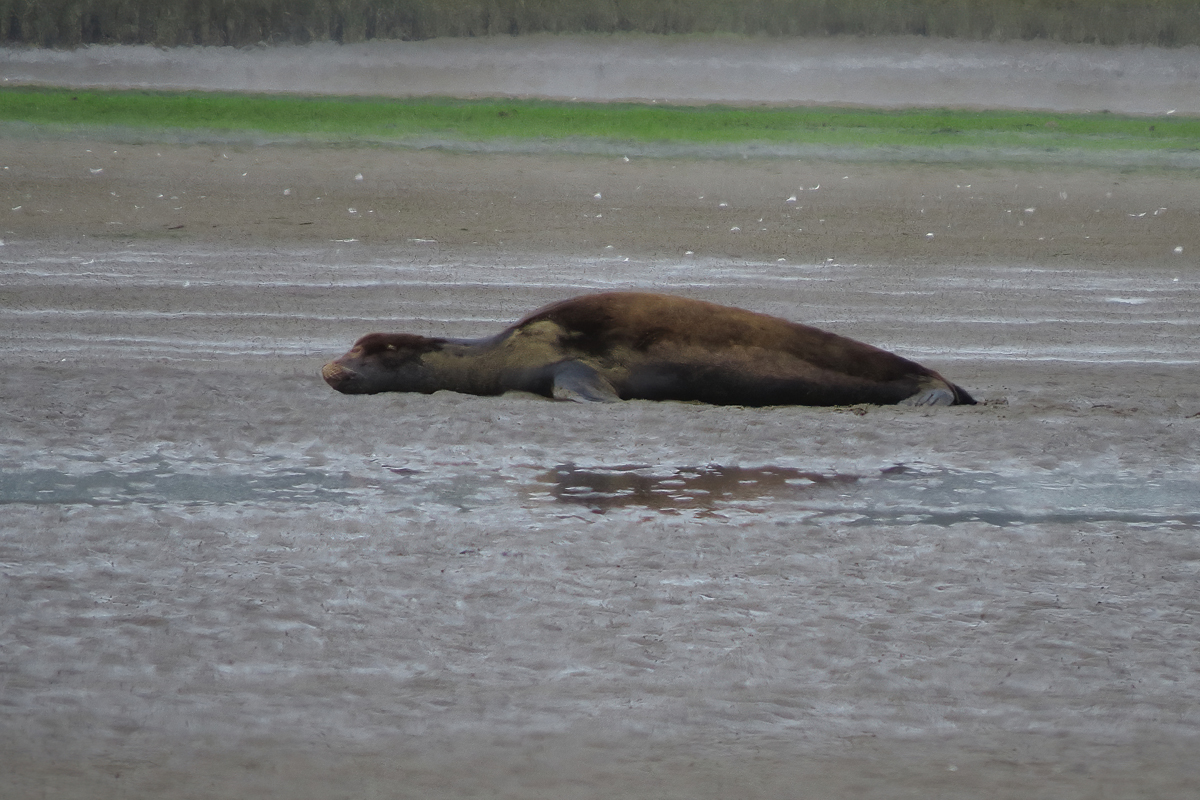 I normally see these animals basking on rocks, but the mud was apparently working for this guy.
 Southbound shorebird migration tends to come in waves, and we were between waves on this visit. Our consolation birds were this flock of Common Mergansers with a California Gull.
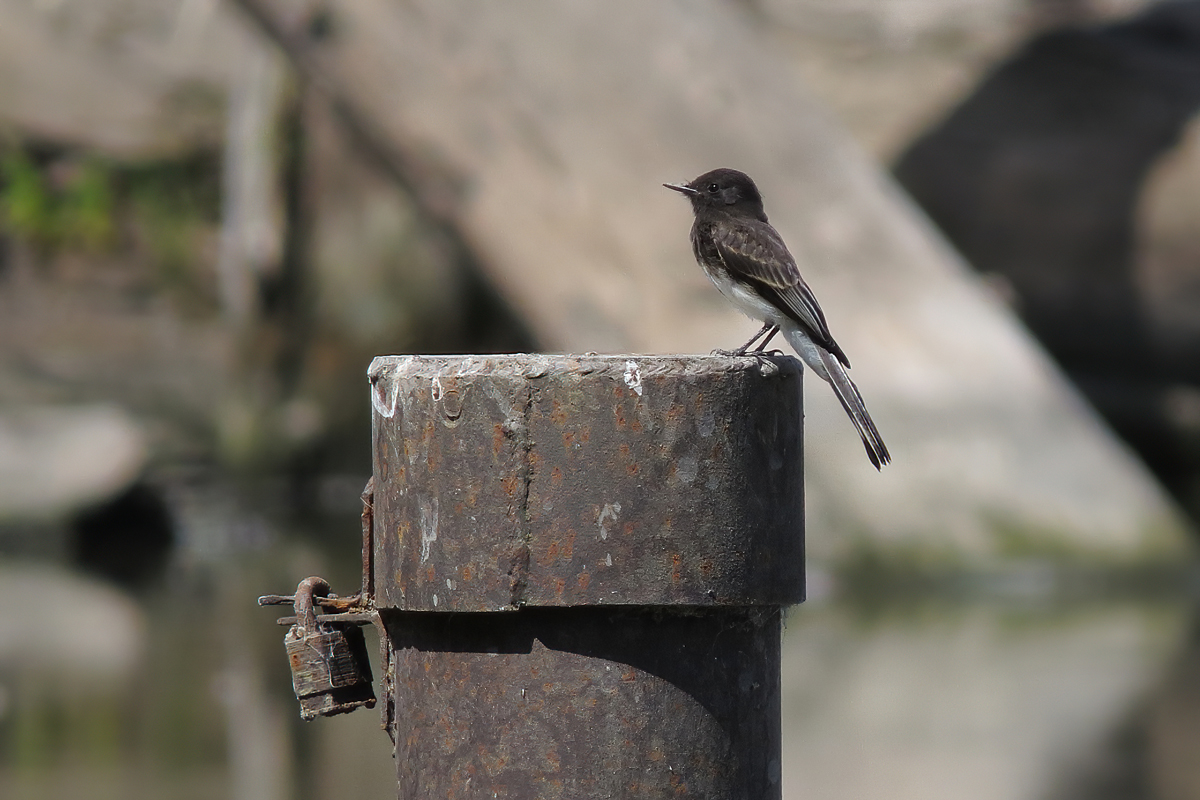 The first record of Black Phoebe in Washington County was in 2006 (by yours truly). Now they are rare but regular at both Jackson Bottom and Fernhill.
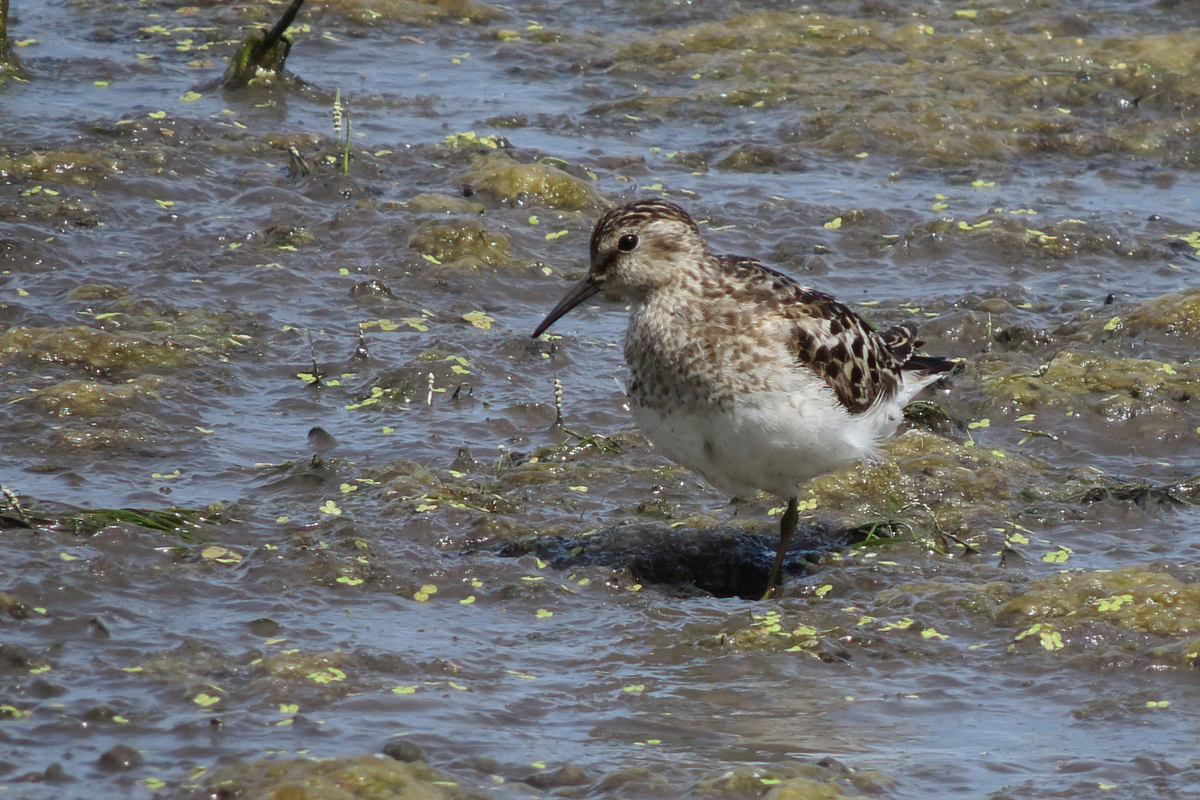 Shorebird migration is in full swing. Numbers are better at the coast, but some birds are finding the small patches of mud at inland locations. This Least Sandpiper was feeding on some newly exposed mud at Jackson Bottom.
 Here is the underside of a Lorquin’s Admiral. Those red eyes are intense.
 Green Heron at Fernhill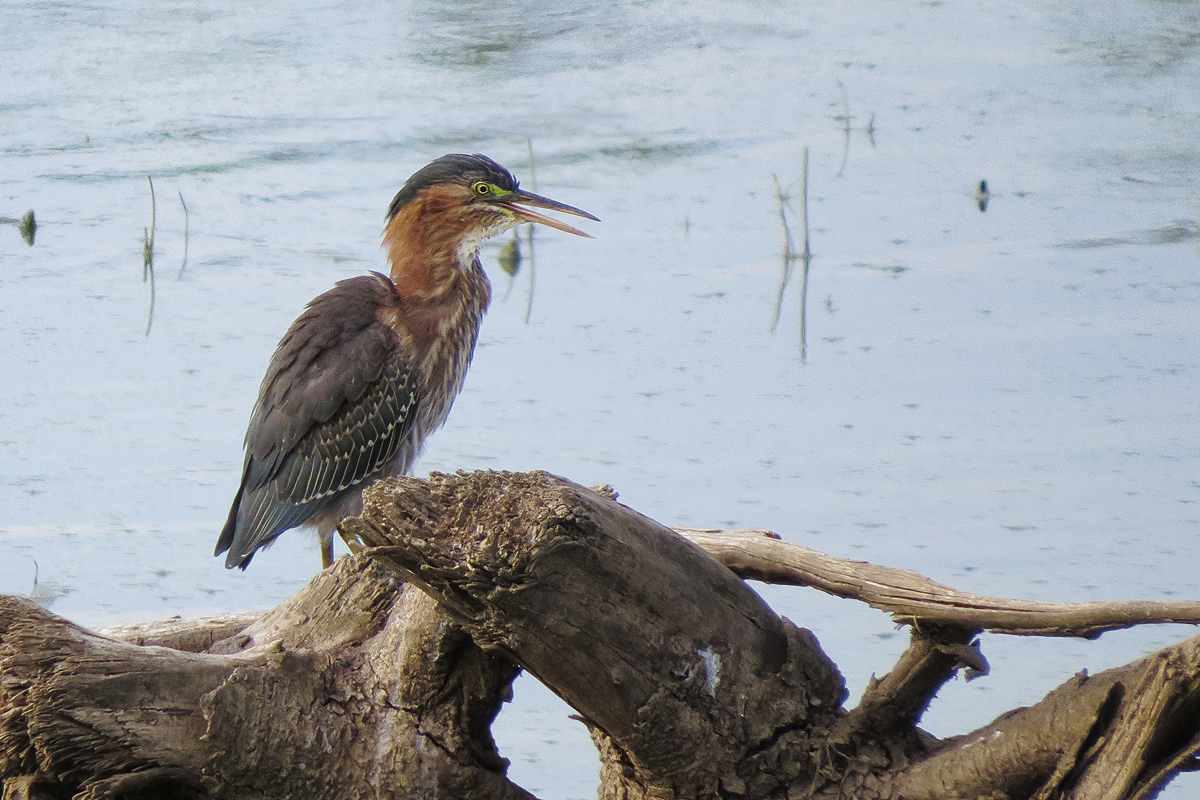
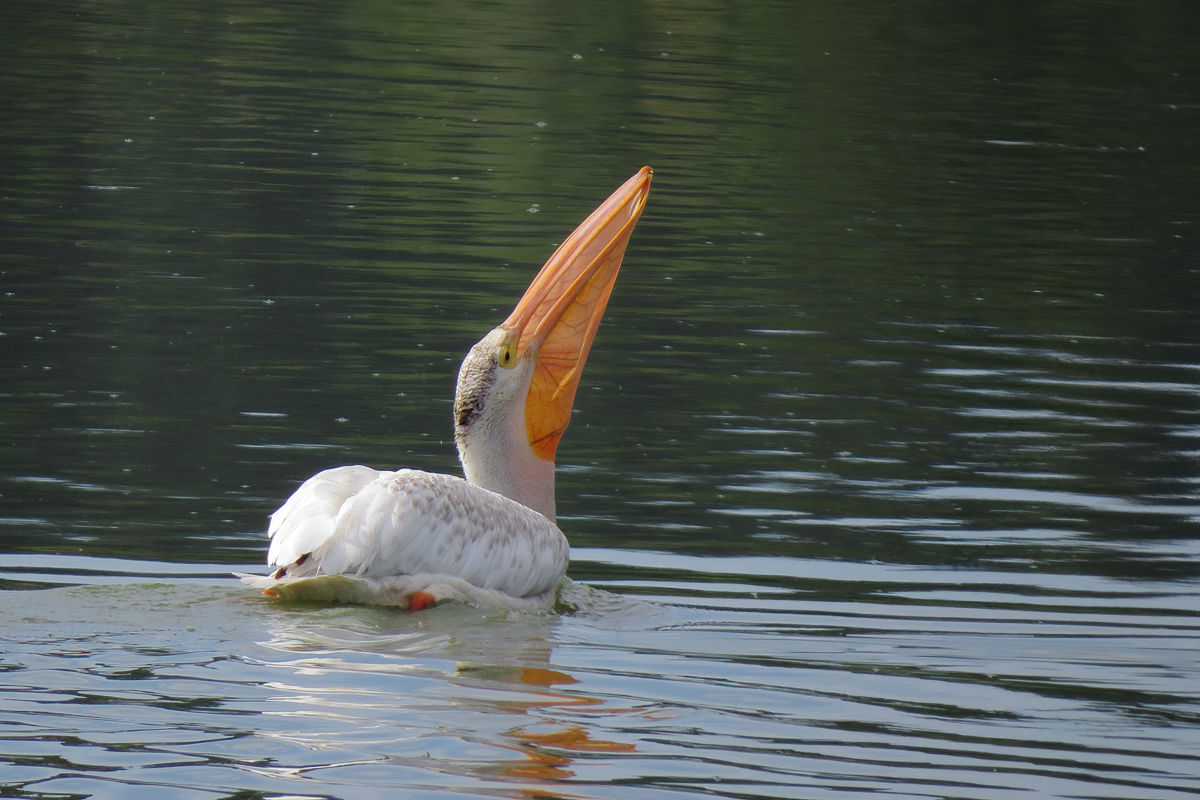 American White Pelican is another species that has become more common in the Portland area is recent years. They don’t nest here, but summer brings large numbers of young birds and post-breeding adults.
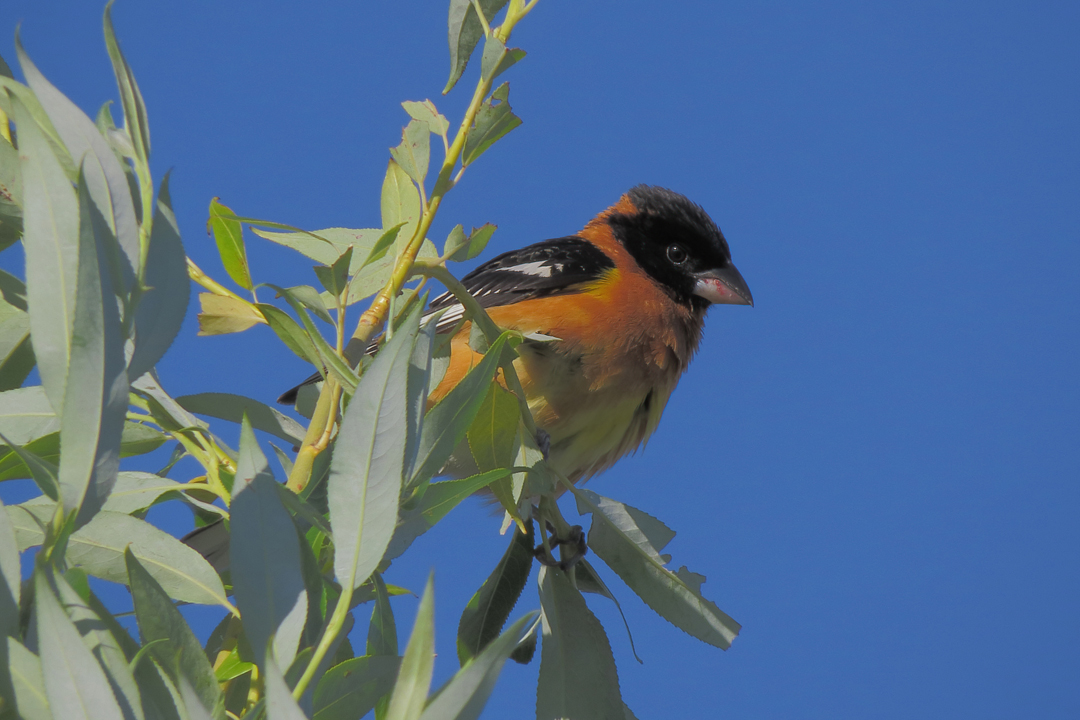 Black-headed Grosbeaks are one of our more attractive summer residents.
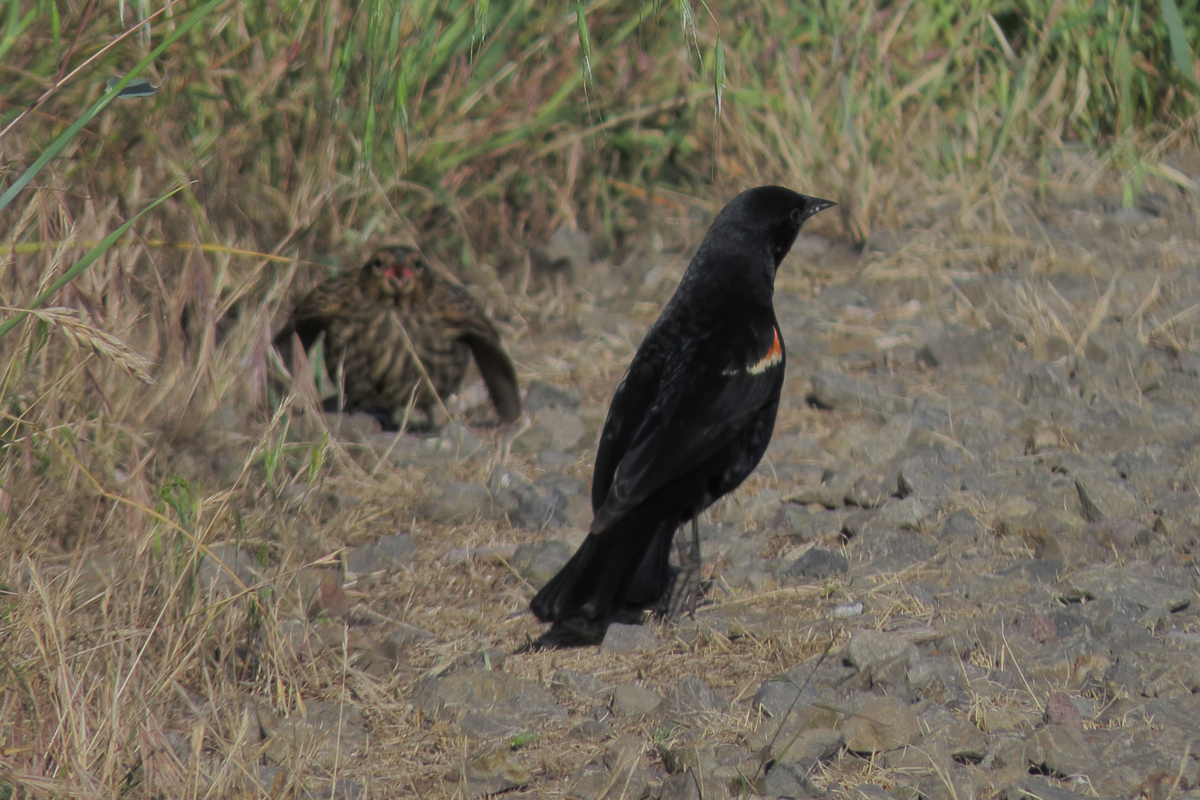 Lots of babies have already fledged. Here a Red-winged Blackbird is being harassed by a hungry youngster.
 It has been such a delight to have an active Purple Martin colony at Fernhill the past few years.
 Purple Martin on an unclouded day
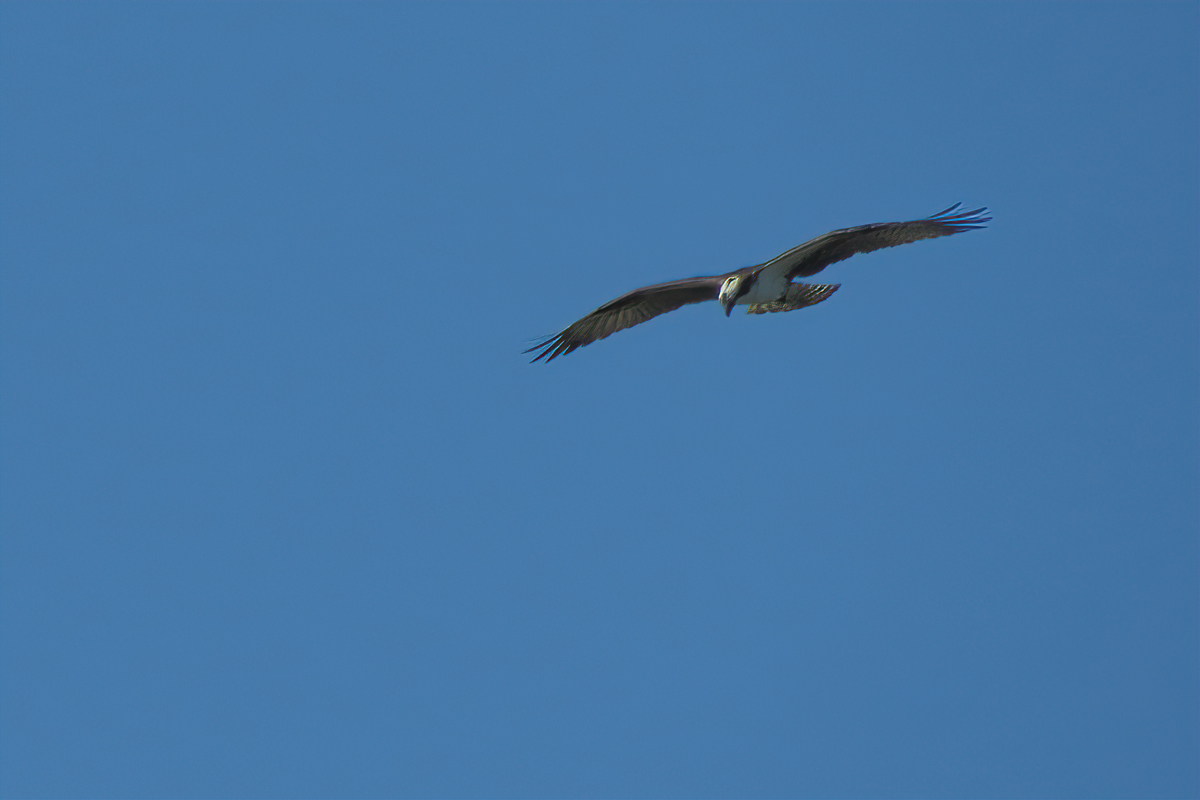 Ospreys were soaring high over Fernhill Lake. I didn’t see any dive for fish while I was there.
 The ducks have started their summer molt, but the Pied-billed Grebes are still looking dapper.
 A lovely Mourning Dove on an ugly fence
 The most unusual bird of the day was this Western Grebe. They are frequent winter visitors here, but they do not nest anywhere nearby.
 Spring migration has come and gone, and many birders agree that it was a dud. Numbers and diversity seemed quite low in the Portland area this spring. So now we concentrate on the summer residents, like this Black-headed Grosbeak.
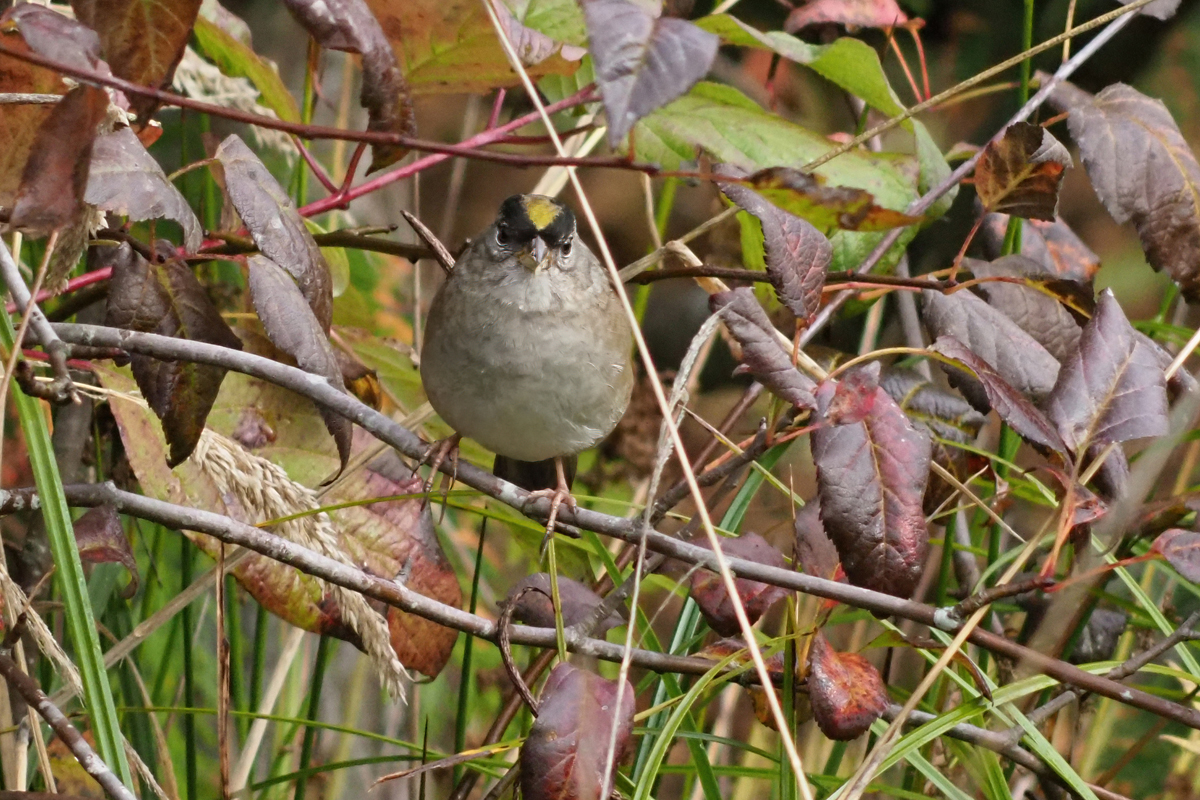
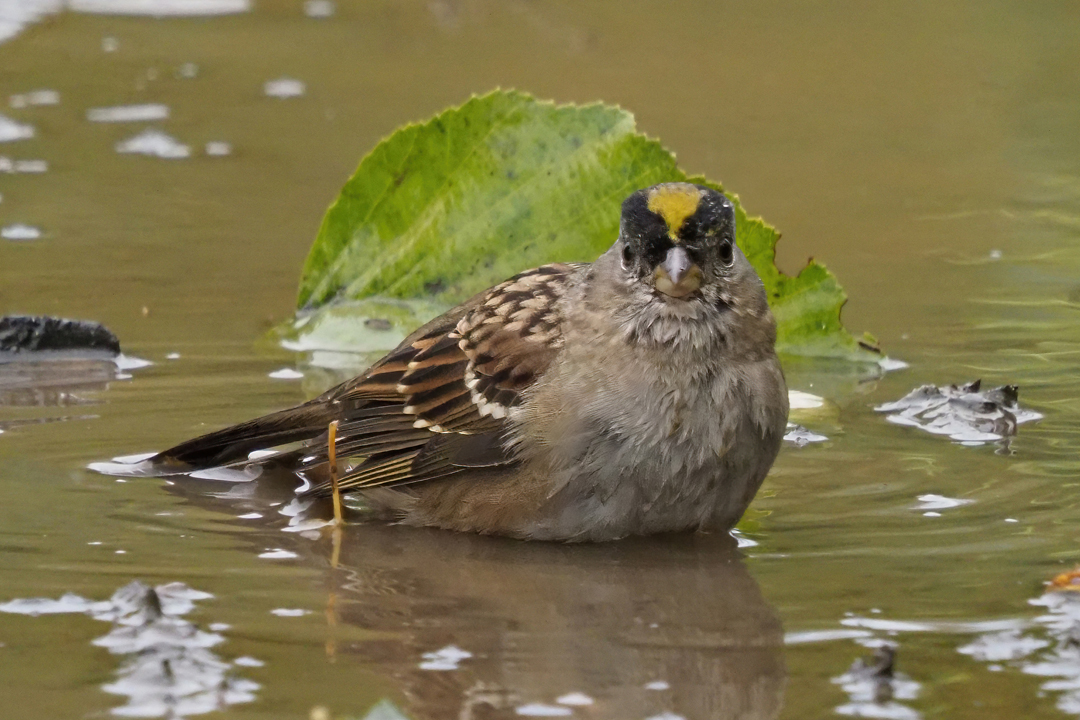
 Most Golden-crowned Sparrows are gone by late May, so this bird found on June 2 was noteworthy.
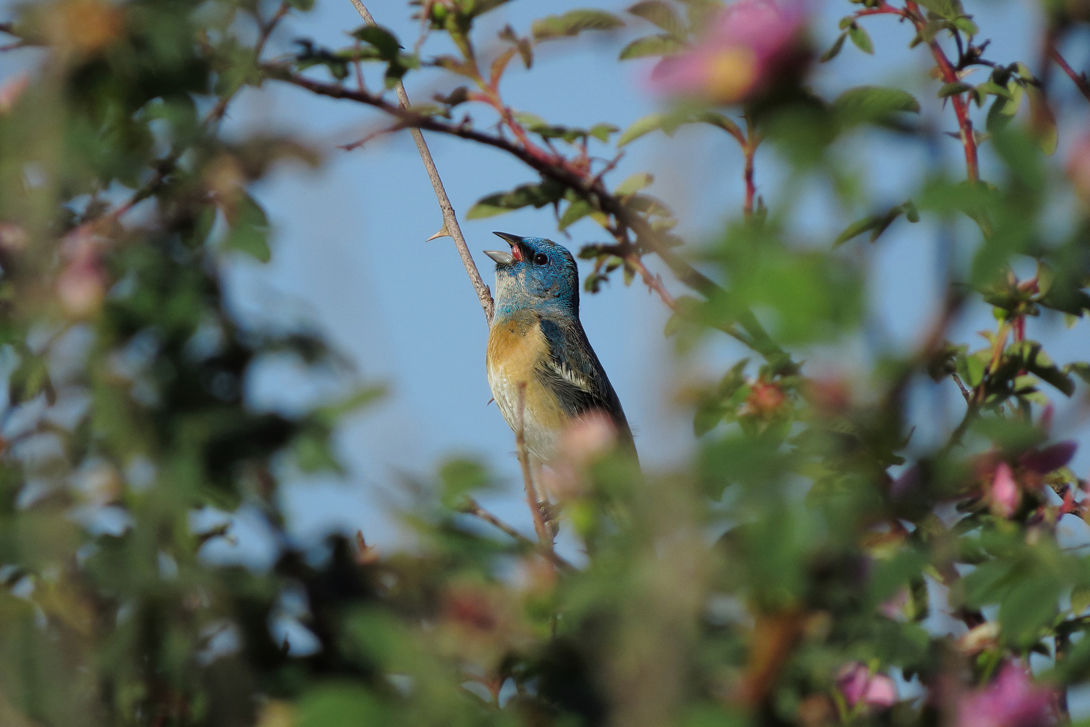 At Tualatin River NWR, this Lazuli Bunting was singing in the same patch of Nootka Rose that has hosted them in previous years.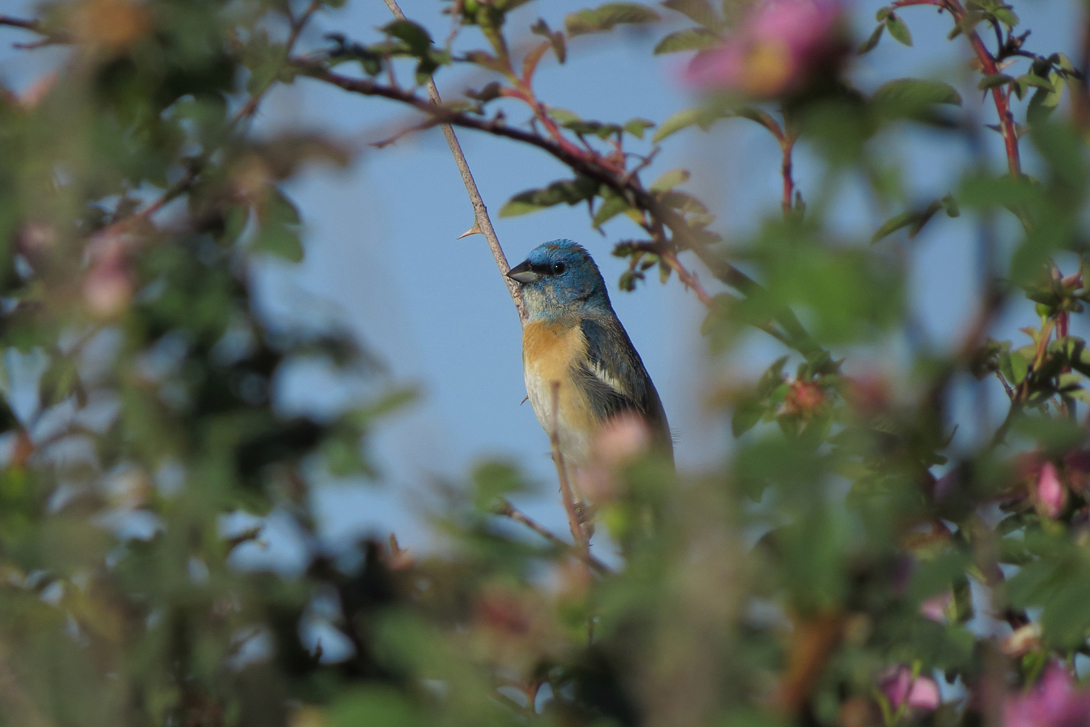
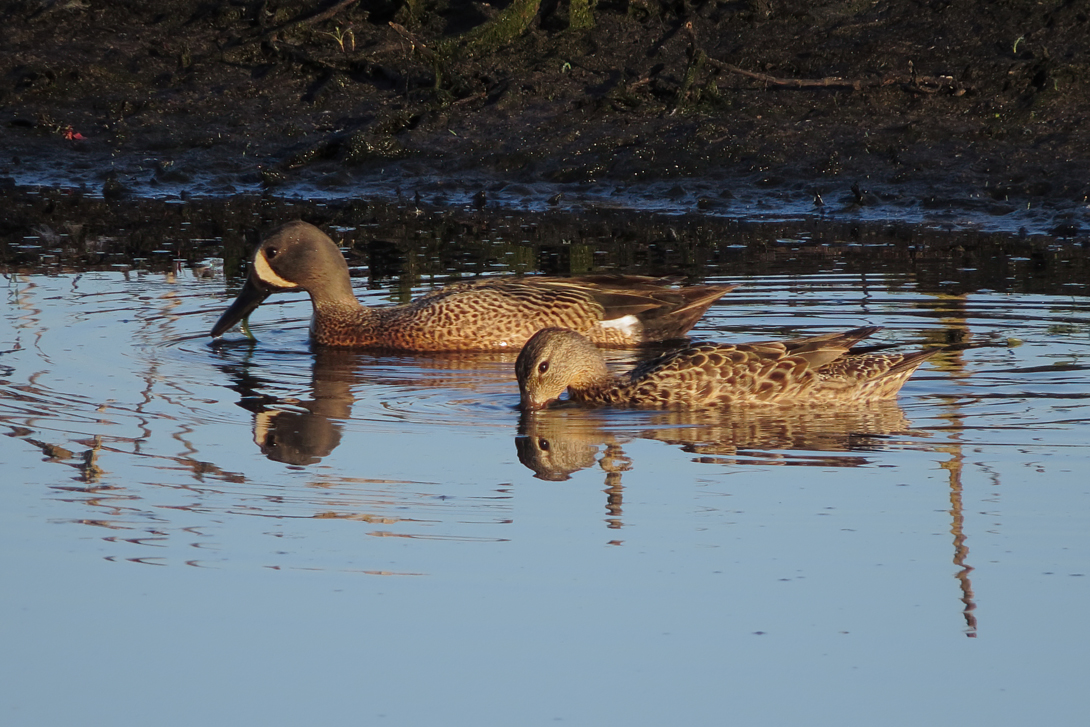 Tualatin River NWR is hosting at least two pairs of Blue-winged Teal this summer.
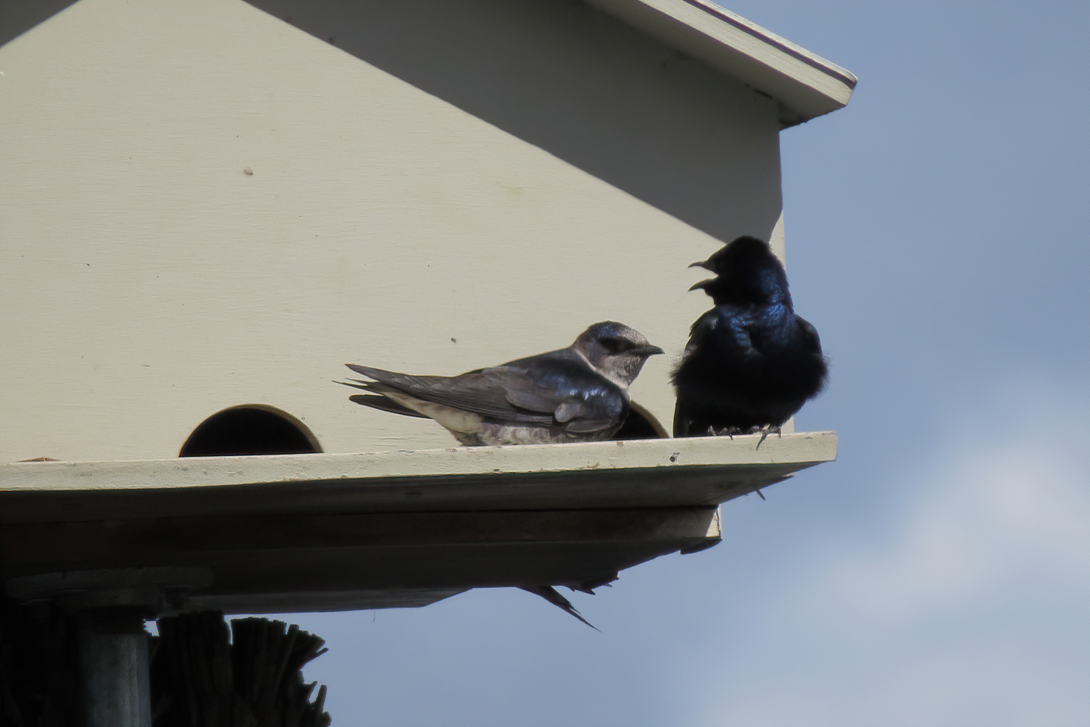 Purple Martins at Fernhill Wetlands
 Bewick’s Wren are usually working heavy cover, so it was a treat to find this one dust bathing in the middle of a gravel road.
 Hooded Merganser preening at Fernhill Wetlands
 Spotted Sandpiper
 This Gadwall is already starting to molt into his dull summer alternate plumage. I often refer to late summer as Ugly Duck Season. It seems a little early for ducks to be losing their sharp breeding colors.
 The long hiking trail at Tualatin River NWR is open, and this refuge always offers some good birding in the spring and early summer. A pair of Blue-winged Teal was in the southwest pond.
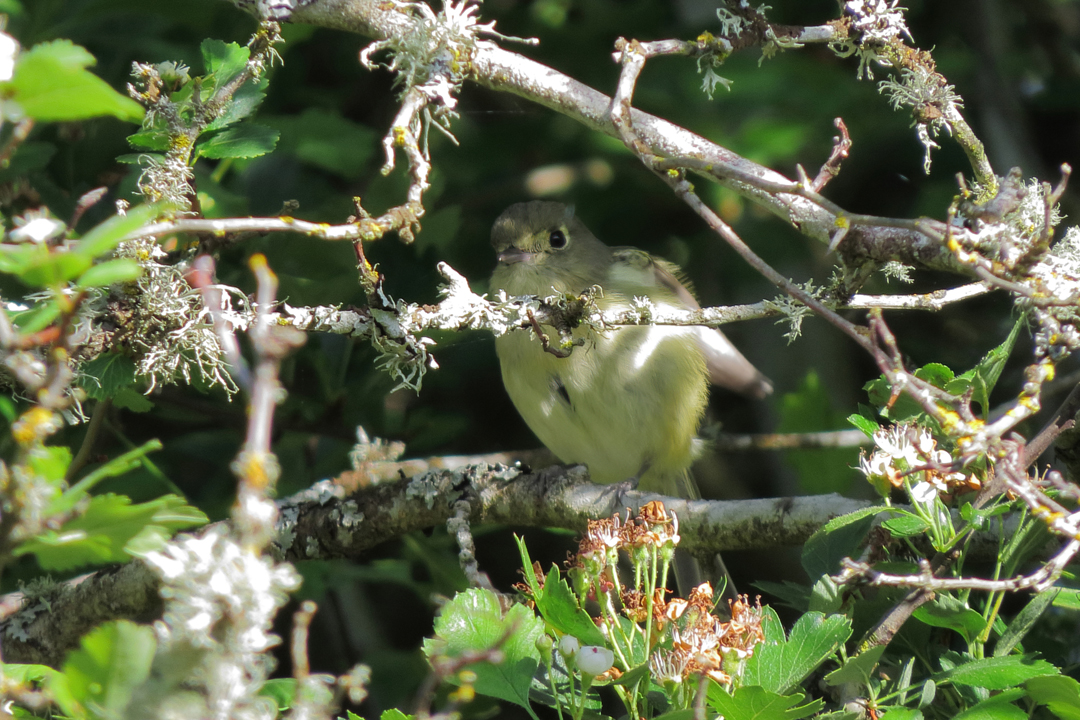 As is typical for this species, this Hutton’s Vireo stayed back in heavy cover.
 It is really hard to shoot a Brewer’s Blackbird against the sky without ending up with just a silhouette, but I keep trying.
 Long-billed Dowitcher was the most common shorebird on this visit. It is nice to see them in full breeding plumage.
 The best bird of the trip was this Pectoral Sandpiper. Pectorals are regular autumn migrants in this area, but are very rare in spring.
 Ethical Birder