Winchuck River Mouth

winchuck river
Less than a mile from the California border, the Winchuck River empties into the Pacific Ocean. Along with a lovely beach area, the site has a nice visitor center (bathroom!) with information about the surrounding National Forest.

brown pelicans
Brown Pelicans were feeding just offshore.
long-billed curlew
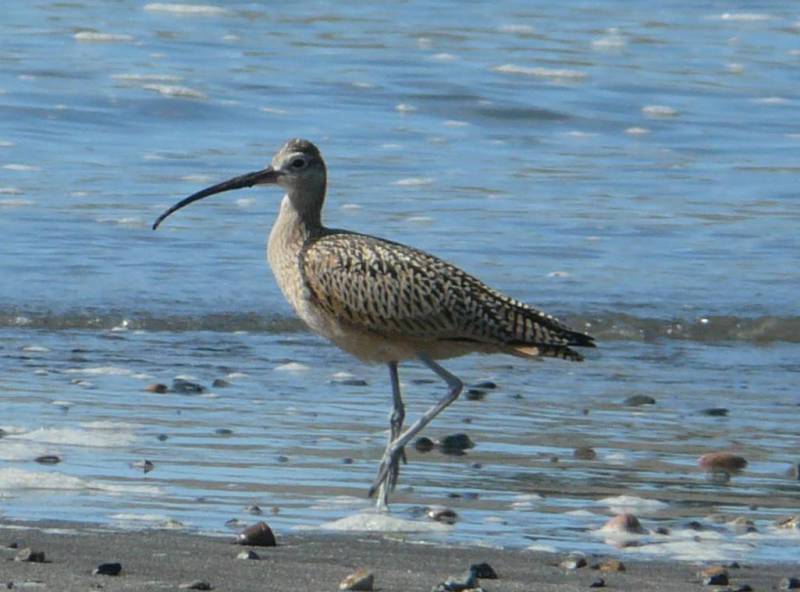
Two Long-billed Curlews were feeding near the river mouth, probing their long bills into the sand. The crisp pattern on the wing coverts (dark stripes with no cross bars) identifies this individual as a juvenile.

double-crested cormorant
This Double-crested Cormorant  fished  in the river while other fished offshore.

eurasian collared dove
Eurasian Collared-Doves can be expected just about anywhere in Oregon after a massive range expansion over the past few years.
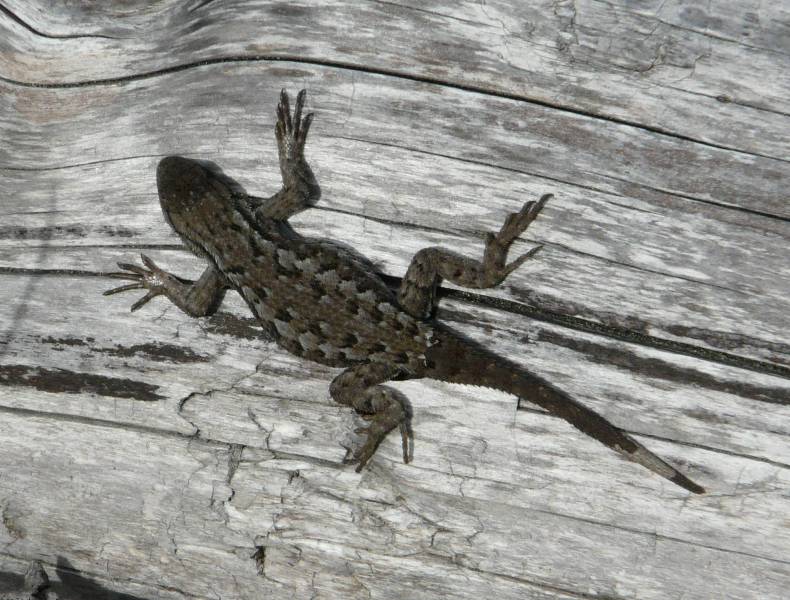
western fence lizard 1
Western Fence Lizards were basking on the abundant driftwood. This one has recently shed, evidenced by the little patch of dead skin left on the tail. The one below has a less dramatic pattern, but with little blue flecks.

western fence lizard 2

Sapsucker Woods

cornell sign
I recently had the opportunity to visit Sapsucker Woods, the headquarters of the Cornell Lab of Ornithology near Ithaca, NY. They have a great visitors’ center with various displays, artwork, a store, and windows overlooking multiple bird feeders and a large pond.

american goldfinch
The feeders attract a nice variety of birds, including this American Goldfinch. The large windows are covered with netting to prevent window strikes. That is great for the birds, but not so great for auto-focus cameras, which can’t ignore the netting in front of the intended target.
northern cardinal
Northern Cardinal

sapsucker wells
The sanctuary takes its name from the Yellow-bellied Sapsucker, a common resident here. Many of the trees bear rows of small holes drilled by these woodpeckers.

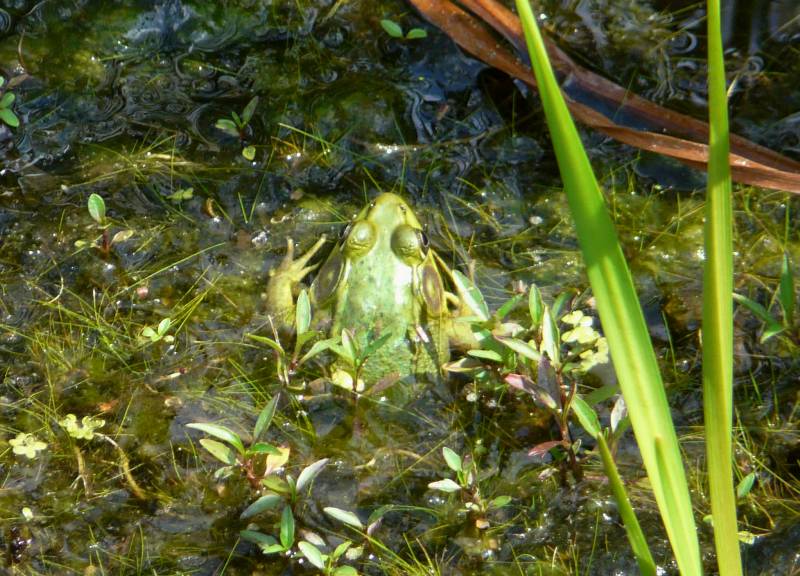
green frog
The marshy area near the building’s entrance attracted its share of wildlife, including this Green Frog (Rana clamitans)

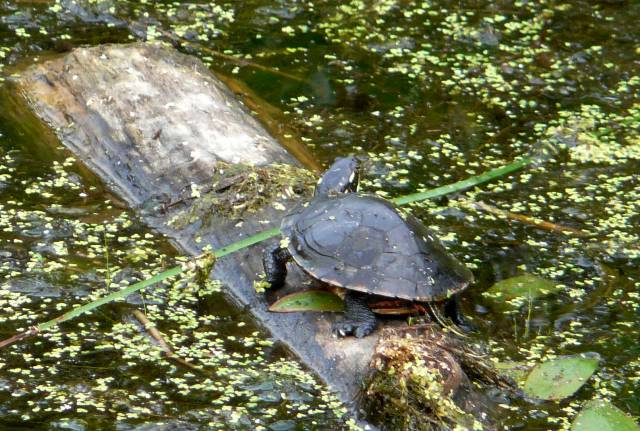
eastern painted turtle
and this Eastern Painted Turtle.

eastern cottontail
This Eastern Cottontail was enjoying a snack on the lawn.

eastern chipmunk
Eastern Chipmunks are common under the bird feeders.

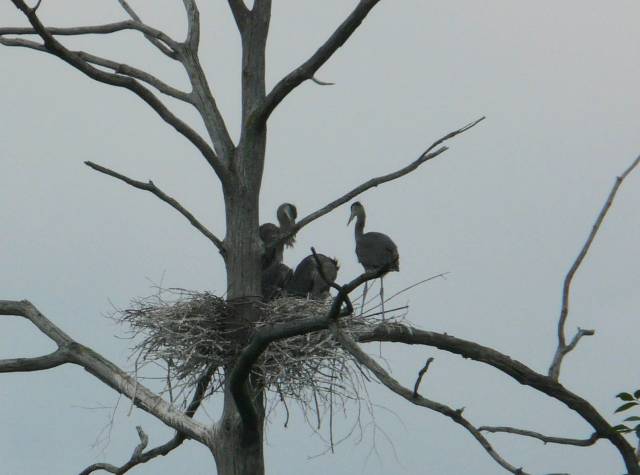
gb heron nest
The large pond behind the building attracts waterfowl and waders, including these Great Blue Herons nesting in a dead tree.

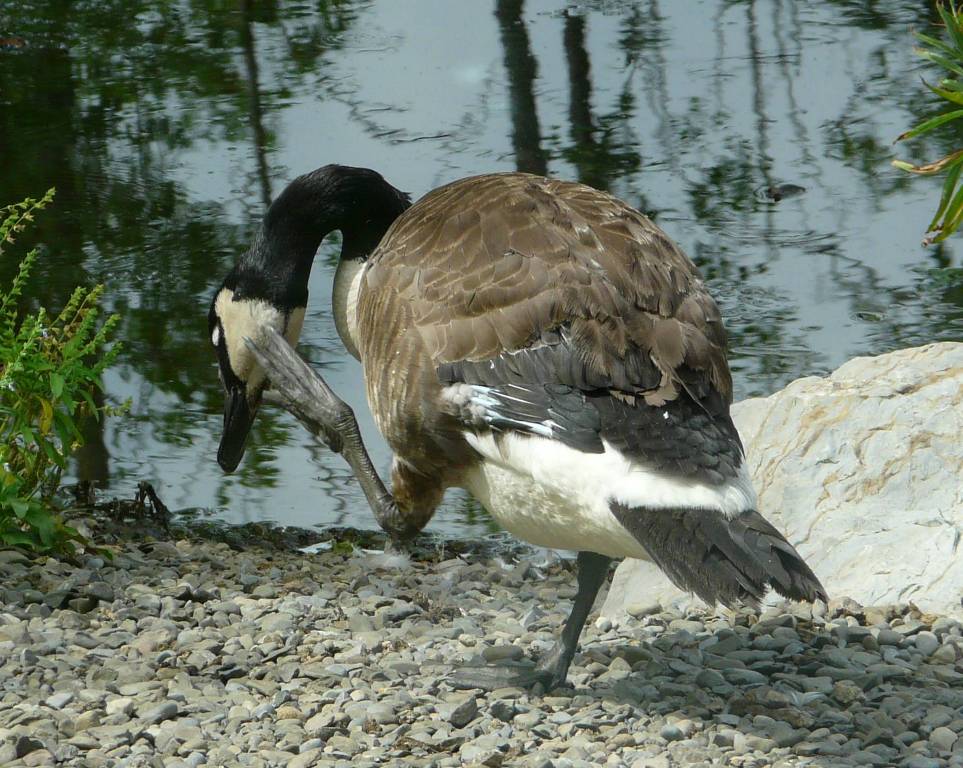
canada goose
The only waterfowl around the pond on this July day were Mallards and Canada Geese. Like other species of waterfowl, this Canada Goose molts all his flight feathers at once during the summer. This makes it impossible for the bird to fly, but it does give us a chance to see the birds blackish rump and the white band across the uppertail coverts.

Always something to look at

My birding has been limited lately, and walks in heavy cover under cloudy skies don’t produce many photo opportunities, but there is always something to see.

beaver-chew
Final Score: Beaver: 1  Protective netting: 0

licorice-fern
Licorice Ferns

newt
Rough-skinned Newt, one of the most toxic animals in North America.
newt2
Eating one would be deadly to a human, but these animals are preyed upon by Common Garter Snakes.

Along the Columbia River

I walked for several hours at the Sandy River Delta this afternoon (Birding Oregon p. 63). Aside from two American Pipits and a Peregrine Falcon, birding was pretty slow, which was not too surprising given the heat and time of day. Even when there aren’t a lot of birds around, there is always something to see.


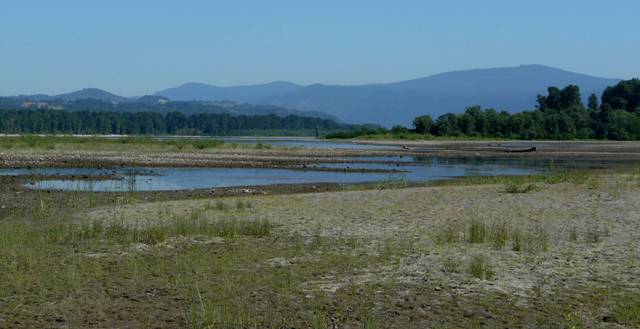
I spent a lot of time exploring the tidal ponds along the Columbia River. The river level is affected daily by tides and by releases from dams upstream. The water was low today, so lots of wildlife was crowded into the shrinking pools.


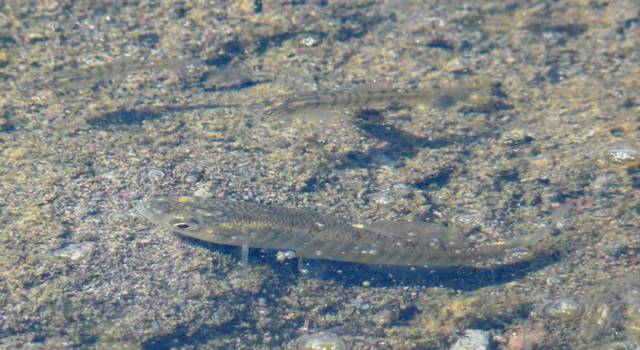
The little pools were filled with Banded Killifish. This species has been introduced to Oregon.


Along the with many non-native Bullfrogs was this Pacific Treefrog in a brilliant green.


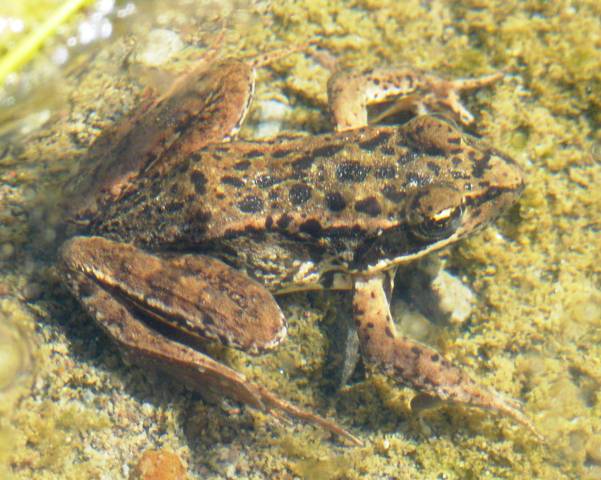
Here’s another Pacific Treefrog in brown. He was “hiding” under water.


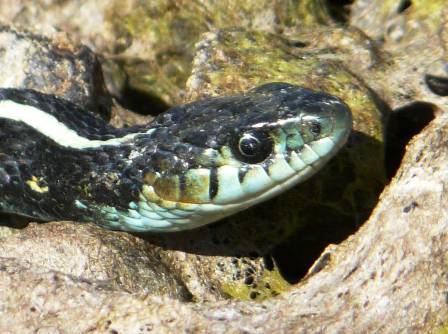
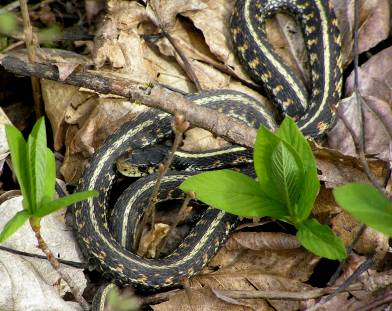
Of course, where you have fish and frogs in shallow pools, you will have garter snakes. I believe this is a Northwestern Garter.

Northwestern Garter Snakes are supposed to have seven scales on their upper lips, but this guy has eight.


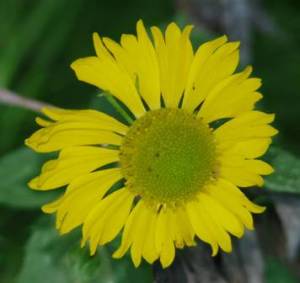
And for those of you who don’t appreciate fish and herps, enjoy these lovely flowers (and tell me what they are if you know).

Sauvie Island

I did a point count at Oak Island on Sauvie Island today, then birded several other areas. Migration is starting to pick up with large numbers of Purple Martins and several warblers and shorebirds on the move. I also saw four Sanhill Cranes, which seemed a bit early.


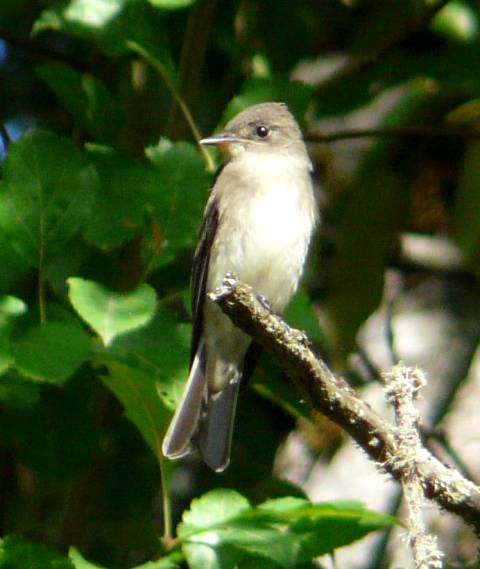
Western Wood-Pewees are everywhere, and still very vocal.


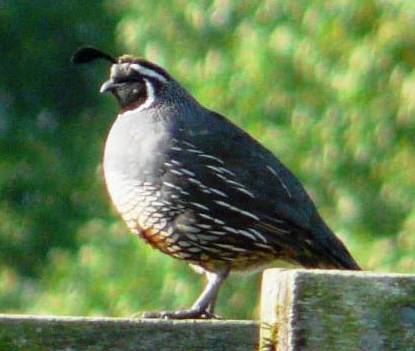
This California Quail spent some time on top of a corral fence, before disappearing into the blackberry brambles.


Here is a very distant shot of two Red-necked Phalaropes in front of a Cinnamon Teal. Notice the big blue patch on the extended wing of the teal.


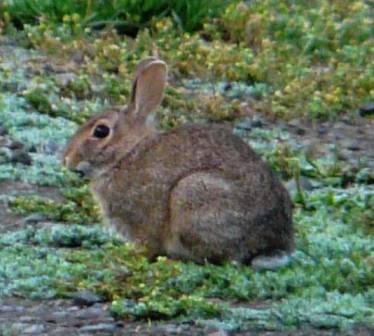
A Brush Rabbit, not a bird, nor uncommon, but still cute.


Pacific Treefrog. It is amazing how such a tiny animal (about 1 inch from snout to vent) can have such a loud call.

Best Bird Attractant Ever

With all due respect to Pete Dunne, I have never been a big fan of pishing. I am not very successful at bringing birds in with the technique, and I find it rather annoying in the field when other birders do it. But I still try it, having been taught for several decades that it is the thing to do.

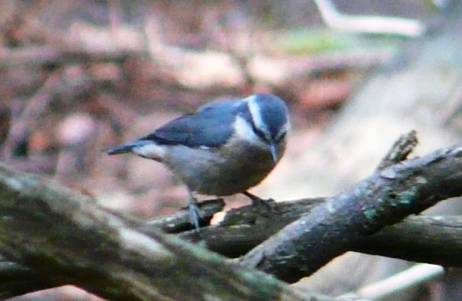
So it was recently as I birded Blue Hill in Maine. I heard some bird activity near a little rock bluff, and started pishing to draw birds down from the rim into better lighting. At first I heard Red-breasted Nuthatches and Black-capped Chickadees, joined by Golden-crowned Kinglets and Dark-eyed Juncos. More and more birds joined in as the flock started moving to the edge of the bluff.


The pishing seemed to be working. Birds started dropping down over the bluff.

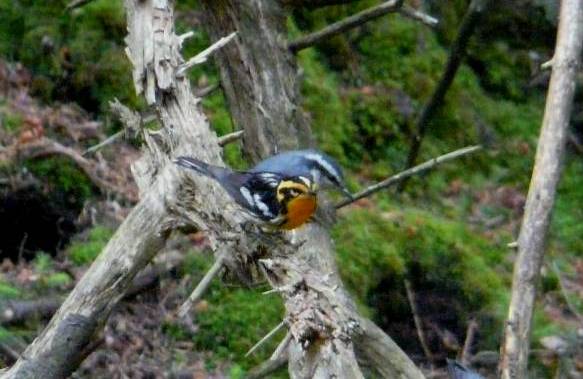
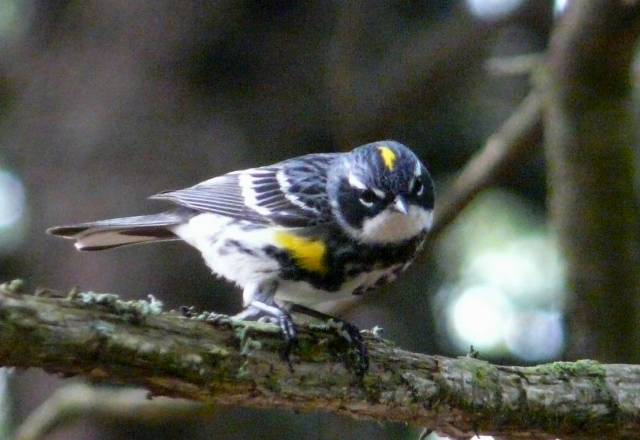
A Blackburnian Warbler joined the flock, as did several Yellow-rumped Warblers

Perhaps I had finally mastered the art of pishing. No. What really had this flock of birds worked up was nothing I was doing. It was something far more interesting to them, and myself.

It was an Eastern Milk Snake, a beautiful specimen about three feet in length (pretty large for this species). The birds were following the snake through the woods to keep an eye on it. Being at the right place at the right time allowed me to enjoy the snake and her entourage. My little pishing noises were of no consequence. So once again I am reminded to watch, blend in with the surroundings, and enjoy what happens by.

Smith and Bybee Wetlands

Spring continued to elude us today, with heavy snow showers this morning and temperatures that never made it above the low 40s. At Smith and Bybee Wetlands, Tree and Violet-green Swallows were hunting right at the surface of the water. This picture shows a squall of pea-sized hail moving over Bybee Lake. I don’t know how the birds found anything to eat in such weather.
squall.jpg

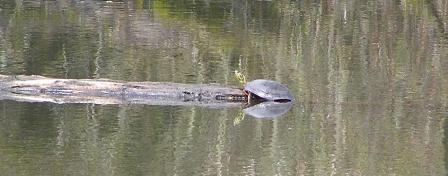
The woods held good numbers of Yellow-rumped Warblers; all those I saw well were of the Myrtle race. A few Lincoln’s Sparrows, Ruby-crowned and Golden-crowned Kinglets, Bewick’s and Marsh Wrens, Bushtits, Black-capped Chickadees, and a Brown Creeper rounded out the songbird sightings. The sun did peek out between squalls, and this drew a few Western Painted Turtles out to bask briefly, despite the cold temps.
painted-turtle.jpg

Sauvie Island

I spent a gorgeous day at Sauvie Island, northwest of Portland. There are still good numbers of waterfowl and Sandhill Cranes, but the sparrows have started to thin out.

sandhills.jpg
Sandhill Cranes (and Mallards)

dusky-sandhills.jpg
Dusky Canada Geese, Sandhill Cranes (and Mallards)

lesser.jpg
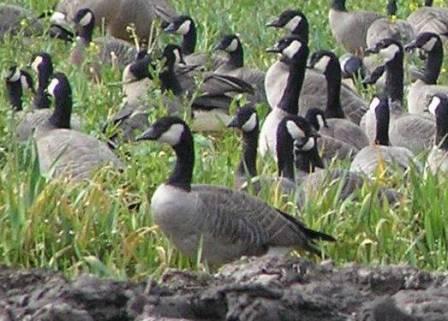
I believe the front bird is a Lesser Canada Goose. The bill is long and slopes gently into the forehead, unlike the stubby bills and rounded foreheads seen on Cackling and Taverner’s Cackling Geese.

garter.jpg
I saw at least a dozen Garter Snakes around Wapato Access Greenway. This was one of two that sat still long enough for photos.

A (relatively) dry day at last

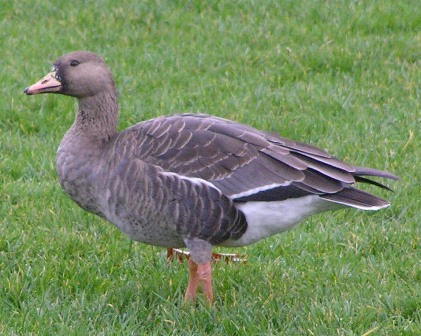
After getting over 5″ of rain in a week, it was finally dry enough to get out today. I was hoping to photograph some Mew Gulls for an upcoming class, but the local gull park was Mewless. I did find one young Greater White-fronted Goose keeping company with the local Canadas.

wf-goose.jpg

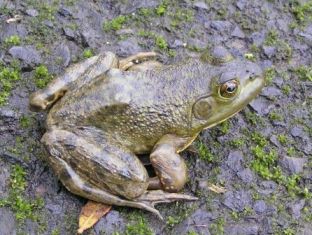
At Smith and Bybee Wetlands I found a young Bullfrog, very sluggish from the cold. Bullfrogs are a big problem in Oregon, as they eat smaller native frogs, baby turtles, and anything else they can catch.

bullfrog.jpg