While waiting for spring bird migration to pick up, I have been enjoying the local reptiles and amphibians. Here are a few highlights.


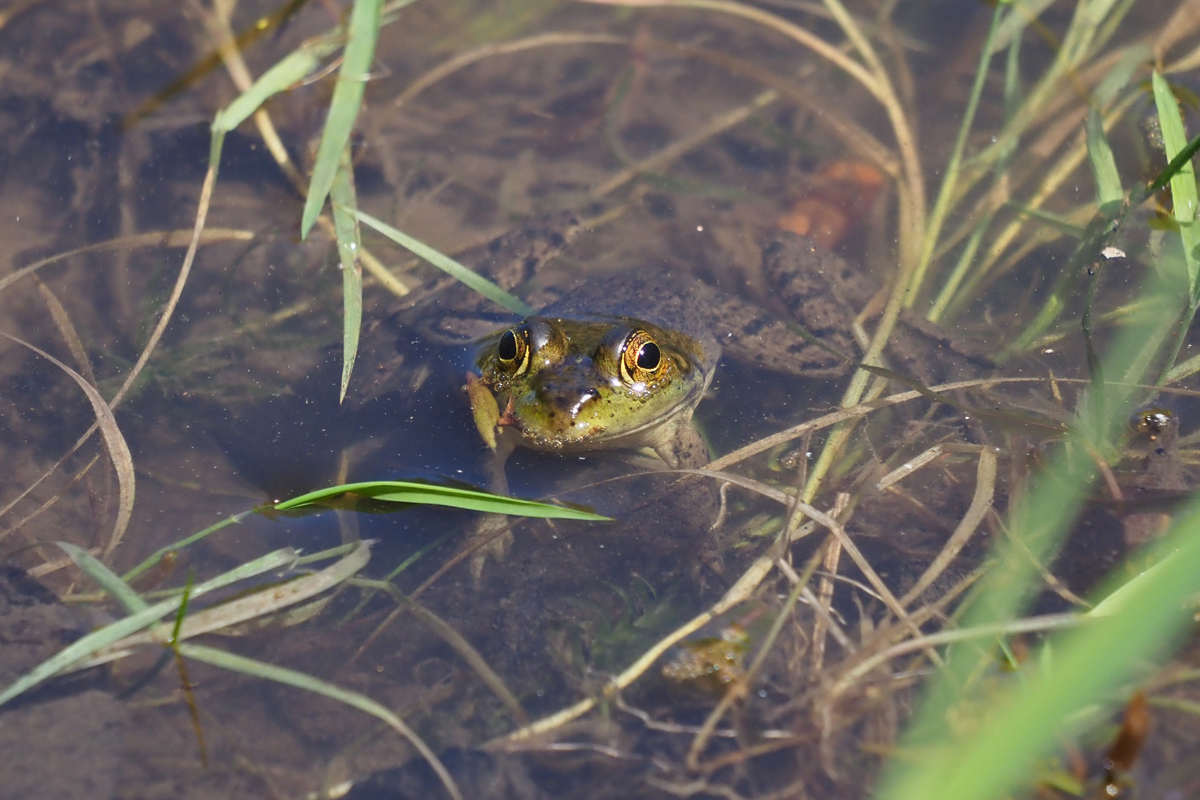

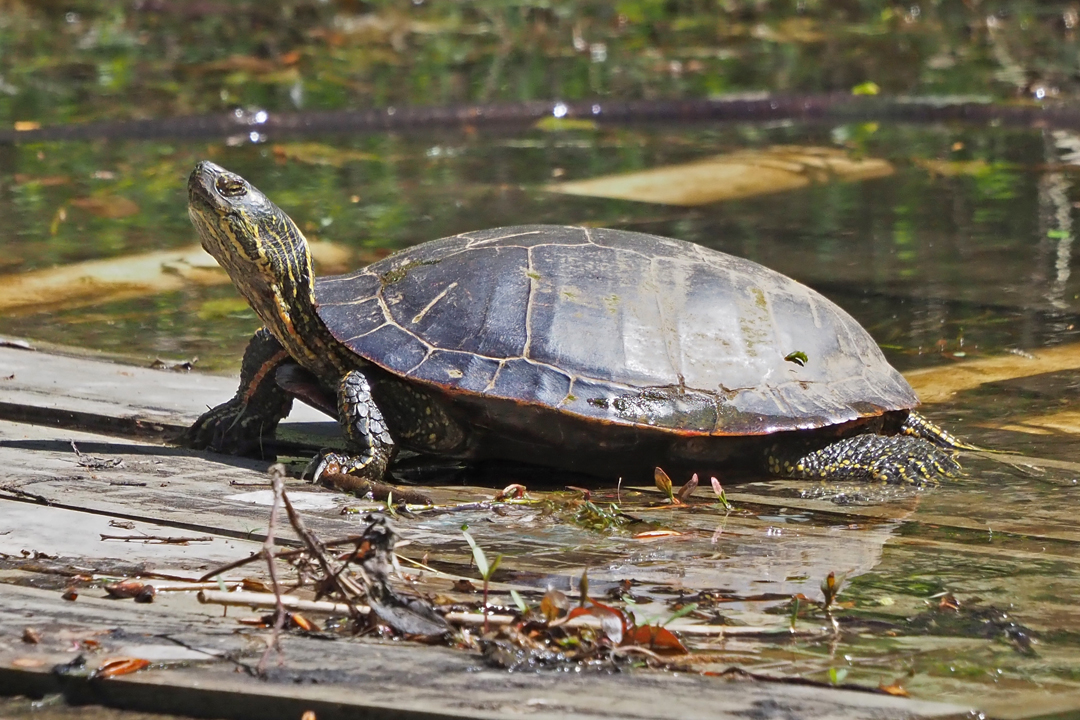
Birding will be heating up in the next week, so I will have to start looking up again.
Happy Spring
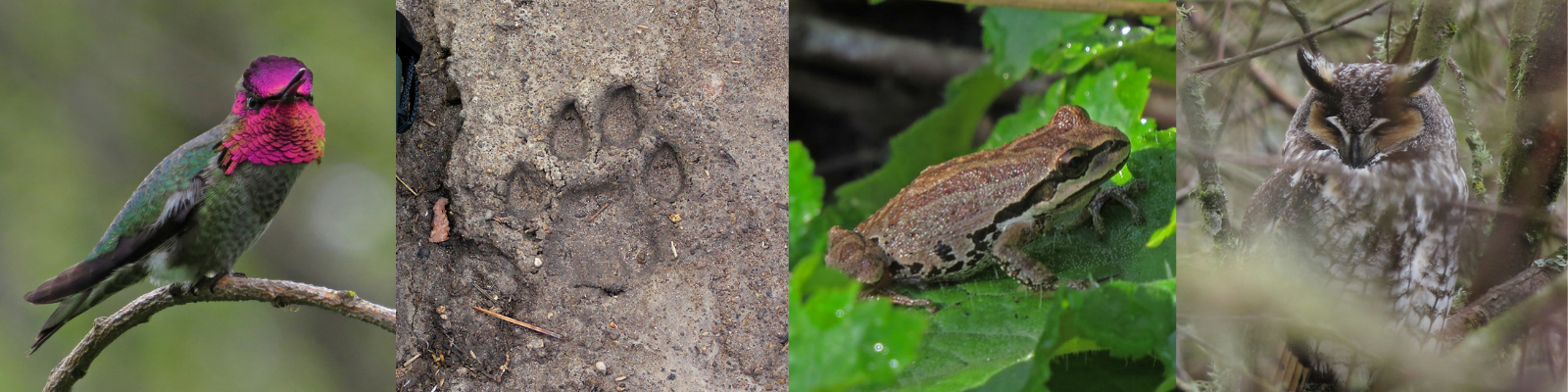
While waiting for spring bird migration to pick up, I have been enjoying the local reptiles and amphibians. Here are a few highlights.
Birding will be heating up in the next week, so I will have to start looking up again.
Happy Spring
Trees may get all the credit for creating pretty colors in autumn, but I think the birds do their part.


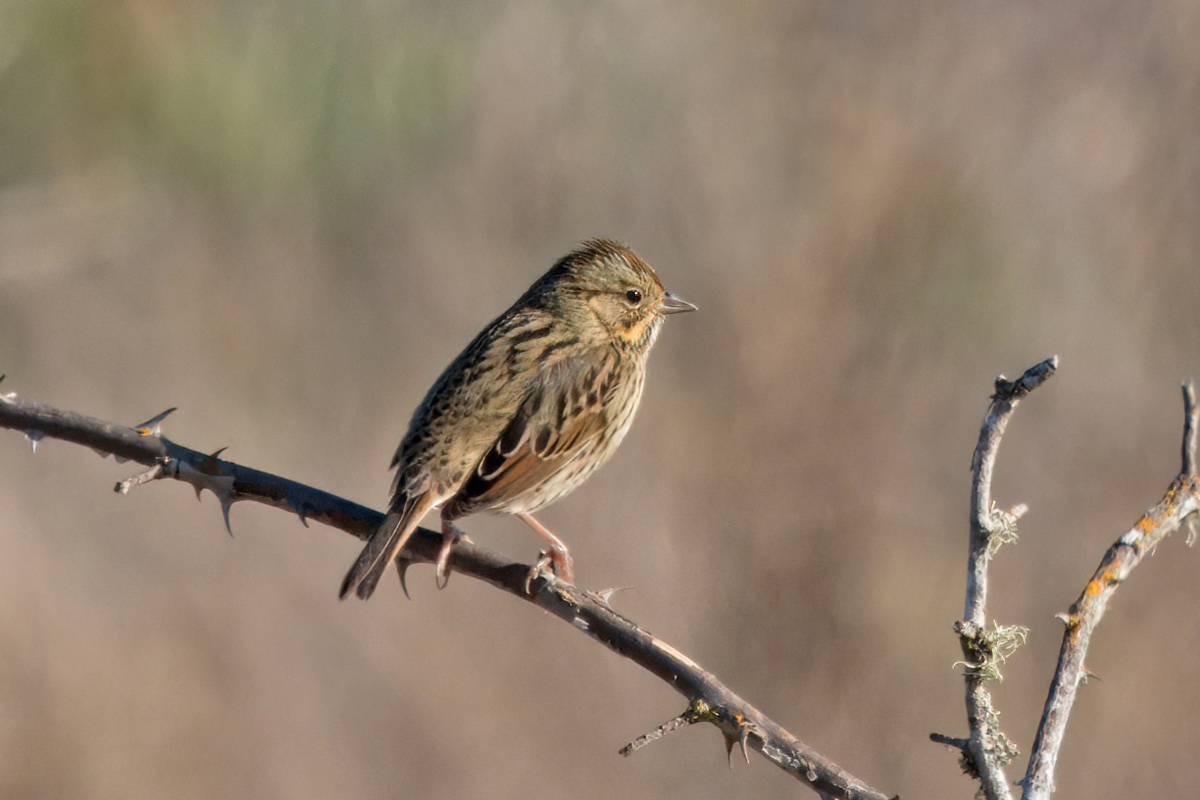
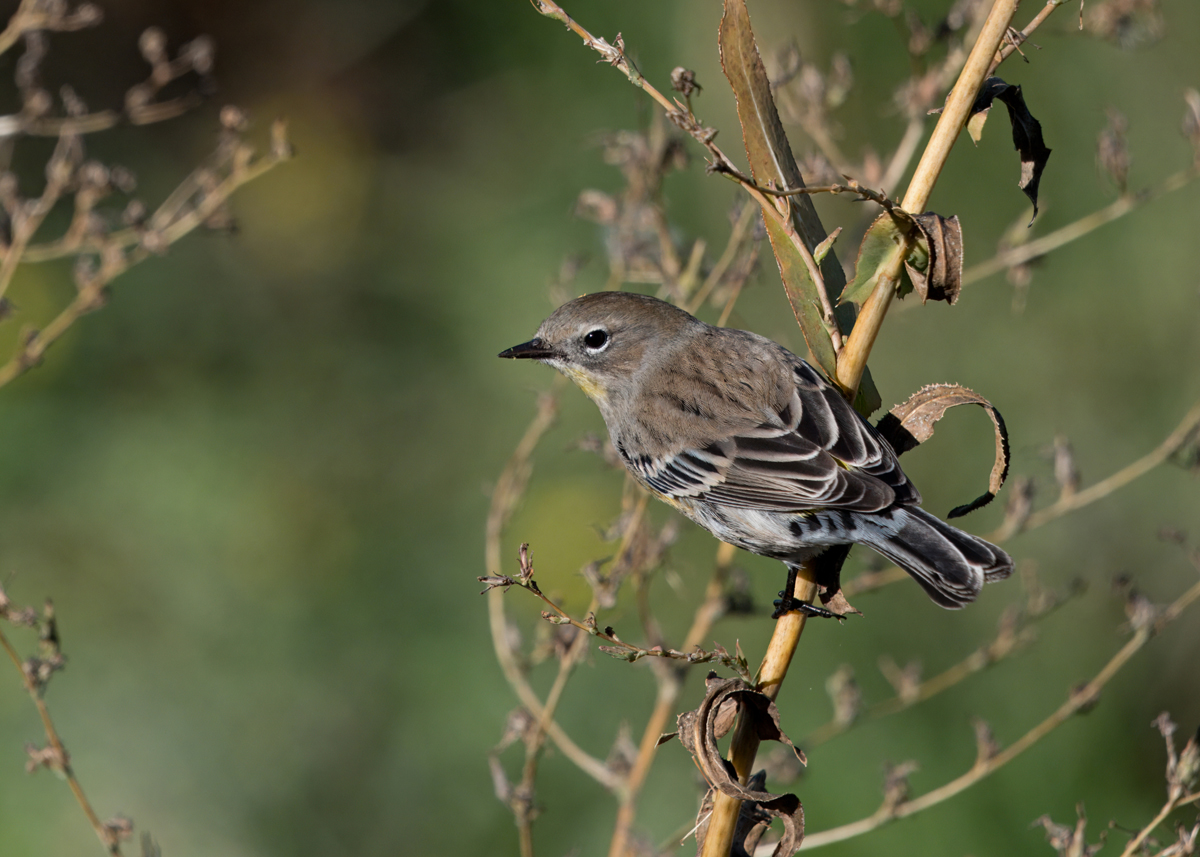


Happy autumn.
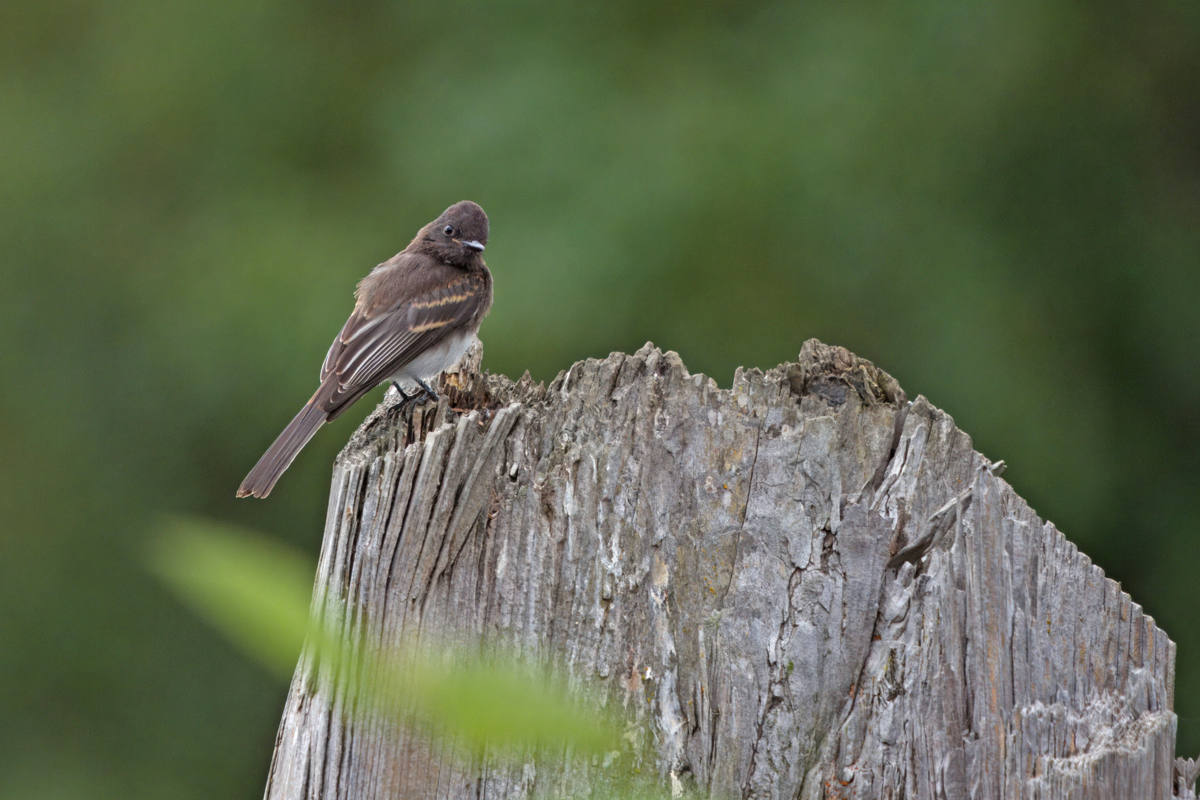
I enjoyed a walk around Fernhill Wetlands recently. We are in that in-between time when the seasons haven’t decided exactly who is in charge, so you never know what or who you will find out and about this time of year. This Black Phoebe still shows the pale gape and buffy wingbars of a juvenile.
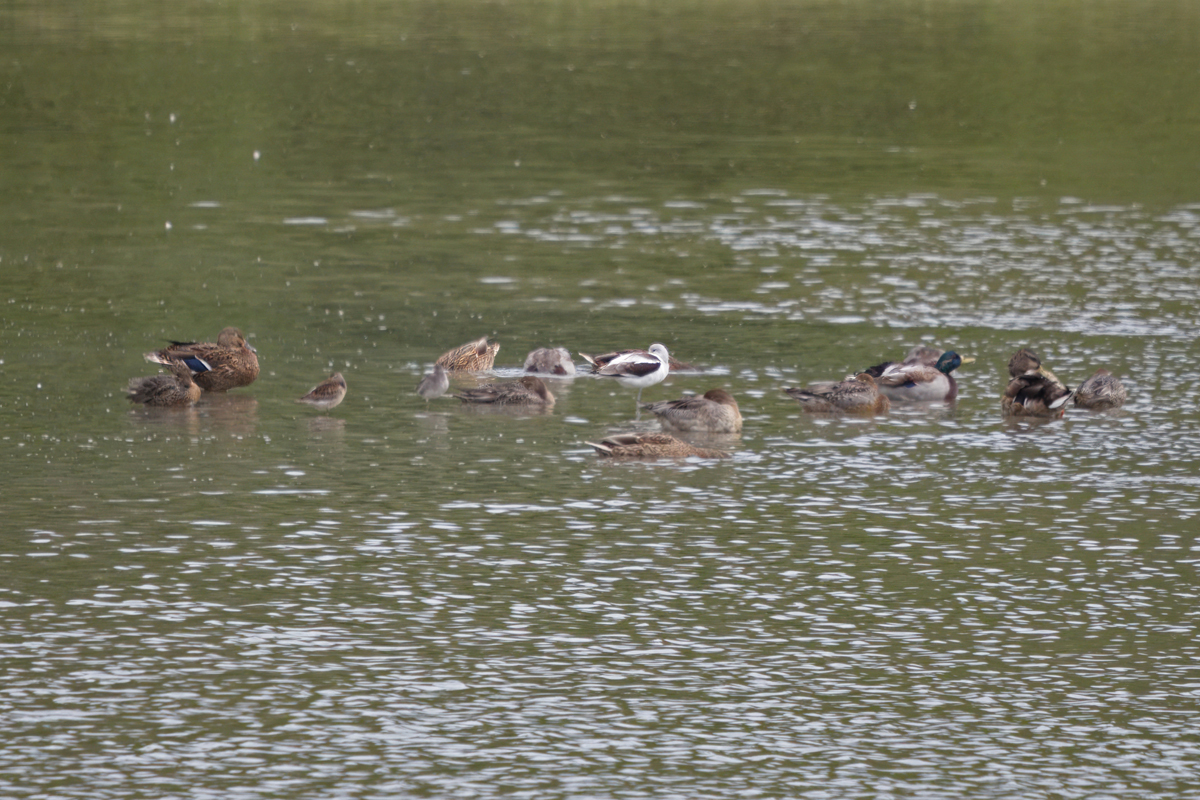
Most of the migrant shorebirds have moved on, but this wayward American Avocet was hanging out with the local waterfowl.
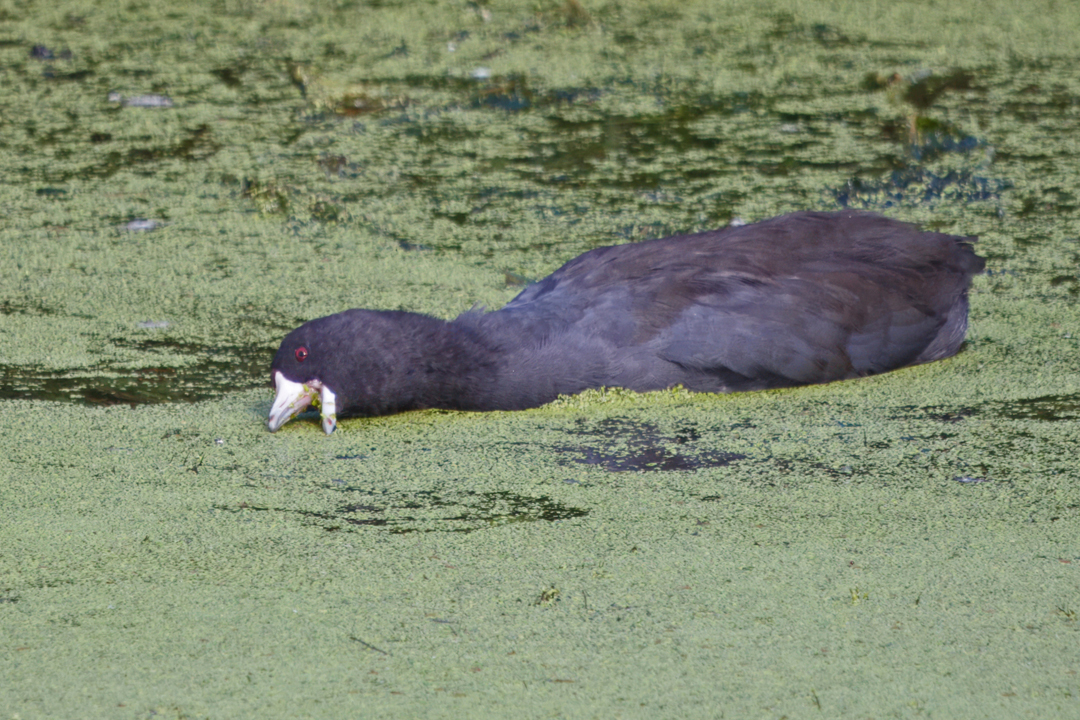
American Coot, enjoying their greens
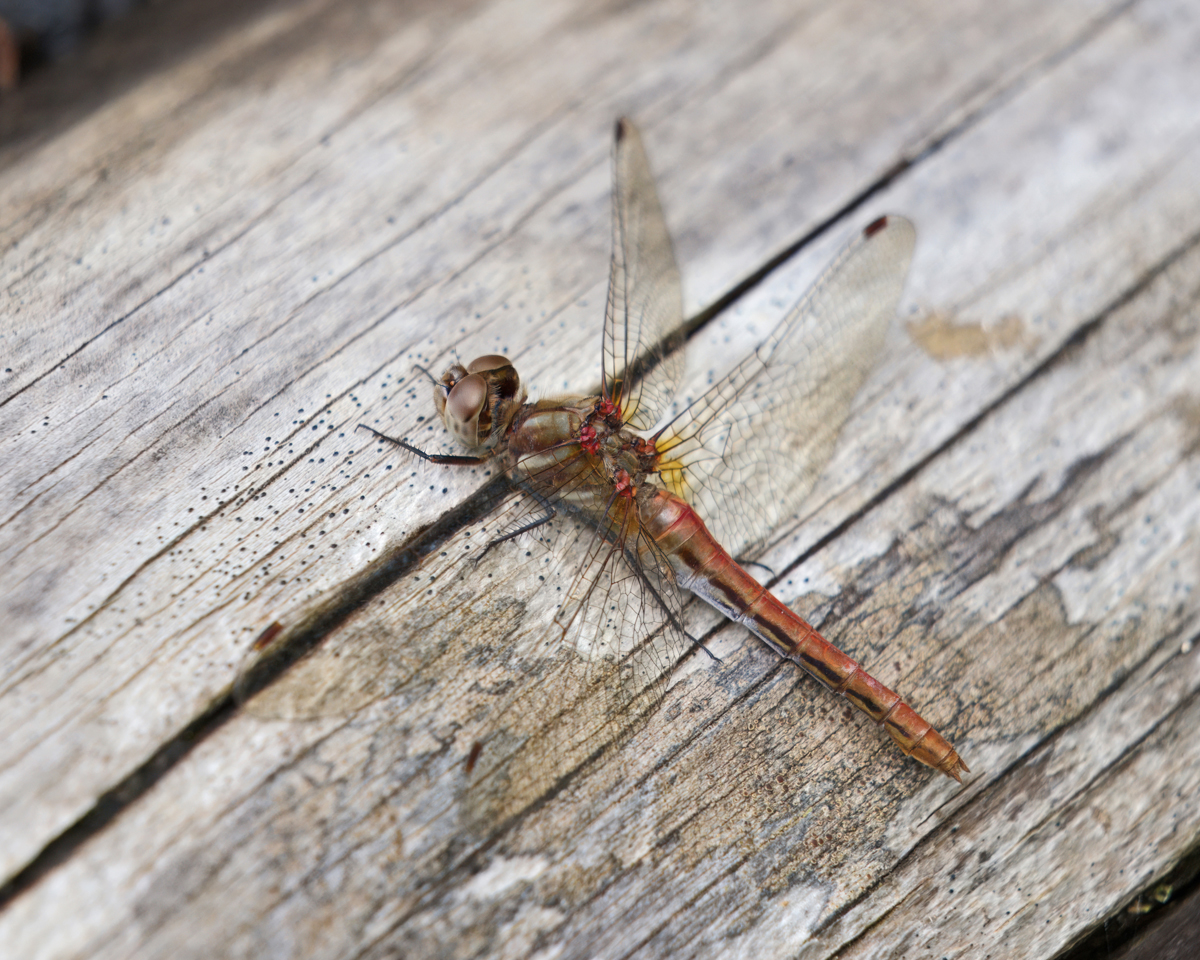
I still haven’t taken the leap into studying dragonflies, but I am noticing them more and more. I believe this is a female Cardinal Meadowhawk, but please correct me if I am wrong.
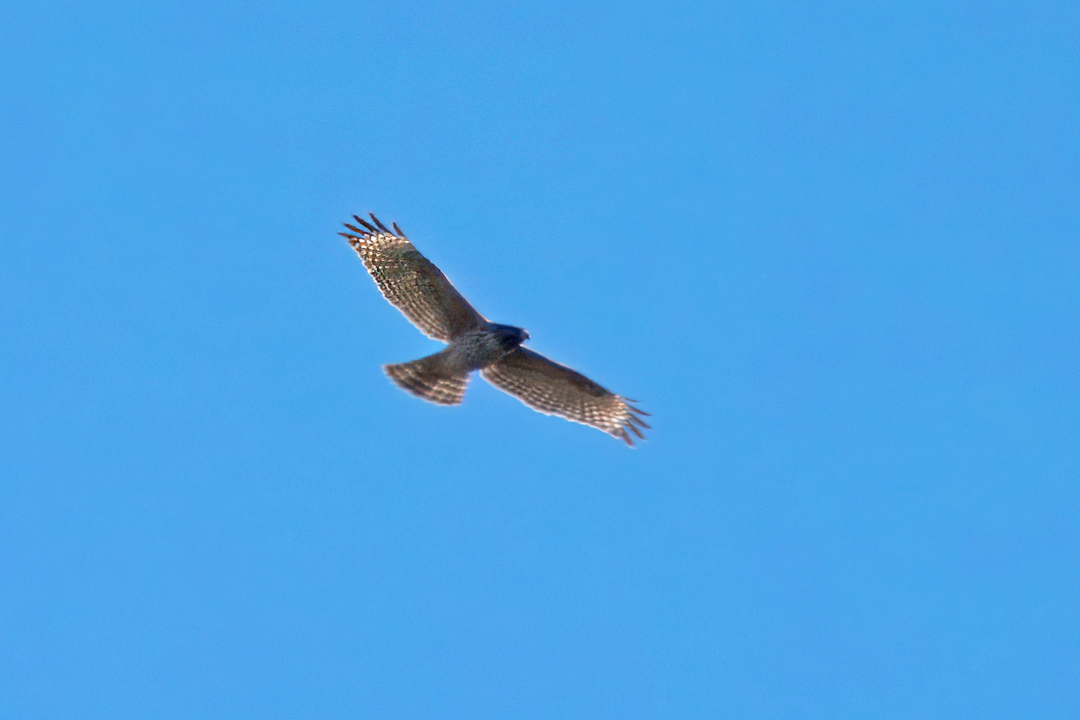
Southbound raptor migration is pretty hit and miss in the Portland area. You have to be out at the right time when a flock is passing over. I missed the big flights this year, but did get to see a little flock that included a couple of Red-shouldered Hawks.
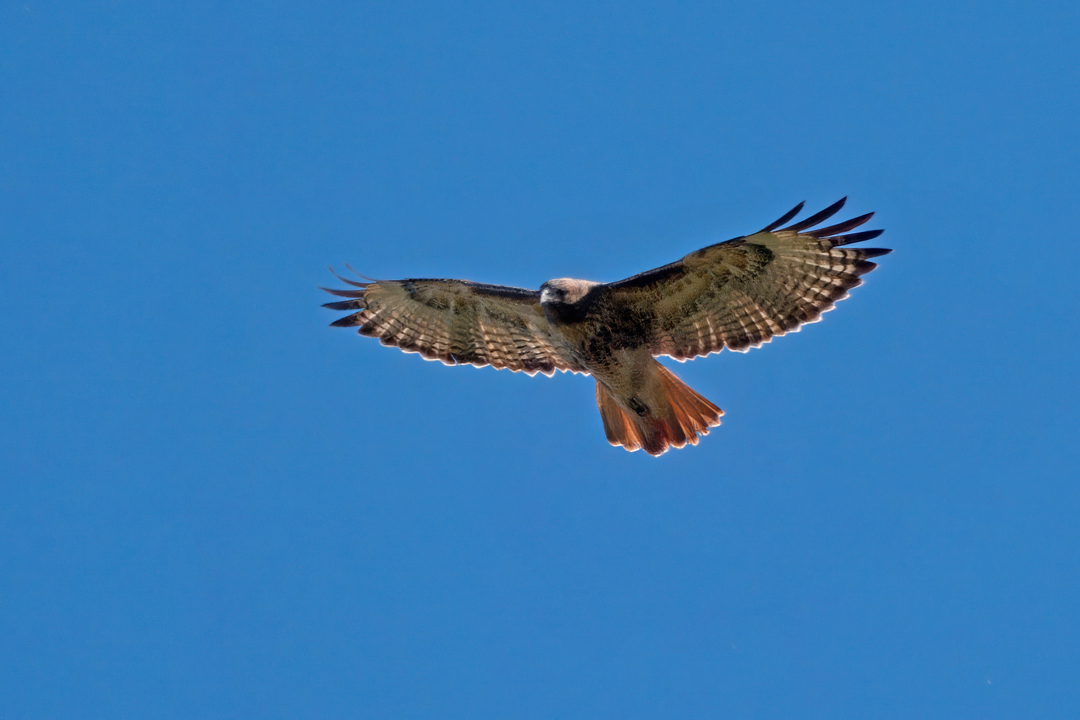
I don’t know if this Red-tailed Hawk is a migrant or a resident.
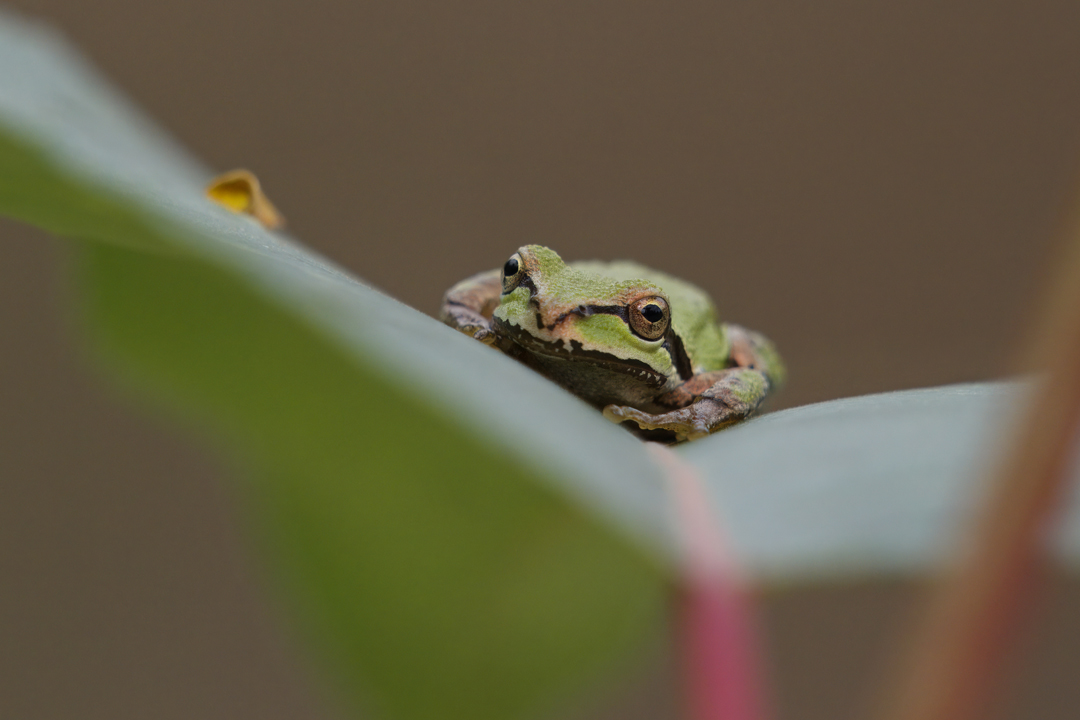
Now that the rains have begun, the Pacific Treefrogs have become more vocal and more visible. This youngster was sitting in the middle of a leaf on a cottonwood sapling. I missed most of the spring herp activity this year due to the demands of a certain puppy, so it has been great to see a few herps this fall.
Happy Autumn
My team for the Portland Audubon Birdathon visited Cottonwood Canyon State Park in late May. Birding was a little slow that day, but it is always a treat for me to get to the east side of Oregon.


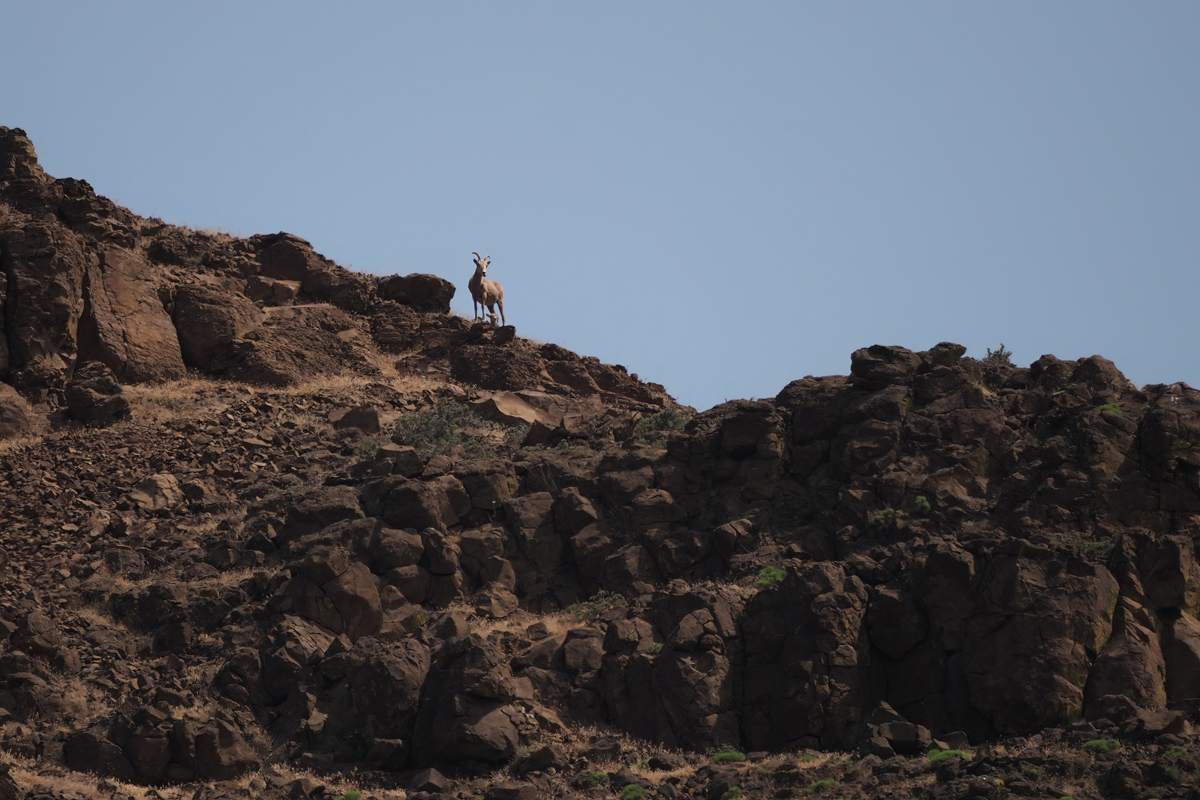
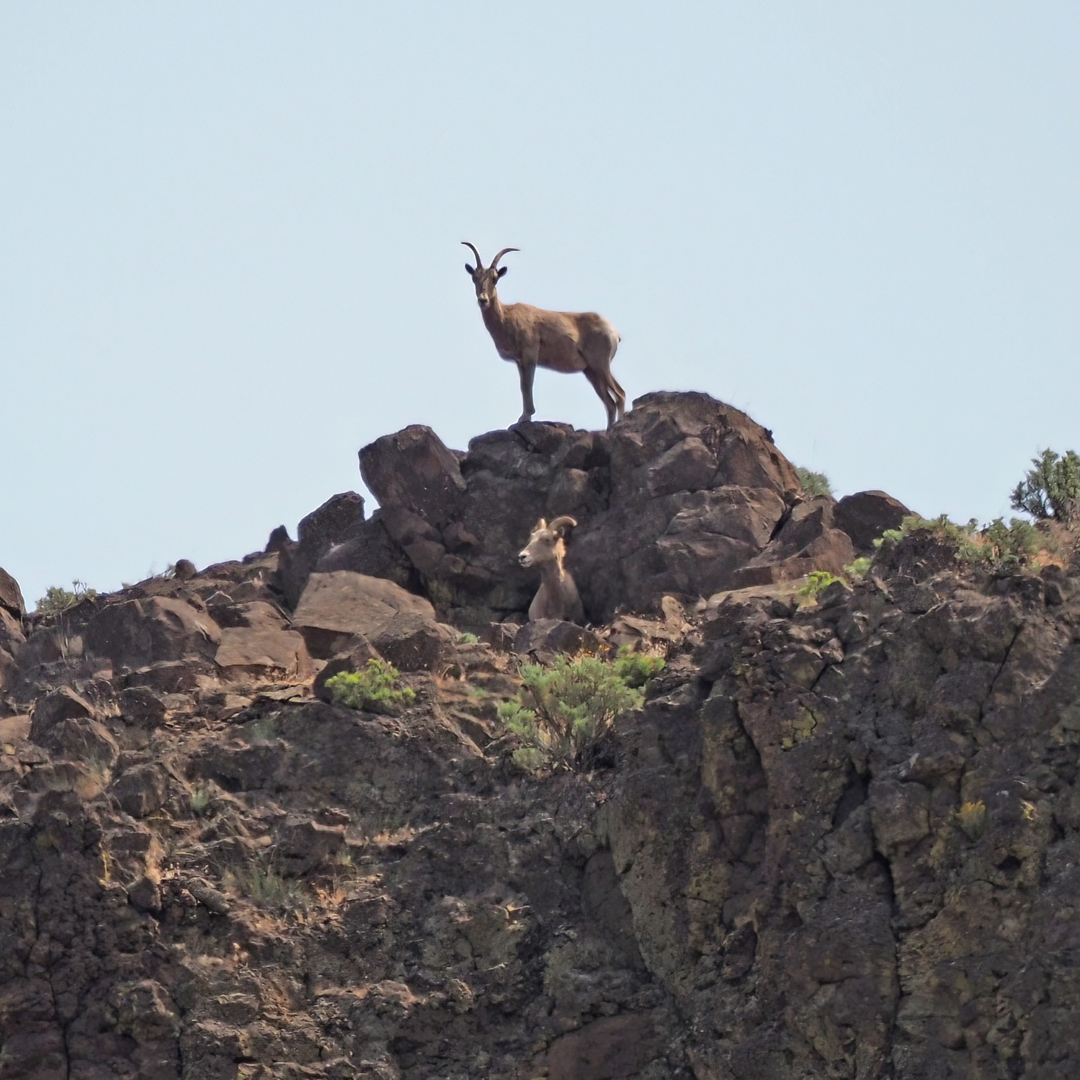


Happy Summer
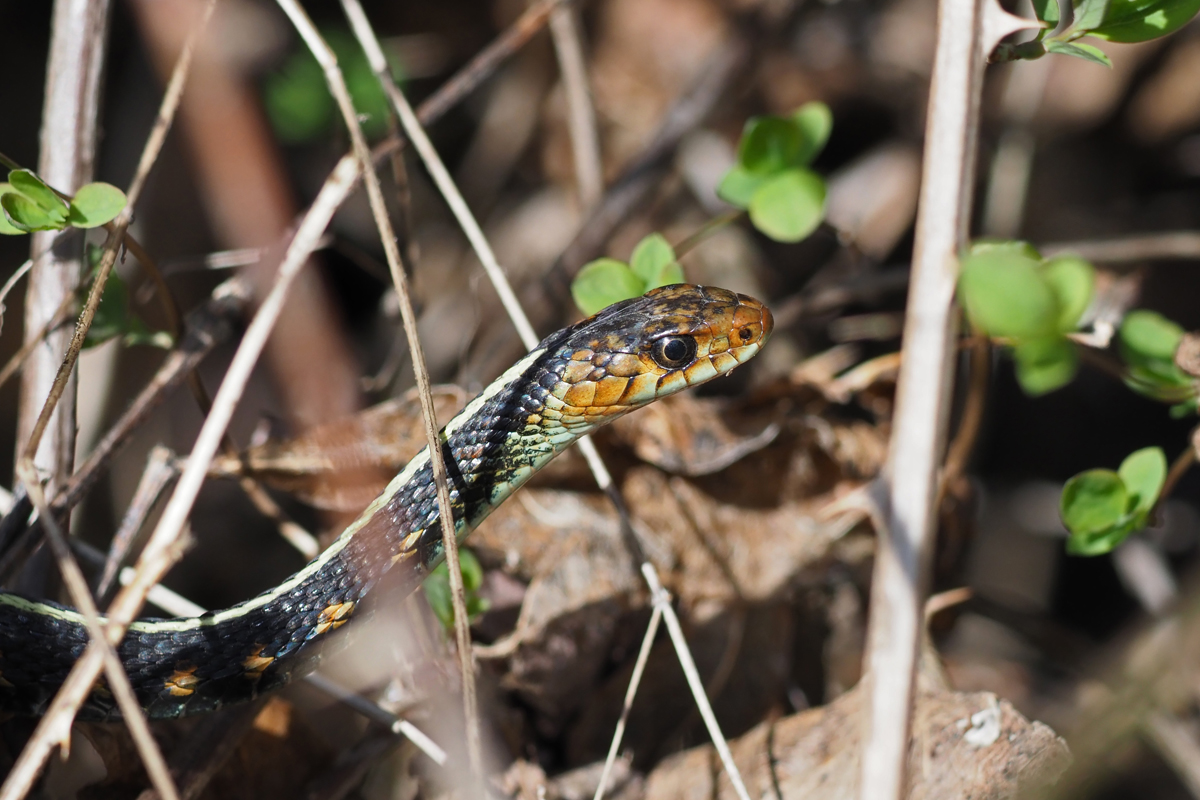
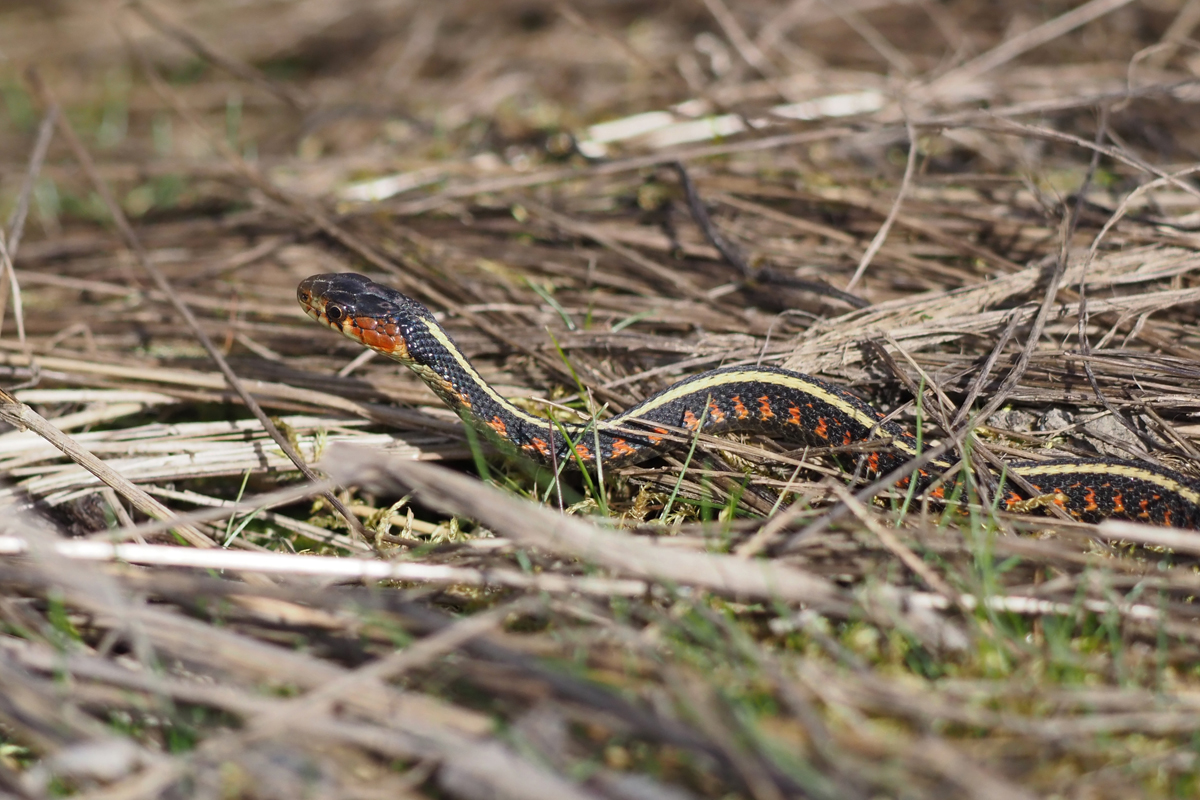
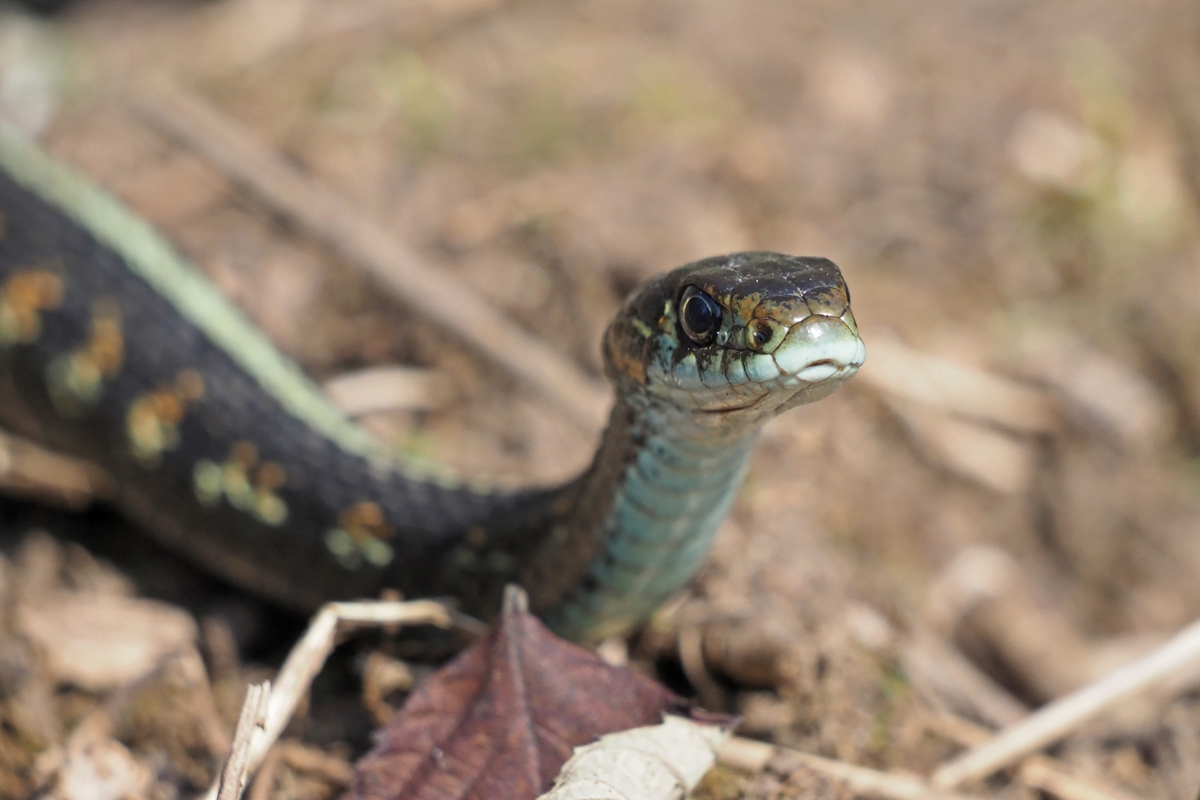
With our first spring-like day, the Common Garter Snakes have come out in force. On a trip to Sauvie Island I saw lots of Common Garters and a few Northwestern Garters. I wasn’t able to get any good photos of the Northwesterns, but the Commons were pretty cooperative.
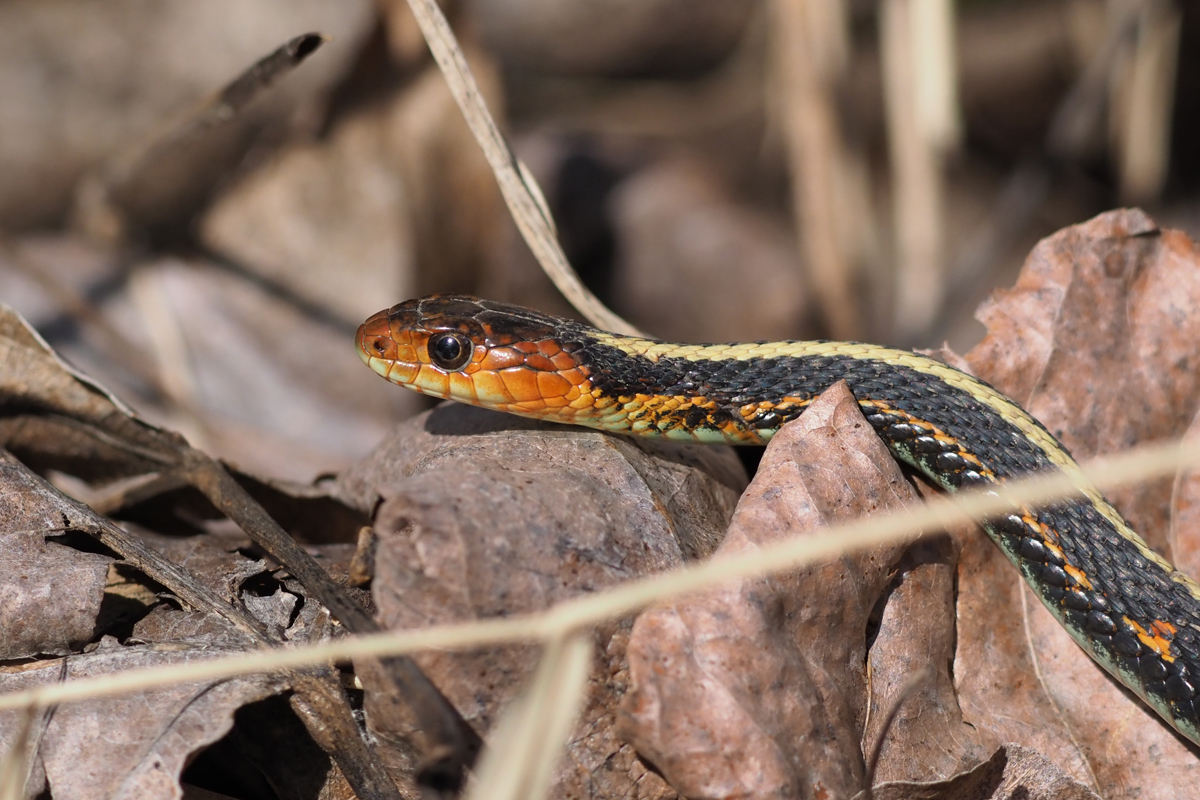
More herps should be out and about in the next couple of weeks. That can keep us busy until the spring migrants arrive.
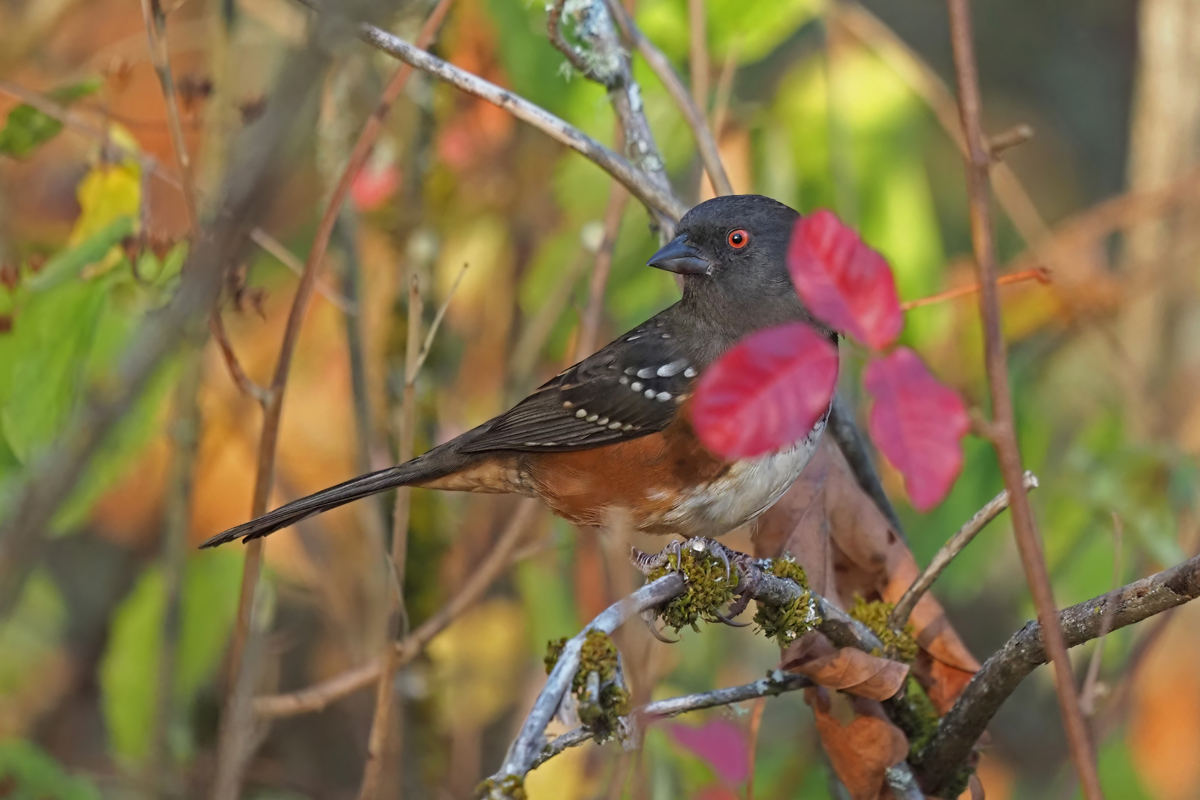
After a very long dry summer, autumn has finally arrived. While we don’t get the extensive fall colors found in eastern forests, the red Poison Oak highlights the eyes on this Spotted Towhee.
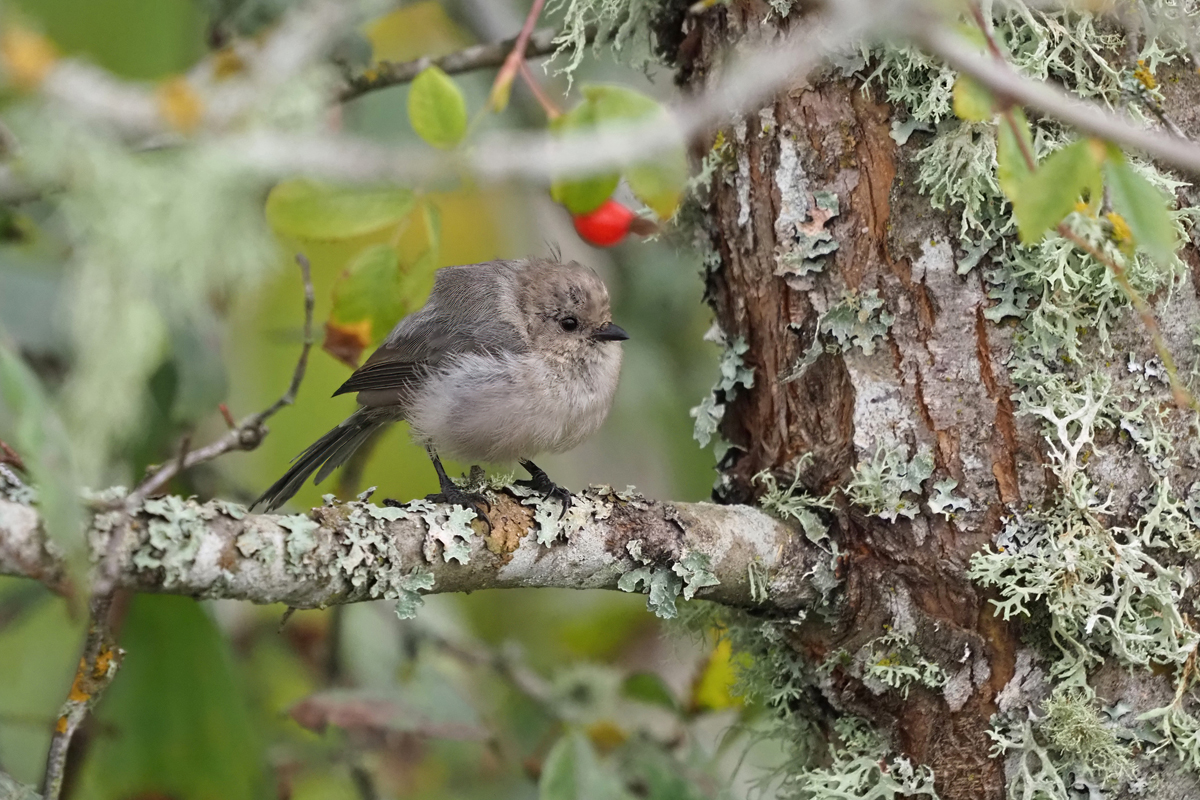
This very ragged Bushtit was found at Wapato Lake NWR, which has finally opened up to birders after a long wait. The refuge will be closed to non-hunters from December-February, but should offer some great birding when it is open.
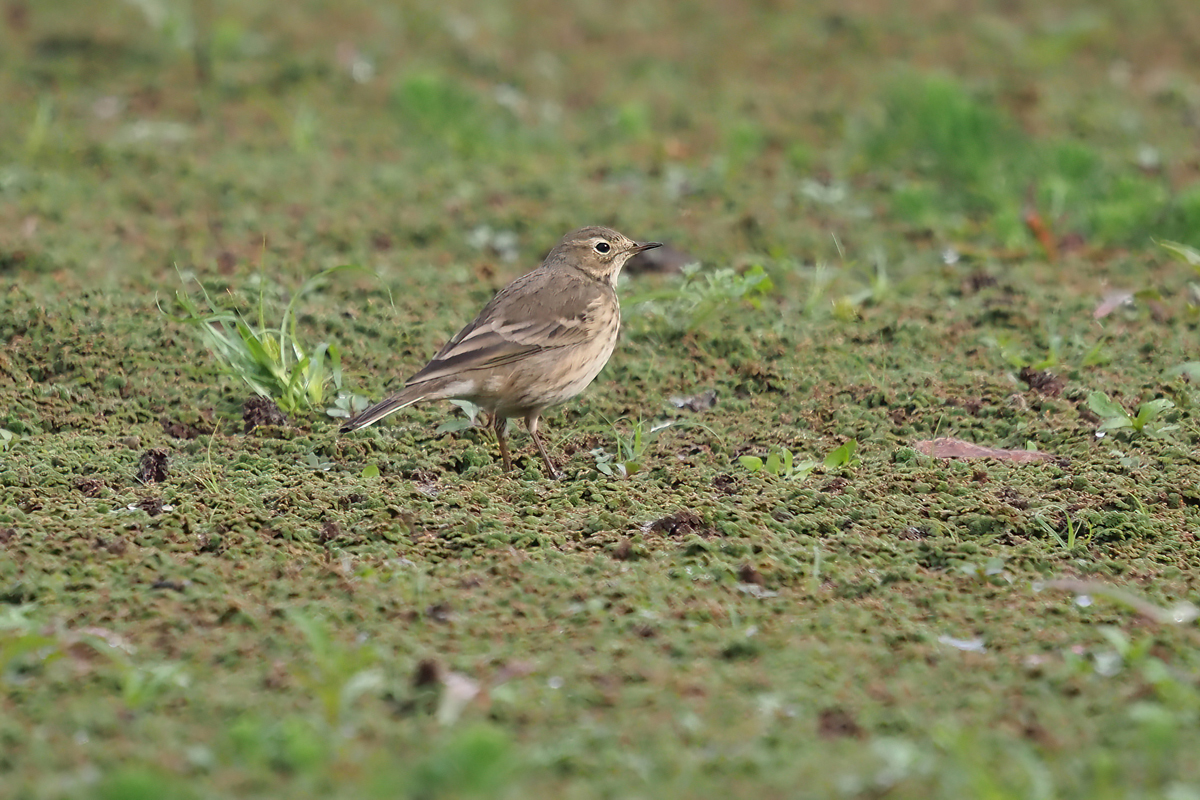
American Pipits are common migrants this time of year on mudflats and other open habitats.
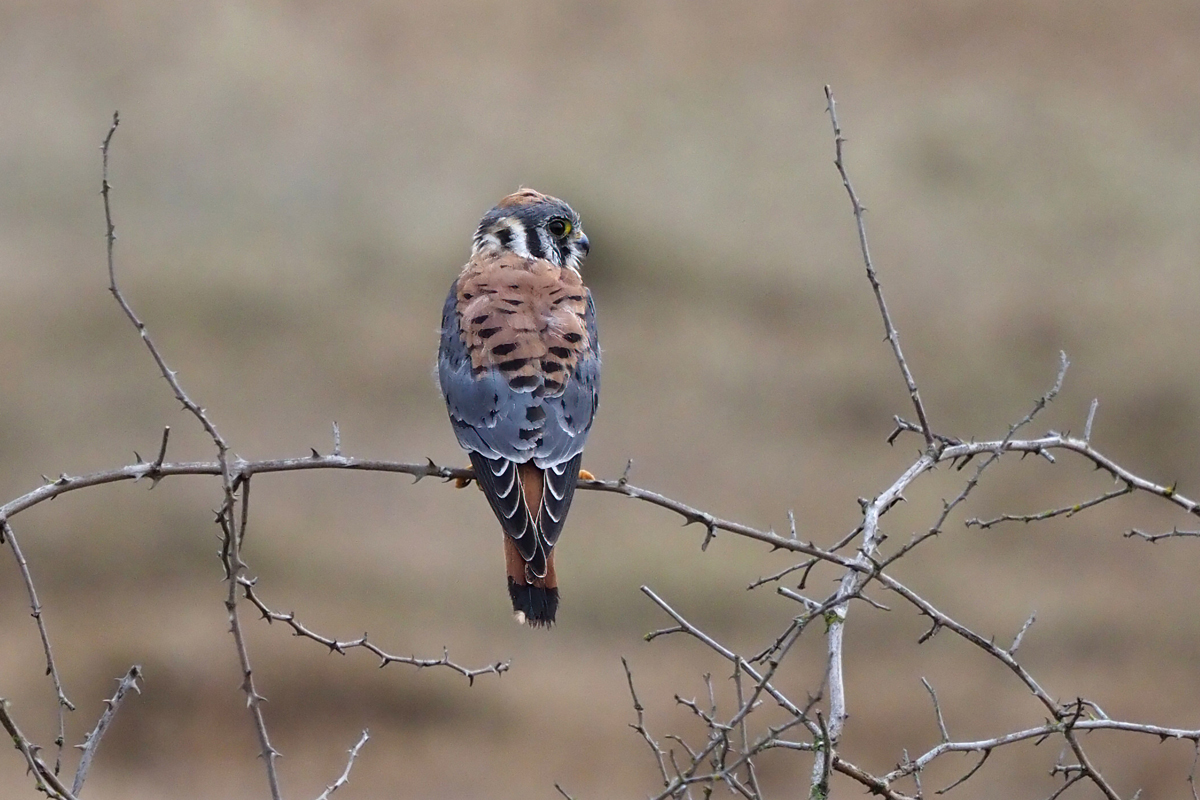
Male American Kestrel
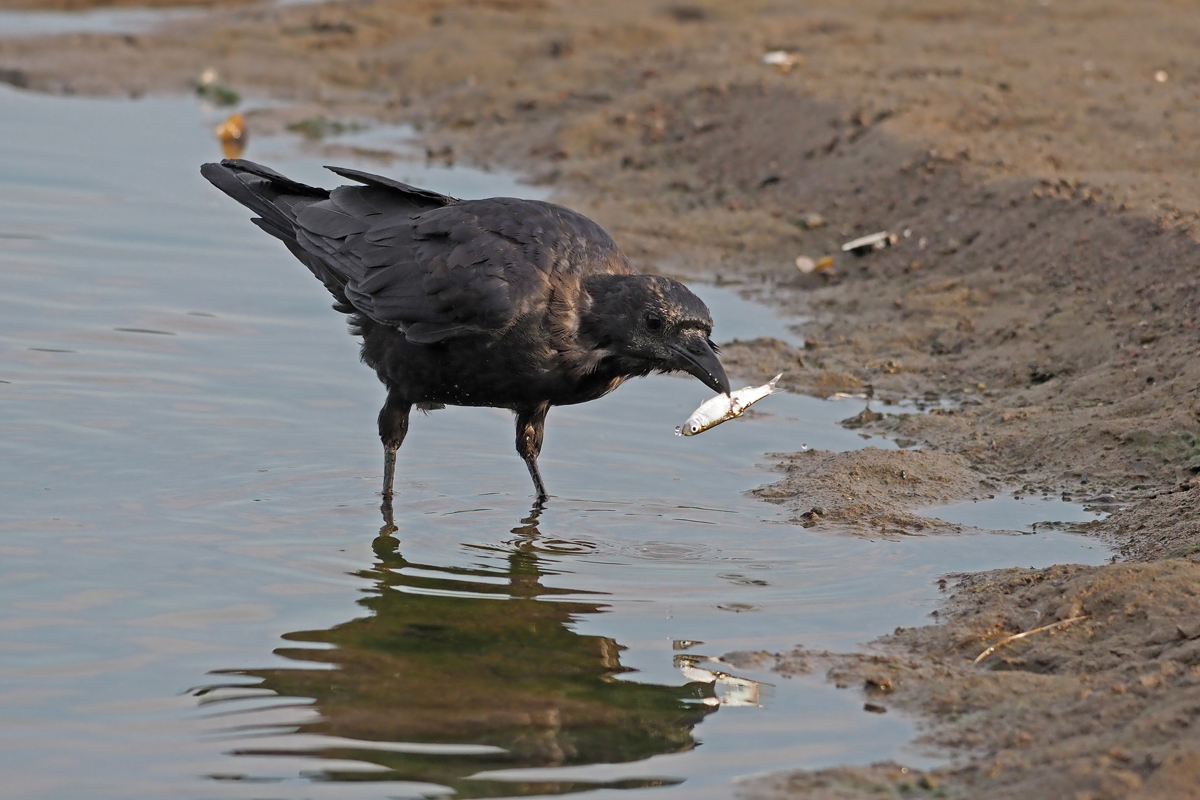
This American Crow was actively fishing in a tide pool along the Columbia River. I don’t normally think of crows as fish-eaters, but they take advantage of whatever food source is available.
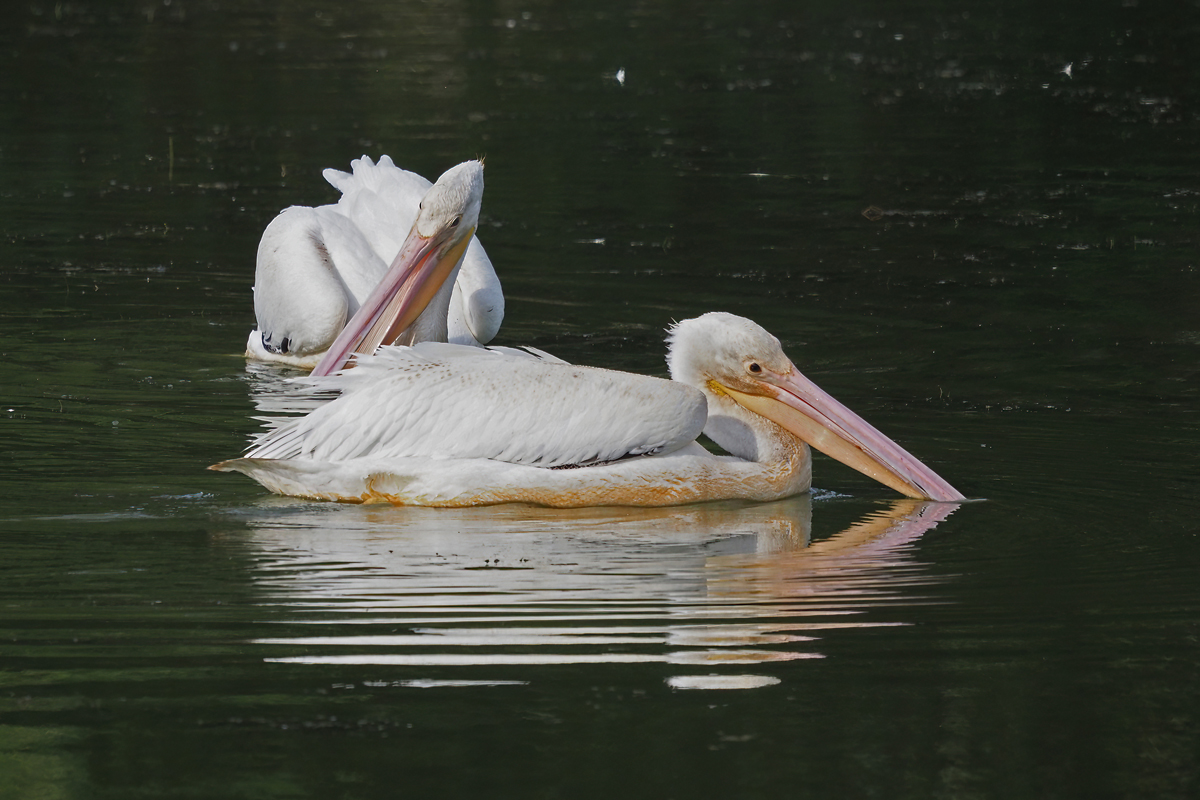
There are still a few American White Pelicans around. They will be gone soon.
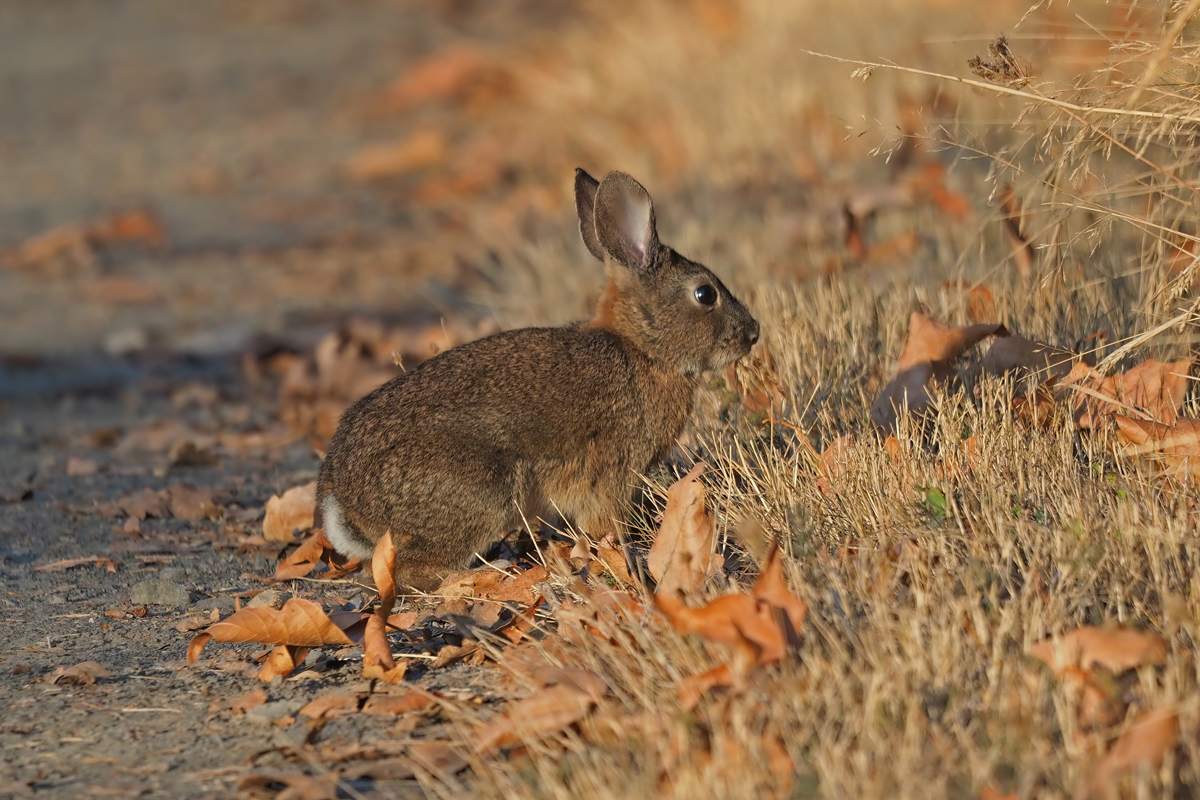
Brush Rabbit, blending in with the fall colors
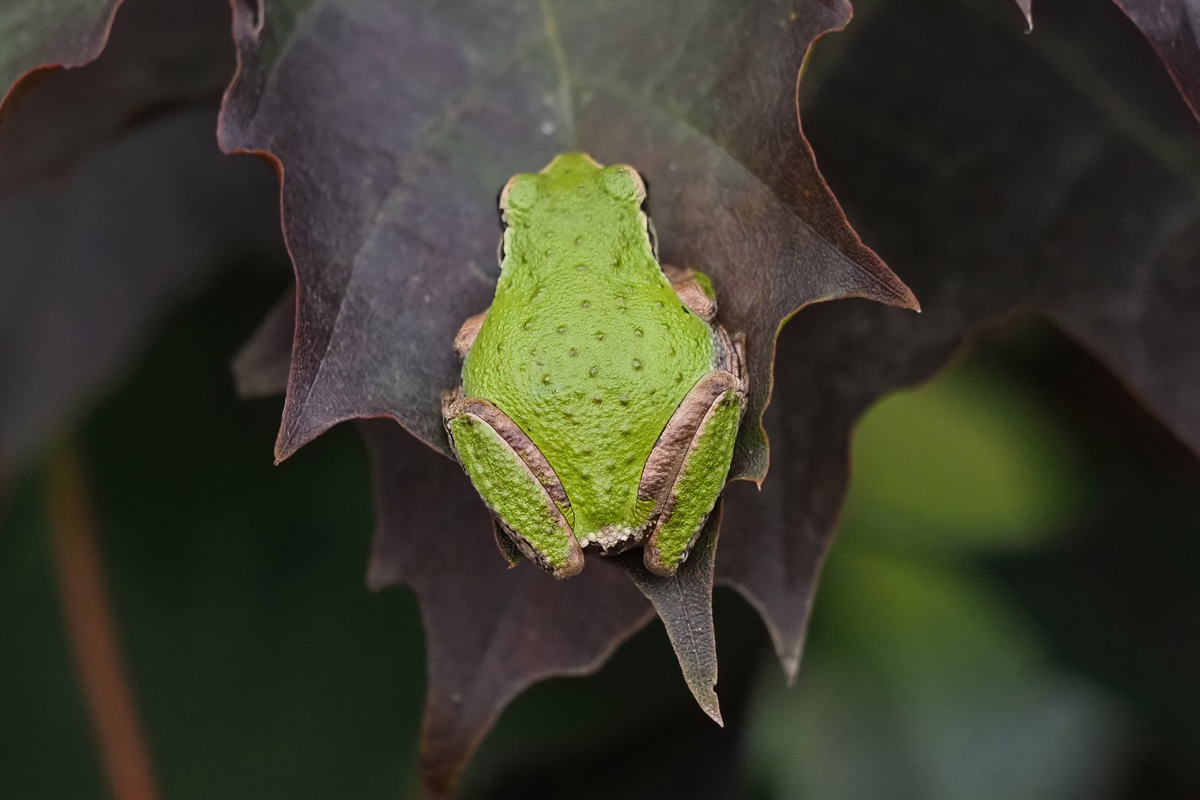
Pacific Tree Frog on a maple leaf. These frogs are very common, but they seldom perch out in the open.
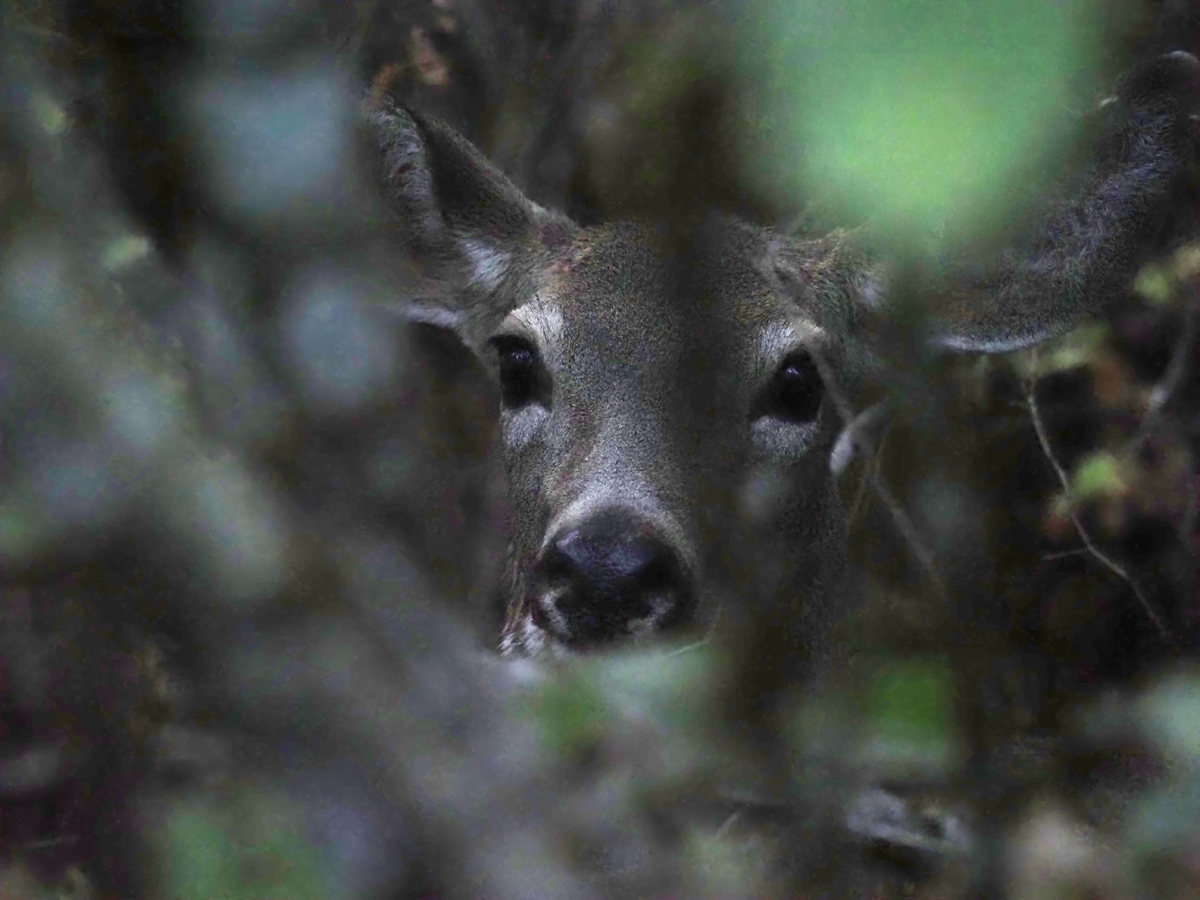
This Black-tailed Deer was just off the path at Cooper Mountain Nature Park.
Happy Autumn


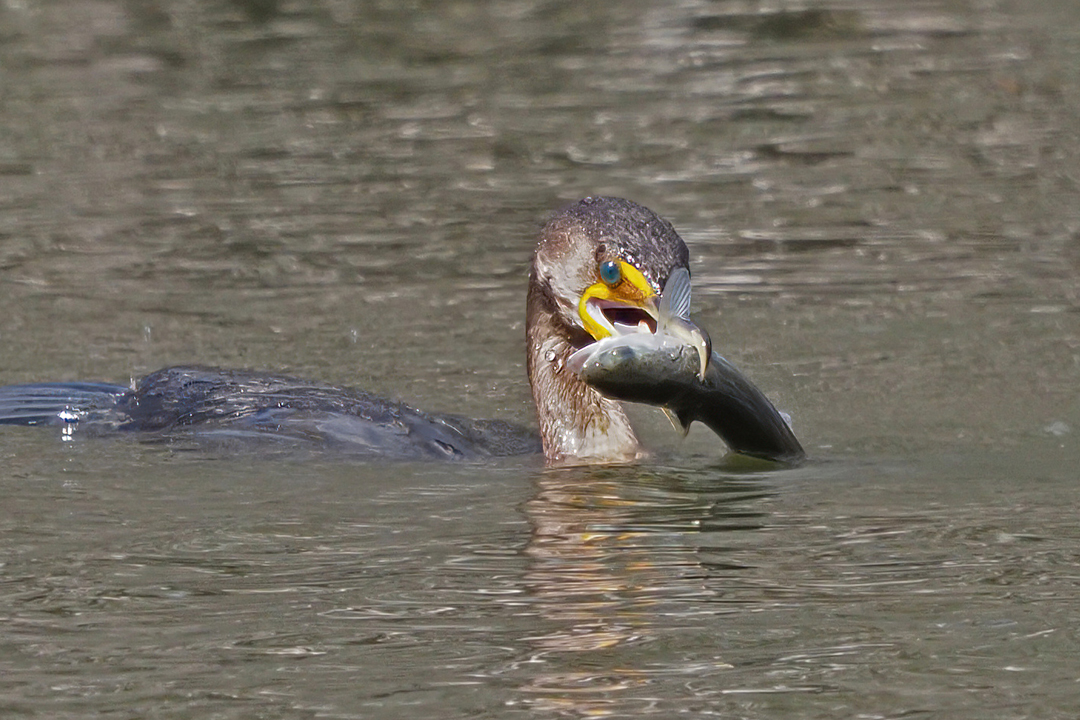
Happy Spring
Despite air temperatures in the 40s, the sunshine brought out some signs of spring on a recent visit to Jackson Bottom Wetlands Reserve in Hillsboro.
 Tree Swallows are usually the first swallow species to arrive in spring. When the weather is still cold, they hunt for insects close to the water’s surface.
 Some Tree Swallows were already laying claim to the many nest boxes at this site.
 This California Ground Squirrel was singing (screaming) from a log perch.
 The sunshine brought out a good number of snakes, despite the cold temperature. These are Northwestern Garters.
 This is a typical Common (Red-spotted) Garter.
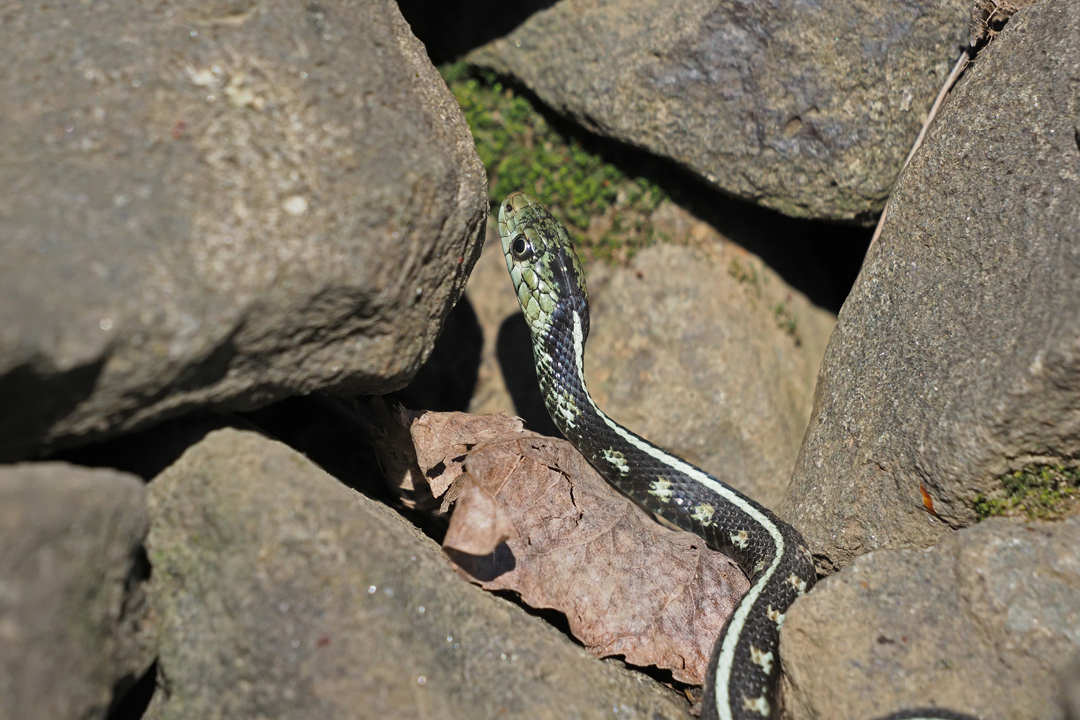 This Common Garter is lacking the red pigment shown by most members of this subspecies.
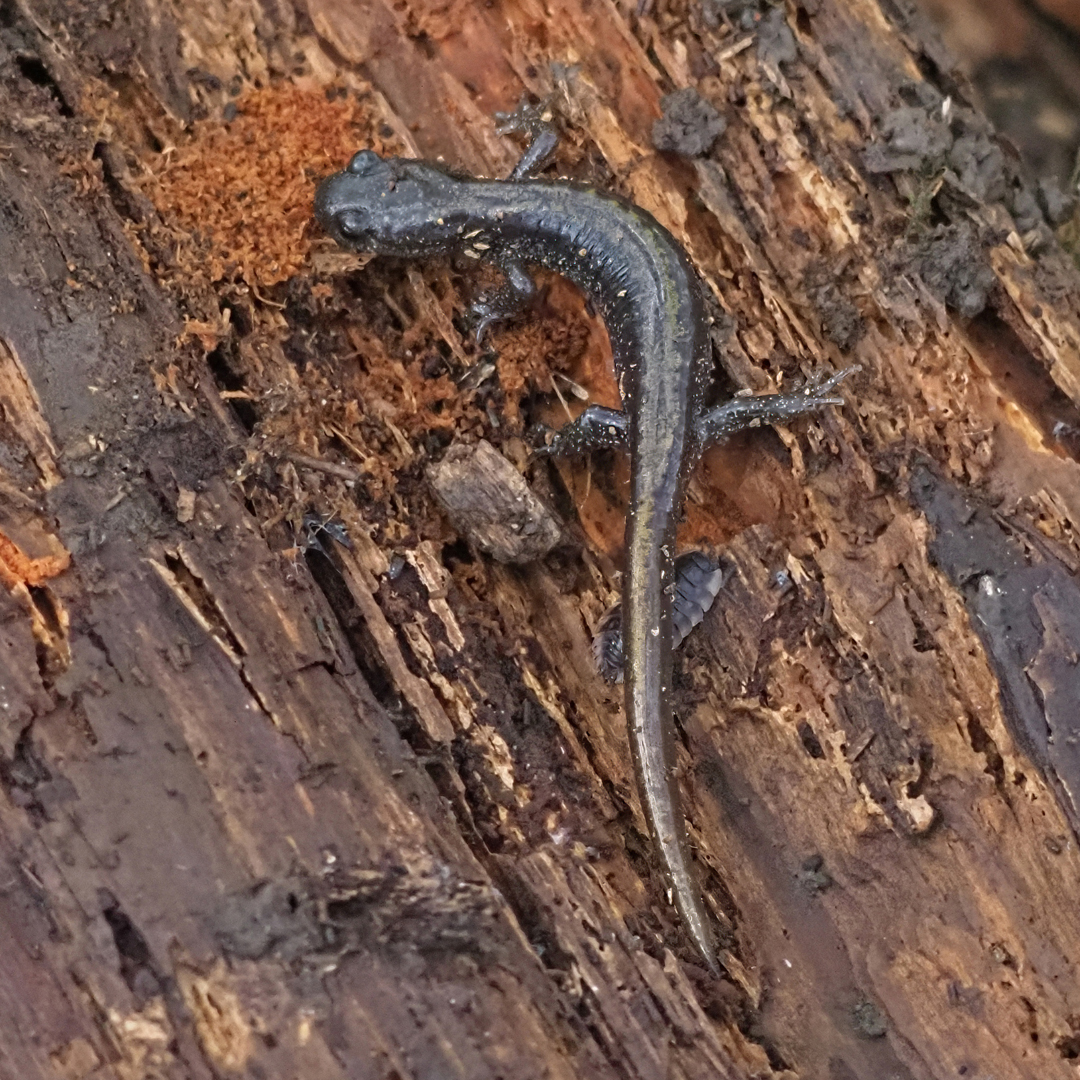
 This Long-toed Salamander was hanging out under a big piece of bark.
Happy last days of winter.
Here are a few images of various animals I have seen lately. When the birds refuse to pose for photos, it is nice to find other creatures that are more cooperative. As I have said, there is always something to see.
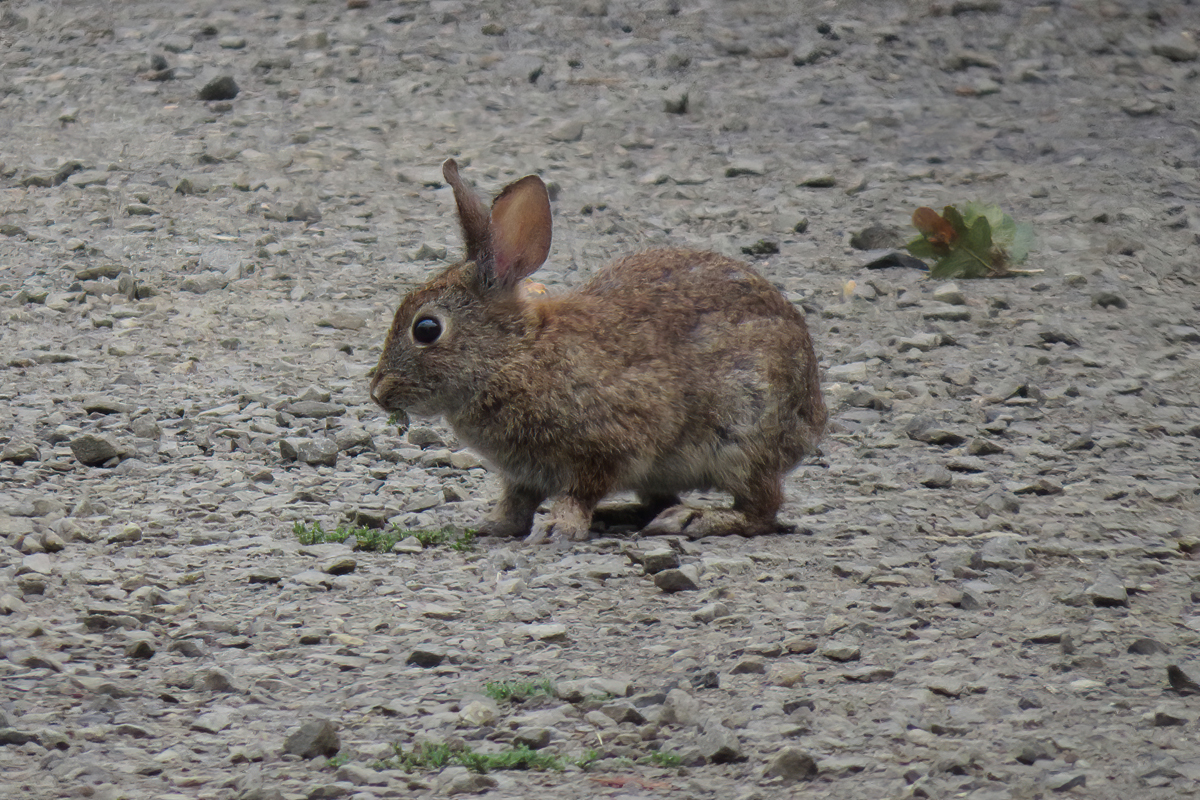 Brush Rabbit, Fernhill Wetlands

 The top image shows a massive male American Bullfrog found at Dober Reservoir. Note the injury around his right eye. The bottom image is of a newly emerged female. At this stage, she was about the size of the males head, but females typically grow larger than males of this species.
 Orange Sulphur, found at Jackson Bottom. Unfortunately, this species perches with their wings closed, so you can’t see the vibrant colors on the top.
 This Mylitta Crescent at Fernhill Wetlands was much more cooperative.
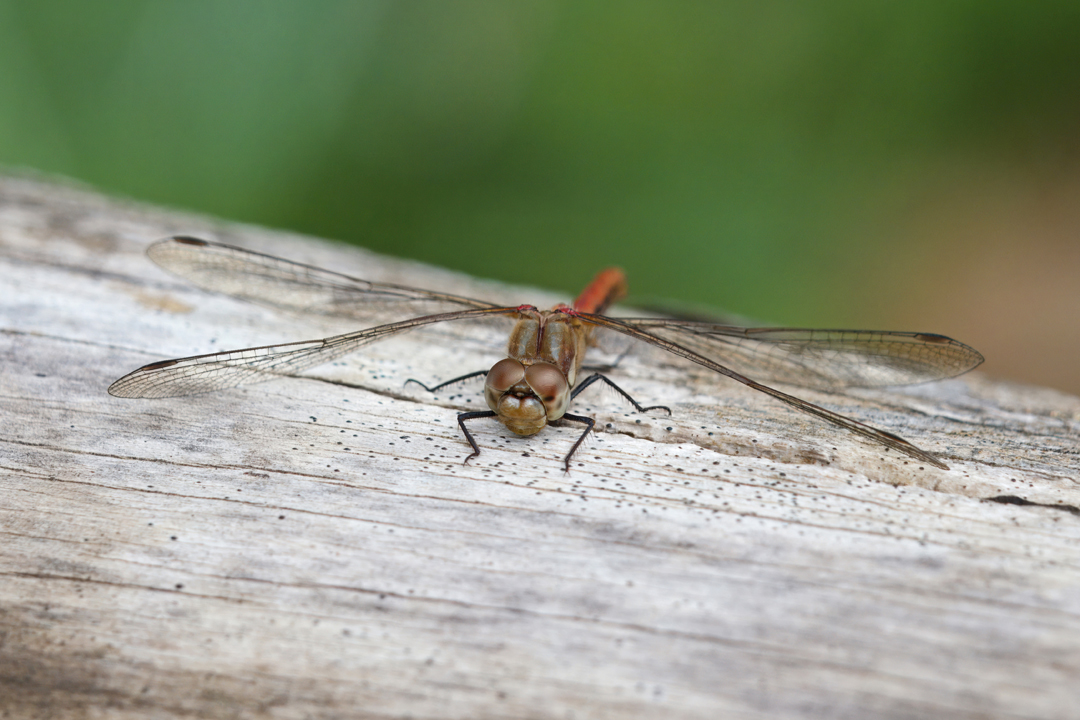
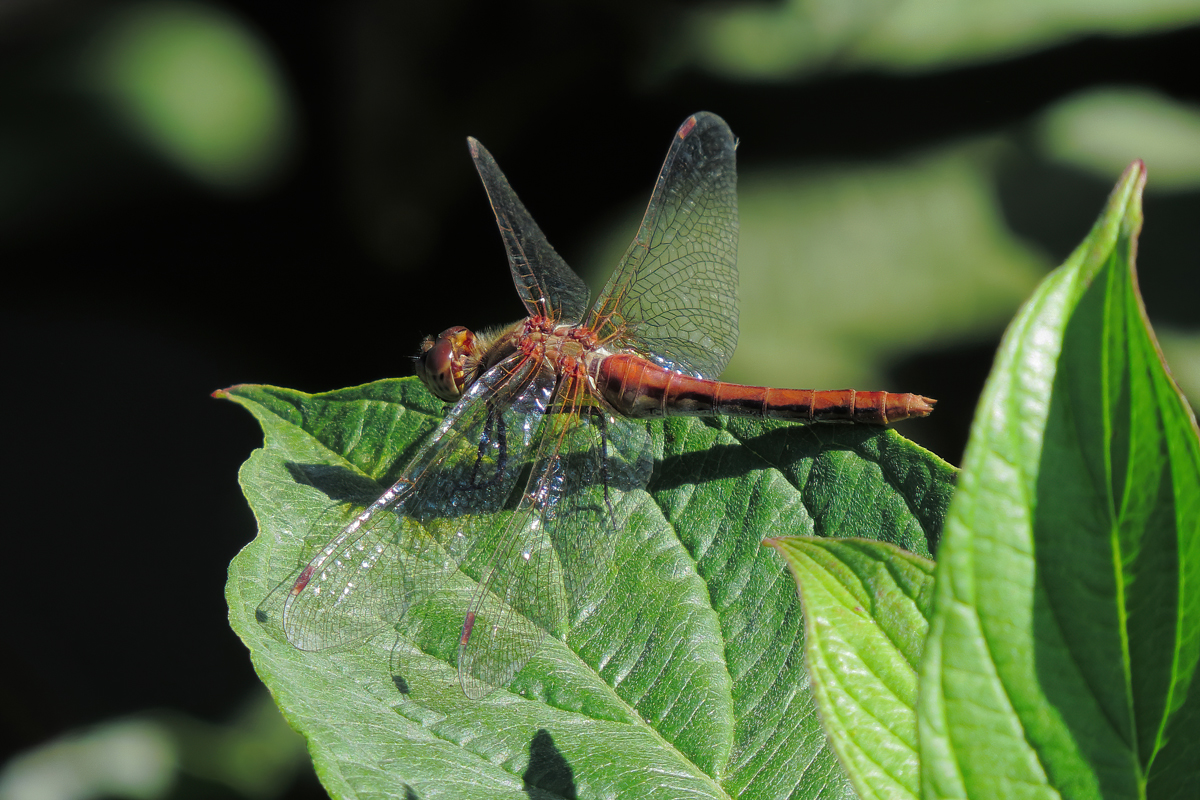 I don’t know the dragonflies, but I am told this individual from Fernhill Wetlands is a Striped Meadowhawk.
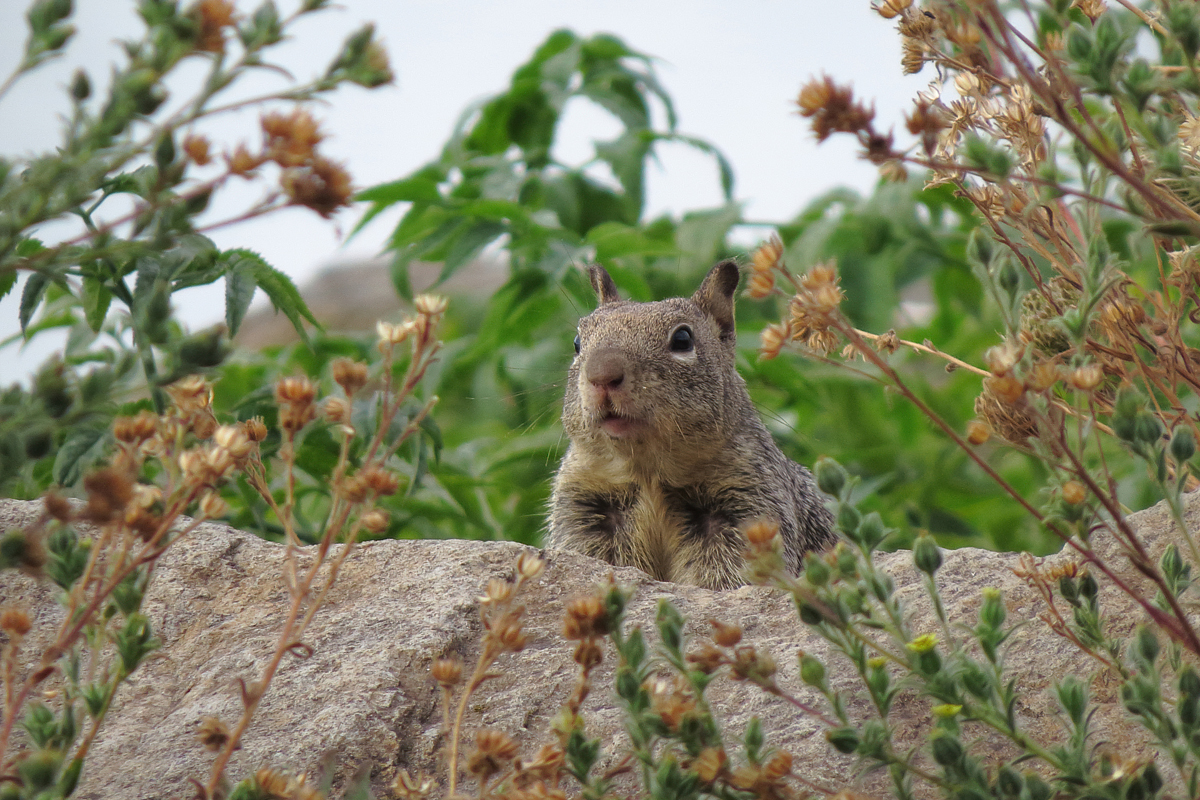 California Ground Squirrels, one of my favorite rodents, have become more common at Fernhill Wetlands since the reconstruction a few years ago.
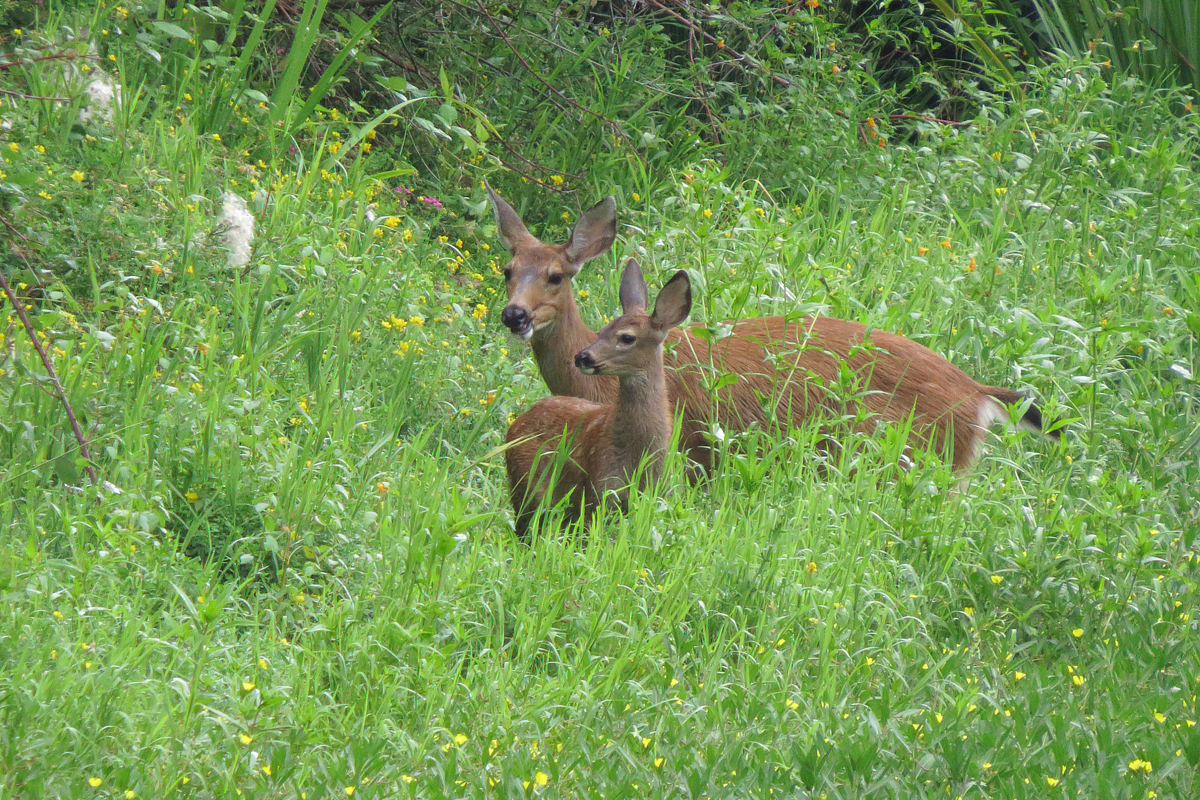 This Black-tailed Deer and her fawn were enjoying the lush vegetation at Smith and Bybee Wetlands.

Back to birds next time.
Happy Autumn
 Here are a few more images from my trip to central Oregon. The main purpose of the trip was to get the dogs away from the fireworks in Portland, but I always enjoy a trip to the dry side of the Cascades. It was indeed dry, and very hot. Bodhi cooled off a little in the Deschutes River.
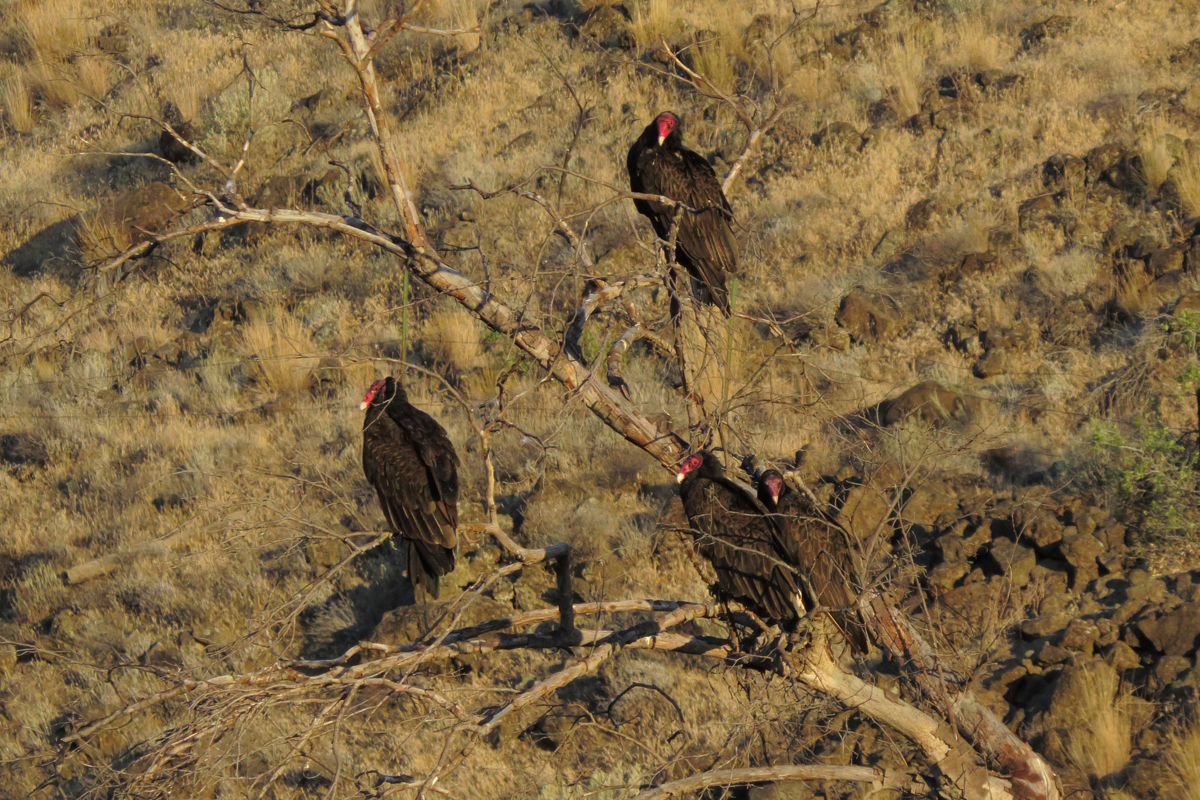 I found a small flock of Turkey Vultures roosting along the river one morning.
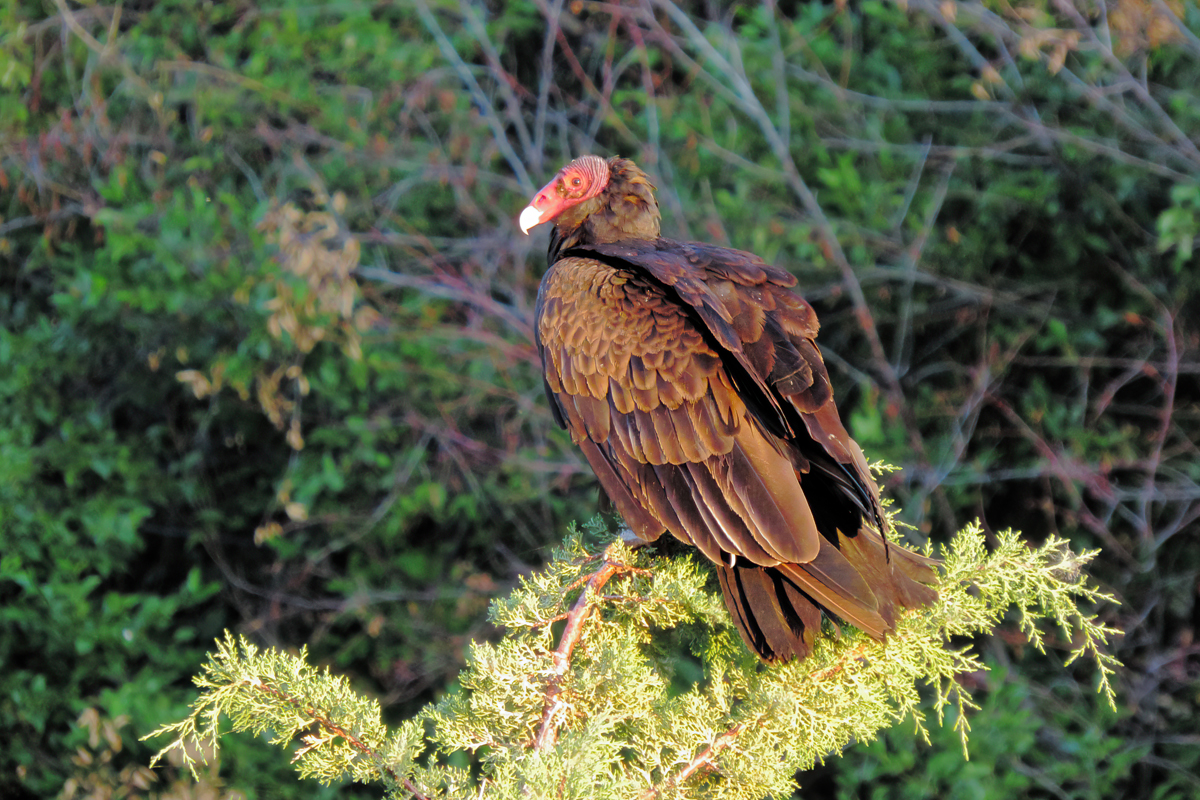 Even in the early morning the sun was pretty intense.

 This young Spotted Sandpiper was perched on a rock in the river.
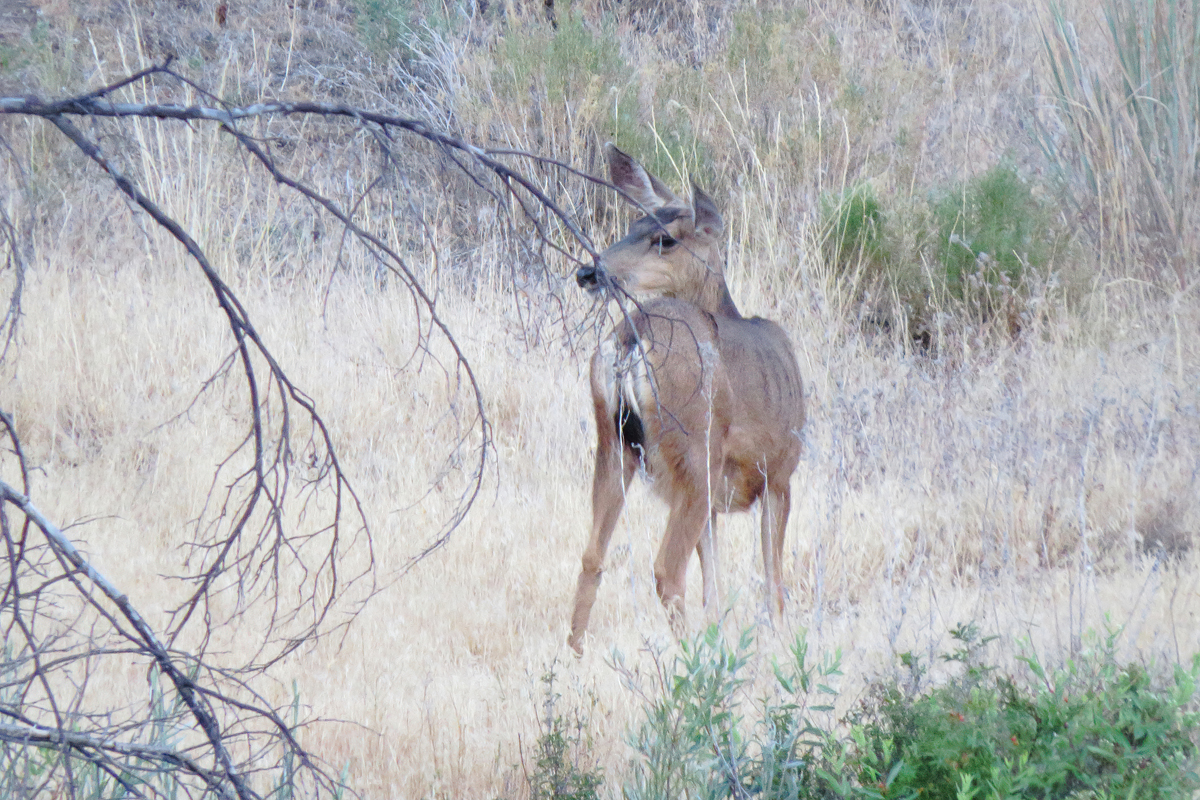 The Mule Deer were usually found along the river, which provided the only green vegetation in the area.
 Since birding was pretty slow, I spent a lot of time with Western Fence Lizards. This individual was basking on a big piece of obsidian. Since it was so hot, these lizards usually basked in the shade except during the early morning.
 This individual was hanging out under the deck where we were staying. I had to use a flash in this dark environment. I normally don’t like the results of flash photography, but the flash really brought out the pattern on this lizard.
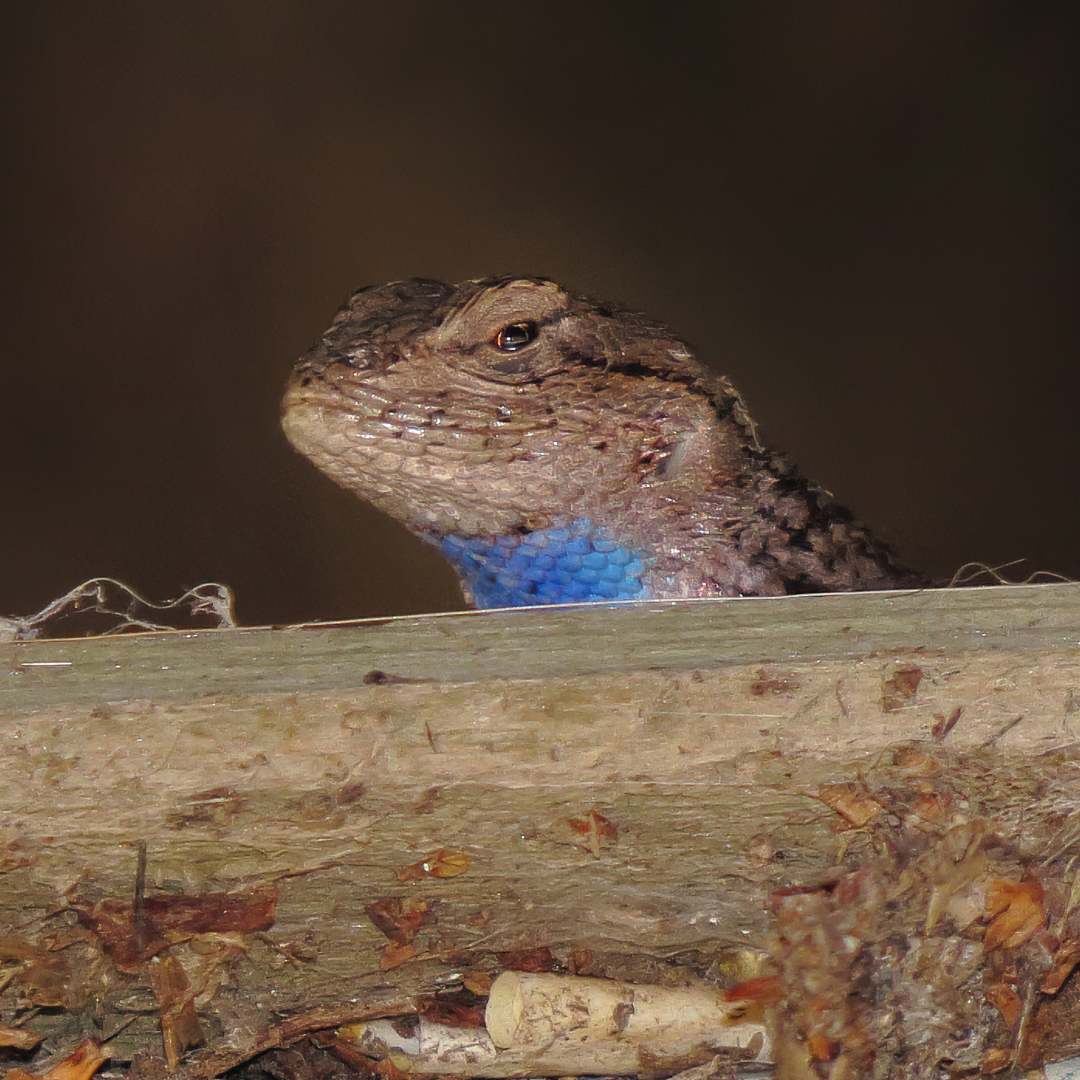 an adorable little dragon
Happy Summer
 Ethical Birder