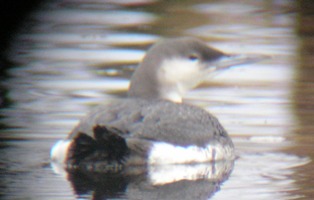
Gray’s Harbor, WA

I’ve recently made two trips to Grays Harbor in Washington, once to scout and the other to lead my shorebird class. This estuary is a major staging area for migrating shorebirds in spring.
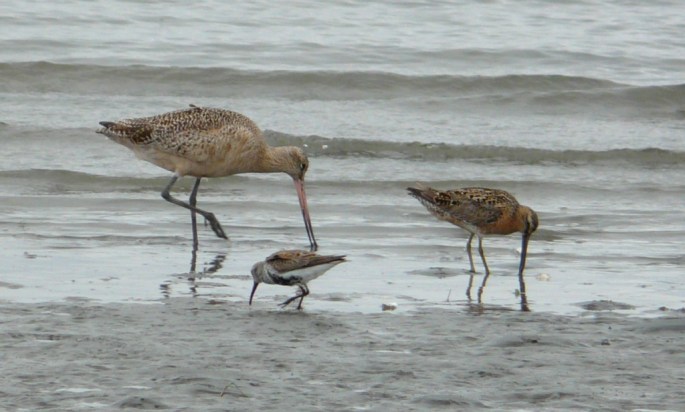

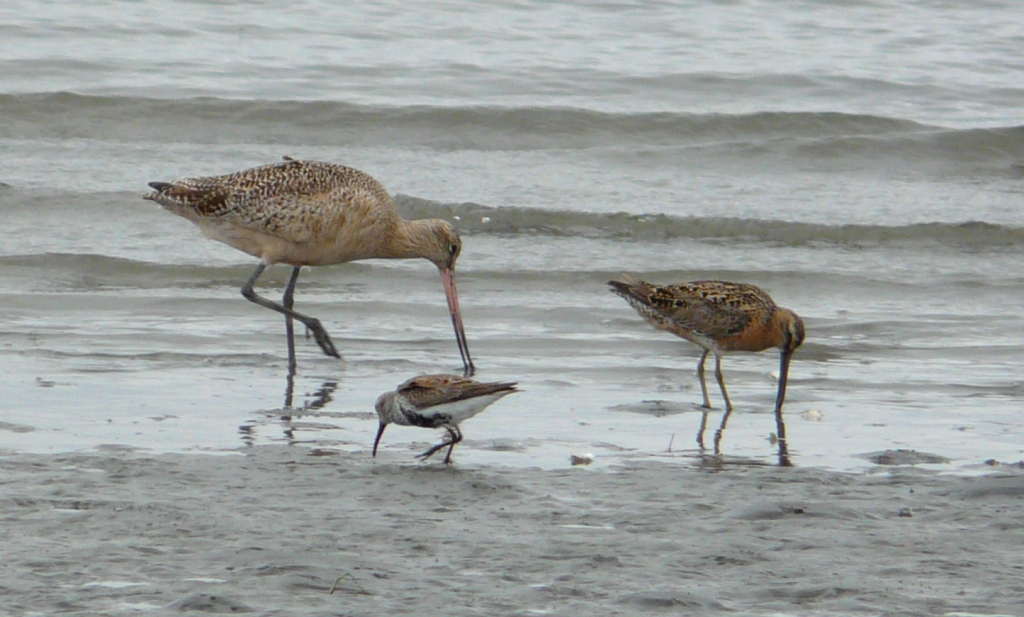
Marbled Godwit, Dunlin, and Short-billed Dowitcher feeding at Damon Point, near the mouth of the harbor


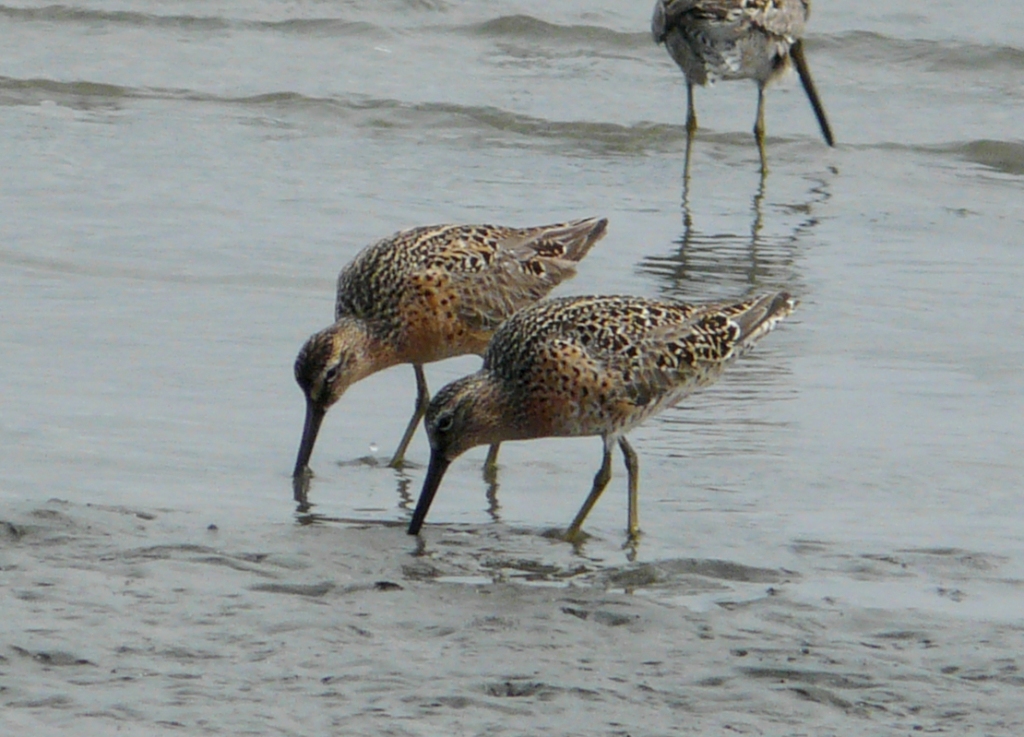
Short-billed Dowitchers


Don’t neglect to look at all the little brown ducks! This is a King Eider, a rare visitor from Alaska. It is distinguished from Common Eider by the slender bill and the scalloped markings on the sides.


Bowerman Basin is an inlet on the north shore of the harbor. It is the last area to fill during high tides, so shorebirds often congregate here. This is a view from the boardwalk.
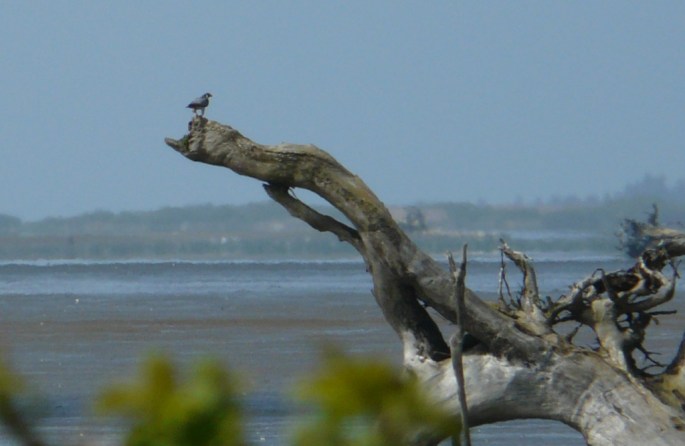

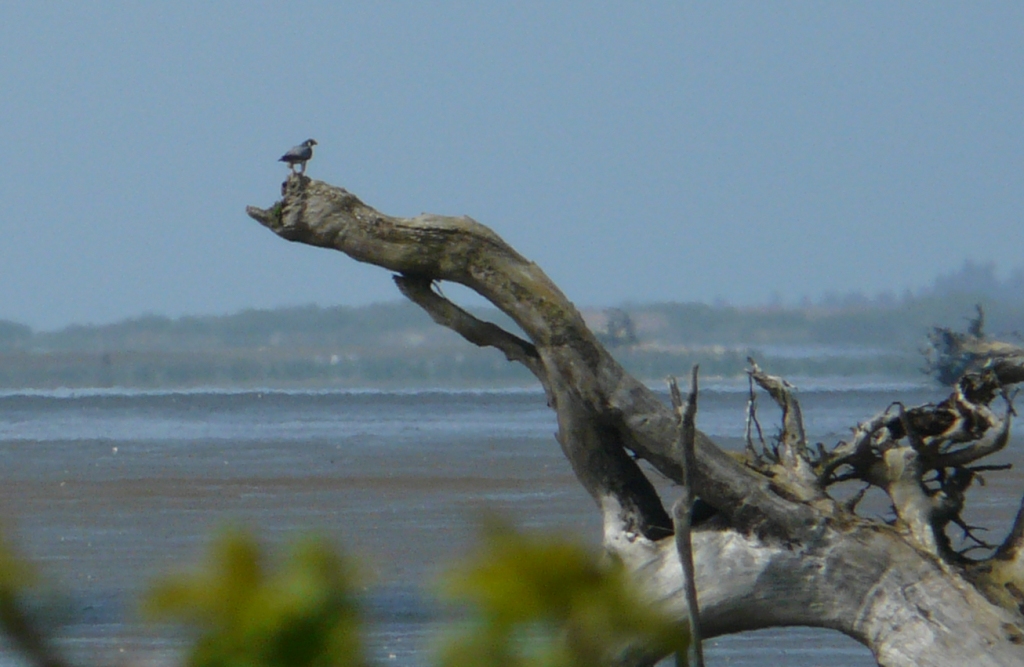
Peregrine Falcons are attracted by the large numbers of shorebirds in the harbor.


This is a view of the boardwalk on a Thursday morning.


This is the boardwalk on a Saturday afternoon. Unfortunately, birders outnumbered birds by about five to one on this afternoon.
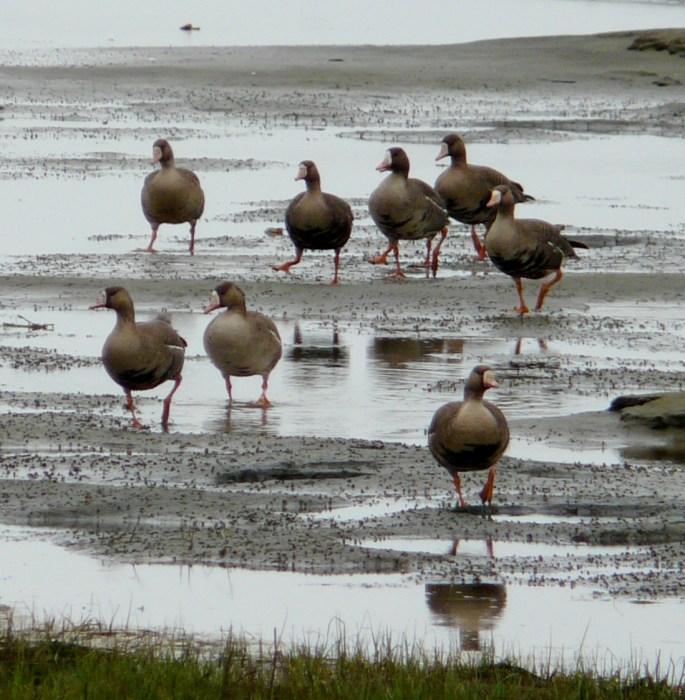

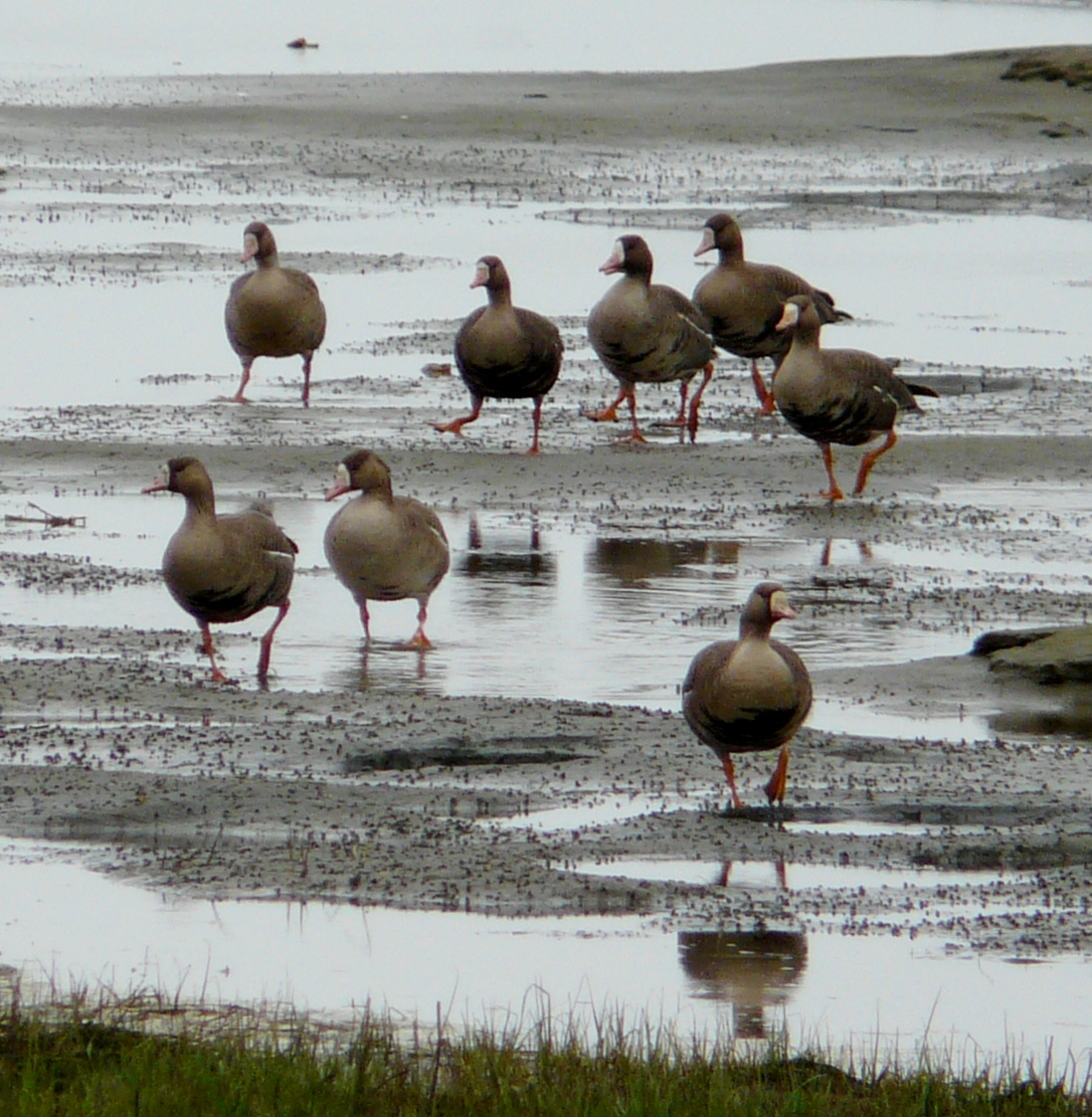
Greater White-fronted Geese


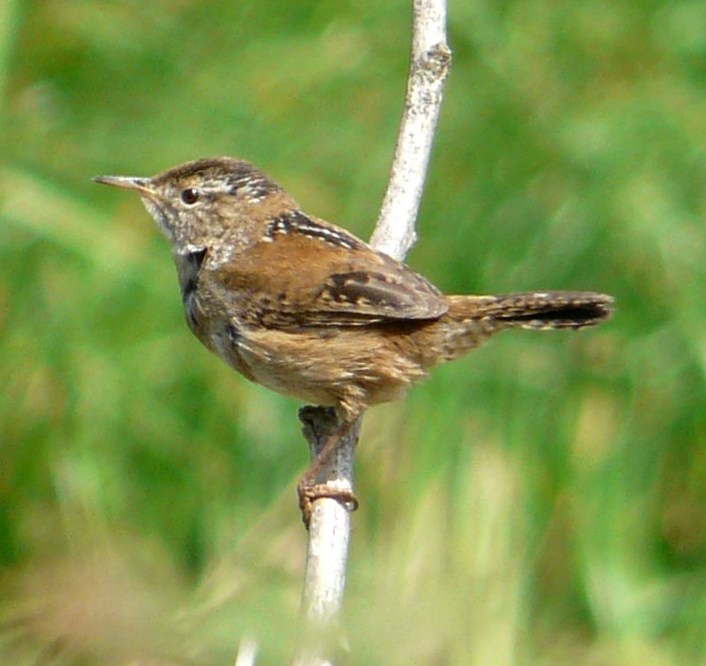
Marsh Wrens are common along the marshy edges of Bowerman Basin.


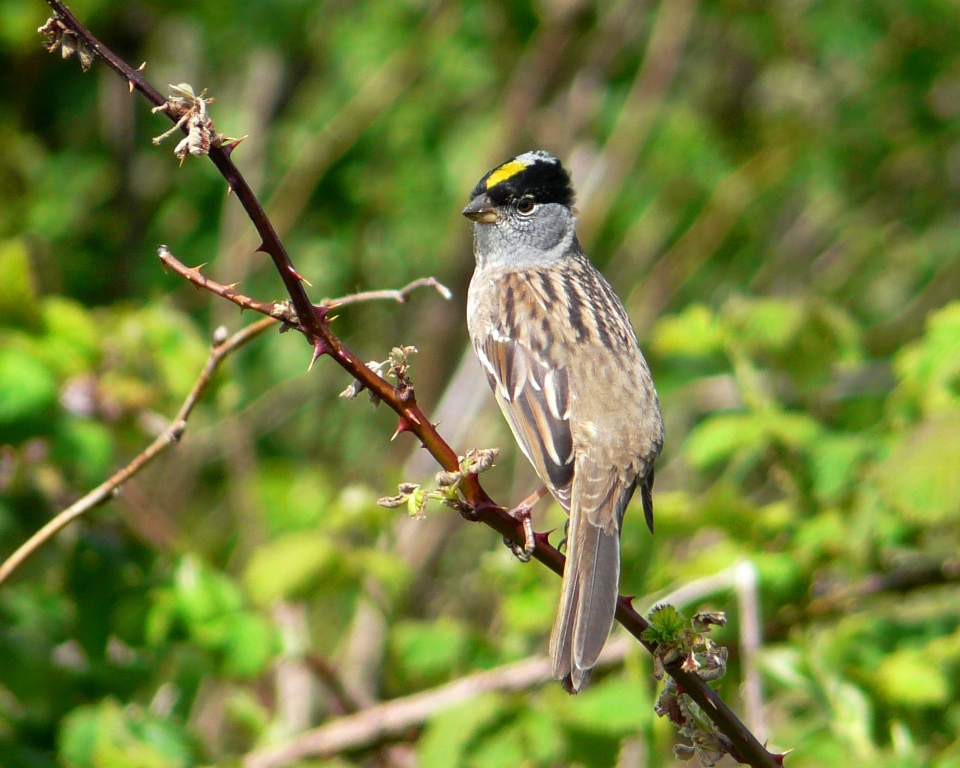
The willow thickets and woods along the boardwalk attract migrants like this Golden-crowned Sparrow.
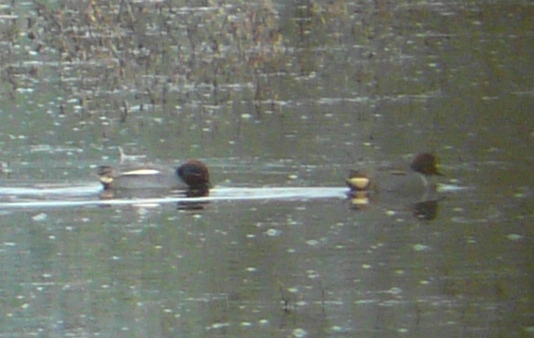
Eurasian Teal

The American Ornithologists Union considers the Green-winged Teal and Eurasian (or Common) Teal to be subspecies of Anas crecca. Most other sources, however, consider the two to be separate species, Anas carolinensis and Anas crecca. I tend to agree with the latter set, primarily because it provides another species for my life list. Eurasian Teals range as far east as western Alaska, so a few end up in Oregon every winter.


Here we see a male Eurasian Teal on the left, and a male Green-winged Teal on the right. Eurasian Teals have a bold white line along their sides, while Green-wings have a vertical white line at the side of the breast. Hybrids between these two species show both the horizontal and vertical lines. I personally don’t know how to distinguish  female Green-winged Teals from Eurasians.


Here are the same two birds. While it is not obvious in these very distant photos, at close range we would notice that the pale lines surrounding the green eye patch are more pronounced on Eurasian Teal than on Green-winged.

Hooded Oriole

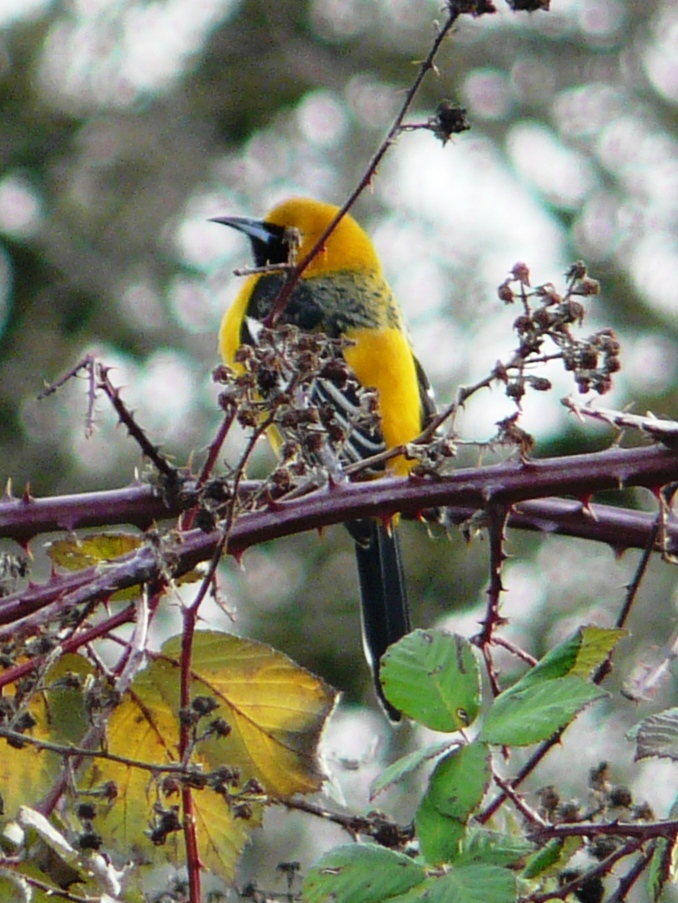
A Hooded Oriole has spent the last several weeks in Gaston, OR. This species normally ranges as far north as northern California, wintering in Mexico, so a winter visitor to Oregon is a special treat.


This grainy photo shows the bird’s thin bluish bill, facial pattern, and white tips of the tail feathers.


Much of the bird is hidden by blackberries in this shot, but we can see the scaly pattern on the bird’s upper back.

While I certainly appreciated seeing this species in Oregon, I still prefer to see birds in their natural range and habitat. I saw my first Hooded Orioles in southern Texas. They seemed to belong there, and finding birds not normally found in Oregon adds to the fun of traveling. Likewise, my first Varied Thrush was in a suburban yard in Ohio. They look so much better in Oregon.

Glaucous Gull

glaucous-gull
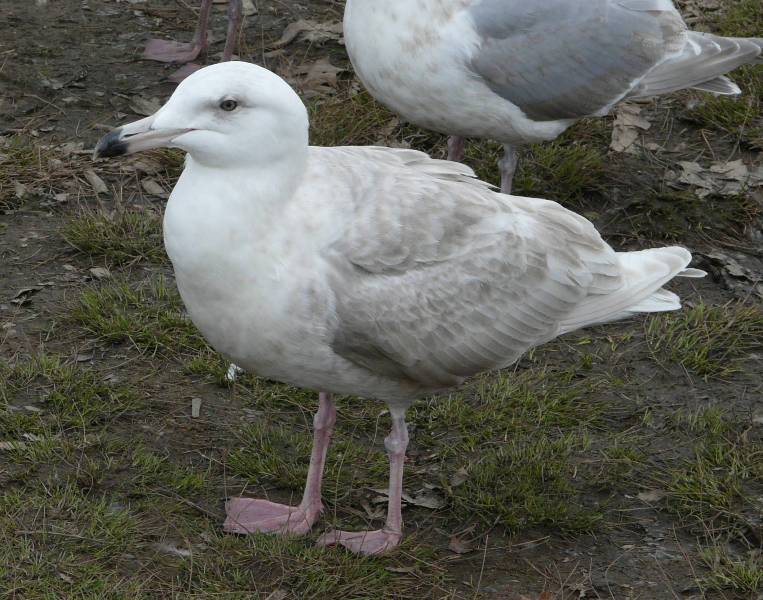
A first-cycle Glaucous Gull was among the large gull flock begging for bread at Portland’s Westmorland Park this afternoon. The large size, pale color overall, very pale wing tips,  and light pink bill with the neat black tip are all good field marks for this species at this age.

glaucous-gull-head
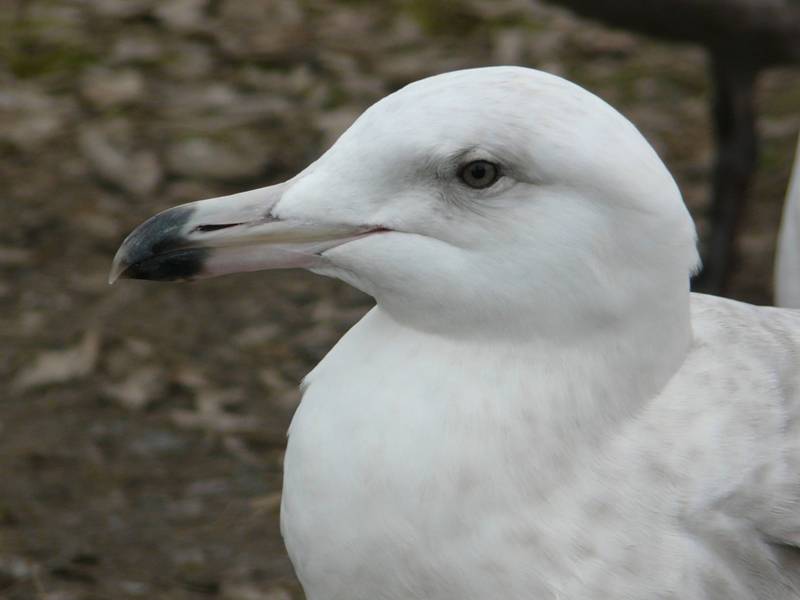
Here’s a closer view of the bill.  Glaucous Gulls are never common in Oregon, but several have been reported in the Portland area this winter.

Slaty-backed Gull

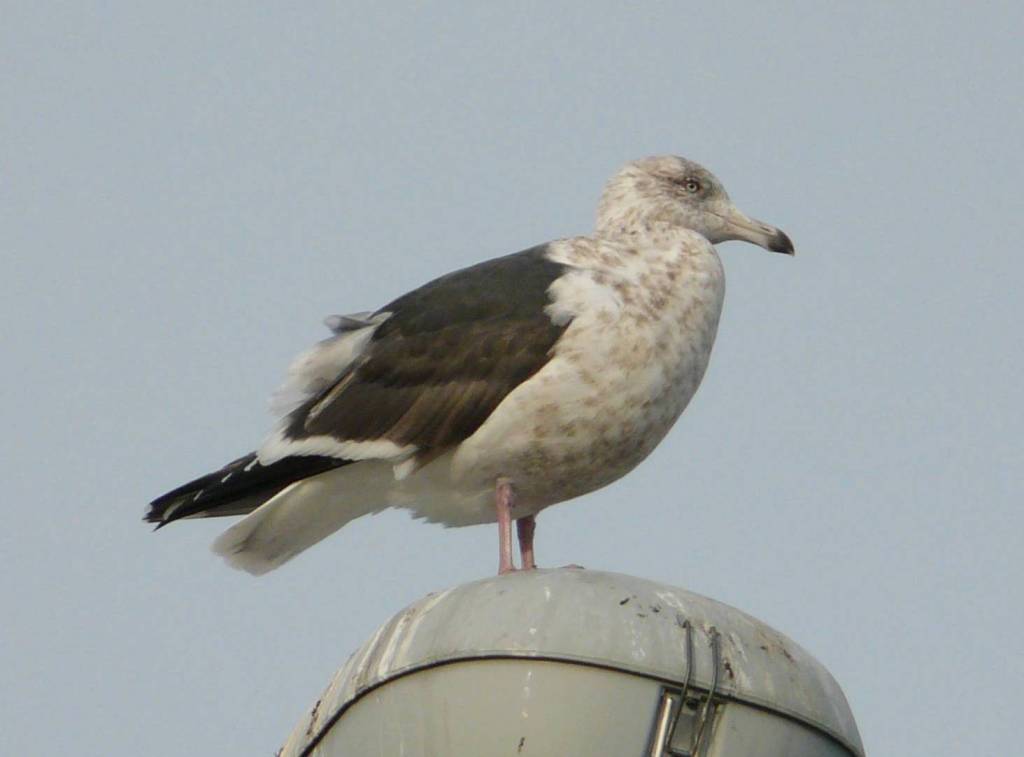
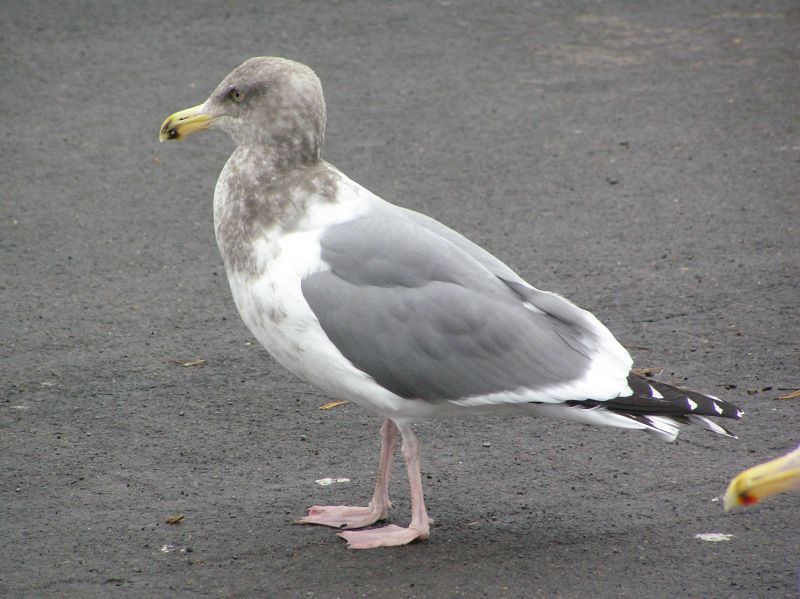
My first lifer of 2009 was a Slaty-backed Gull that has been hanging out in downtown Portland lately. It was a pretty painless twitch on the lifelist; 1. learn about the bird from email   2. drive downtown and find a parking space   3. find the gull standing on a light on the Broadway Bridge   4. ka-ching!

slaty-backed-gull

While I didn’t have to work very hard for this particular bird, it takes a well-earned spot on my list. I have been studying gulls rather intently for several years, learning to recognize the common species. (One needs to be familiar with the common birds if you want to recognize a rarity when you see one.) Slaty-backed has been very high on my want-list for two reasons. First, it is normally found in Asia, so it is hard to find in Oregon. Second, several years ago I thought I had found one, only to learn that I had made an identification error. While the incident was rather embarrassing (I immediately reported the bird, as I should have.) it did provide a valuable opportunity to learn what a Slaty-backed Gull really should look like.

westernxglaucous-winged2

This is the bird that got me excited a few years ago. It is actually a third-cycle WesternXGlaucous-winged hybrid. It bears some similarities to a Slaty-backed, but the mantle is too light, the markings on the head are too evenly mottled, and the bill is too fat and bulbous. The pale eye on this bird is unusual, adding to my confusion. While many birders pointed out my error, one actually explained why this wasn’t a Slaty-backed Gull, providing me with a great boost in my gull identification skills.

slaty-backed-dance

So while I didn’t need a lot of luck or effort to see this particular bird, seeing it provided a bit of closure for one facet of my birding development. Thus I join this third-cycle Slaty-backed Gull in the Happy Dance to celebrate another tick on the life list.

Sharp-tailed Sandpiper

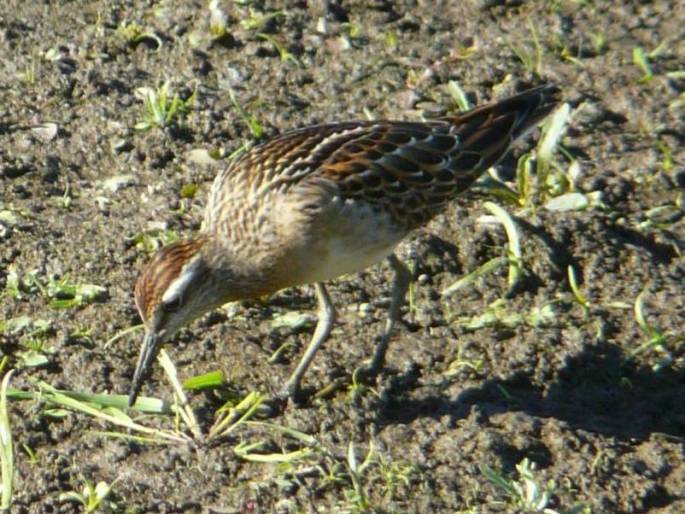
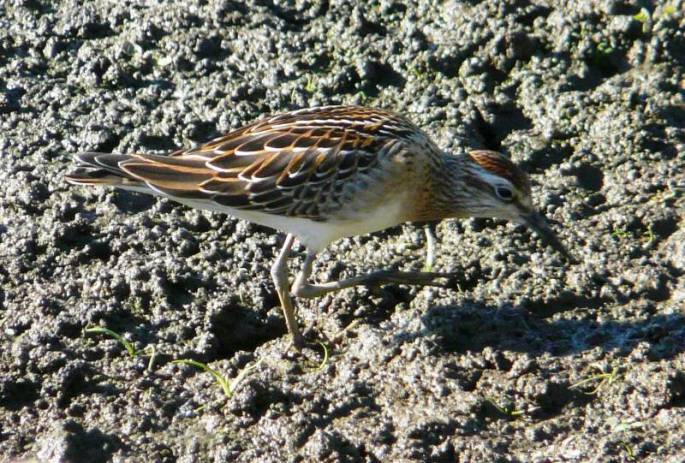
I enjoyed watching a Sharp-tailed Sandpiper at Fernhill Wetlands this afternoon. While most Sharp-tailed Sandpipers migrate from Siberia to Australia via the coast of Asia, a few young birds work their way down the west coast of North America before crossing the Pacific. The pattern on this species is quite stunning, at least by shorebird standards.

Arctic Loon

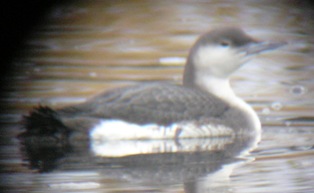
An Arctic Loon has been hanging out near Astoria this week, and I finally had a chance to chase him today. The most direct route, Hwy 30, was closed due to a massive mudslide, but the scenic route worked just as well. I am delighted to see this species in Oregon, as it saves me an expensive trip to Alaska, where Arctic Loons typically hang out. The grainy photos below were taken through my scope. My camera is not very compatible with my scope, but it works for ID purposes. Note the blocky head and white flanks that differentiate this species from the Pacific Loon.
arctic-loon-5.jpg
arctic-loon-4.jpg