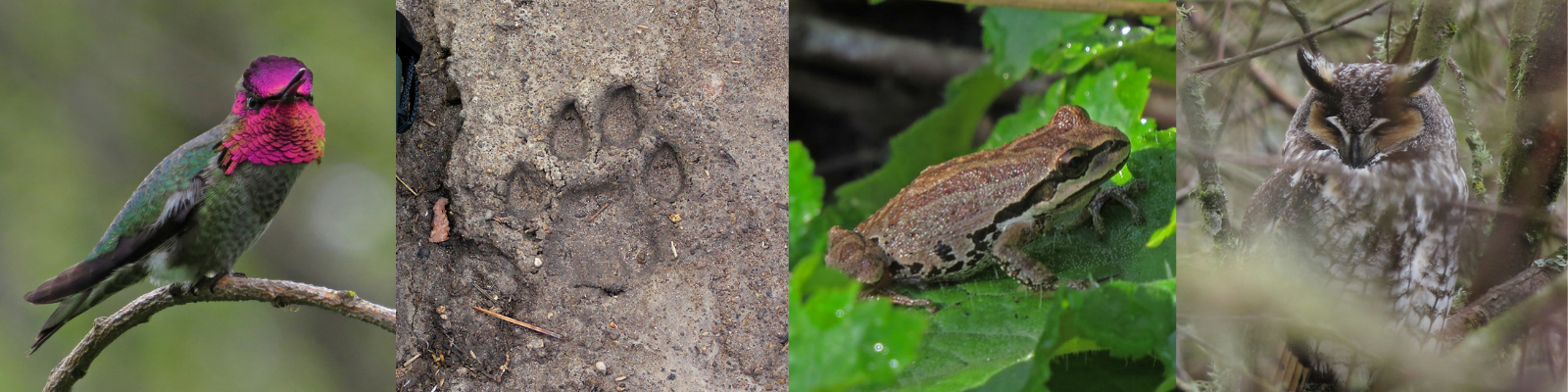
Tualatin River NWR


Tualatin River National Wildlife Refuge, located just a few miles southwest of Portland on Hwy 99W, is a wonderful refuge for wintering waterfowl, despite its location in such an urban area.
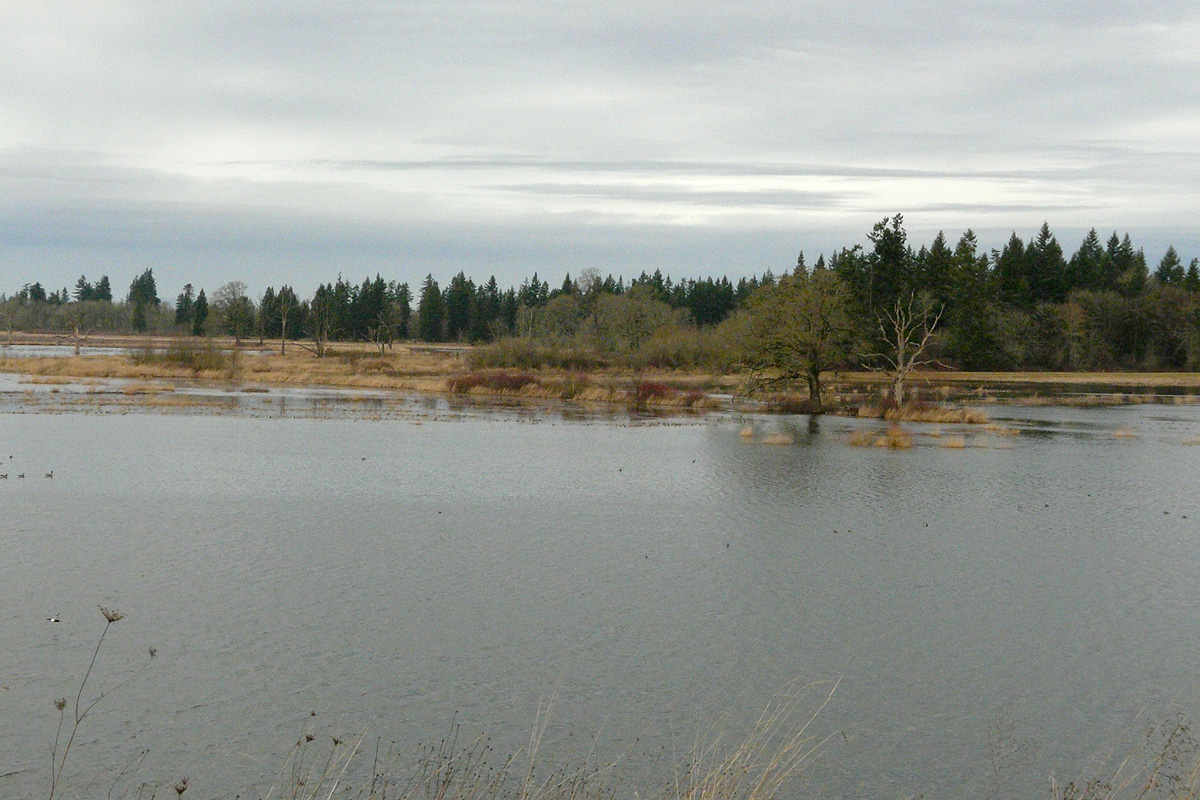

The dikes around the wetland areas are closed to public access in the winter to prevent disturbance to the birds. But the trail leading through the wooded habitat beyond the wetland is open year round.
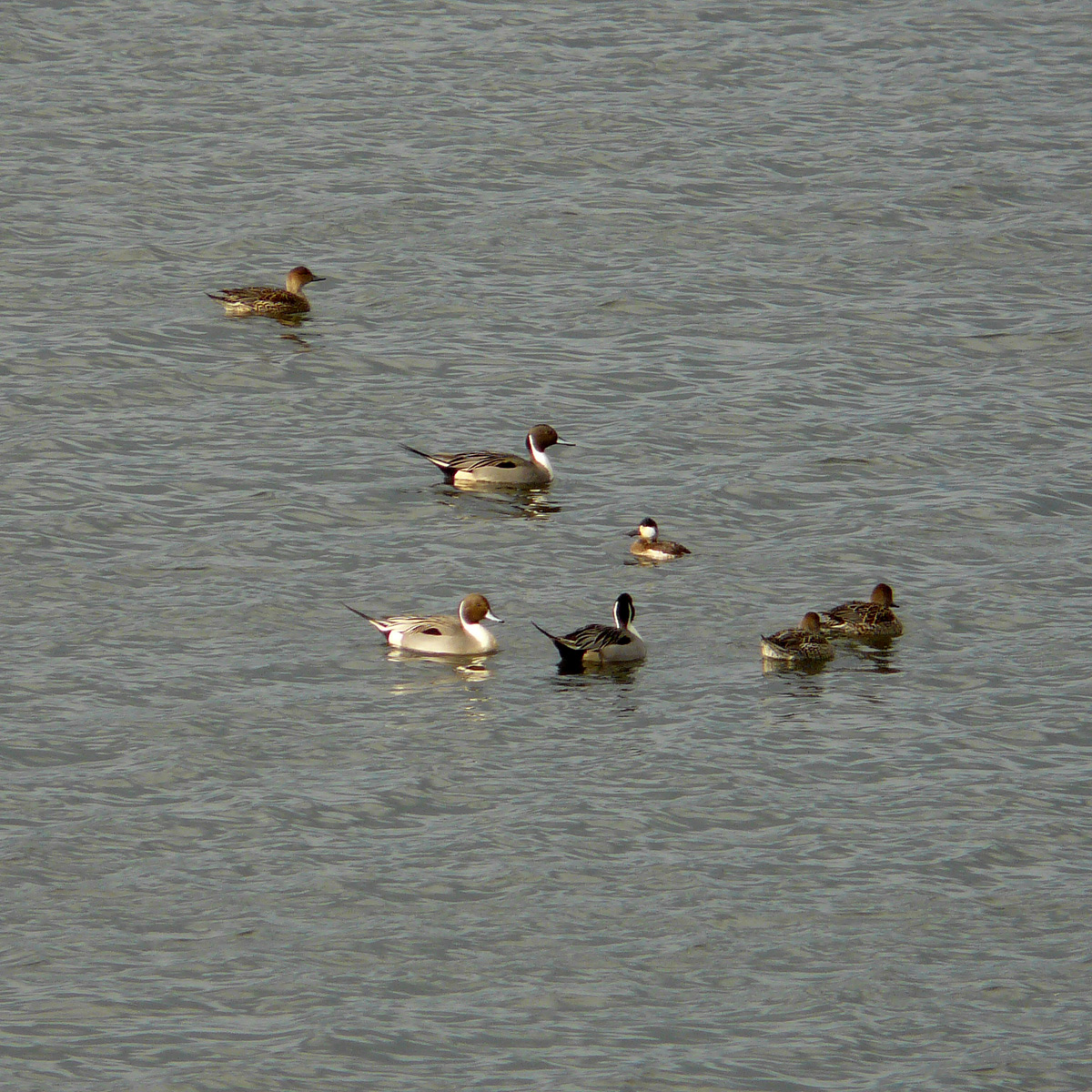

Northern Pintails and a Ruddy Duck
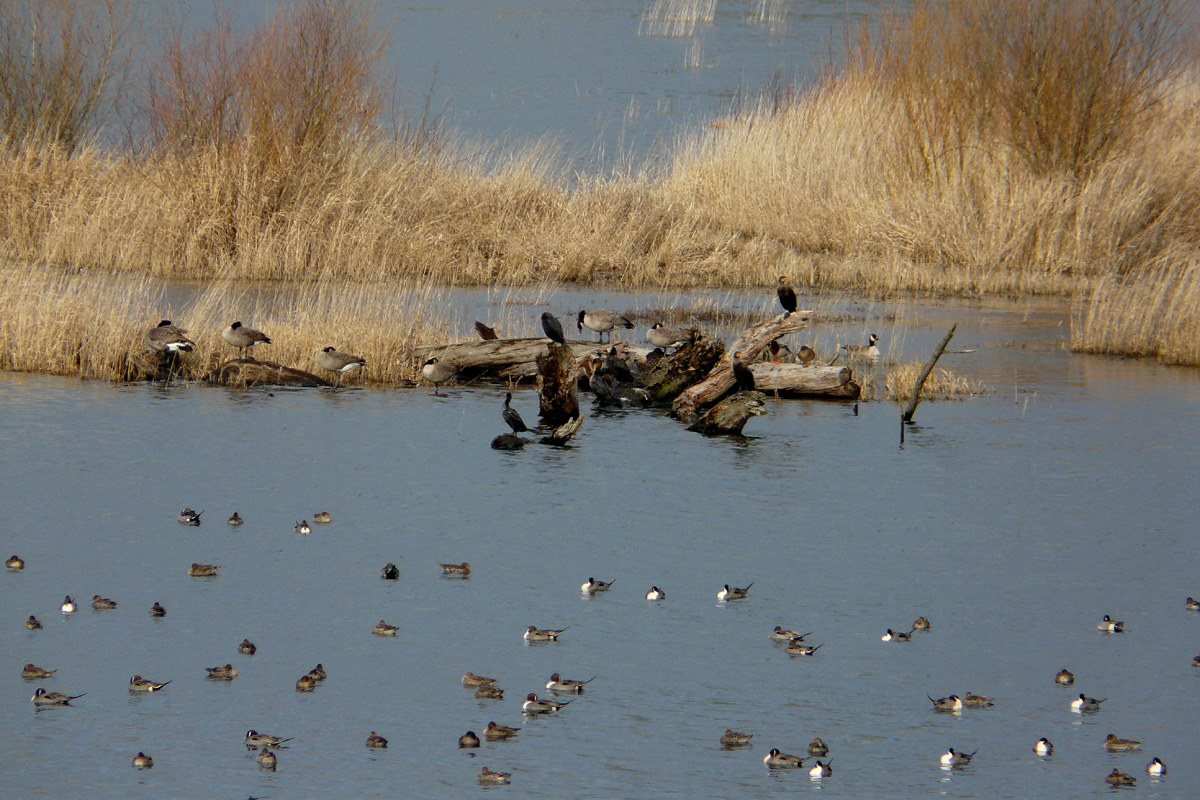

several Double-crested Cormorants perched on a log
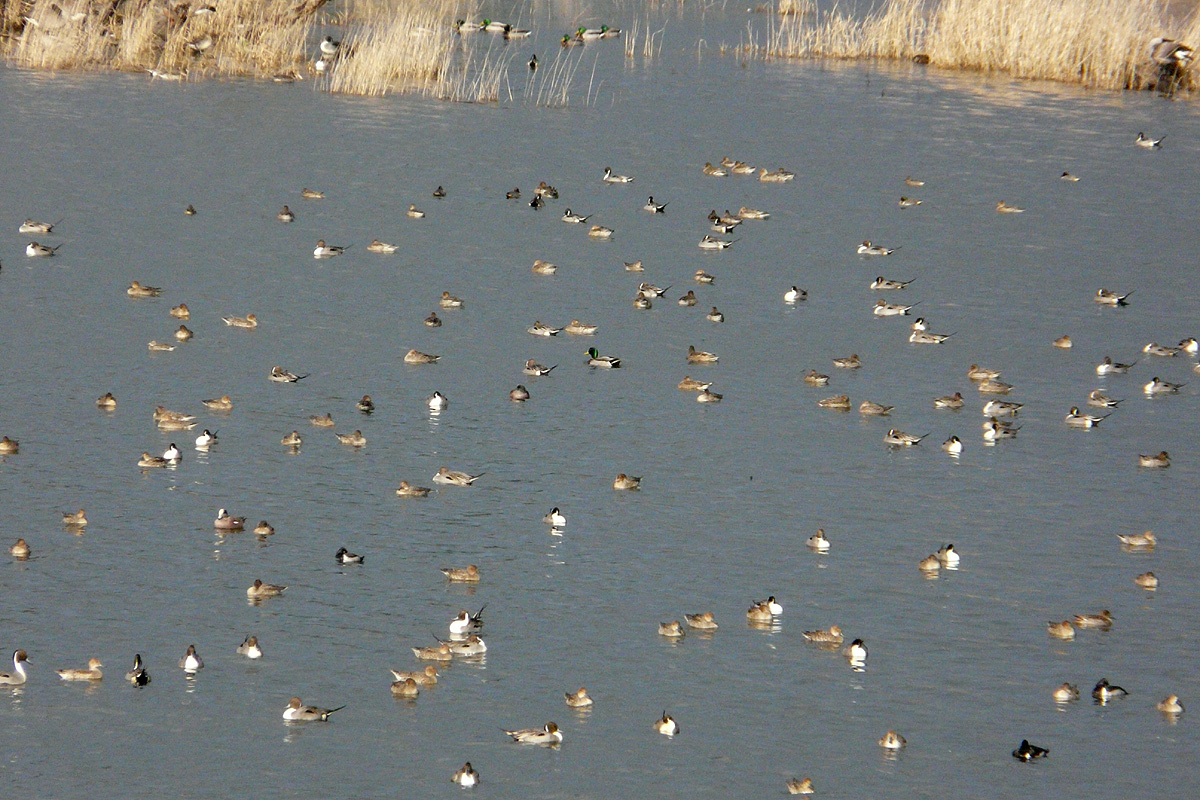

a congregation of Northern Pintails, Mallards, and Ring-necked Ducks


The star of the refuge in recent weeks has been a lone Emperor Goose. He is the pale gray blob with the white neck tucked under his wings, right in the center of the photo. No, really.
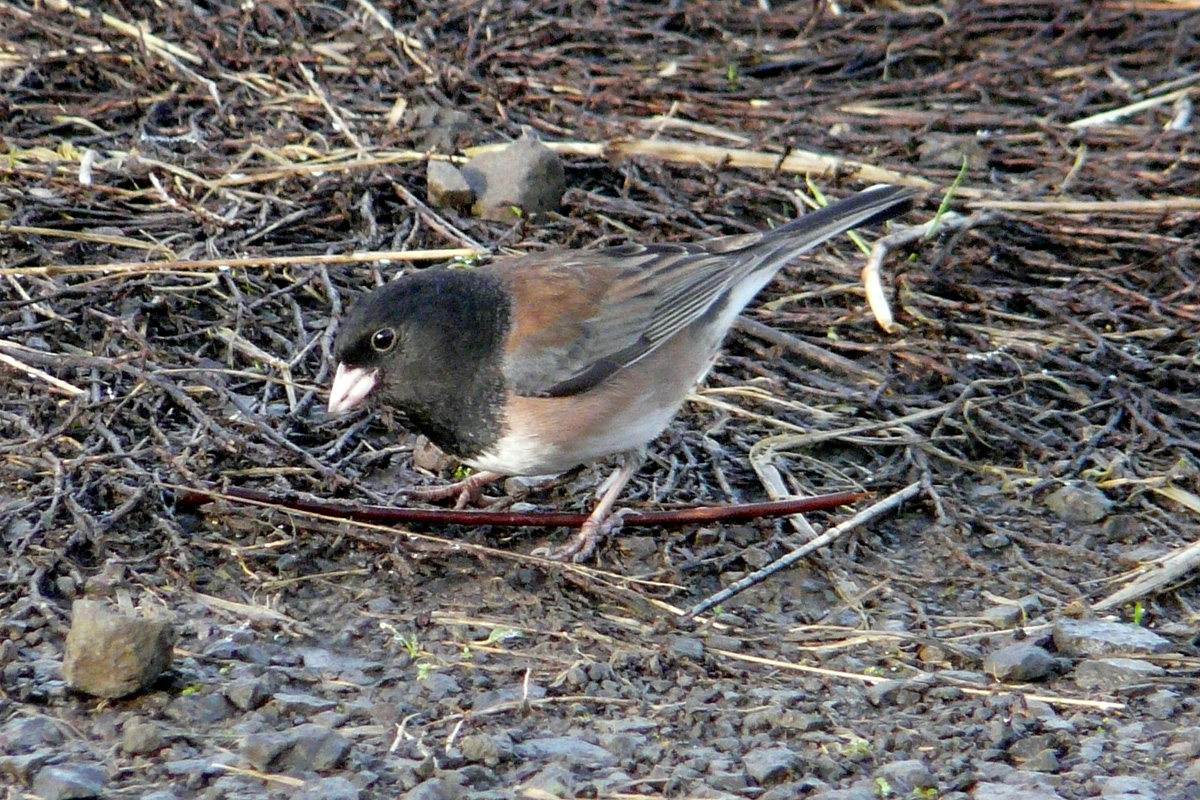

This Dark-eyed Junco was a little more photogenic than the goose was.


Given the amount of brown on the crown and hind neck of this Dark-eyed Junco, I’m guessing she is a first-year female.


Golden-crowned Sparrow and Dark-eyed Junco

Ft. Stevens, 11-10-2011


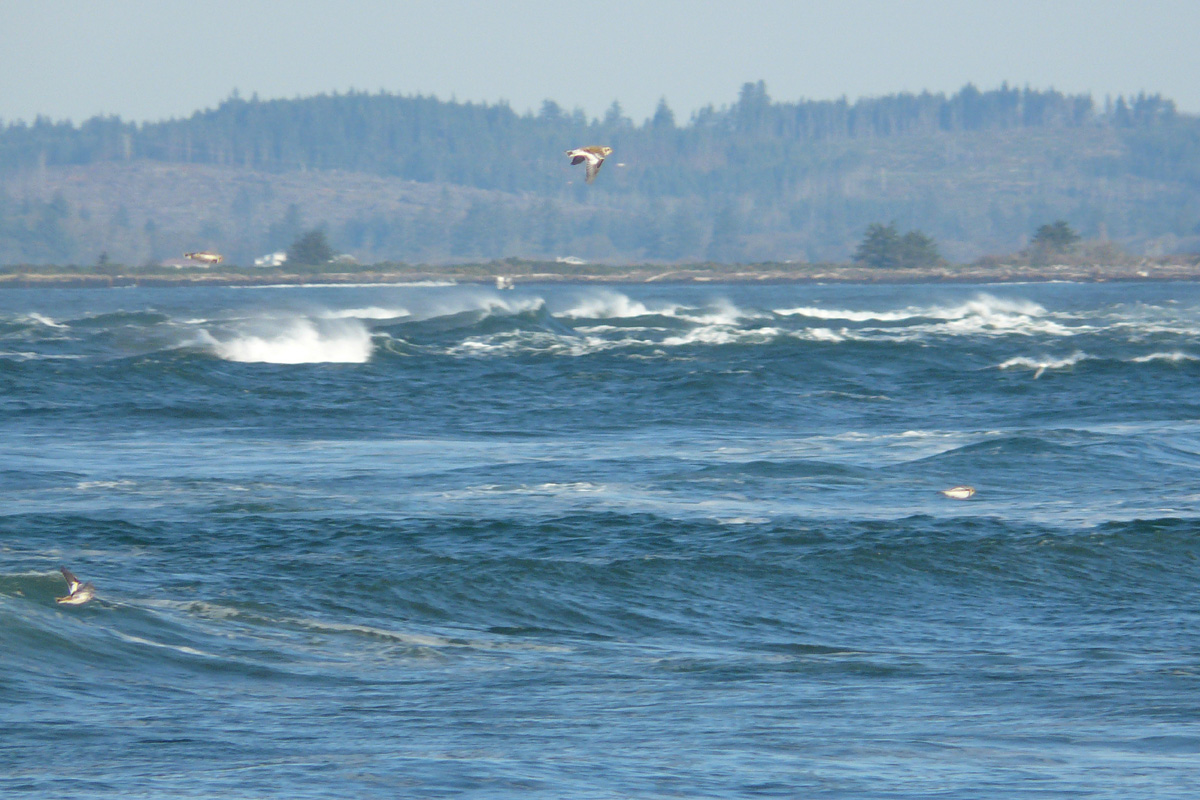
I spent a warm sunny November day at Ft. Stevens (Birding Oregon p. 119). The tide and winds were both high, so the sea was too rough to find any birds on the water near the south jetty at parking lot C.


The best birds of the trip were a flock of five Snow Buntings, a species that has eluded me in Oregon until now. They appeared on the beach near the jetty, then quickly moved on.


This image shows three Snow Buntings in flight. No, really.


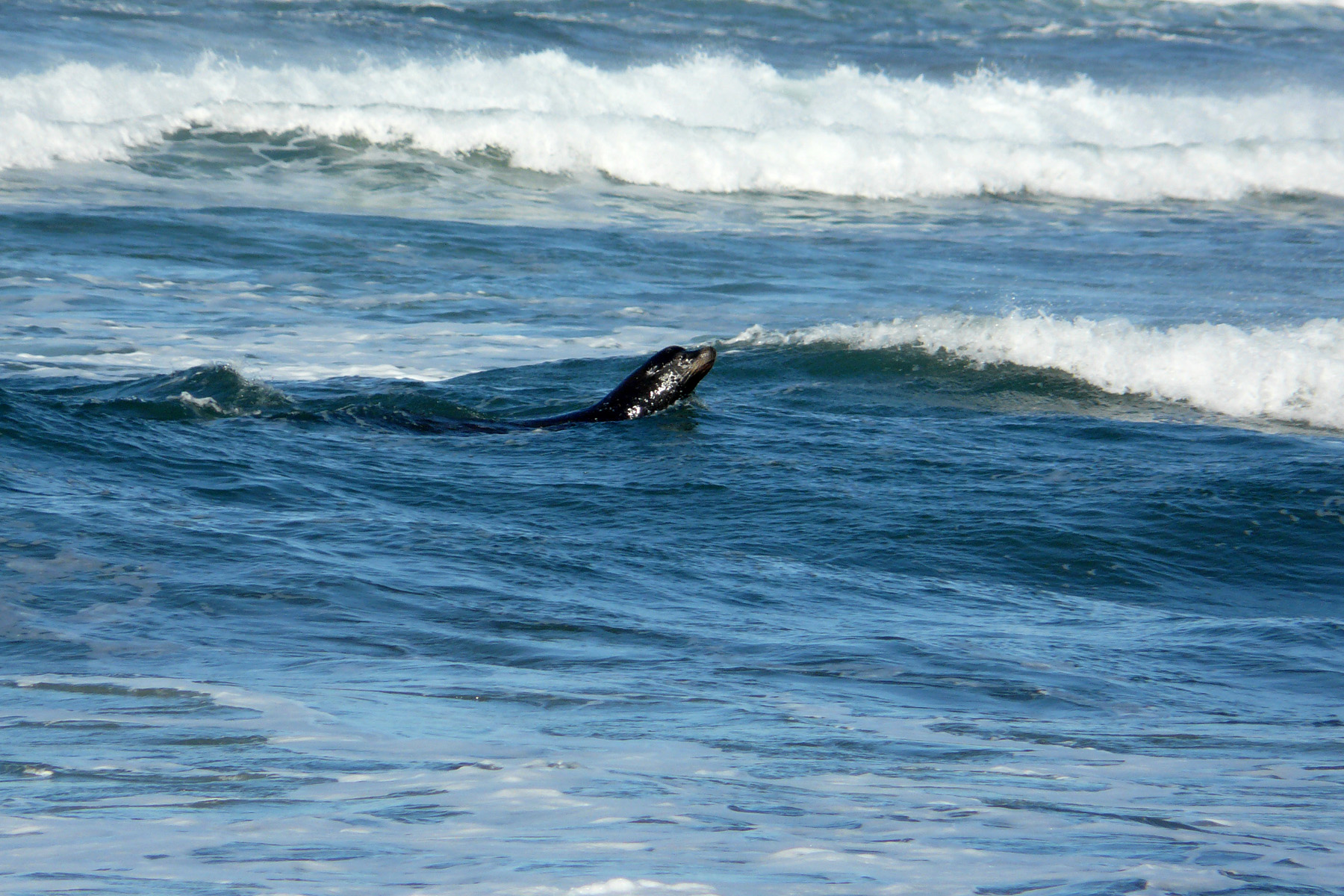
There were hundreds of California Sea Lions in the area, both on the jetty and in the surf.


A flock of at least 35 Semipalmated Plovers were working the wrack line. There are ten in this image. No, really.


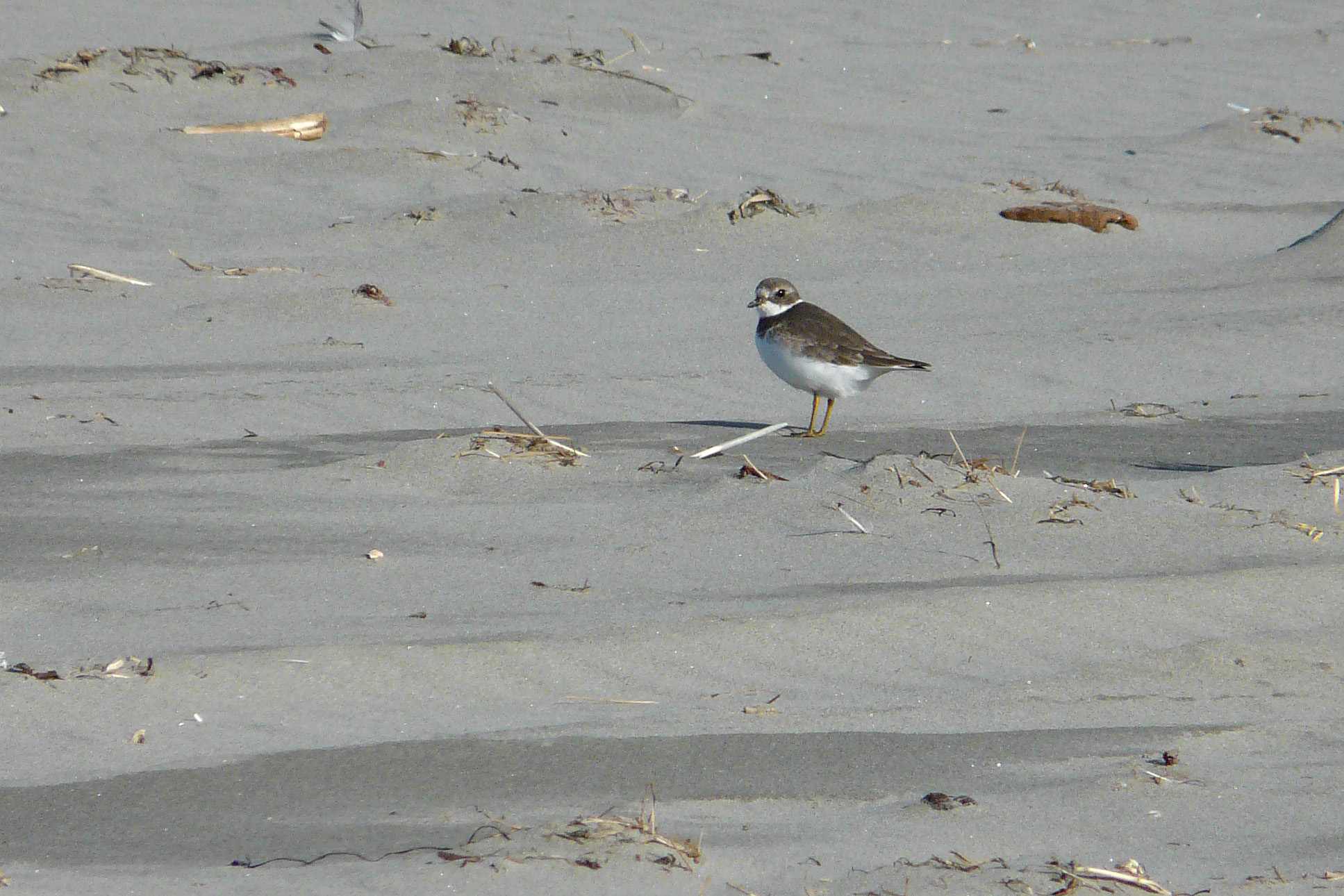
Here’s a better view of a Semipalmated Plover.


This Palm Warbler was a nice surprise. This species is rare along the coast in autumn.


Brown Pelicans were very common. The Heerman’s Gulls that harass them during the summer have already moved south for the winter, so the pelicans can feed in relative peace.


An adult (left) and juvenile Brown Pelican


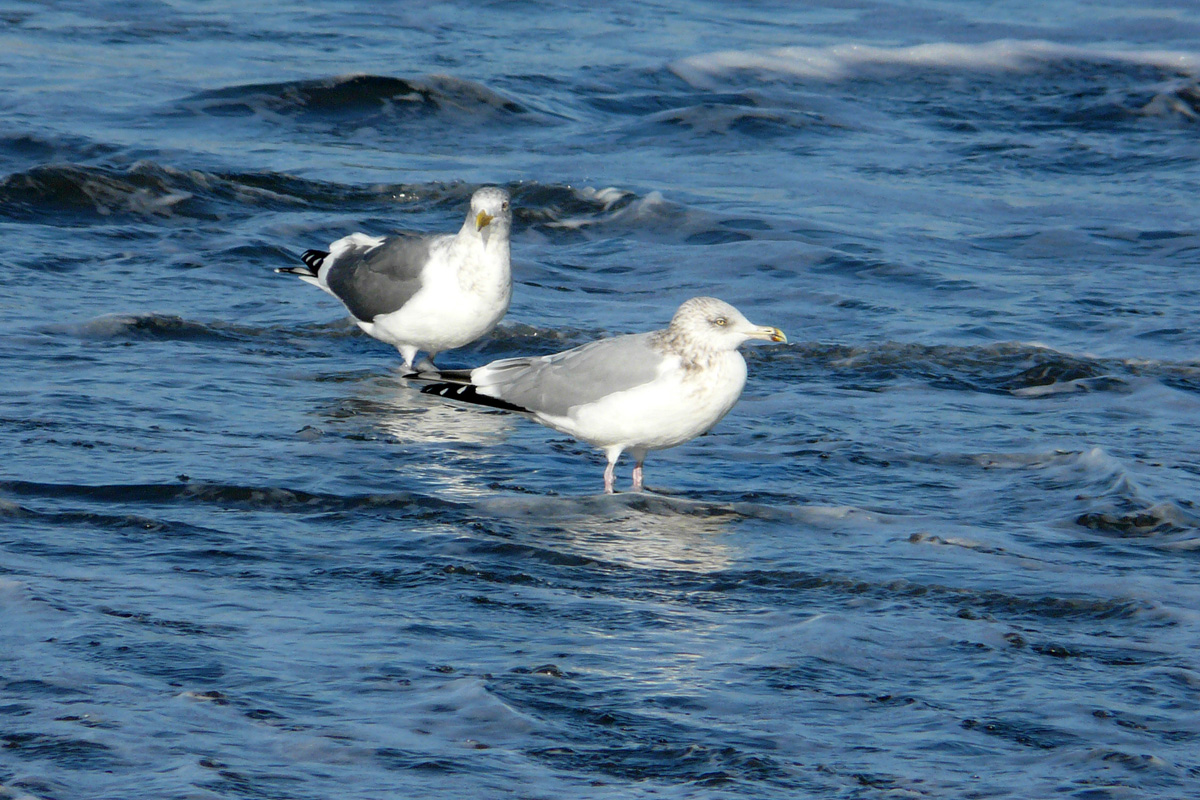
Western Gull (left) and Herring Gull. The gulls on the beach are much more wary than those that spend the winter in Portland.


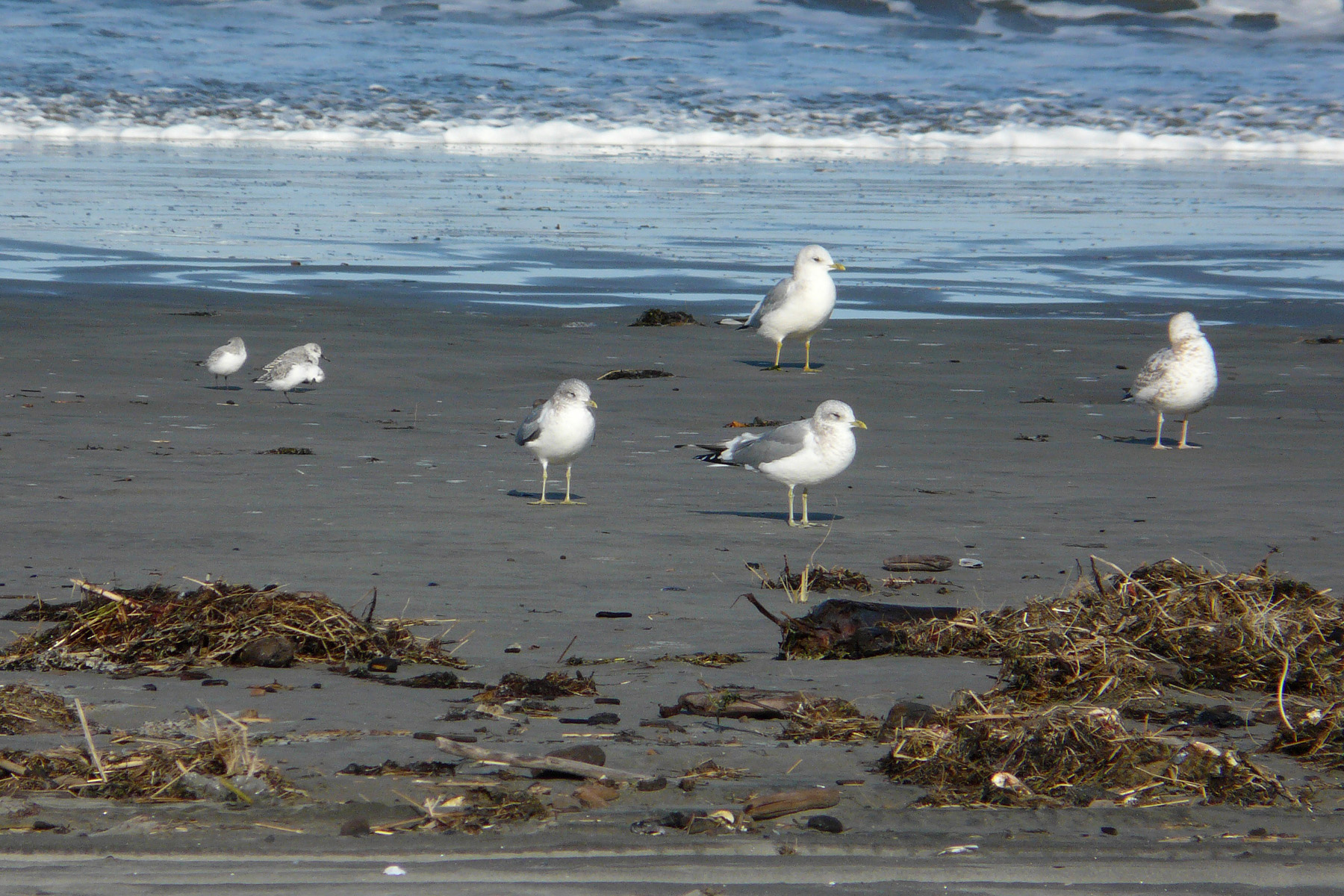
Sanderlings and Mew Gulls

Other goodies that escaped the camera were a Peregrine Falcon on the beach, a Northern Shrike, and three Western Meadowlarks. It was a great day to enjoy the sun before the cold wet weather settles in to stay.

Westmoreland Park

Westmoreland Park (Birding Oregon p. 69) is one of Portland’s premier loafing spots for gulls and waterfowl in autumn and winter. The city is planning to restore the natural flow of the creek in what is now an urban duck pond, so it will be interesting to see how these changes will affect bird use over time.


The main pond, with a few hundred Cackling Geese


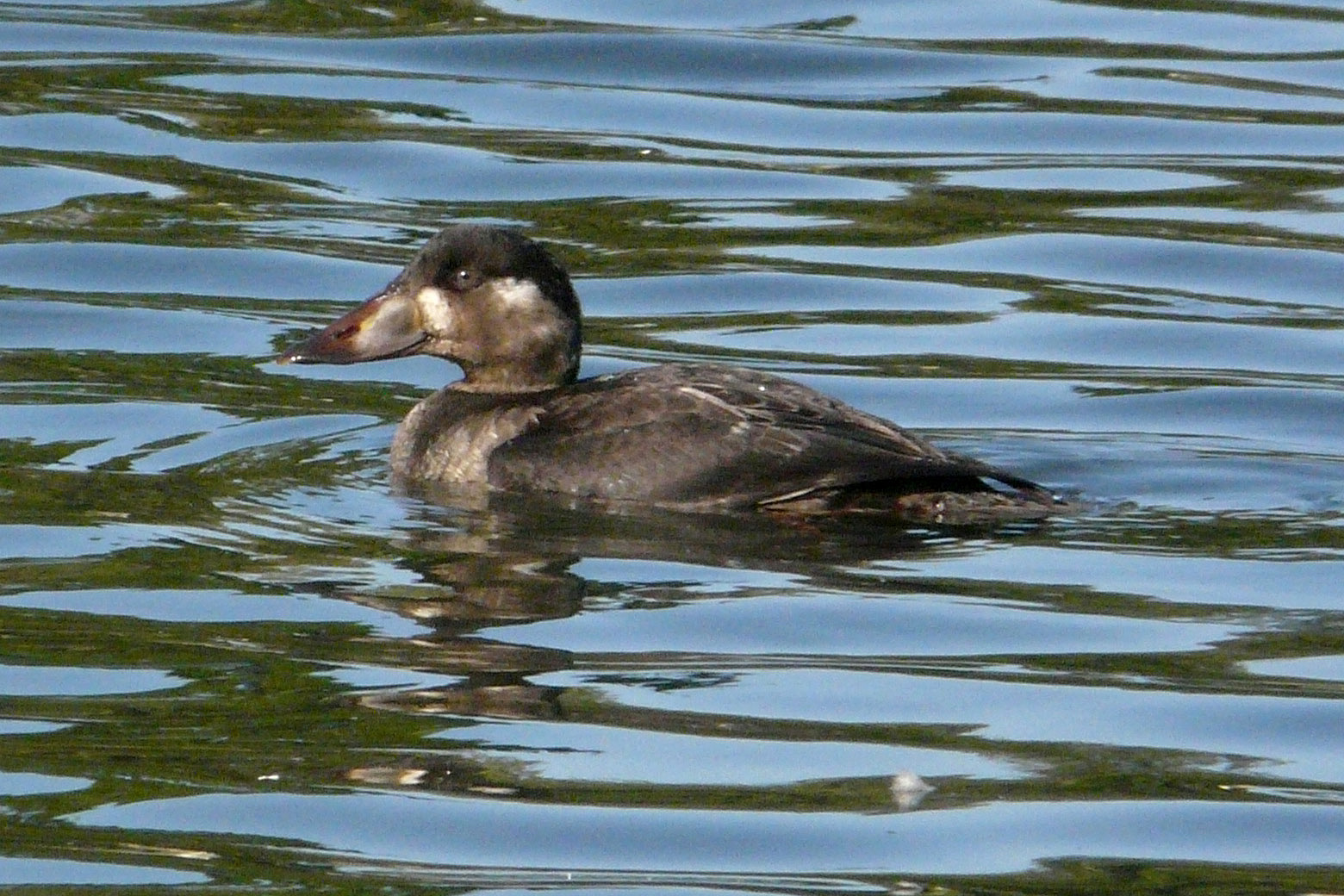
This female Surf Scoter has been hanging out for about a week. She is apparently finding enough mollusks to eat in this muddy pond. A few of these sea ducks are found on the Columbia River and on larger bodies of water in winter, but they are unexpected on such a small pond.


She spent a lot of time feeding under water.


Westmoreland is one of the easier places to find a cooperative Thayer’s Gull.


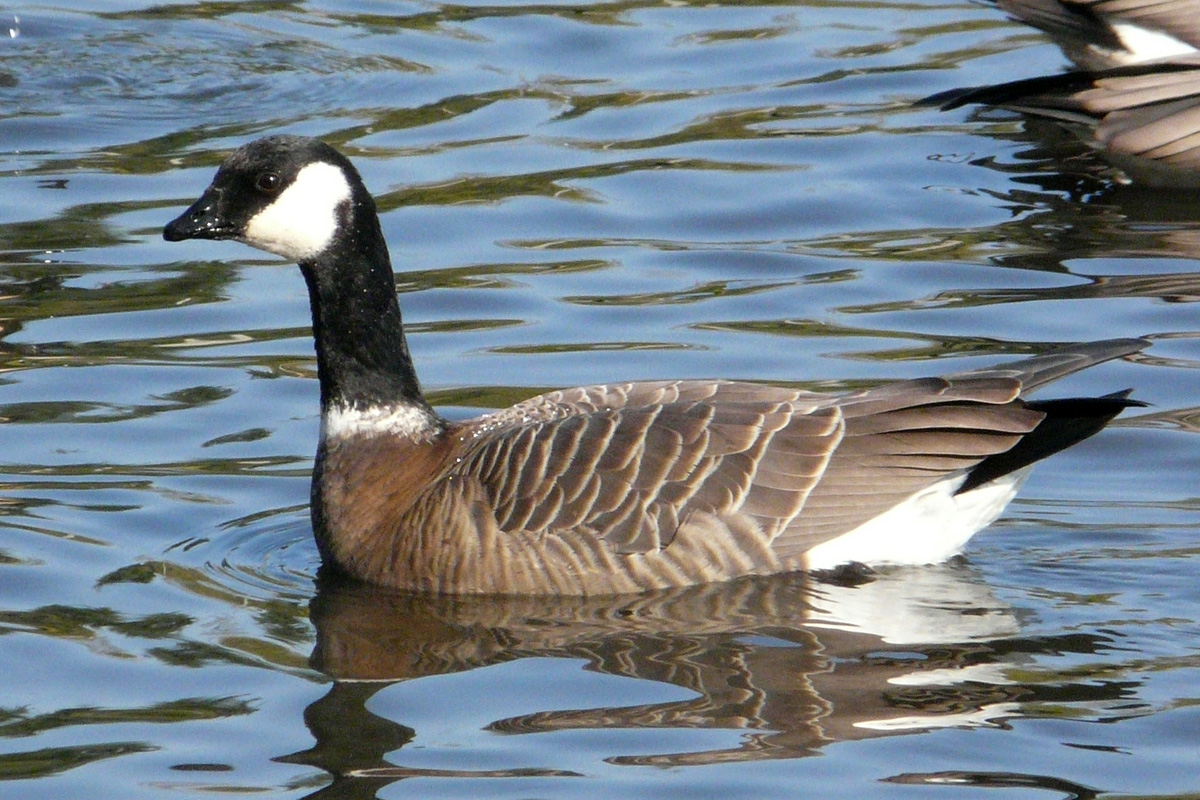
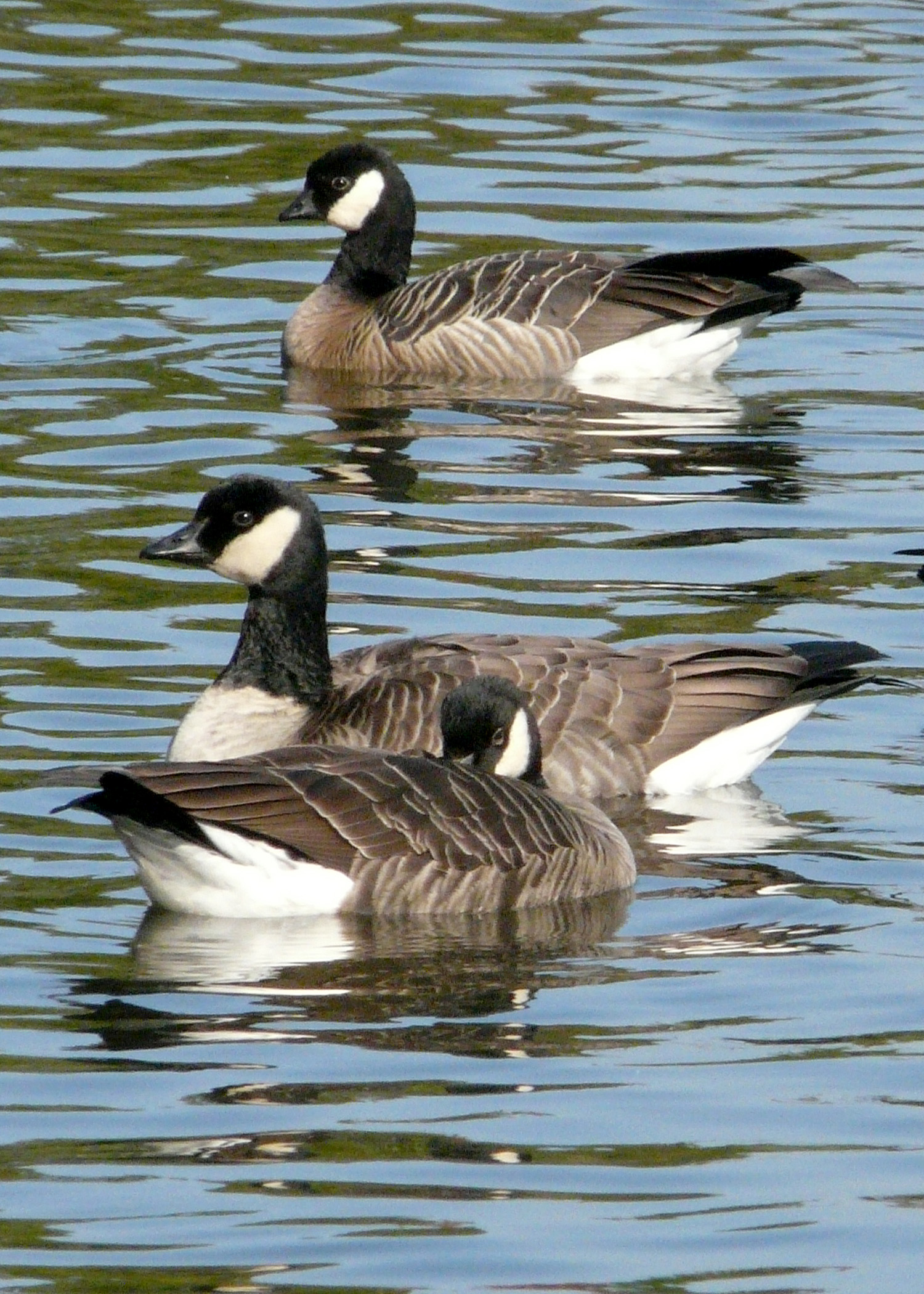
Ridgeway’s Cackling Goose (Branta hutchinsii minima) is the most common of the “white-cheeked” geese in the Willamette Valley in winter.


The Cackling Geese graze in the lawns at Westmoreland, but are more cautious than some of the other waterfowl.


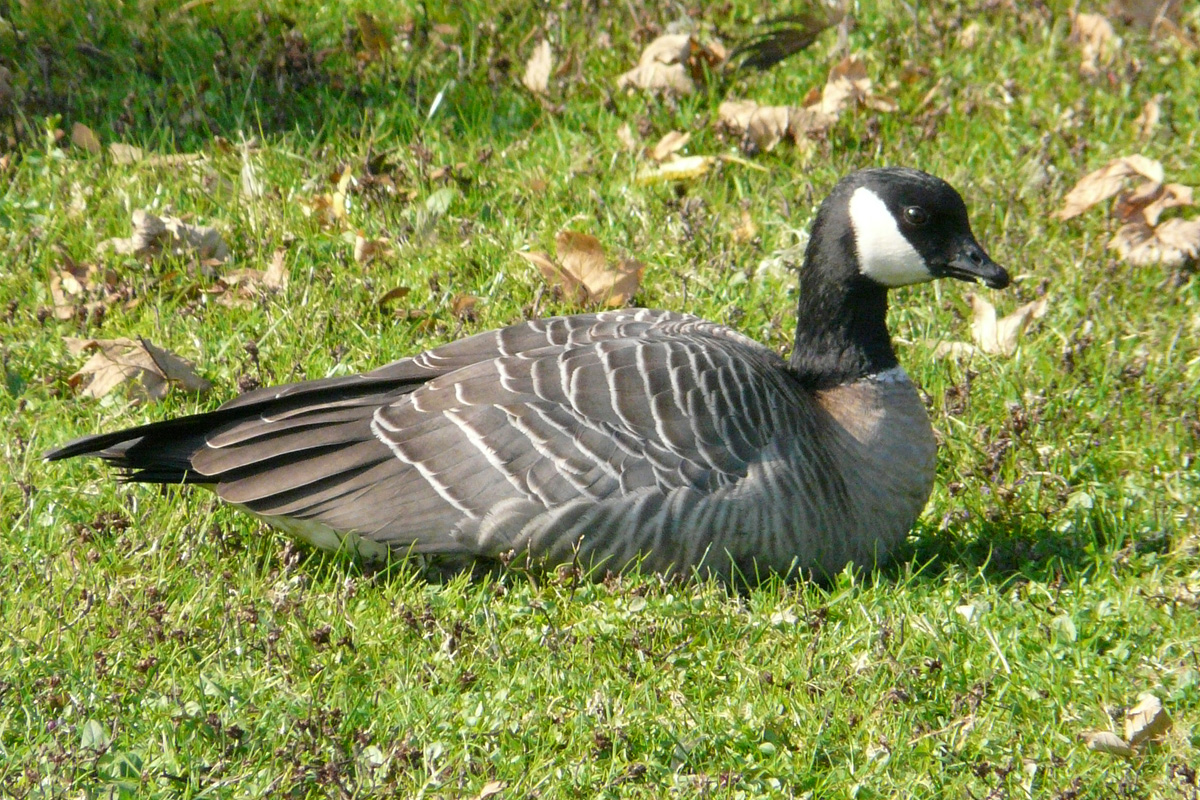
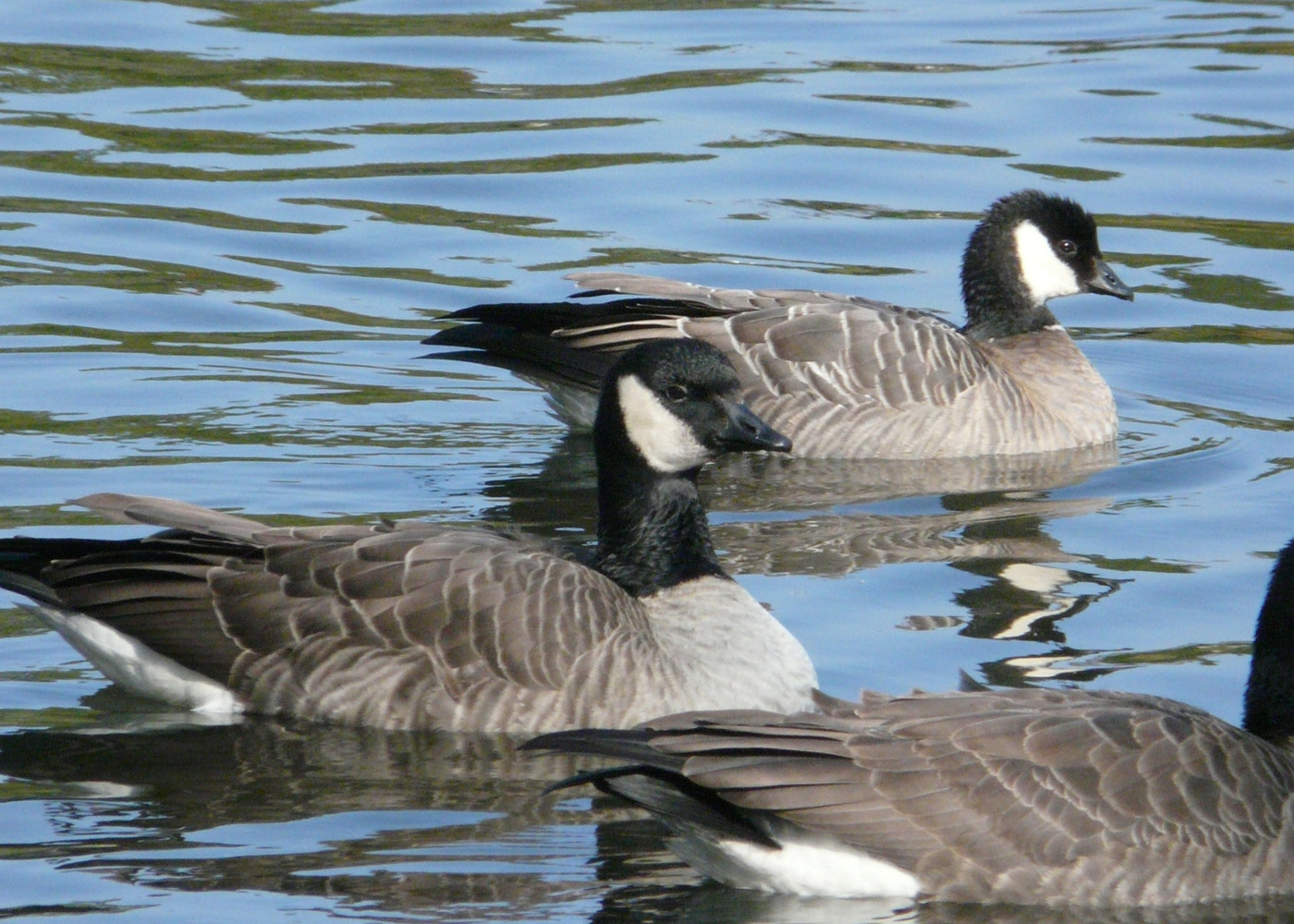
Taverner’s Cackling Goose (B. h. taverneri) in the foreground, with a Ridgeway’s Cackling Goose in the background


Taverner’s Cackling, with another Ridgeway’s Cackling in the background


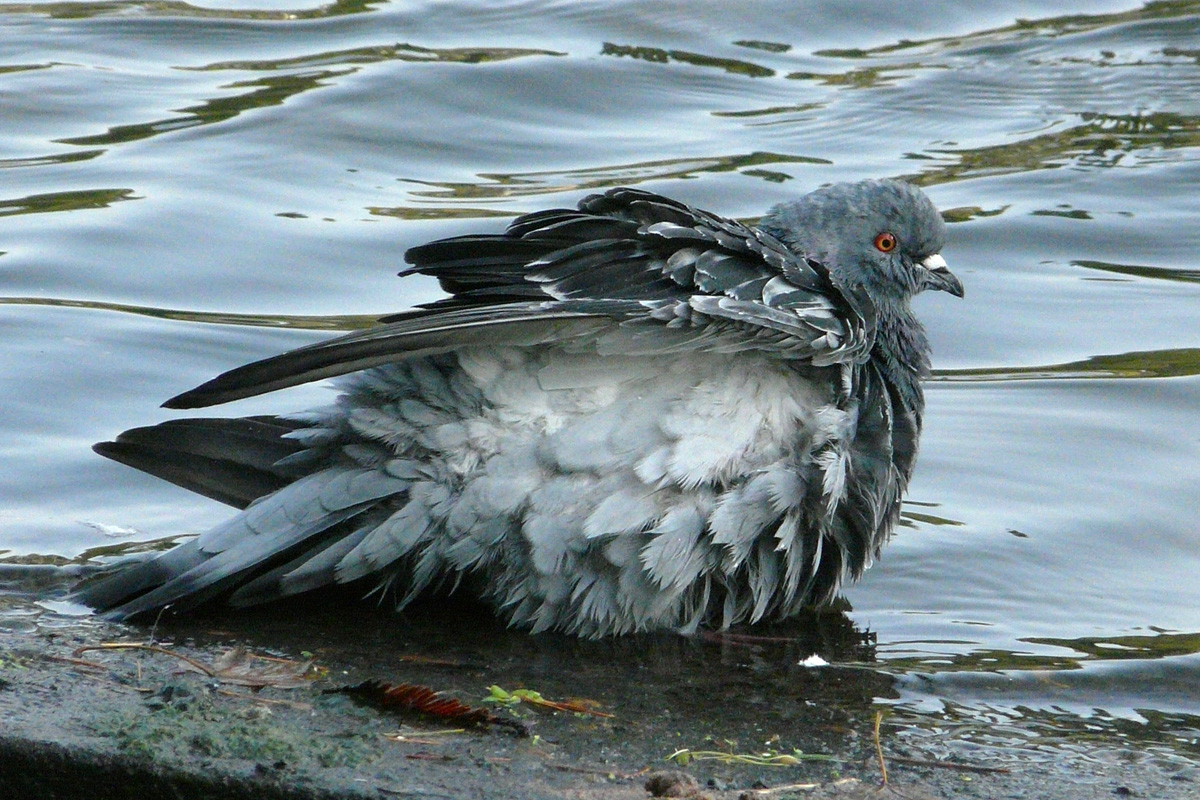
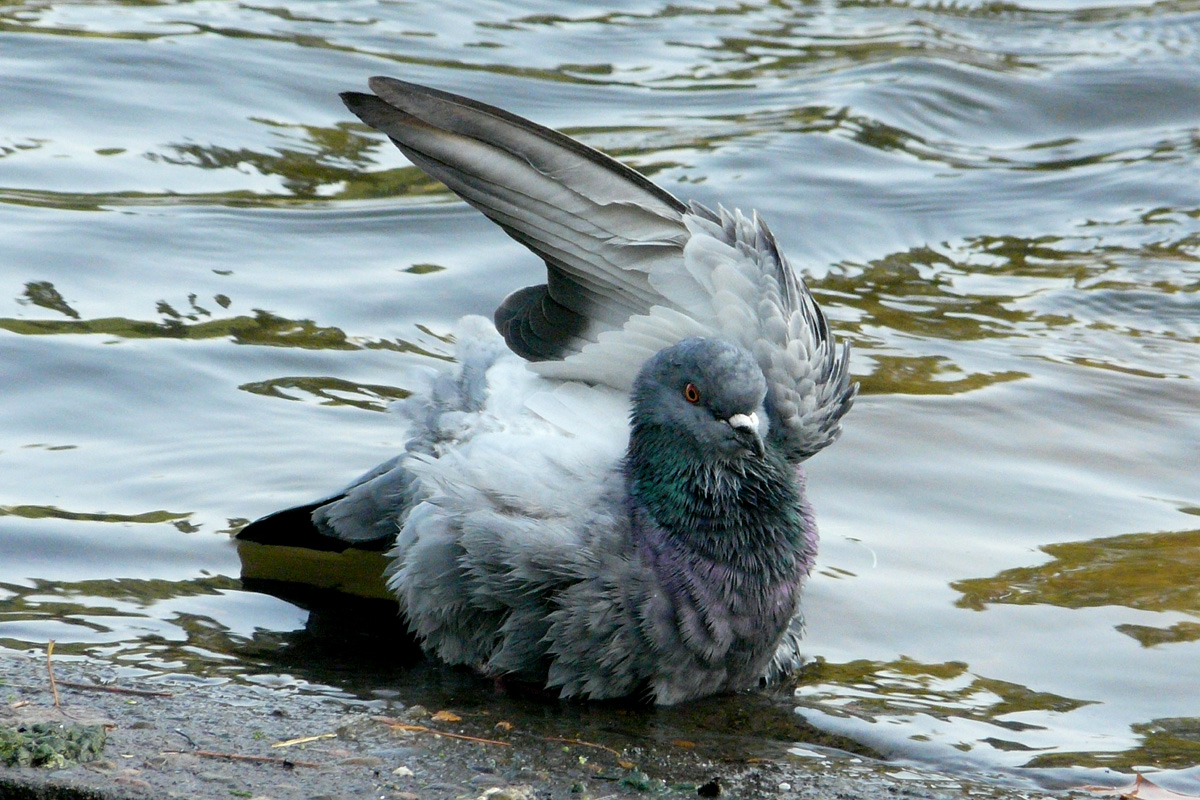
This Rock Pigeon was enjoying a bath at the pond’s edge.

Black-tailed Gull

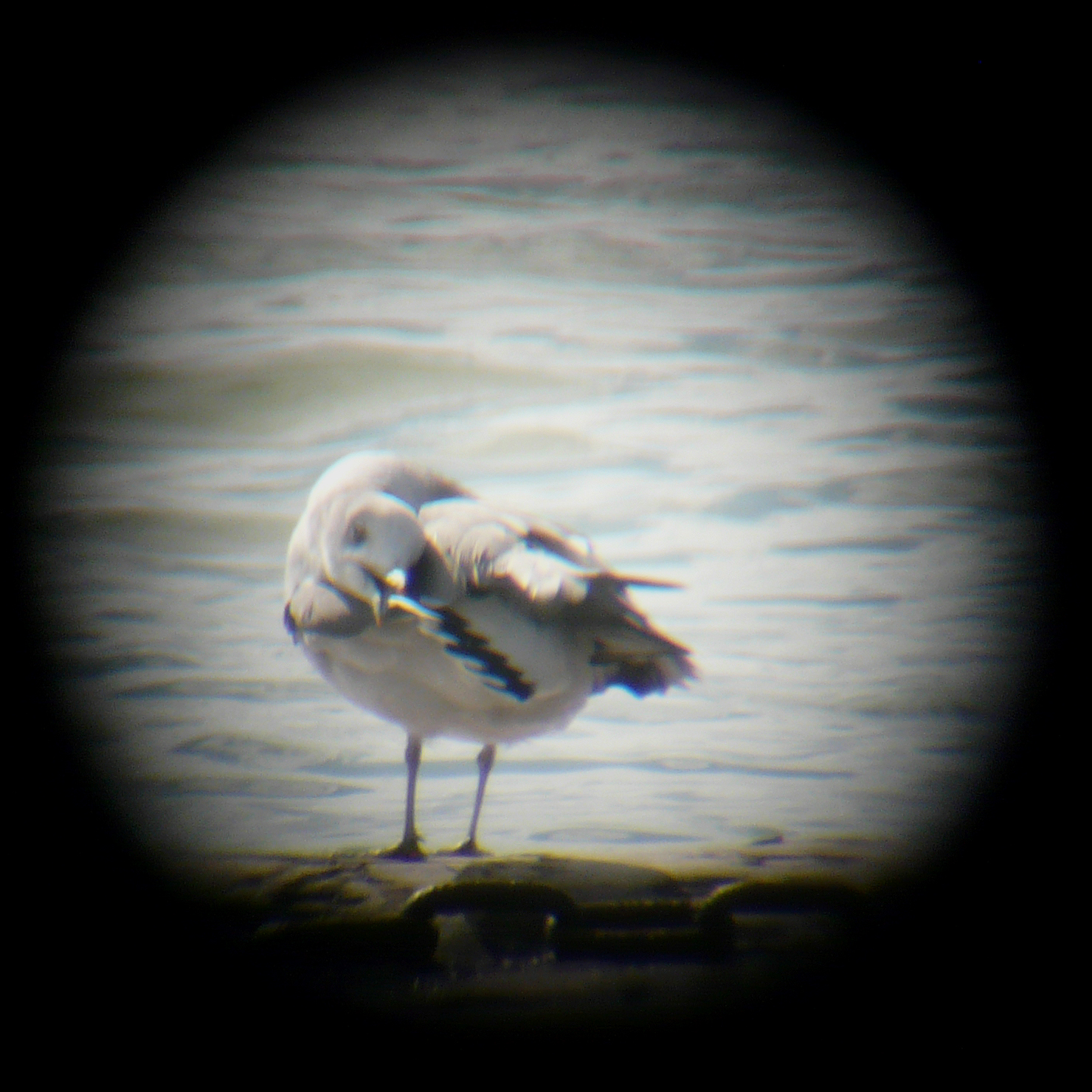
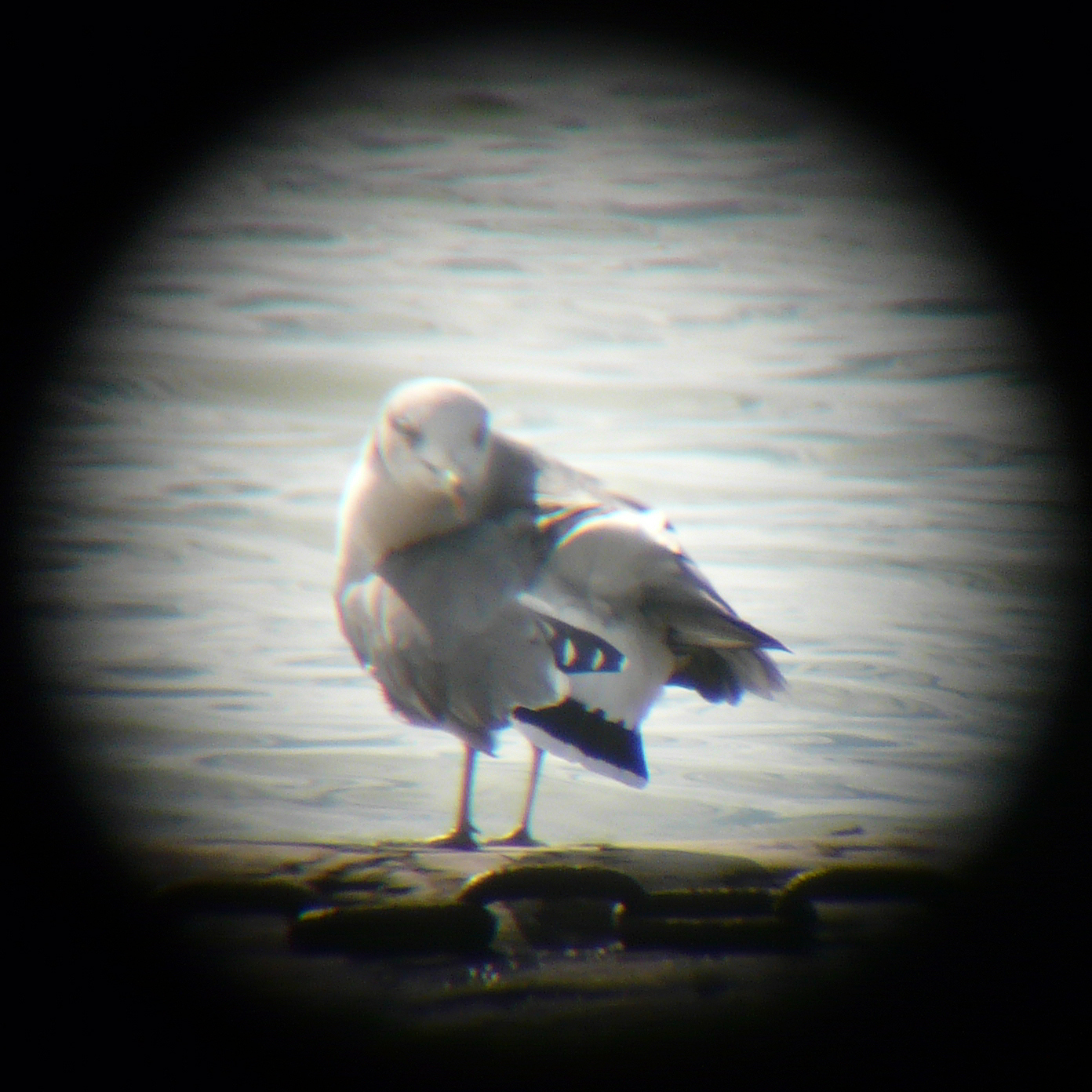
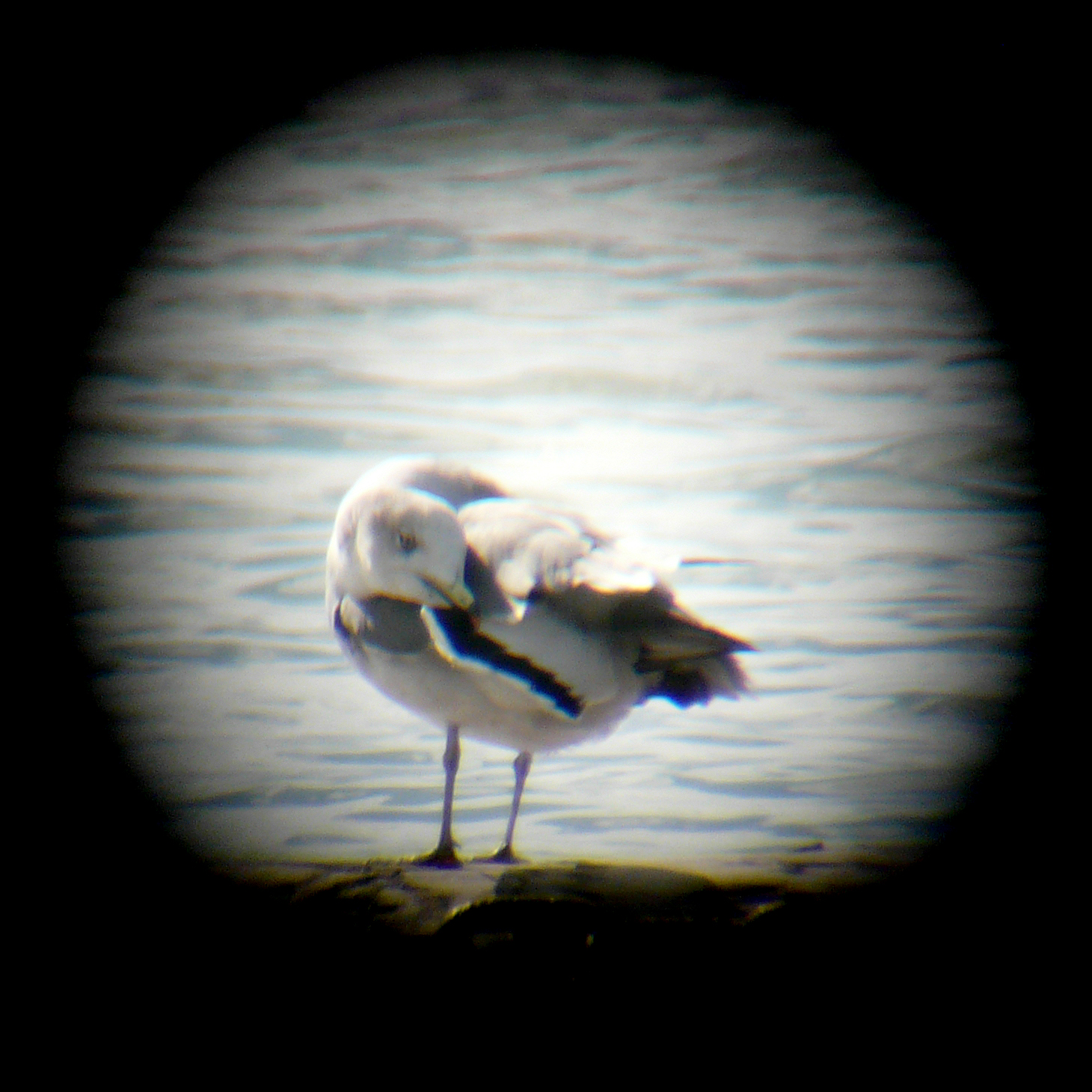
A Black-tailed Gull (Larus crassirostris) has been hanging out on a log boom in Tacoma, WA, for the past couple of weeks. Tacoma is normally far outside my “chase radius” for a single bird, but Marsha was working a conference in Seattle last Saturday, so it was only a half-hour drive from there to the bird. Since this is probably the only chance I will have to see this Asian species, I was happy to spend the four and a half hours standing on the shoreline waiting for this bird to appear.


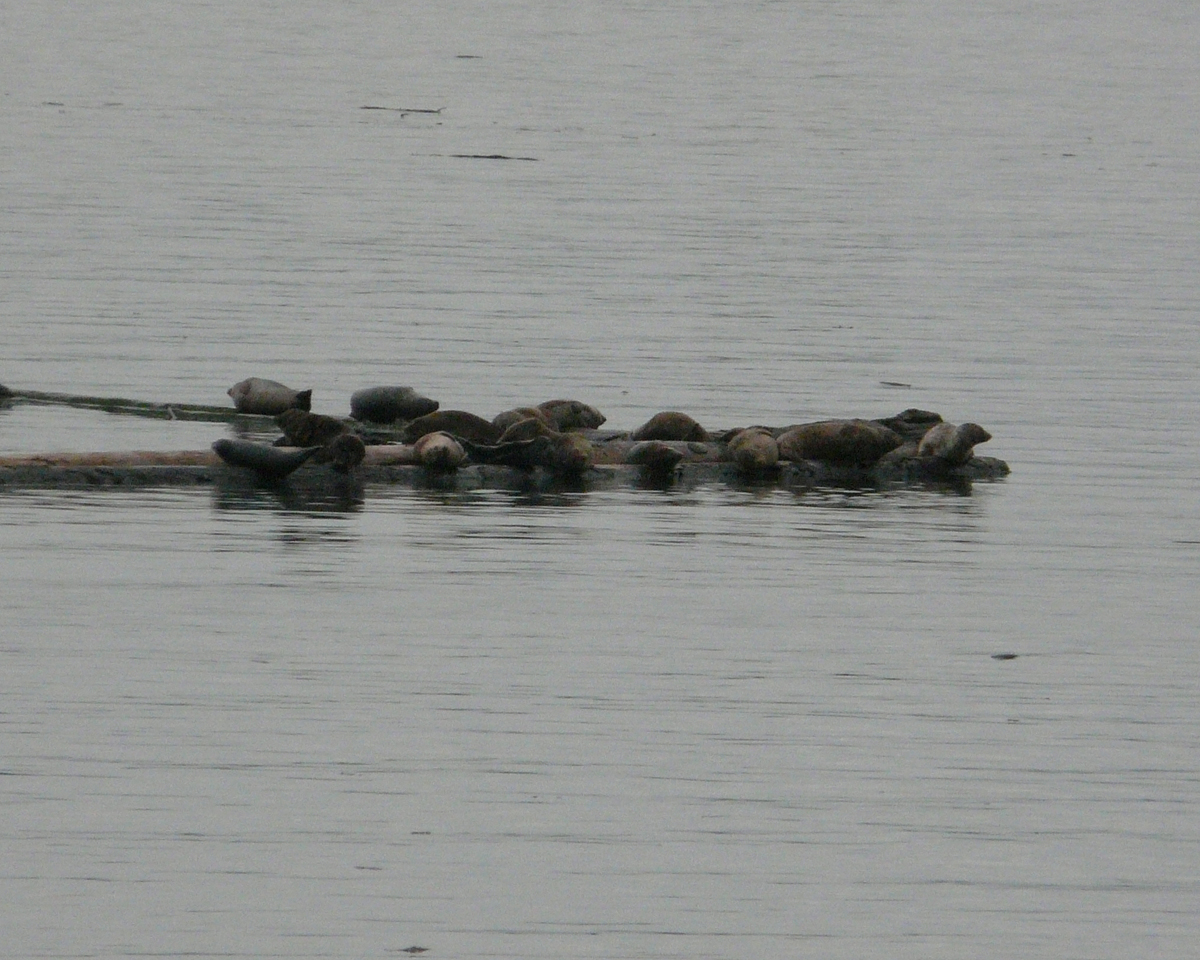
While waiting for the gull, I enjoyed watching the many Harbor Seals in the area. Most were just resting on the logs, while others swam around munching on salmon.


I really want to give this seal a belly rub.


The Black-tailed Gull finally arrived around 2:30 and provided extended views of the field marks that make this species so distinctive. This photo and the ones that follow were taken through my scope. While the camera and scope are obviously not compatible for digiscoping, these photos show that you can obtain documentation of rarities without a lot of special equipment. The key field marks for this species include: yellow drooping bill with bright red tip and black subterminal band, solid black tail with white terminal band, pale irises, white crescents above and below the eyes, and dusky markings on the nape that wrap around the head (winter).


Fernhill Dog Days

In preparation for my shorebirds class for Portland Audubon, I have made several trips to Fernhill Wetlands (Birding Oregon p. 61) in recent weeks. As expected in the Willamette Valley in late summer, species diversity is fairly low, but there is always something to see.


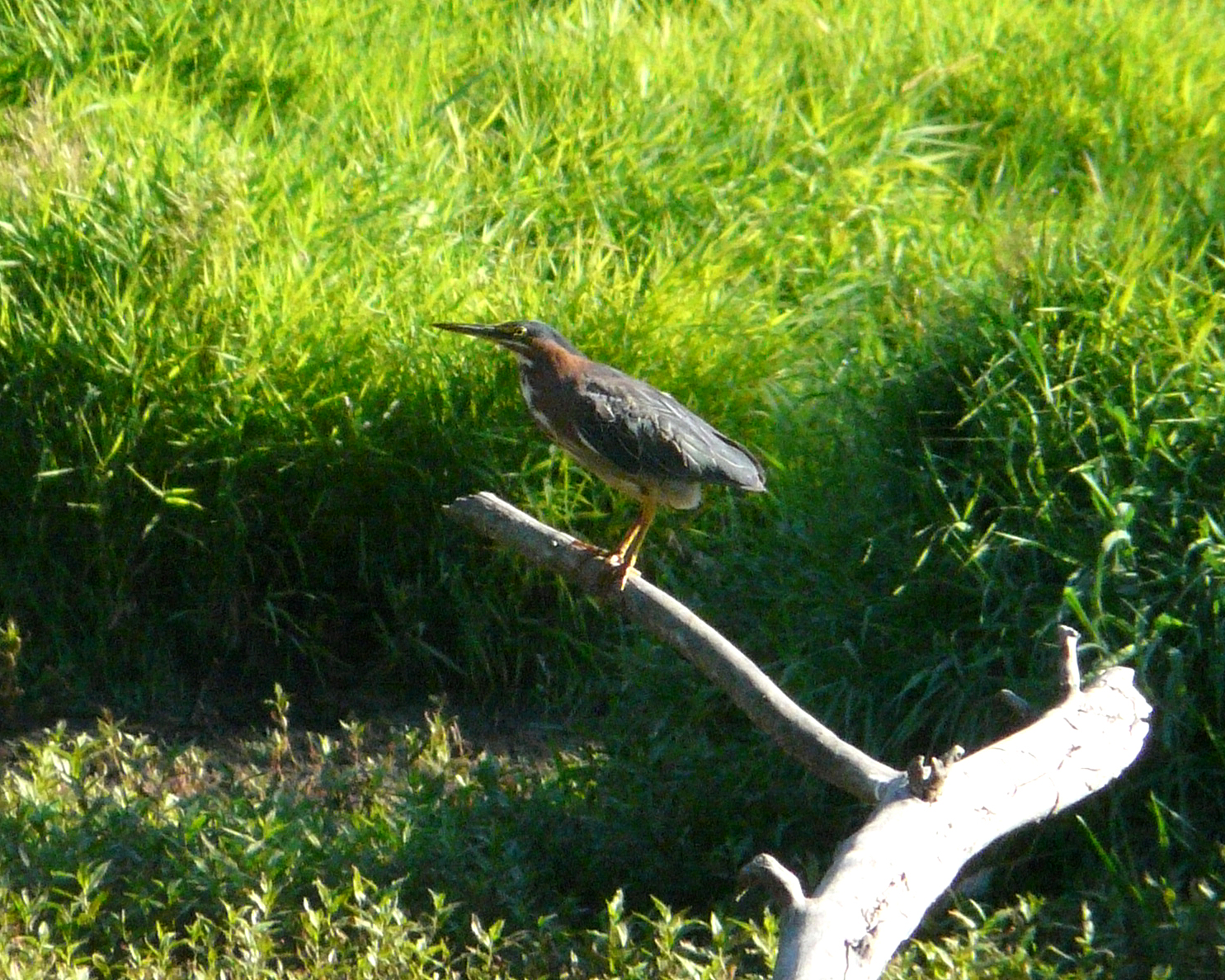
Green Herons are common at this site, flushing from the shores of the main lake or hunting in Dabblers Marsh.


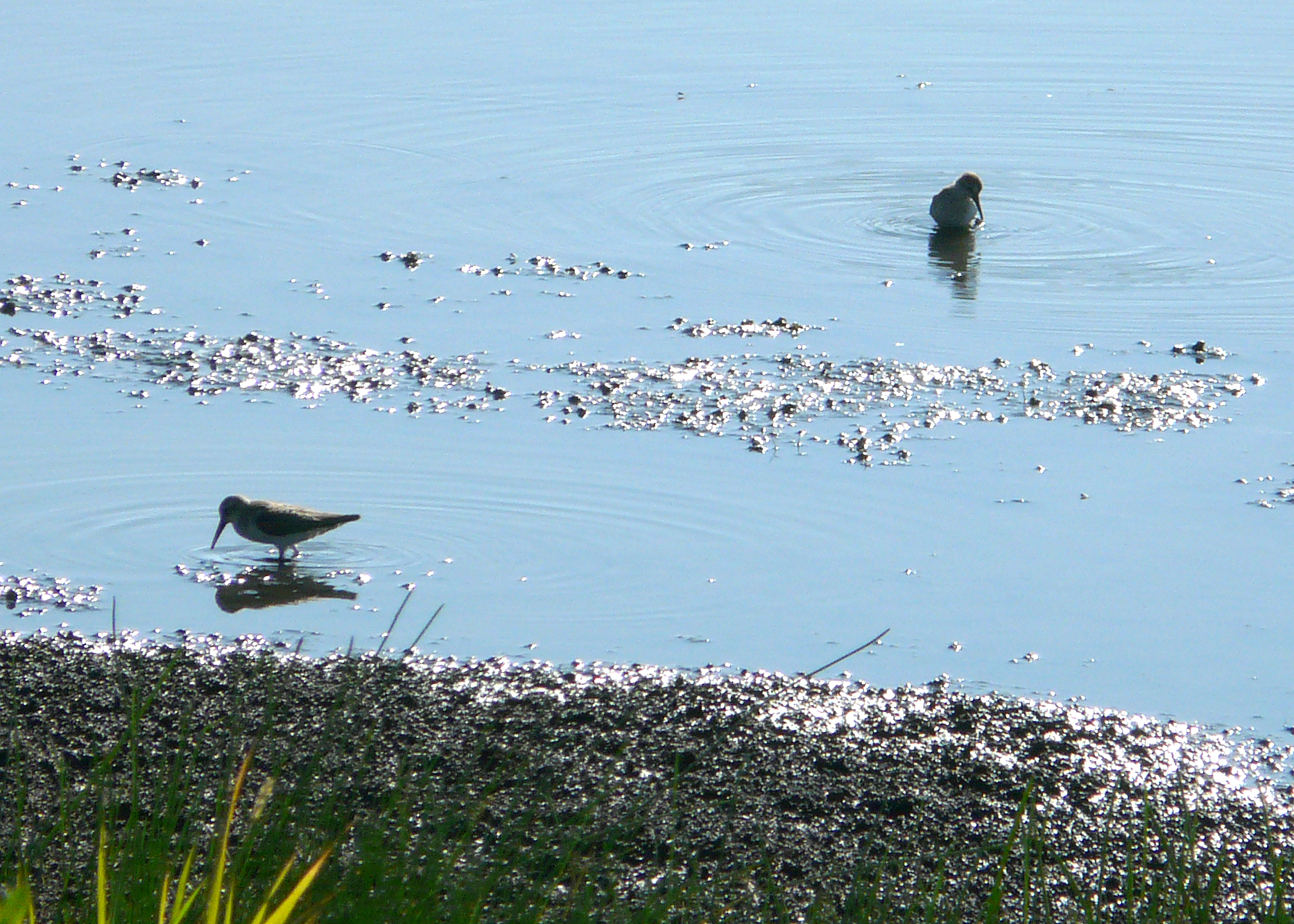
High water levels this year have left little mud for the shorebirds. This Killdeer has found some higher ground.


Greater Yellowlegs


The shorebird class found at least six Stilt Sandpipers on their field trip. This species is a rare migrant in Oregon. I had only seen one individual in Oregon prior to this trip, also at Fernhill.

Two Stilt Sandpipers


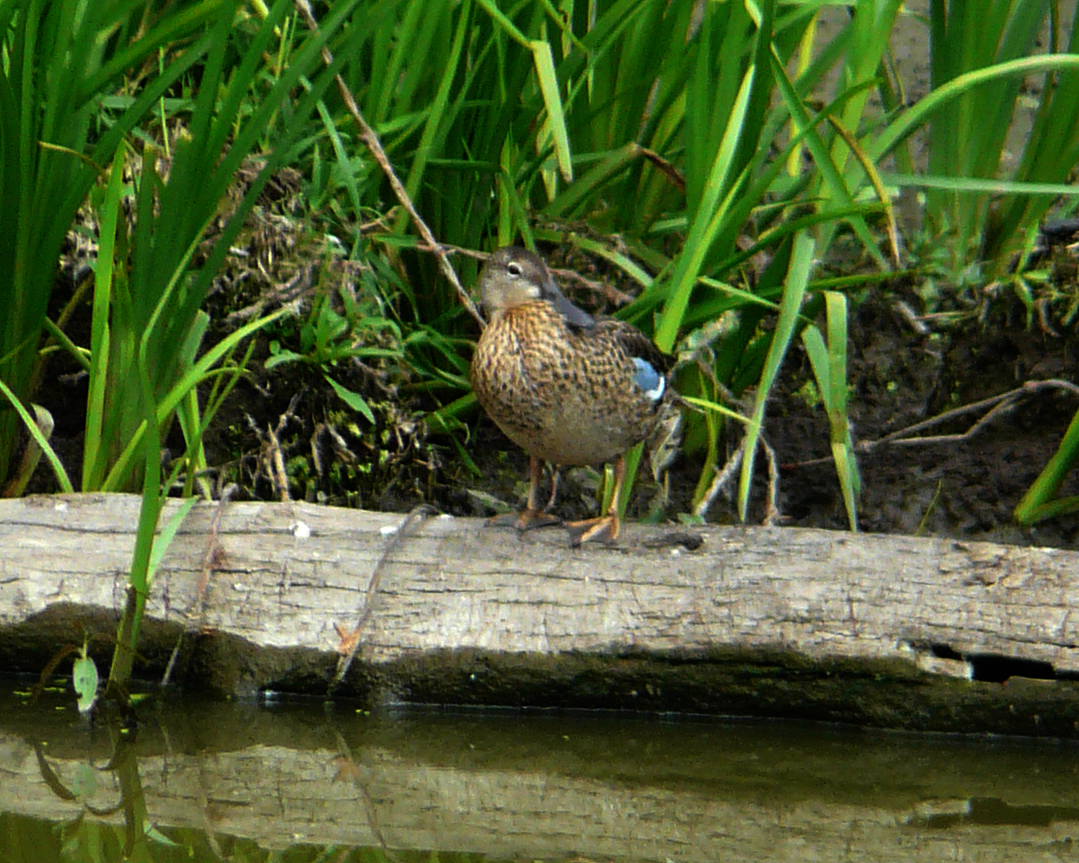
Late summer is the ugly duck season, with most birds in their summer alternate, or “eclipse” plumage. I think I know what this little duck is, but I would be interested in your opinions. Leave a comment.


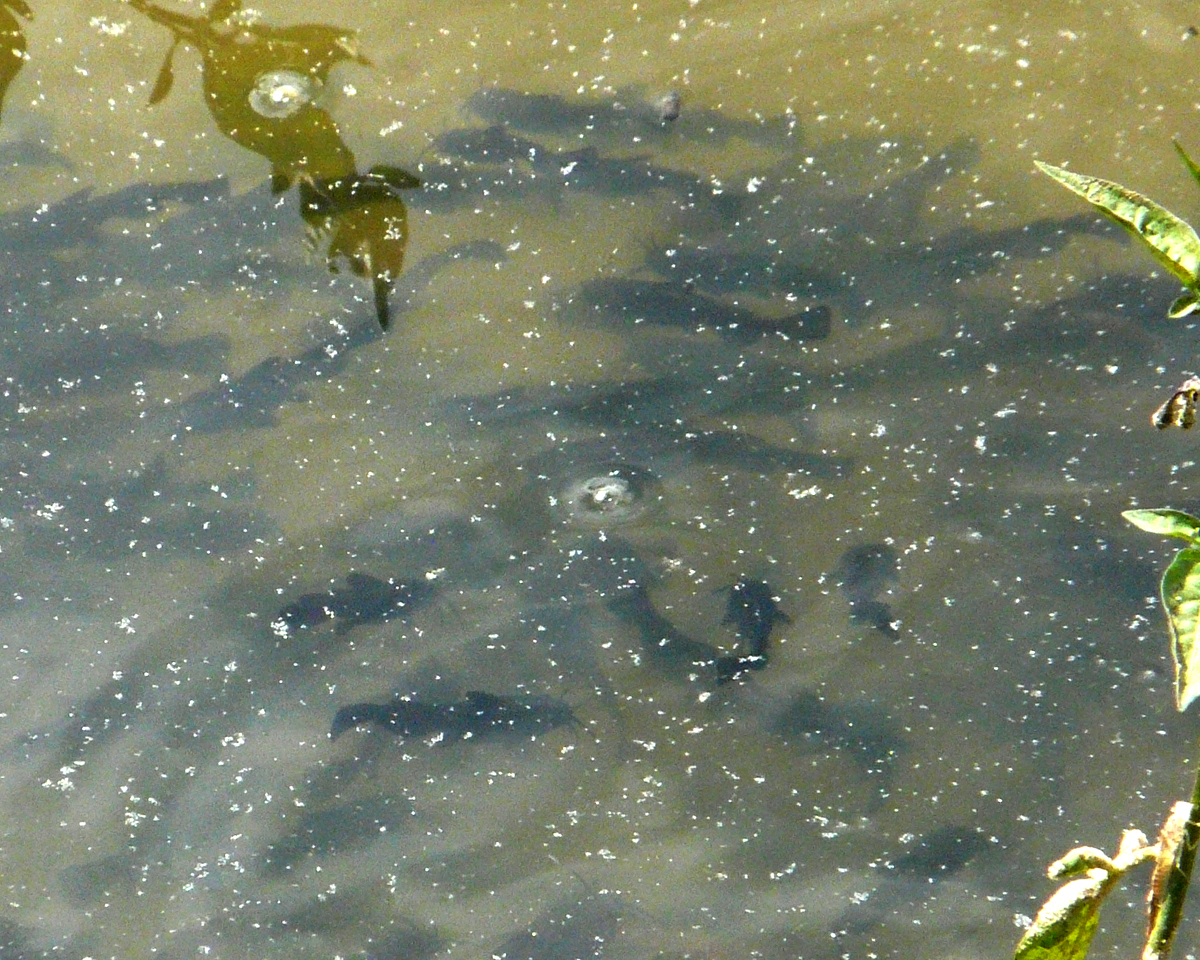
This is a school of young bullheads, I assume Black Bullheads. The young school together while the adult male stays close by to protect them. There were many broods of these little fish in Cattail Marsh.


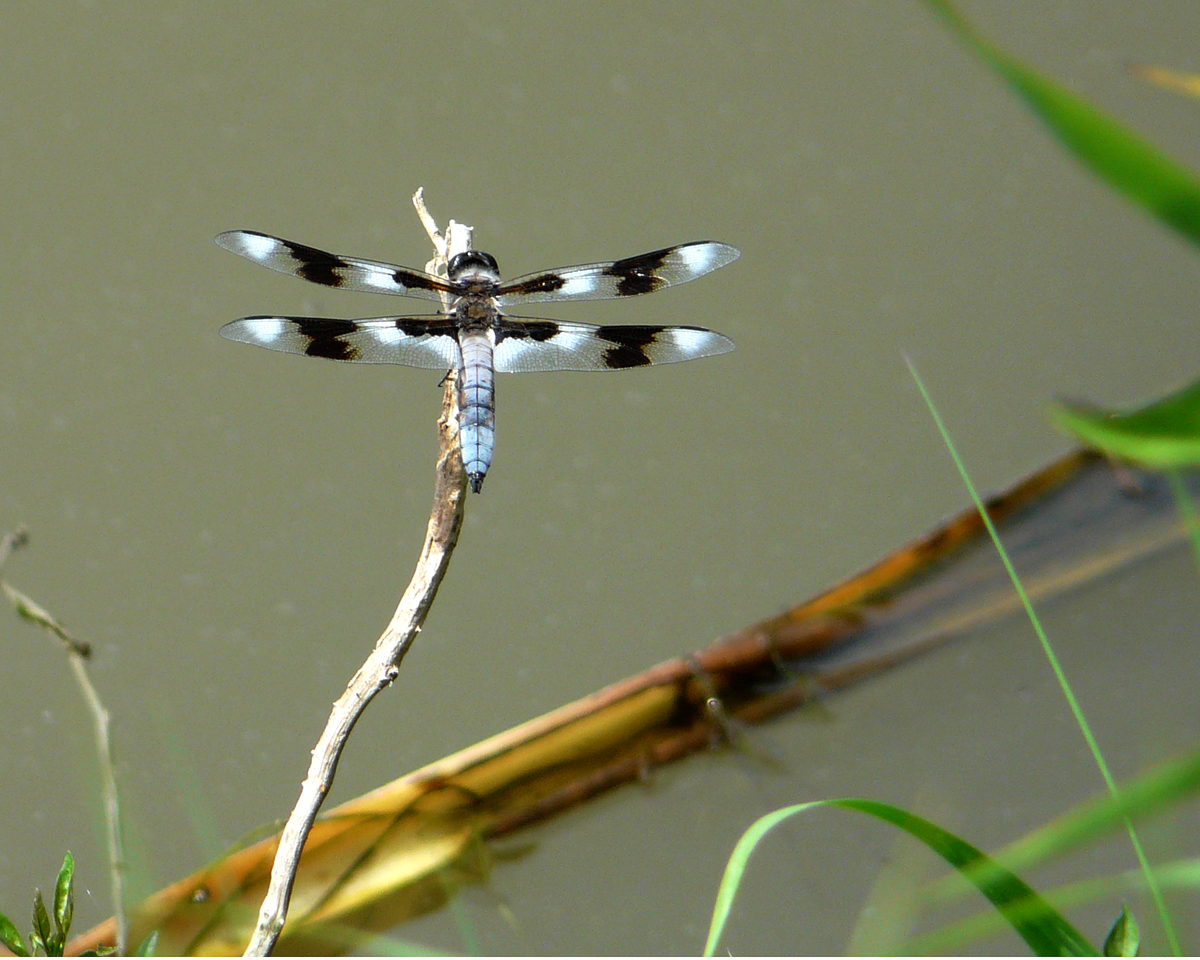
I haven’t learned to ID the local dragonflies, so if you know who this is, leave a comment.

Seaside, OR 8-4-11

I spent the day birding sites around Seaside, OR (Birding Oregon p. 121).


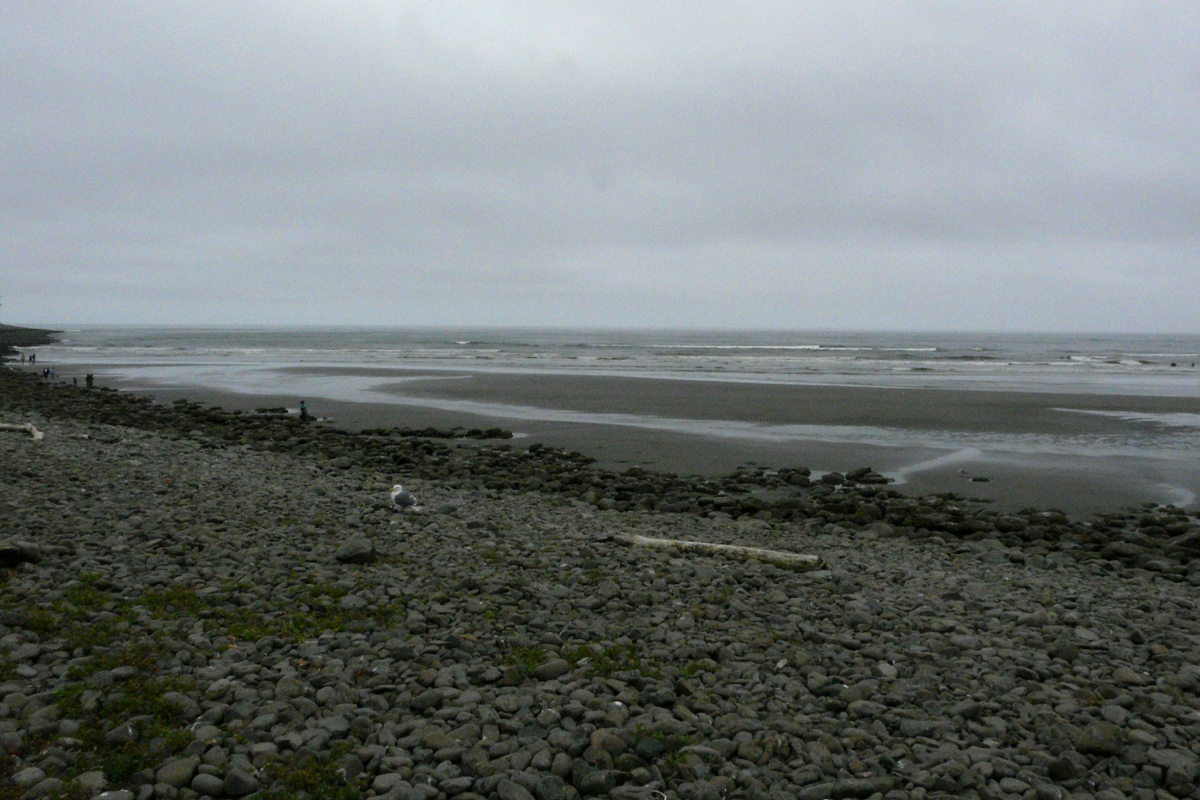
The tide was the lowest I have seen at The Cove, revealing its sandy bottom.


The low tide allowed lots of beach-combers to wander along the rocky edges, so the only shorebirds present was a small flock of Black Turnstones.


This is a Western Gull in very worn plumage. Note the black-tipped primary just starting to grow in. The lumpy neck on this bird was caused by the large sea star he had just swallowed.


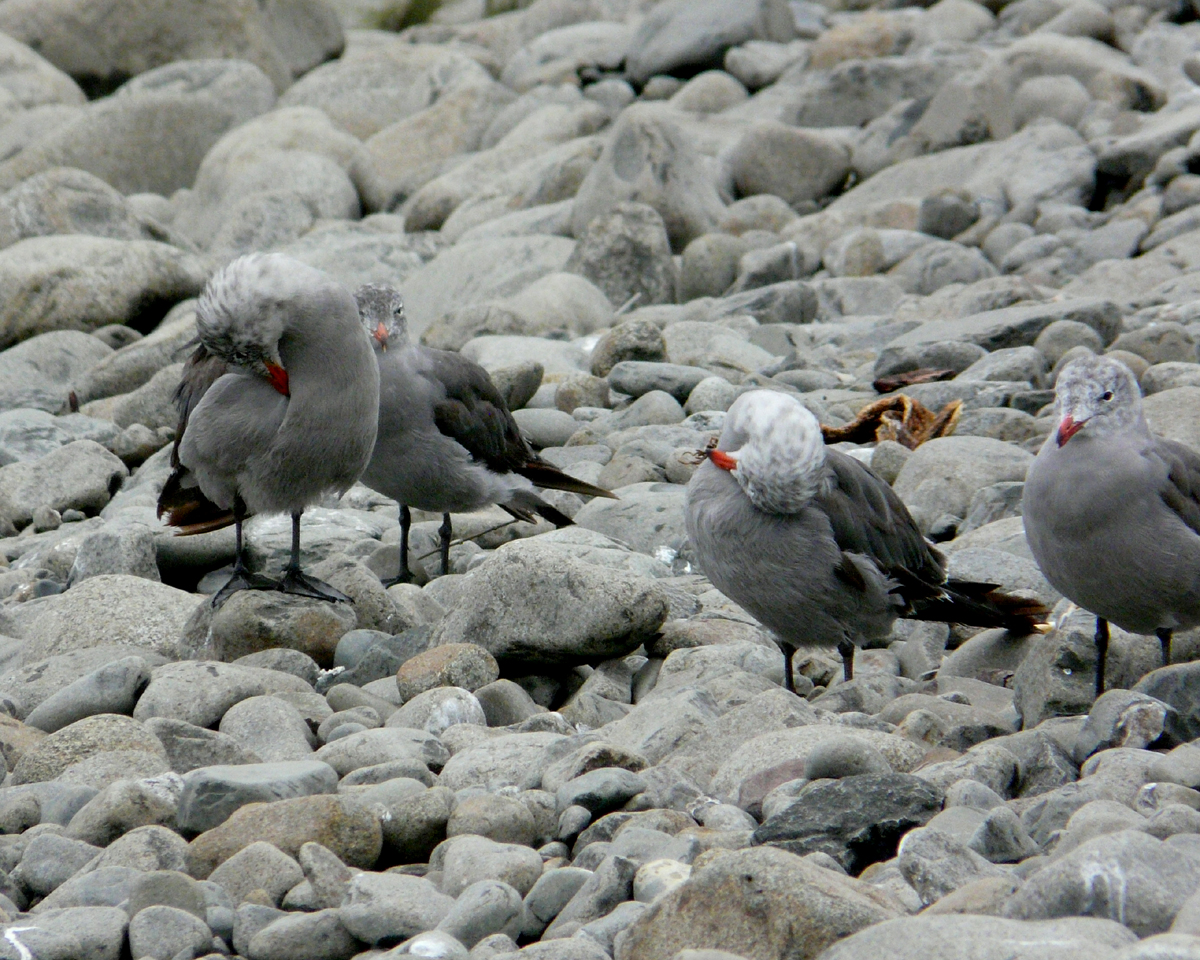
Heerman’s Gulls are normally one of the most beautiful gull species, but this individual was also extremely worn.


These birds were in better shape.


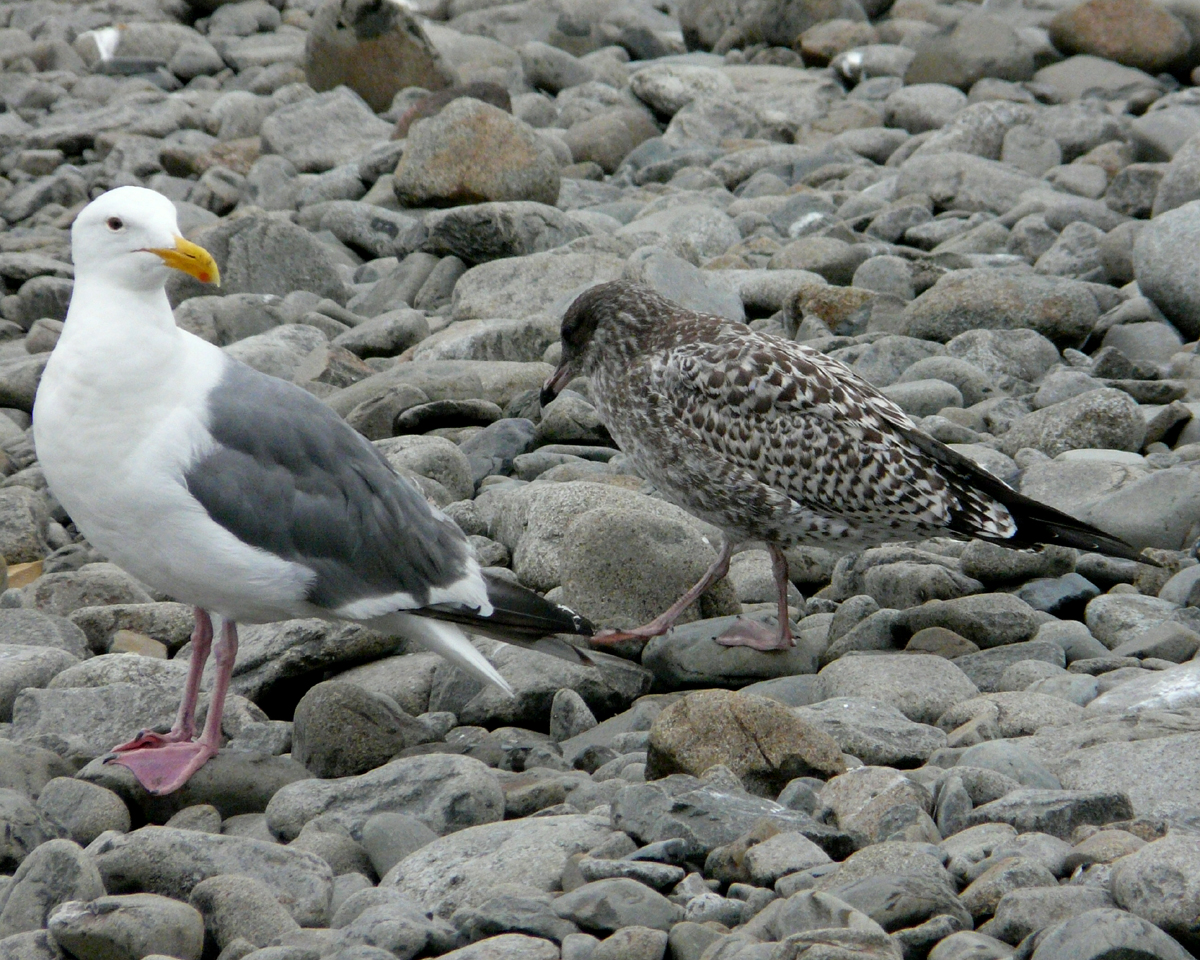
California Gulls are starting to gather along the Oregon coast. This juvenile was keeping company with an adult Western Gull.


At the north end of town is the Necanicum Estuary, also at very low tide. The exposed mud and aquatic vegetation attracted nice numbers of shorebirds.


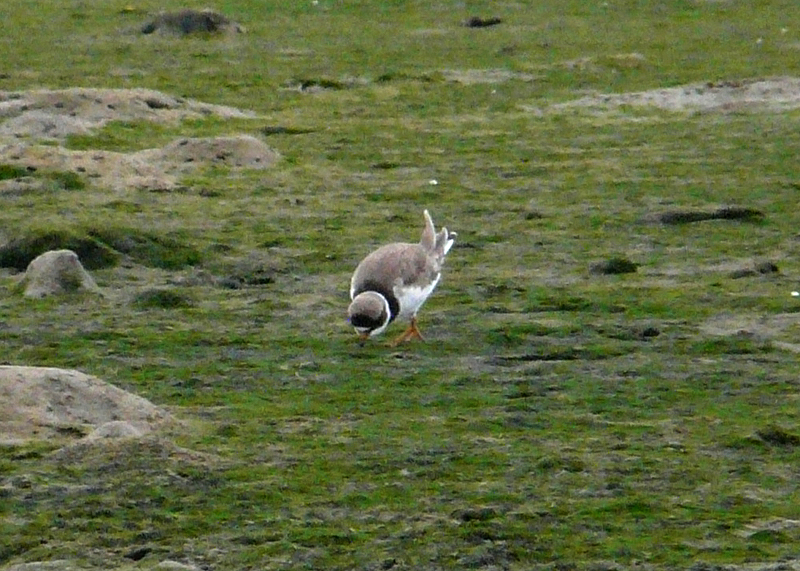
Semipalmated Plover


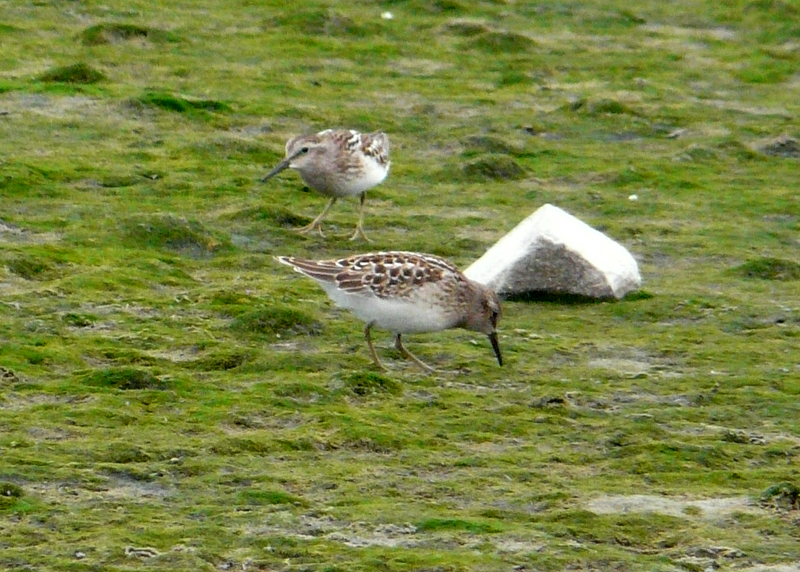
Least Sandpipers


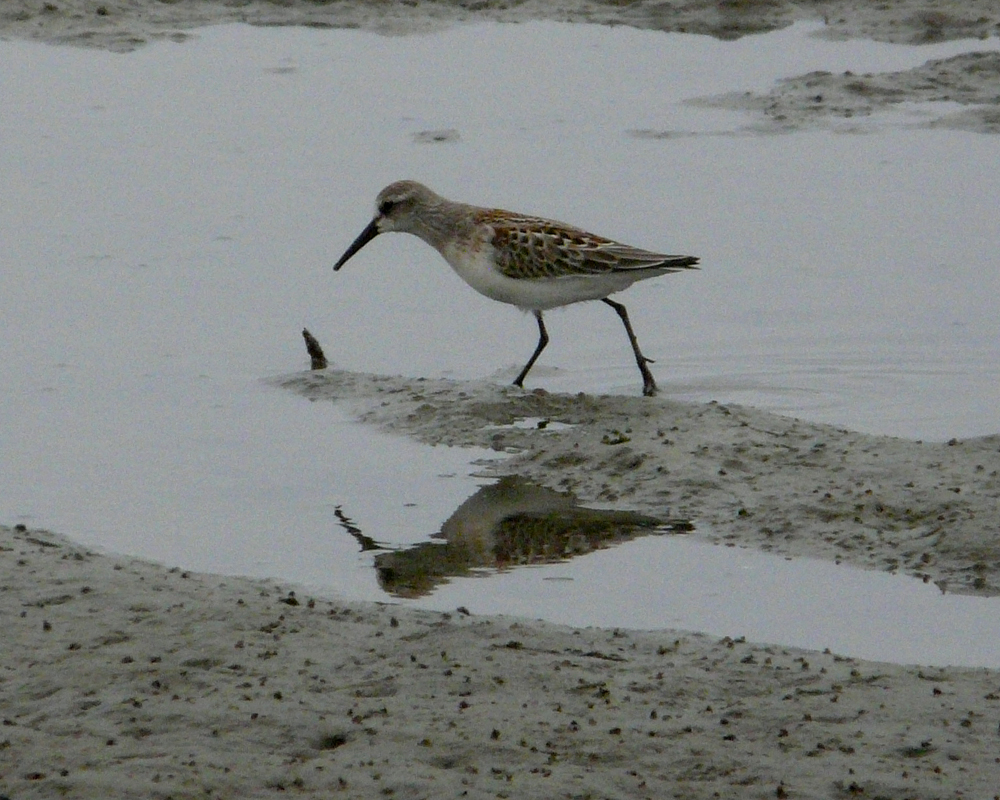
Western Sandpiper


The rarest bird of the day was this Semipalmated Sandpiper.


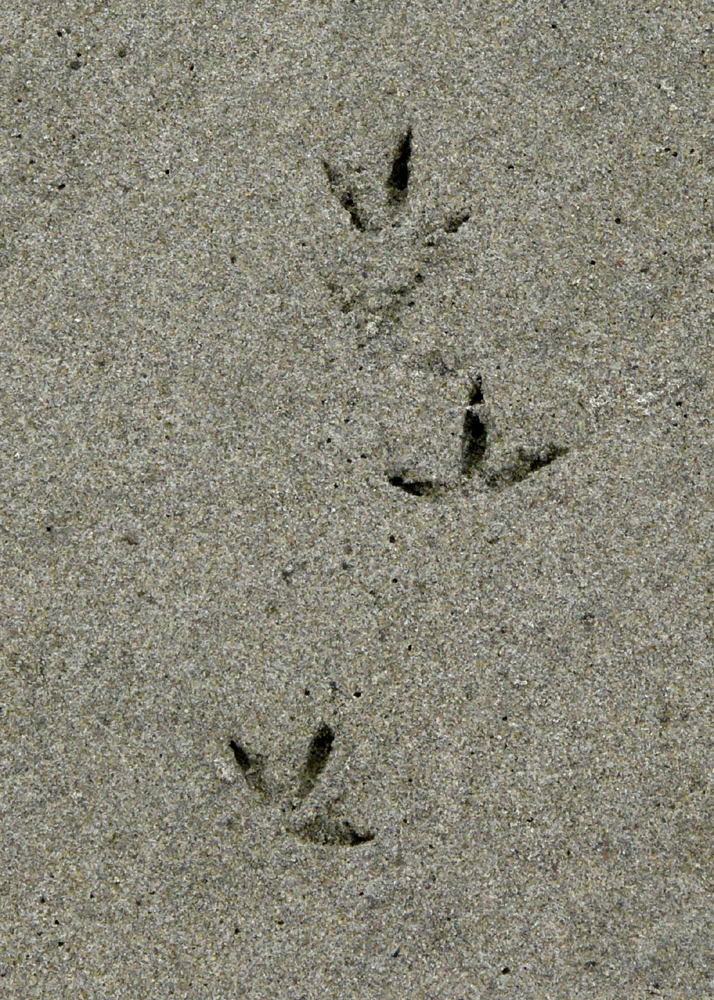
Notice on these shorebird tracks that the toes are partially webbed, or semipalmated. So these tracks were made by either a Western Sandpiper, Semipalmated Plover, or Semipalmated Sandpiper.


These tracks don’t show any sign of webbing, so they were probably made by a Least Sandpiper.


The estuary is a favorite hang-out for Caspian Terns, here joined by California Gulls.


Fields Oasis

The oasis at Fields (Birding Oregon p. 19) is a tiny site, but one of the better known hotspots in Oregon. This little clump of willows around a spring is surrounded by miles of sage steppe, so it is very attractive to species normally found in woodland habitats.


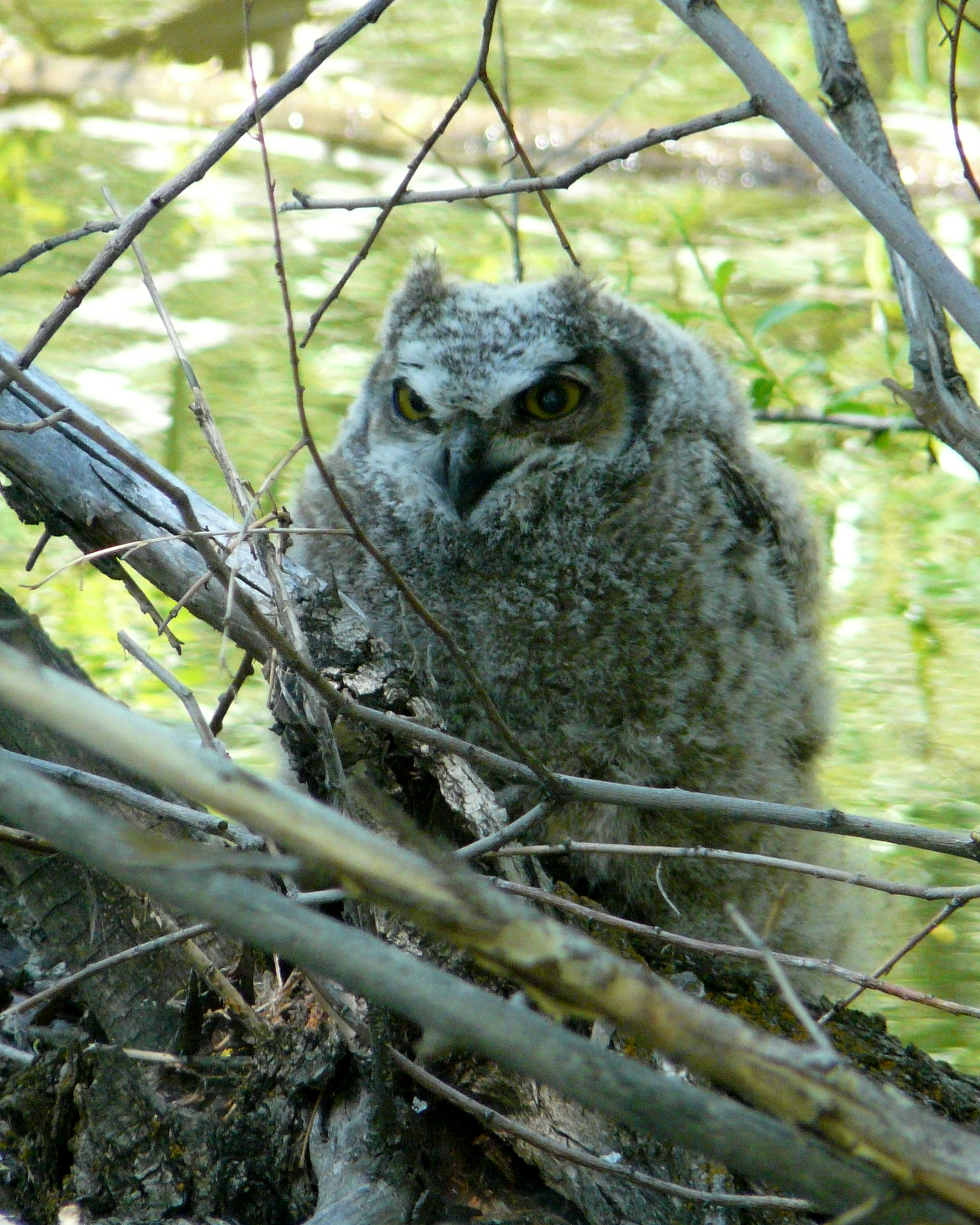
A pair of Great Horned Owls can usually be seen here.


This adult was sitting on a fallen tree right over the water.


They were keeping track of this little guy.


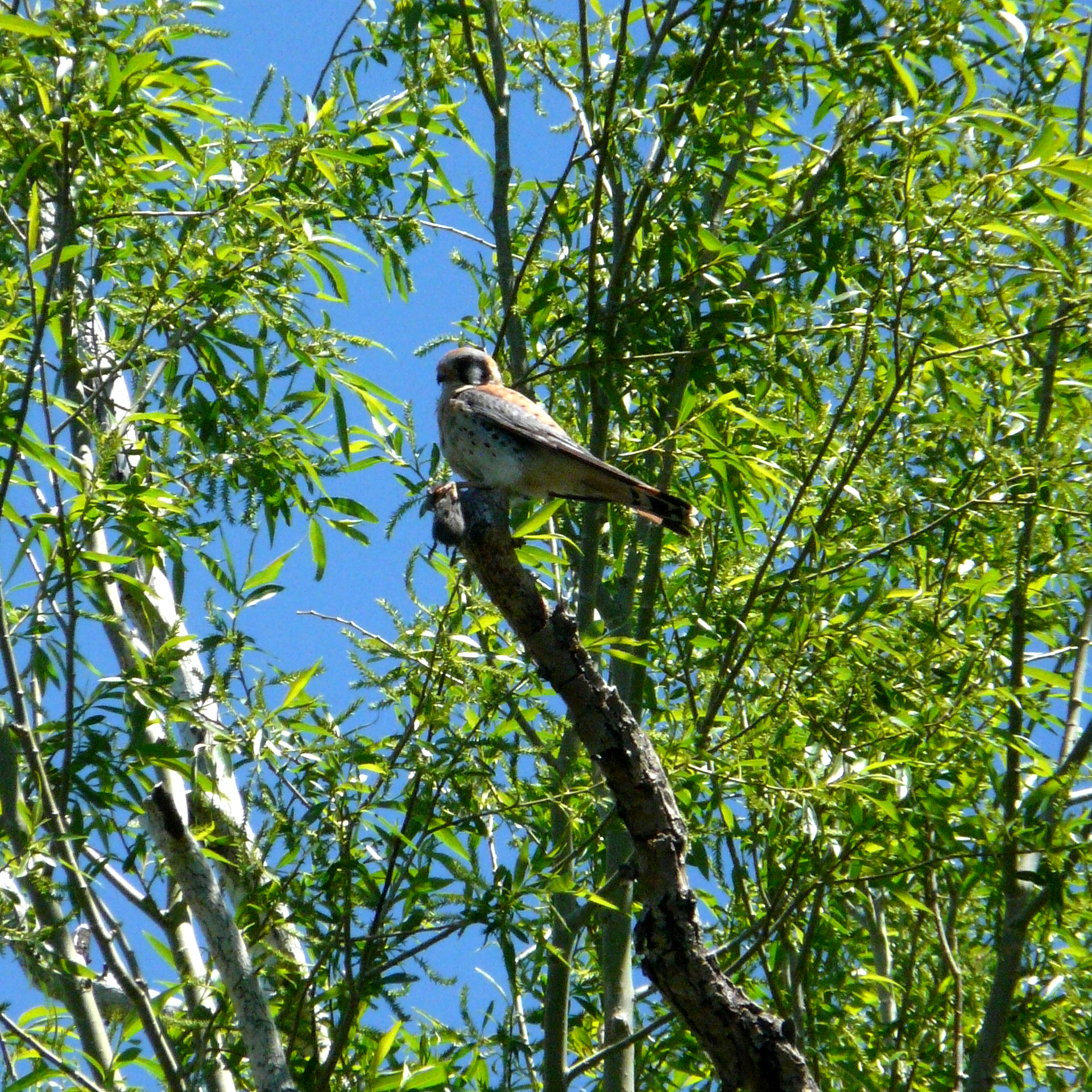
A pair of American Kestrels were also nesting at the oasis. Here is the male with a rodent.


The big attraction for birders is the possibility of vagrants from the east. On this day a Northern Parula was the highlight. Other eastern warblers had been found the week before, and still others appeared later. One never knows what will show up on a given day.

Barnacle Goose


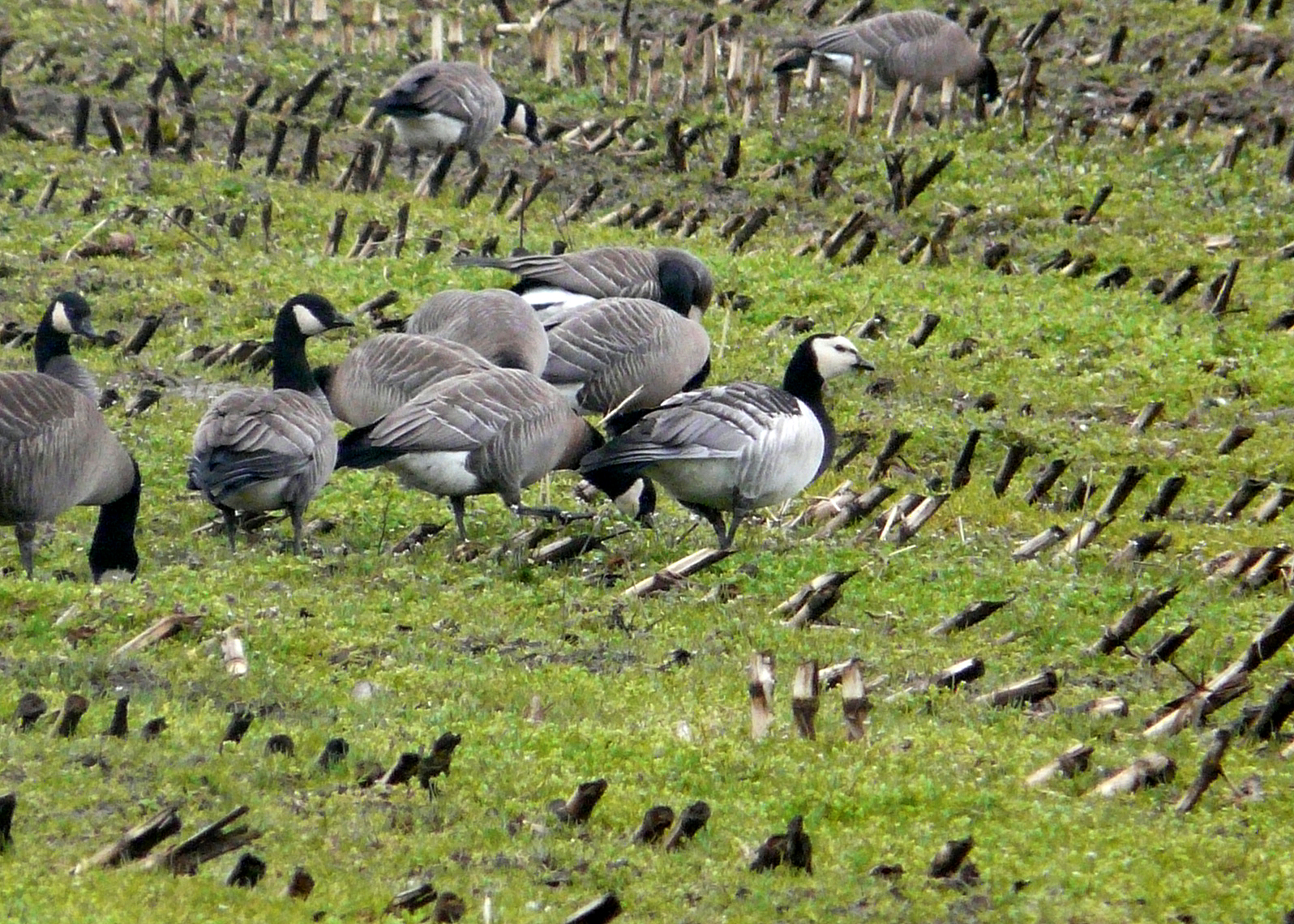
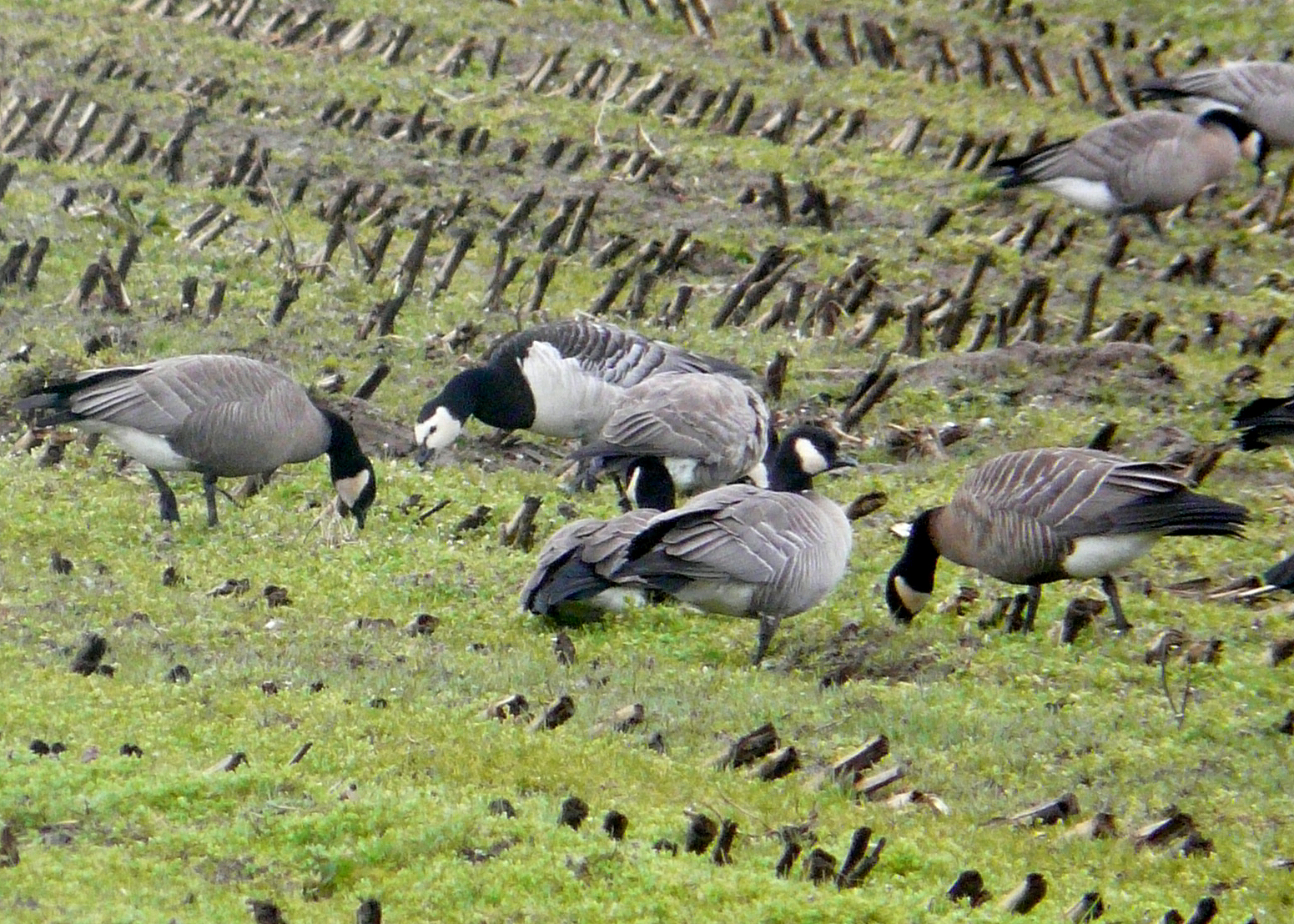
A Barnacle Goose was found at Ridgefield NWR in southwestern Washington this week. The bird was with a flock of Ridgeway’s Cackling Geese.


When an unexpected species of waterfowl appears, the discussion instantly turns to whether this is a “countable” bird (a bird that takes a wrong turn on its own to show up on  the wrong continent) or a bird that has escaped from captivity. Many species of waterfowl are kept in “collections,” and sometimes these birds escape their captors and join up with the locals. Many birders assume that a Barnacle Goose on the west coast of North America must be an escapee, or the direct descendant of an escapee. But the same could be said for every Eurasian Collared-Dove, European Starling, and House Sparrow currently in North America.

It is certainly plausible that a Barnacle Goose hatched in western Greenland, headed west instead of east, joined with a flock of Cackling Geese in the Arctic, and made his way to Washington. Populations of Barnacle Geese are increasing, and the species is showing up in eastern North America with greater frequency. At some point it seems inevitable that this species will occur in the western U.S. Unfortunately, the only way to prove where the bird came from would be if the bird had been banded on the nesting grounds. This particular bird wears no band, nor does he show any signs of captivity (clipped hind toes or unusual feather wear).


Given that this bird is associating with a flock of Ridgeway’s Cackling Geese (another long-distance migrant from the Arctic), and shows no sign of former captivity, I am inclined to consider him a naturally occurring vagrant. Of course, the goose doesn’t care what we call him. Whatever his origins, I am grateful for the opportunity to see a free-flying Barnacle Goose  without my having to visit Greenland or Scotland to do so.

Yellow-bellied Sapsucker


This Yellow-bellied Sapsucker has been seen in southeast Portland for the past week. It is a young male, molting into his first adult plumage. The timing of this bird’s molt is key to distinguishing him from the very similar Red-naped Sapsucker. Young Red-napes achieve an adult-like head pattern by early October, while young Yellow-bellies gradually attain this pattern over the winter.

Yellow-bellied Sapsuckers normally winter across the the southeastern U.S. and into Central America. They breed across Canada and the northeastern U.S. Red-naped Sapsuckers are common breeders in eastern Oregon, only occasionally occurring west of the Cascade Crest, and winter in the southwestern U.S. and Mexico.

Tufted Ducks

Two male Tufted Ducks (Aythya fuligula) have been spending the winter on the Columbia River near the Portland airport (Birding Oregon p. 63). One of these birds appears to be a Tufted Duck X scaup hybrid.


Bearing in mind that I have no experience with young Tufted Ducks, these are the features that cause me to question this bird’s parentage:

  • The back is a dark gray, not black as expected on a male Tufted Duck.
  • The sides are dingy, not brilliant white, but this is common on young Tufted Ducks.
  • The bill is virtually identical to that of a Greater Scaup. A Tufted Duck should show more black on the bill tip.
  • The tuft, though short, is very thick and stiff, not whispy as I would expect on a molting Tufted.


Here is the same bird with some Greater Scaups. Notice that the back is darker gray, but not really black, and the sides and bills of the two species are identical.


Here is an adult male Tufted Duck. Note the gleaming white sides and black back.


Adult Tufted Duck with female Common Goldeneye and some scaup.