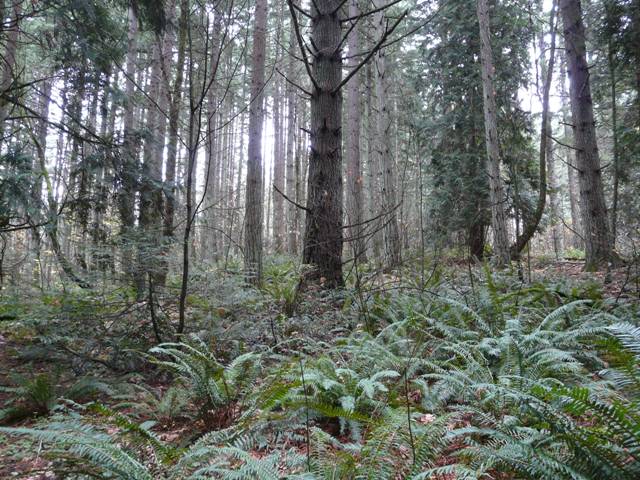
Our Portland Audubon Birdathon team visited the Spring Creek area of Wallowa-Whitman National Forest (Birding Oregon p. 47). This area is best known for Great Gray Owls, but other good birds are found here, as well. The owls nest on platforms provided by the Forest Service. This helps the birds to nest successfully, and makes it easier for birders to find this rather elusive species.
Category: OR Birding Sites
Portland’s hilltop migrant traps
In the current issue Birder’s World, I have a site guide for Mount Tabor Park in southeast Portland. Mount Tabor is a forested hill (actually an extinct volcano) surrounded by residential neighborhoods. The elevation and vegetation attract good numbers of migrant songbirds every spring. A similar effect can be seen at Pittock Mansion in northwest Portland.

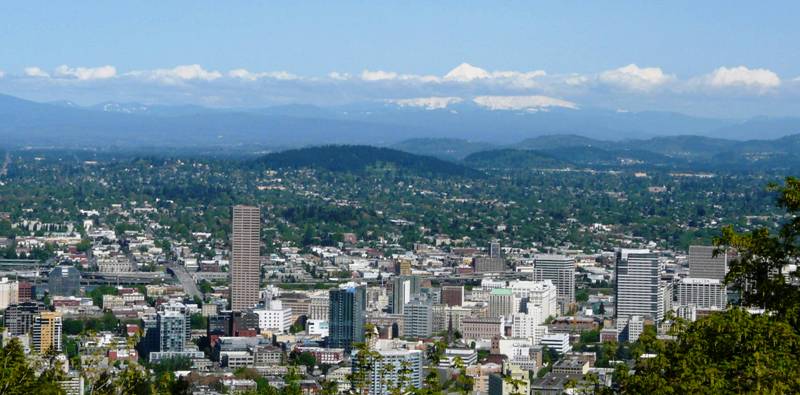
Here is the view from Pittock Mansion, with snow-covered Mount Hood in the distance. The forested hill in the center of the photo is Mt. Tabor. You can see how these islands of habitat rising above the urban sea would be attractive to migrants.
Nestucca Bay National Wildlife Refuge
Part of the Oregon Coast National Wildlife Refuge Complex, Nestucca Bay NWR is a collection of properties near Pacific City that provides pastures for wintering waterfowl and protects various upland and wetland habitats.

The only unit currently open to the public is Cannery Hill. From US 101 about six miles south of Pacific City, turn west onto Christensen Road. Follow this road up to the parking lot, where there is a restroom and visitor information.

The lower parking lot overlooks several pastures. These are home to several subspecies of geese from October to April. Ten percent of the world’s population of Dusky Canada Geese winter here. The entire population of Semidi Island Aleutian Cackling Geese graze on similar pastures on the north edge of Pacific City, property recently acquired by the refuge.
From the parking lot, walk up the gravel road through mixed woodland and brushy habitats. At the top of the hill is another small parking lot (for those who can’t walk up), and a paved trail to an observation deck.

From the top of the hill, you can see Haystack Rock, with Pacific City on the right, and views of the river and beach below. Check the grassland habitat on the hill for Western Meadowlark, Western Bluebird, and other open-country species.
Gull Gallery
Portland’s Westmoreland Park is a great place to find a variety of gull species during winter. Seven species and one hybrid are regular, and there is always the possibility of something more unusual showing up.
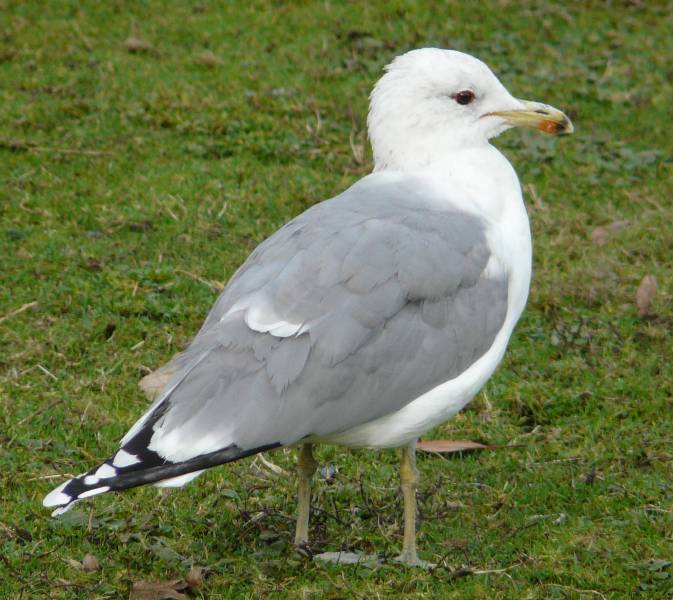
California Gull: medium-gray mantle, long dark wingtips that extend well beyond the tail, long straight bill with both red and black gonydeal spots, yellowish legs and feet with blue-gray cast.
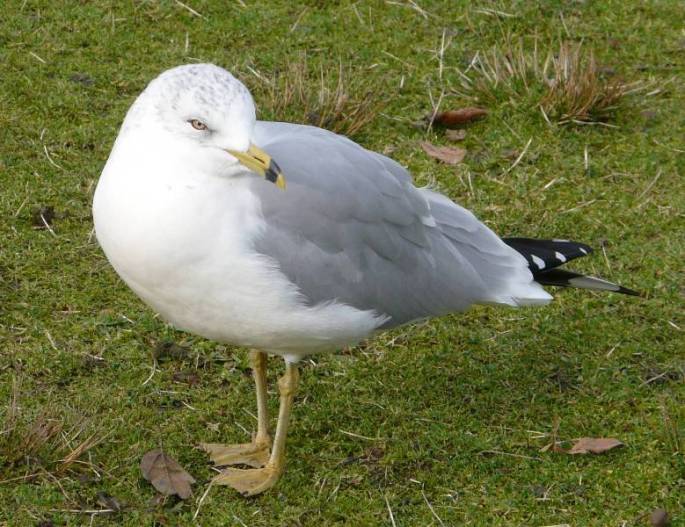
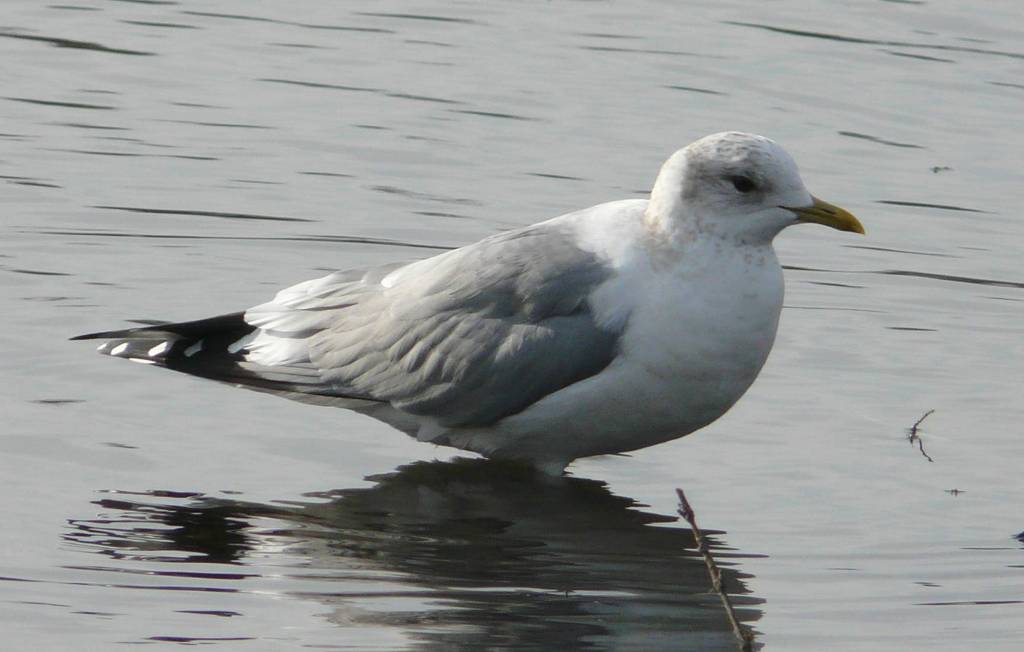
Ring-billed Gull: smaller size, neat black ring around bill, long dark wingtips, yellow legs and feet.

Here’s the Ring-billed Gull at rest. Note the fine streaking on the head and the red orbital ring.
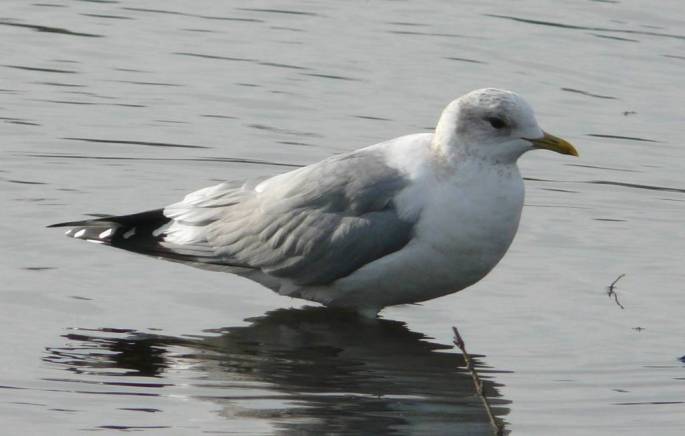
Mew Gull: petite yellow bill, round head, long wing extension. These small gulls will mix with the Ring-billed flock, but generally don’t mix with the larger gulls.
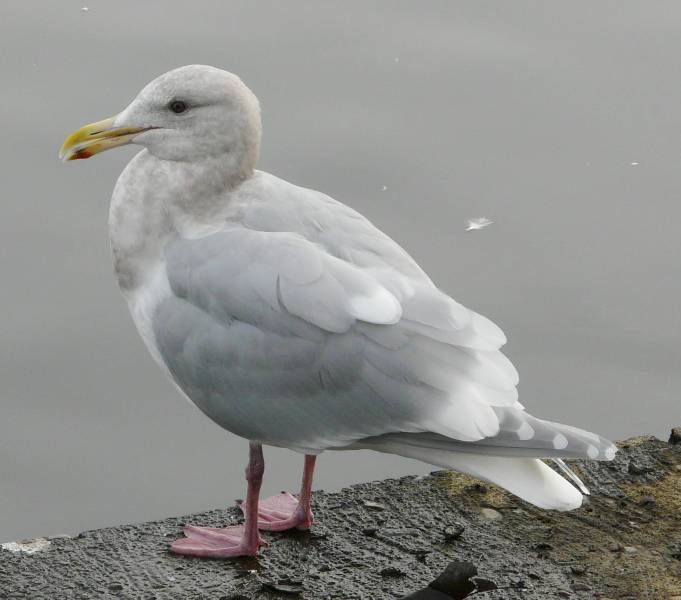
Glaucous-winged Gull: Note the lack of contrast on this bird. The short wingtips are the same color as the mantle. The head and upper breast are covered with an even blurry mottling. The only parts that don’t blend in are the pink legs and feet.
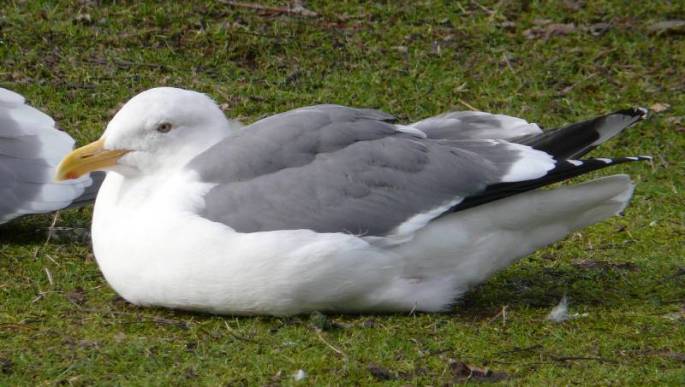
Western Gull: large size, dark gray mantle, short black wingtips, never any marks on the head – even in winter. This species is much more common on the coast, but a few make it in to the Willamette Valley in winter.

Western Gull X Glaucous-winged Gull hybrid (Olympic Gull): an even blending of characteristics of both parent species. The mantle is darker than a pure GW, but Westerns never show this much mottling on the head and neck. The wingtips are dark, but not actually black. You can tell this is a third cycle individual by the tiny bit of black on the tail and by the odd pattern on the bill. These hybrids show a great deal of variation, and are often the most numerous gulls in the area.
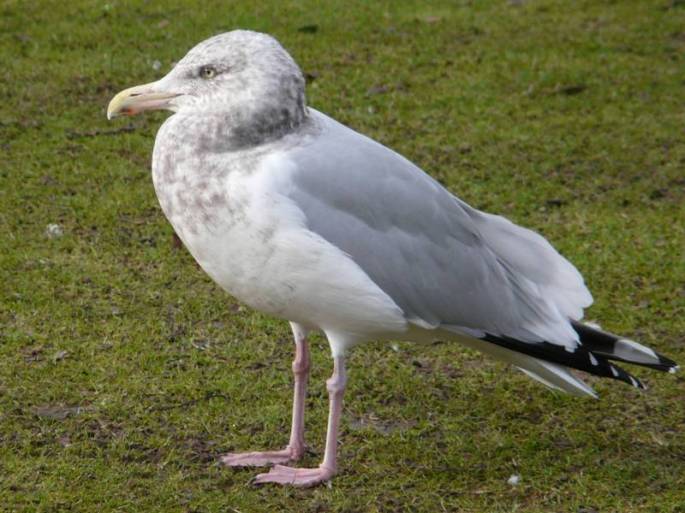
Herring Gull: sloping forehead, pale eye, bill not too thick, black wingtips that extend beyond the tail.
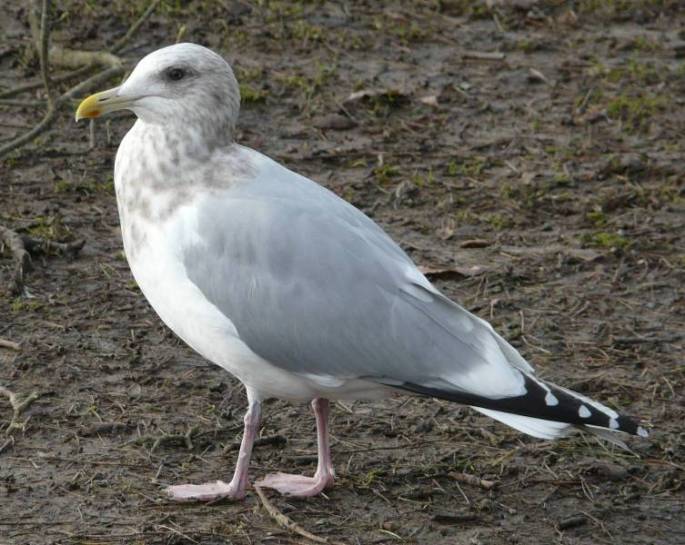
Thayer’s Gull: rounded forehead, thin bill, dark eye (usually, not always), long black wingtips with much more white on the underside.
Powell Butte
Located on the east side of Portland, Powell Butte Nature Park (Birding Oregon p. 66) offers a variety of birds and some nice views of the nearby mountains.

The butte is tall enough to produce its own rain shadow, so the western slope is forested with a dense understory.

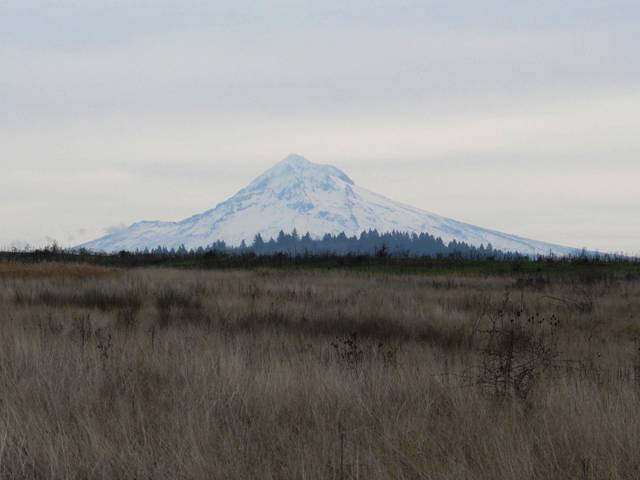
The top of the butte is drier and dominated by grassland and small scattered trees. Mount Hood looms in the distance.

Fox Sparrows are among the birds found in the brushy patches.

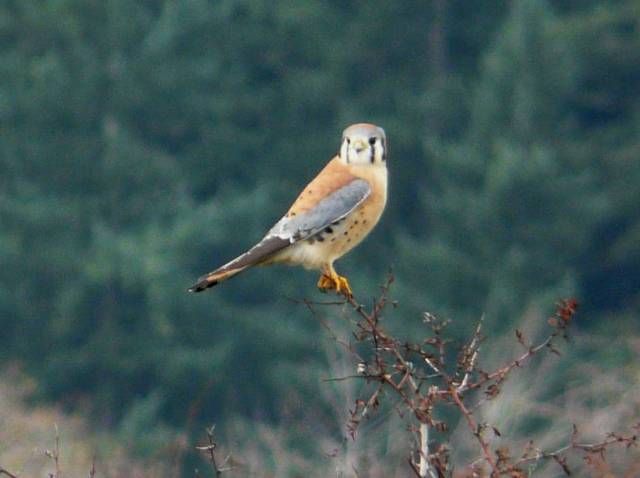
The open habitat is very attractive to raptors, like this American Kestrel. Northern Harriers and Red-tailed Hawks are also frequently seen.

I love to see these guys. Urban and suburban Coyotes are a songbird’s best friend. Studies have repeatedly shown that the presence of Coyotes coincides with larger populations of songbirds, since Coyotes reduce the number of free-roaming domestic cats. For more information on the effects of domestic cats on wildlife, check out the American Bird Conservancy site.
Sparrows
I am revving up for my Little Brown Birds class next month, so I spent some time with the sparrow flocks on Sauvie Island (Birding Oregon p.57). A walk down Rentenaar Road revealed five species, three of which sat still long enough to be photographed.

White-crowned Sparrows stand out with their bold head pattern.

Immature White-crowned Sparrows have the same pattern as the adults, but in brown and buff instead of black and white.

Two Golden-crowned Sparrows, immature on the left, adult on the right

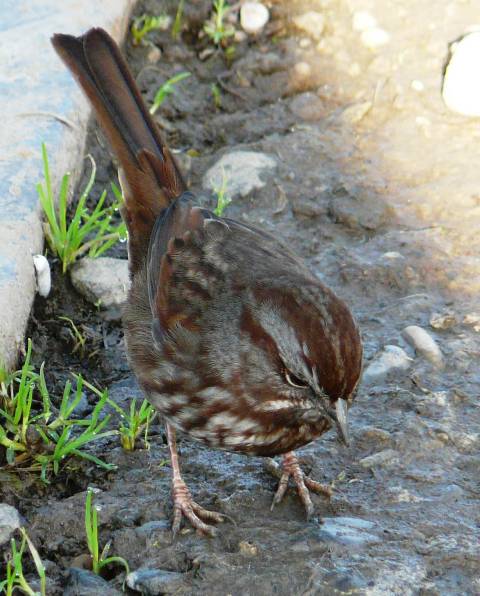
This Song Sparrow was feeding right at my feet, but insisted on staying in my shadow, thus messing up the lighting in the photo.

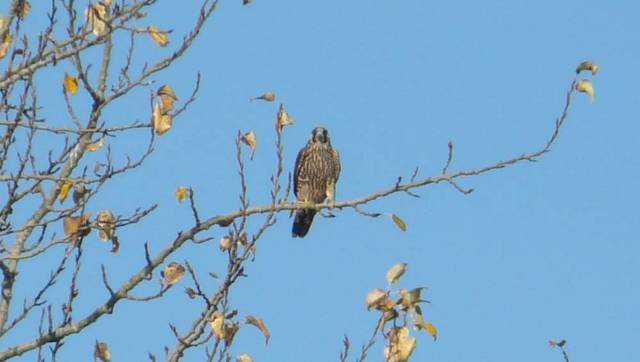
This Peregrine Falcon wasn’t much of a threat to the sparrows, but he did make the shorebirds and waterfowl nervous.
Ankeny NWR
I took my Portland Audubon waterfowl class to Ankeny National Wildlife Refuge (Birding Oregon p. 86). The weather was glorious and the birds were abundant.

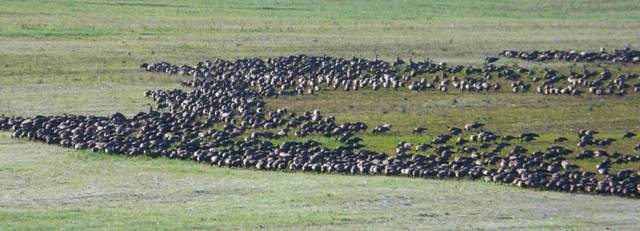
Many of the fields on the refuge hosted large flocks of geese, mostly the minima race of Cackling Goose.

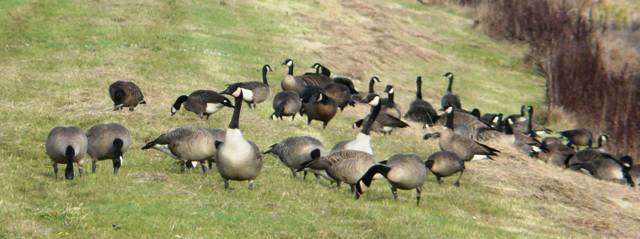
This little mixed flock contains Western Canada, Dusky Canada, and Taverner’s Cackling Geese.

Eagle Marsh held several dozen Tundra Swans.
Great weather, if you’re a duck
I forced myself to go birding Saturday morning. It was one of those rainy November days when you want to hole up until May, so I forced myself out. (Can’t get tired of the rain this early in the season.) So I went to Smith and Bybee Wetlands in NW Portland. The rough weather kept most of the songbirds under heavy cover, but the ducks were out and about.

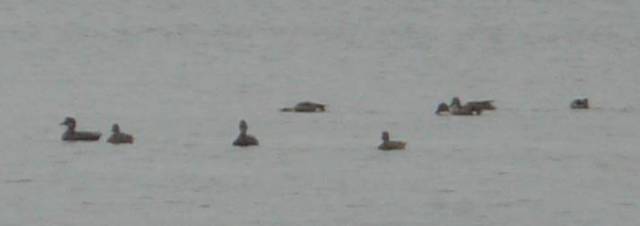
While distant and poorly lit in the rainy weather, these ducks are clearly Northern Shovelers. The first clue is the fact that they are all swimming along with their faces in the water, typical shoveler feeding behavior. On the first and last ducks in line, you see a dark head, white breast, rusty sides, and white bottom, classic Northern Shoveler.

These birds were clear across the lake, but several are clearly identifyable. The line of four ducks in the upper right of the photo are Northern Shovelers, for the same reasons as in the photo above. The duck on the far left, and probably the bird next to him, is a Gadwall. The bird is slightly smaller than the shovelers, lacks any blatant pattern, seems to be dark on the backside, and has a blocky head shape.
The ability to ID ducks, or any other birds, at great distances is not so much a matter of skill, as it is familiarity. The more familiar you become with a species, the greater the distance you can recognize that species.

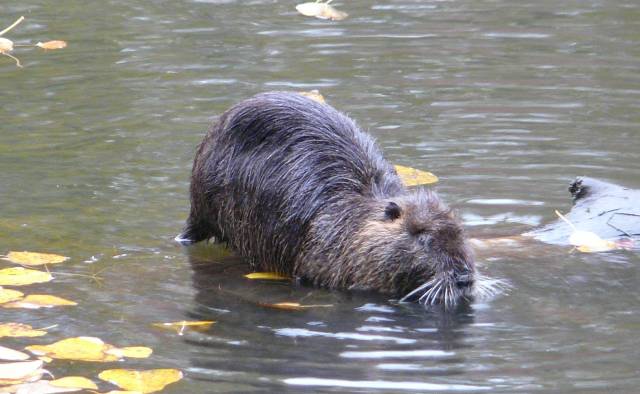
This Nutria was enjoying the day, munching away on something. Nutria are native to South America, but have been introduced in many areas by the fur trade. (and why would you want to dress yourself to look like a large aquatic rodent?) When raising Nutria failed to be profitable, many were released into the Pacific Northwest, where they flourish at the expense of some native mammals and wetland plants.
Parking Lots
They paved paradise, and put up a parking lot. – Joni MItchell
One of the more common abominations of our society is the parking lot, that large expanse of asphalt or gravel that raises local temperatures, eliminates vegetation, and changes the local hydrology. It is a symptom of our car culture, and will probably be with us for the foreseeable future.
But if you are one of those folks who are “always birding,” then you will occasionally find interesting birds even in the asphalt prairies of your local shopping centers. Not that I recommend parking lots as birding destinations, but if you keep your eyes and ears open, there are birds to be found in the skies, on the asphalt, and in the isolated shrubbery of the parking lot.

A gorgeous species with subtle purple and green irredescense, Brewer’s Blackbirds are frequently encountered in parking lots.

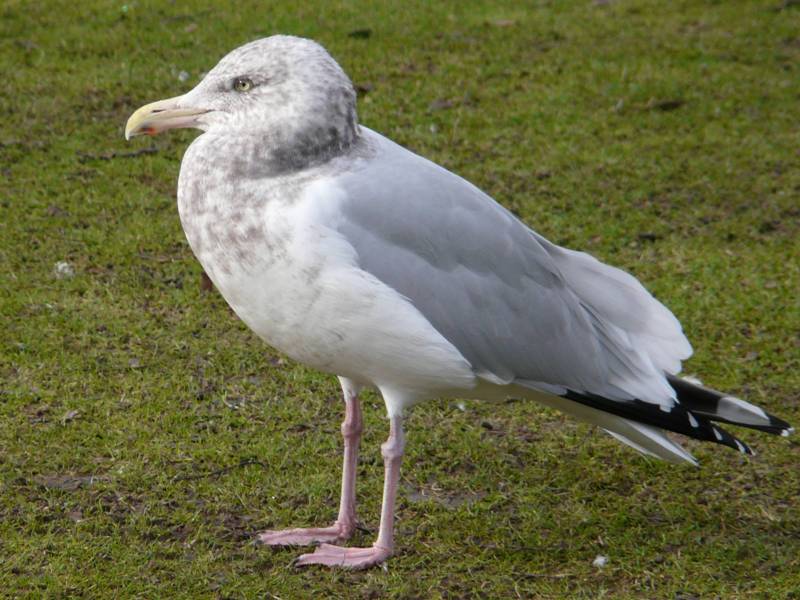
Parking lots are often the best spots to study gulls. The birds here are used to people and can often be closely approached. This is a first-cycle Herring Gull.

Adult California Gull
Not all parking lot birds are blackbirds and gulls. I have seen Peregrine Falcons, Black Swifts, Anna’s Hummingbirds, White-crowned Sparrows, Gray-crowned Rosy-Finches, Snow Geese, and Cooper’s Hawks, to name a few. Keep alert, and the occasional avian treasure will appear even in the desolation of the parking lot.
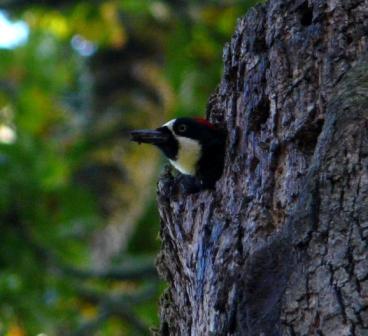
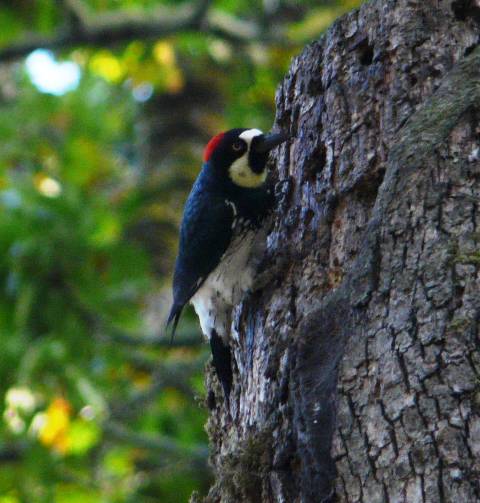
Acorn Woodpecker
I observed this Acorn Woodpecker excavating a cavity in Rogers Park in Forest Grove (Birding Oregon p. 62). Given the time of year, I assume this is a roosting cavity.


While this species is a regular at this site, I always enjoy finding them.