Timberline

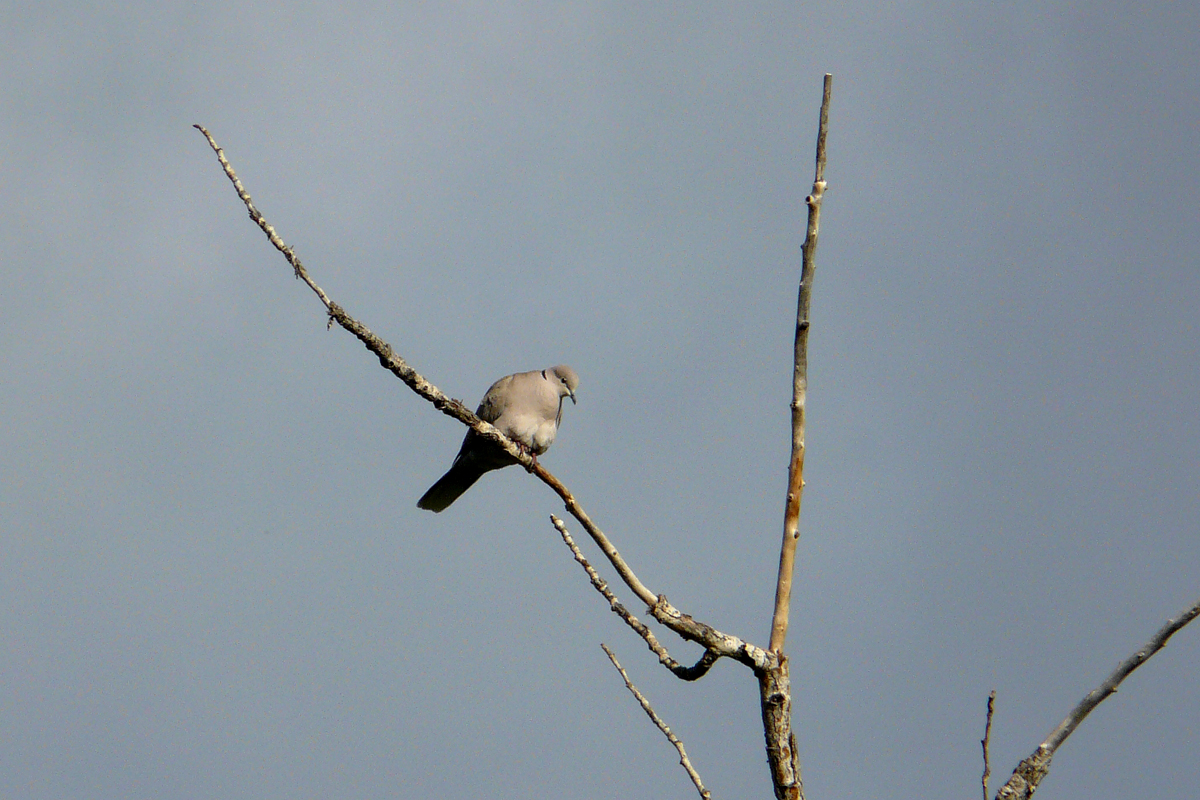
I took my annual autumn trip up to Timberline Lodge on Mt. Hood this week. There were a few birds around, but none were feeling photogenic.

Above the tree line, Mt. Hood is a big pile of rocks and fine volcanic ash. The fine sand makes for strenuous hiking, especially when combined with the thinner air at this elevation. The open skies here can be good for raptors. On this day I just saw two Red-tailed Hawks, a Prairie Falcon, and several Common Ravens.

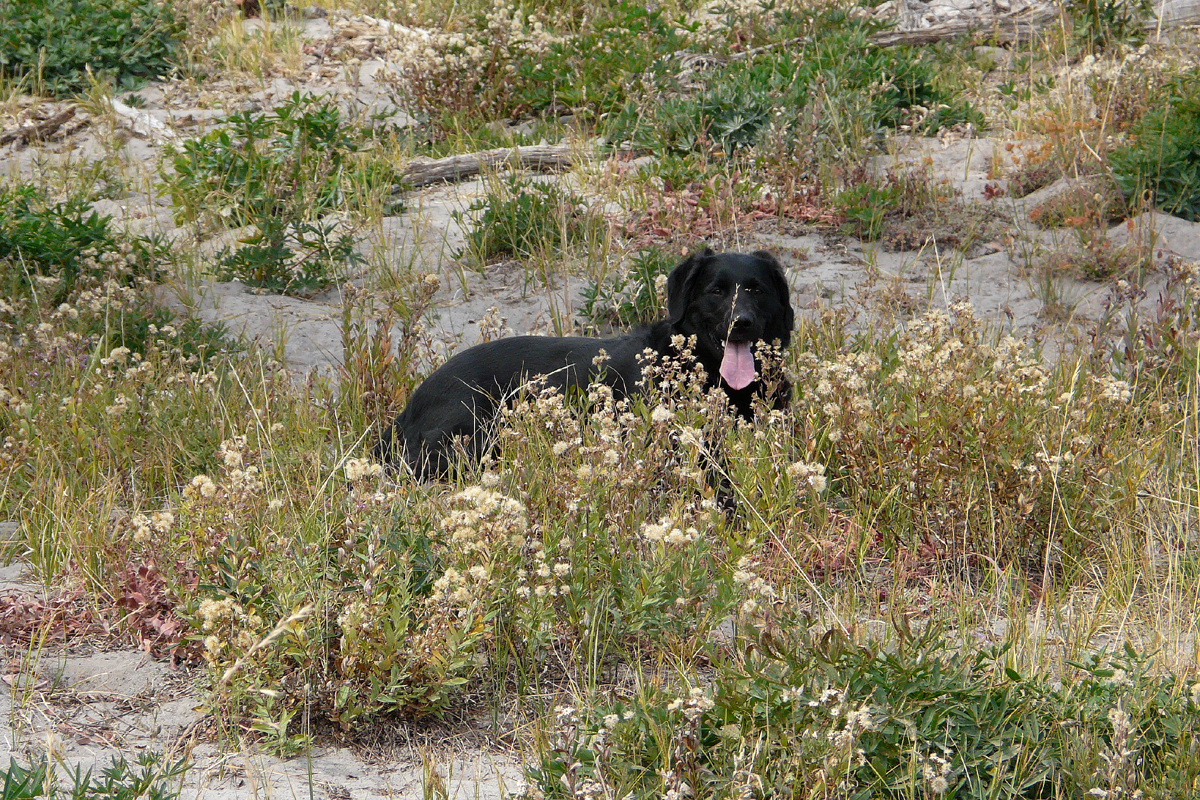
Nala took advantage of the glacial runoff to cool off and rehydrate. We kicked up an American Dipper in this stream.

The rivulets in the ravines form little pockets of riparian habitat. A pair of Townsend’s Solitaires were in this little clump of vegetation.

The Pacific Crest Trail runs through areas with a few more trees. Dark-eyed Juncos, Golden-crowned Sparrows, Pine Siskins, Ruby-crowned and Golden-crowned Kinglets, and Yellow-rumped Warblers were the most common species in this habitat. Nala would stop and rest in every little patch of shade she came to. She has a lot more stamina when she is swimming than she does when hiking in hot dry habitats.
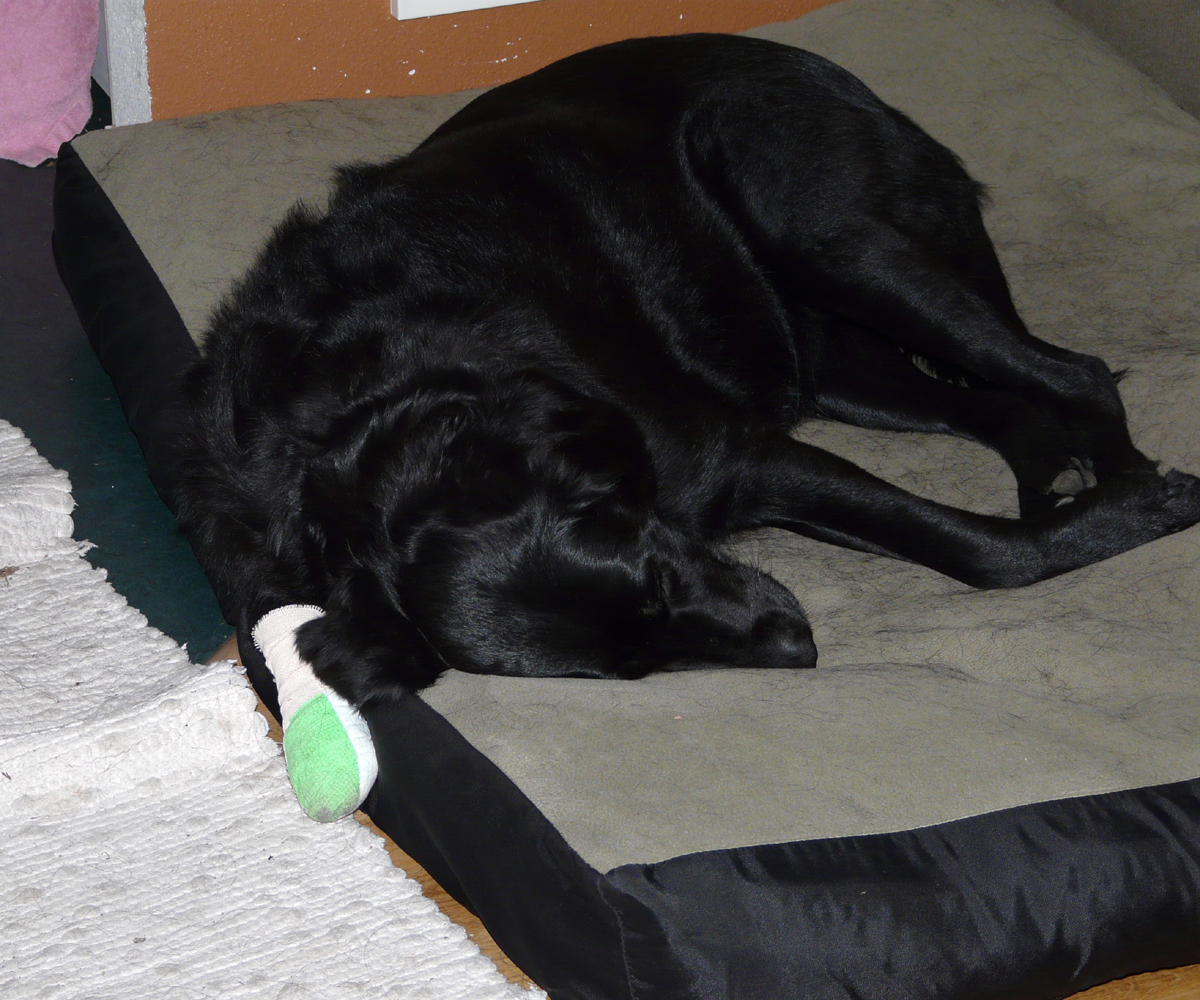
When we got home we discovered that Nala had torn a pad on her paw. It is not too bad, but needs to be bandaged for a few days.
Buff-breasted Sandpiper

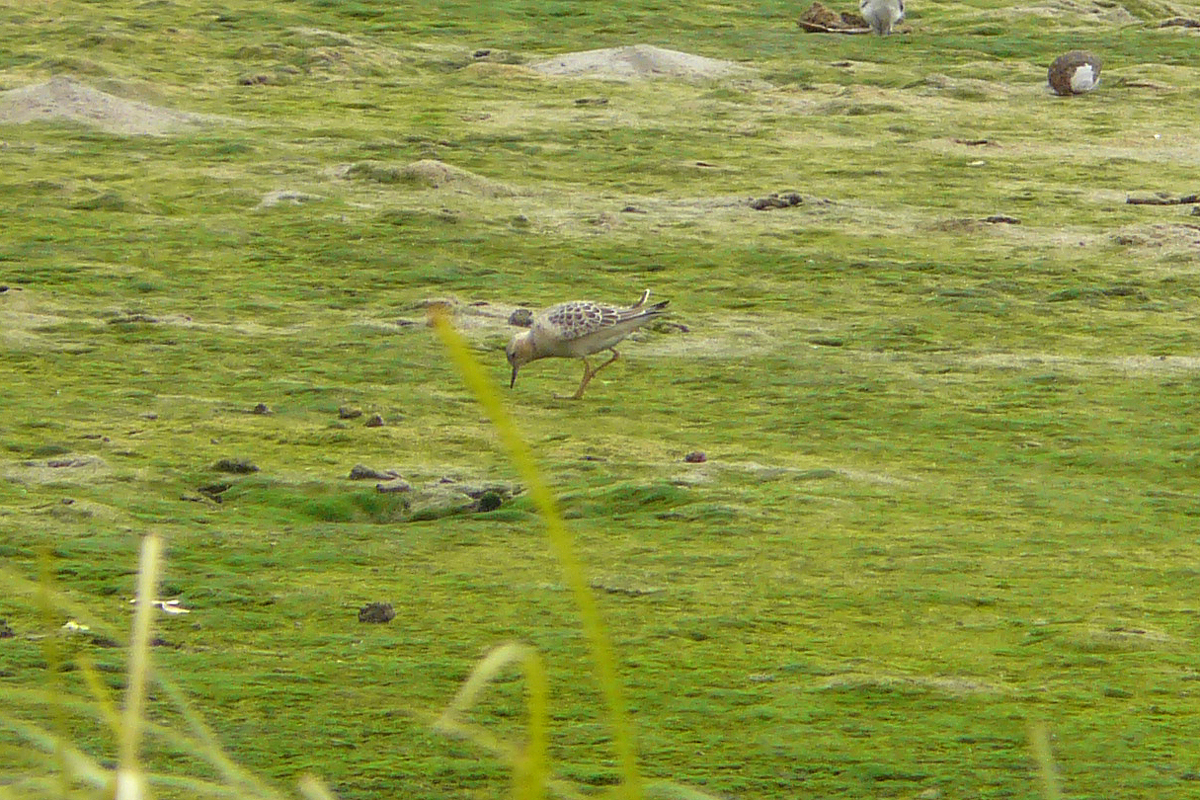
A couple of Buff-breasted Sandpipers have been staging at the Necanicum Estuary (Birding Oregon p.121) in Gearhart. I have wanted to see this species in Oregon for some time, but I have been unable to connect until this year. Buff-breasteds are uncommon to begin with, and most of the population migrates through the center of the continent or over the Atlantic. A few (almost always juveniles) are found in Oregon in September most years, and the Necanicum Estuary seems to be one of the more reliable sites for this species.

After nesting in the Arctic, Buff-breasted Sandpipers fly to southern South America for the winter. Such a long migration requires that the birds occasionally stop off for a week or so to build up fat reserves before continuing their long flight. Thankfully for us birders, these long rest stops give us a good chance to go see these rare beauties when they are reported.

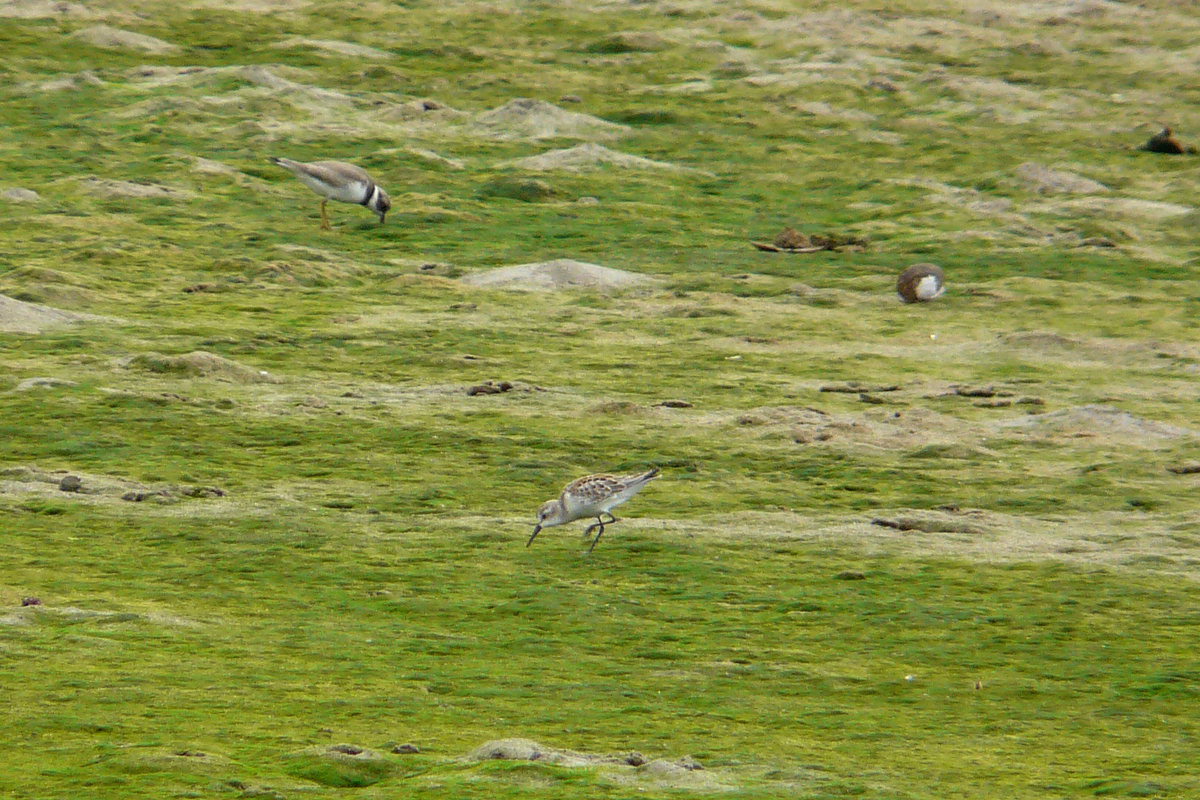
The algae mats that are hosting the Buffy are also attracting good numbers of other shorebirds. Several Baird’s Sandpipers were present on this visit. Pictured above are a Western Sandpiper and a Semipalmated Plover. Shorebird viewing at this location should remain good throughout September.

Changes Continue at Fernhill Wetlands

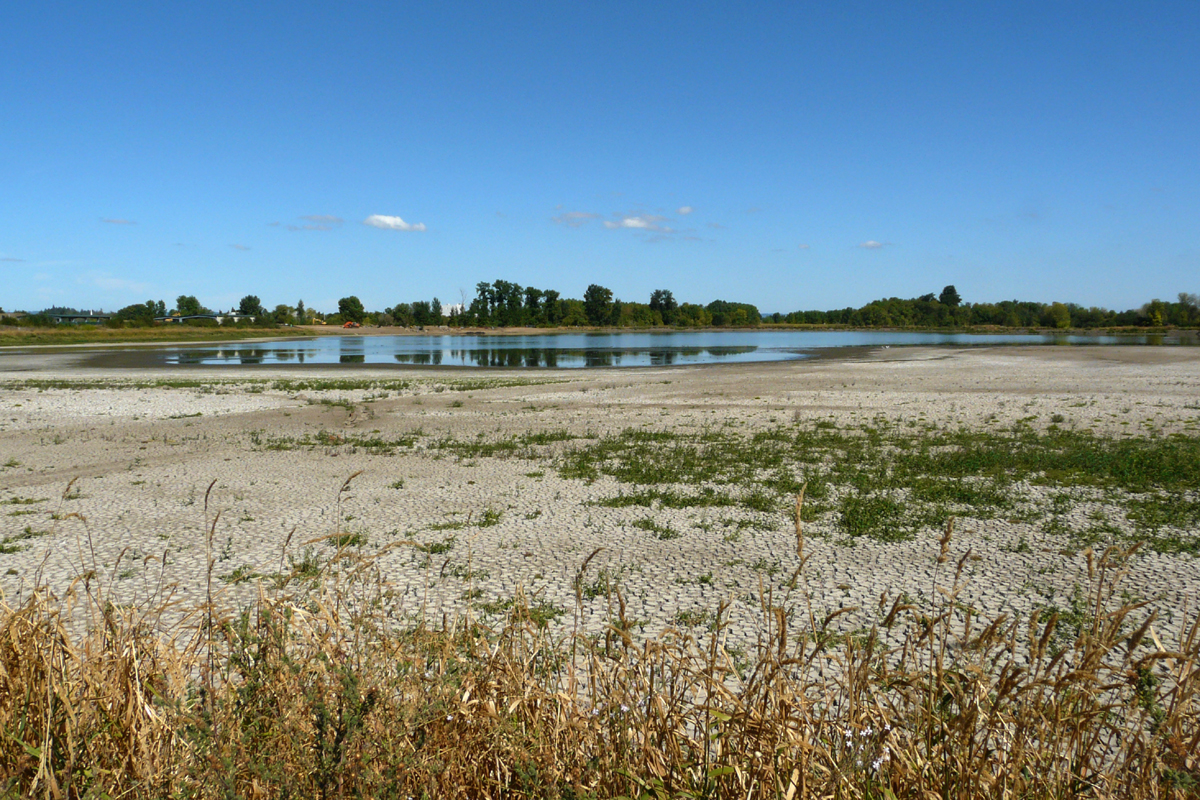
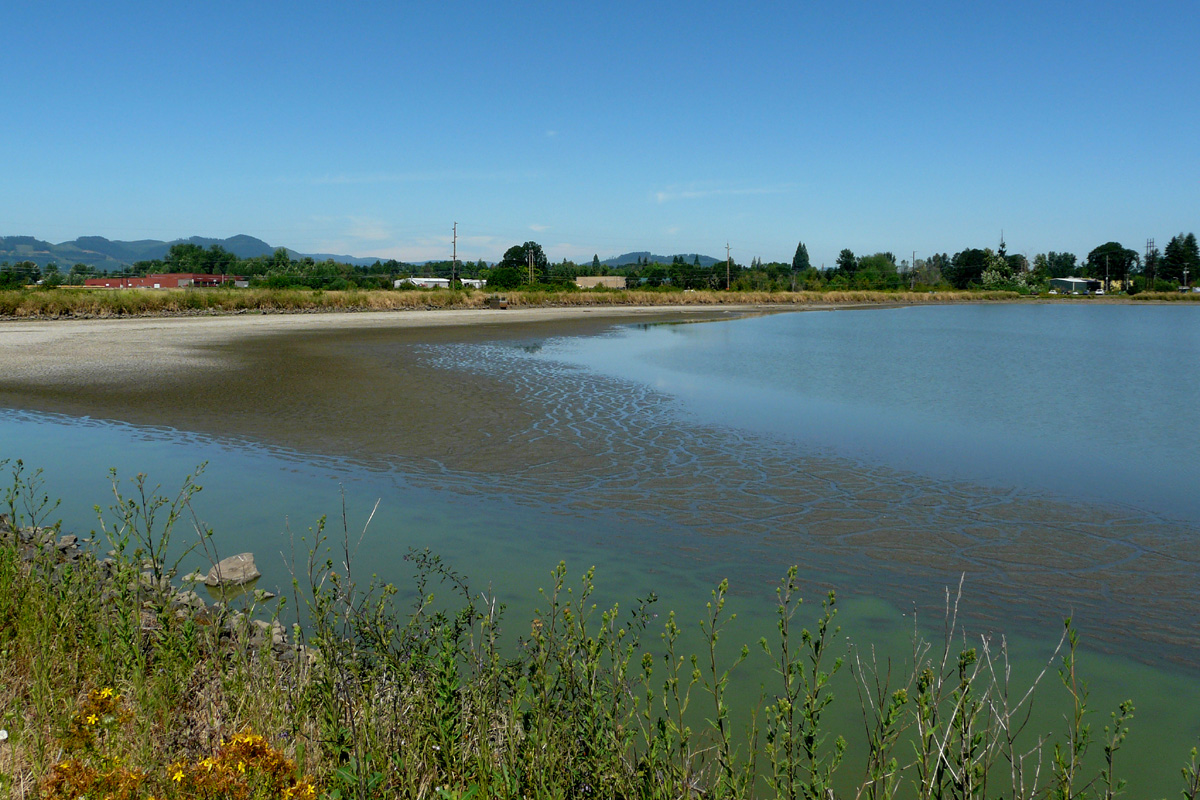
Exciting changes continue at Fernhill Wetlands (Birding Oregon p. 61). This photo is from the drying lake bed of Fernhill Lake. Low water levels this summer have created some great shorebird habitat. Notice the clump of cottonwood trees that have sprung up already. The construction (note the equipment in the background) will create rocky waterfalls that will cool and aerate the water that flows into the lake. I will be leading a free tour of the site on Saturday, October 6, at 10:00 AM as part of the Birds and Beer at Fernhill Wetlands event. Click on the Classes page for more details.

In addition to creating shorebird flats this summer, the low water levels are also helping to purge the lake of carp, which compete with birds for aquatic prey and muddy the waters with their feeding habits.

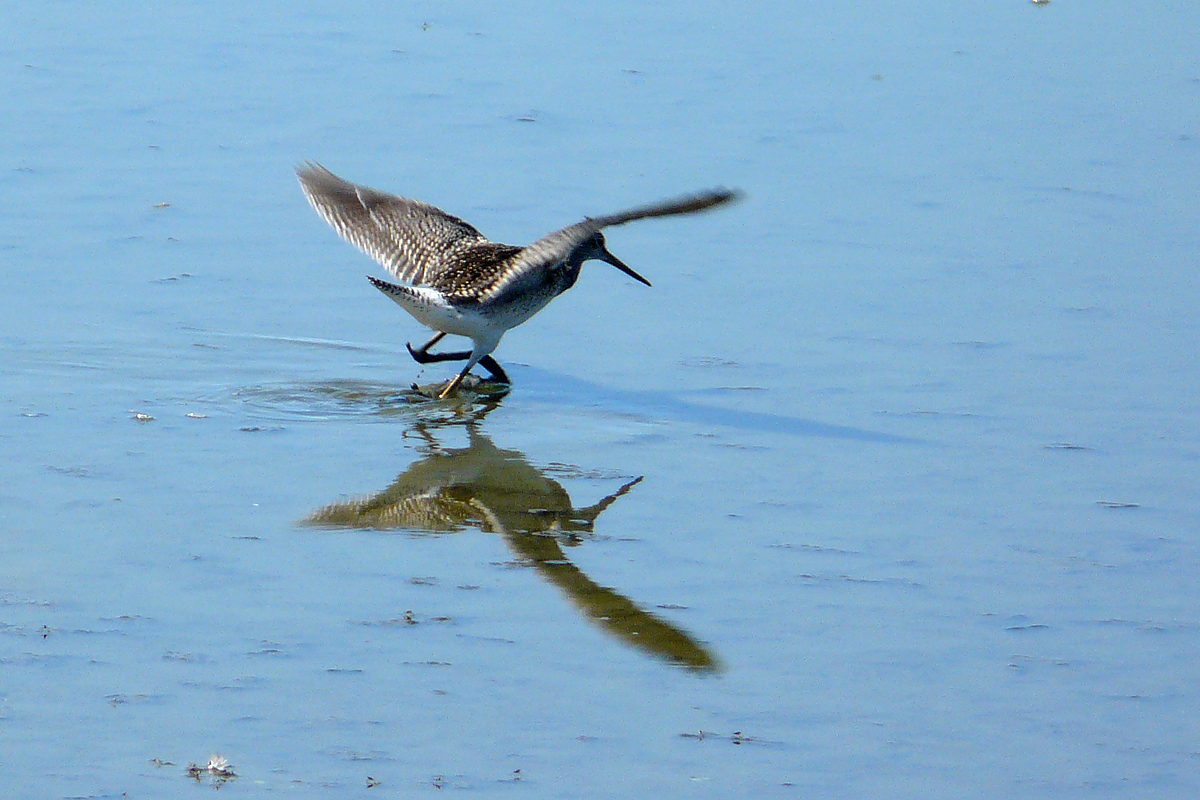
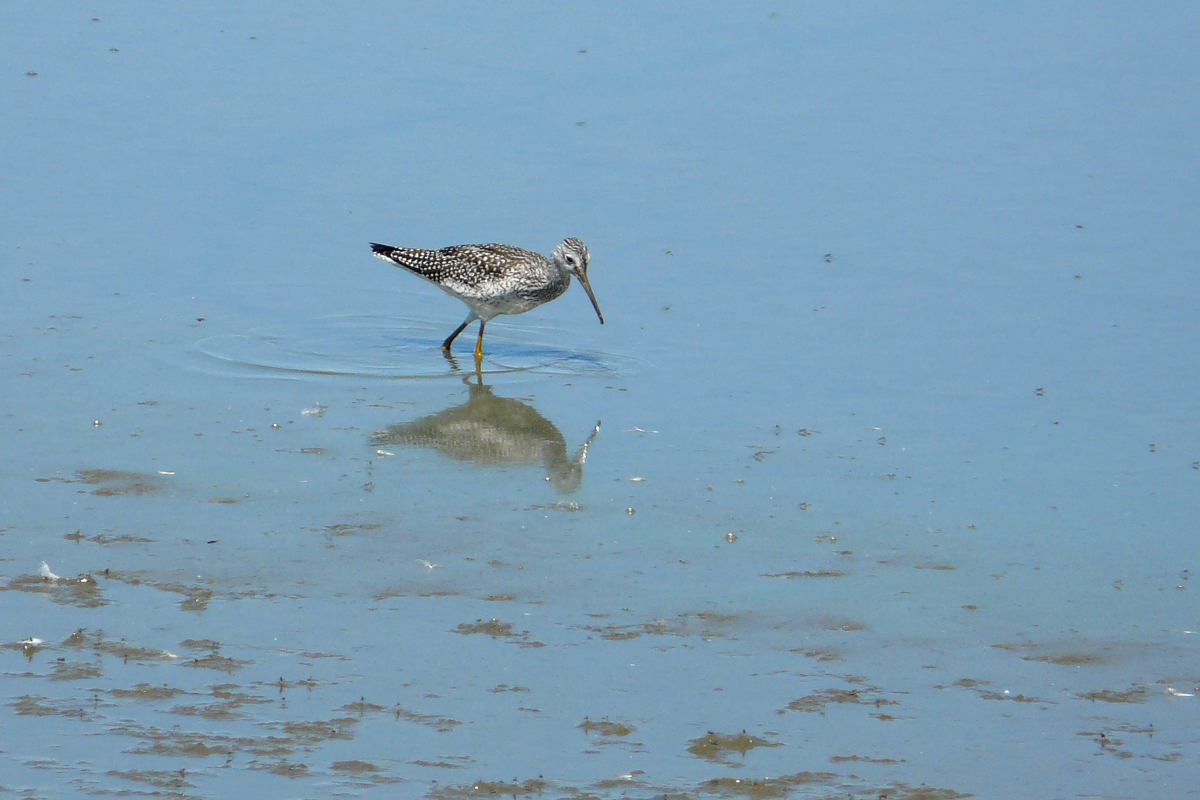
Greater Yellowlegs, sinking into the soft mud

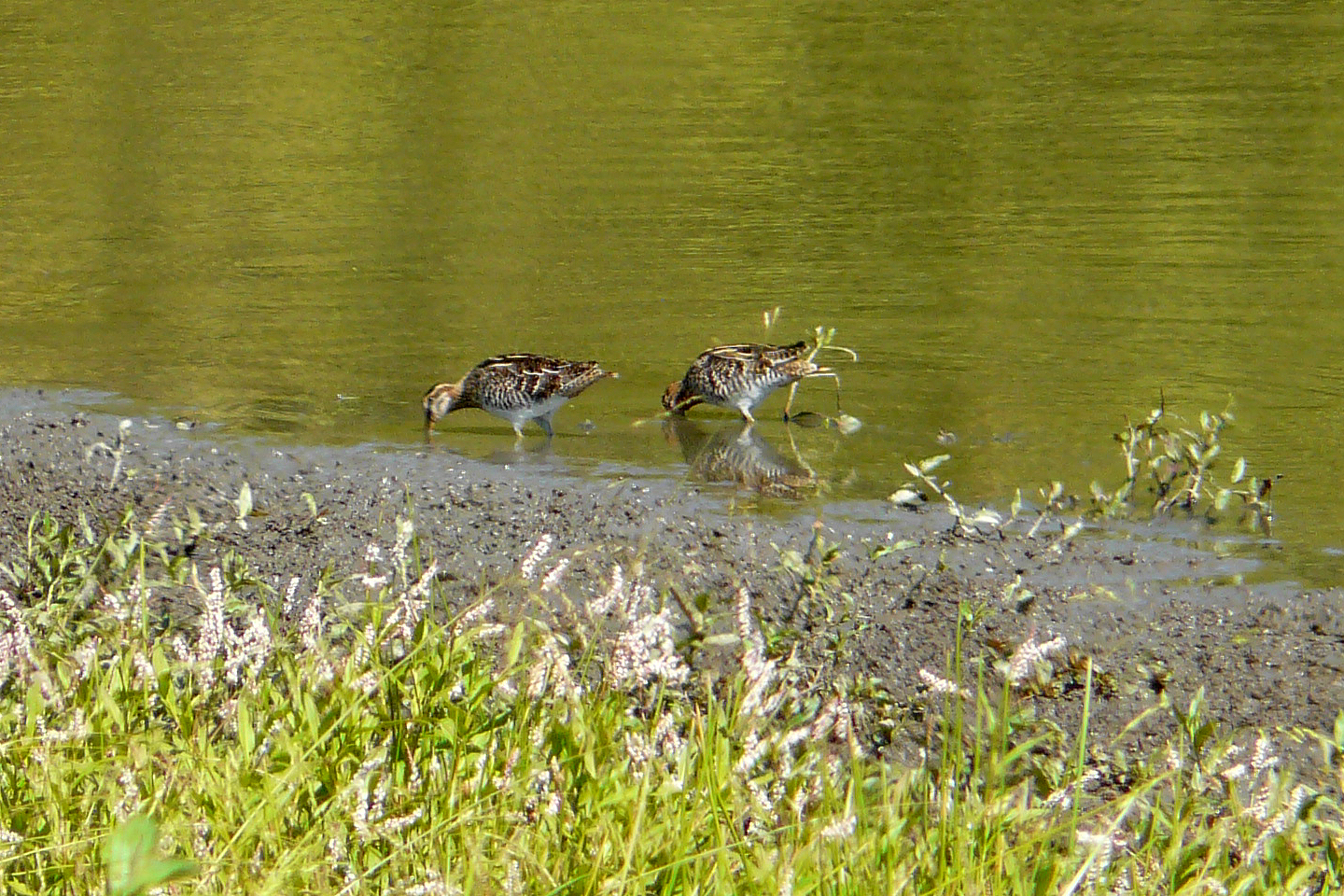
In the Mitigation Marsh, two Wilson’s Snipe were feeding out in the open, which is rather uncharacteristic of this species.

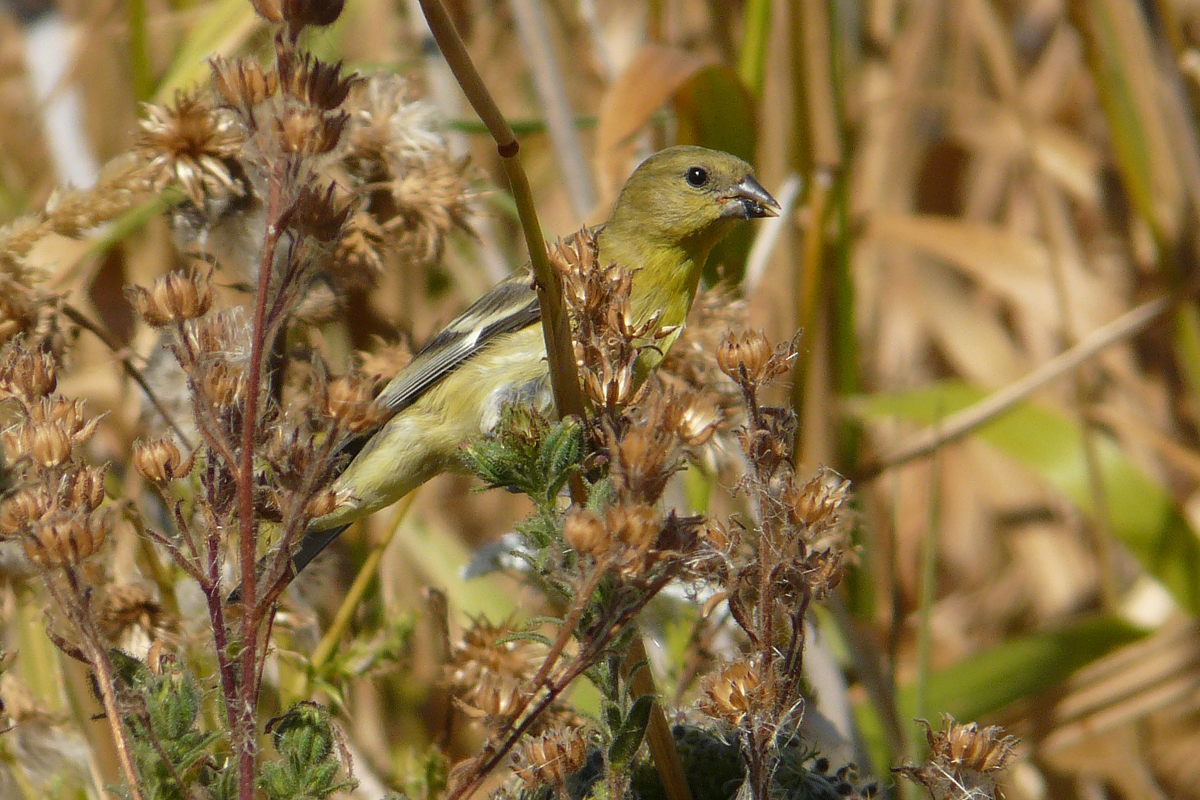
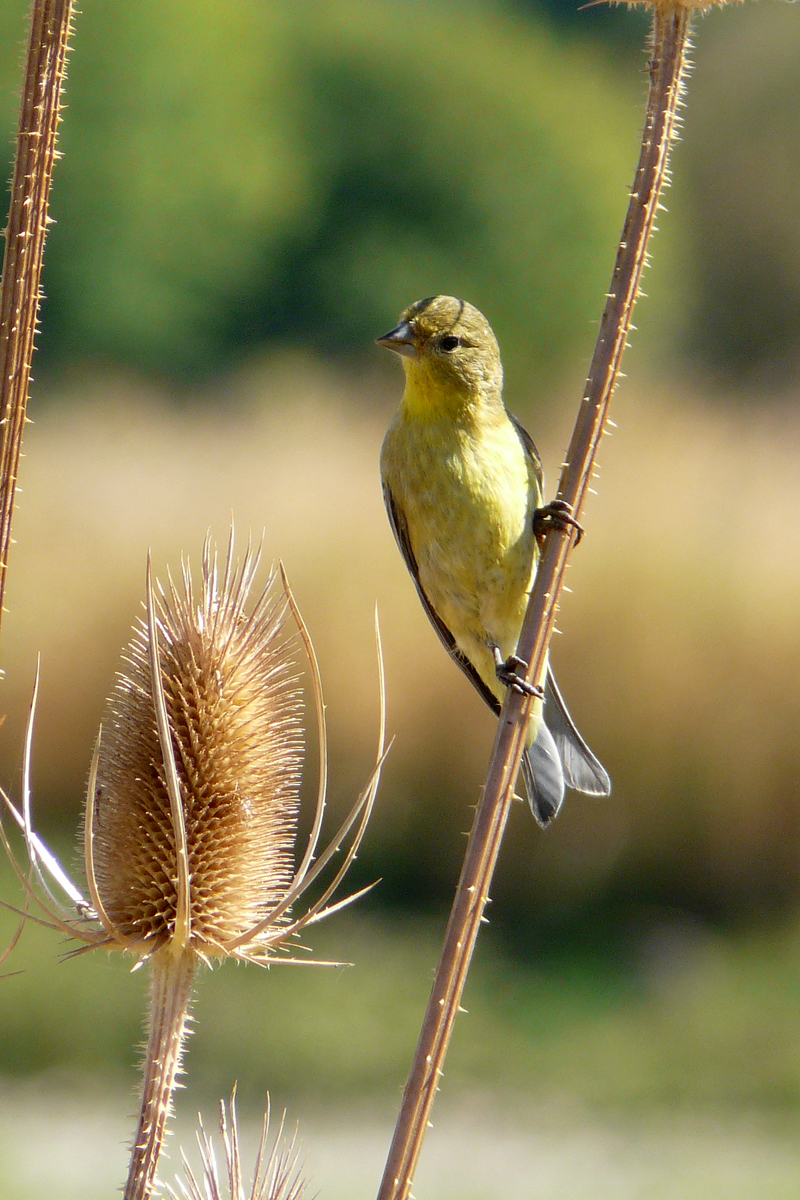
On this visit, a flock of Lesser Goldfinches was working the weedy patches. It is always a treat to get close looks at these birds.

The coming weeks should see increases in sparrows, shorebirds, waterfowl and raptors.

Fernhill Wetlands 8/3/12

I scouted Fernhill Wetlands for the Willamette Valley portion of my shorebird class. After a cool summer, we have finally gotten some triple-digit temperatures, making birding a little challenging. But there is a lot of mud and the shorebirds are moving in, joining the typical and not-so-typical summer residents.

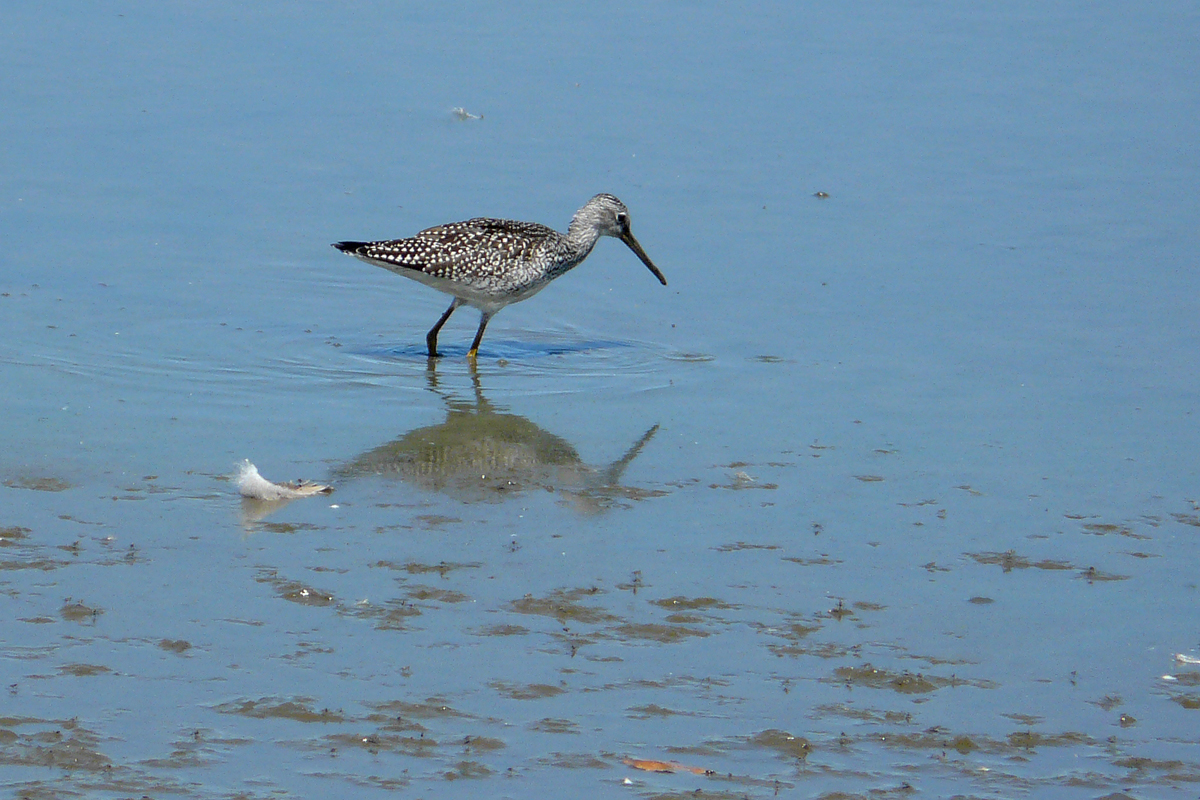
Greater Yellowlegs are common right now, taking advantage of the shallow water in most of the area’s wetlands.

Lunchtime

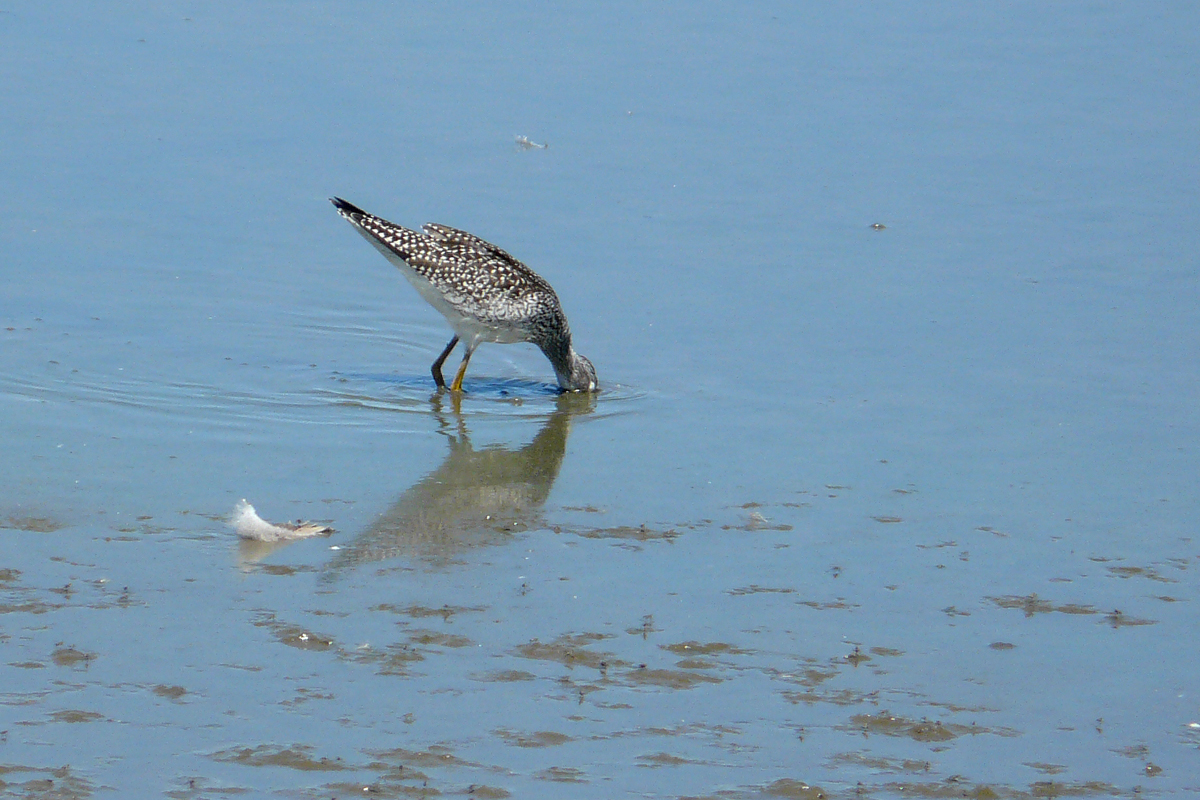
I don’t think he caught anything on that dive.

Least Sandpiper

another Least

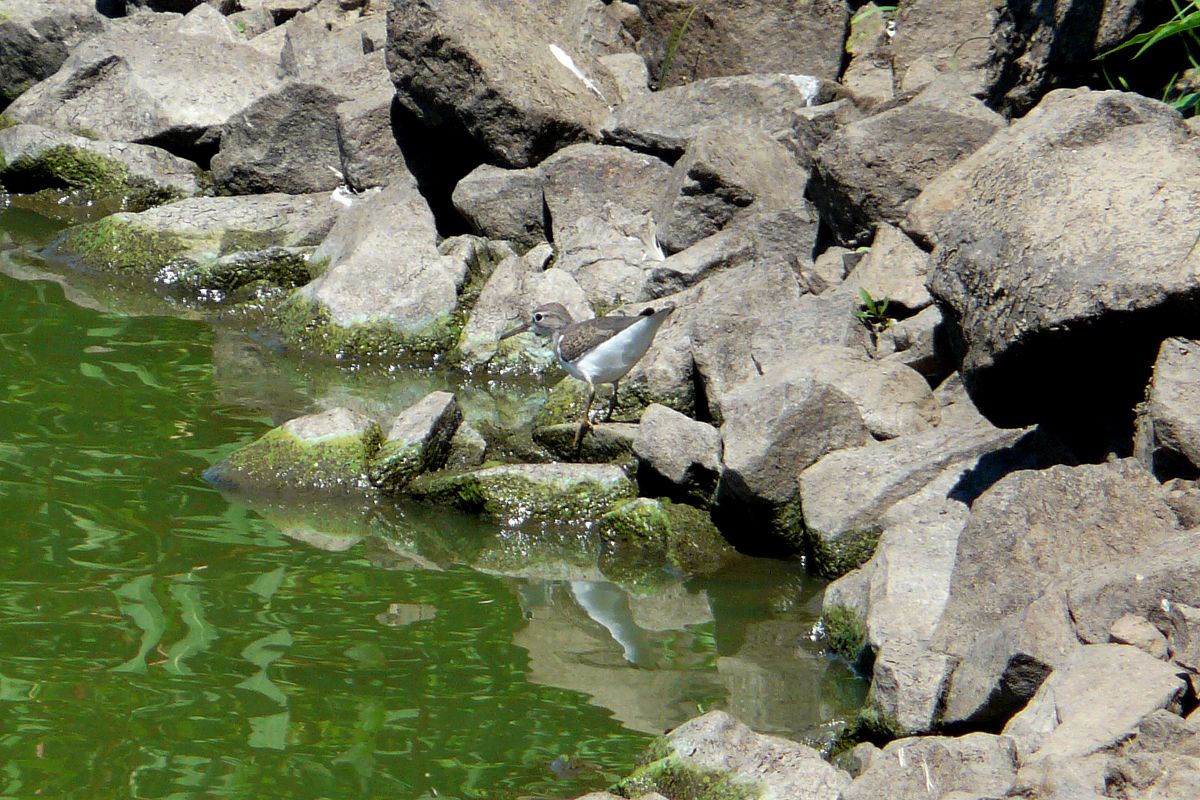
Spotted Sandpipers are often found along the rocky shoreline of Fernhill Lake.

This is a young Spotted Sandpiper, distinguished by the barring on the wing coverts (and the lack of spots).

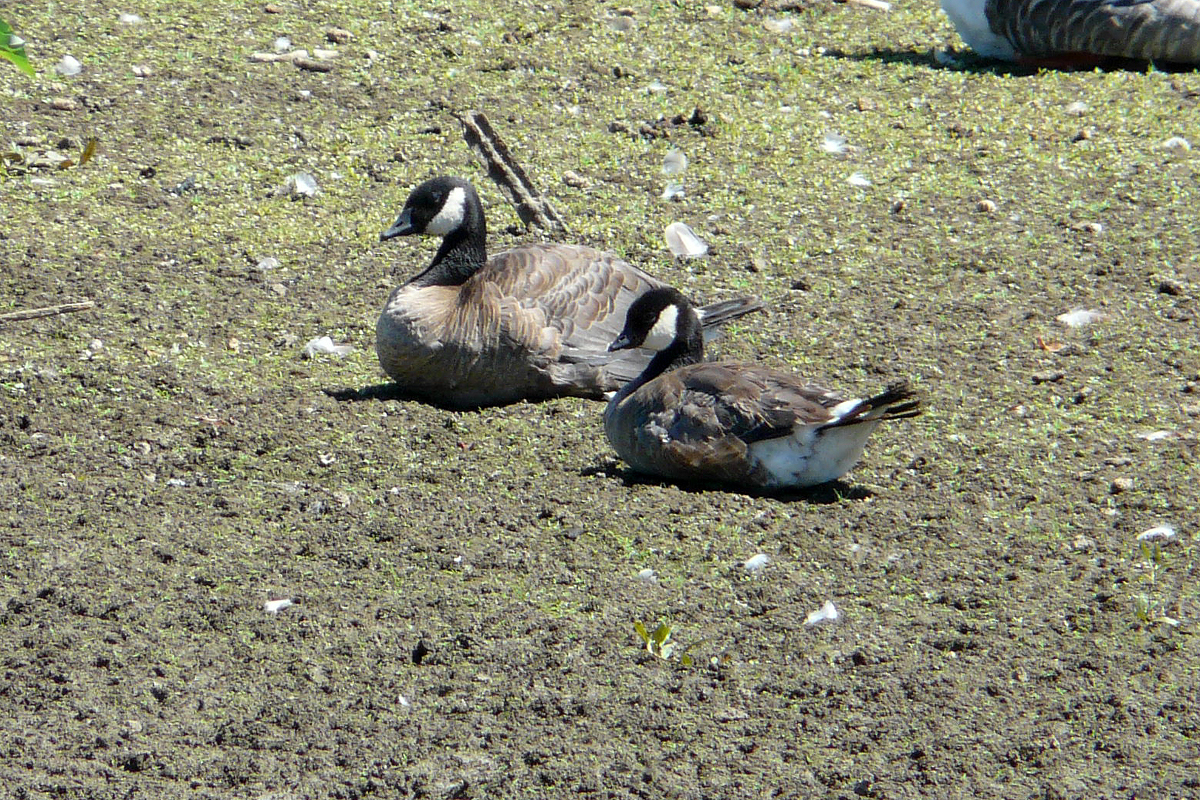
Cackling Geese, which winter here in the tens of thousands, are a rare sight in summer. The exposed white rumps on these birds are an indication that the birds are molting their primaries, so they have obviously spent the summer here.

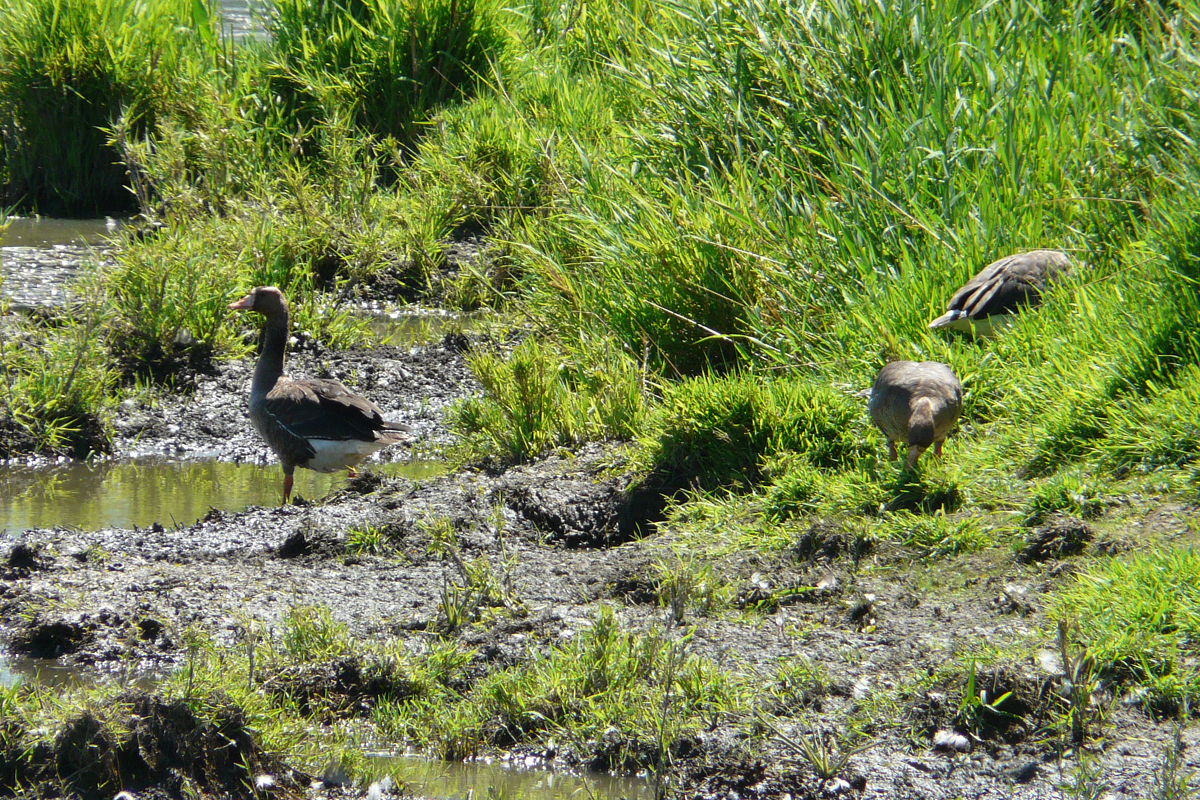
These three Greater White-fronted Geese are also several months too early.

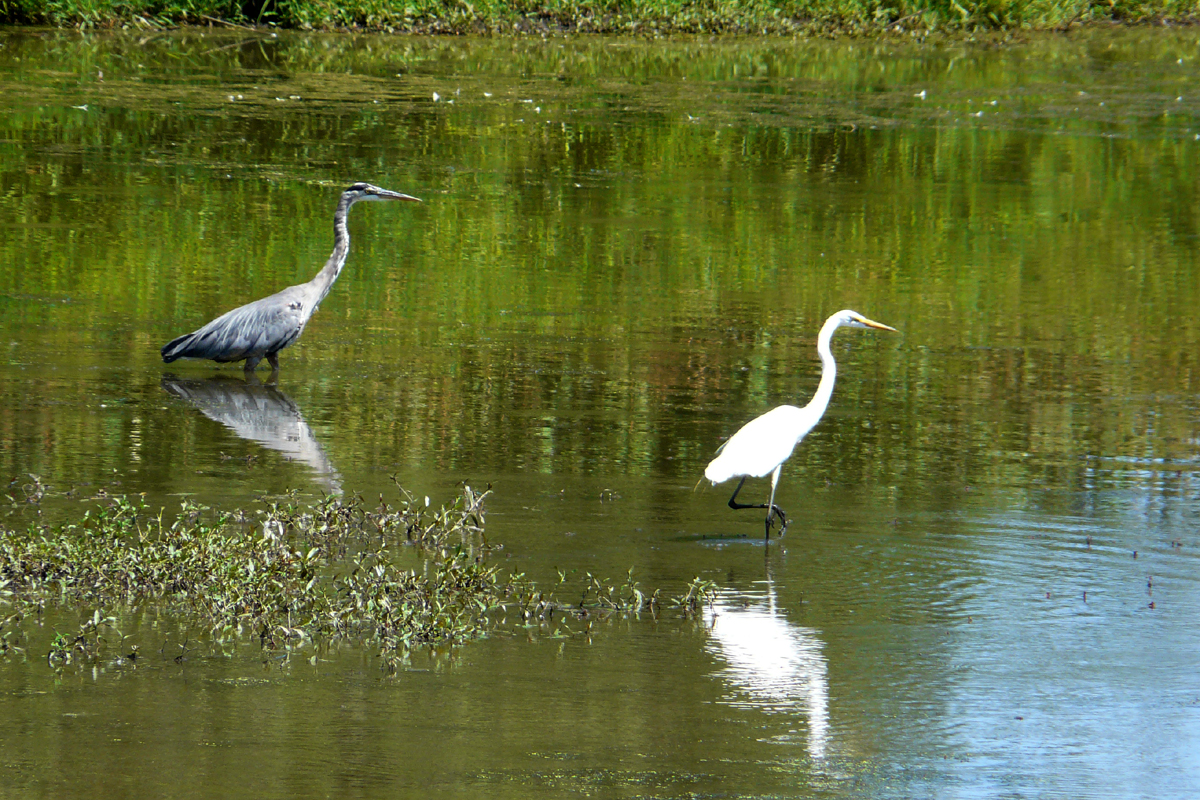
Great Blue Heron and Great Egret

Green Heron

August is the time for baby Bullheads. Several schools were visible in the murky water.

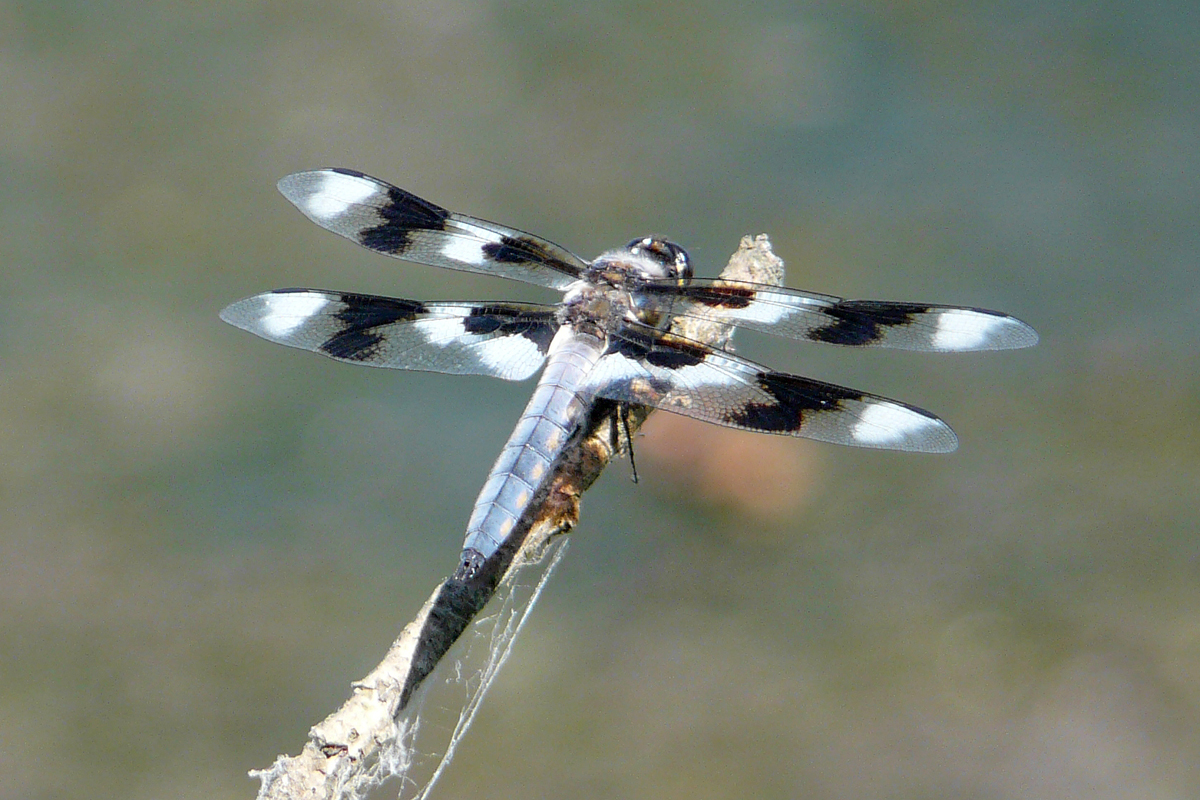
Eight-spotted Skimmer, one of the few dragonflies that I can identify

The North Coast

I made two trips to the northern Oregon Coast for my recent shorebird class. The “autumn” migration is well underway.

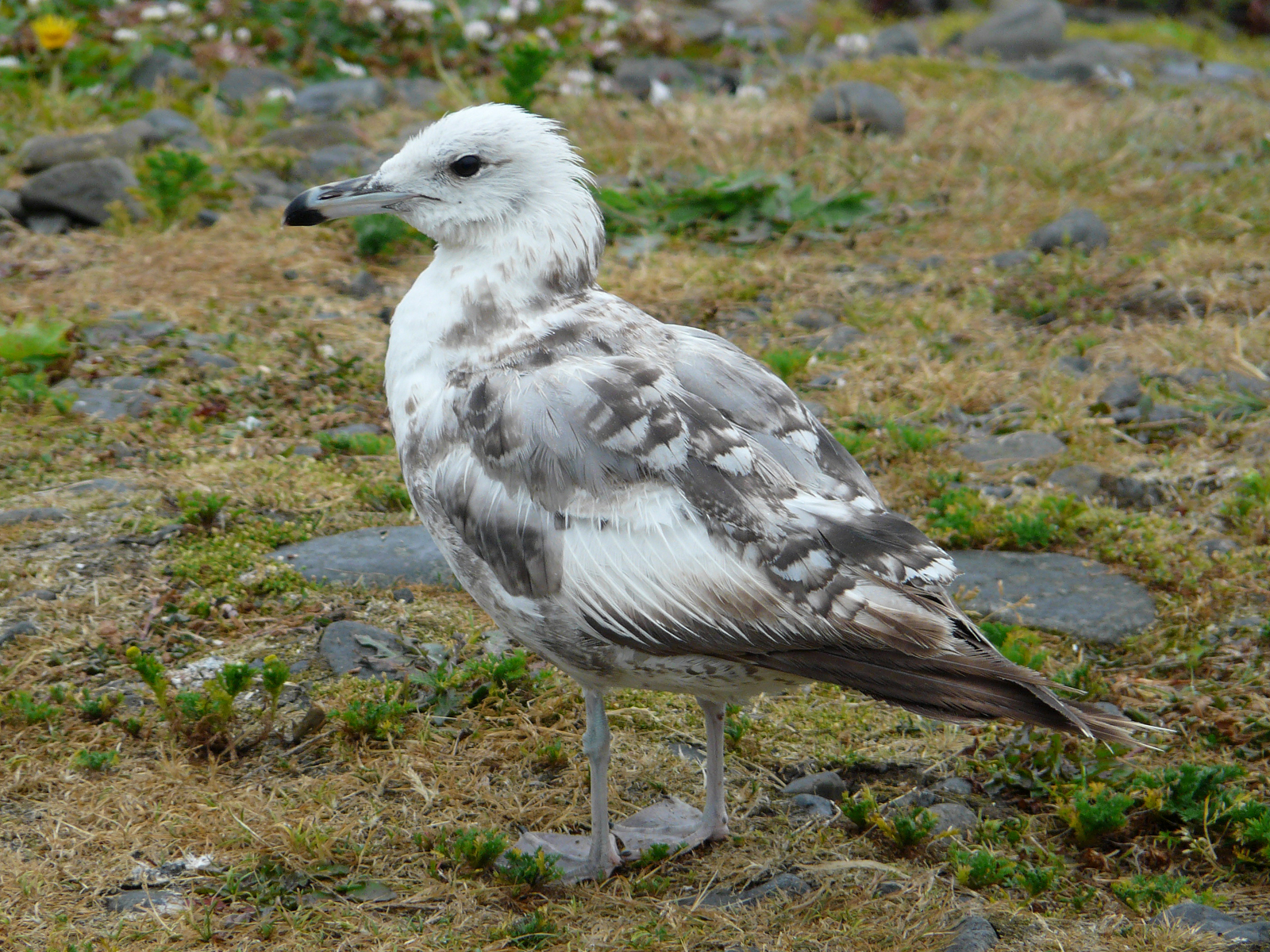
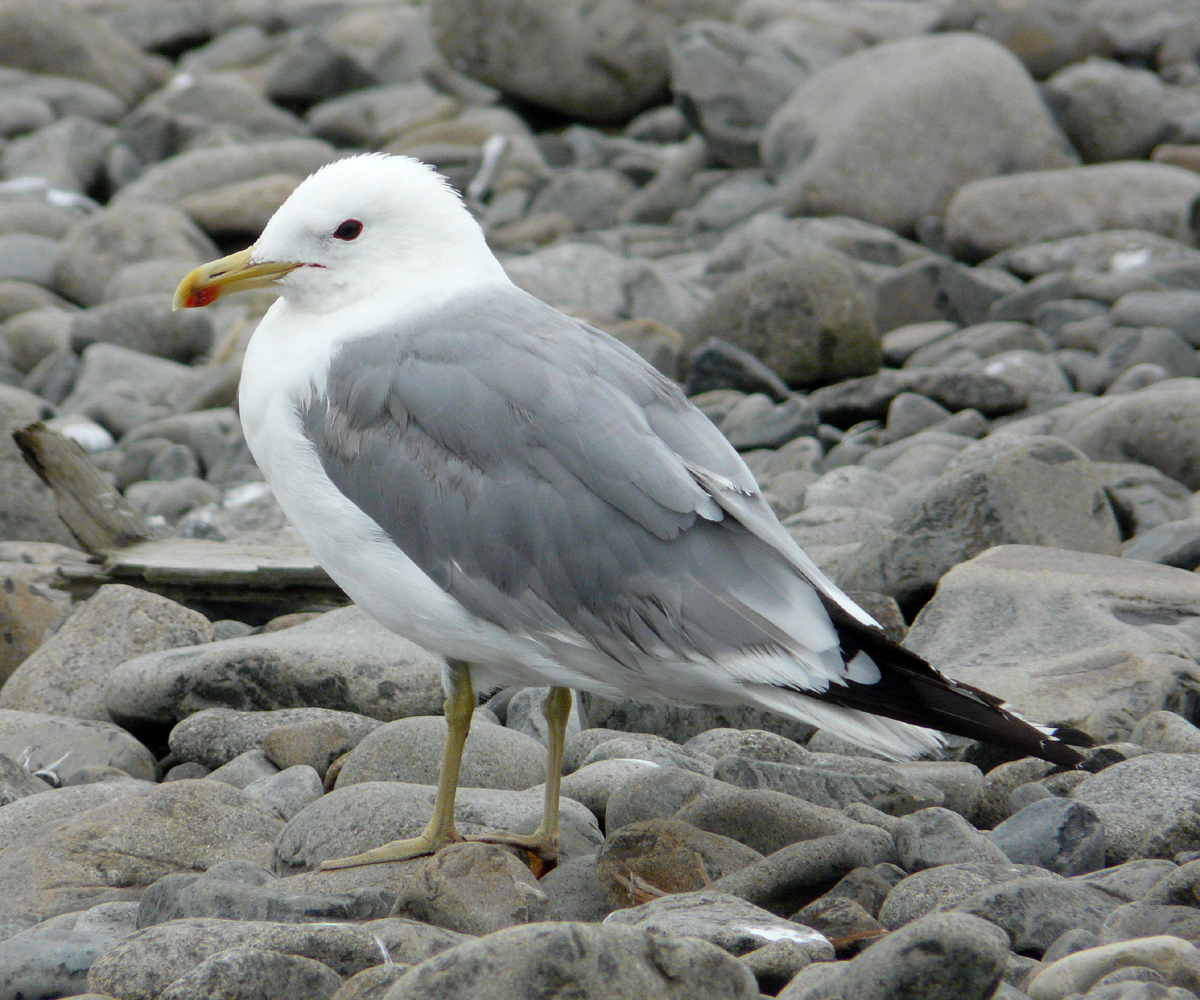
The Seaside Cove has a nice gathering of gulls. This California Gull is undergoing a rather extensive molt, I believe from second cycle to third. The severity of feather loss has actually created some interesting patterns.

This adult California Gull is showing a little wear, but nothing like the previous individual.

The Cove is a favorite hang-out for Heerman’s Gulls.

Young Heerman’s Gulls are a rich chocolate brown. I believe this is a second-cycle bird, given the smattering of gray feathers coming in.

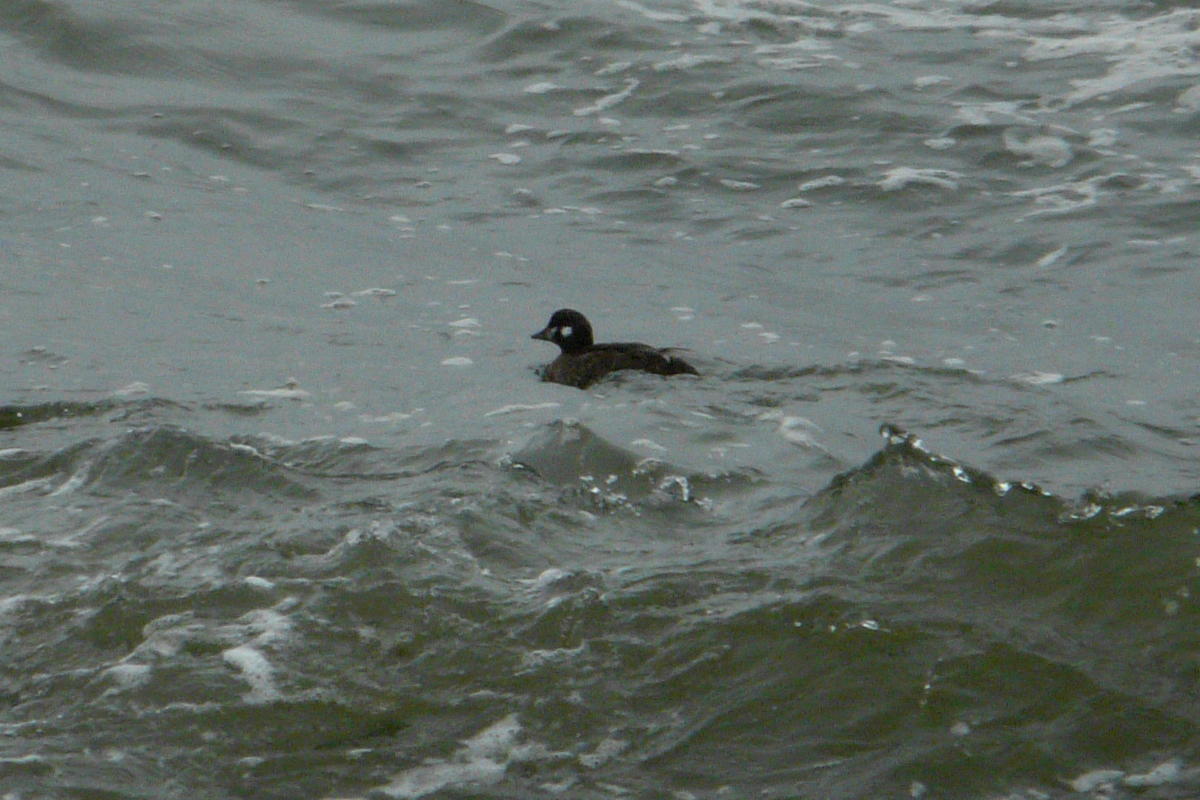
This female Harlequin Duck was near the southern end of The Cove both days.
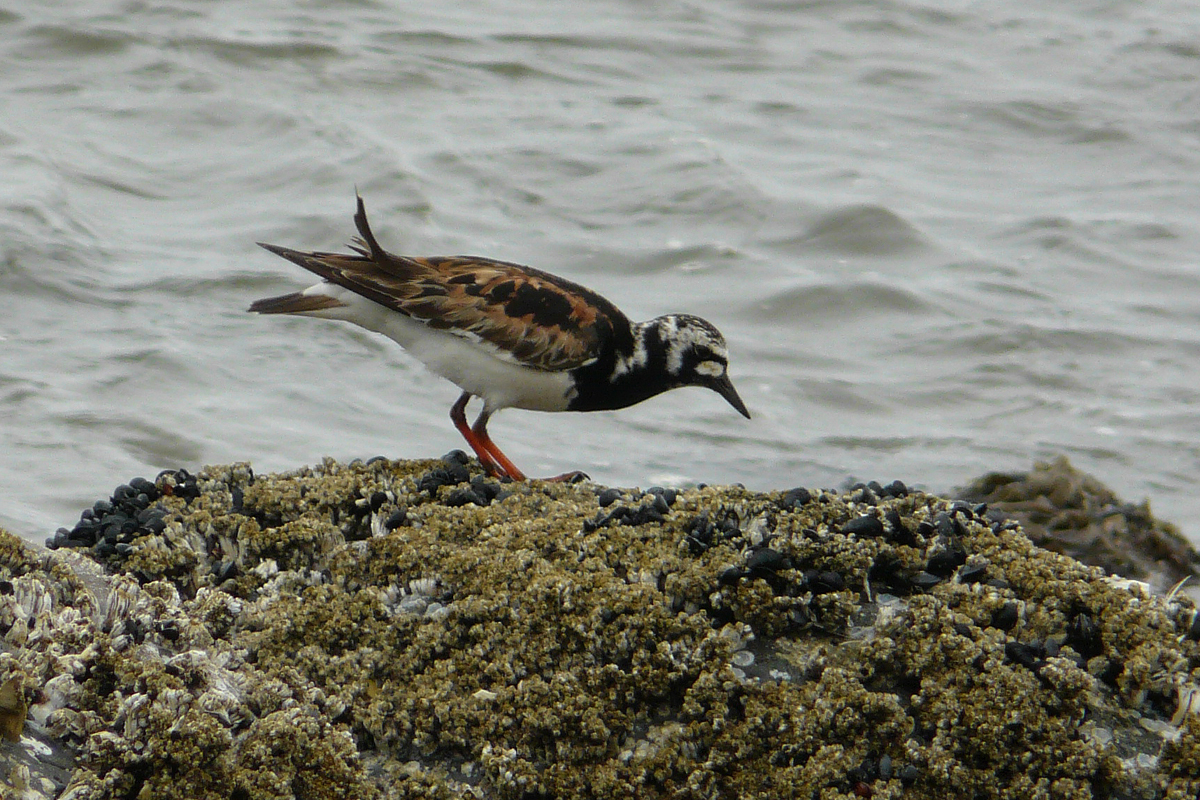
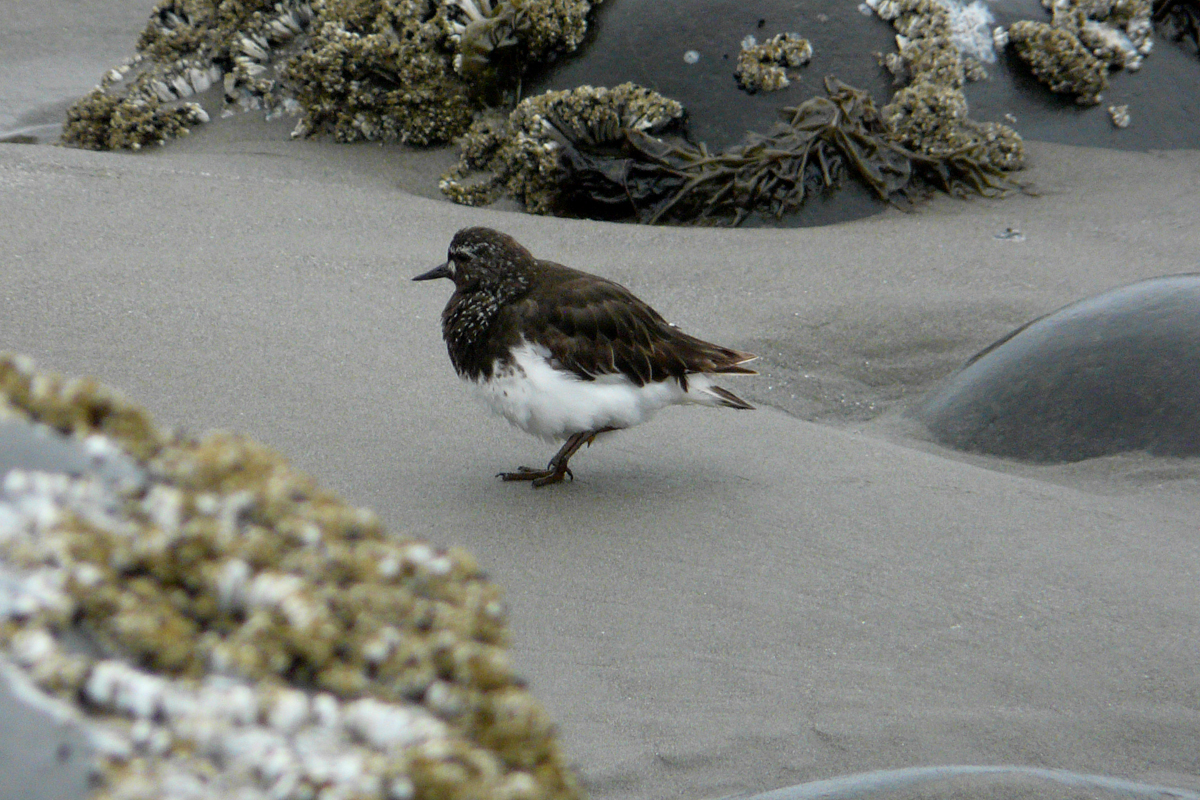
Black Turnstones, which spend the winter here, are back.

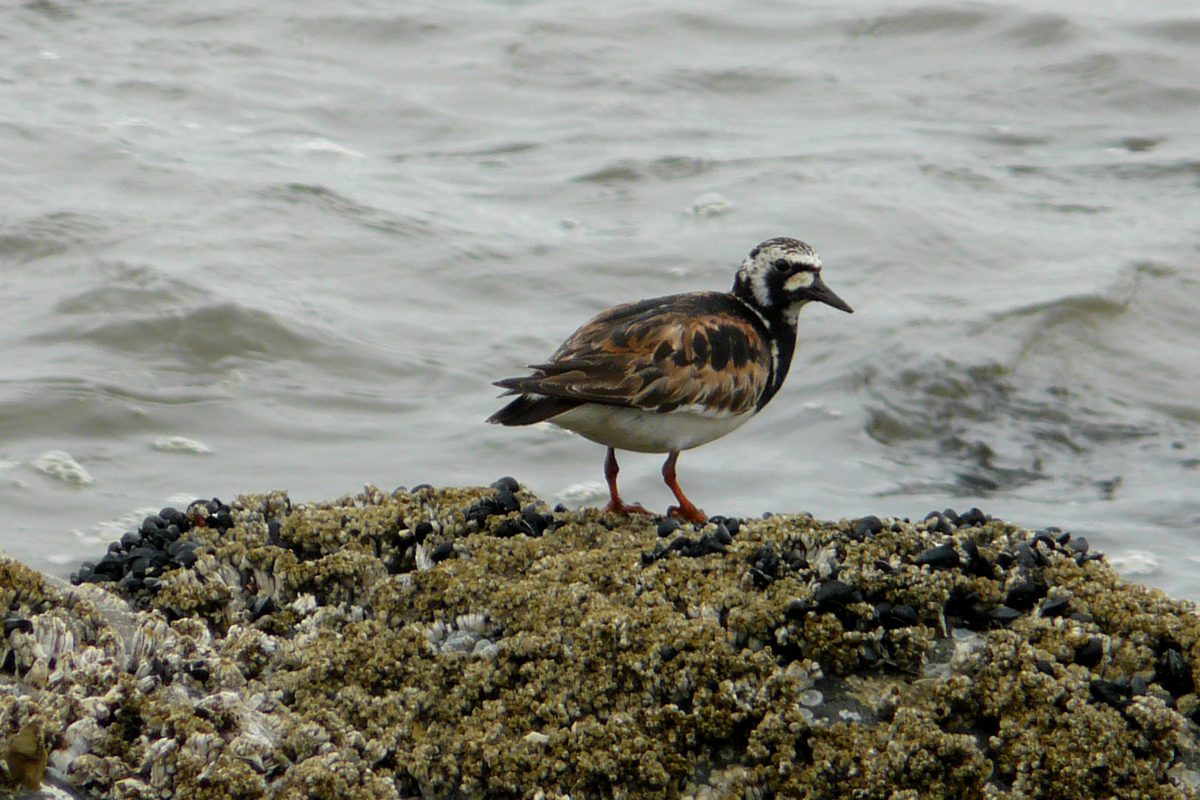
The best bird of the day Thursday was this Ruddy Turnstone, an uncommon migrant along the coast. Unfortunately, he did not stick around for my shorebird class field trip on Saturday.

Caspian Terns, seen here with California Gulls, were common on the beaches. Note the young tern in the center of the photo.
More Caspian Terns with Brown Pelicans and a Western Gull

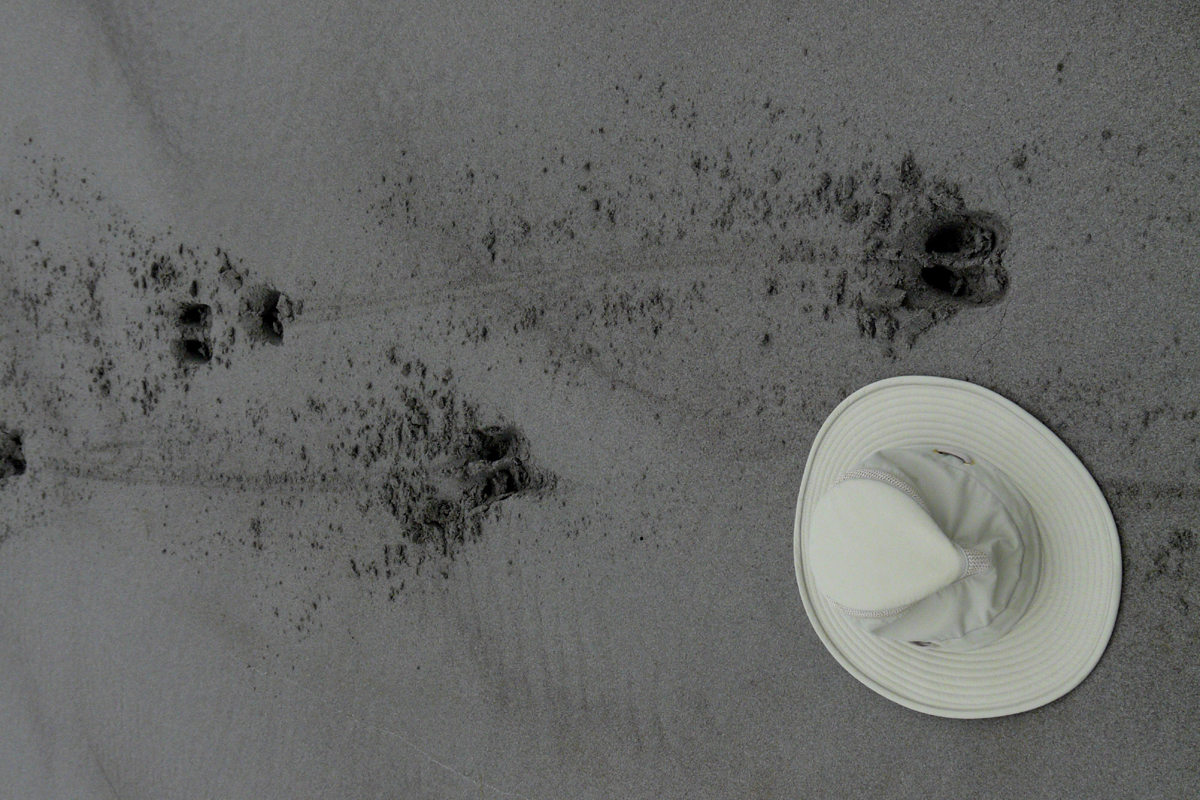
These Elk tracks were on the beach near the south jetty of the Columbia River at Fort Stevens State Park.

At high tide, the Hammond Boat Basin has been hosting large flocks of Marbled Godwits and Whimbrels (and an unidentified dowitcher species in the middle of this image). Similar roosts in Washington attract rare migrants every year. I hope the same is true for the Oregon side of the river.

Sandy River Delta 7/20/12

While late July is normally pretty slow birding in the Willamette Valley, the Sandy River Delta continues to be active. The regular nesting species that are local specialties at this site (Yellow-breasted Chat, Lazuli Bunting, Willow Flycatcher, Eastern Kingbird, etc.) are still easy to find. A very vocal Indigo Bunting has been a rare treat the past week or so, and an even rarer Yellow-billed Cuckoo has been reported. On my recent visit, I enjoyed brief views of the bunting, but the cuckoo has not been relocated.

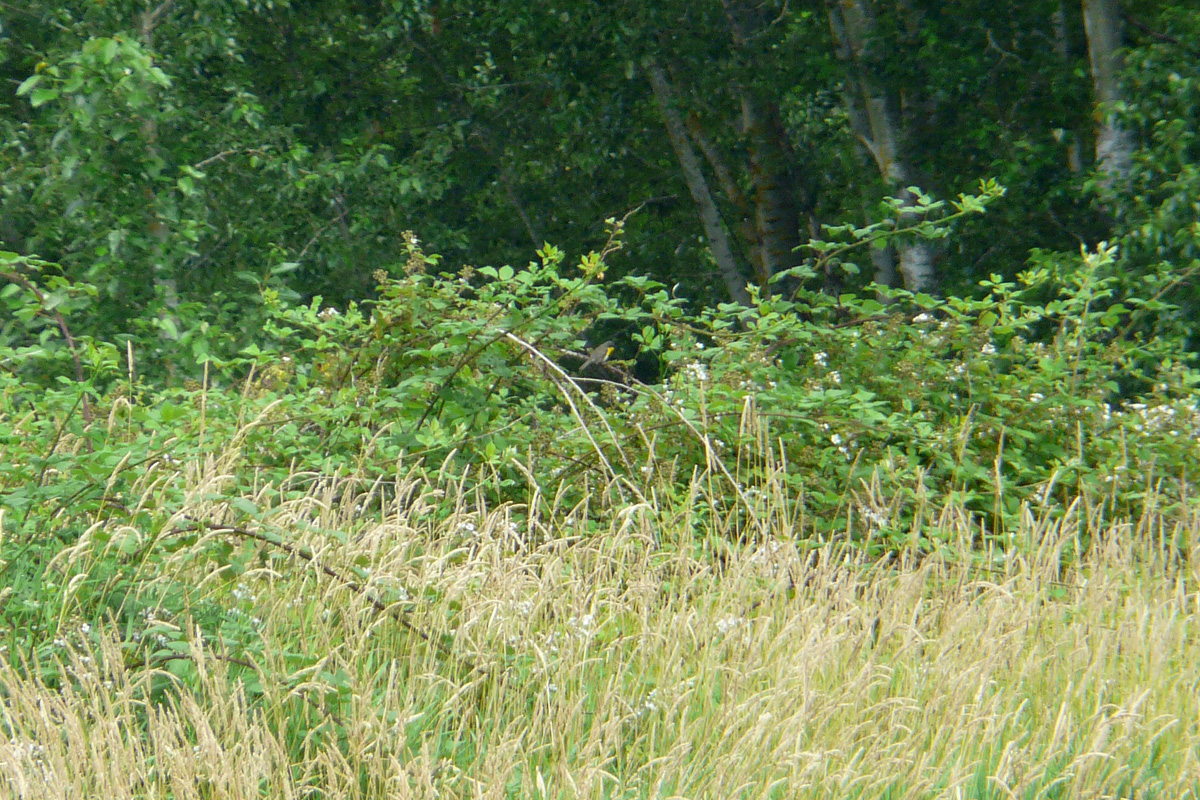
This Yellow-breasted Chat was singing away in the blackberry thickets. He stayed out of sight most of the time, but popped up briefly for a distant photo.

American Goldfinches were common in both the grassy and brushy habitats.

An Eastern Kingbird was using this pipeline marker as a hunting perch in the middle of a large grassy area.

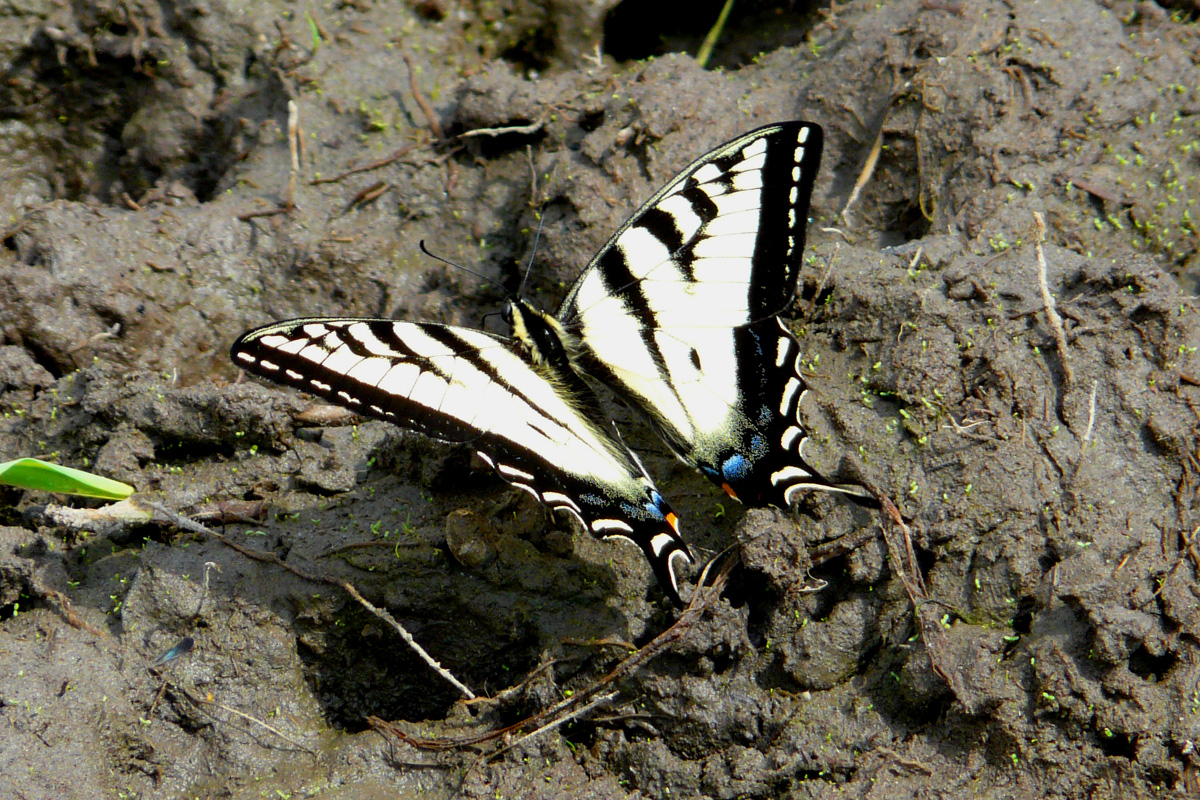
Western Tiger Swallowtail at the mud near the edge of Nala’s favorite swimming pond

Water levels are dropping, so Nala’s pond will soon be too shallow for swimming. But the the Sandy River has dropped enough to be accessible now, and the water in the river is a lot cleaner than the brown pond water.

Washington County Wetlands

I visited several sites in Washington County to check for migrant shorebirds, inspired by the recent appearance of a Spotted Redshank at Fern Ridge Reservoir (Birding Oregon p 89) . I didn’t find anything so rare, but a few birds are moving through and there is promising mudflat habitat available.

A lot of work is being done at Fernhill Wetlands (Birding Oregon p. 61), resulting in the closure of a small section of the trail around Fernhill Lake.

The big news at Fernhill is the low water level of Fernhill Lake, creating mudflats along the shore for the first time in many years. Several species of shorebirds were feeding there today.

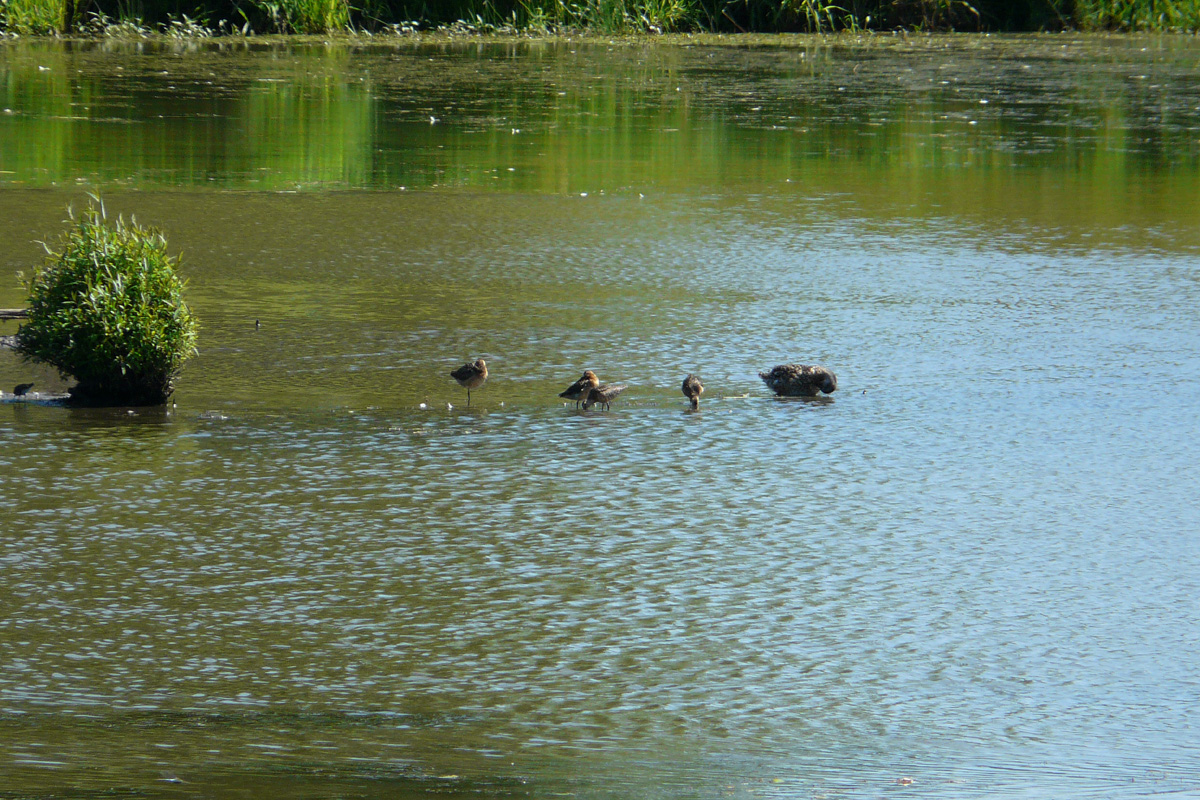
Water levels in Mitigation Marsh are quite high, so there wasn’t much mud. These Long-billed Dowitchers were hanging out with a Mallard.

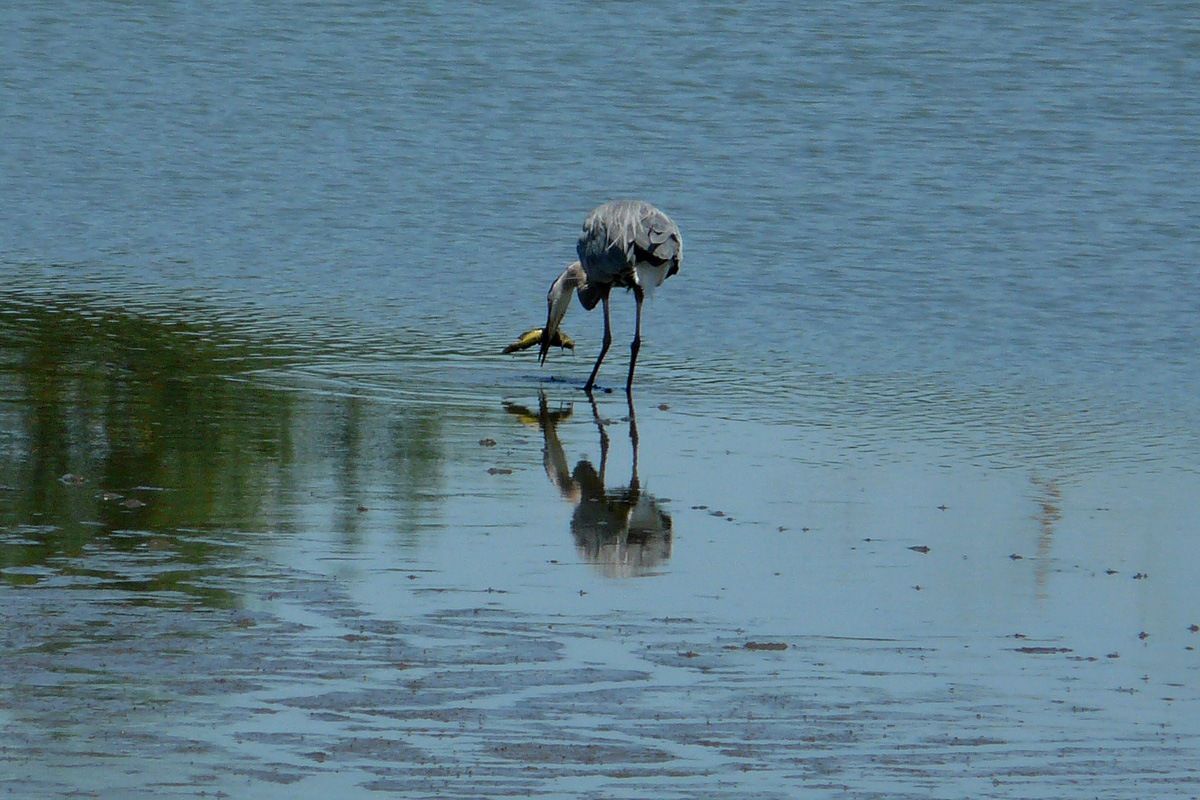
This Great Blue Heron caught a Bullhead (I can’t tell if it is a Yellow or Black Bullhead). He caught the fish near the middle of the lake, then flew to the shore to eat it.

There was some mudflat habitat at Jackson Bottom Wetland (Birding Oregon p. 60), but not a lot of shorebirds yet. The Hardhack is in bloom, adding a splash of color to the marsh.

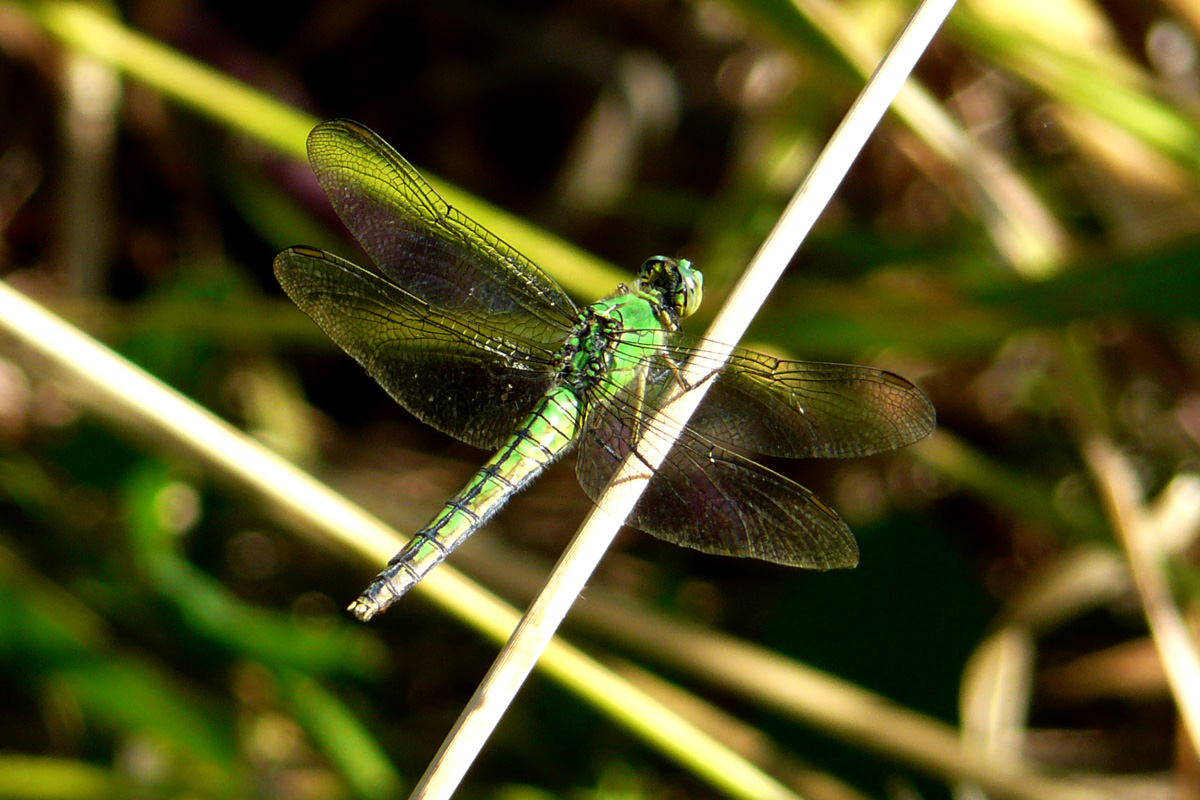
One of these days I may have to break down and buy a field guide to dragonflies. Or maybe I will just learn to appreciate beautiful creatures without putting a name to them.

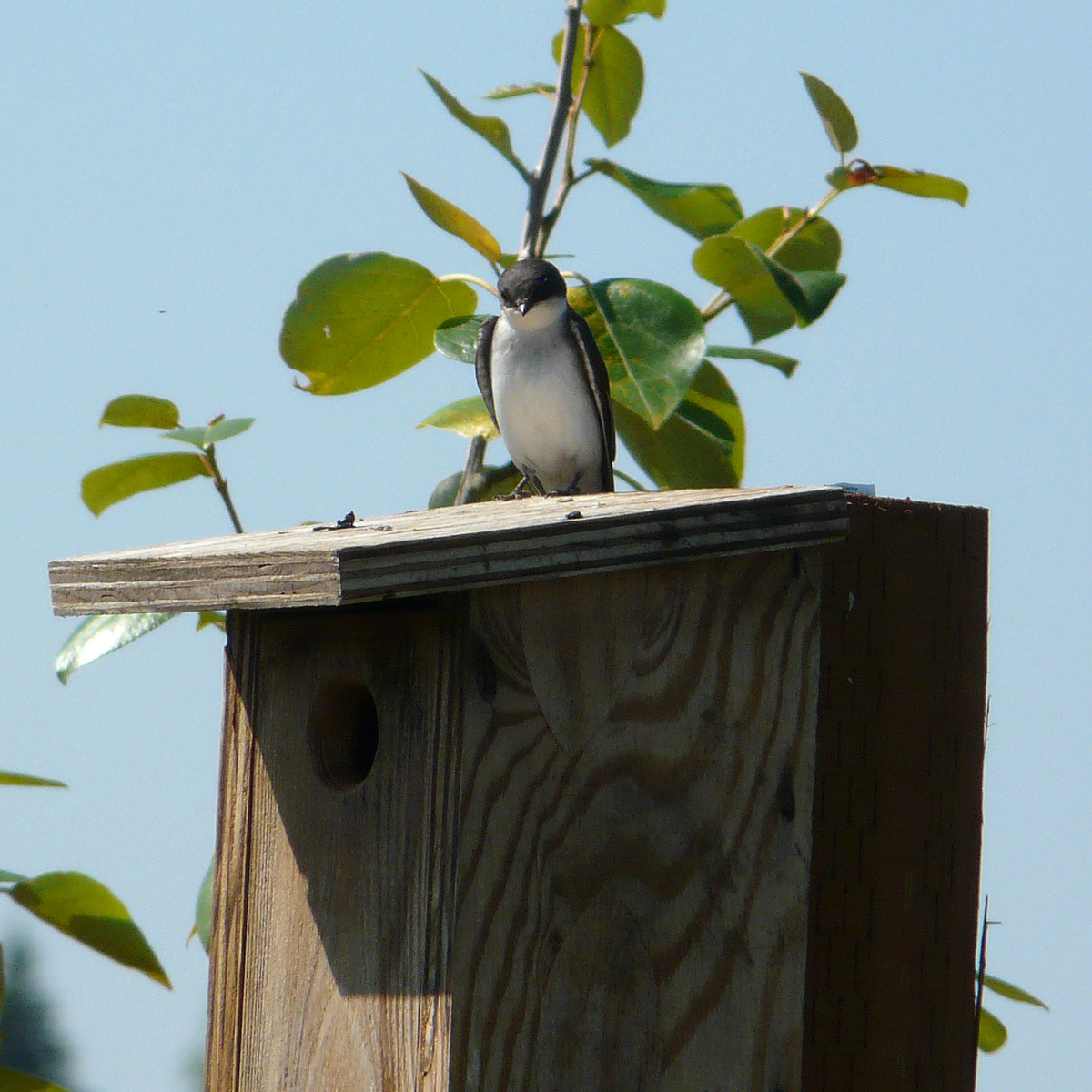
Tree Swallows are thick at Jackson Bottom. Notice the dusky wash across the upper breast. Young Tree Swallows can show extensive dark coloring here, leading some birders to confuse them with Bank Swallows.


Fort Rock State Park

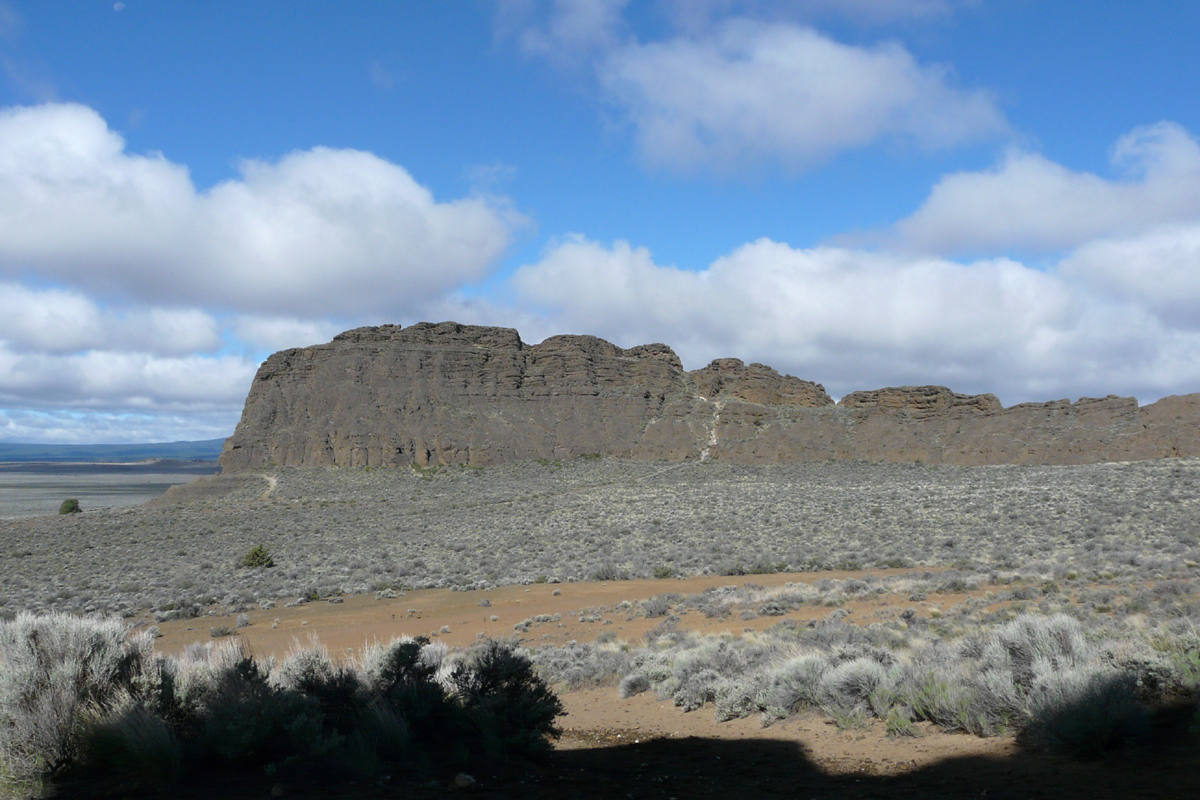
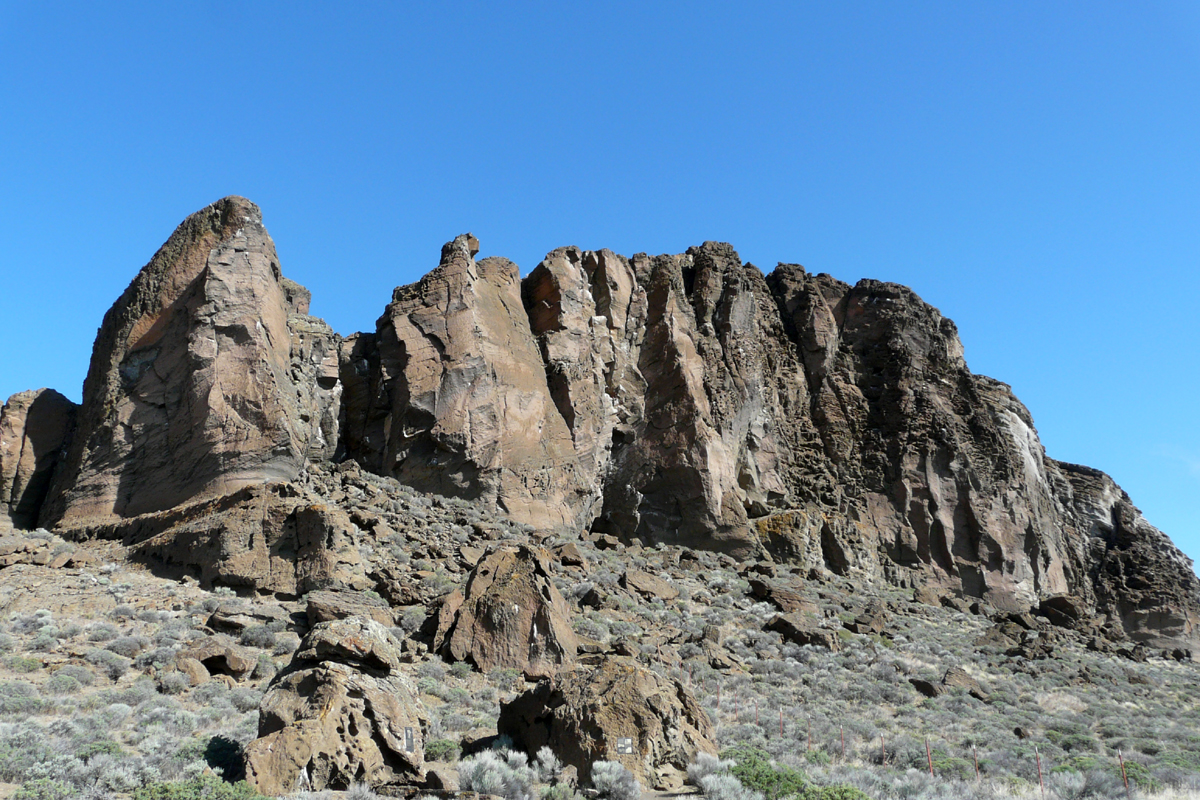
Fort Rock (Birding Oregon p. 27) is a wonderful open ring of rock rising out of the flat sage steppe of Lake County. The remnant of a lava eruption, worn down by the waves of an immense lake, the high rock walls are home to White-throated Swifts, Rock and Canyon Wrens, and various raptors. The sage flats inside and surrounding the structure attract Sage Sparrows and Green-tailed Towhees.

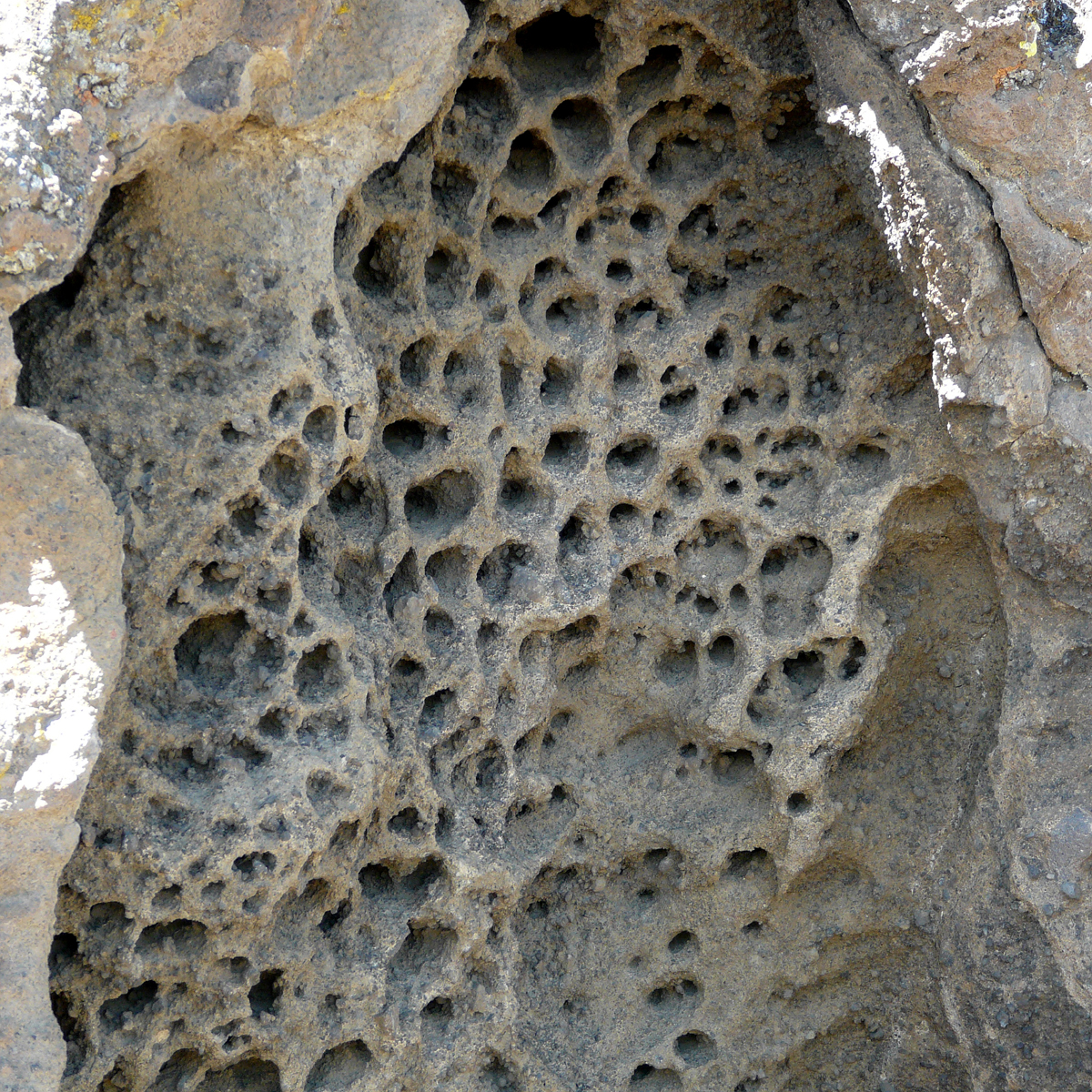
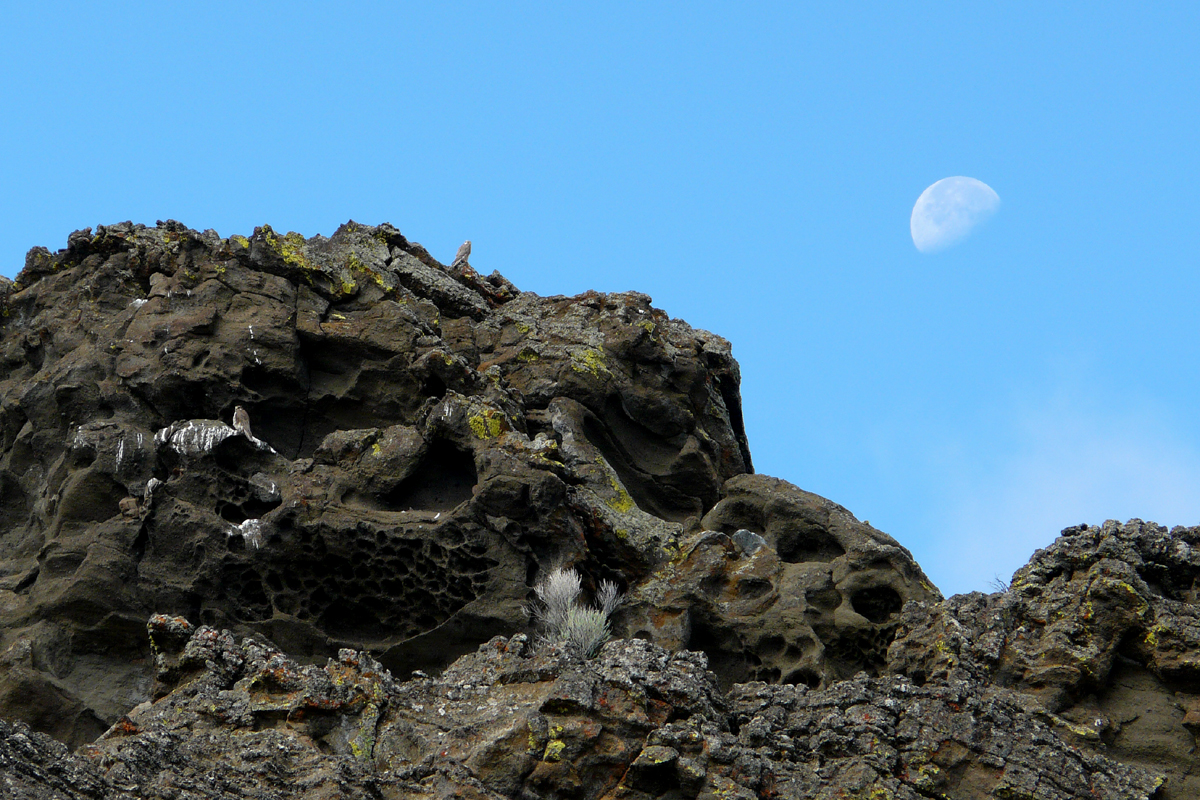
The rock is filled with bubbles, the result of lava erupting into a lake.

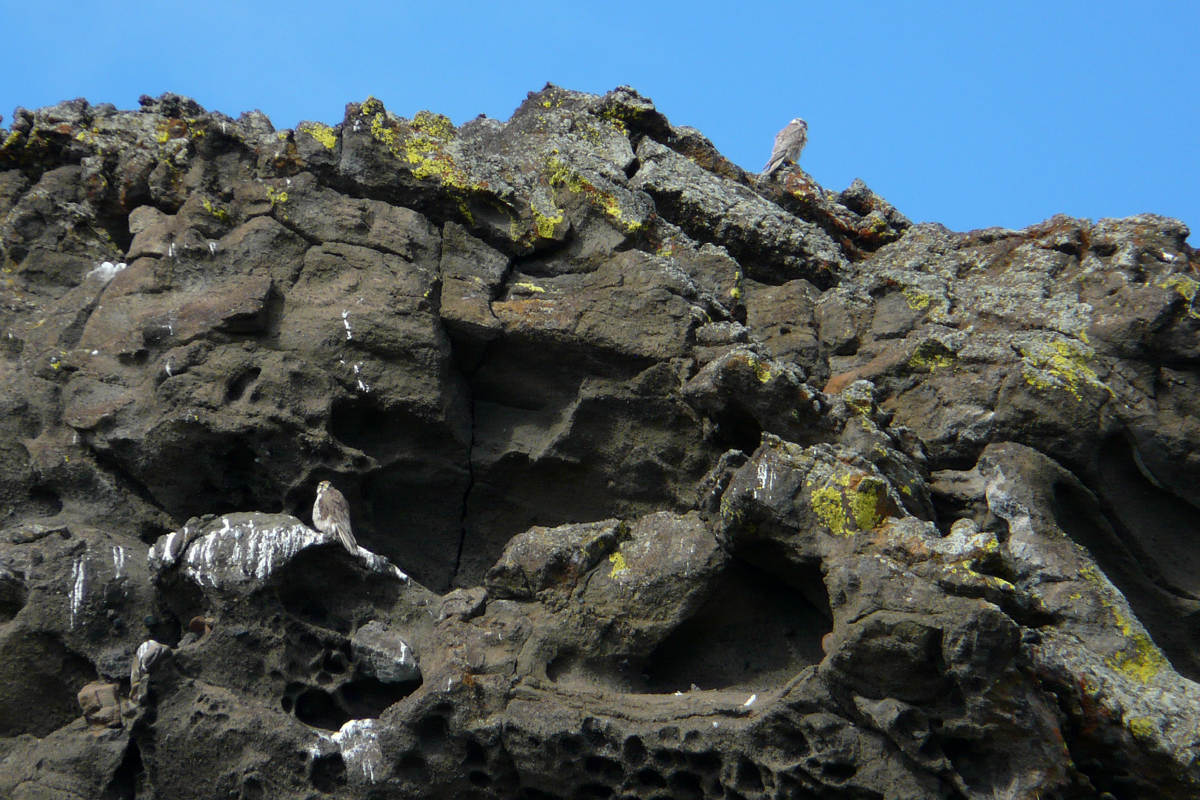
The moon over the western wall. There is a pair of Prairie Falcons in this photo, the male is on top of the ridge and the female is down and to the left near the whitewash.

Here’s a closer look at the Prairie Falcons.

A view of the west wall from inside the crater.

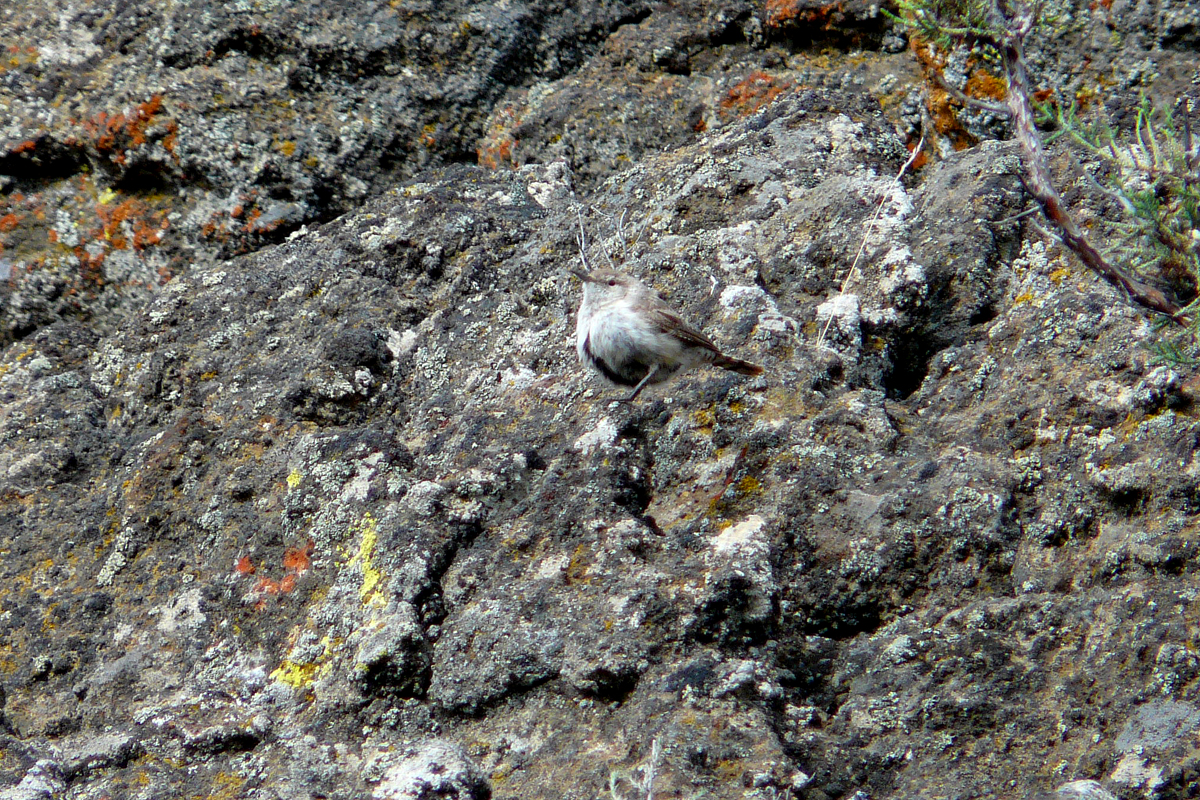
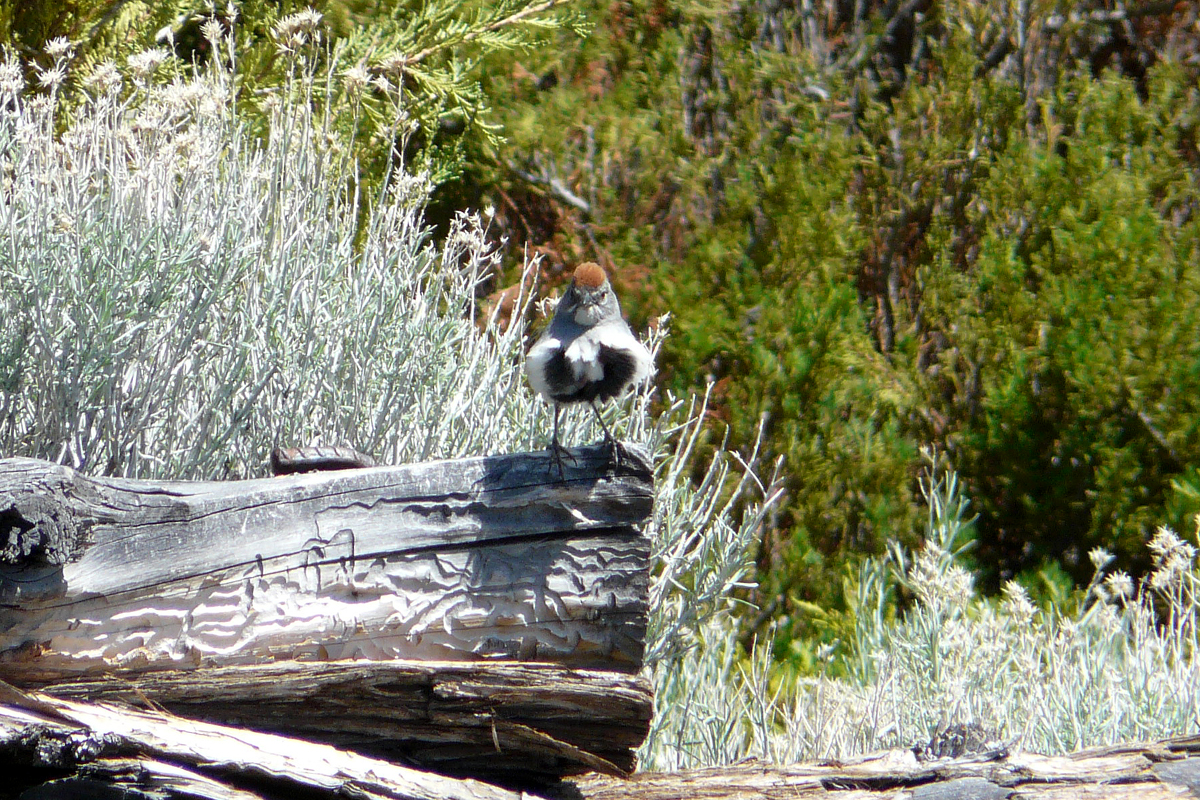
Rock Wren, blending in well with his surroundings

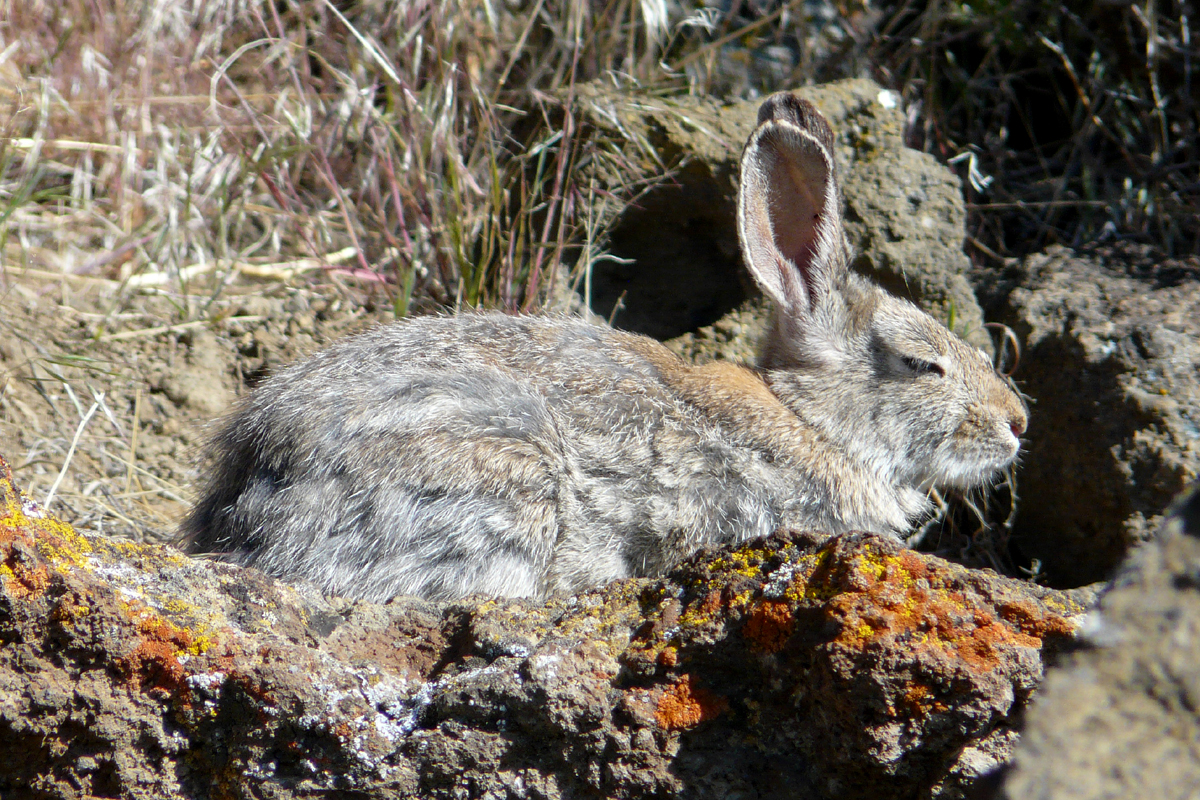
This Mountain Cottontail was soaking up a little sun on this cold windy morning.

The outside of the eastern wall near the parking area. This area seems to be best for White-throated Swifts and Canyon Wrens.

The vegetation near the parking lot attracts both migrant and resident birds. Brewer’s Blackbirds are common here.

Green-tailed Towhee being buffeted by the wind

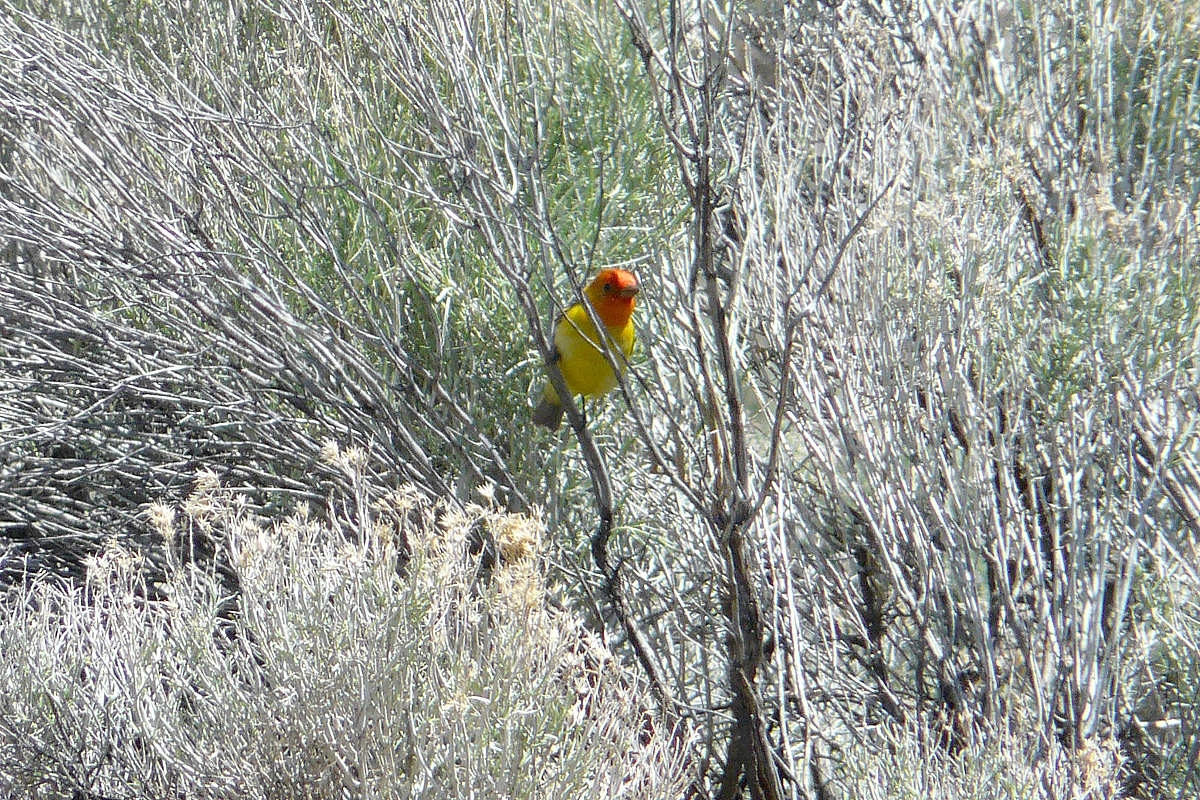
Western Tanager

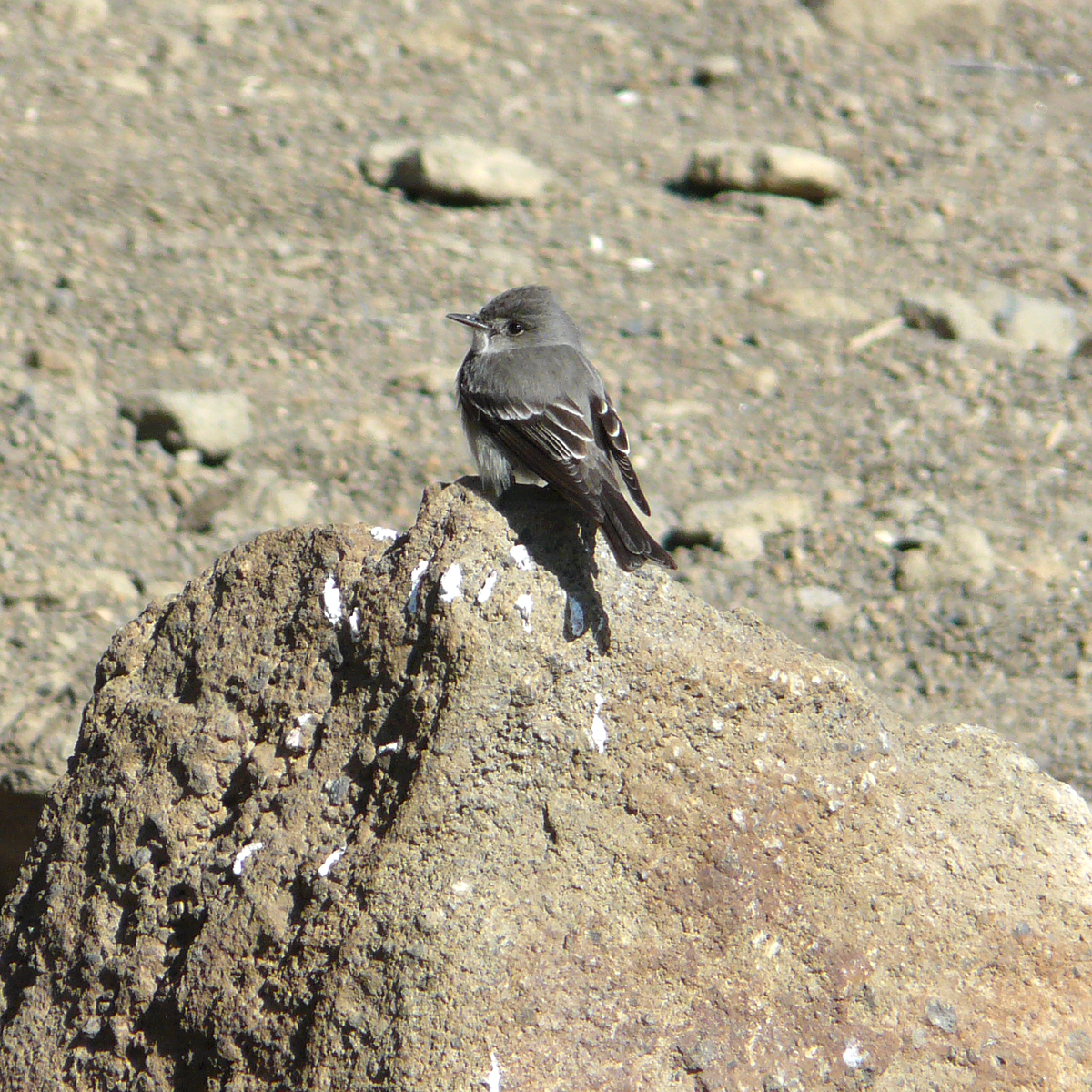
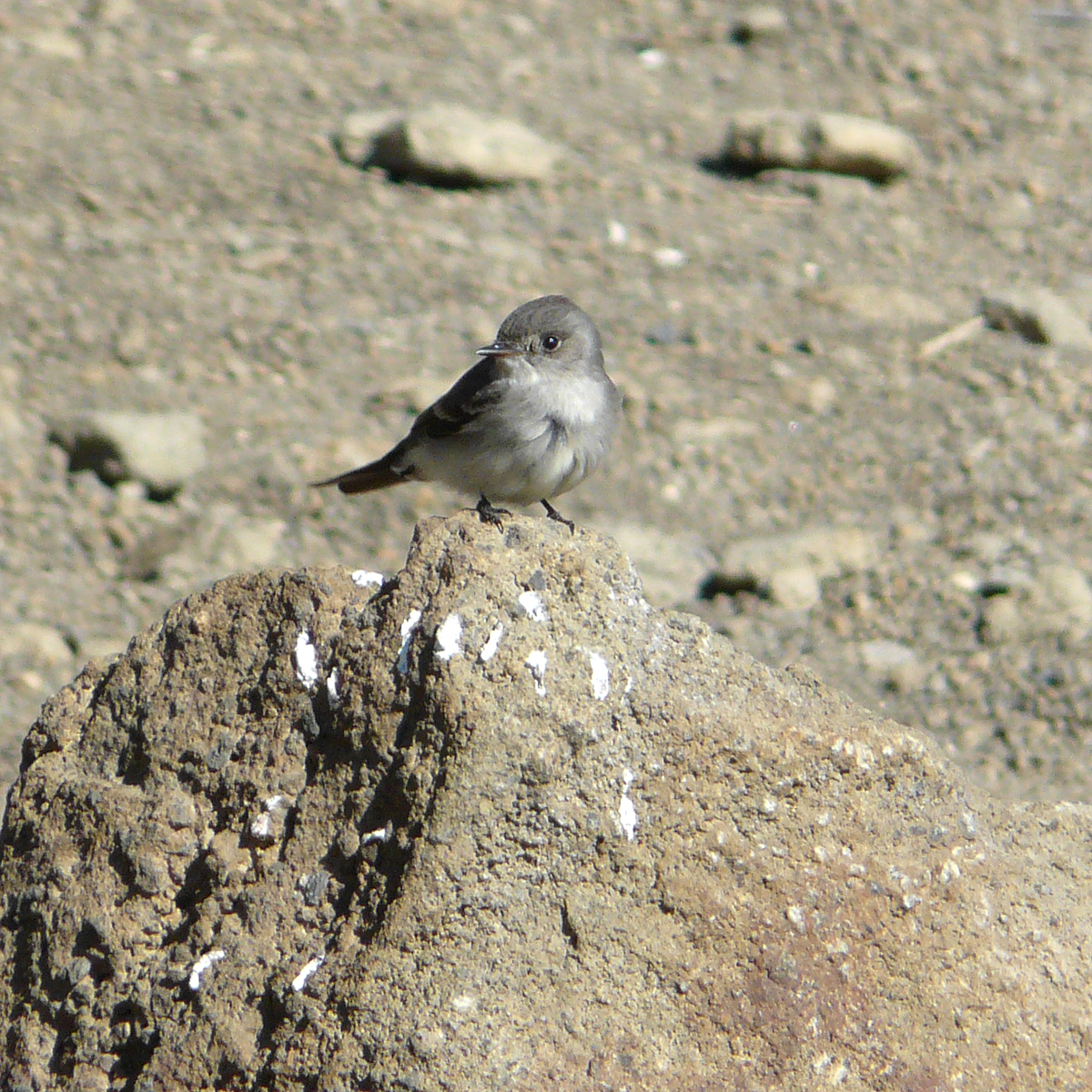
Cold temperature and high winds forced this Western Wood-Pewee to hunt from  the ground.

Goose Lake State Park

About 14 miles south of Lakeview, Goose Lake State Park is always worth a quick stop for riparian birds and waterfowl. Goose Lake is large (8 miles wide, 20 miles long) and shallow (average 4 ft.), making it ideal for Western and Clark’s Grebes, dabbling ducks such as Gadwalls and Cinnamon Teal, and marsh species along the shores. Most of the lake lies in California, but a few miles of it extend into Oregon. During migration, large numbers of migrant waterfowl can be seen here, although I think it would be more pleasant to avoid waterfowl hunting season.

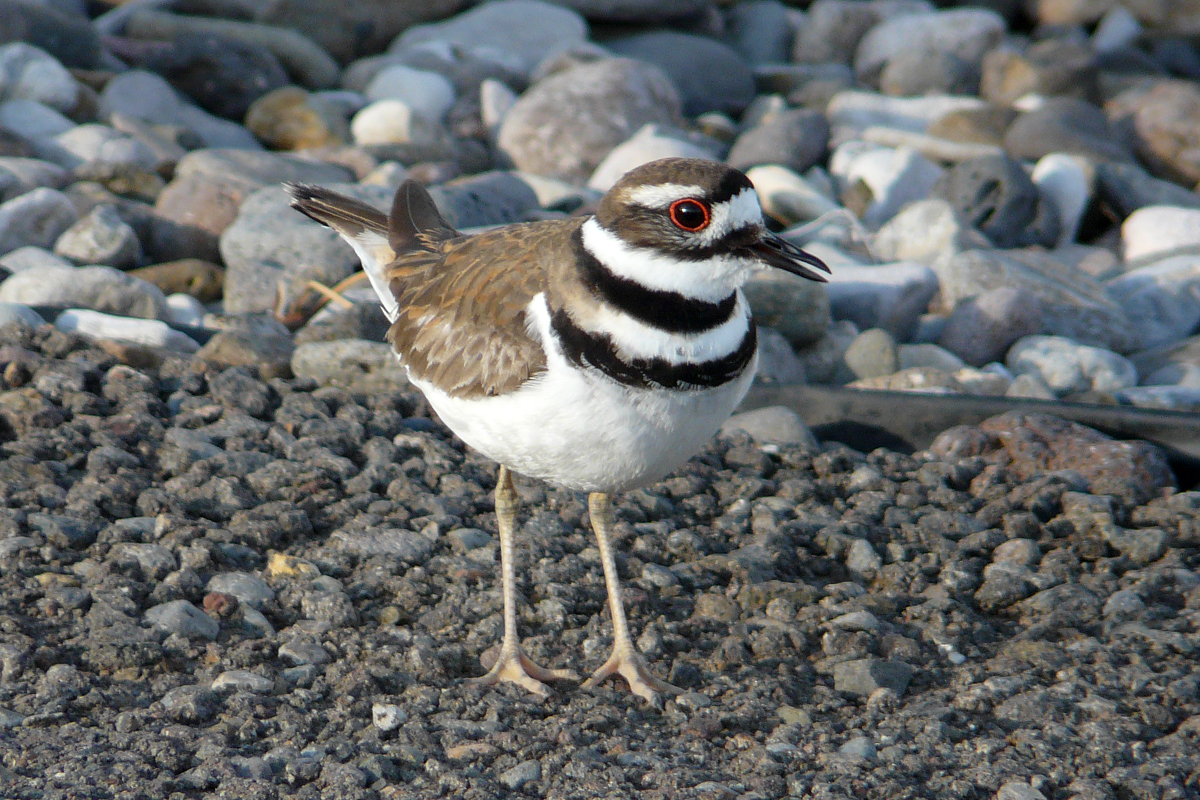
I think this Killdeer must have had a nest in this patch of gravel, because she stood her ground as I walked by. While their abundance, along with their persistently loud obnoxious calling, makes it easy to not appreciate Killdeer, they really are stunning shorebirds.

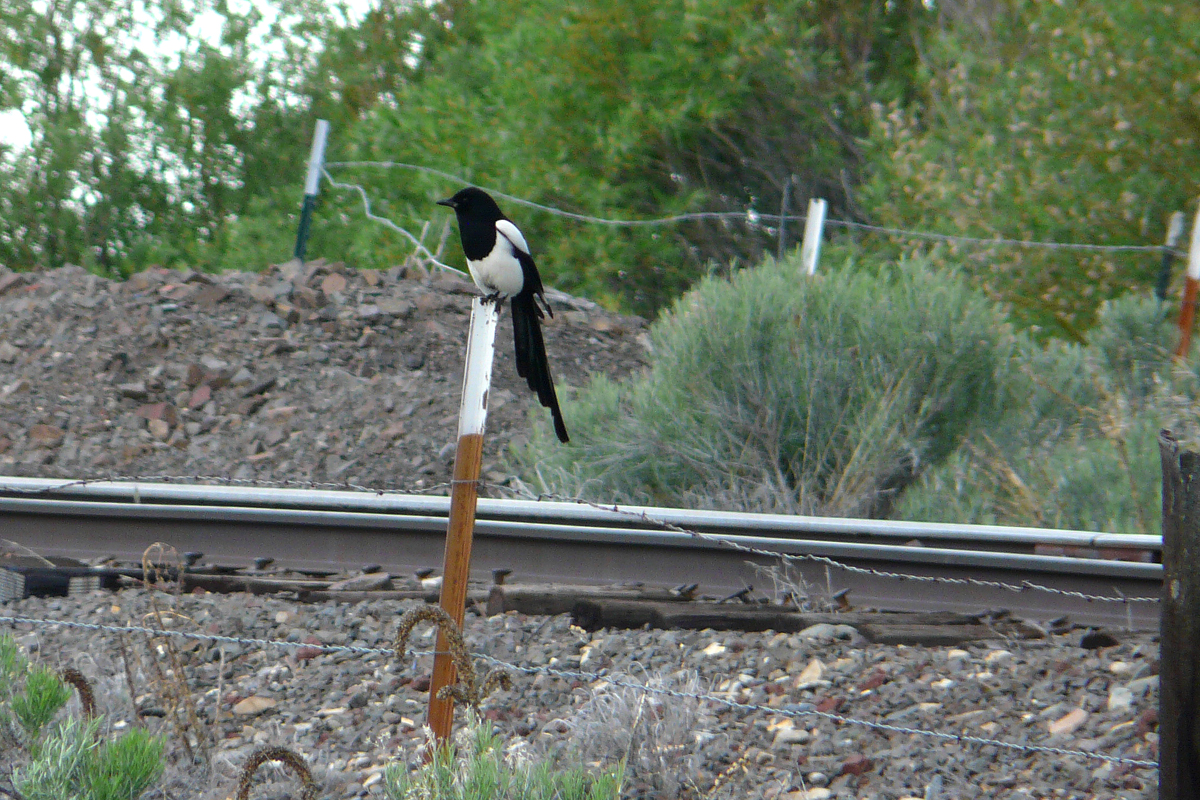
The brushy riparian habitat in the state park attracts a nice variety of birds. The site gained notoriety a few years ago when it hosted a White-eyed Vireo. I didn’t find any great rarities during my recent visit, but I always enjoy seeing Black-billed Magpies.

It is hard to believe that ten years ago, Eurasian Collared Doves were very rare in Oregon. They are now well established throughout much of the state.

In the large lawn near the picnic area, the resident ground squirrels have created a web of rodent runways through the grass.