
This male Bullock’s Oriole was bringing a caterpillar to his nestlings on the Oak Island Unit of Sauvie Island. This is one of the more reliable spots to find this species in the Portland area. That hanging nest is a fantastic piece of architecture.
Category: nesting
Purple Martins
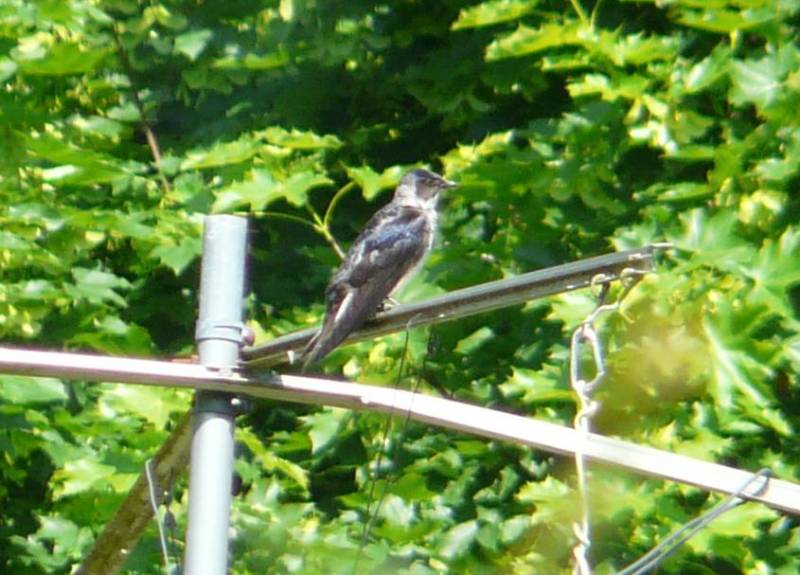
I always enjoy checking out the Purple Martin houses behind a home on Sauvie Island. These large swallows are one of the more popular yard birds in the eastern U.S. , but the species is much less common in the West. This site on Sauvie Island is one of the few places in the Portland area to find them.

Here a female is putting nesting material into a martin house. The “natural” nesting habitat for Purple Martins is a cavity, usually an old woodpecker hole. But for the past two centuries, most of the population has chosen to nest in man-made structures.
Chestnut-backed Chickadee

The chickadees are starting to excavate their nest cavities. This Chestnut-backed Chickadee was working on a dead snag right along the trail at Nestucca Bay NWR. Even though the birds choose soft dead wood on which to work, it seems a herculean task for a bird with such a diminutive bill to excavate a cavity large enough for nesting.
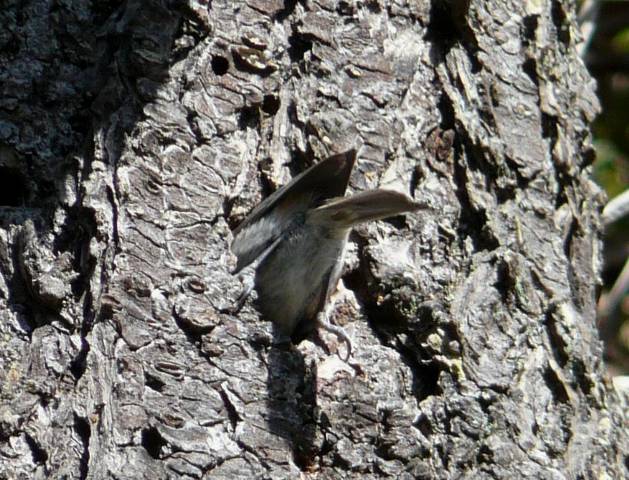
She can fit about half her body into the cavity so far. It takes about seven days to complete a nest.

Here she spits out a mouthful of wood chips. Larger chips are carried away from the nest site before being dropped. A big pile of wood chips at the base of the nest tree would alert predators to the location of the nest.
Nesting Cassin’s Vireo

During a visit to Tualatin Hills Nature Park, I was watching a Cassin’s Vireo pulling material from tree trunks. Eventually she flew up to the nest site, where we can see her nest under construction.
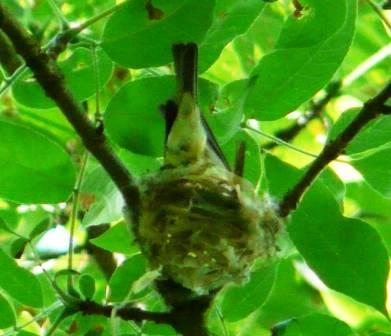
Below is a typical view of a Cassin’s Vireo in the canopy (backlit and facing away). She was weaving material into the nest, then sat down to assure a good fit.
Fernhill Wetlands
I visited three of the Washington County wetlands today, but spent most of my time at Fernhill (Birding Oregon p.61). Nesting species were present in abundance, but overall species diversity was pretty low.
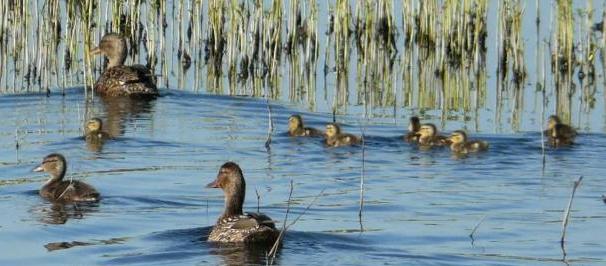
The duck at the top of this picture is a Gadwall, a rare breeder in western Oregon, with her newly hatched brood. The duck at the bottom is a Mallard with her larger duckling. We are quickly entering the “ugly brown duck” season, when all the waterfowl are molting and looking increasingly similar.
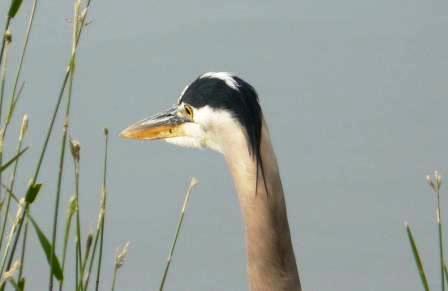
Great Blue Heron
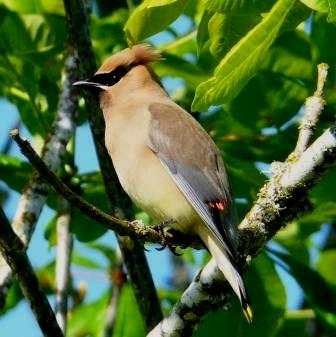
Cedar Waxwing
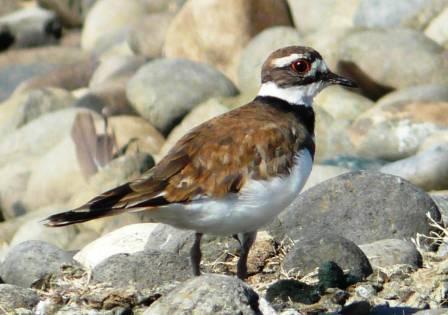
Killdeer were the only shorebirds present today. Migrant shorebirds should start appearing in about two weeks.
John Day Fossil Beds
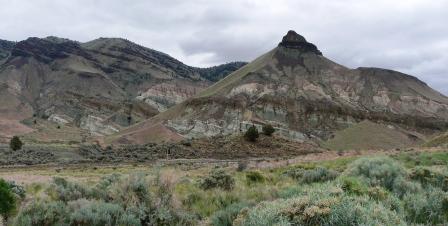
Marsha and I visited the Thomas Condon Paleontology Center, part of the John Day Fossil Beds National Monument in the Painted Hills (Birding Oregon p. 34). This site offers a great combination of beautiful scenery, a museum with excellent fossil specimens, and, of course, a few birds of the sage steppe and rimrock habitats.
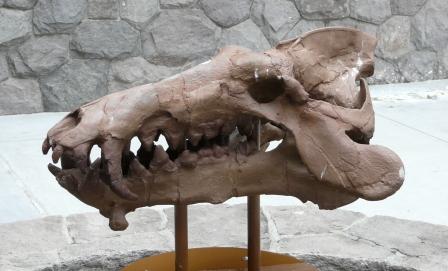
This skull replica graces the courtyard in front of the museum. Just above, several Cliff Swallows were building their mud nests.

The sage around the center held several Western Meadowlarks and Western Kingbirds

A pair of Say’s Phoebes had a nest in a shed by the monument headquarters, just down the road from the museum.

These birds would perch on a set of Mule Deer antlers mounted above the door before entering the shed to attend the nest. The fact that this bird is carrying food indicates that the eggs have hatched.
Sauvie Island
Some lovely weather at last. I walked along Rentenaar Road on Sauvie Island today. Many of the geese have moved on, but there were still a few good flocks of Cackling Geese and Sandhill Cranes.
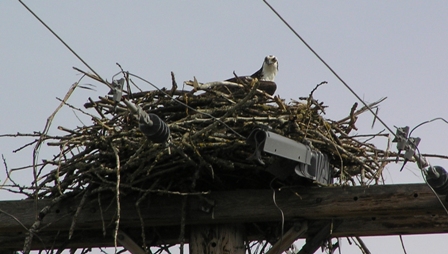
A pair of Ospreys are working on a nest. There is a platform built for them just a few yards from this spot, but these birds prefer to build on the power lines.

This individual was eating a fish while the other tended the nest.
Two Coyotes were sniffing around in a pasture. I never get tired of watching these guys.

Pileated Woodpeckers excavating
Our warm spring weather has deteriorated into windy, cold, rain-and-snow-mixed squalls. Such weather brings on cabin fever rather quickly. So in an effort to avoid total psychosis, I bundled up and headed for Tualatin Hills Nature Park in Beaverton. Aside from the cheery singing from both Bewick’s and Winter Wrens, the highlight of the trip was a pair of Pileated Woodpeckers excavating a nest cavity.

I first saw the male, pecking away inside the cavity and occasionally hauling out a clump of chips in his bill
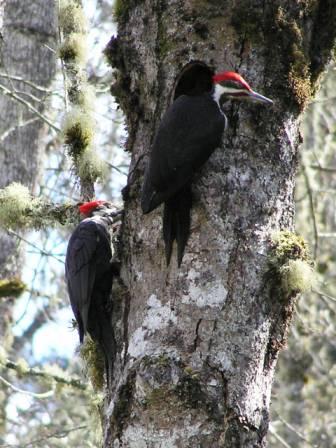
The female soon joined the male, and did a little excavating after he flew off.
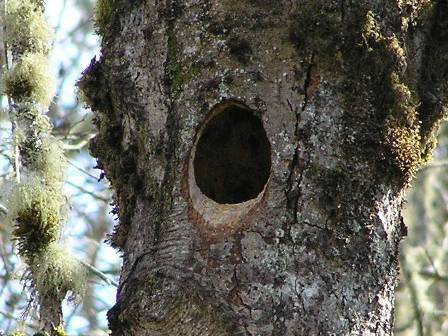
Here is the cavity. Notice how the lower edge is beveled, just like the cavities of Black-backed and American Three-toed Woodpeckers. The oval shape, and the lack of other excavation nearby, suggests this is a nesting cavity. Cavities produced by feeding Pileateds are usually rectangular.
 Ethical Birder