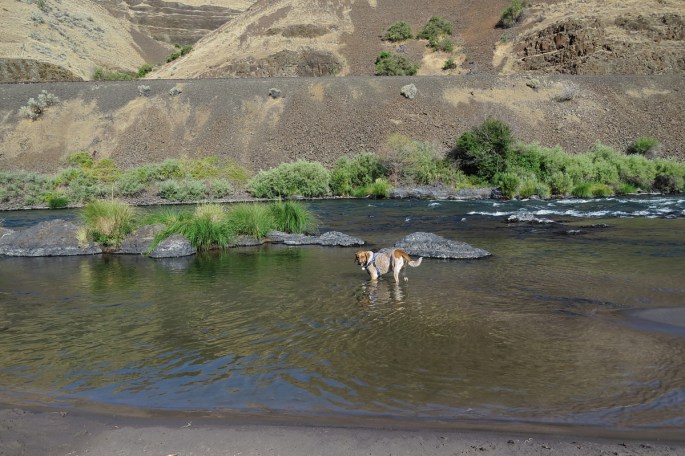
 Here are a few more images from my trip to central Oregon. The main purpose of the trip was to get the dogs away from the fireworks in Portland, but I always enjoy a trip to the dry side of the Cascades. It was indeed dry, and very hot. Bodhi cooled off a little in the Deschutes River.
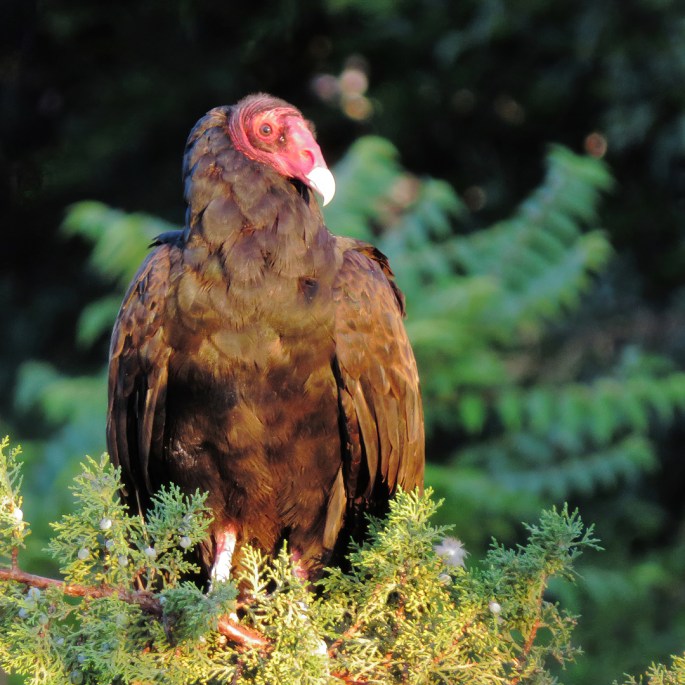
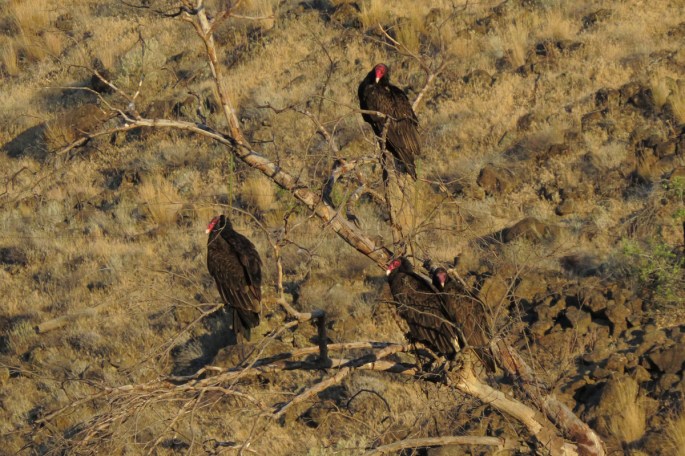 I found a small flock of Turkey Vultures roosting along the river one morning.
 Even in the early morning the sun was pretty intense.
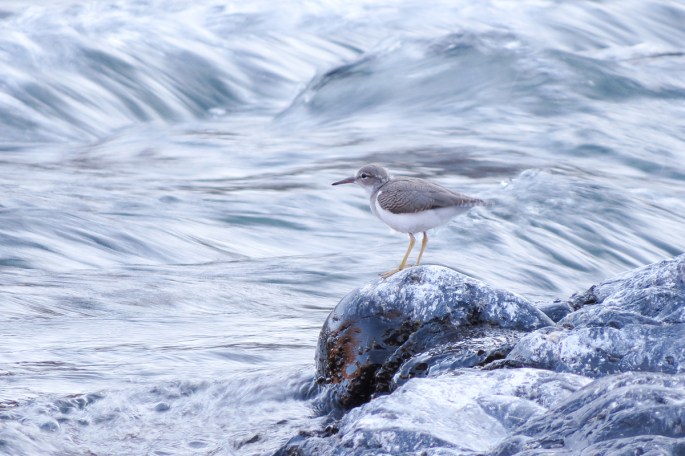 This young Spotted Sandpiper was perched on a rock in the river.
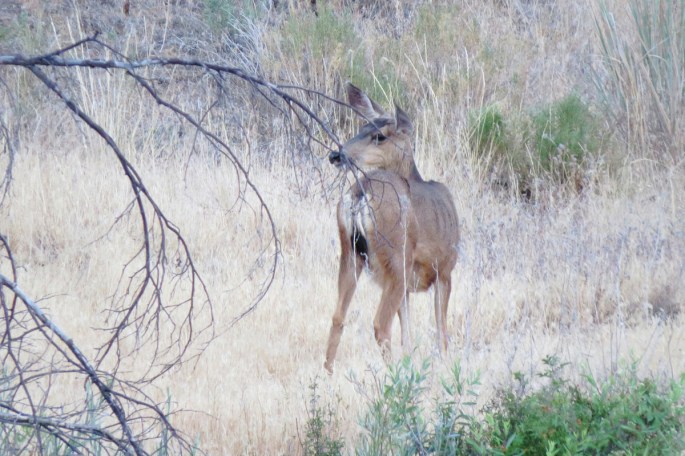 The Mule Deer were usually found along the river, which provided the only green vegetation in the area.
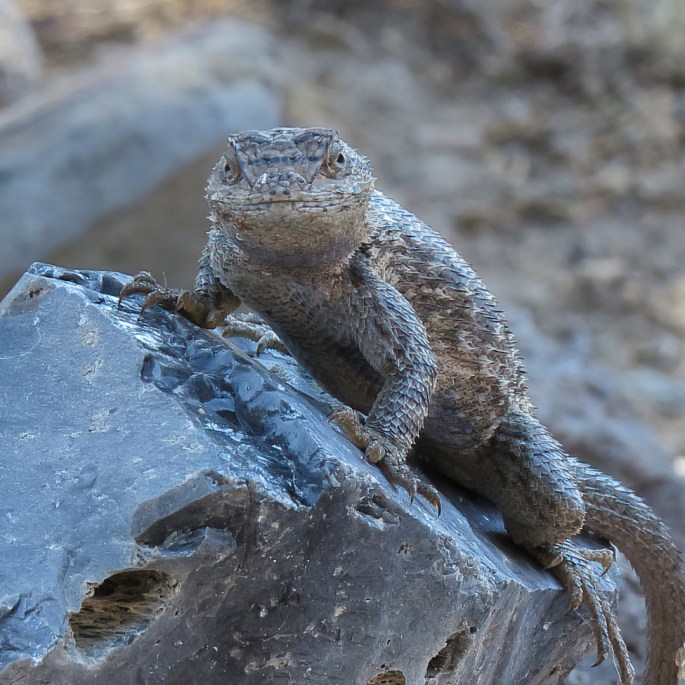 Since birding was pretty slow, I spent a lot of time with Western Fence Lizards. This individual was basking on a big piece of obsidian. Since it was so hot, these lizards usually basked in the shade except during the early morning.
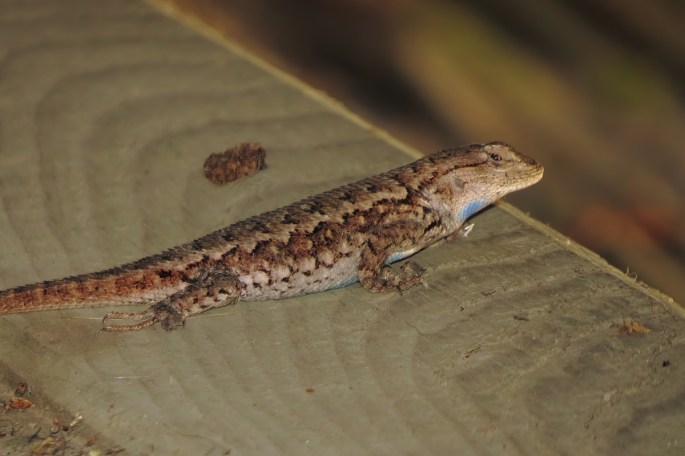 This individual was hanging out under the deck where we were staying. I had to use a flash in this dark environment. I normally don’t like the results of flash photography, but the flash really brought out the pattern on this lizard.
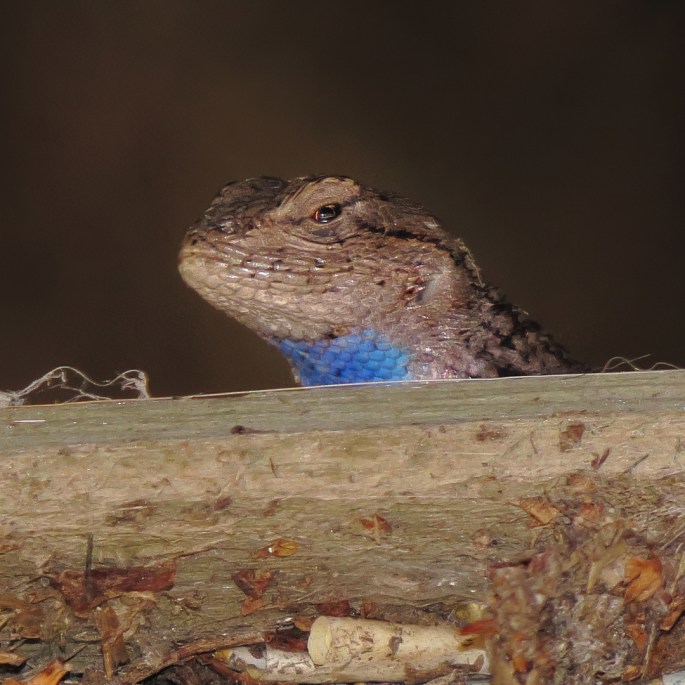 an adorable little dragon
Happy Summer
 I don’t spend a lot of effort looking for butterflies, but I do appreciate it when one poses for me. This is a Lorquin’s Admiral.
 This Northwestern Garter was hiding under a piece of bark near a stump. The cloudy eyes indicate that the snake is about to shed. Snakes in this condition cannot see well, so I generally avoid handling them.
 I am having trouble distinguishing Brush Rabbits from the introduced Eastern Cottontail. I have recently learned that the two species will hybridize, making identification even harder. The rusty nape on this individual makes me think it is an Eastern Cottontail.
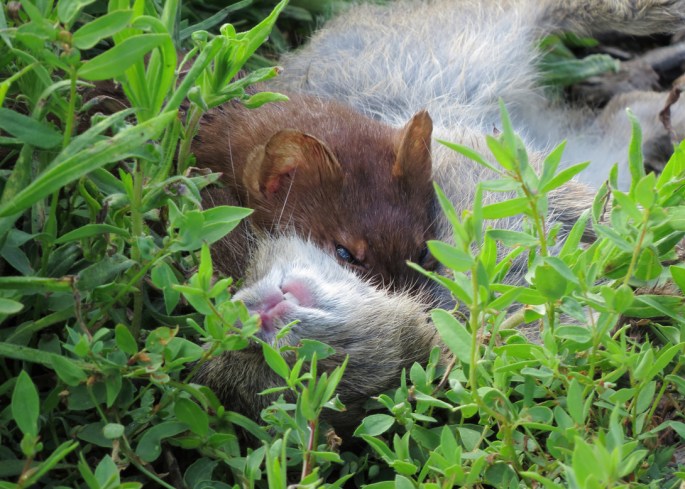 I first saw this Long-tailed Weasel chasing a Brush Rabbit down the trail and into the vegetation. After a brief tussle, the rabbit was subdued.
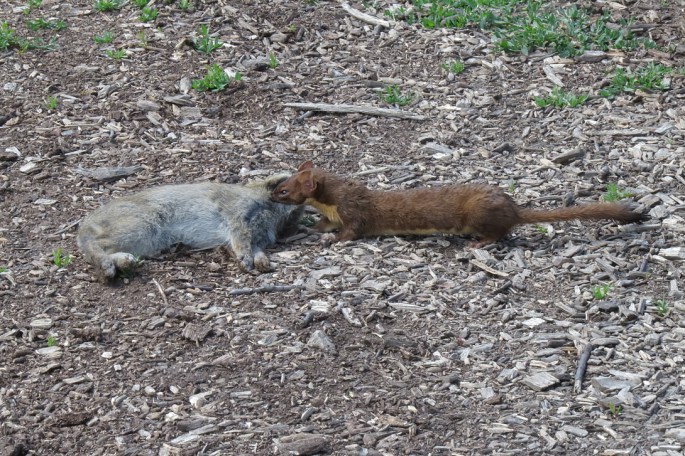 The weasel then dragged the rabbit across the trail and into the brush, despite the fact that the rabbit was significantly heavier than the weasel. These are impressive little predators.
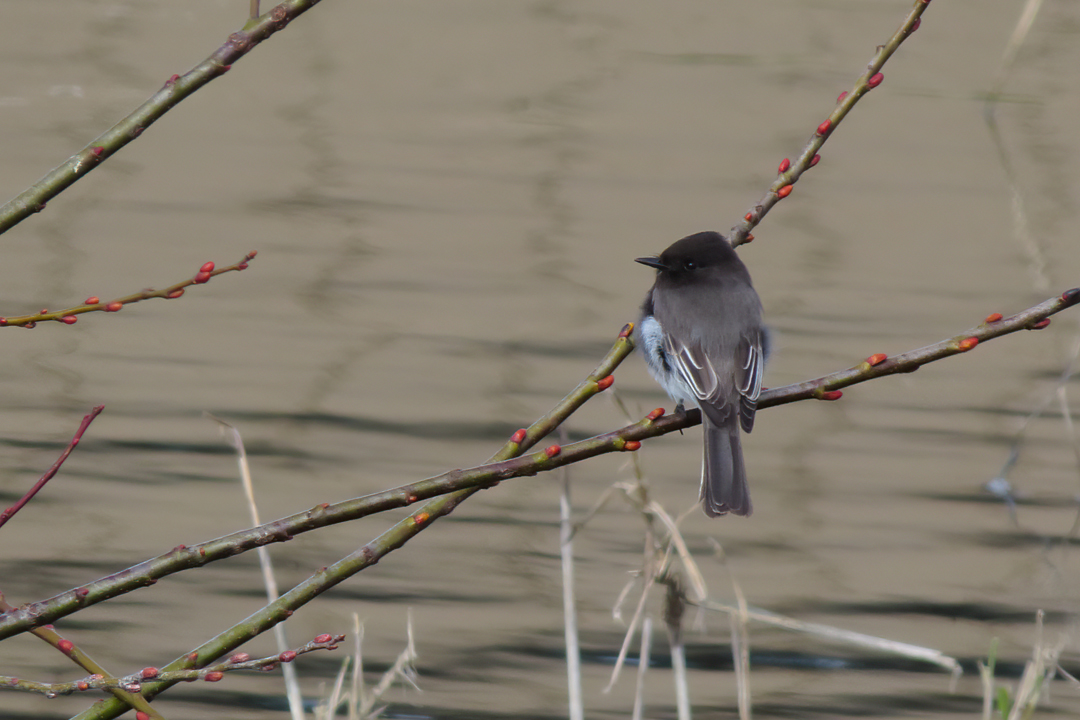
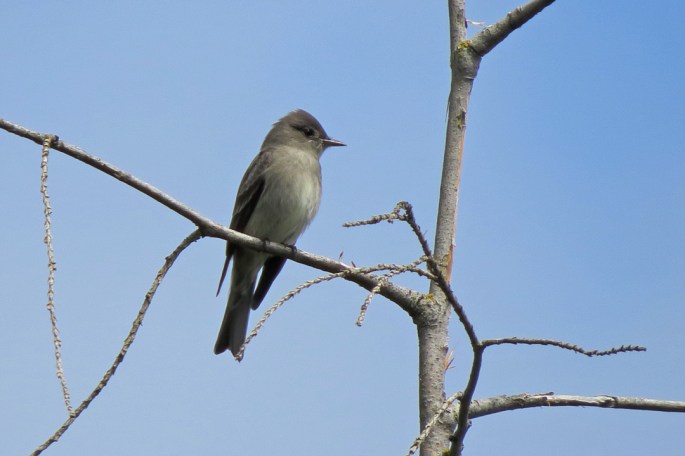 Our team for the Audubon Society of Portland’s Birdathon birded several sites in the northern parts of Portland. The weather was cool and rainy, not conducive to photography or bird activity, but we ended our efforts with 76 species for the day. This Western Wood-Pewee at Whitaker Ponds was one of the few photogenic individuals.
 Bushtit, also at Whitaker Ponds
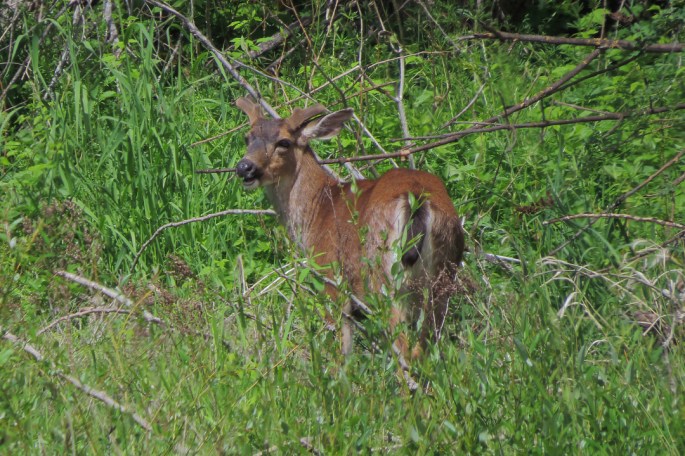 This Black-tailed Deer, with his new antlers just starting to sprout, was at Smith and Bybee Wetlands.
 There are only two native species of turtle in Oregon, both of which are considered at risk do to habitat loss and pollution. Smith and Bybee Wetlands is a local stronghold for Western Painted Turtles.
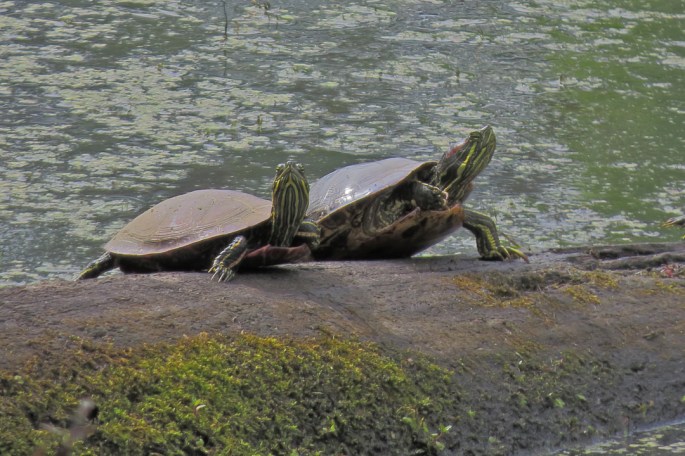 Here is a Western Painted Turtle on the left, with a Red-eared Slider on the right. Red-eared Sliders are native to the southeastern U.S., but have been introduced into many areas, usually by people disposing of unwanted pets. Introduced species compete with native species for food and nesting habitat.
 A quick tour of Fernhill Wetlands showed bird activity picking up, with the appearance of newly arrived migrants and nest building by the local breeders. This Tree Swallow was staking out a cavity.
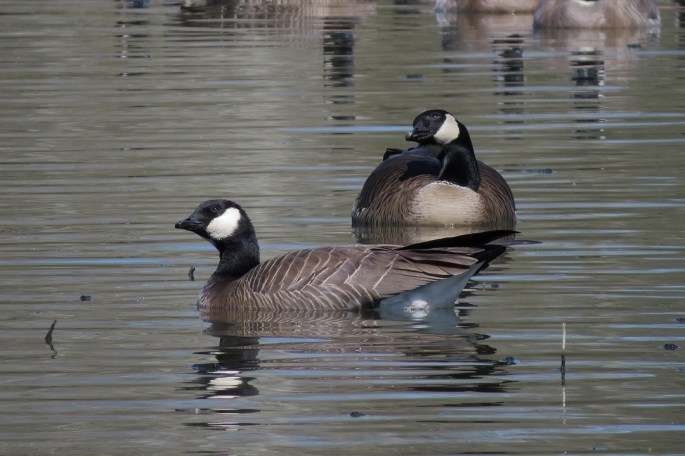 There are still some Cackling Geese around, although they should be heading north any day now. Here is a nice side-by-side view of a Ridgeway’s Cackling Goose and a Taverner’s Cackling Goose.
 The male Brewer’s Blackbird was showing his colors in the bright sunlight. I caught him in the middle of a blink, so his eye looks weird.
 Wilson’s Snipe
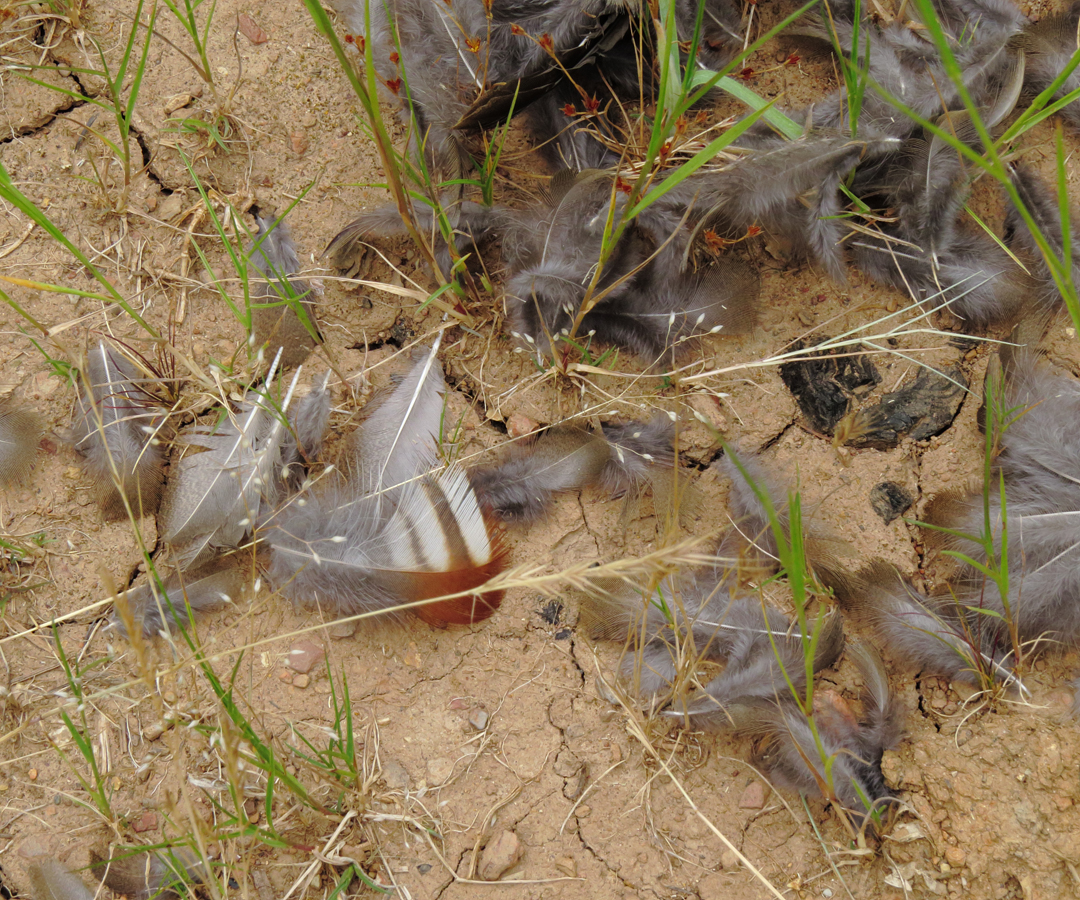
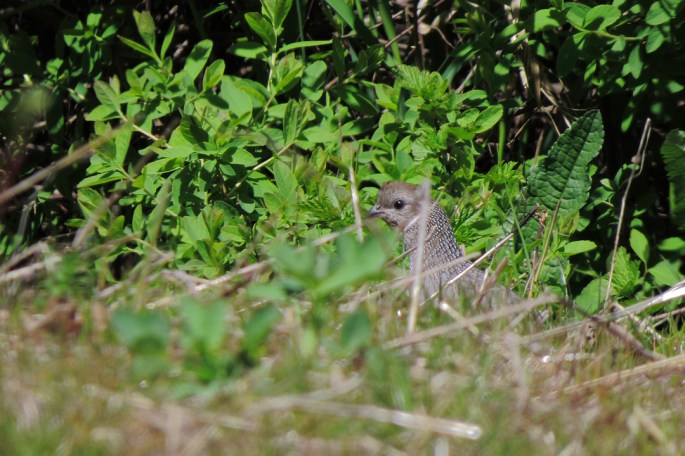 California Quail have become slightly more common at Fernhill in recent years.
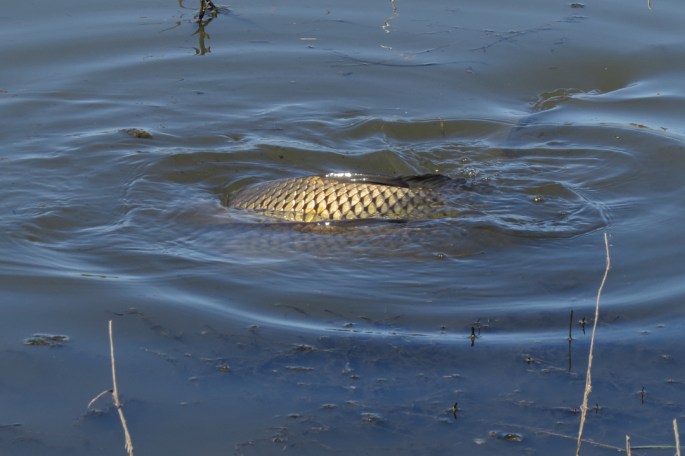 The Common Carp are spawning in Fernhill Lake.
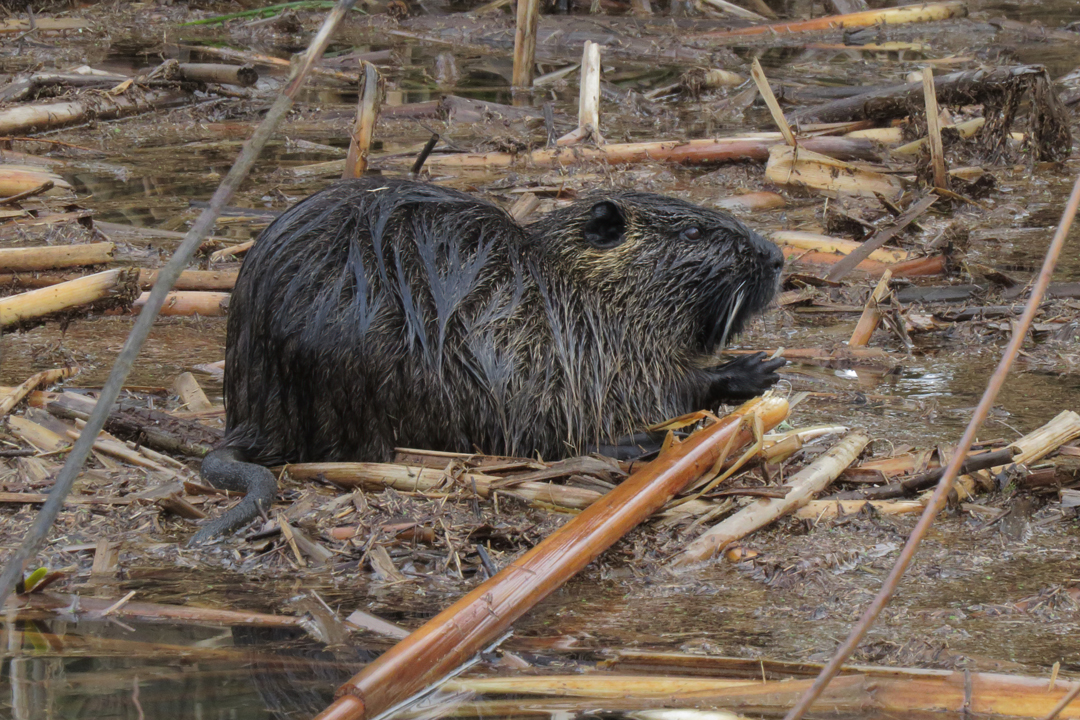
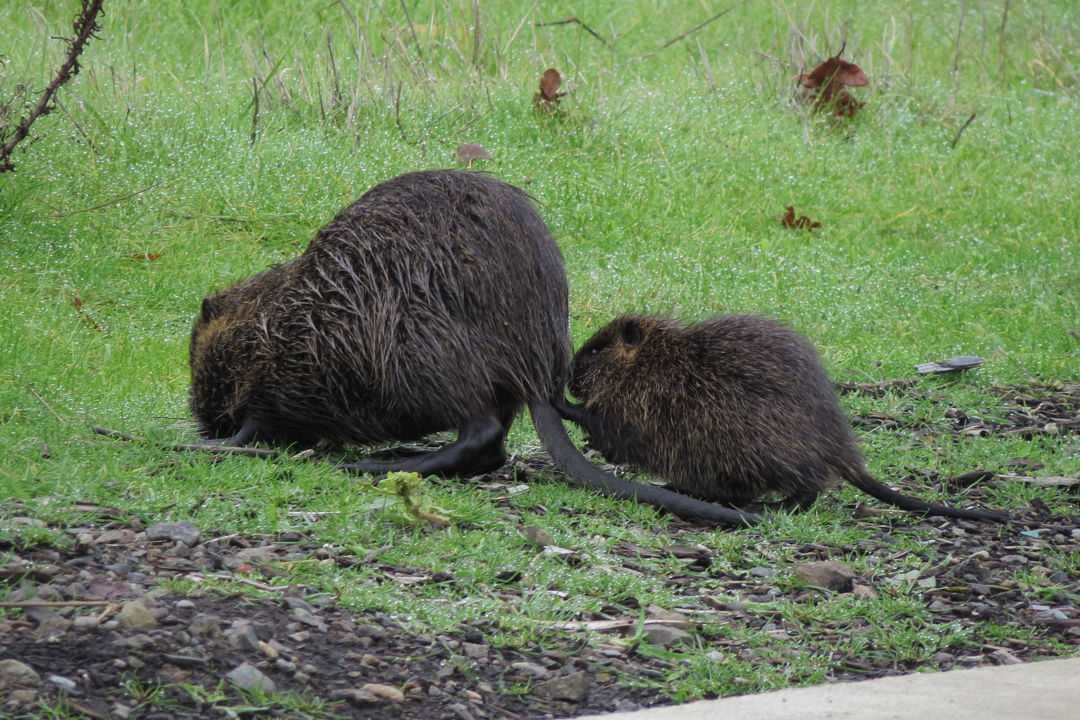
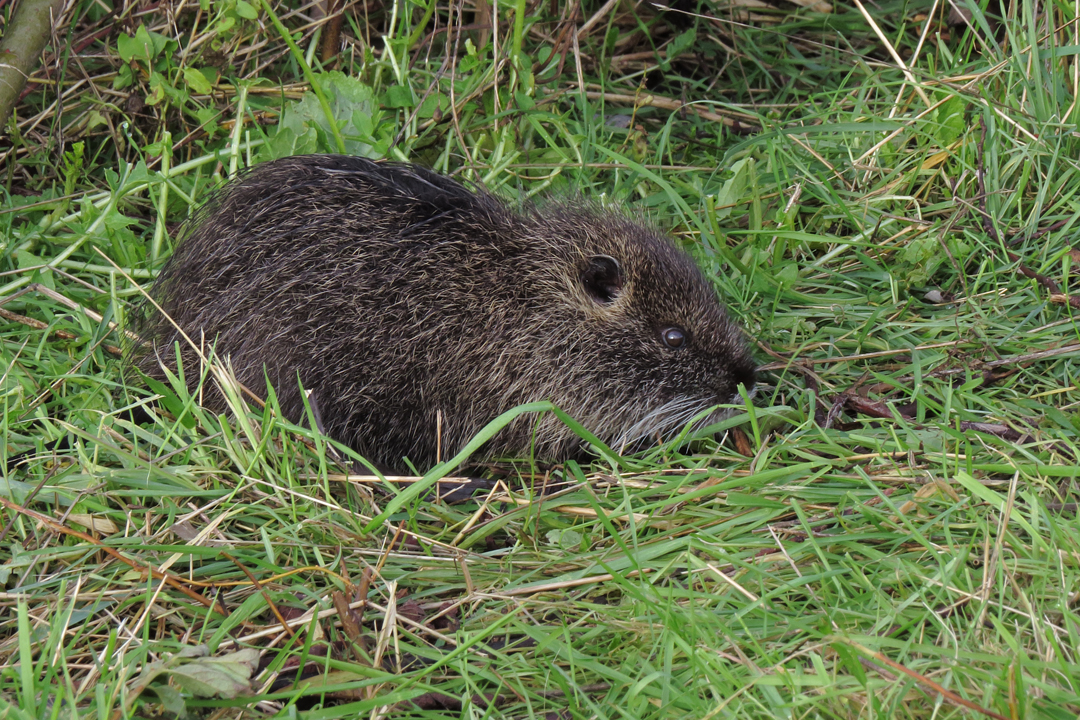
 I was pleased to find this Muskrat. The non-native Nutria have become so common at this site I worry they might crowd out the native Muskrats and Beavers.
 California Ground Squirrels have been taking advantage of the large rocks used in the landscaping at this site.
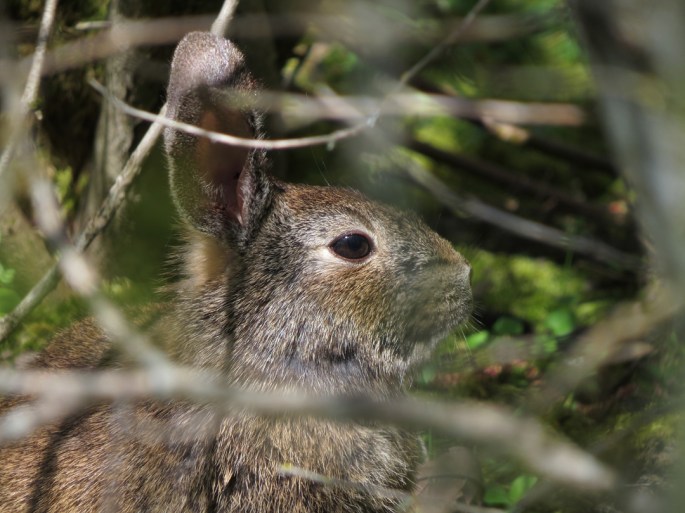 This Brush Rabbit was looking very regal in his thicket.
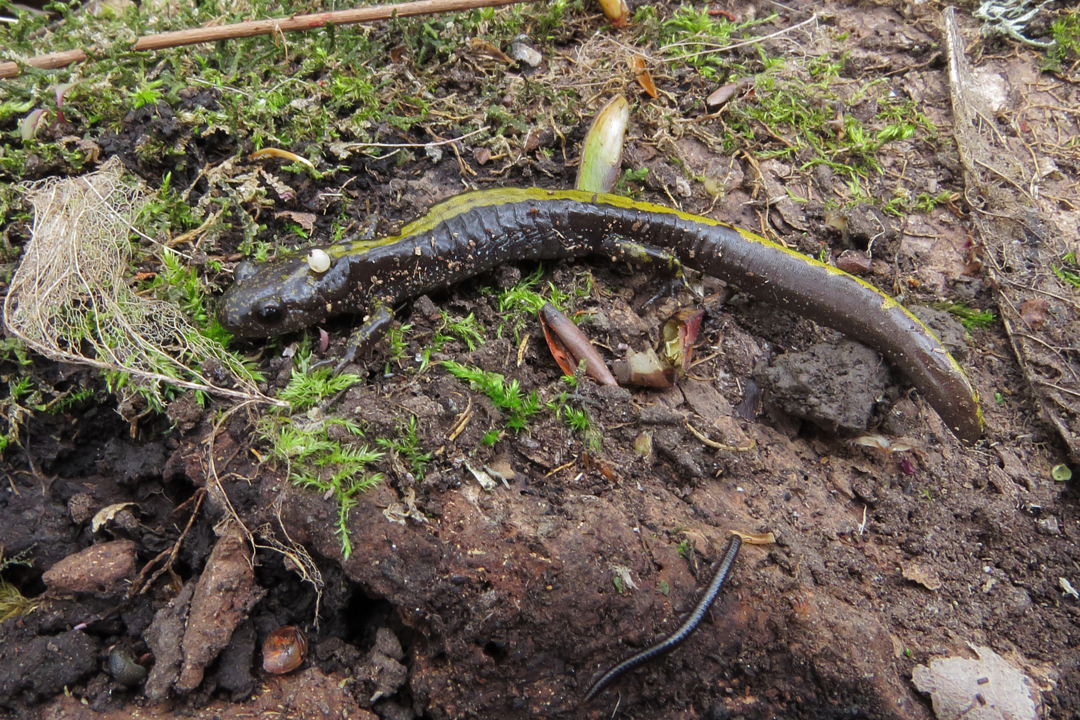

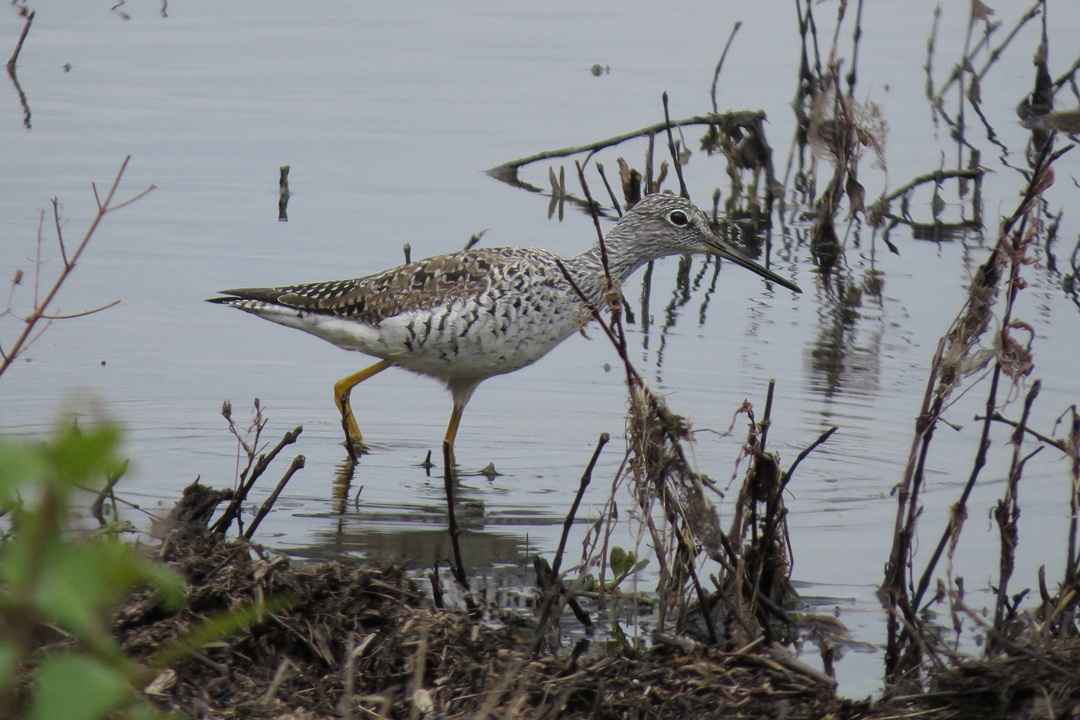

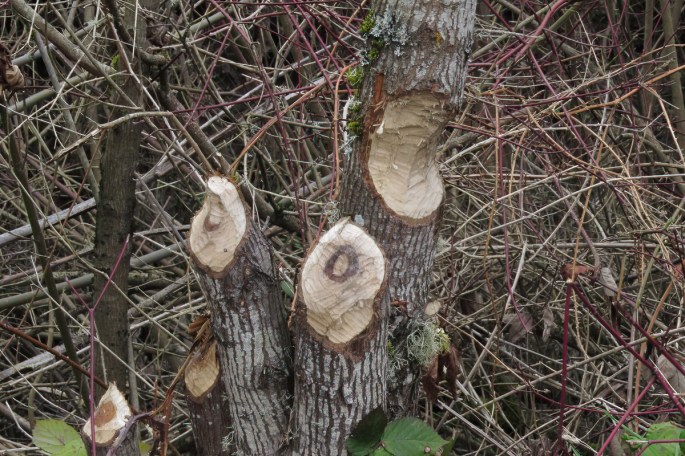
 I very rarely get to see Beaver, but Nutria (pictured above) are everywhere, giving me my daily allowance of large aquatic rodents.
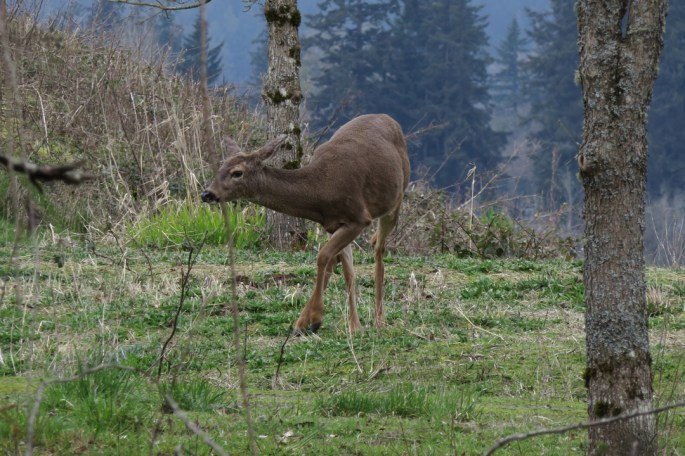
 It is always a treat to see Black-tailed Deer.
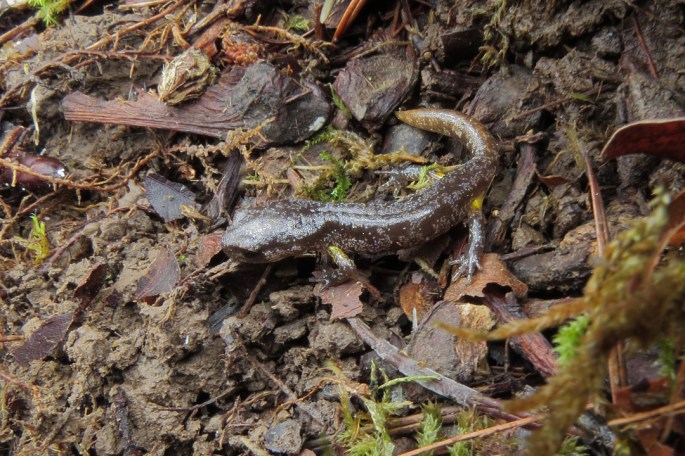 Partially because birding has been slow, and partially because I am preparing for a herping class in May, I have been looking for amphibians and reptiles a lot this spring. This is an Oregon Ensatina, a very small specimen that was about two inches long. Ensatinas are recognized by their proportionally large head and eyes. The Oregon subspecies typically has the yellow coloring at the base of the legs.
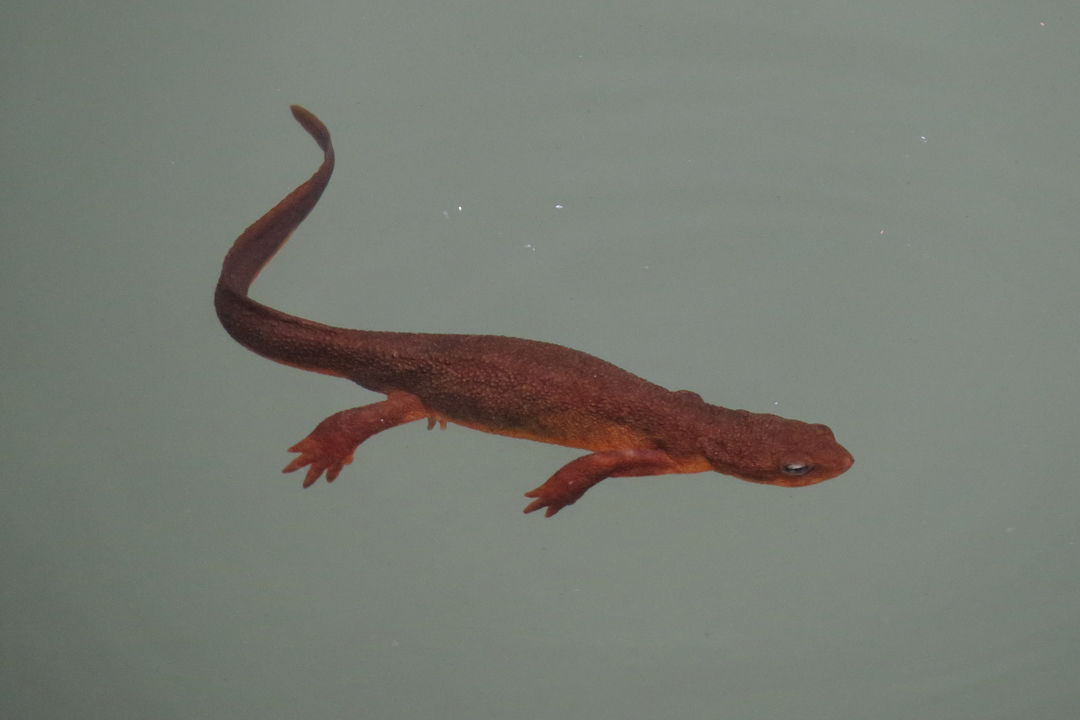
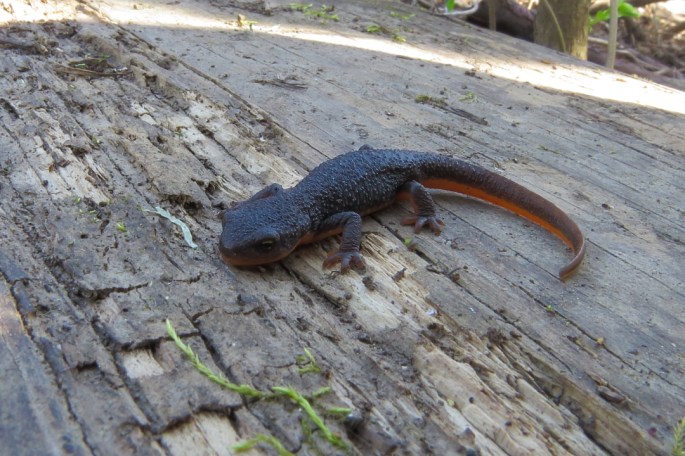 This is the smallest Rough-skinned Newt I have seen, about two inches long.
 These Long-toed Salamanders were creating some neat shapes.
 Northwestern Garter Snake
 Two courting Northwestern Garter Snakes. Notice the variation in color pattern, typical of this species.
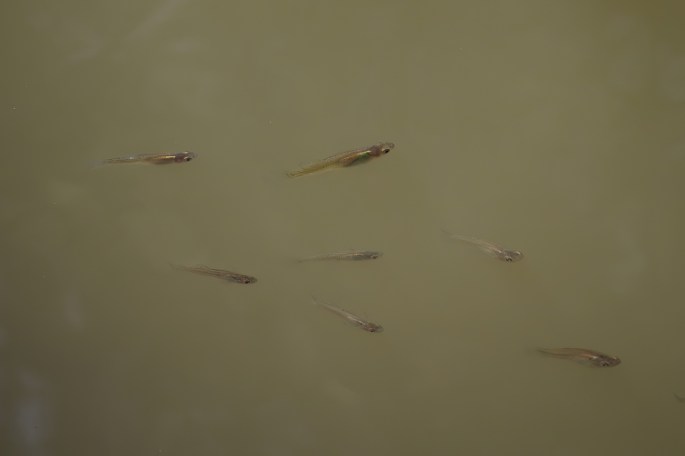 Western Mosquito Fish
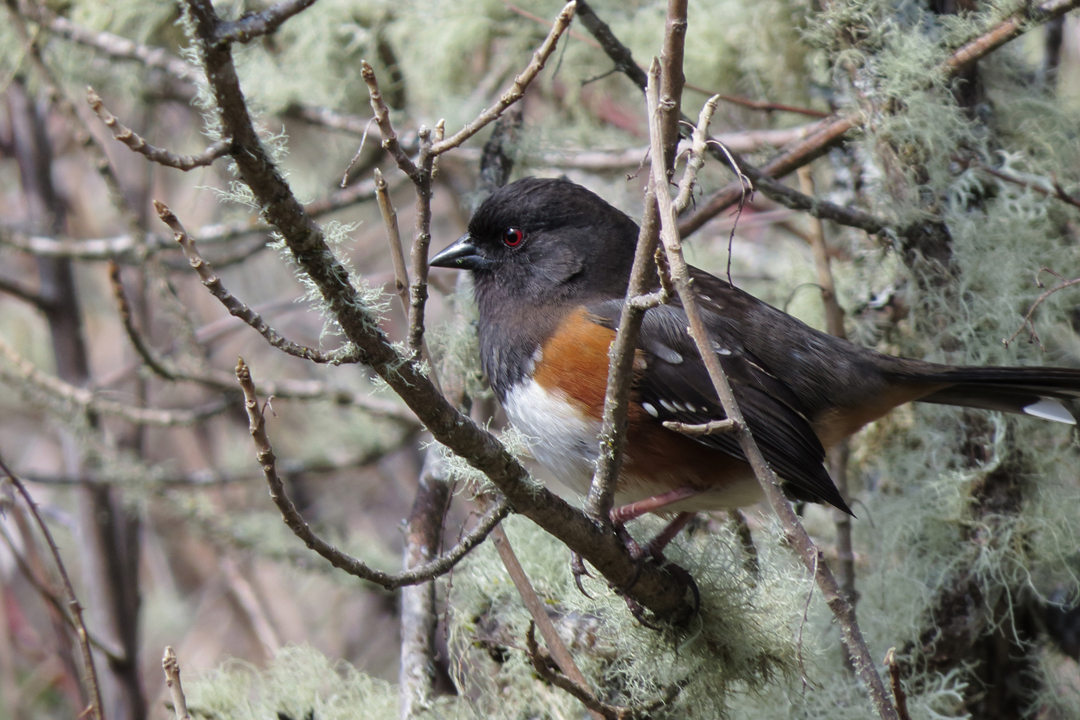
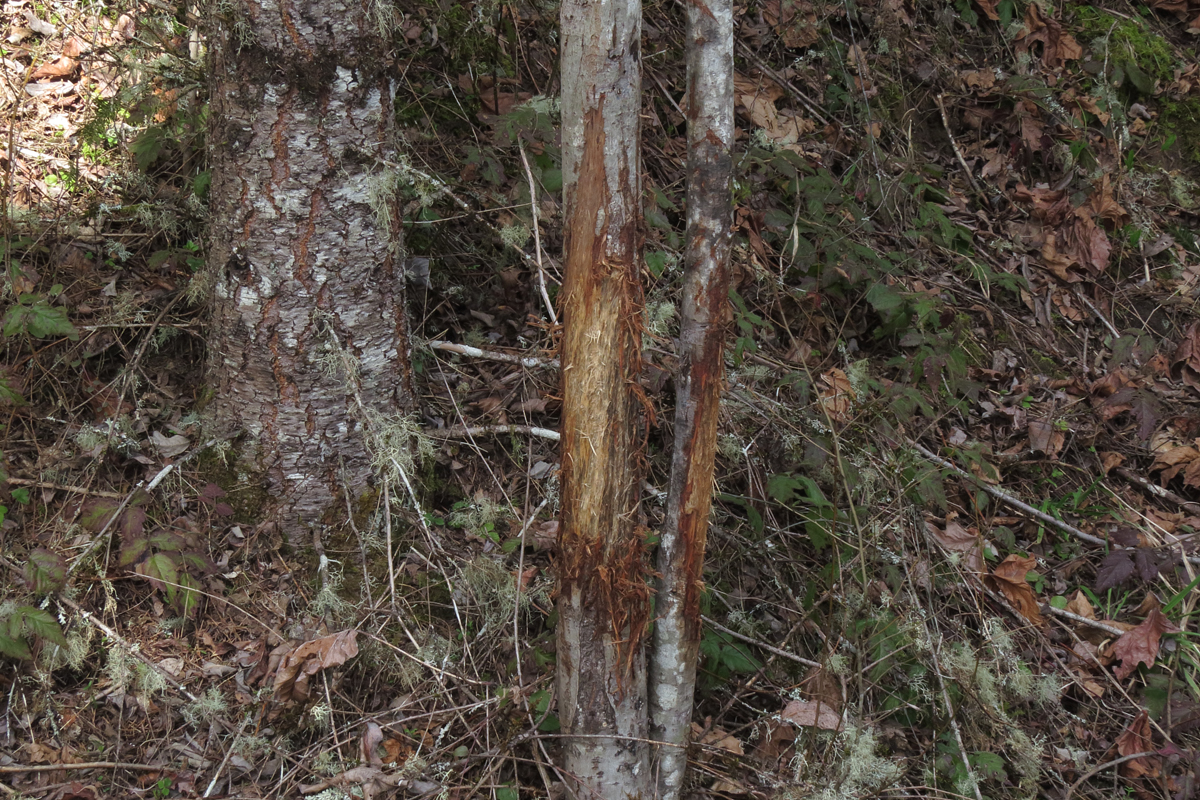

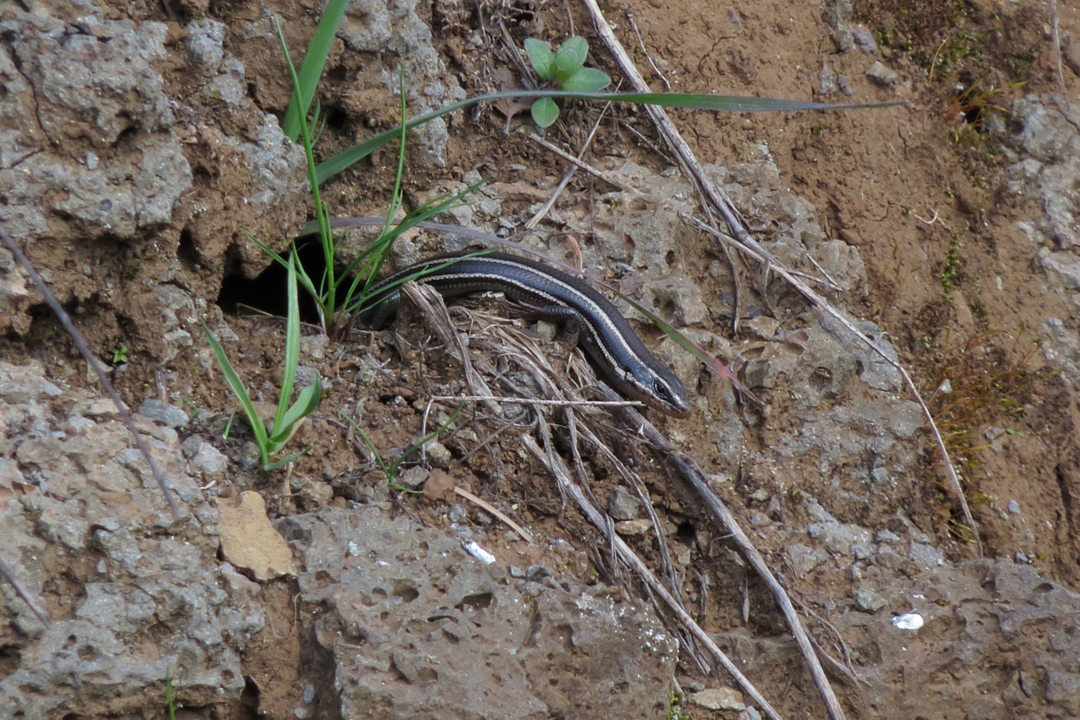













 Ethical Birder